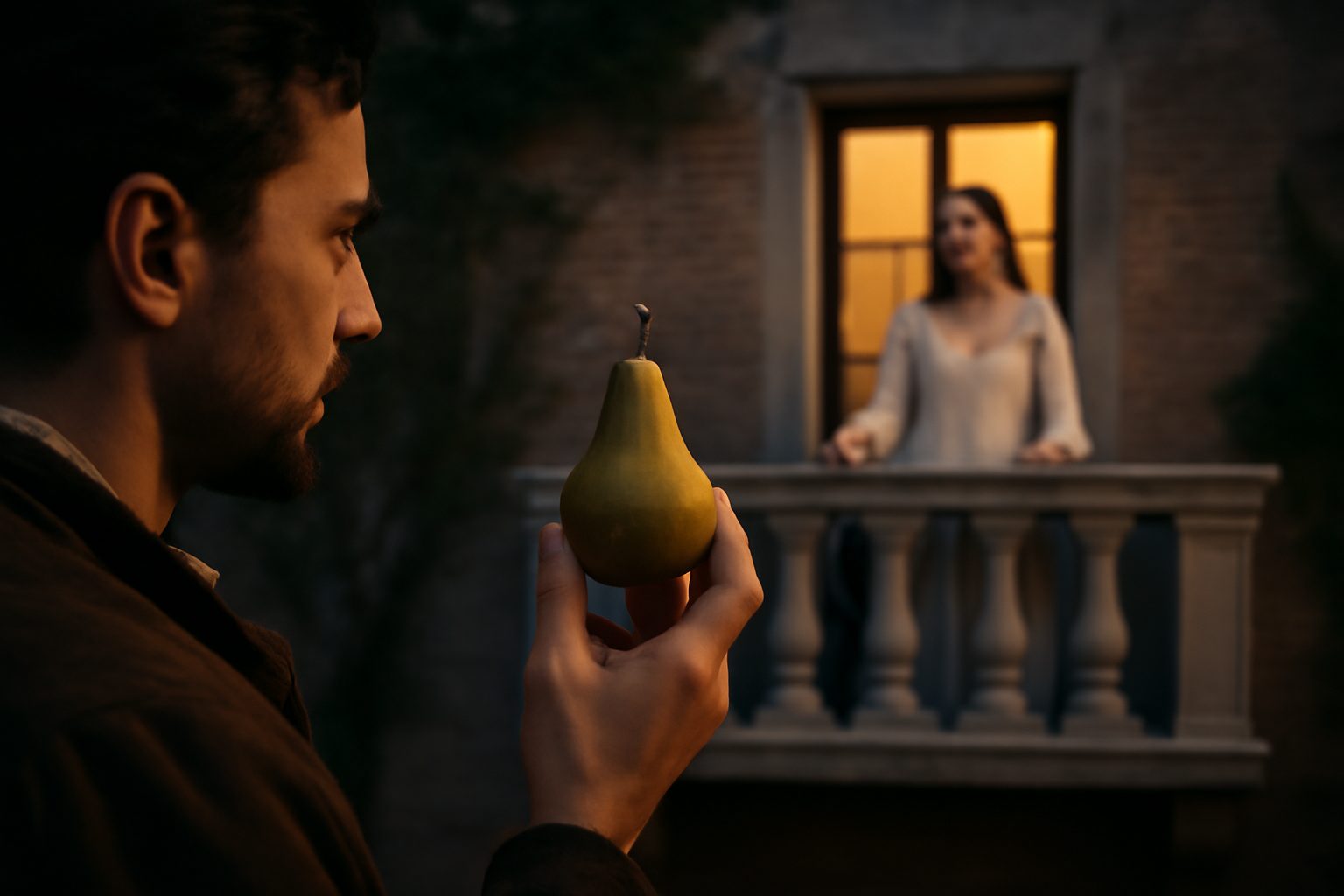
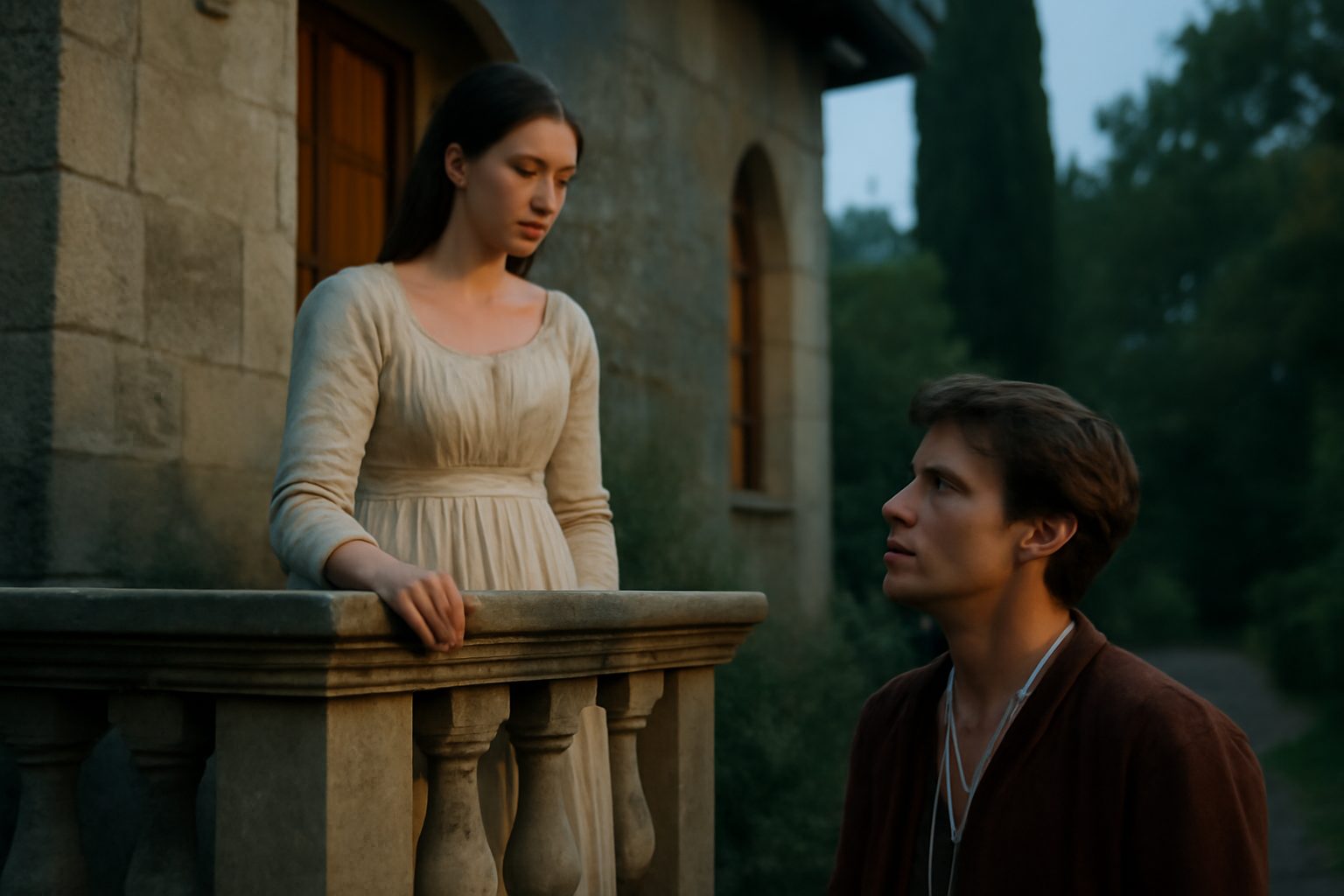
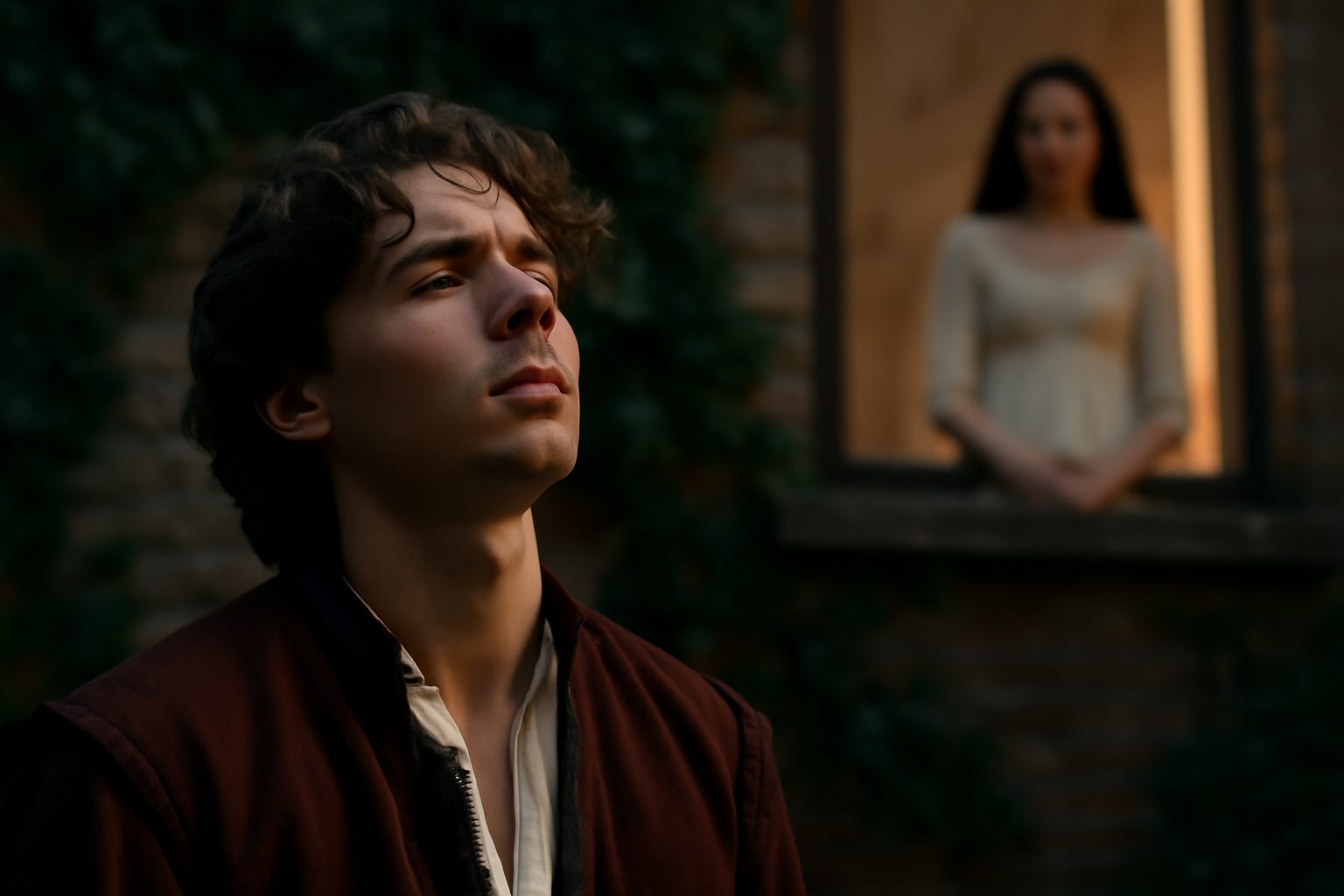
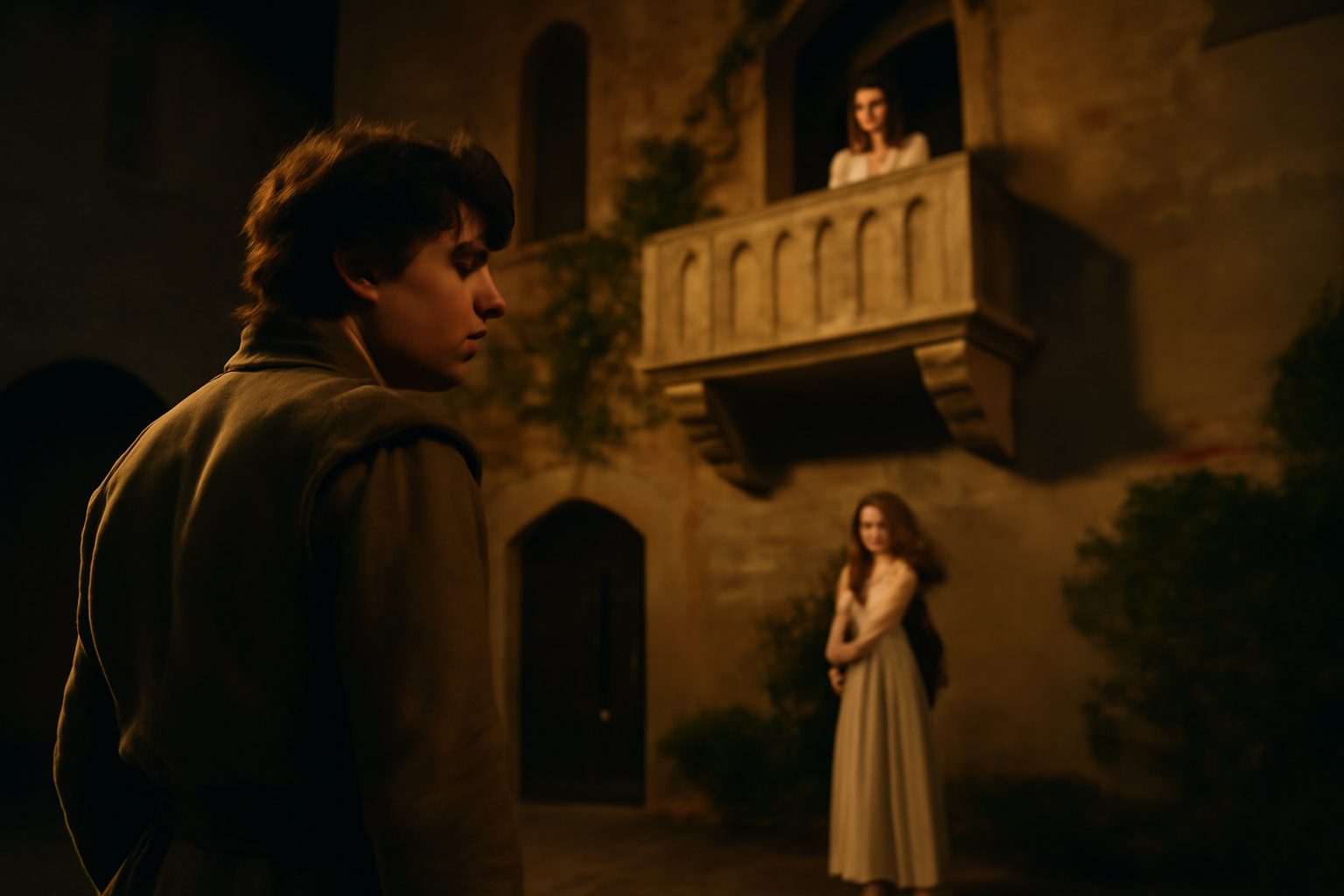
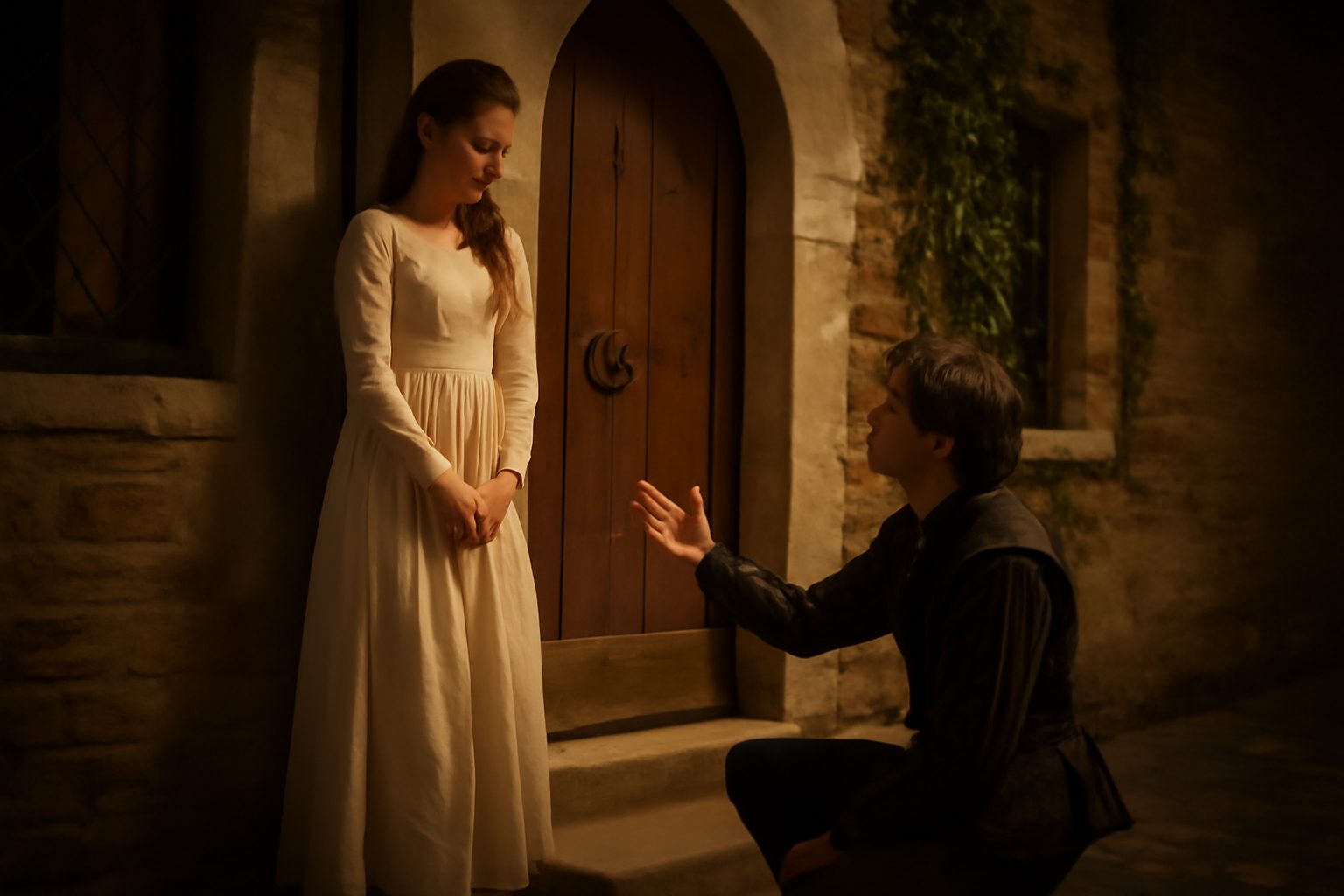
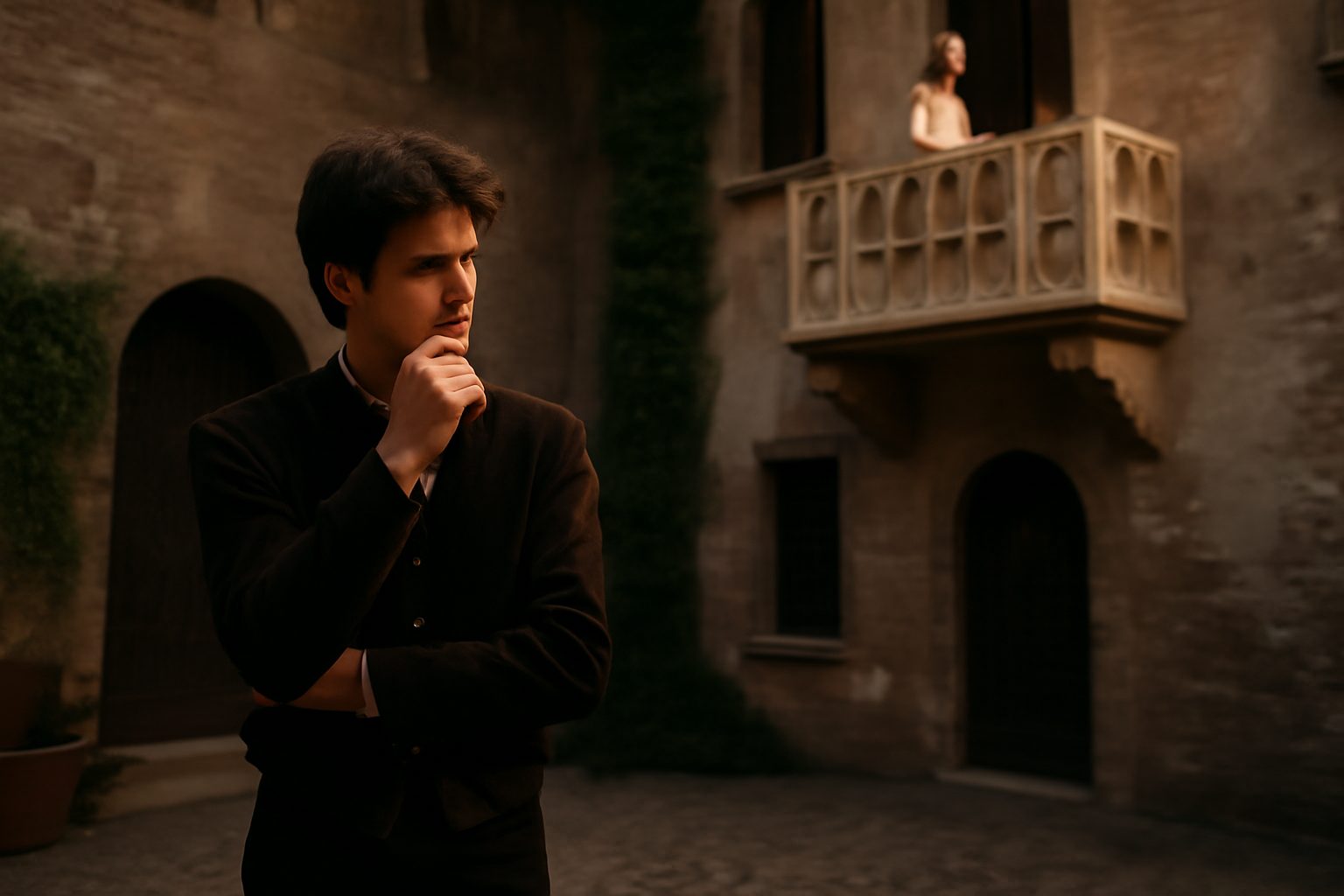
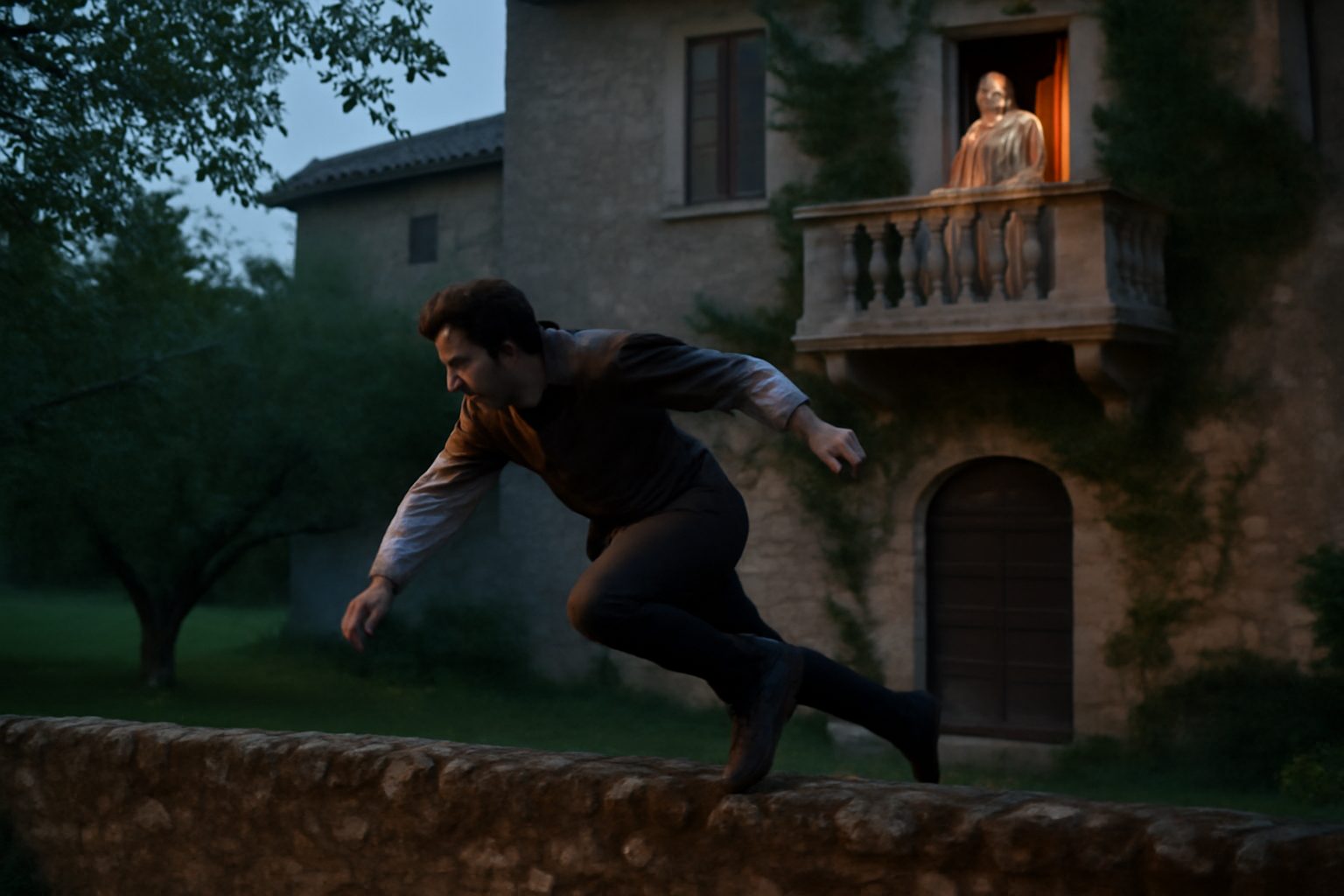
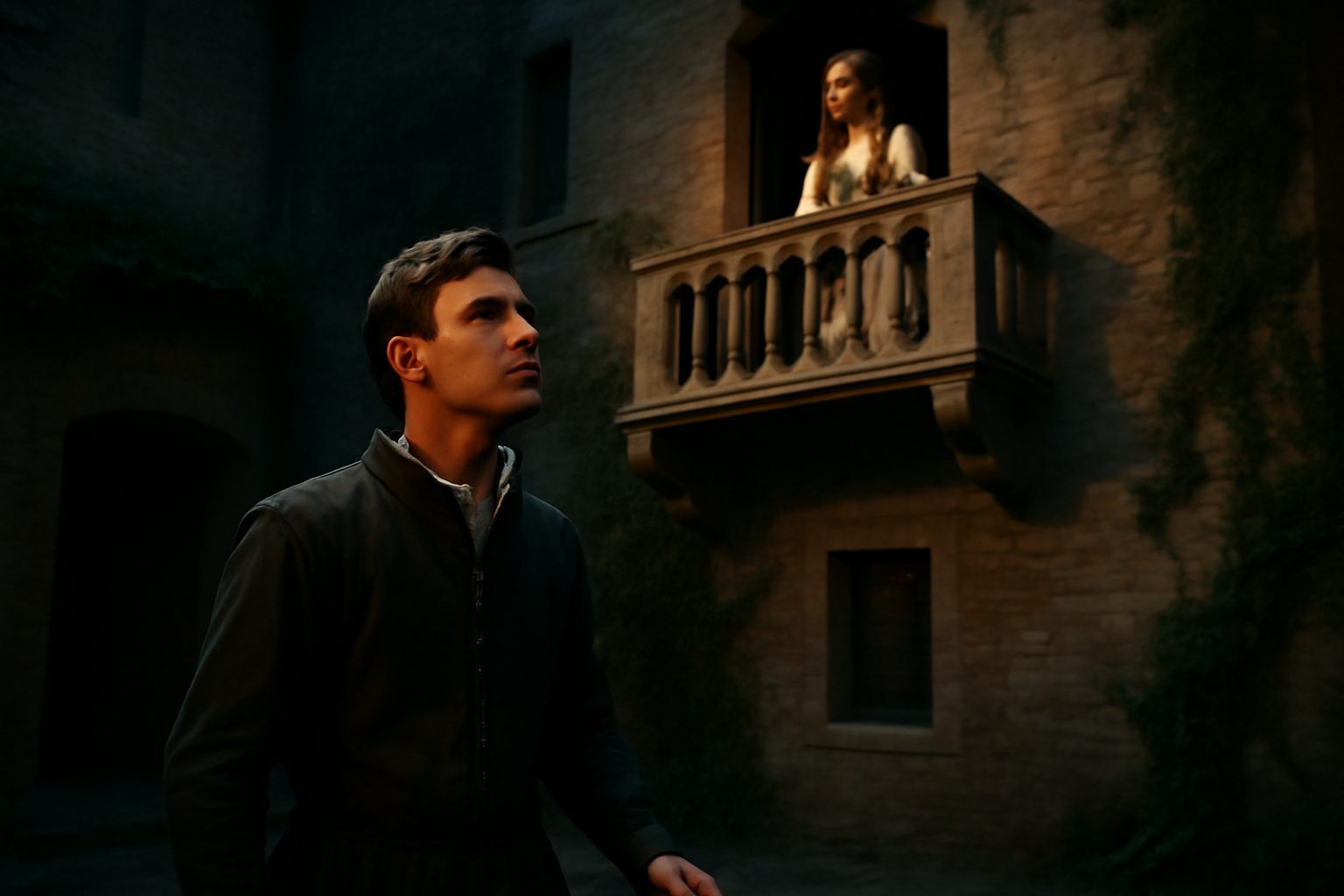
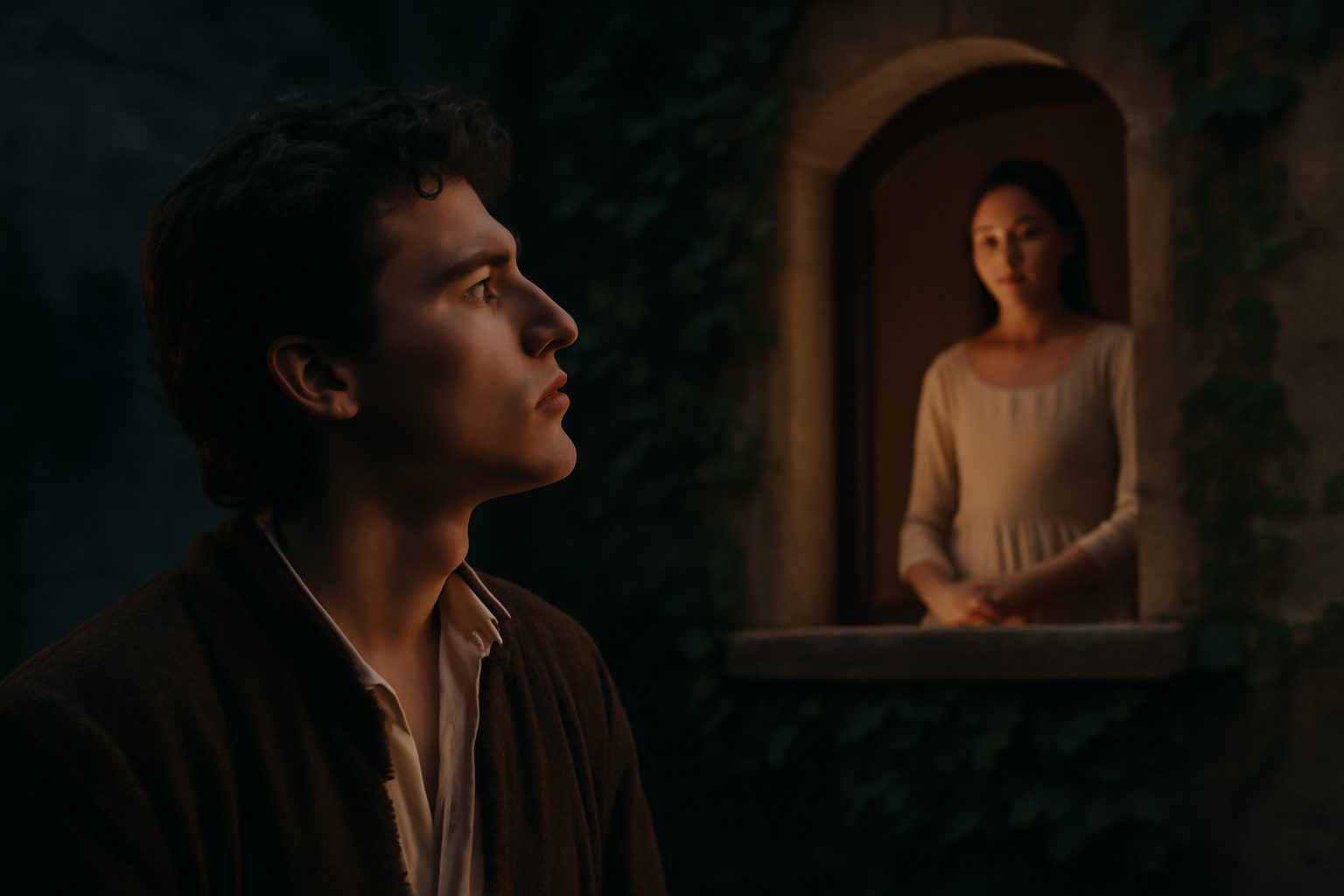
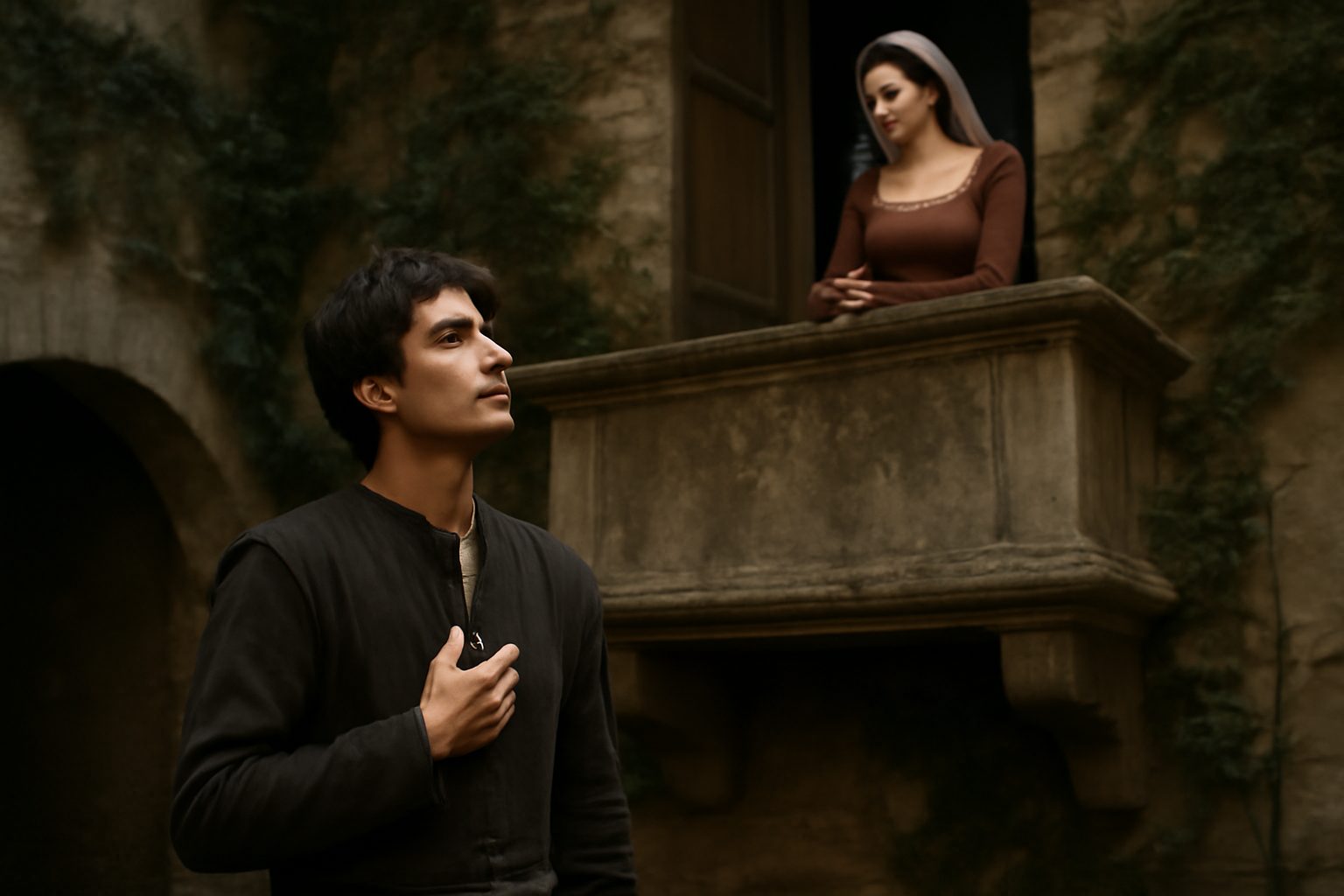
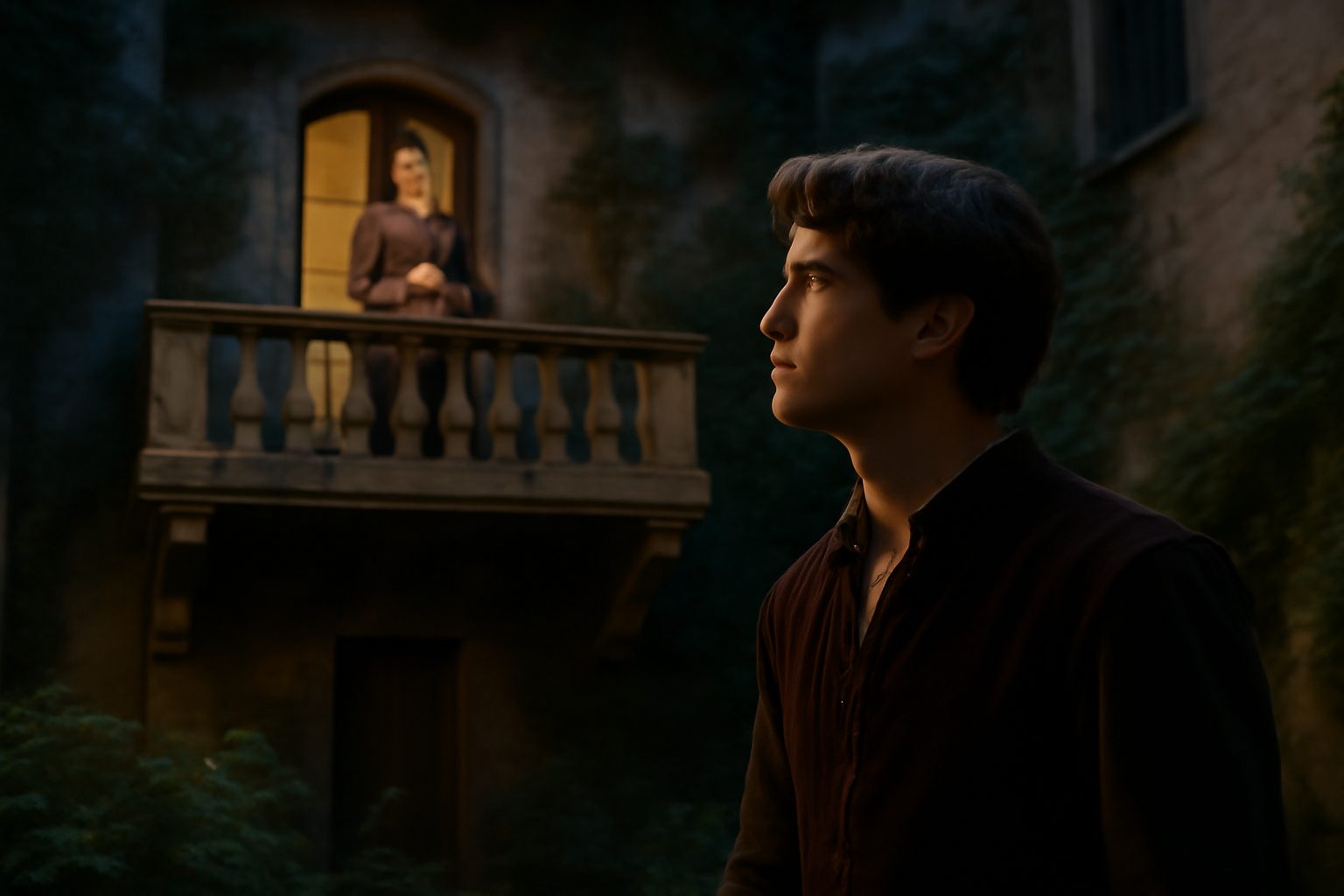
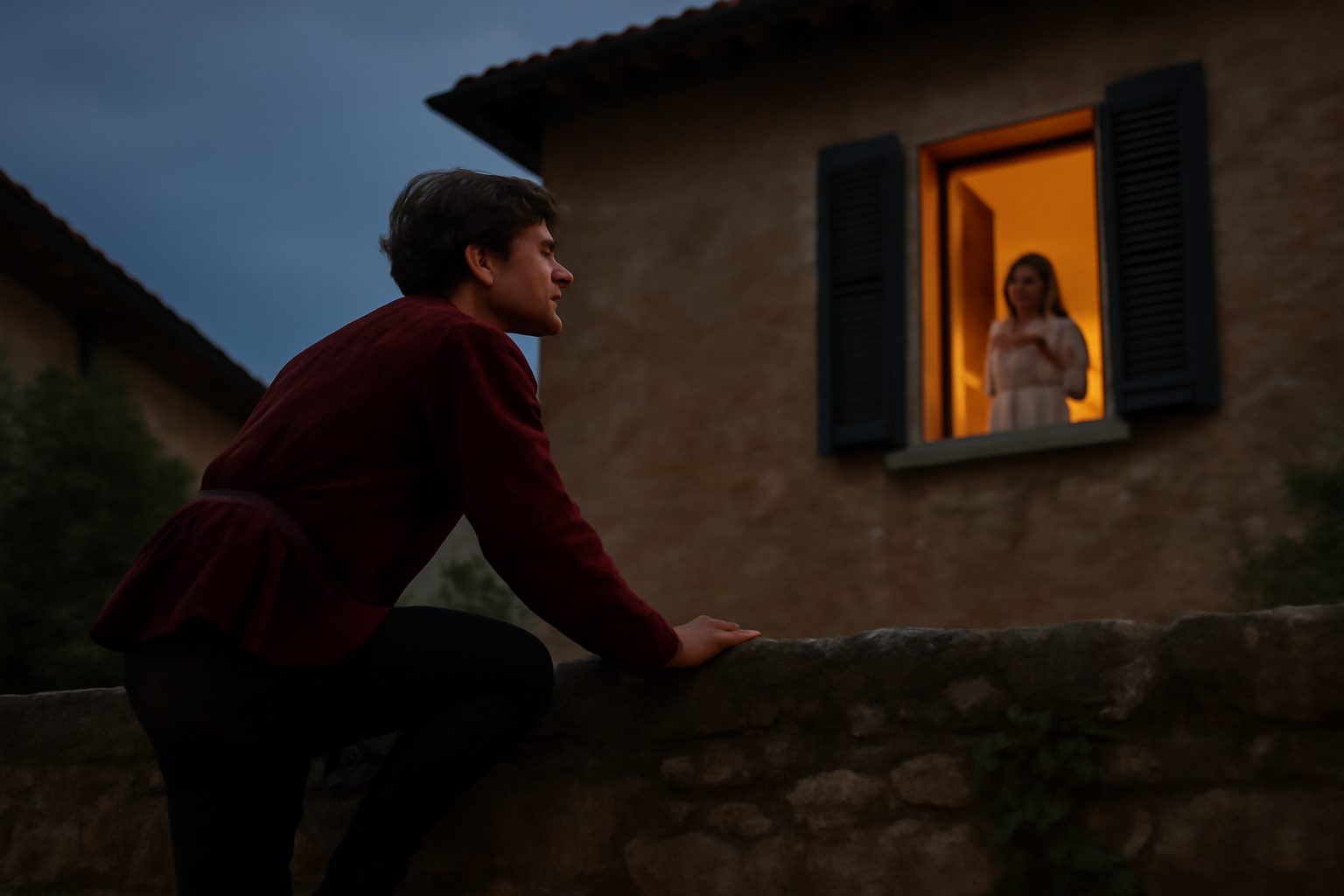
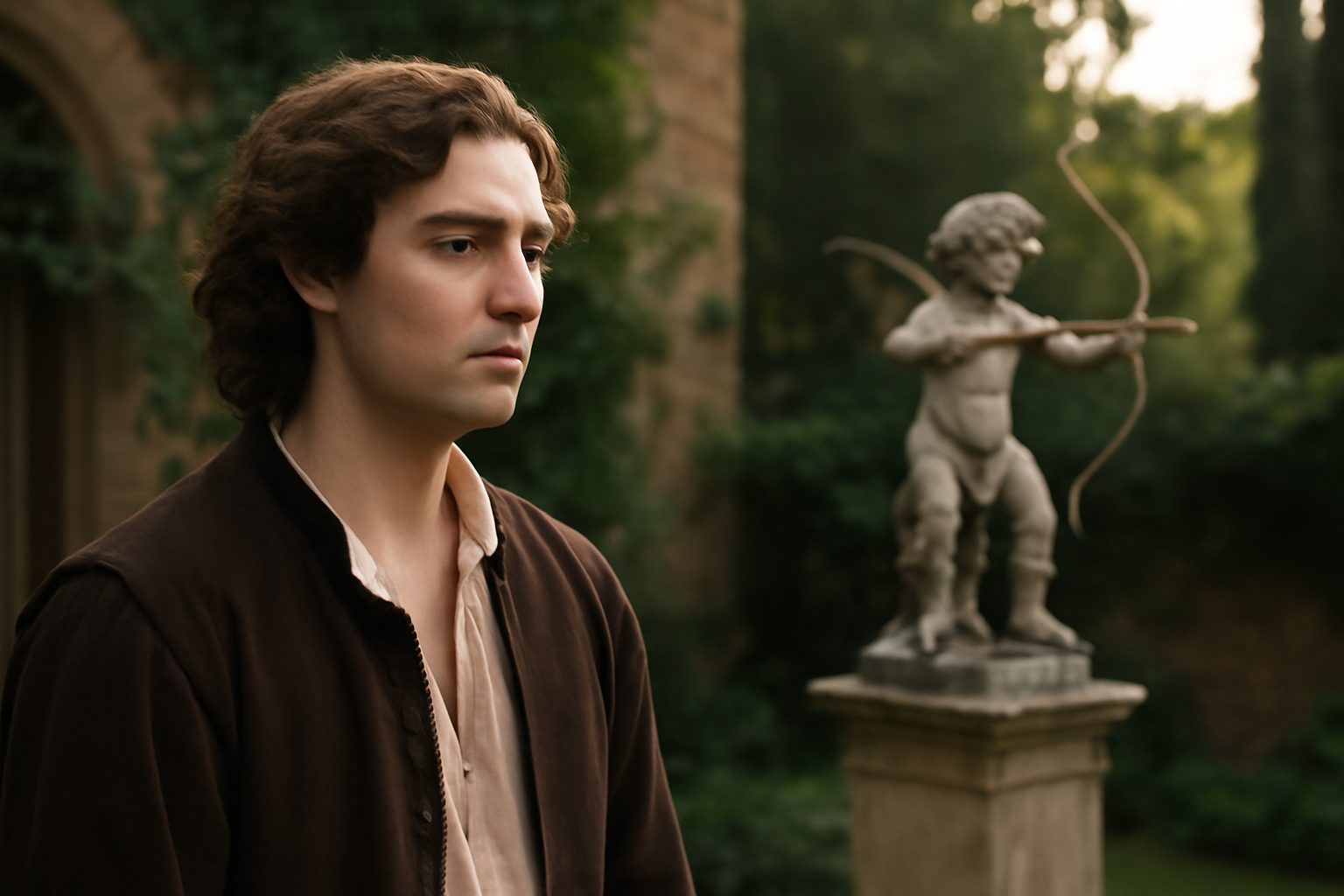
In Act 2, Scene 1 of Romeo and Juliet, Romeo lingers near Juliet's balcony after their first meeting, overwhelmed by his newfound love. Mercutio, unaware of Romeo's presence, mocks his friend's lovestruck behavior by calling out playful taunts into the night. This line captures Mercutio's teasing challenge, urging Romeo to respond with even a single poetic phrase to prove his infatuation.
Mercutio: "Speak but one rhyme, and I am satisfied;"
In modern day english, we would say:
Just say one word that rhymes, and I’ll be happy.
Frequently Asked Questions
What does Mercutio want Romeo to do in this line?
Mercutio wants Romeo to say just one rhyming line to make him happy.
Connections to other verses:
Connections to "Speak but one rhyme, and I am satisfied;"
The line "Speak but one rhyme, and I am satisfied;" is spoken by Mercutio as he and Benvolio search for Romeo, who has hidden himself. This plea for a simple sign of Romeo's presence connects thematically and structurally to several other verses in the scene.
Direct Echoes and Repetition
Mercutio's request for a "rhyme" is immediately preceded by his call for Romeo to "Appear thou in the likeness of a sigh:", emphasizing his desire for any auditory or visible response. It is also closely tied to his earlier demand: "Cry but 'Ay me!' pronounce but 'love' and 'dove;'", which similarly asks for Romeo to utter even the smallest romantic expression.
Conjuration and Invocation
Mercutio's attempts to summon Romeo are framed as a mock conjuration. He declares, "The ape is dead, and I must conjure him.", and later insists, "I conjure only but to raise up him.". This playful ritual underscores his frustration and the humorous tone of their search.
References to Love and Mythology
Mercutio invokes mythological figures associated with love, such as when he says, "Speak to my gossip Venus one fair word," and refers to "Young Adam Cupid, he that shot so trim,". These allusions parallel his request for a "rhyme," as both are calls for romantic or poetic expression.
Fruit and Sexual Innuendo
Later in the scene, Mercutio shifts to sexual jokes, such as his remark, "And wish his mistress were that kind of fruit", and the line, "As maids call medlars, when they laugh alone.". This contrasts with the earlier, more earnest request for a rhyme, highlighting Mercutio's multifaceted teasing.
Conclusion of the Search
The futility of their efforts is acknowledged when Benvolio states, "Go, then; for 'tis in vain" and "To seek him here that means not to be found.", reinforcing that Romeo's silence—his refusal to "speak one rhyme"—has ultimately thwarted them.