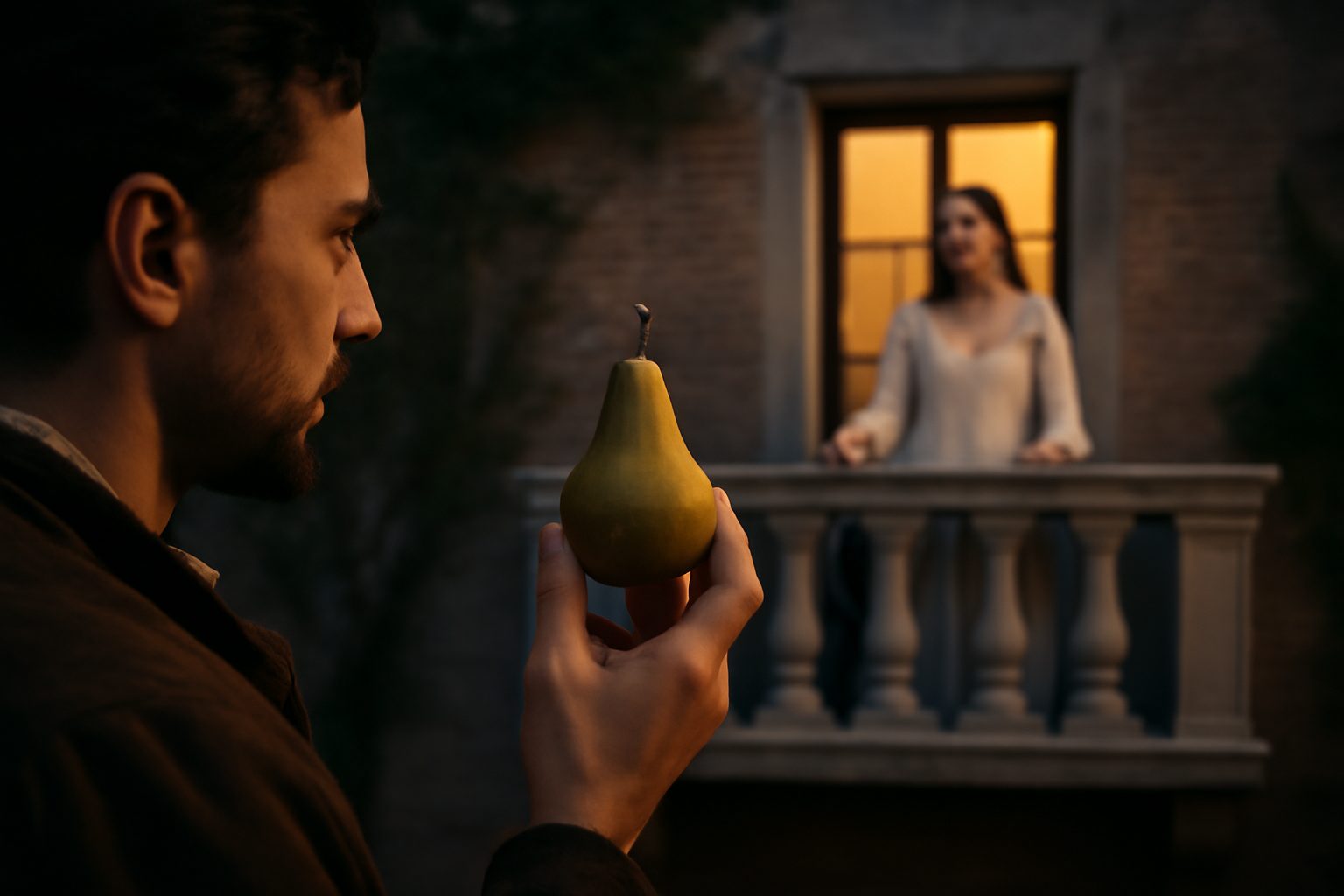
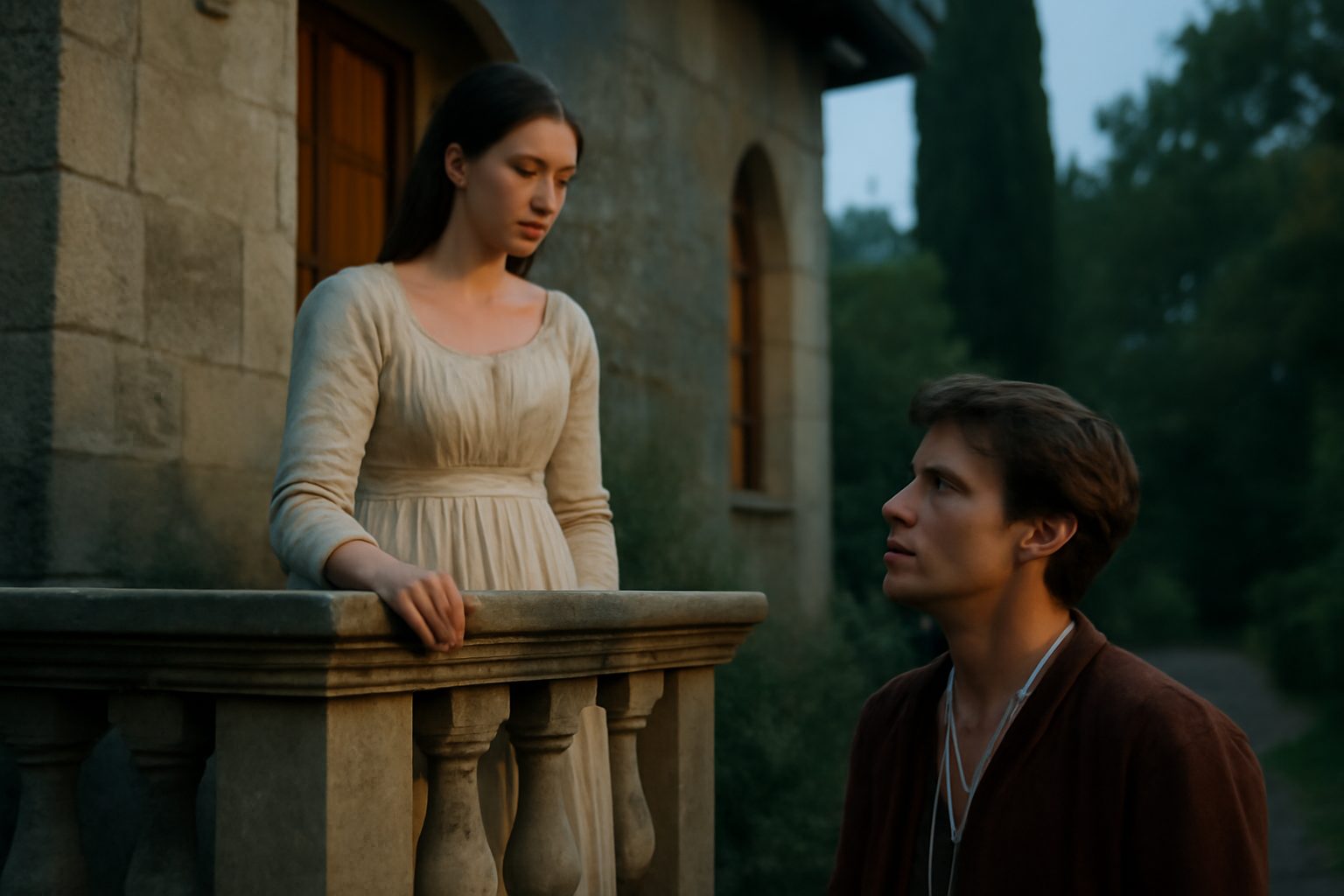
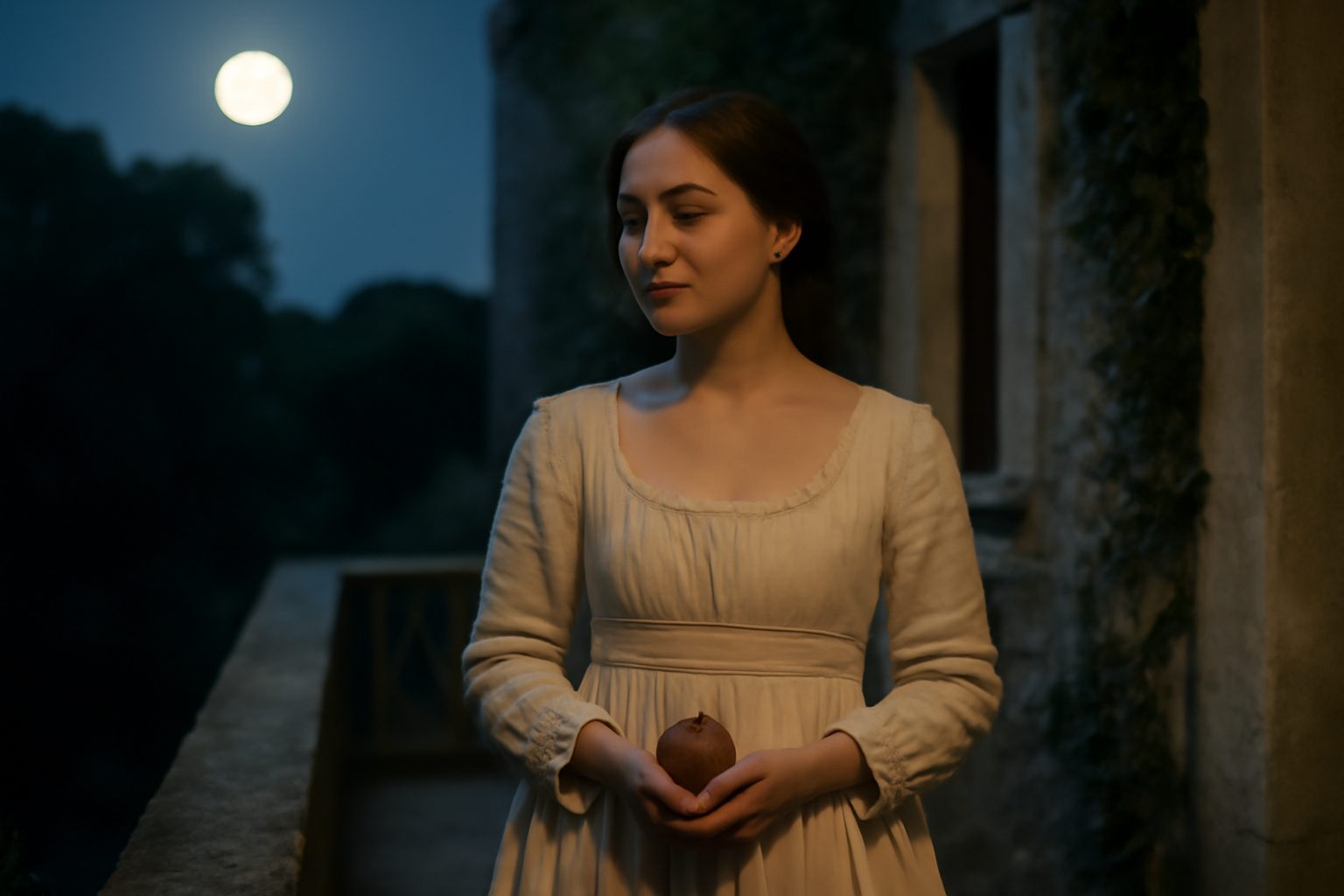
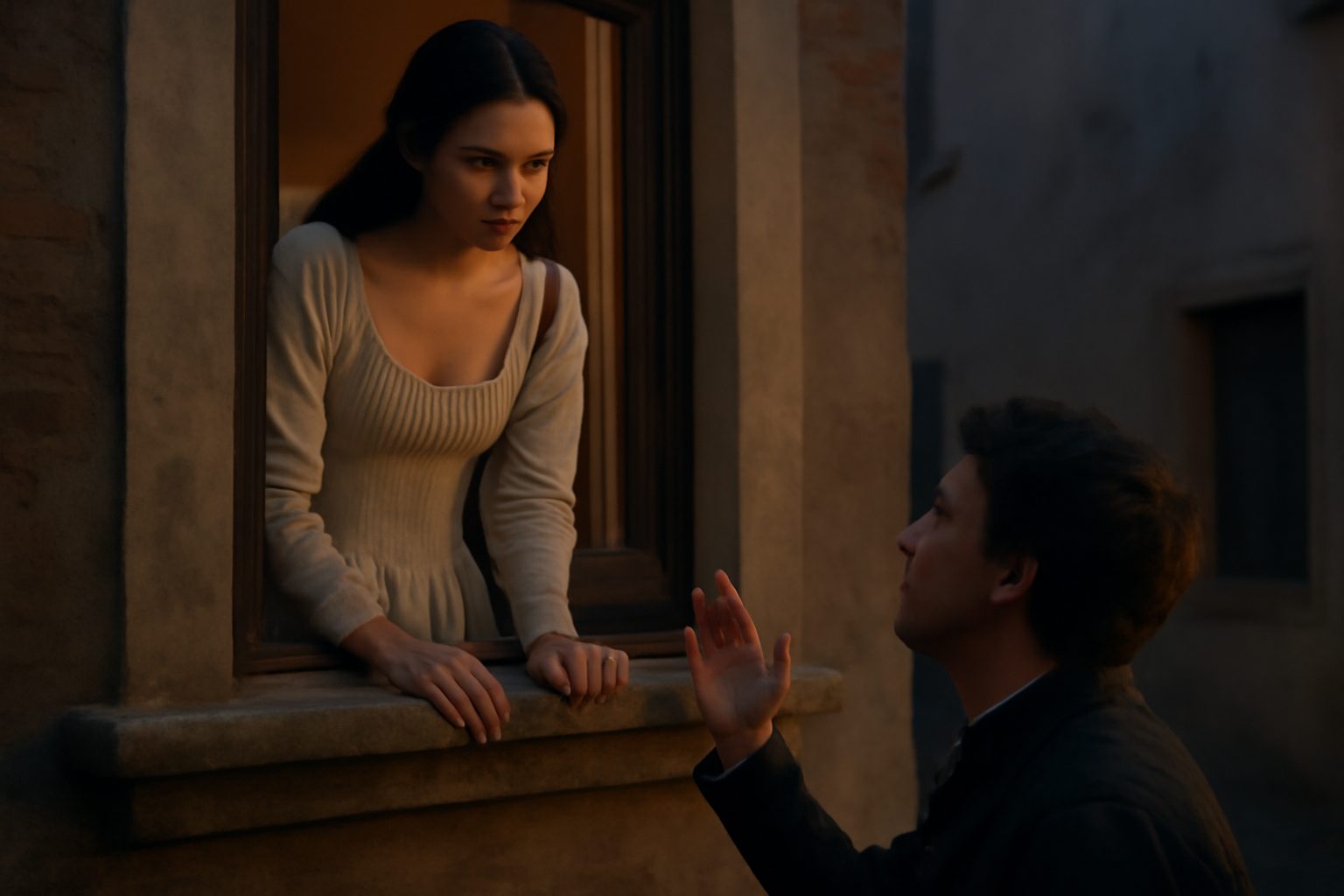
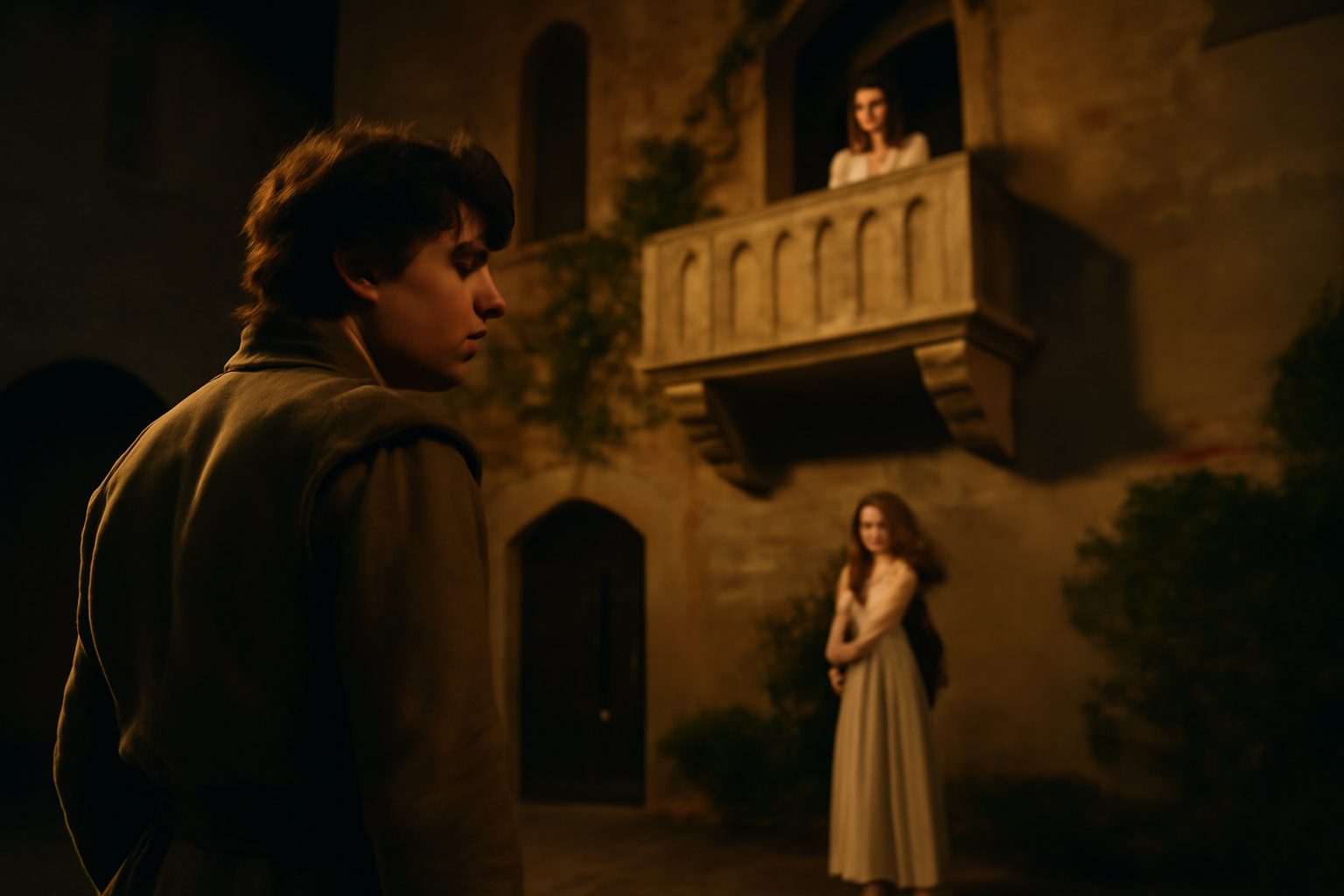
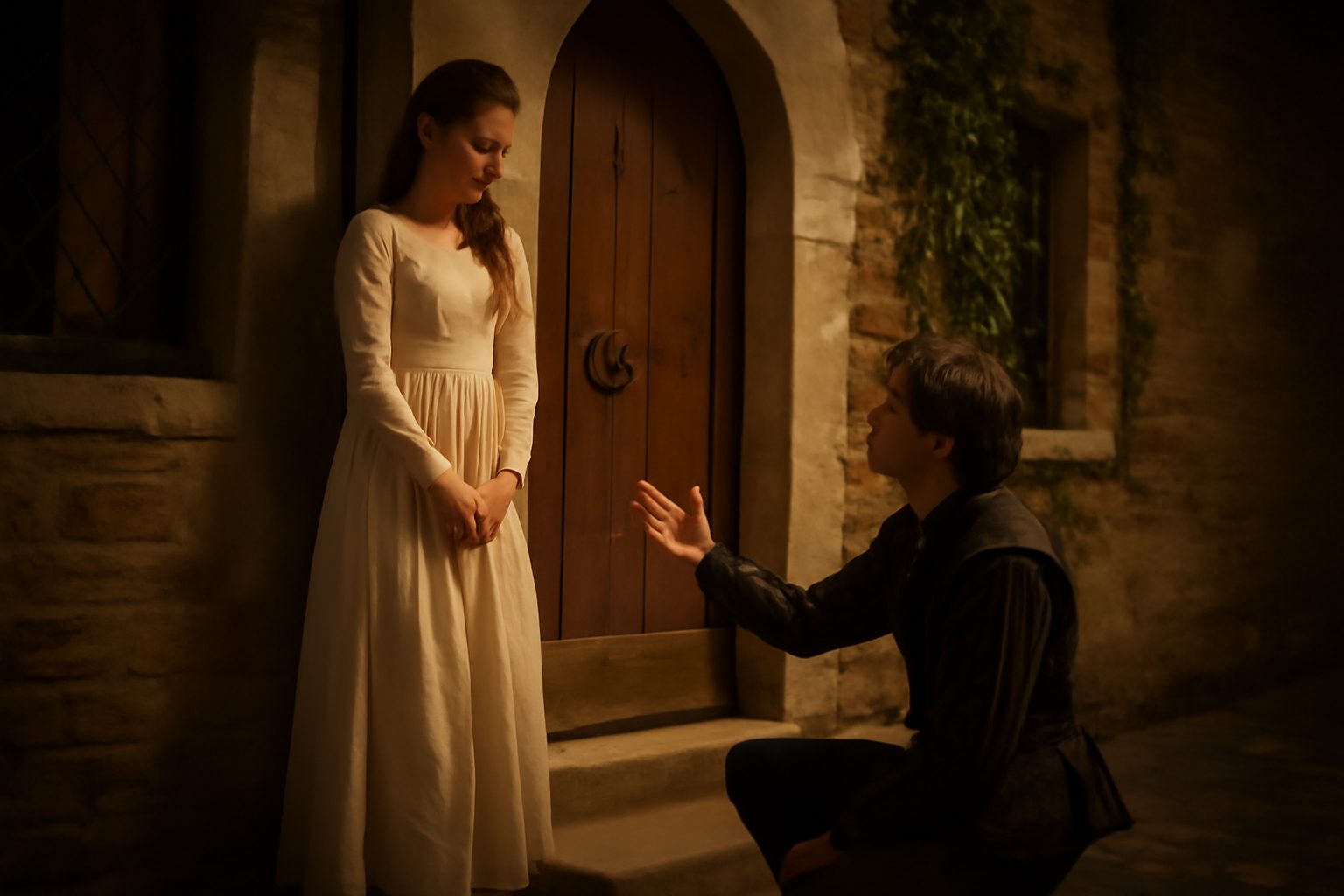
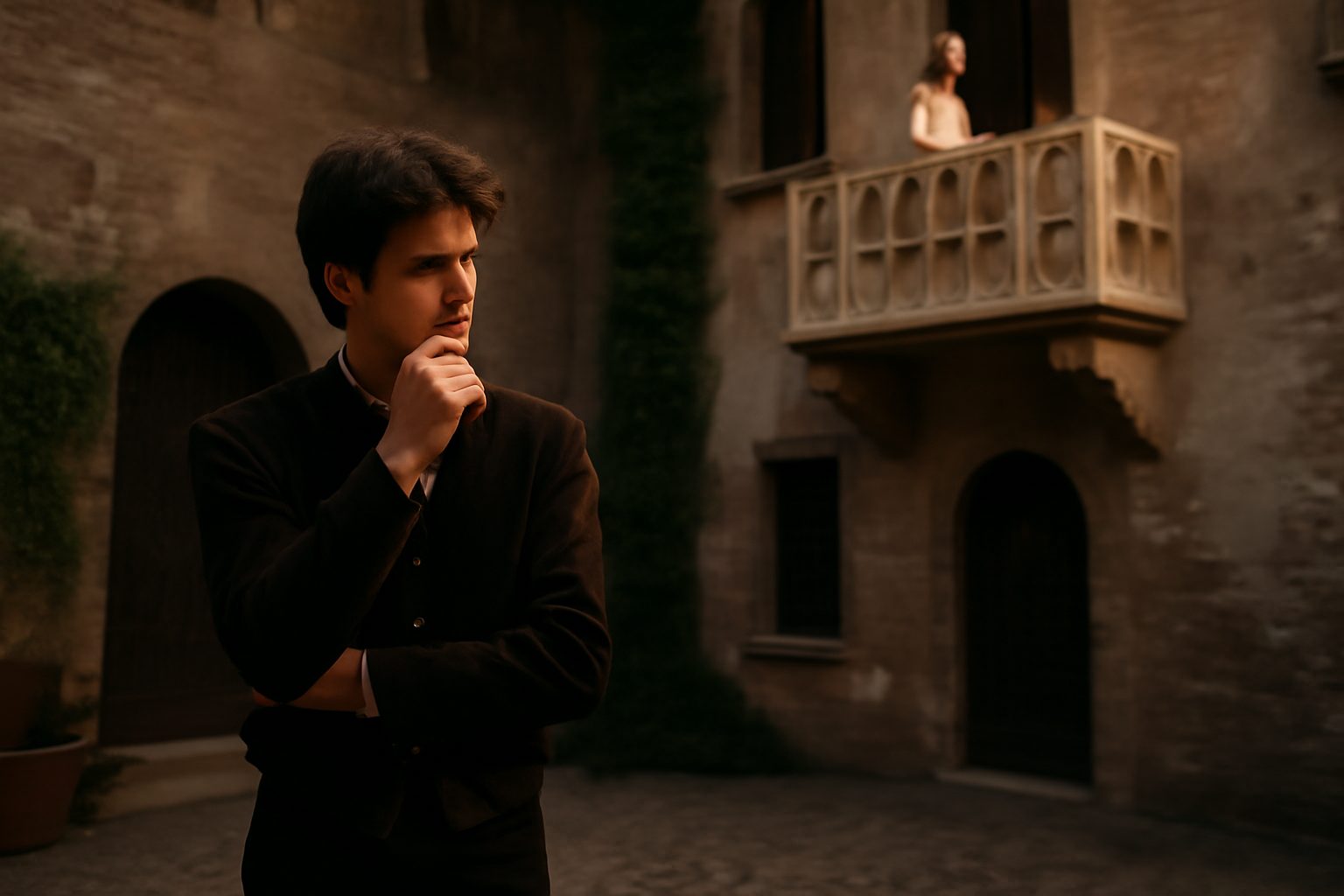
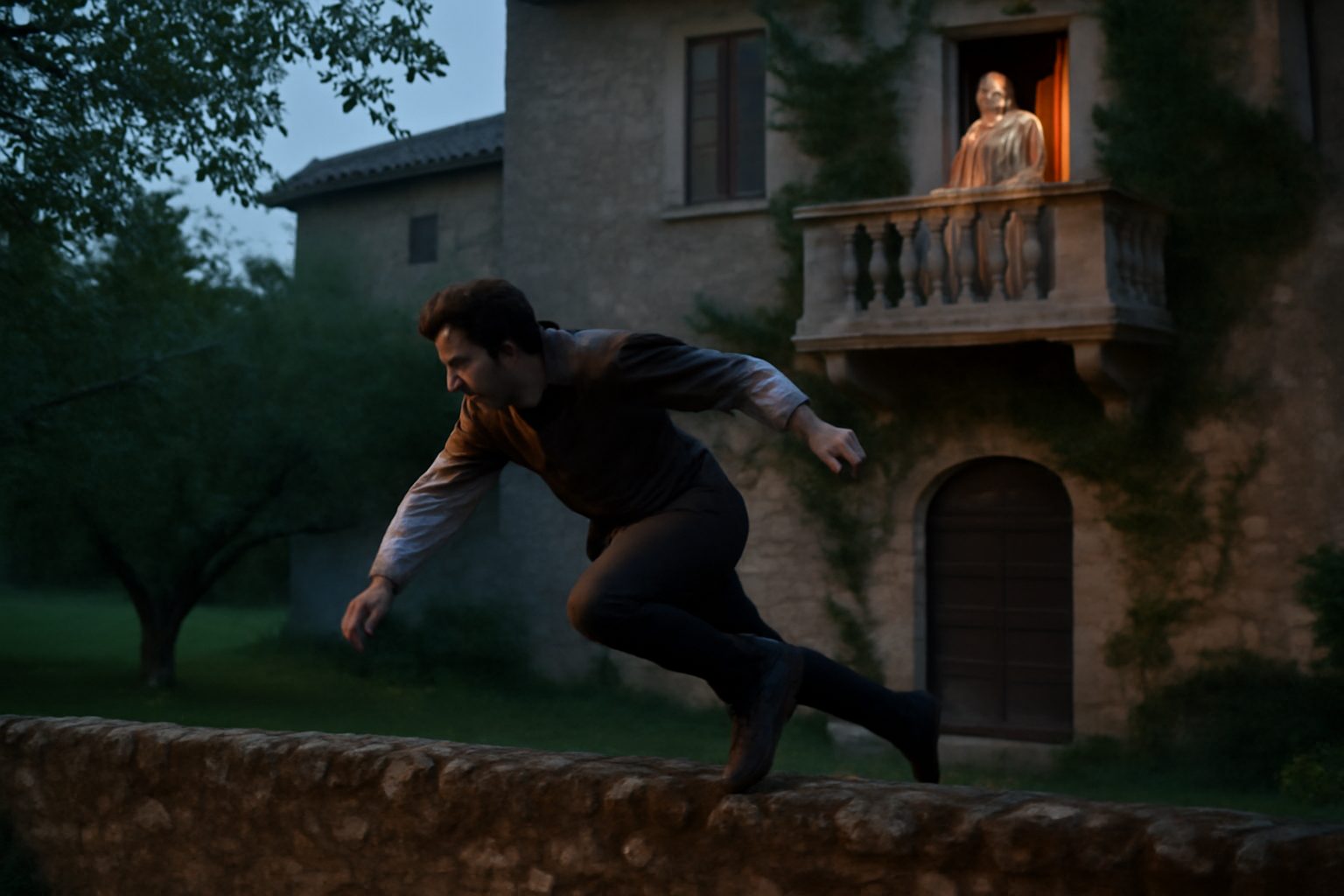
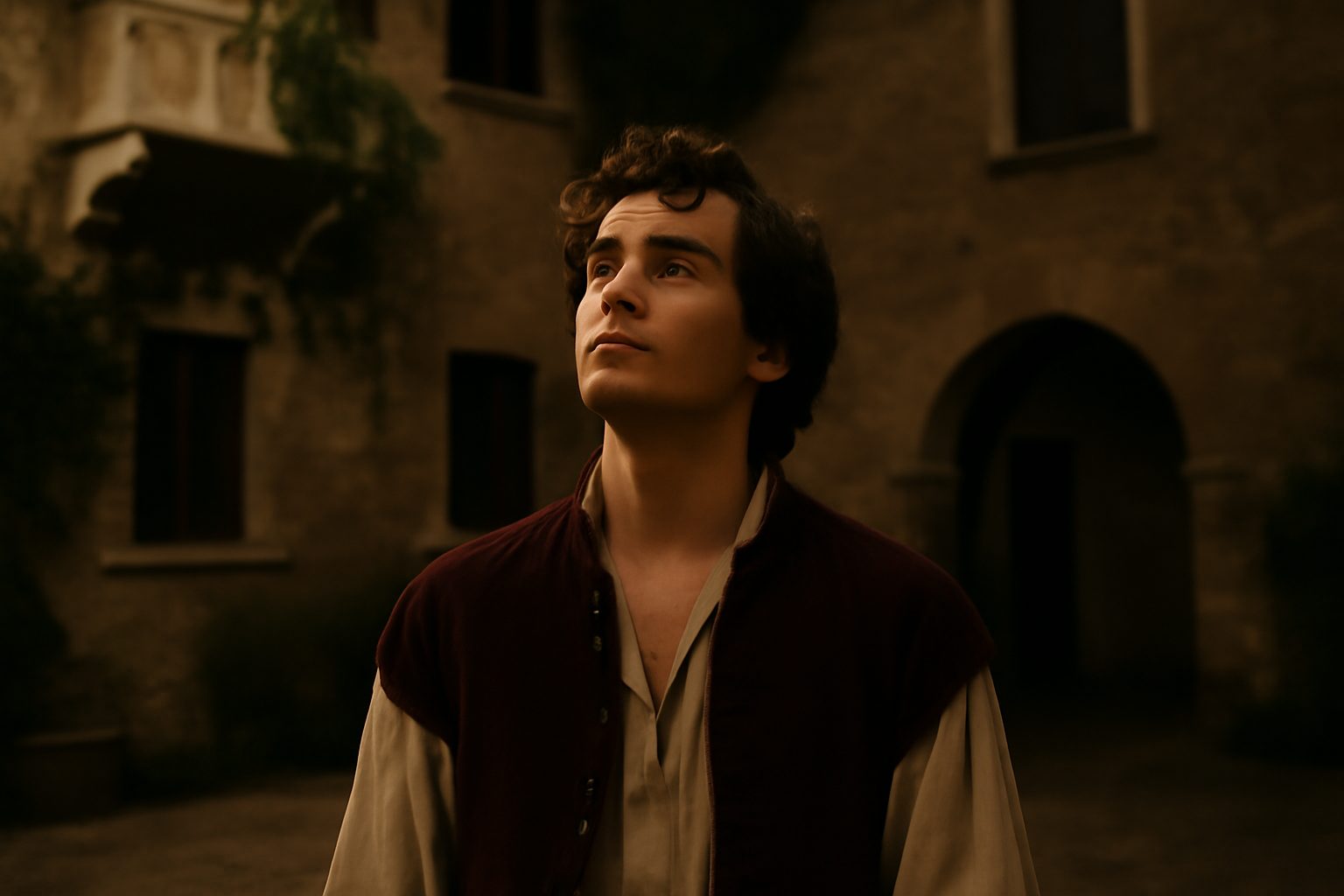
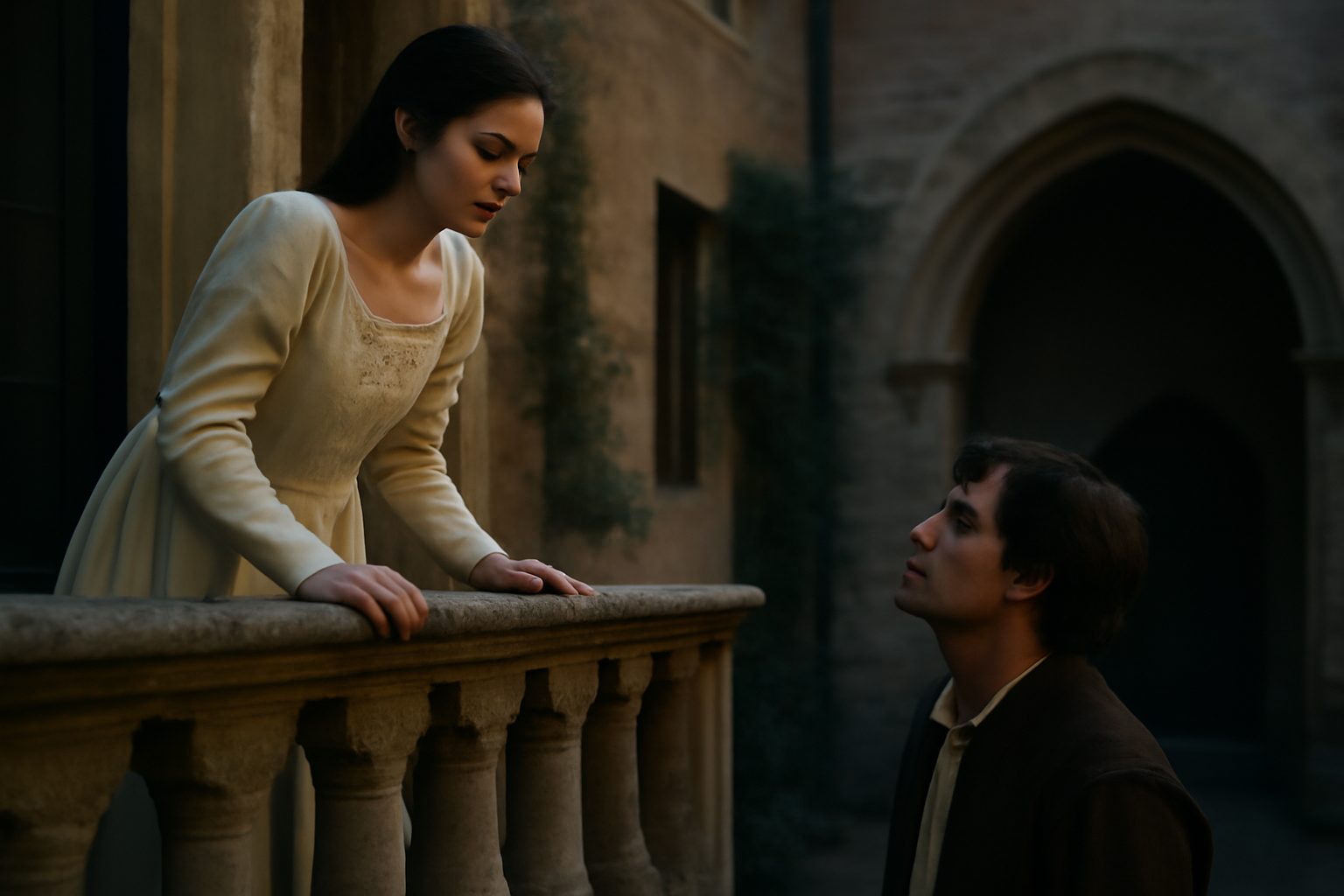
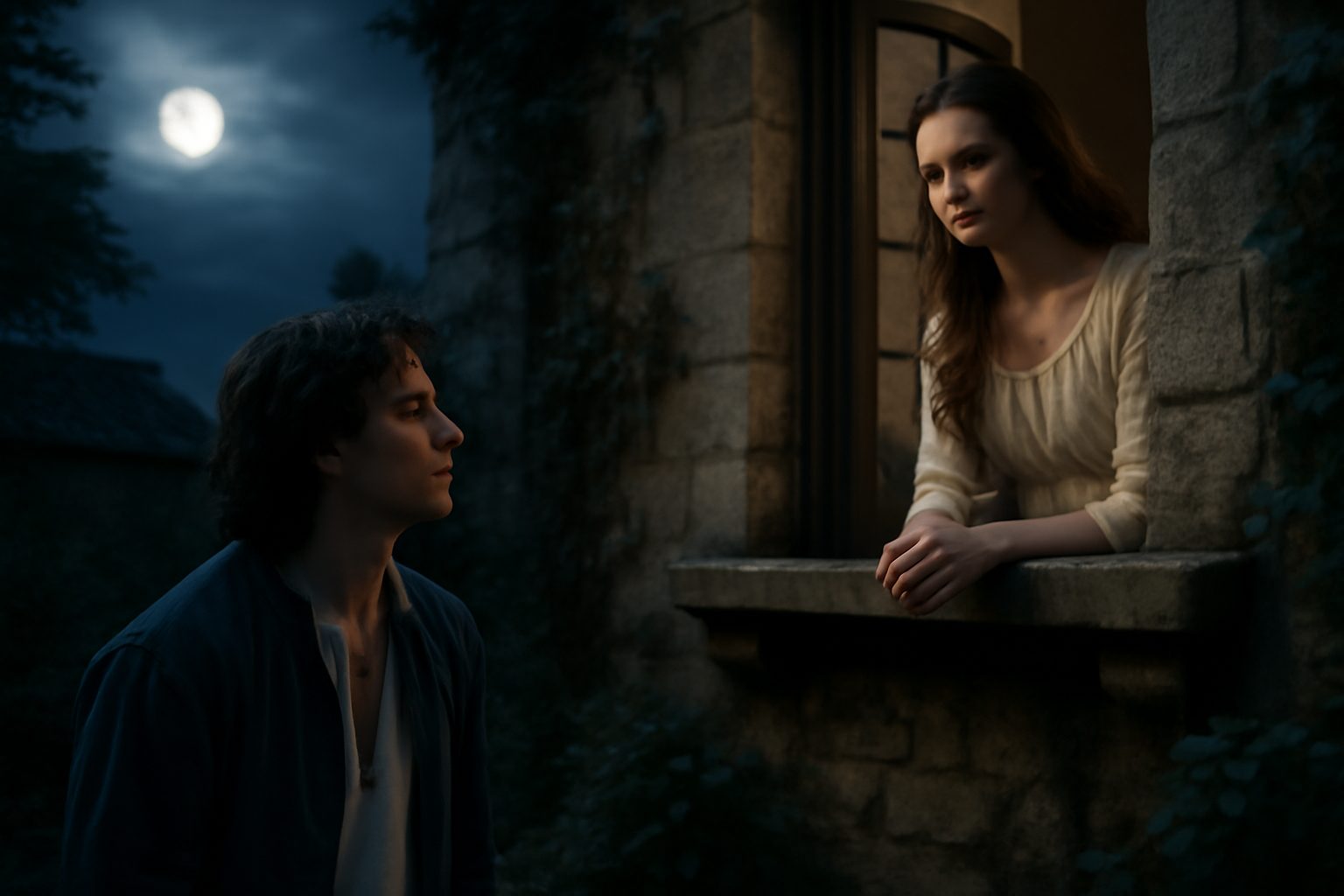
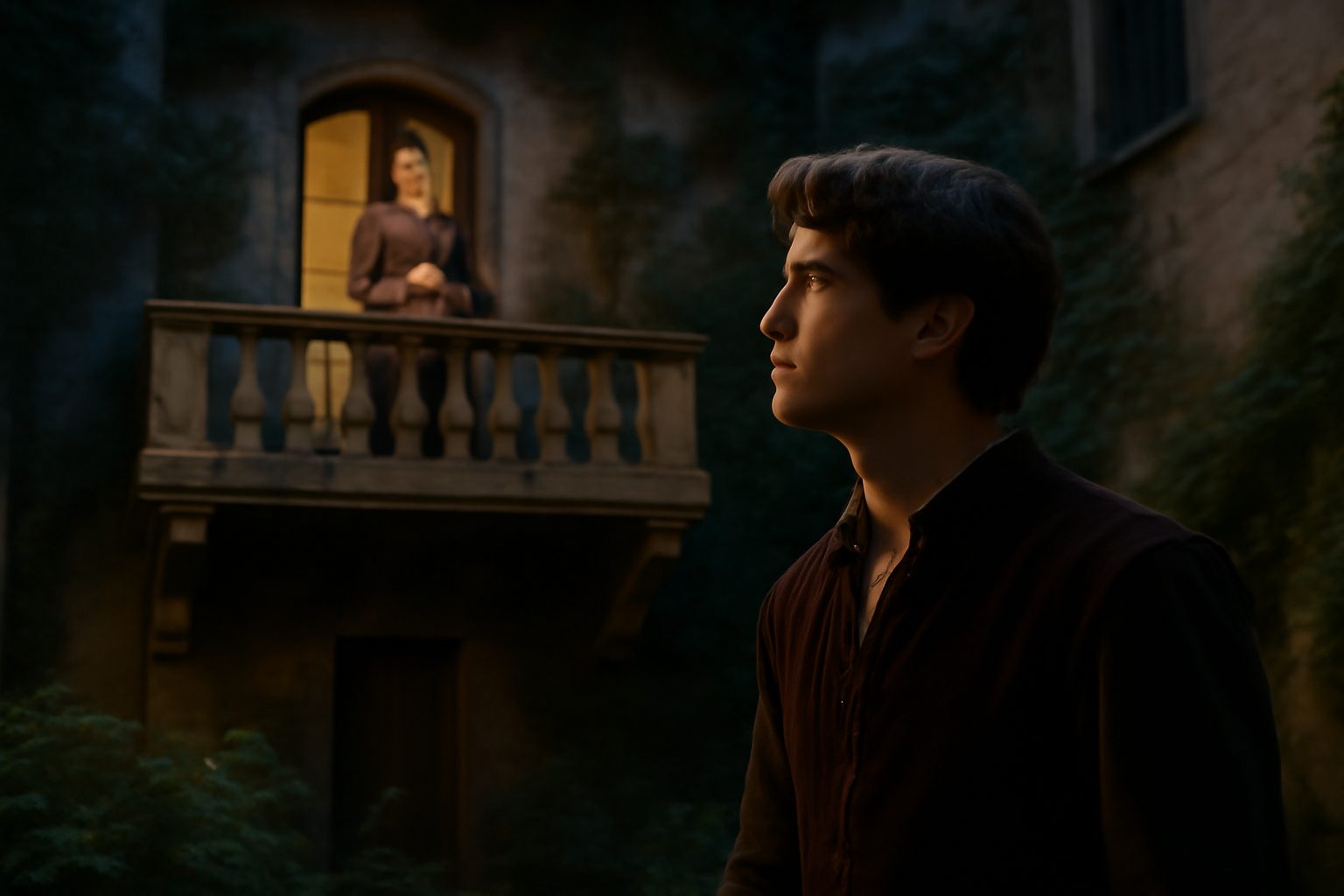
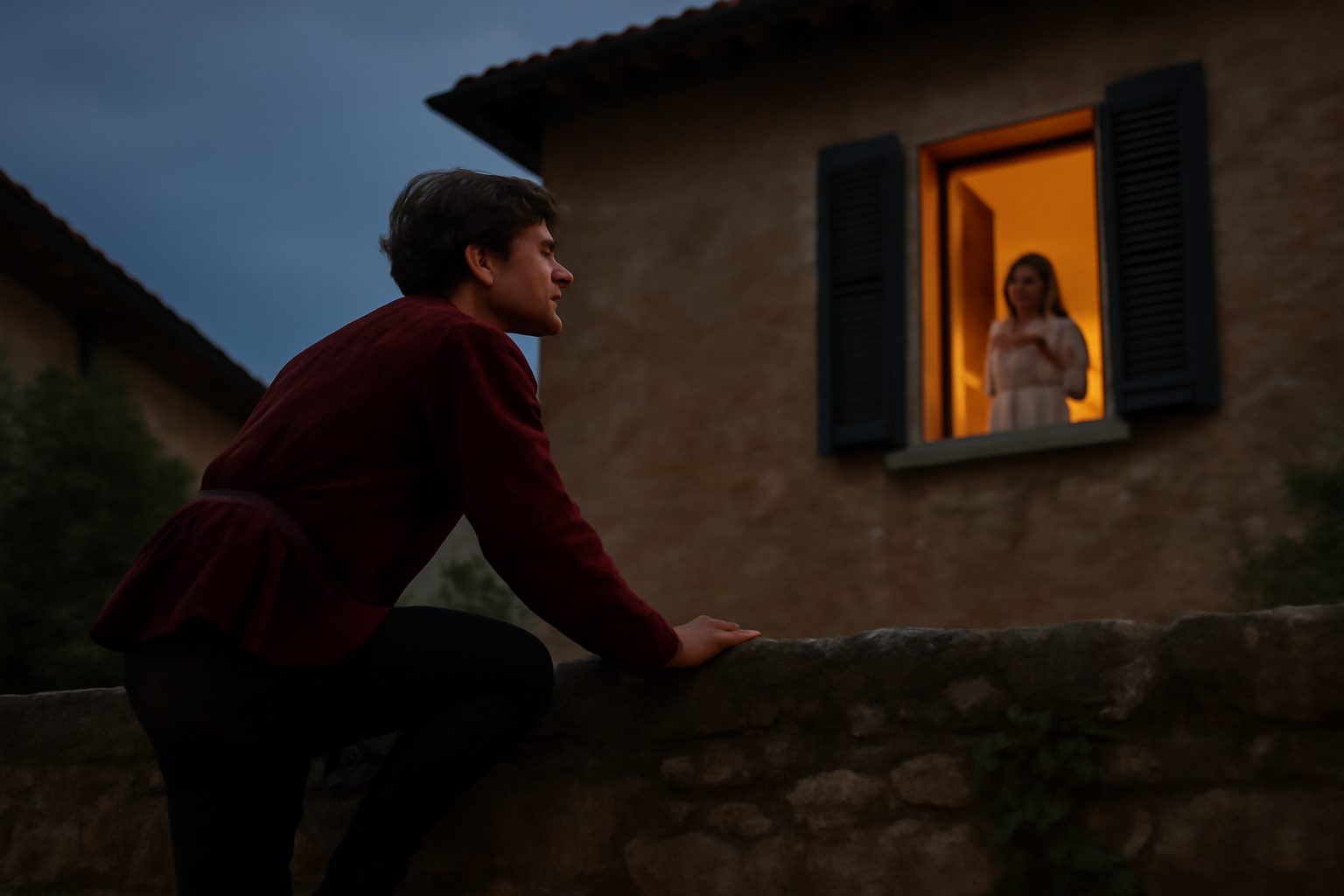
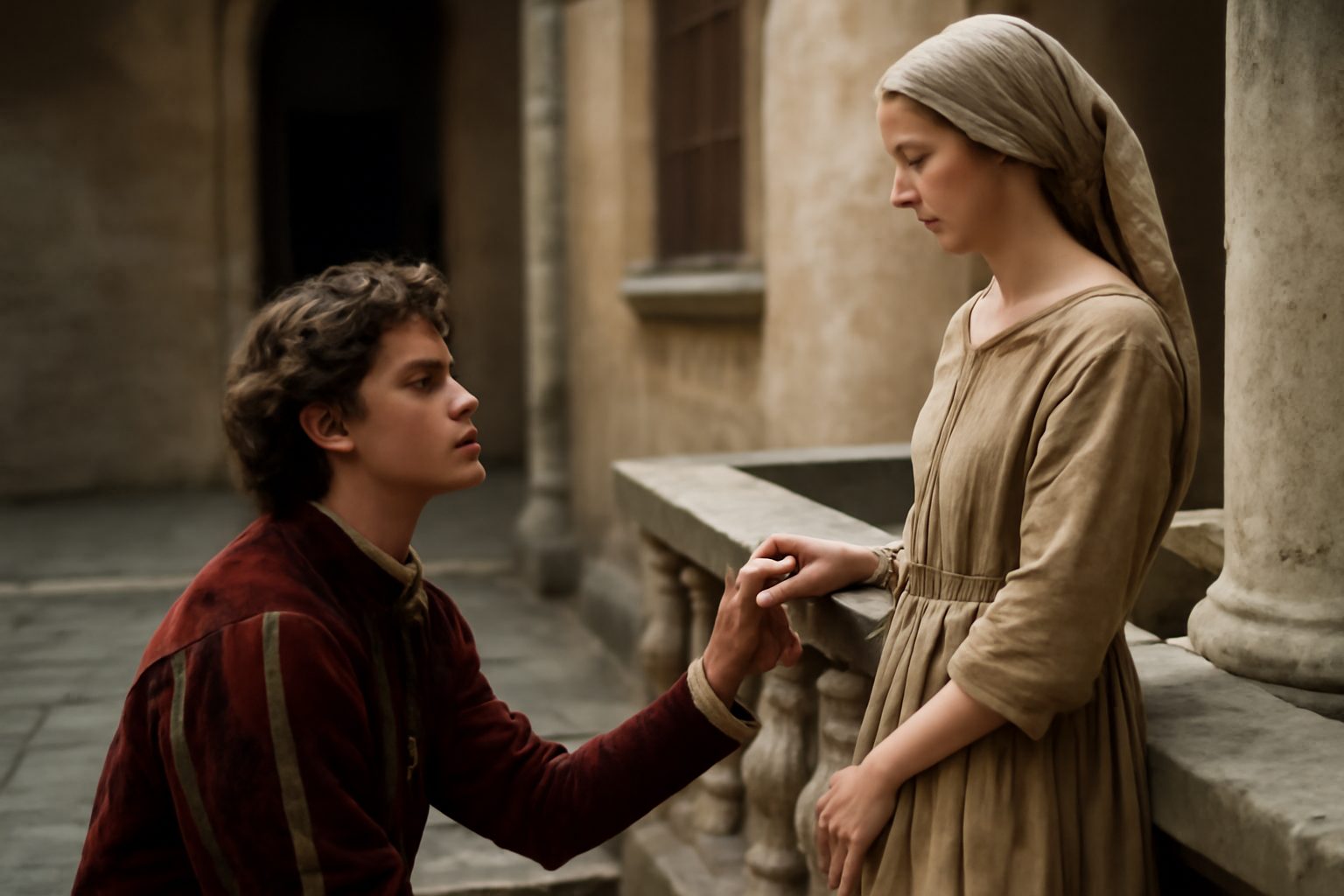
In Act 2, Scene 1 of Romeo and Juliet, Mercutio mocks Romeo's lovestruck behavior after he disappears into the Capulet orchard. Standing outside with Benvolio, Mercutio teasingly calls out to Romeo, listing exaggerated labels that highlight his friend's infatuation with Juliet. This moment contrasts Mercutio's playful cynicism with Romeo's earnest passion, setting up the scene's shift to the famous balcony exchange.
Mercutio: "Romeo! humours! madman! passion! lover!"
In modern day english, we would say:
Romeo! You're so moody and crazy, always so dramatic and lovesick!
Frequently Asked Questions
What is Mercutio doing when he says these words about Romeo?
Mercutio is teasing Romeo and making fun of his love for Juliet.
Why does Mercutio call Romeo these names?
Mercutio is joking about Romeo's dramatic behavior because of his strong feelings for Juliet.
Connections to other verses:
Connections to "Romeo! humours! madman! passion! lover!"
This exclamation by Mercutio serves as a mocking catalog of Romeo's lovelorn state, connecting thematically and dramatically to several other verses in the scene.
Mocking Invocations and Conjurations
Mercutio's teasing directly follows his declaration in Nay, I'll conjure too, where he decides to humorously "conjure" Romeo. The list of epithets in this verse amplifies his playful ridicule, which he continues in The ape is dead, and I must conjure him, comparing Romeo to a lifeless performer needing revival.
References to Blind Passion
Mercutio's mention of "madman" and "passion" aligns with his later observation in Blind is his love and best befits the dark, criticizing Romeo's irrational infatuation. This idea is further explored in If love be blind, love cannot hit the mark, where Mercutio cynically notes love's impracticality.
Contrast with Benvolio's Pragmatism
Benvolio's warning in And if he hear thee, thou wilt anger him highlights the contrast between Mercutio's jesting and Benvolio's concern, emphasizing Mercutio's disregard for Romeo's sensitive state. Similarly, Benvolio's earlier line He is wise (referring to Romeo hiding) subtly contrasts with Mercutio's portrayal of him as foolishly passionate.
Sexual Innuendo and Wordplay
Mercutio's ribald humor, evident in this verse, culminates in his later speeches, such as Now will he sit under a medlar tree and And wish his mistress were that kind of fruit, where he uses double entendre to mock Romeo's desires. This connects to the closing jest in An open et caetera, thou a poperin pear!, reinforcing Mercutio's earthy wit.
Abandonment and Resolution
Mercutio's failure to provoke Romeo leads to their departure, as seen in Come, shall we go? and Go, then; for 'tis in vain, underscoring the futility of their search and leaving Romeo to his solitary passion.