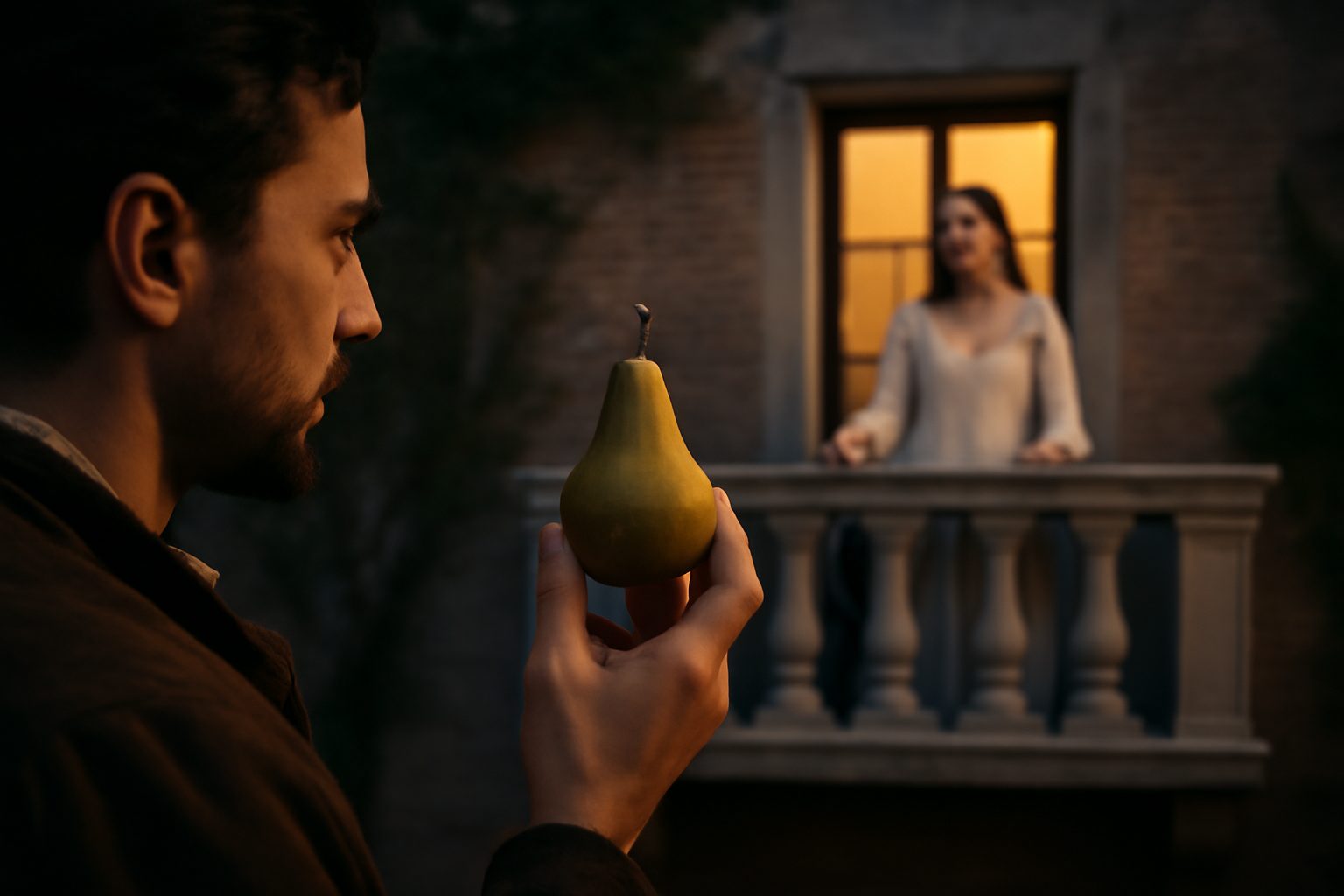
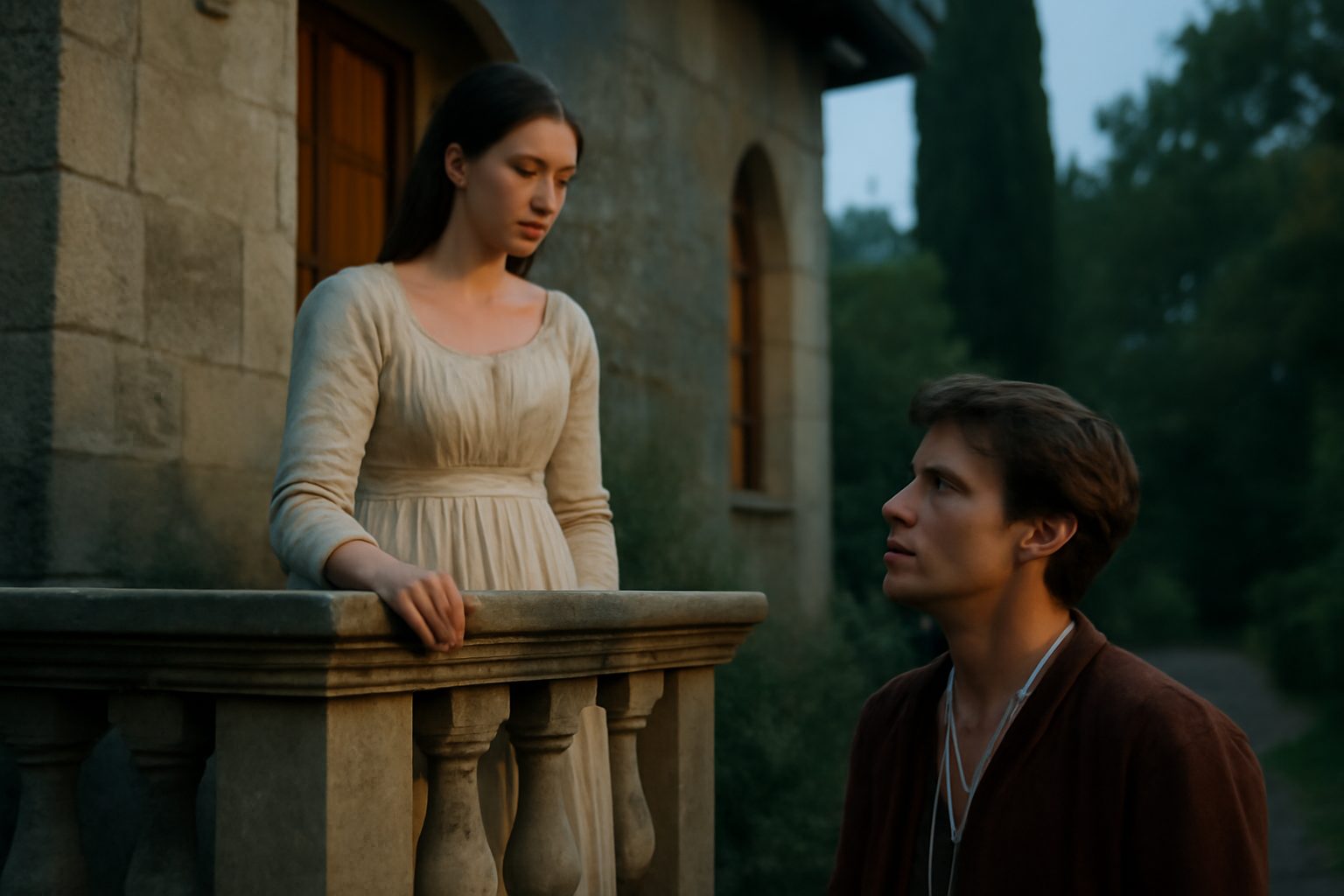
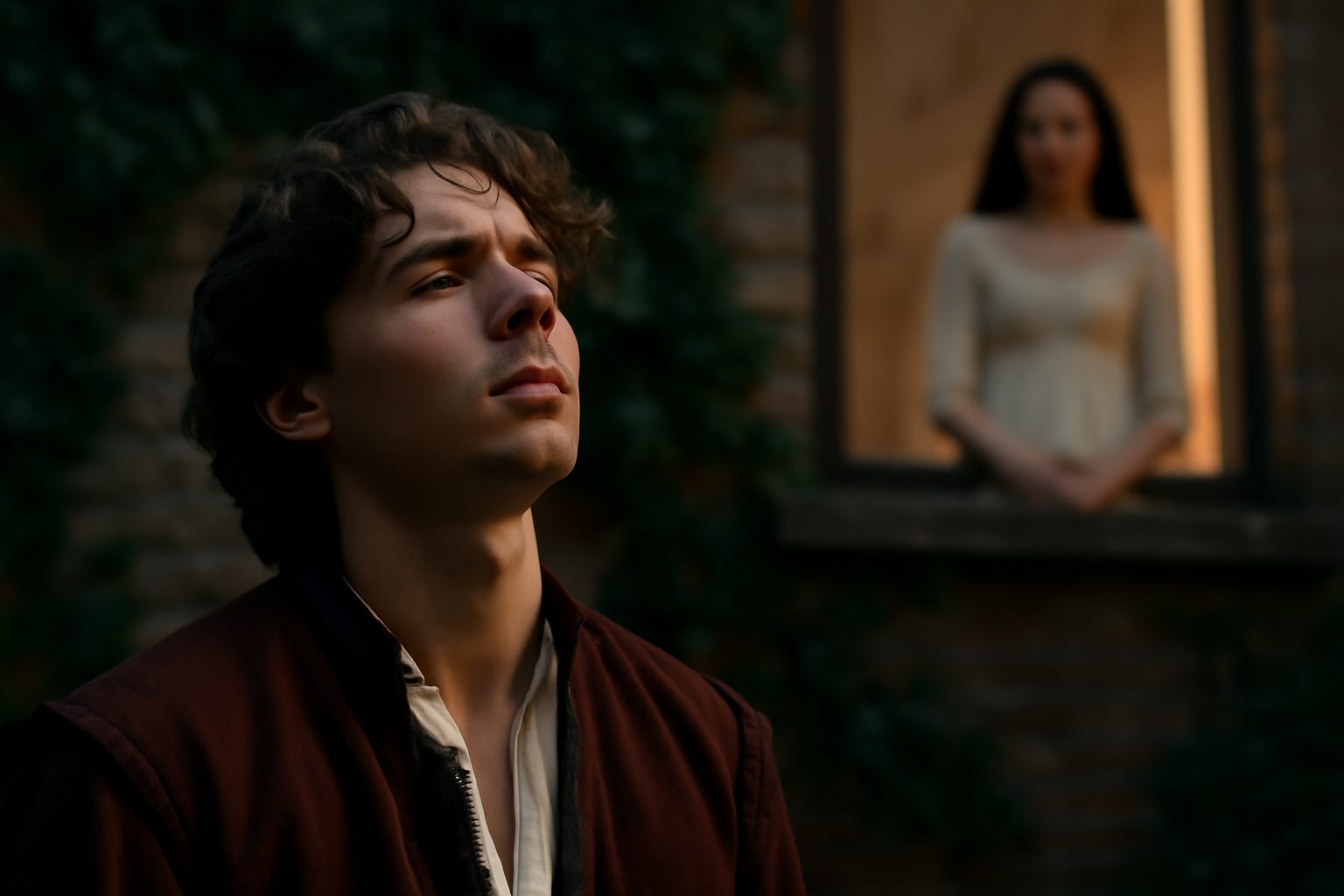
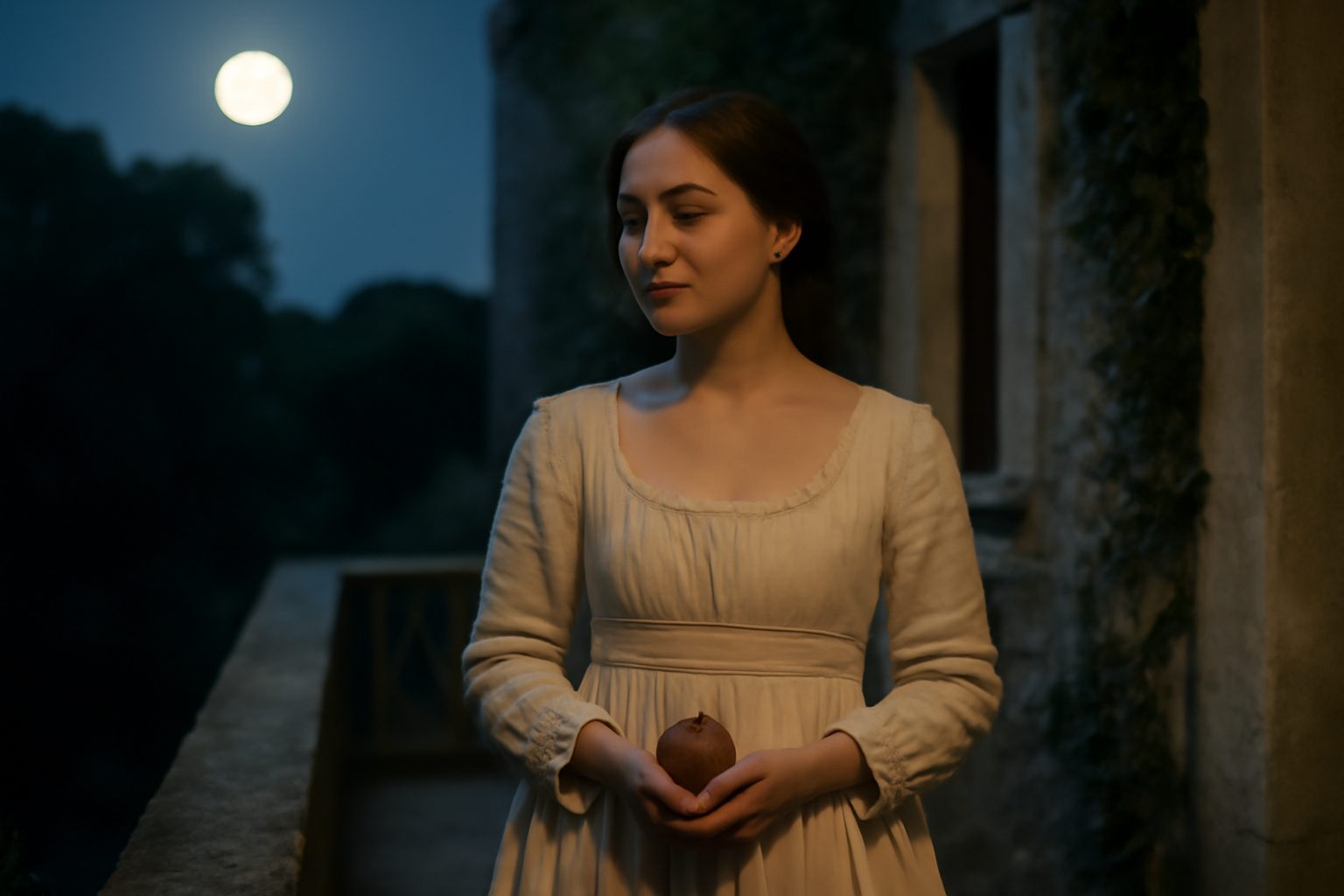
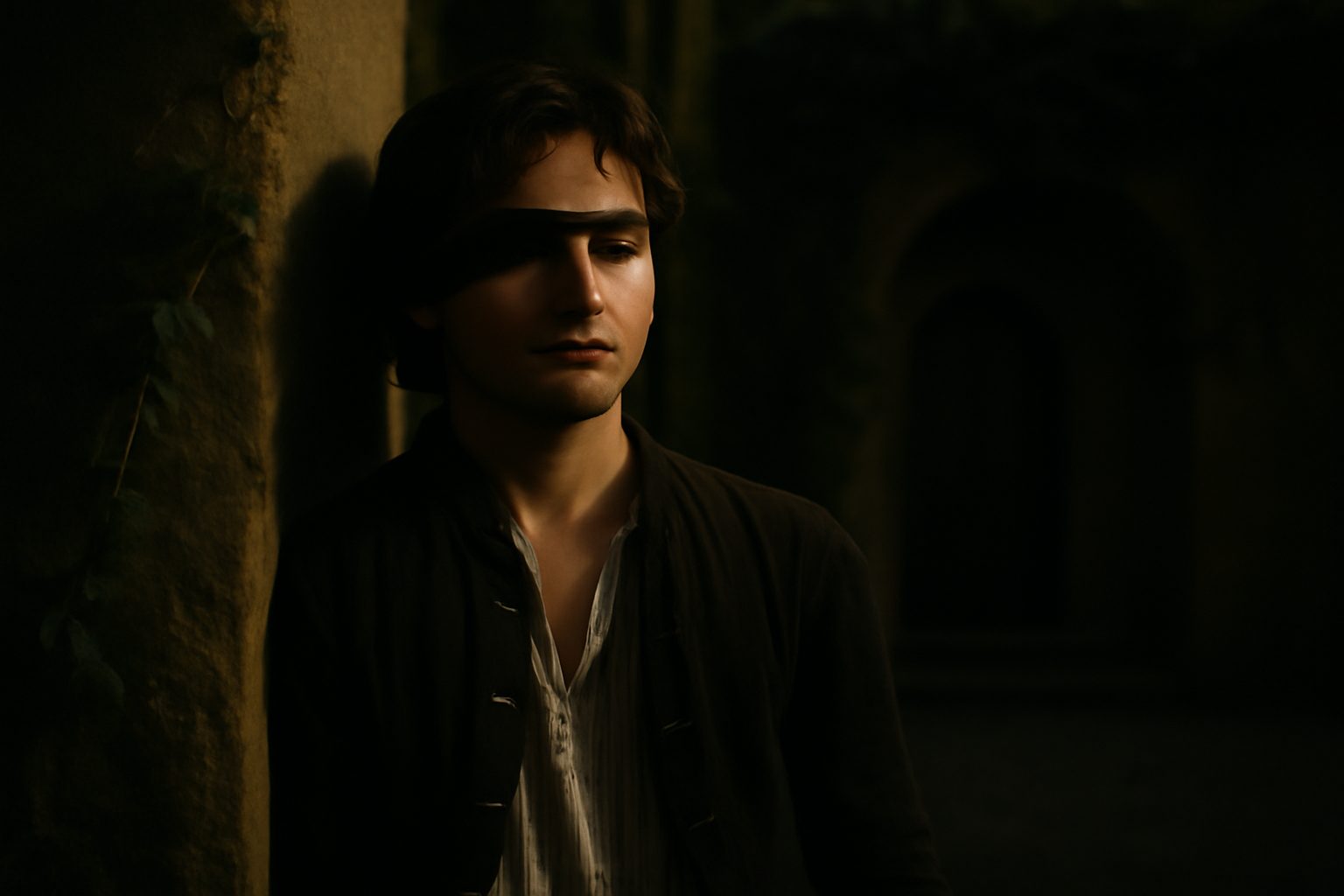
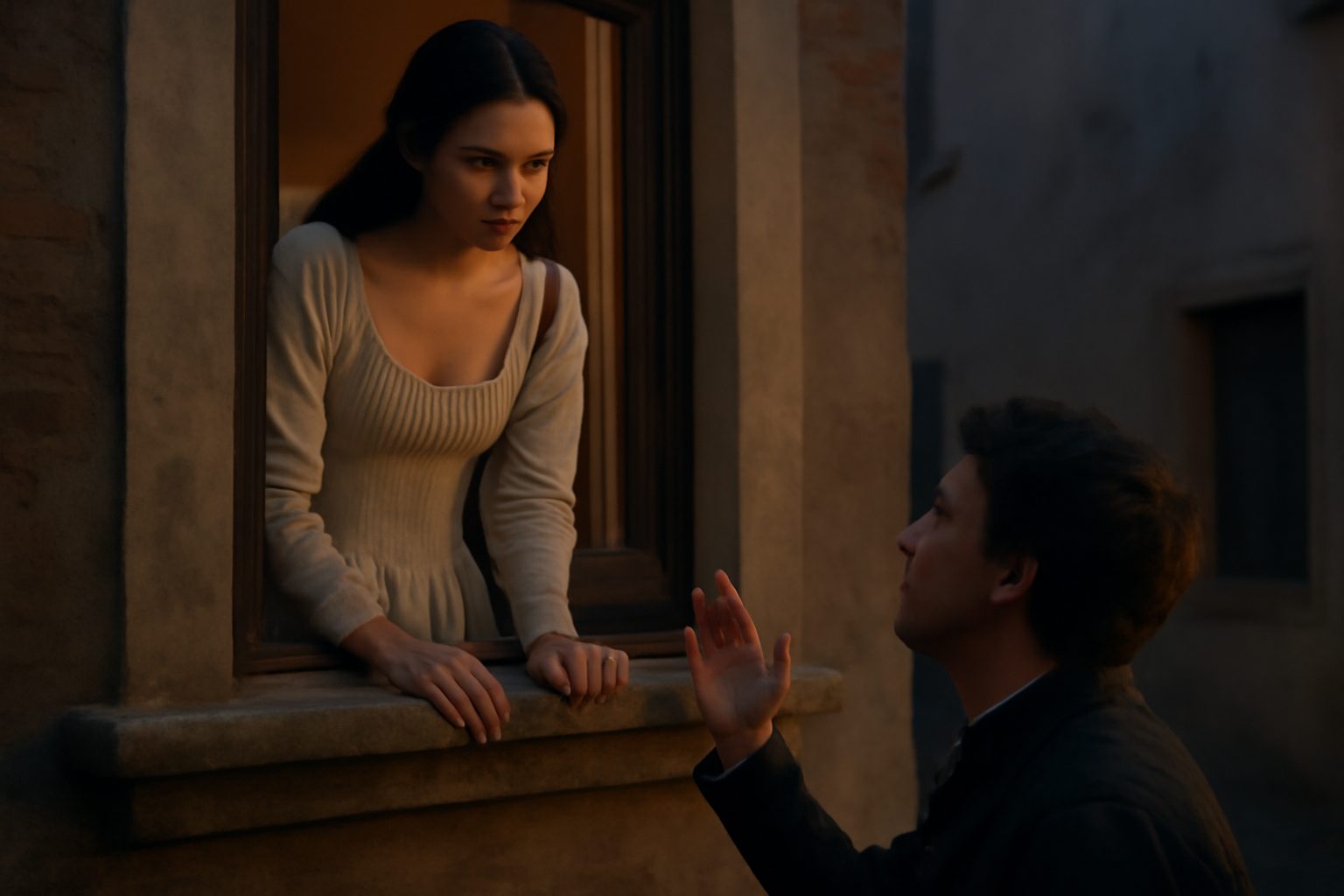
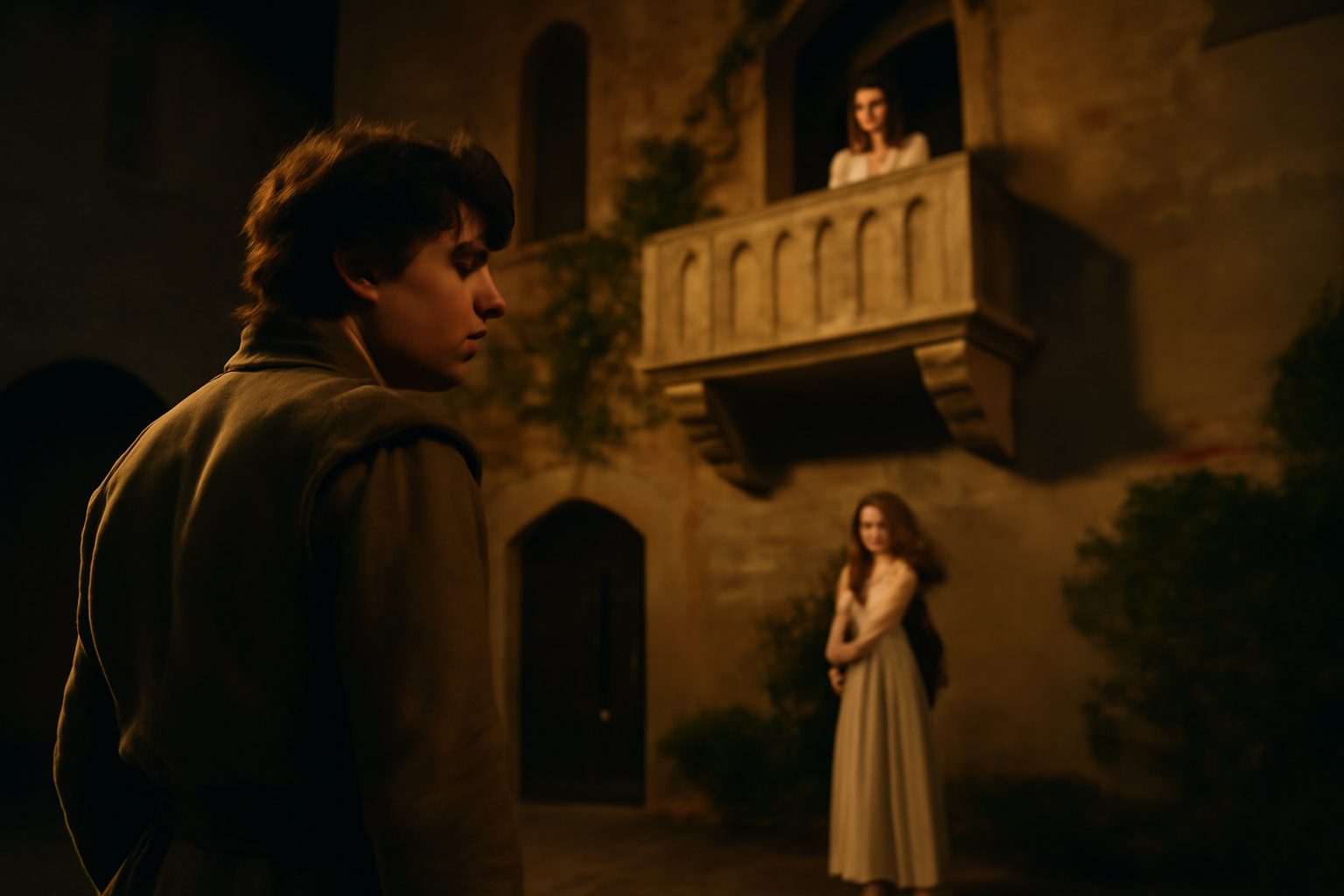
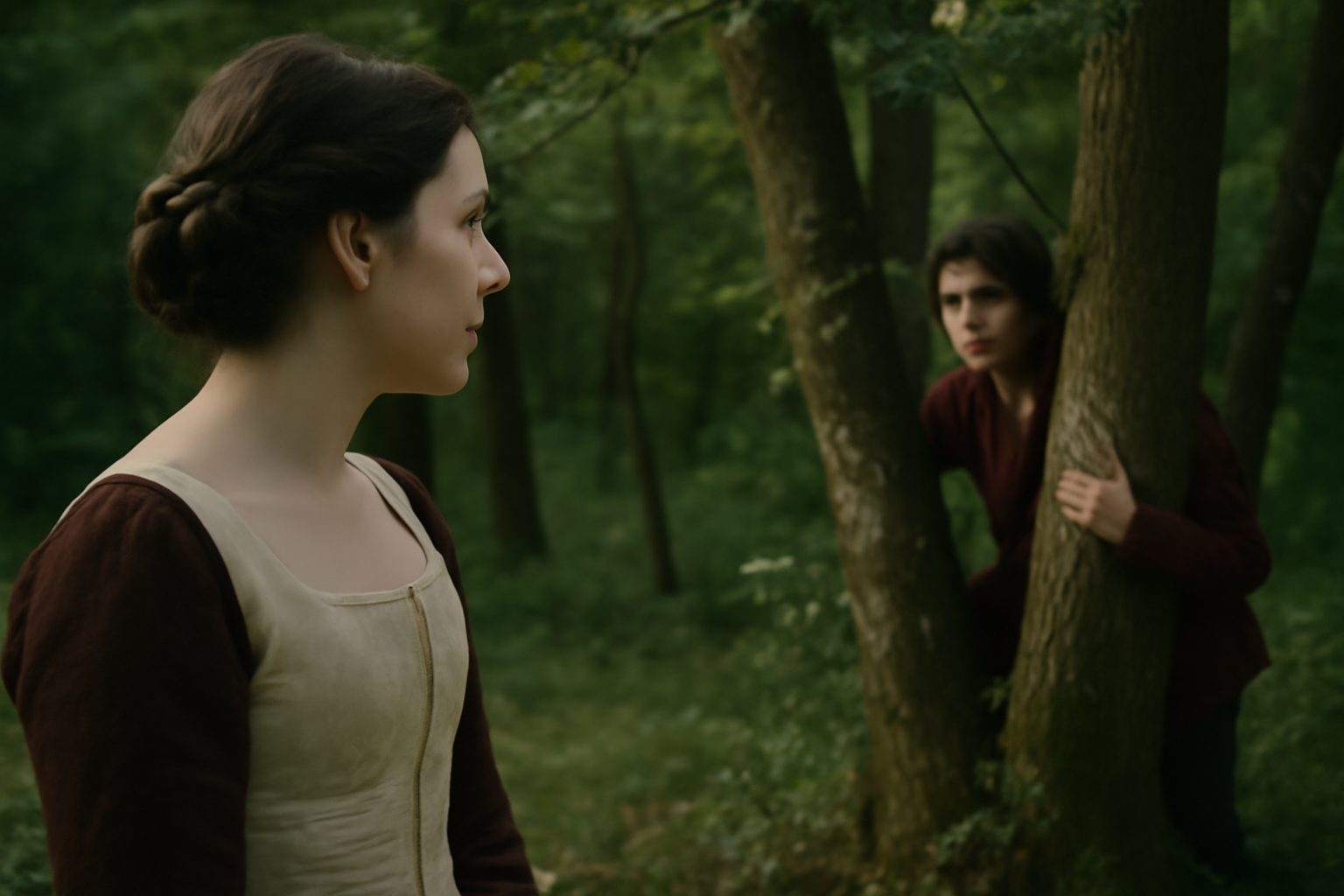
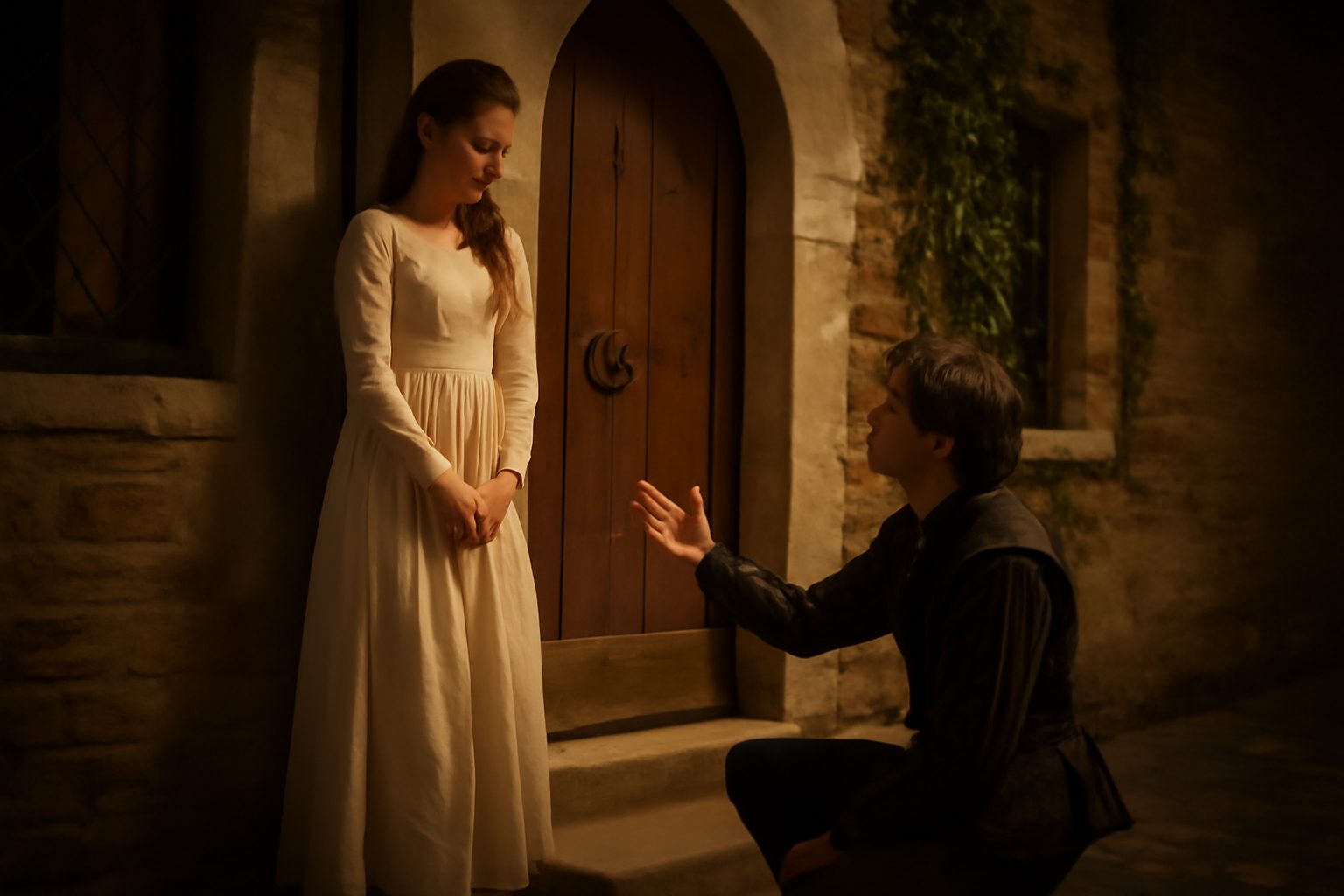
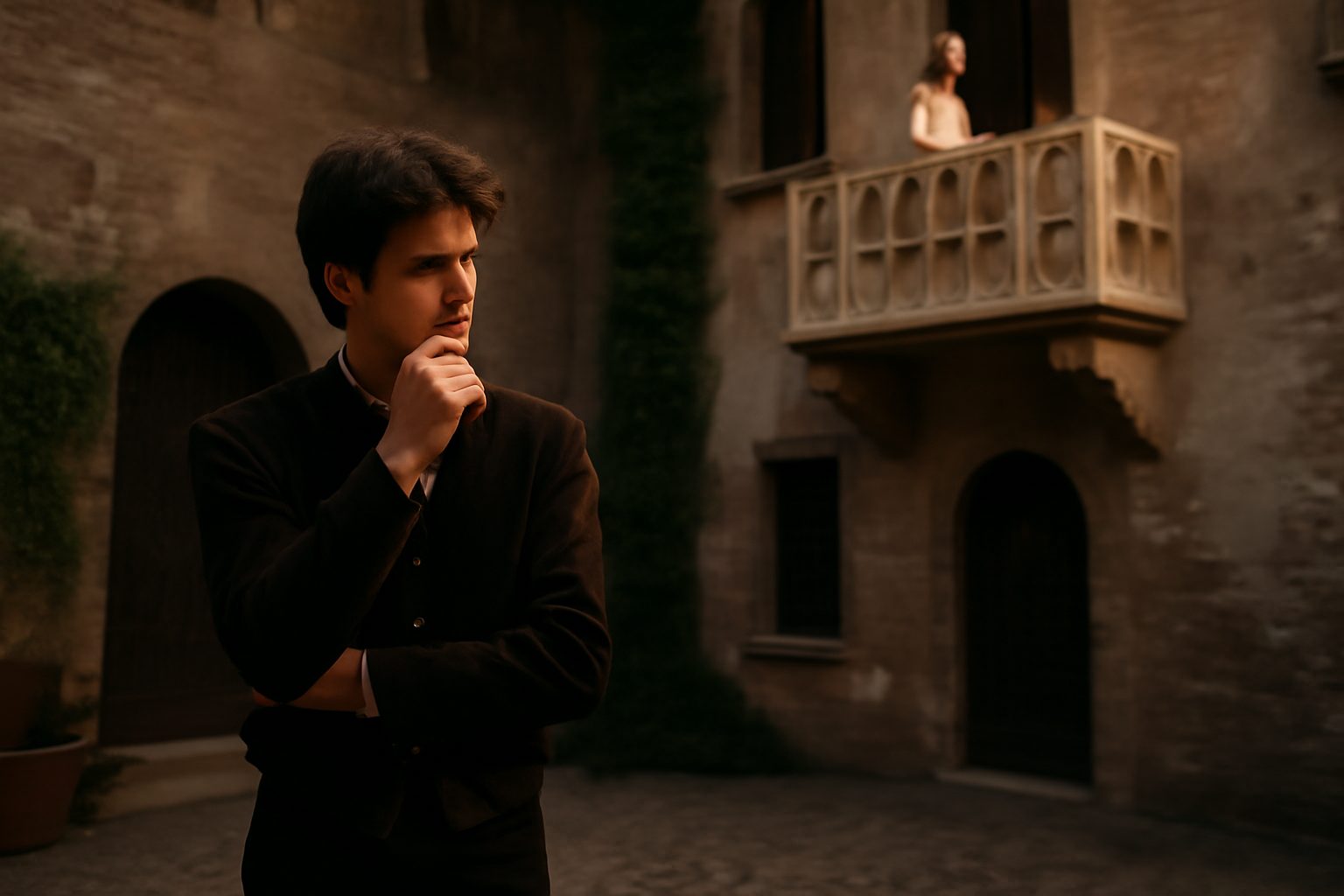
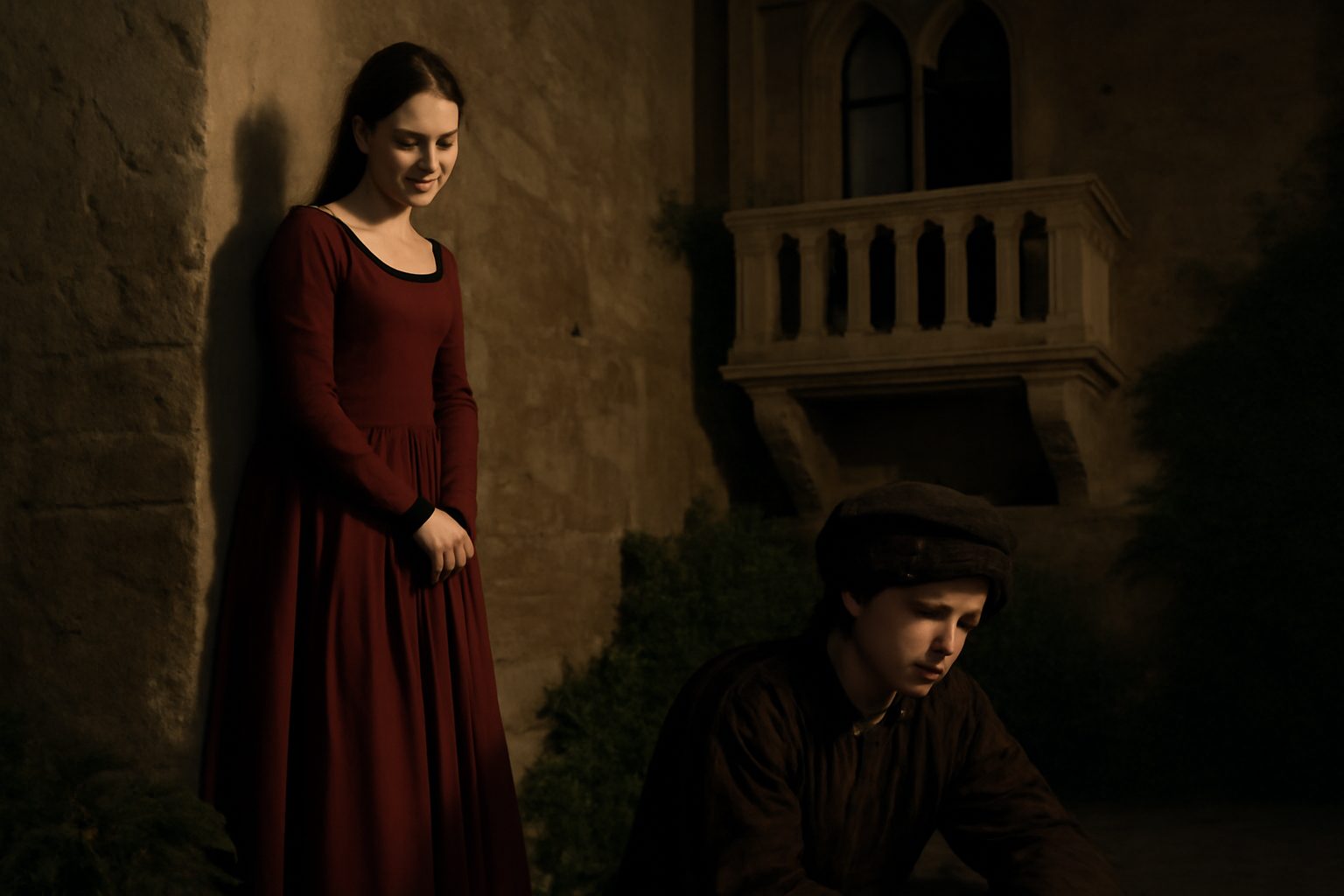
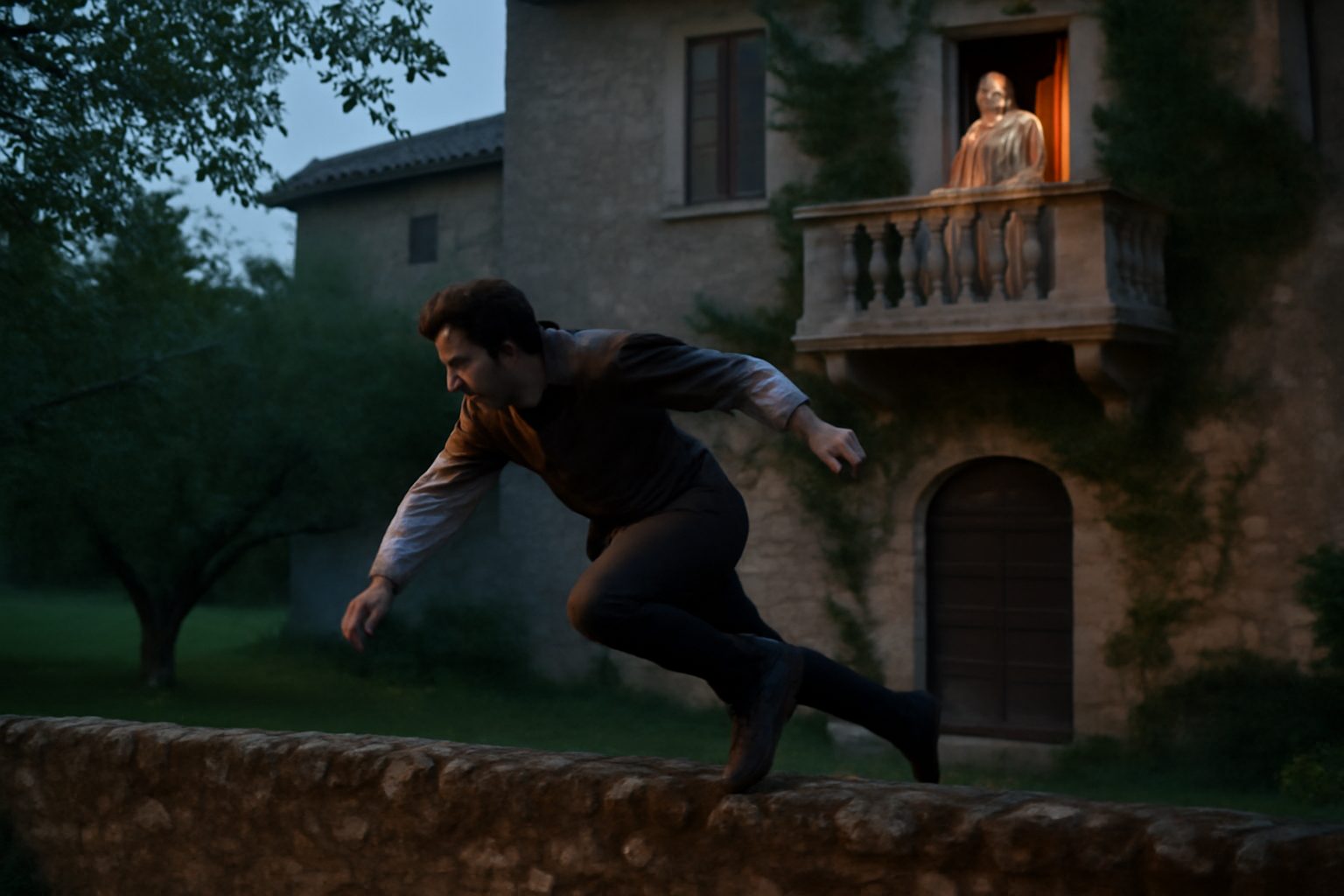
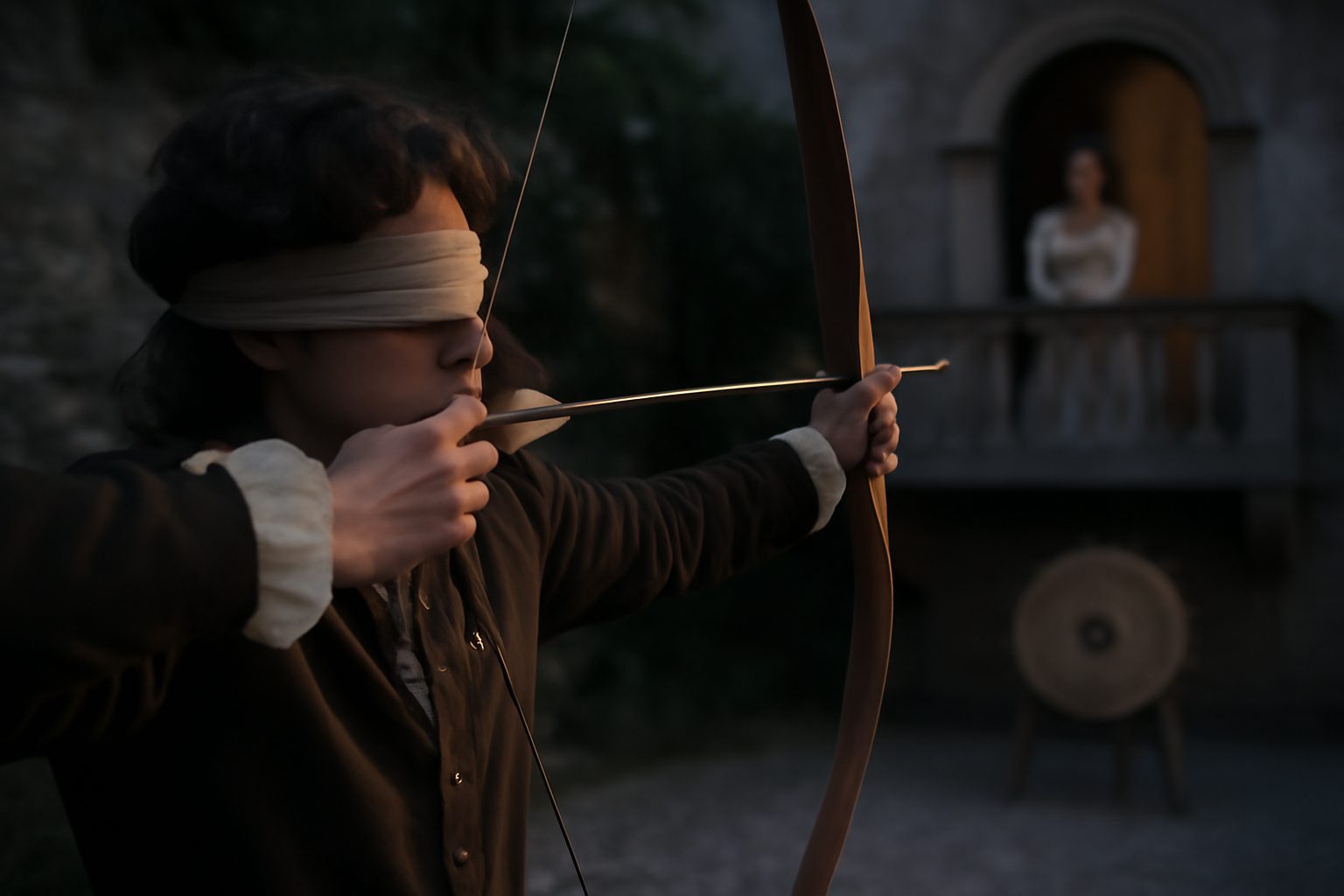
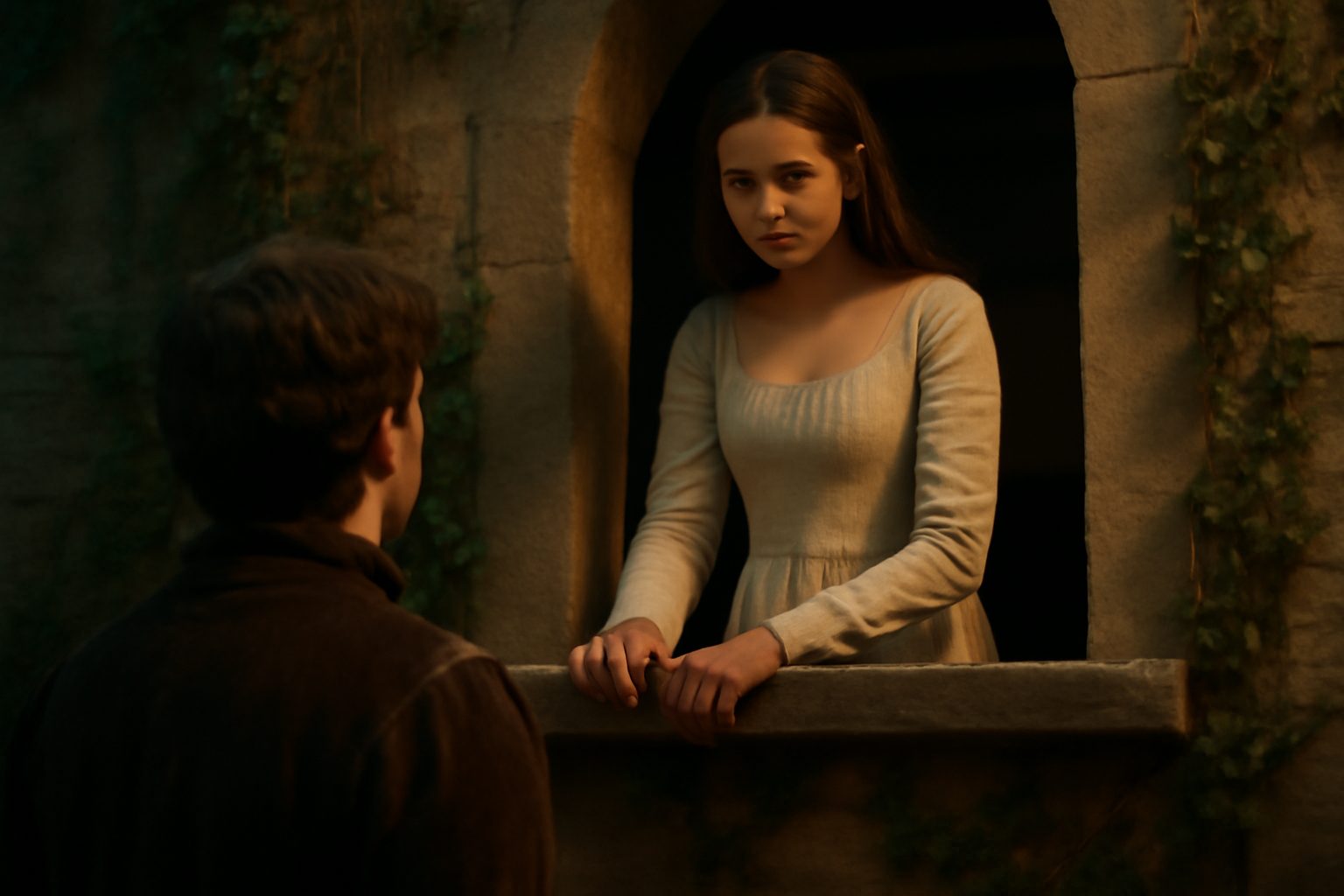
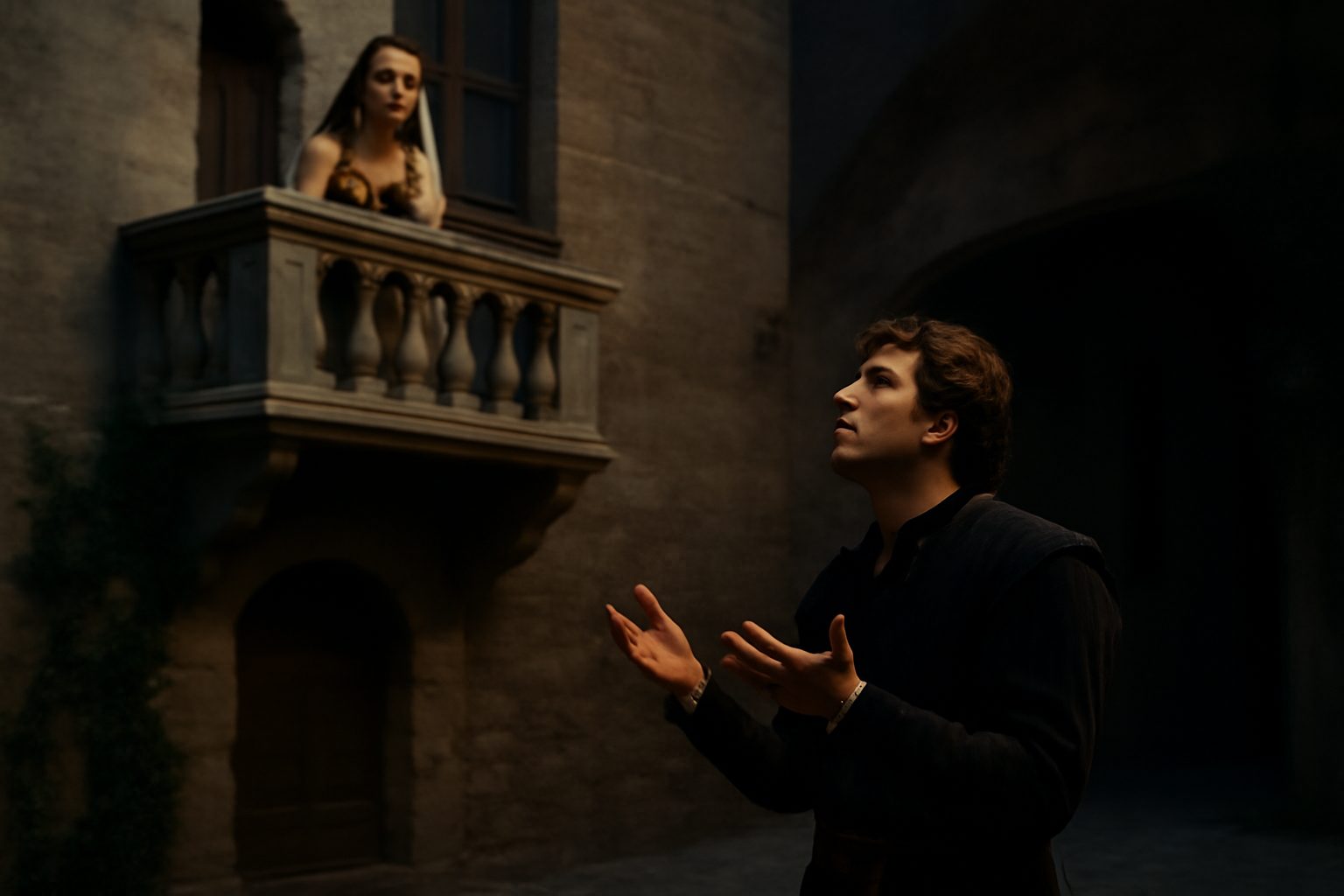
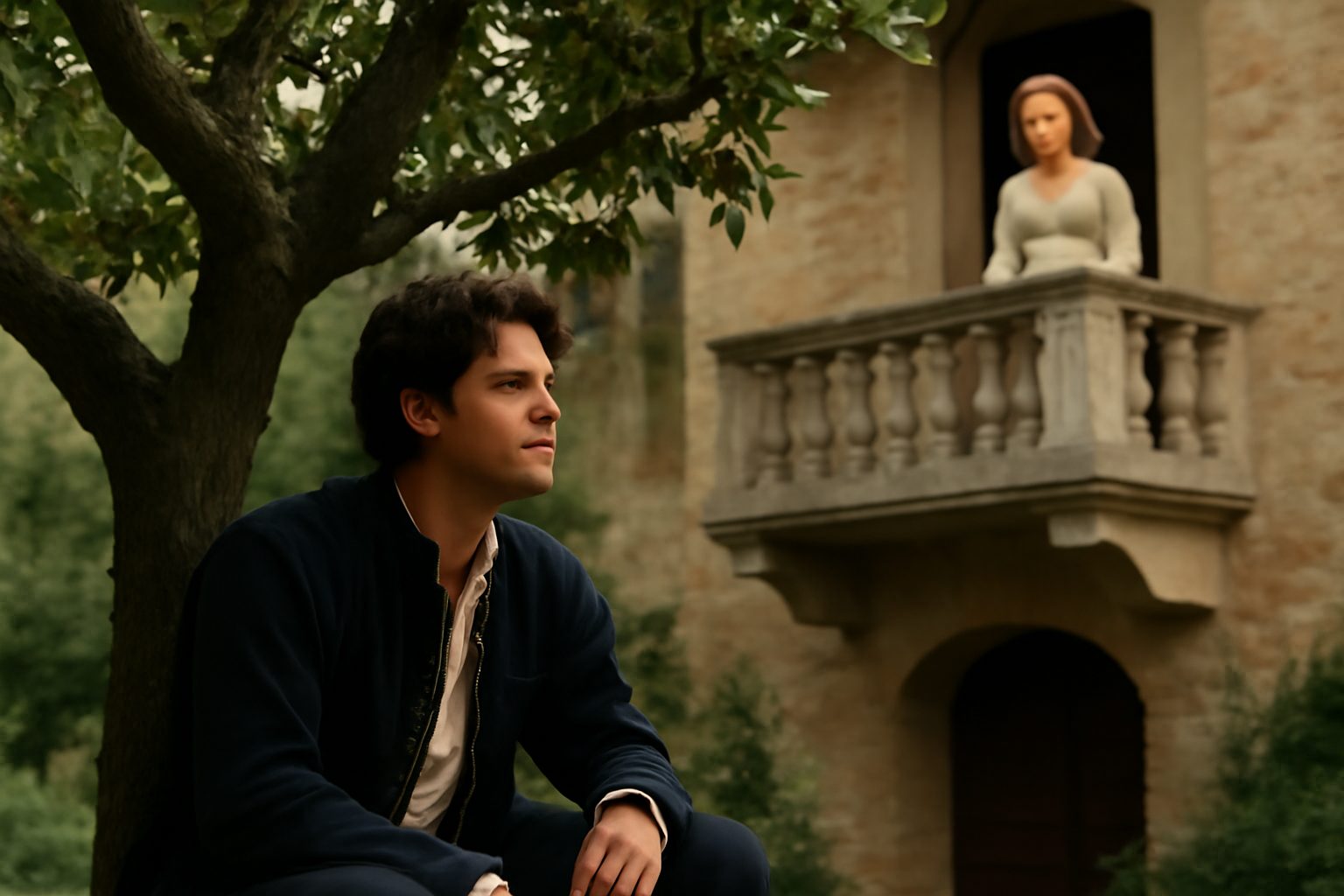
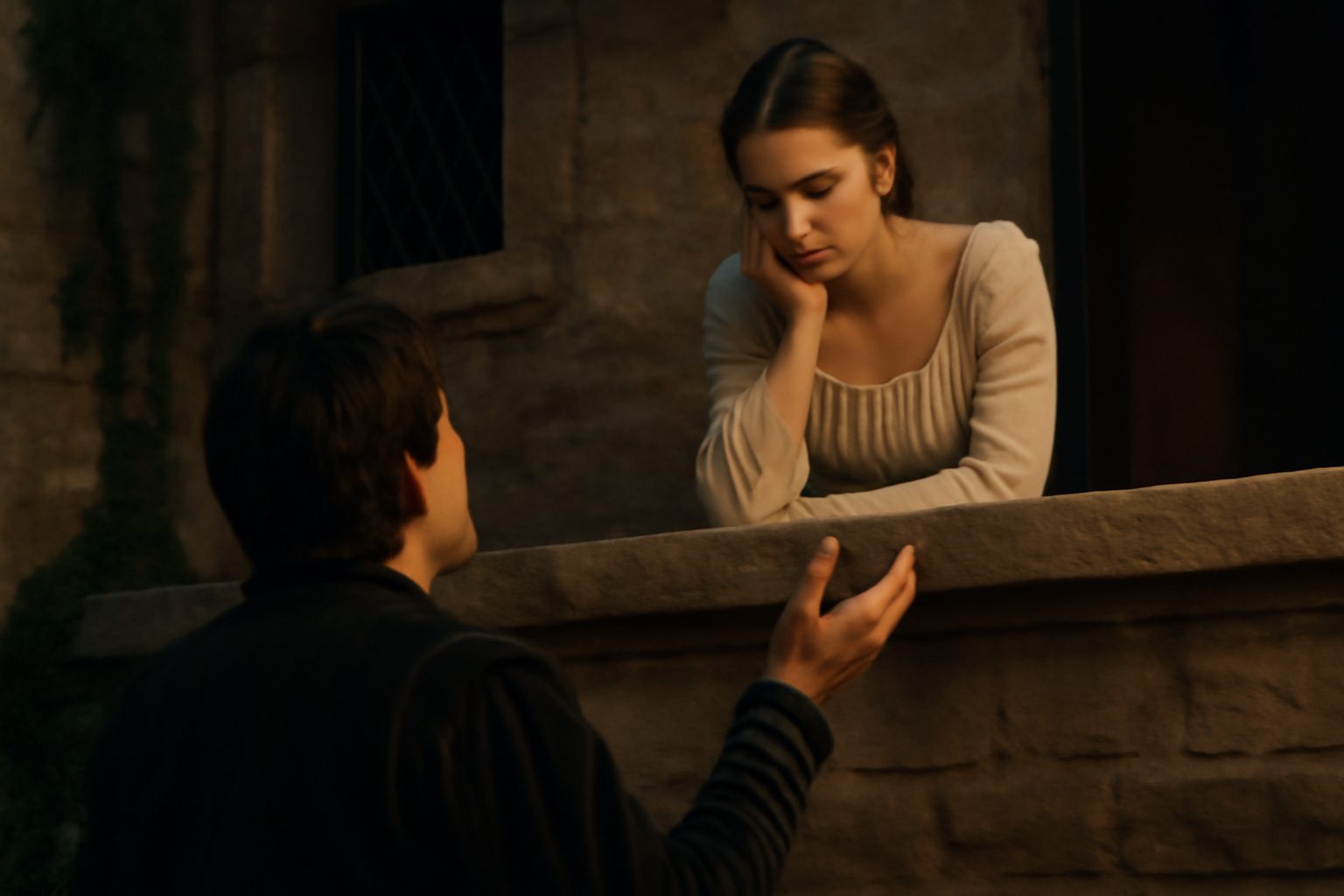
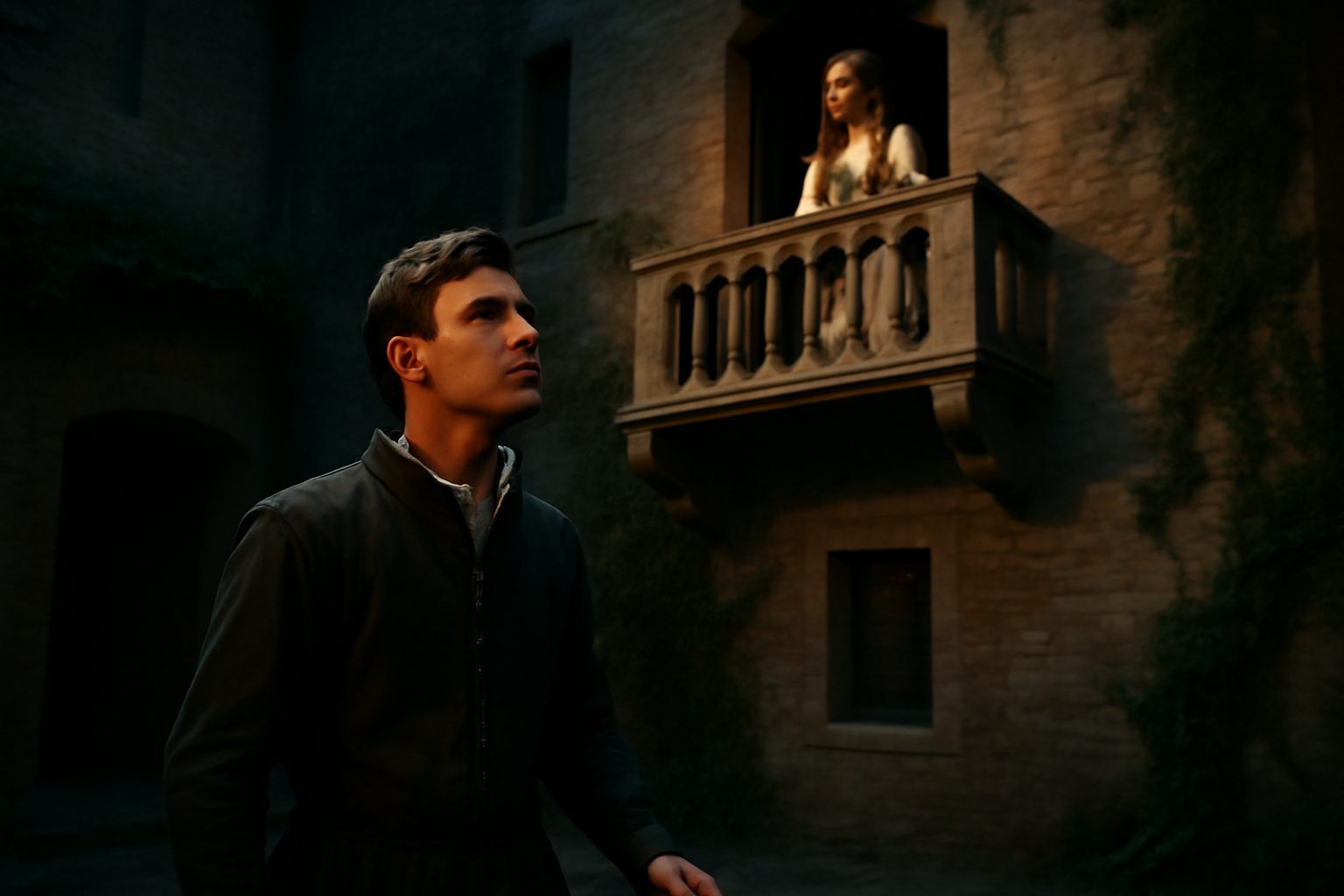
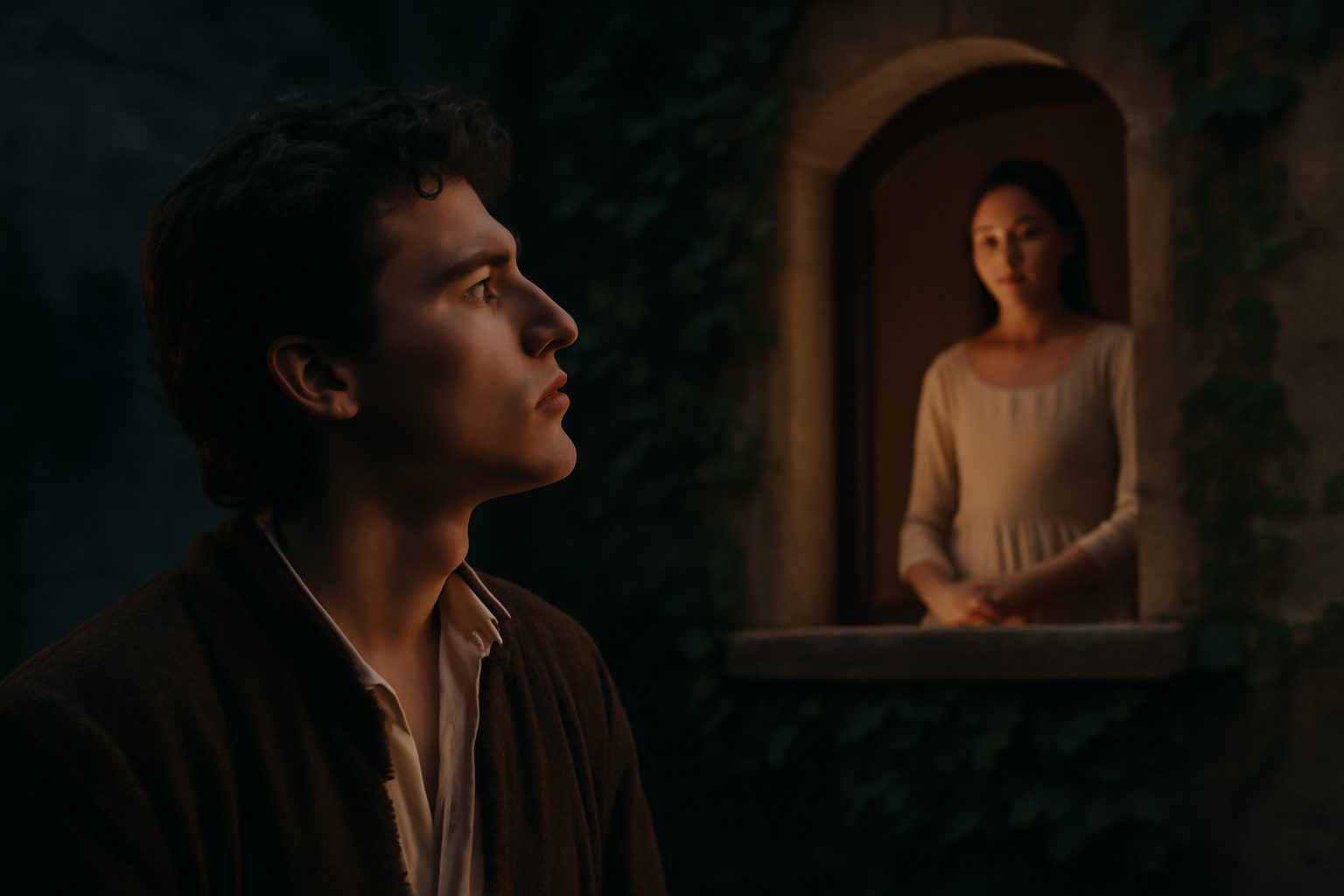
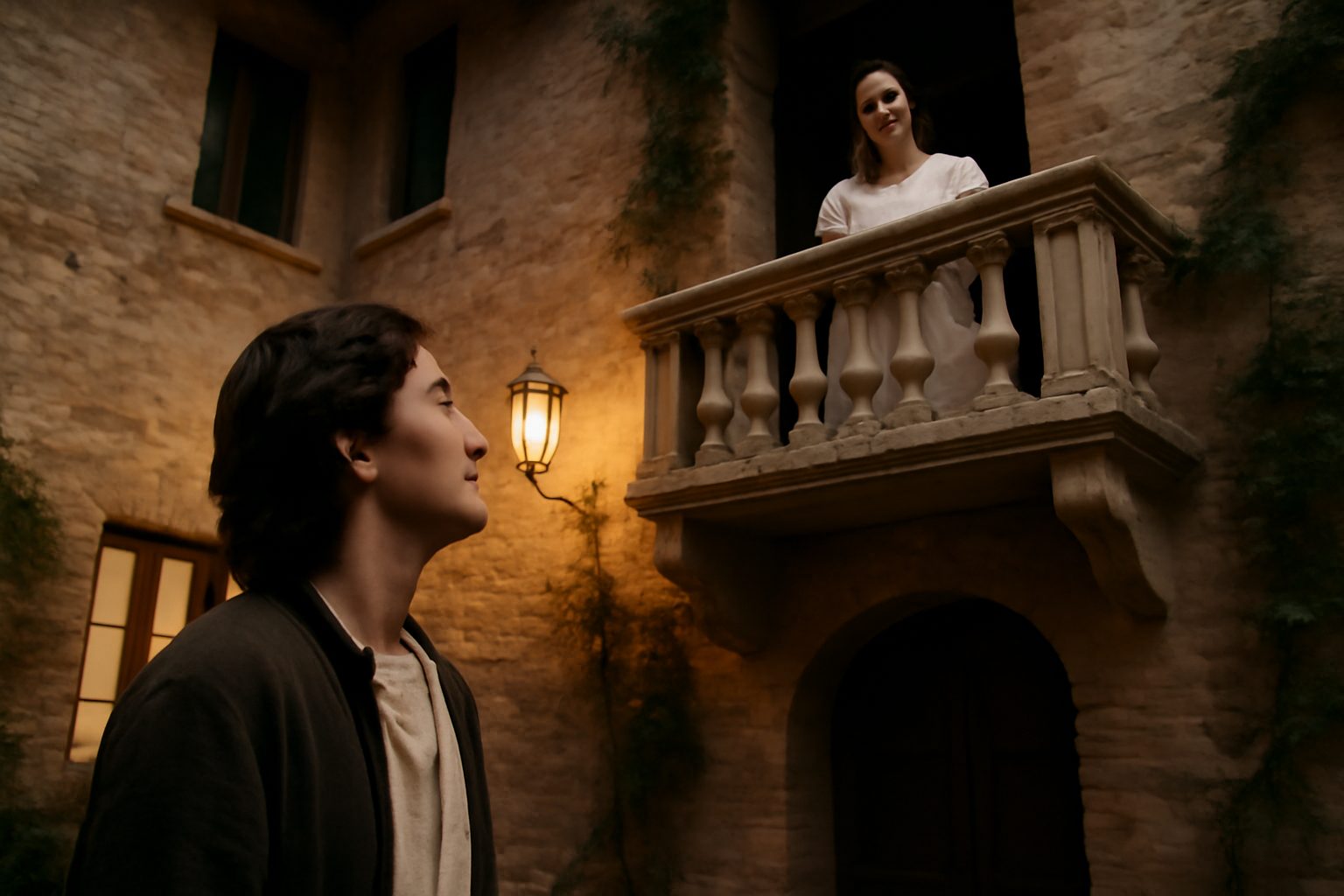
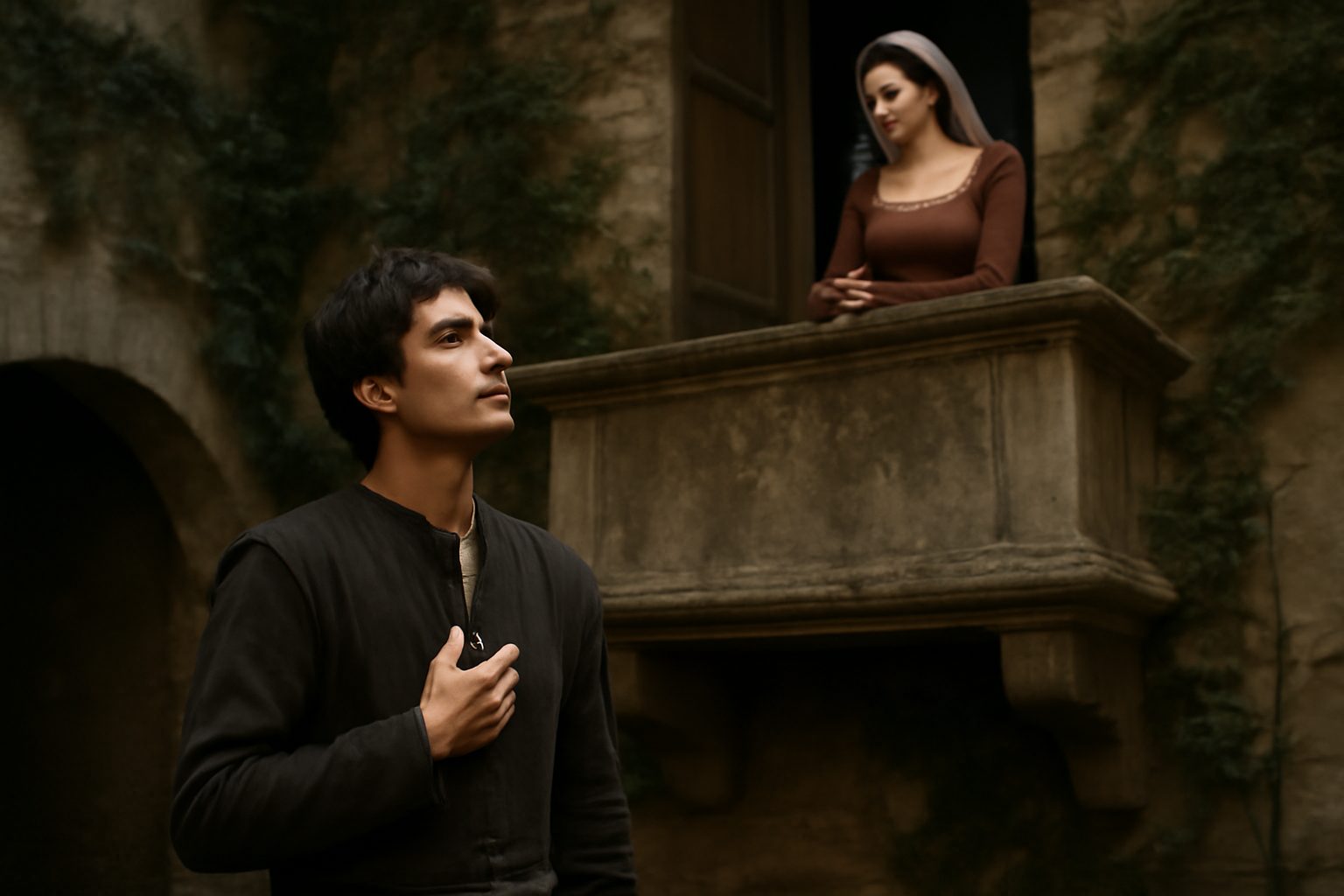
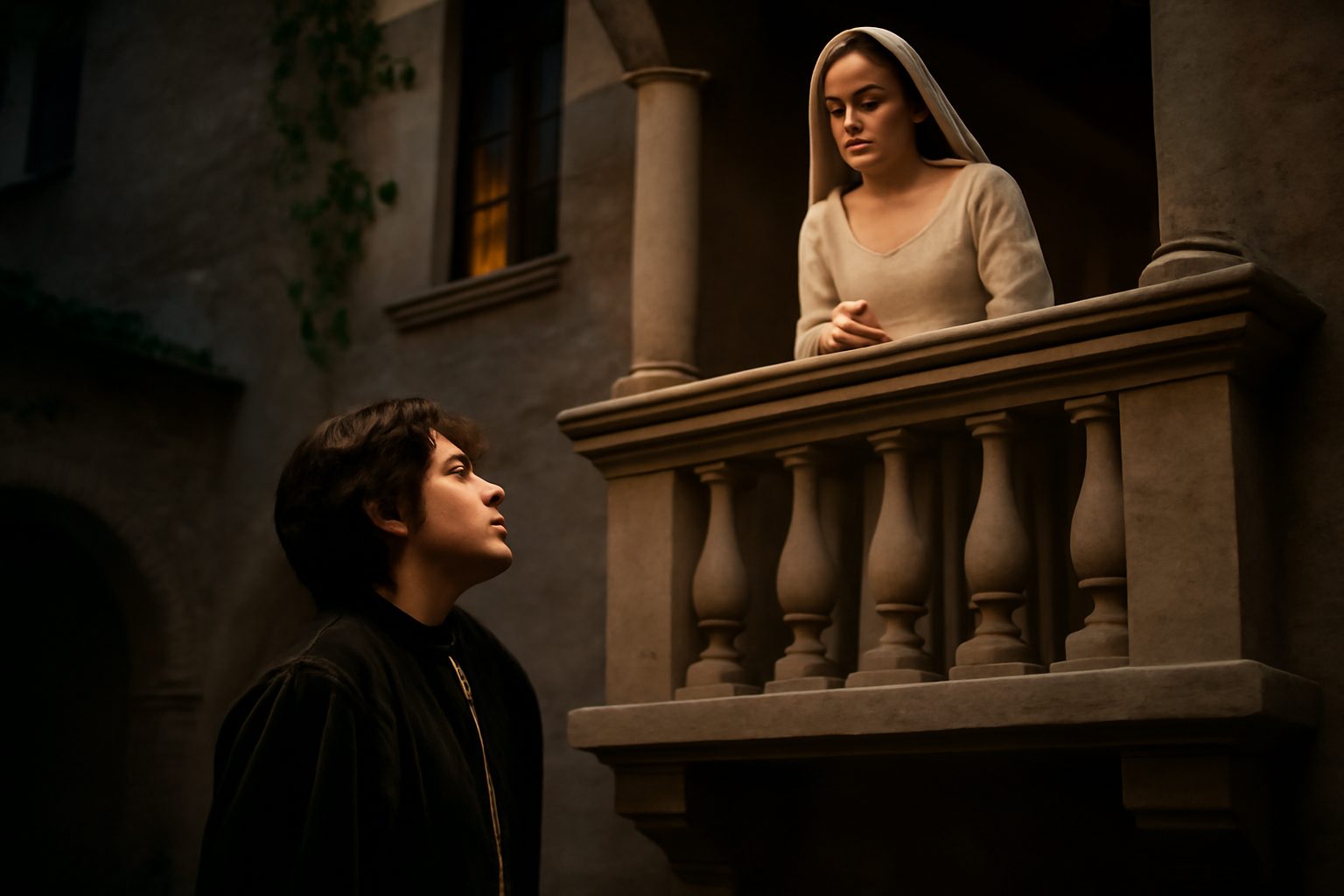
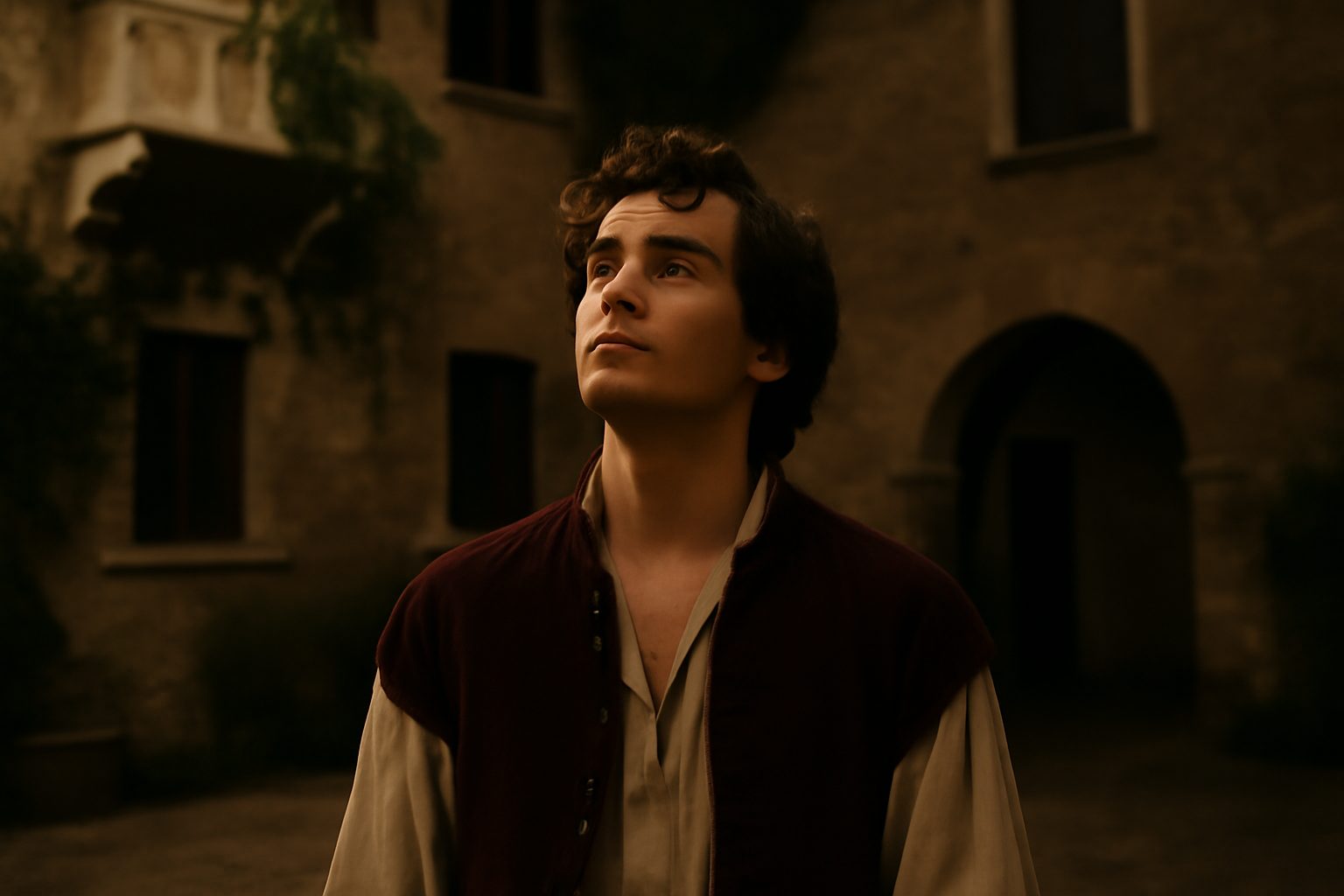
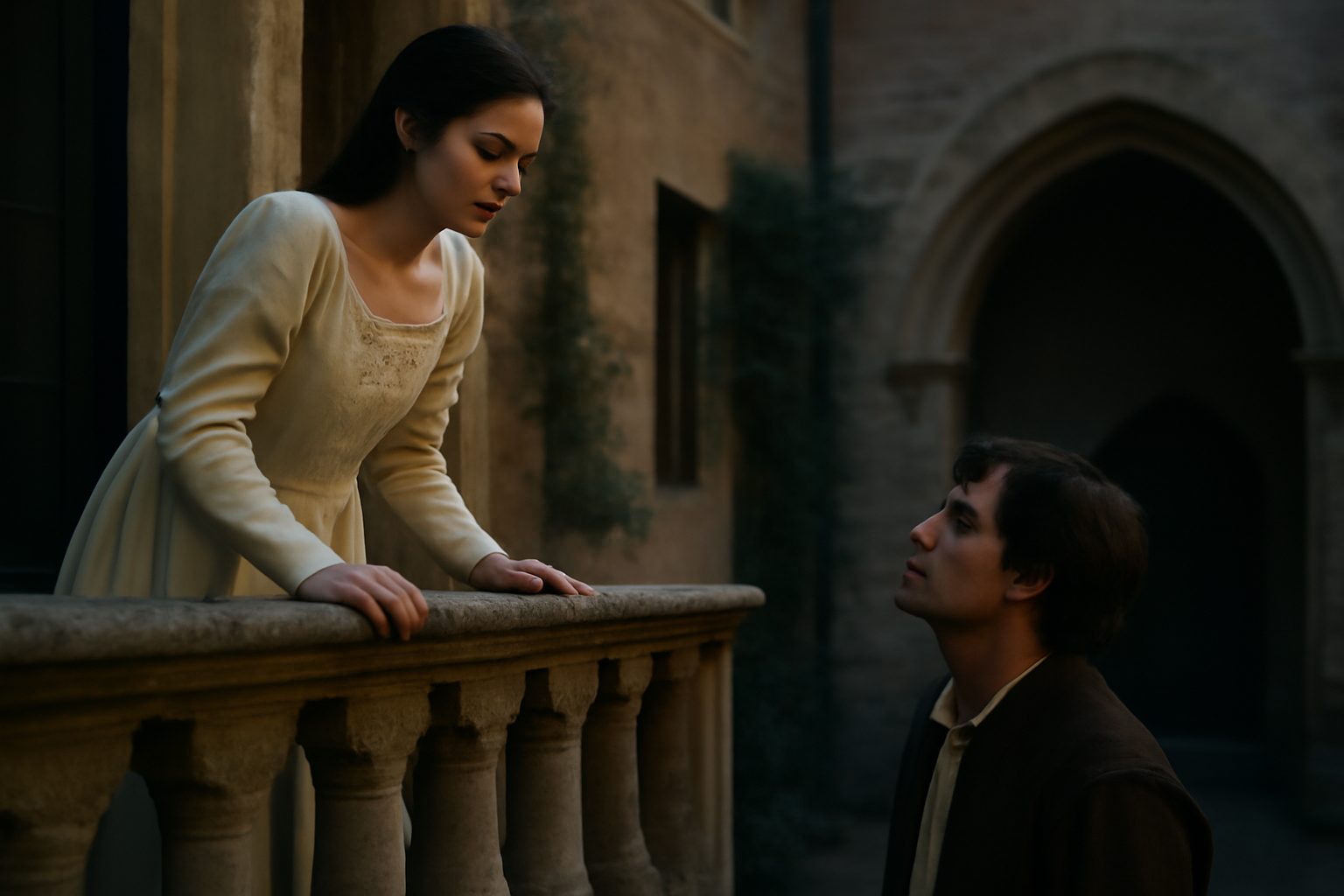
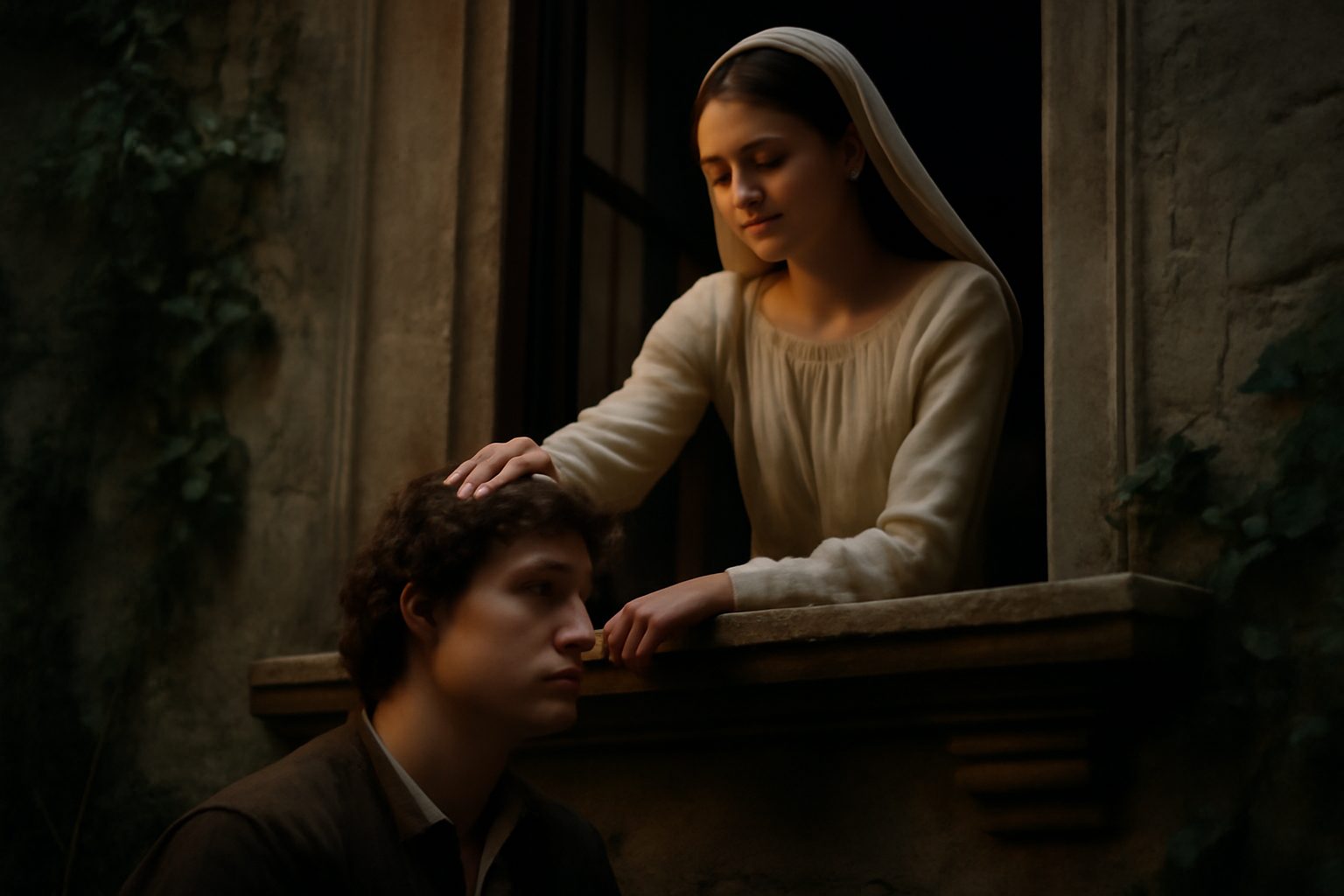
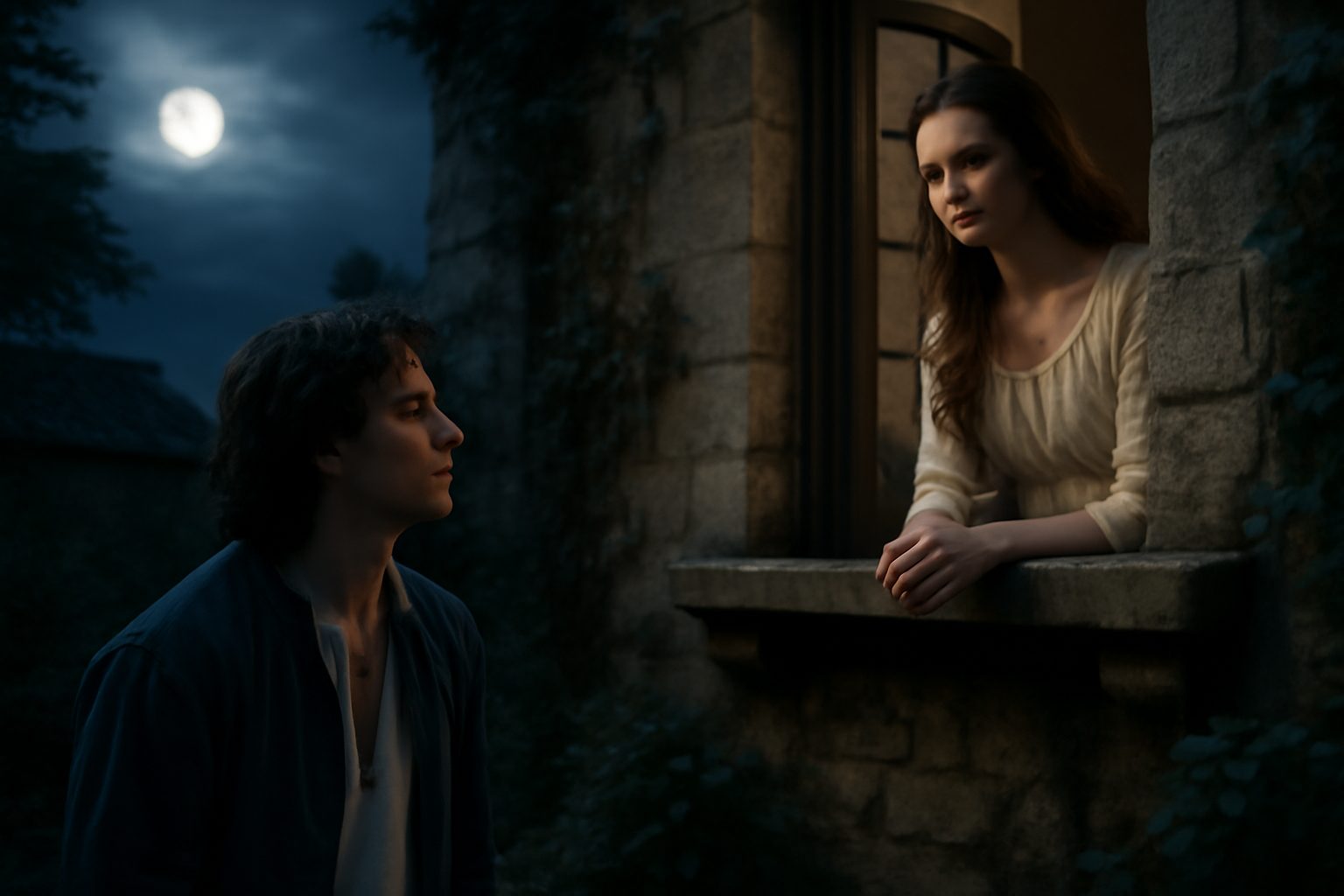
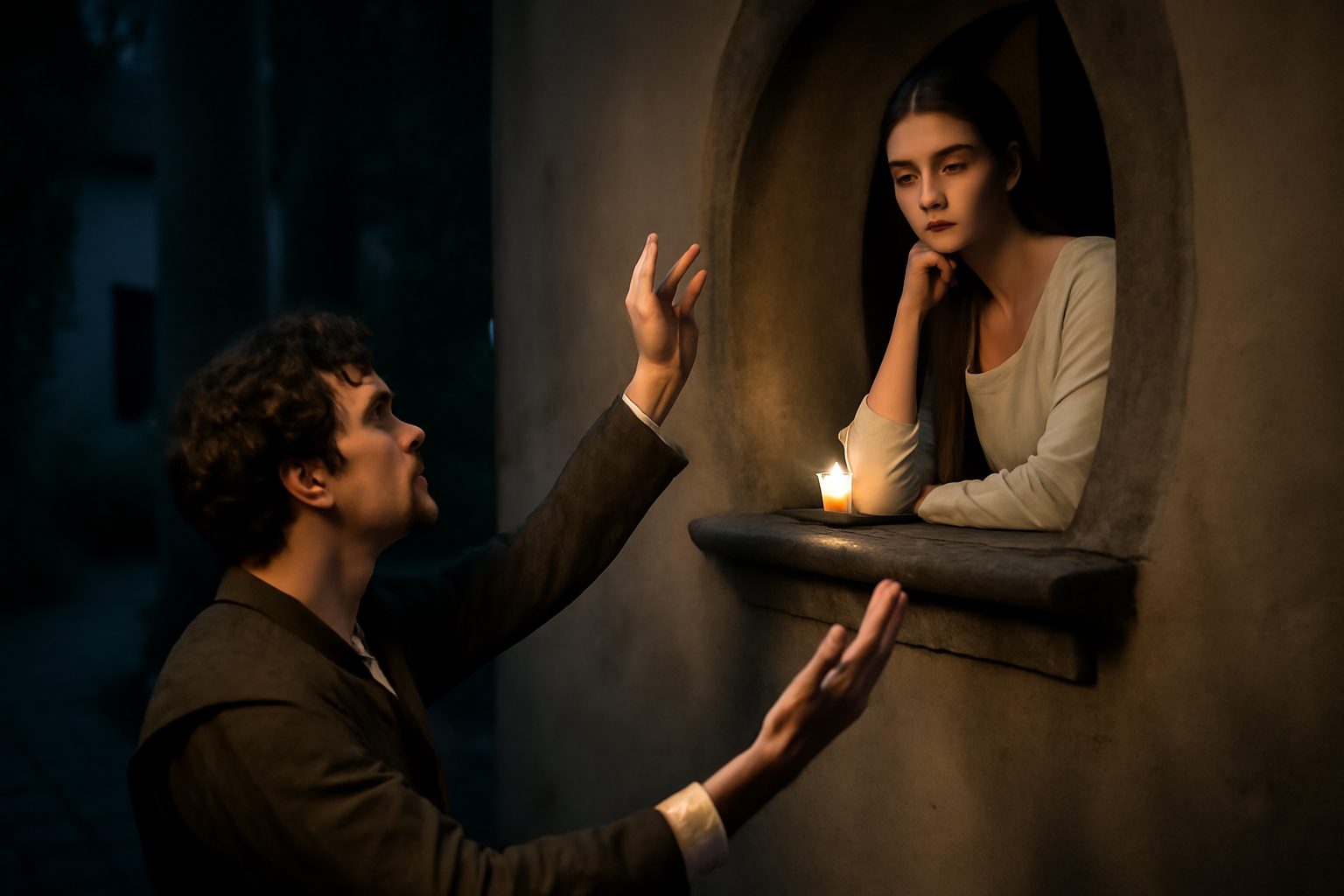
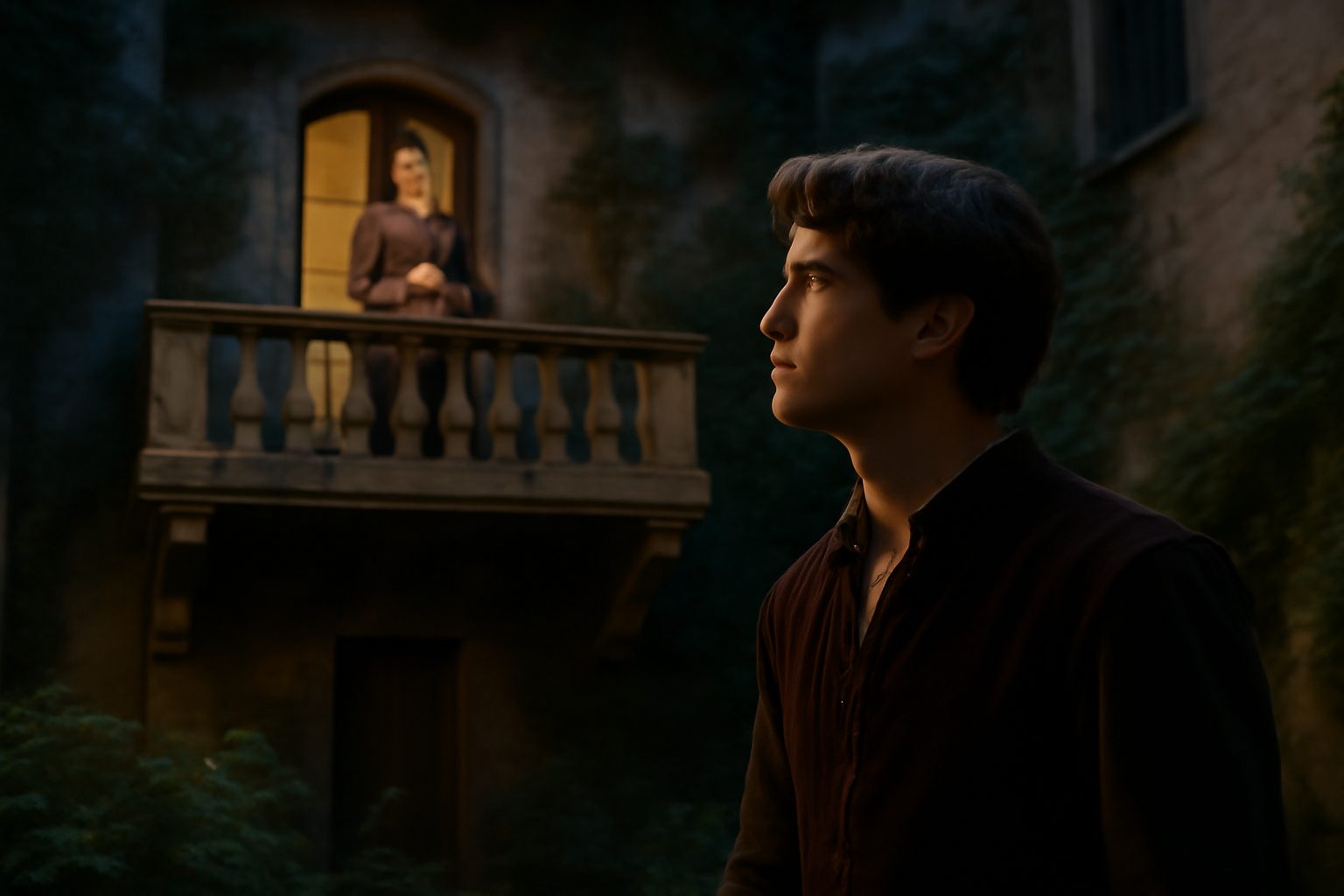
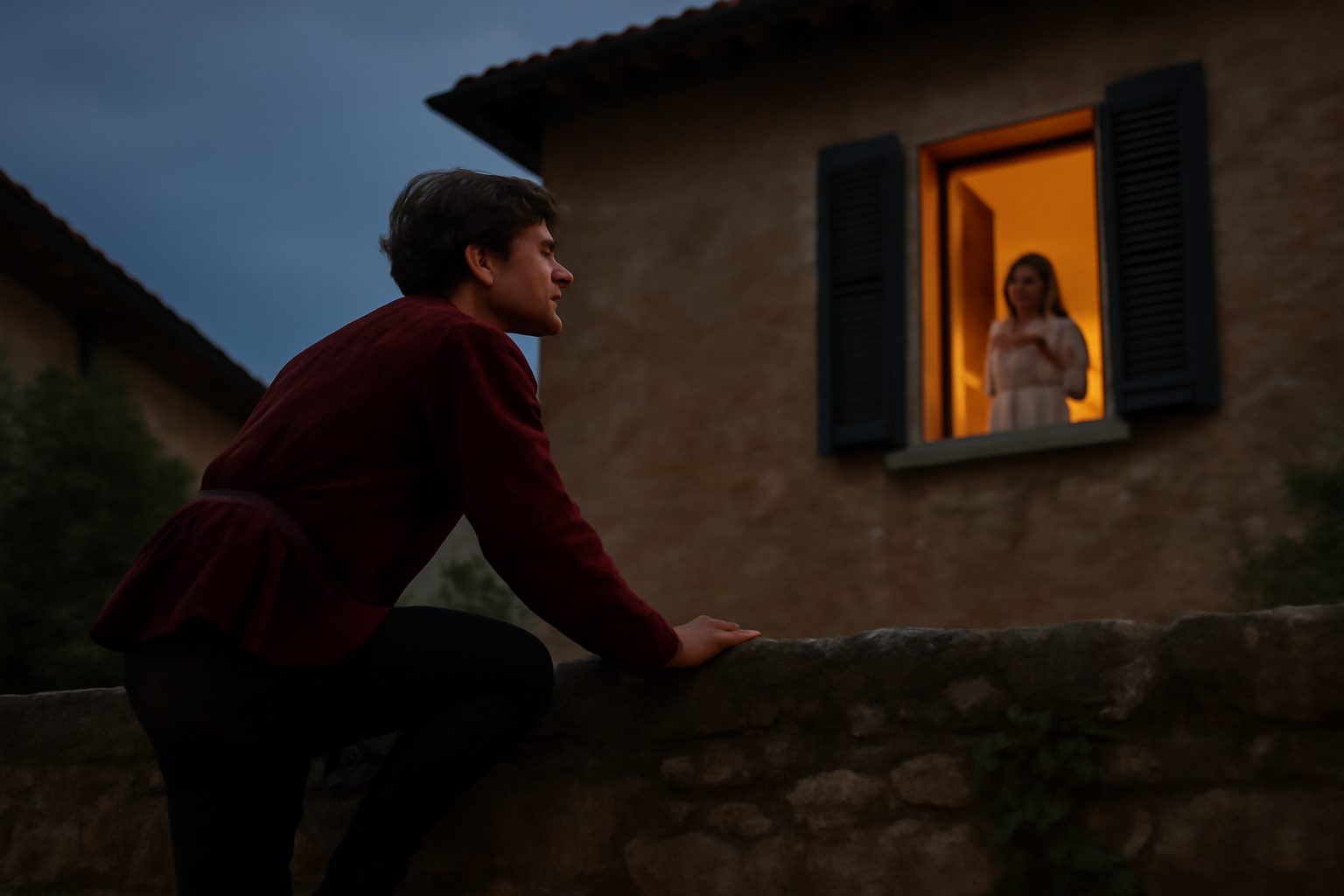
In Act 2, Scene 1 of Romeo and Juliet, Romeo has just left the Capulet feast and, still infatuated with Juliet, lingers near her orchard. Mercutio and Benvolio, unaware of Romeo's newfound love, mockingly call out to him, trying to lure him back with bawdy jokes. Romeo, hiding and unwilling to join them, mutters this line to himself, emphasizing his restless longing for Juliet over the discomfort of his surroundings.
Mercutio: "This field-bed is too cold for me to sleep:"
In modern day english, we would say:
This ground is too cold for me to sleep here.
Frequently Asked Questions
Why does Mercutio say the ground is too cold to sleep on?
Mercutio is complaining about sleeping outside at night, where the ground is uncomfortably cold.
Connections to other verses:
Connections to "This field-bed is too cold for me to sleep:"
The line "This field-bed is too cold for me to sleep:" reflects Mercutio's playful and mocking tone, which is consistent throughout the scene. It contrasts with Romeo's passionate, love-struck state, emphasizing the difference between Mercutio's earthy humor and Romeo's romantic idealism.
Contrast with Romeo's Emotional State
Mercutio's complaint about the cold field-bed highlights his practical, grounded nature, unlike Romeo, who is consumed by love. Earlier, Romeo declares, "Can I go forward when my heart is here?", showing his emotional fixation on Juliet. Mercutio's physical discomfort underscores this divide between the two characters.
Link to Mercutio's Earlier Mockery
Mercutio's jest about the cold bed follows his series of mocking invocations, such as when he says, "Romeo! humours! madman! passion! lover!", teasing Romeo's lovesick behavior. The cold bed remark continues this lighthearted ridicule, contrasting with Romeo's intense emotions.
Connection to Benvolio's Practicality
Benvolio's earlier line, "Go, then; for 'tis in vain", shares Mercutio's pragmatic outlook. Both recognize the futility of searching for Romeo, who is hidden and lovesick. Mercutio's comment about the cold bed aligns with this realism, as he gives up on the search due to physical discomfort.
Juxtaposition with Romantic Imagery
Mercutio's earthy remark contrasts with the scene's romantic references, such as when he jokes, "And wish his mistress were that kind of fruit", alluding to sexual innuendo. The cold bed line maintains this bawdy tone, grounding the scene in humor rather than Romeo's lofty ideals.
Reflection of Scene's Conclusion
Mercutio's decision to leave due to the cold bed leads directly to "Come, shall we go?", marking the end of the search. This practical choice underscores the friends' inability to reach Romeo, who is lost in his love for Juliet, emphasizing the theme of separation between worldly concerns and romantic obsession.