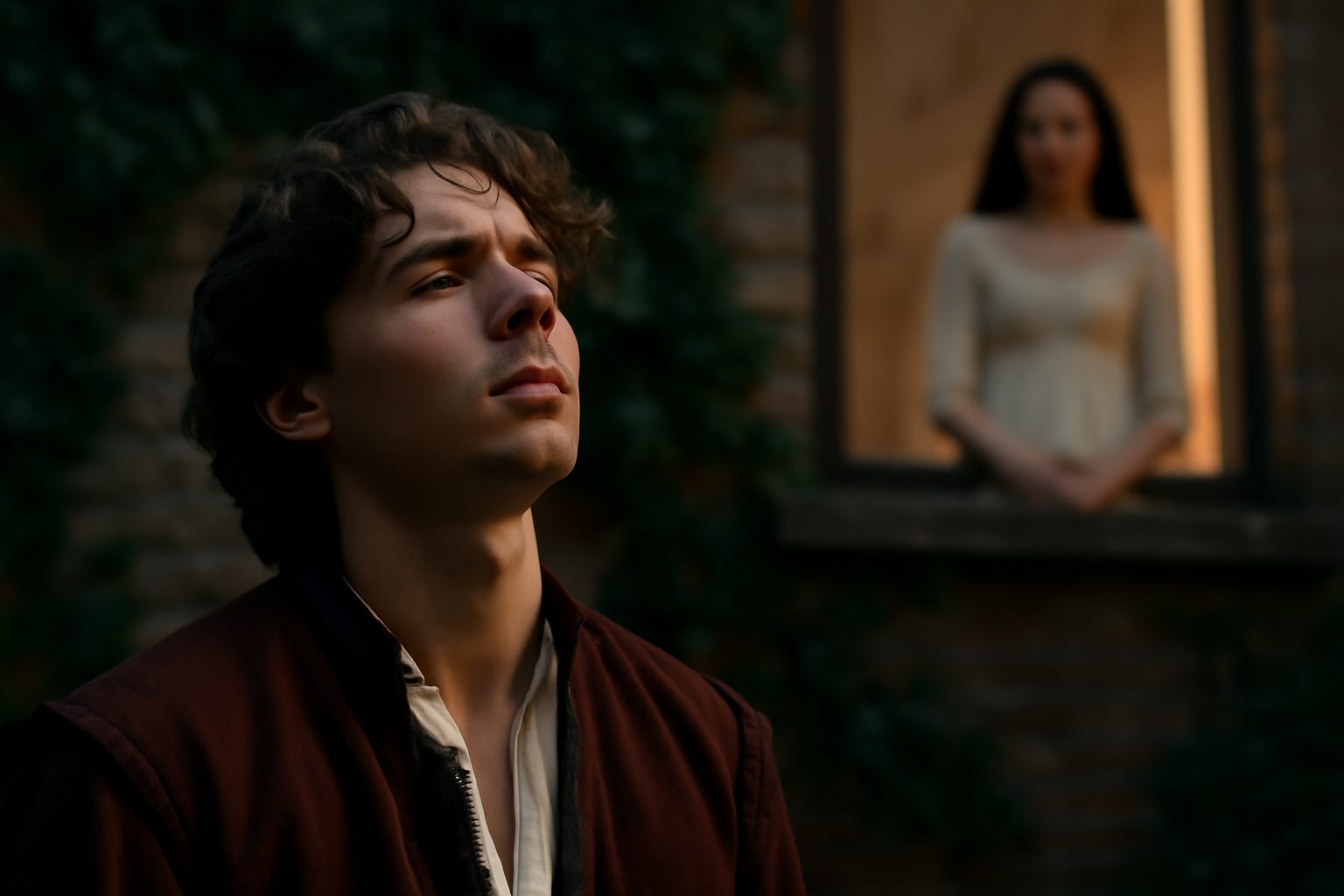
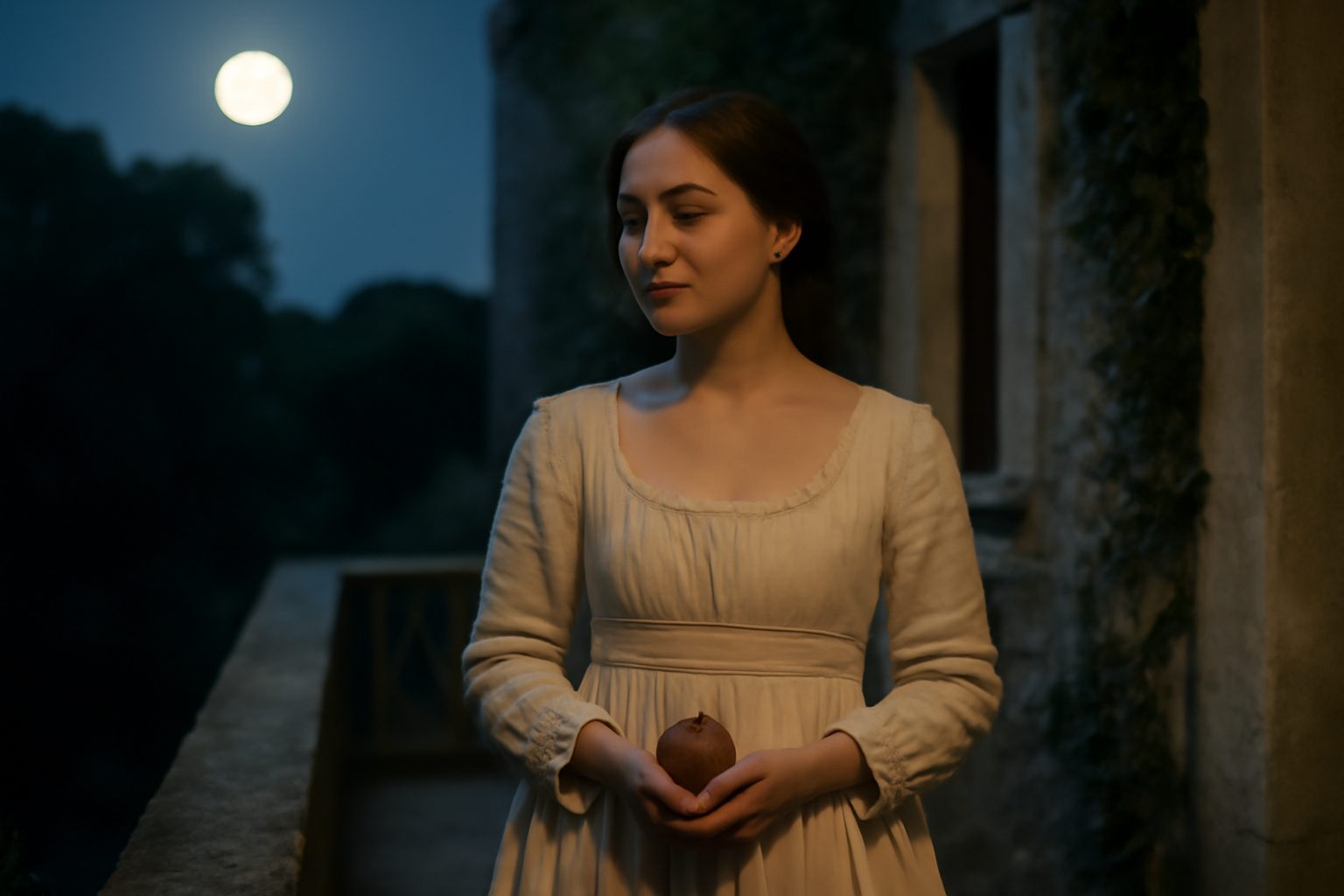
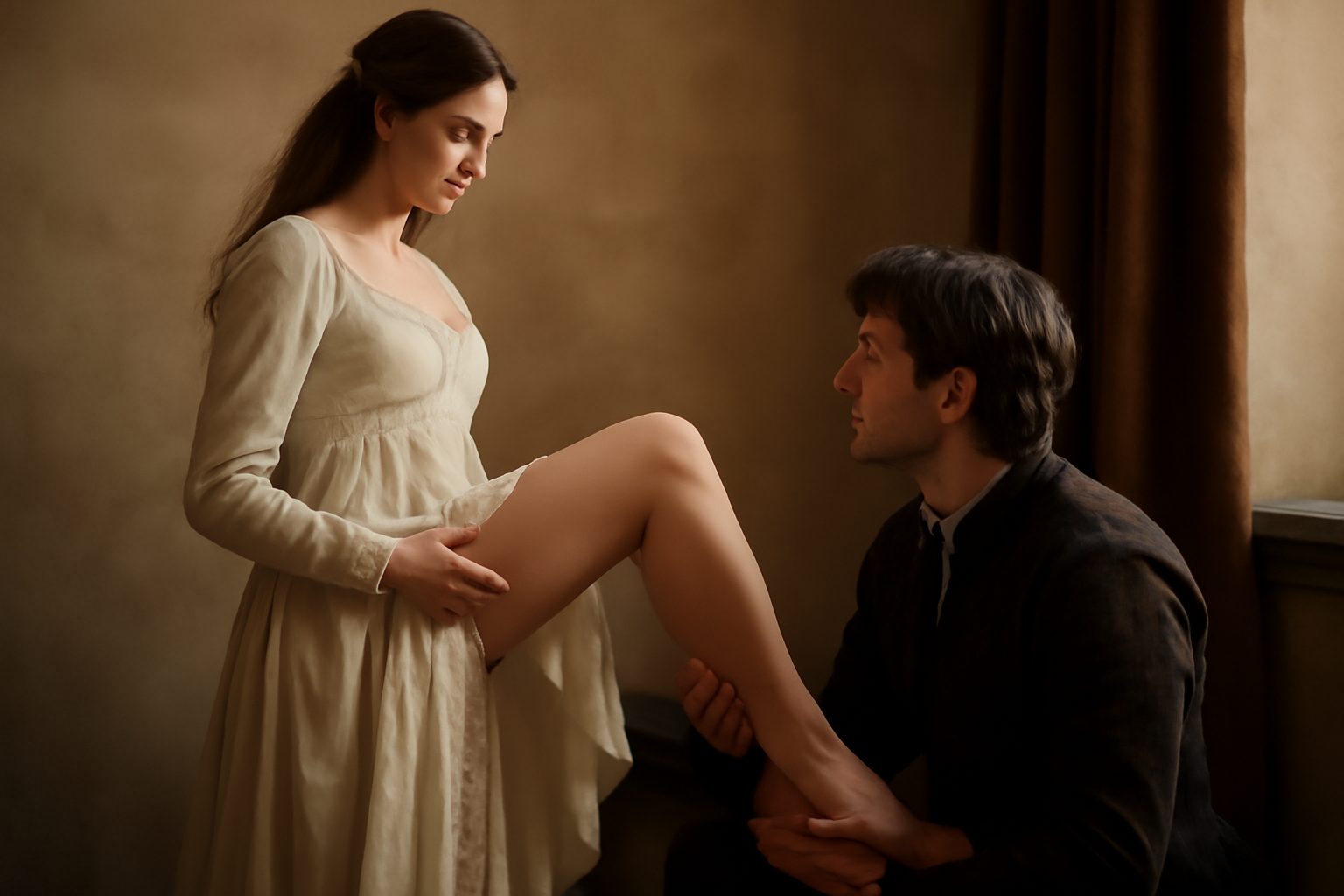
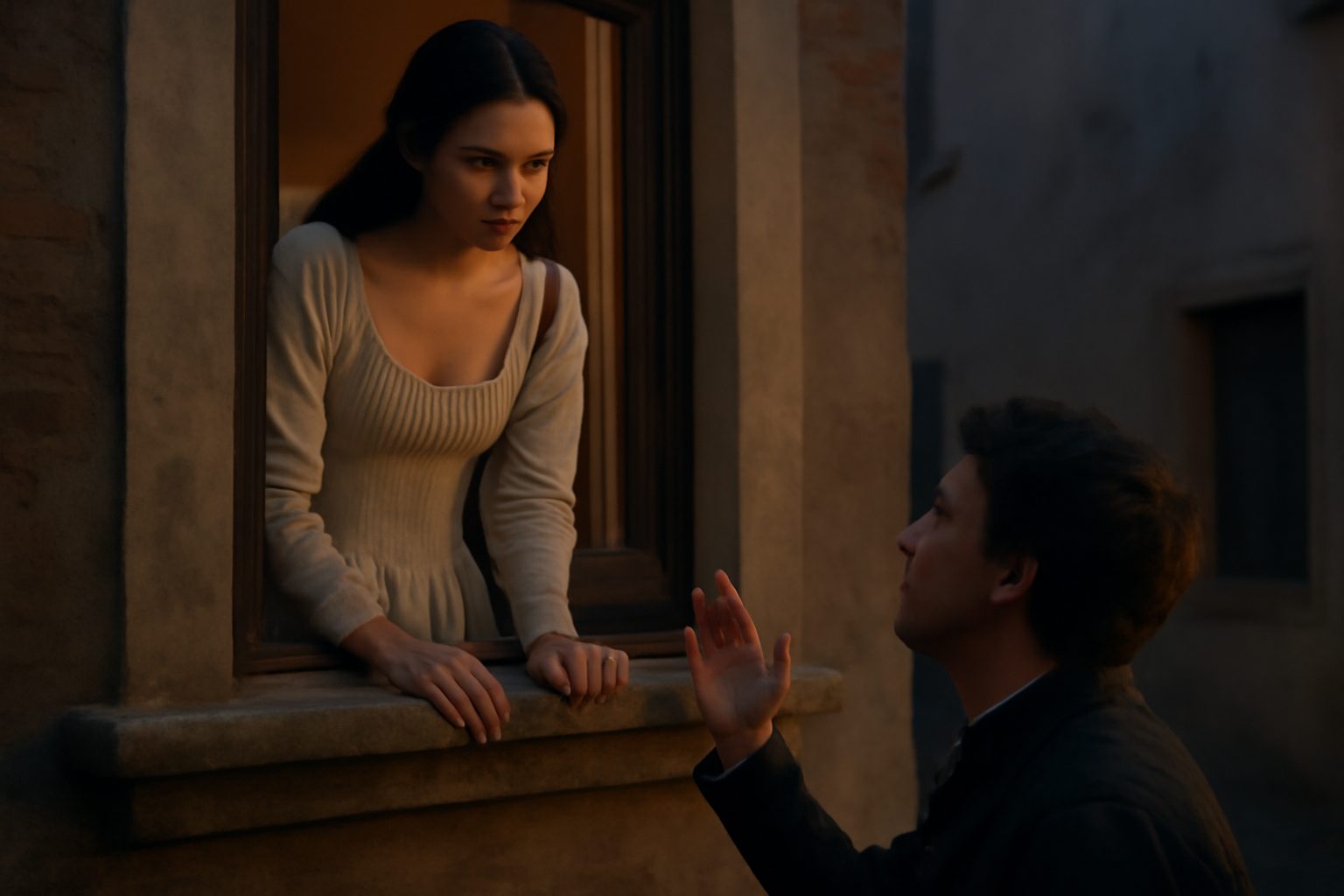
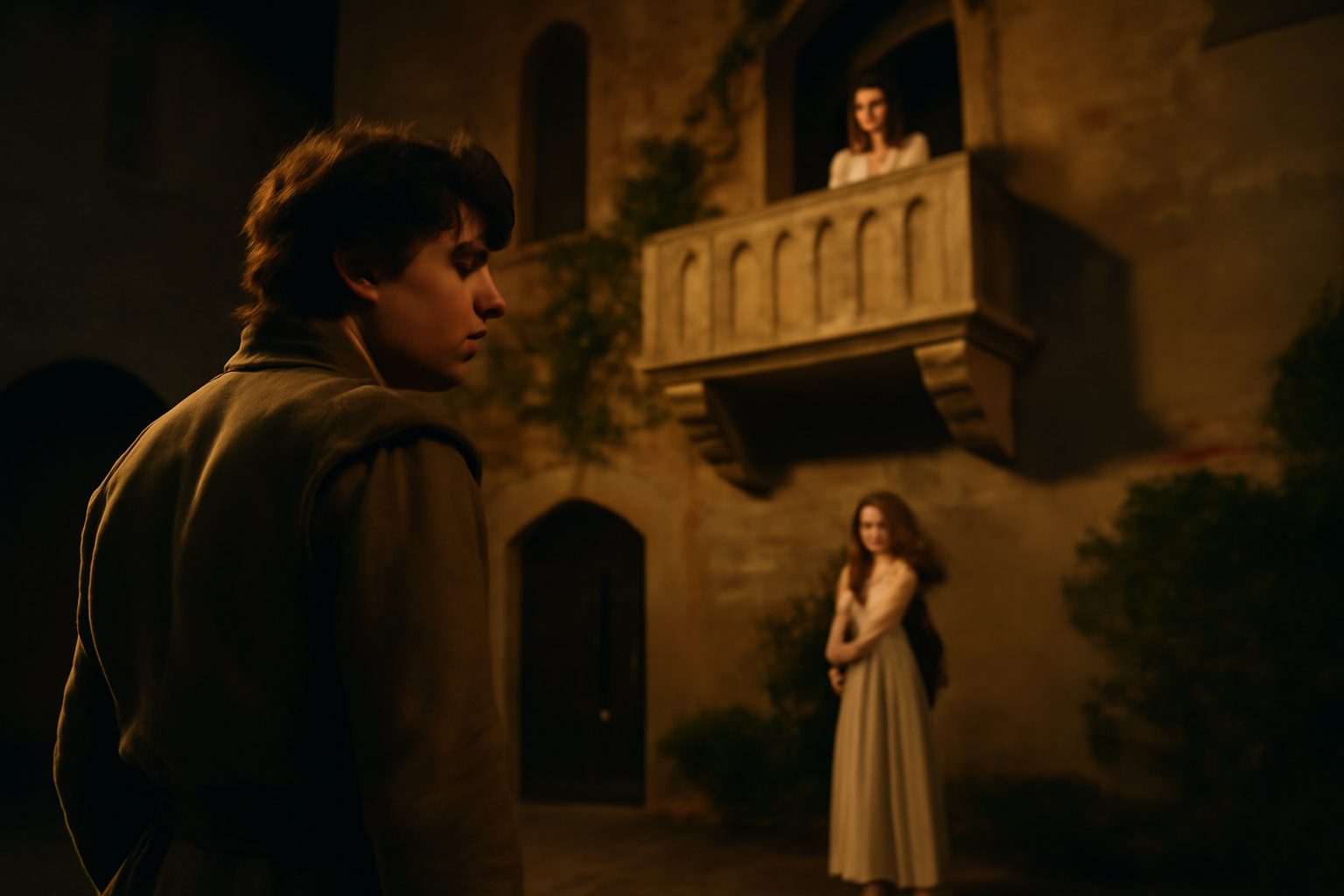
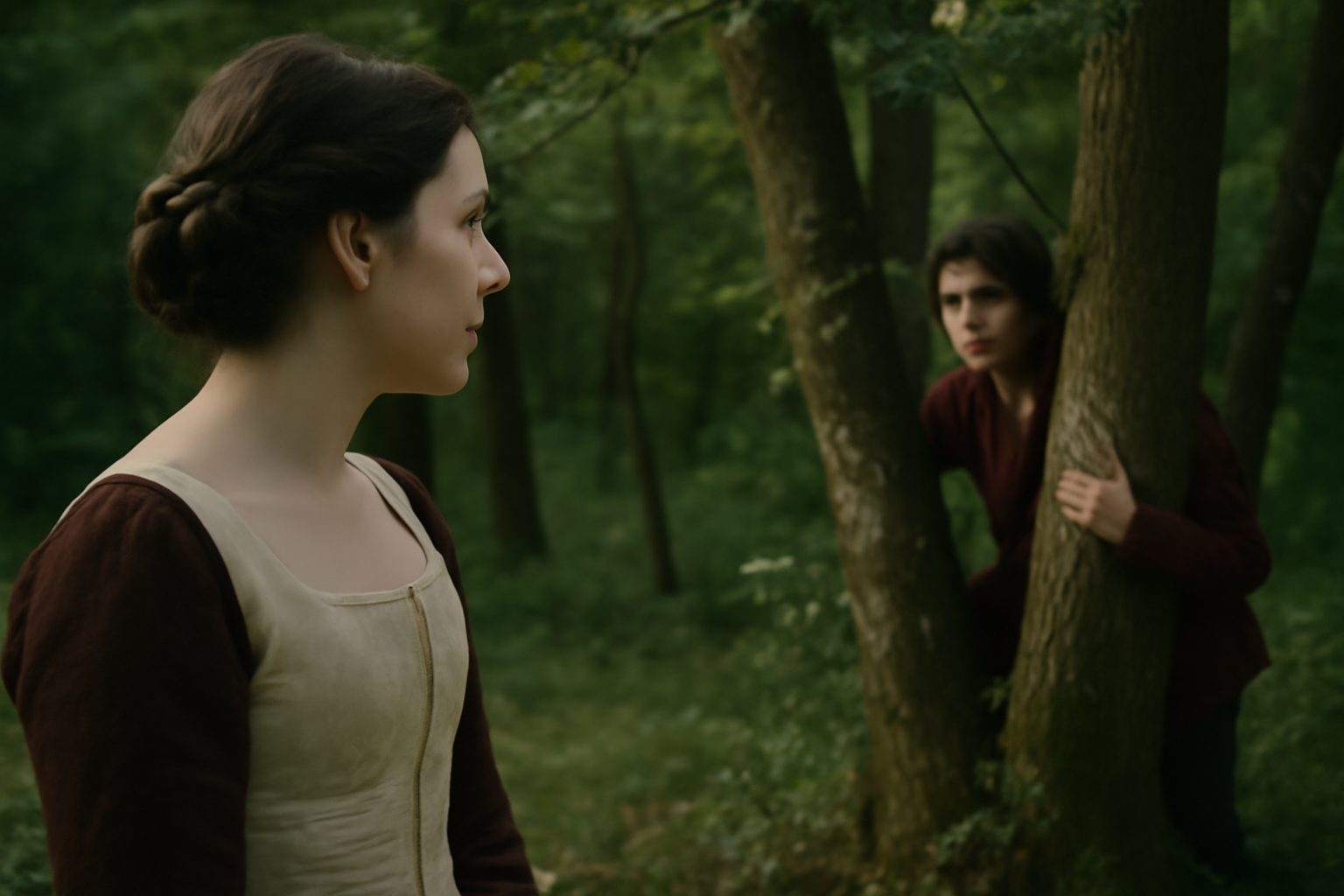
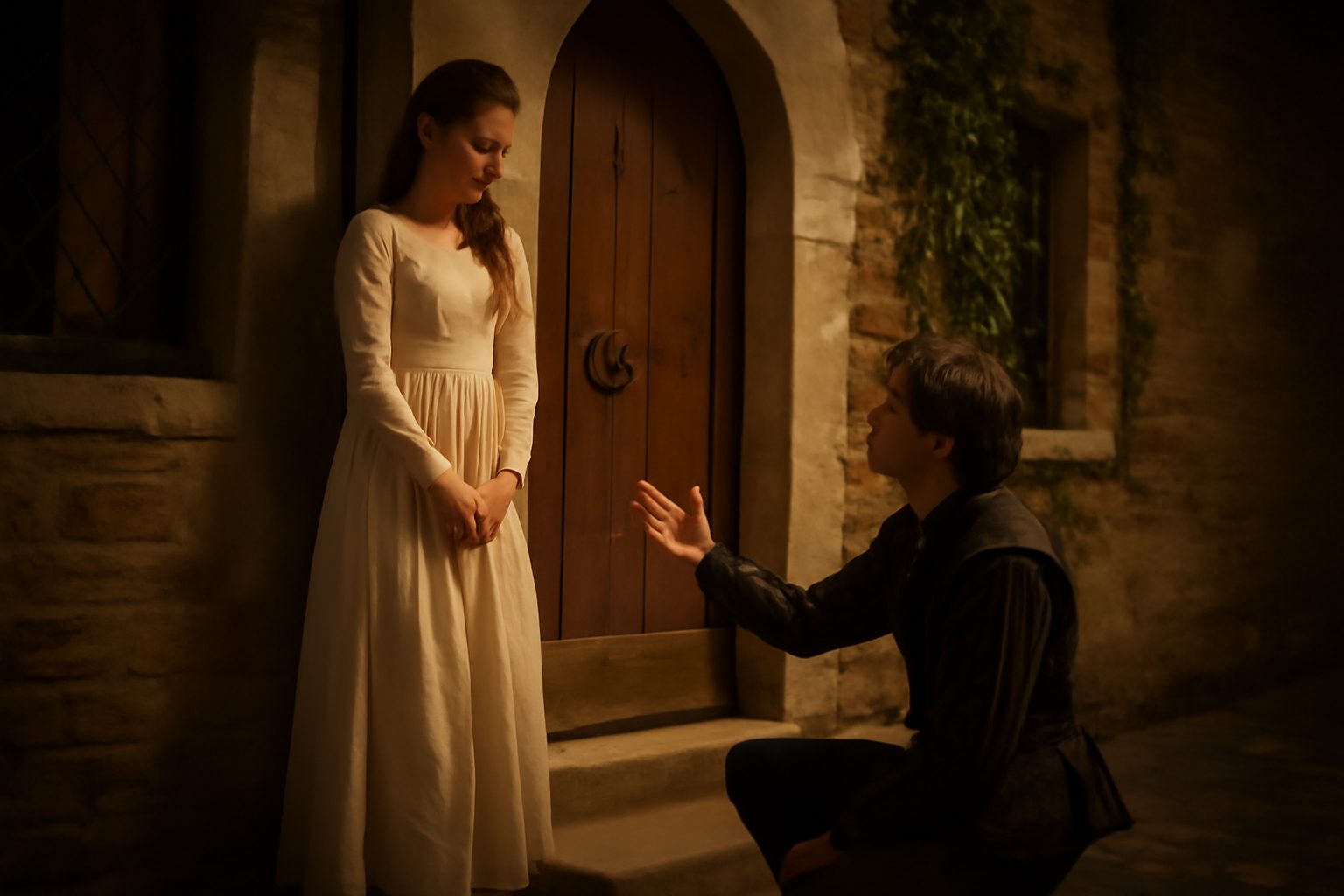
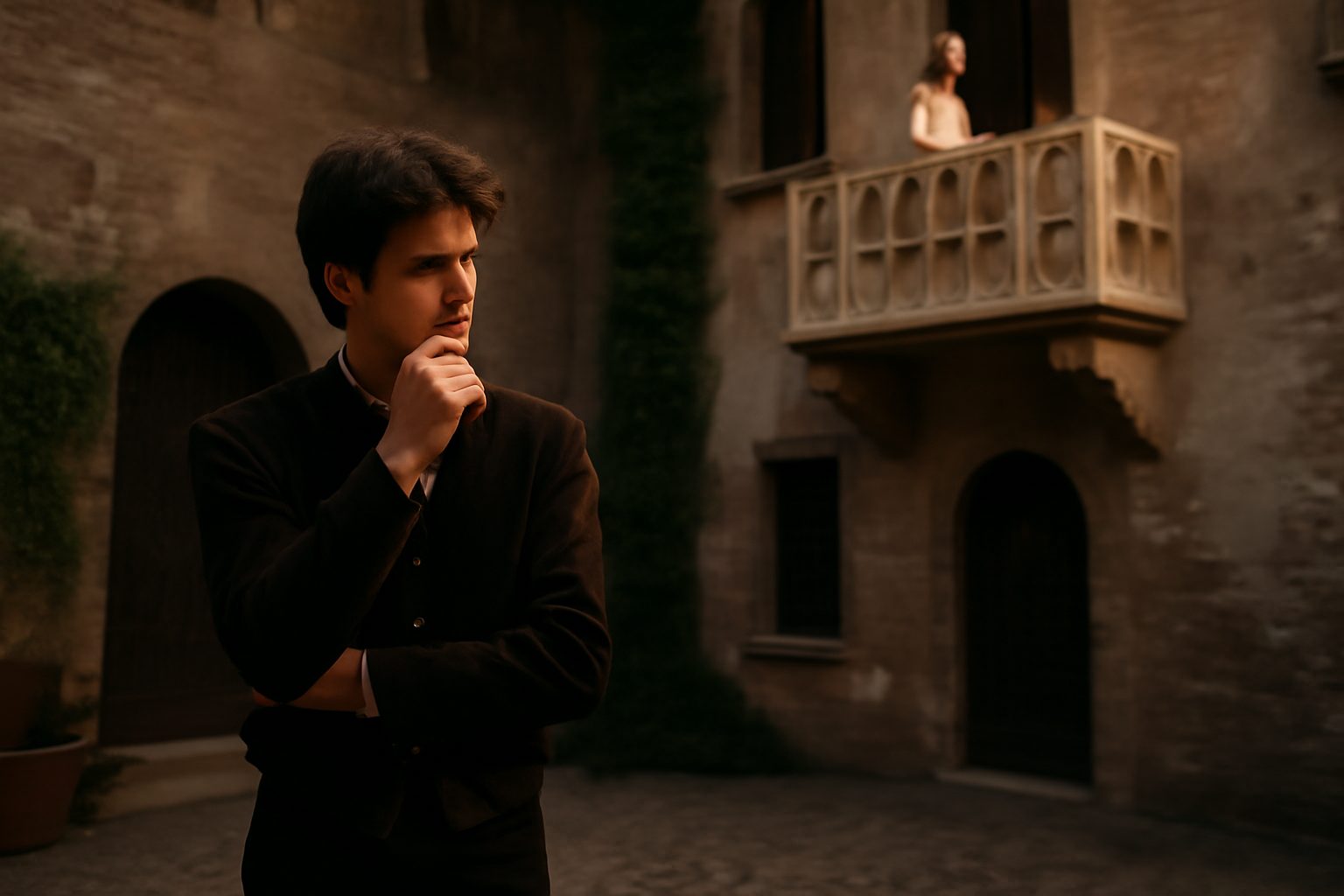
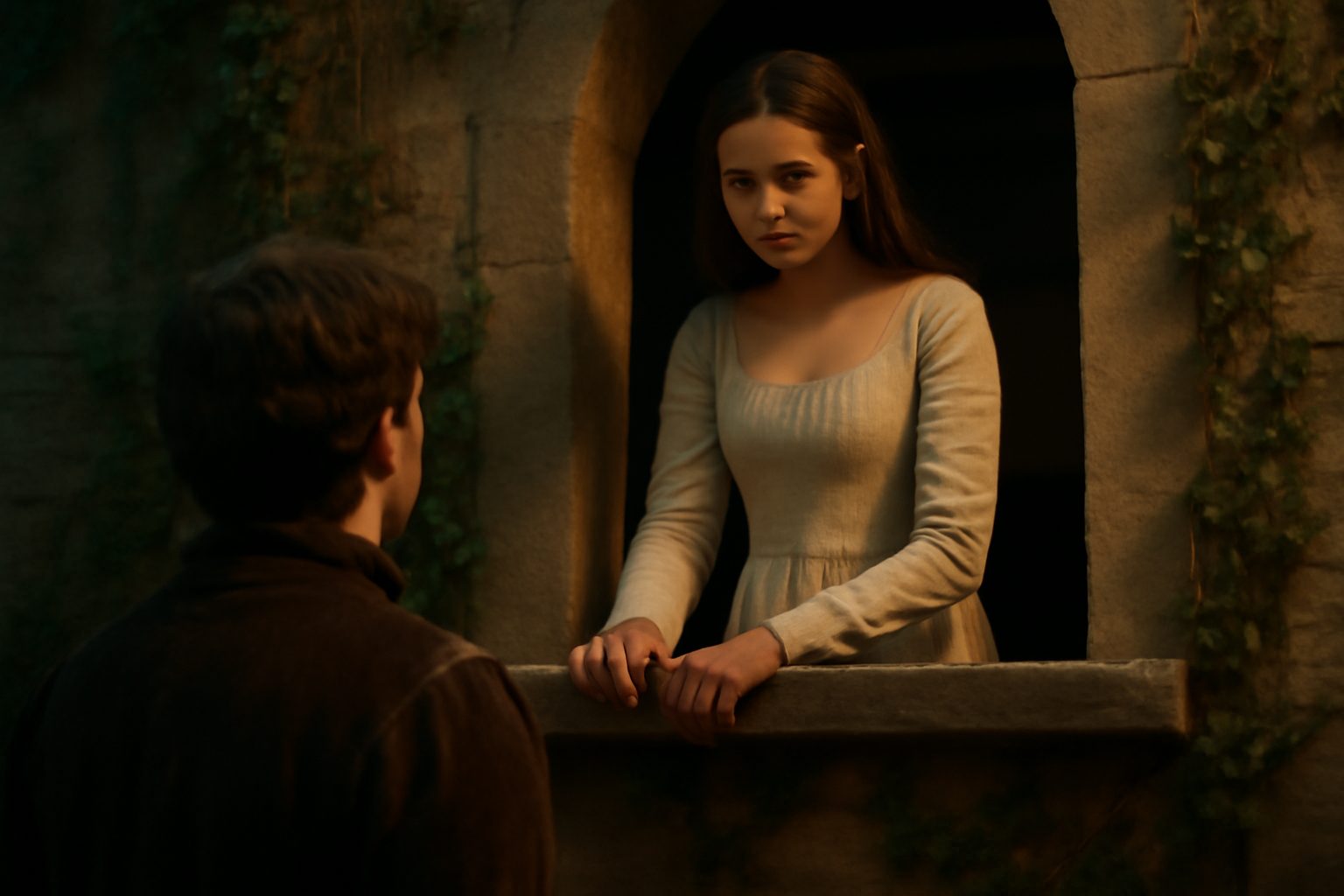
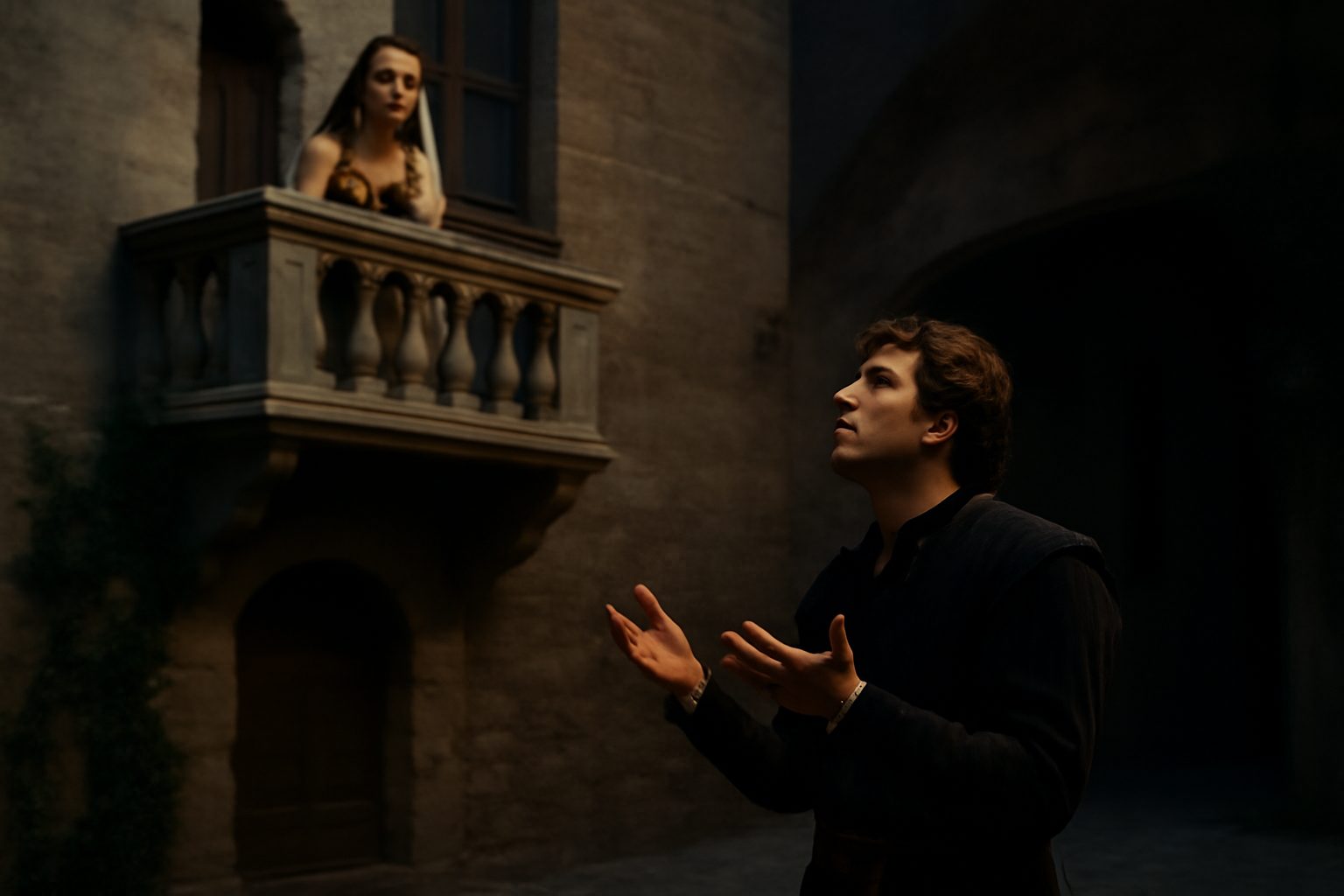
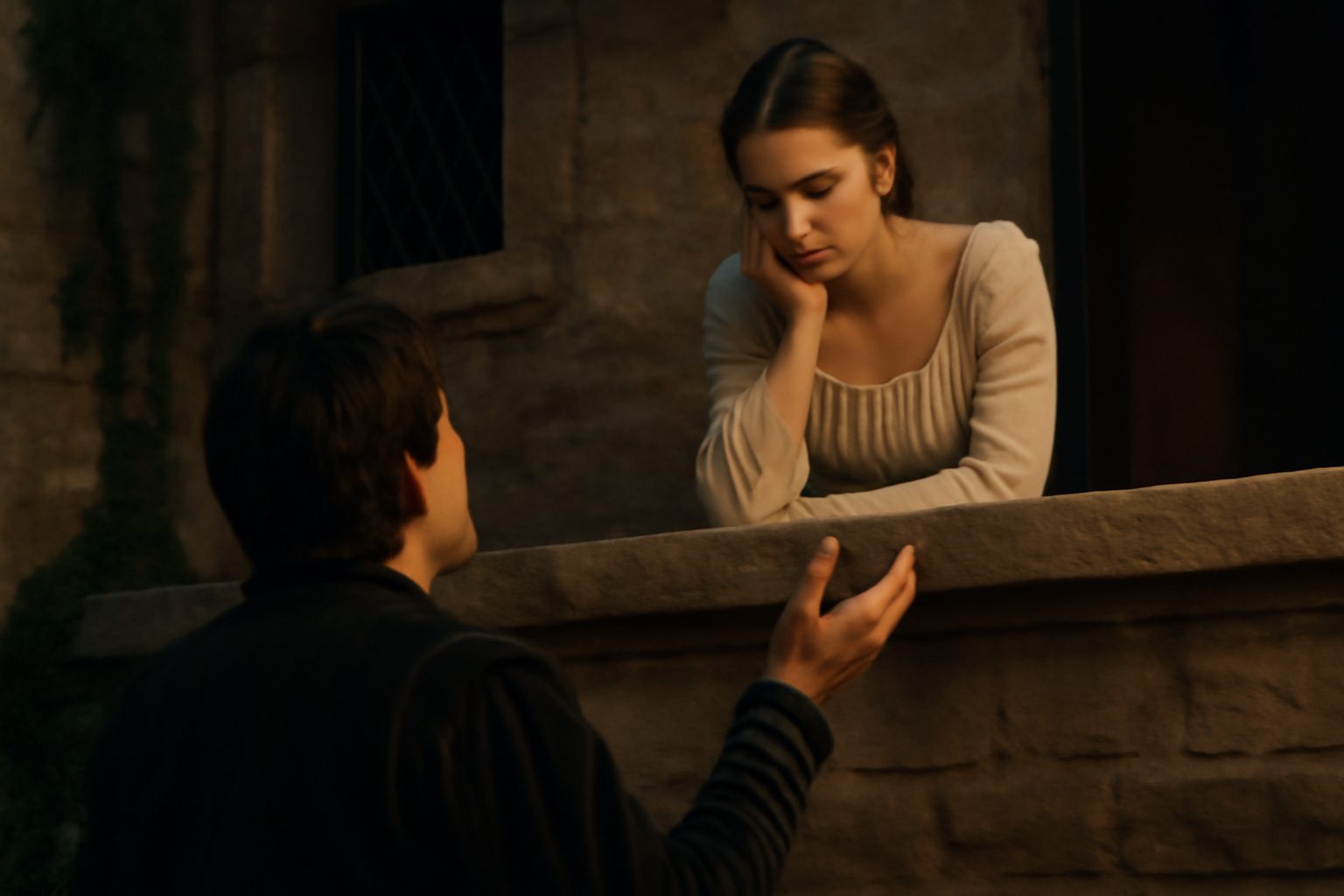
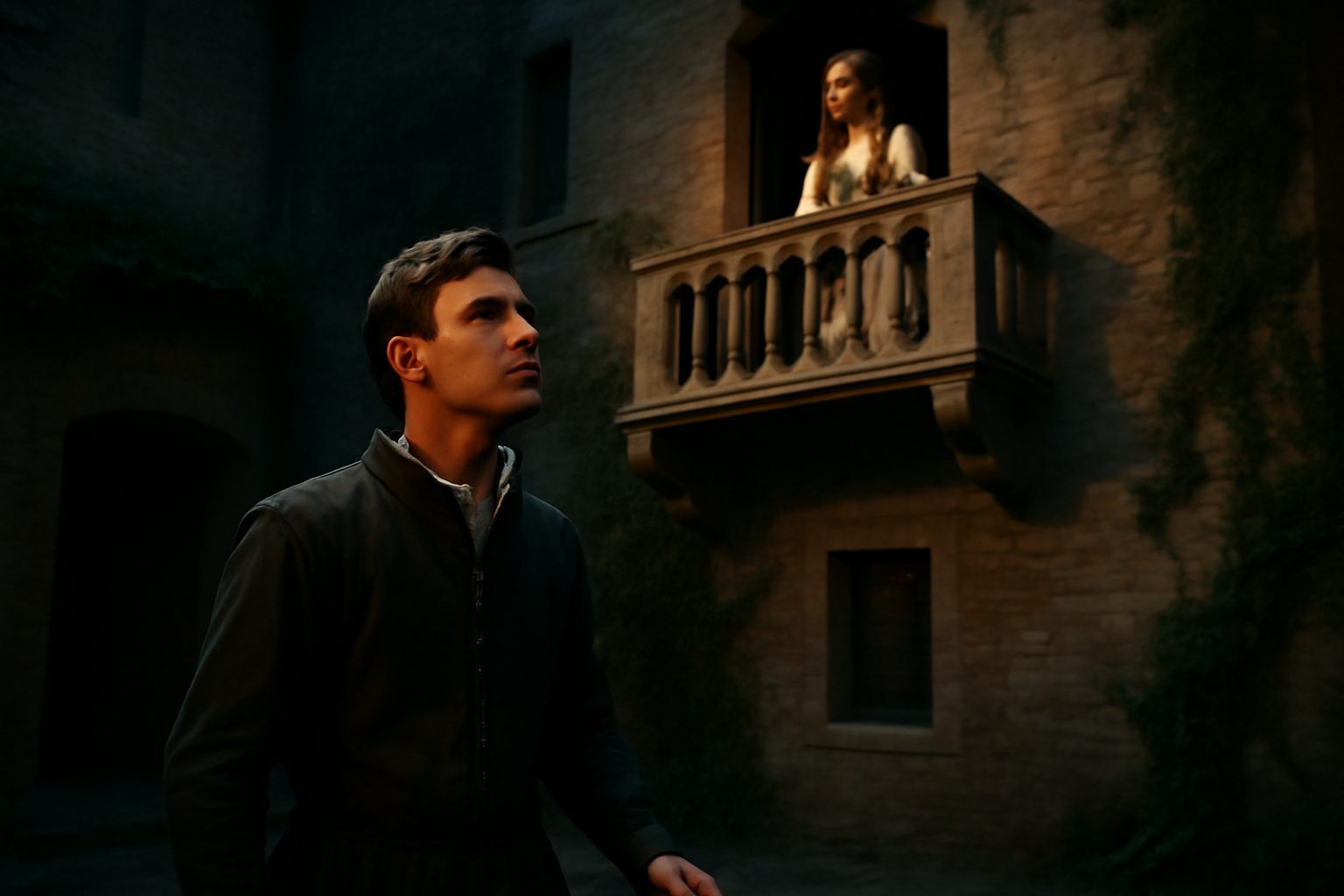
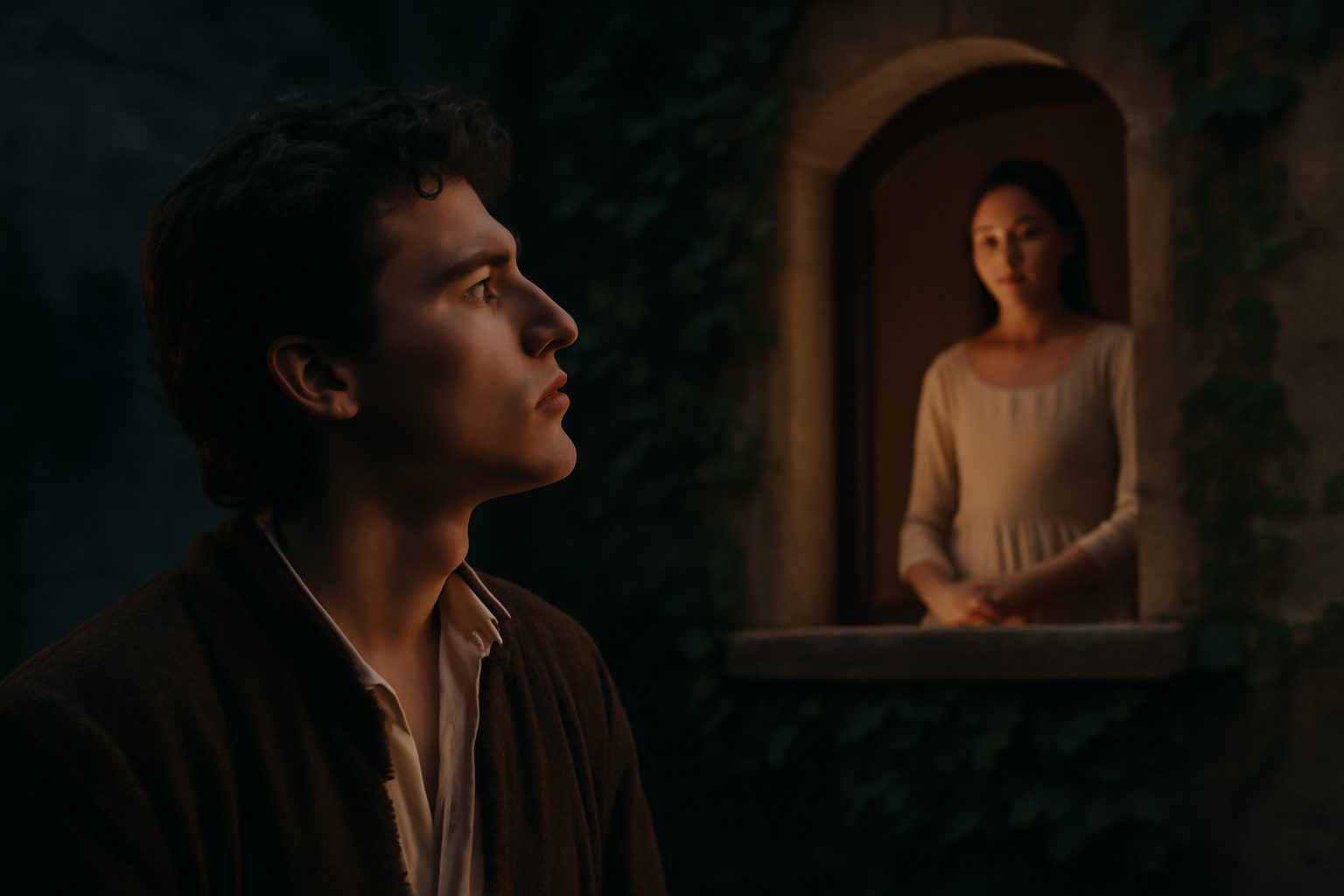
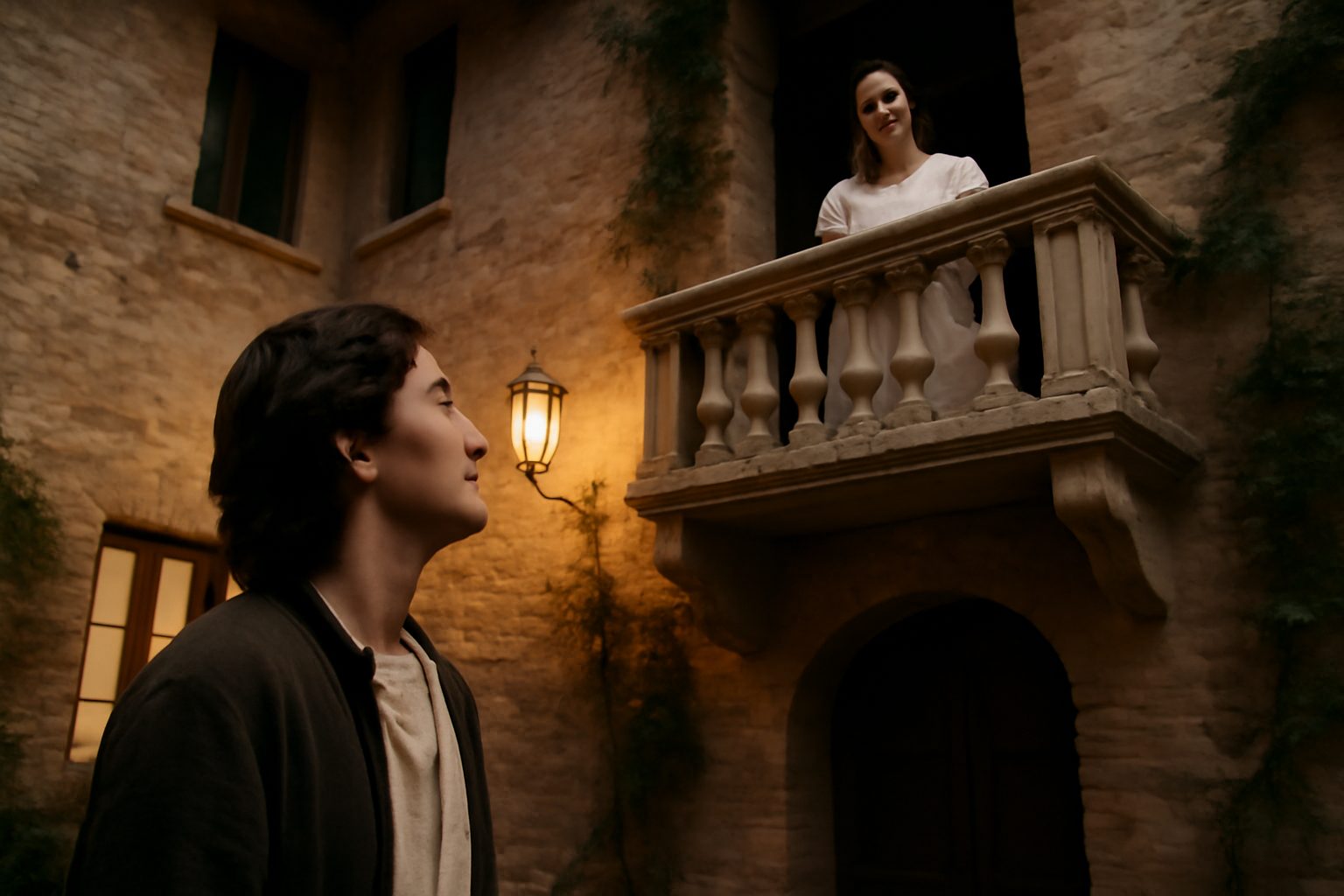
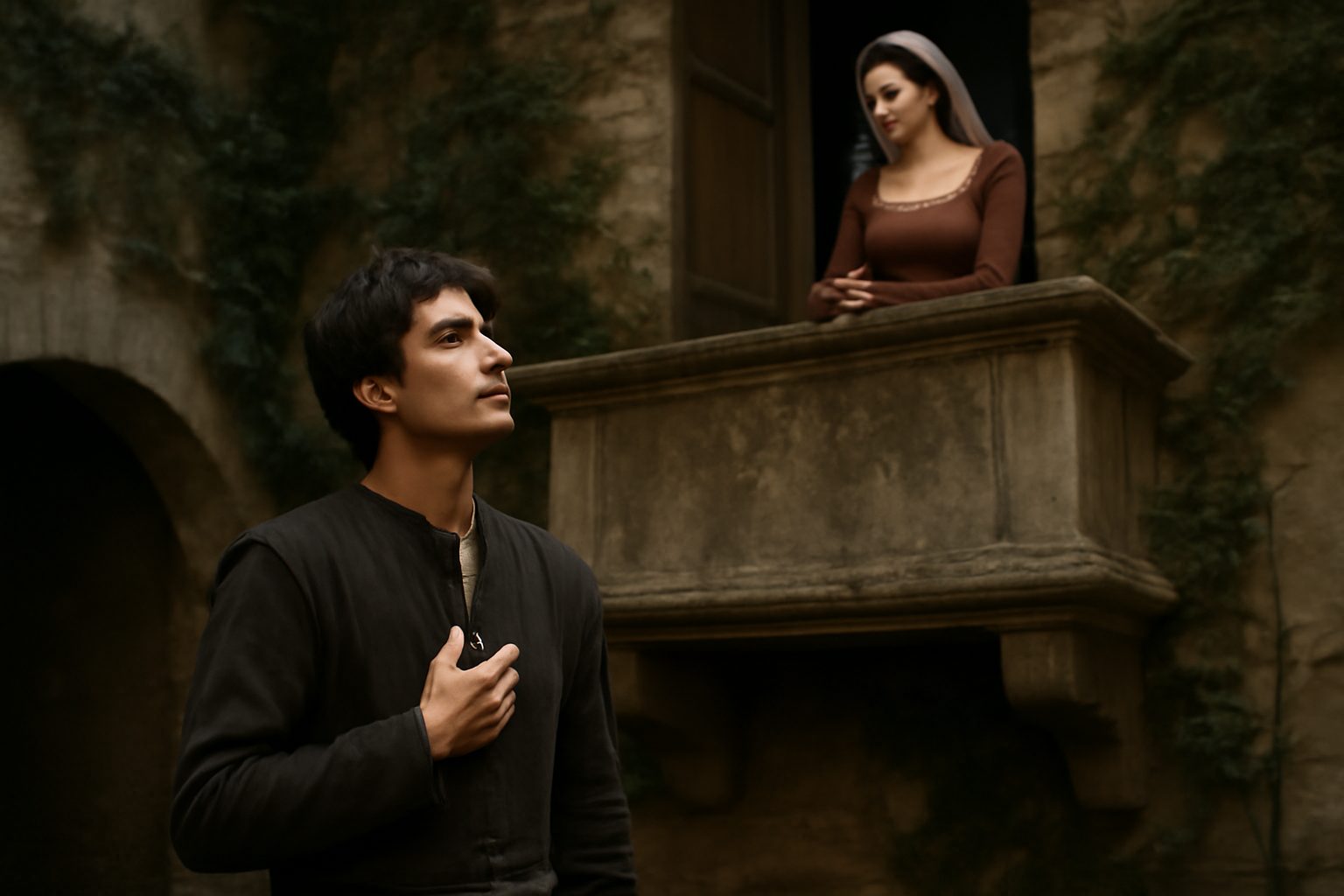
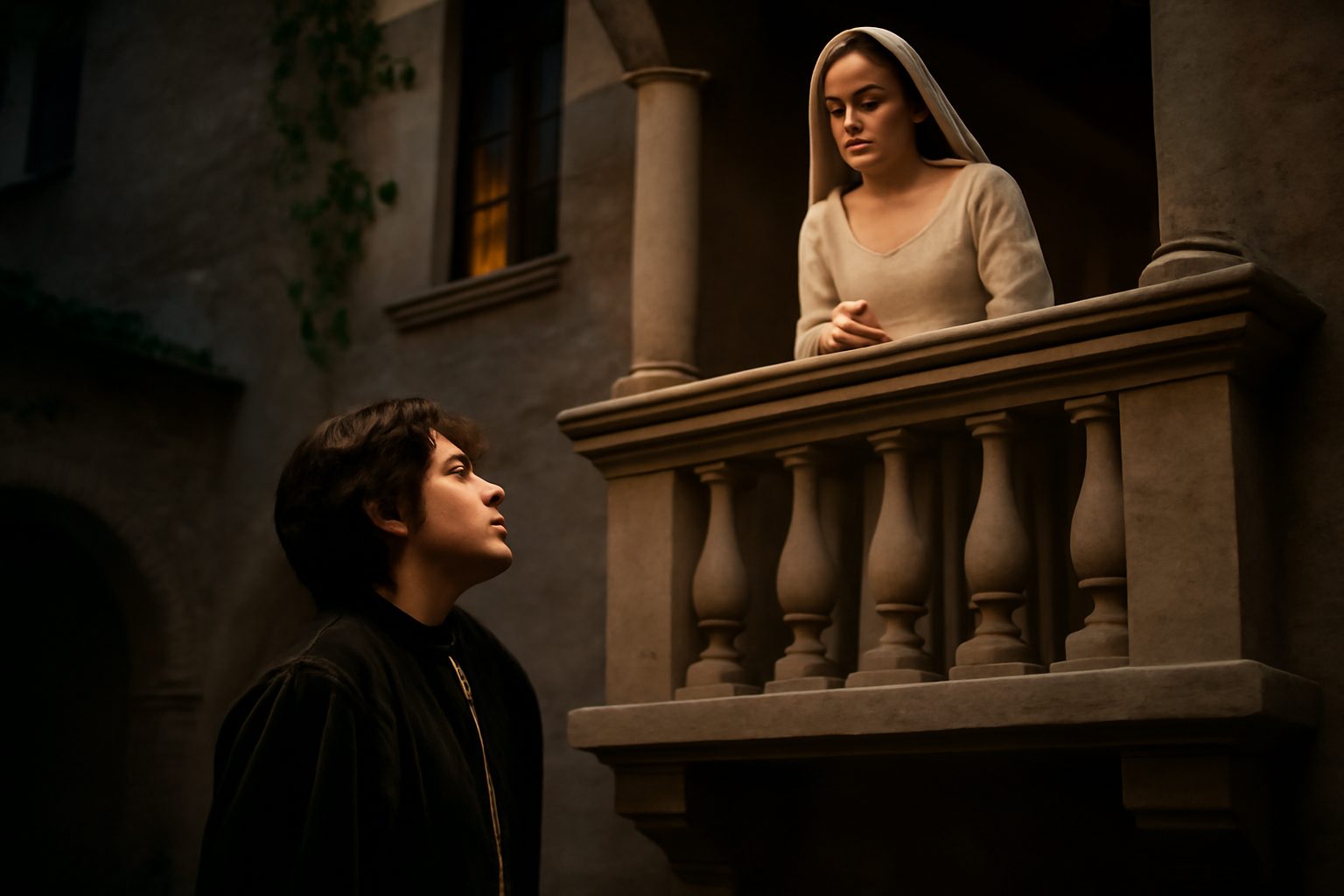
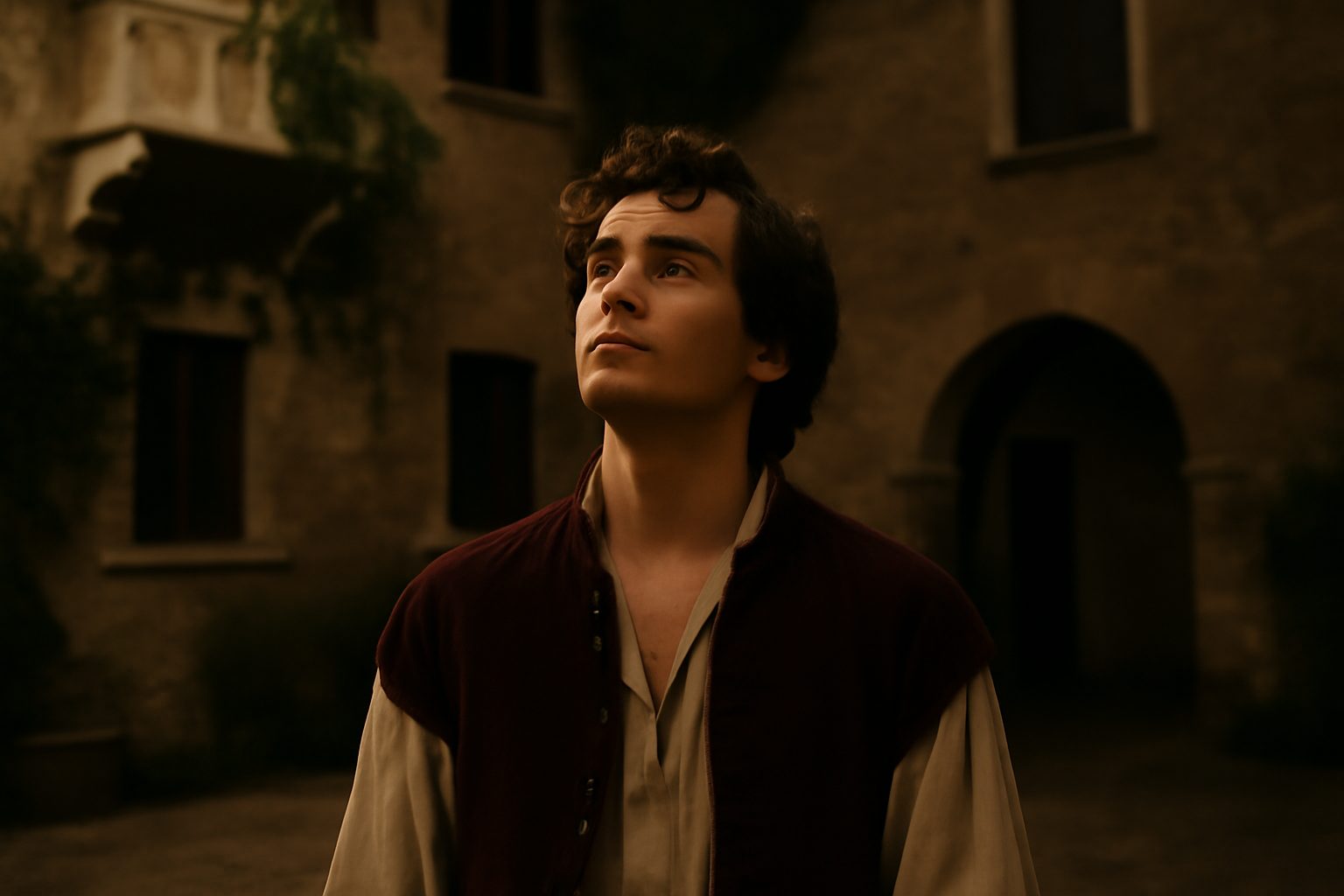
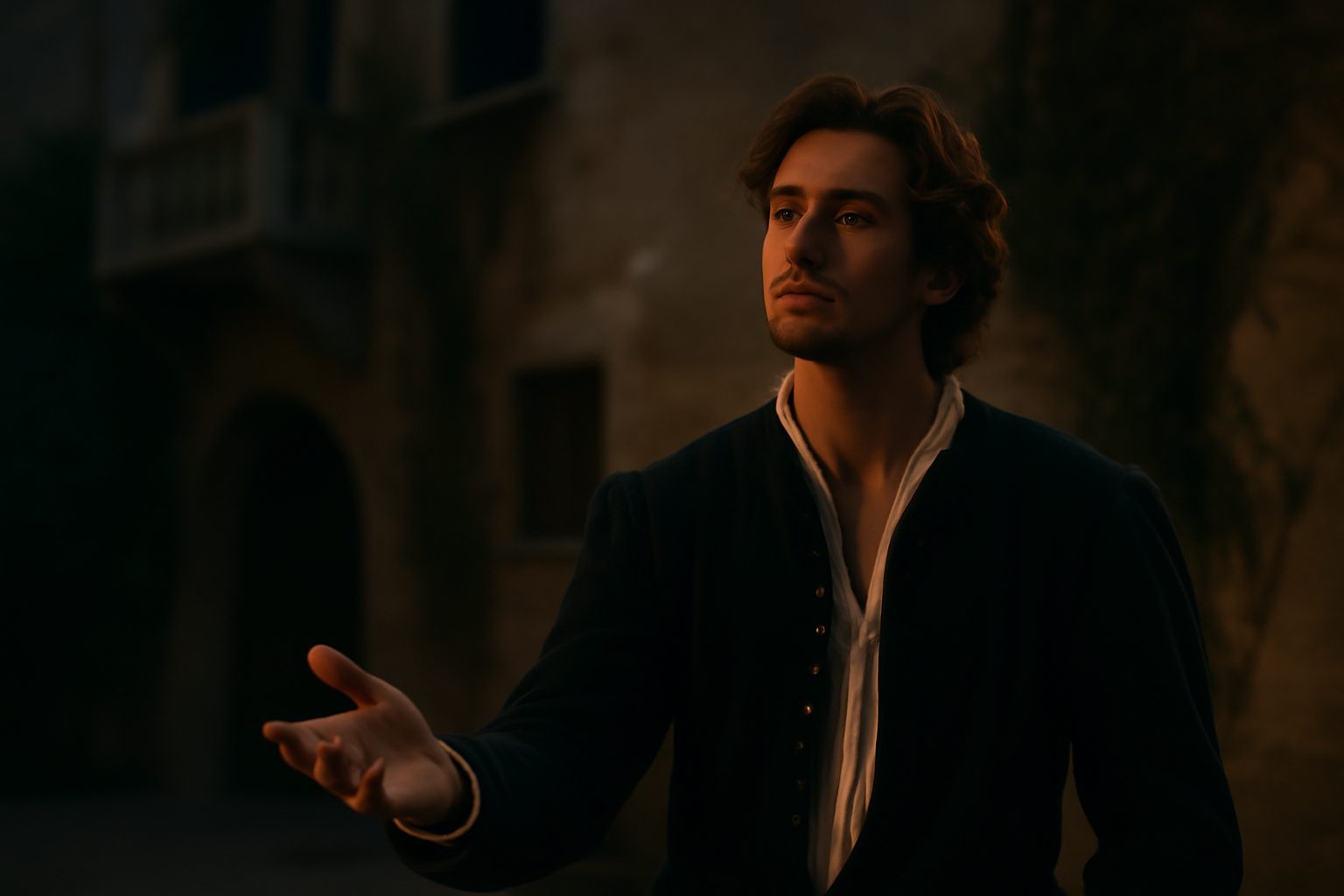
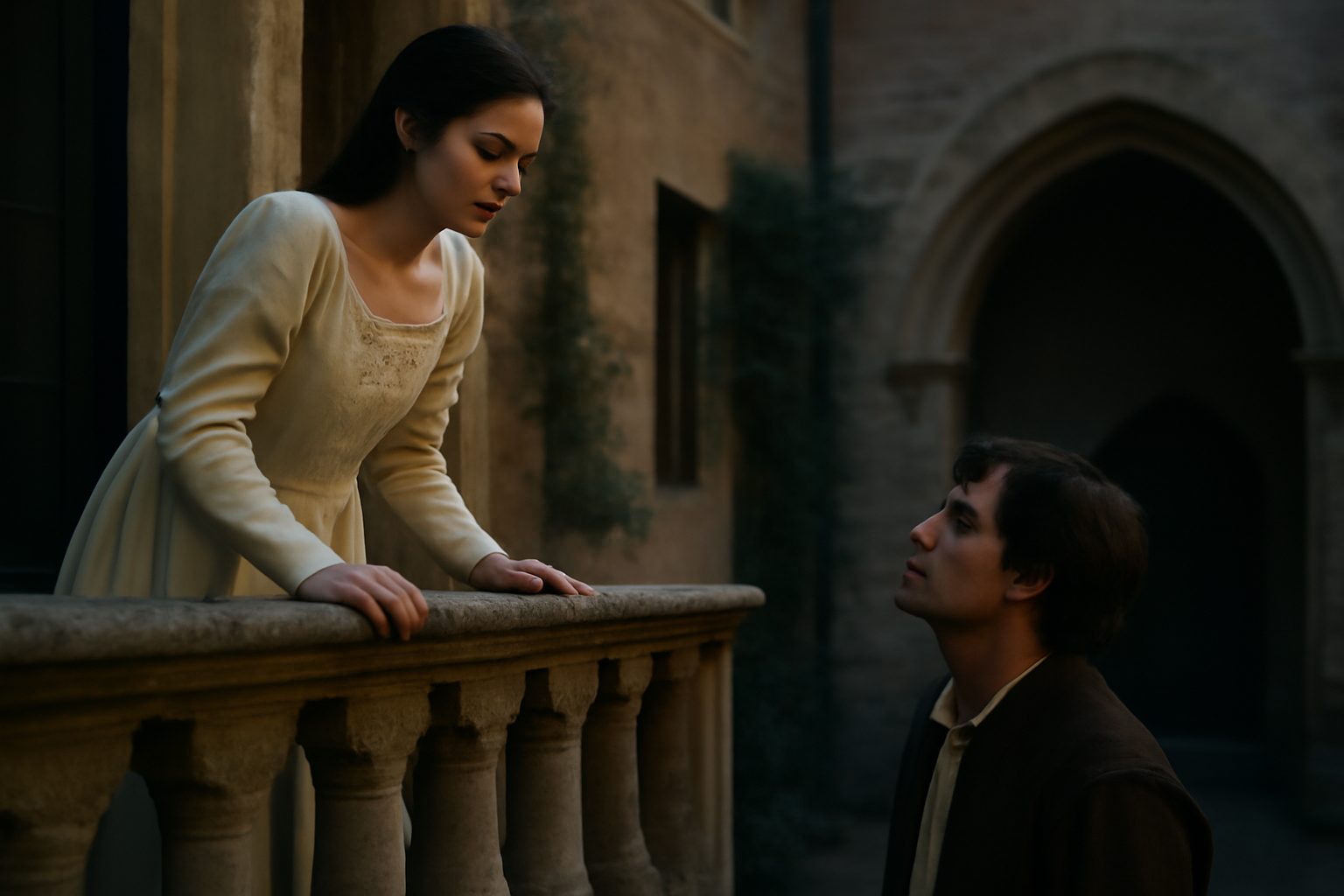
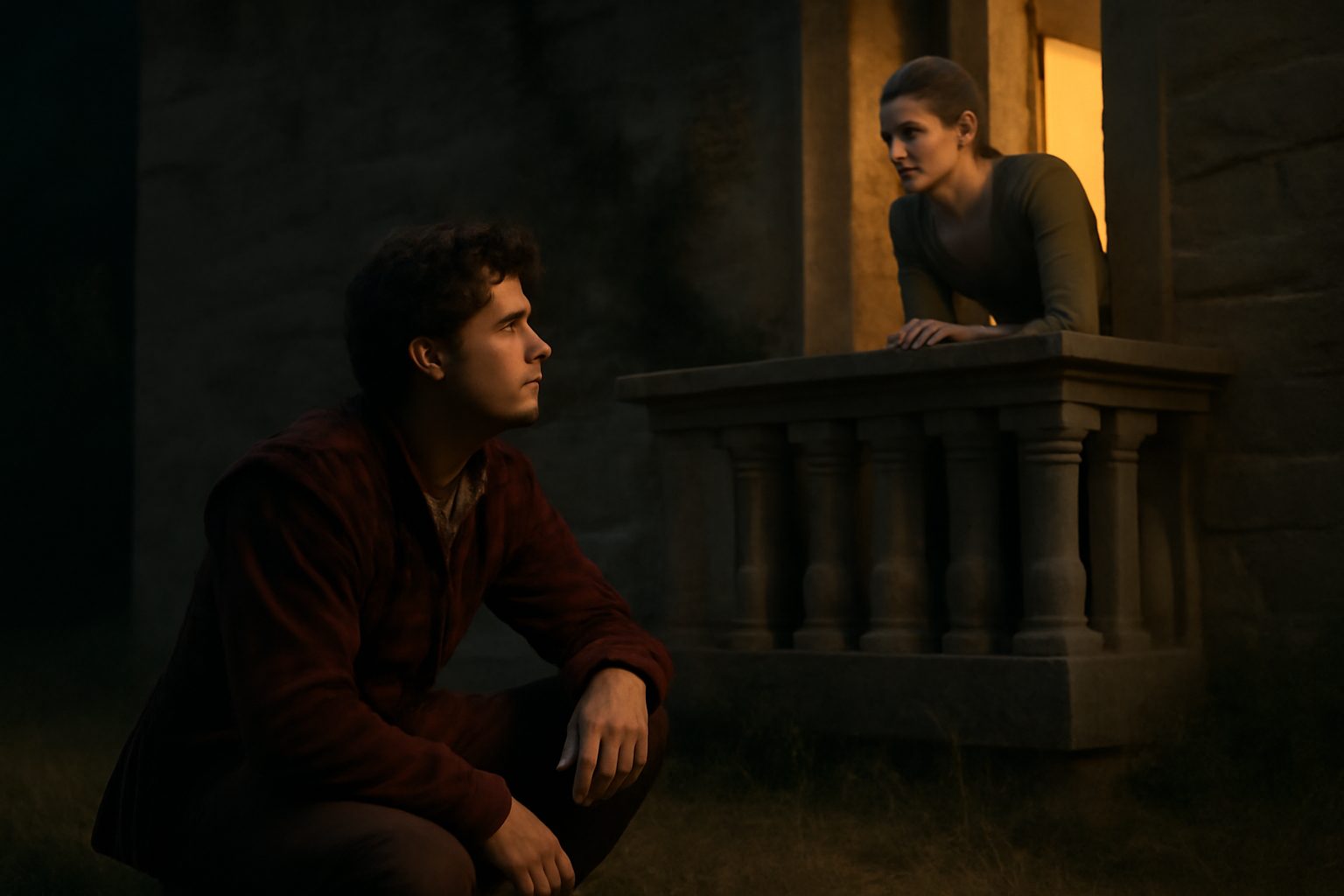
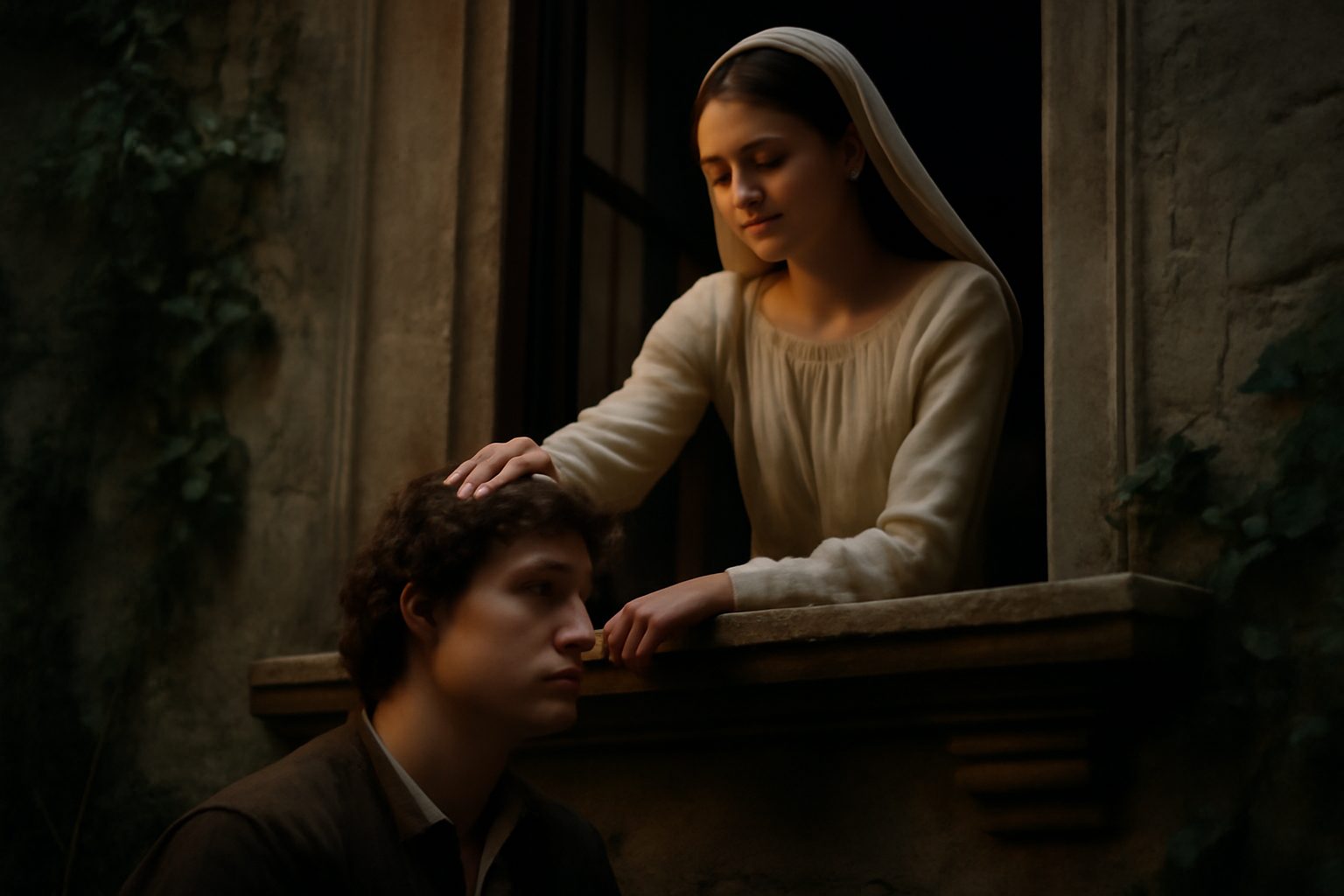
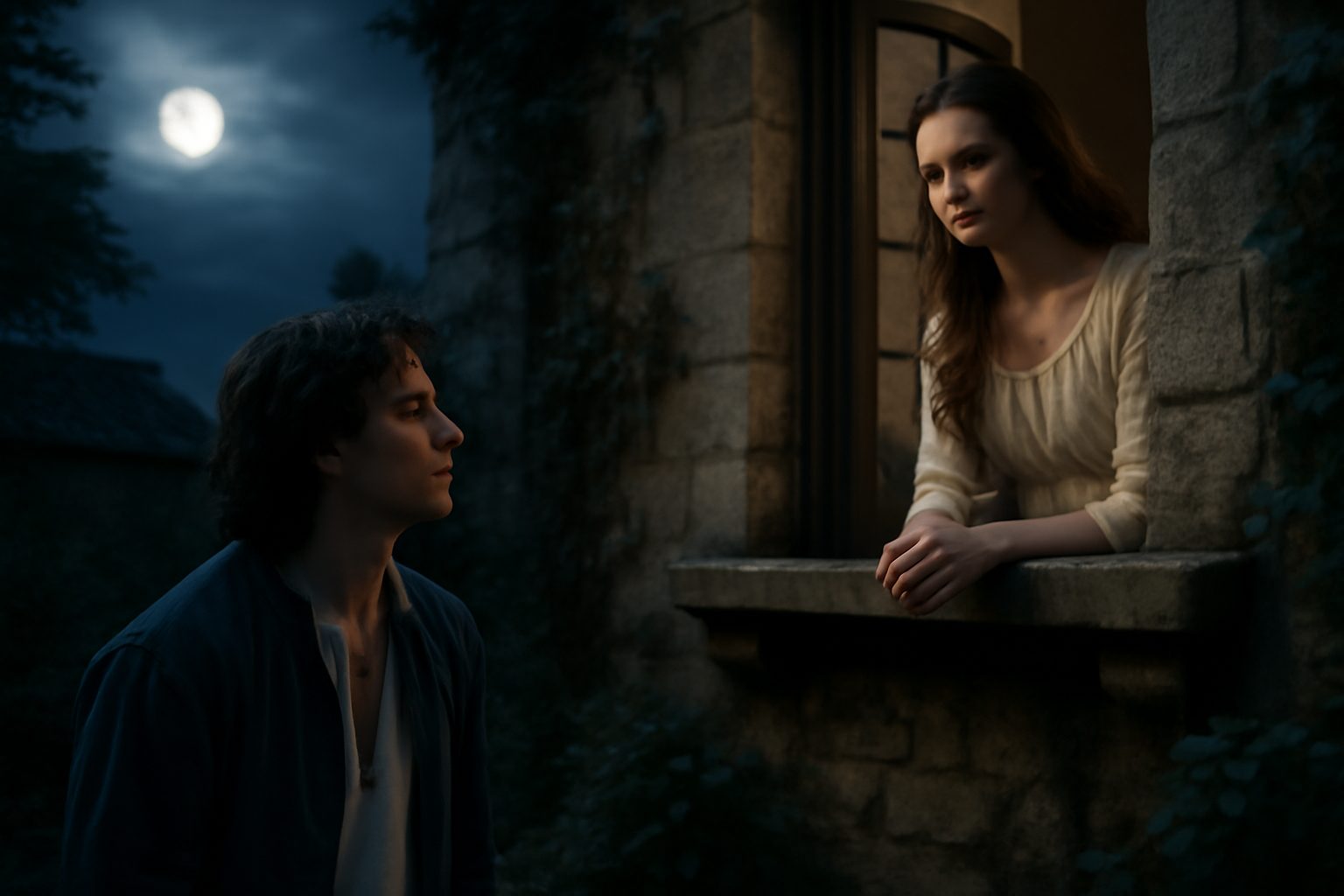
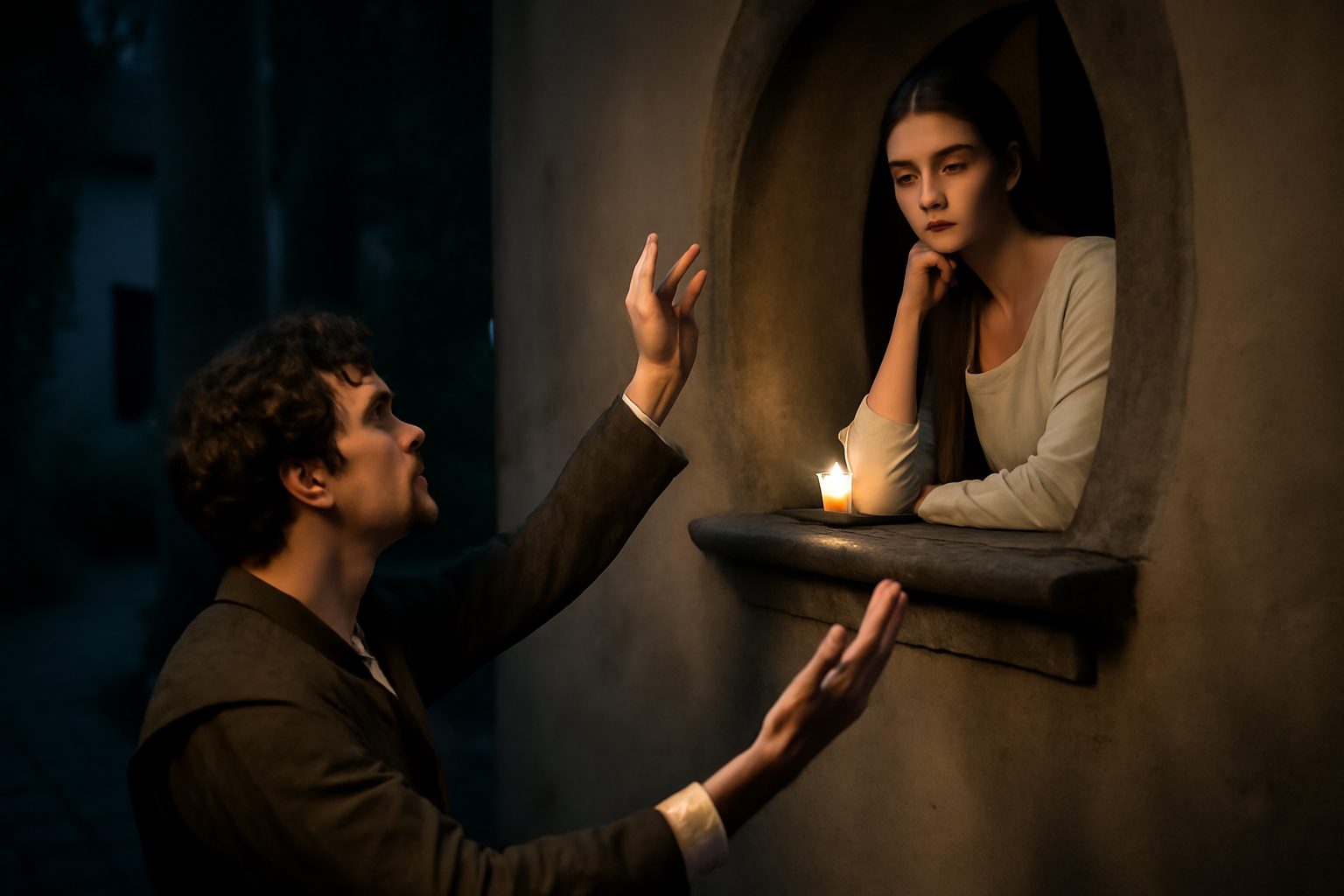
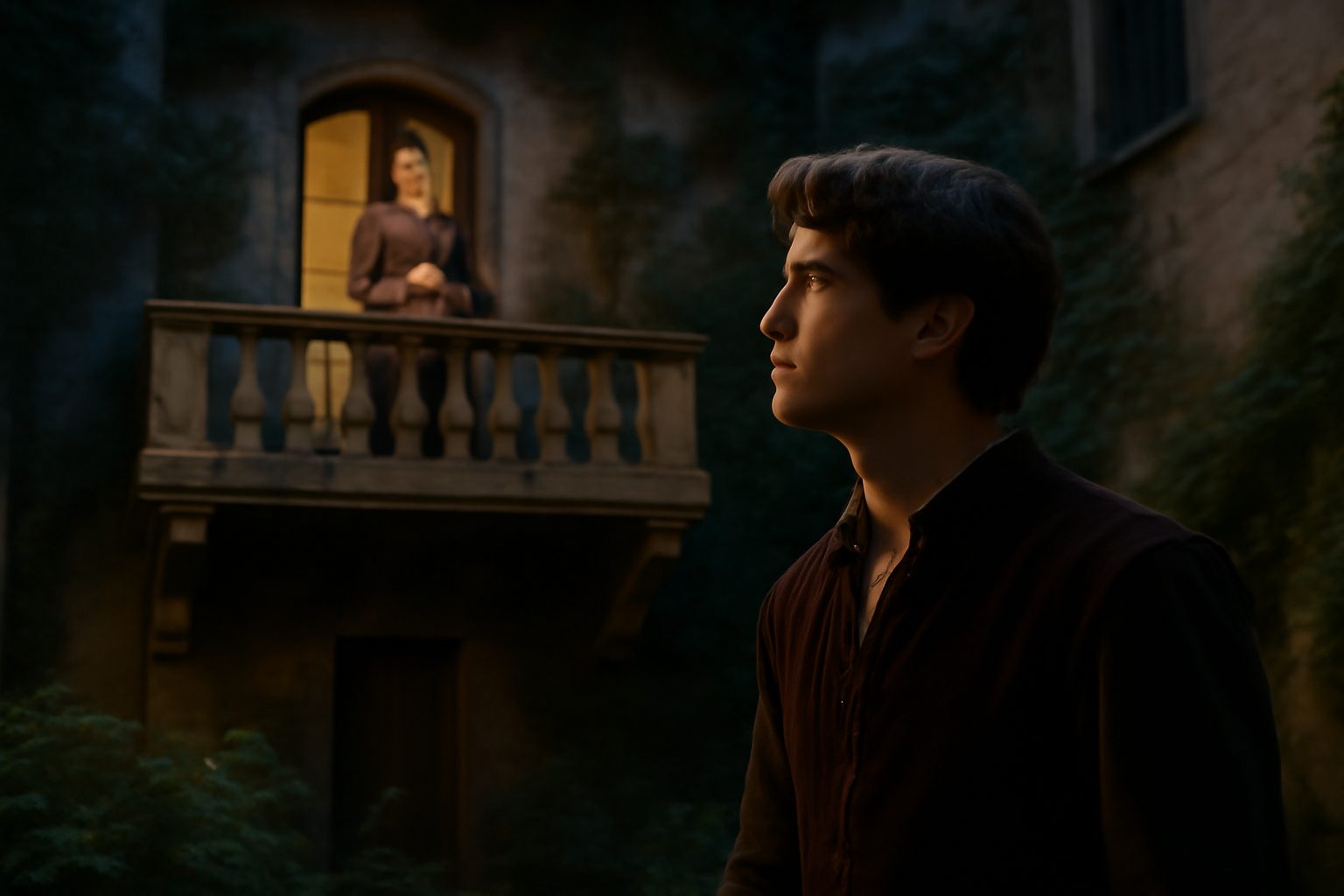
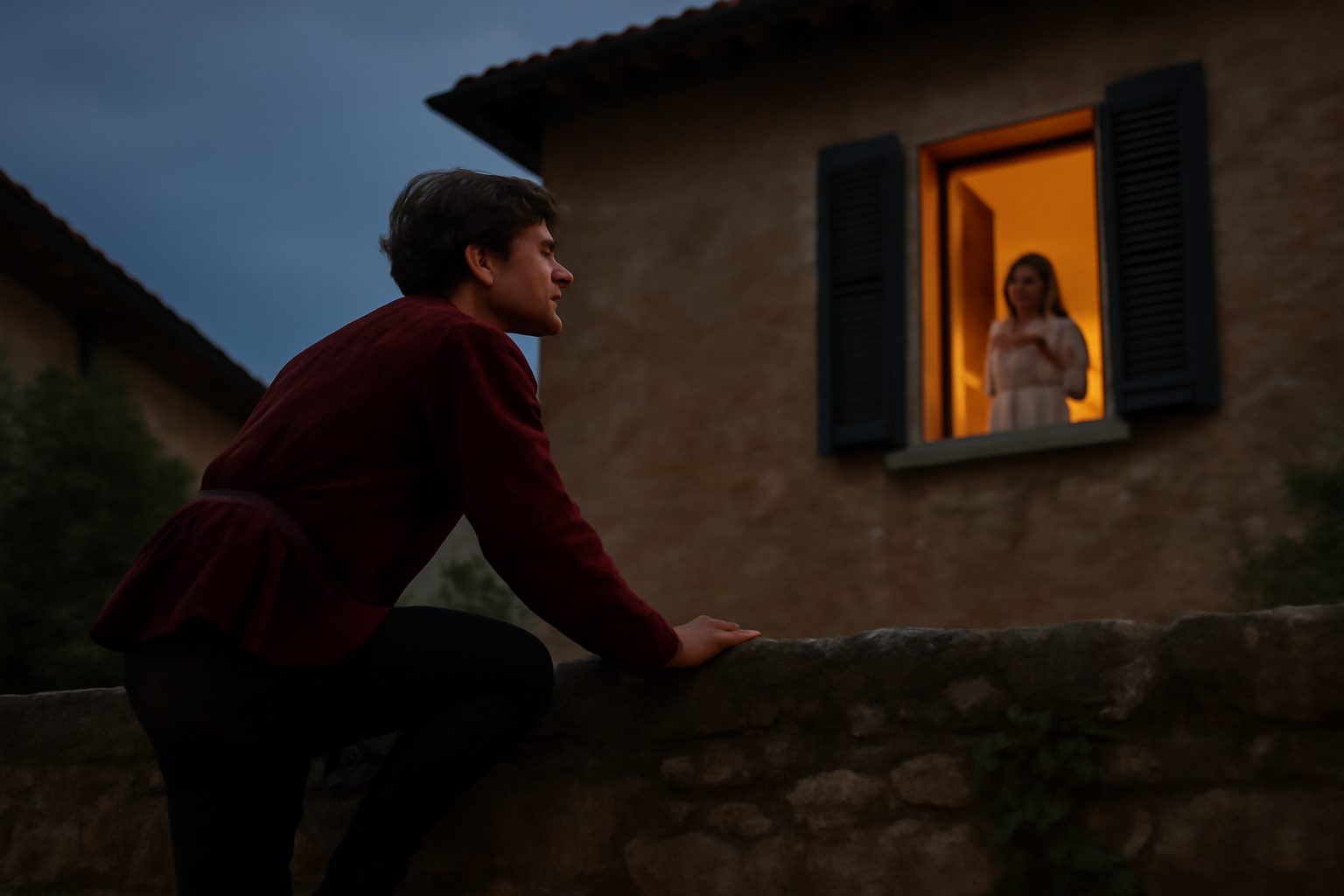
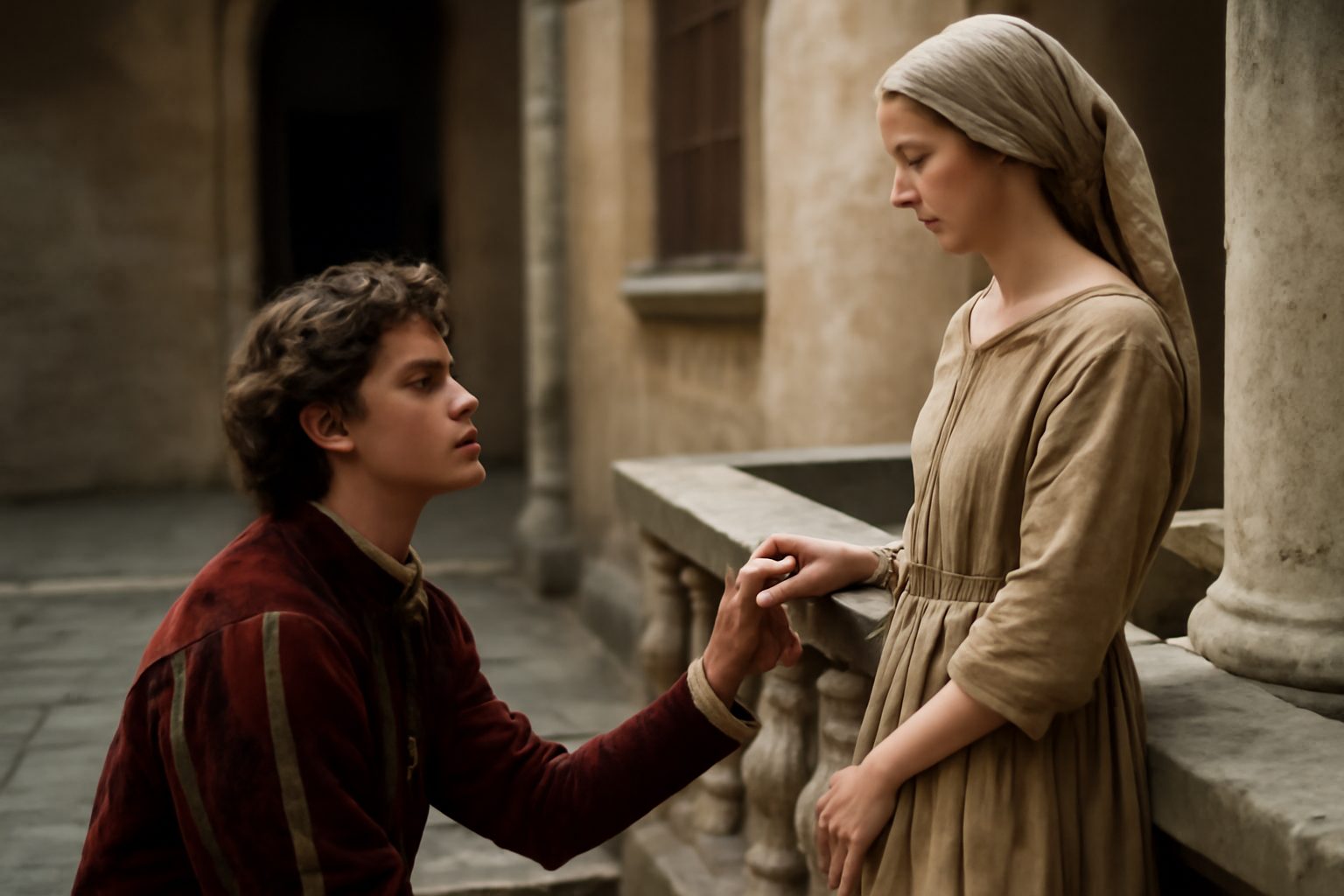
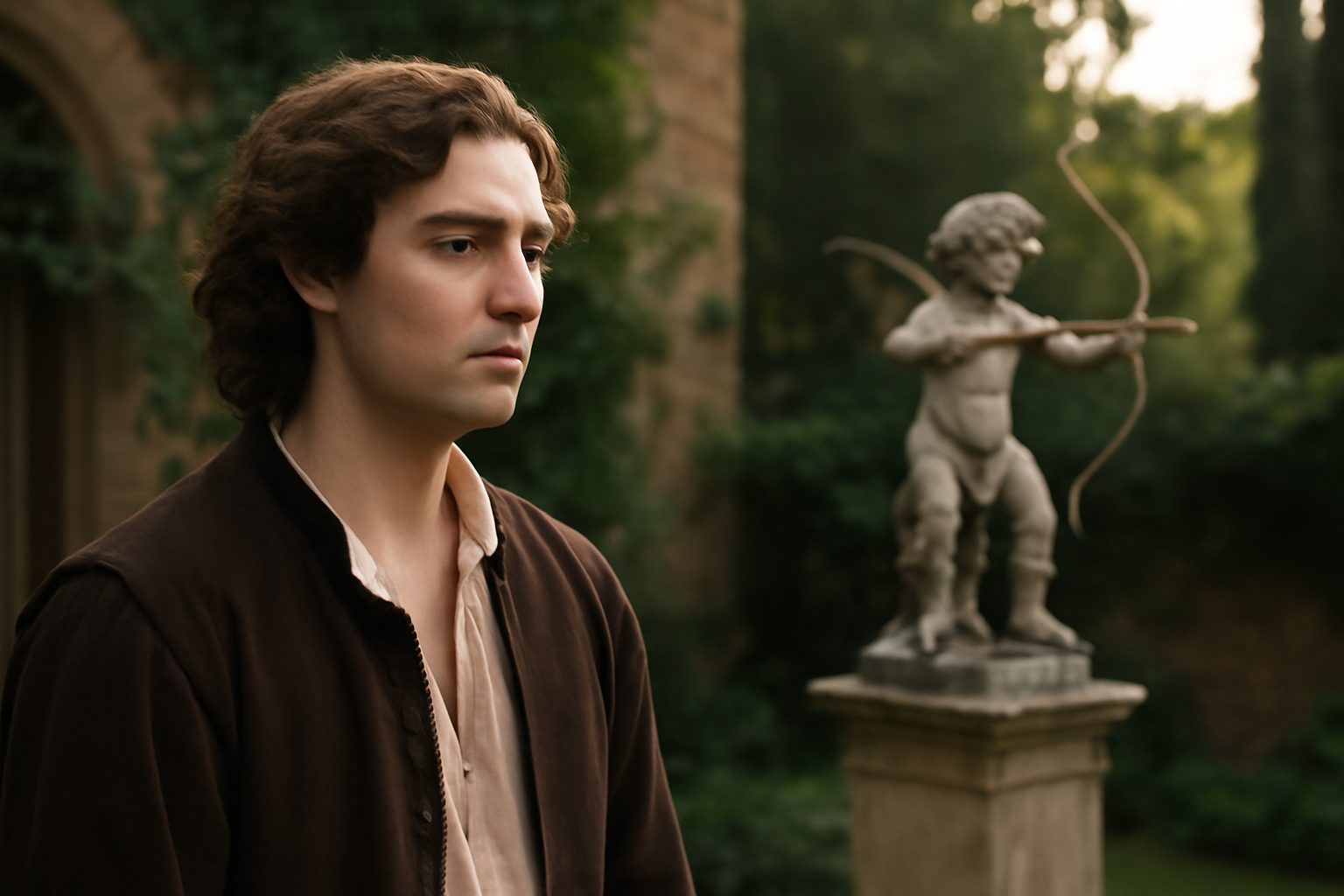
In Act 2, Scene 1 of Romeo and Juliet, Mercutio mocks Romeo's lovestruck state, calling out to him in a teasing tone. This line playfully exaggerates the simplicity of romantic language, reducing it to sighs and clichéd words. It comes as Mercutio and Benvolio search for Romeo, who has slipped away to pursue Juliet after the Capulet's feast.
Mercutio: "Cry but 'Ay me!' pronounce but 'love' and 'dove;'"
In modern day english, we would say:
Just sigh and say "Oh no," or whisper words like "love" and "romance."
Frequently Asked Questions
What two words does Mercutio say someone in love would say?
love and dove
Connections to other verses:
Connections to "Cry but 'Ay me!' pronounce but 'love' and 'dove;"
The verse Cry but 'Ay me!' pronounce but 'love' and 'dove; is part of Mercutio's mocking invocation, where he playfully conjures Romeo by referencing stereotypical lover's language. This connects thematically and tonally to several other verses in the scene.
Mocking Invocations and Conjurations
Mercutio's teasing conjuration style is echoed in Nay, I'll conjure too, where he joins Benvolio in trying to summon Romeo, and in The ape is dead, and I must conjure him, which continues the humorous, almost ritualistic tone. The phrase also relates to I conjure only but to raise up him, underscoring Mercutio's intent to provoke Romeo's appearance through satire.
References to Love and Lovers' Tropes
The verse's focus on exaggerated romantic expressions links to Romeo! humours! madman! passion! lover!, where Mercutio lists labels that define Romeo's lovelorn state. It also parallels Young Adam Cupid, he that shot so trim, which invokes Cupid as a symbol of love's folly, and When King Cophetua loved the beggar-maid!, alluding to a classic tale of idealized, sudden love.
Contrast with Romeo's Seriousness
Mercutio's jesting stands in stark contrast to Romeo's earnestness, hinted at in Turn back, dull earth, and find thy centre out, where Romeo expresses his gravitational pull toward Juliet. The mocking tone of "love and dove" also opposes the sincere invocations like I conjure thee by Rosaline's bright eyes, though both highlight the theme of unrequited or idealized love.
Wordplay and Sexual Innuendo
Later in the scene, Mercutio shifts to more risqué wordplay, such as in And wish his mistress were that kind of fruit and As maids call medlars, when they laugh alone, which carry double entendres. This evolution from light mockery ("love and dove") to bawdy humor shows Mercutio's character depth and adds layers to the scene's exploration of love's facets.