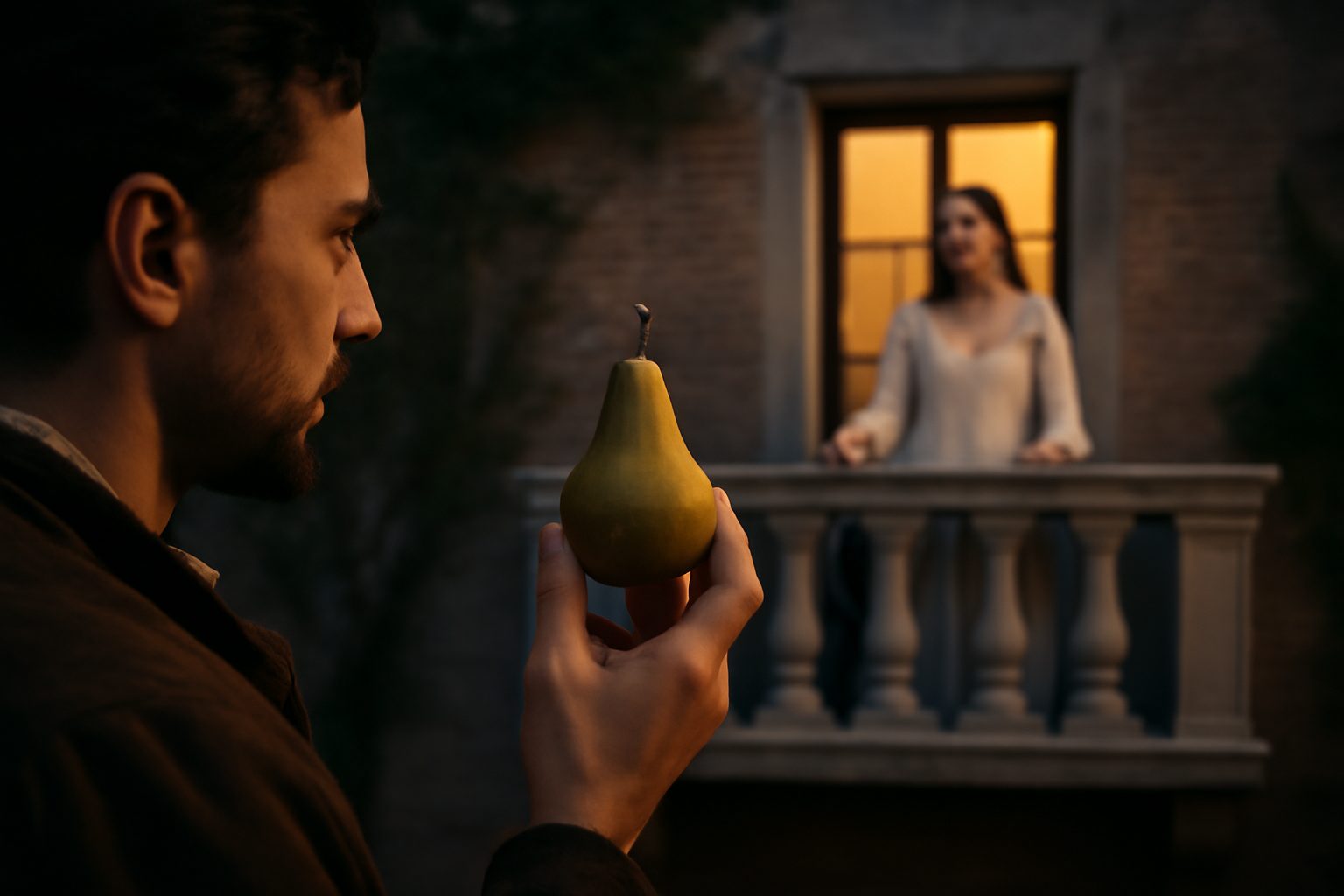
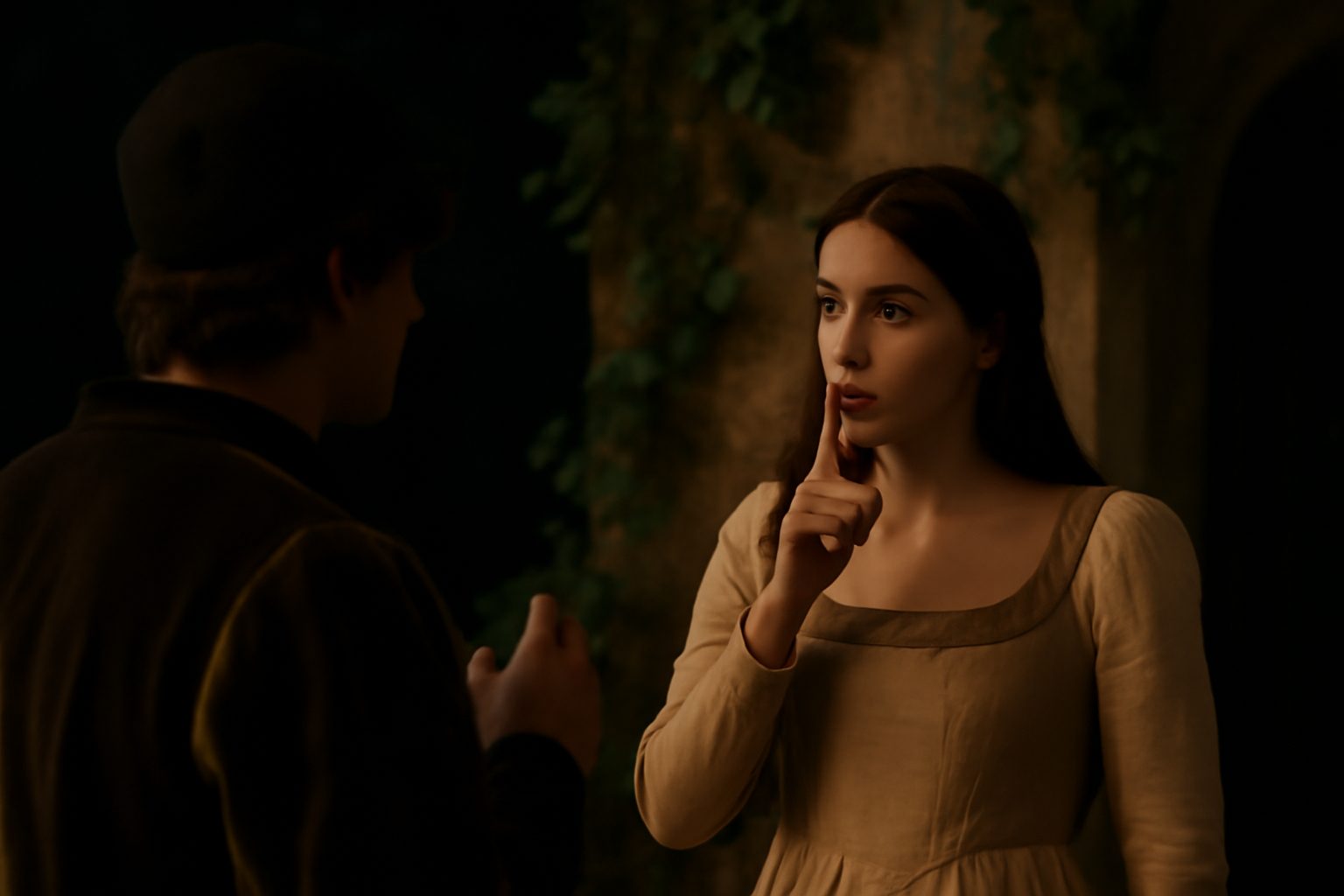
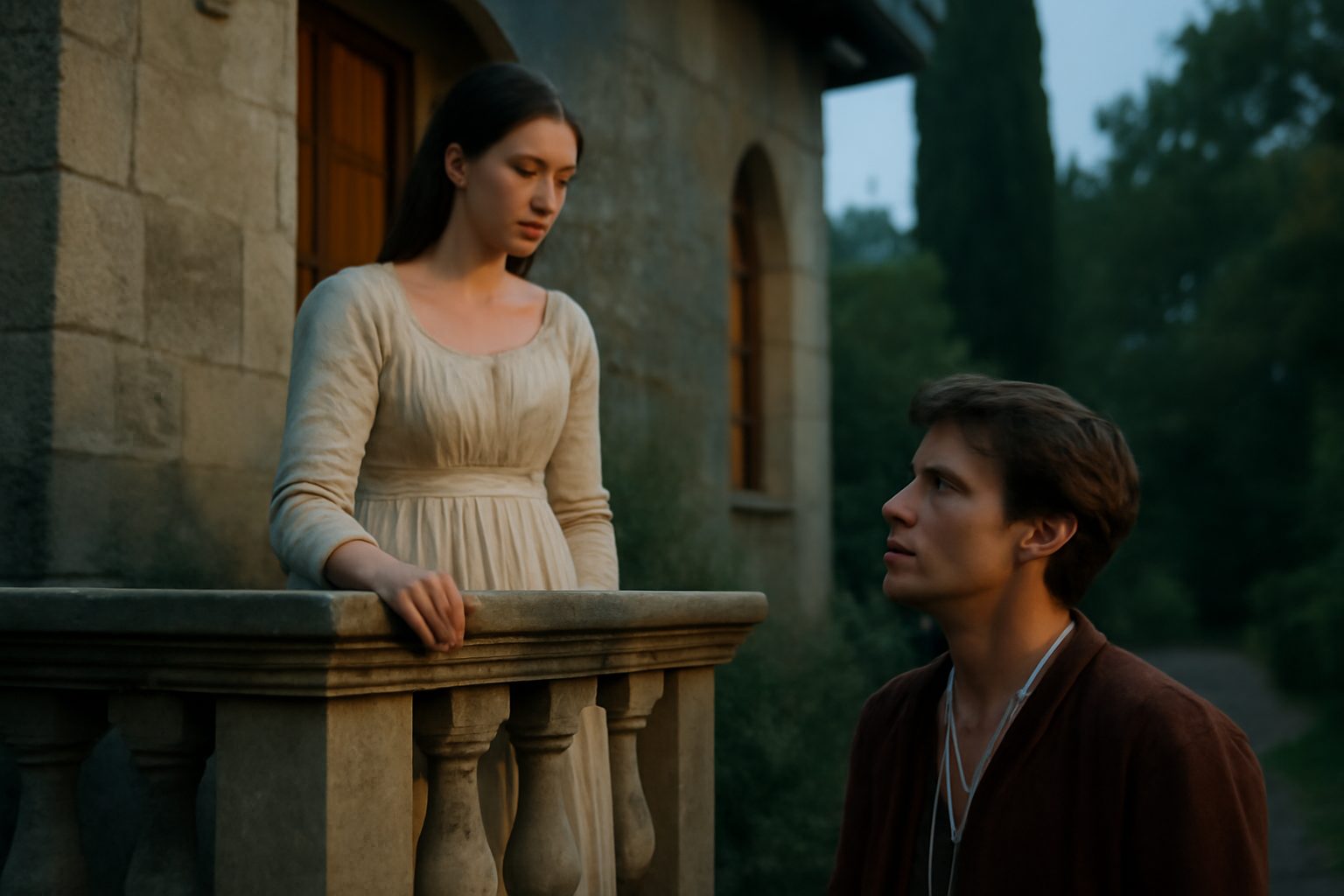
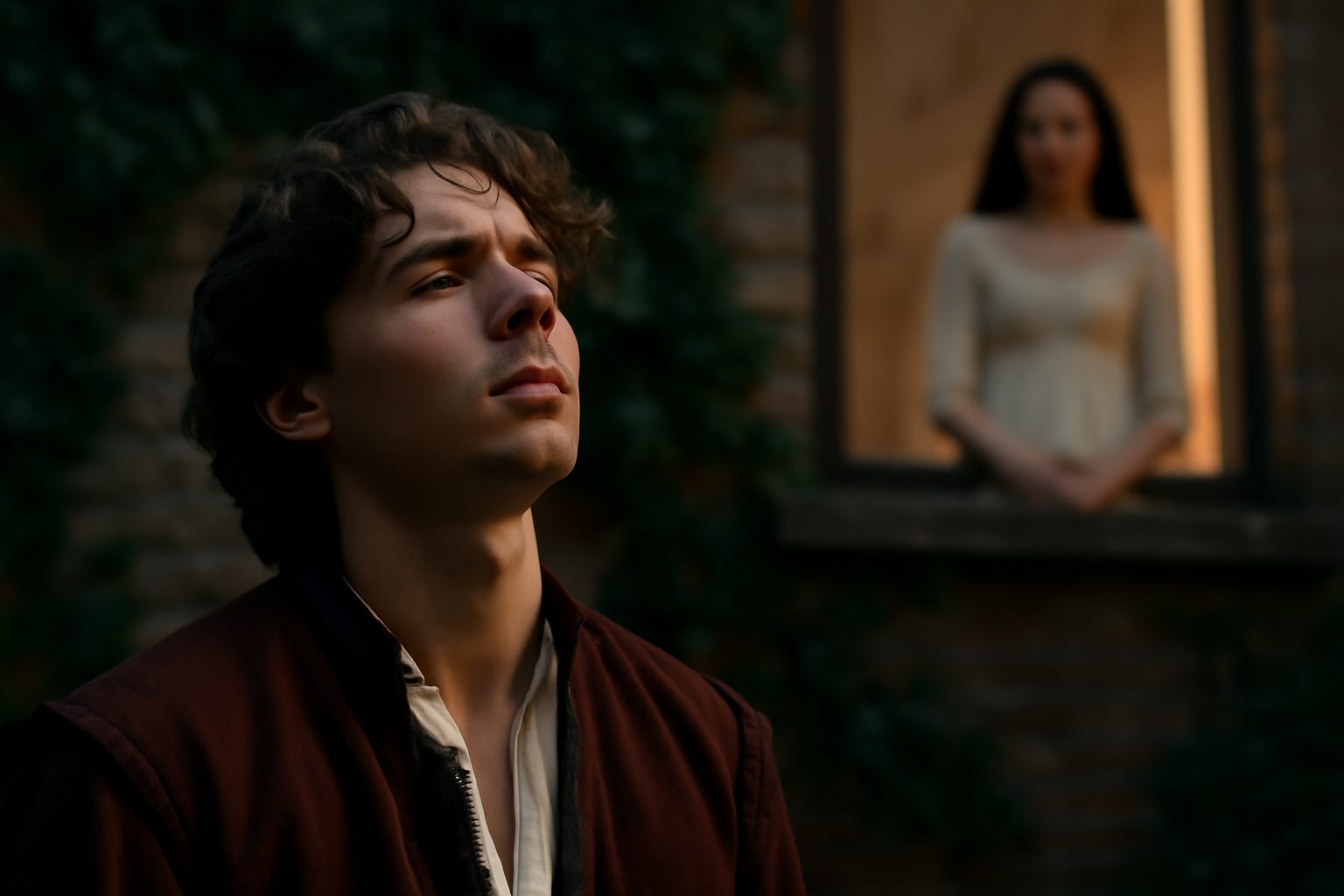
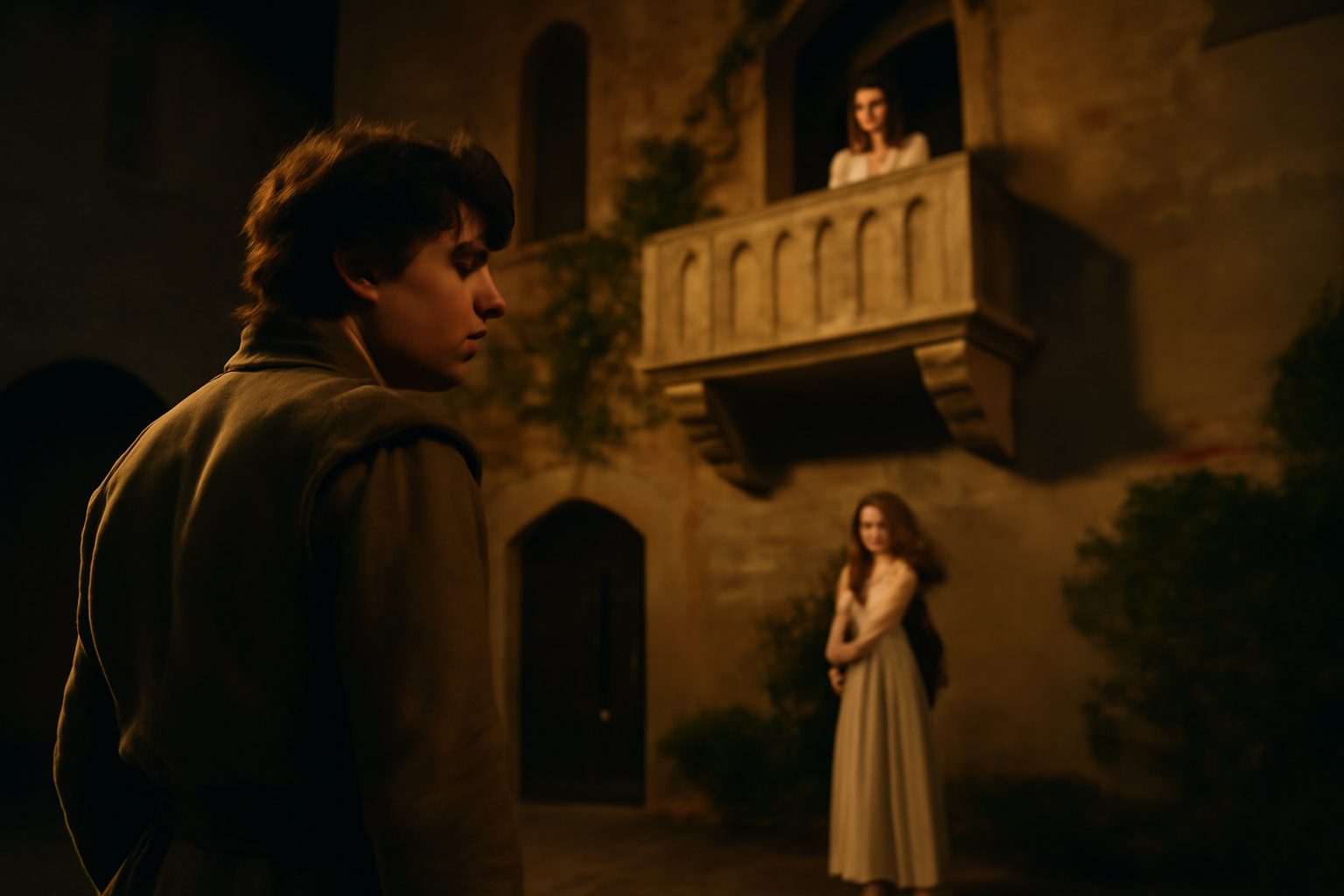
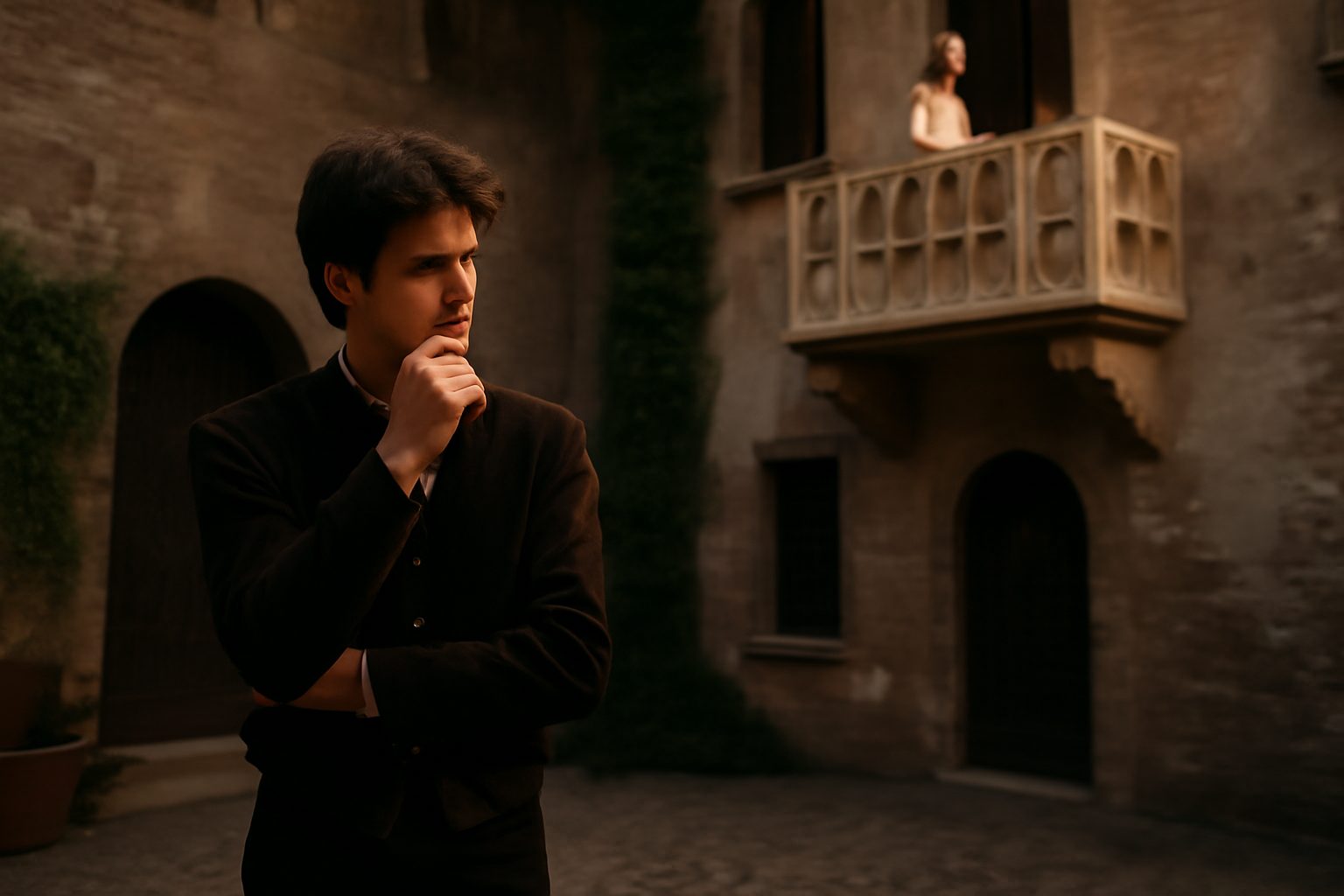
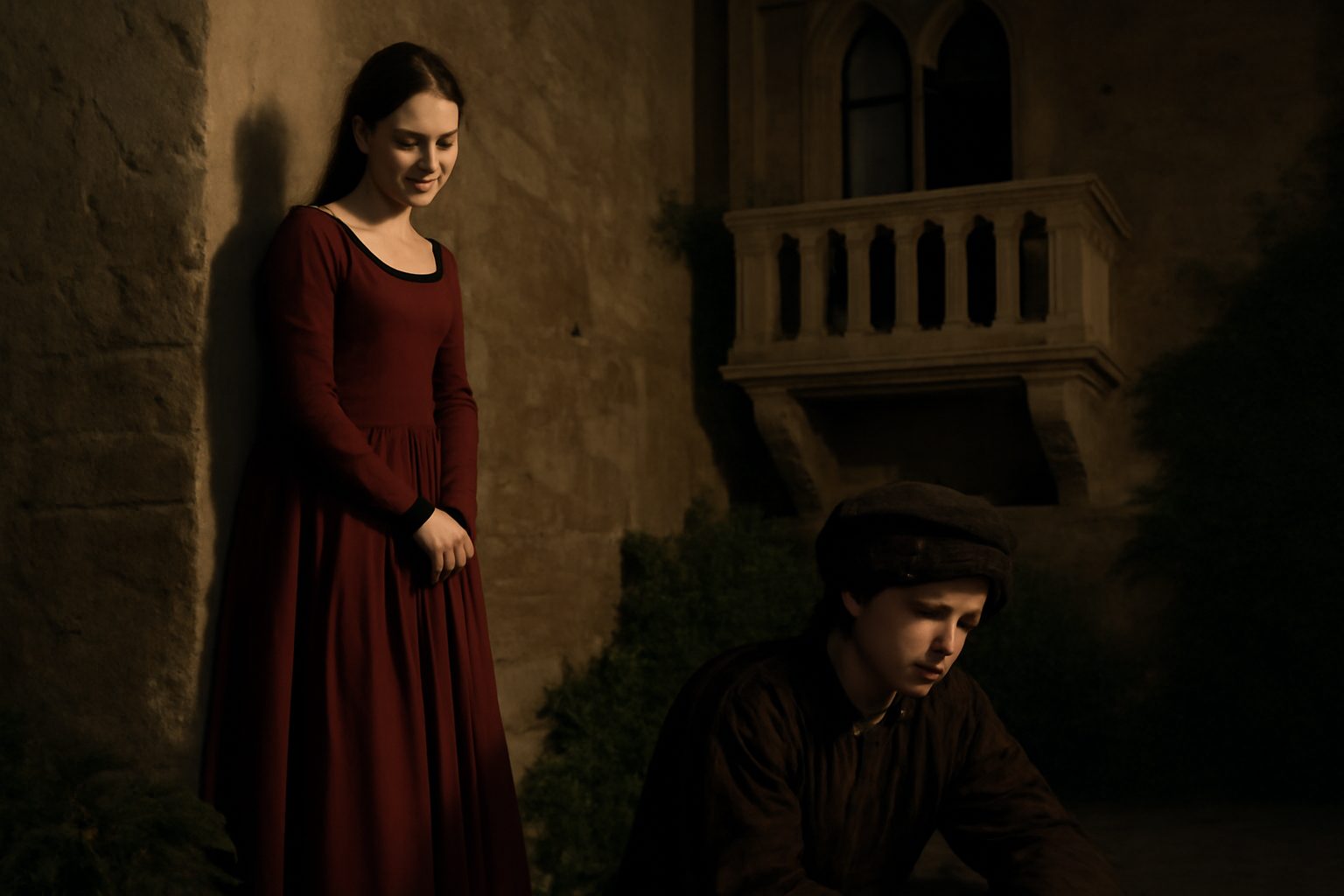
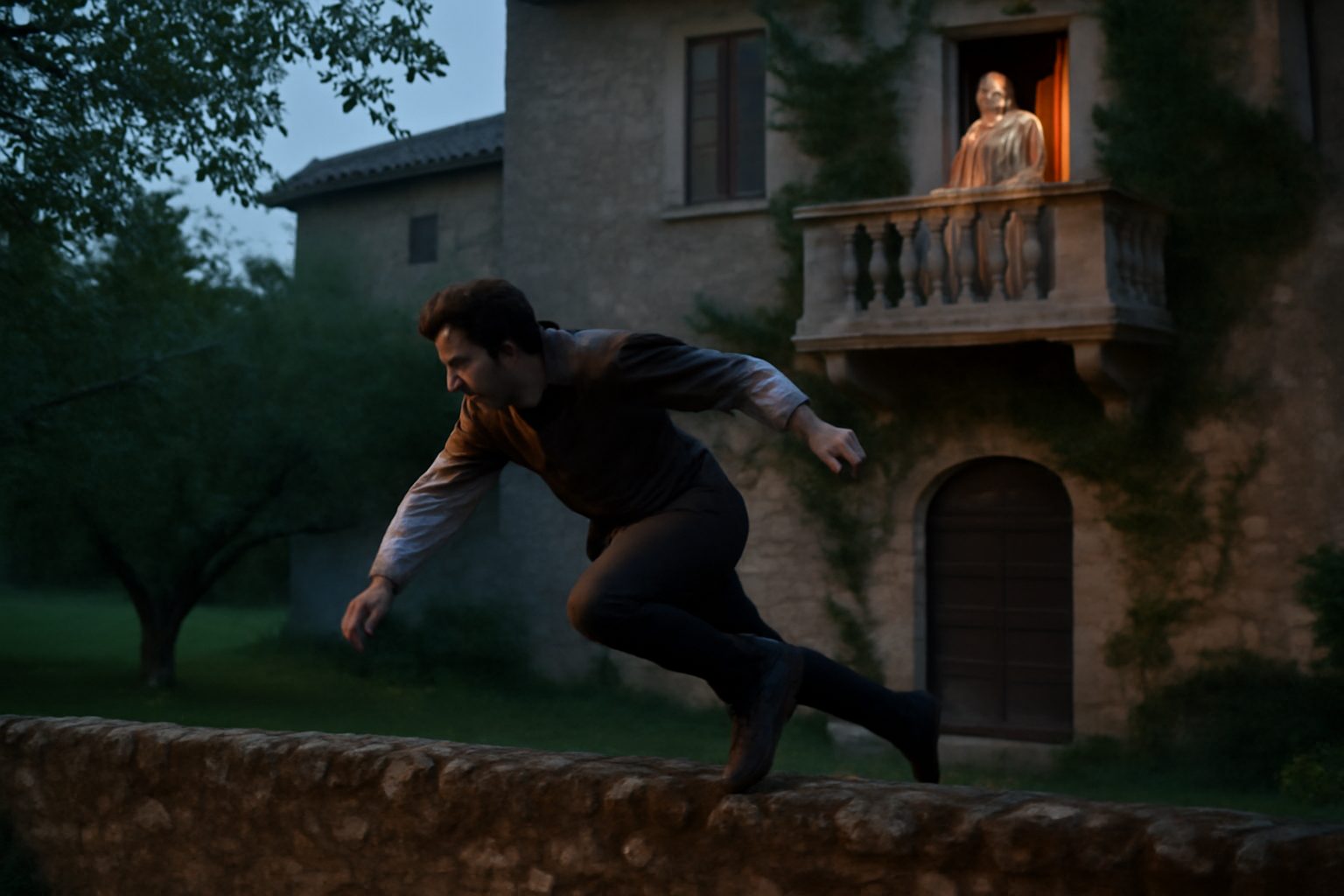
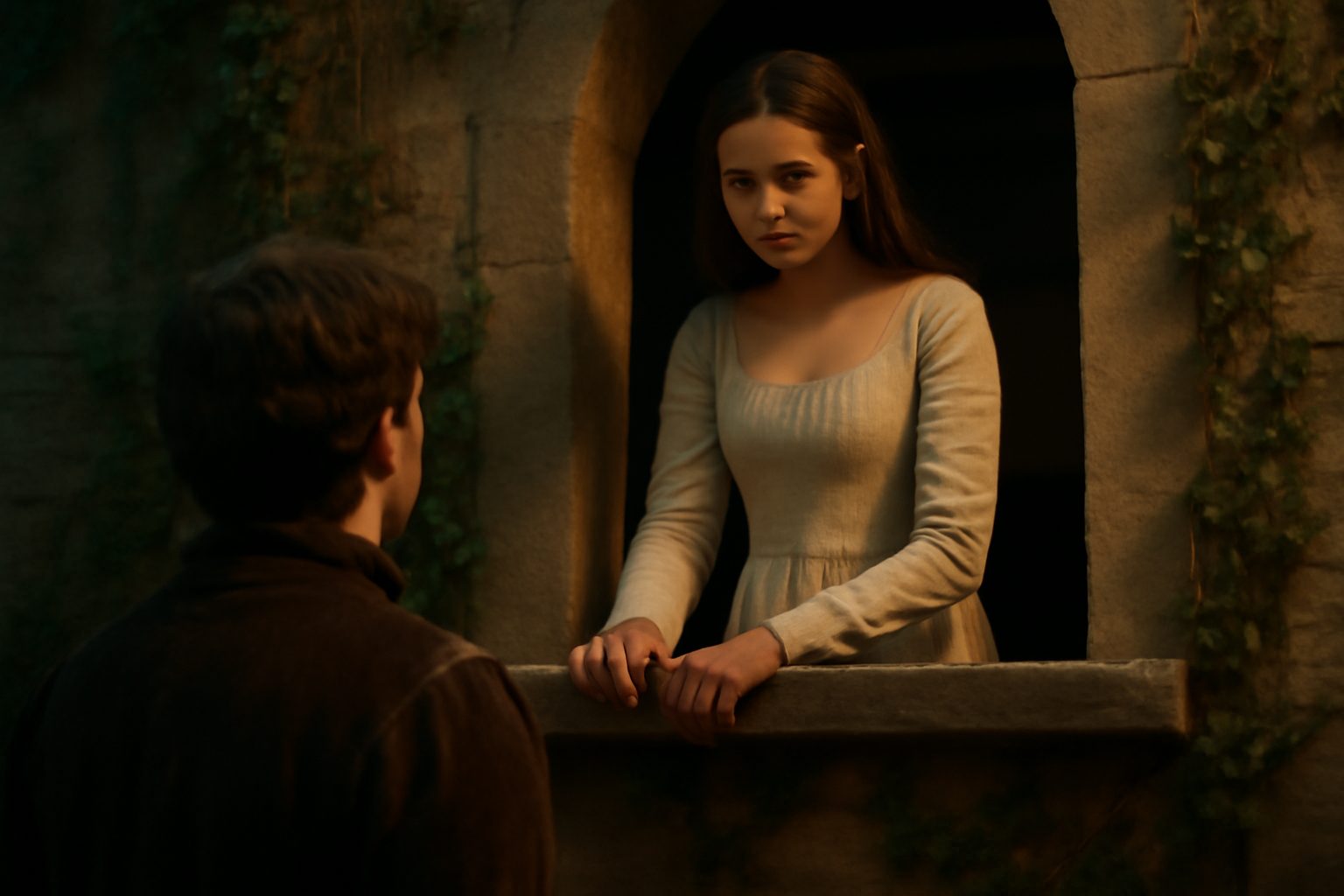
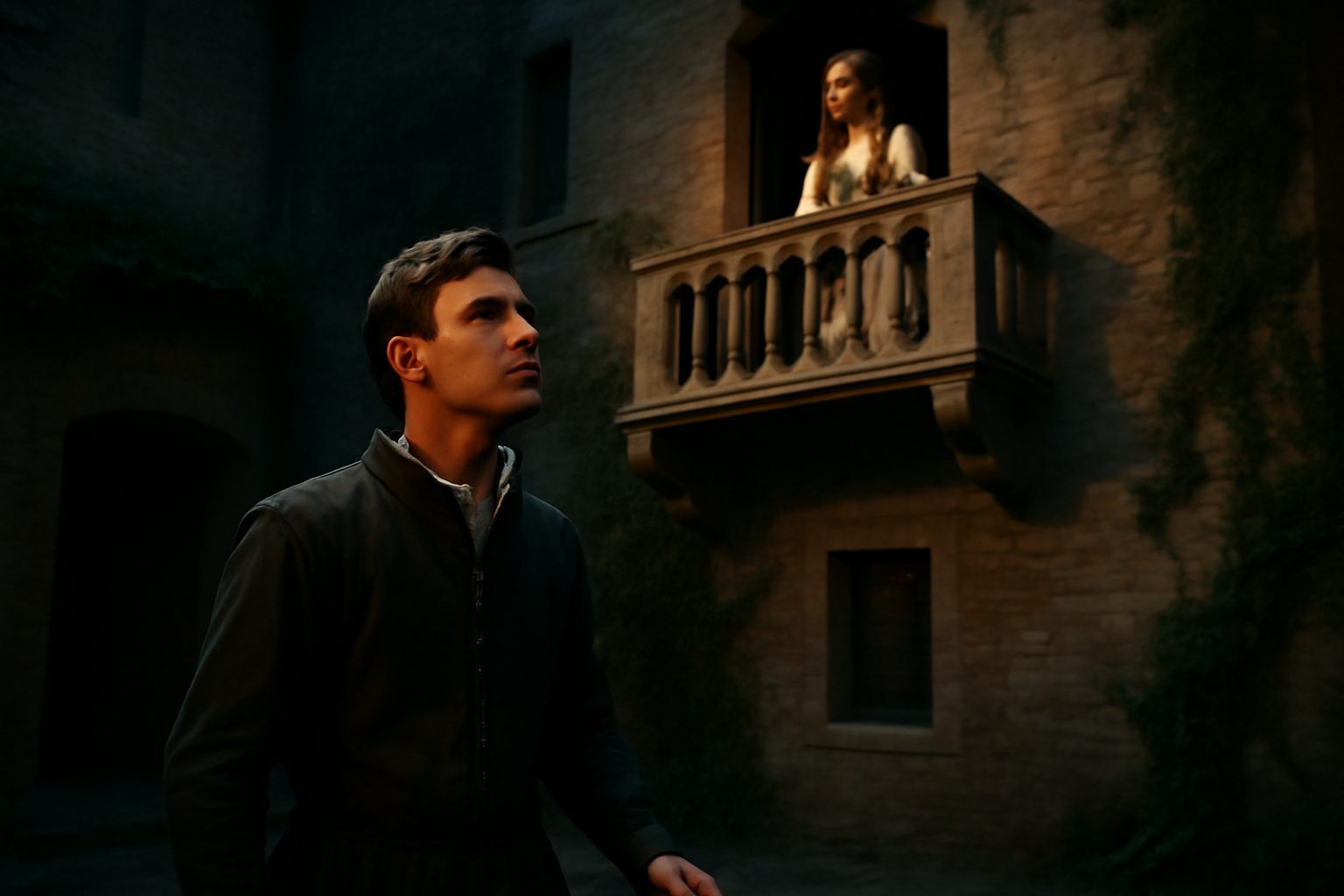
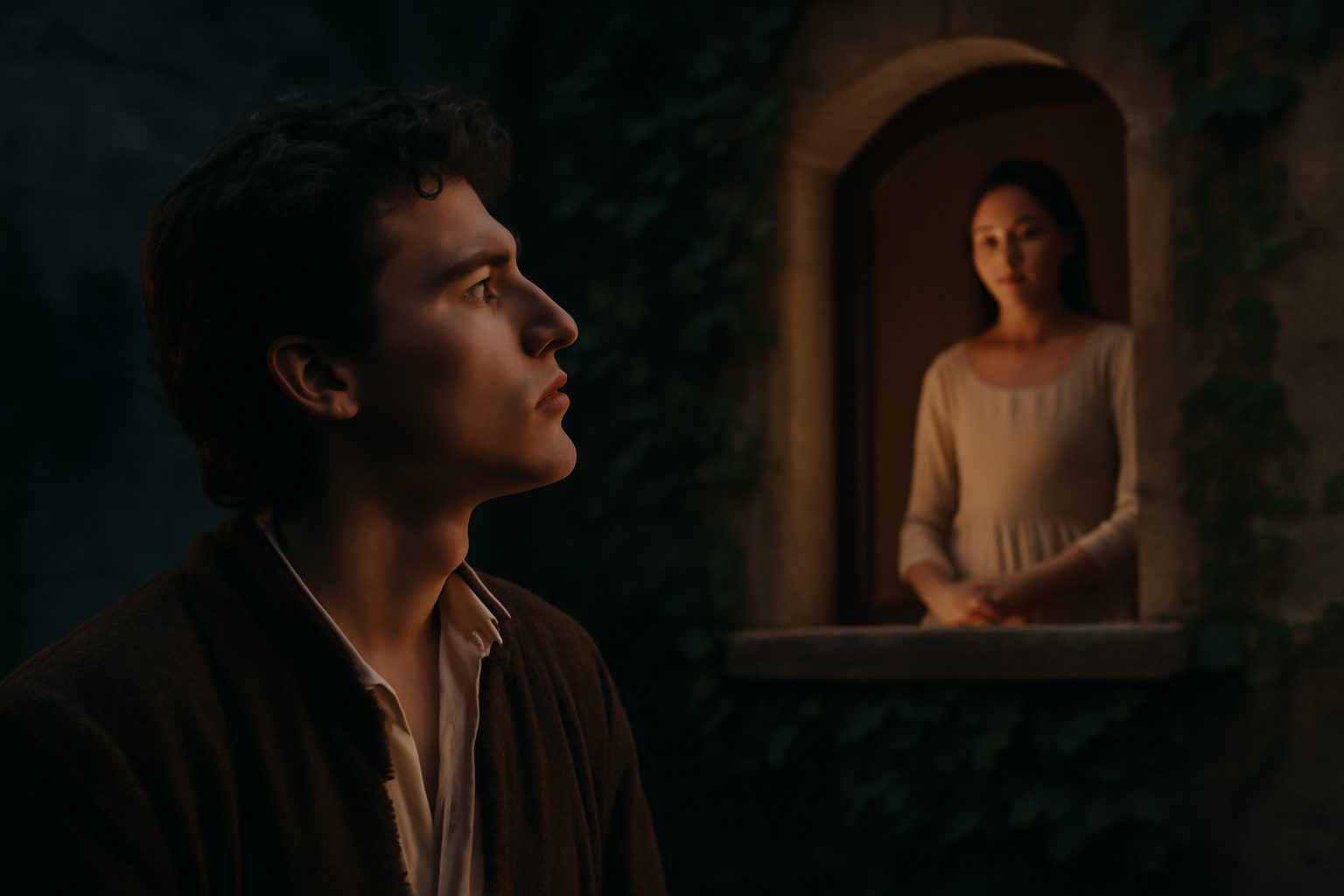
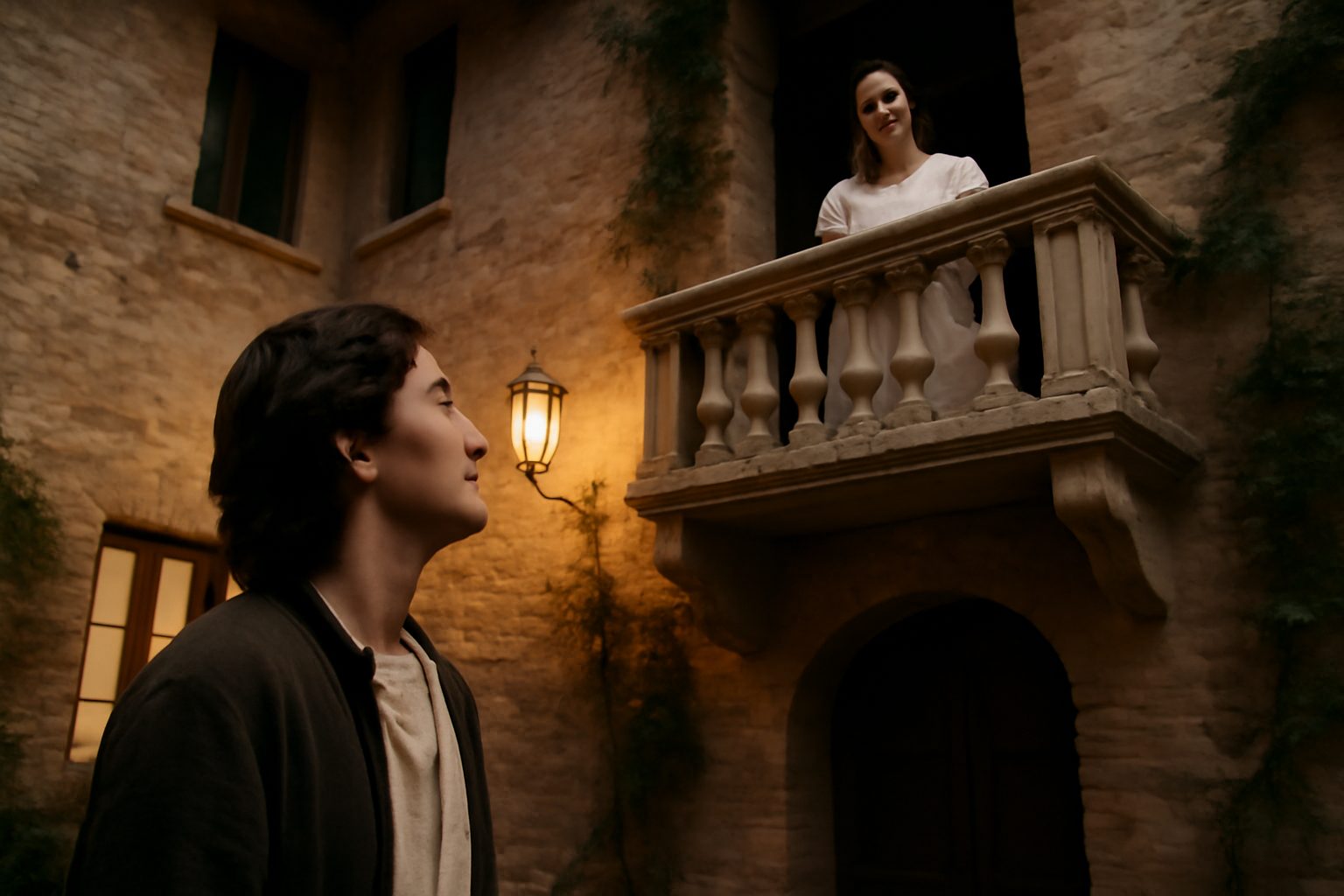
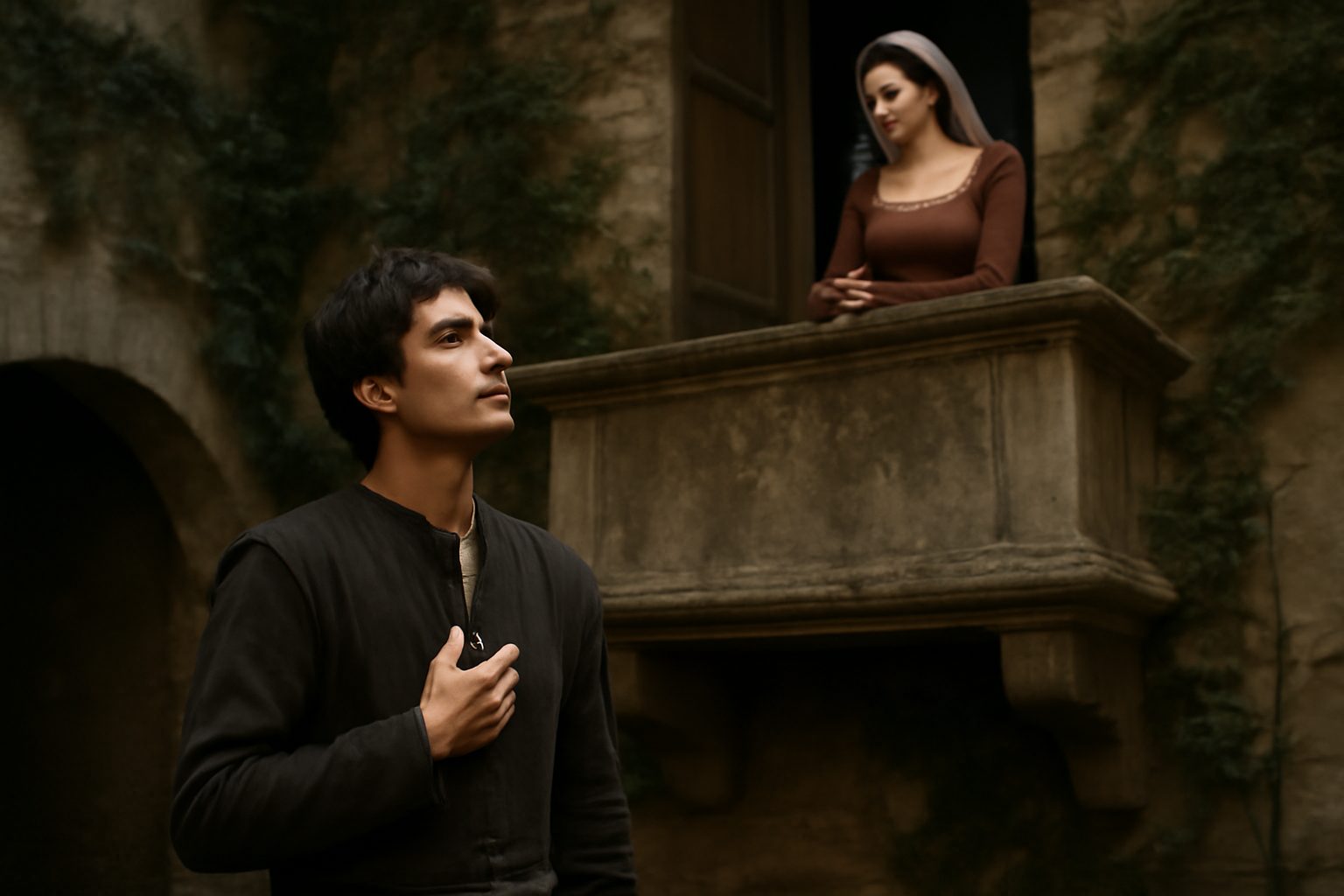
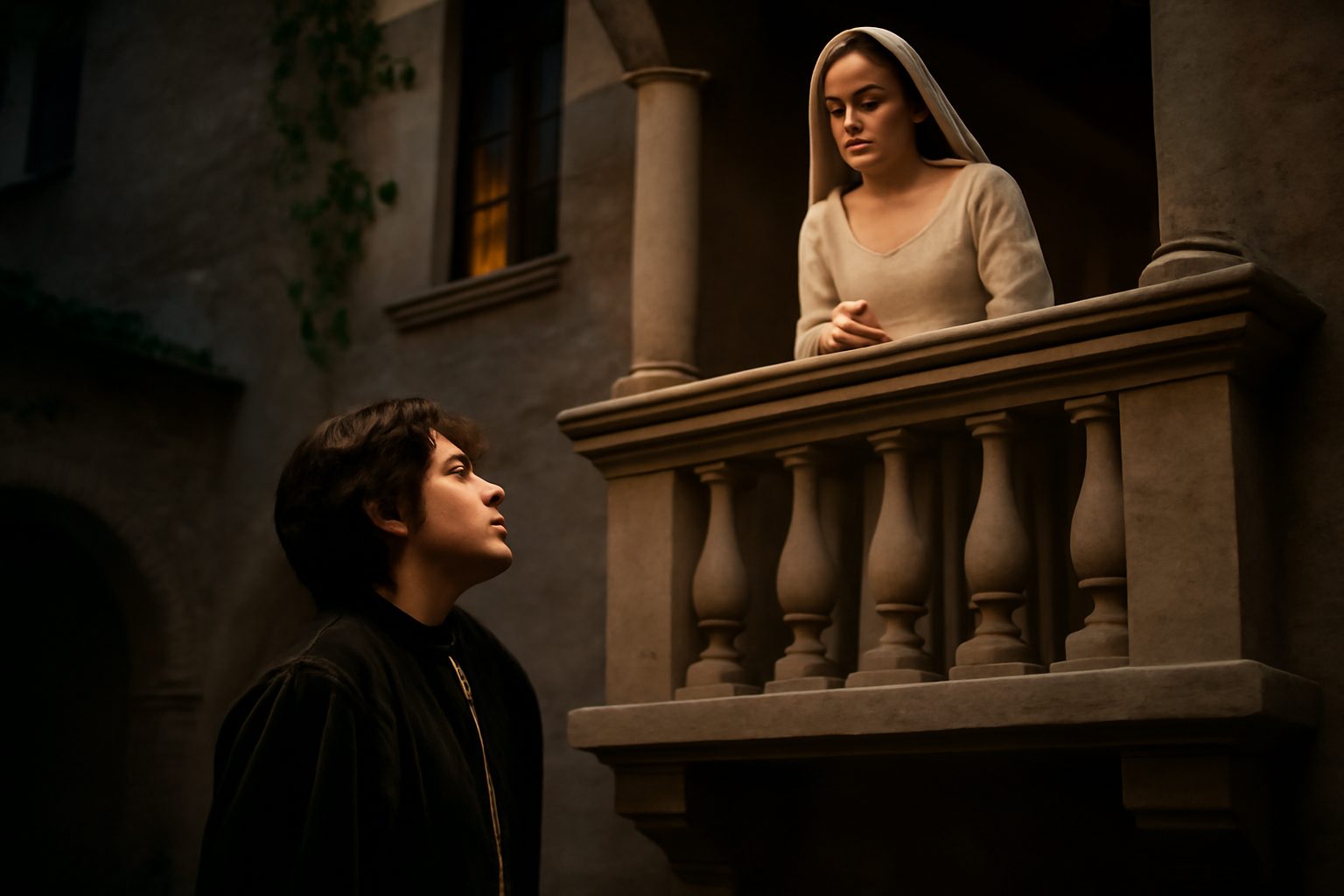
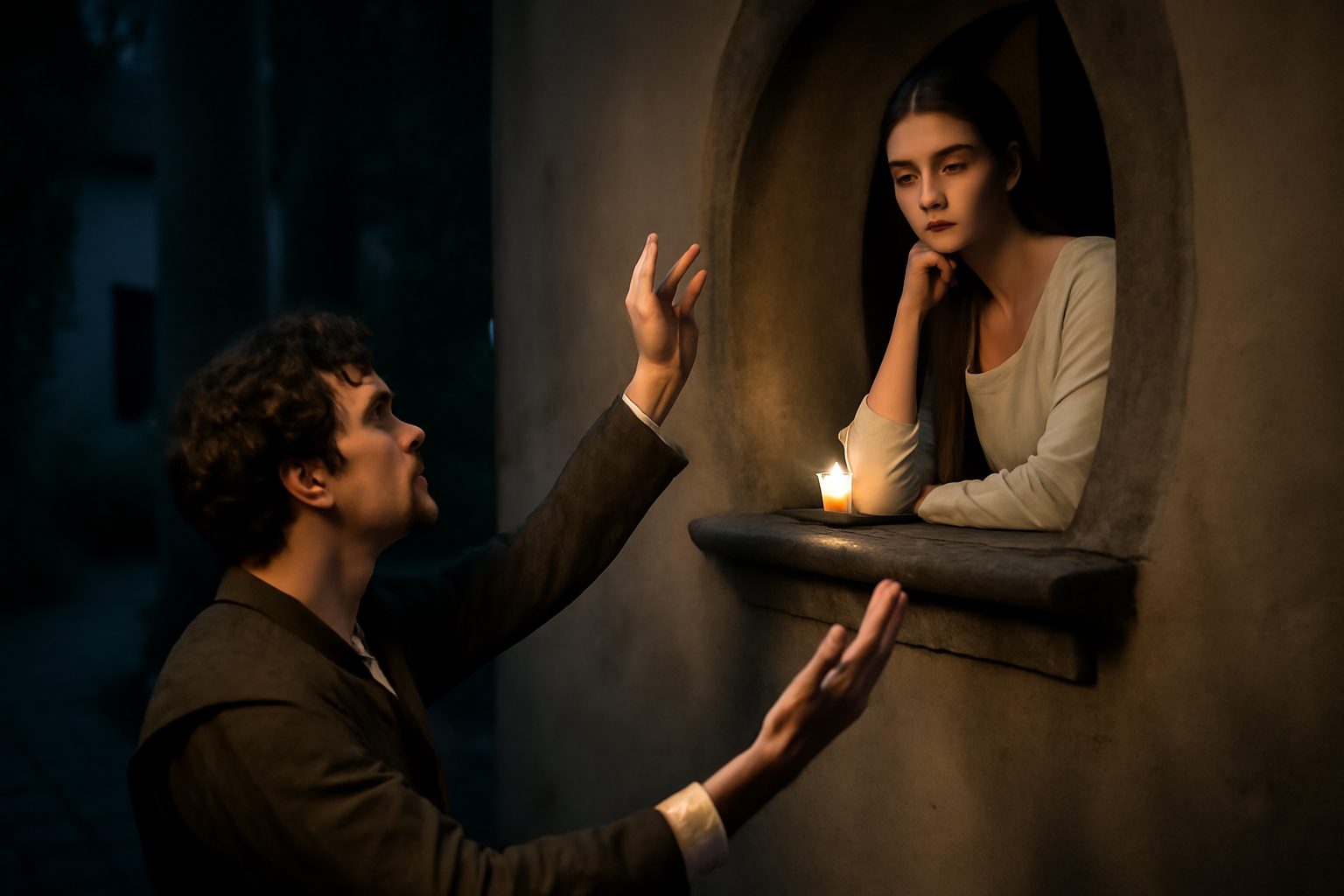
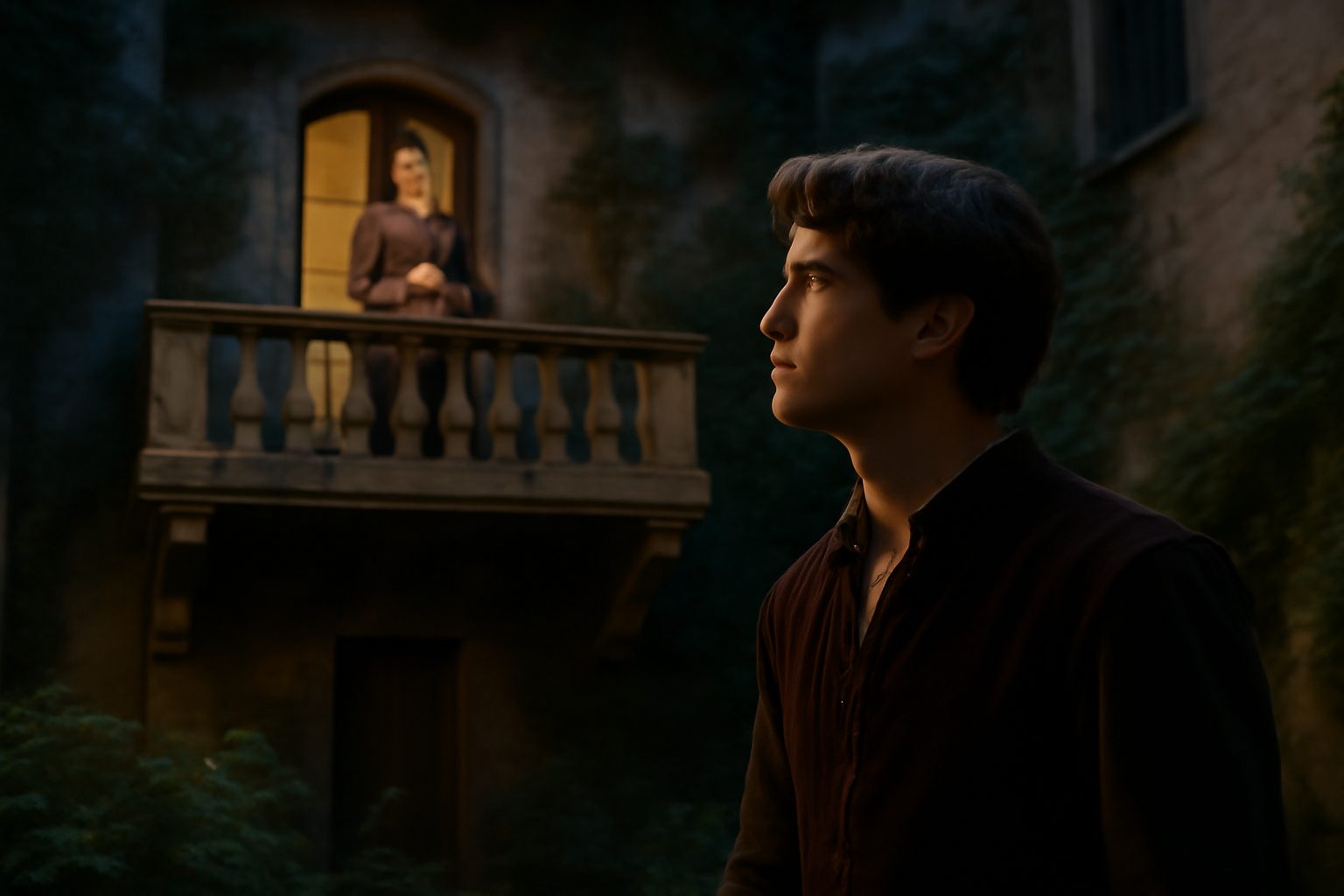
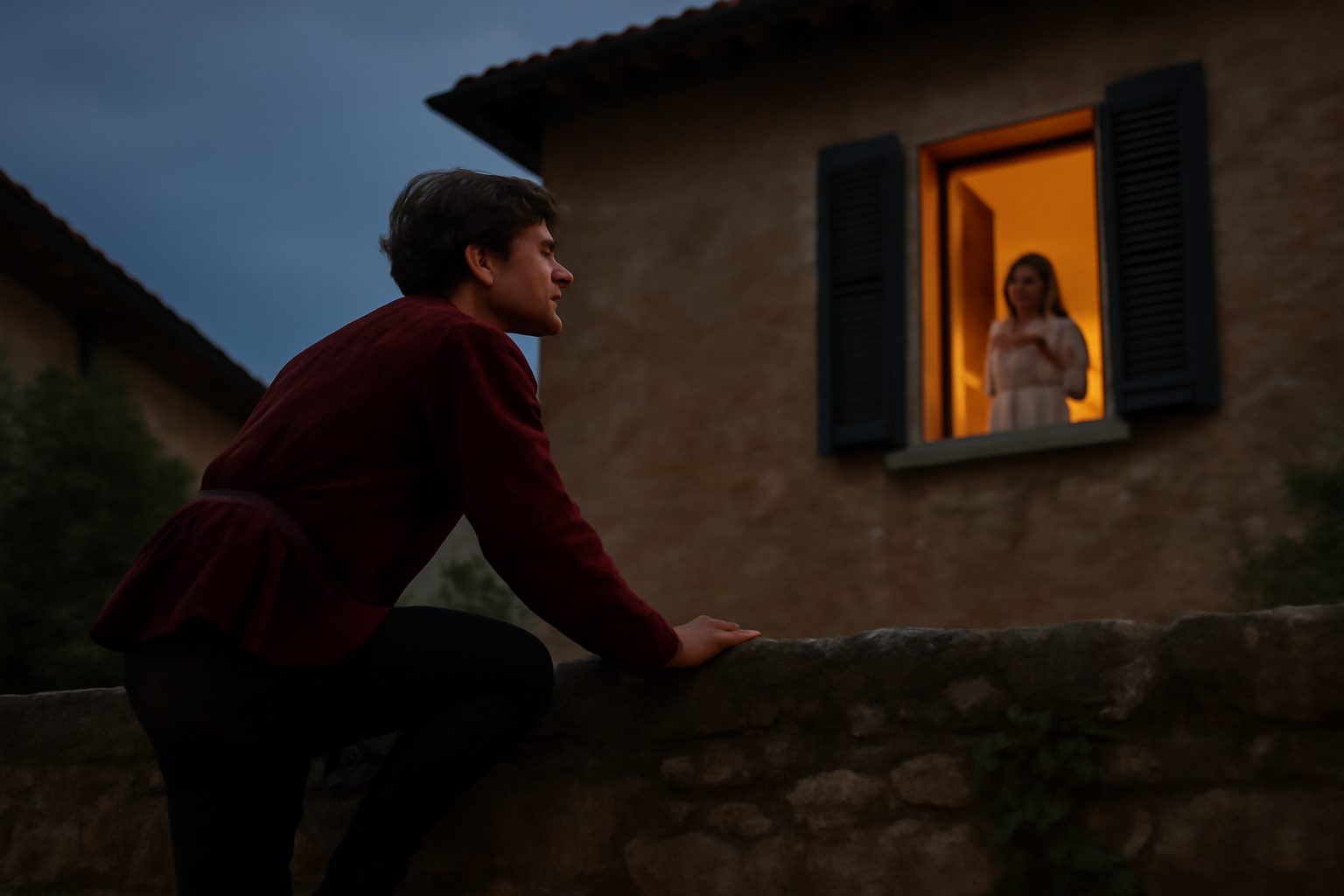
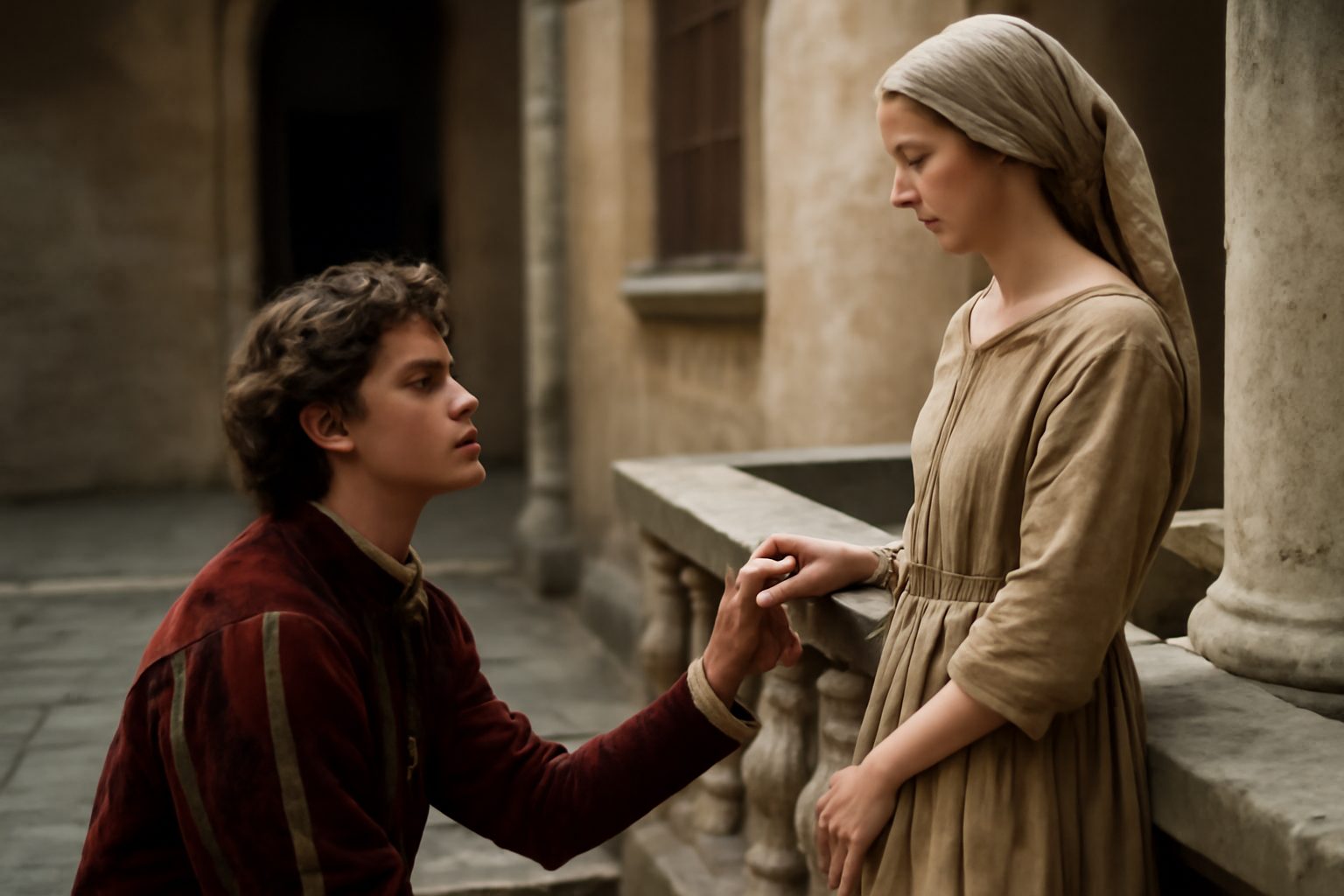
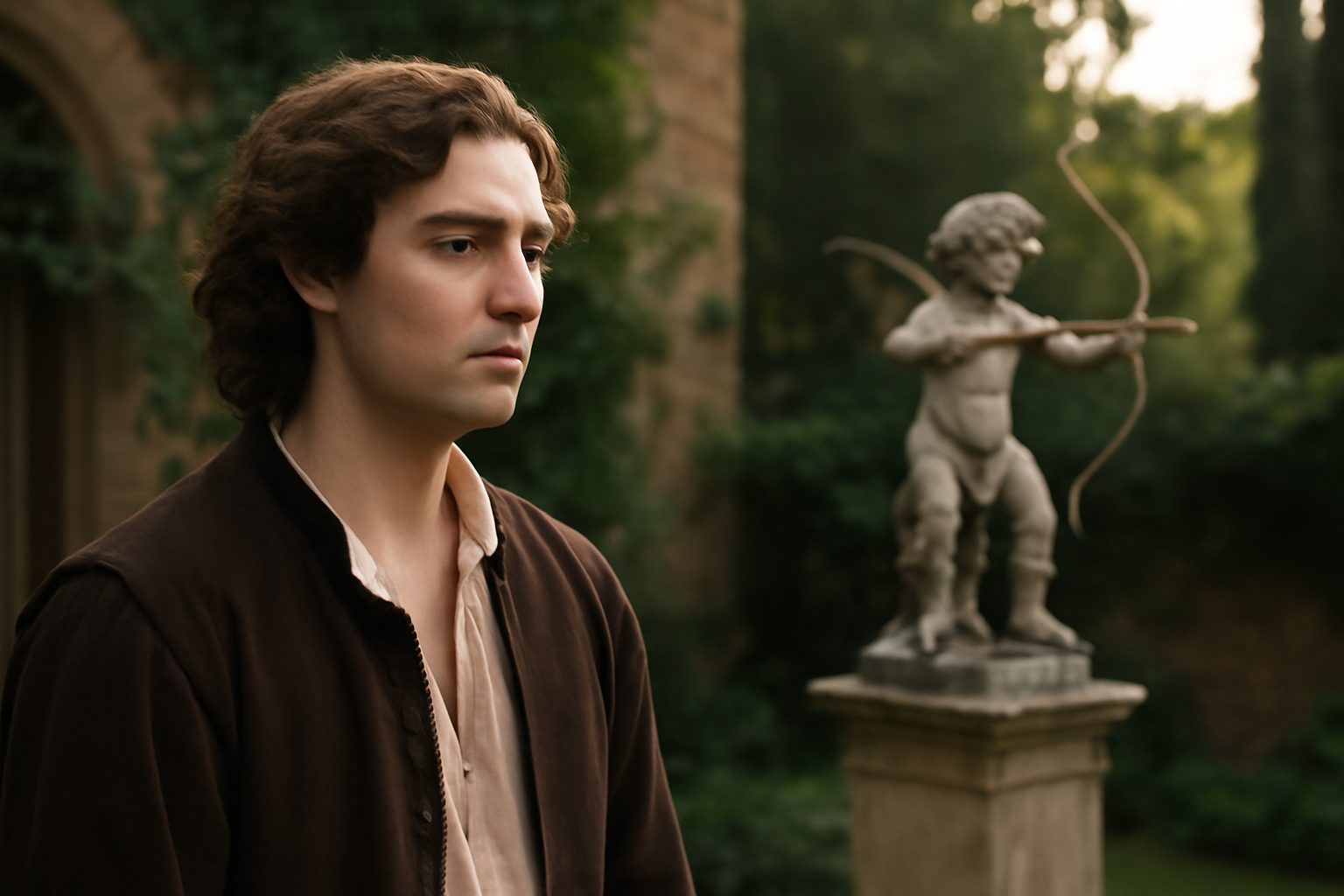
In Act 2, Scene 1 of Romeo and Juliet, Mercutio and Benvolio are searching for Romeo after the Capulet feast. Mercutio, unaware that Romeo has slipped away to pursue Juliet, jokingly suggests that Romeo has gone home to bed, hiding from his friends. This line reflects Mercutio's playful teasing and his ignorance of Romeo's newfound love.
Mercutio: "And, on my lie, hath stol'n him home to bed."
In modern day english, we would say:
On my word, he’s sneaked off and gone home to bed.
Frequently Asked Questions
What does Mercutio think Romeo has done?
Mercutio thinks Romeo has gone home to sleep.
Connections to other verses:
Connections to "And, on my lie, hath stol'n him home to bed."
This line, spoken by Benvolio, suggests that Romeo has secretly gone home to bed, reflecting the friends' mistaken belief about his whereabouts. It connects thematically and sequentially to several other lines in the scene.
Immediate Context and Misunderstanding
Benvolio's assertion follows He ran this way, and leap'd this orchard wall, indicating their assumption that Romeo has fled the scene. This misunderstanding is compounded when Mercutio declares The ape is dead, and I must conjure him, humorously treating Romeo as if he were lifeless or unreachable, reinforcing the idea that he is absent and unresponsive.
Conjuration and Mockery
Mercutio's playful conjurations, such as I conjure thee by Rosaline's bright eyes and I conjure only but to raise up him, stem from this mistaken belief that Romeo has retired, highlighting their jesting tone and Romeo's perceived withdrawal from their company.
Contrast with Romeo's Actual State
While Benvolio thinks Romeo has stolen home, Romeo is actually hidden nearby, emotionally captivated, as hinted in Can I go forward when my heart is here?. This irony underscores the scene's tension between appearance and reality.
Closing the Scene
The theme of departure culminates in Benvolio's resigned Go, then; for 'tis in vain and To seek him here that means not to be found, echoing the initial assumption that Romeo has withdrawn, thus bookending the scene with this persistent misconception.