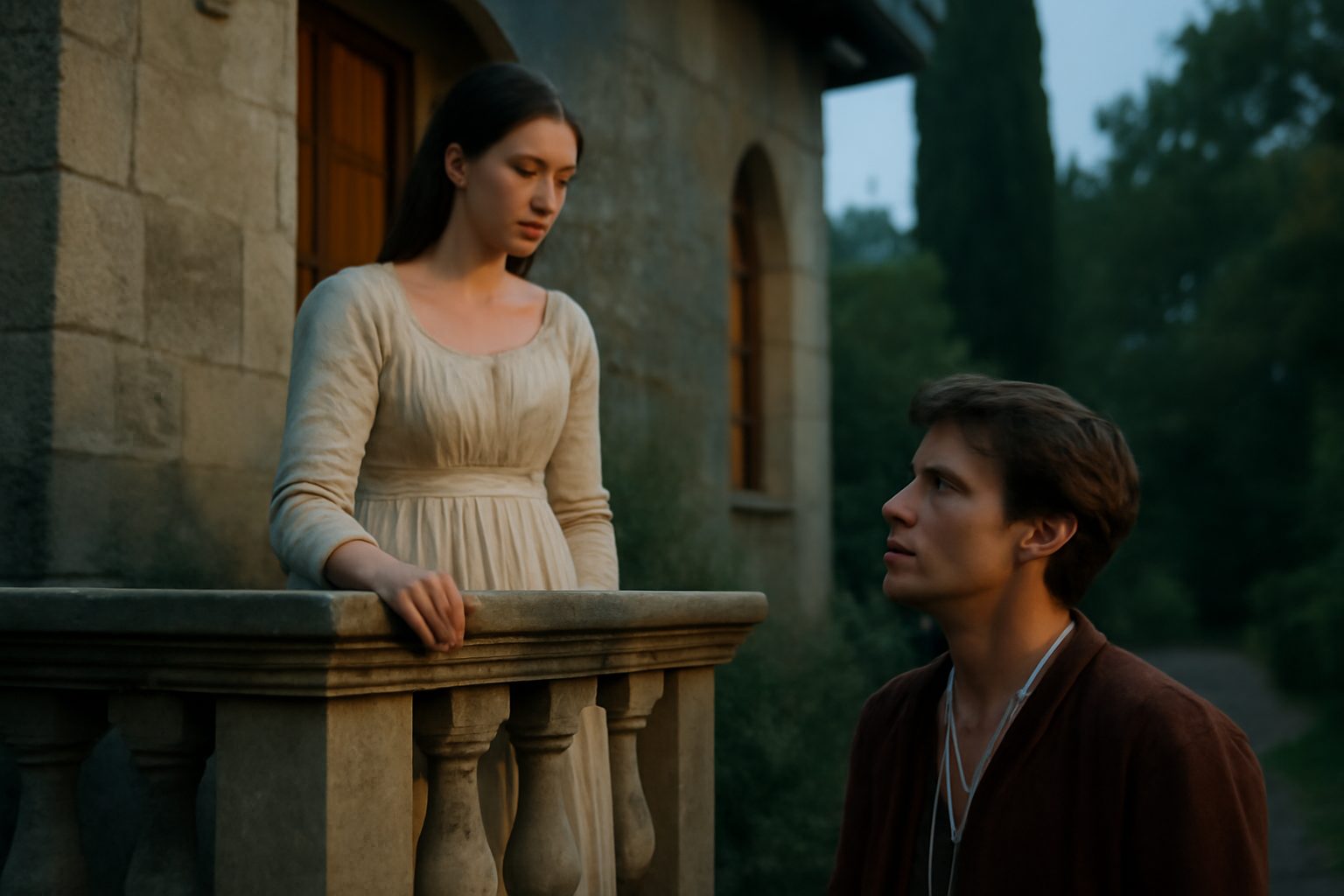
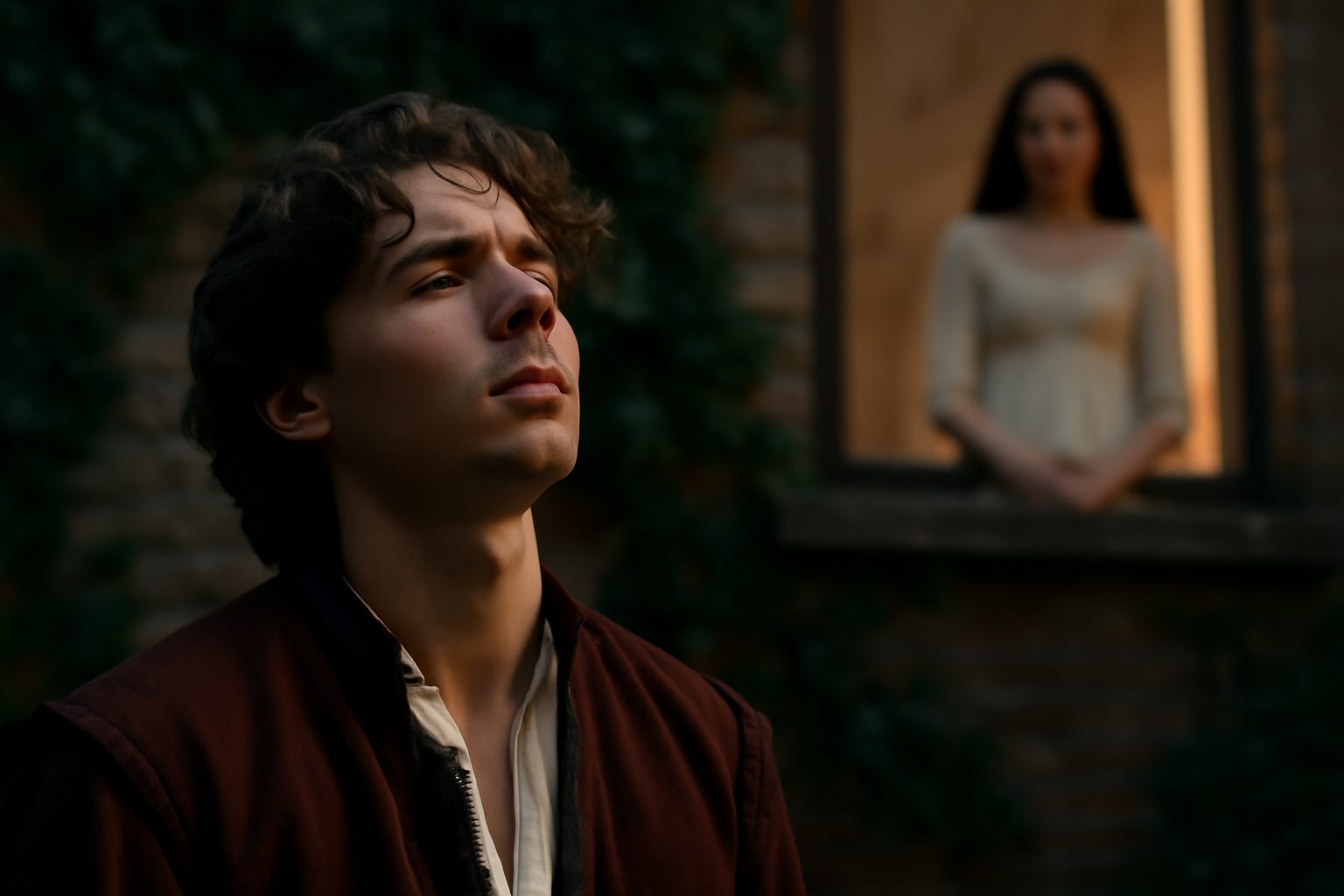
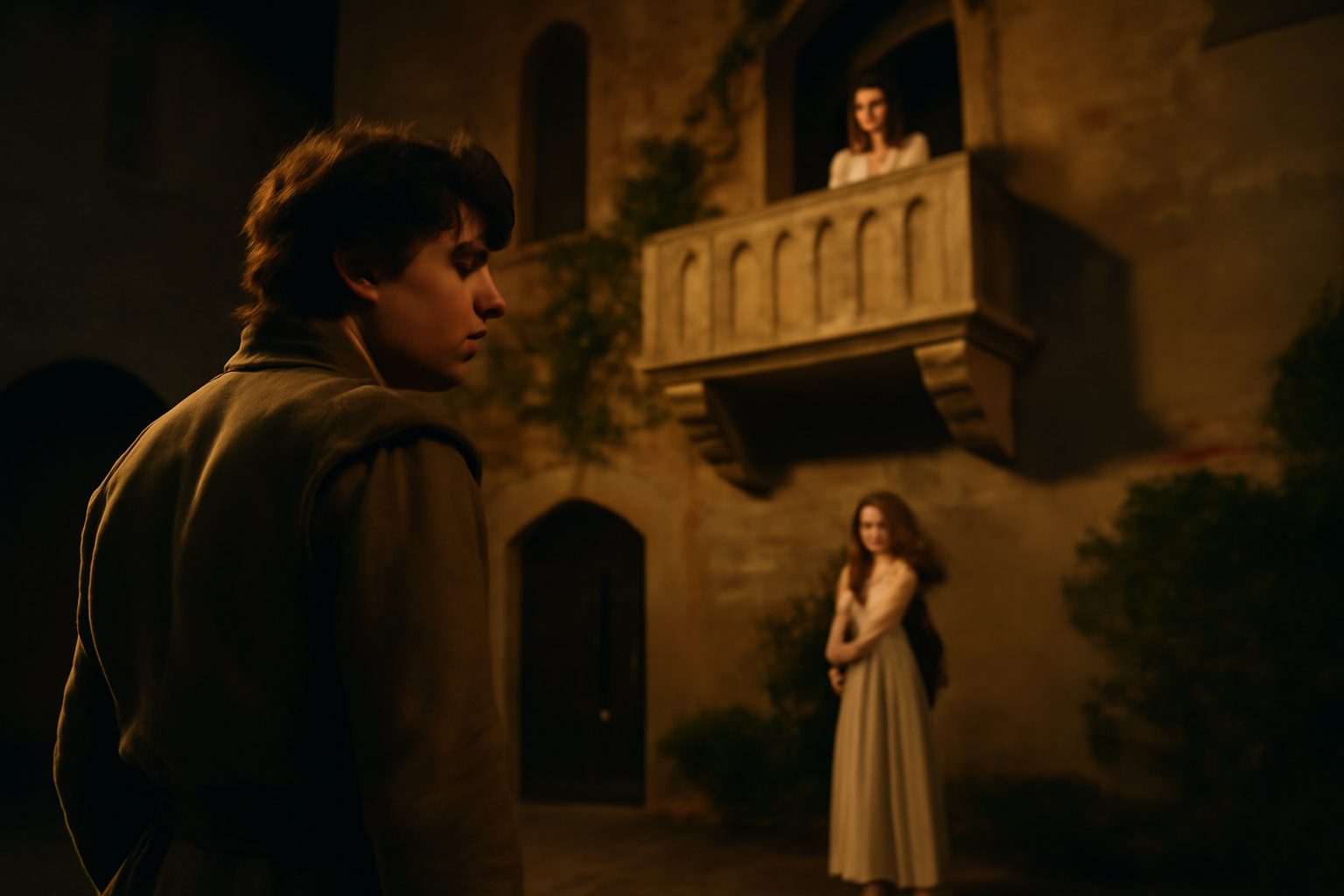
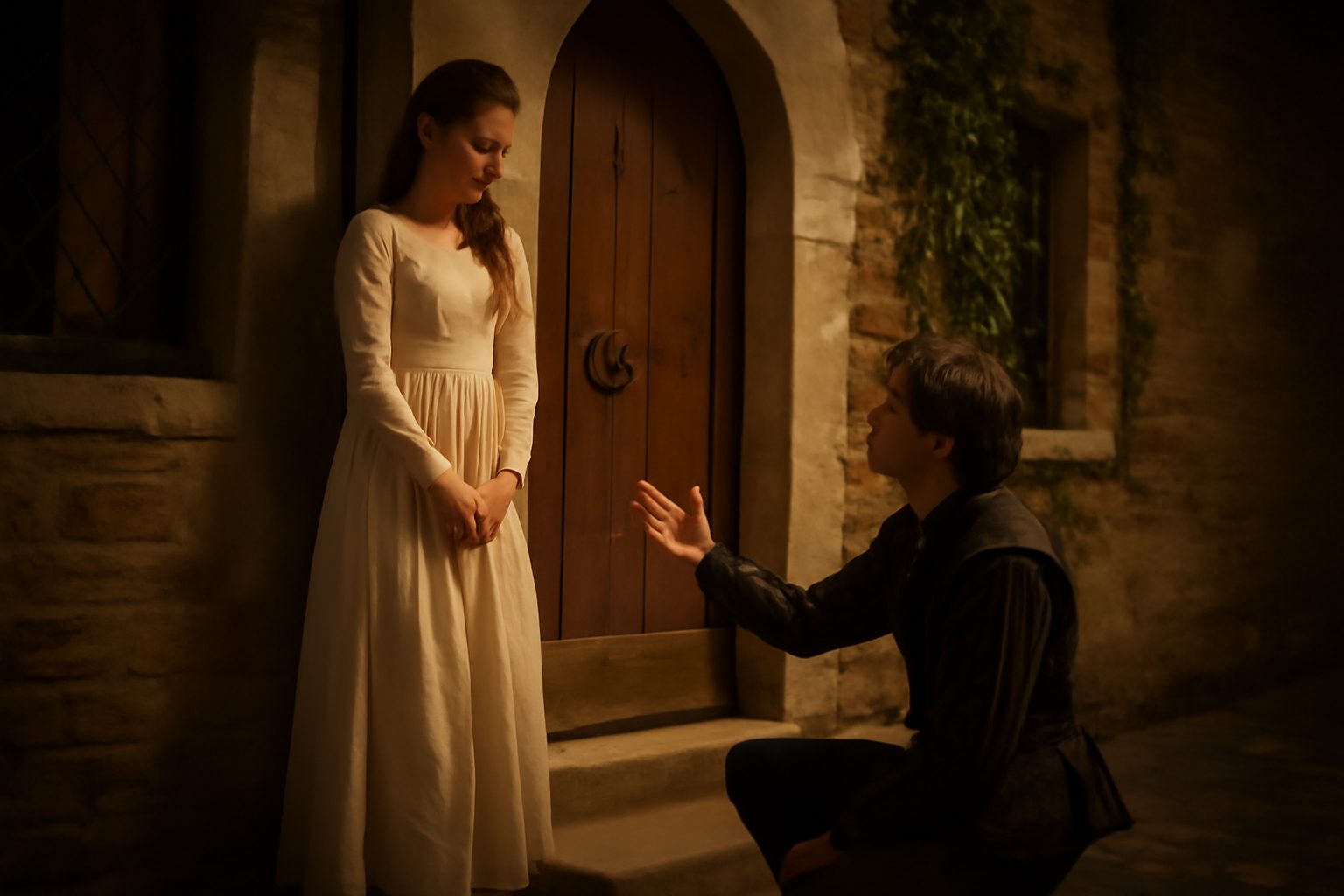
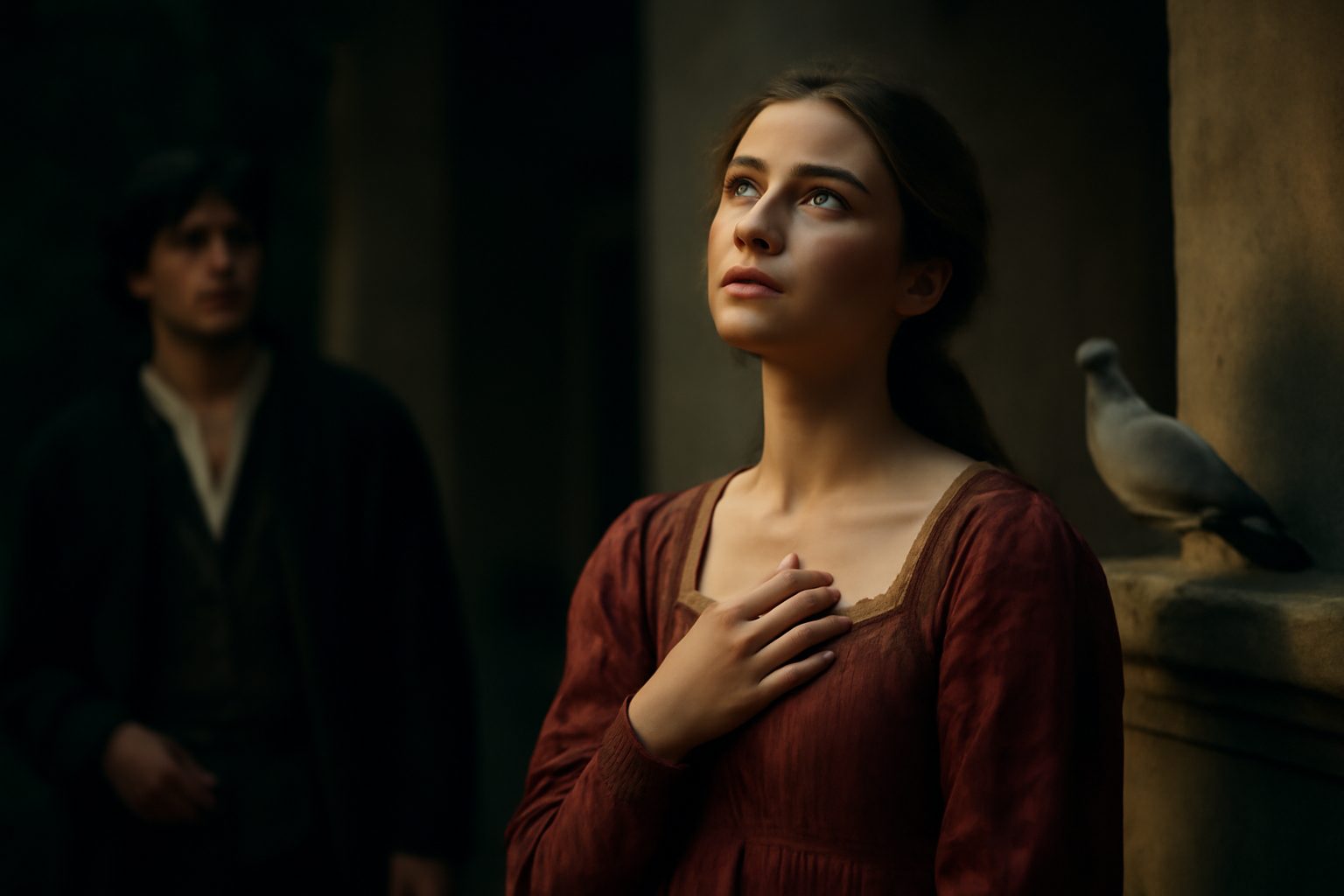
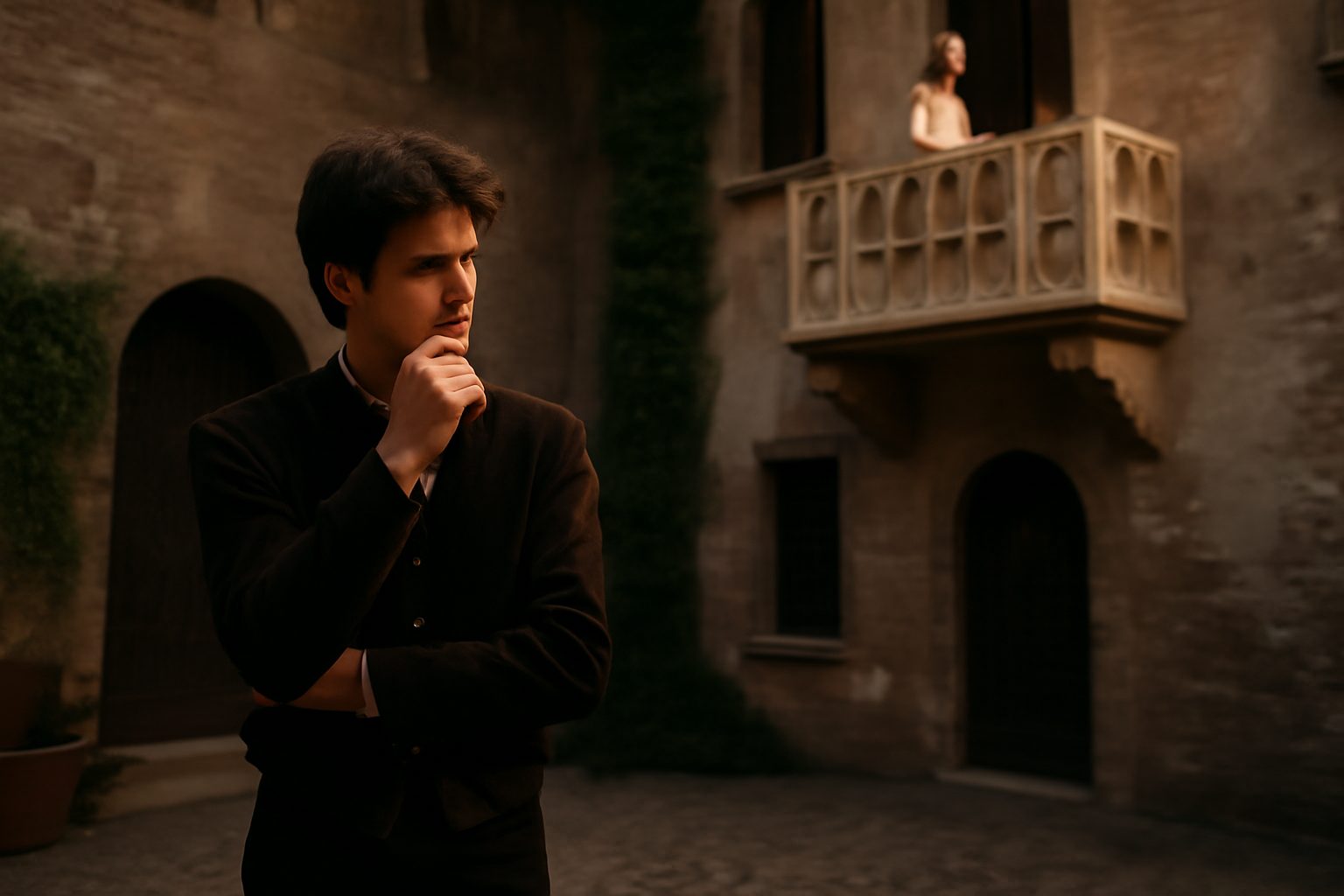
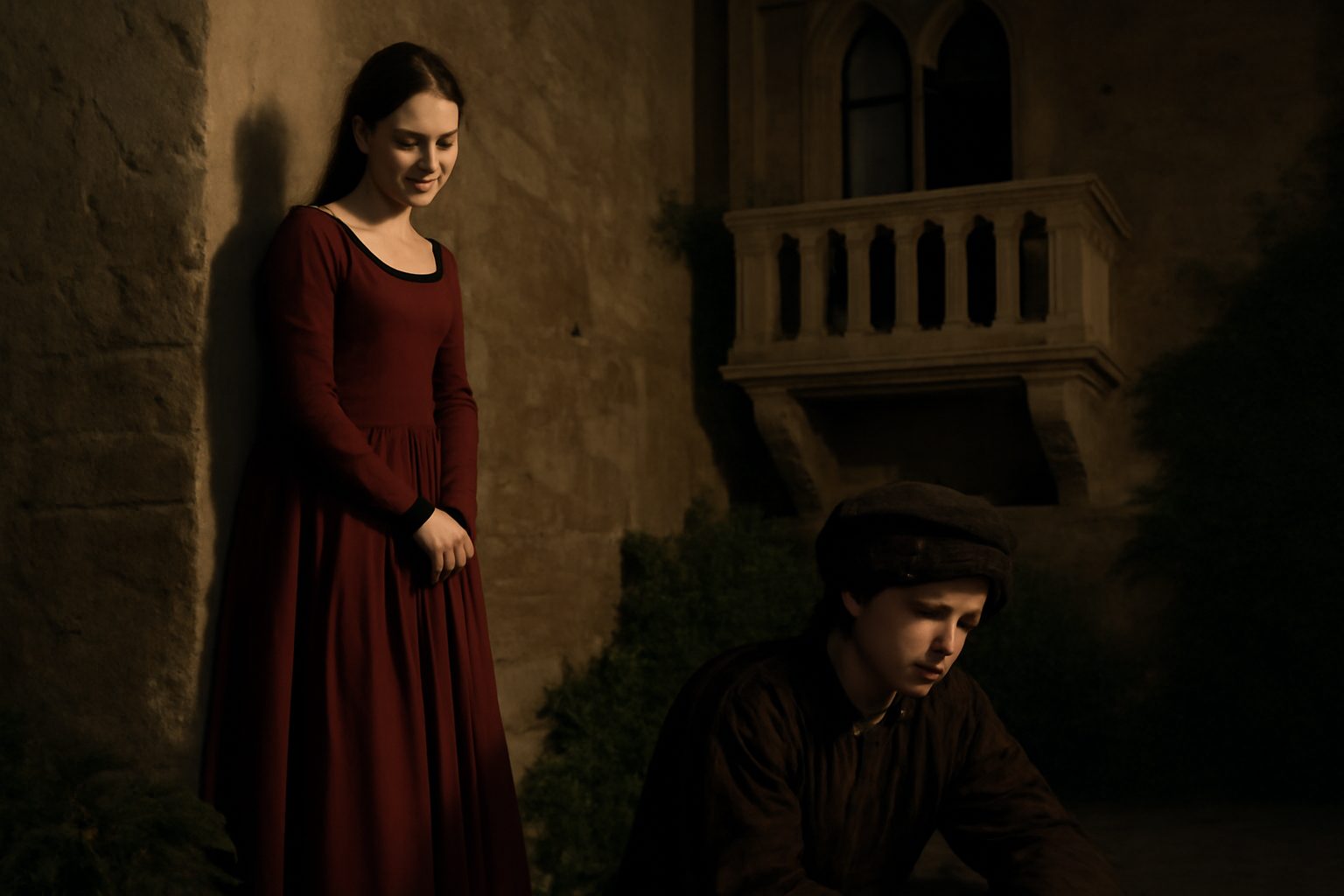
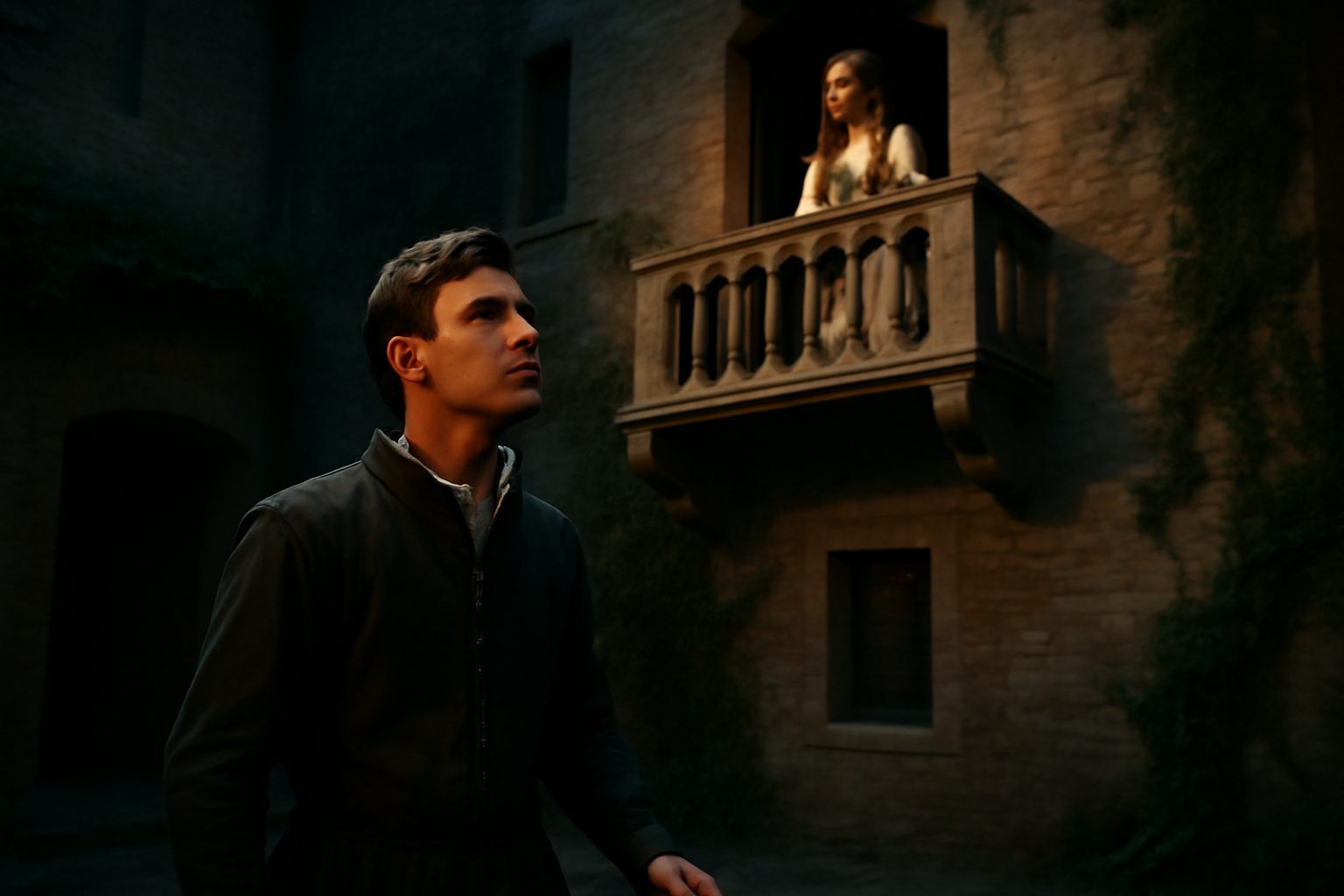
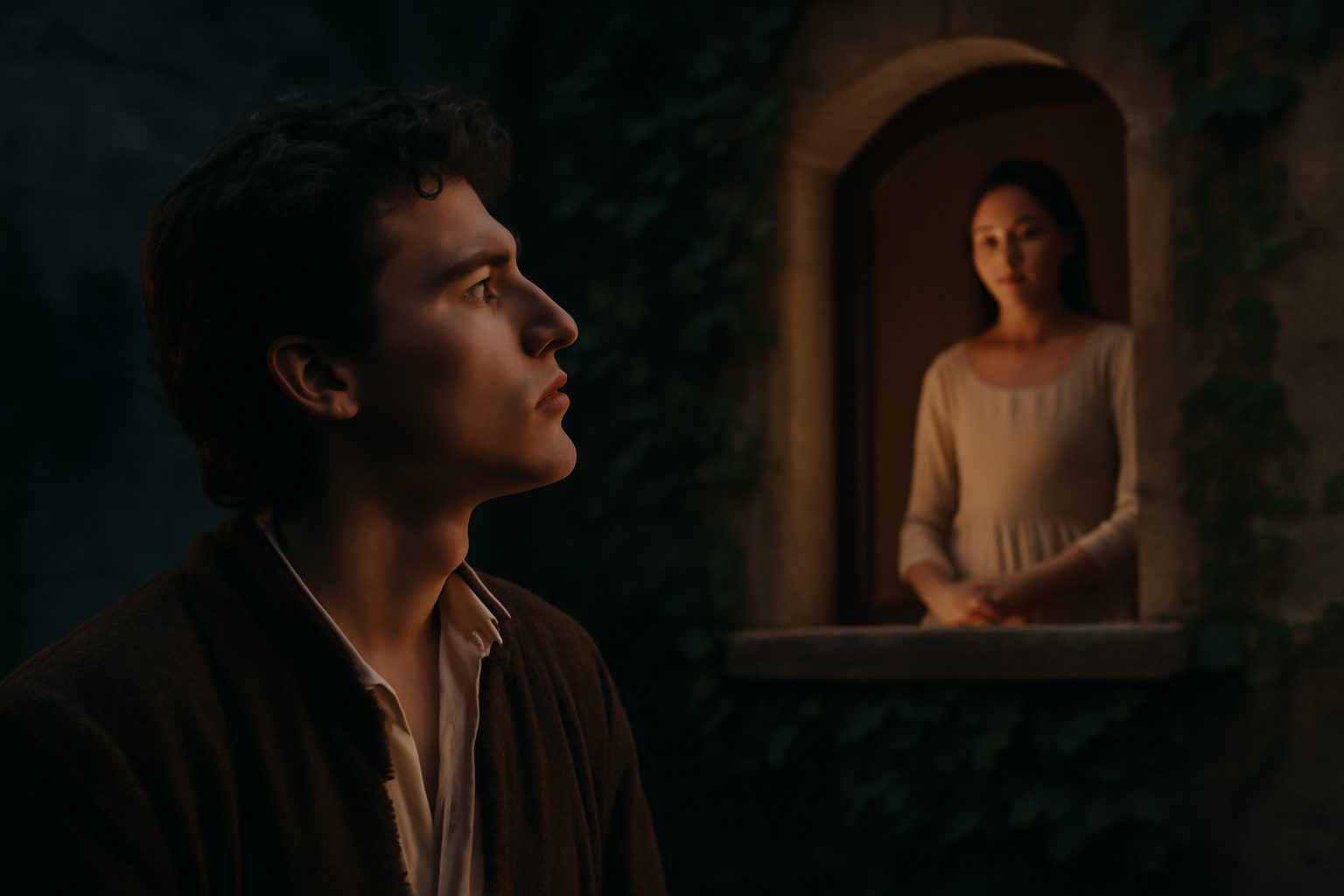
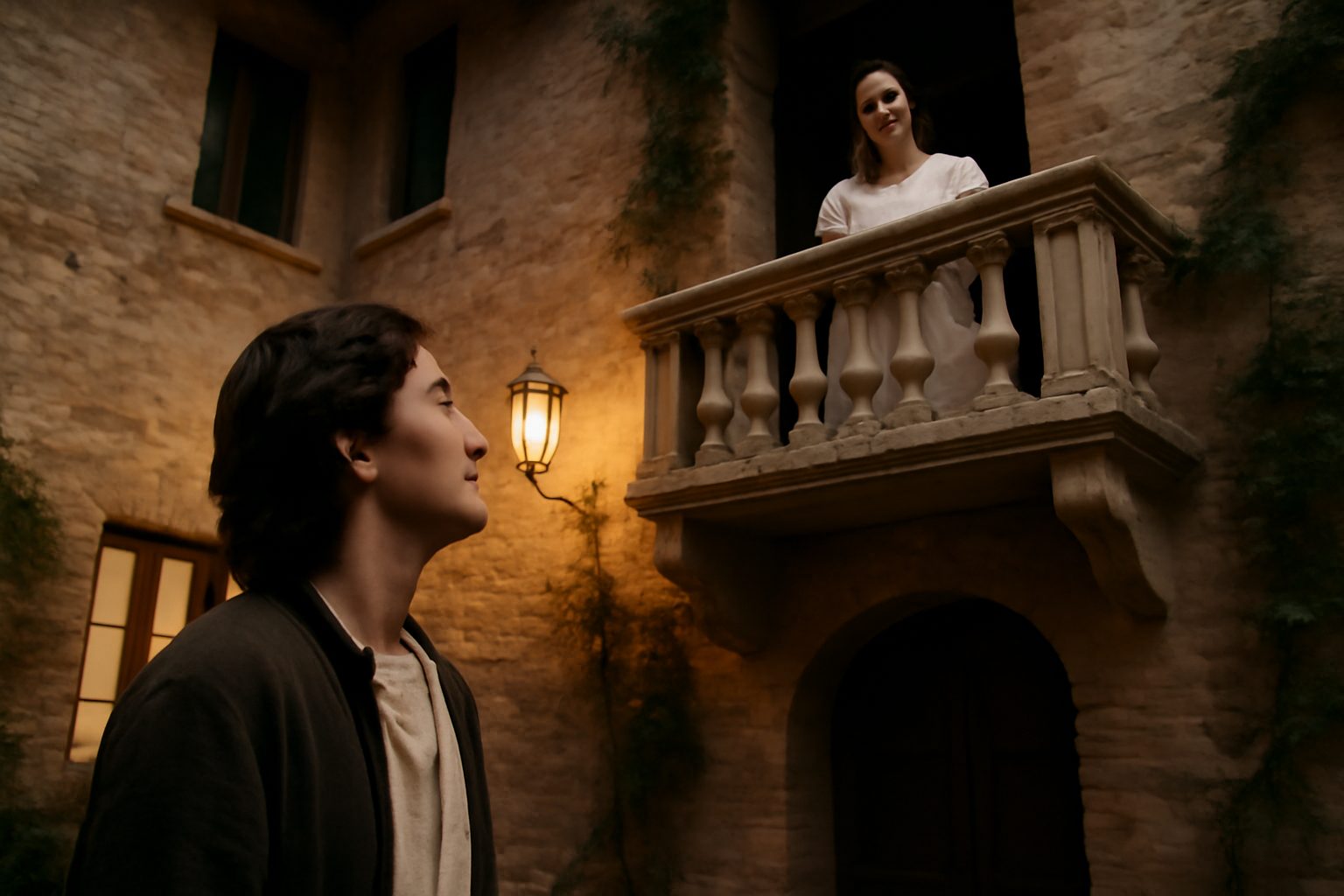
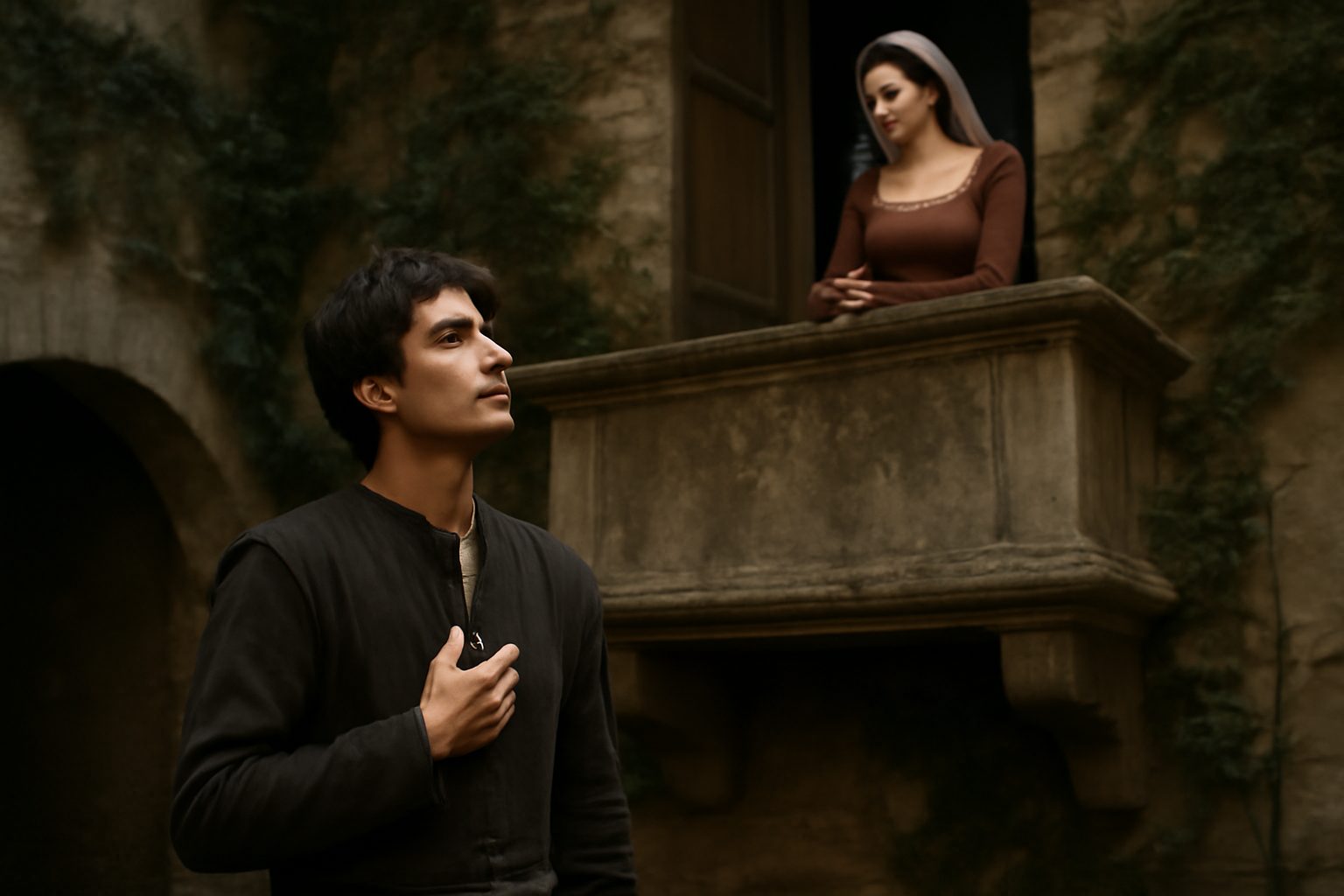
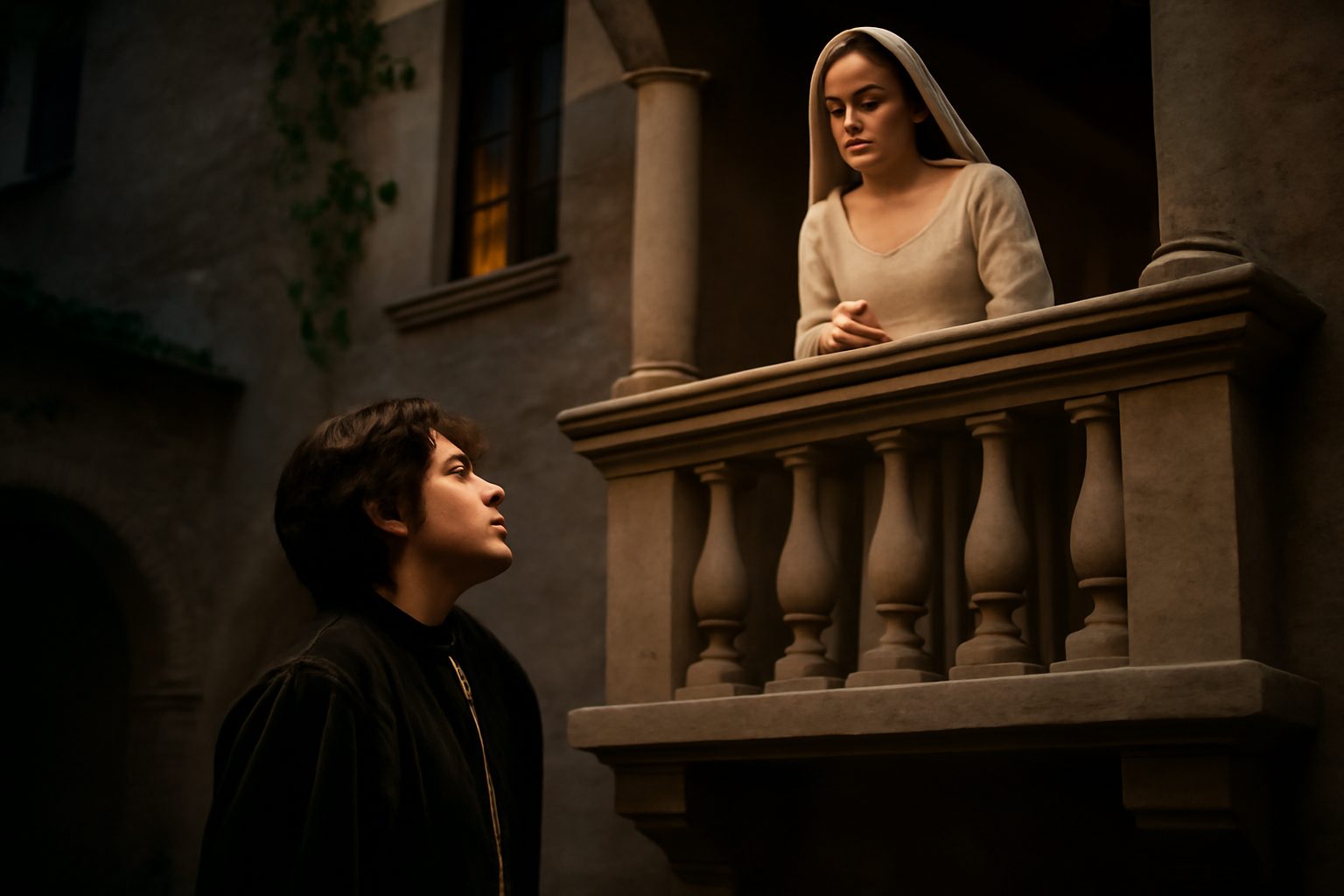
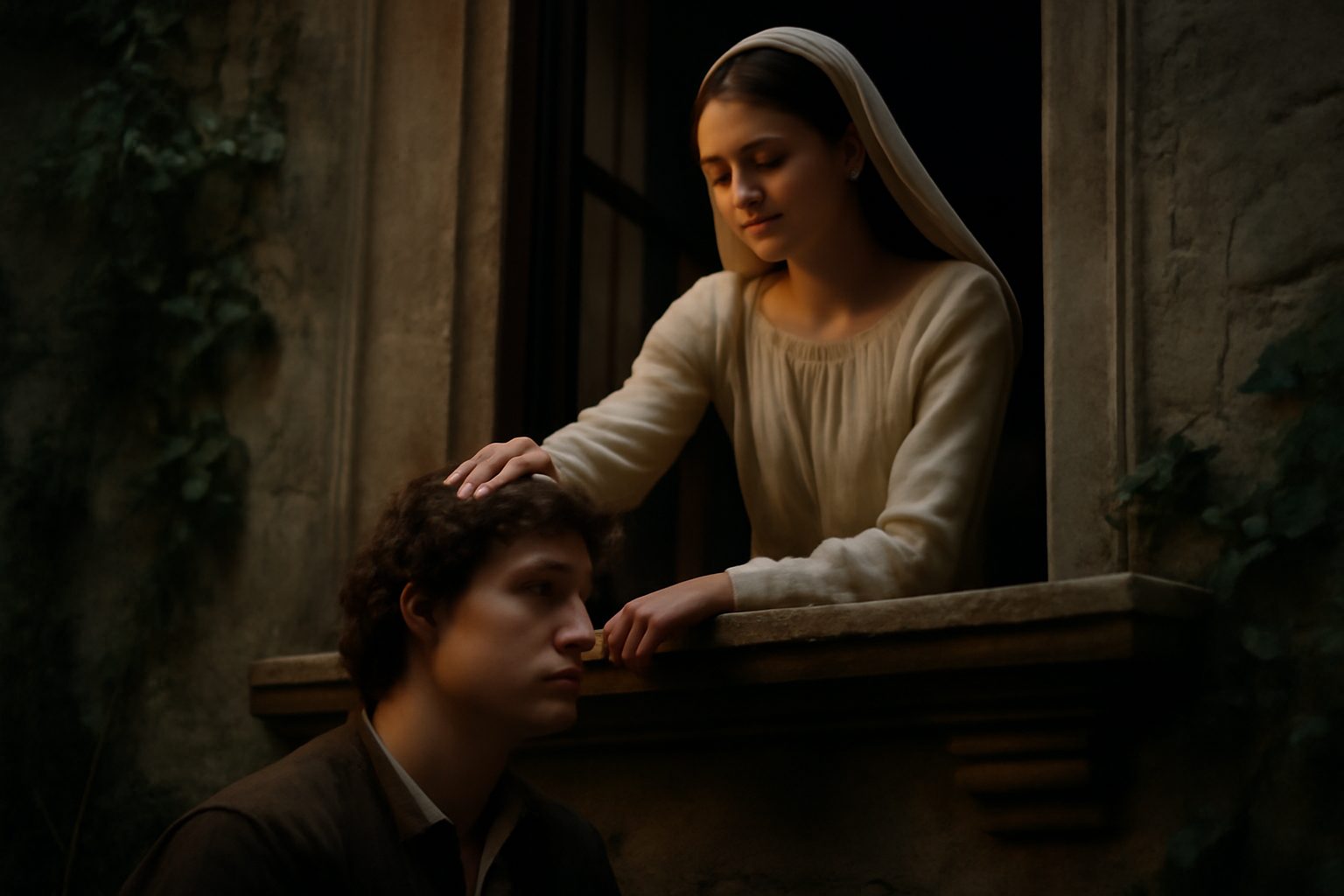
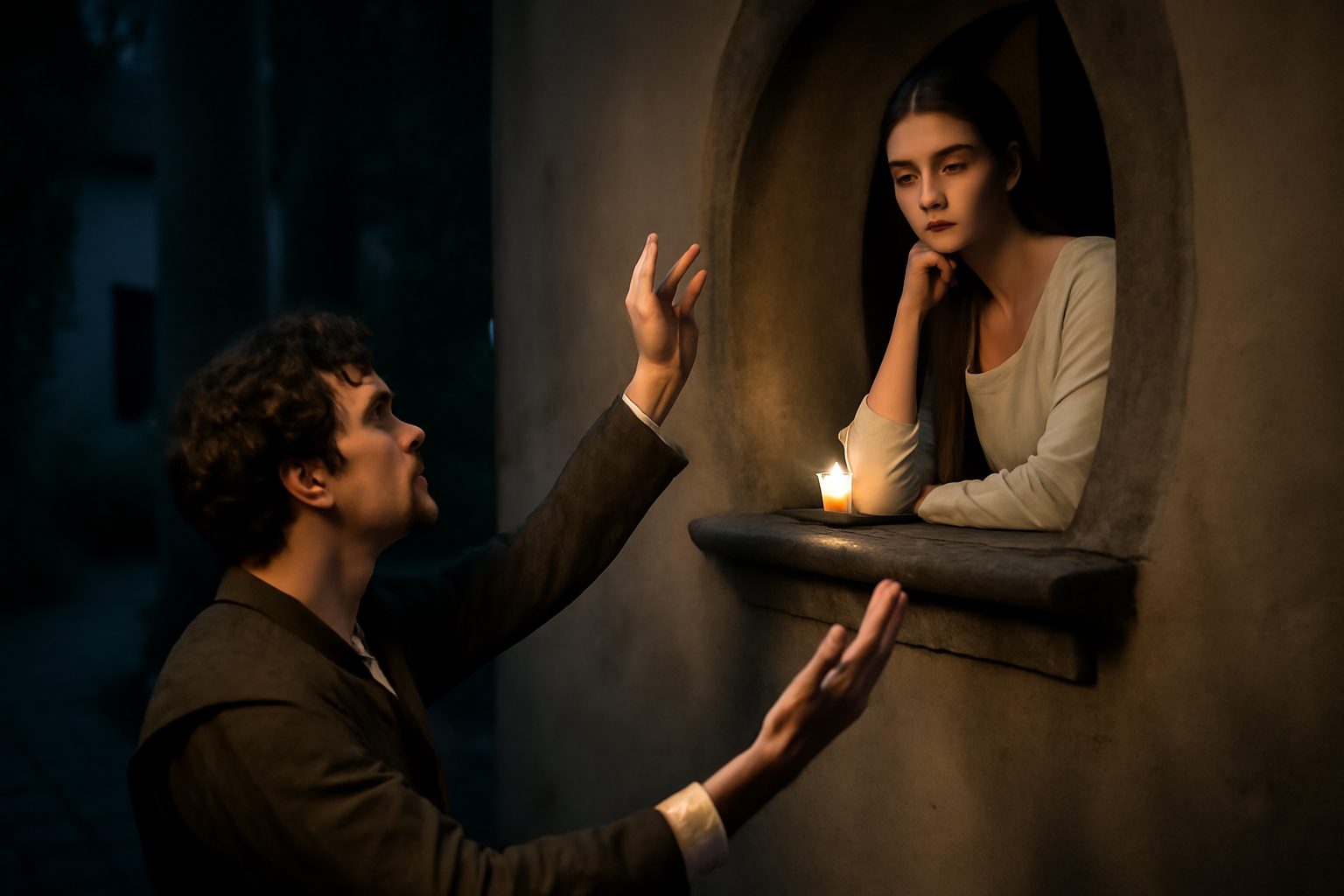
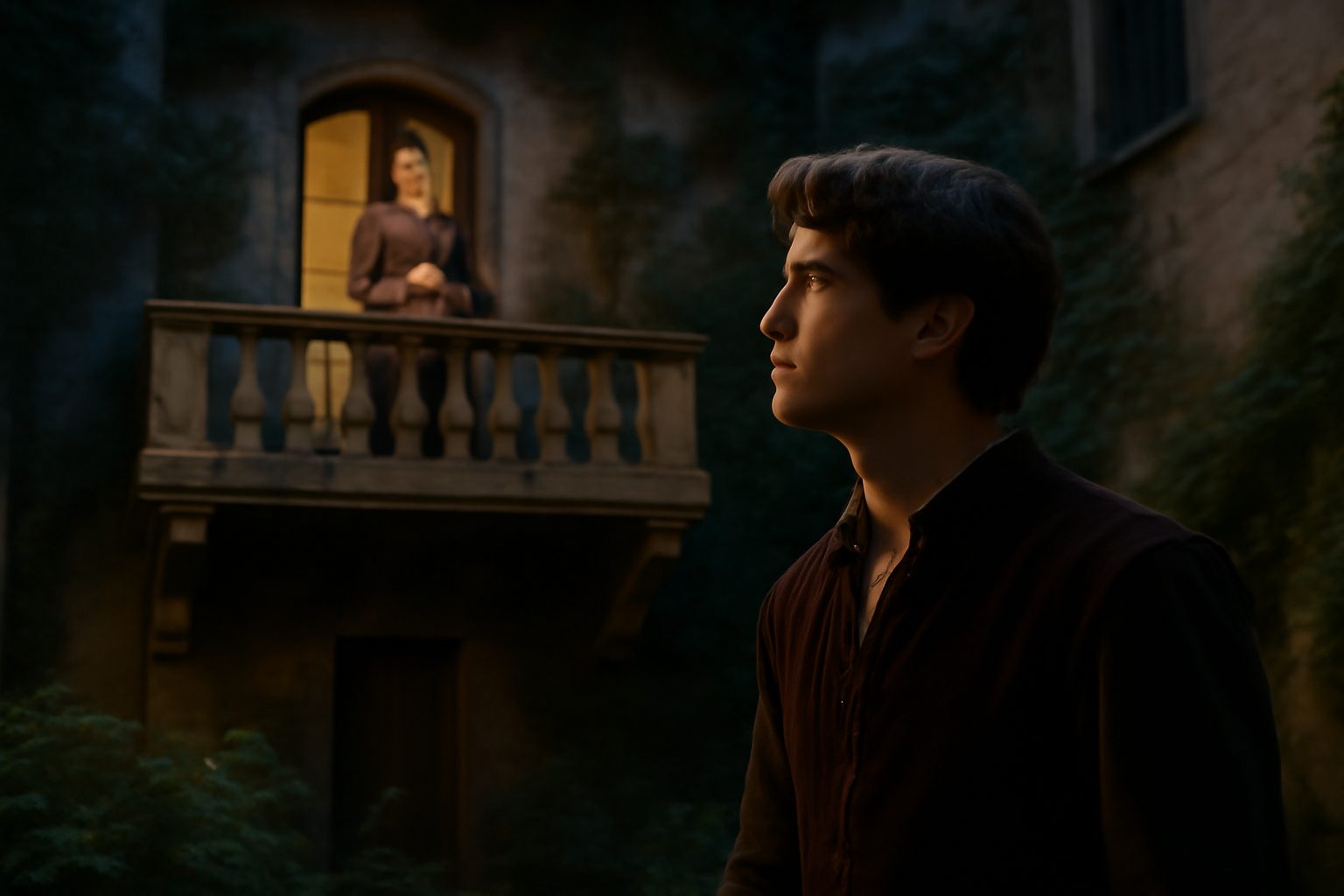
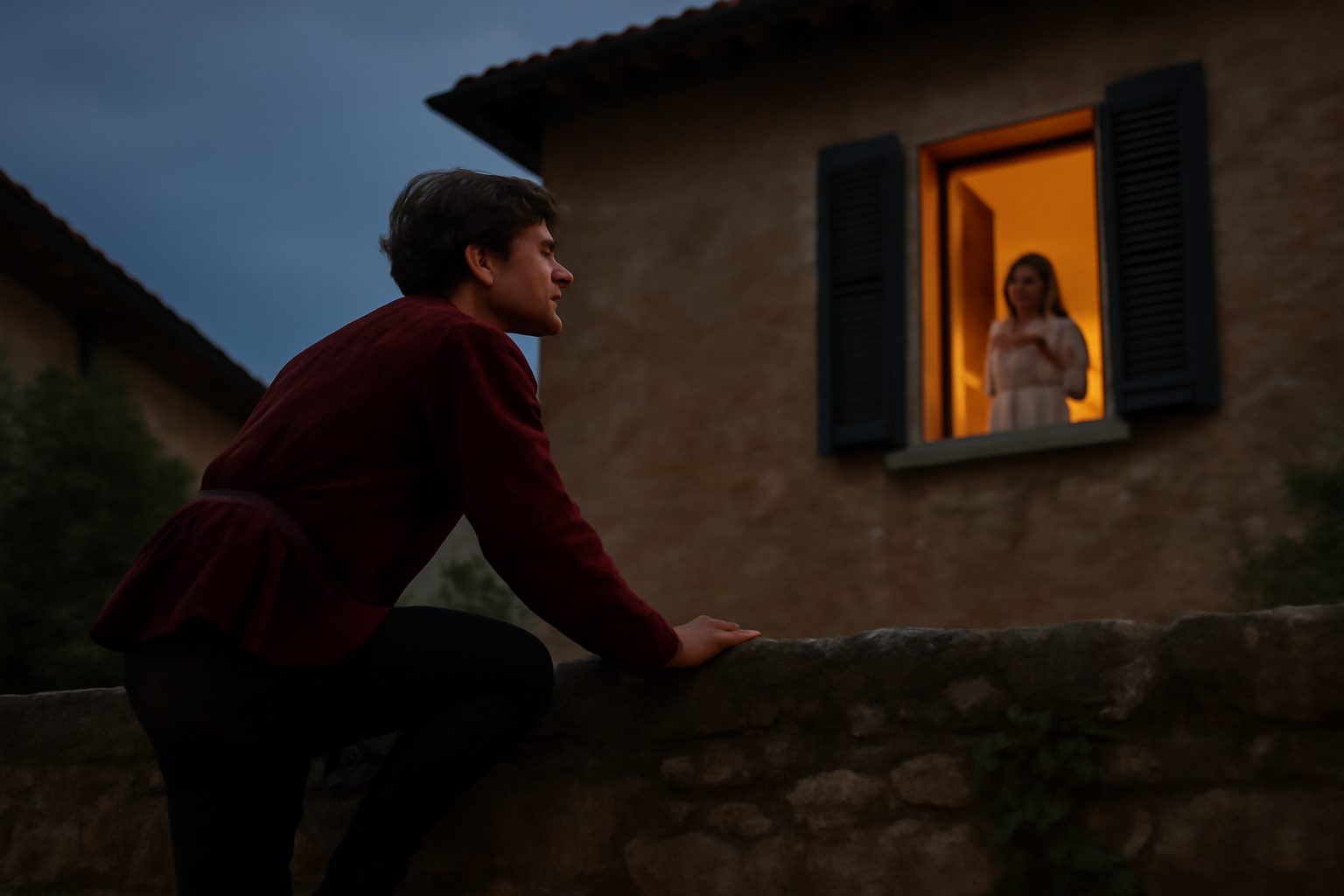
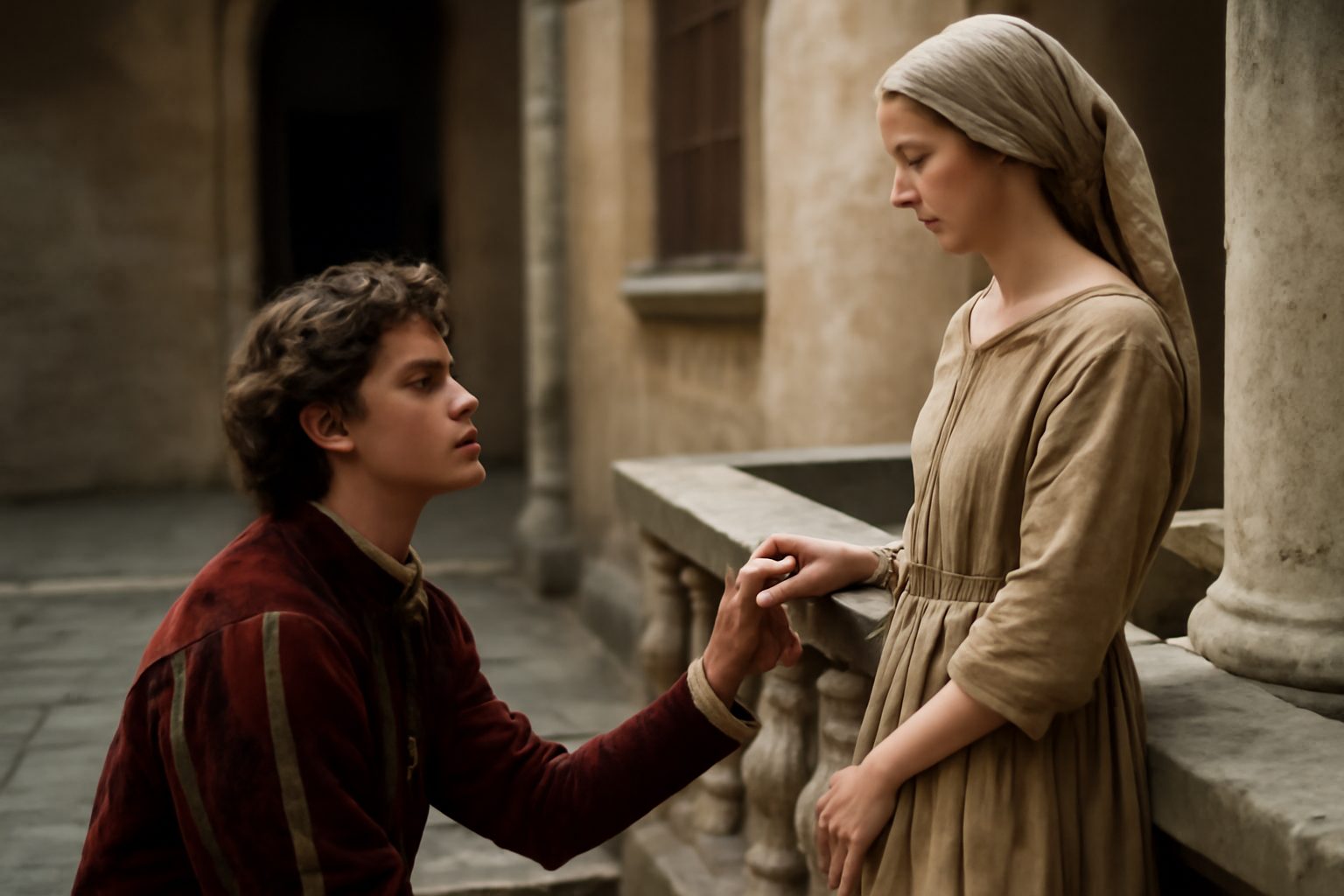
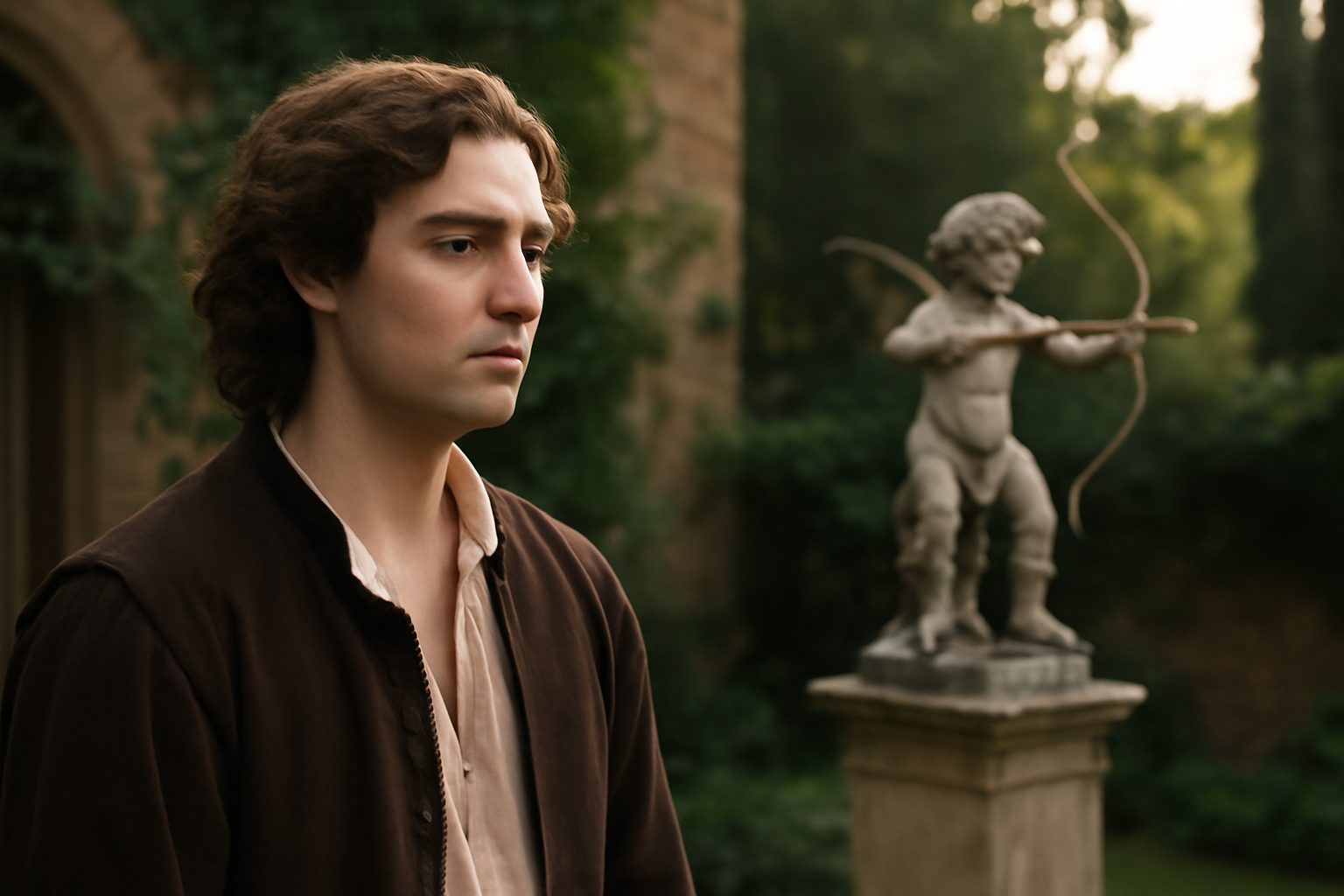
In Act 2, Scene 1 of Romeo and Juliet, Mercutio mocks Romeo's lovesick behavior as he searches for him after the Capulet feast. This line reflects Mercutio's playful taunting, suggesting Romeo prefers the company of darkness and moodiness over his friends. The phrase captures Mercutio's wit and his tendency to tease Romeo about his romantic melancholy.
Benvolio: "To be consorted with the humorous night:"
In modern day english, we would say:
To be out in the dark night, which is full of moody and unpredictable whims.
Frequently Asked Questions
What does Benvolio mean when he talks about being with the humorous night?
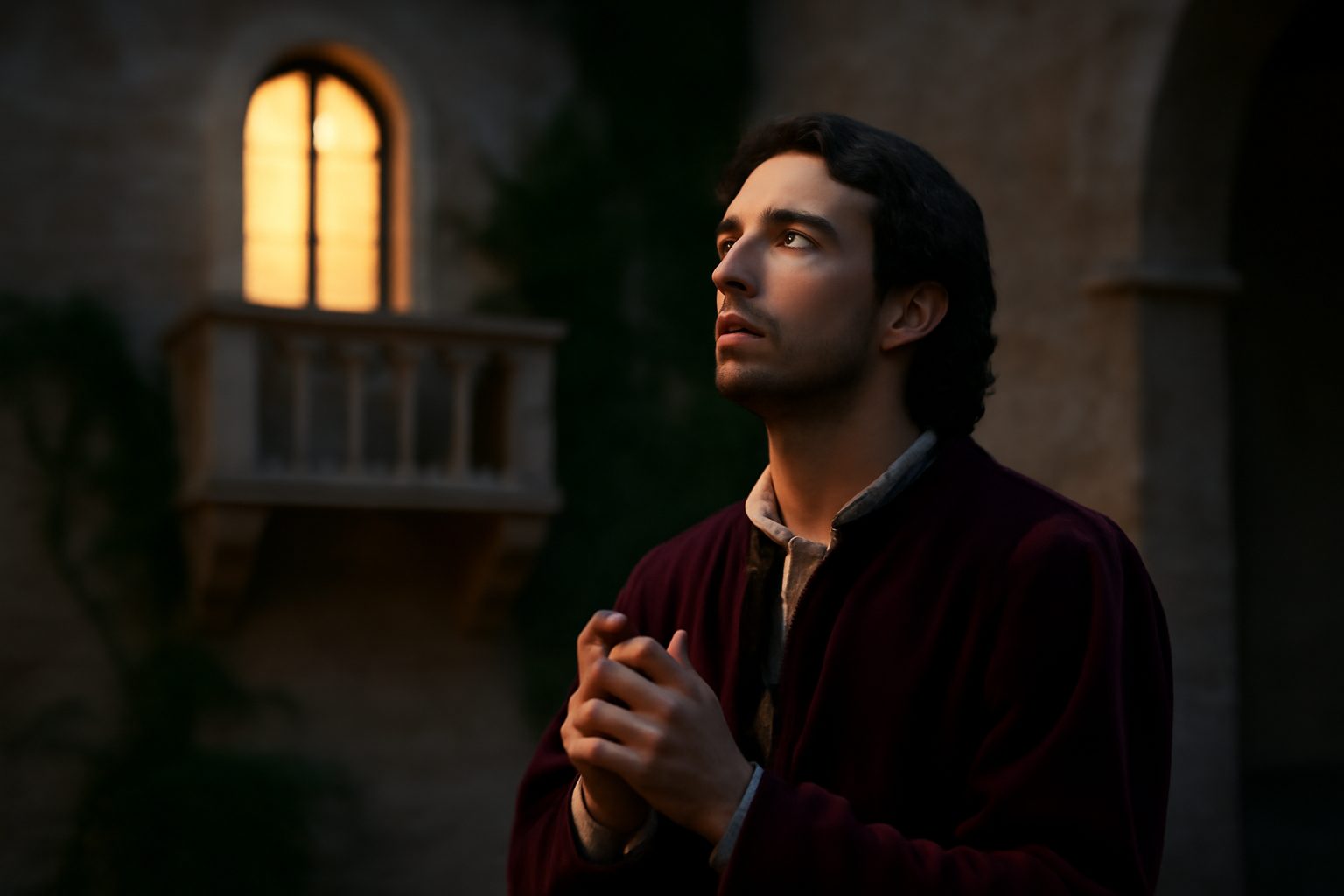
Benvolio is saying that Romeo prefers to spend time alone in the dark night, which matches his sad and moody behavior.
Connections to other verses:
Connections to "To be consorted with the humorous night"
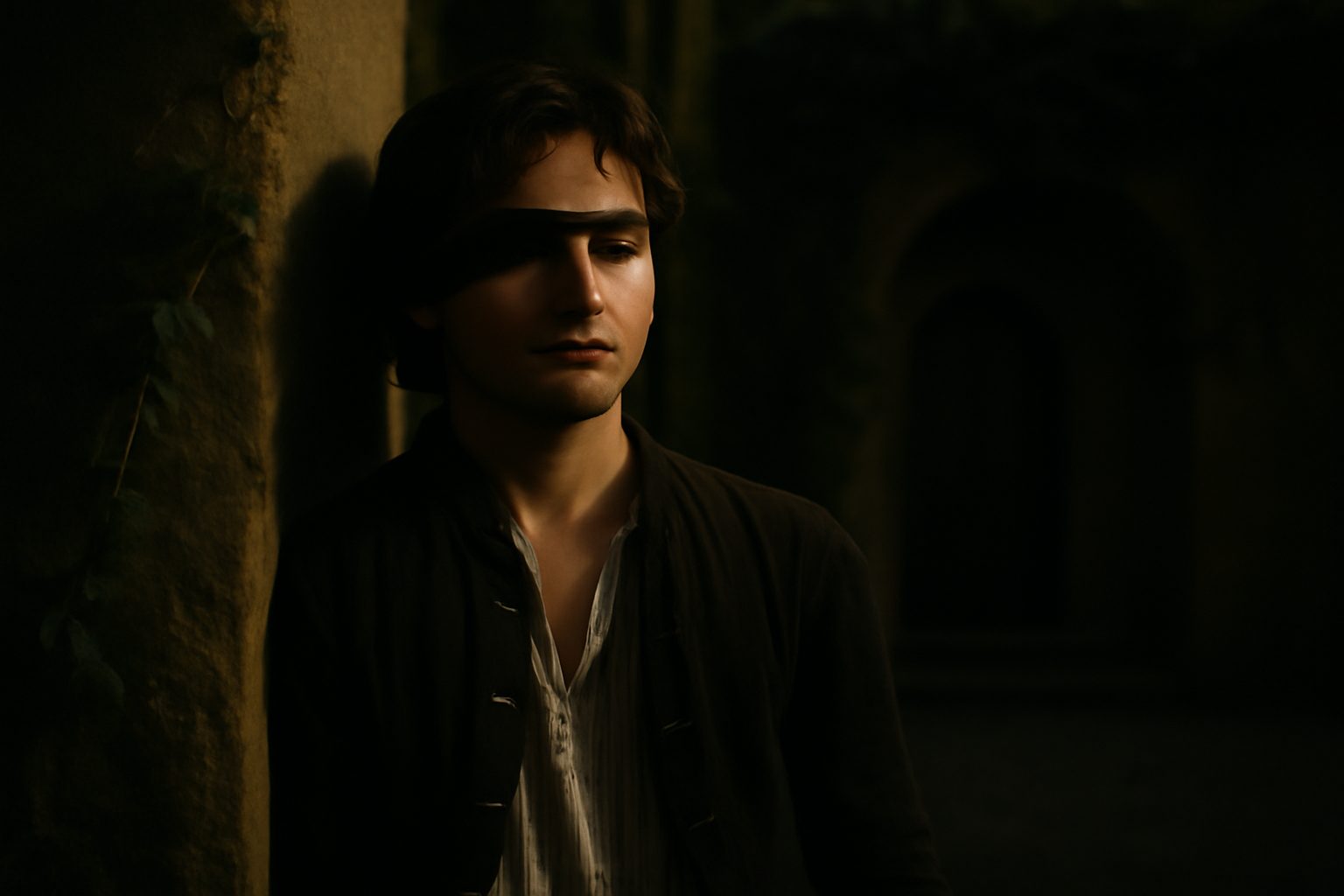
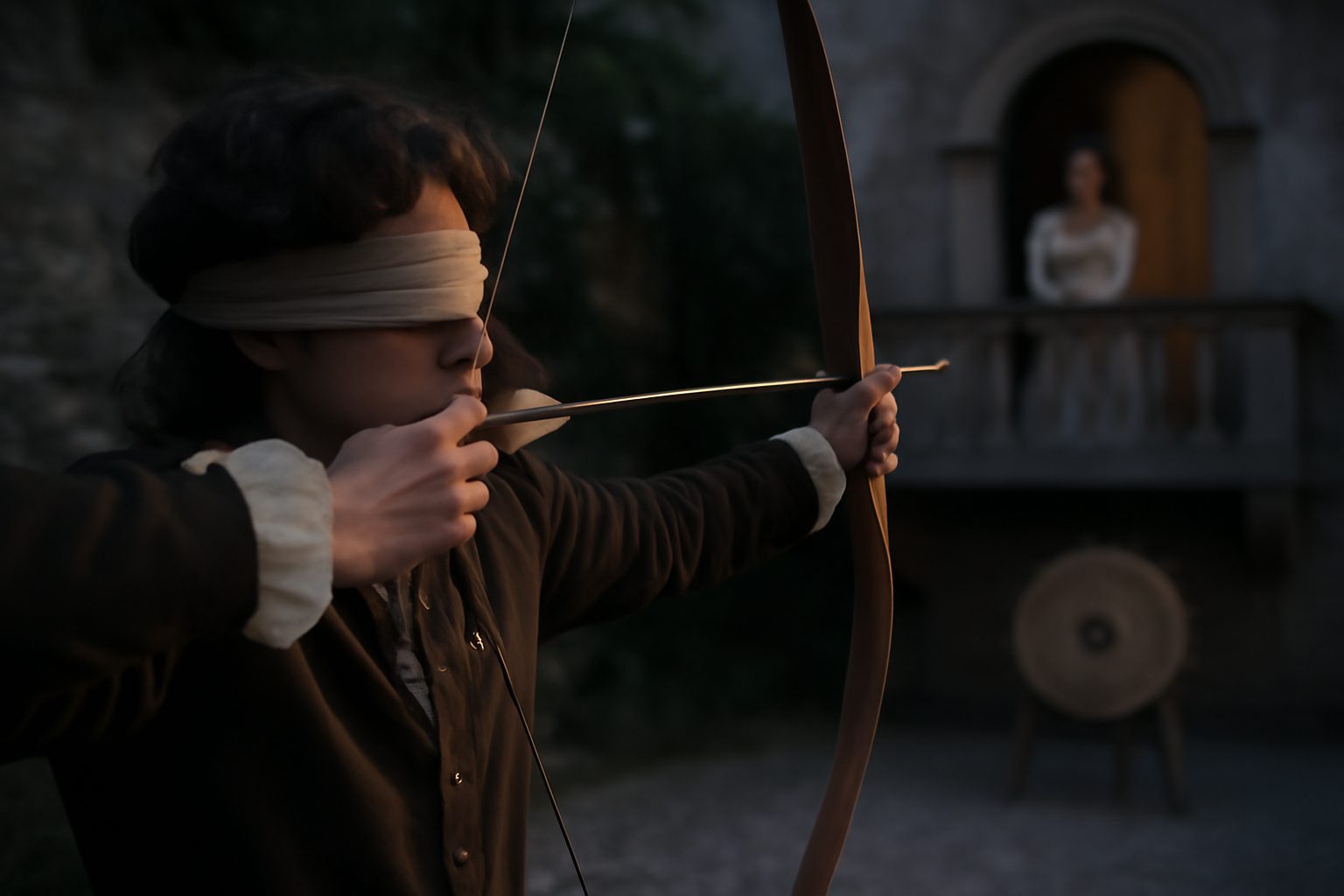
The line "To be consorted with the humorous night" reflects Romeo's desire to remain hidden in darkness, aligning with Mercutio's earlier observation in "Blind is his love and best befits the dark", which underscores how Romeo's infatuation thrives in secrecy. This connection emphasizes the theme of love as something concealed and shadowed.
Links to Concealment and Invocation
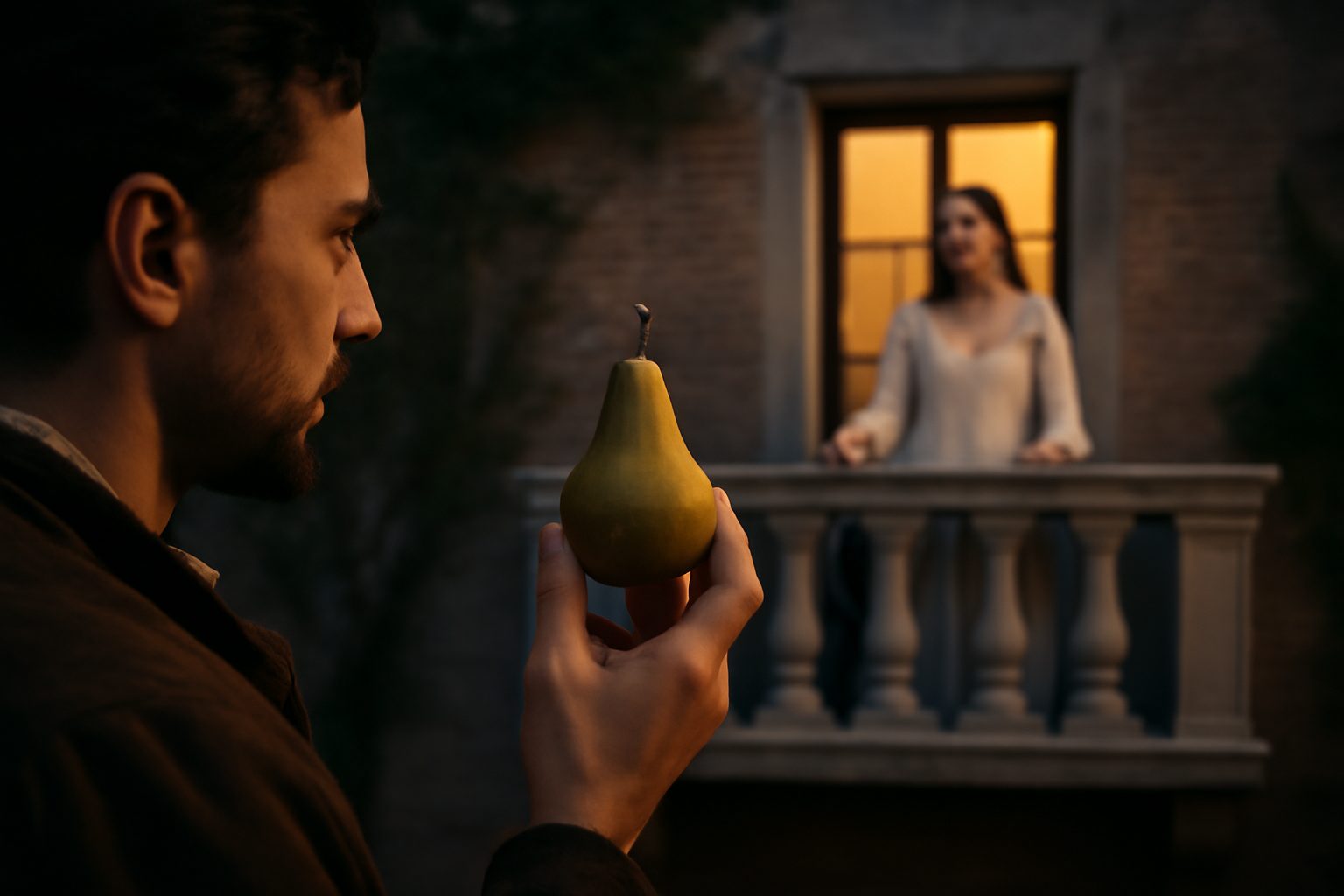
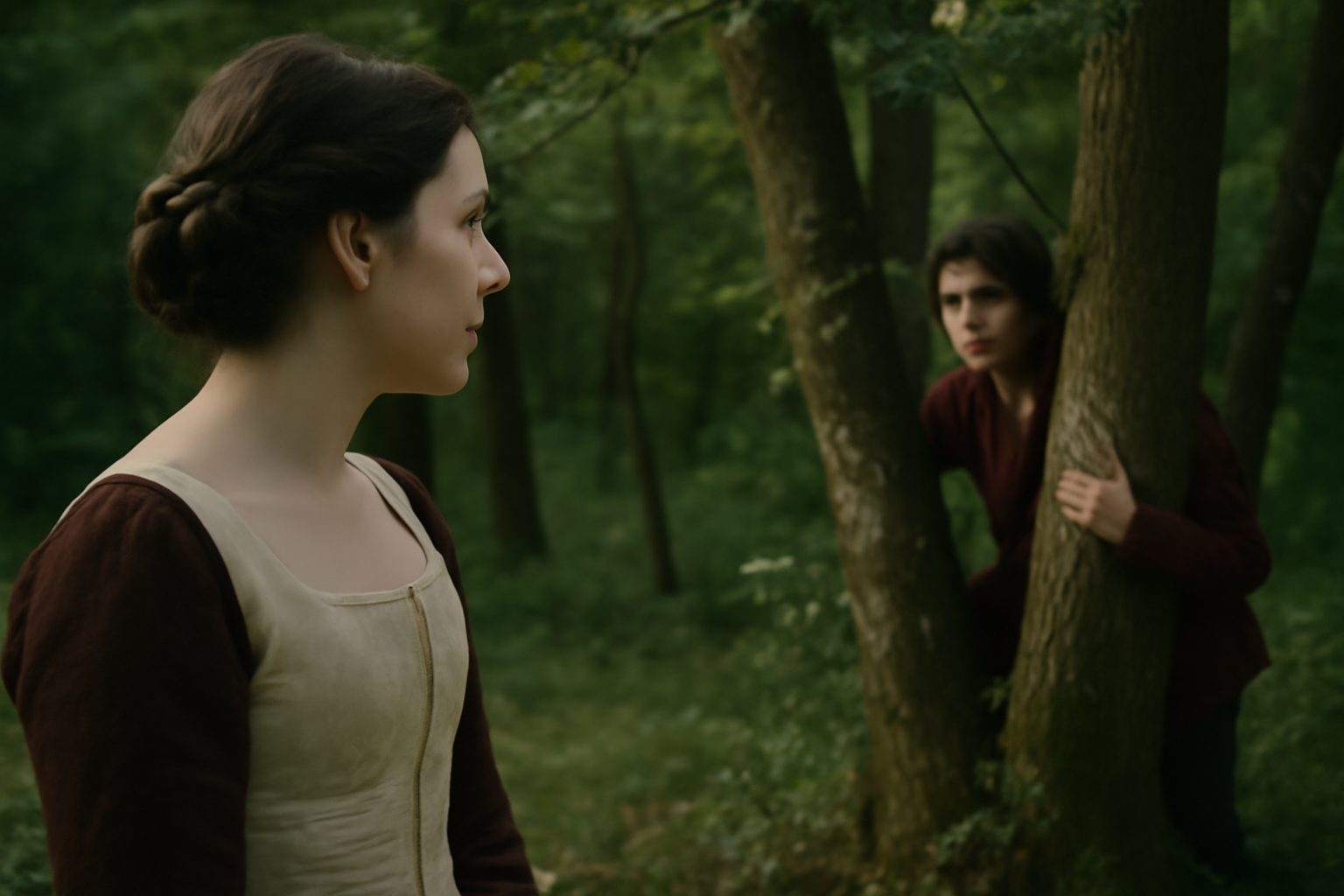
Romeo's withdrawal into night is immediately preceded by Benvolio's remark in "Come, he hath hid himself among these trees", highlighting his physical concealment. Mercutio's playful conjurations, such as "I conjure only but to raise up him" and "The ape is dead, and I must conjure him", mock Romeo's hidden state, treating it as a supernatural evasion rather than a romantic retreat.
Contrast with Light and Revelation
Mercutio's references to light and vision, like "If love be blind, love cannot hit the mark", contrast with Romeo's embrace of the "humorous night", suggesting that obscured love is ineffective. Similarly, the invocation for Romeo to appear in "That in thy likeness thou appear to us!" underscores the tension between hidden passion and the desire for openness.
Fruit and Sensual Imagery
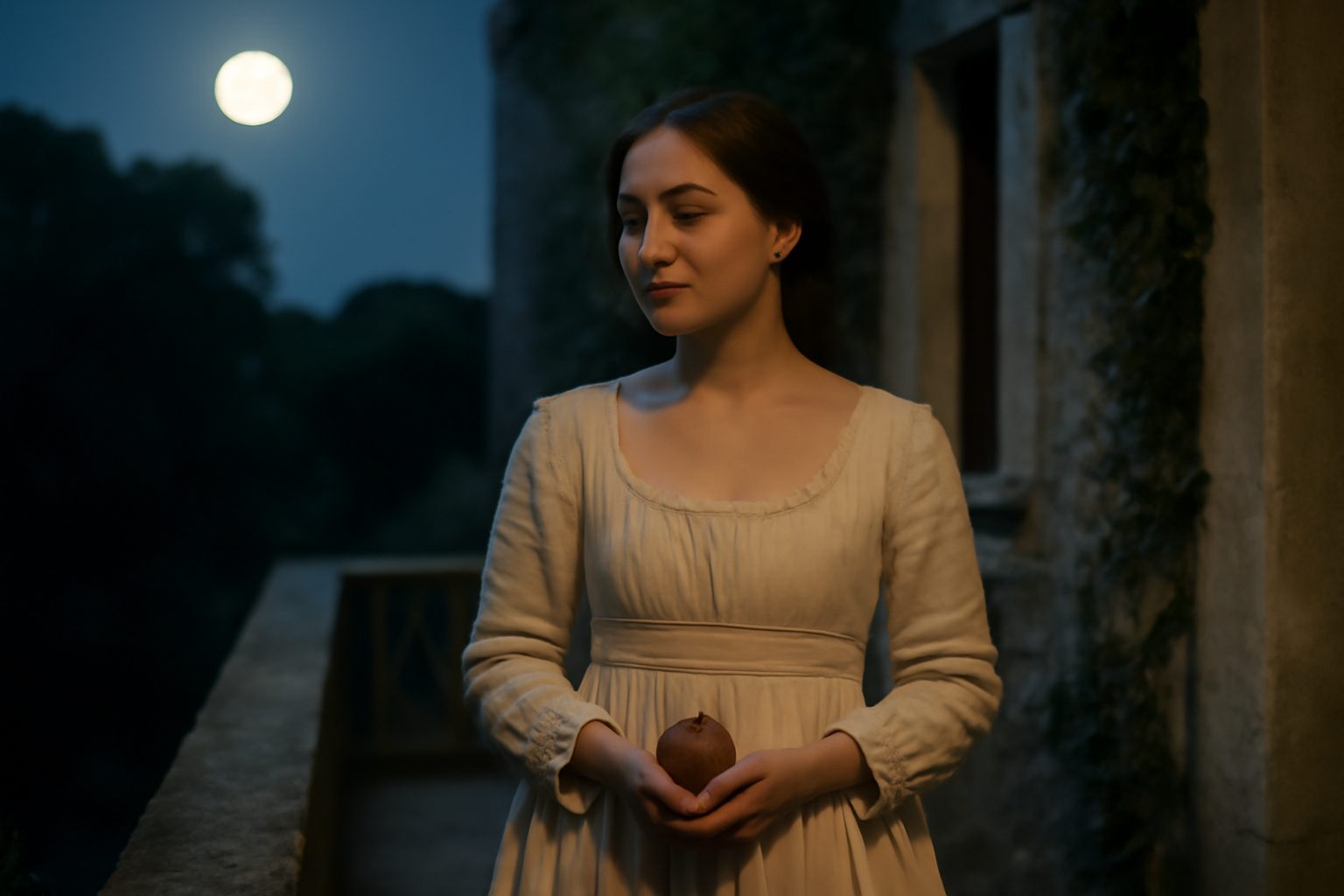
The night's consorting also ties to the scene's sensual undertones, such as Mercutio's bawdy quip in "And wish his mistress were that kind of fruit" and the follow-up in "As maids call medlars, when they laugh alone", which frame hidden desires in playful, earthy terms, mirroring Romeo's secretive yet fervent longing.