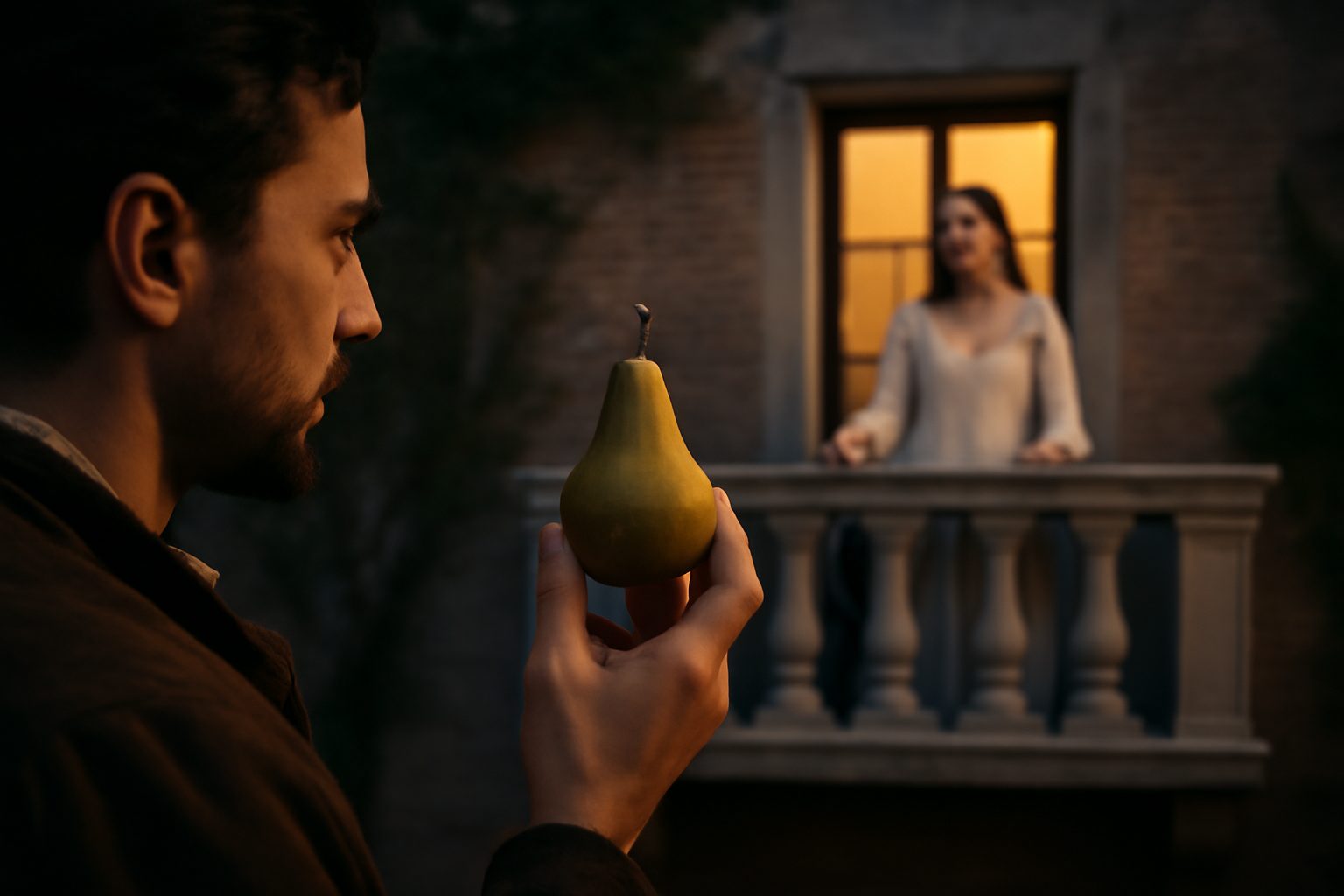
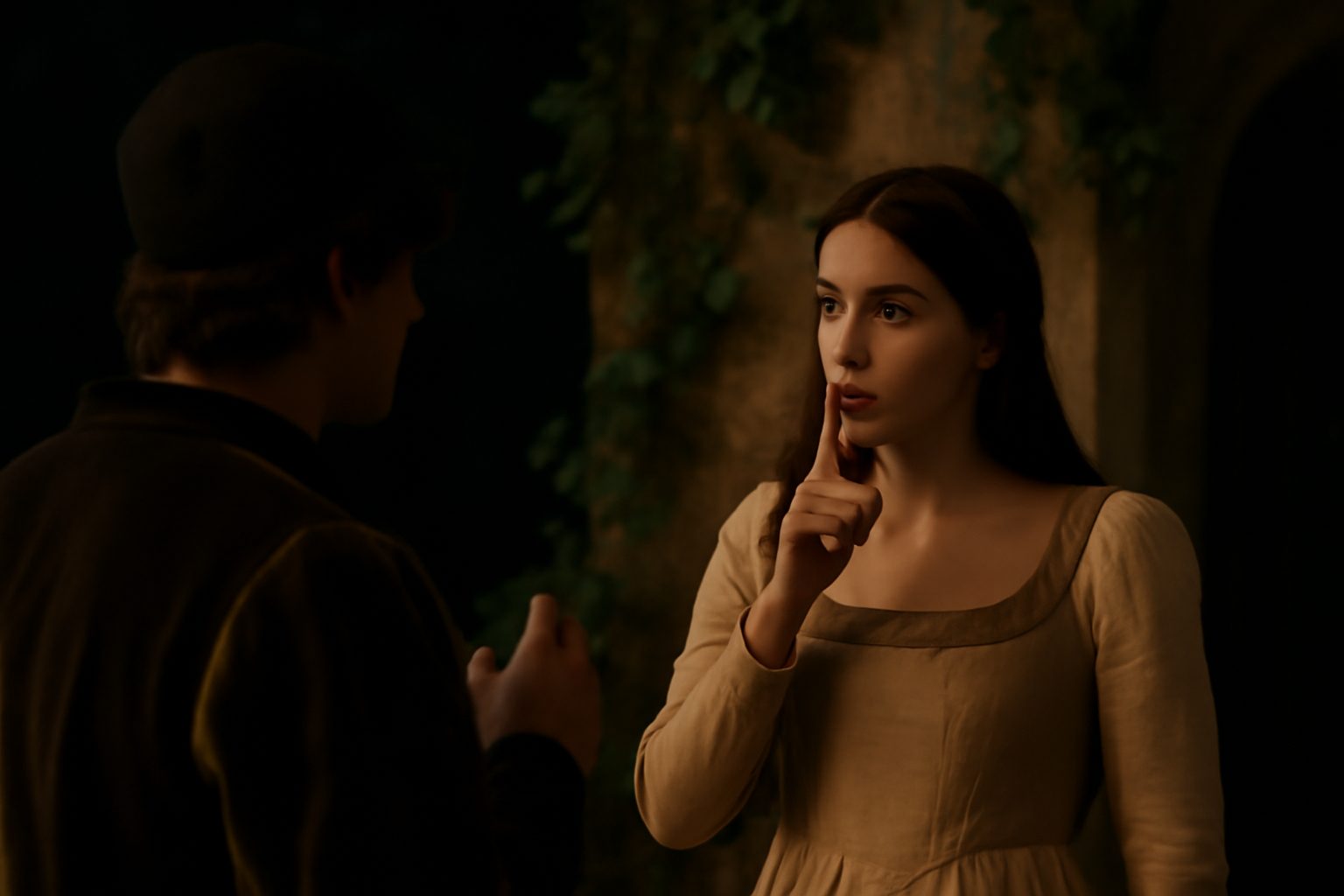
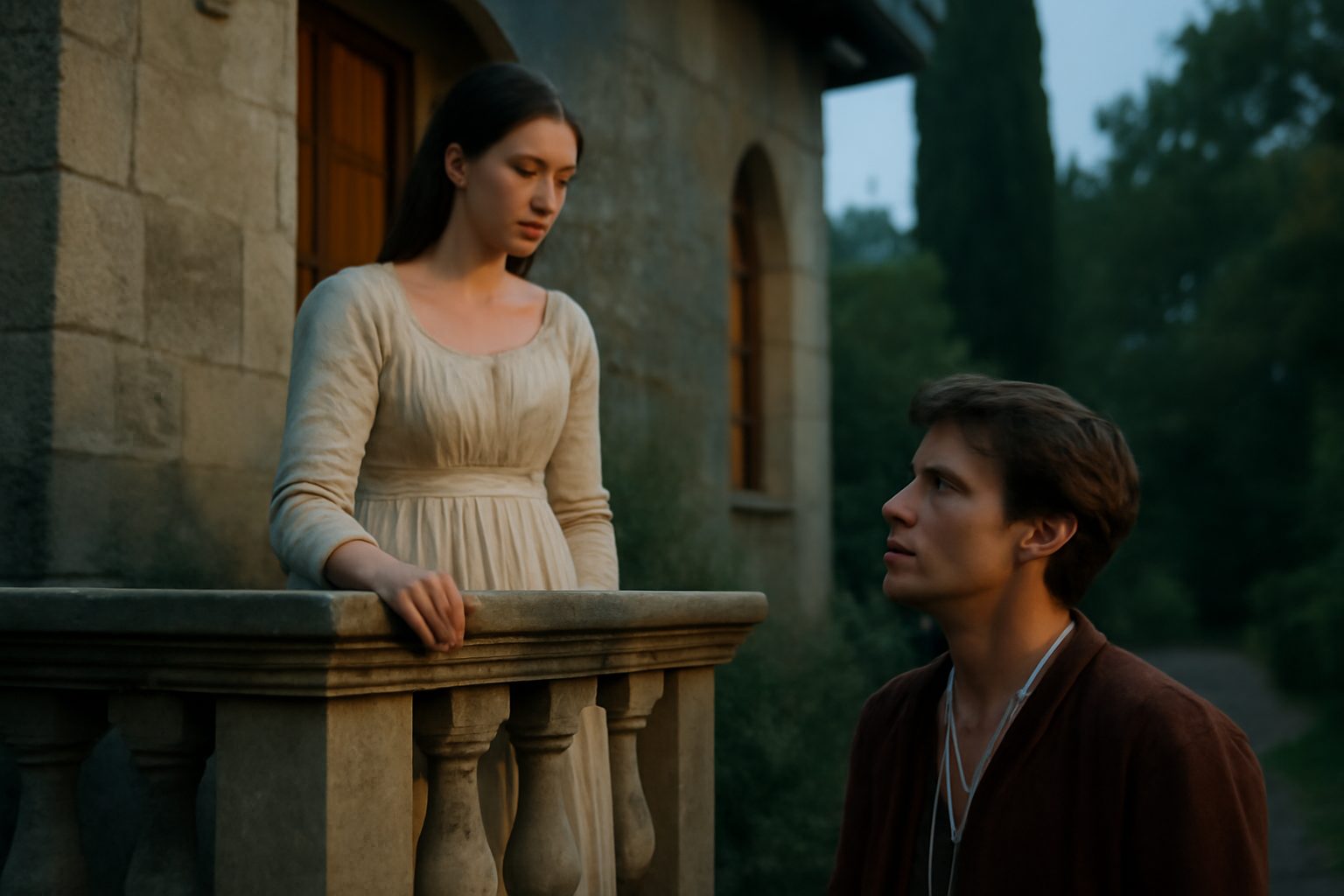
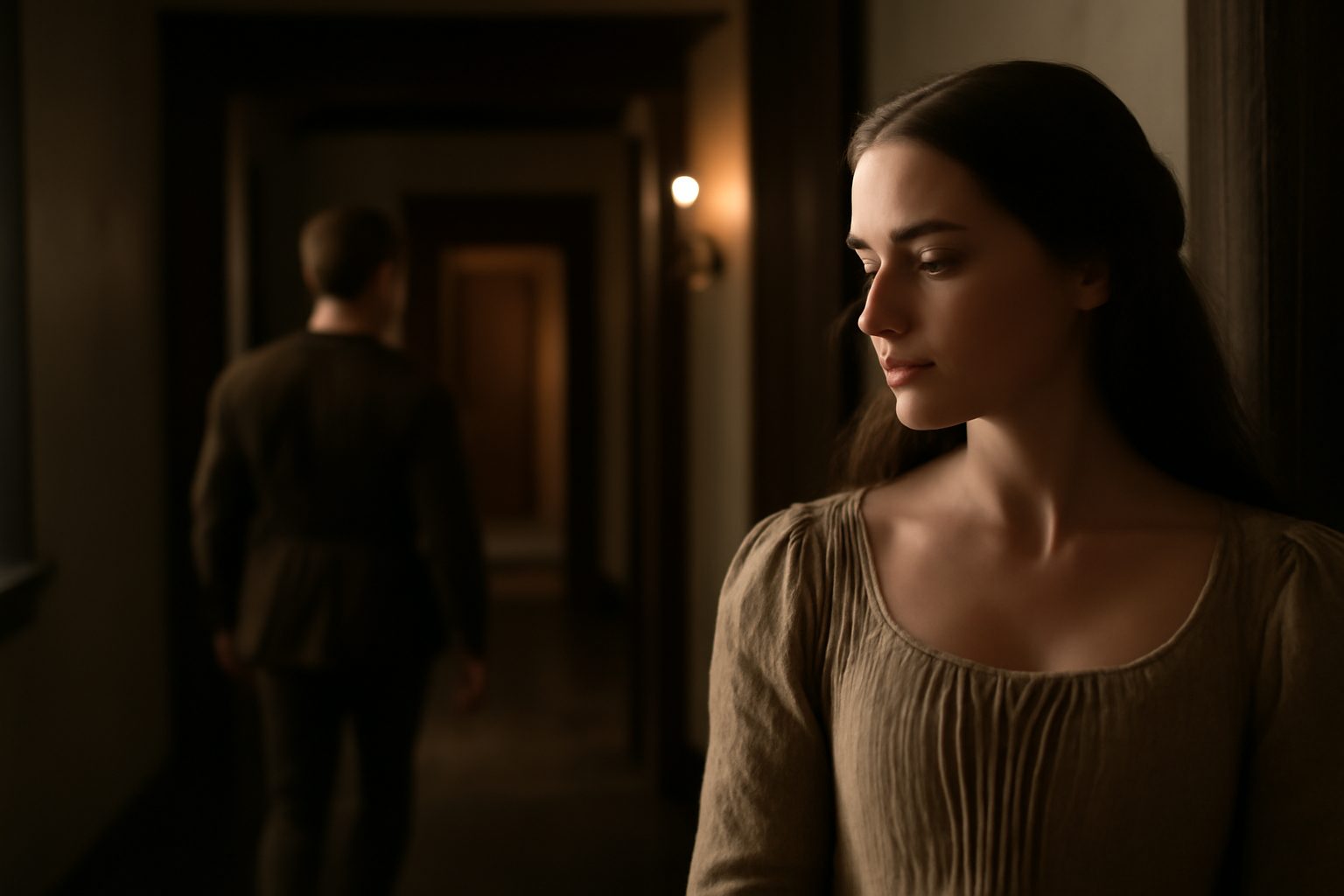
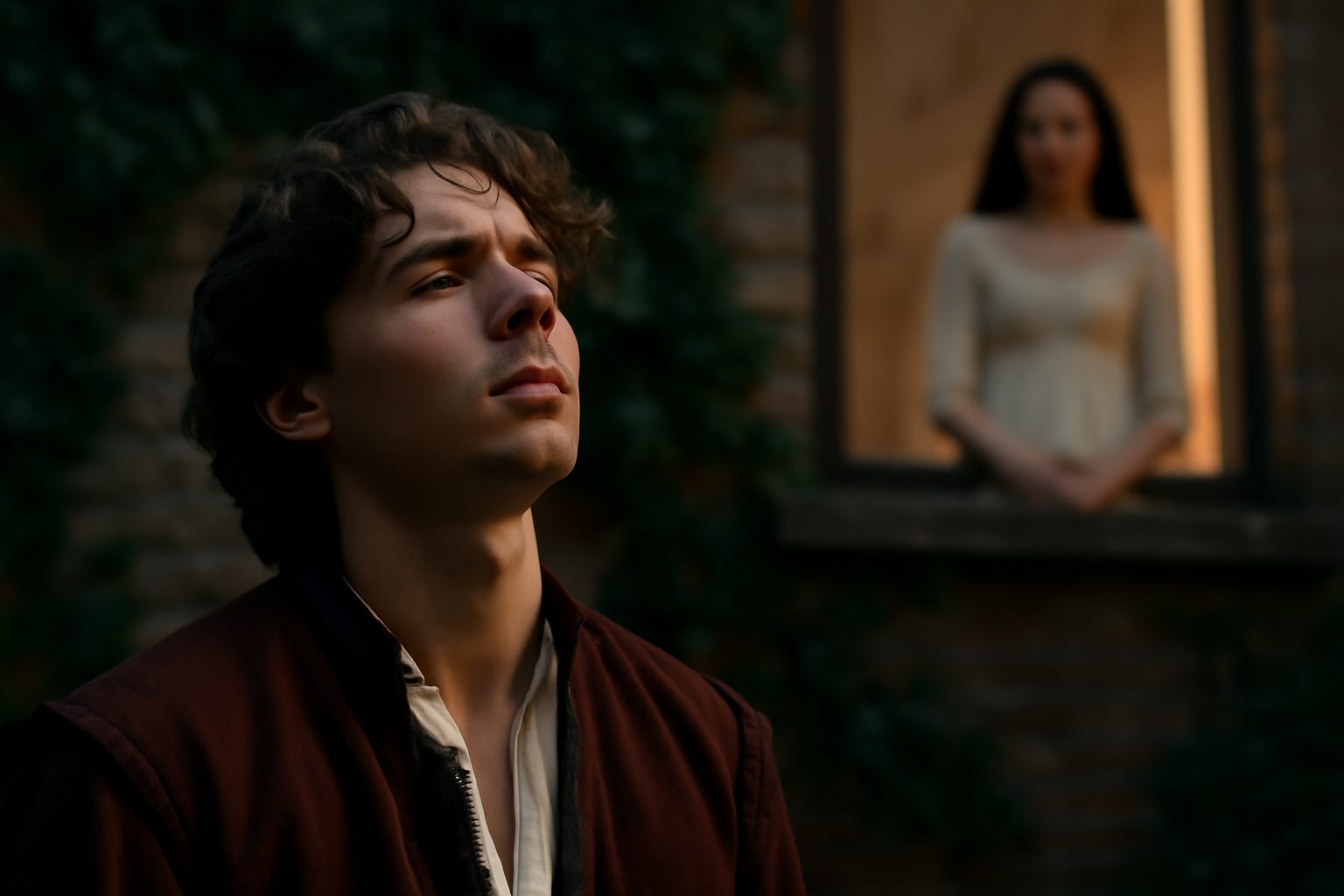
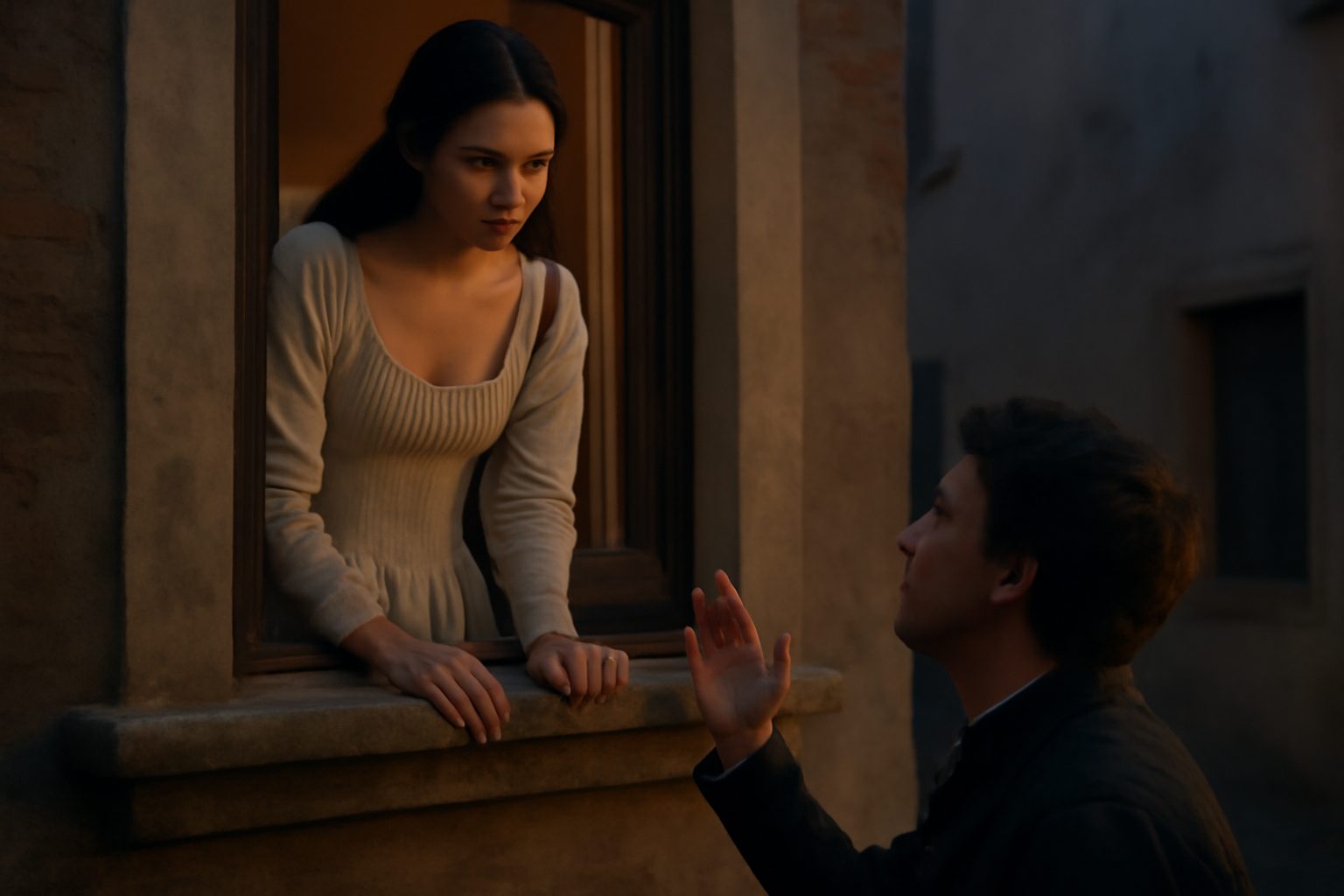
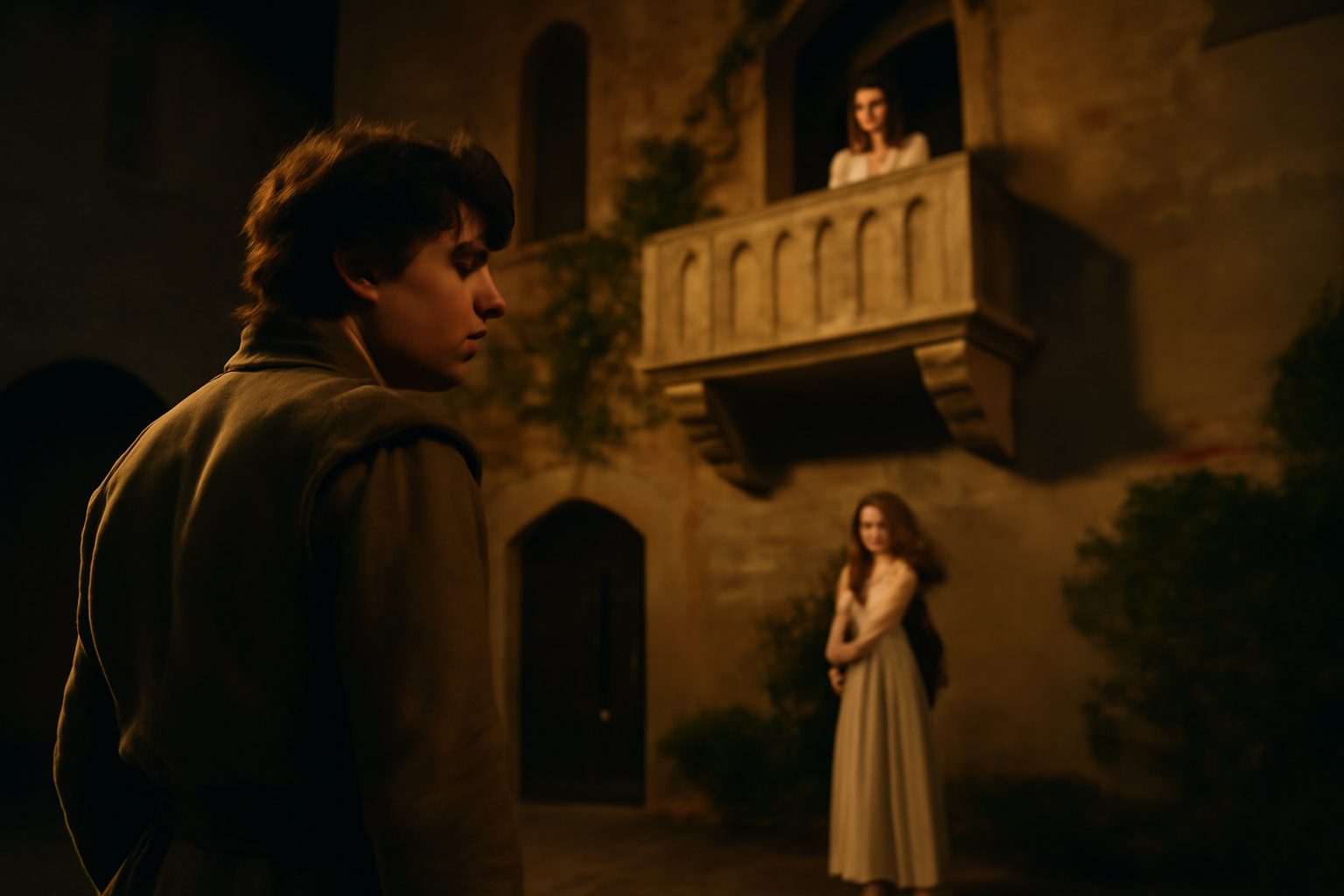
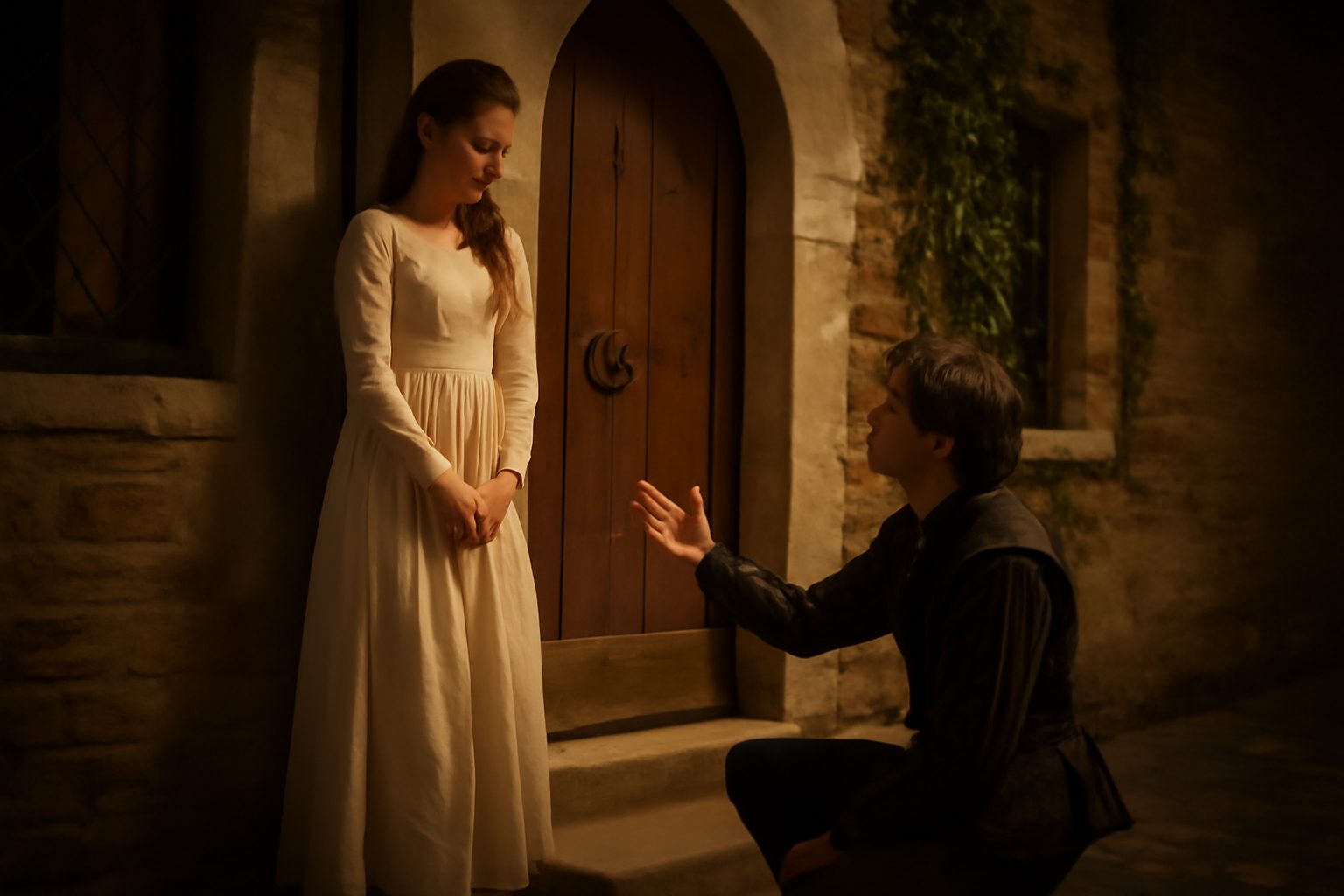
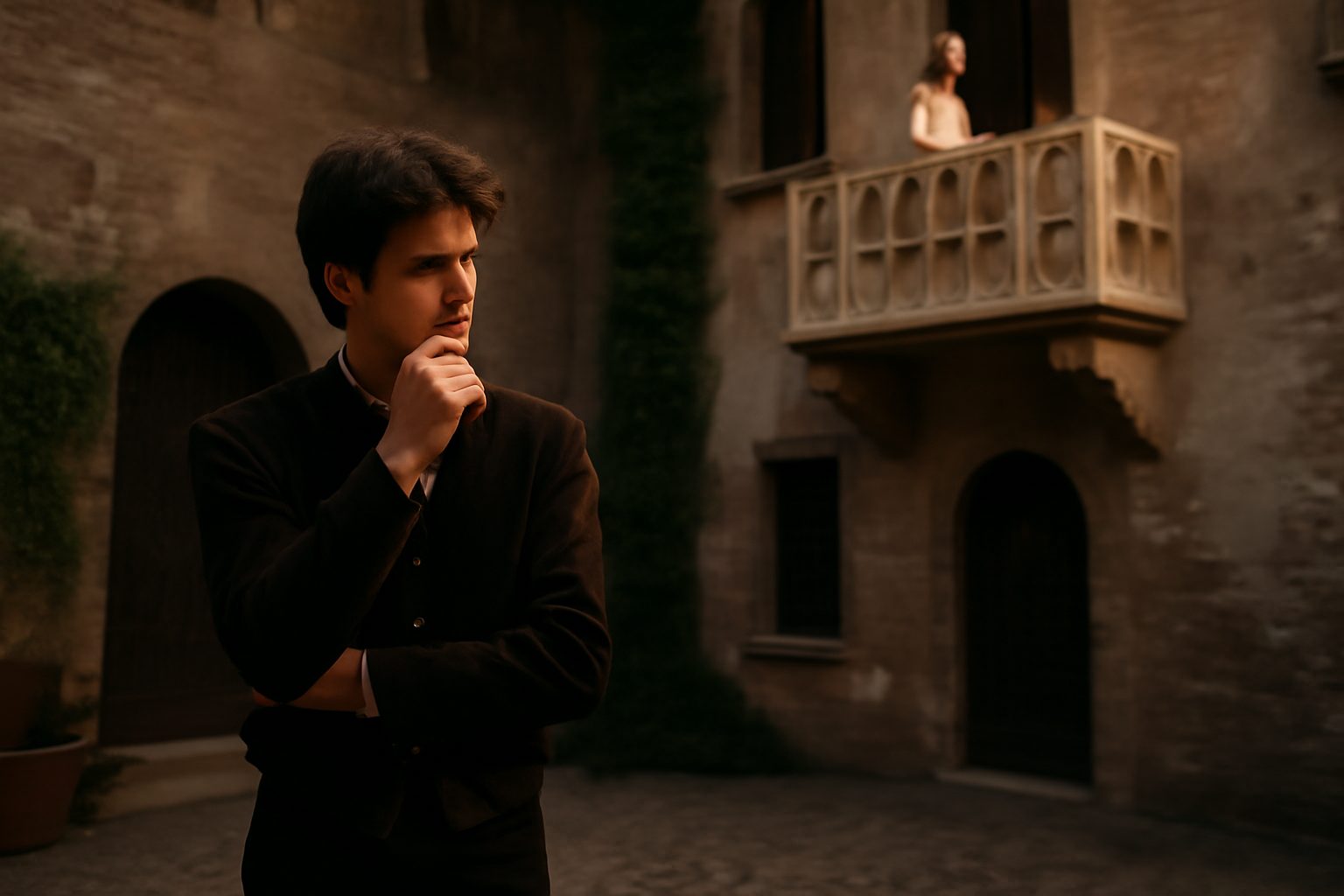
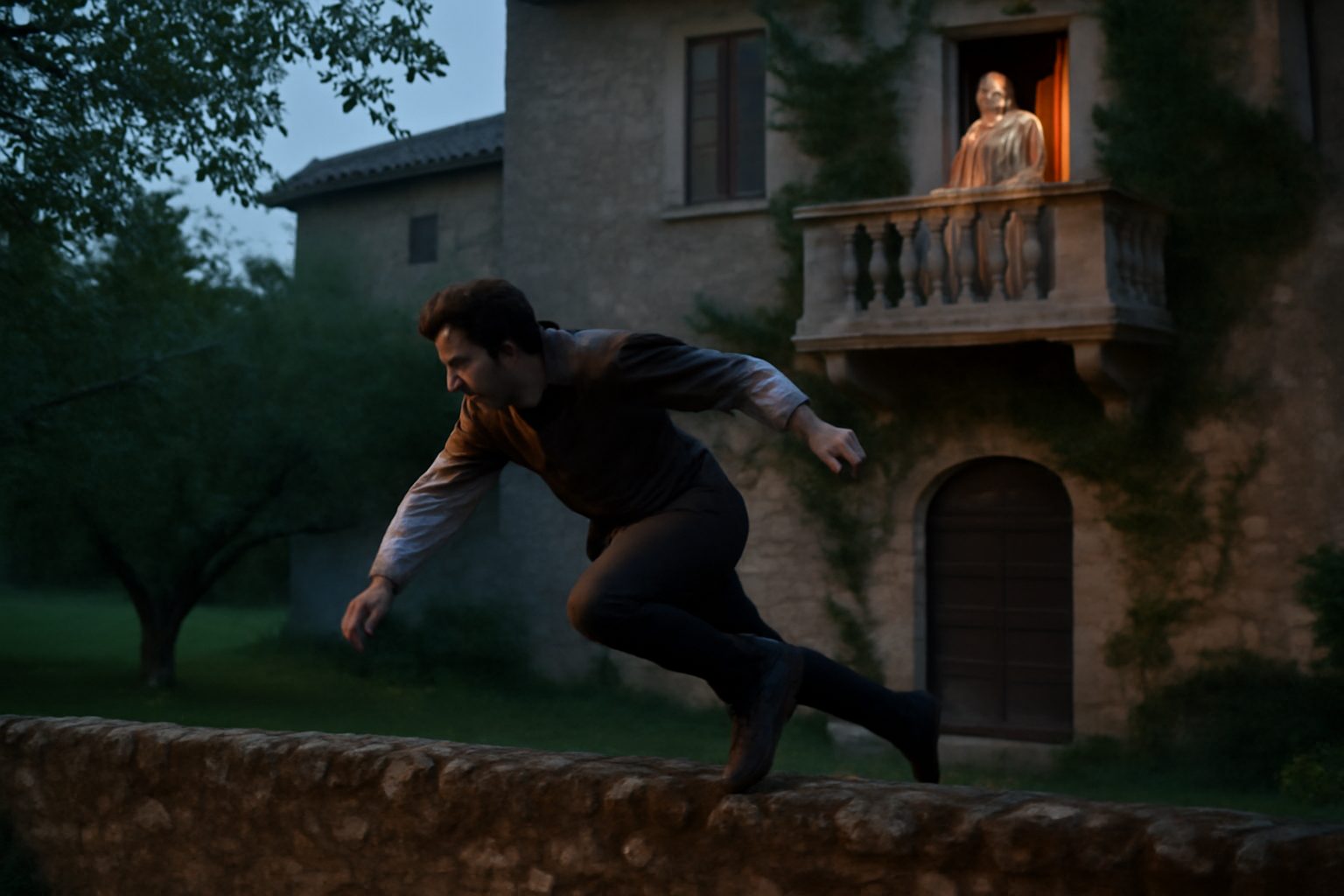
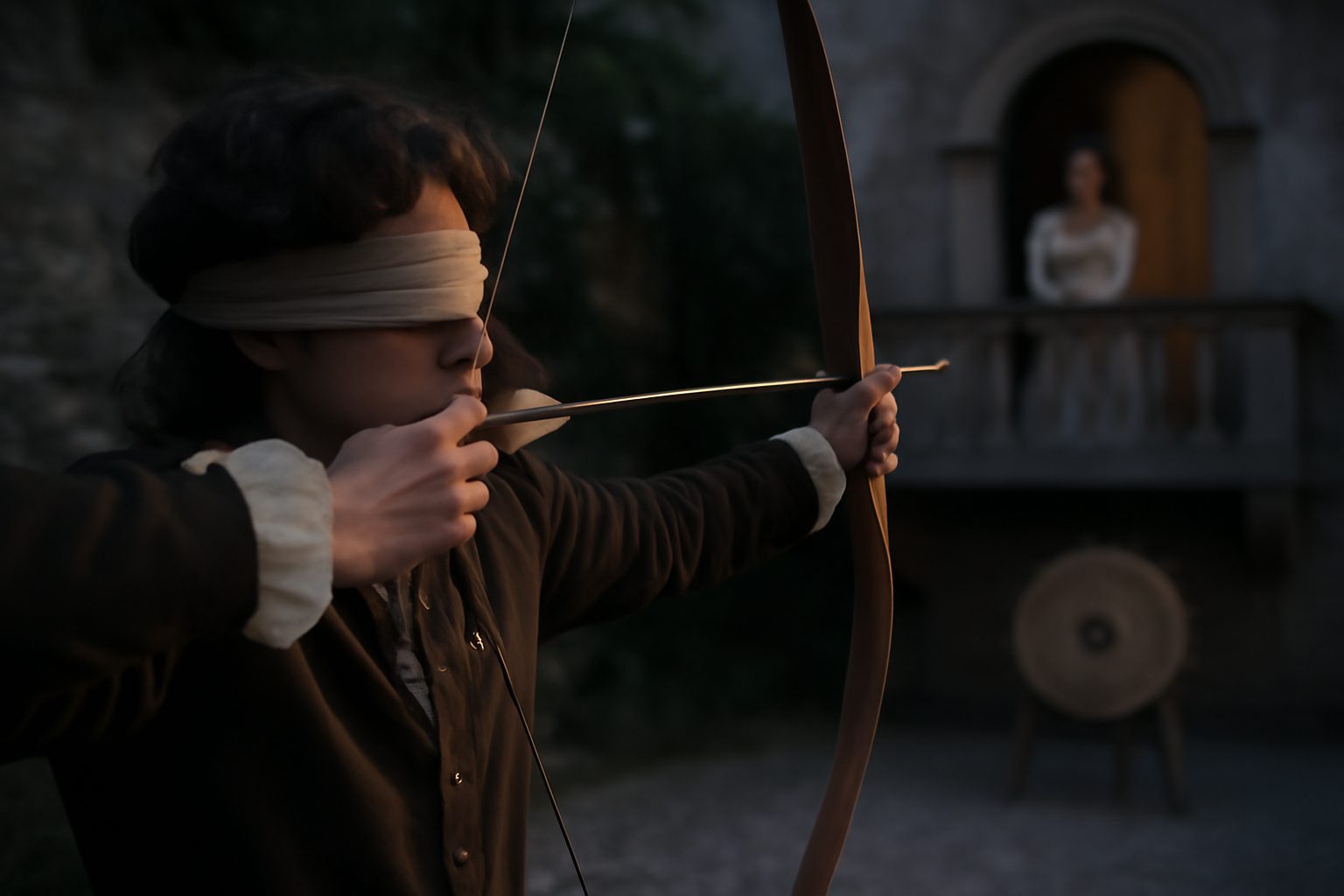
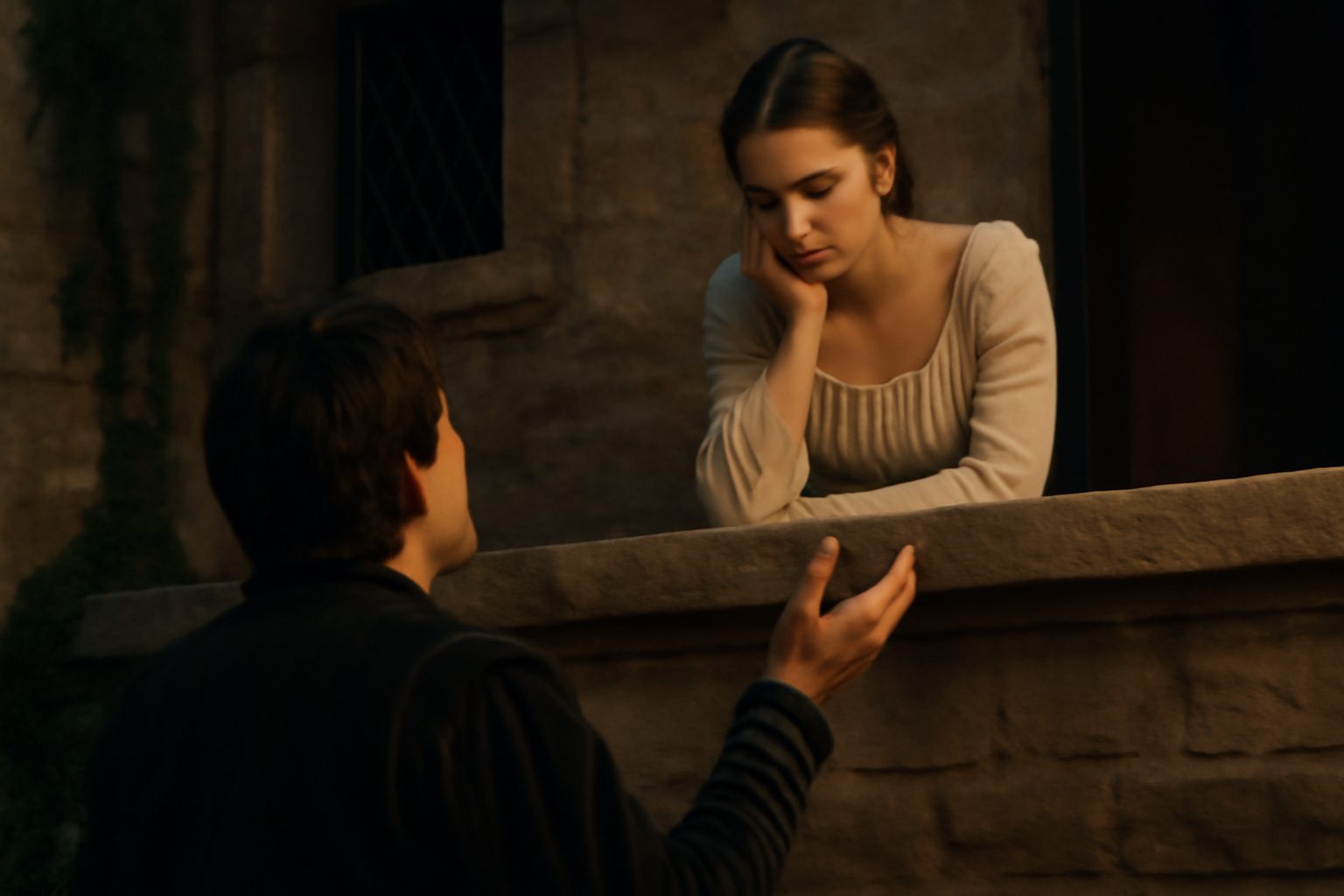
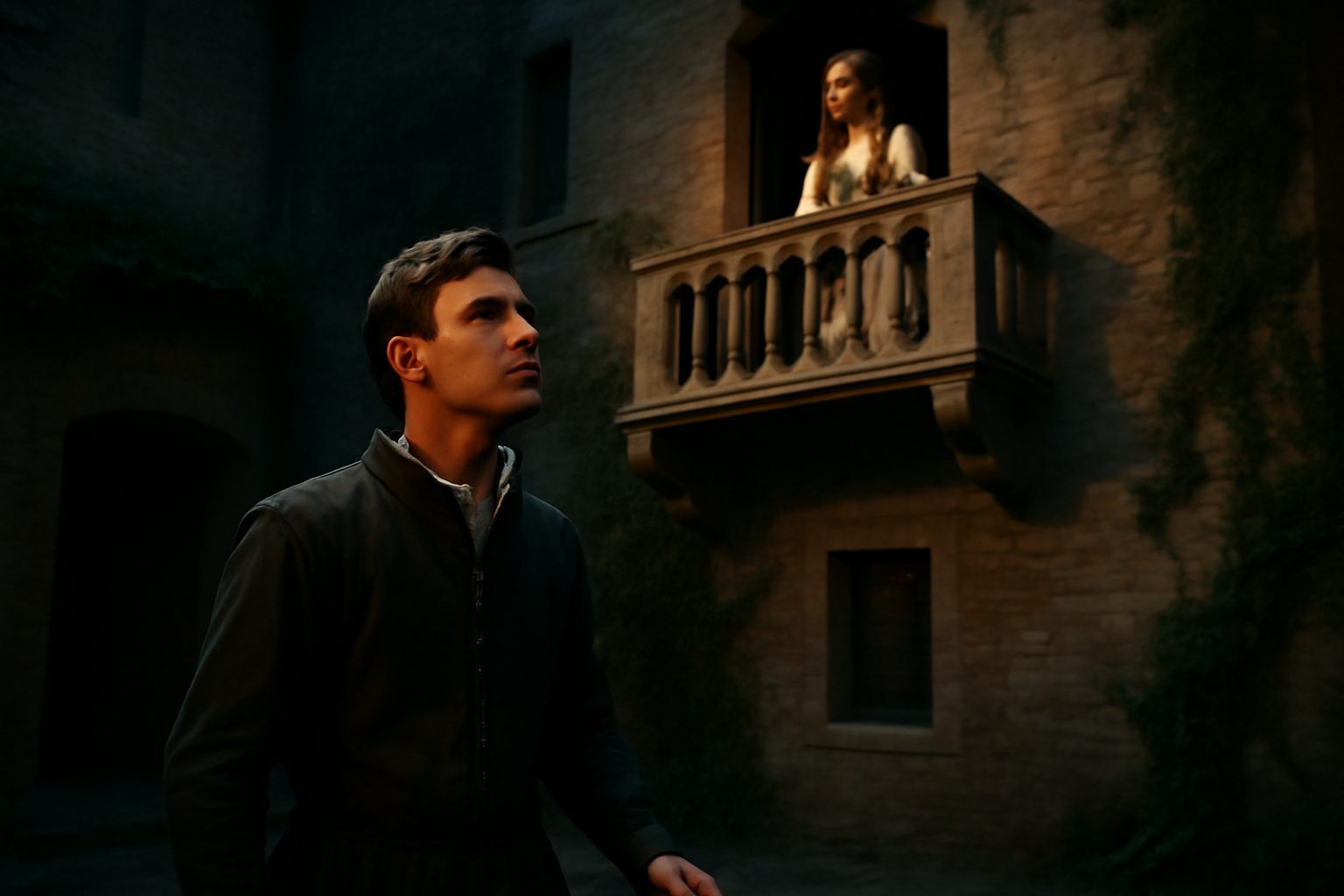
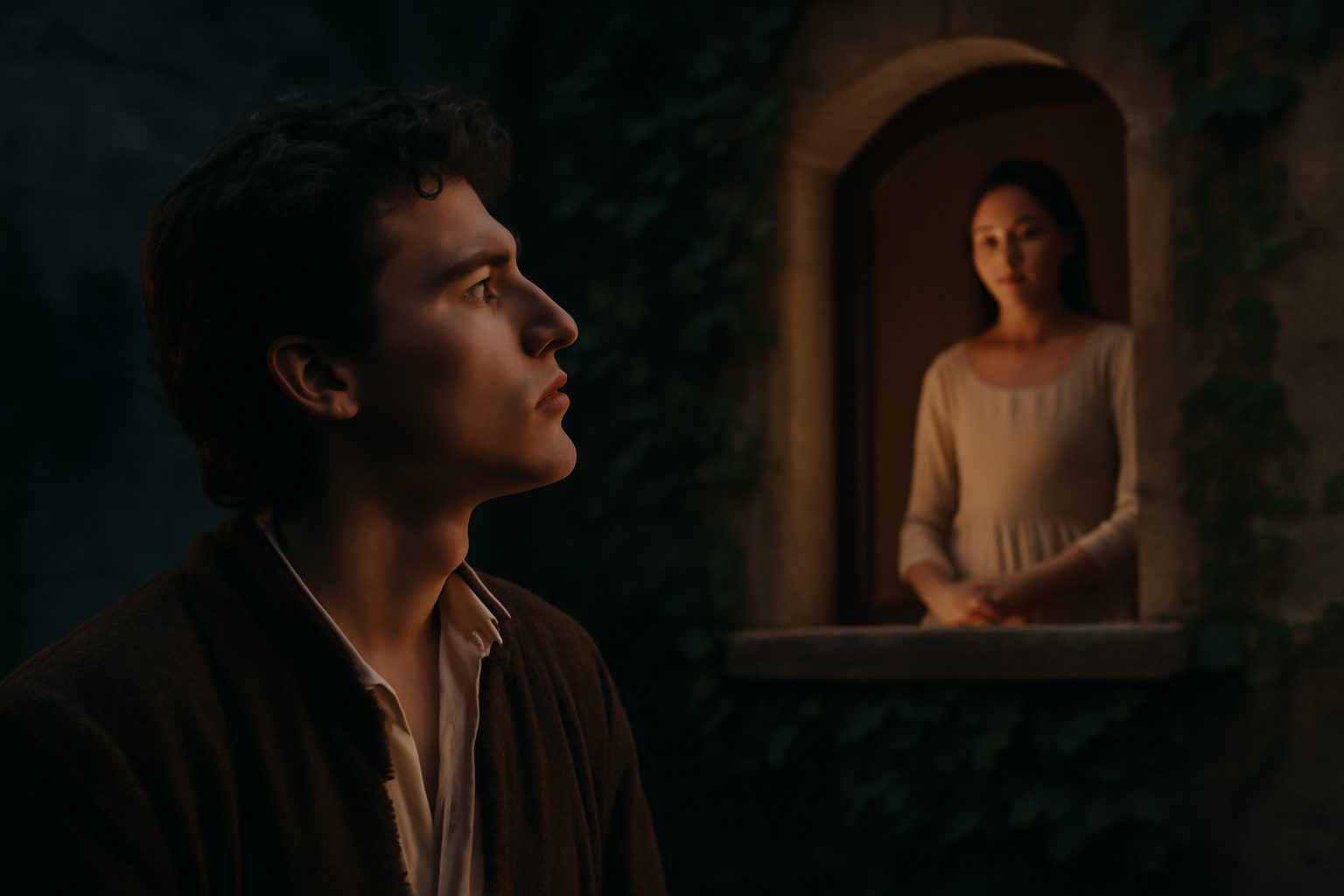
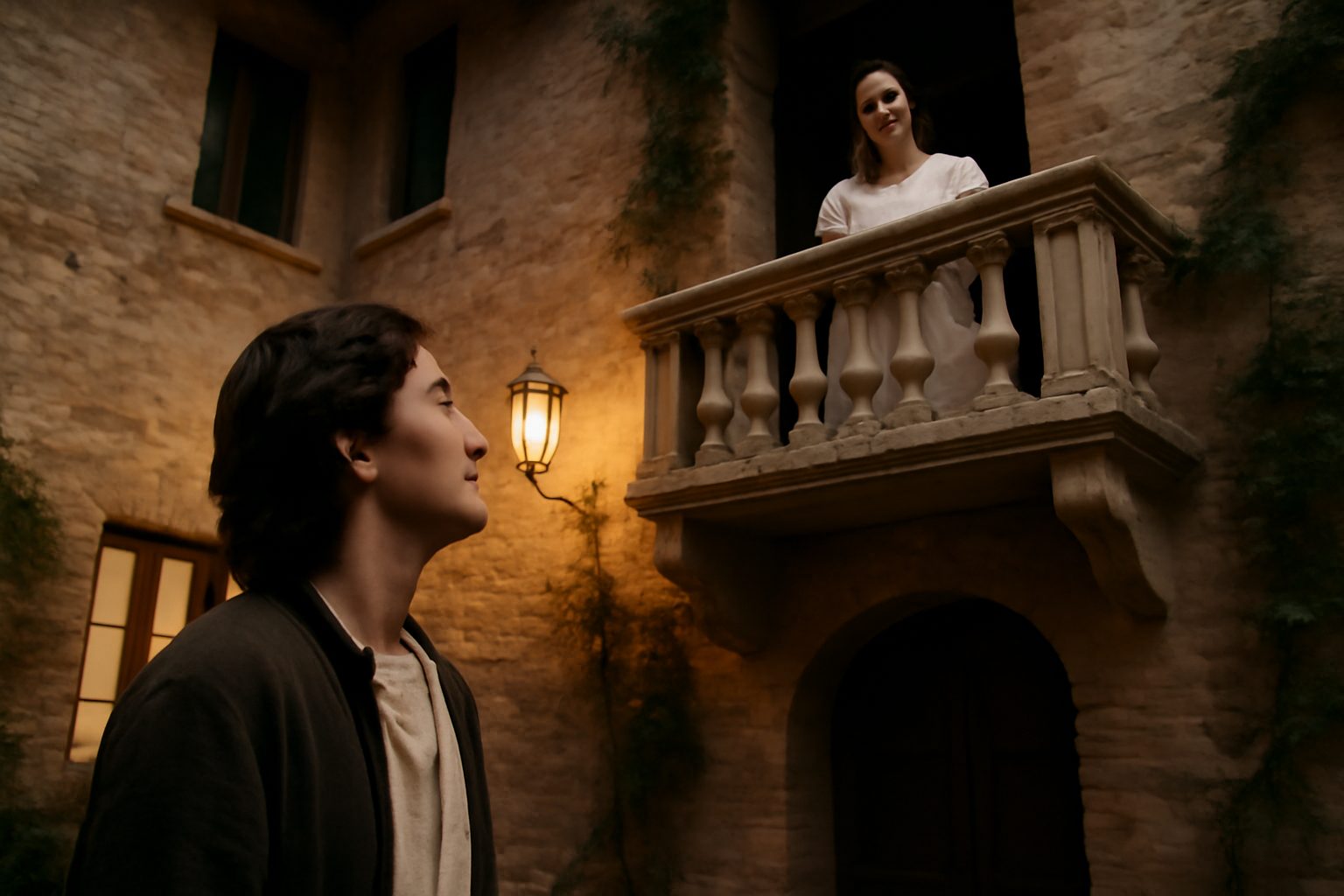
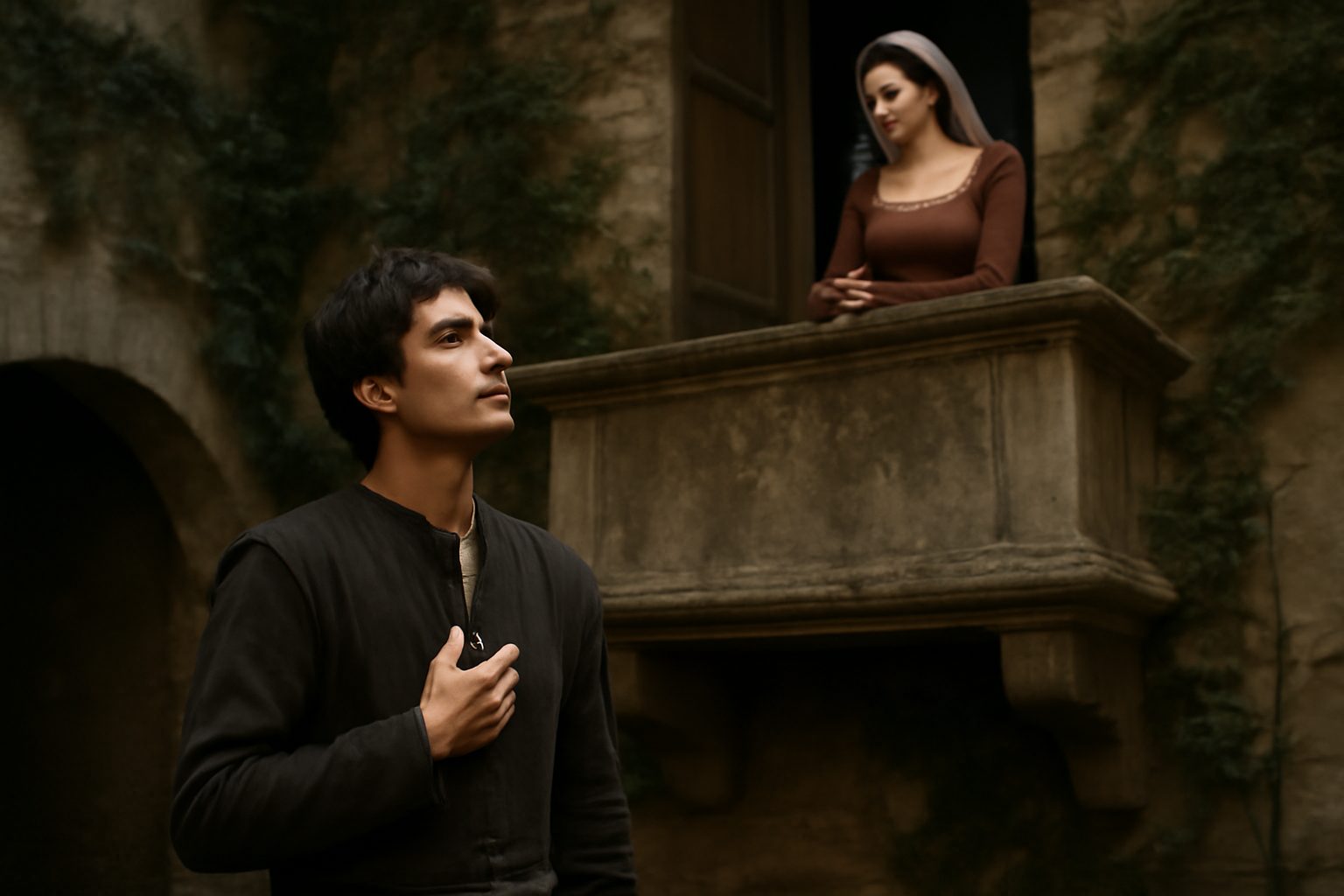
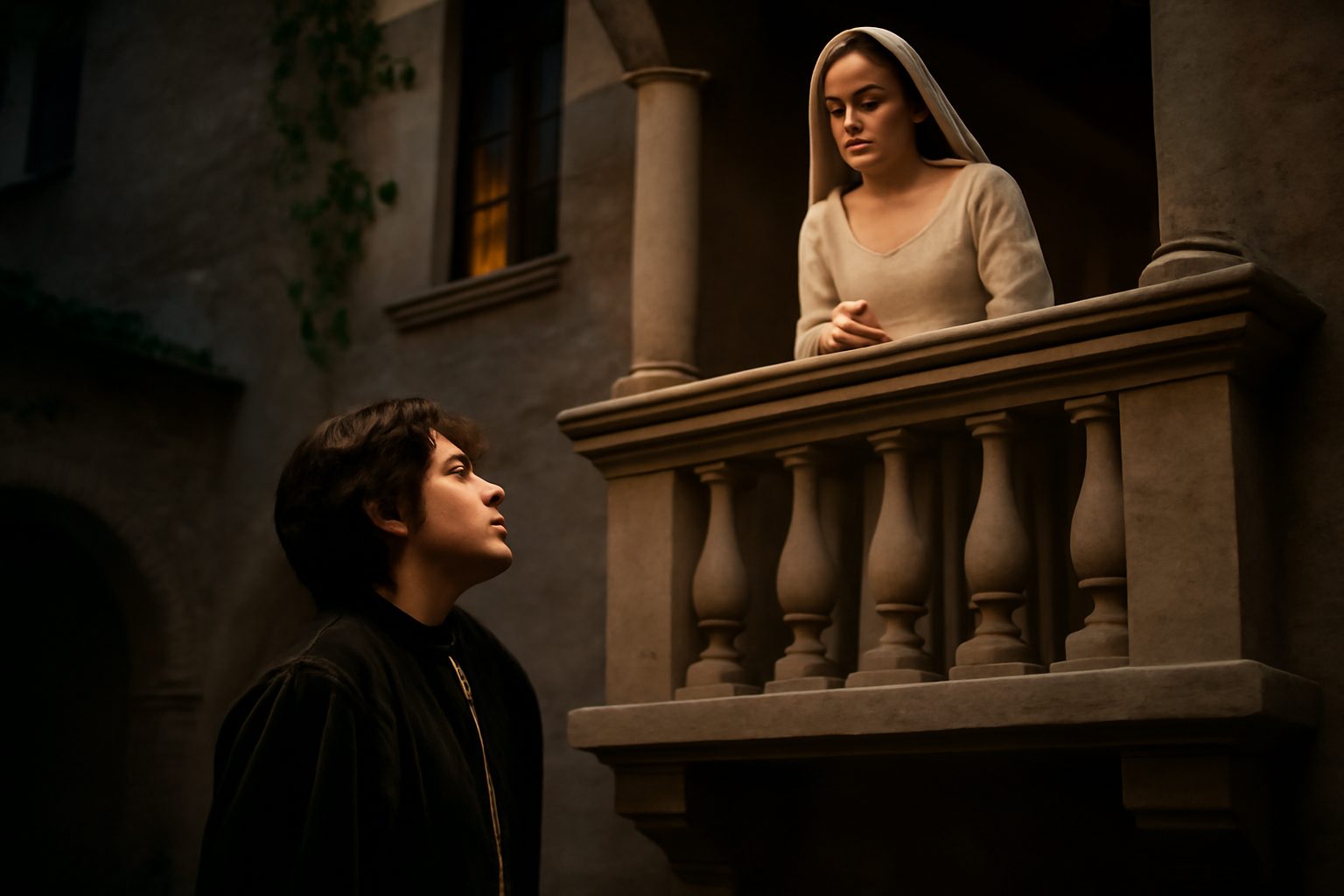
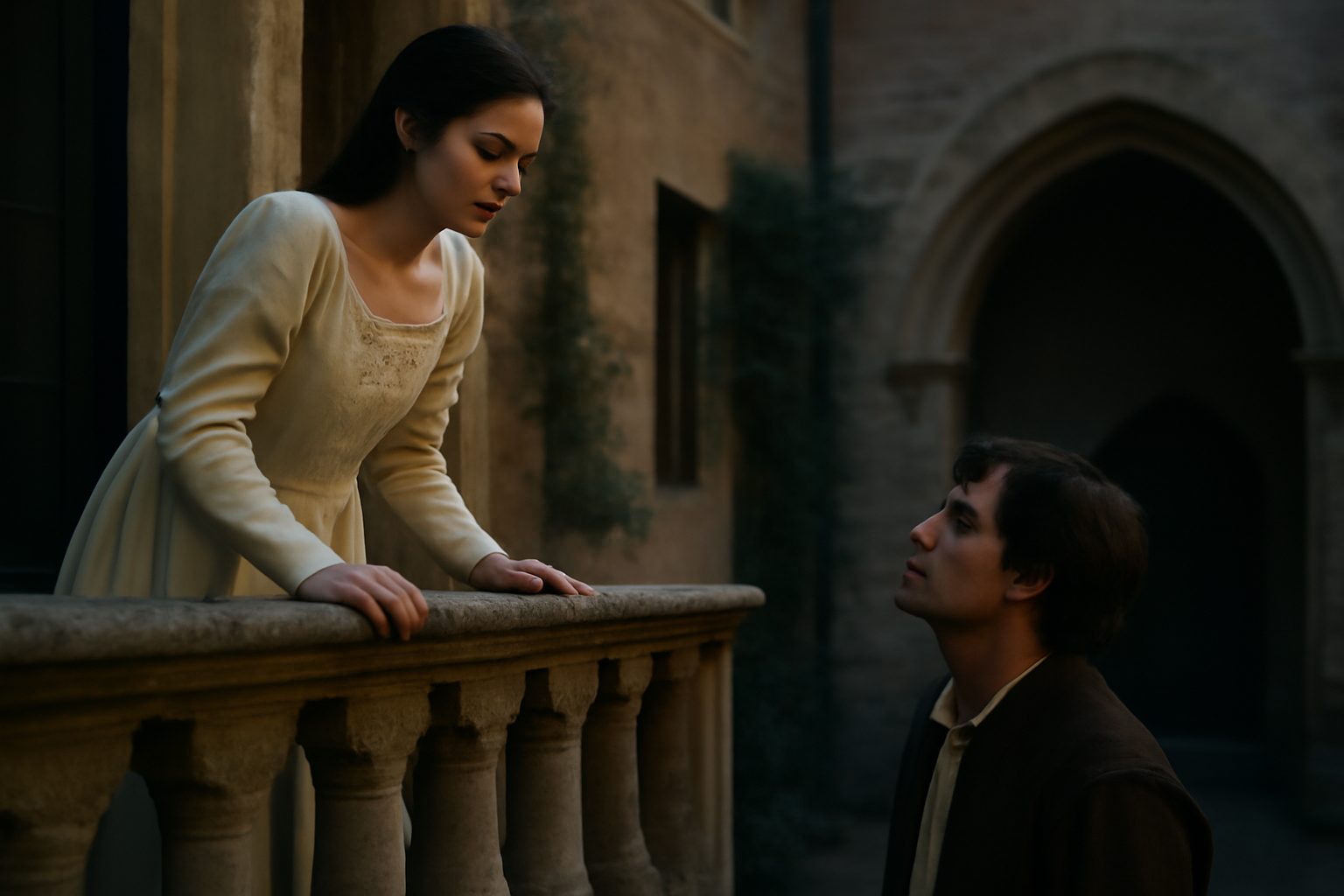
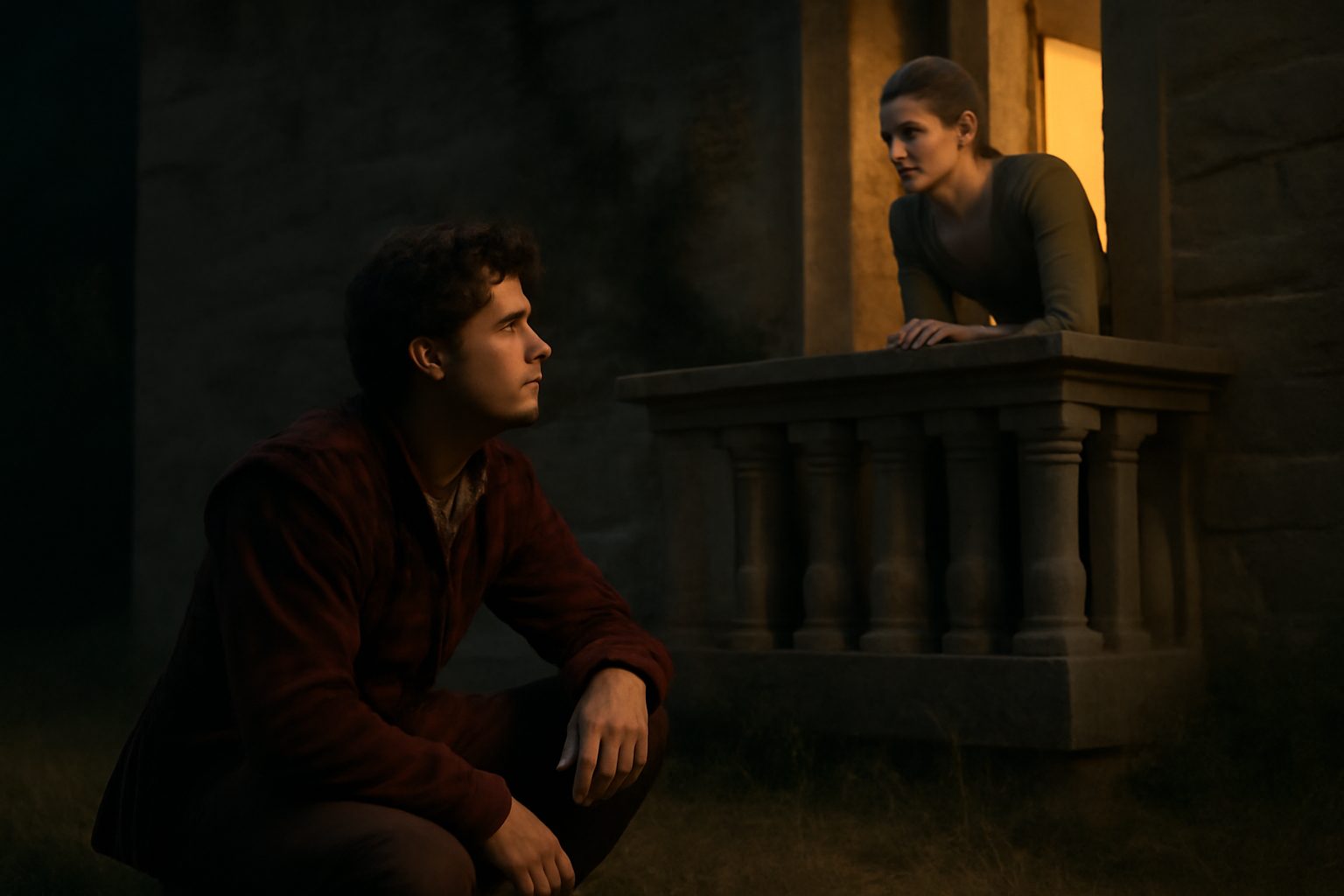
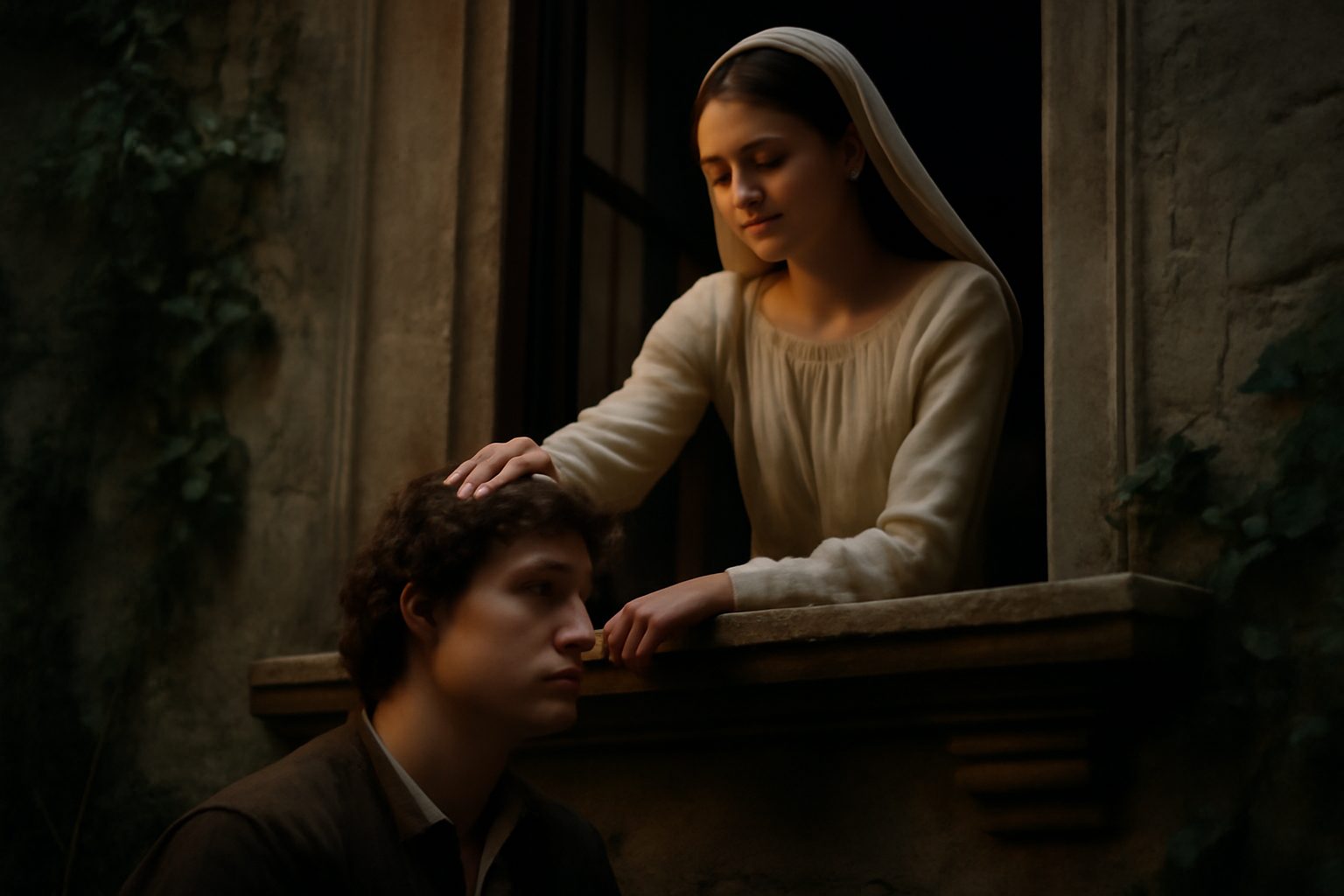
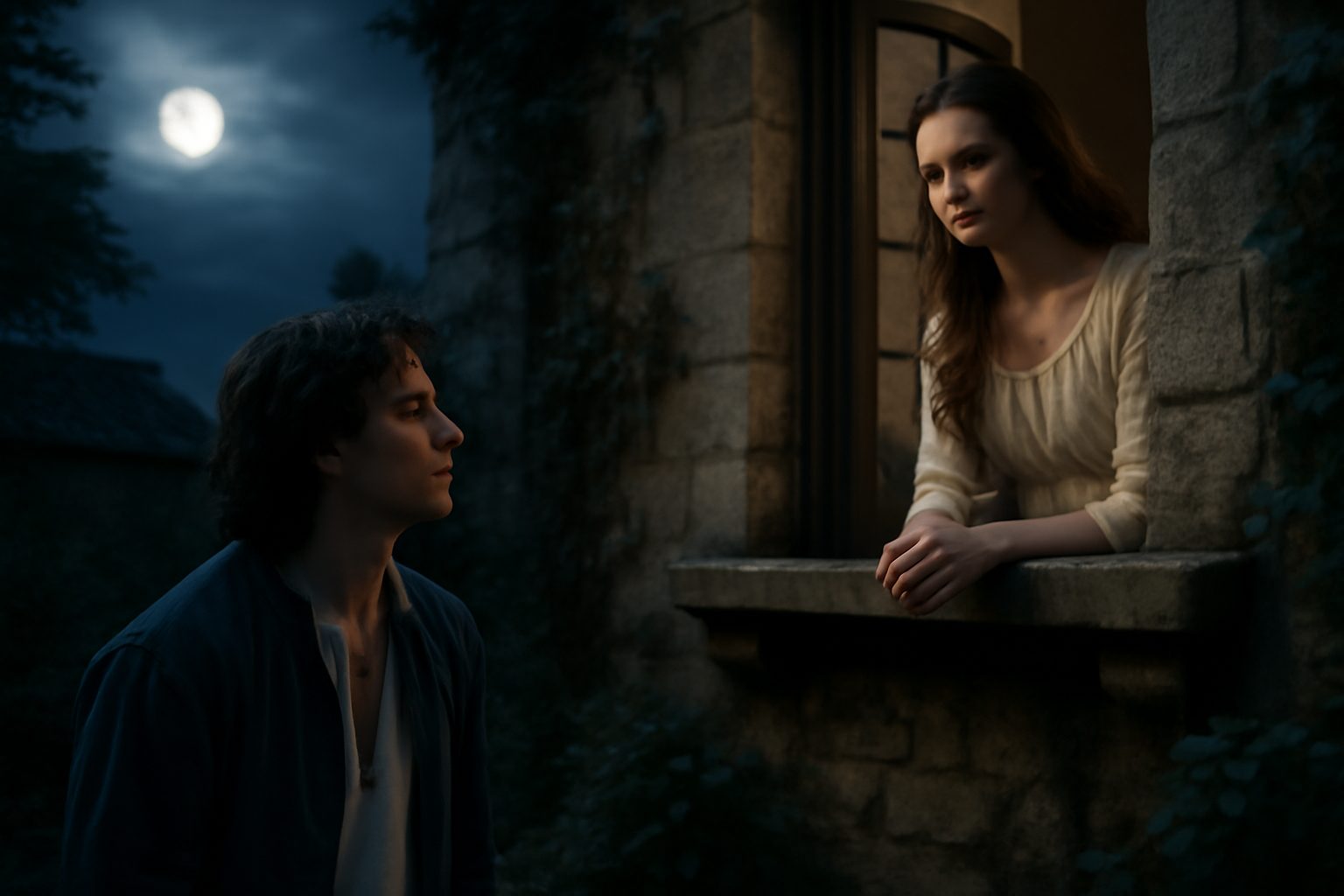
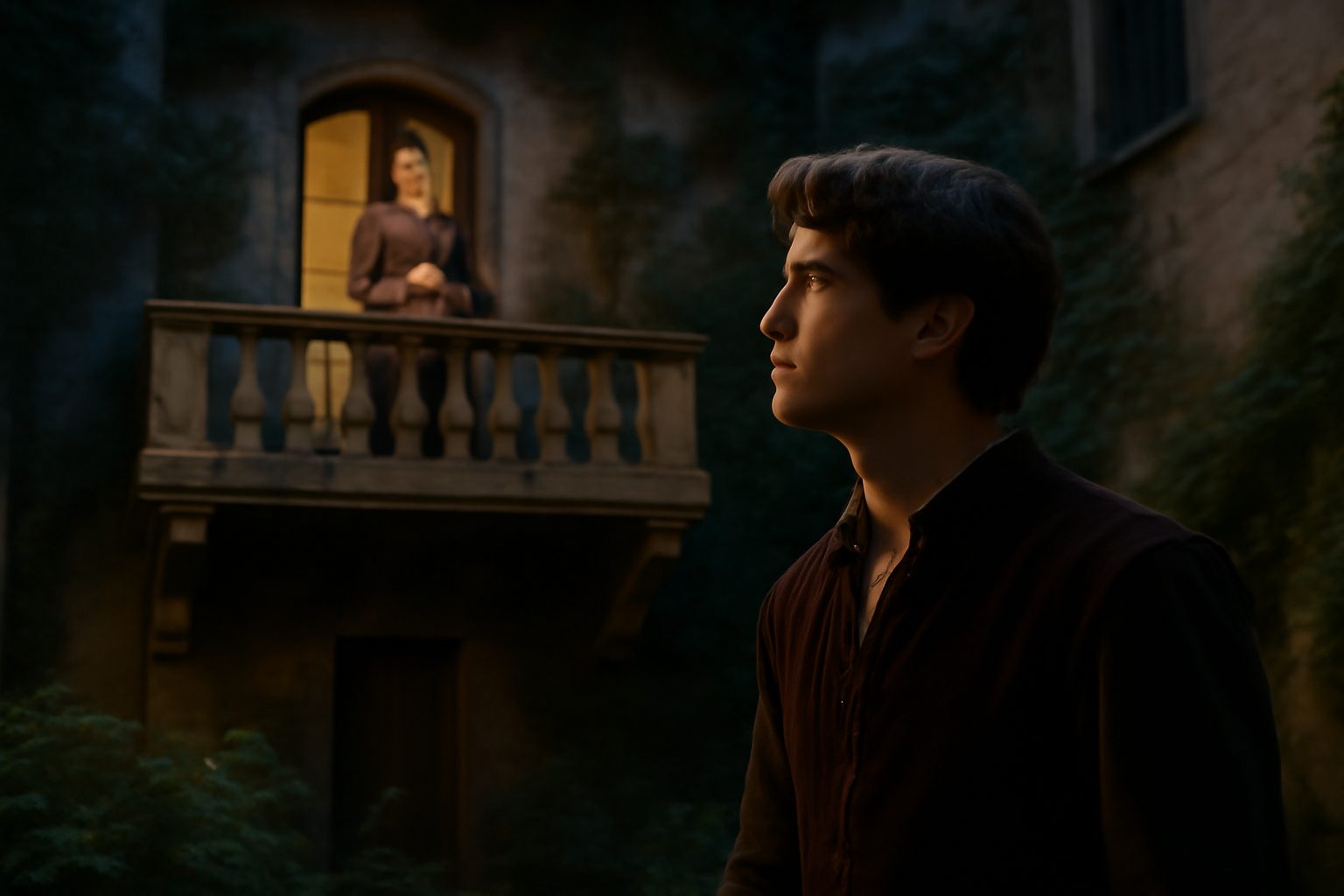
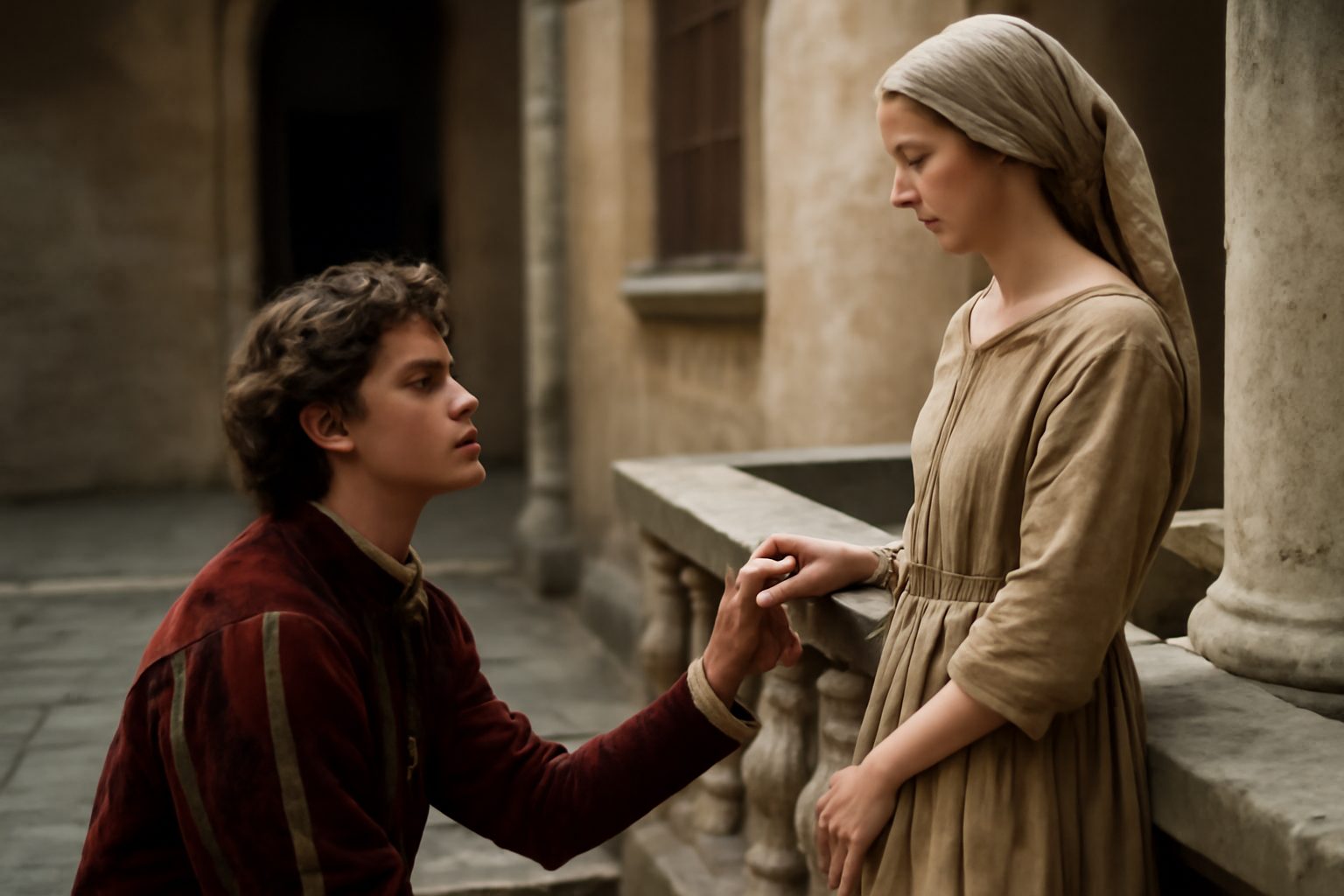
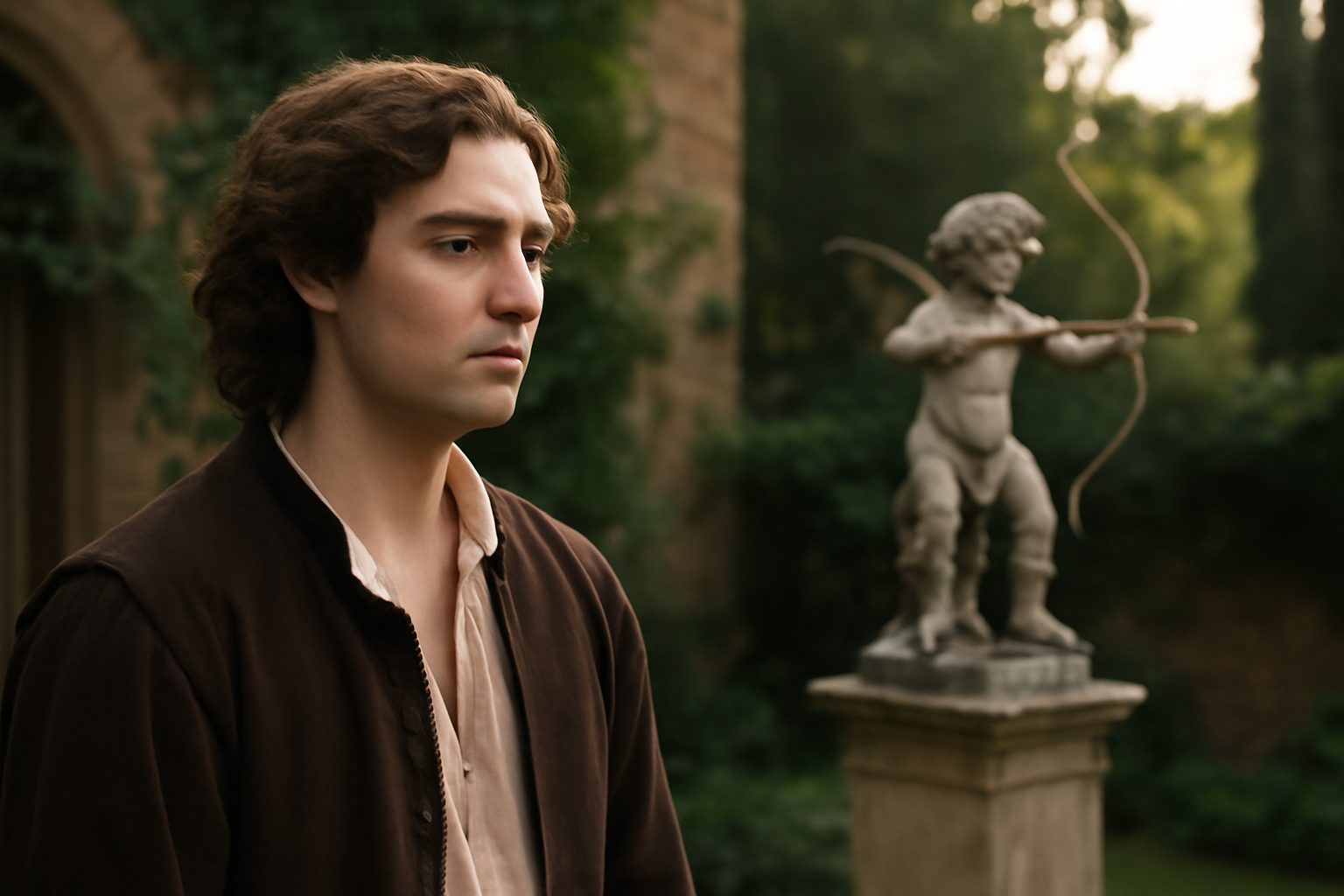
In Act 2, Scene 1 of Romeo and Juliet, Romeo speaks these words after leaving the Capulet feast, where he has just met Juliet and fallen instantly in love. Having slipped away from his friends, he playfully addresses his own body, urging it to return to its natural state—his heart now pulled toward Juliet as its new center. The line captures his giddy infatuation and the gravitational pull of his newfound passion.
Romeo: "Turn back, dull earth, and find thy centre out."
In modern day english, we would say:
Go back to where you belong and figure yourself out.
Frequently Asked Questions
What does Romeo mean when he tells the earth to turn back and find its center?
Romeo is expressing his frustration and feeling lost, asking the earth to return to a stable state, just as he wishes to find stability in his love for Juliet.
Connections to other verses:
Connections to "Turn back, dull earth, and find thy centre out."
This line, spoken by Romeo as he separates from his friends, reflects his desire to return to Juliet and find his emotional and spiritual center in her. It connects thematically and contextually to several other verses in the scene.
Connection to Physical and Emotional Separation
Romeo’s declaration of his heart being with Juliet, Can I go forward when my heart is here?, directly precedes this line and establishes his internal conflict, emphasizing that his true "centre" is not with his companions but with his love.
Mercutio’s Mocking and Conjuration
Mercutio’s teasing attempts to summon Romeo, such as Romeo! humours! madman! passion! lover! and The ape is dead, and I must conjure him., contrast with Romeo’s sincere, self-directed command to "find thy centre," highlighting the difference between frivolous wordplay and Romeo’s earnest longing.
References to Blindness and Love’s Nature
The idea of love as a guiding force ties to Blind is his love and best befits the dark. and If love be blind, love cannot hit the mark., suggesting that Romeo’s "centre" is found through love’s irrational, all-consuming power, not logic or sight.
Desire for Reunion and Invocation
Romeo’s wish to return to Juliet parallels Mercutio’s humorous invocations, like Appear thou in the likeness of a sigh: and That in thy likeness thou appear to us!, though Romeo’s invocation is introspective and sincere, seeking his own realignment rather than a spectral appearance.
Symbolism of the Orchard and Seclusion
Romeo’s leap into the orchard, noted in He ran this way, and leap'd this orchard wall:, physically enacts his turn toward his "centre," as the orchard becomes the symbolic space where he and Juliet unite, away from the mocking world of his friends.