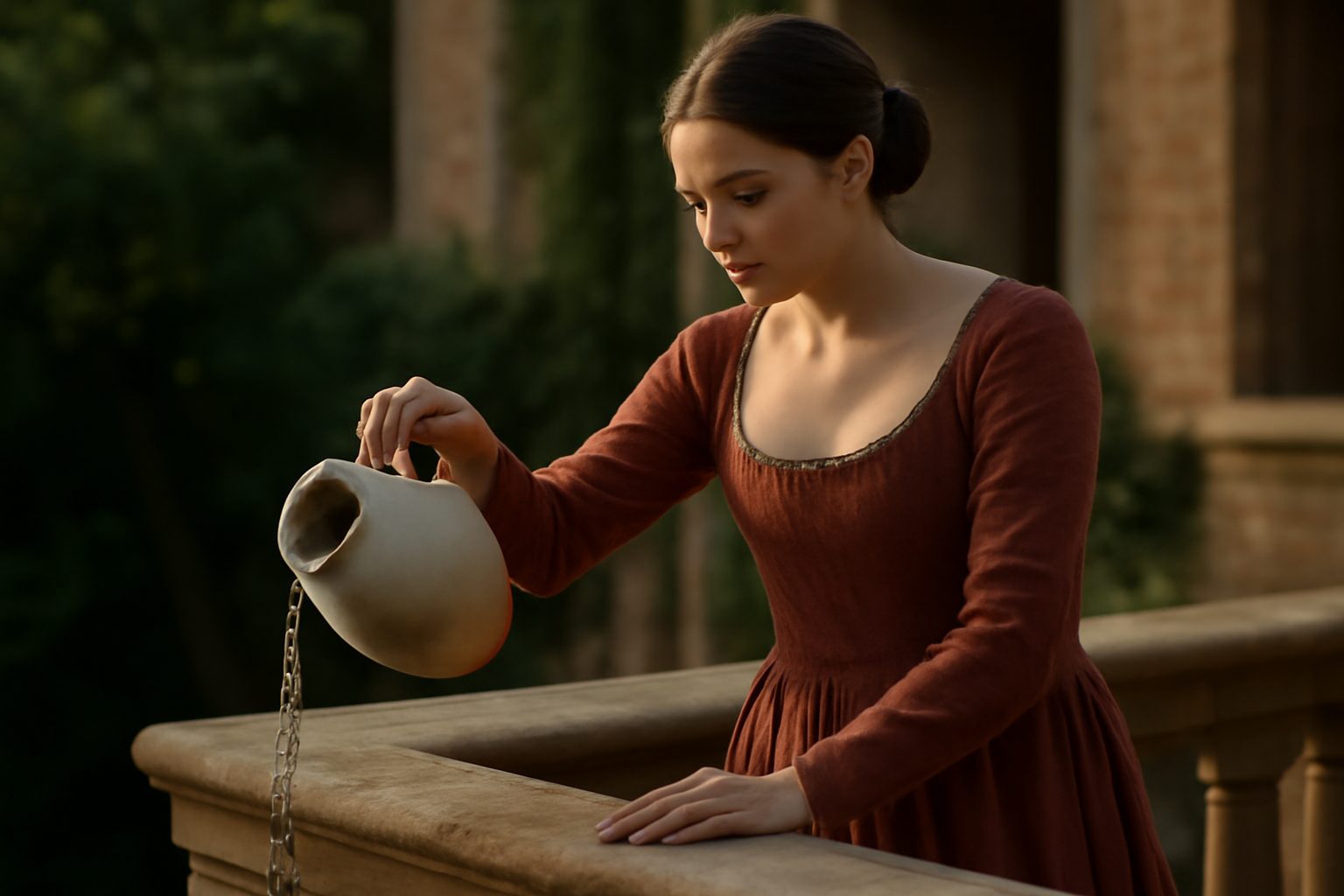
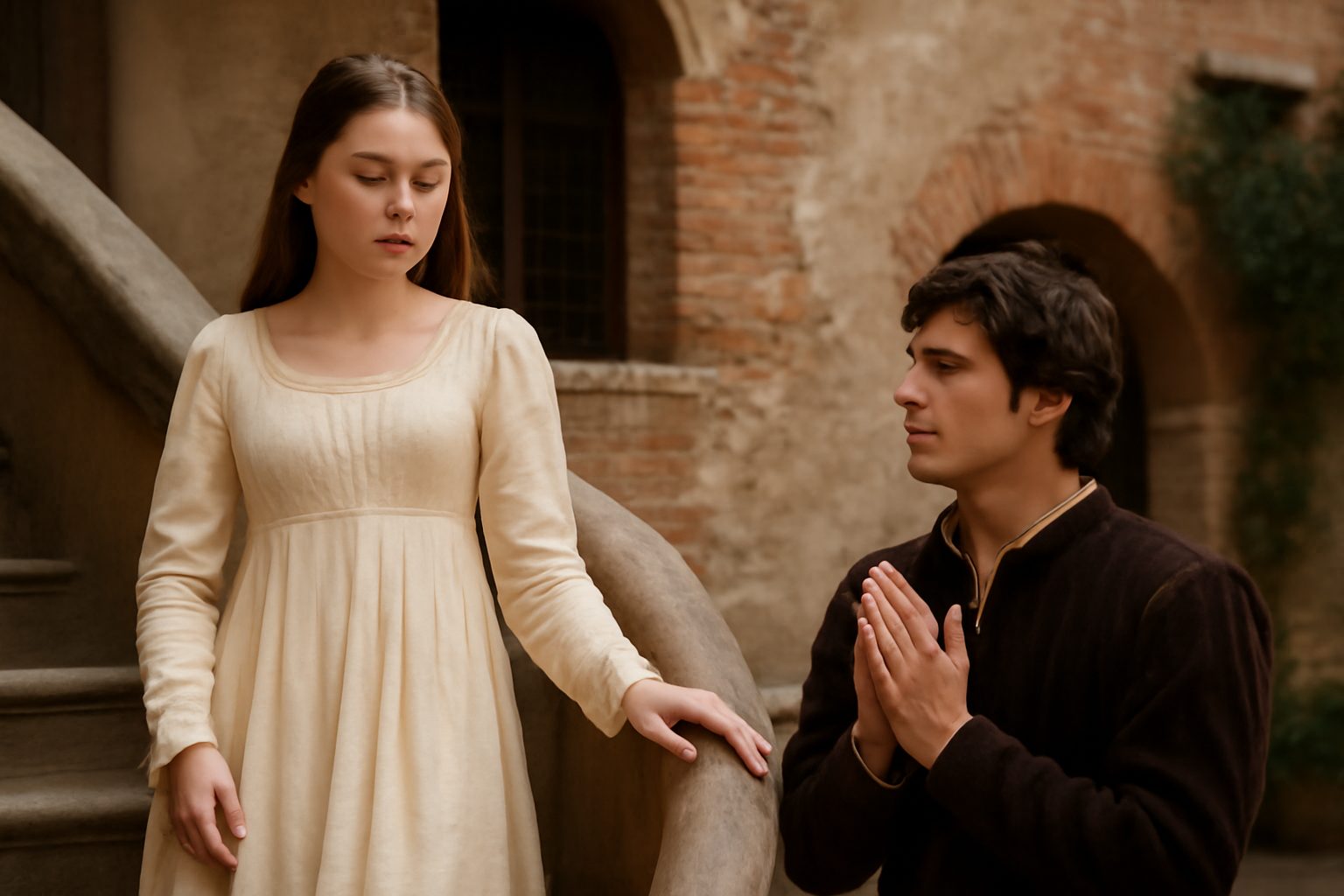
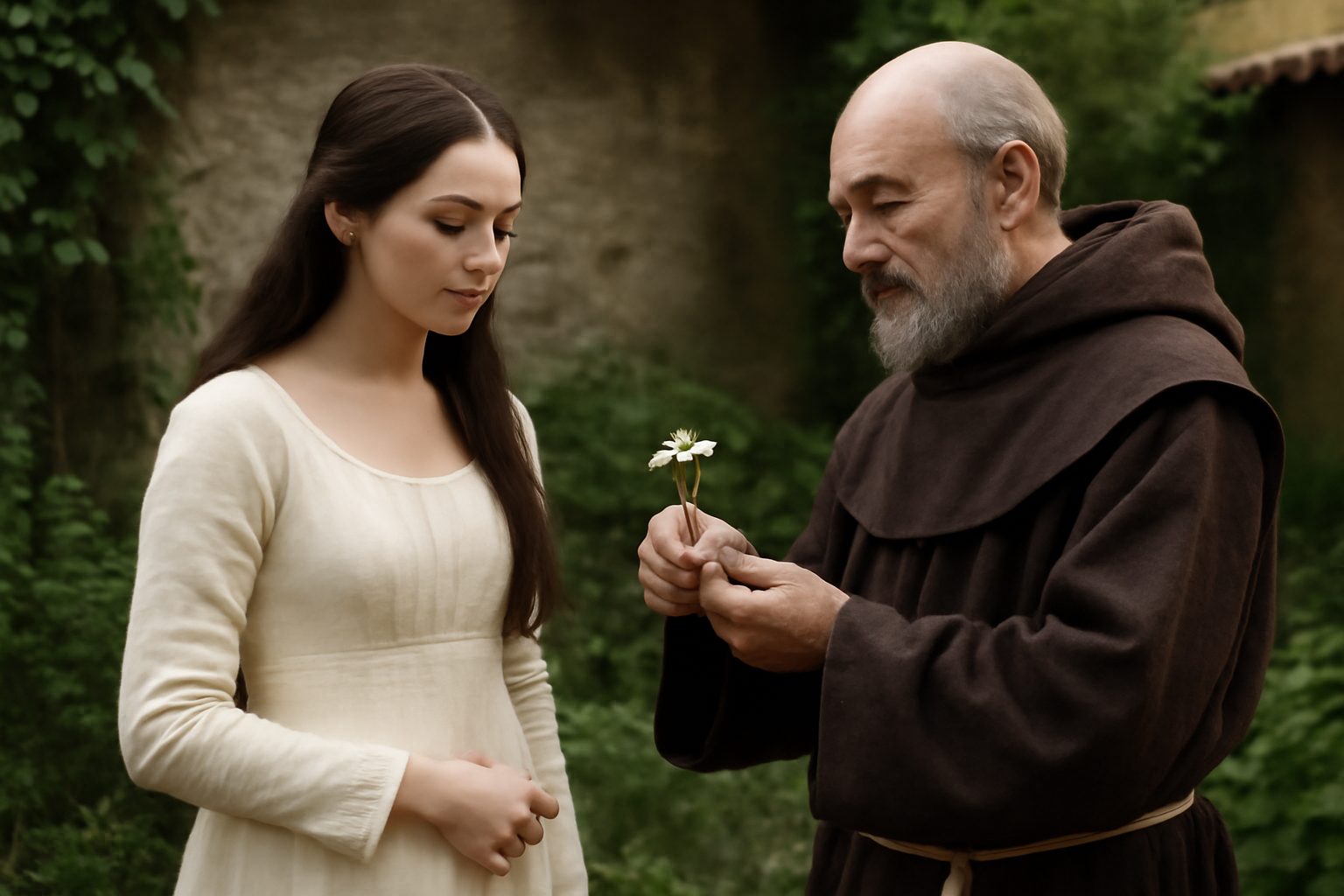
In Act 2, Scene 3 of Romeo and Juliet, Friar Laurence speaks these words to Romeo, who has just revealed his sudden shift in affection from Rosaline to Juliet. The friar, surprised by Romeo's quick change of heart, questions his sincerity and asks him to confirm his new love. This moment highlights the impulsive nature of Romeo's emotions and the friar's cautious skepticism.
Friar Laurence: "And art thou changed? pronounce this sentence then,"
In modern day english, we would say:
So, you’re different now? Then say this line and prove it.
Frequently Asked Questions
What is Friar Laurence asking in this line from Romeo and Juliet?
Friar Laurence is asking if Romeo has truly changed his mind or feelings, and wants him to confirm it by saying so out loud.
Connections to other verses:
Connections to "And art thou changed? pronounce this sentence…"
This line, spoken by Friar Laurence, reflects his astonishment at Romeo's sudden shift in affection from Rosaline to Juliet. It connects thematically and contextually with several other verses in the scene.
Expressions of Change and Surprise
The Friar's shock is echoed in Holy Saint Francis, what a change is here!, where he further emphasizes the transformation he observes in Romeo. Similarly, Hath wash'd thy sallow cheeks for Rosaline! underscores the physical and emotional change, noting Romeo's renewed vigor.
Questioning Romeo's Constancy
The Friar's doubt about Romeo's change is tied to So soon forsaken? young men's love then lies, which questions the sincerity and fleeting nature of young love. This skepticism is reinforced by Thy love did read by rote and could not spell, suggesting Romeo's previous love was superficial.
References to Past Love and Suffering
The line connects to Thou and these woes were all for Rosaline, reminding Romeo of his recent despair. Additionally, Thy old groans ring yet in my ancient ears highlights how Romeo's past lamentations are still vivid to the Friar.
Contrast with New Love
Romeo's defense of his new love is seen in I pray thee, chide not; she whom I love now, showing his earnestness. The Friar's eventual support is captured in In one respect I'll thy assistant be, indicating his decision to help despite initial doubts.
Philosophical Context
The theme of change aligns with the Friar's earlier meditation on dualities in nature, such as Poison hath residence and medicine power, illustrating how substances—and by extension, emotions—can transform based on application.