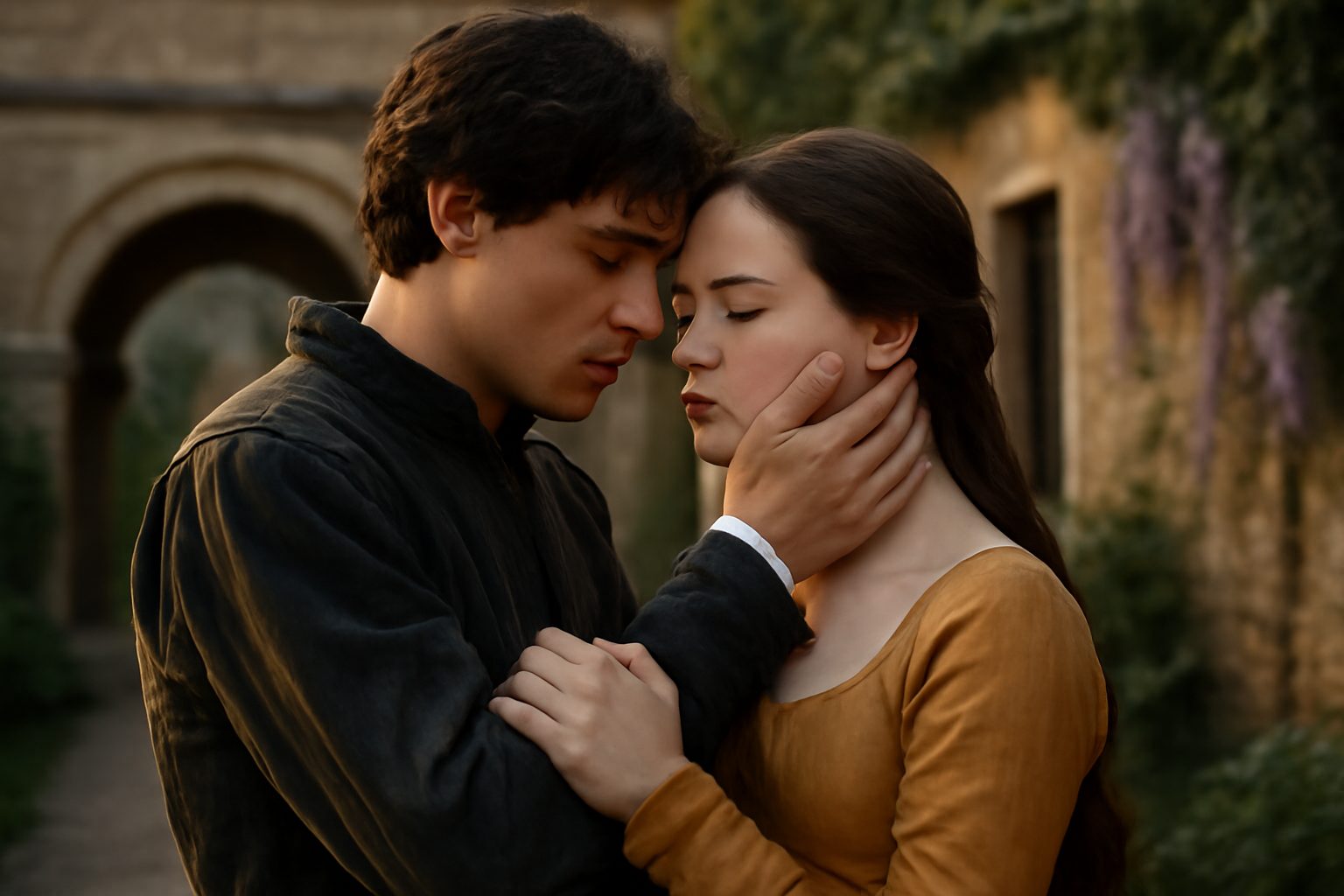
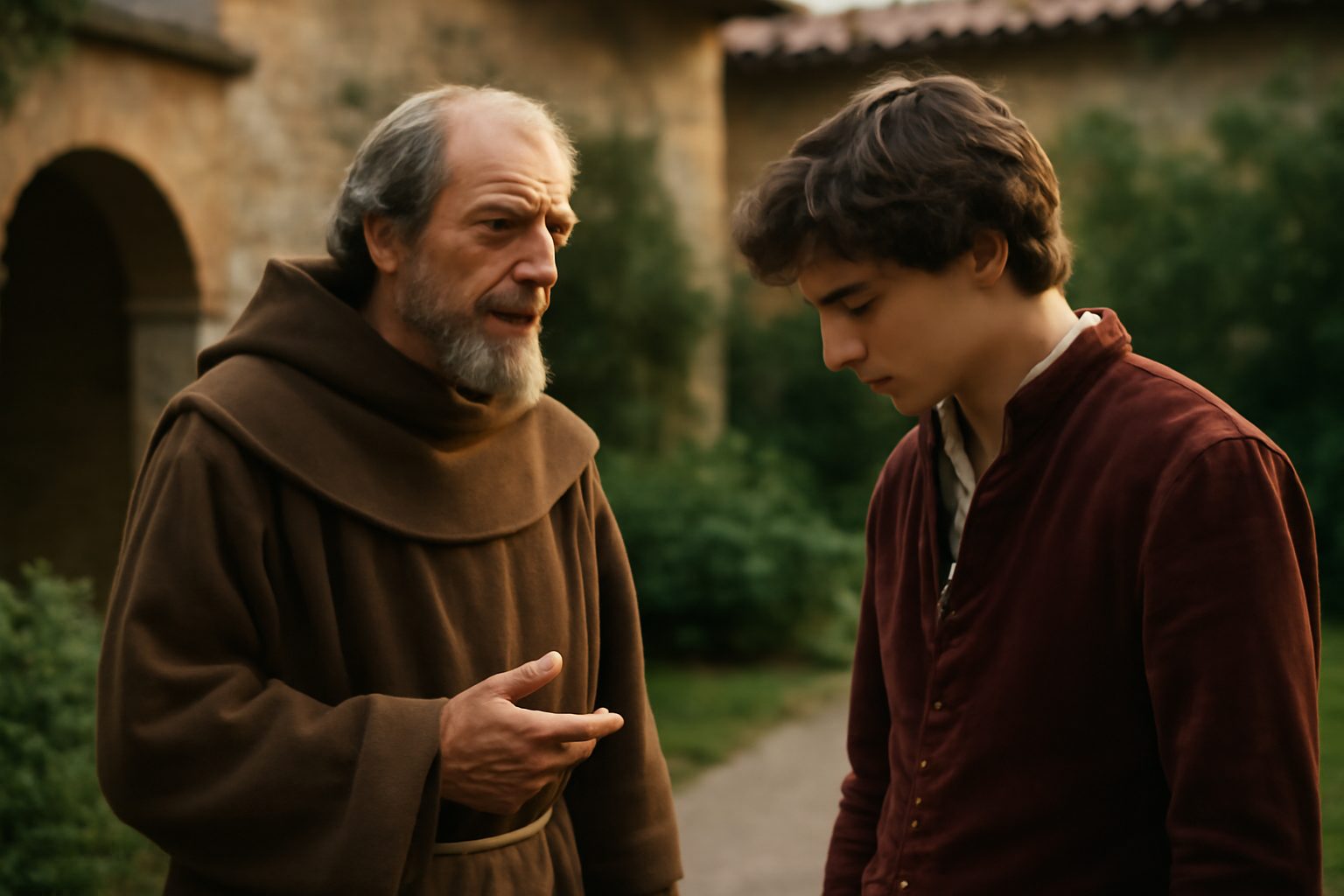
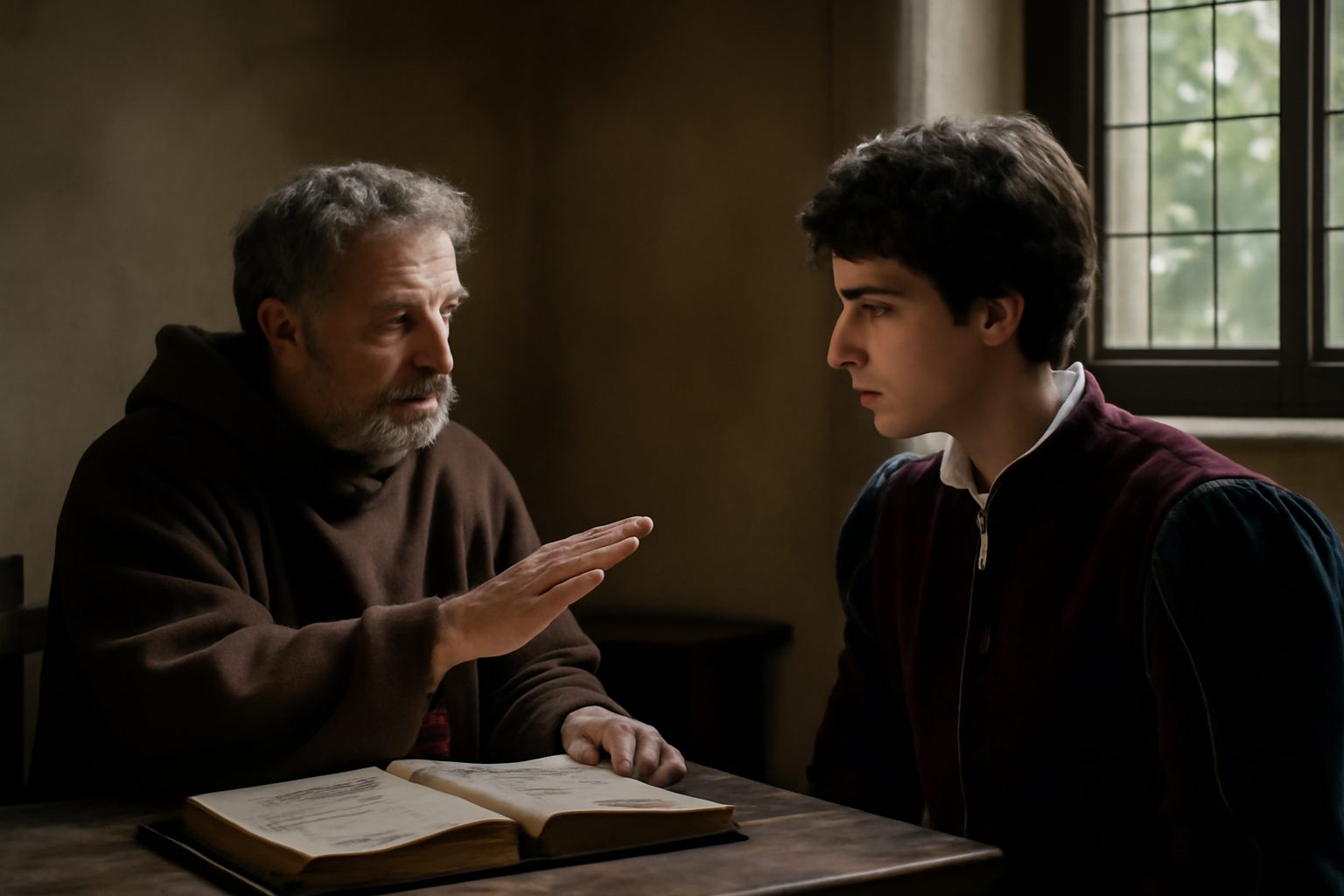
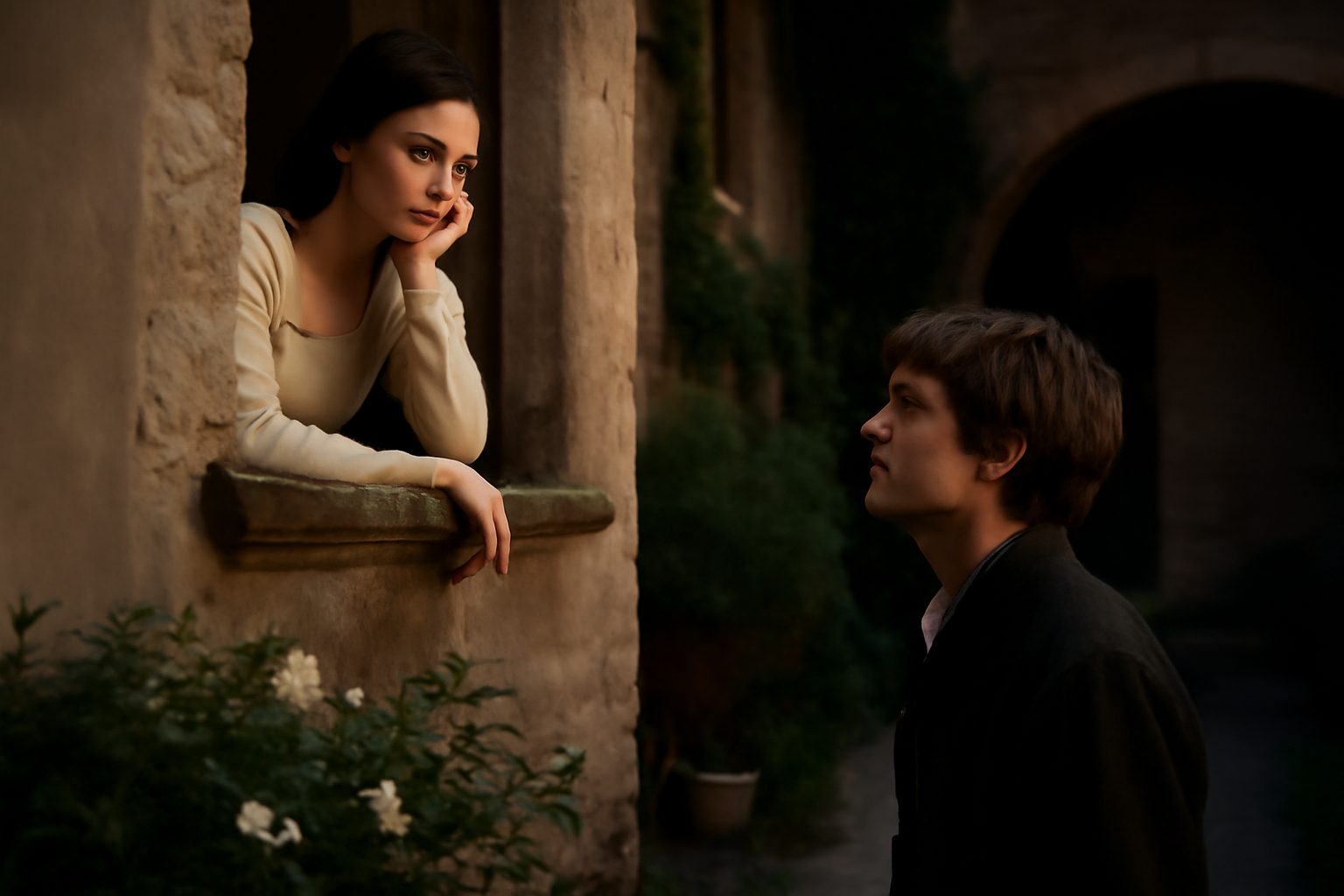
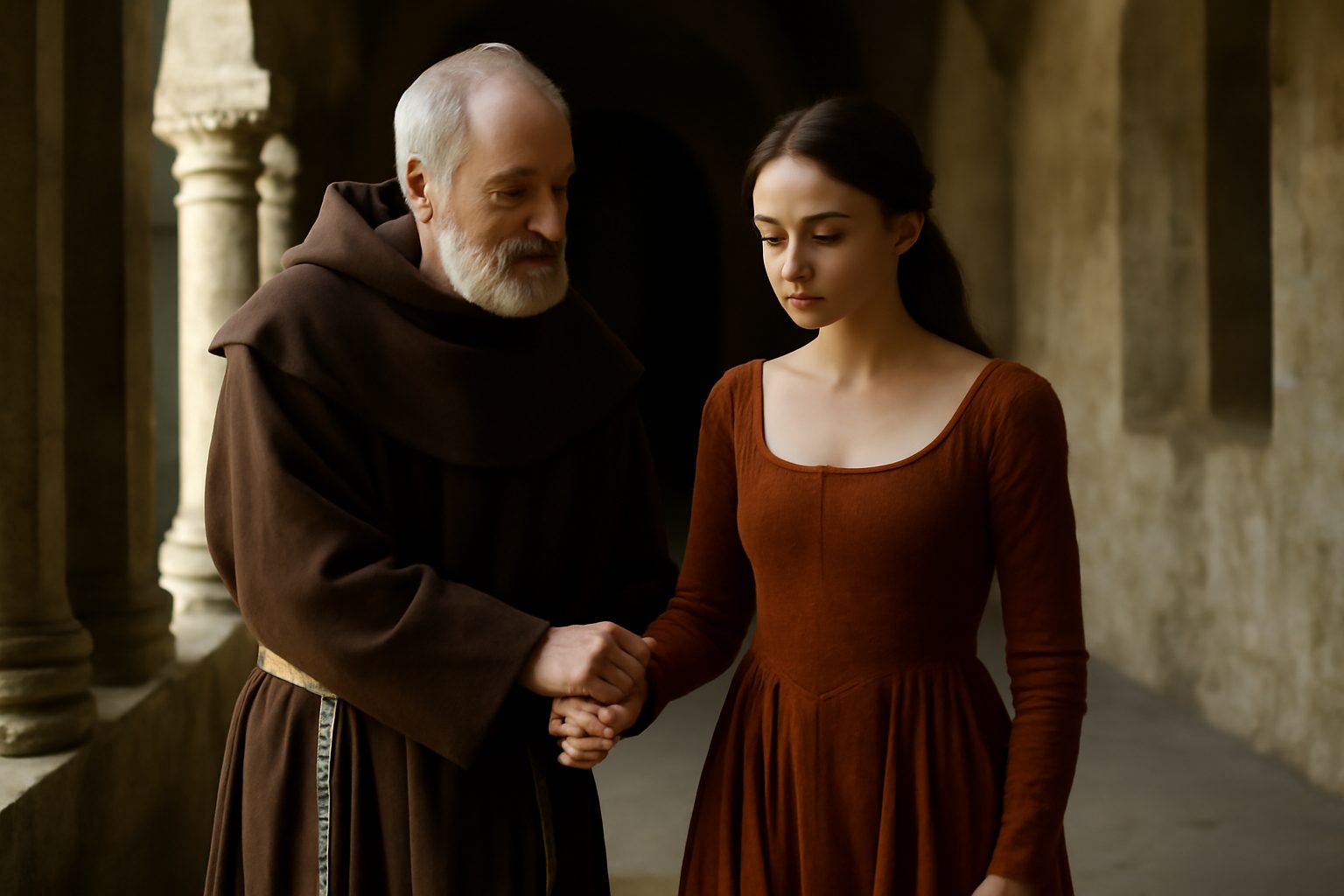
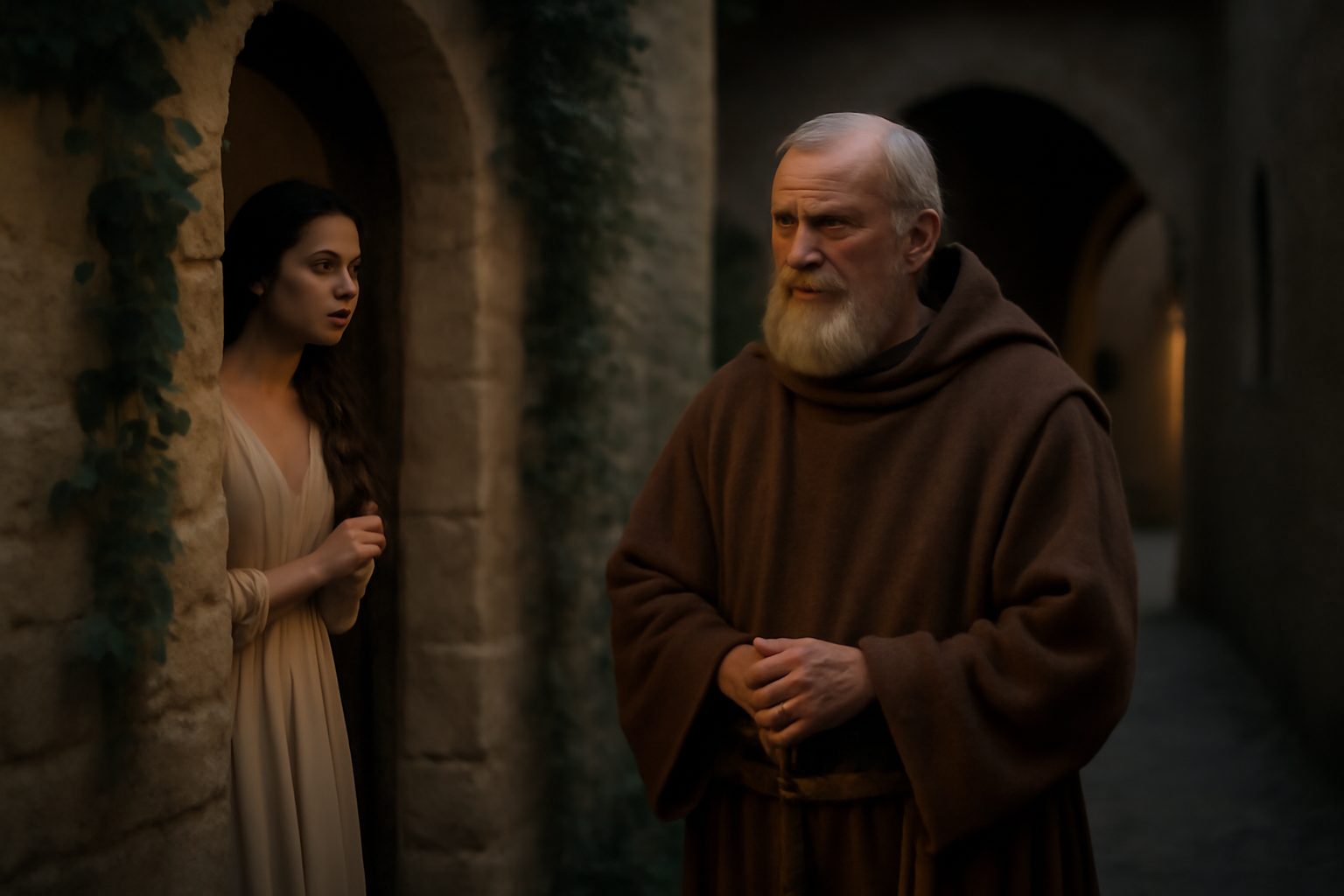
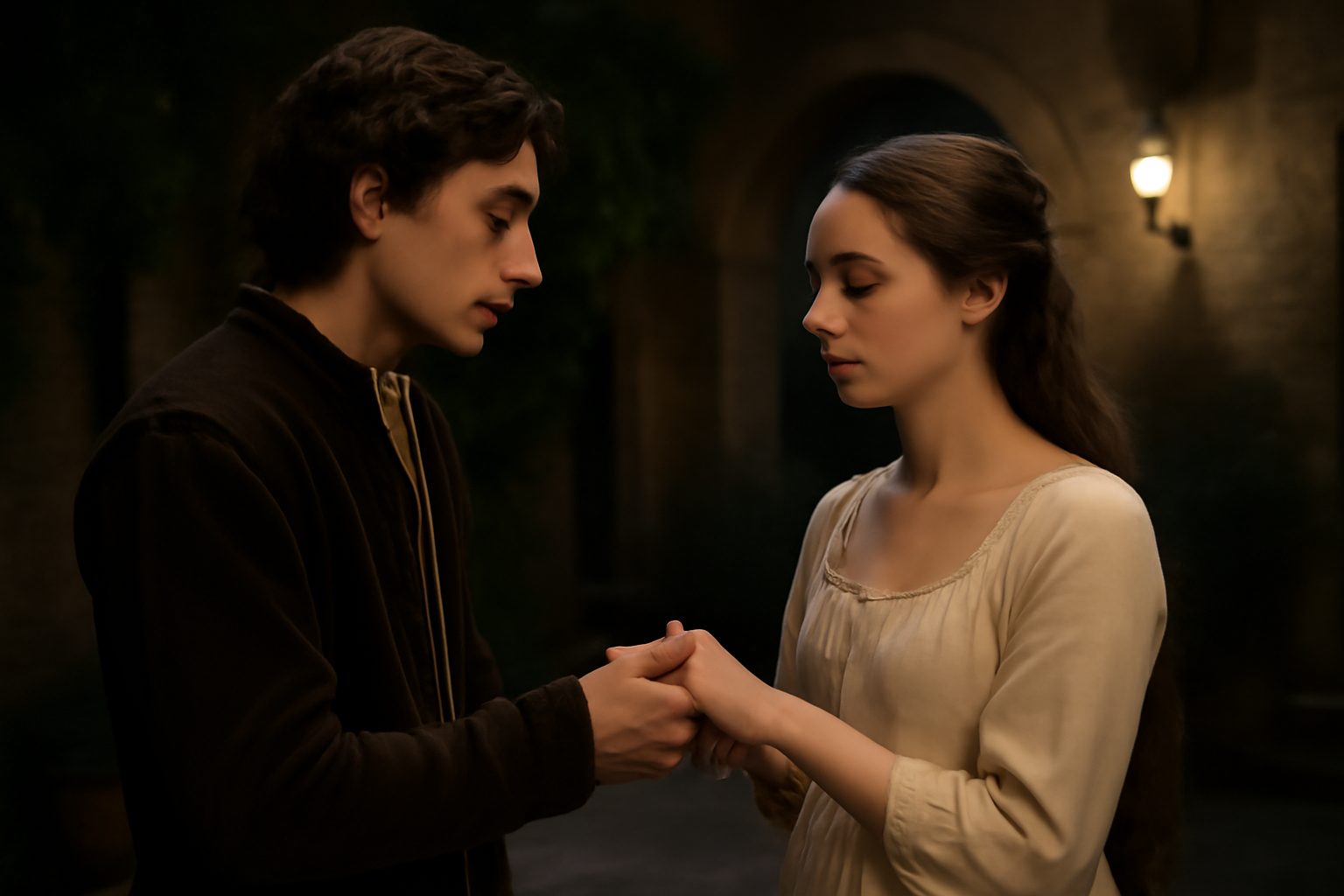
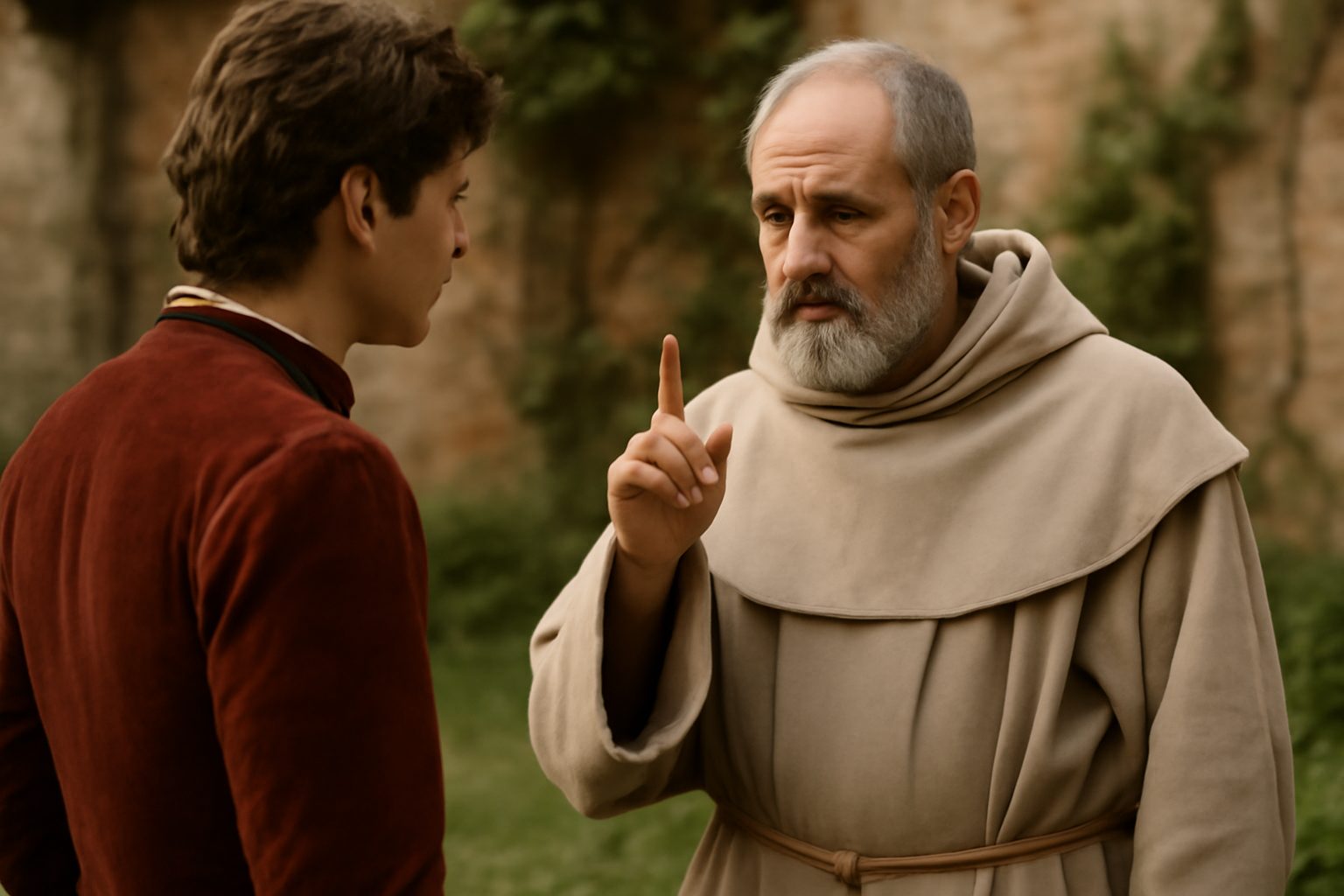
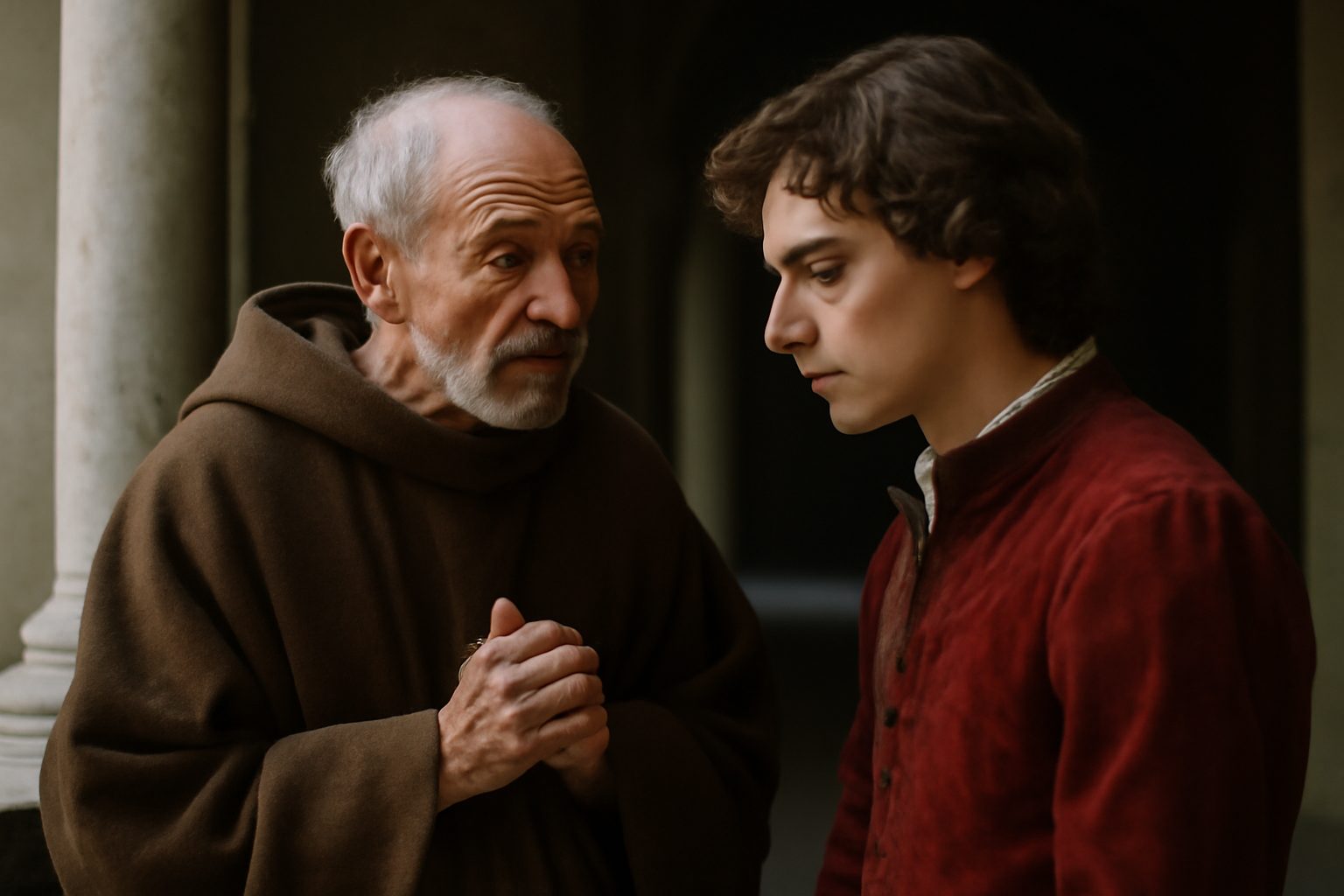
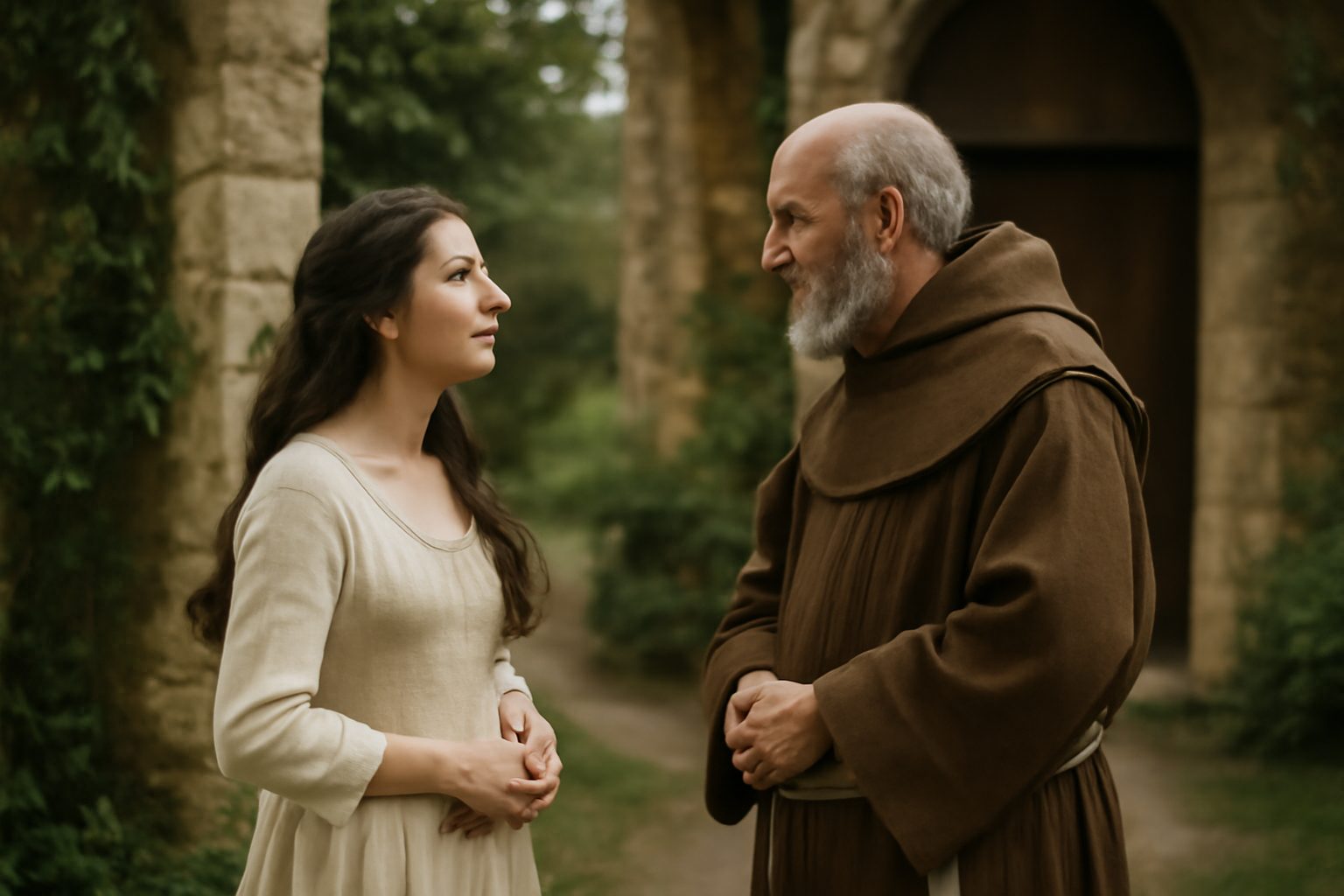
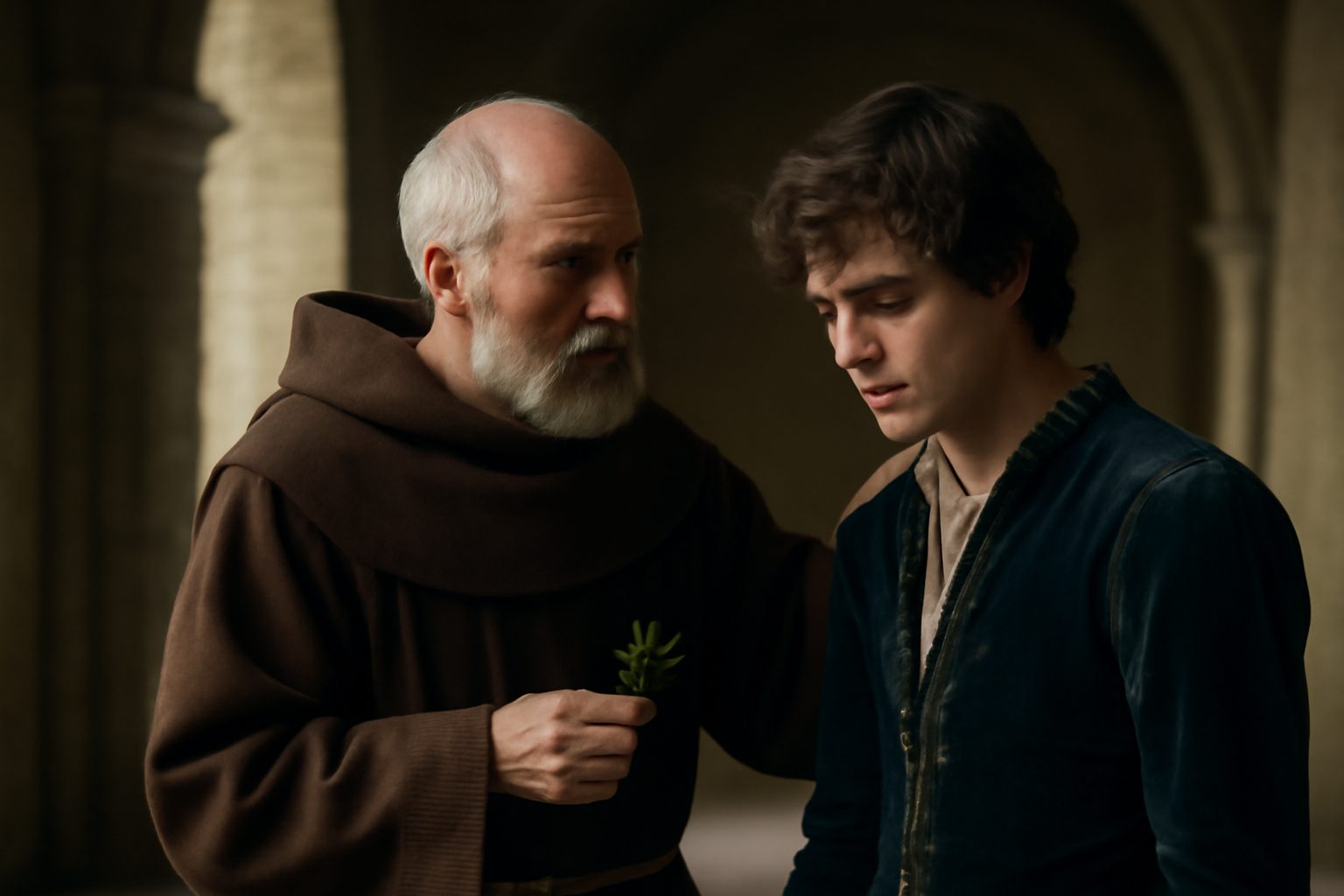
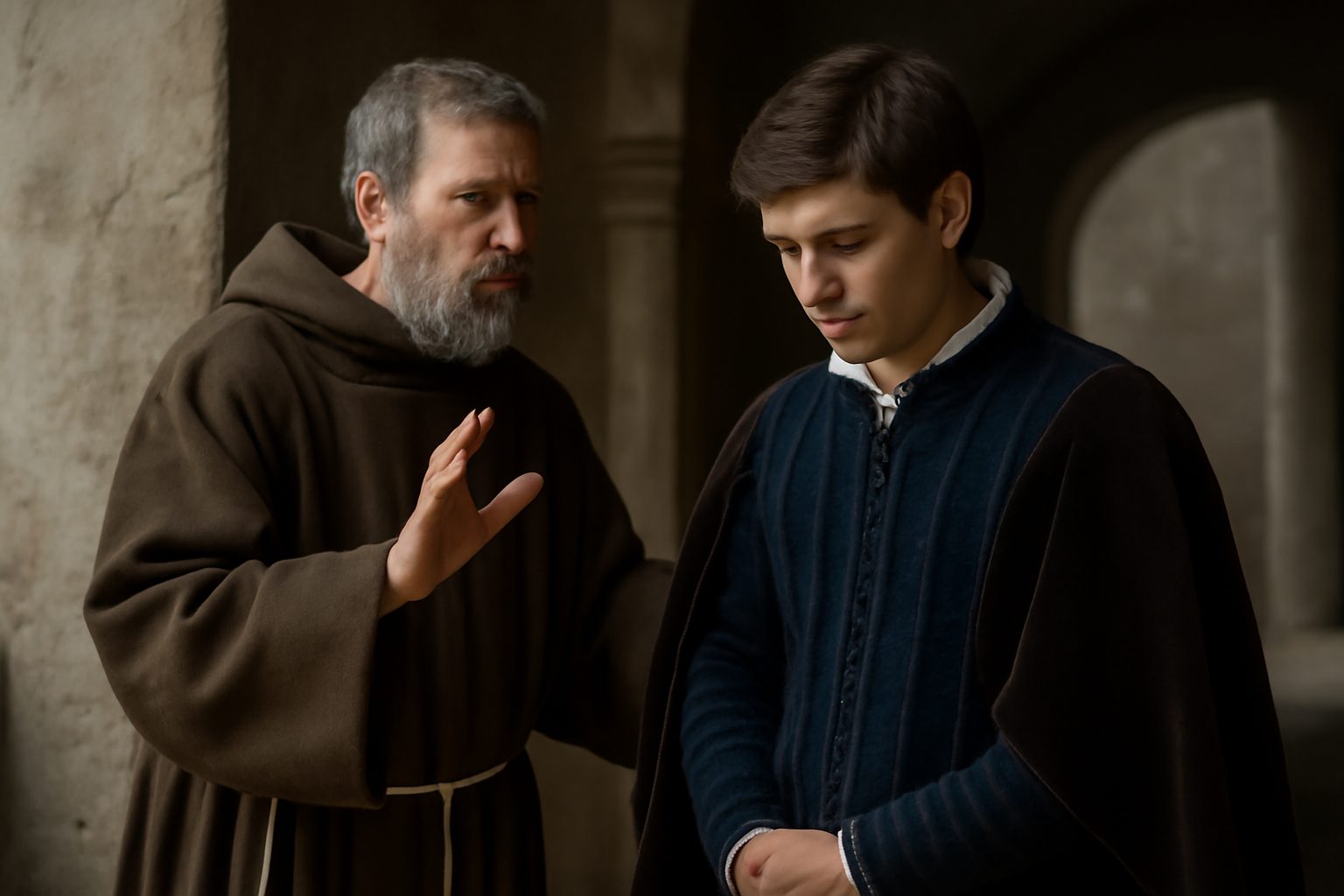
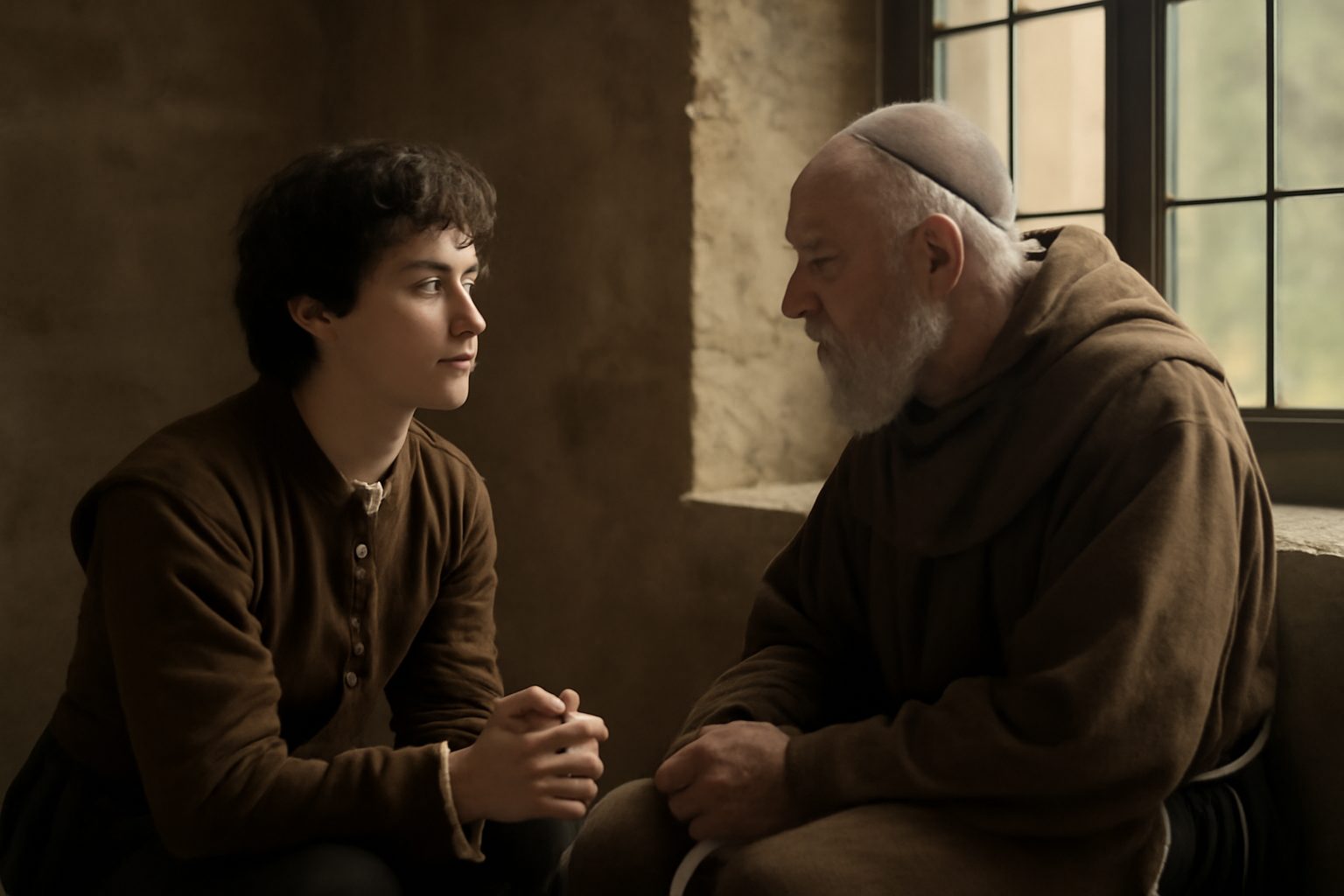
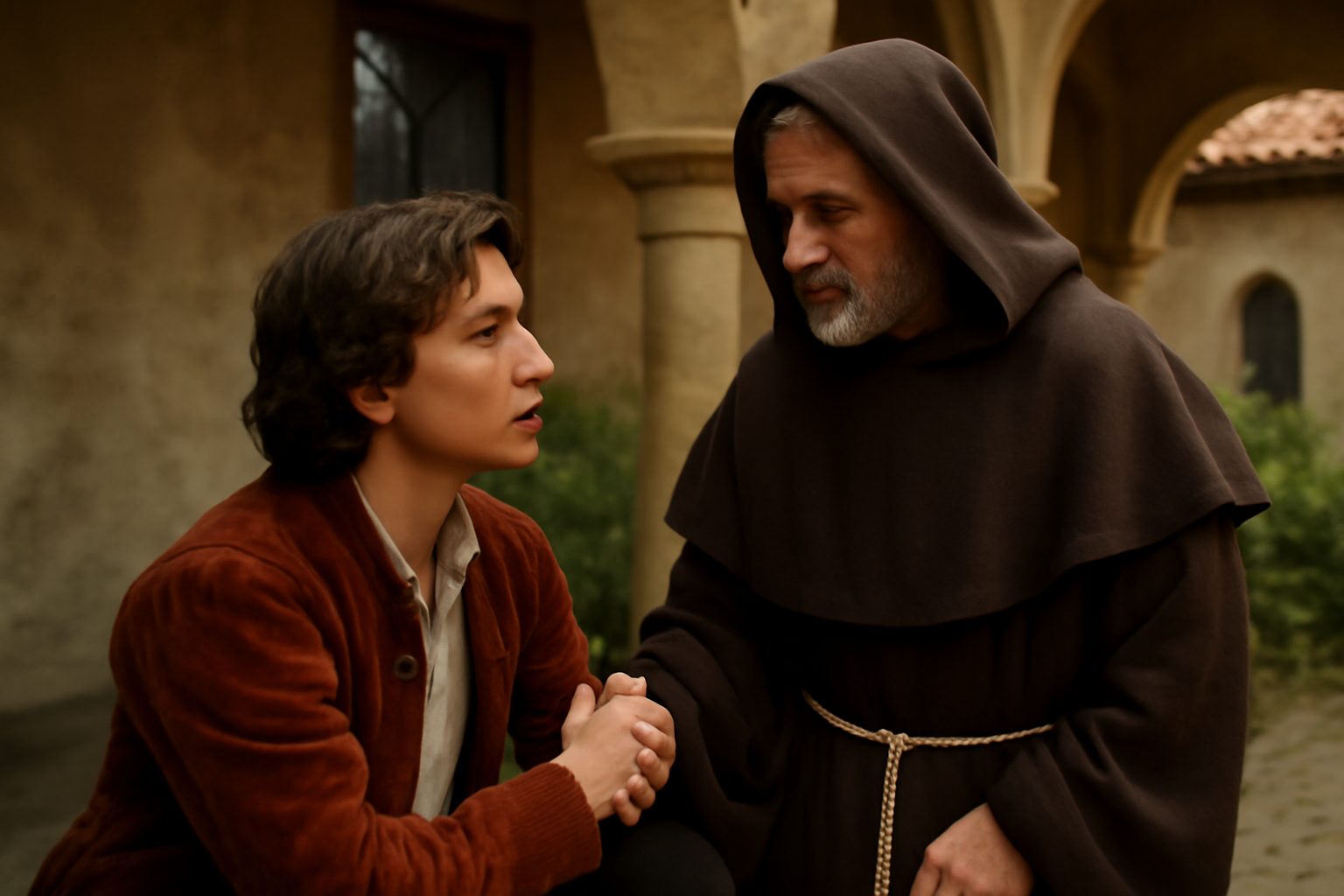
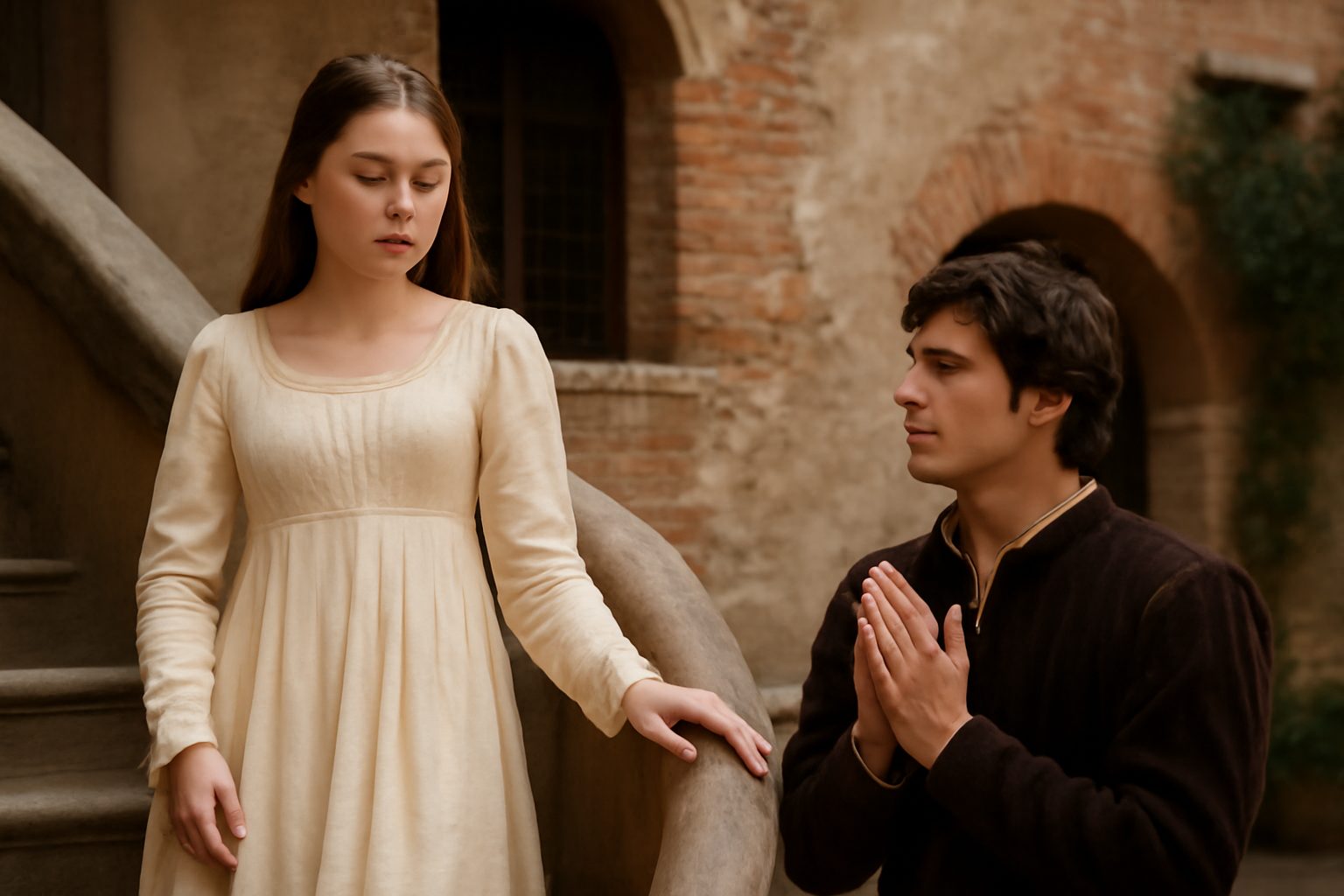
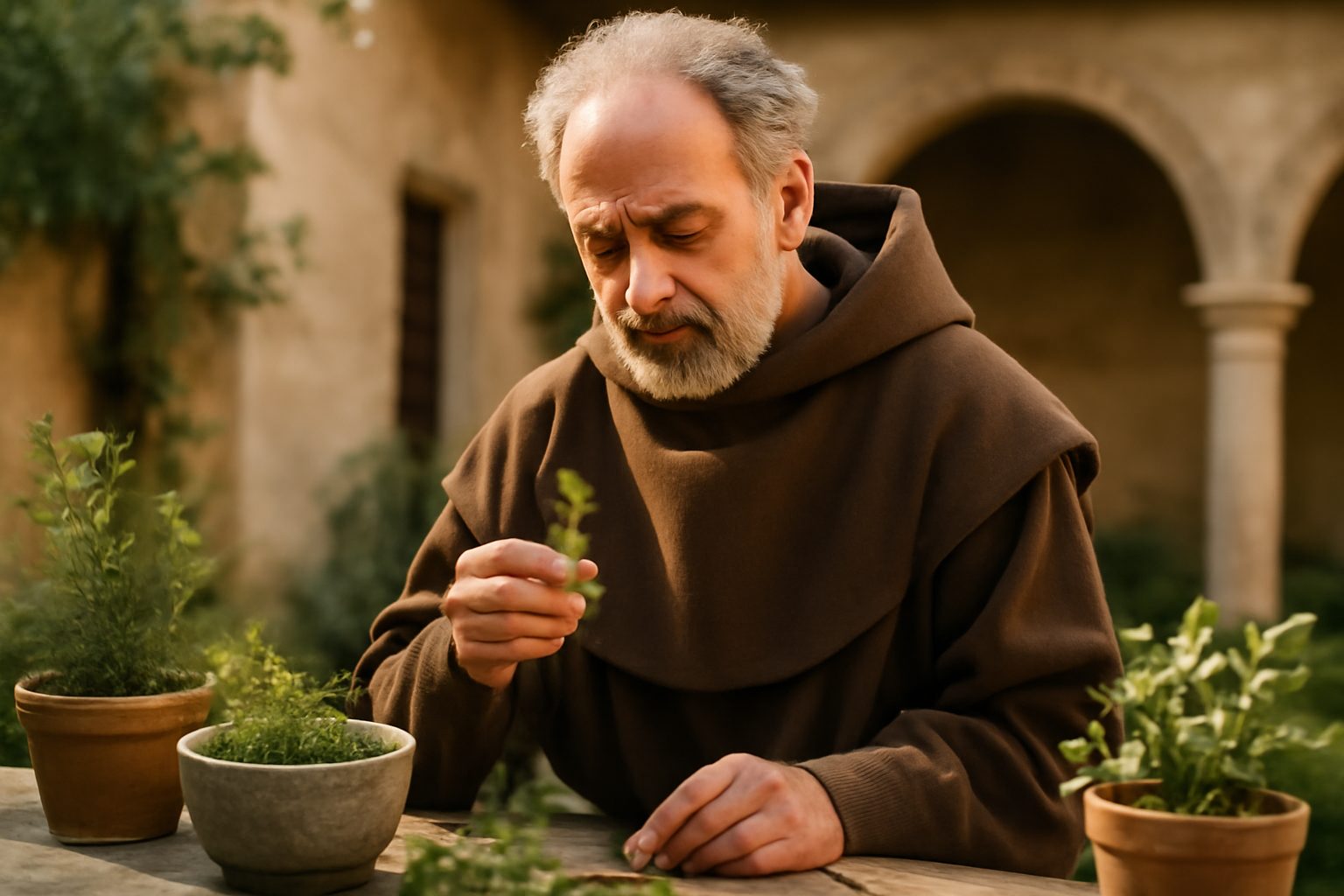
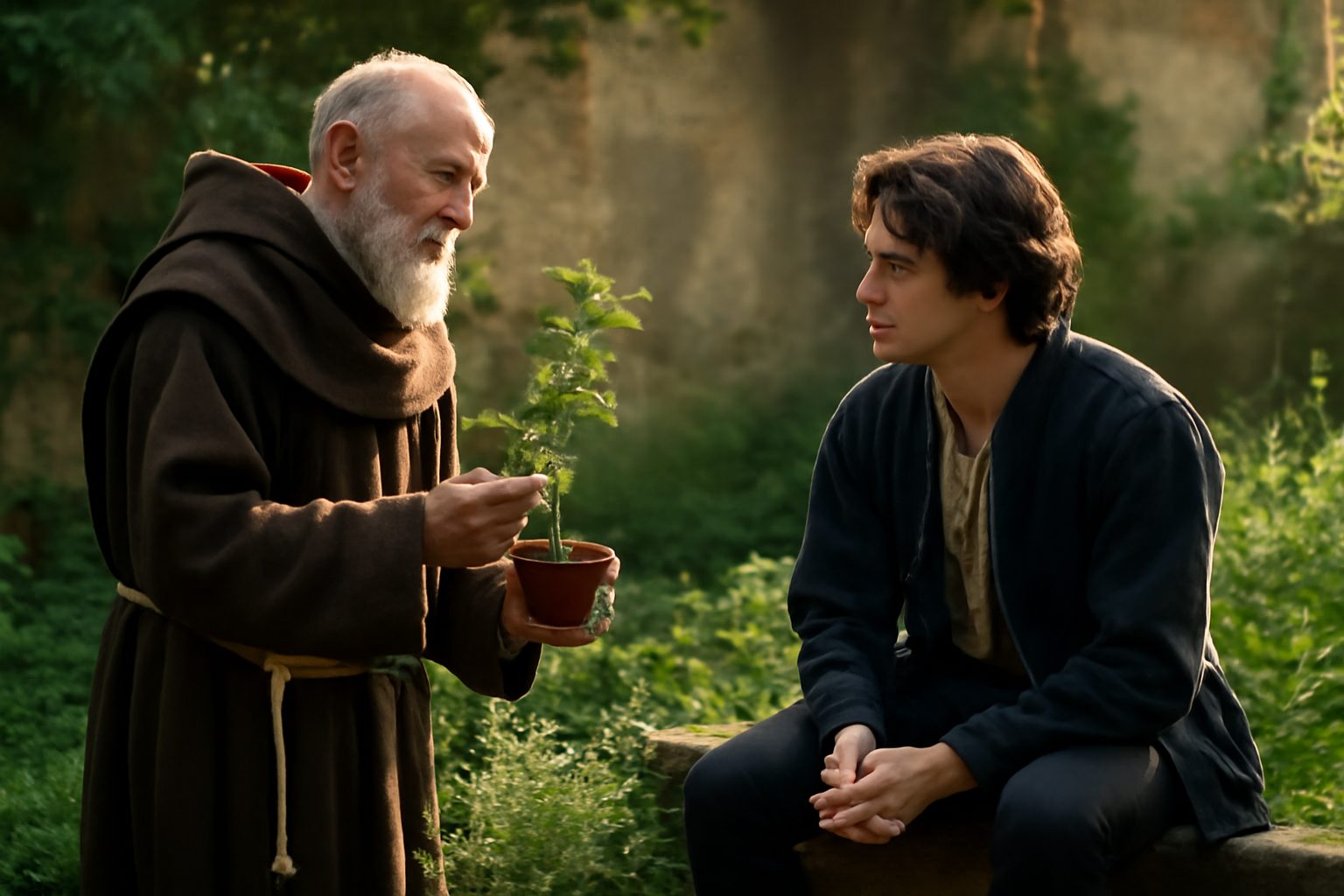
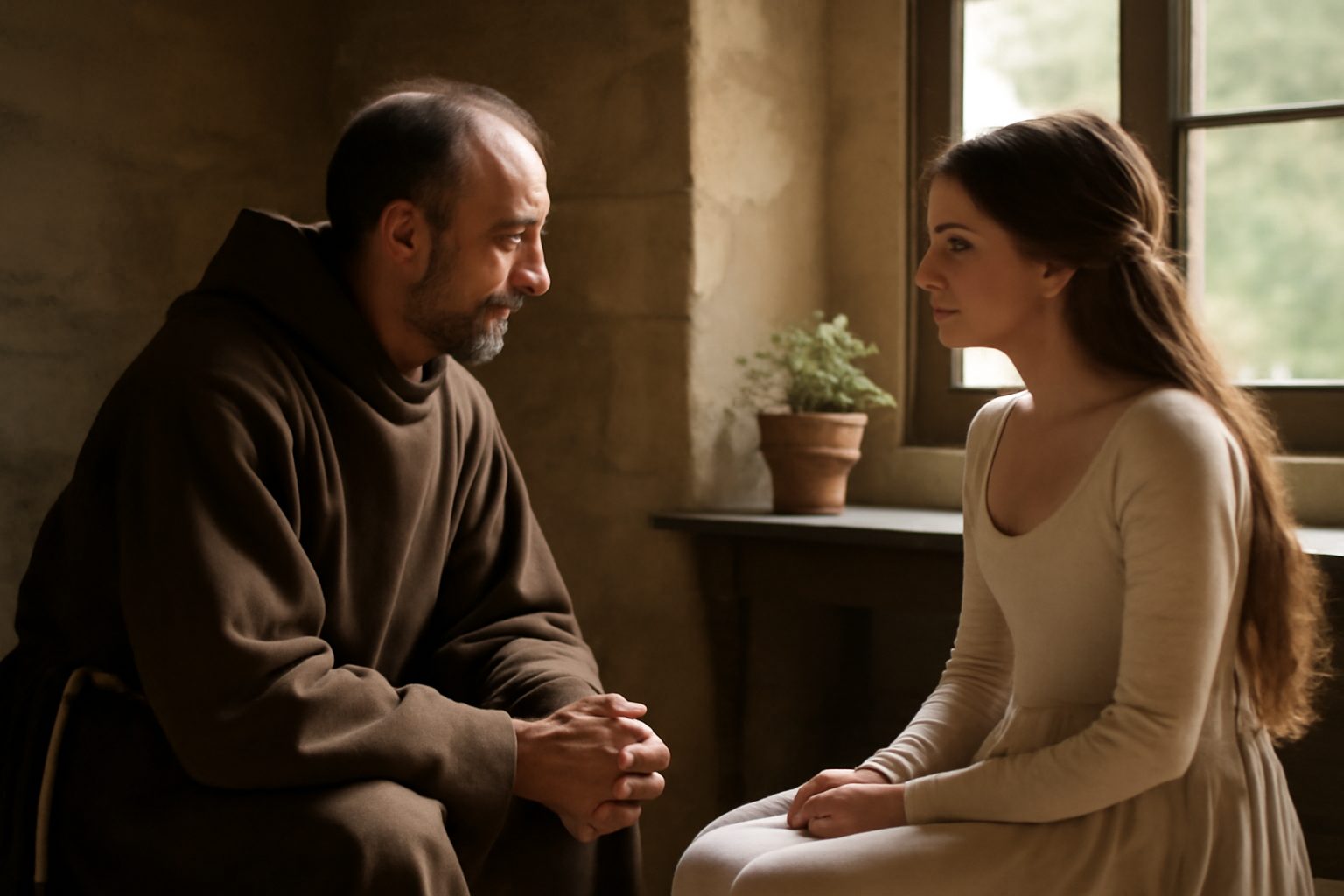
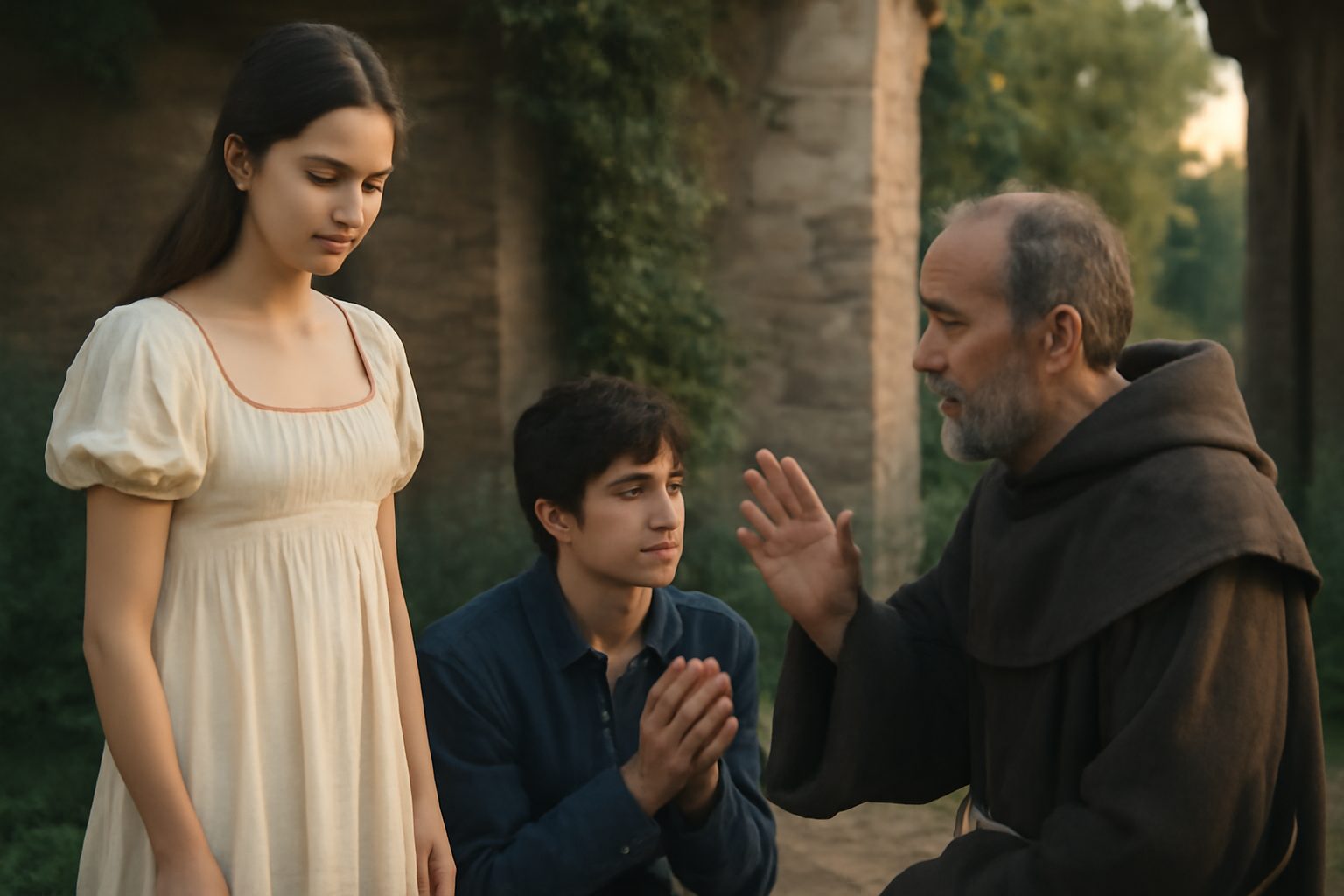
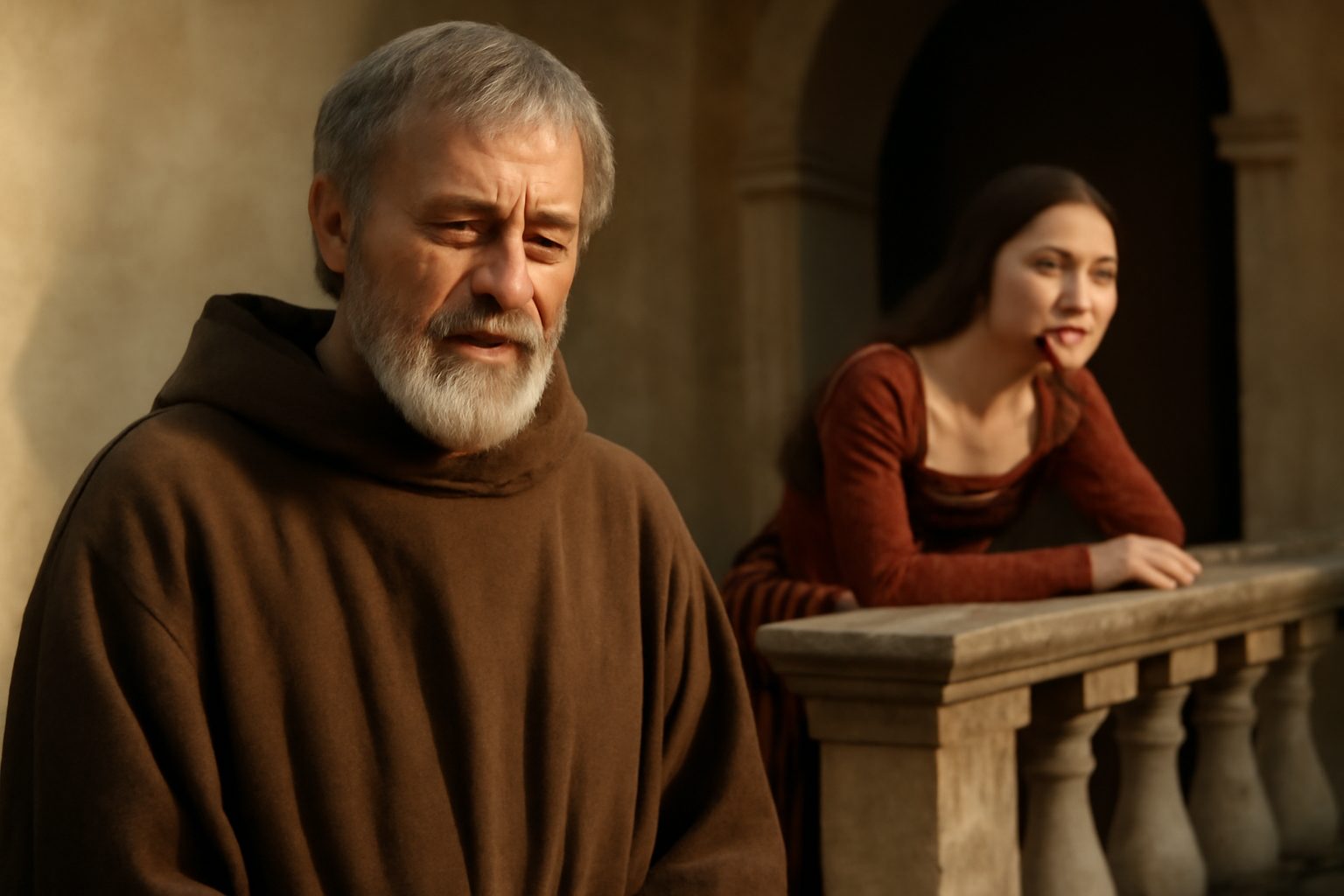
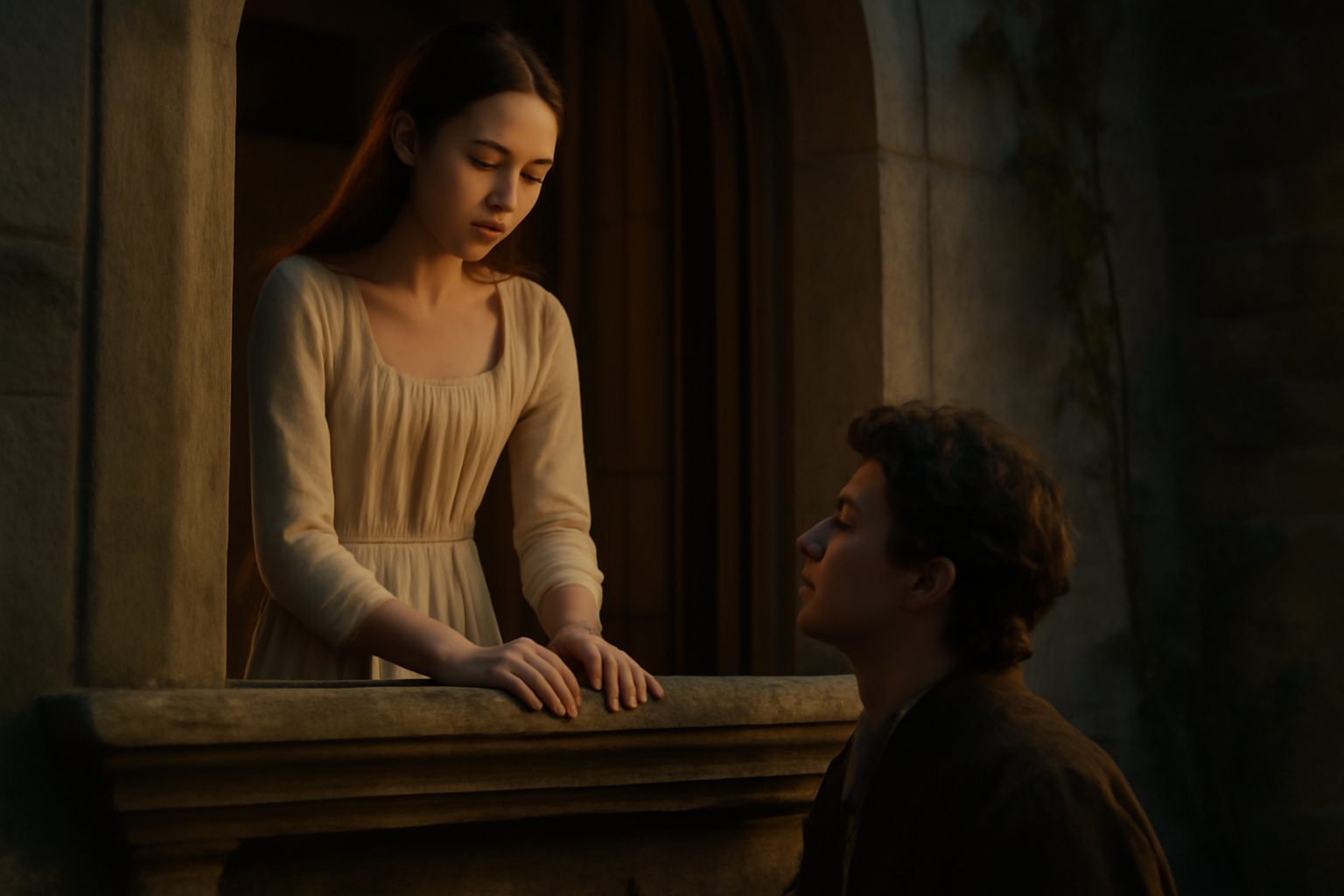
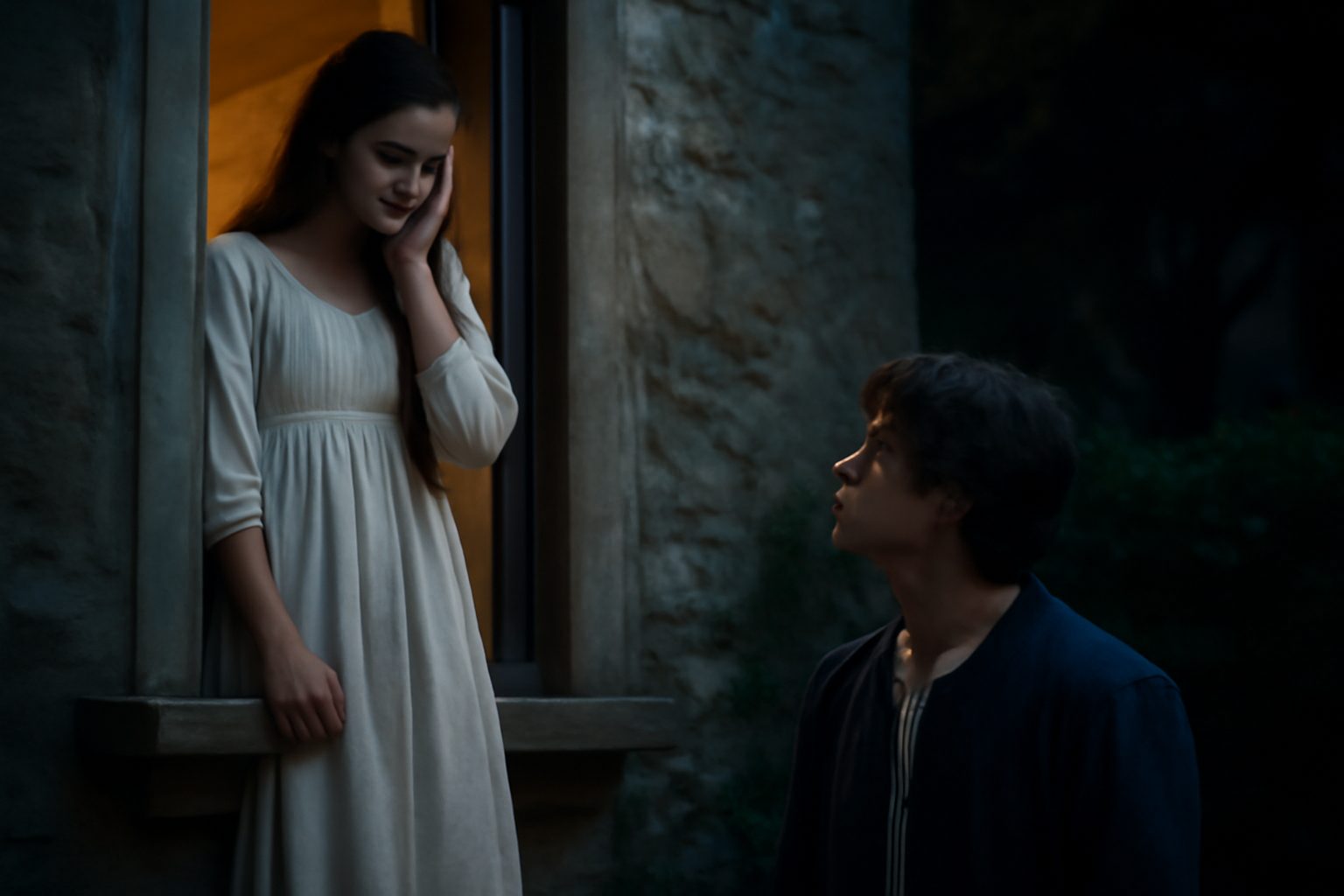
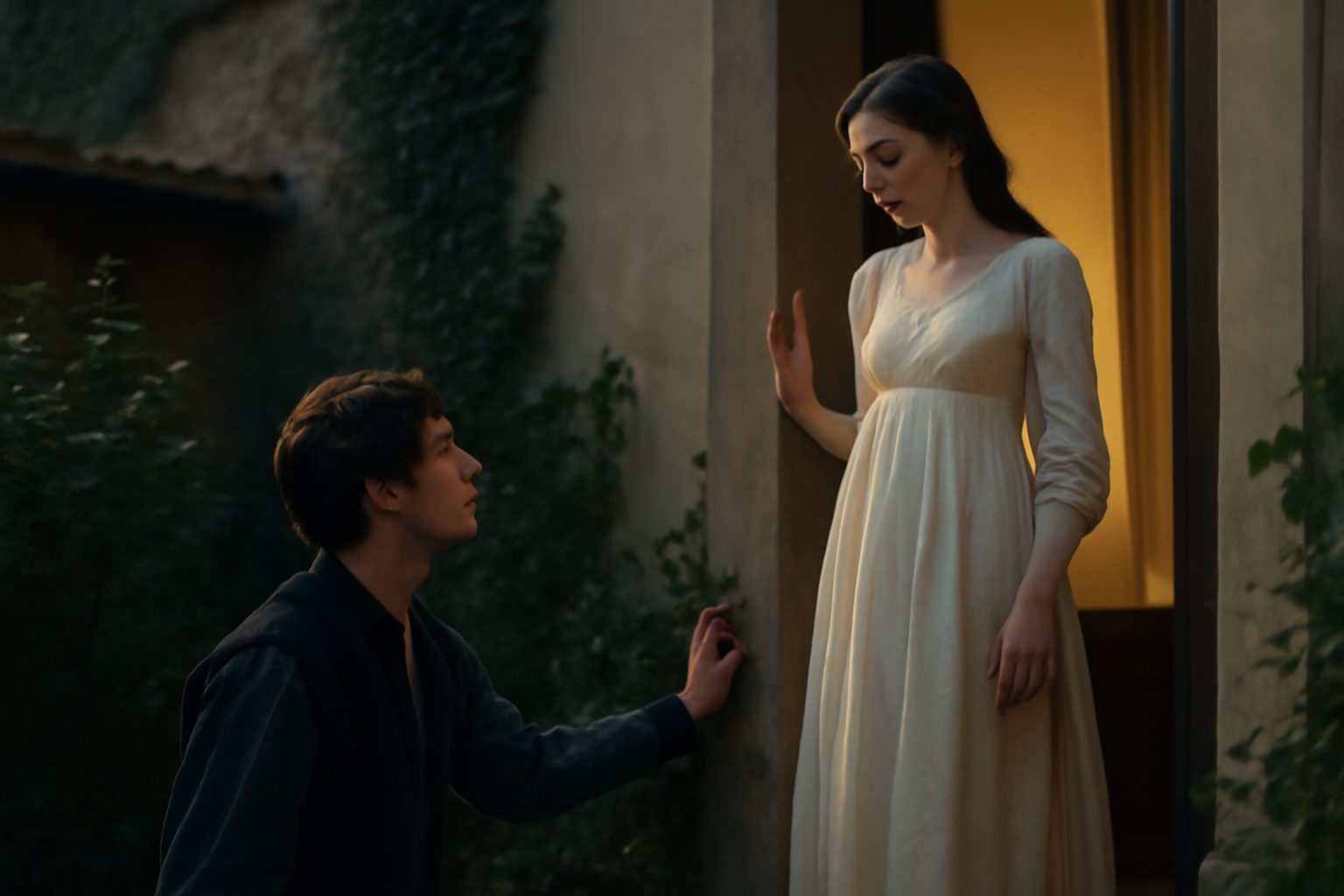
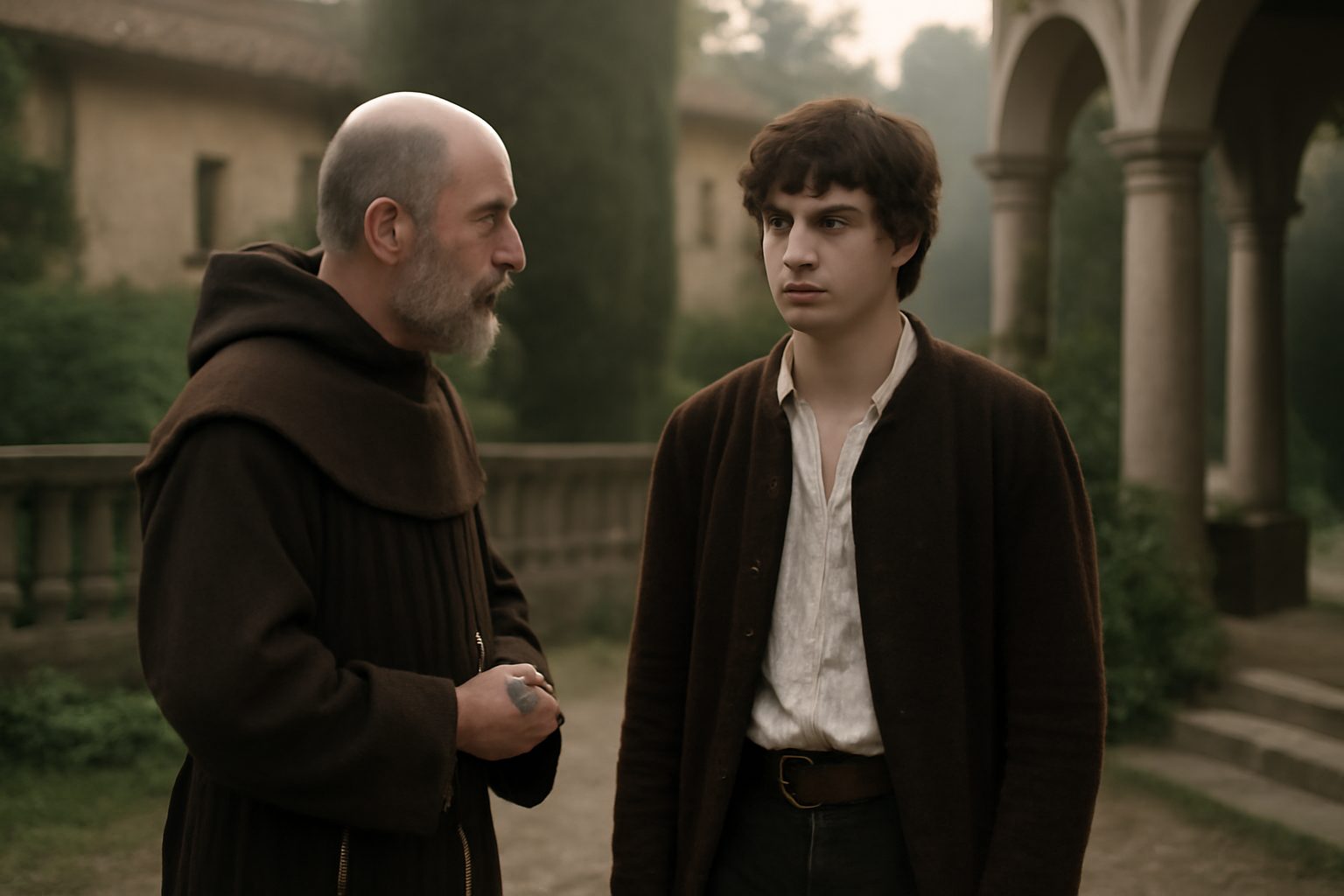
In Act 2, Scene 3 of Romeo and Juliet, Friar Laurence is surprised by Romeo's sudden shift in affection from Rosaline to Juliet. As Romeo excitedly shares his newfound love, the Friar responds with cautious skepticism, teasing that he will explain his thoughts before Romeo even asks. This line captures the Friar's playful yet wary tone as he prepares to counsel the impulsive young lover.
Romeo: "I'll tell thee, ere thou ask it me again."
In modern day english, we would say:
I’ll tell you what you want to know before you even ask me again.
Frequently Asked Questions
What does Romeo mean when he says he will tell something before being asked again?
Romeo means he is eager to share his thoughts or news without waiting for someone to ask him about it again.
Connections to other verses:
Connections of "I'll tell thee, ere thou ask it me again." to Other Verses in Act 2 Scene 3
The verse "I'll tell thee, ere thou ask it me again." is spoken by Romeo to Friar Laurence, indicating Romeo's eagerness to share his news without waiting for further prompting. This line connects thematically and contextually to several other verses in the scene.
Connection to Friar Laurence's Inquiry
This line directly responds to Friar Laurence's question in "That's my good son: but where hast thou been, then?", showing Romeo's anticipation of the Friar's curiosity about his whereabouts and state of mind.
Reflection of Romeo's Changed Affections
Romeo's haste to explain himself underscores his shift from lovesickness for Rosaline, as referenced in "I have forgot that name, and that name's woe.", to his new love for Juliet. The Friar's astonishment at this change is captured in "Holy Saint Francis, what a change is here!".
Link to the Theme of Swiftness
Romeo's impulsive nature is echoed in his later line, "O, let us hence; I stand on sudden haste.", which contrasts with Friar Laurence's caution in "Wisely and slow; they stumble that run fast.".
Connection to the Secret Marriage Plan
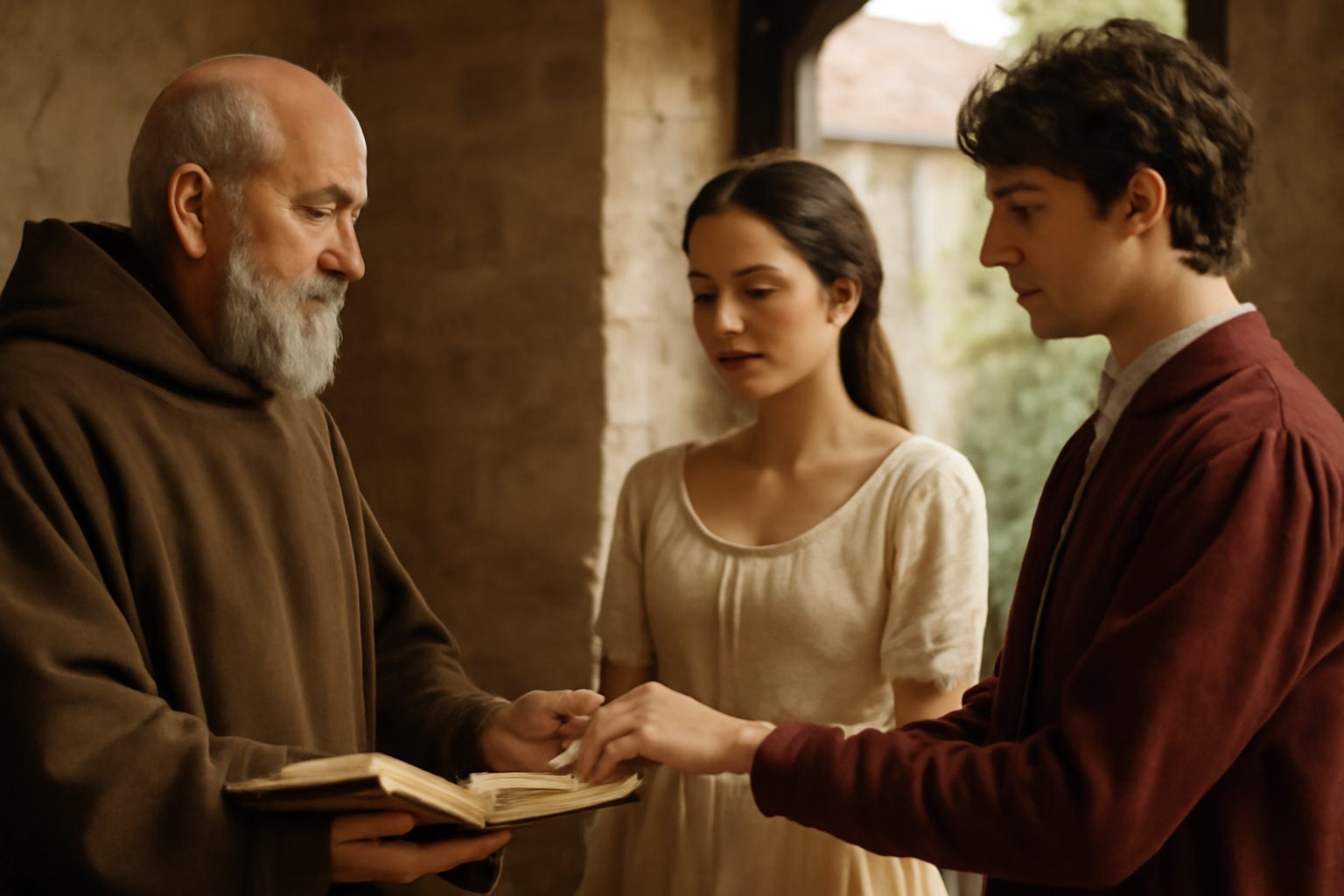
Romeo's urgency here leads directly into his revelation of his love for Juliet and his plea for the Friar's assistance in marrying them, as seen in "I'll tell thee as we pass; but this I pray," and "That thou consent to marry us to-day.".