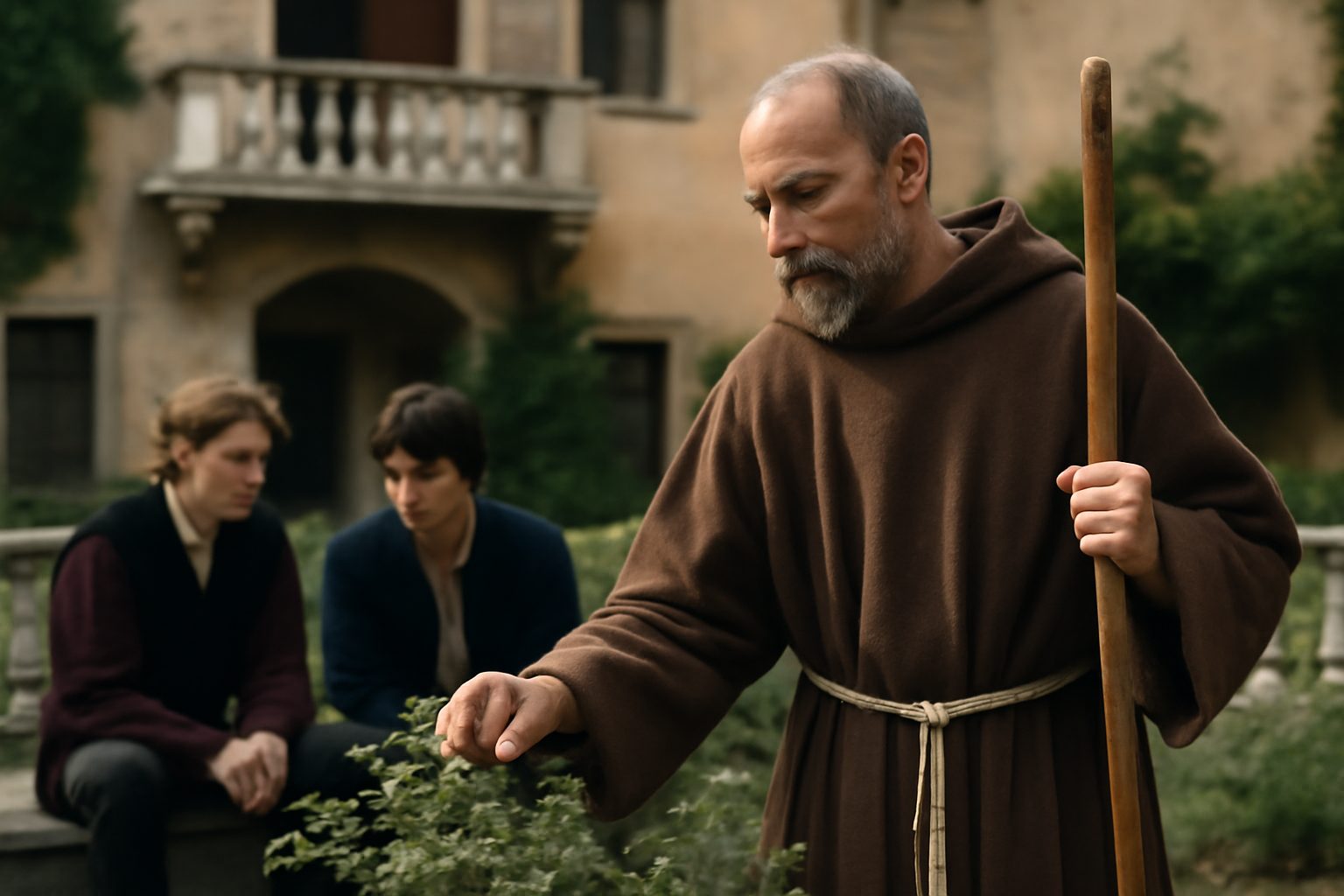
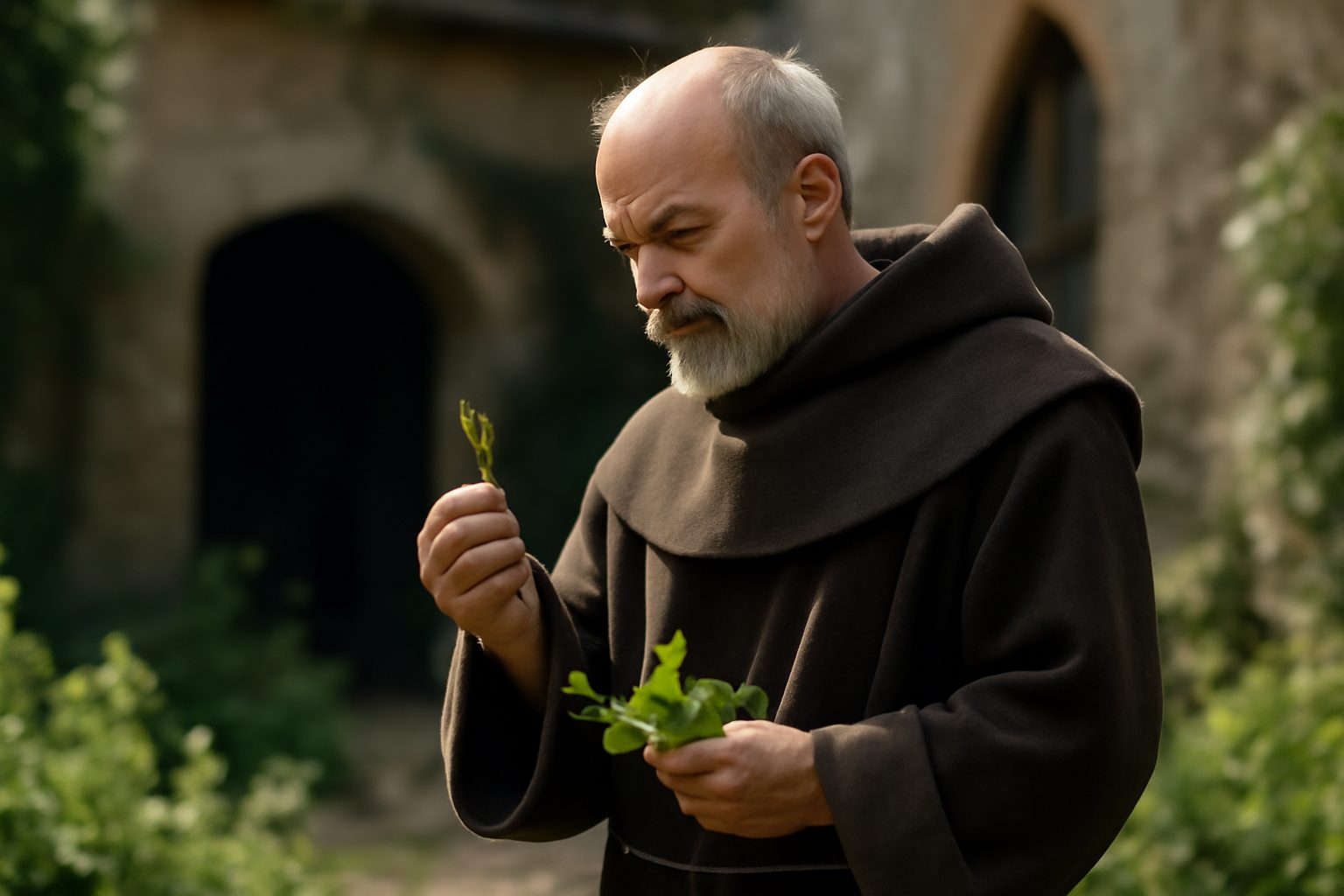
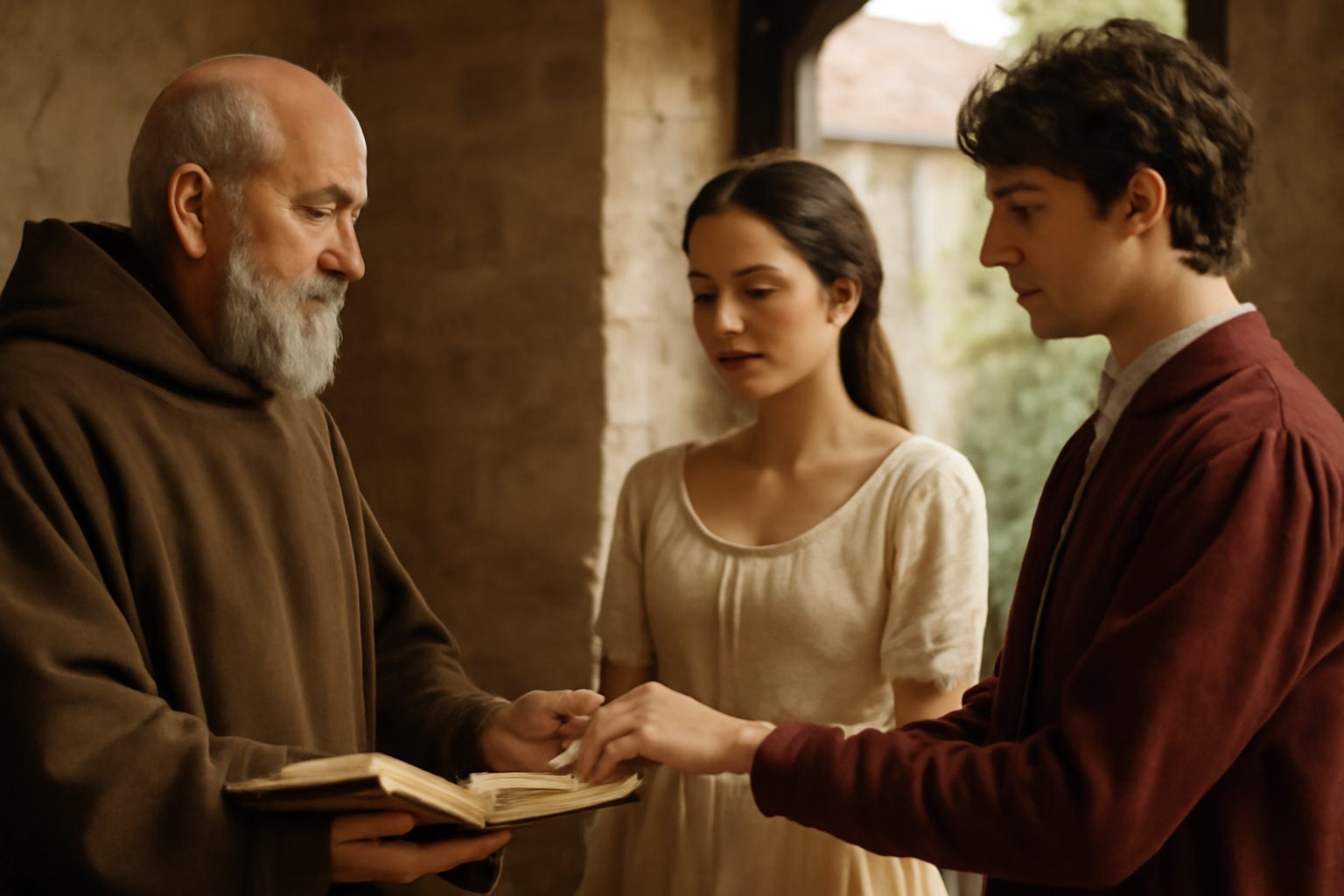
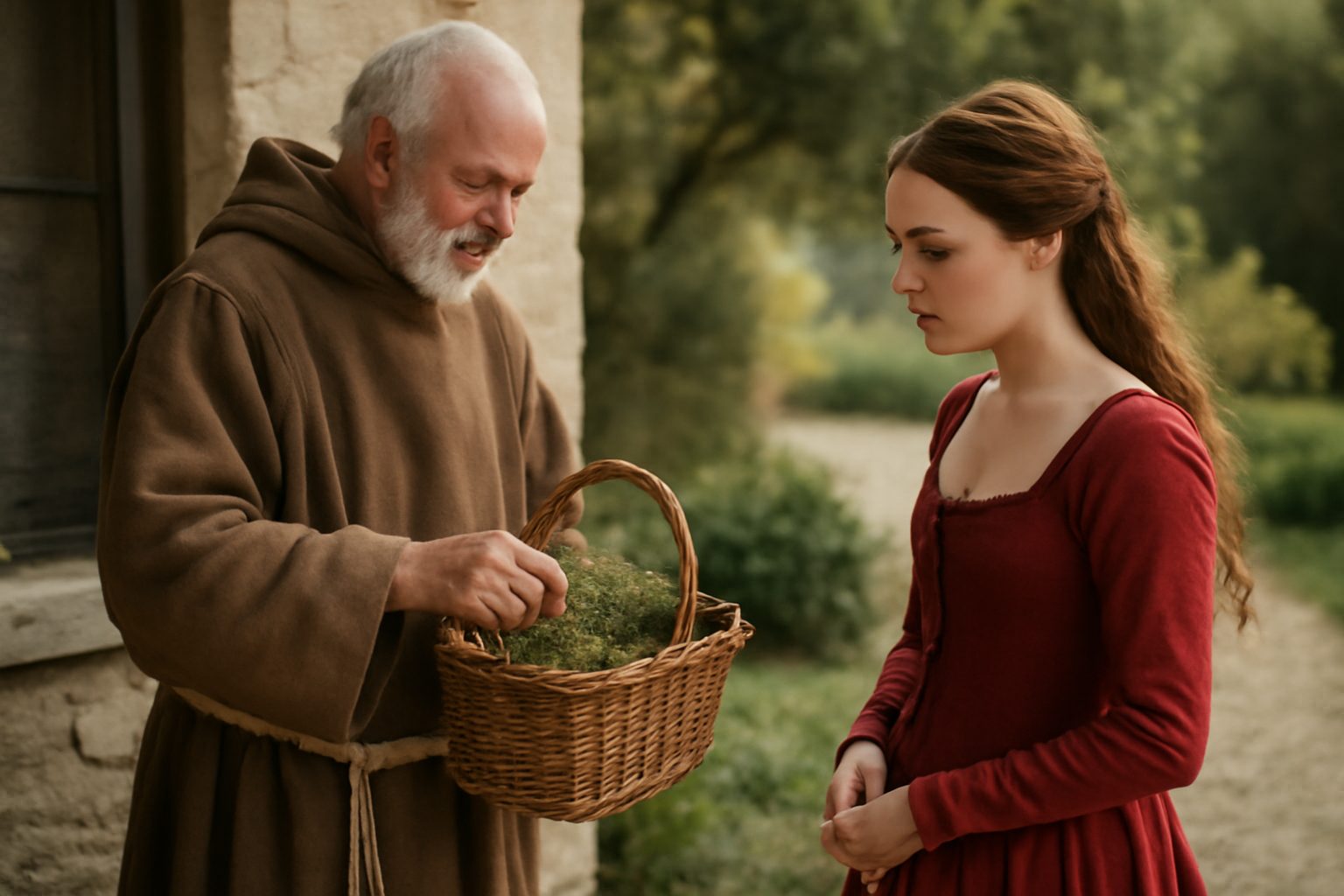
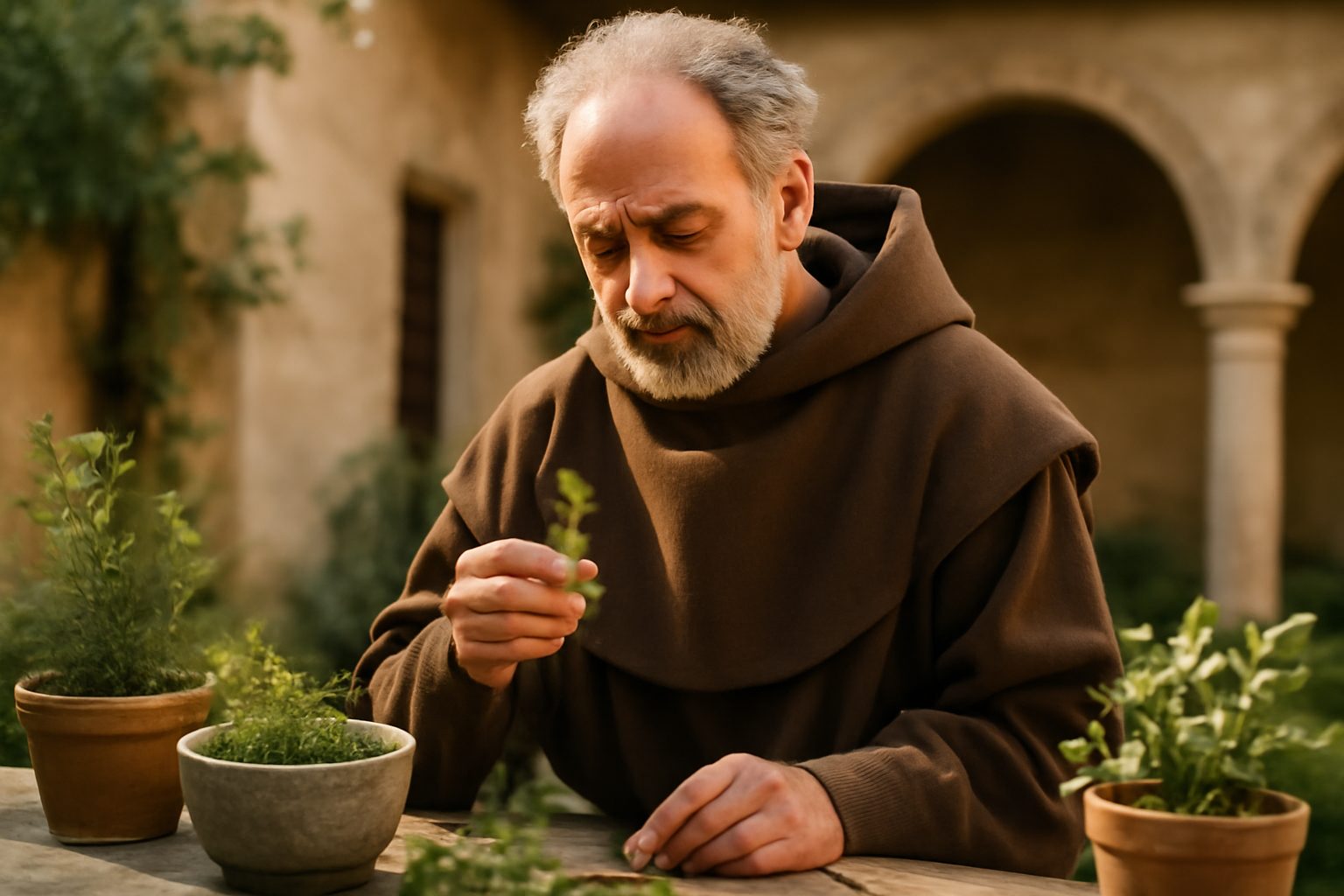
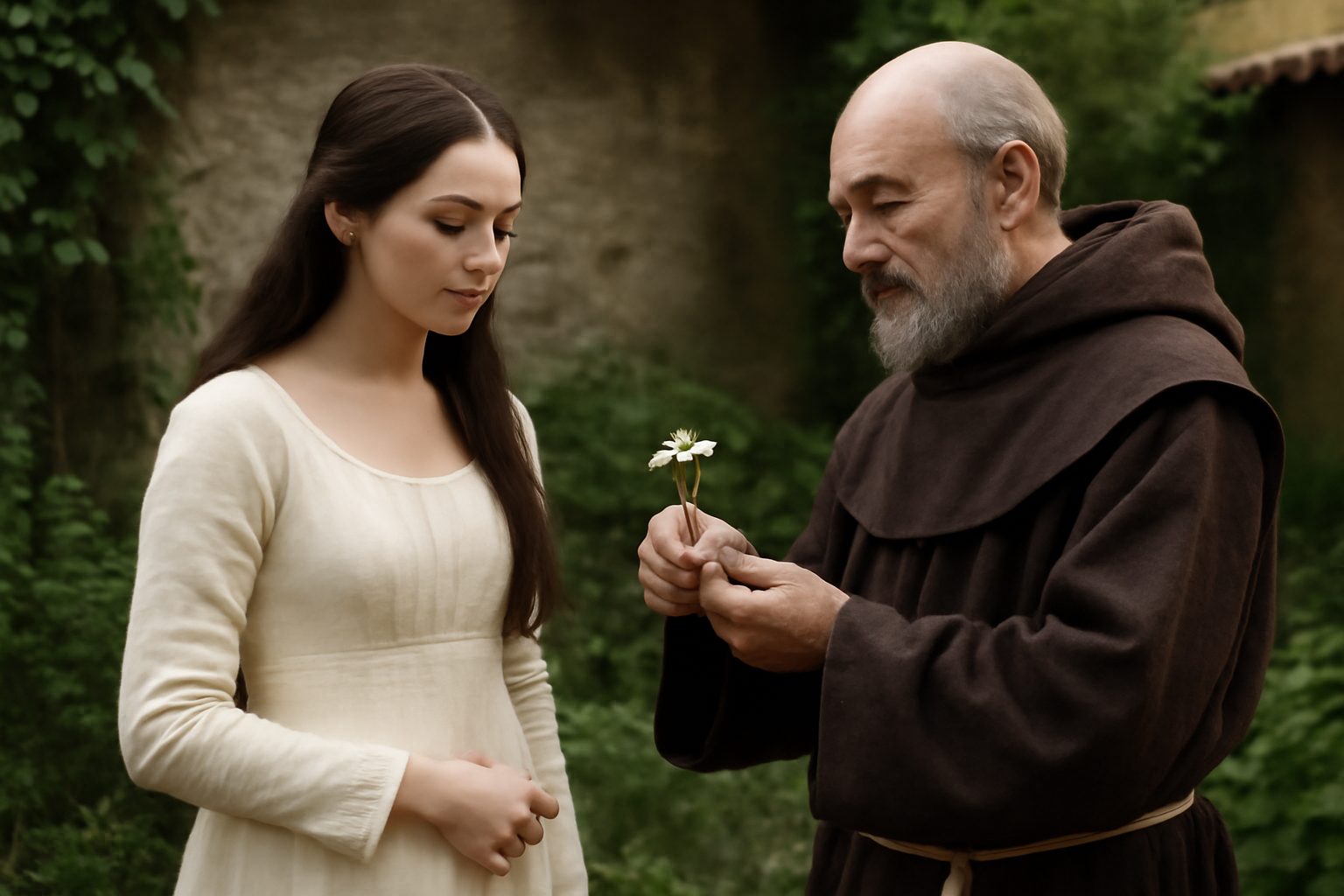
In Act 2, Scene 3 of Romeo and Juliet, Friar Laurence speaks these words while gathering herbs at dawn. He reflects on the dual nature of plants, which can heal or harm depending on their use, drawing a parallel to human actions. The line suggests that even well-intentioned efforts may inadvertently benefit an adversary, foreshadowing the unintended consequences of his role in the lovers' fate.
Romeo: "My intercession likewise steads my foe."
In modern day english, we would say:
My help also benefits my enemy.
Frequently Asked Questions
What does Romeo mean when he says his help also benefits his enemy?
Romeo is saying that by helping someone, he is indirectly also helping his enemy, because the person he is helping is connected to his enemy.
Connections to other verses:
Connections to "My intercession likewise steads my foe."
The line "My intercession likewise steads my foe" reflects Romeo's acknowledgment that his plea for Friar Laurence's help benefits his enemy, the Capulet family. This theme of dual benefit and reconciliation is echoed in several other verses of the scene.
Connection to Reconciliation and Dual Outcomes
Friar Laurence's hope that the marriage might "turn your households' rancour to pure love" directly aligns with Romeo's idea that his intercession aids his foe, suggesting a shared vision of healing the feud.
Contrast with Earlier Wounds and Remedies
Romeo's statement "That's by me wounded: both our remedies" introduces the idea that mutual harm can lead to mutual healing, reinforcing the concept that aiding a foe can bring about positive change for both parties.
Friar Laurence's Willingness to Assist
The Friar's commitment "In one respect I'll thy assistant be" shows his alignment with Romeo's intercession, emphasizing their shared goal of transforming conflict into peace through the union.
Mutual Love and Exchange
The reciprocal nature of Romeo and Juliet's love, expressed in "As mine on hers, so hers is set on mine", parallels the idea that an act meant for one's benefit (like intercession) can extend to a foe, creating a bond that transcends the familial conflict.
Transformation of Vice to Virtue
Friar Laurence's earlier meditation on how "Virtue itself turns vice, being misapplied" foreshadows the complexity of Romeo's intercession—what seems like aiding an enemy could ultimately become a virtuous act of peacemaking.