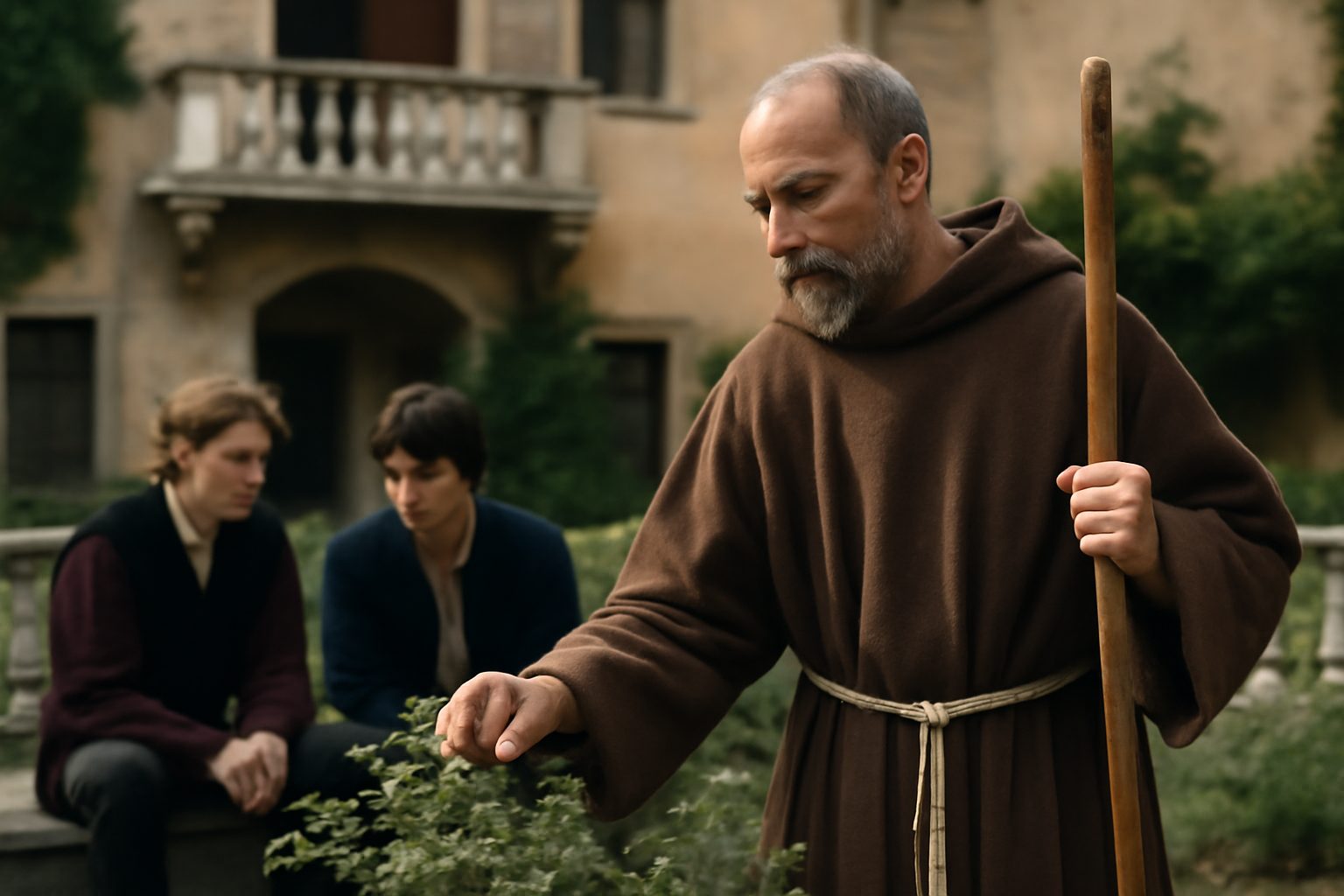
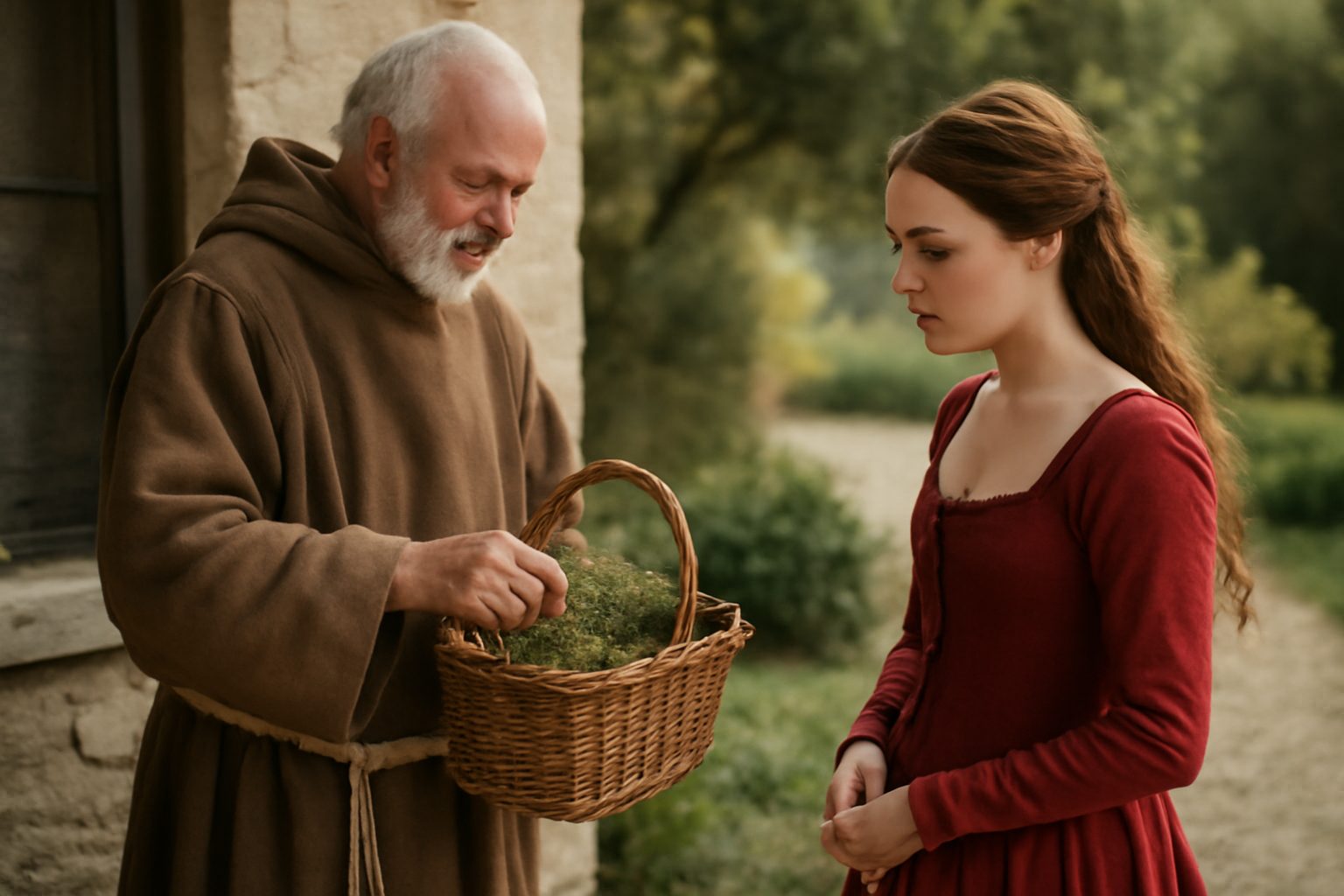
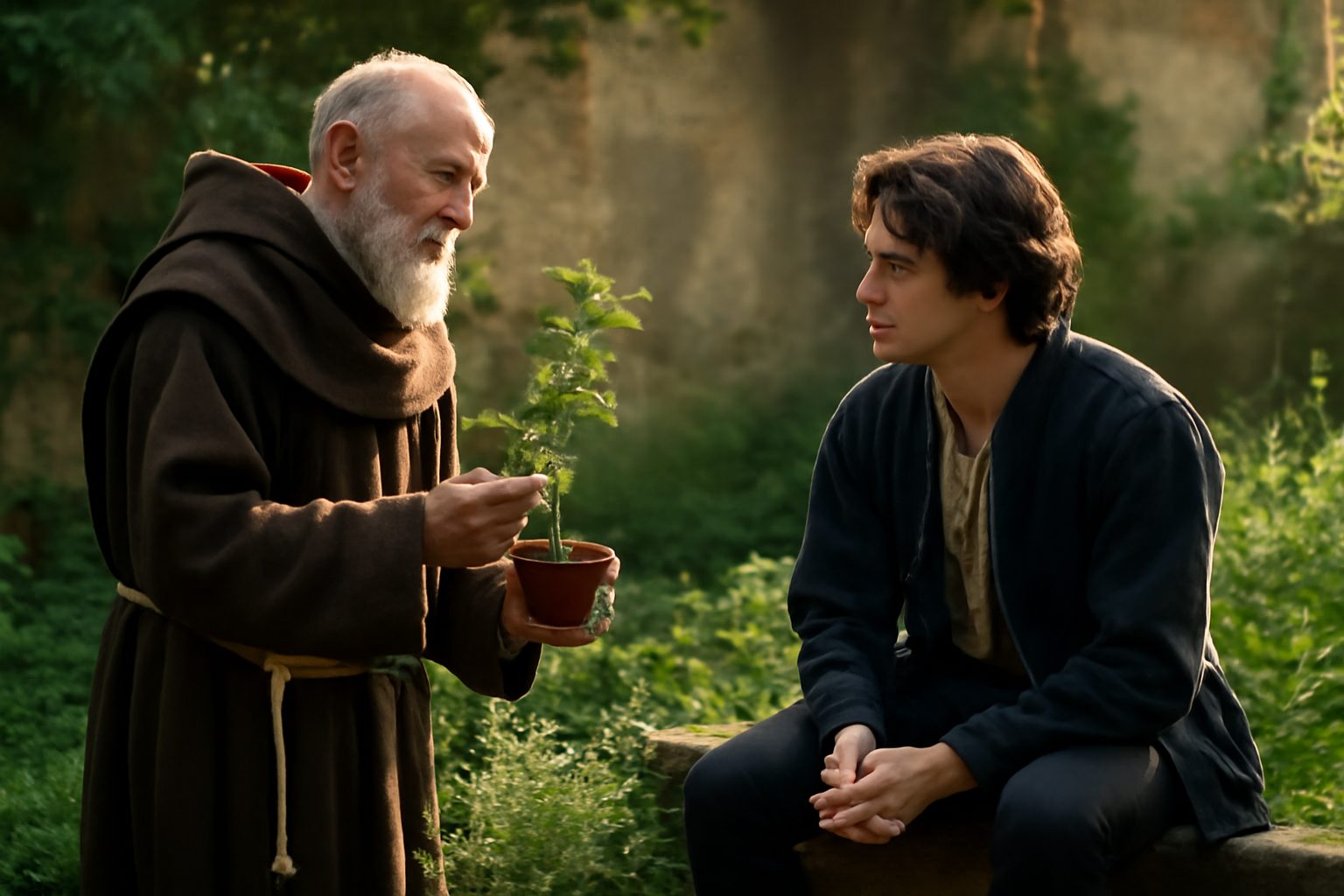
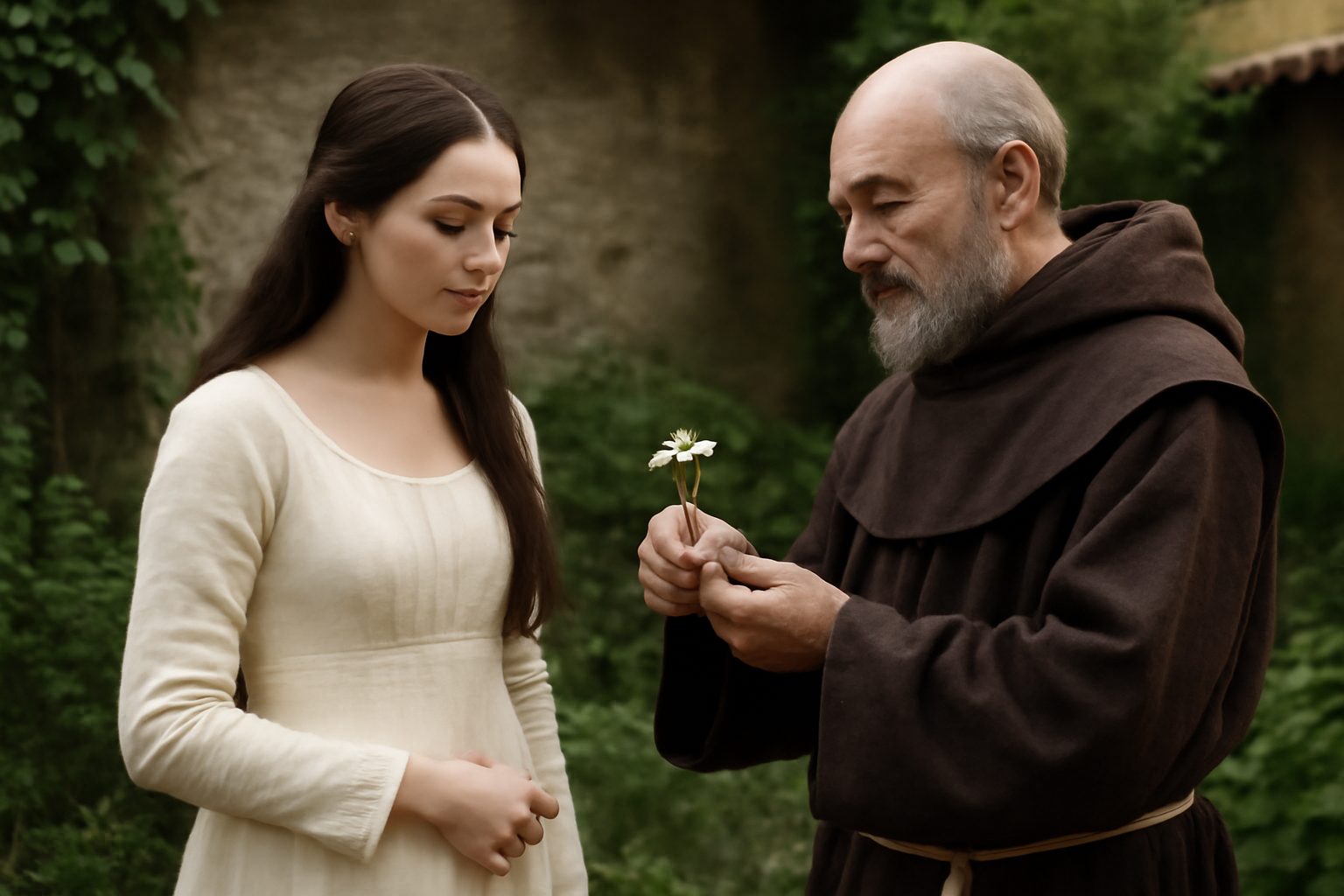
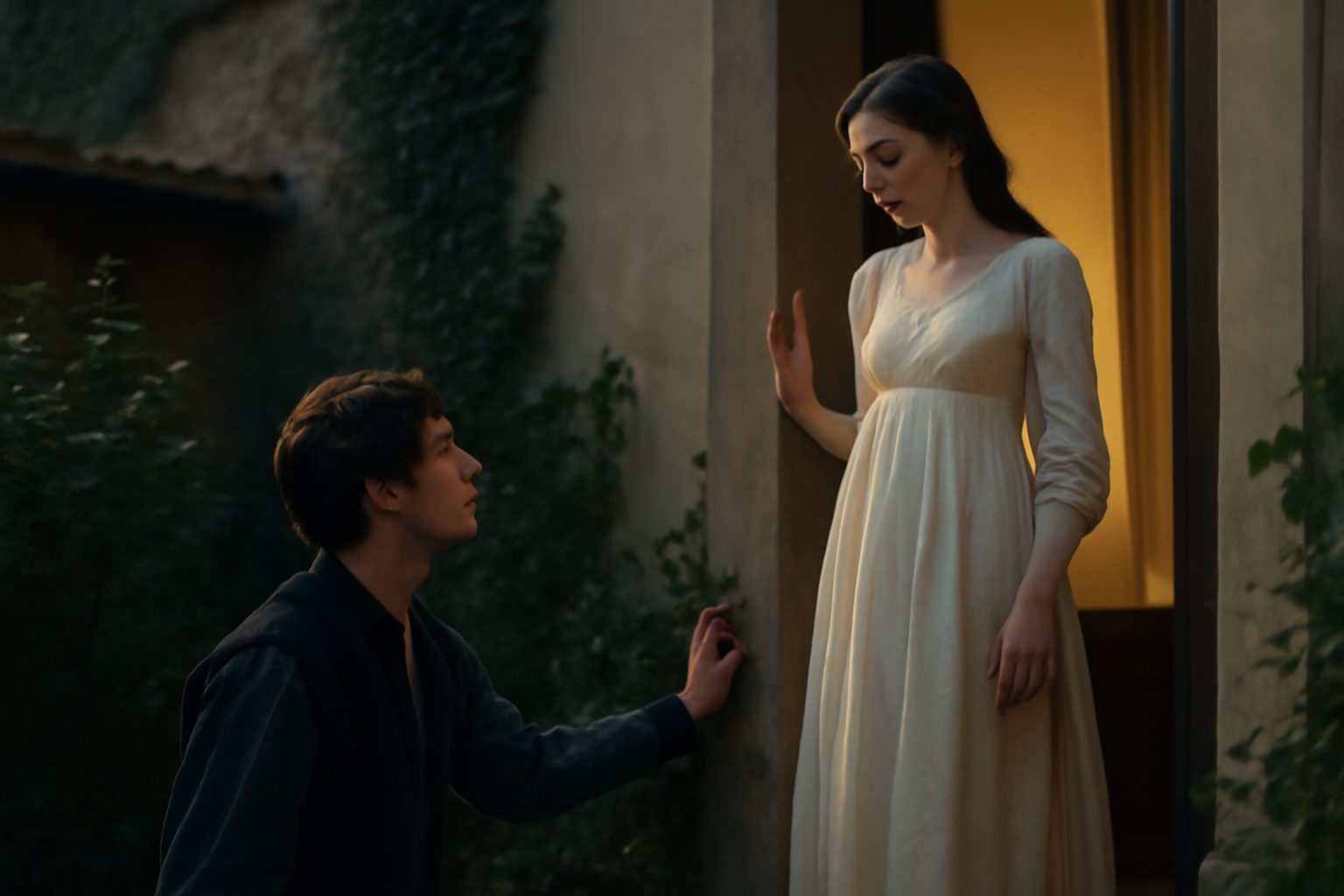
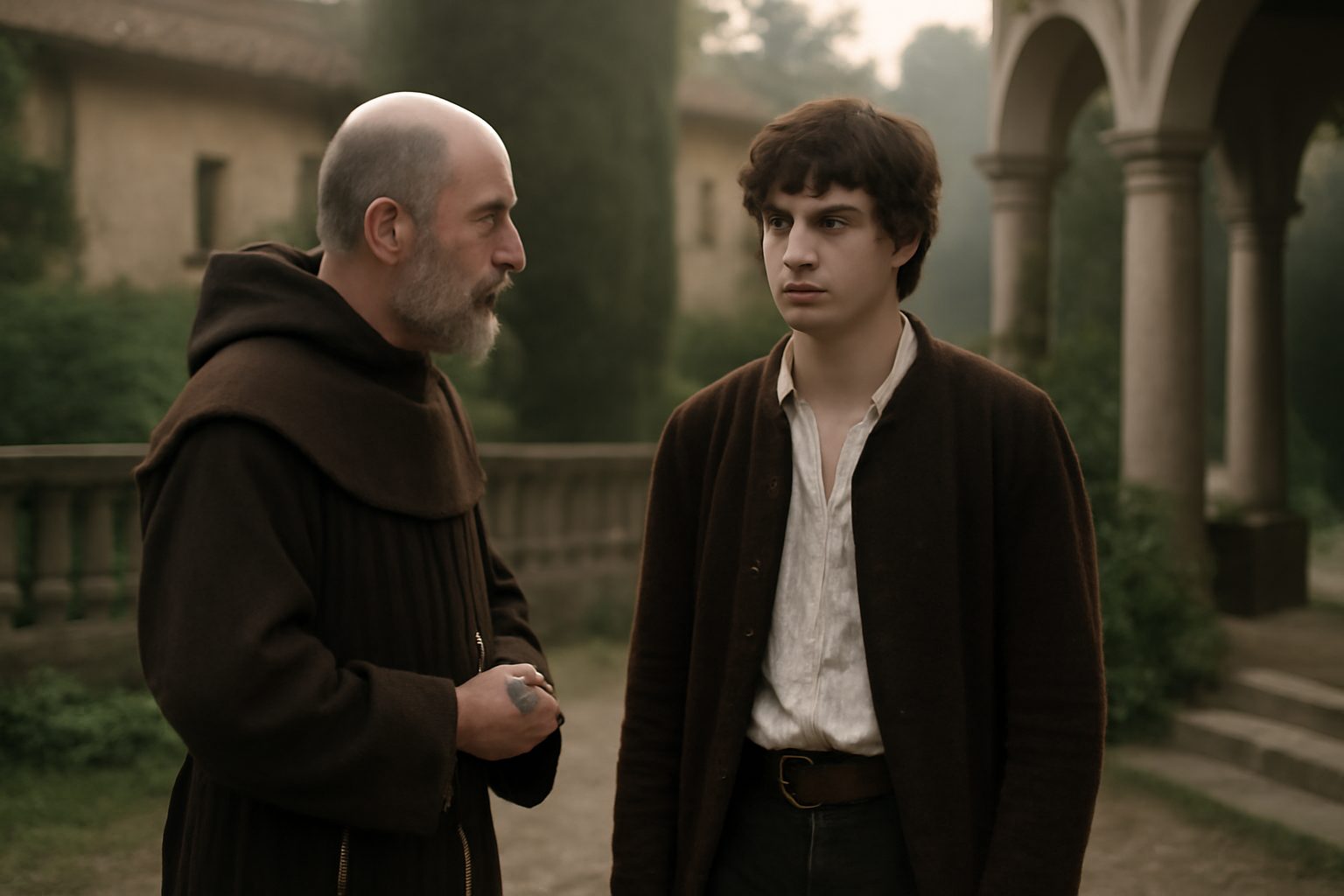
In Act 2, Scene 3 of Romeo and Juliet, Friar Laurence reflects on the fleeting nature of young love as he gathers herbs at dawn. He observes how people often mistake superficial attraction for genuine emotion, a theme that resonates with Romeo's sudden shift from Rosaline to Juliet. The line captures the Friar's skepticism about love based solely on appearances rather than deeper connection.
Friar Laurence: "Not truly in their hearts, but in their eyes."
In modern day english, we would say:
They don’t truly love with their hearts—only with their eyes.
Frequently Asked Questions
What does Friar Laurence mean when he says people are not truly in love in their hearts but in their eyes?
He means that people often mistake physical attraction or superficial appearances for true love.
Connections to other verses:
Connections to "Not truly in their hearts, but in their eyes"
Friar Laurence's Observations on Fickle Love
The verse "Not truly in their hearts, but in their eyes" reflects Friar Laurence's skepticism about Romeo's sudden shift in affection. This connects to his earlier remark, "So soon forsaken? young men's love then lies", where he questions the sincerity and depth of youthful love, suggesting it is based on superficial attraction rather than genuine emotion.
Contrast with Romeo's Previous Love for Rosaline
Friar Laurence directly references Romeo's past infatuation in "Is Rosaline, whom thou didst love so dear", highlighting how quickly Romeo has abandoned his former love. This reinforces the idea that his feelings are not rooted in the heart. Similarly, "Thou and these woes were all for Rosaline" underscores the fleeting nature of his attachments.
Physical Manifestations of Emotion
The focus on outward signs of love—"in their eyes"—echoes Friar Laurence's attention to Romeo's physical state. In "Lo, here upon thy cheek the stain doth sit" and "Of an old tear that is not wash'd off yet", he points to visible traces of past sorrow, contrasting them with Romeo's current claims of love, further questioning their authenticity.
Thematic Duality and Superficiality
This idea aligns with the Friar's broader meditation on duality and superficiality in nature and humanity, such as in "In man as well as herbs, grace and rude will", where he notes the coexistence of virtue and base desire. The notion that love can be shallow ("in their eyes") ties into his warning that "For doting, not for loving, pupil mine", distinguishing infatuation from true love.
Resolution and Action
Despite his skepticism, Friar Laurence agrees to assist Romeo, as seen in "In one respect I'll thy assistant be", hoping to transform the superficial attraction into a force for good, ultimately aiming to "turn your households' rancour to pure love".