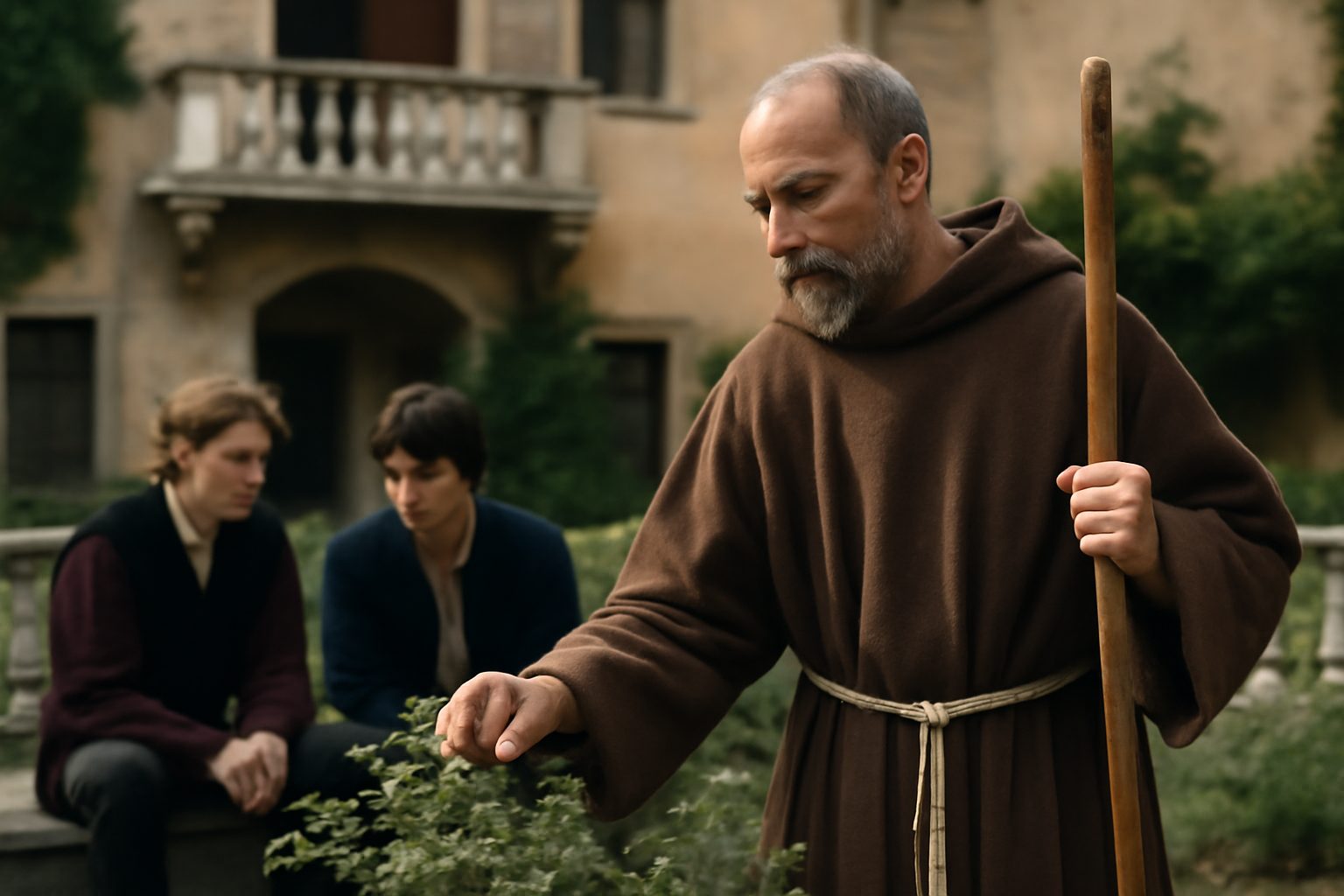
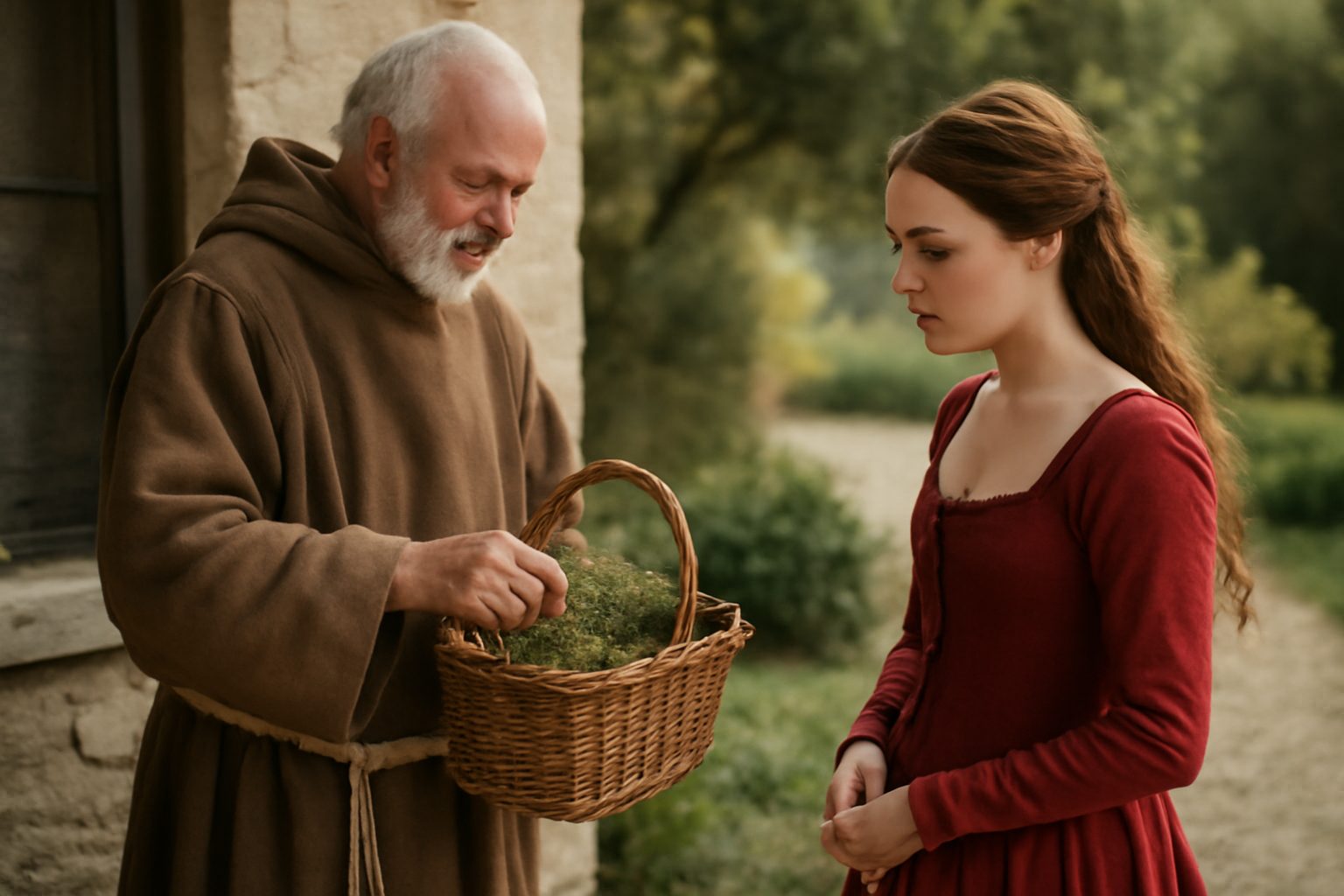
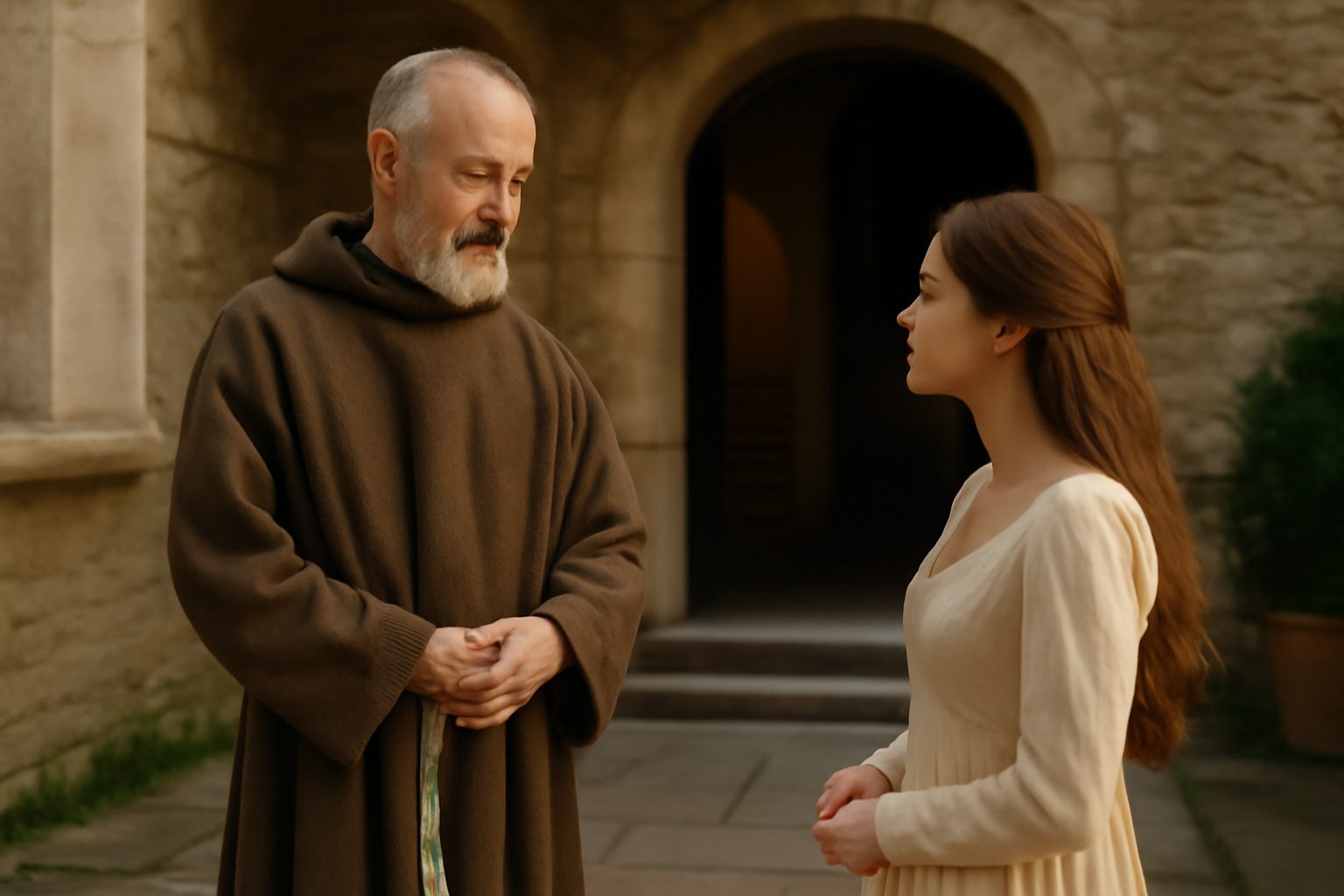
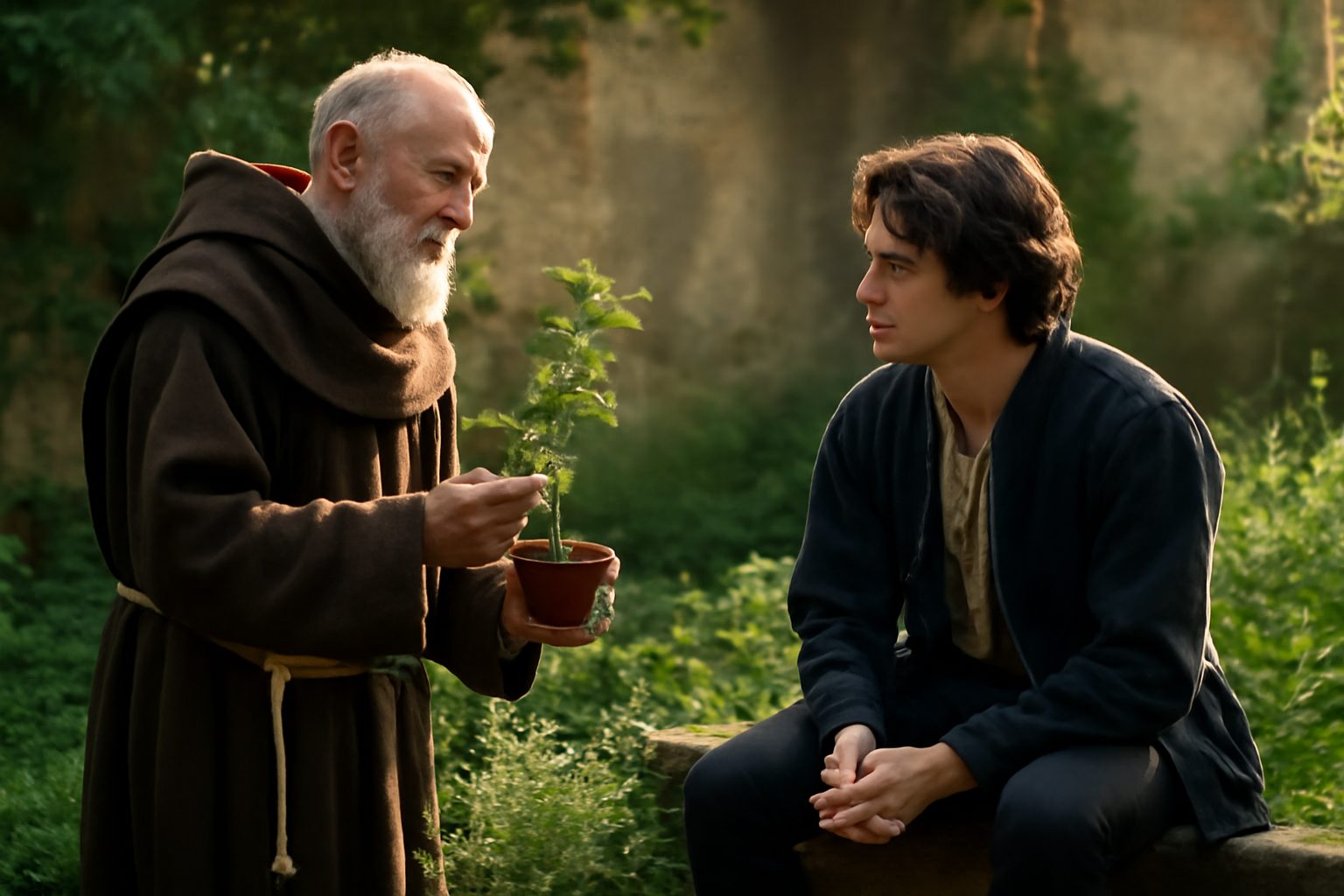
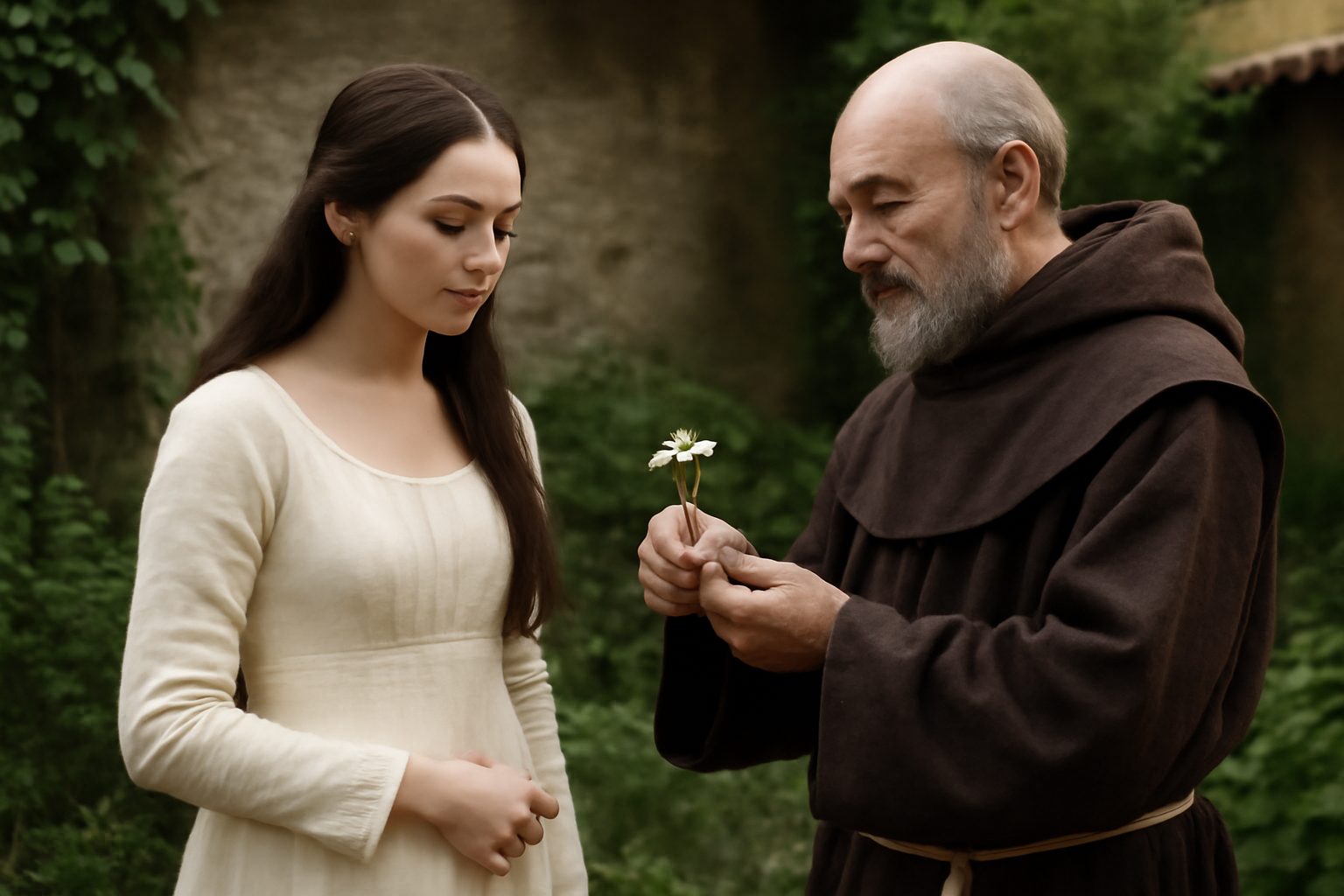
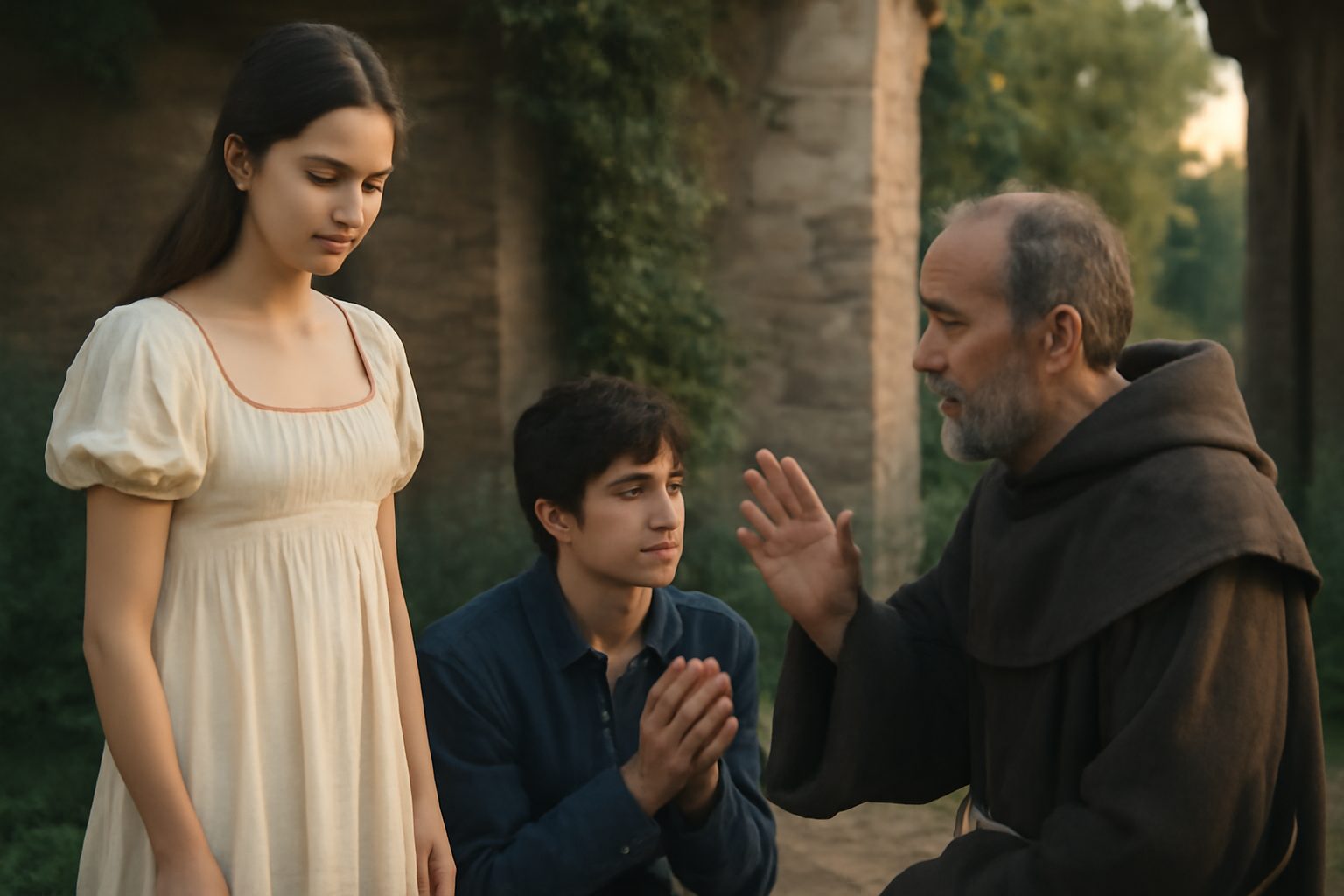
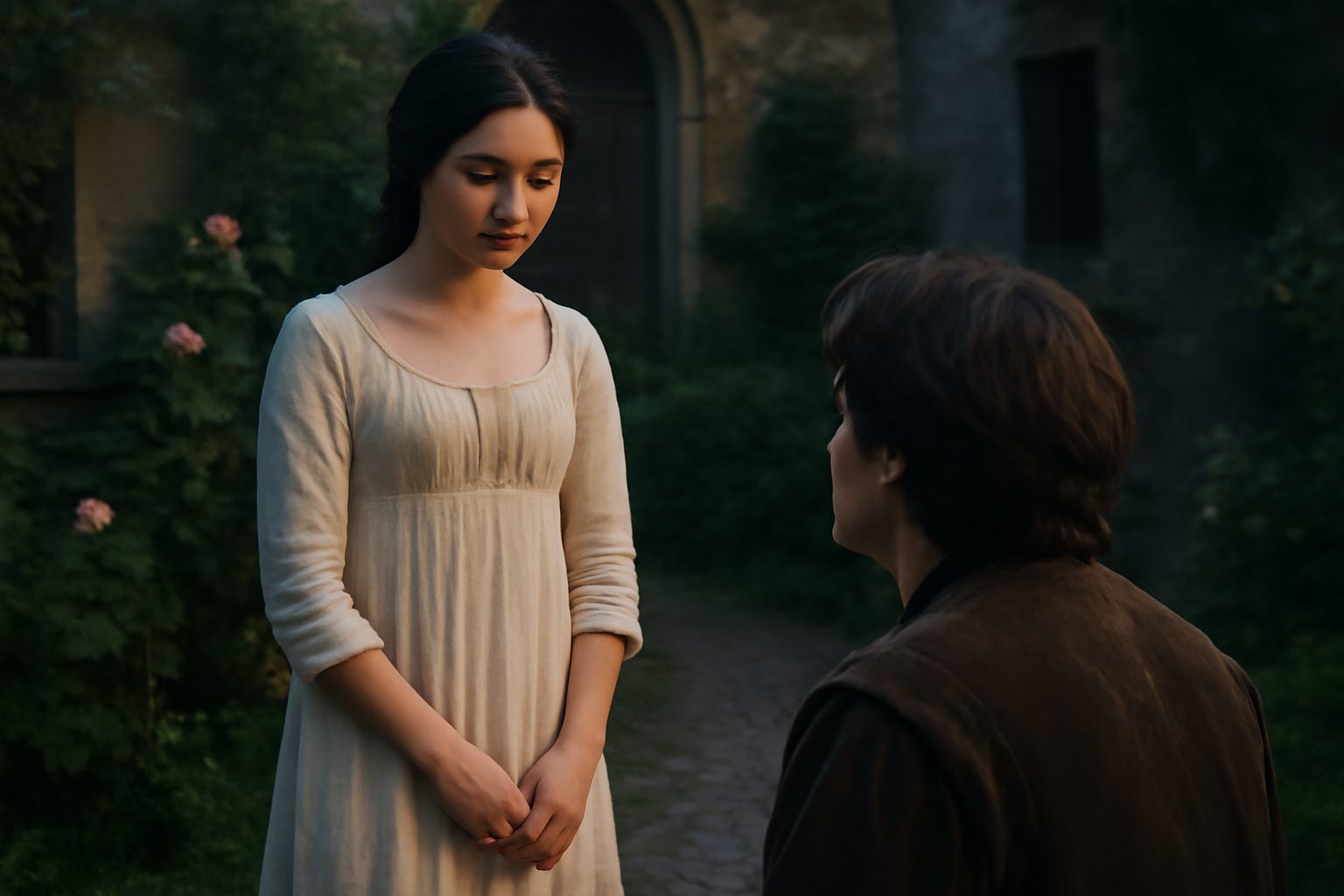
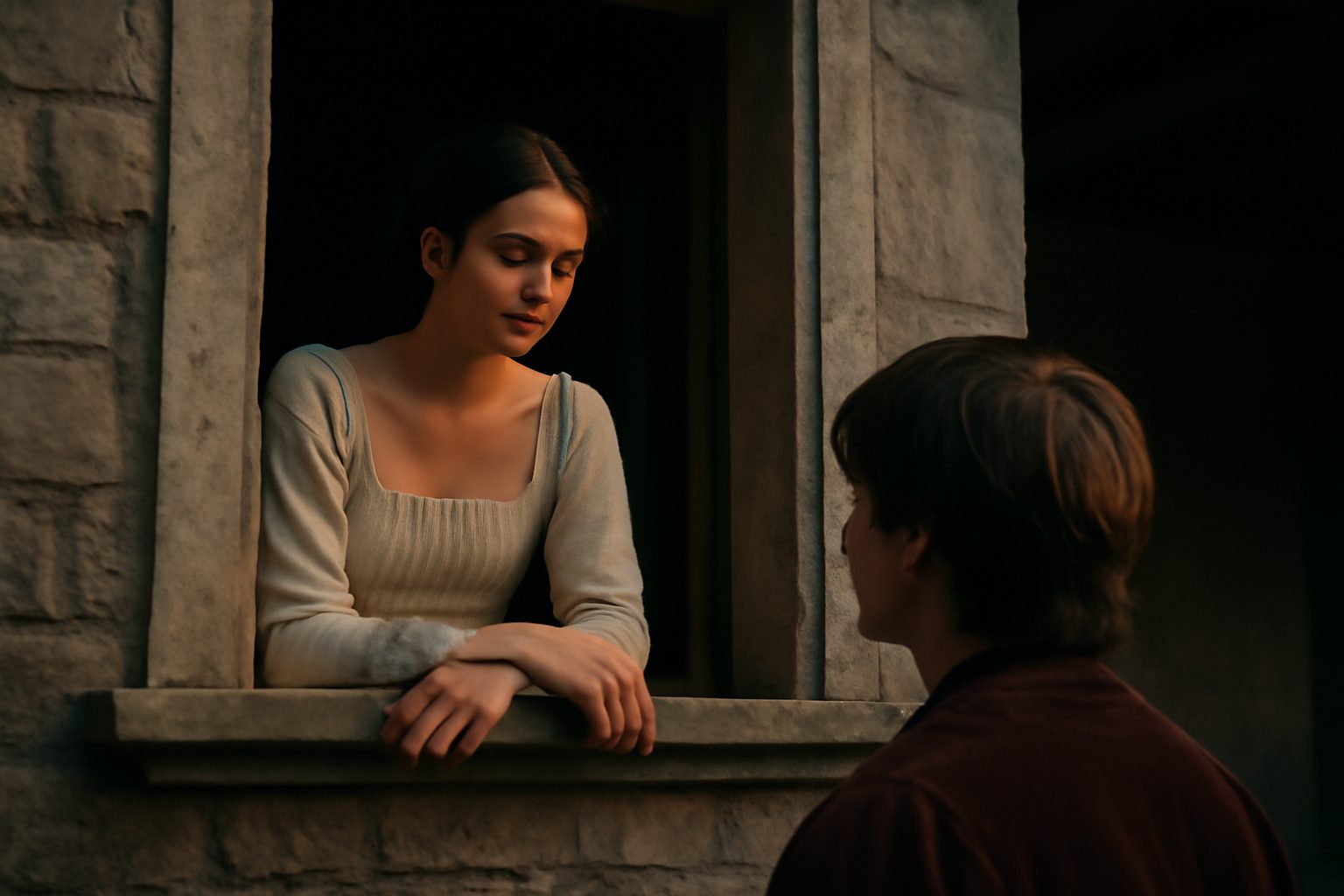
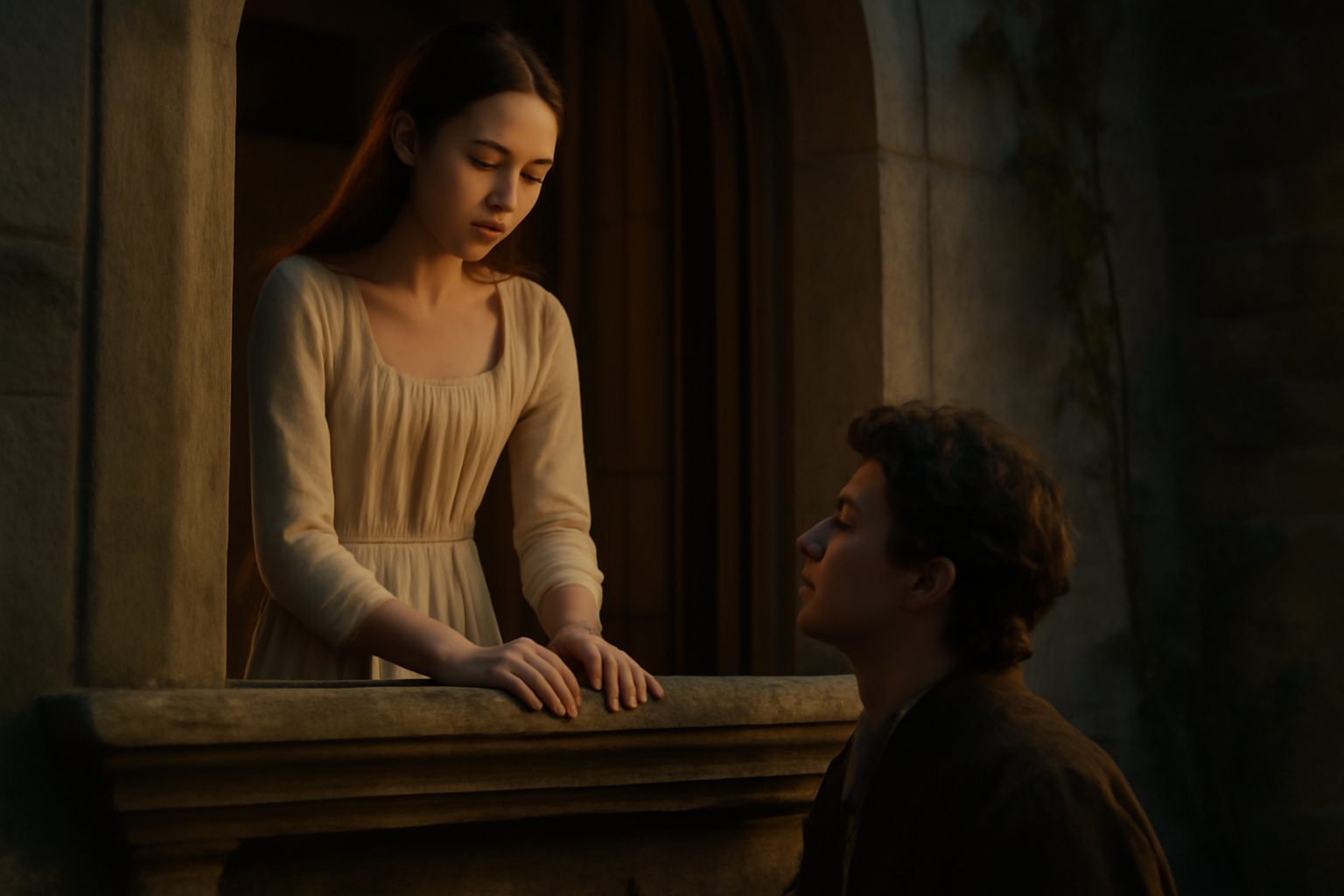
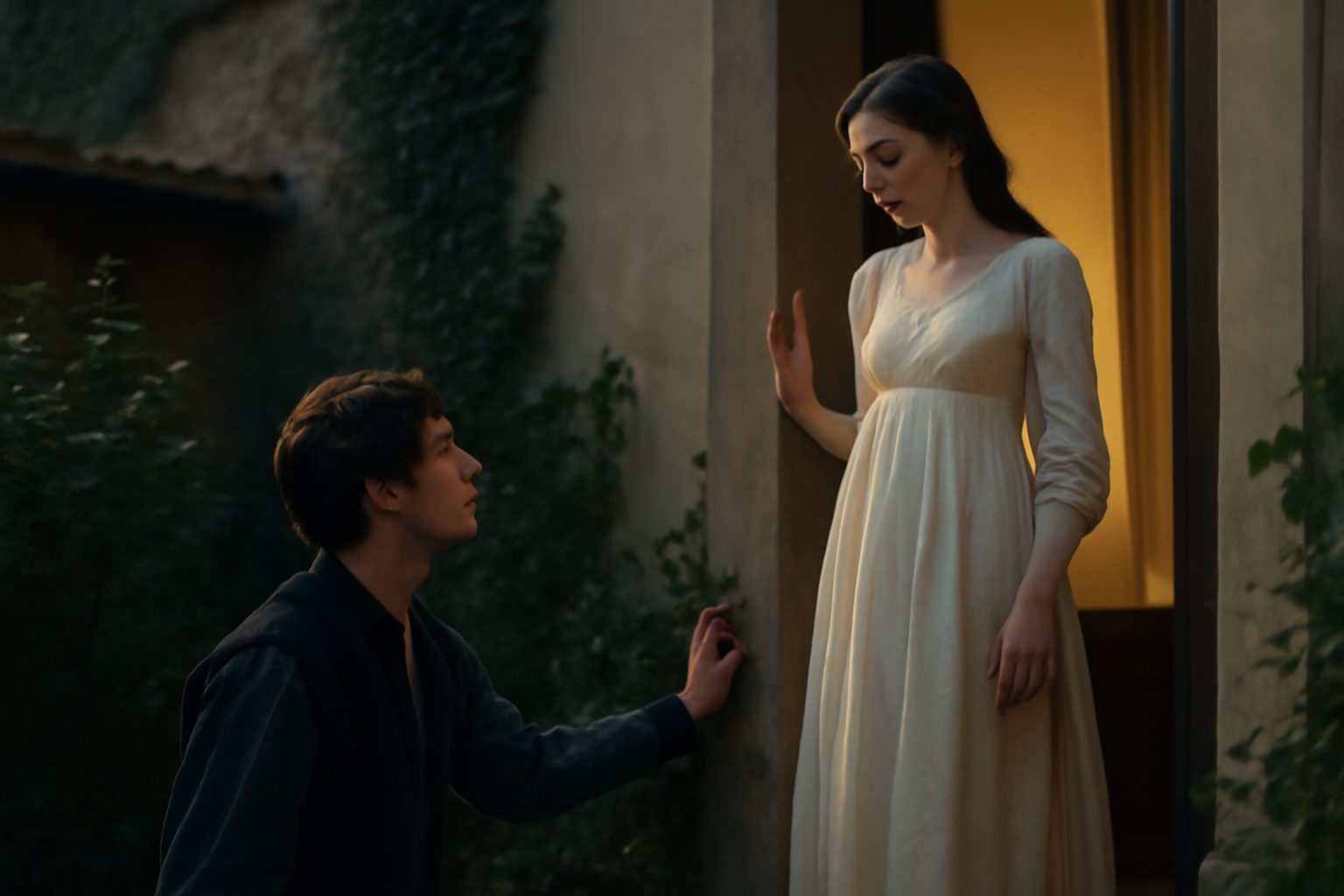
In Act 2, Scene 3 of Romeo and Juliet, Friar Laurence is gathering herbs in the early morning when Romeo arrives to seek his help. The friar greets him with this exclamation, expressing surprise at seeing him so soon after the previous night's events. This moment marks the beginning of Romeo's plea for the friar to marry him and Juliet in secret.
Friar Laurence: "Benedicite!"
In modern day english, we would say:
Friar Laurence greets Romeo with a blessing, surprised to see him up so early.
Frequently Asked Questions
What does Friar Laurence say when he first appears in Act 2 Scene 3?
He says Benedicite, which is a Latin word meaning 'bless you' or 'may you be blessed'.
Connections to other verses:
Connections of "Benedicite!" to Other Verses
The verse Benedicite! is spoken by Friar Laurence as an exclamation of surprise upon seeing Romeo so early in the morning. It serves as a pivotal moment that triggers a series of revelations and discussions in the scene.
Connection to Greeting and Inquiry
Directly following this, Romeo responds with Good morrow, father., to which the Friar inquires, What early tongue so sweet saluteth me?. This exchange establishes the curious and concerned tone of their conversation, highlighting Romeo's unusual behavior.
Link to Themes of Disturbance and Care
The Friar's suspicion that Romeo's early arrival indicates some disturbance is echoed in Thou art up-roused by some distemperature; and Young son, it argues a distemper'd head. These lines reinforce the idea that Romeo's actions are driven by emotional turmoil, a theme further explored in the Friar's monologue about care and youth, such as in Care keeps his watch in every old man's eye; and But where unbruised youth with unstuff'd brain.
Transition to Revelation of New Love
The astonishment expressed in "Benedicite!" foreshadows the Friar's greater shock at Romeo's change of affection from Rosaline to Juliet, evident in Holy Saint Francis, what a change is here! and And art thou changed? pronounce this sentence…. This shift is crucial as it leads to the discussion of Romeo's new love and the Friar's agreement to marry them, as seen in In one respect I'll thy assistant be;.
Contrast with Earlier Woes
The exclamation also contrasts with references to Romeo's past sorrows over Rosaline, such as Thy old groans ring yet in my ancient ears; and Thou and these woes were all for Rosaline:, emphasizing the sudden and dramatic change in his emotions.