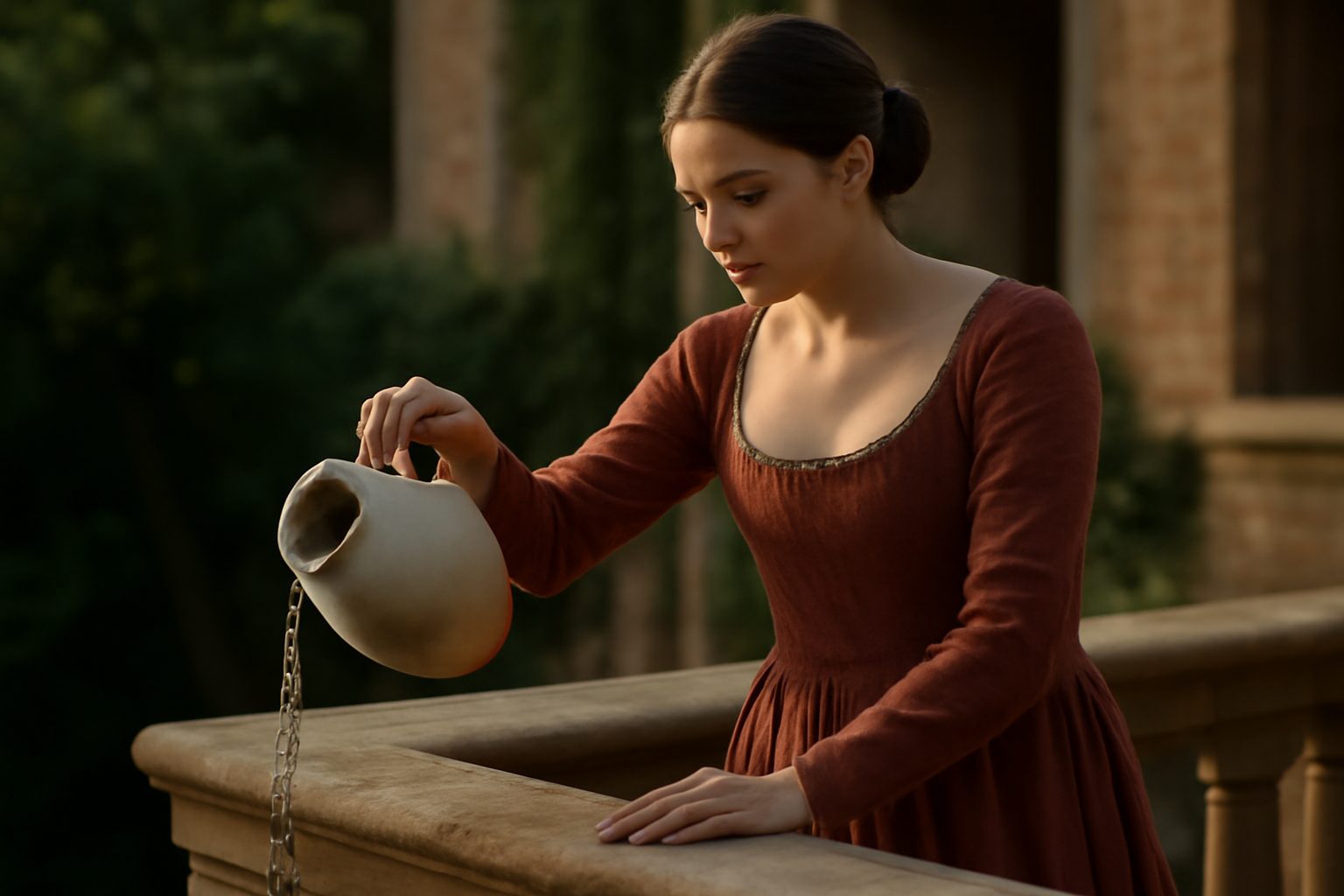
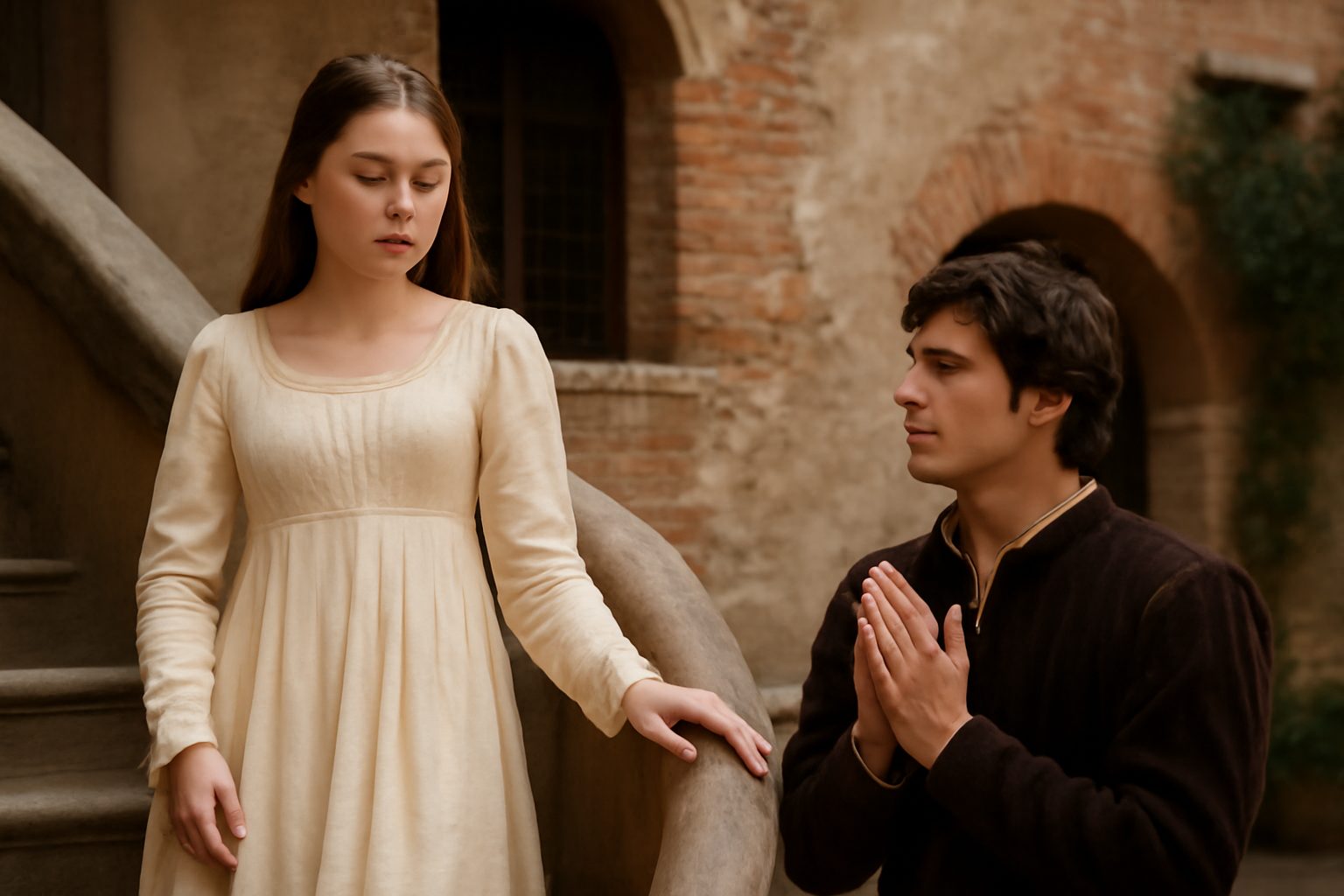
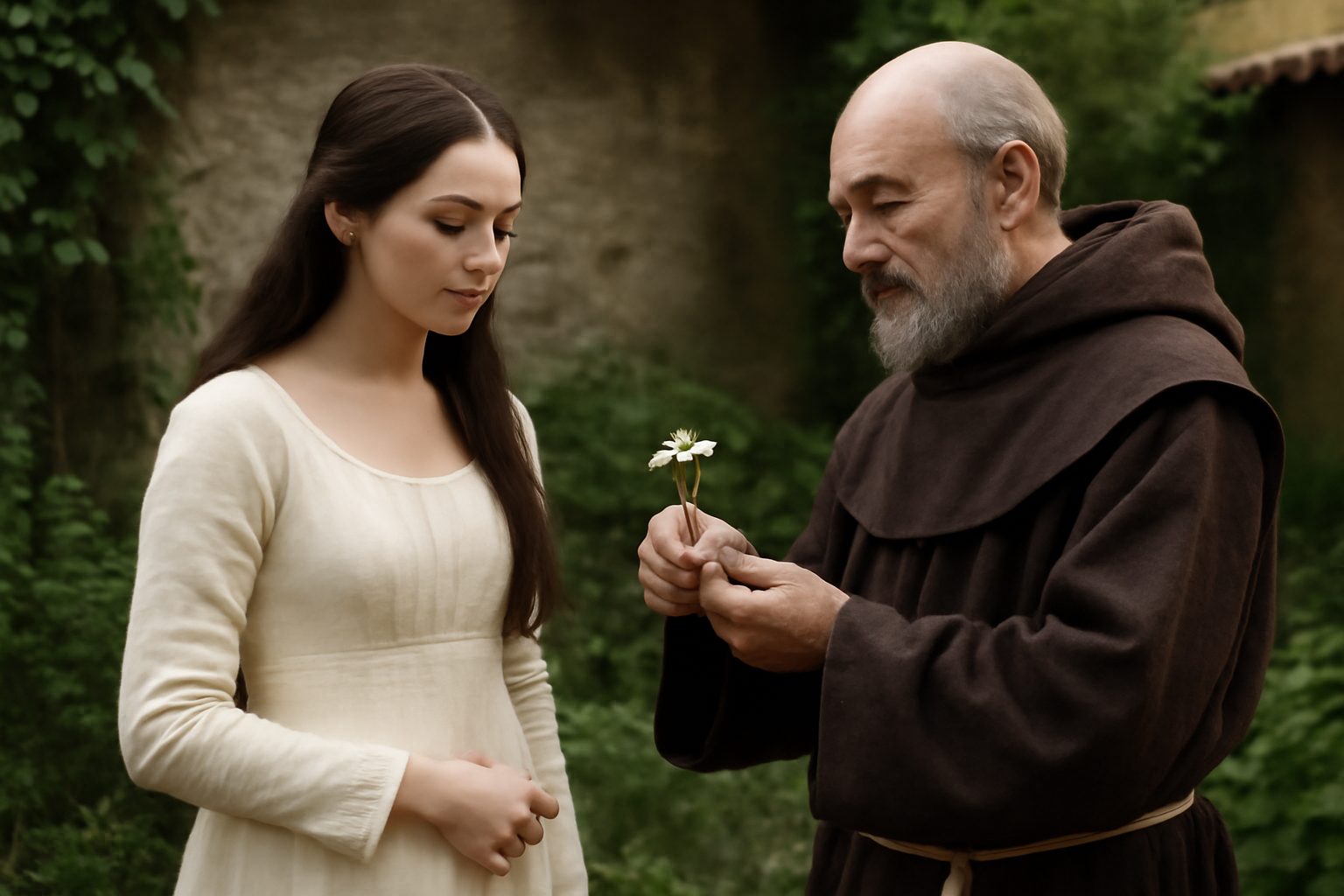
In Act 2, Scene 3 of Romeo and Juliet, Friar Laurence reflects on the dual nature of plants and herbs, noting how even beneficial things can be twisted to harmful ends. This line comes as he gathers medicinal herbs at dawn, pondering how virtue can turn to vice when misapplied. His musings foreshadow the tragic consequences of Romeo and Juliet's love, which, though pure, becomes destructive under strained circumstances.
Friar Laurence: "Nor aught so good but strain'd from that fair use"
In modern day english, we would say:
Nothing is so good that it can’t be twisted from its proper purpose.
Frequently Asked Questions
What does Friar Laurence mean when he says even good things can be misused?
He means that anything good can be twisted or used in the wrong way, even if it was meant for a positive purpose.
Connections to other verses:
Connections to "Nor aught so good but strain'd from that fair use"
Philosophical Context and Natural Order
The verse Nor aught so good but strain'd from that fair use reflects Friar Laurence's meditation on duality and the potential for good things to be corrupted. This connects directly to his earlier lines, such as Virtue itself turns vice, being misapplied, which emphasizes how even virtue can become harmful when misused. Similarly, For nought so vile that on the earth doth live introduces the idea that nothing is entirely without value, setting up the contrast that even good things can be twisted from their purpose.
Botanical and Medicinal Imagery
Friar Laurence's speech is rich with references to nature's dual potential, tying into Poison hath residence and medicine power, illustrating how the same substance can heal or harm. The idea of things being "strain'd from that fair use" echoes With baleful weeds and precious-juiced flowers, highlighting the fine line between beneficial and dangerous elements in nature.
Application to Human Behavior and Love
This theme extends to human emotions and relationships, particularly in the context of Romeo's rapid shift in affection. The Friar's skepticism about Romeo's new love is evident in So soon forsaken? young men's love then lies, questioning whether Romeo's love is genuine or merely a distortion of true feeling. The notion of love being misapplied or strained from its "fair use" is further critiqued in Thy love did read by rote and could not spell, suggesting that Romeo's previous love for Rosaline was superficial and now his new love may be similarly flawed.
Structural and Rhetorical Links
The verse also connects to the Friar's broader rhetorical structure, such as Revolts from true birth, stumbling on abuse, which directly follows and elaborates on the idea of good being perverted. Additionally, And vice sometimes by action dignified provides a counterpoint, showing that even vice can be redeemed, completing the cycle of dual potential that the Friar explores.