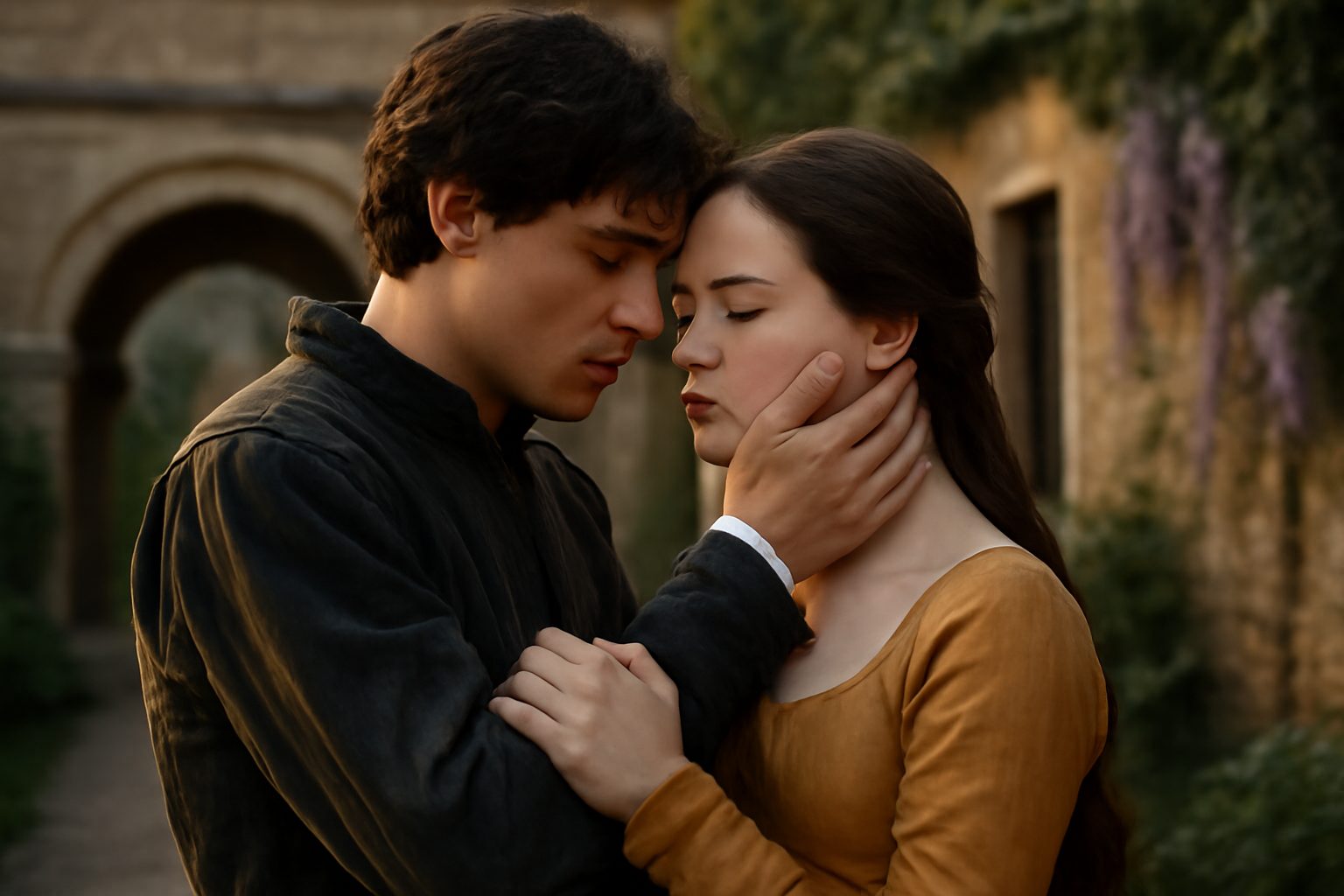
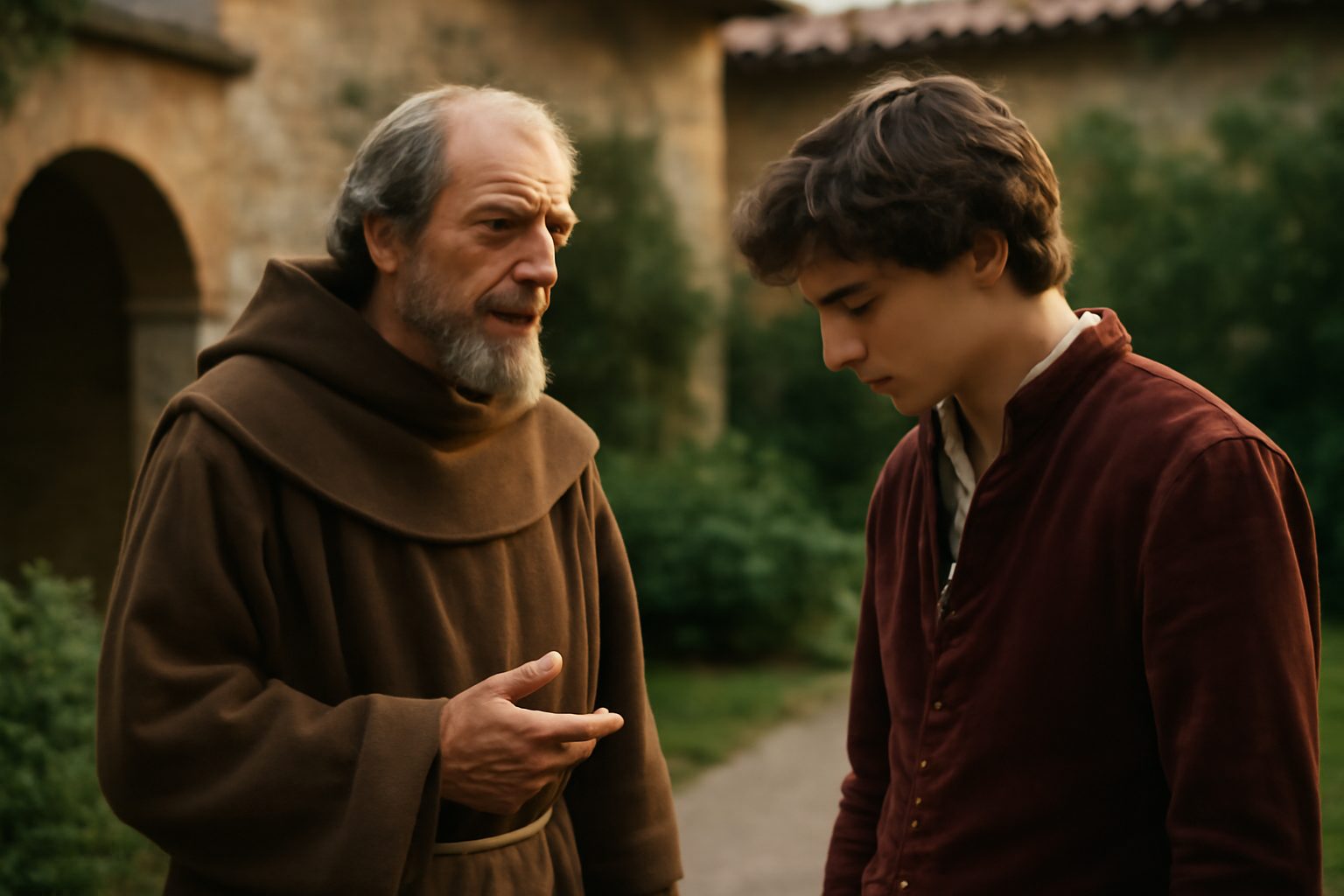
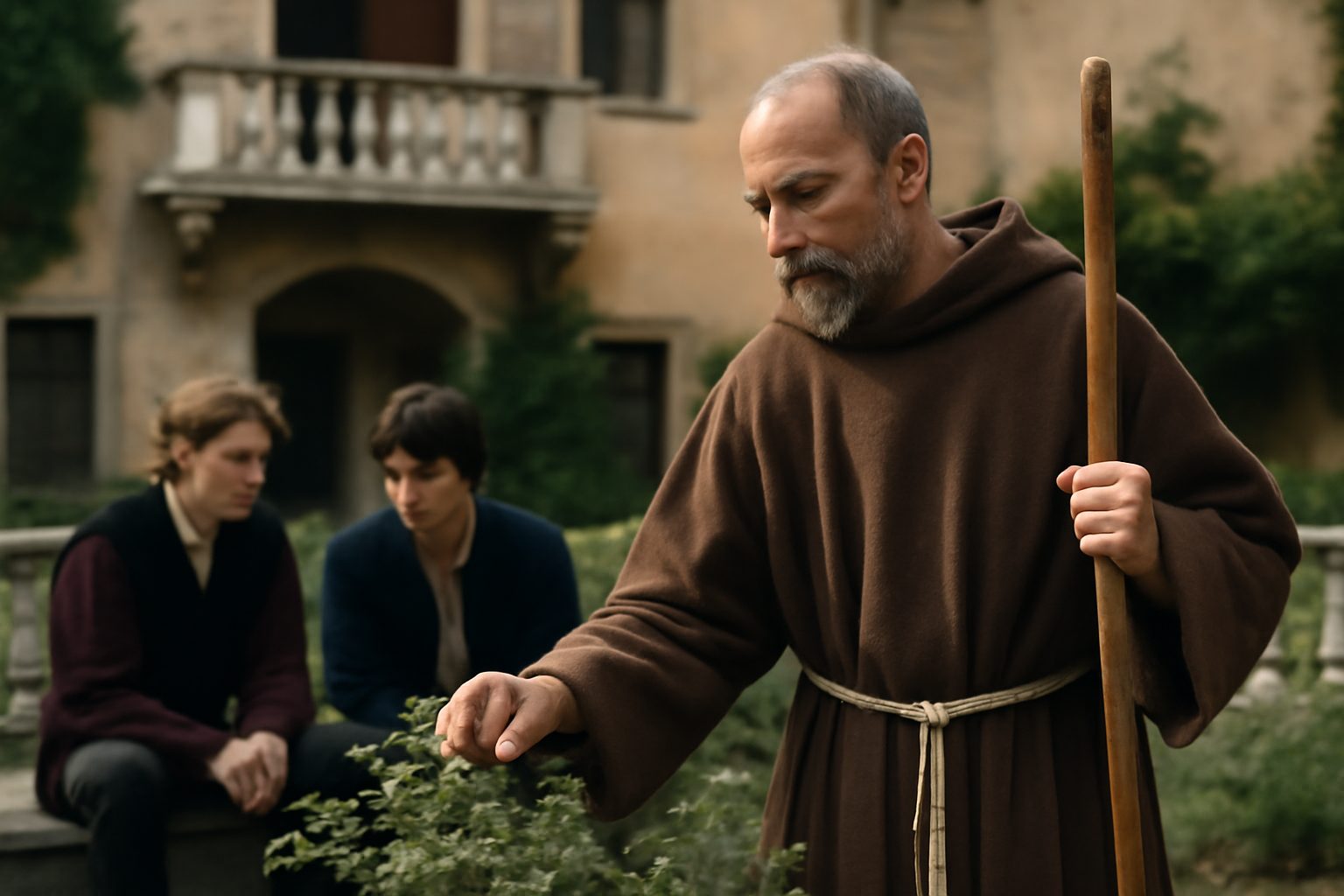
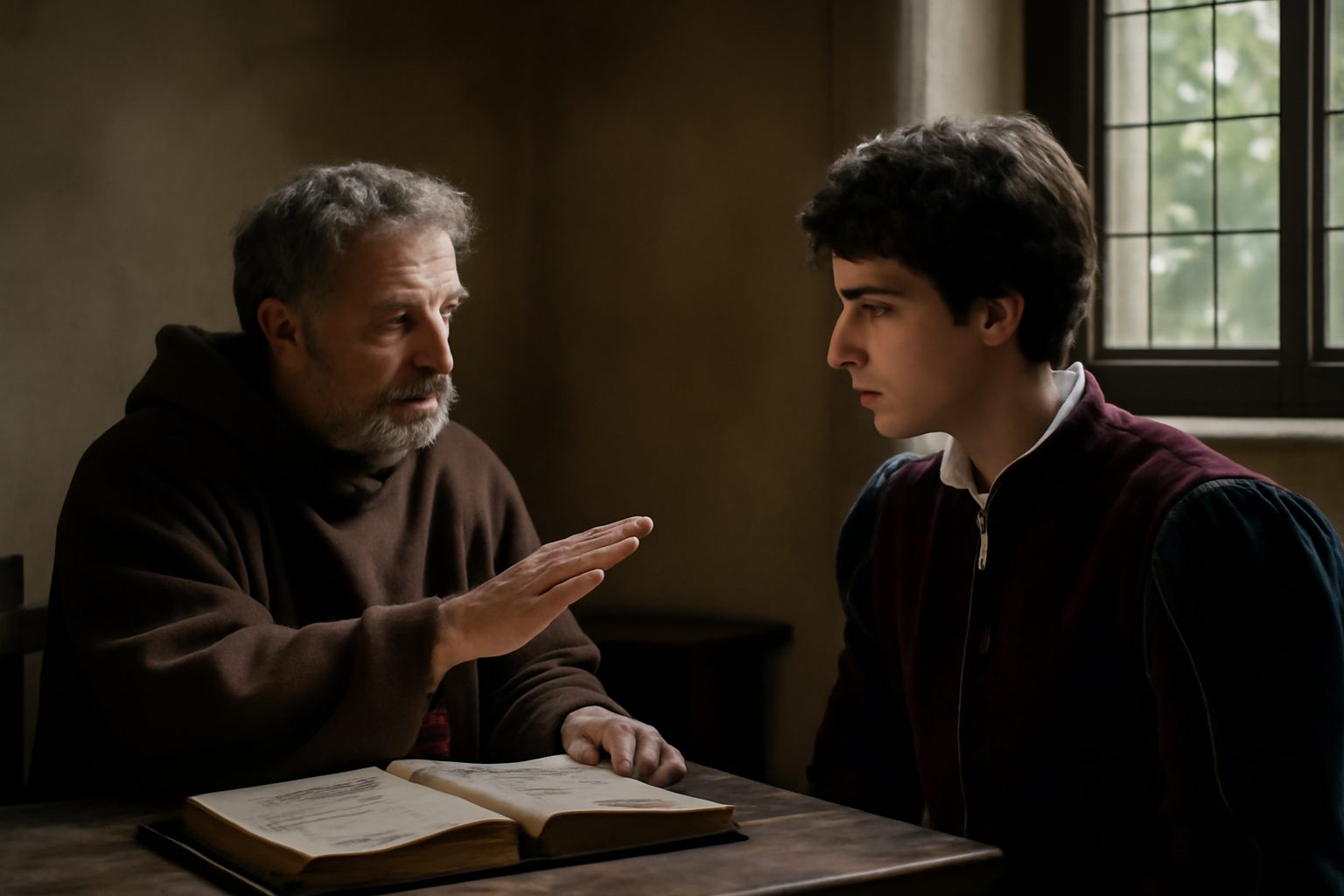
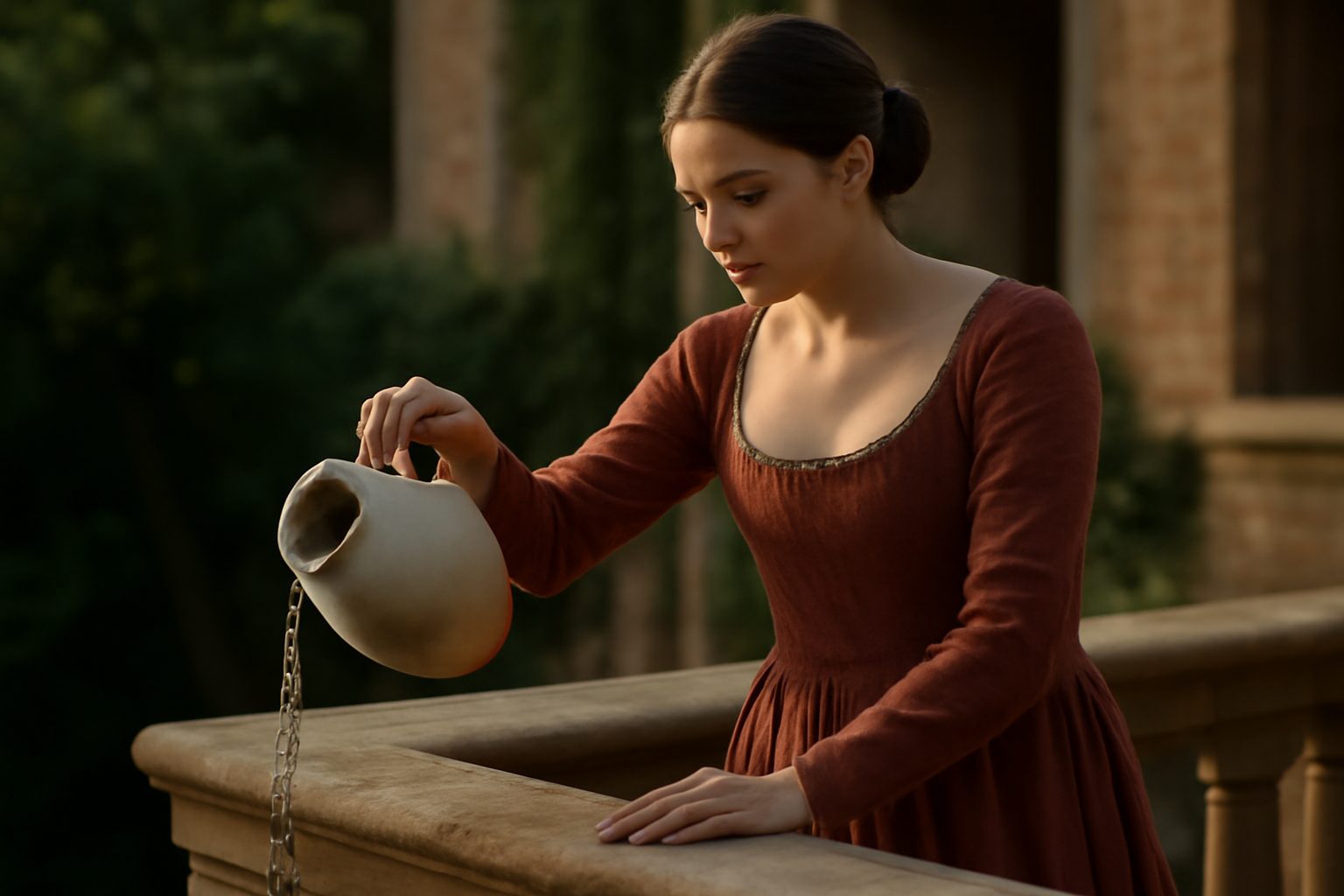
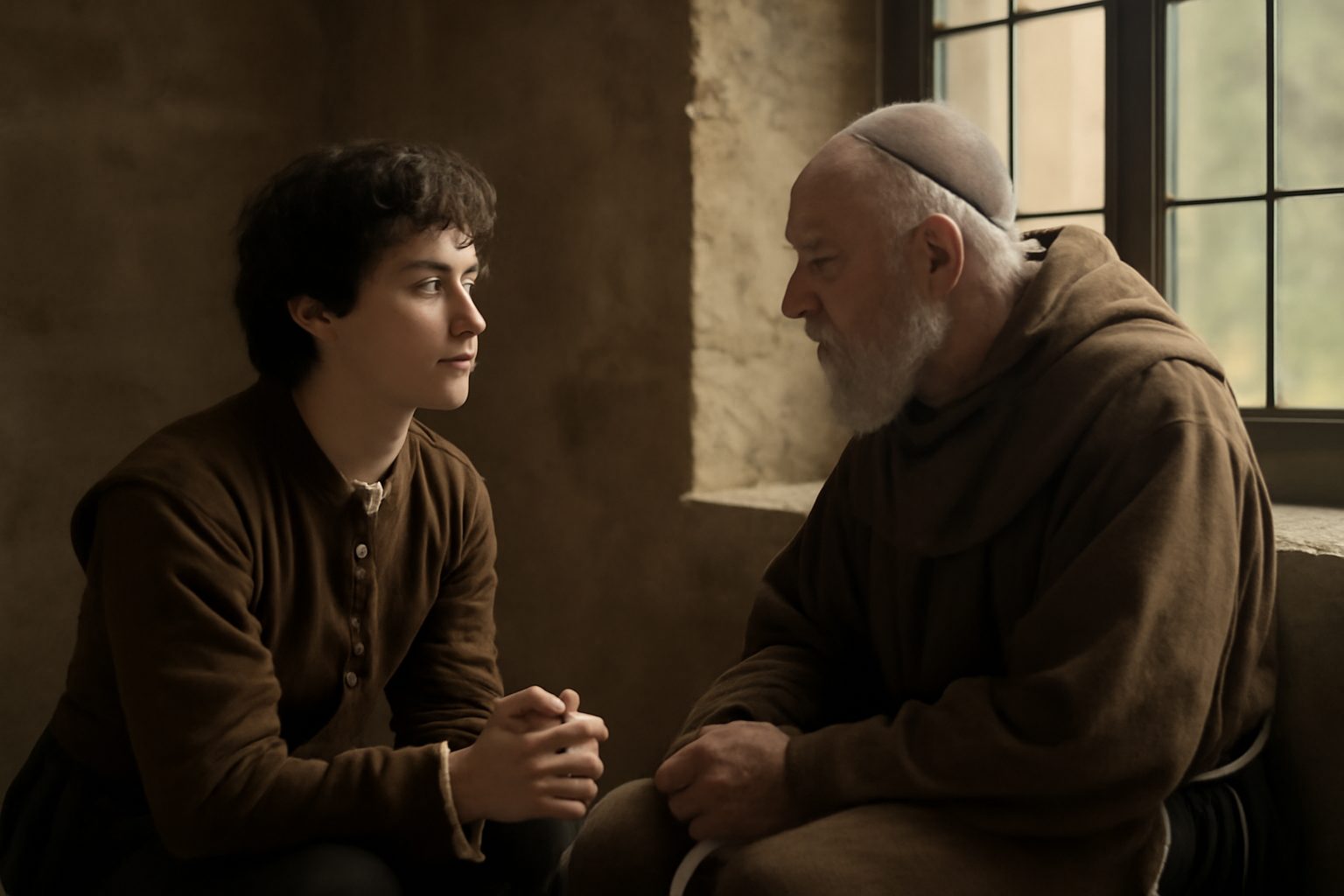
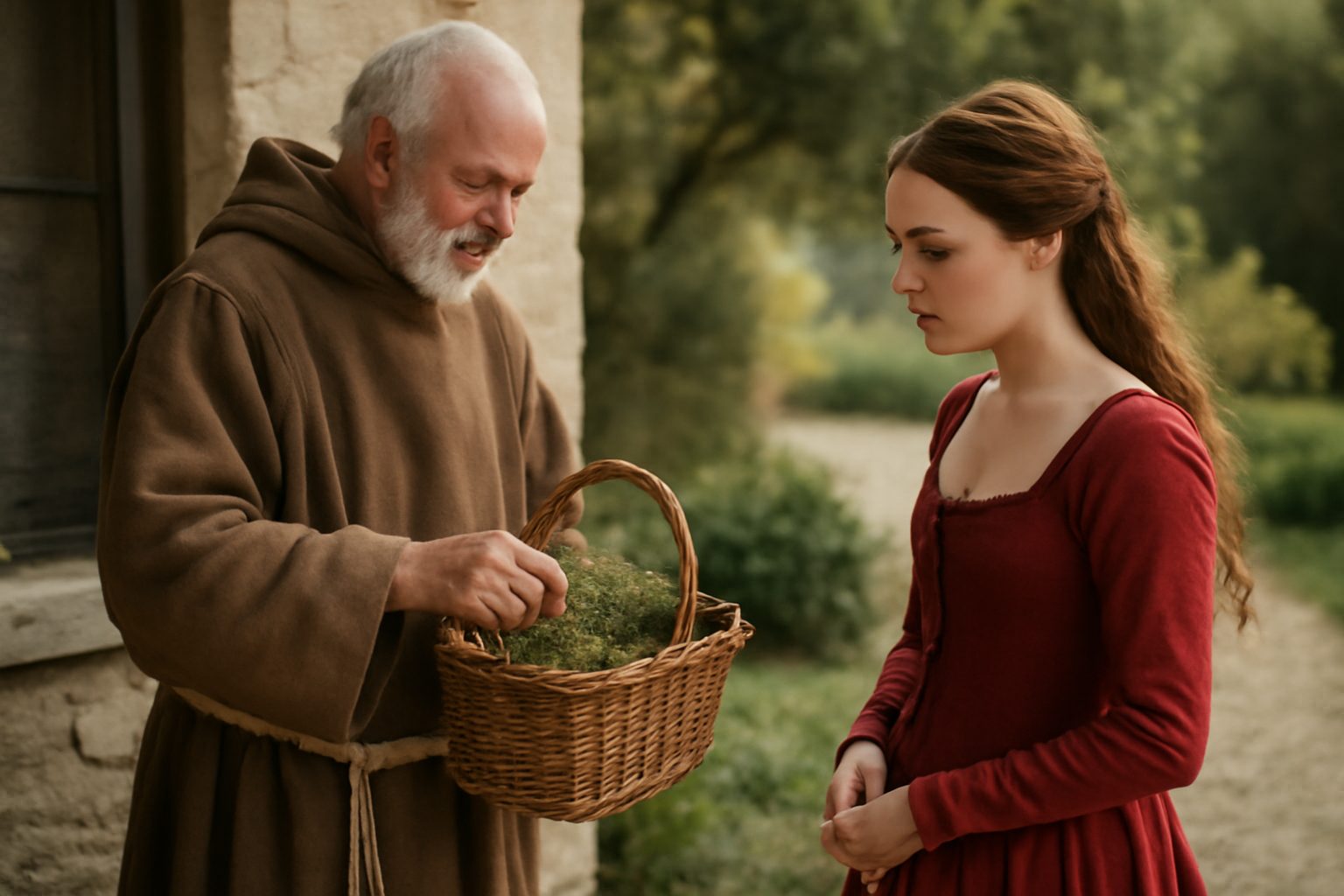
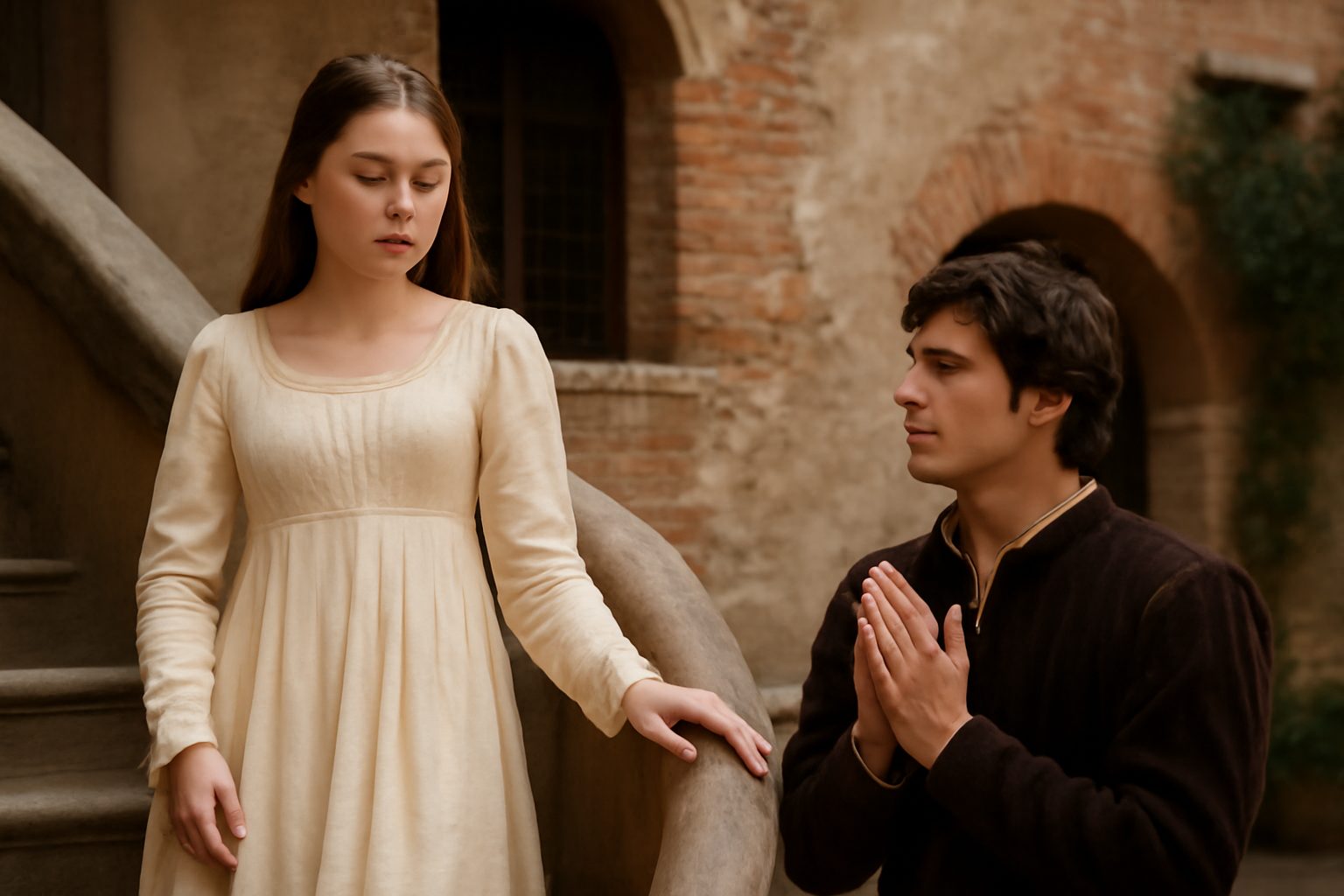
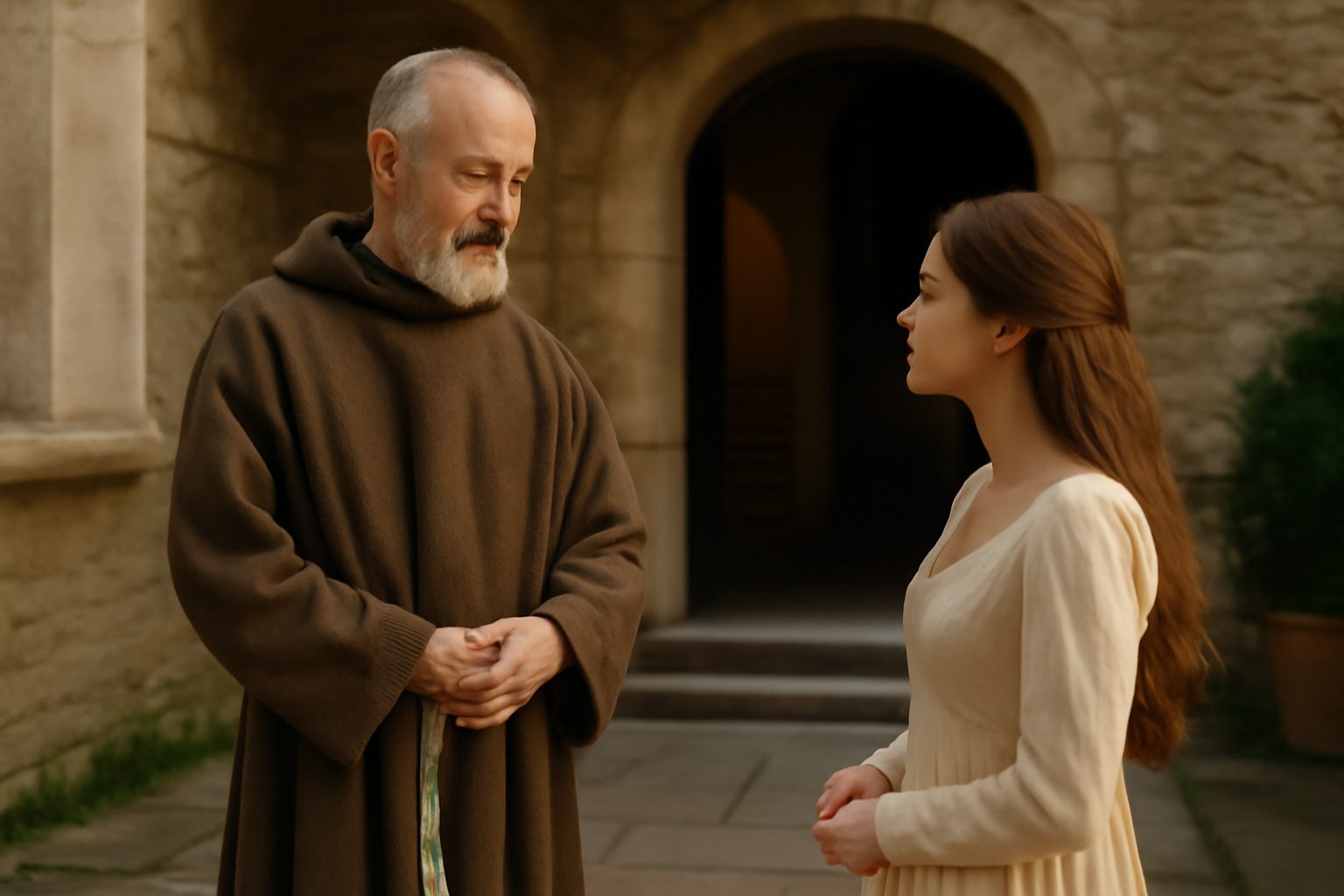
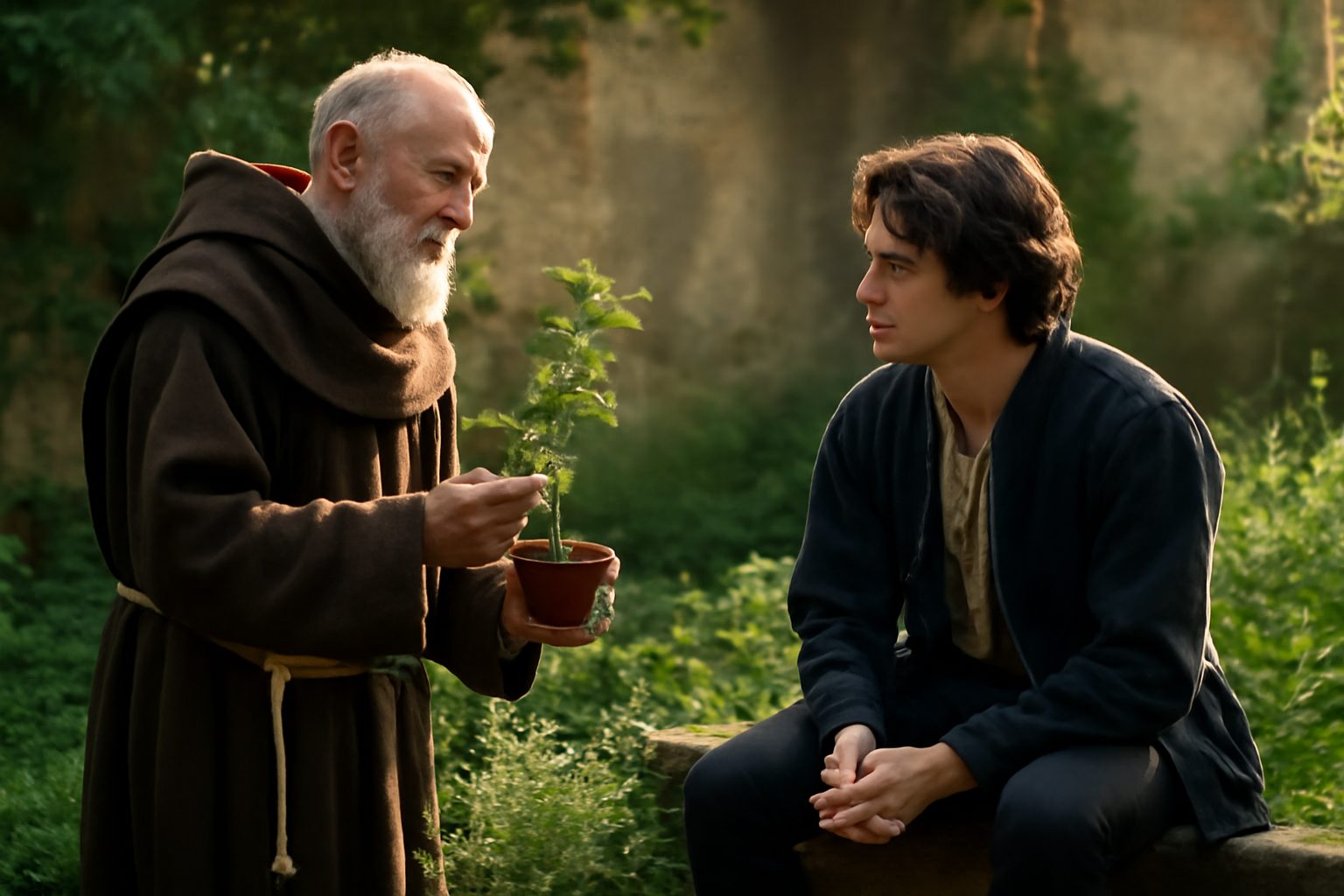
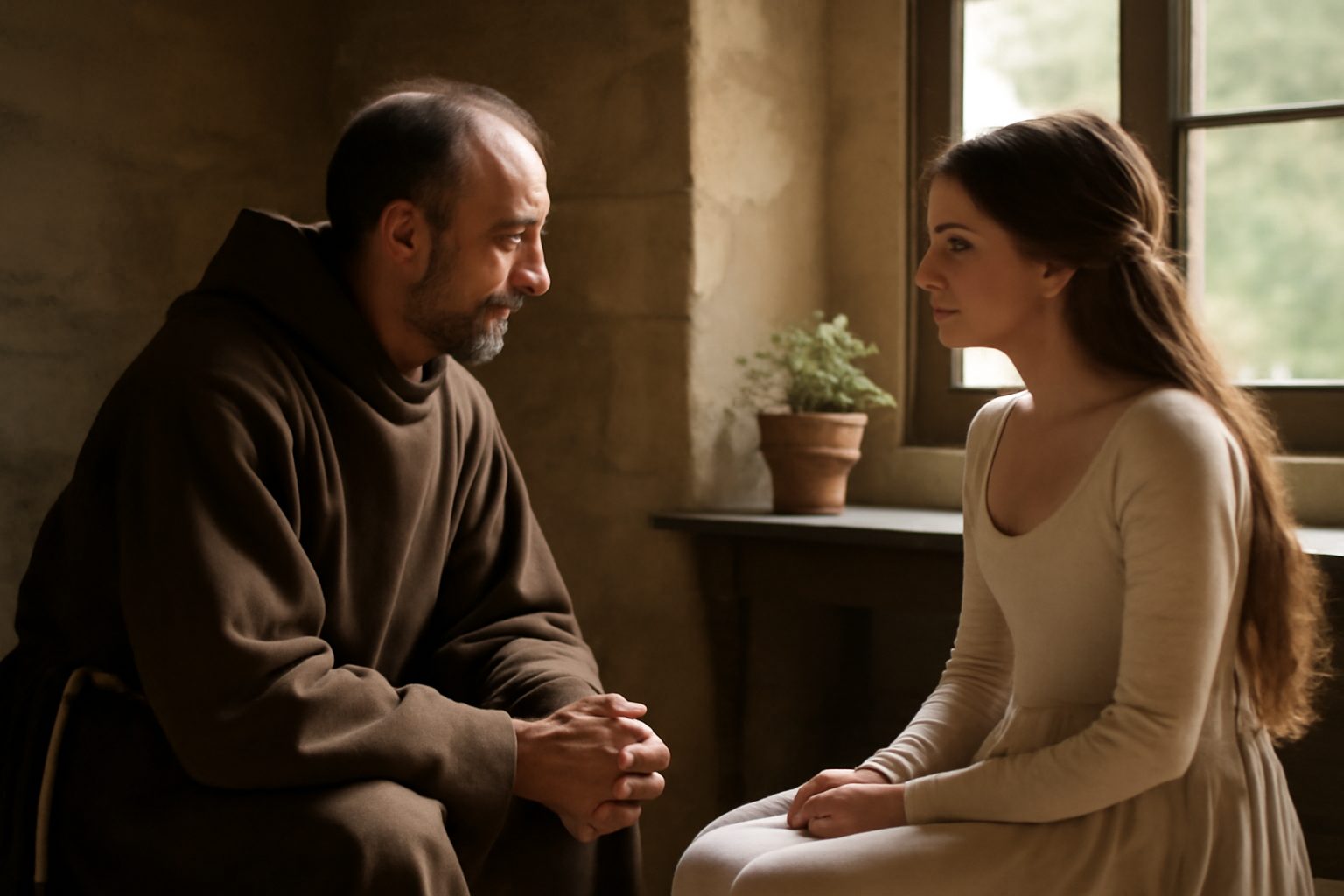
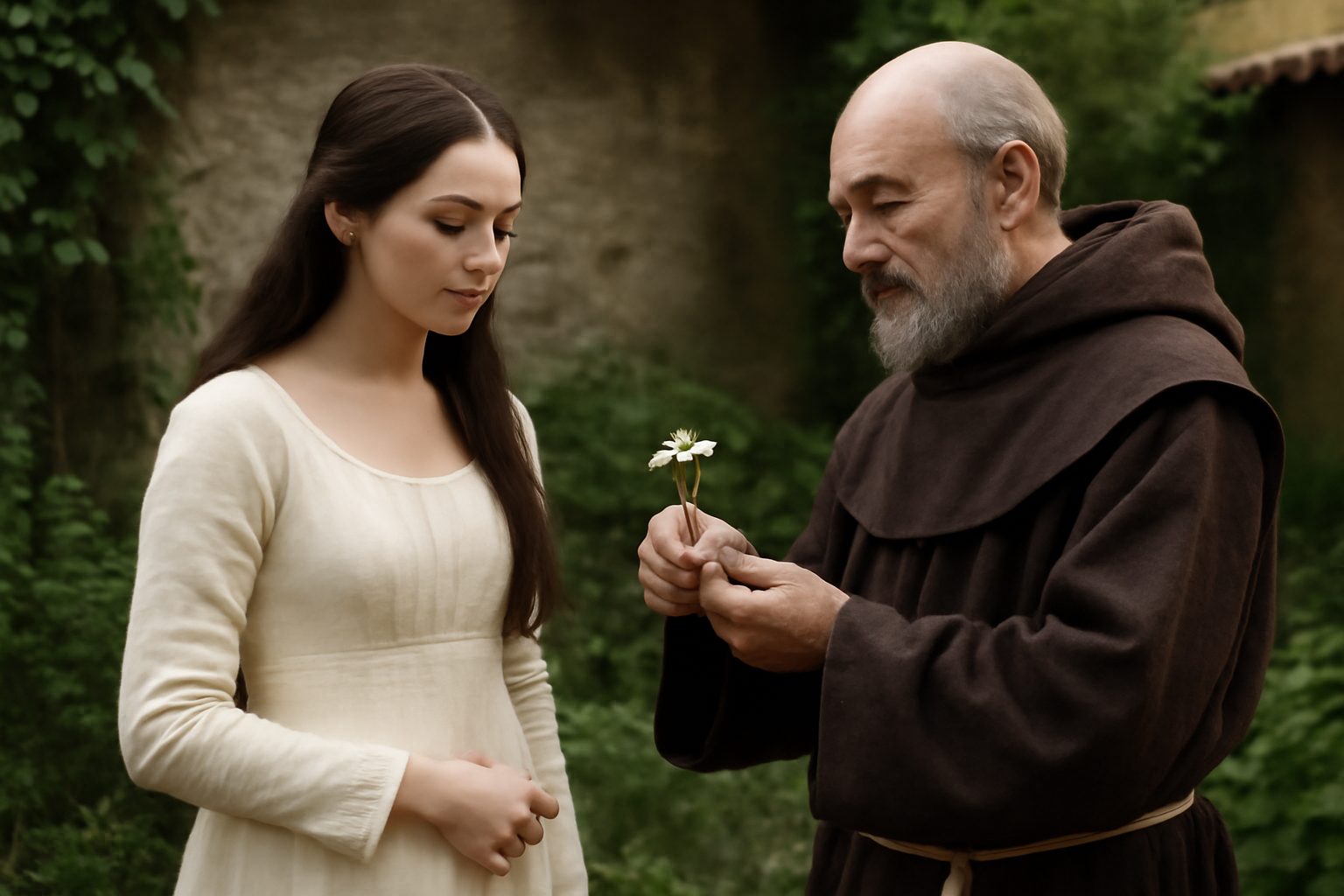
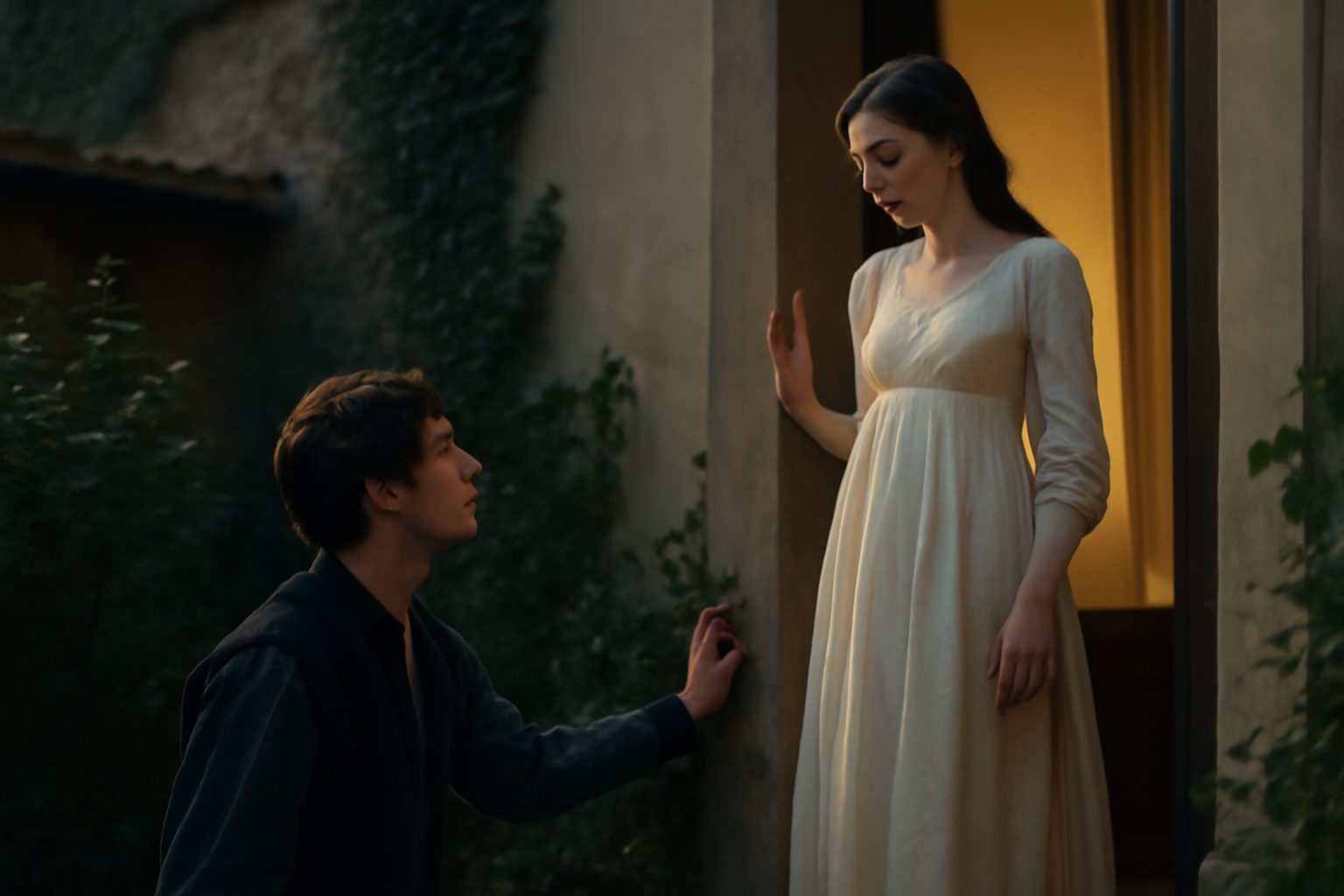
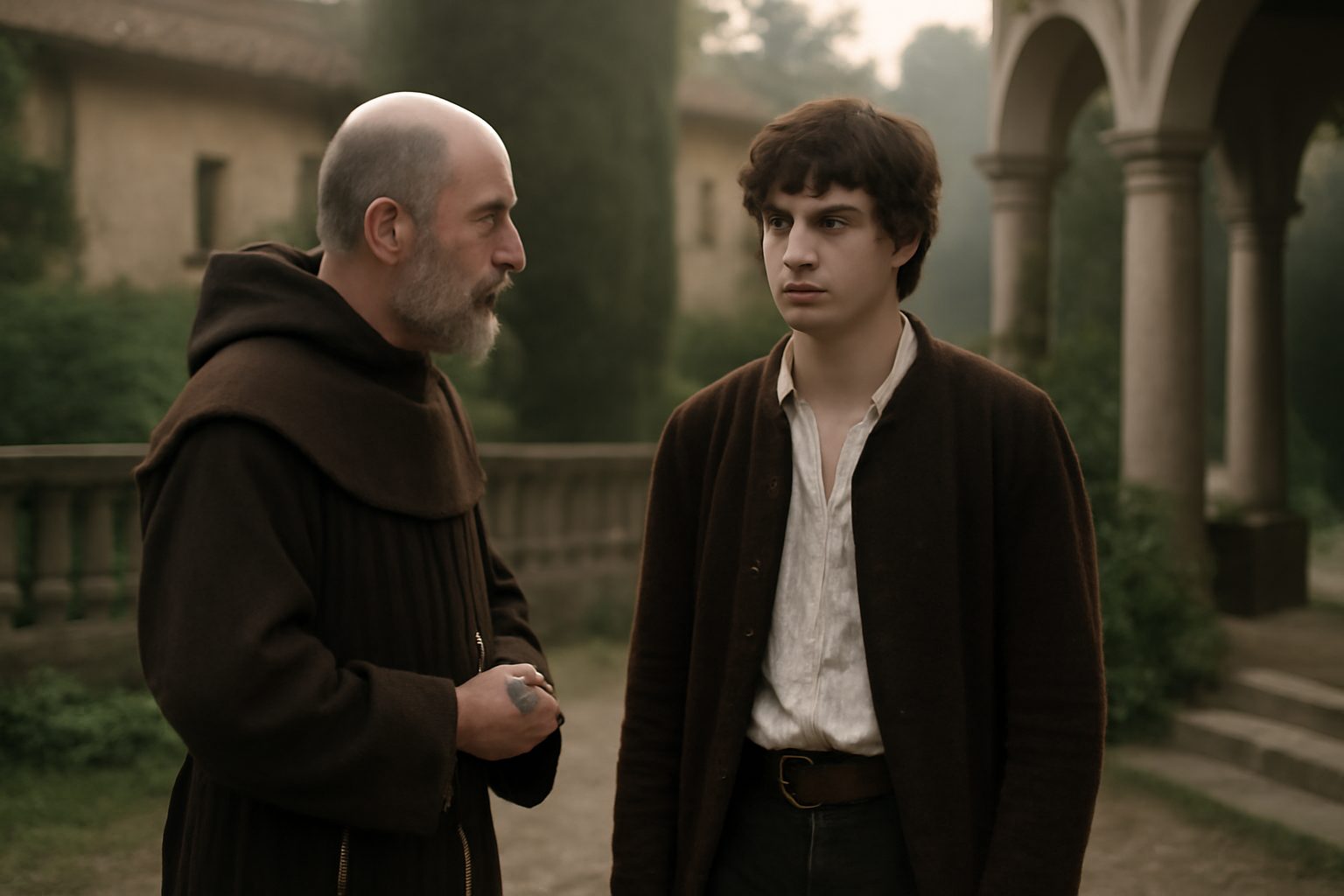
In Act 2, Scene 3 of Romeo and Juliet, Friar Laurence is gathering herbs at dawn when Romeo arrives, freshly smitten with Juliet. The friar notices Romeo's tear-streaked face and weary demeanor, prompting his exclamation about the excessive salt of tears. This moment highlights the friar's perceptive nature and Romeo's emotional turmoil after a night of passion and heartache.
Friar Laurence: "Jesu Maria, what a deal of brine"
In modern day english, we would say:
Good grief, so many tears.
Frequently Asked Questions
What does Friar Laurence mean when he mentions brine in this scene?
Friar Laurence is referring to the many tears Romeo has been crying, as brine is salt water like tears.
Connections to other verses:
Connections to "Jesu Maria, what a deal of brine"
The line "Jesu Maria, what a deal of brine" is spoken by Friar Laurence upon seeing Romeo's tear-stained face, expressing astonishment at the amount of tears Romeo has shed. This connects thematically and emotionally with several other verses in the scene.
Connection to Previous Lovesickness
Friar Laurence immediately links Romeo's current state to his past affliction for Rosaline, asking "God pardon sin! wast thou with Rosaline?" and later exclaiming "Holy Saint Francis, what a change is here!" He references how Romeo's tears "Hath wash'd thy sallow cheeks for Rosaline!" showing how the brine metaphor continues his critique of Romeo's emotional extravagance.
Thematic Expansion on Wasted Emotion
The friar develops this idea further, lamenting "How much salt water thrown away in waste" and questioning the purpose of such excessive emotion "To season love, that of it doth not taste!" This creates a sequence where the initial exclamation about brine introduces a meditation on misplaced emotional investment.
Physical Evidence of Tears
The friar observes tangible proof of Romeo's weeping, noting "Lo, here upon thy cheek the stain doth sit" from "an old tear that is not wash'd off yet" These lines provide physical evidence supporting his initial brine observation, creating a through-line of visible emotional distress.
Contrast With New Love
The brine reference also serves as contrast to Romeo's new state of being. Where before he was drowning in tears for Rosaline, now he claims "I have forgot that name, and that name's woe" and speaks of reciprocal love where "As mine on hers, so hers is set on mine" The brine becomes a marker of his emotional transformation.