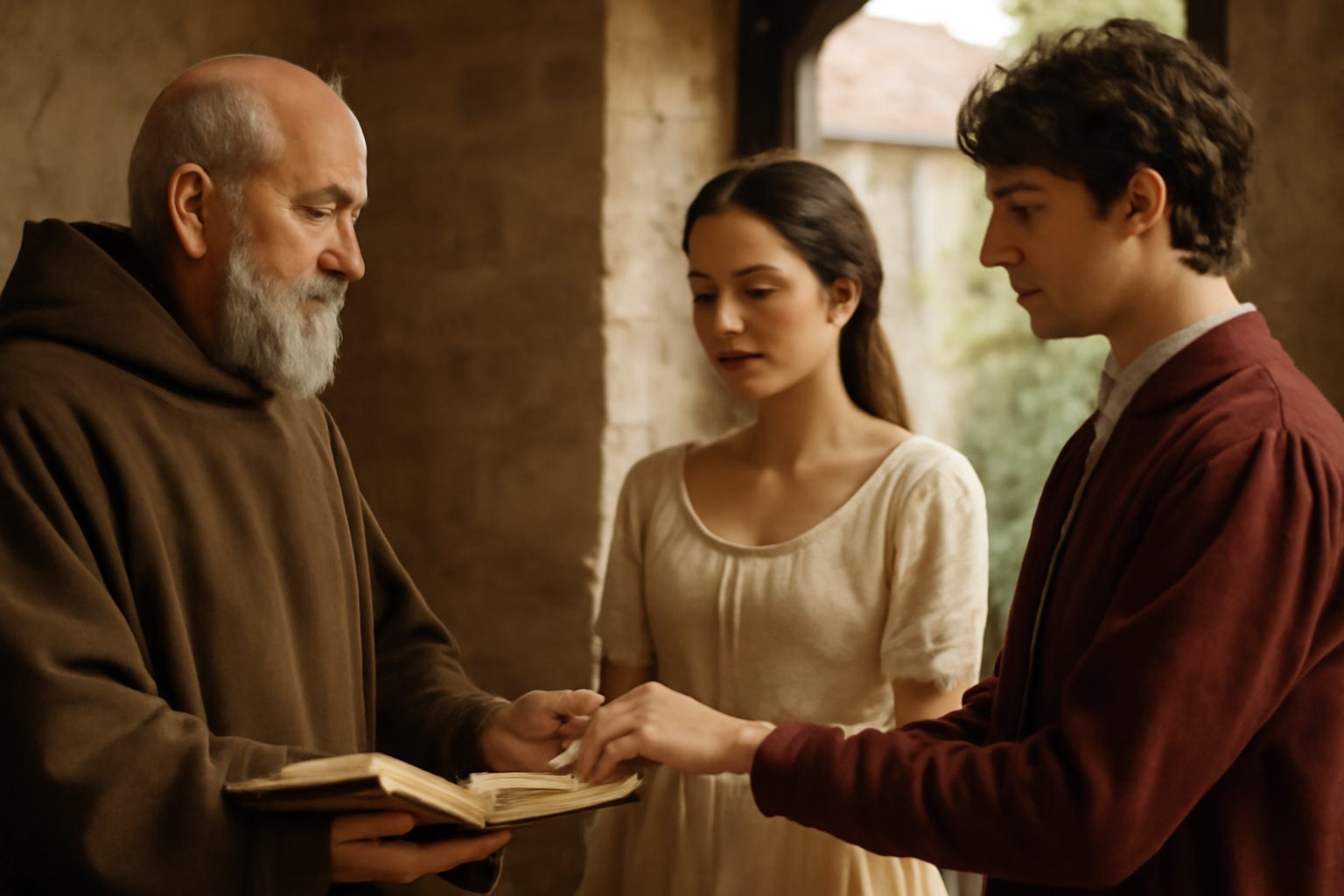
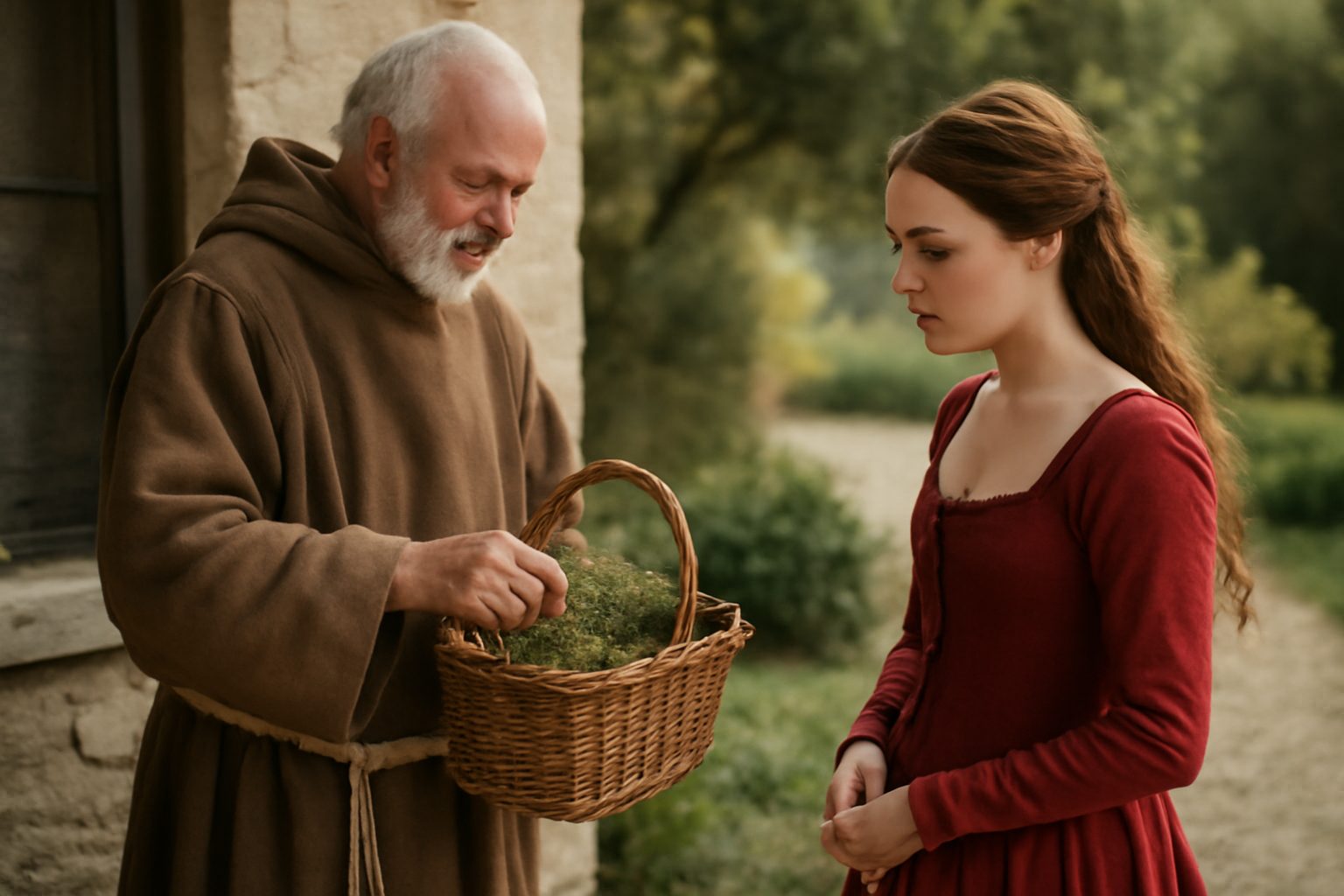
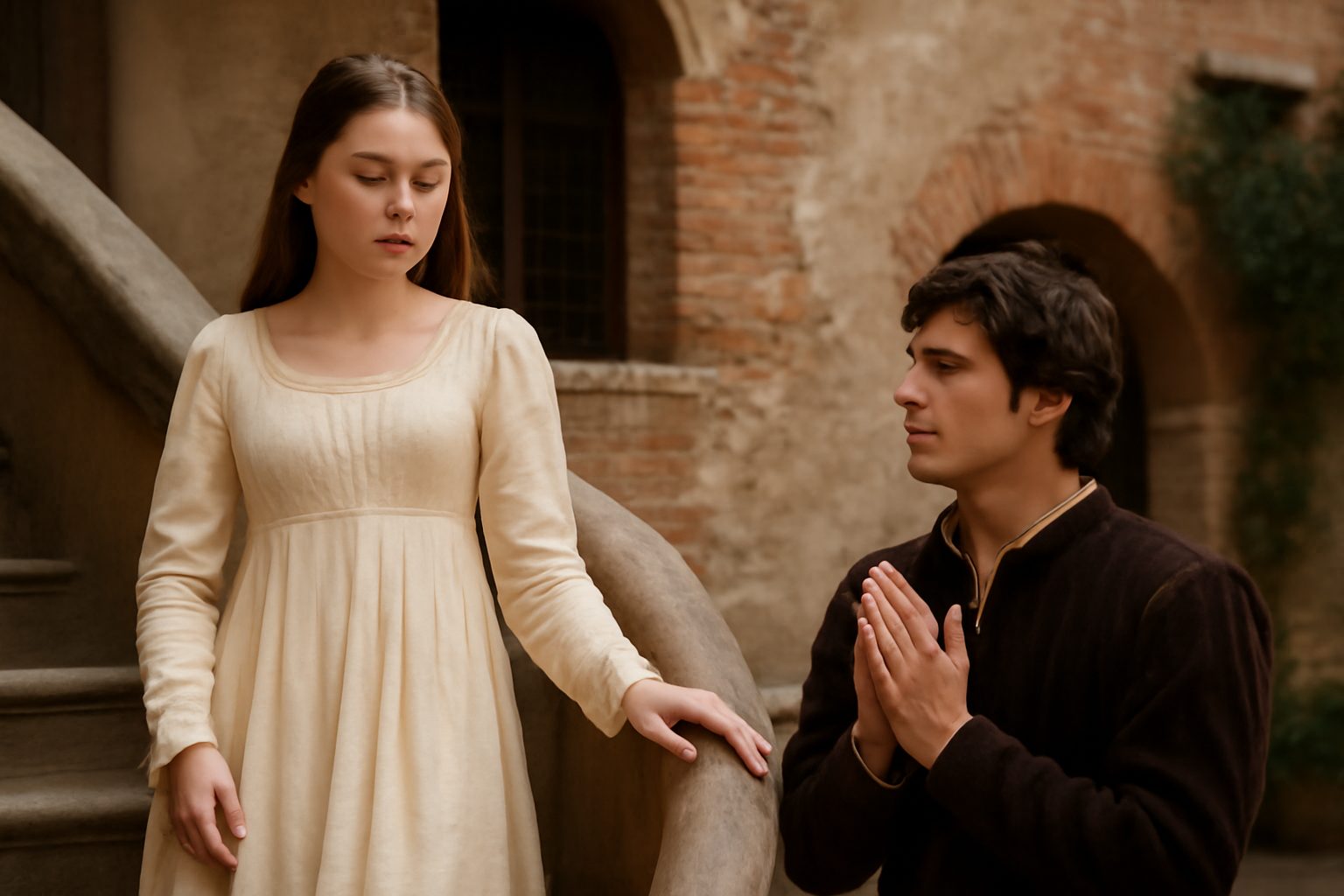
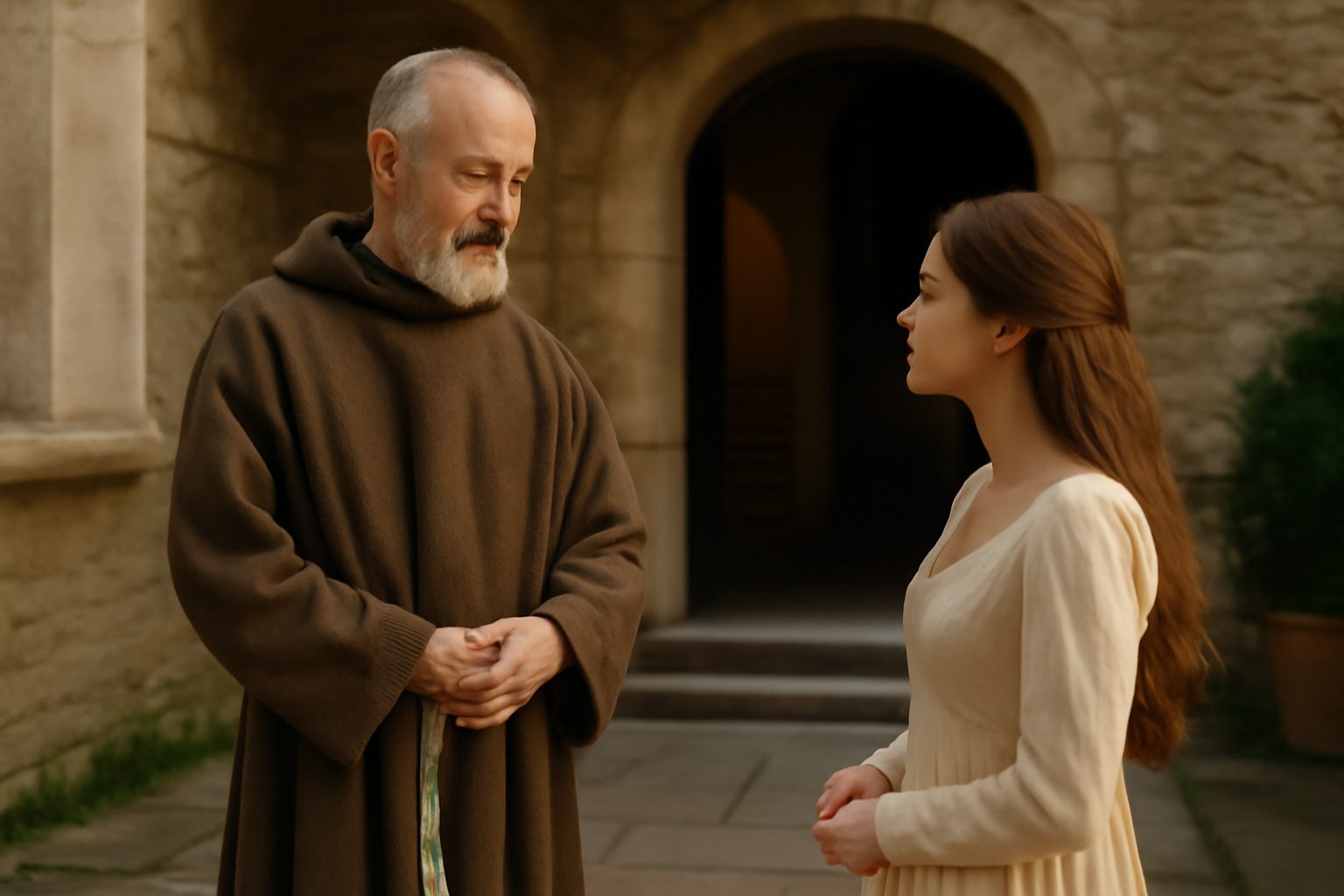
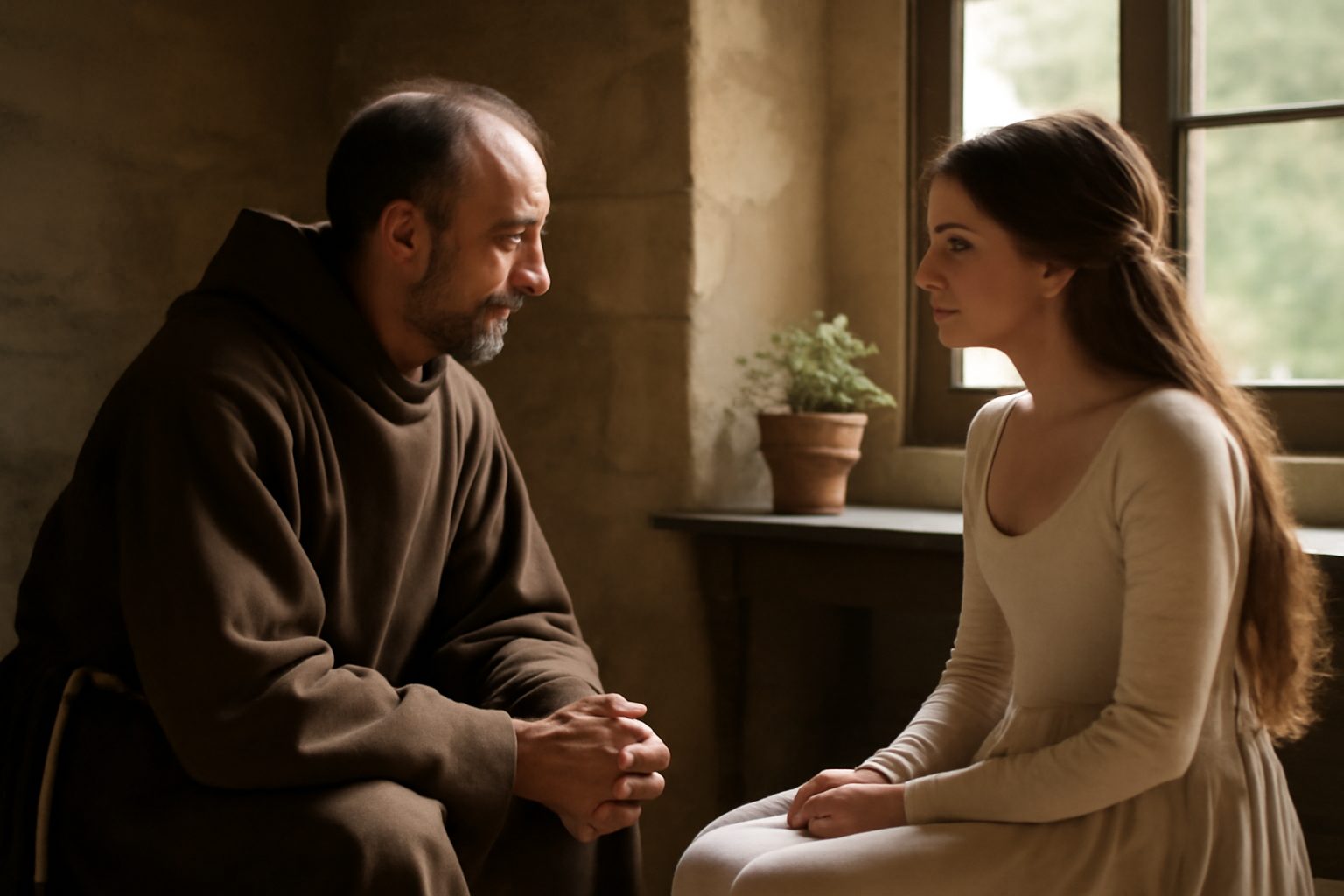
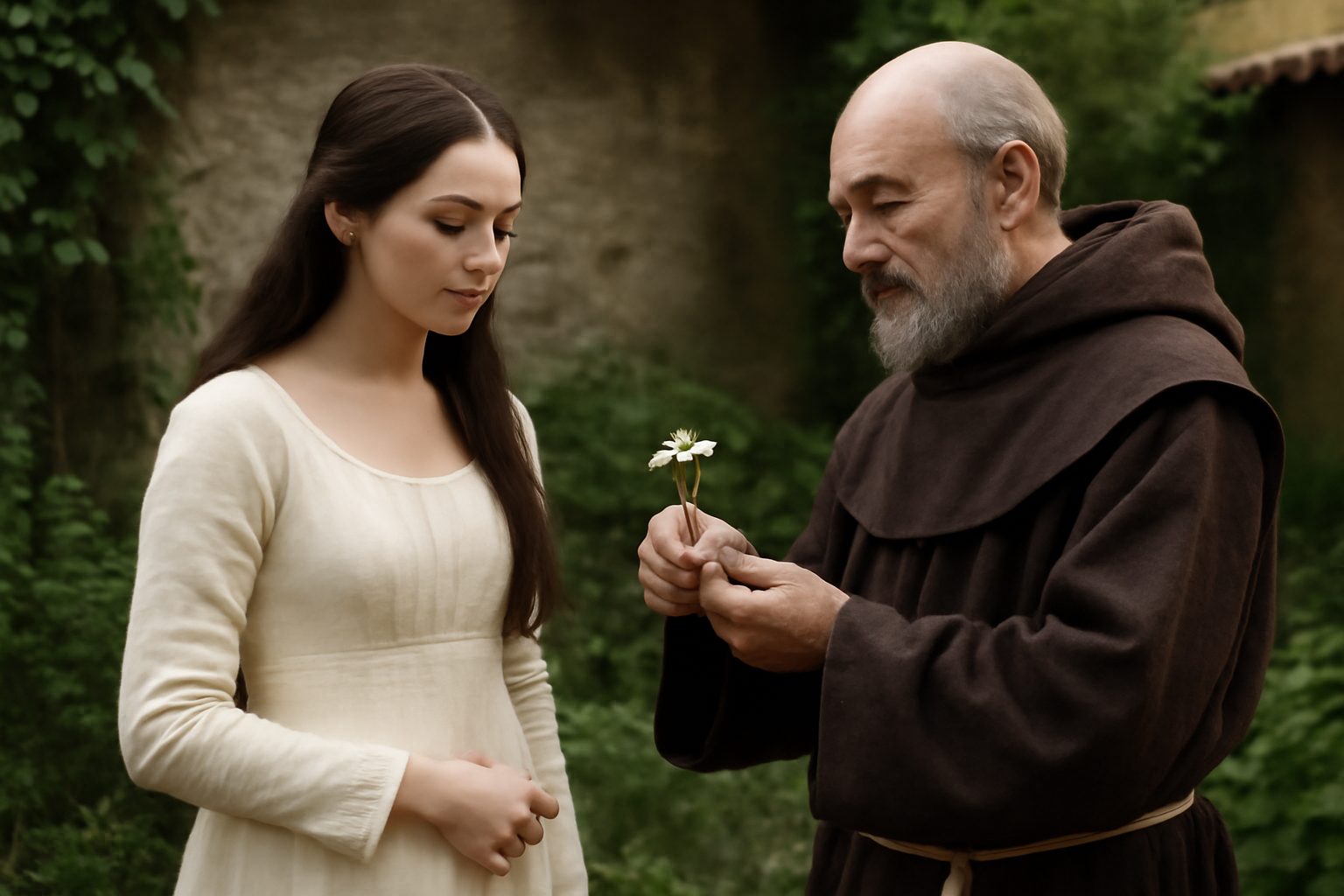
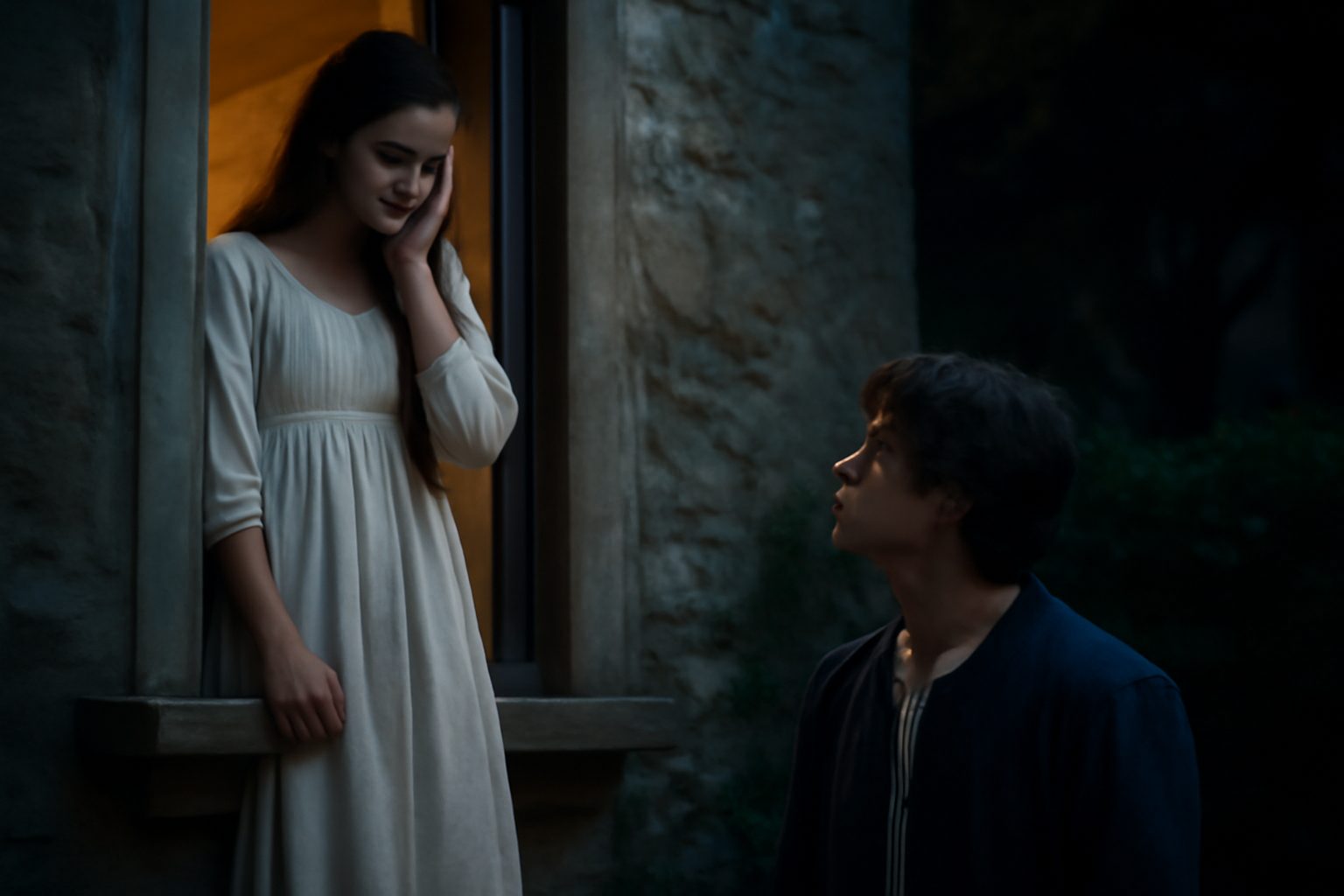
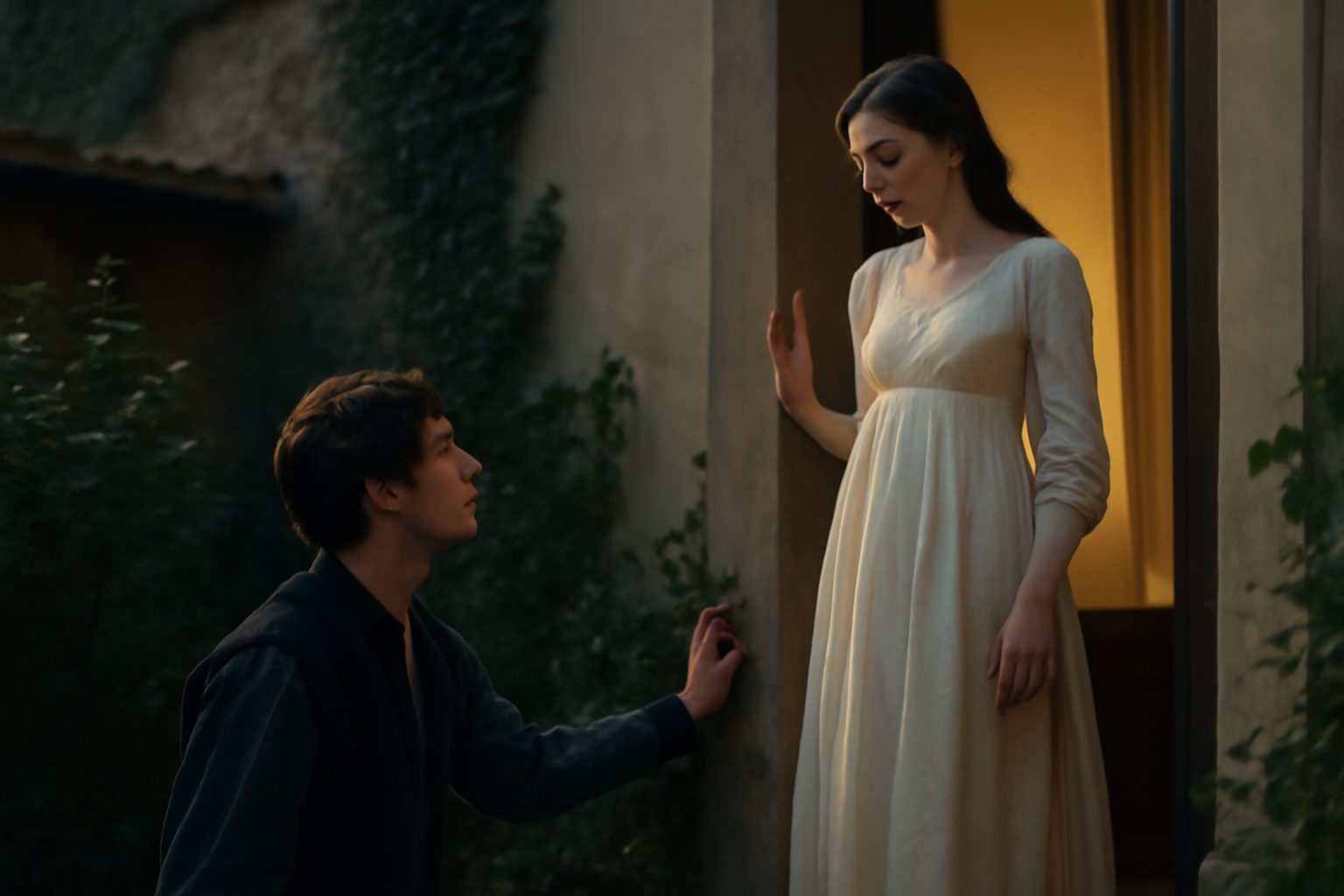
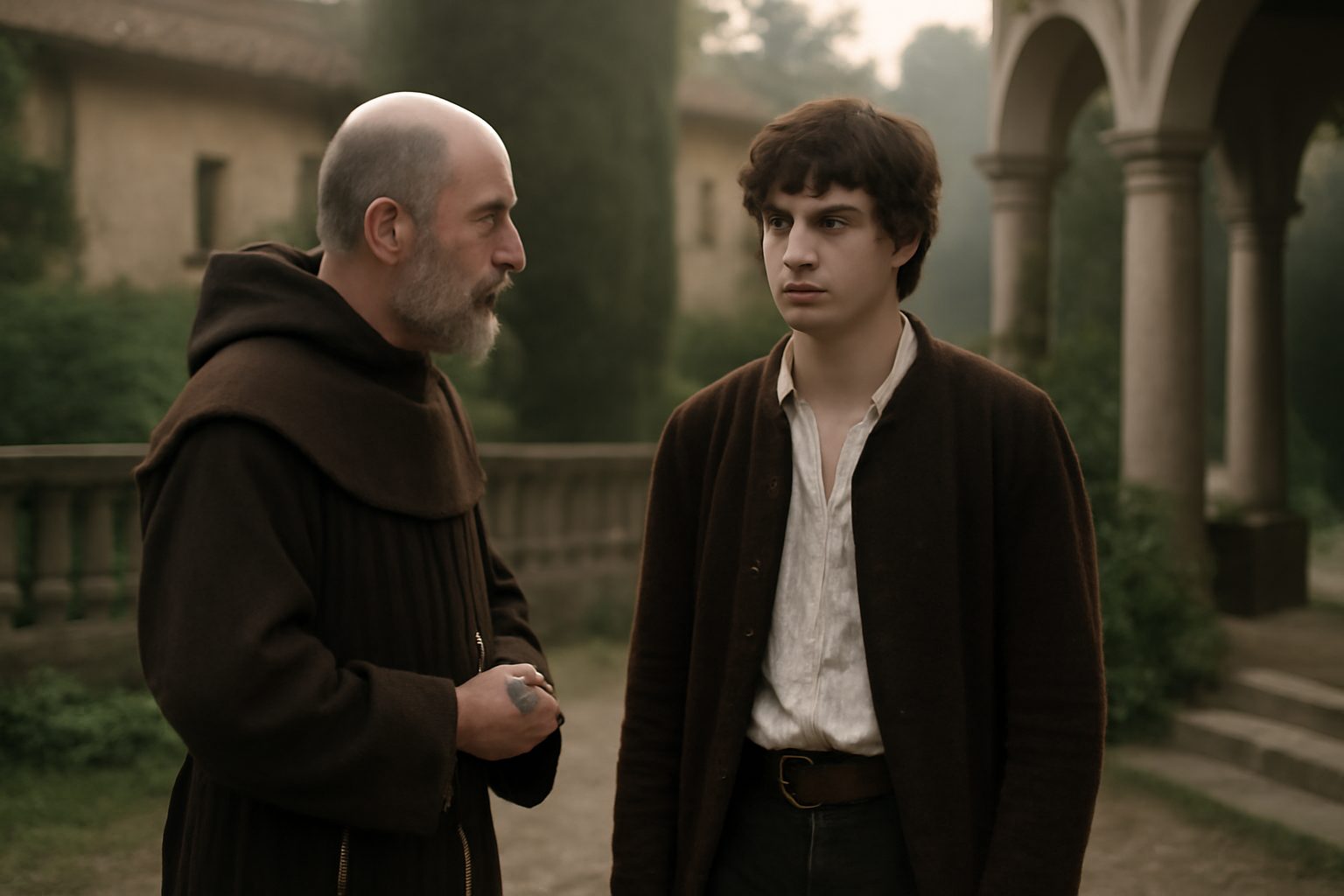
In Act 2, Scene 3 of Romeo and Juliet, Romeo speaks these words to Friar Laurence after secretly marrying Juliet. Filled with impulsive passion, he urges the Friar to hurry, eager to solidify their union despite the risks. This line captures Romeo's characteristic impetuosity, as he rushes forward without considering the consequences.
Romeo: "O, let us hence; I stand on sudden haste."
In modern day english, we would say:
Let’s go—I’m in a hurry right now.
Frequently Asked Questions
What does Romeo want to do in this line?
Romeo wants to leave quickly because he is in a hurry.
Connections to other verses:
Connections to "O, let us hence; I stand on sudden haste."
This line, spoken by Romeo, reflects his impetuous nature and eagerness to marry Juliet quickly. It connects thematically and dramatically to several other verses in the scene.
Impatience and Urgency
Romeo's haste is immediately countered by Friar Laurence's wisdom in Wisely and slow; they stumble that run fast., which serves as a direct admonition against rash actions. This contrast highlights the tension between youthful impulsivity and experienced caution.
Emotional Transformation
Romeo's sudden shift from despair over Rosaline to joy with Juliet is noted by Friar Laurence in verses like Holy Saint Francis, what a change is here! and And art thou changed? pronounce this sentence…. These lines underscore the astonishment at Romeo's rapid emotional turnaround, which fuels his urgency.
Love and Remedies
The Friar's earlier monologue about the dual nature of plants—"Poison hath residence and medicine power" from Poison hath residence and medicine power:—foreshadows the potential consequences of Romeo's hasty actions. The marriage, intended as a remedy for the feud, could become poisonous if rushed.
Resolution and Hope
Despite his caution, Friar Laurence agrees to assist Romeo, noting in In one respect I'll thy assistant be; that this union might "turn your households' rancour to pure love" (To turn your households' rancour to pure love.). This hope justifies the sudden haste to some extent, linking back to Romeo's plea.
Rejection of the Past
Romeo's urgency is partly driven by his complete rejection of his past love for Rosaline, as seen in I have forgot that name, and that name's woe.. This dismissal allows him to focus entirely on Juliet, reinforcing his impatience to move forward.