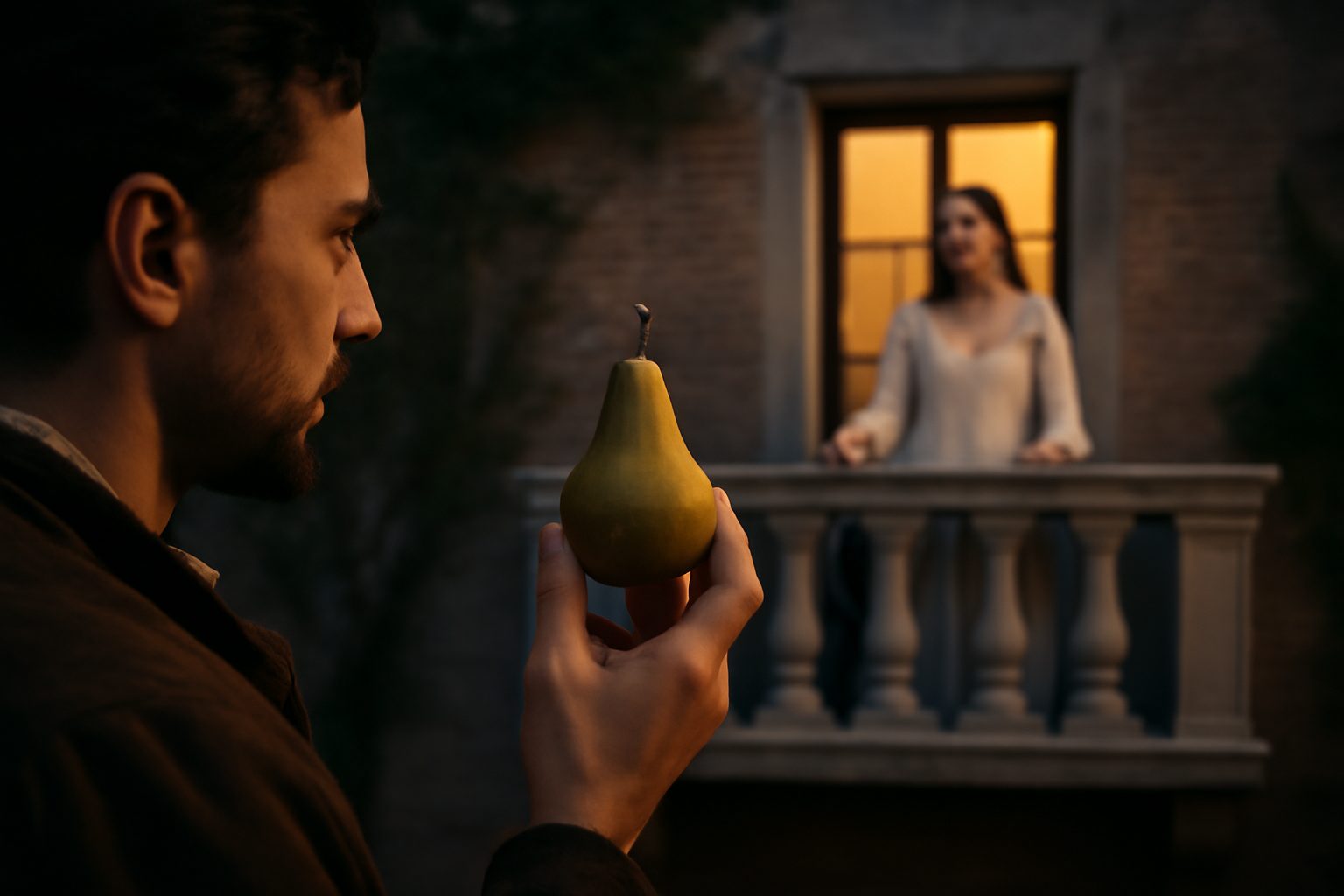
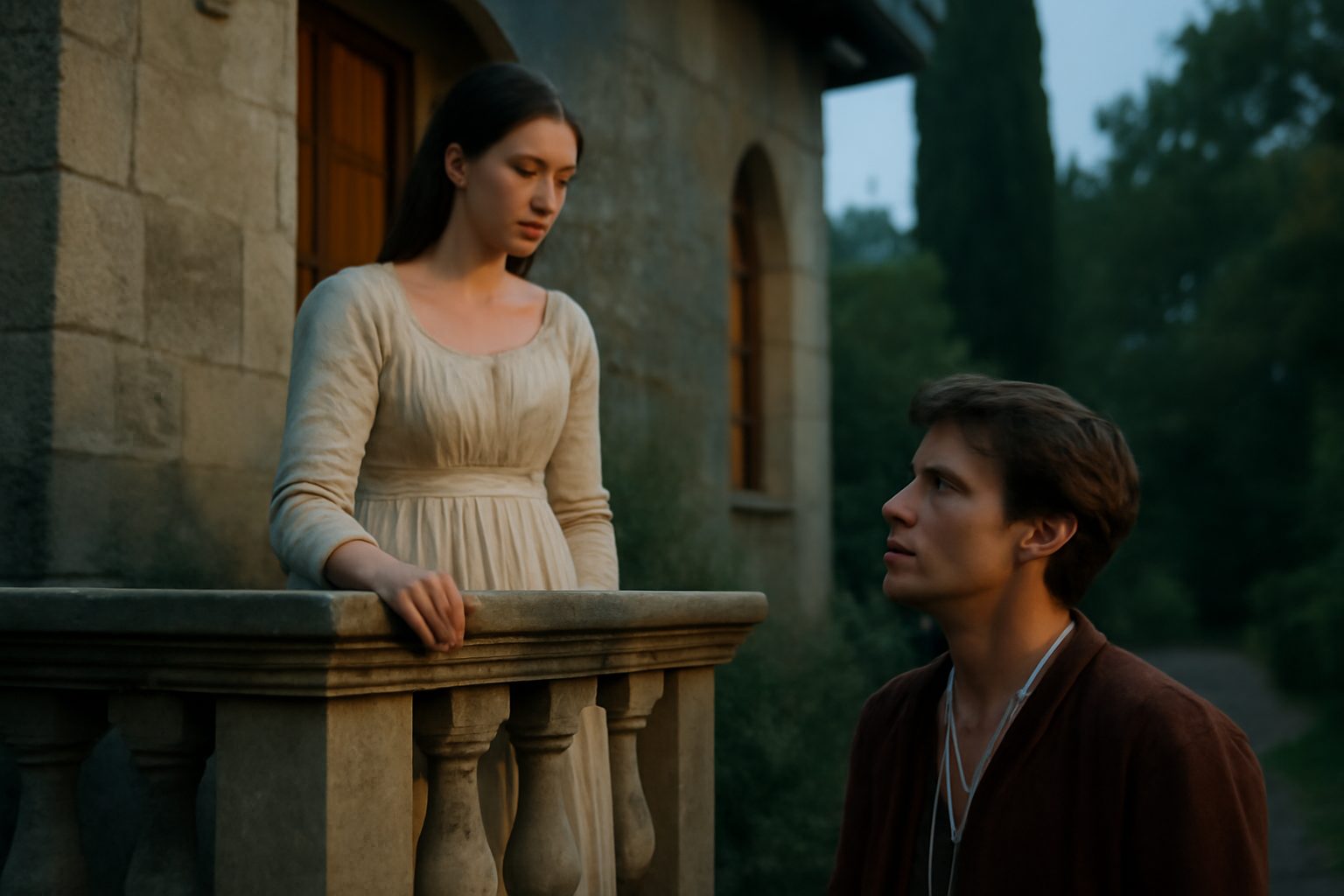
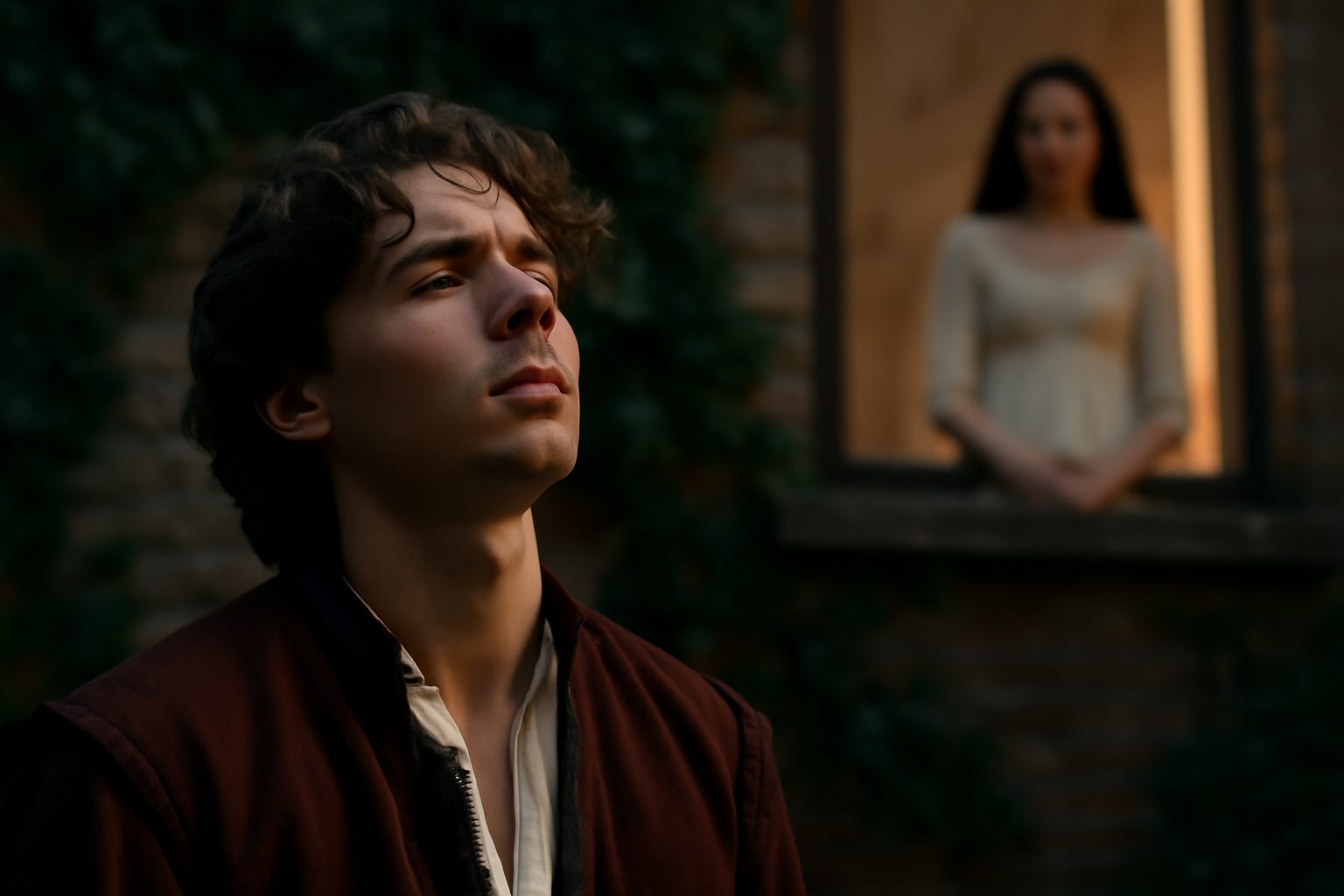
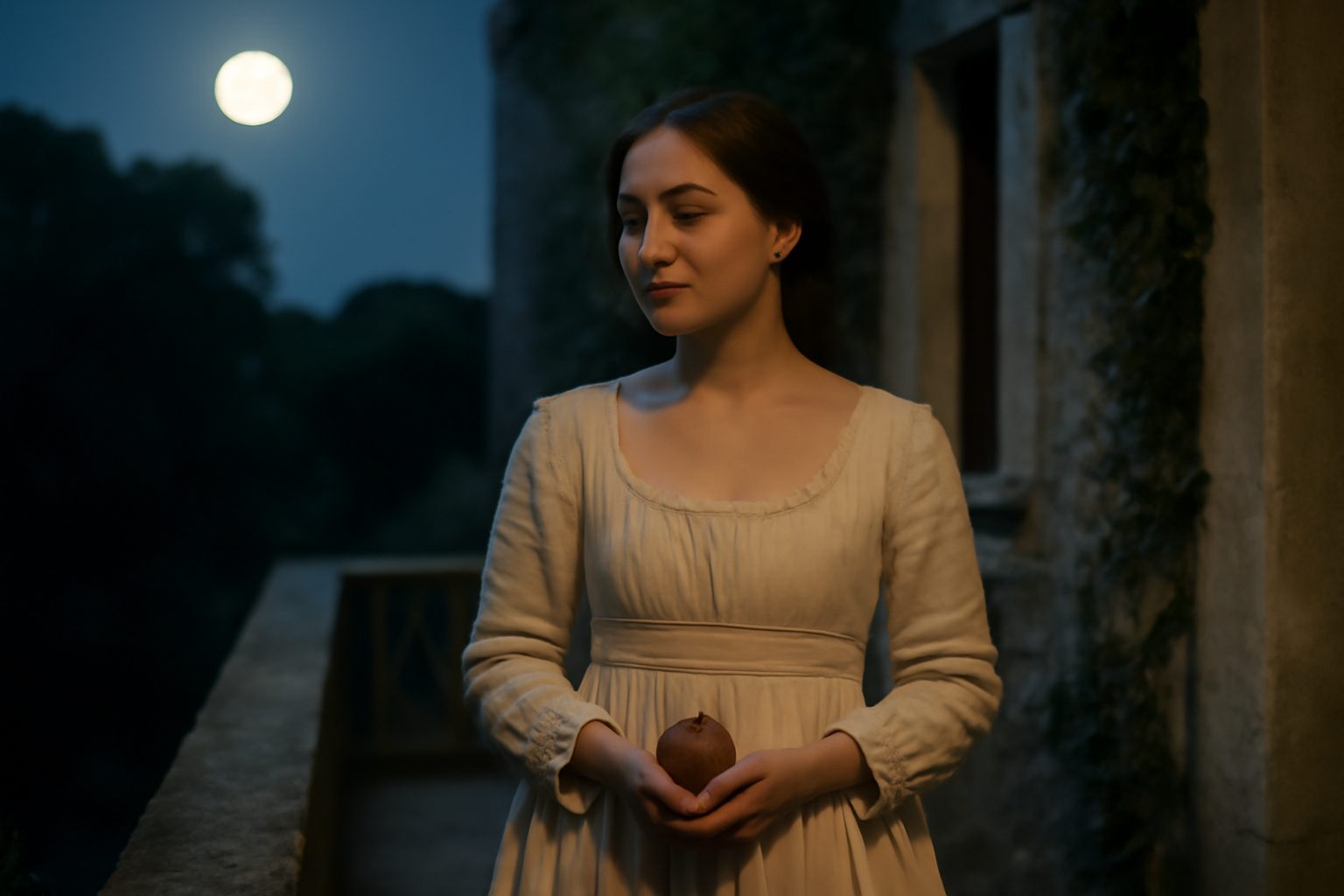
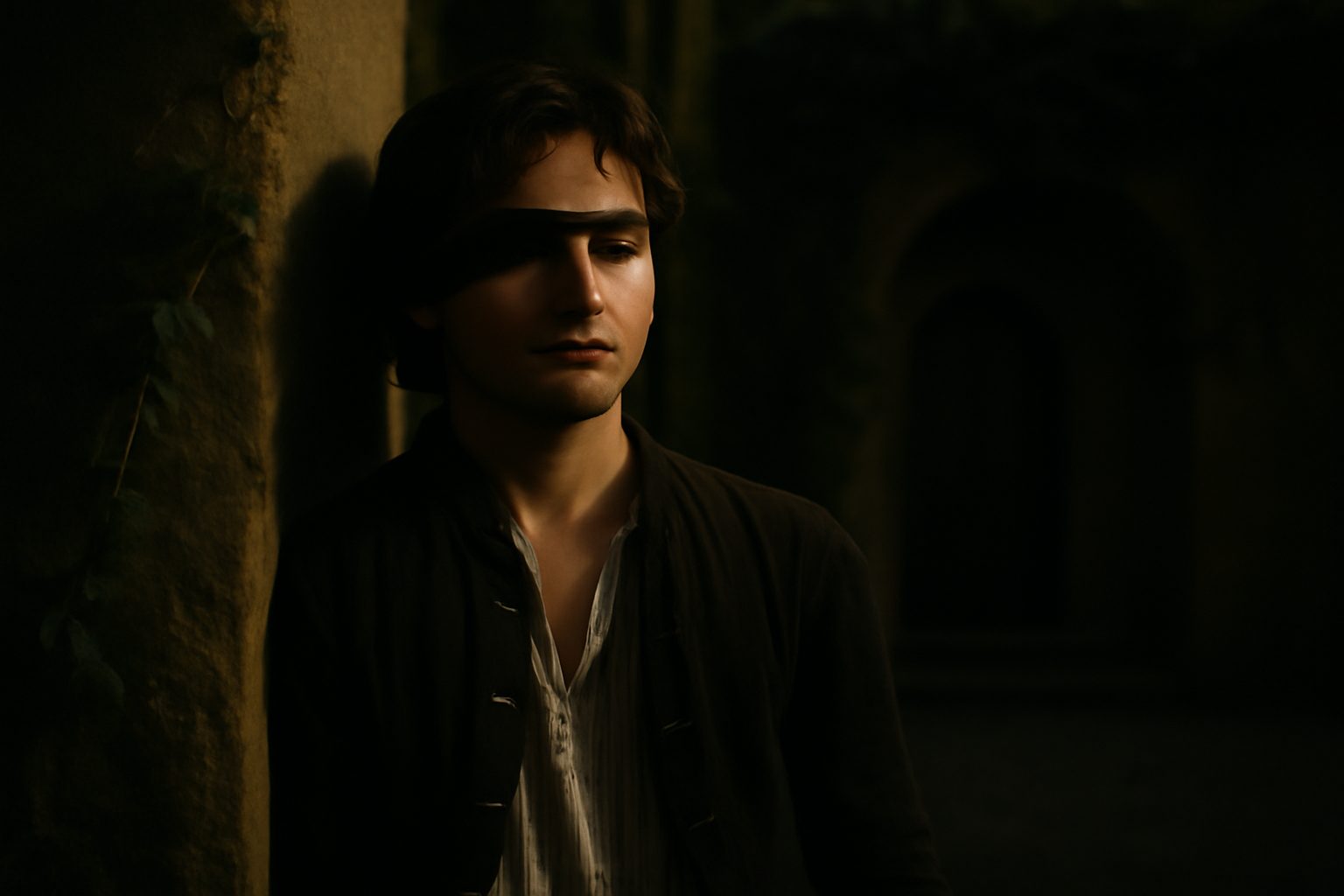
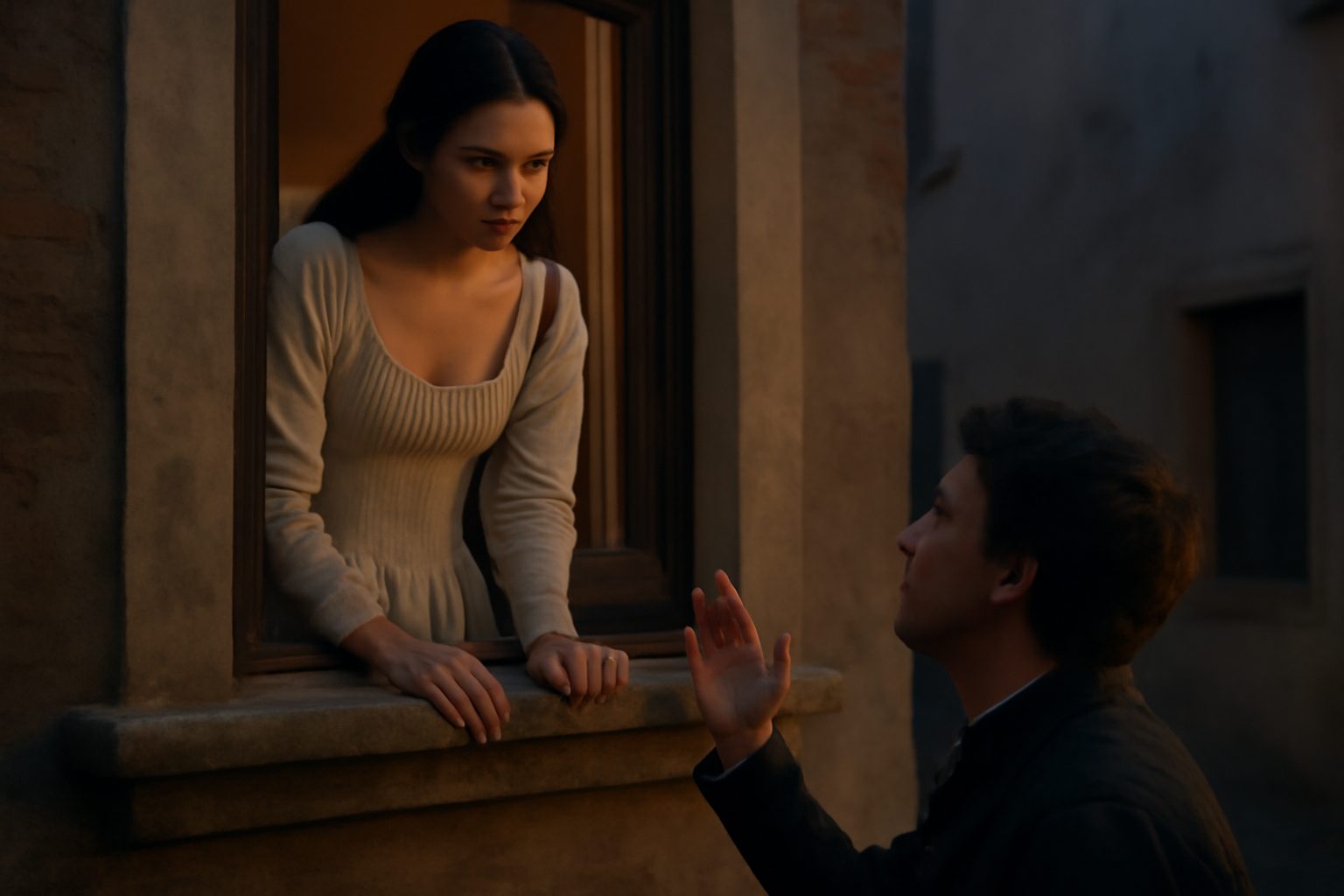
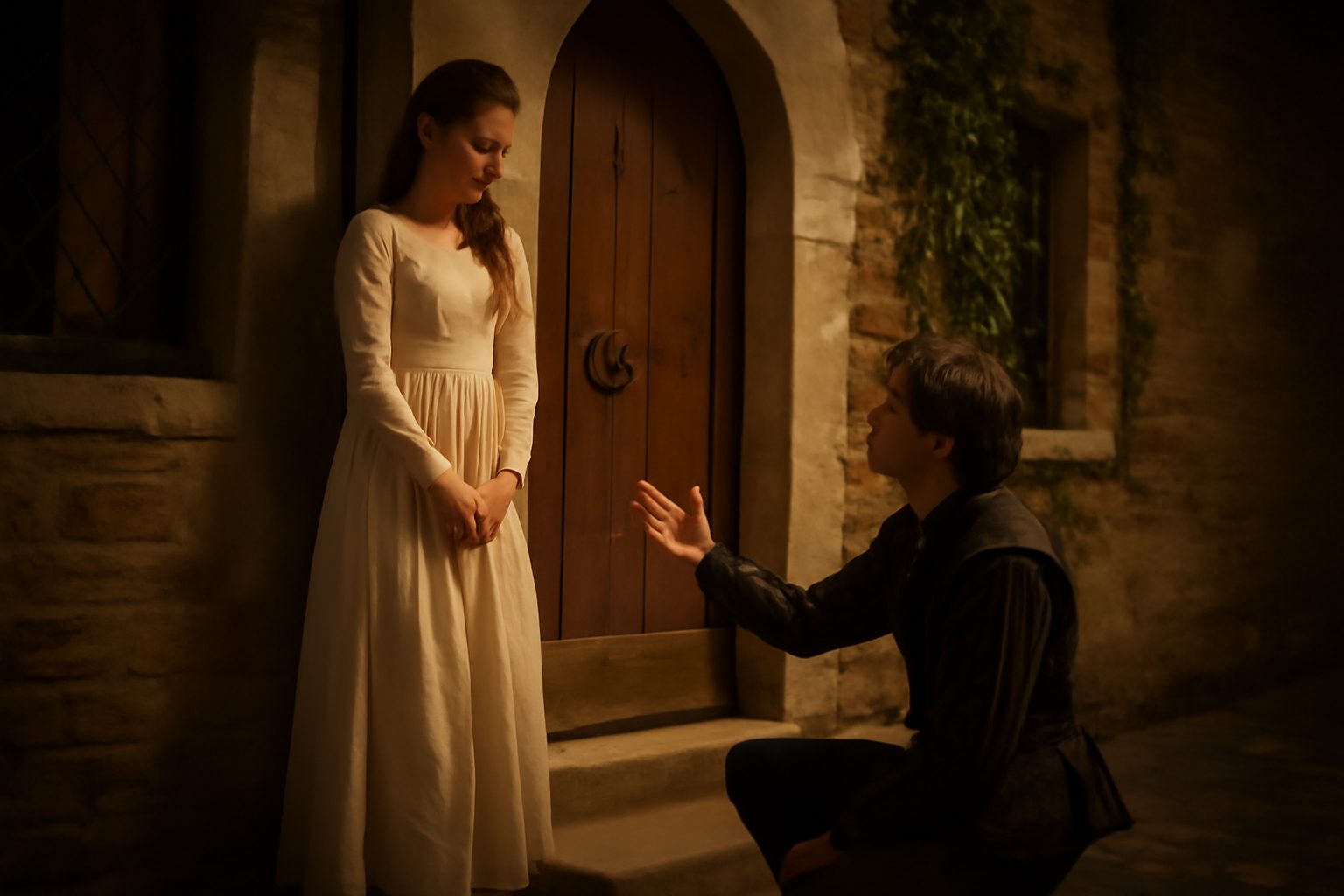
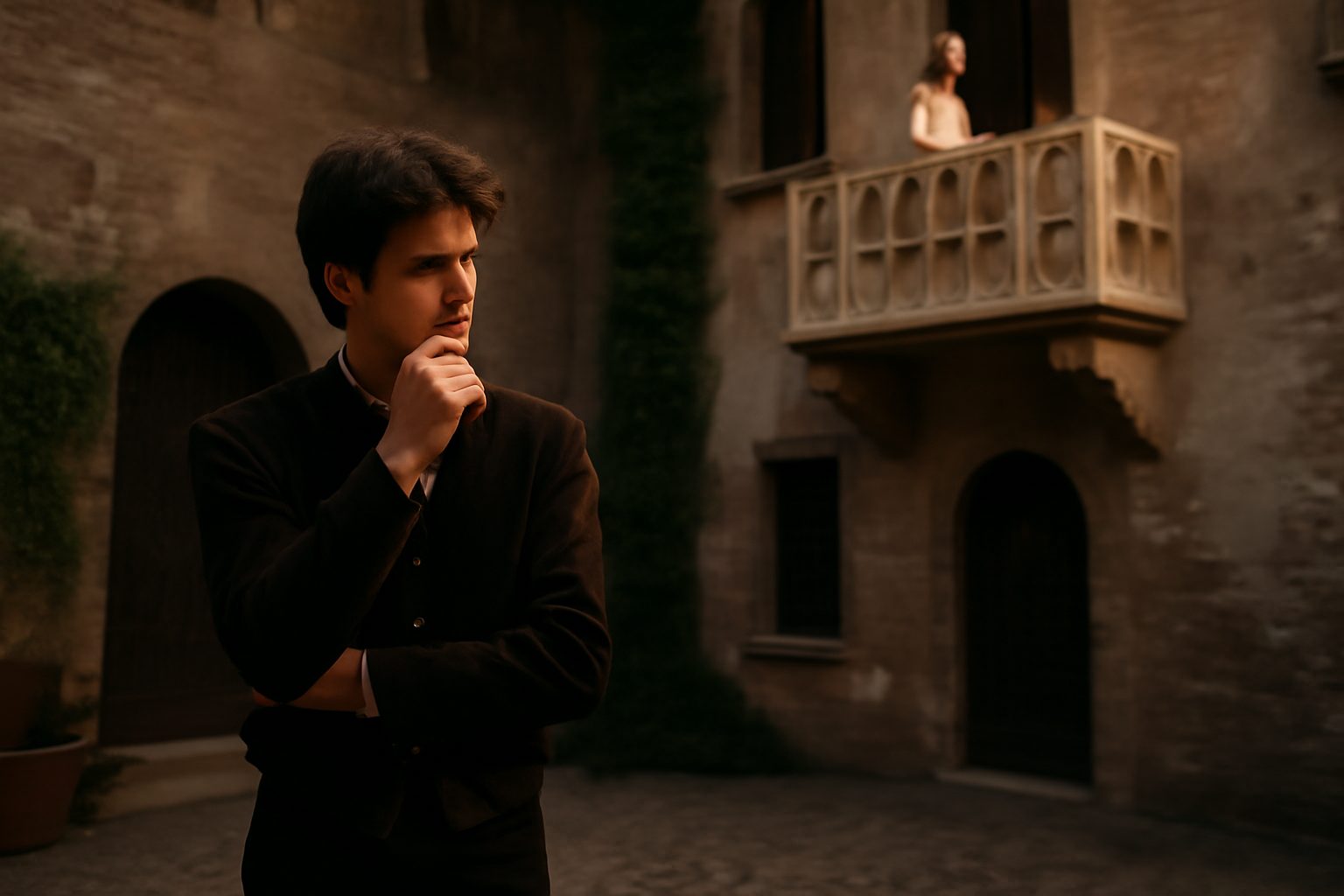
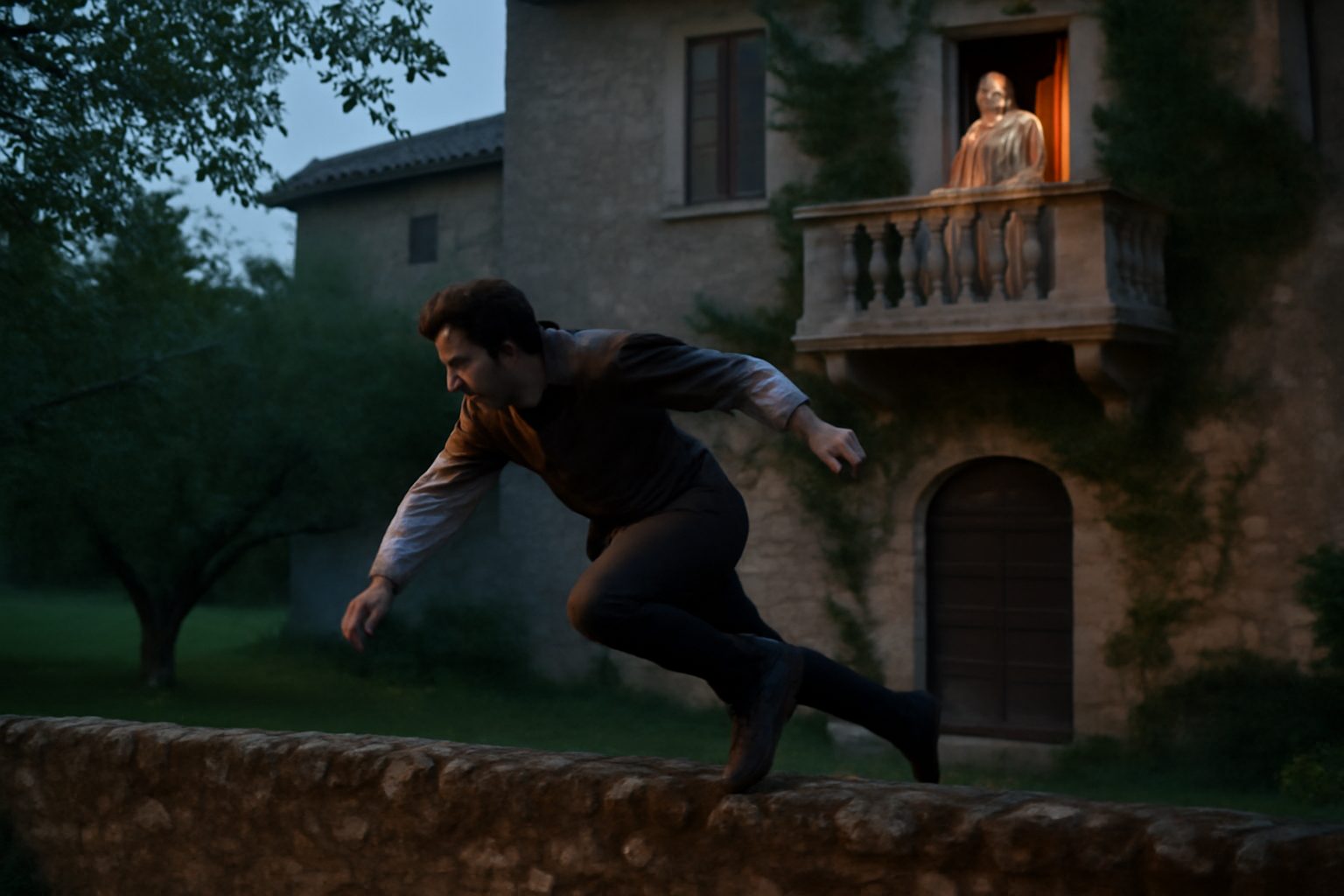
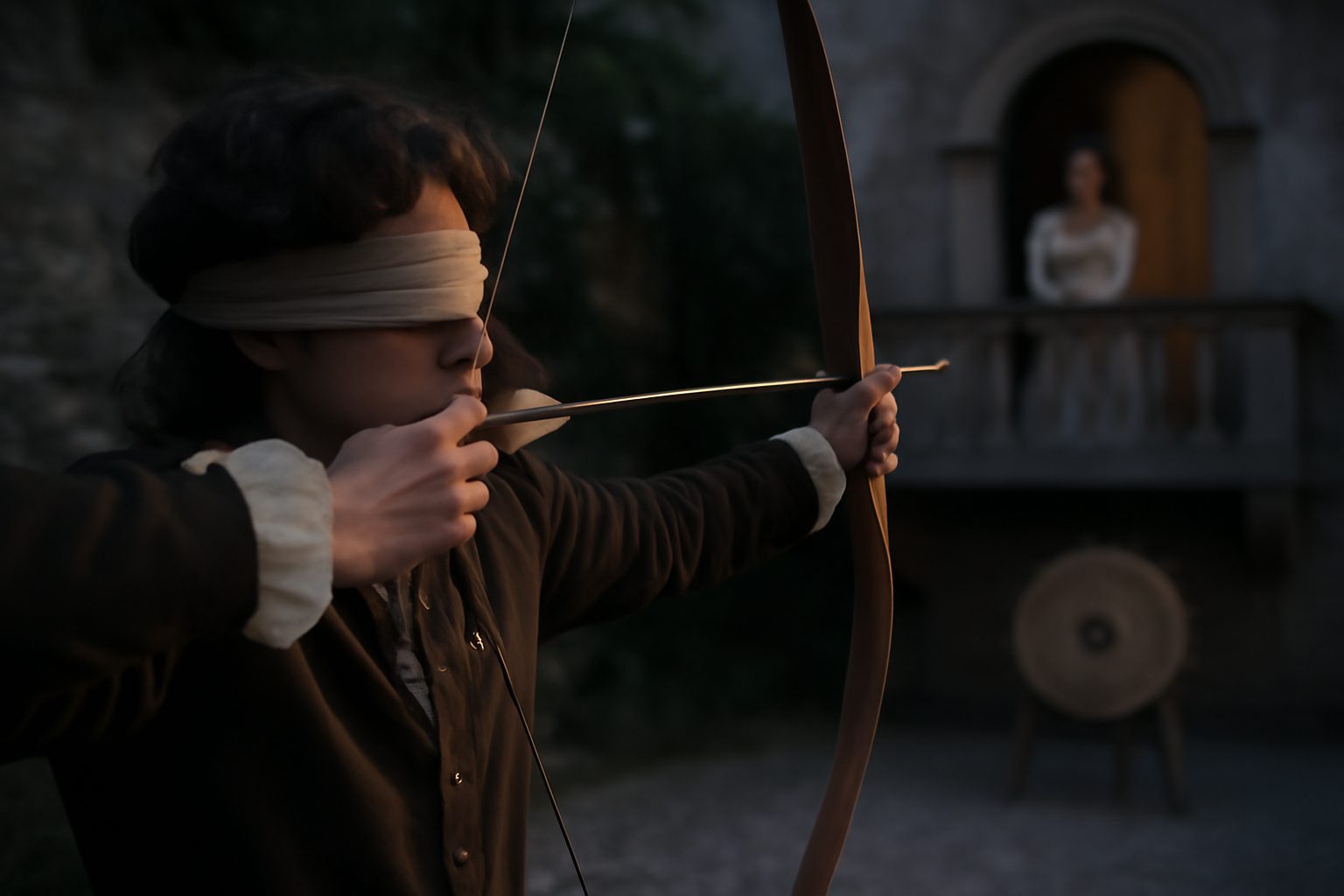
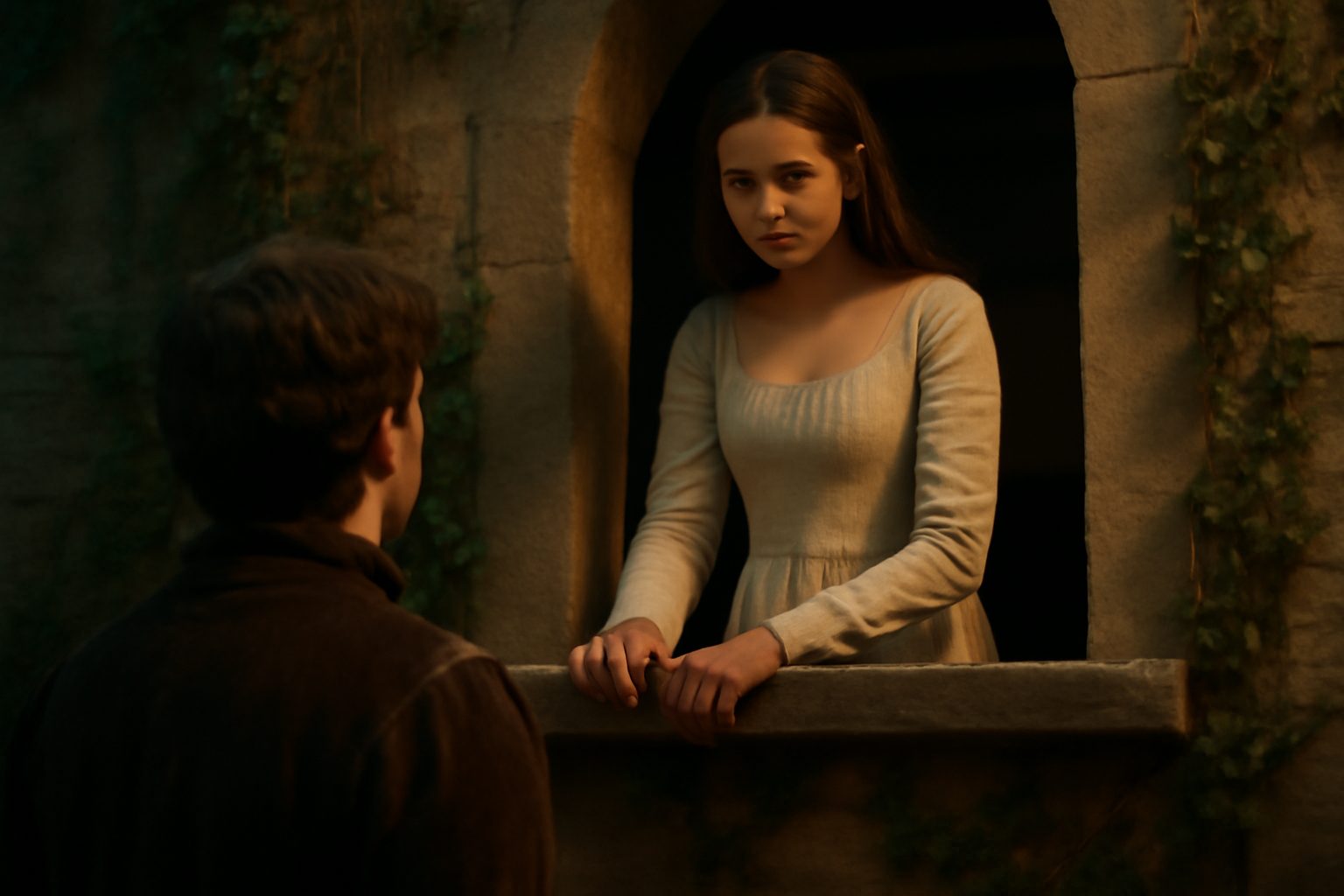
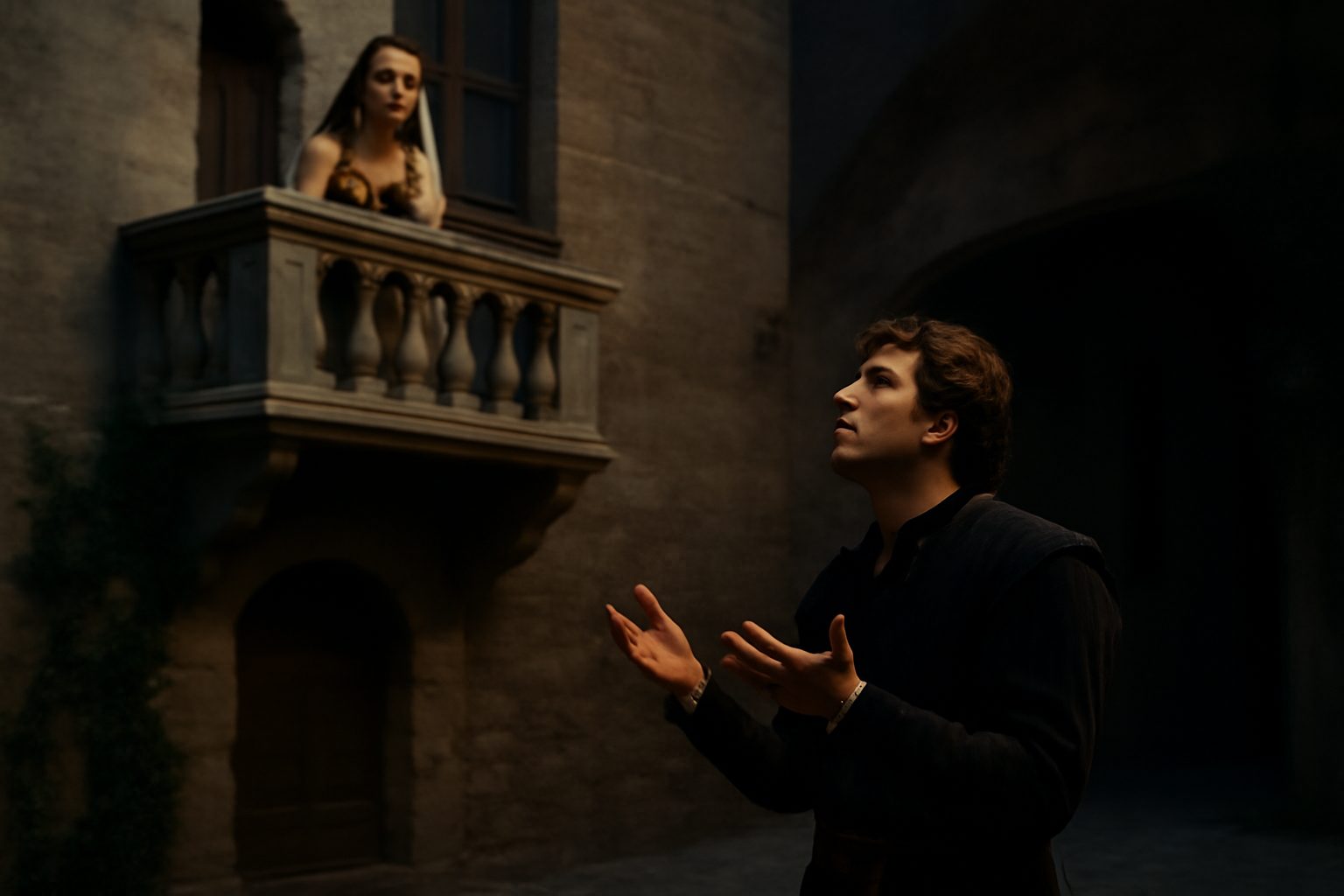
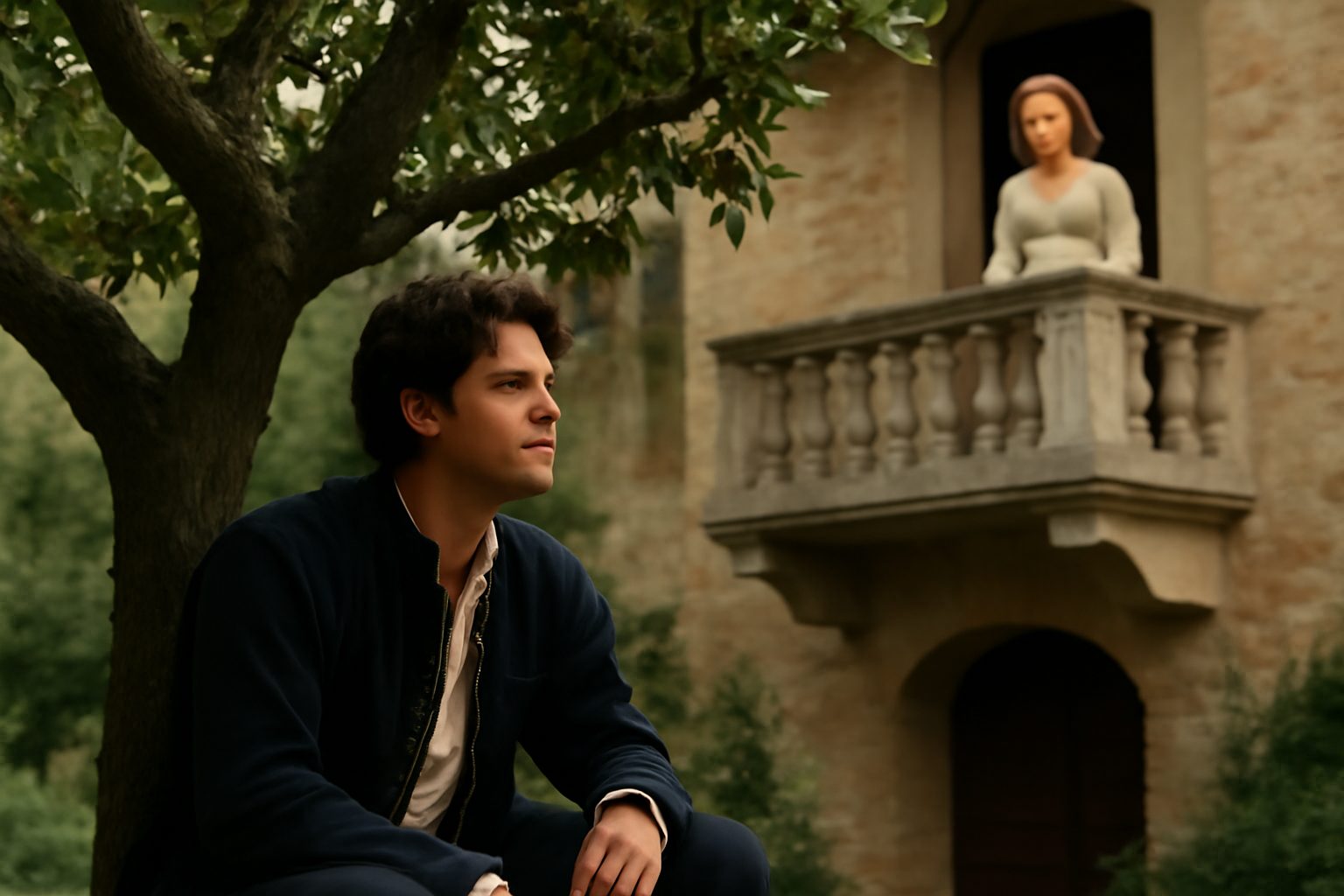
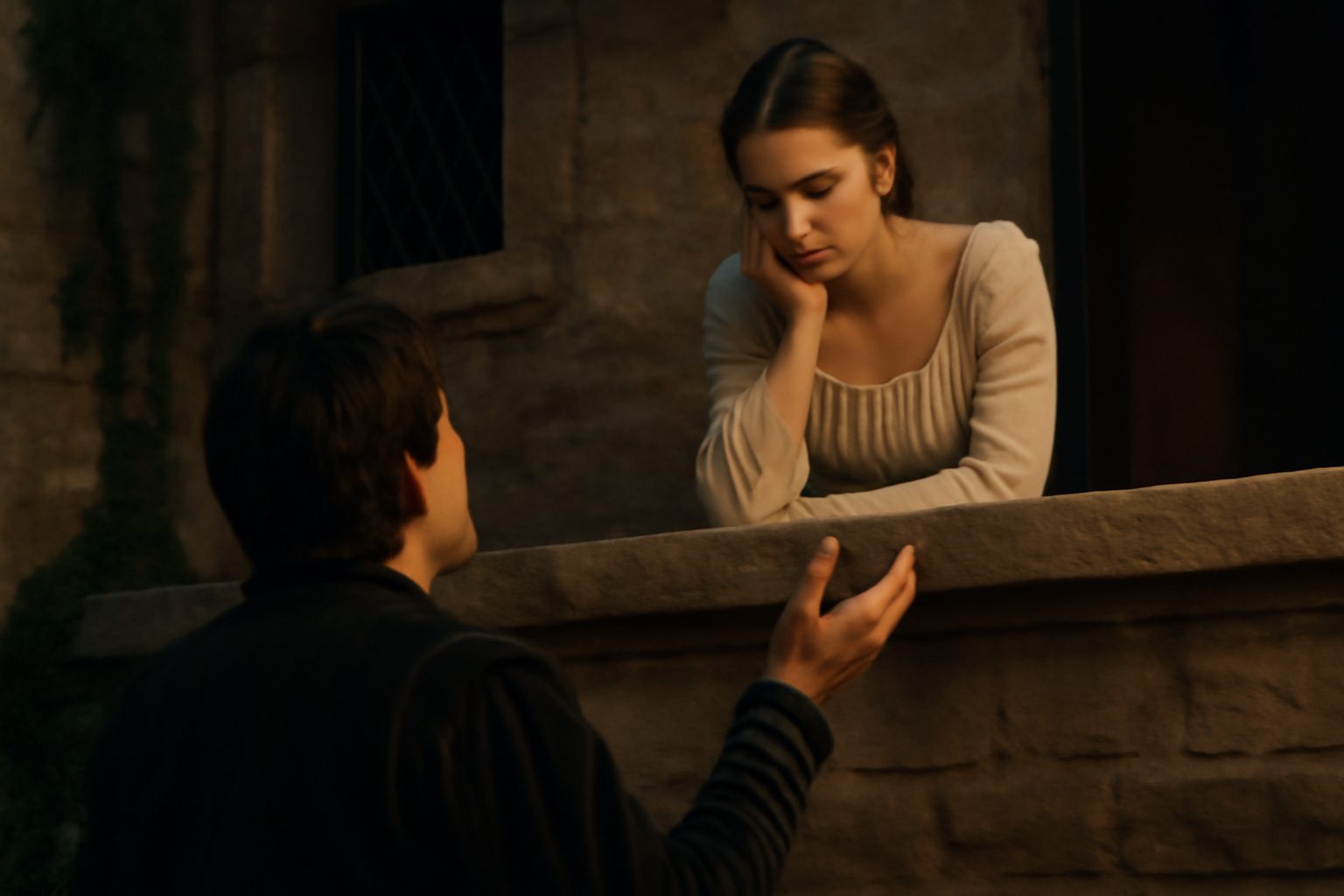
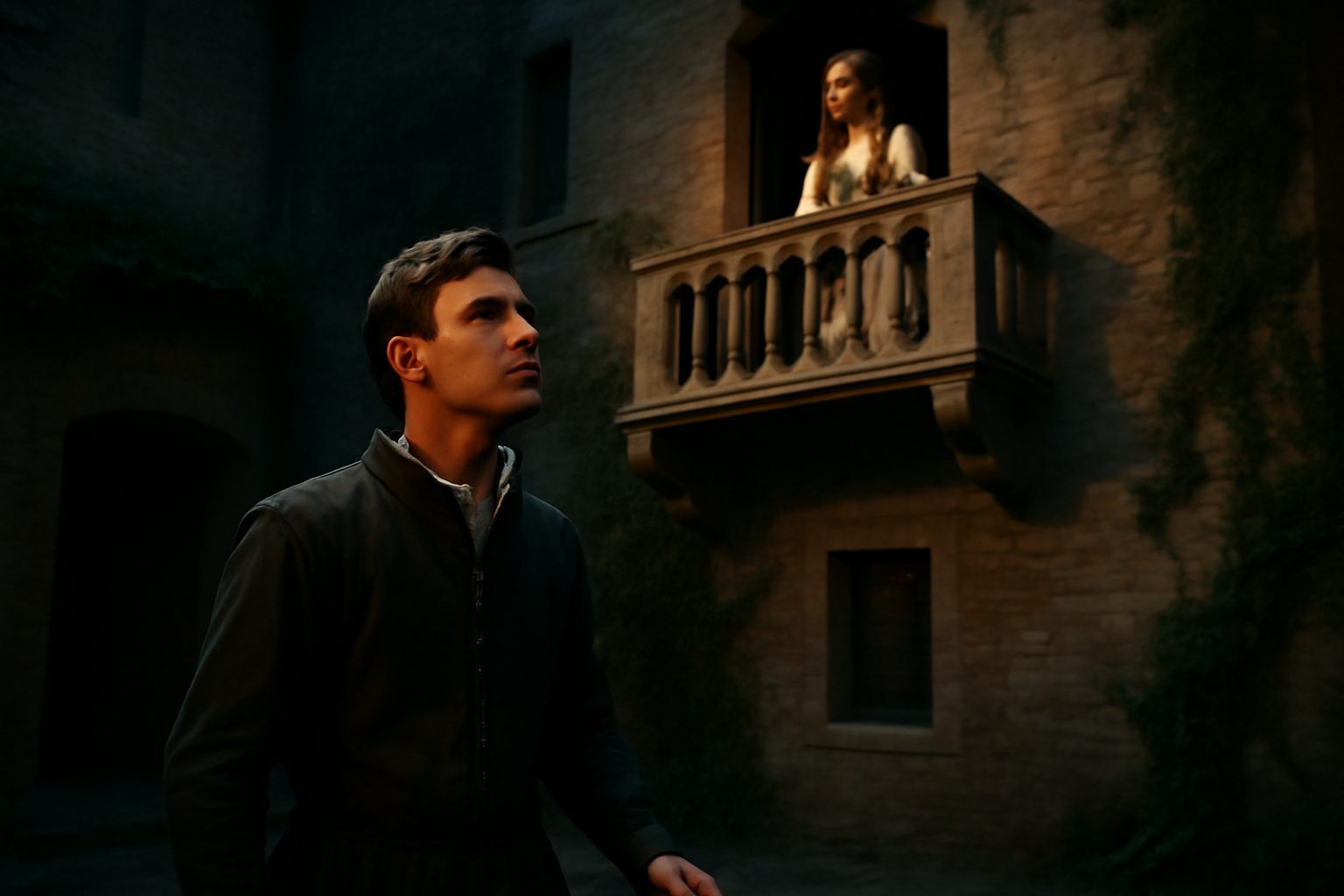
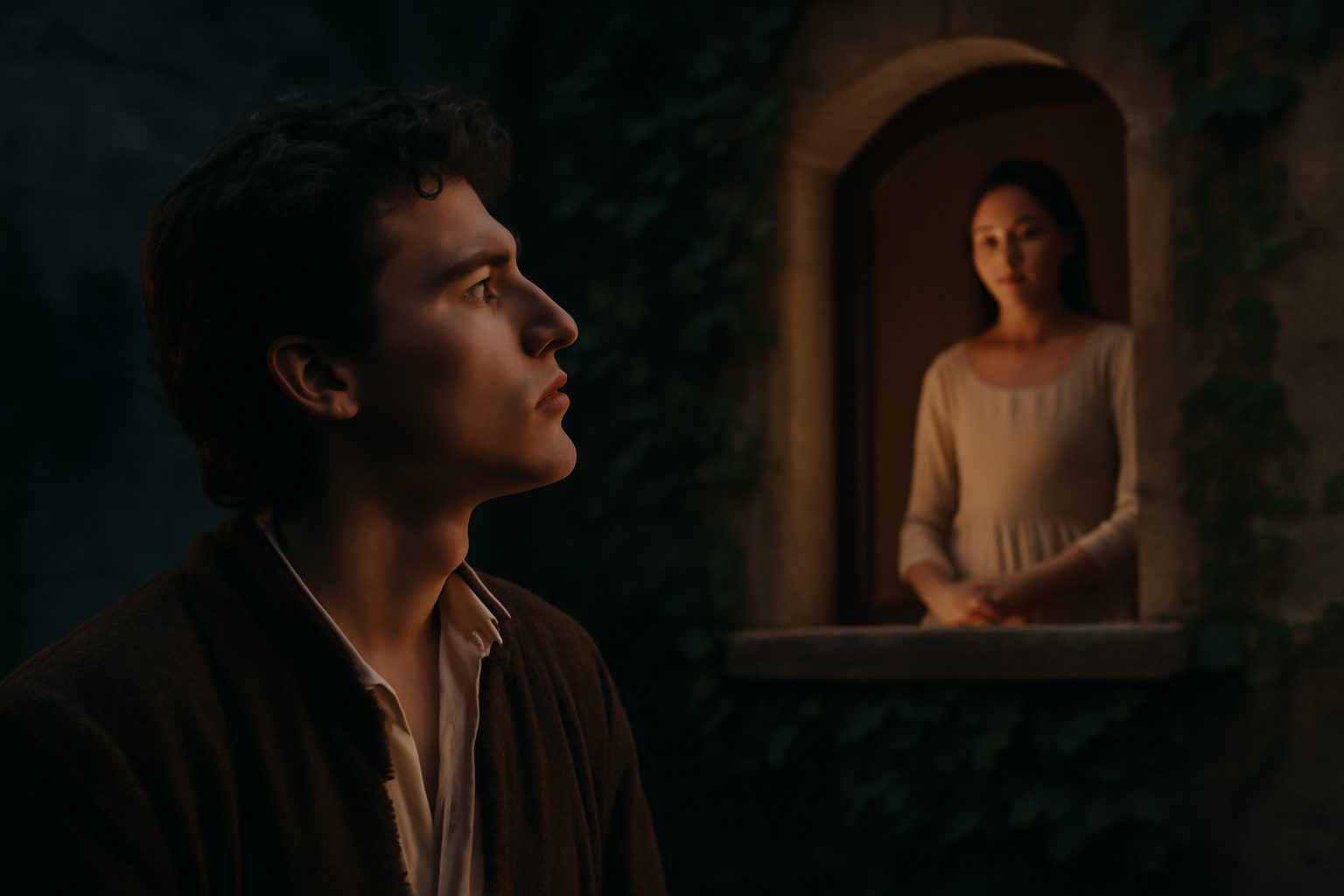
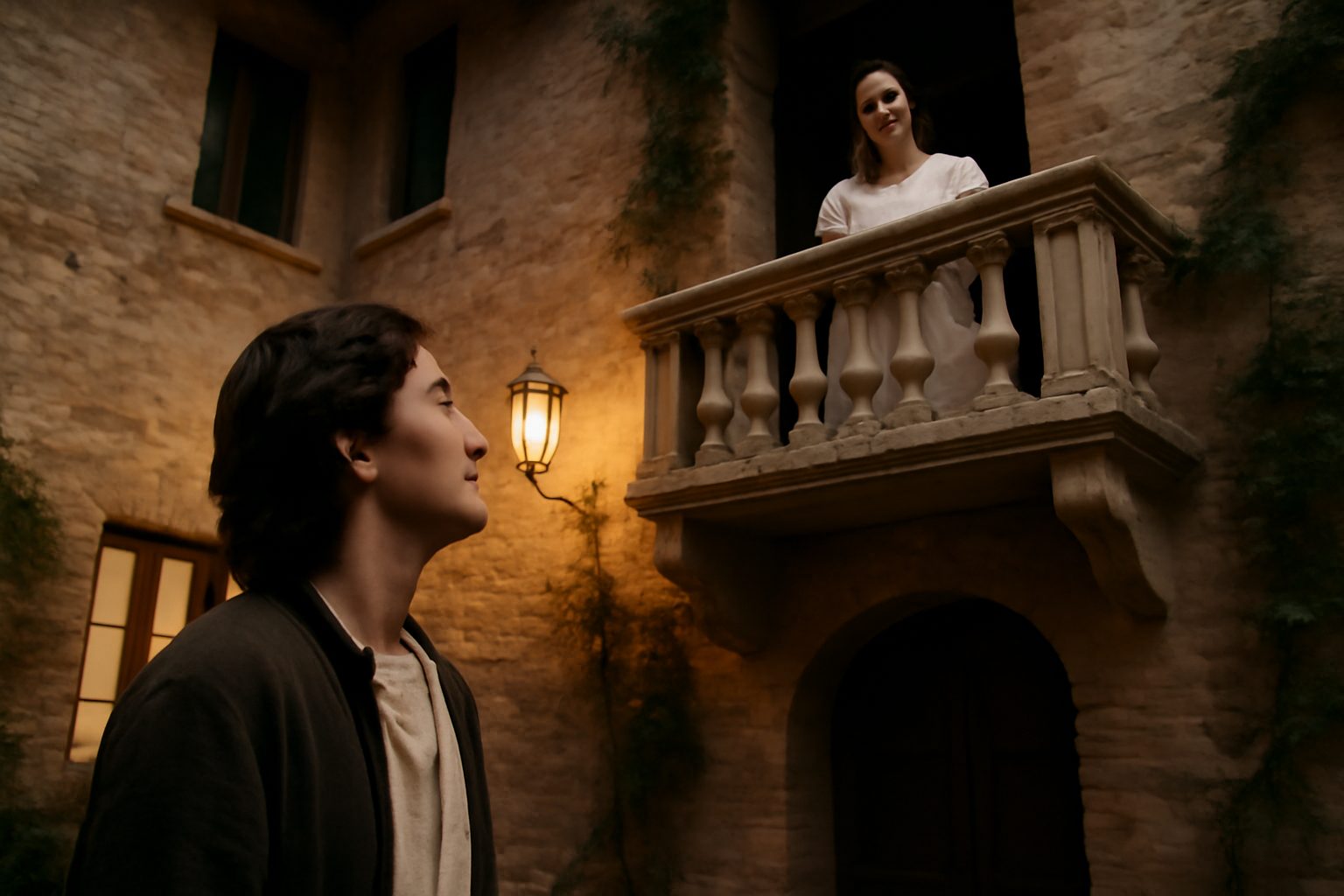
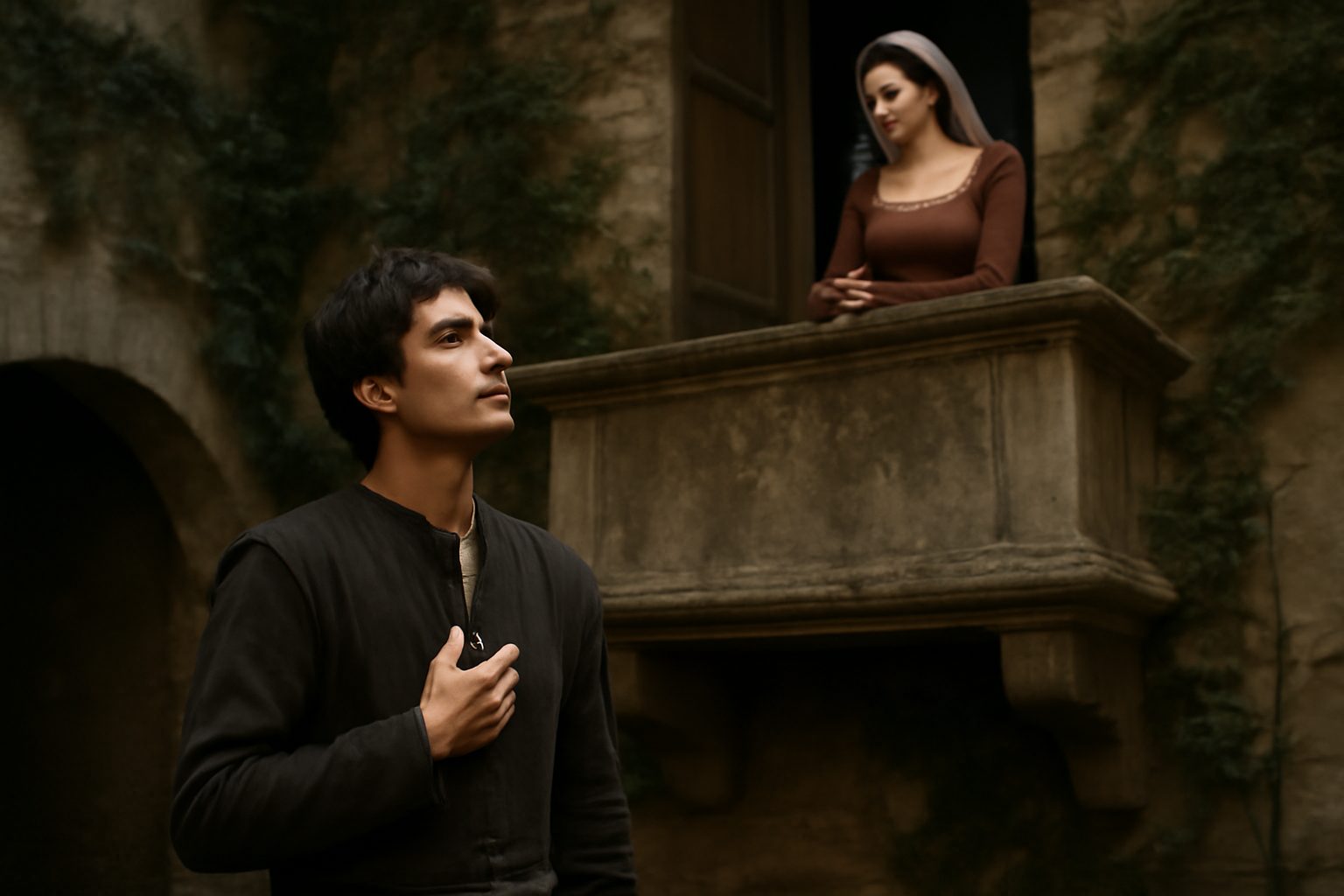
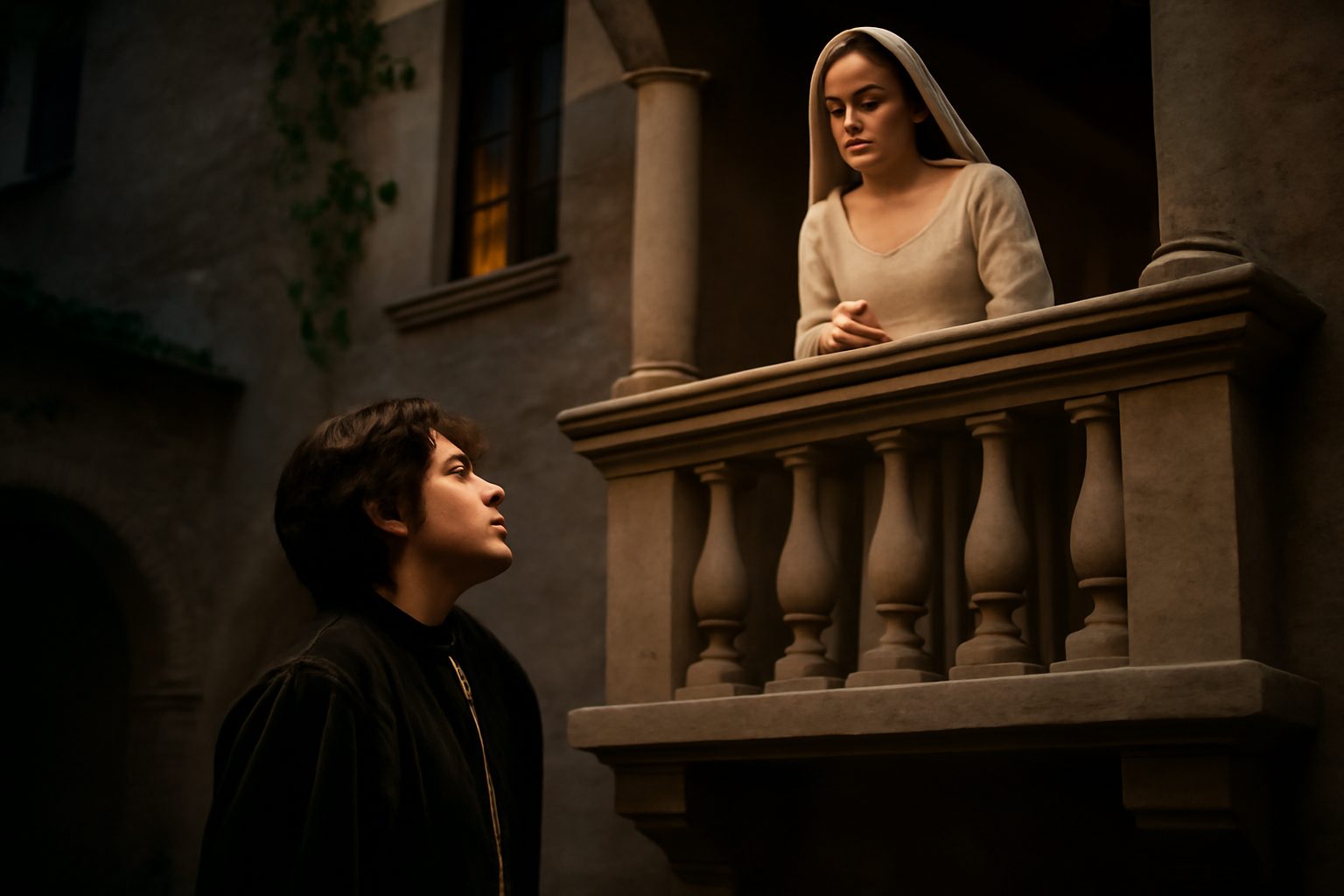
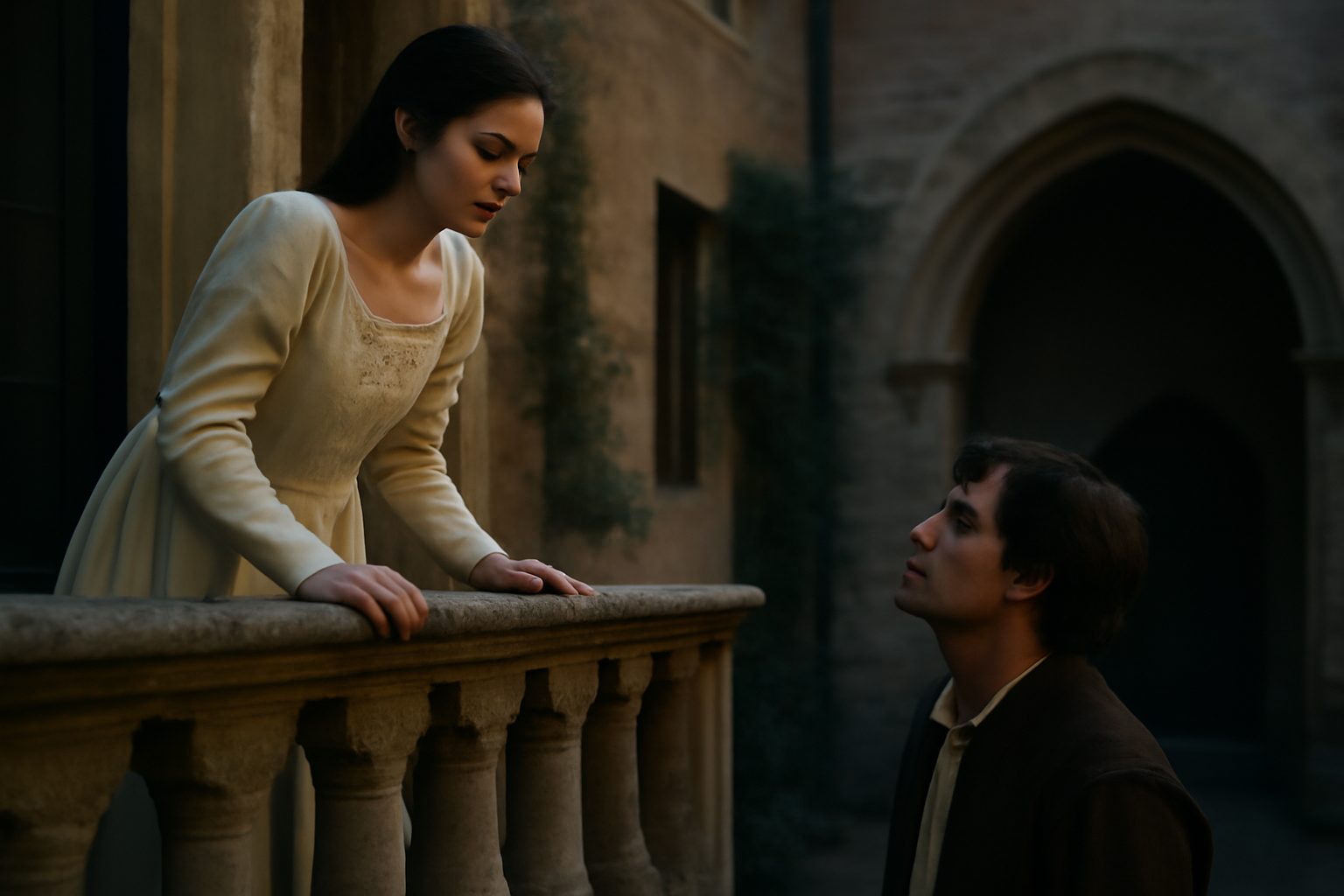
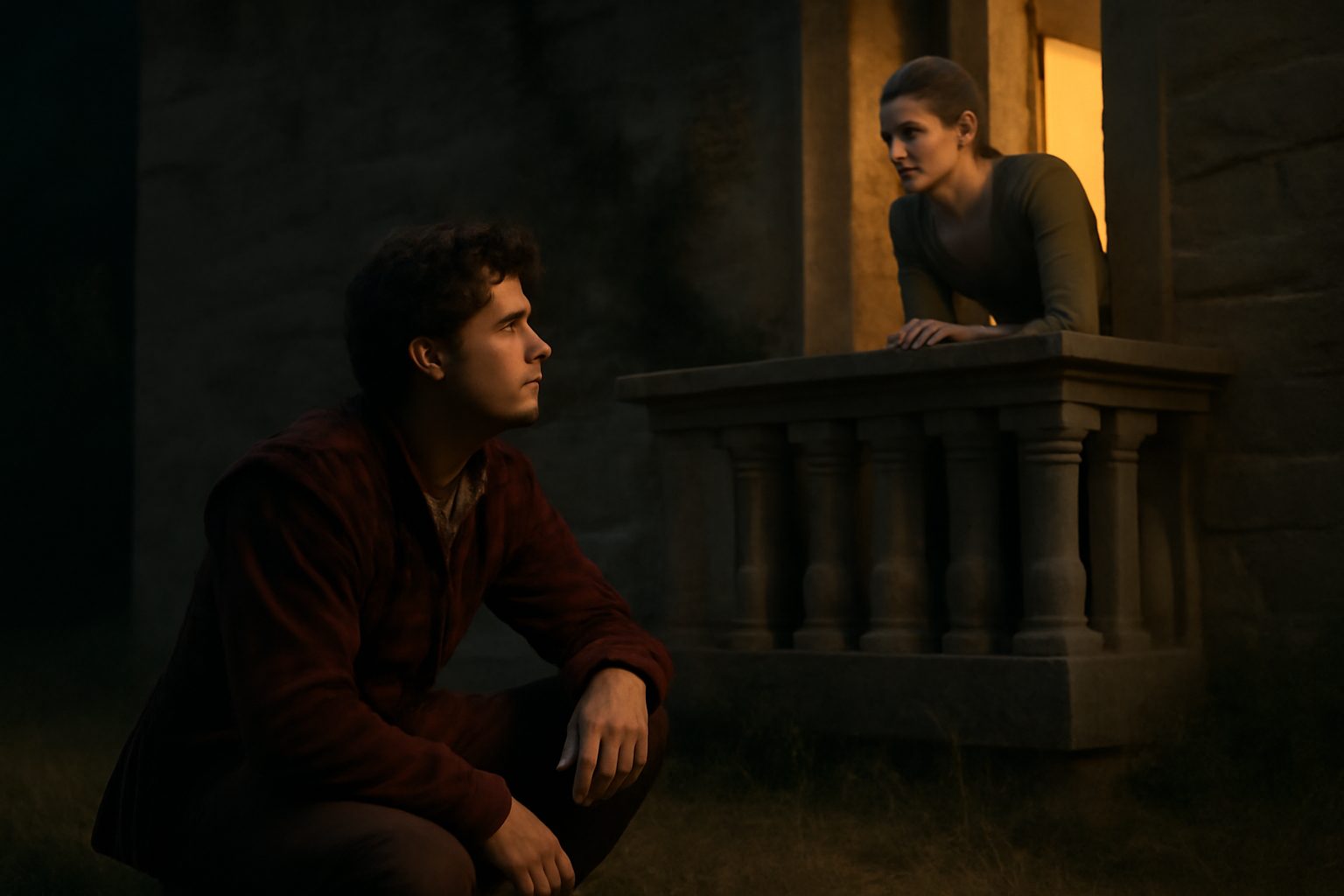
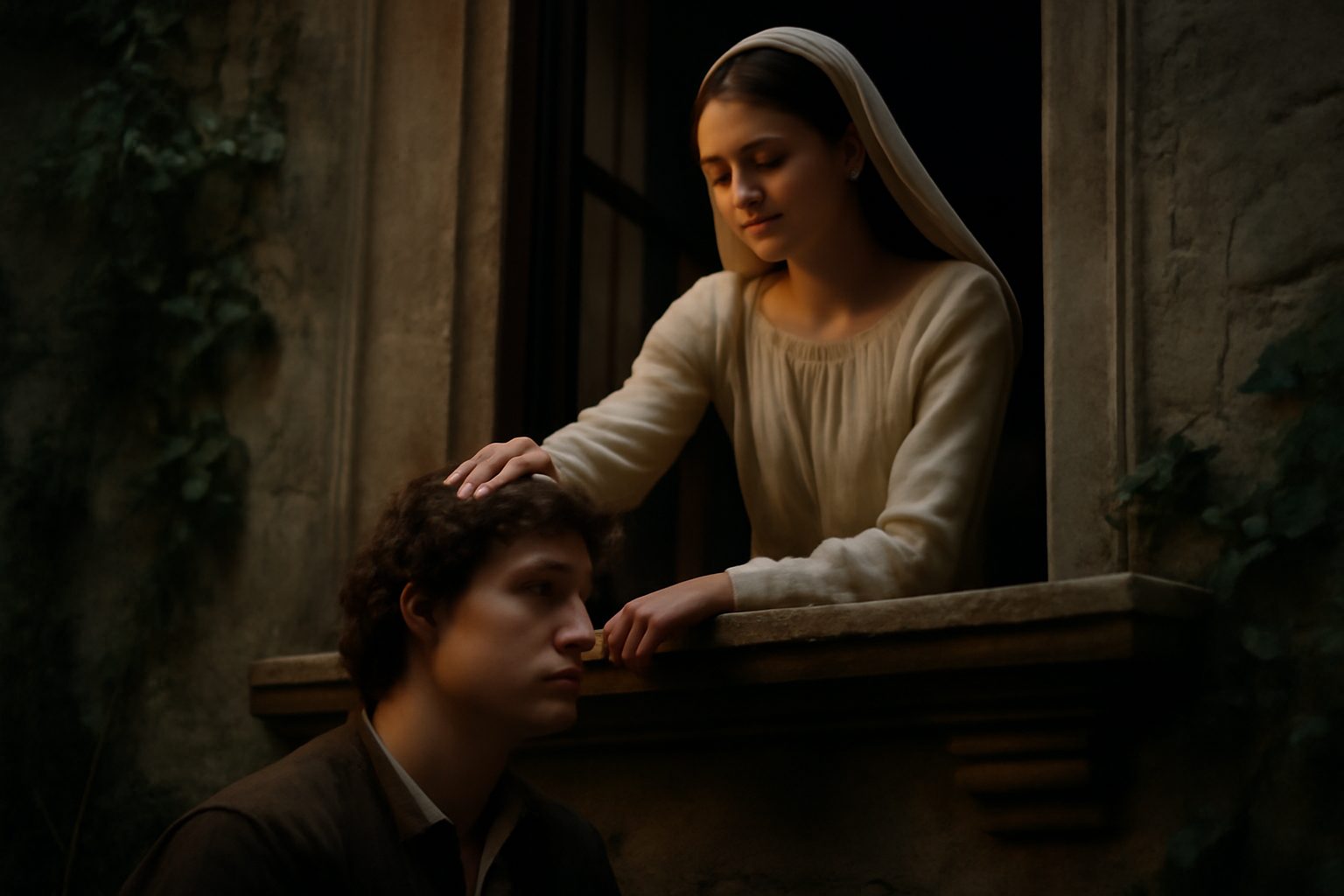
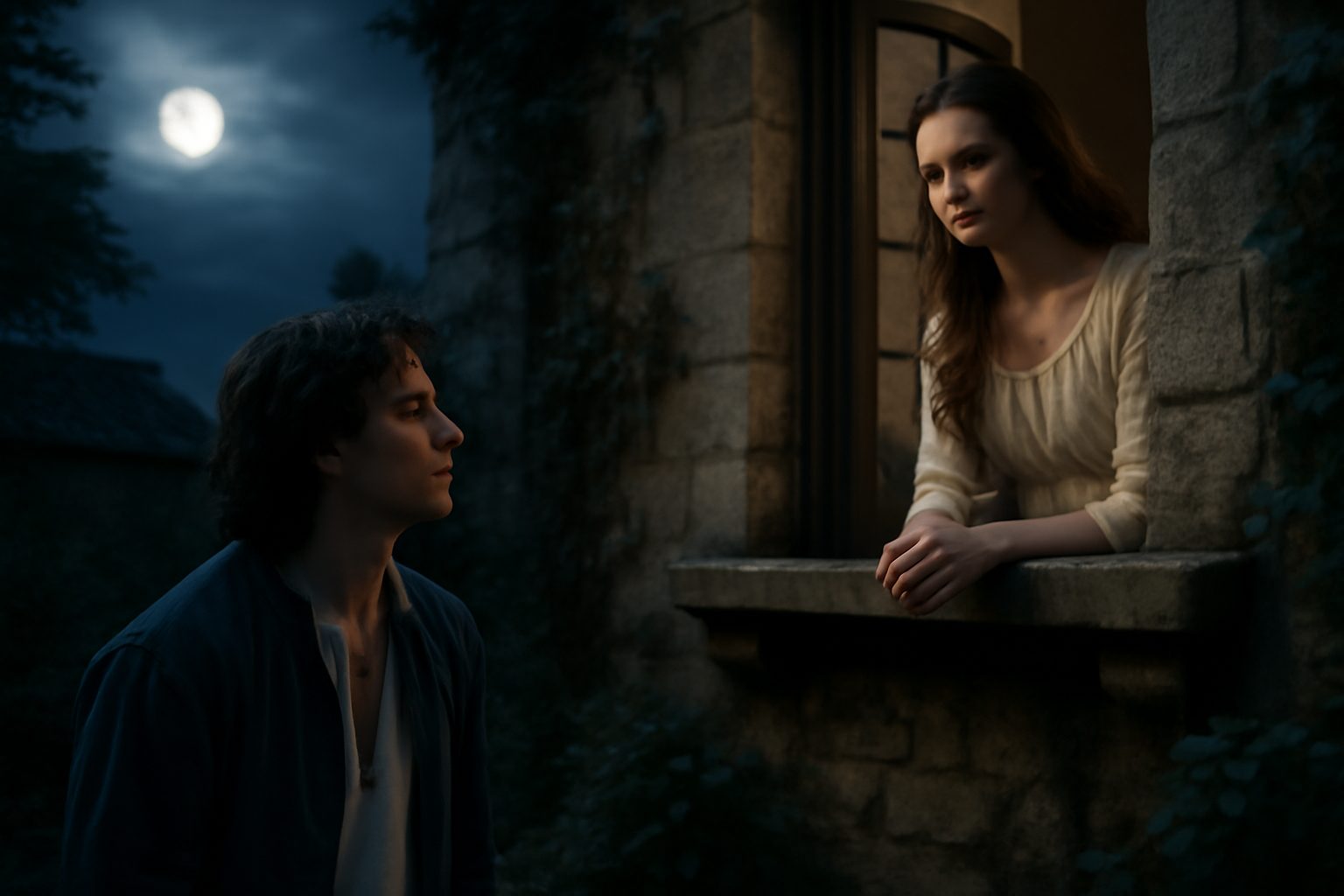
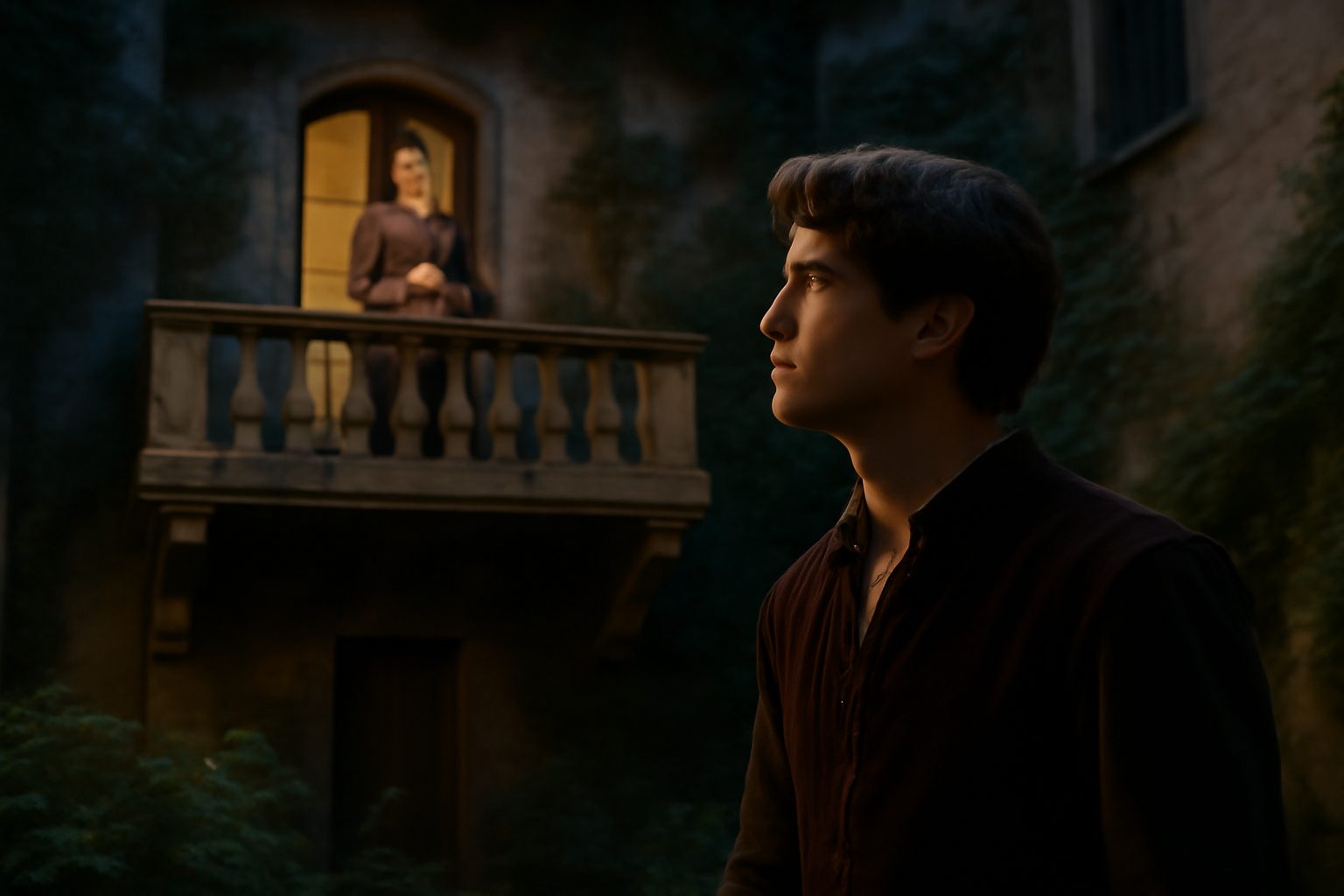
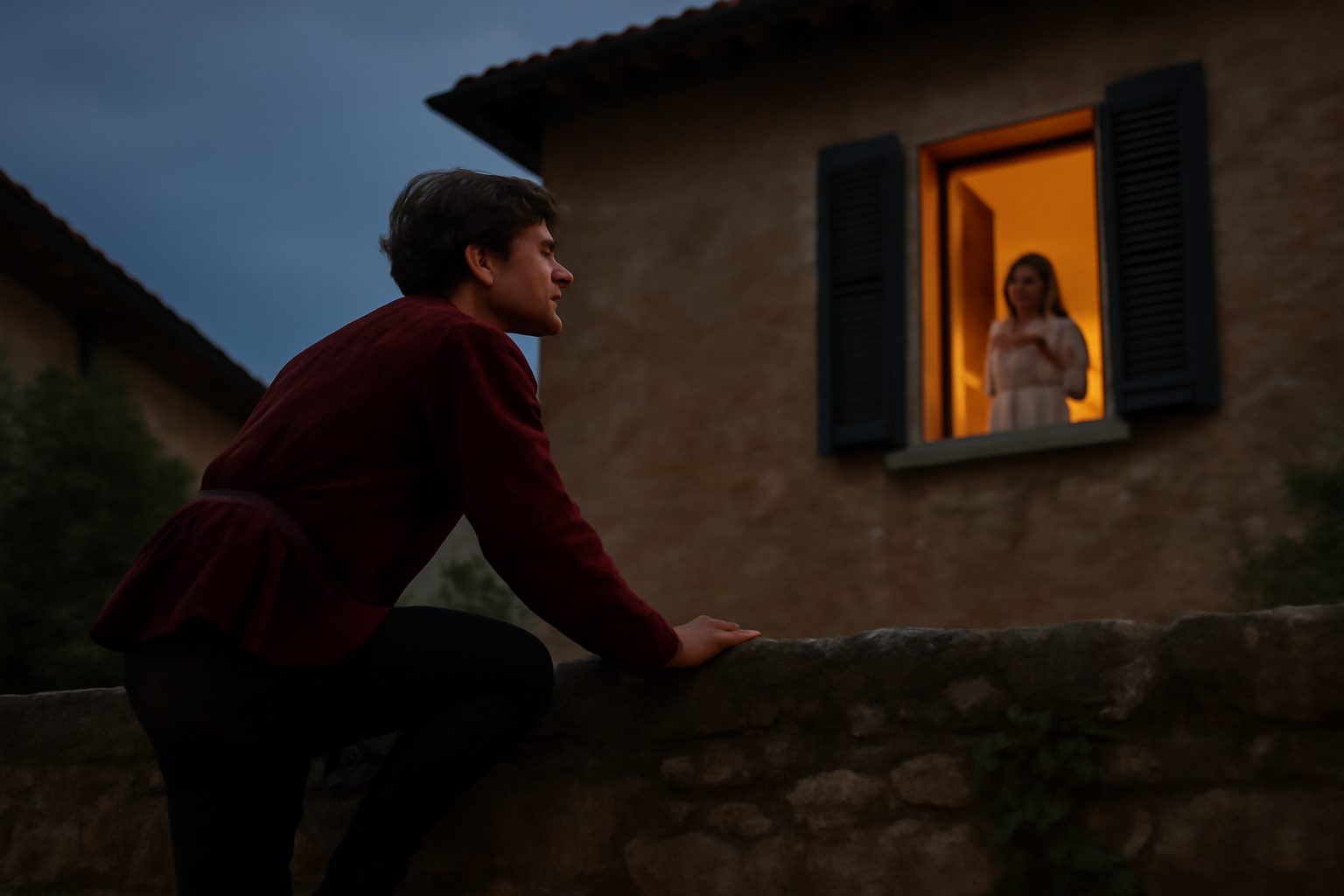
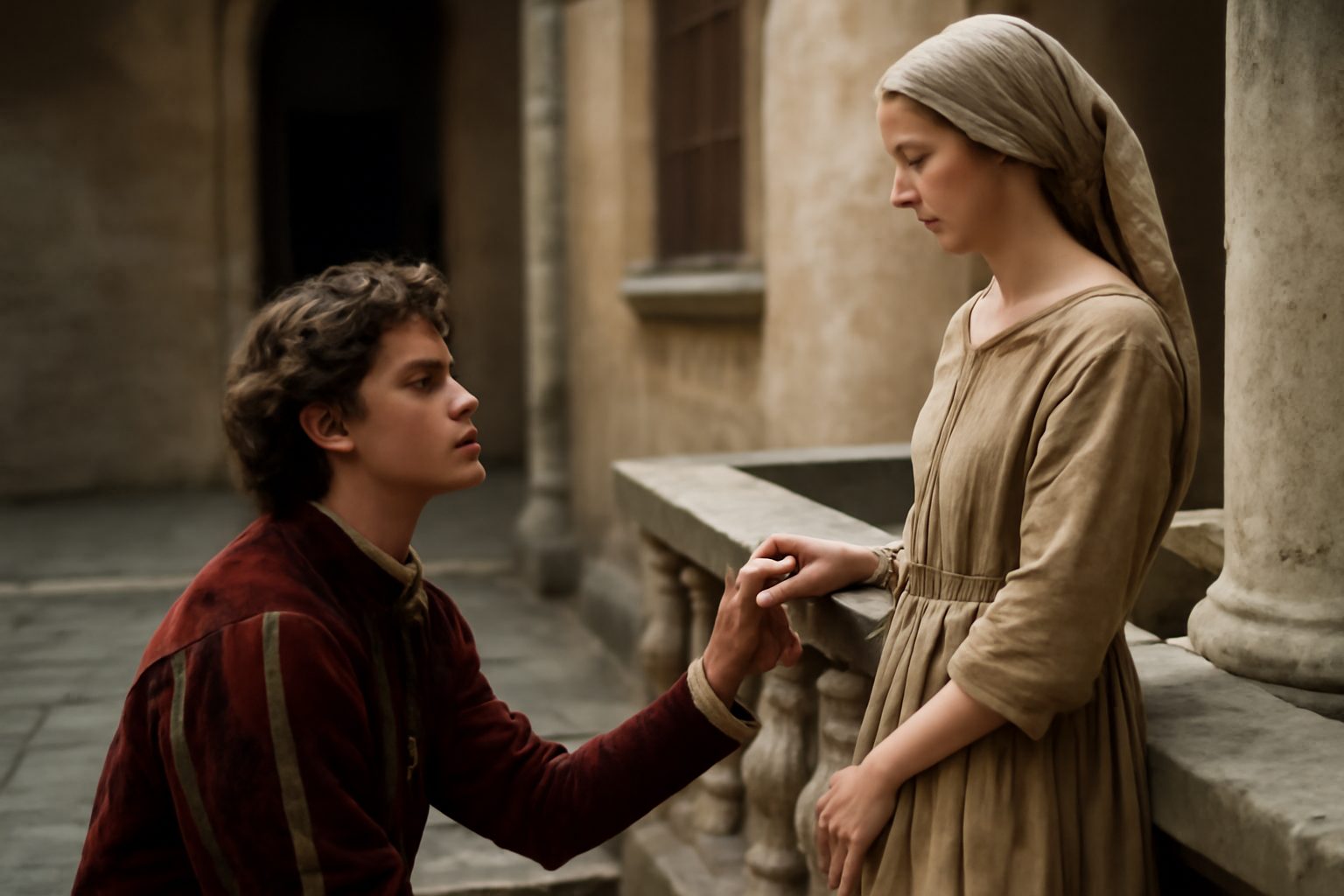
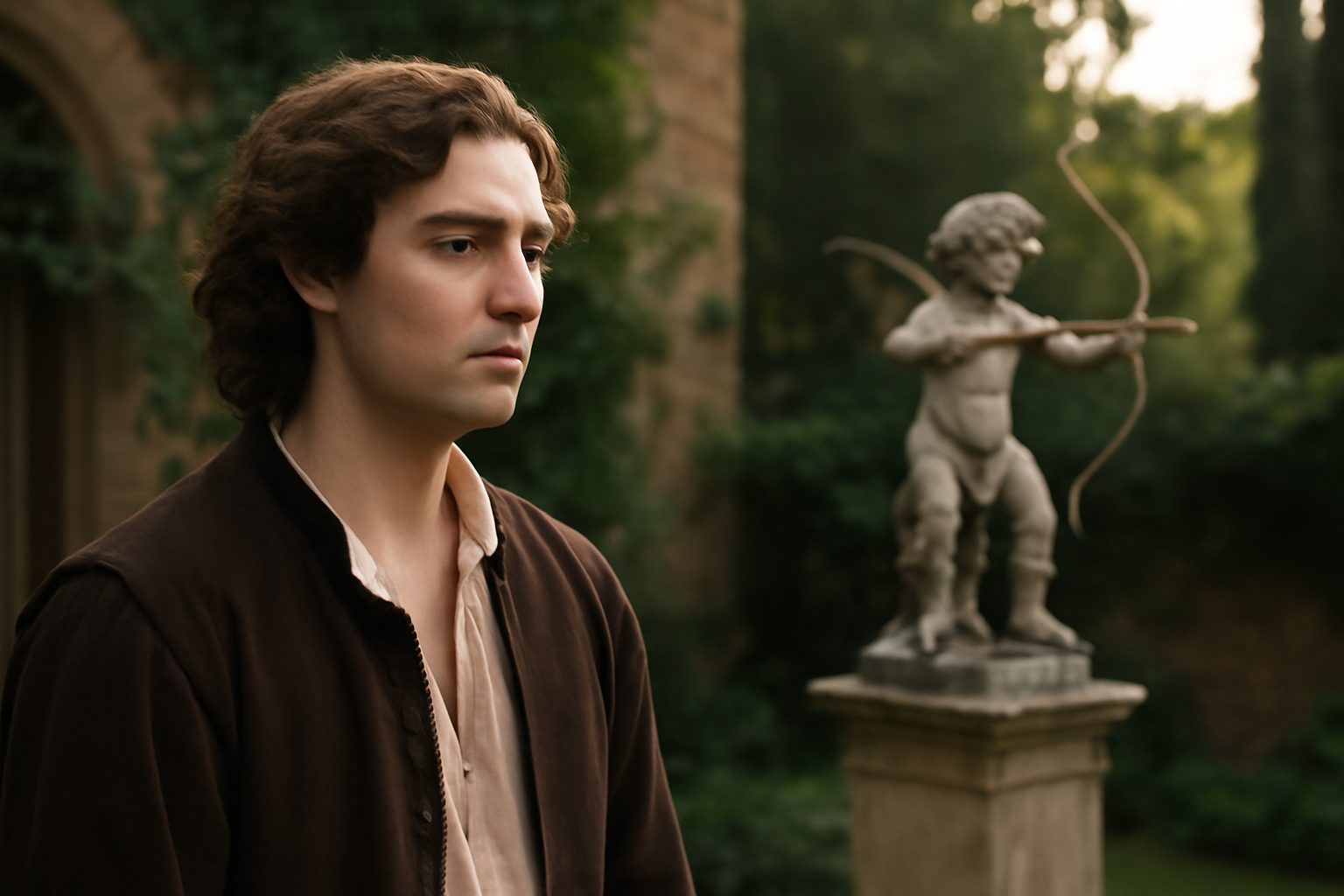
In Act 2, Scene 1 of Romeo and Juliet, Romeo has just left the Capulet's feast, where he first met Juliet and instantly fell in love. As his friends Mercutio and Benvolio jestingly call for him, Romeo lingers near Juliet's window, torn between rejoining them and staying close to her. This line captures his inner conflict, as he questions how he can move forward physically when his heart remains with Juliet.
Romeo: "Can I go forward when my heart is here?"
In modern day english, we would say:
How can I leave when my heart stays here with you?
Frequently Asked Questions
What is Romeo feeling when he says he cannot move forward because his heart is elsewhere?
Romeo is feeling love and attachment to Juliet, which makes him unable to leave or focus on anything else.
Connections to other verses:
Connections to "Can I go forward when my heart is here?"
This line, spoken by Romeo, reflects his reluctance to leave Juliet's presence, as his heart remains with her. It connects thematically and emotionally to several other verses in the scene.
Physical and Emotional Anchoring
Romeo's declaration that his heart is "here" directly follows his resolve to Turn back, dull earth, and find thy centre out, where he metaphorically refers to himself as "dull earth" and Juliet as his "centre," reinforcing his fixation on her.
Mercutio's Mocking Commentary
Mercutio and Benvolio, unaware of Romeo's new love, misinterpret his absence. Benvolio notes He ran this way, and leap'd this orchard wall, indicating Romeo's physical leap toward Juliet, which parallels his emotional leap expressed in the verse. Mercutio's taunts, such as Romeo! humours! madman! passion! lover!, highlight the contrast between Romeo's earnest devotion and his friends' jesting perception of lovesick folly.
Invocation and Yearning
Mercutio's attempts to "conjure" Romeo playfully underscore Romeo's hidden presence near Juliet. For instance, Appear thou in the likeness of a sigh whimsically asks Romeo to manifest as a sigh—a symbol of lovesick longing—which echoes Romeo's own heart-left-behind sentiment. Similarly, I conjure only but to raise up him emphasizes Mercutio's belief that Romeo is lost in lovesick folly, indirectly affirming Romeo's emotional stasis.
Themes of Blind Love
Mercutio's remark Blind is his love and best befits the dark critiques Romeo's impulsive devotion, suggesting his love is irrational and hidden—much like Romeo's heart remaining "here" in secret. This connects to If love be blind, love cannot hit the mark, further exploring the idea that passionate love may be misguided, yet Romeo's verse shows he is willingly anchored by it.
Resolution to Stay
Ultimately, Romeo's question foreshadows his decision to remain near Juliet, leading to their famous balcony exchange. The scene concludes with Benvolio's resigned To seek him here that means not to be found, acknowledging Romeo's intentional concealment due to his heart's fixation, thus tying back thematically to the initial verse.