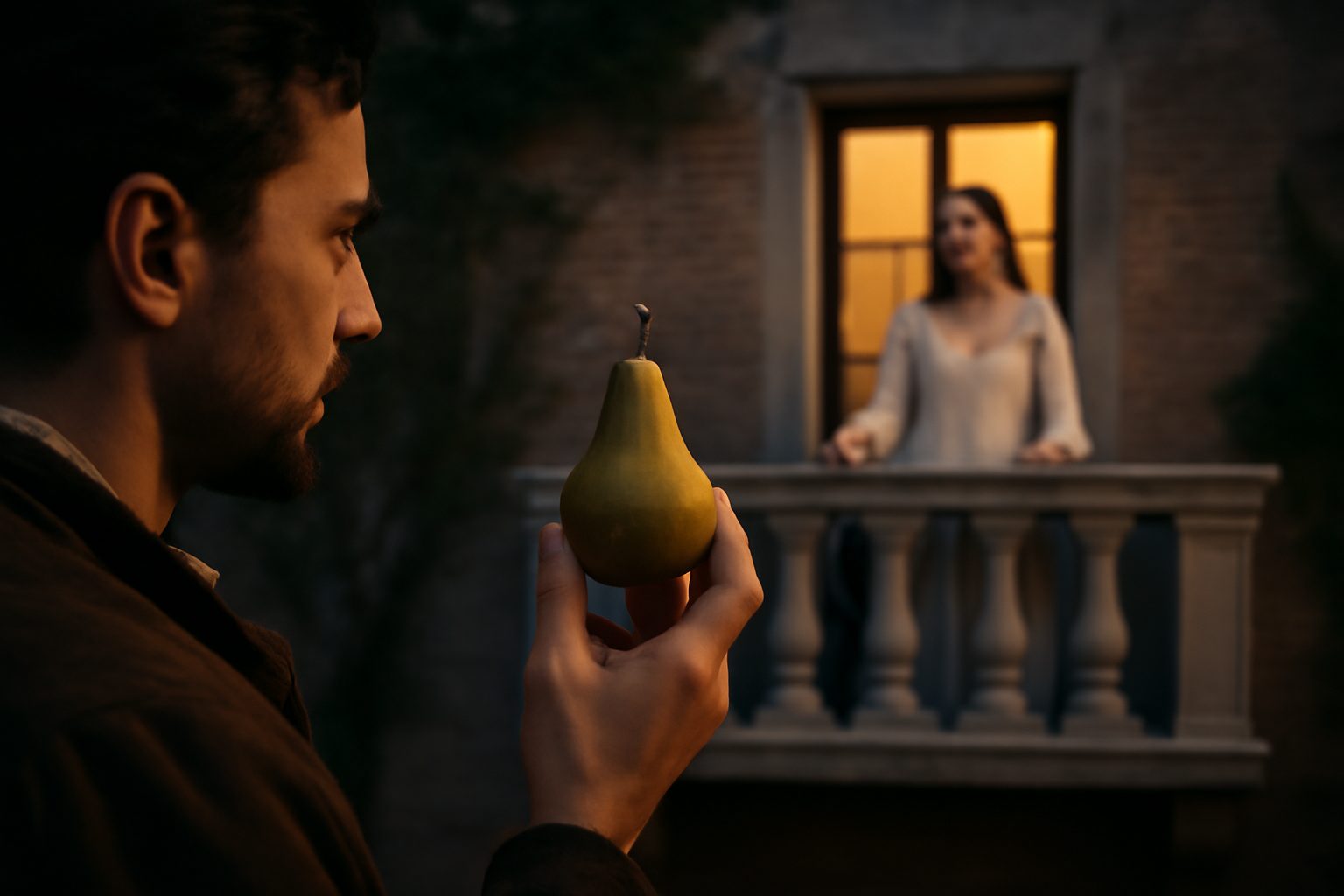
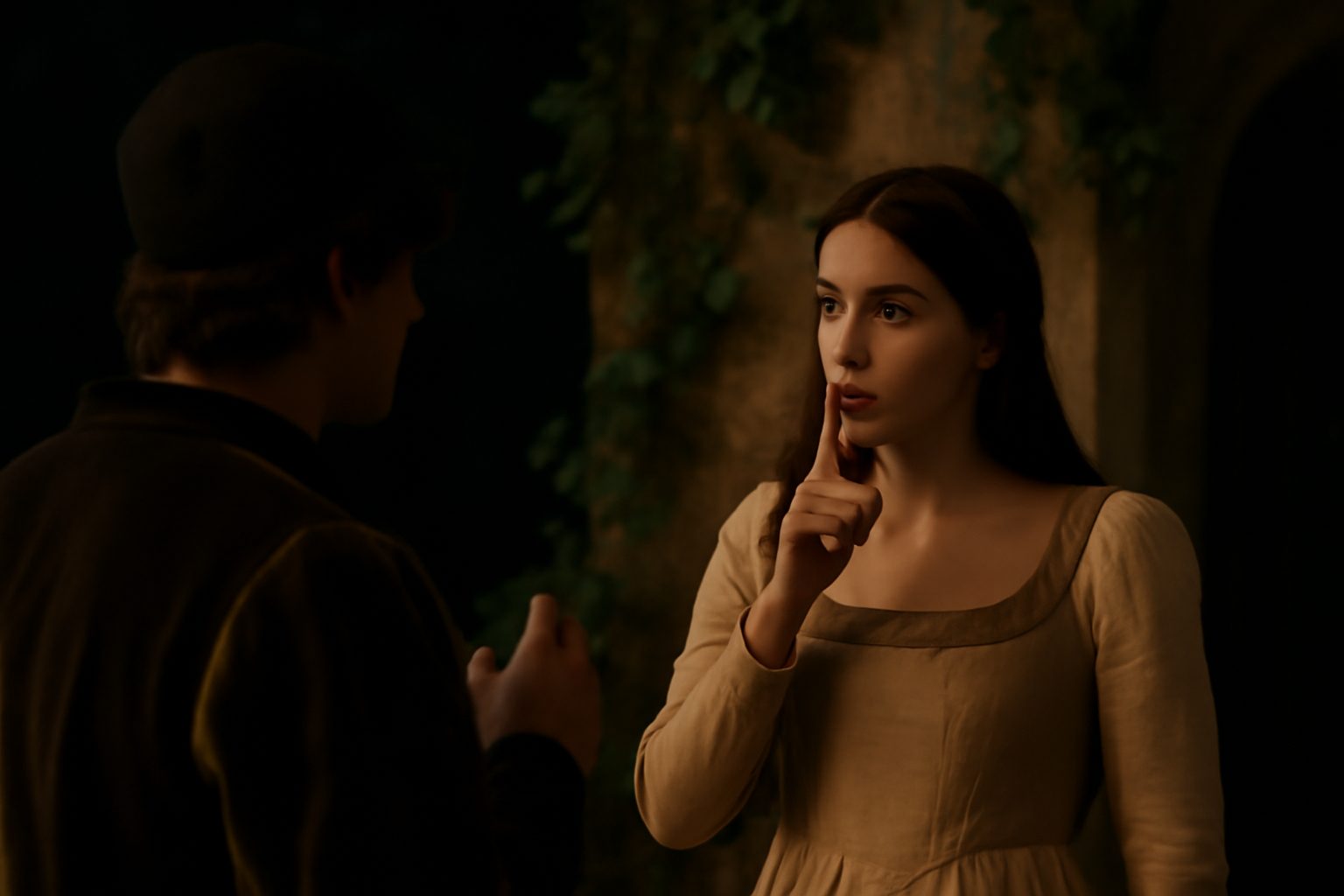
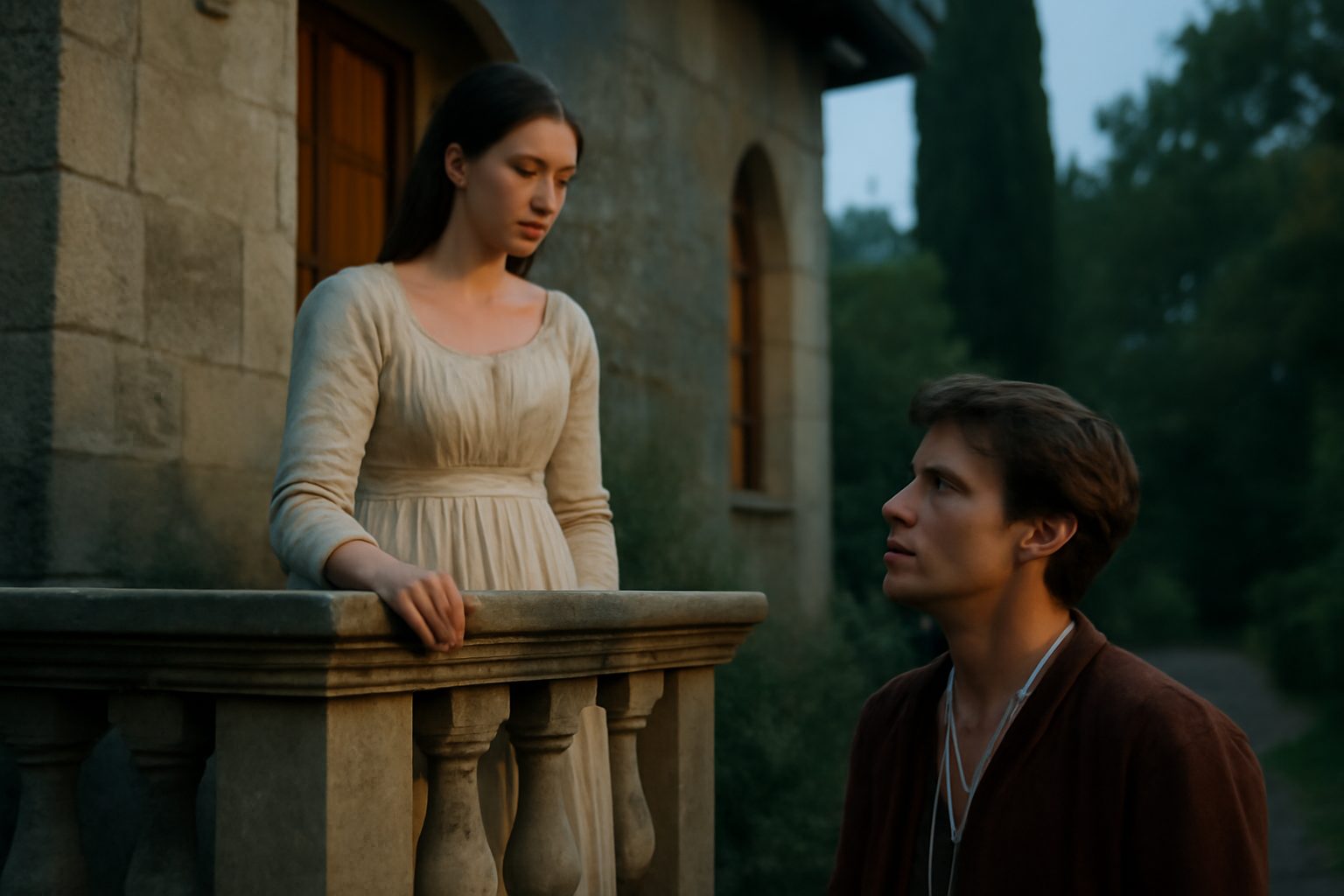
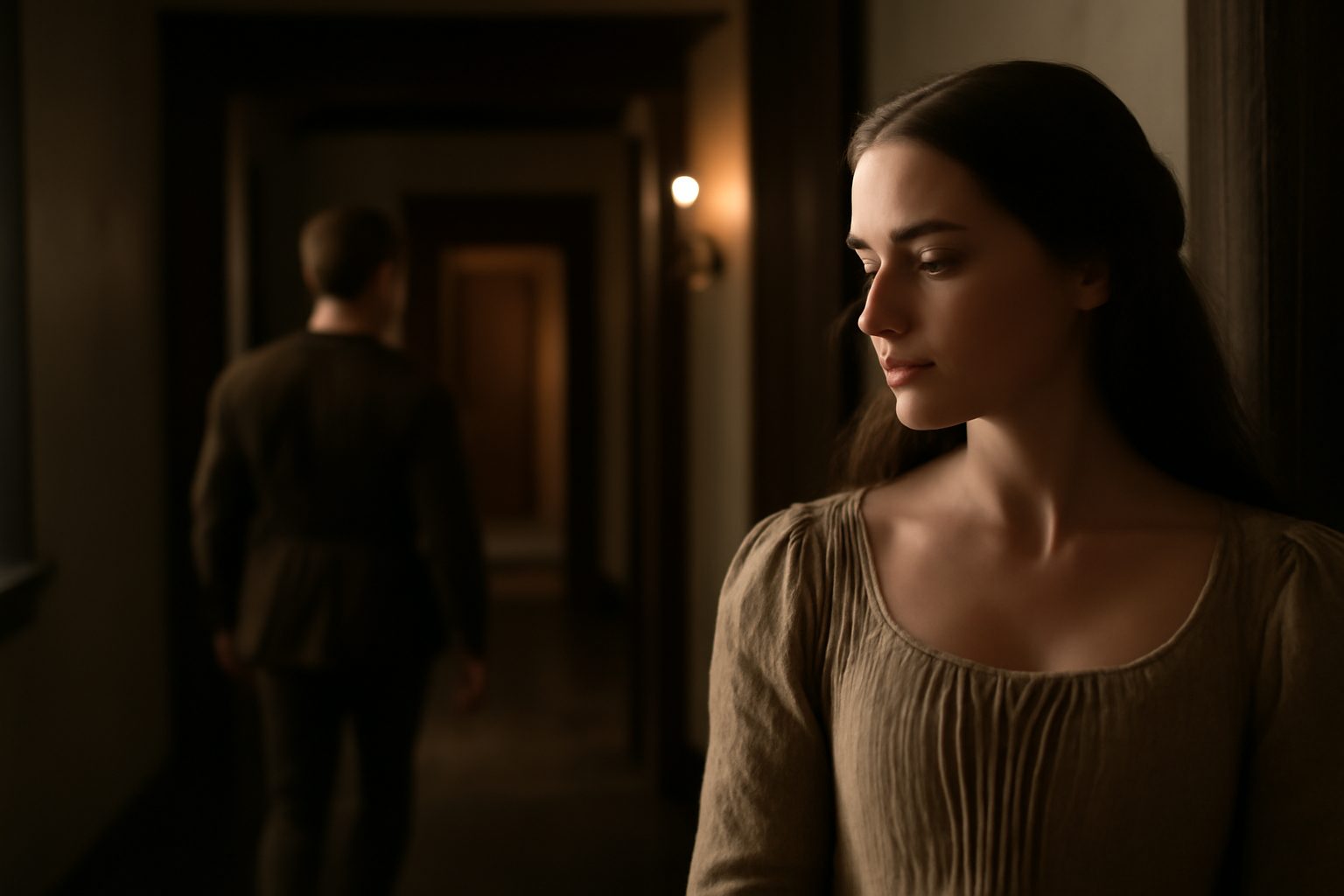
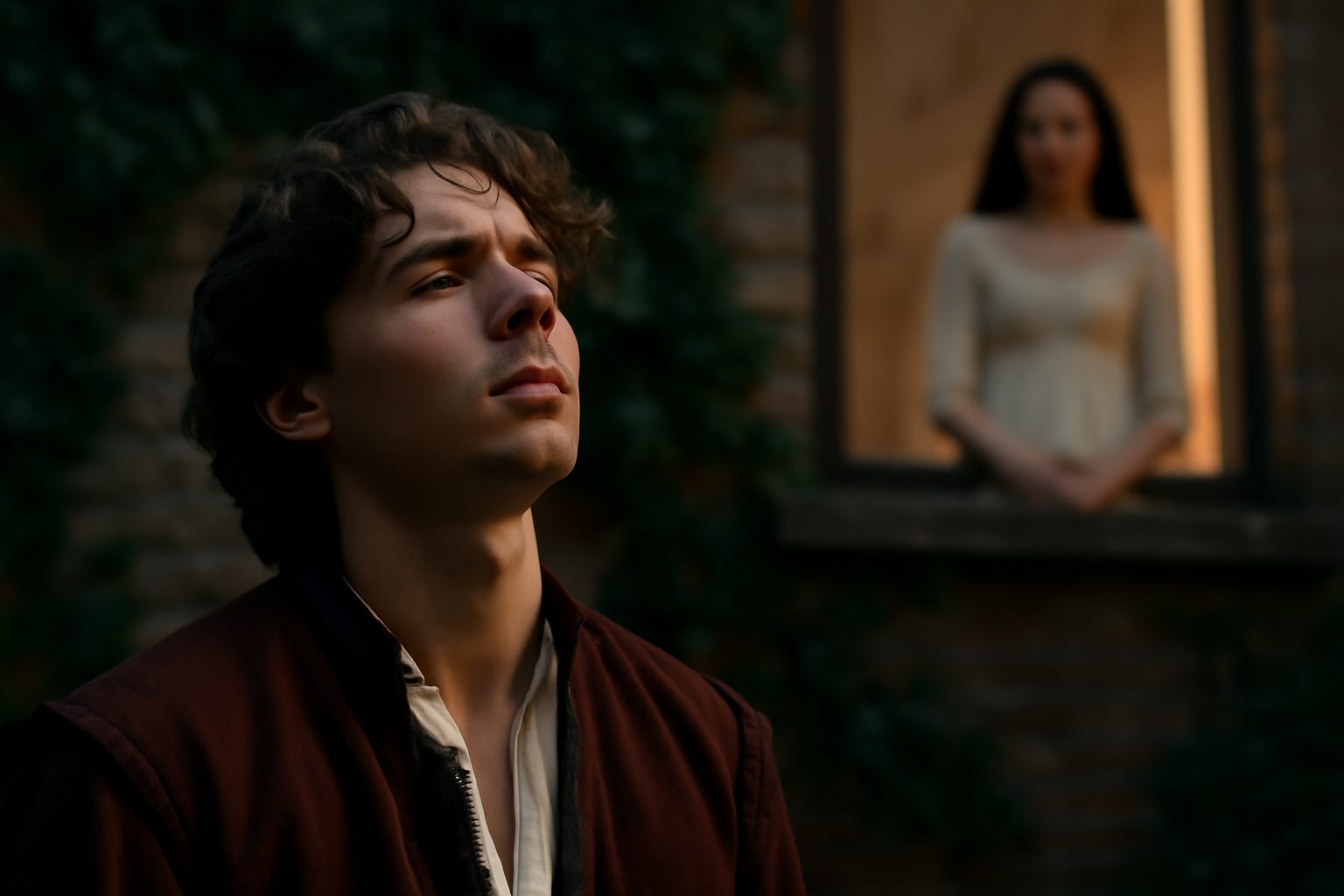
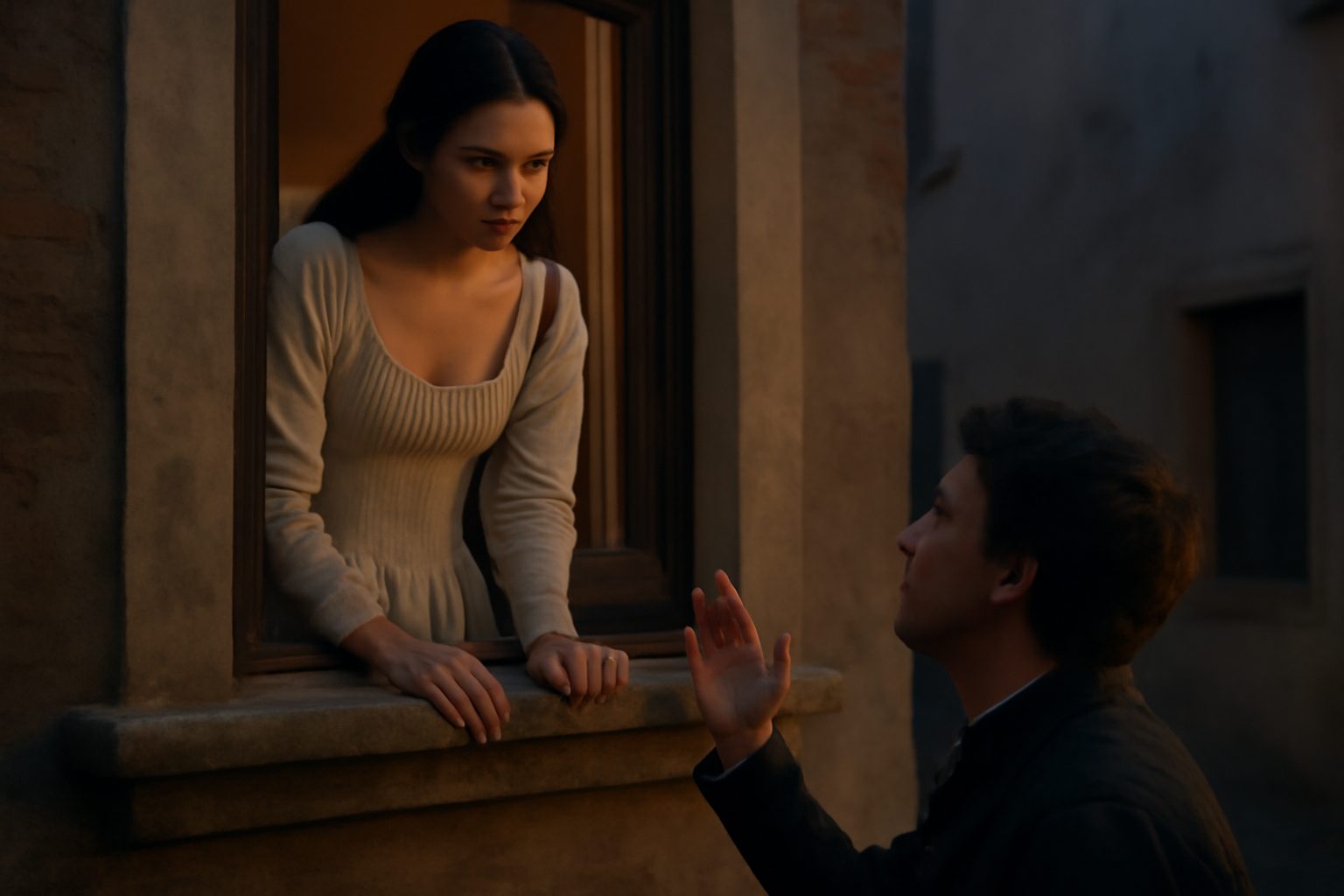
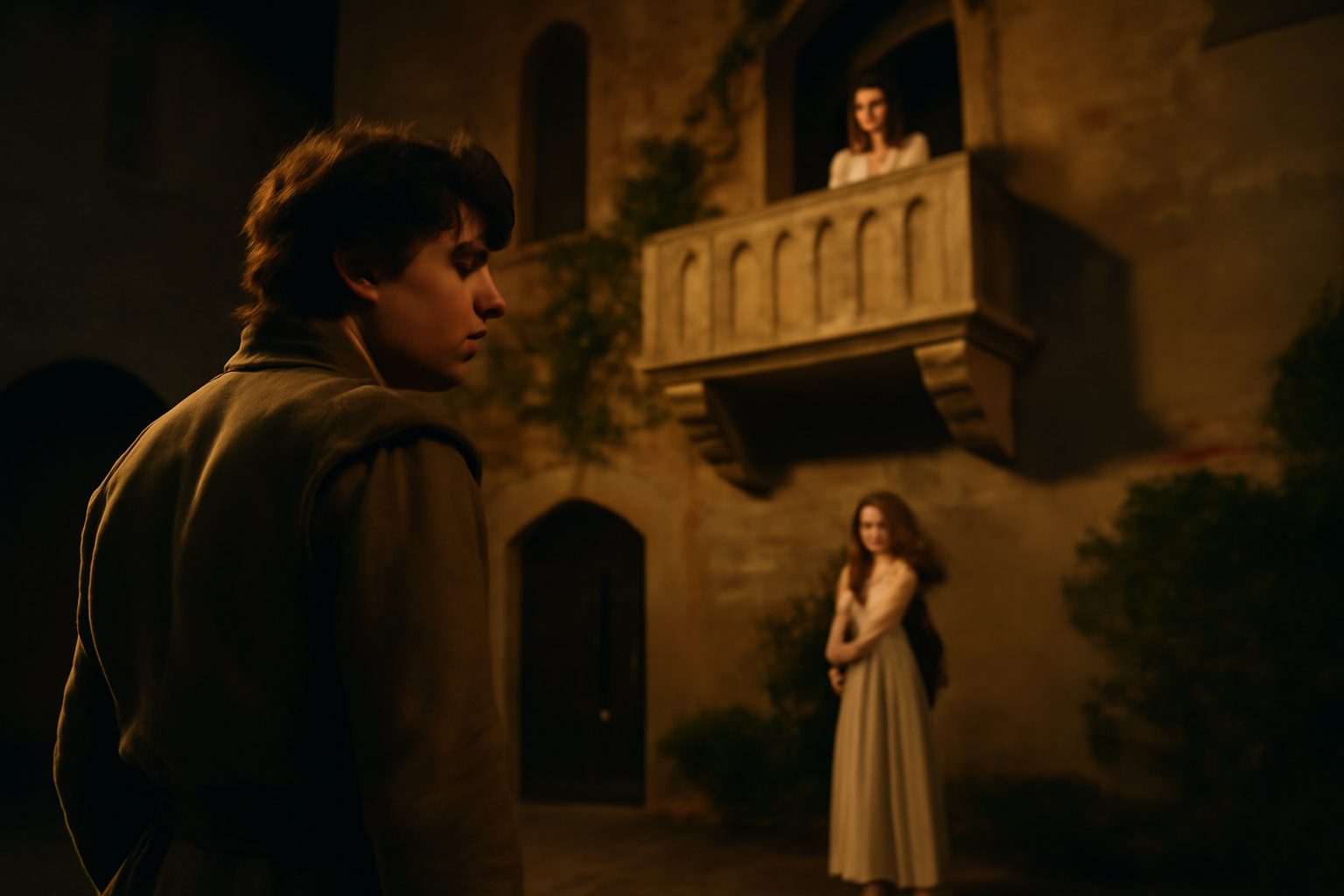
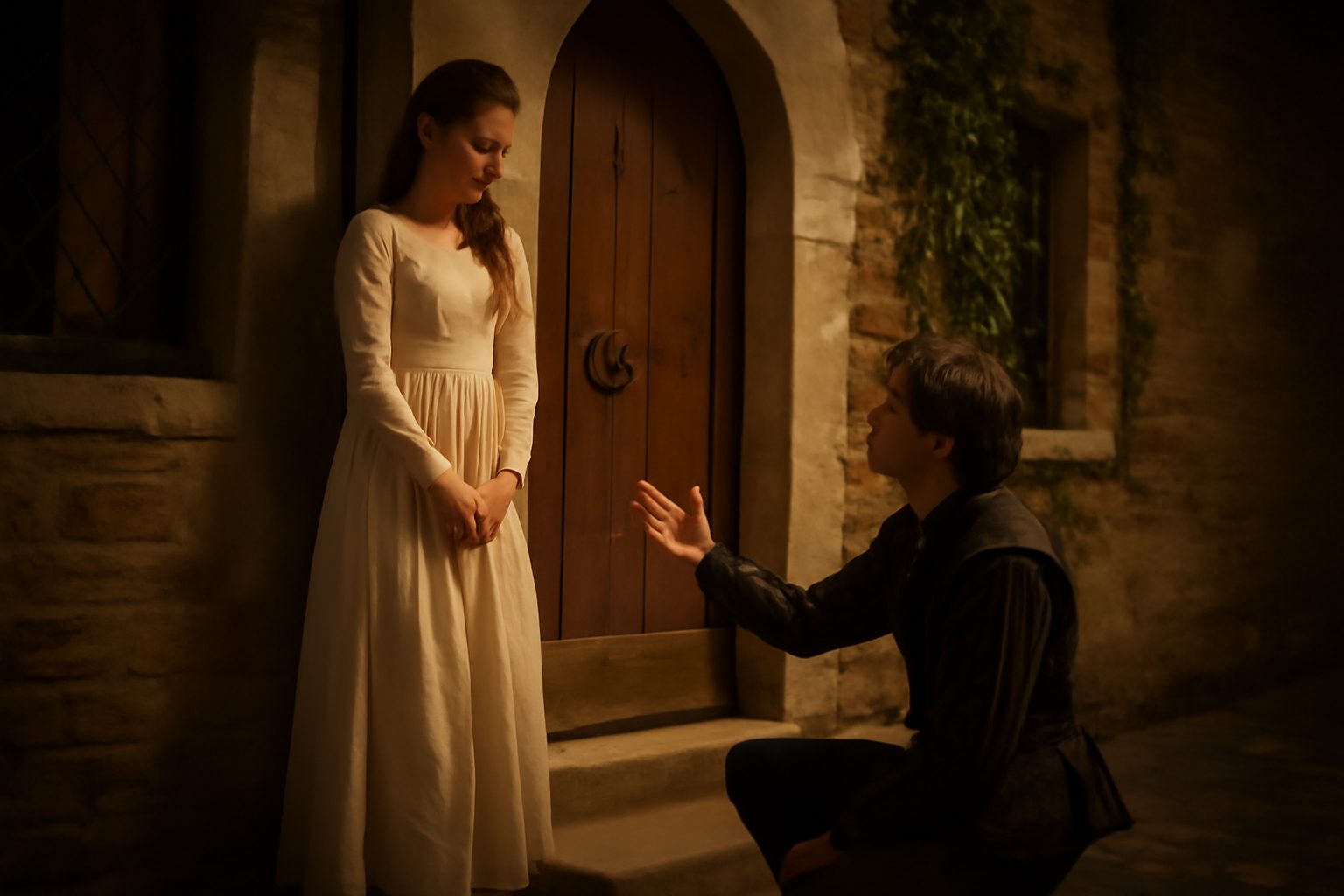
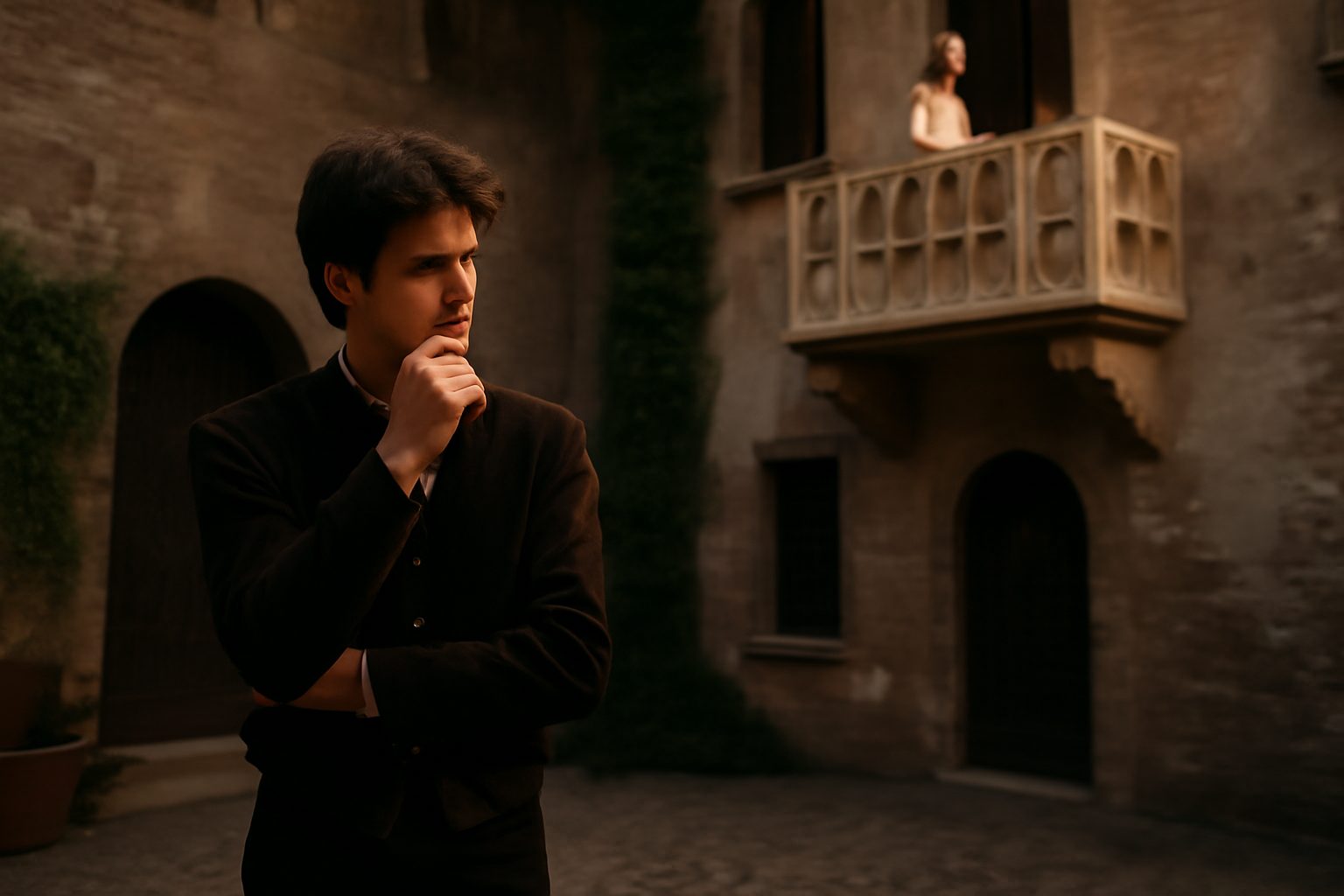
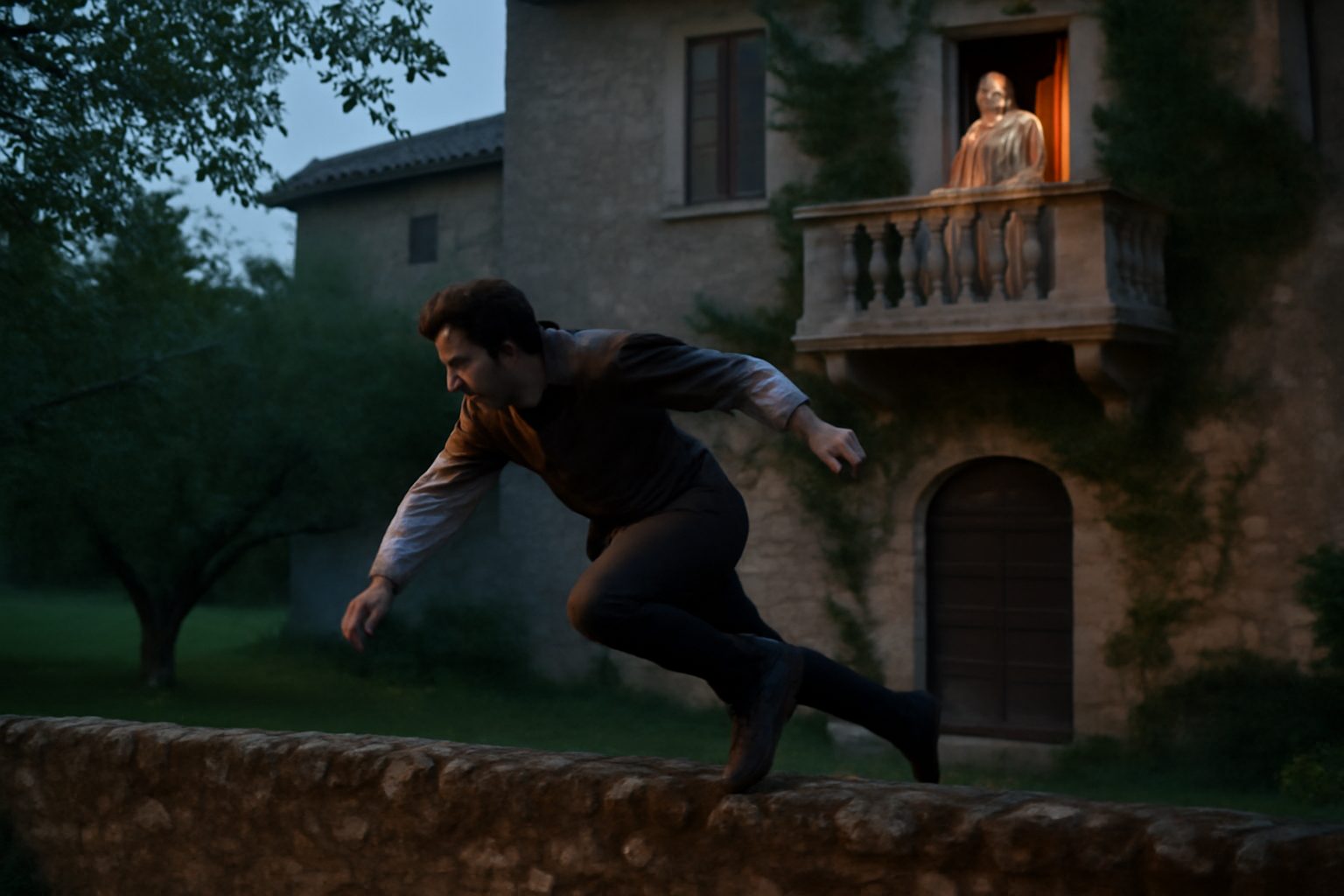
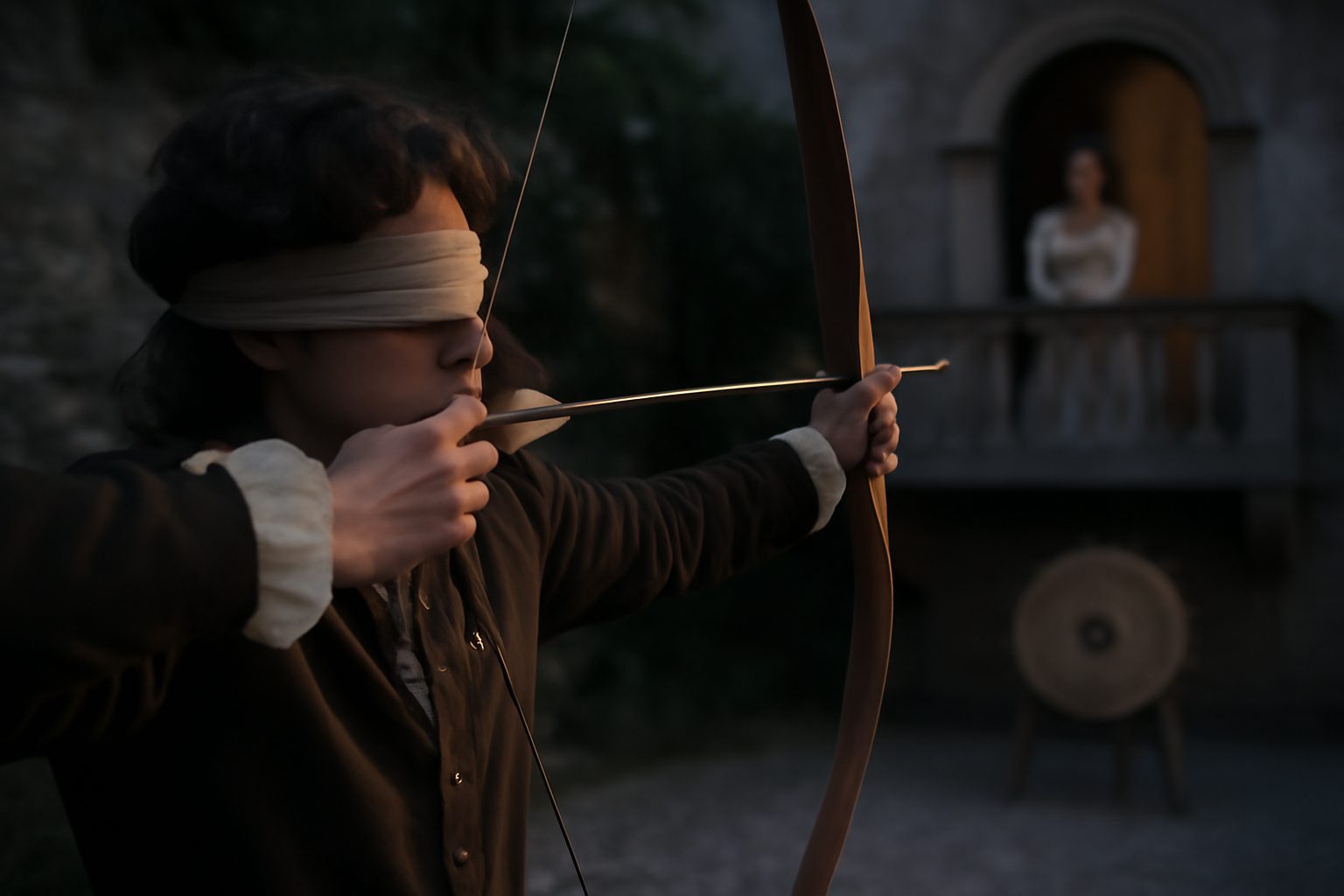
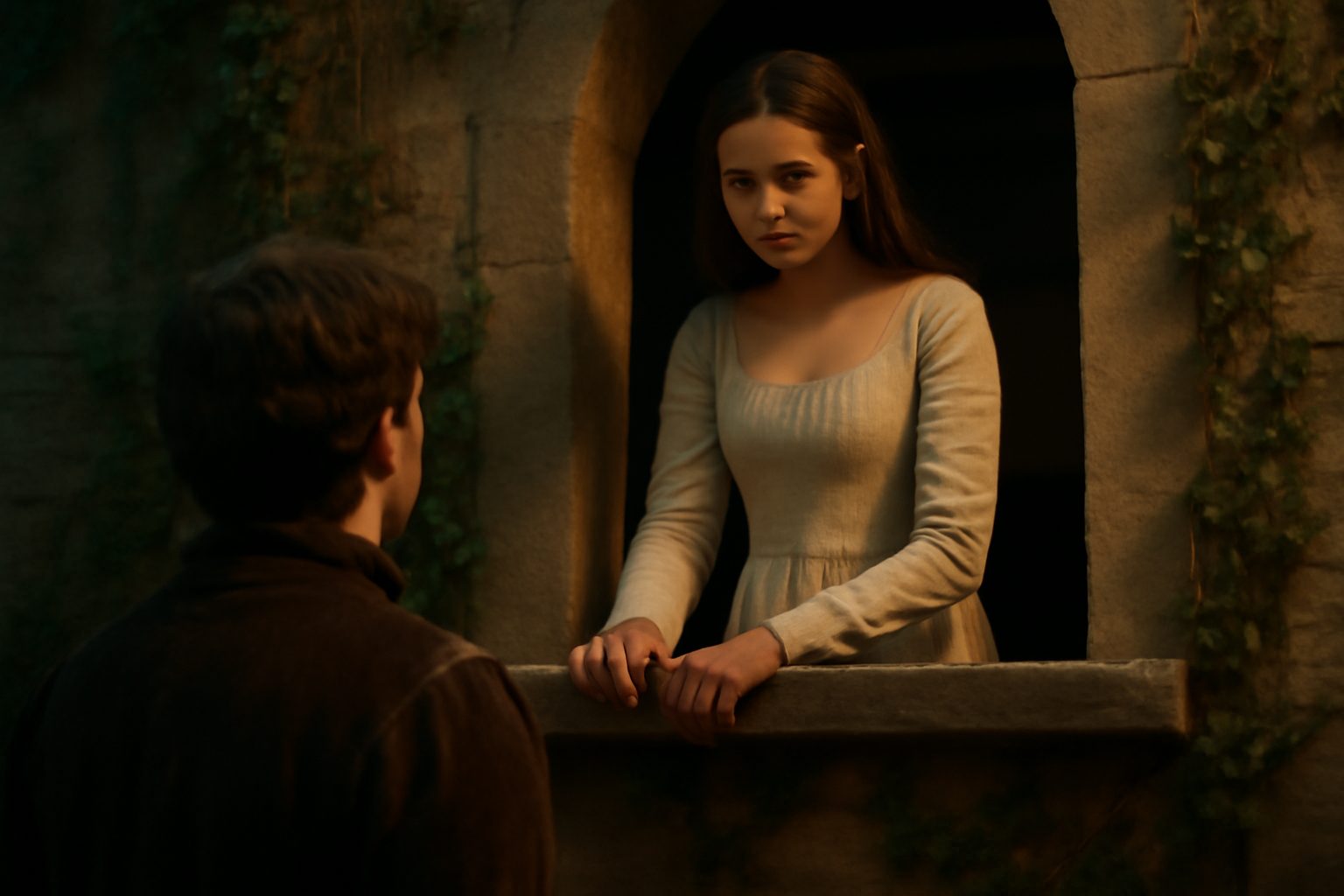
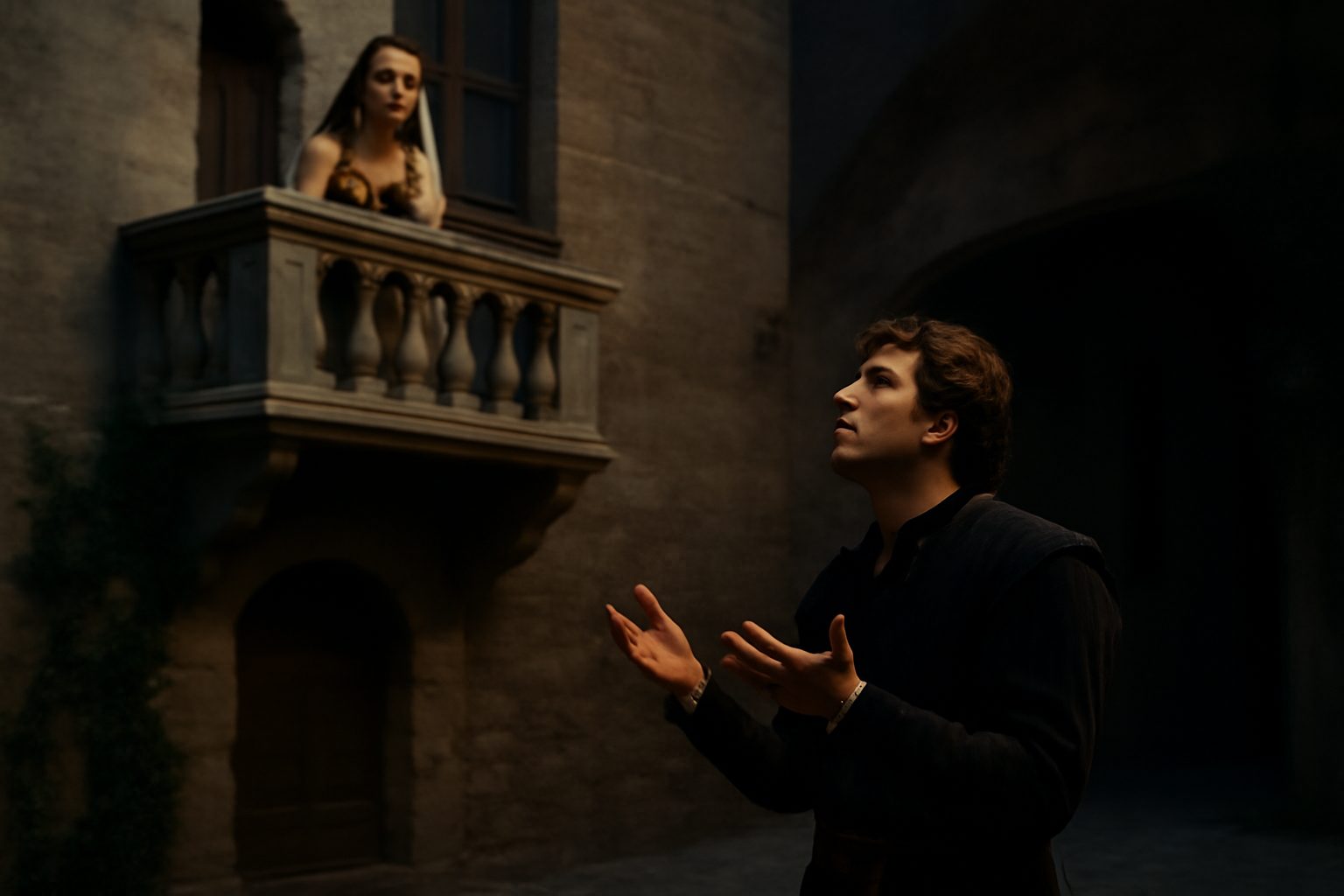
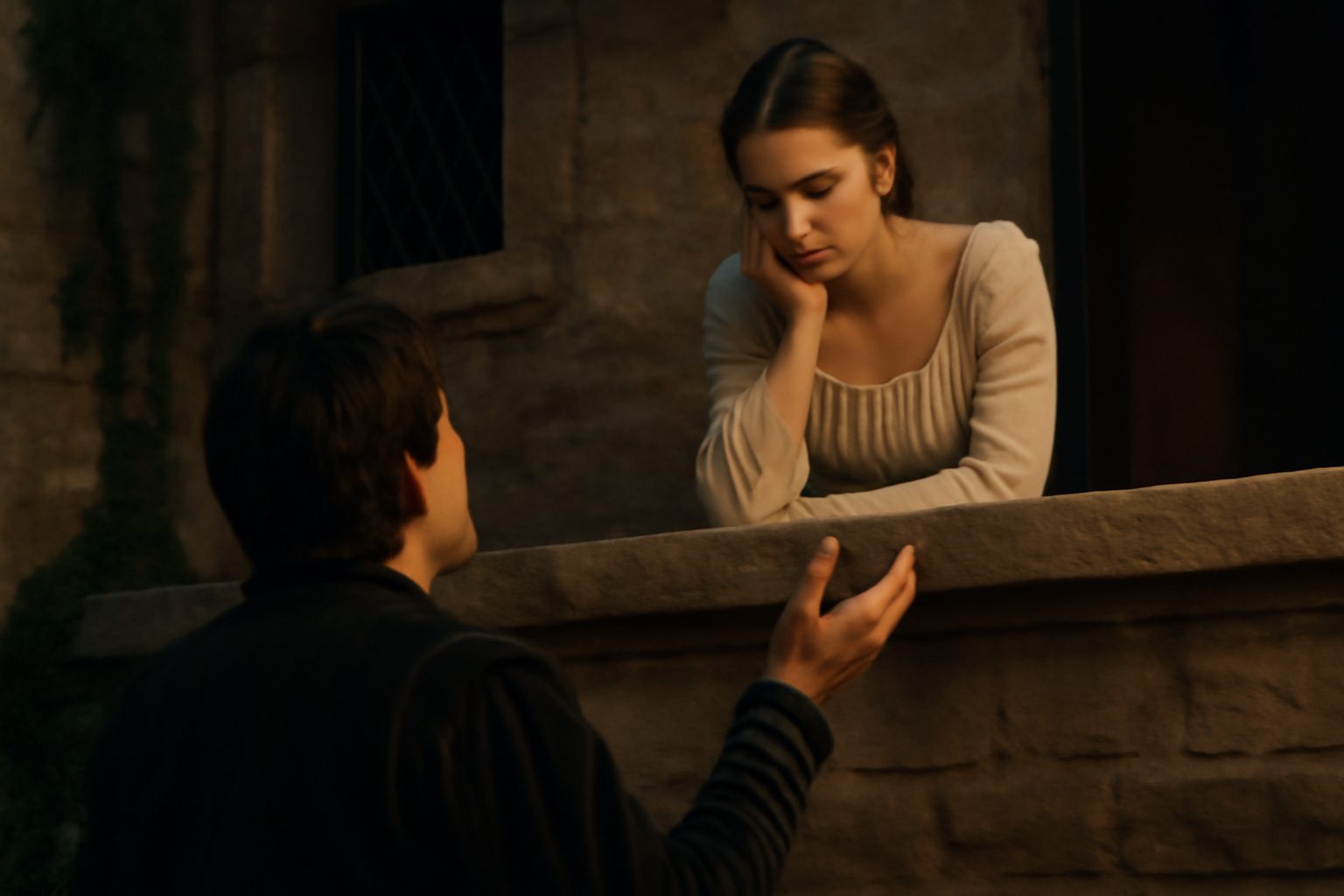
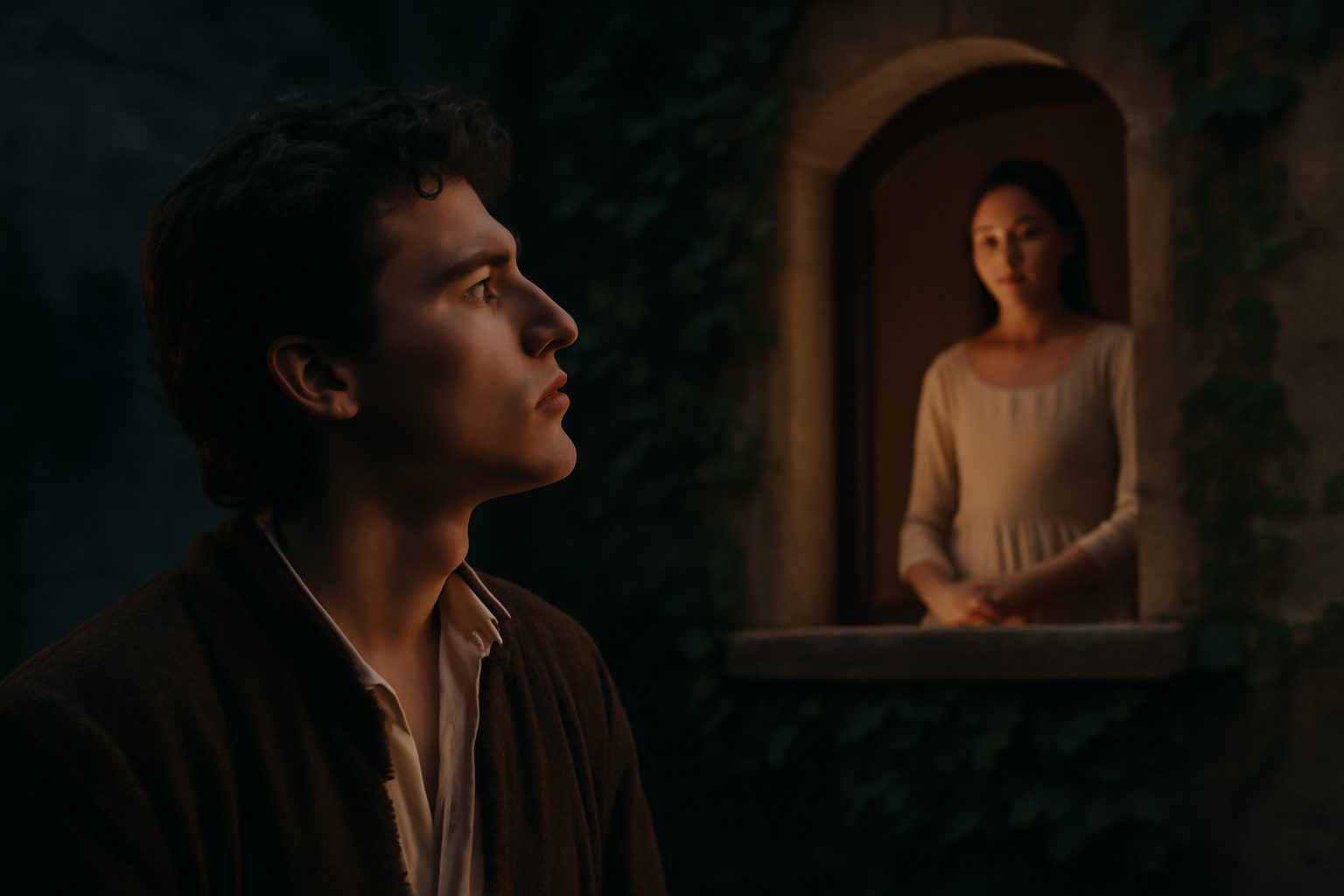
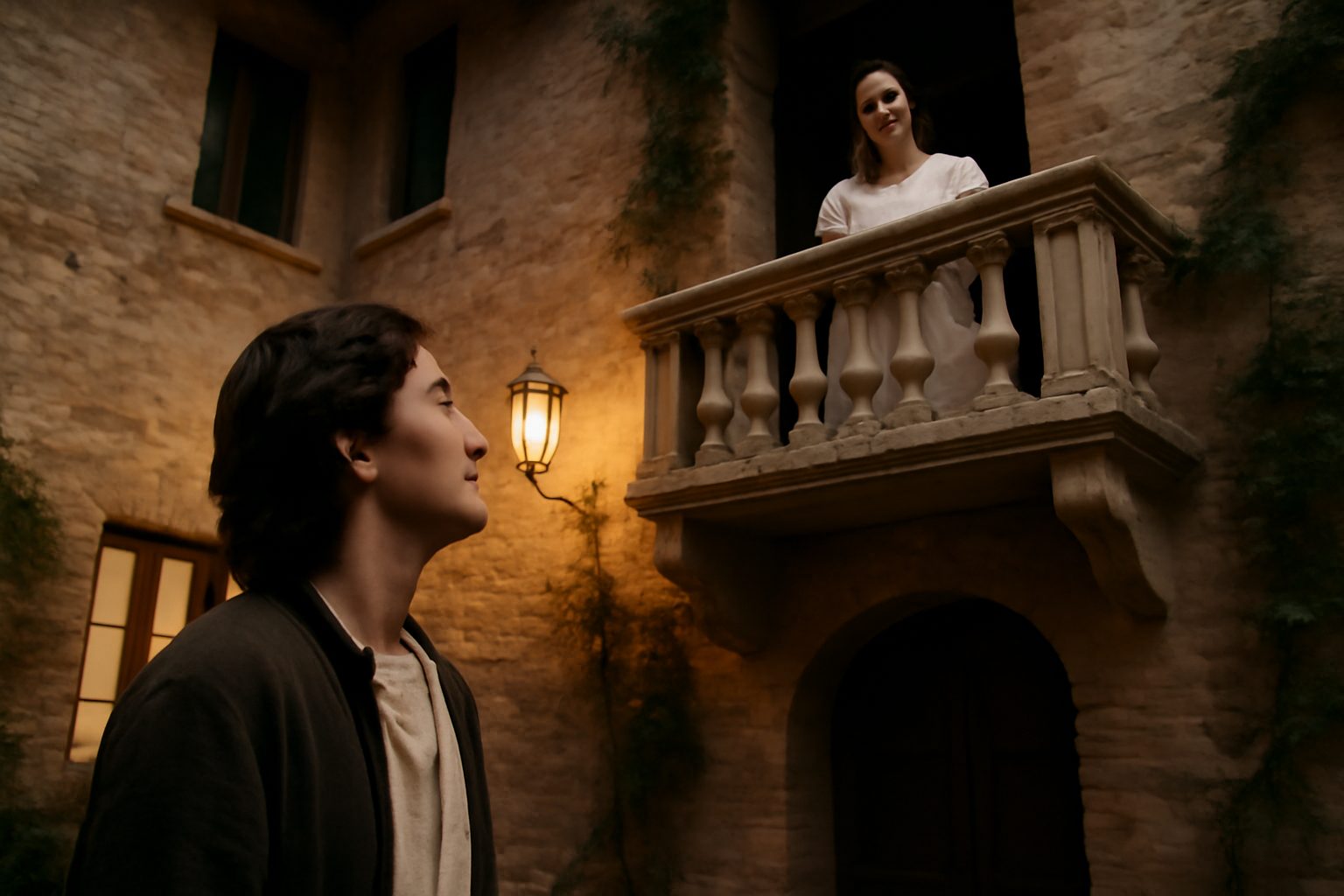
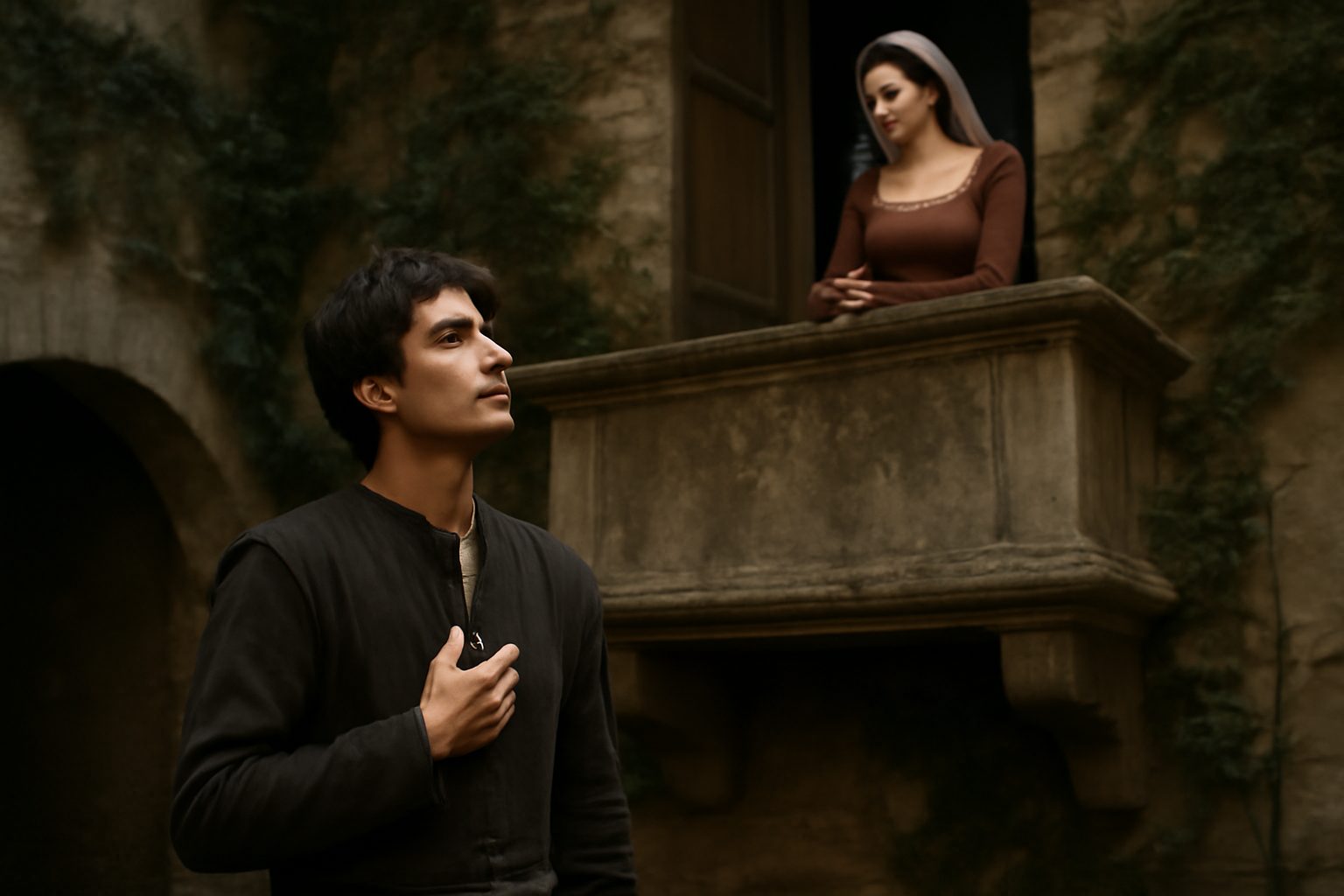
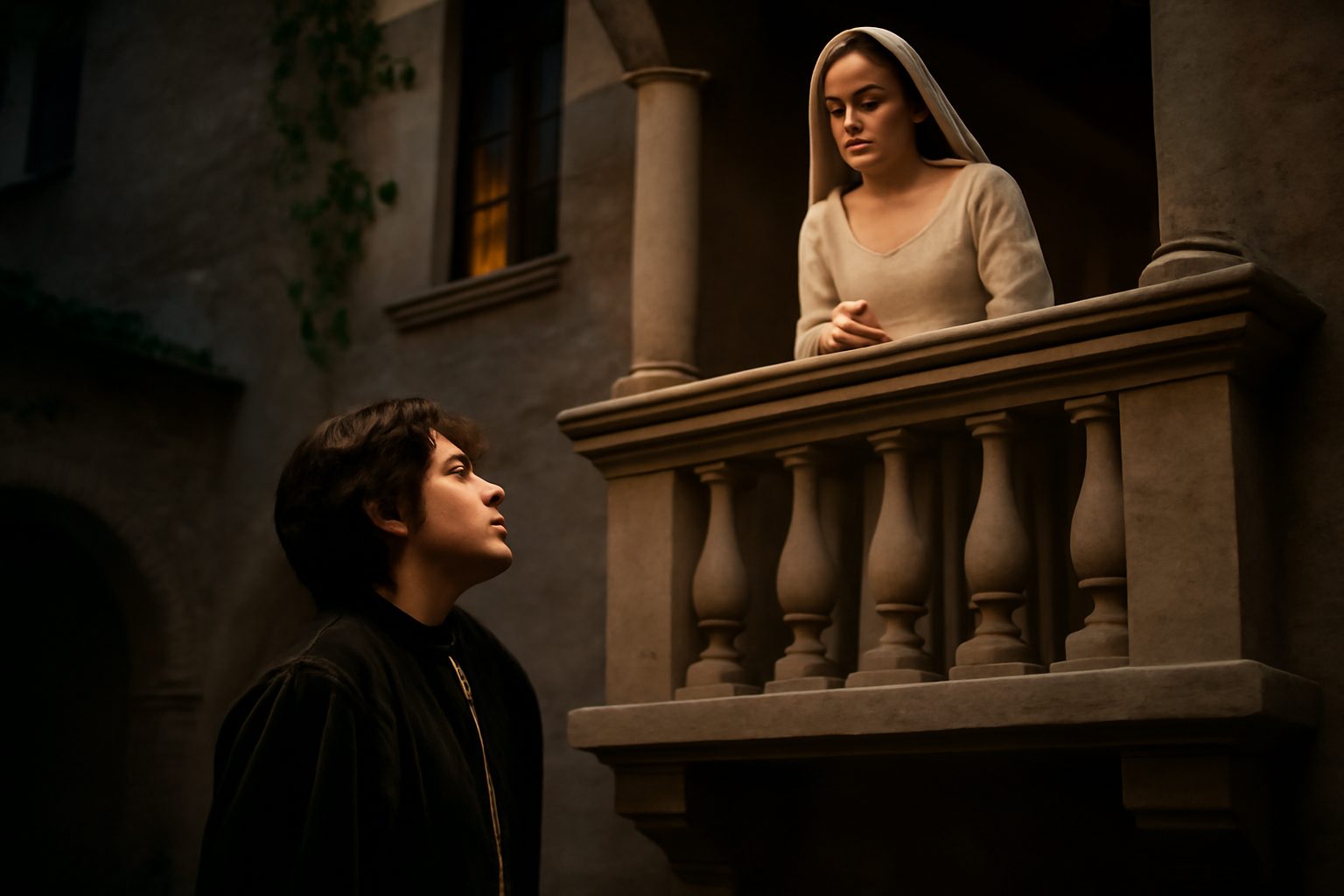
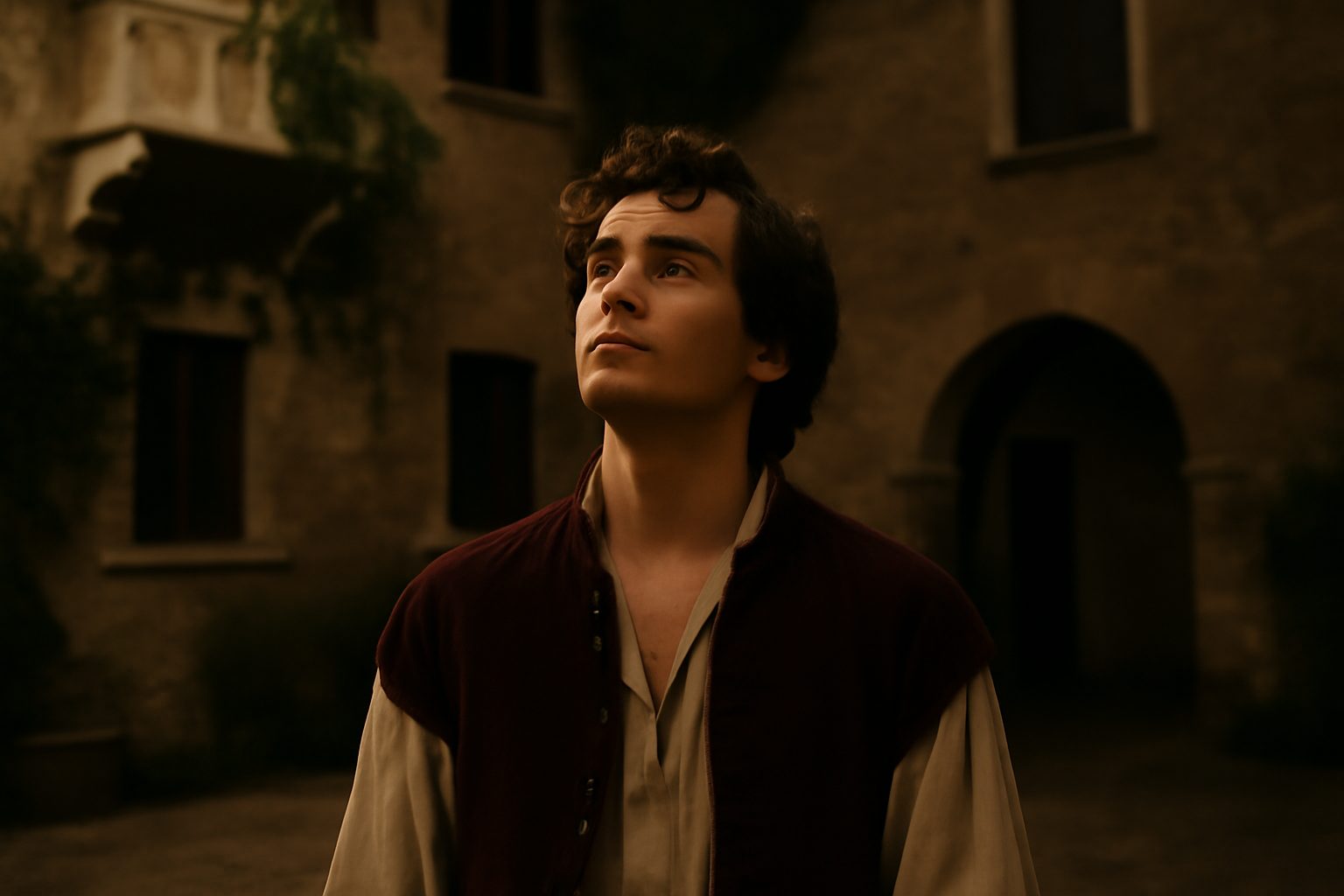
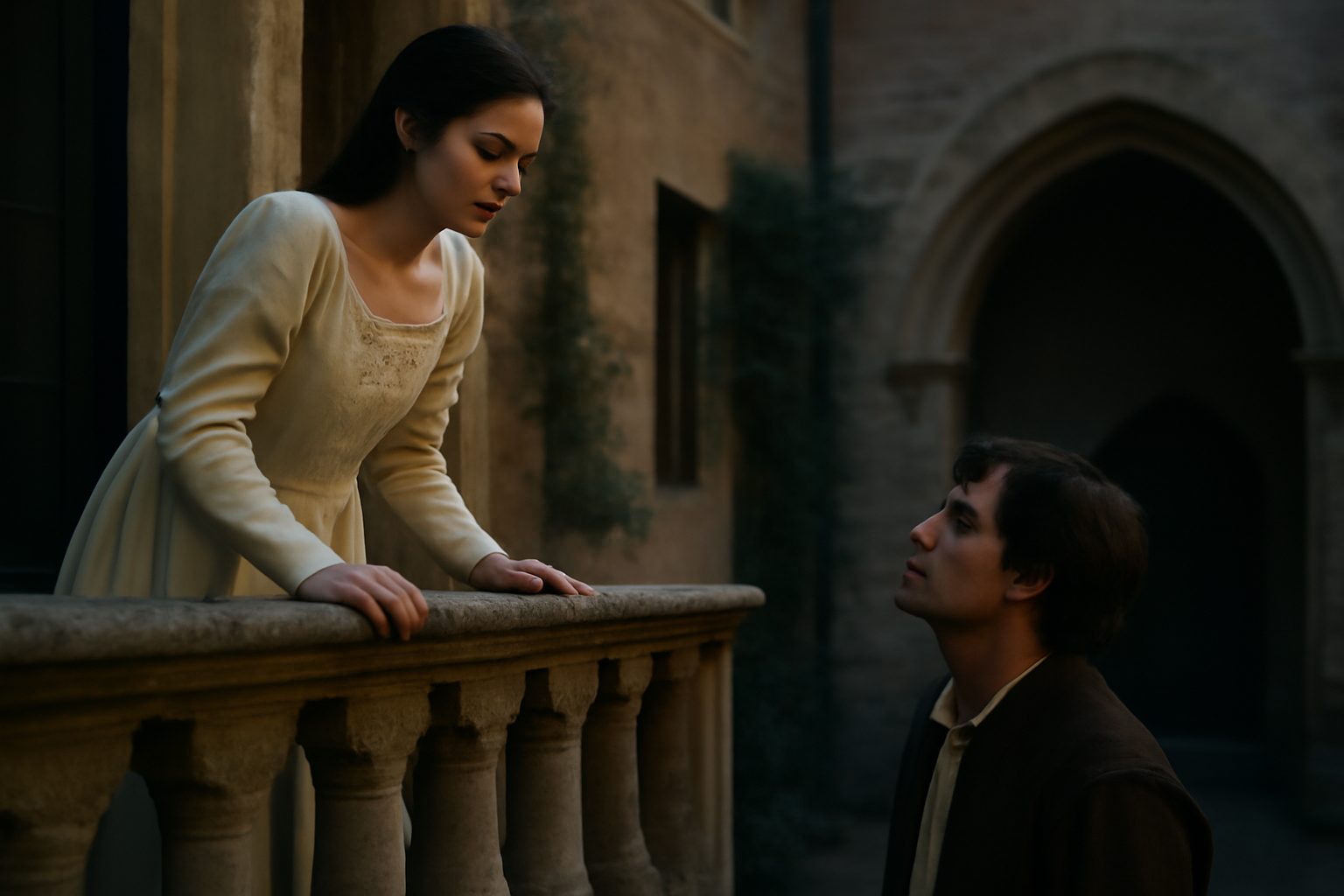
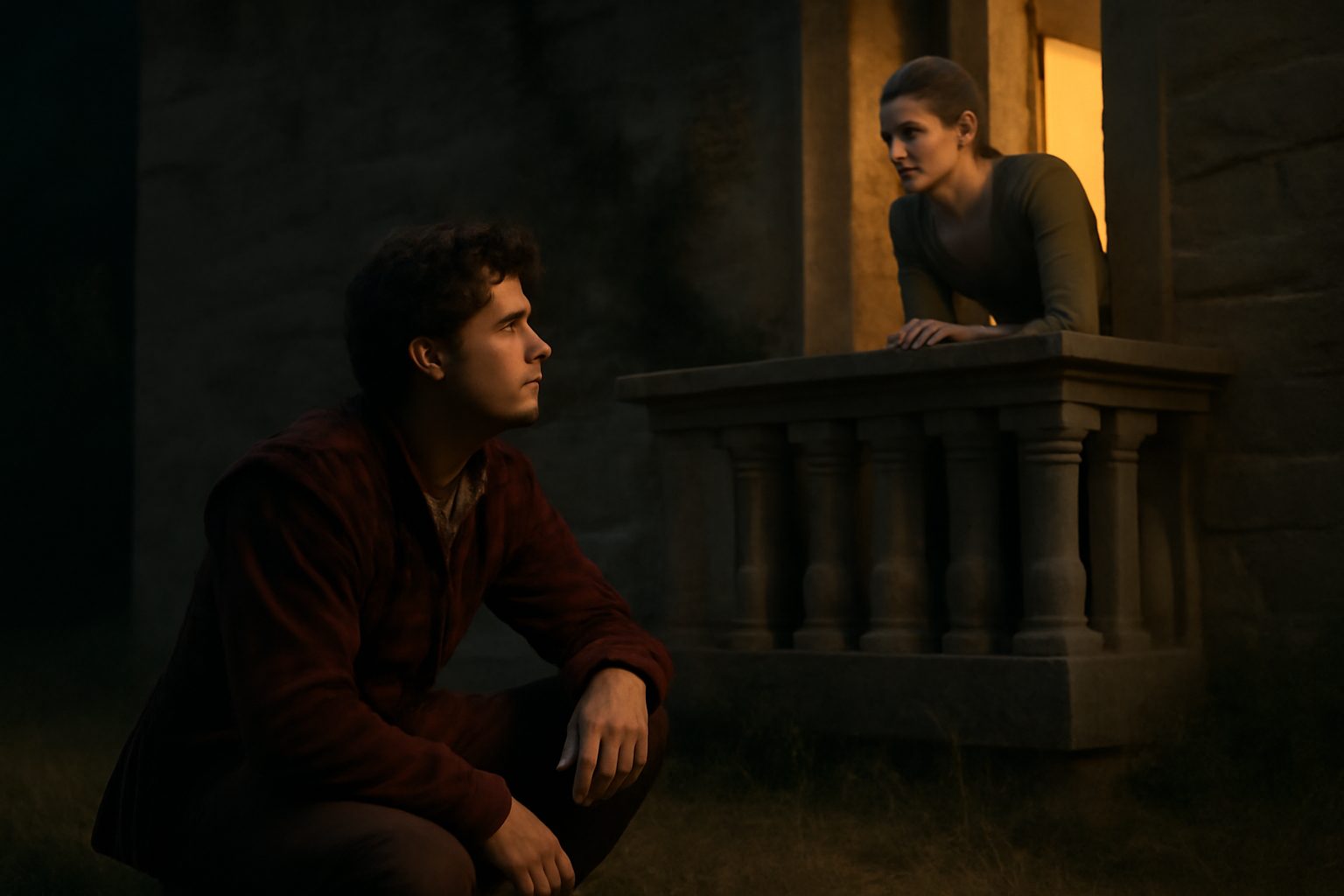
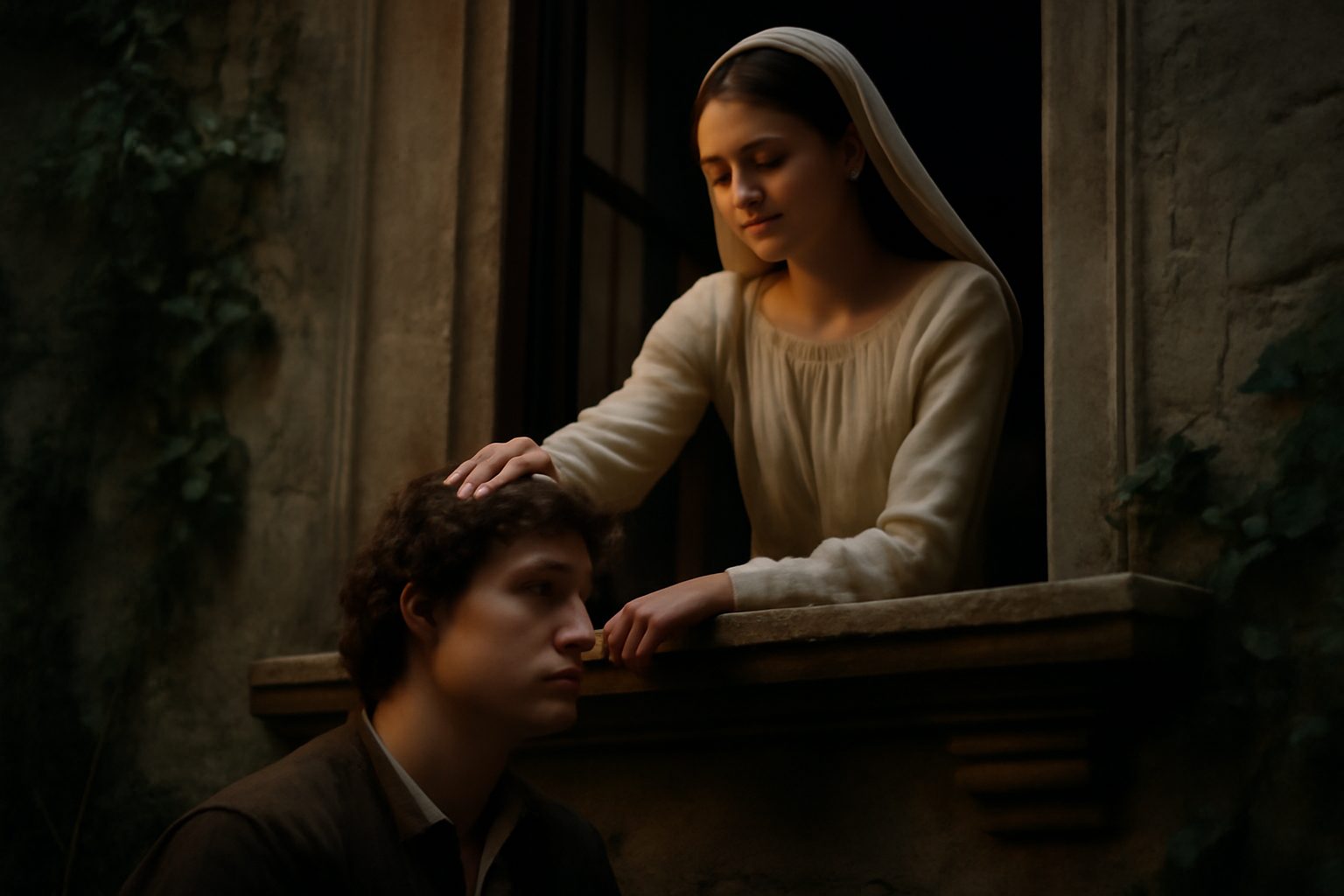
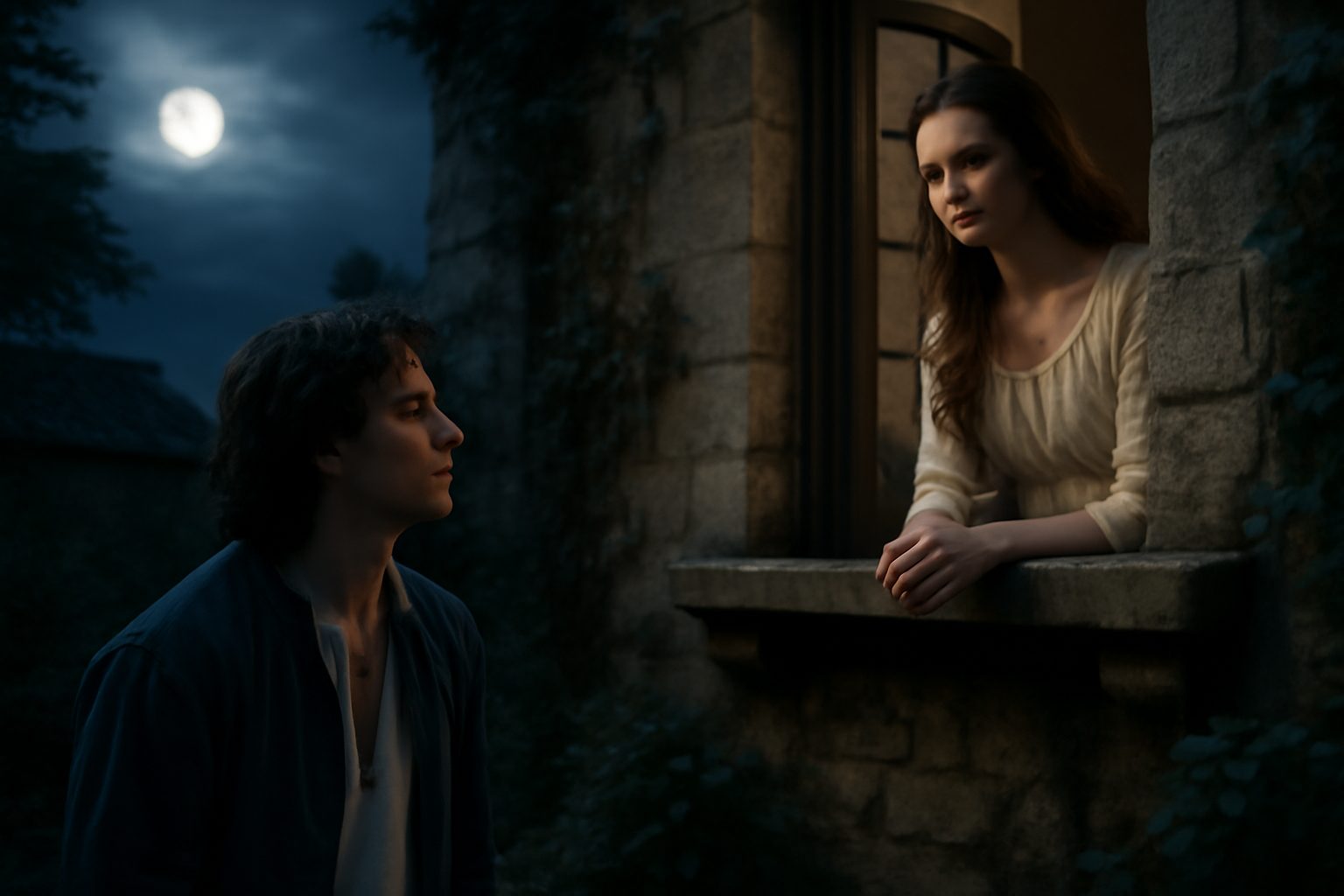
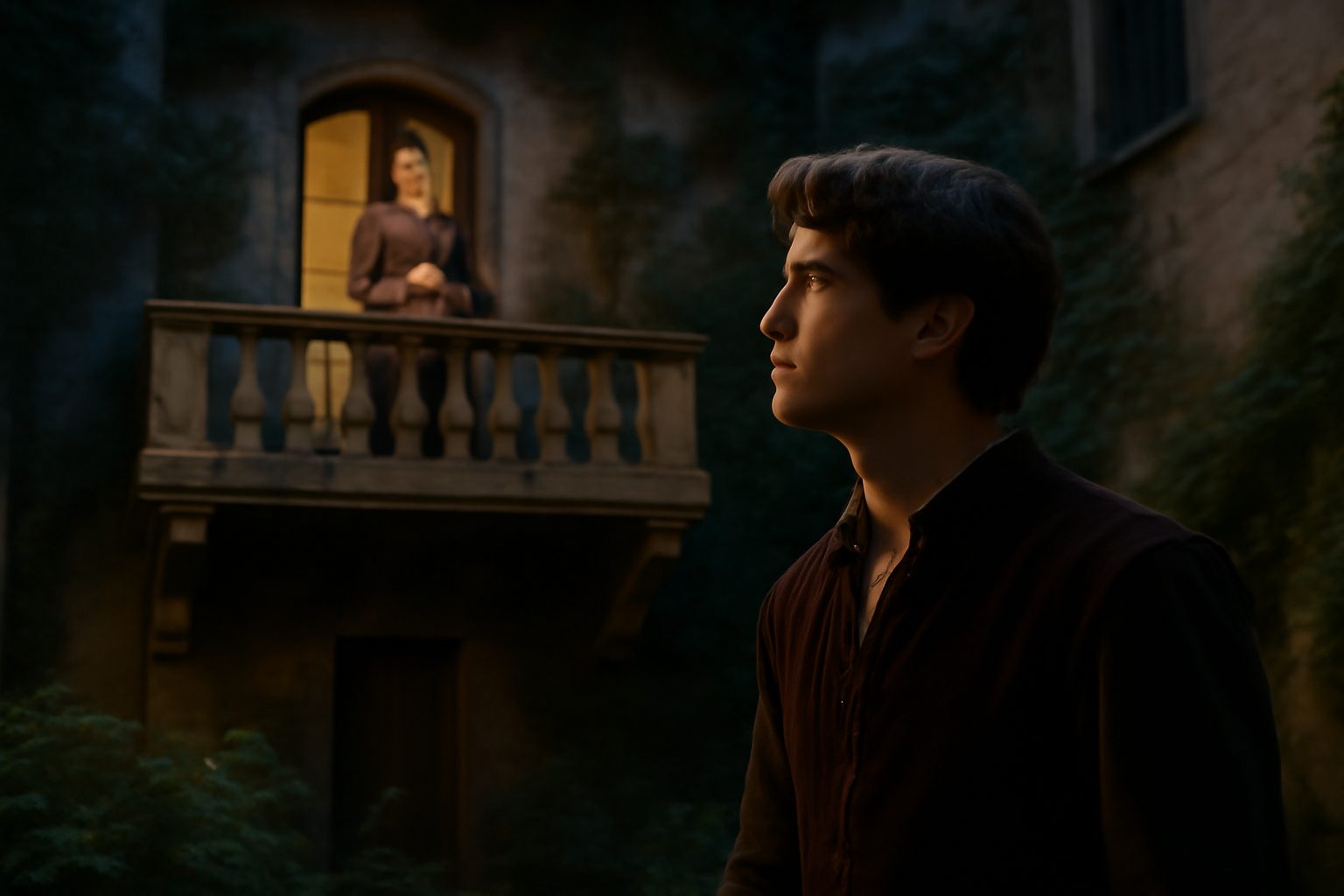
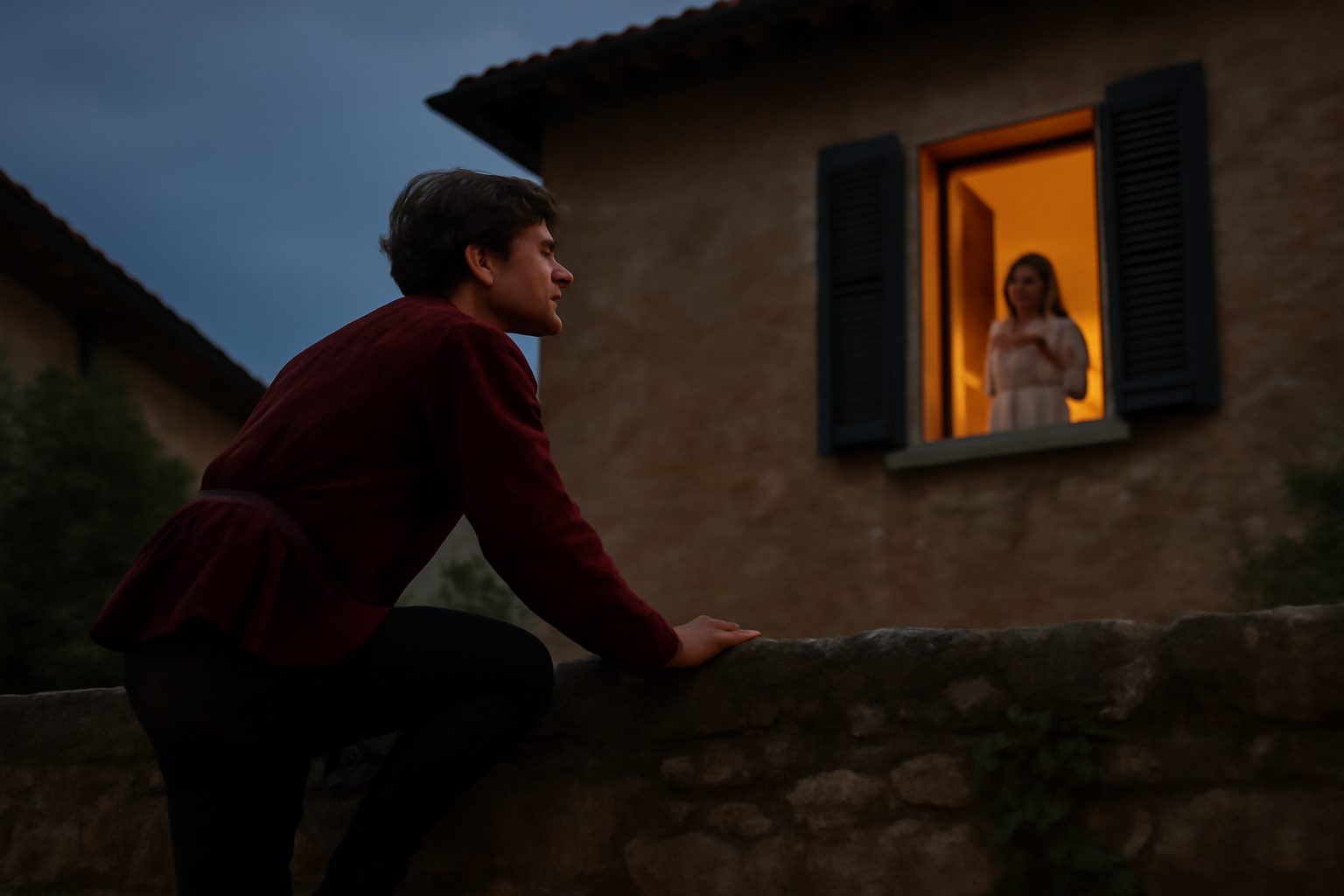
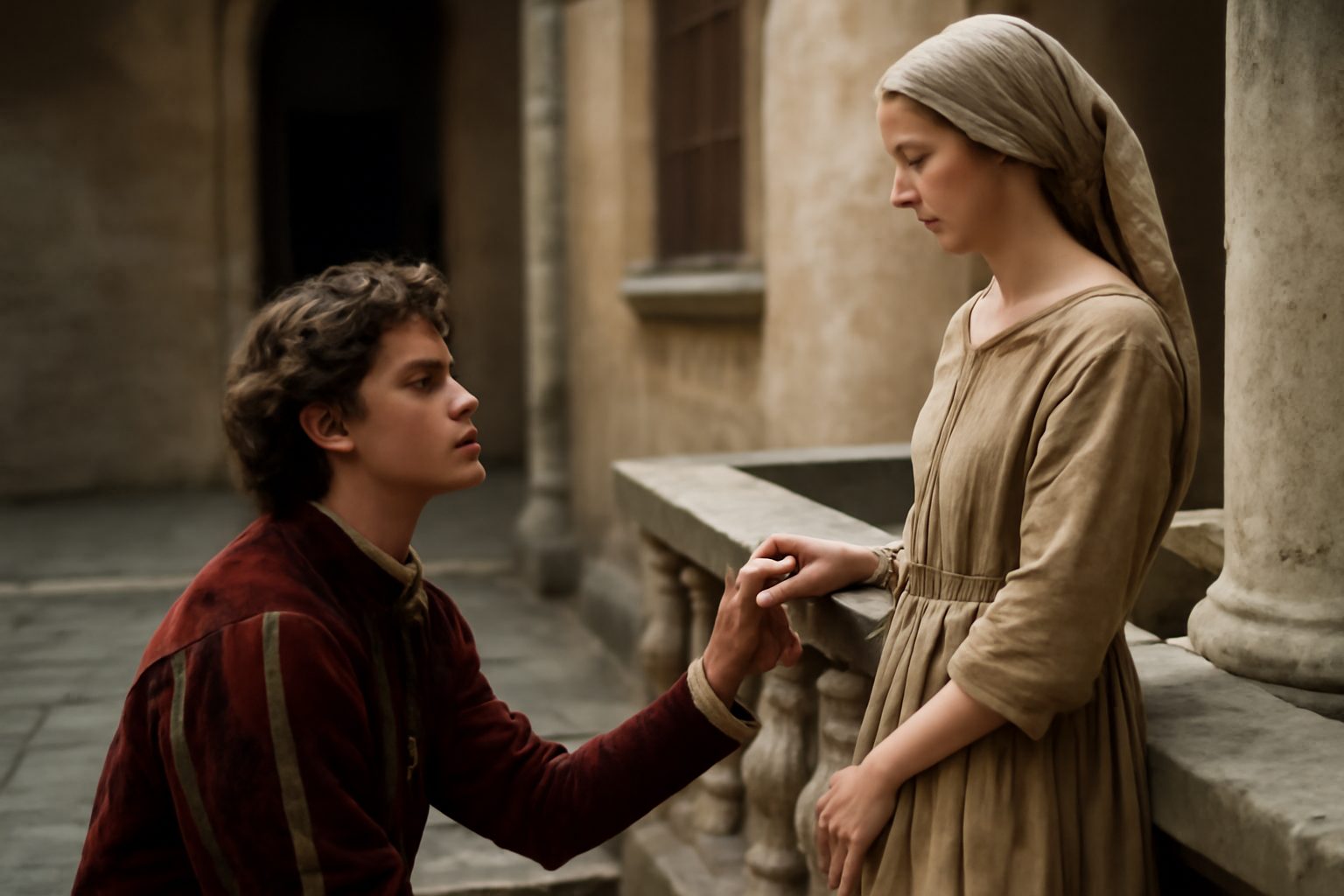
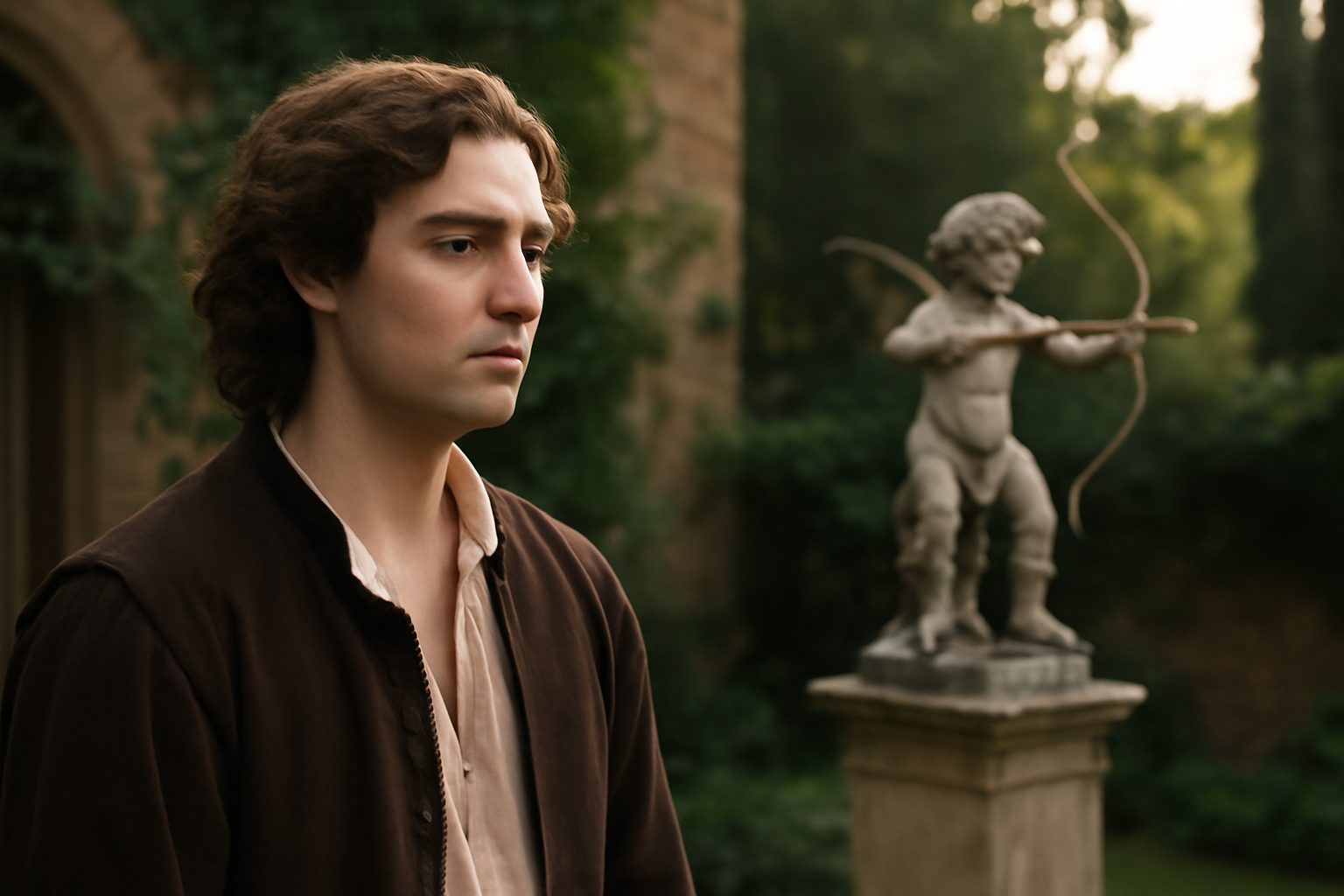
In Act 2, Scene 1 of Romeo and Juliet, Mercutio and Benvolio are searching for Romeo after the Capulet feast. Mercutio playfully calls out to him, teasing Romeo for slipping away and mocking his lovesick behavior, unaware that Romeo has climbed the orchard wall to see Juliet. This line captures Mercutio's wit and the lighthearted tone before the scene shifts to Romeo's passionate encounter with Juliet.
Benvolio: "Romeo! my cousin Romeo!"
In modern day english, we would say:
Mercutio is calling out for Romeo, his friend, teasing him while searching for him after Romeo sneaks away to see Juliet.
Frequently Asked Questions
Who is calling out to Romeo in this line?
Benvolio, Romeo's cousin, is calling out to him.
Connections to other verses:
Connections to "Romeo! my cousin Romeo!"
The verse Romeo! my cousin Romeo! is part of Mercutio's playful and mocking attempts to summon Romeo, who has hidden himself. This call is echoed and expanded in other parts of the scene where Mercutio continues his teasing conjuration.
Direct Responses and Teasing
Mercutio's initial call is met with Benvolio's warning in And if he hear thee, thou wilt anger him, suggesting that Romeo might not appreciate the jest. Mercutio, however, escalates his efforts with lines like Romeo! humours! madman! passion! lover!, piling on epithets to mock Romeo's lovesick state.
Conjuration and Invocation
Mercutio's summoning takes on a magical, humorous tone as he declares, The ape is dead, and I must conjure him, treating Romeo as if he were a spirit to be raised. This theme continues with I conjure only but to raise up him, emphasizing the playful ritual Mercutio is performing.
References to Rosaline and Love
Mercutio invokes Romeo's previous love interest, adding another layer of teasing: I conjure thee by Rosaline's bright eyes. This connects to the idea that Romeo's love is fickle or blind, as noted in Blind is his love and best befits the dark and its rebuttal in If love be blind, love cannot hit the mark.
Abandonment and Resolution
Eventually, Mercutio and Benvolio give up, as seen in Come, shall we go? and Go, then; for 'tis in vain, acknowledging that Romeo does not wish to be found. This resignation ties back to the initial call, highlighting the futility of their efforts.