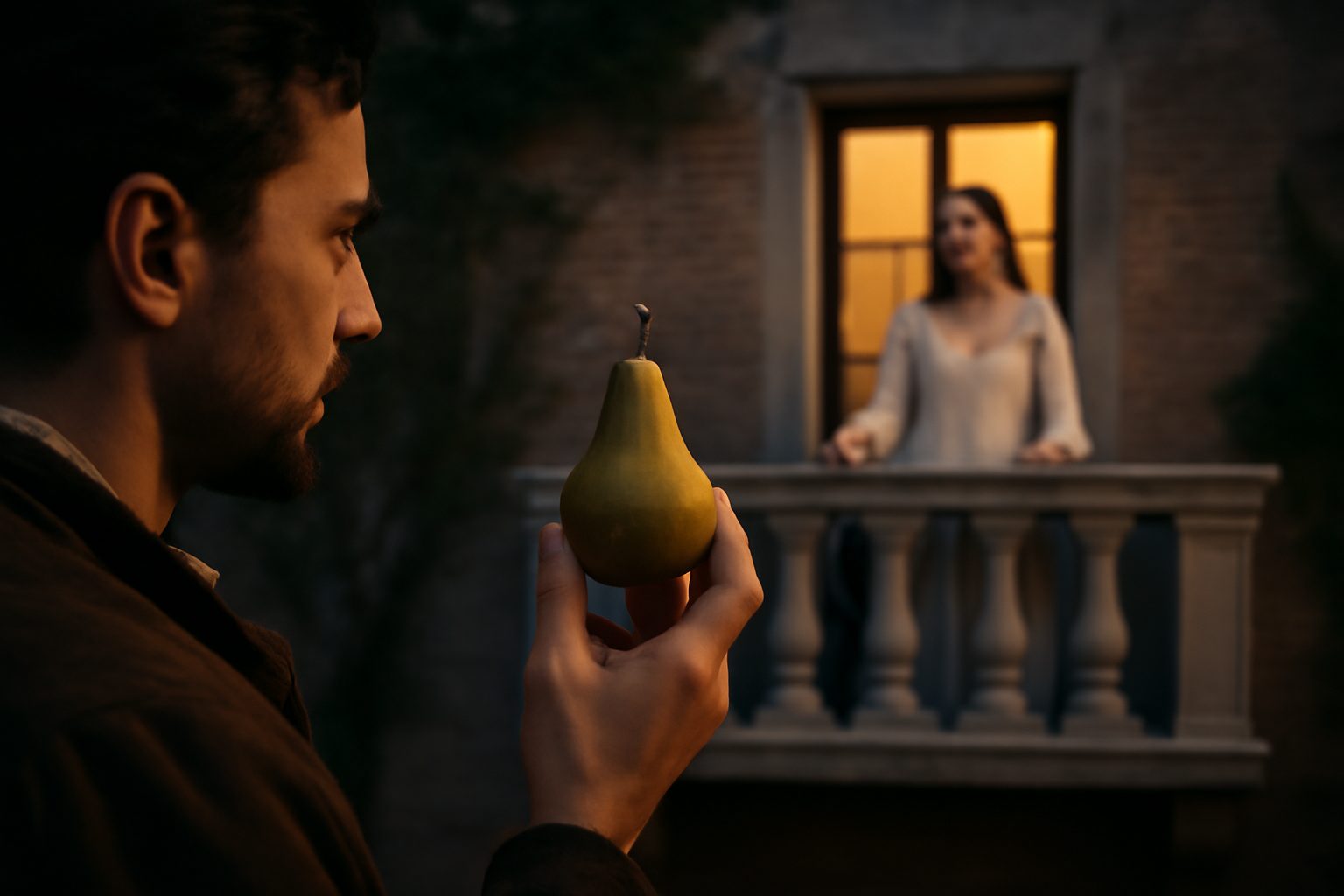
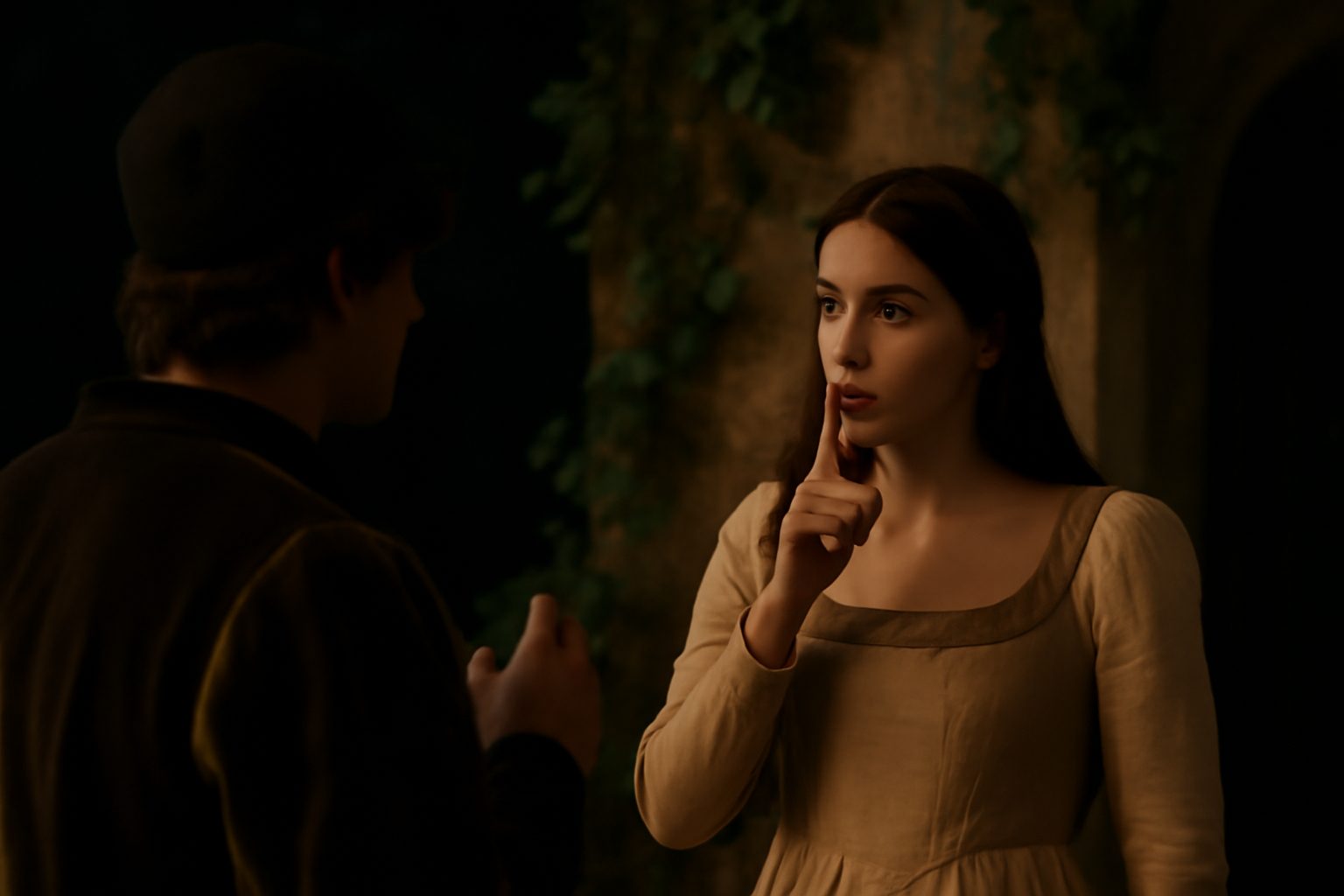
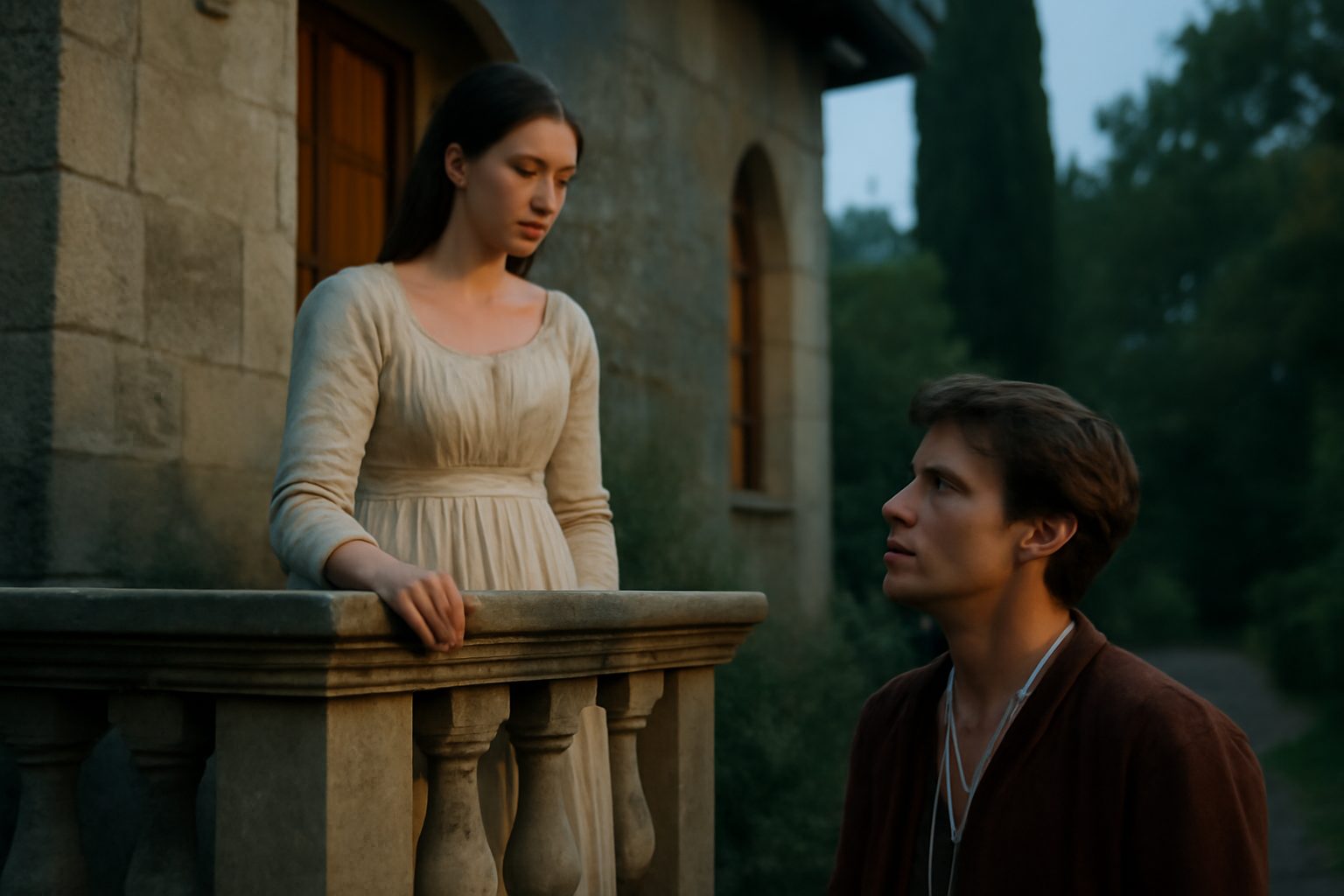
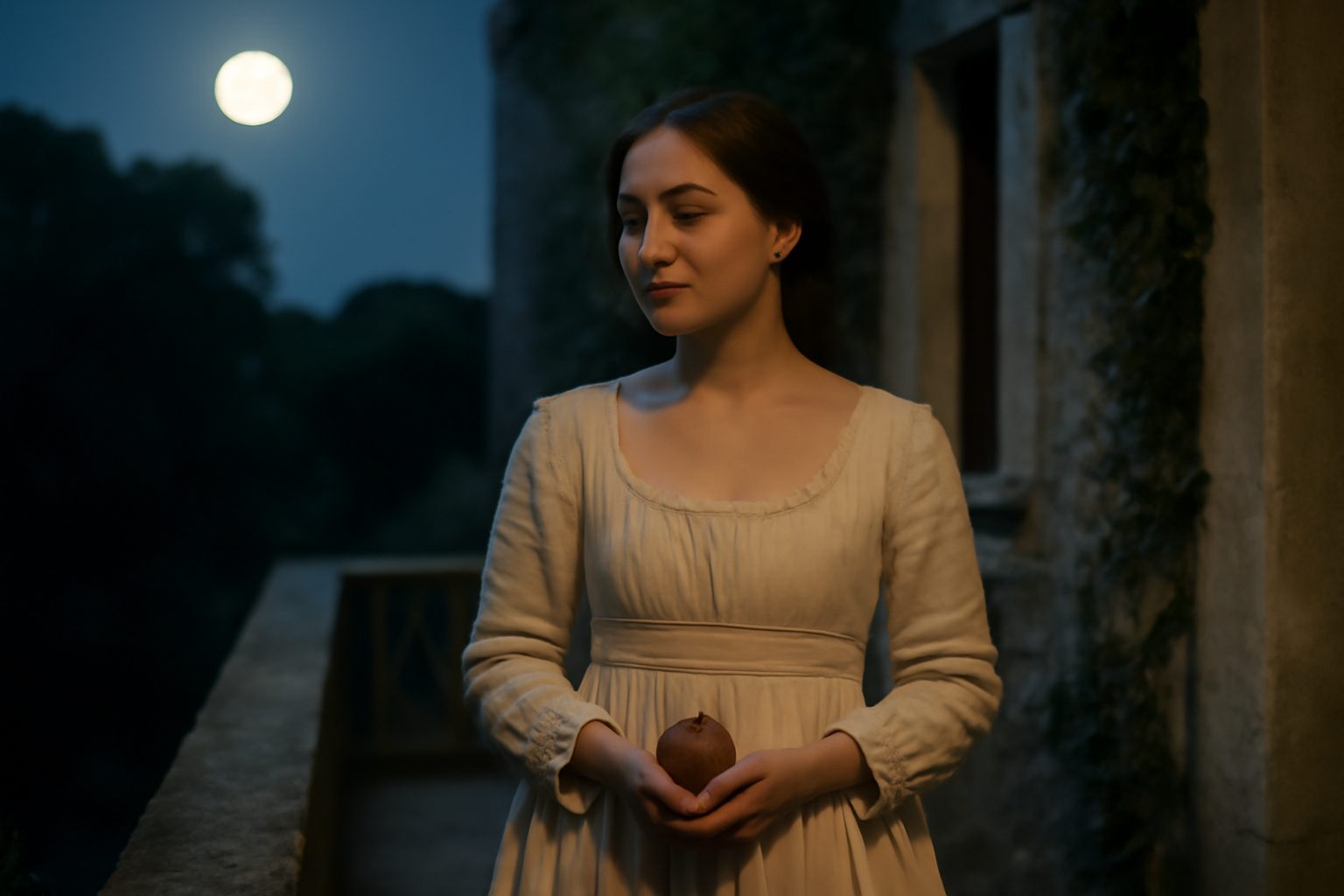
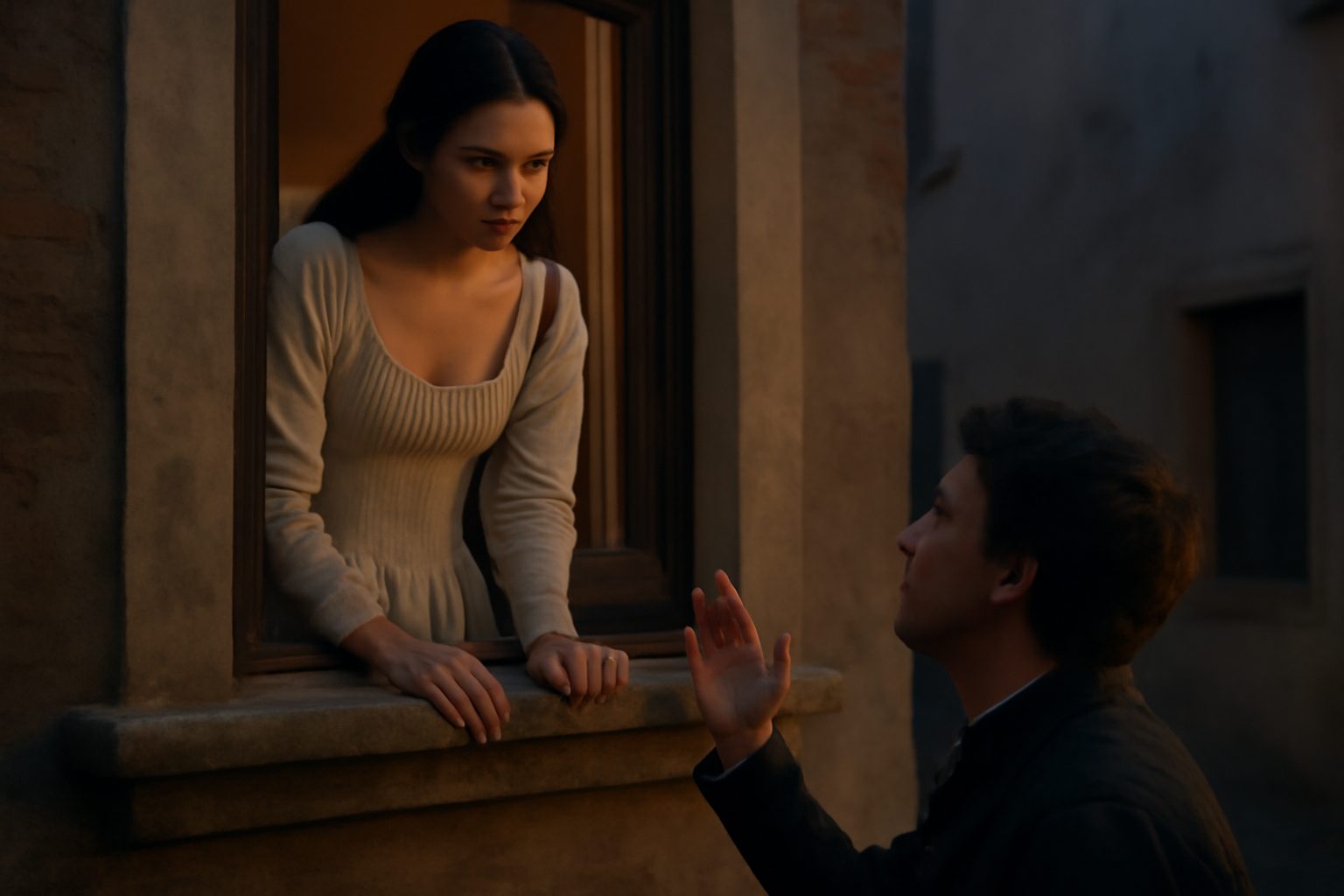
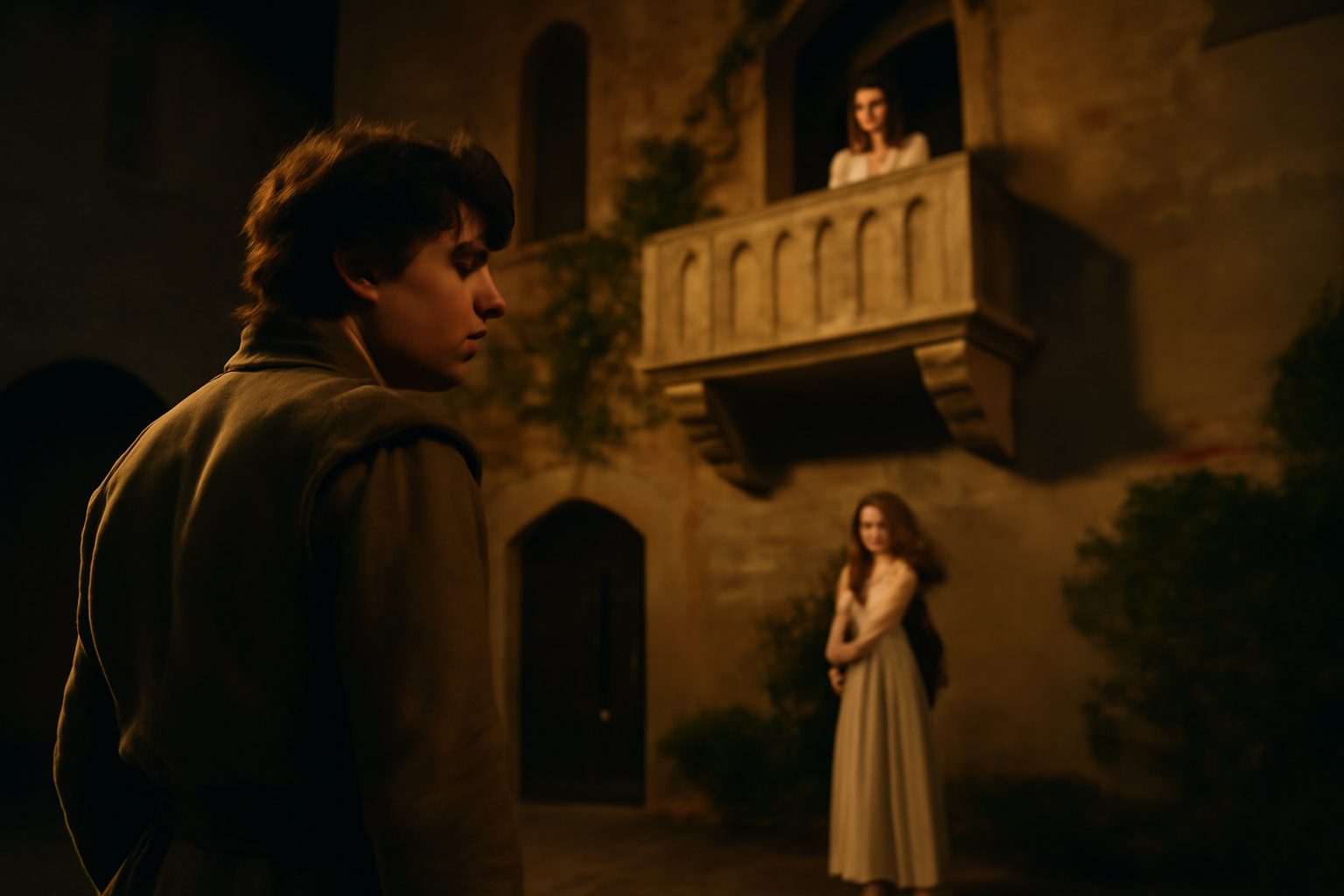
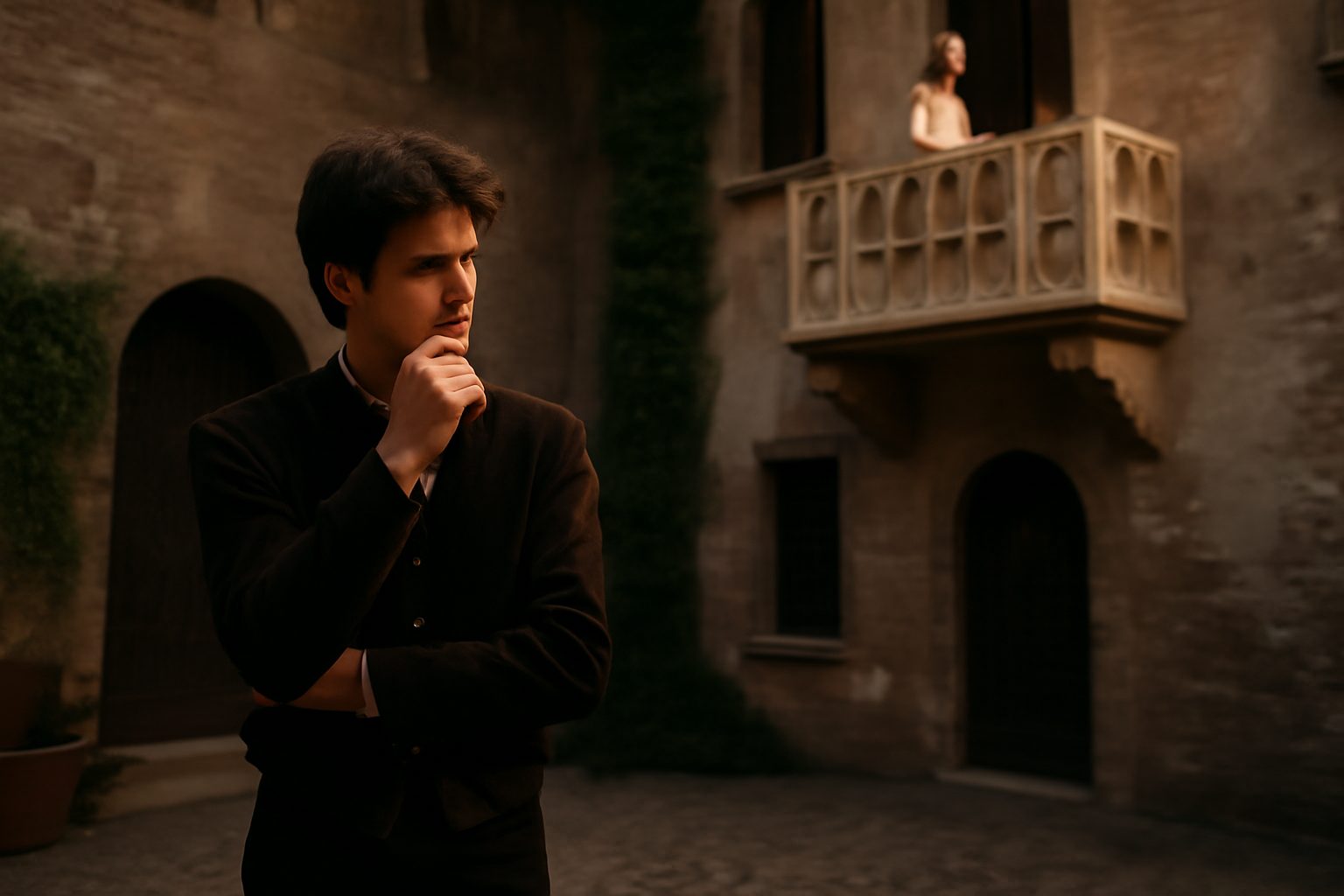
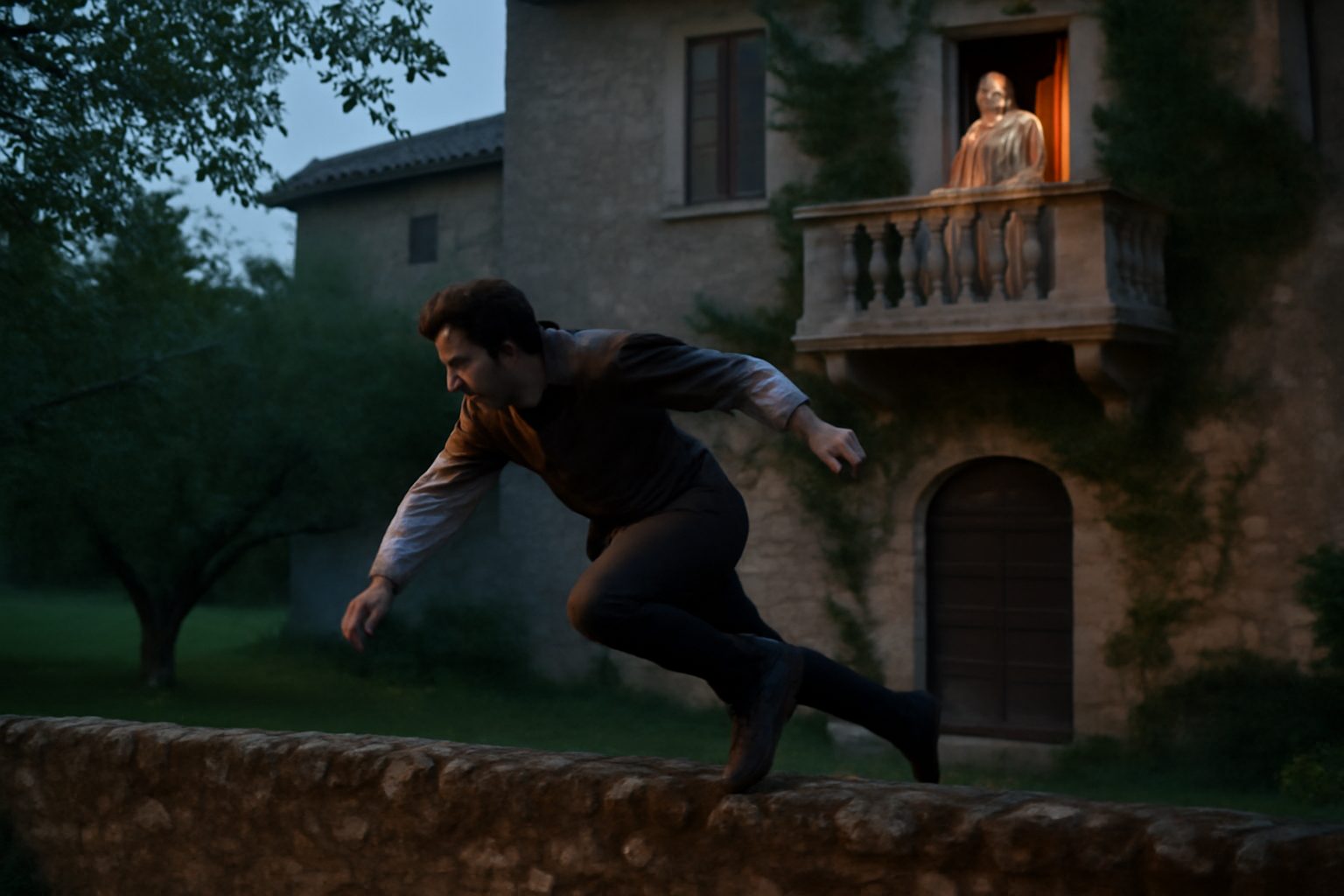
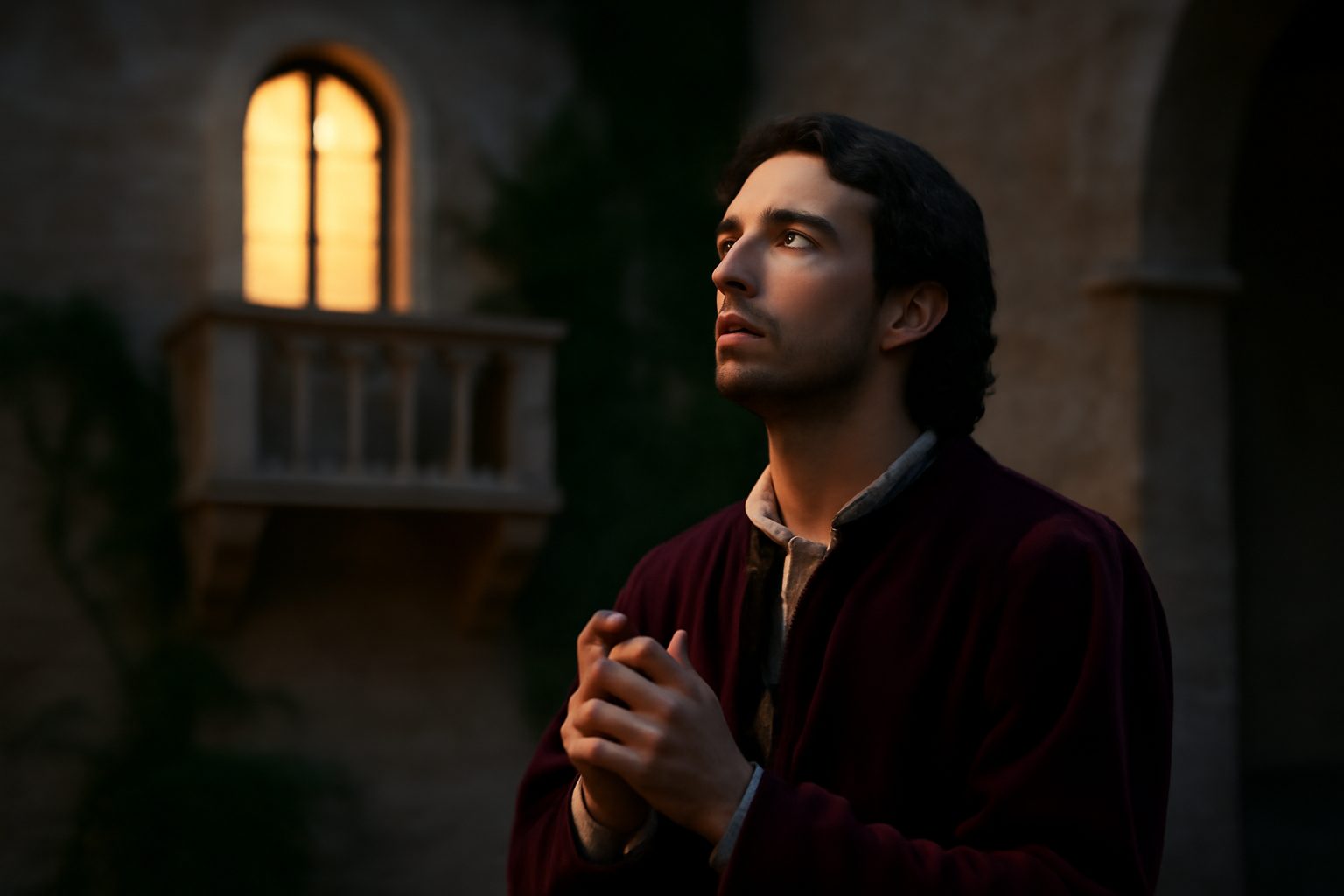
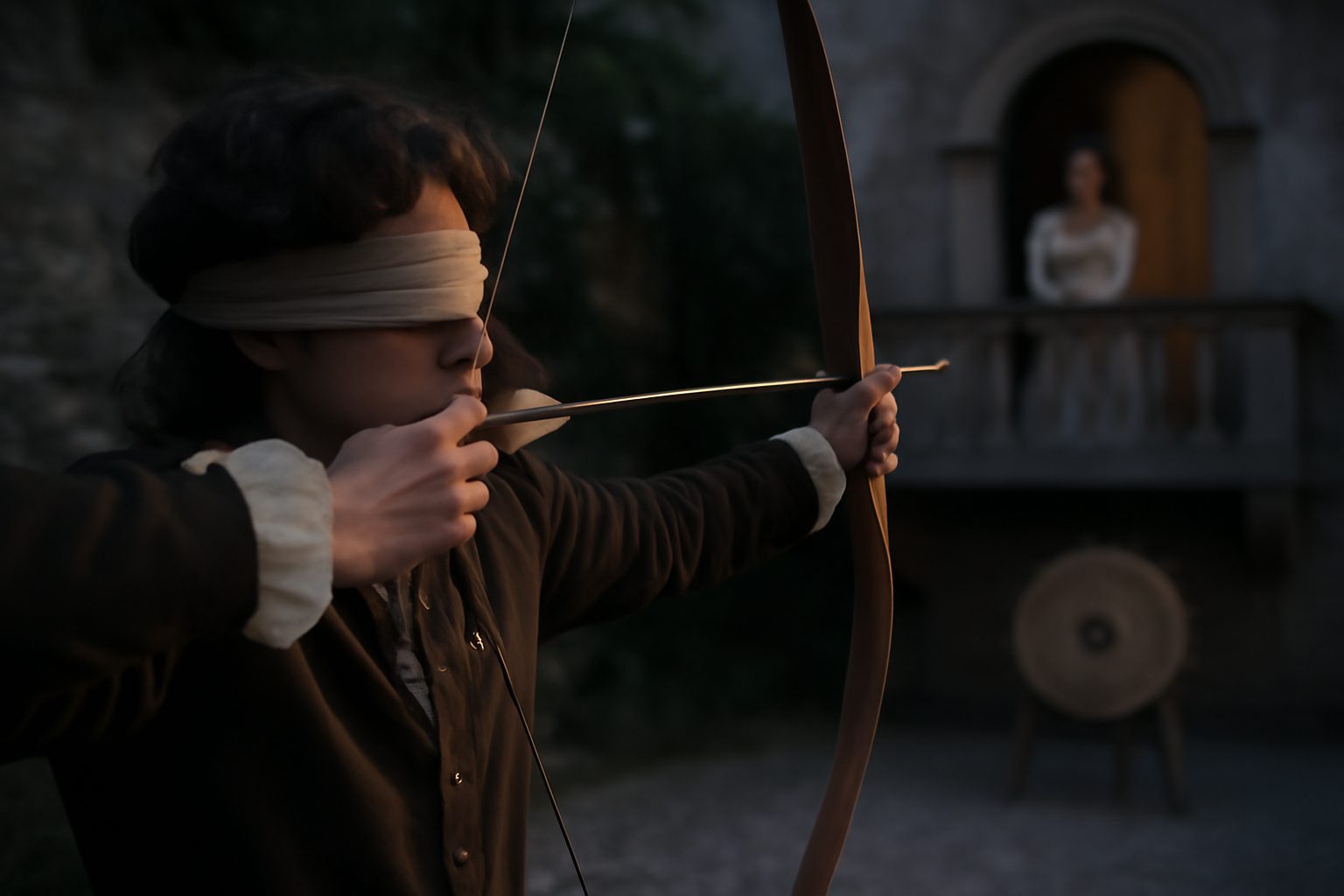
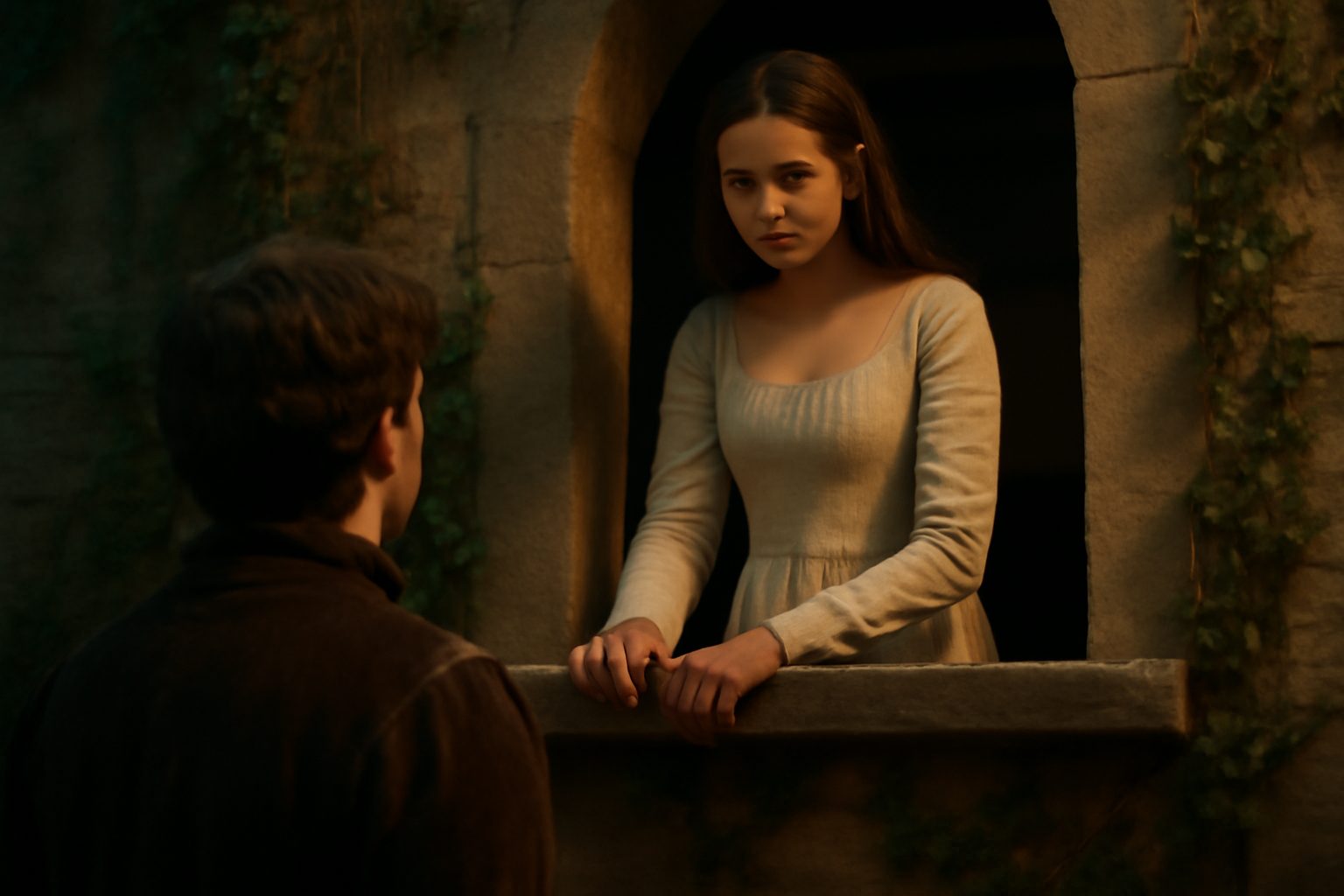
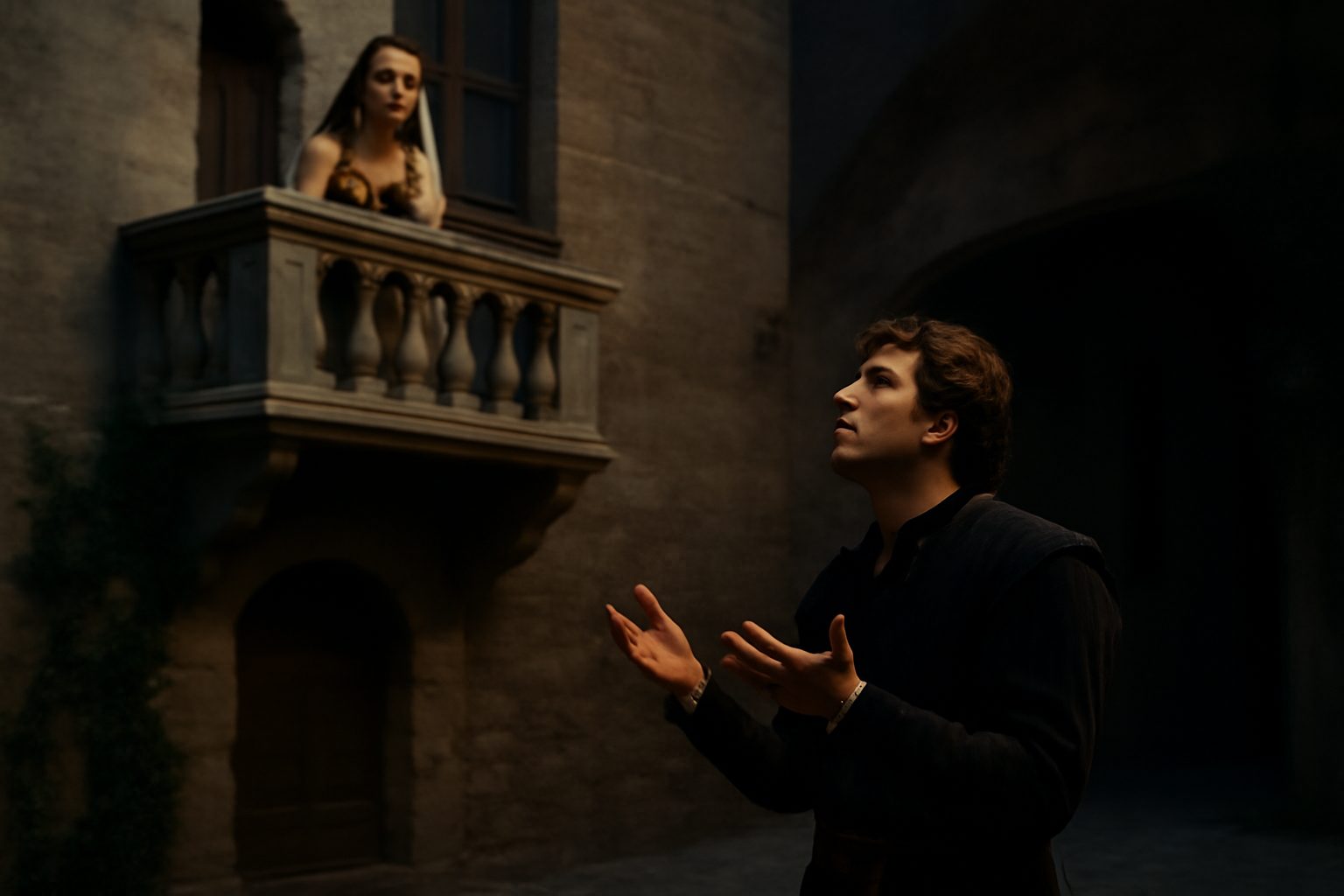
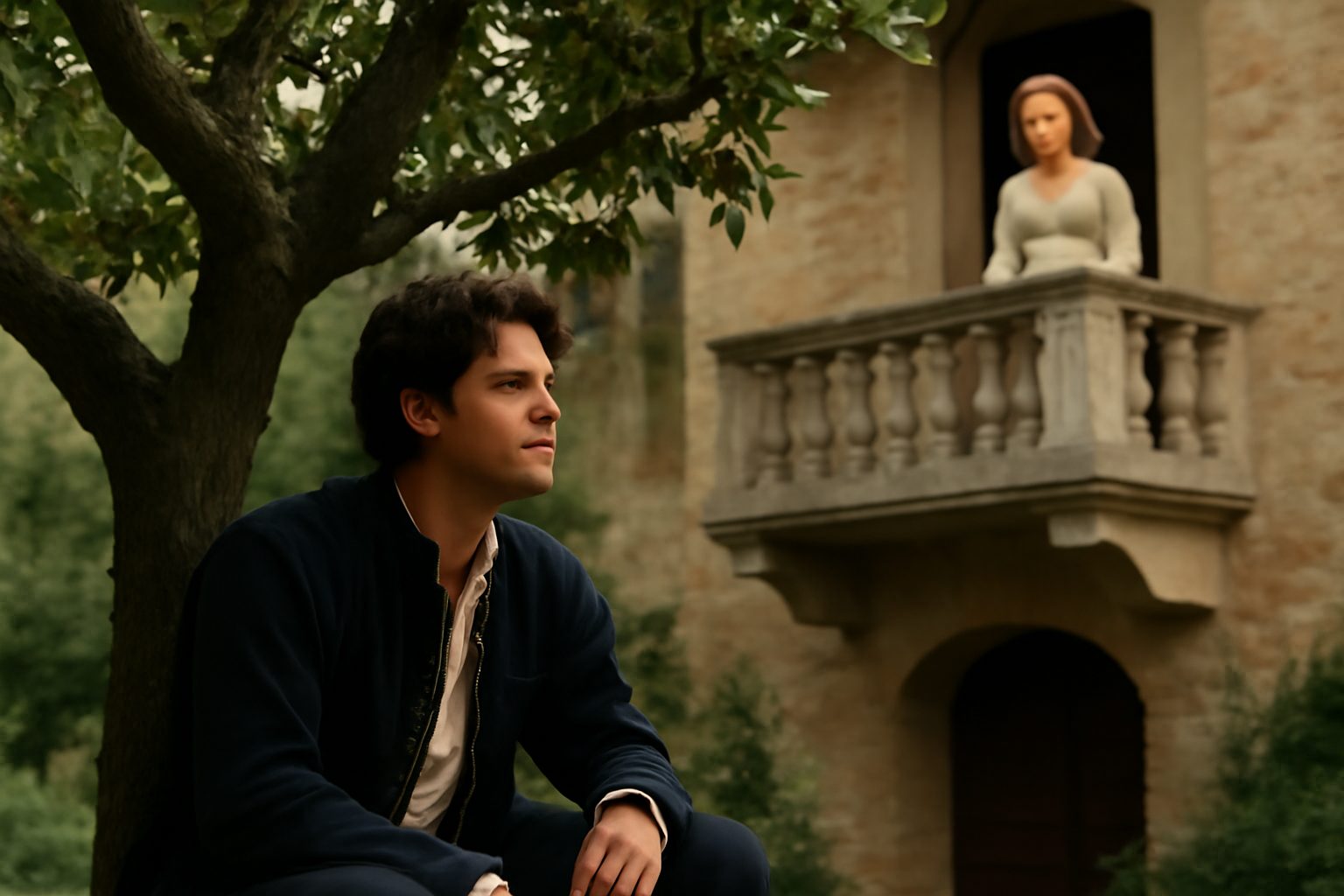
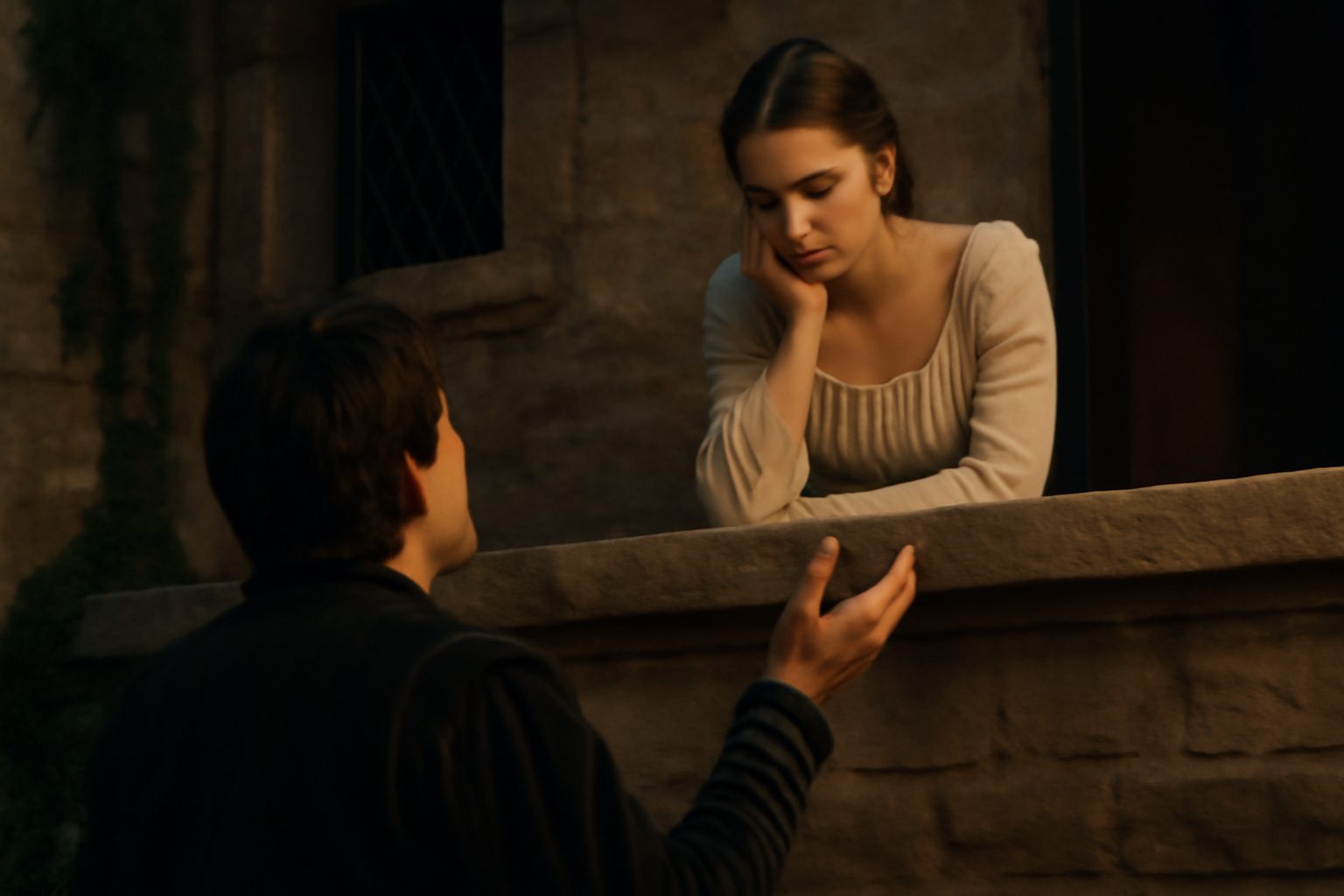
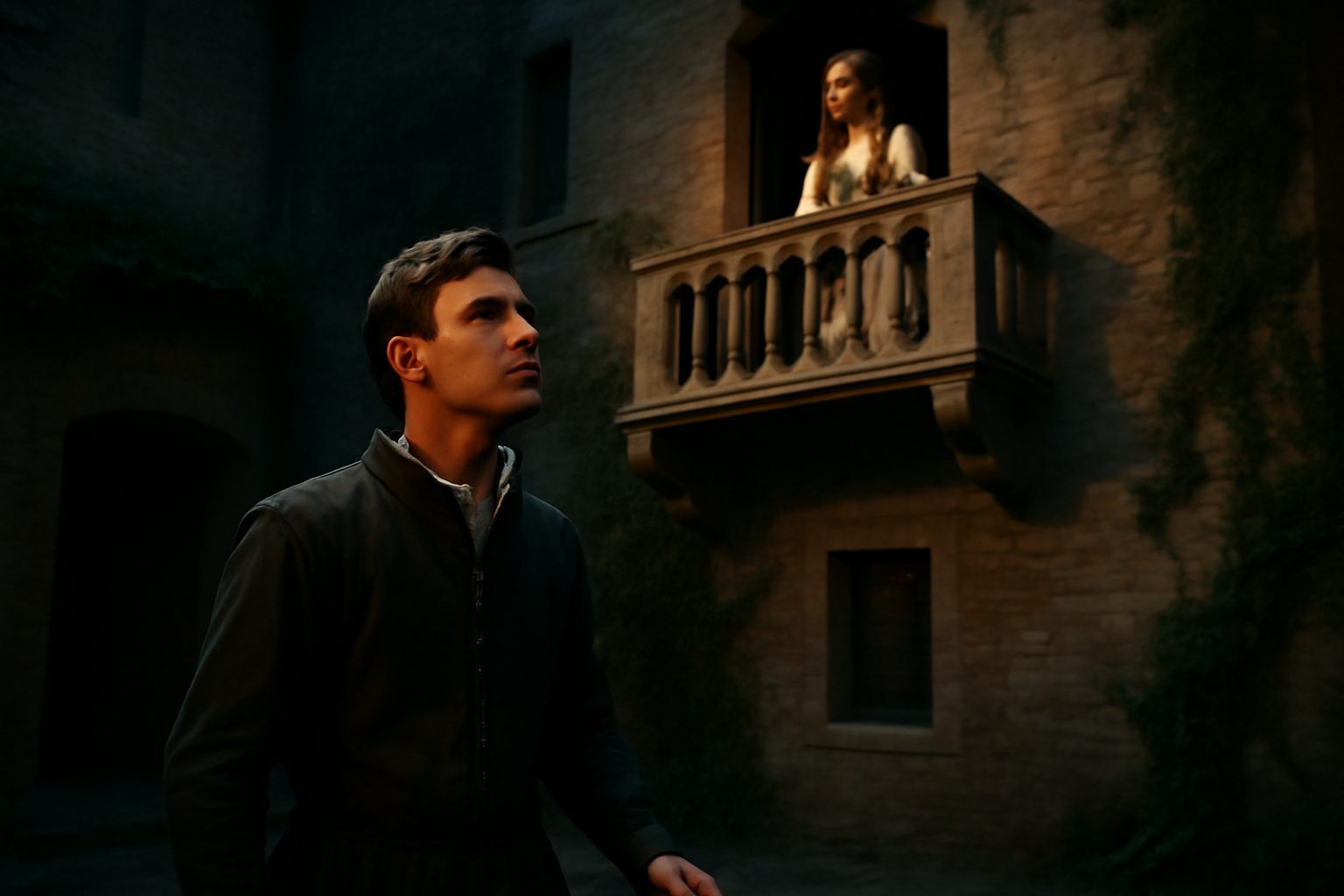
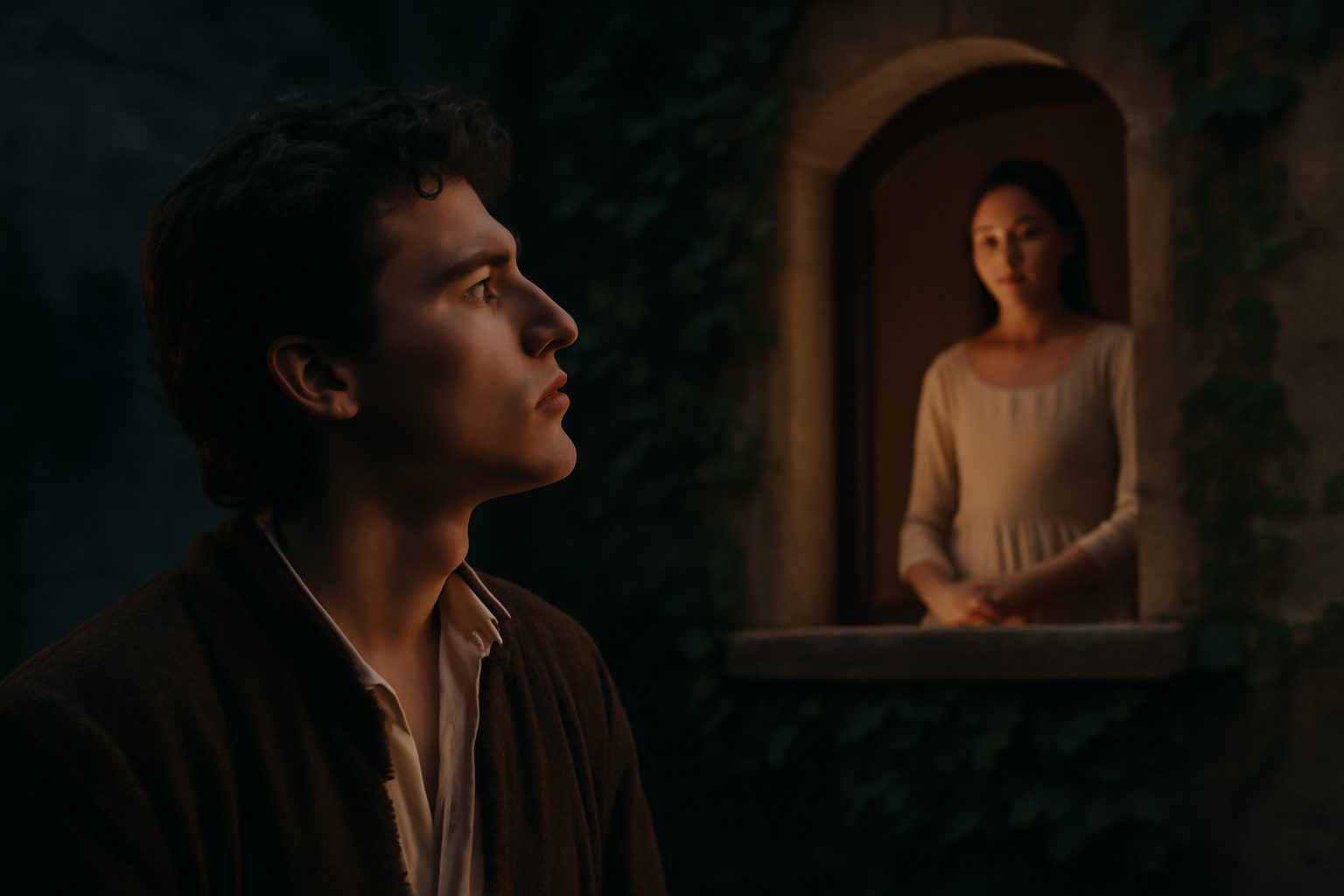
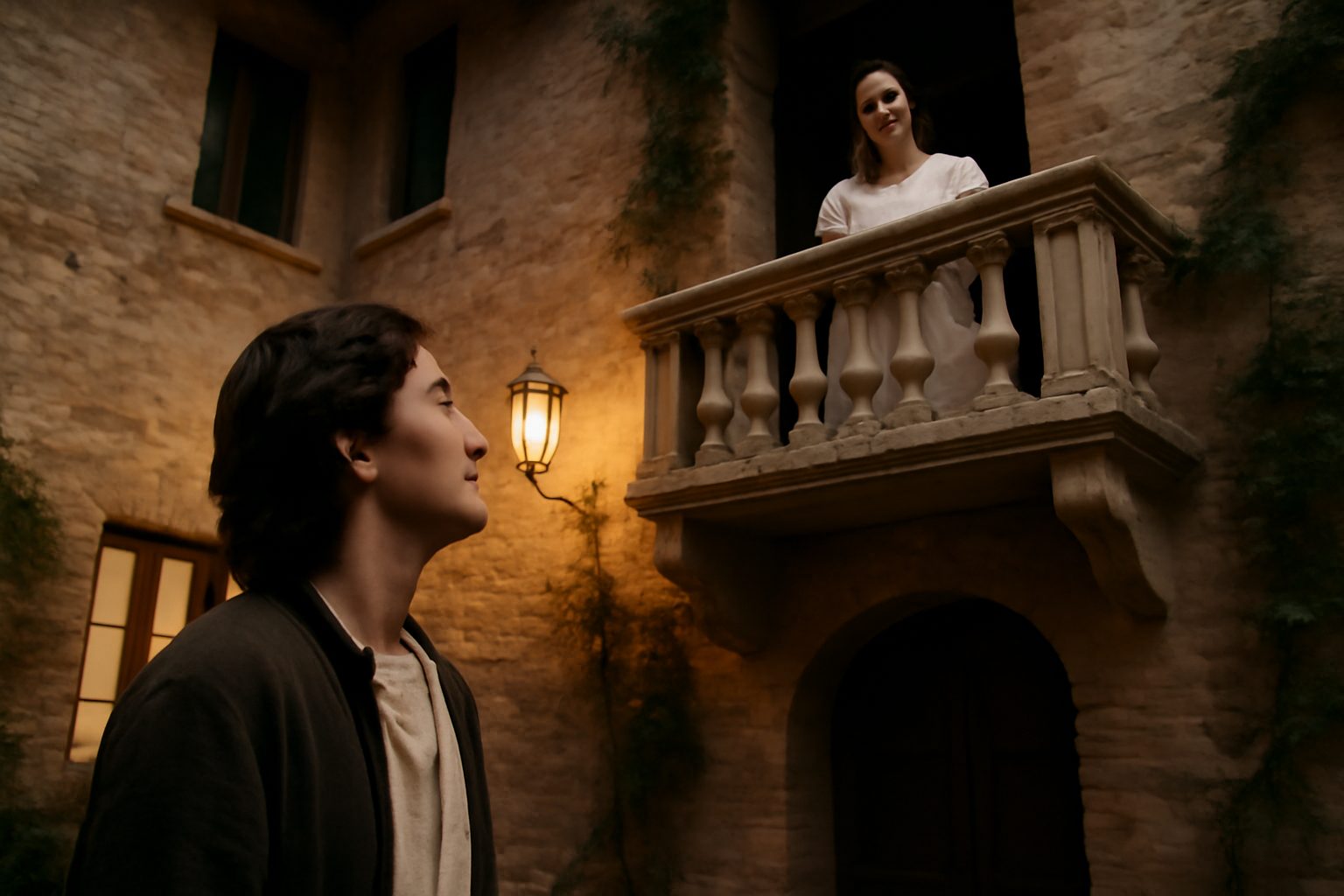
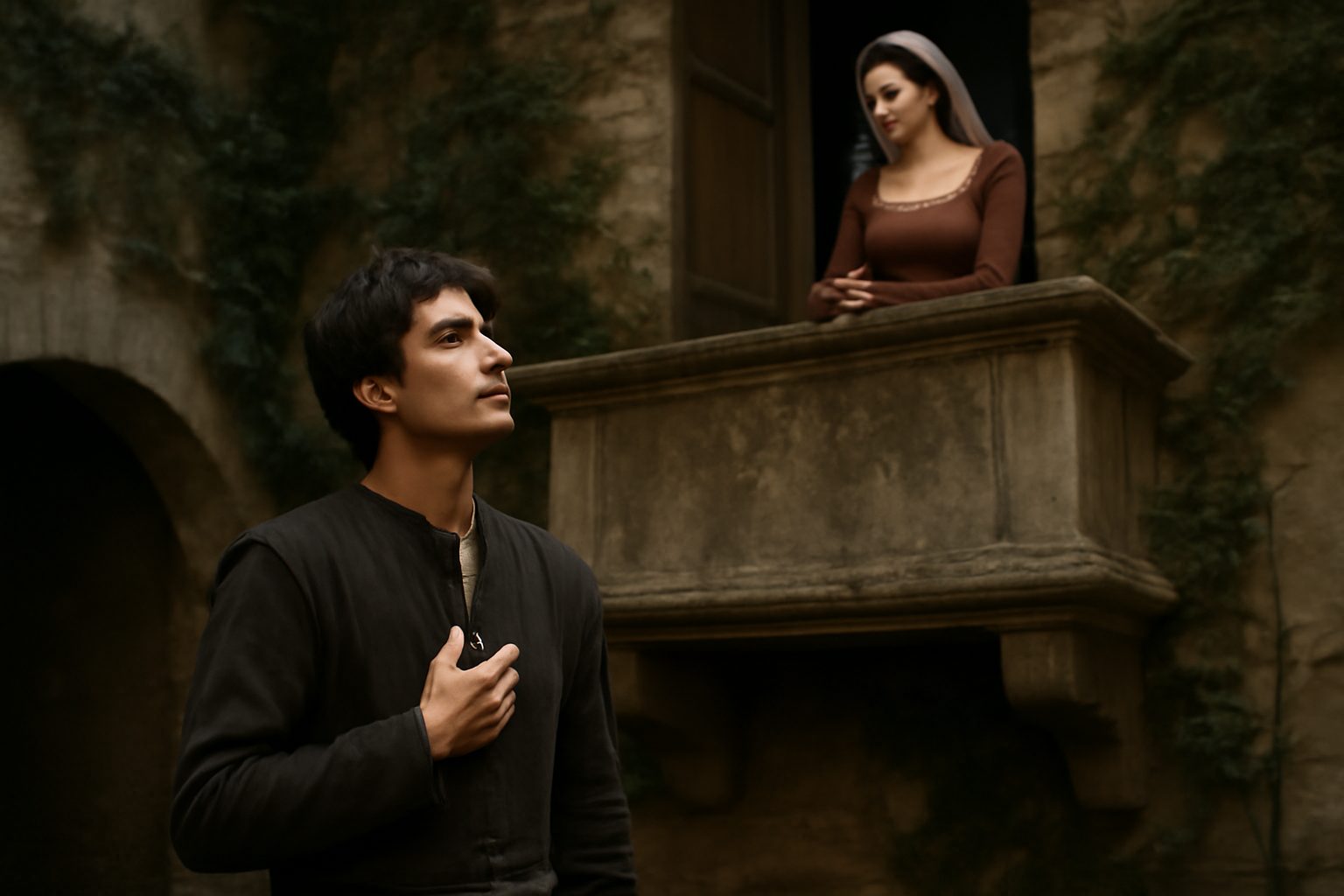
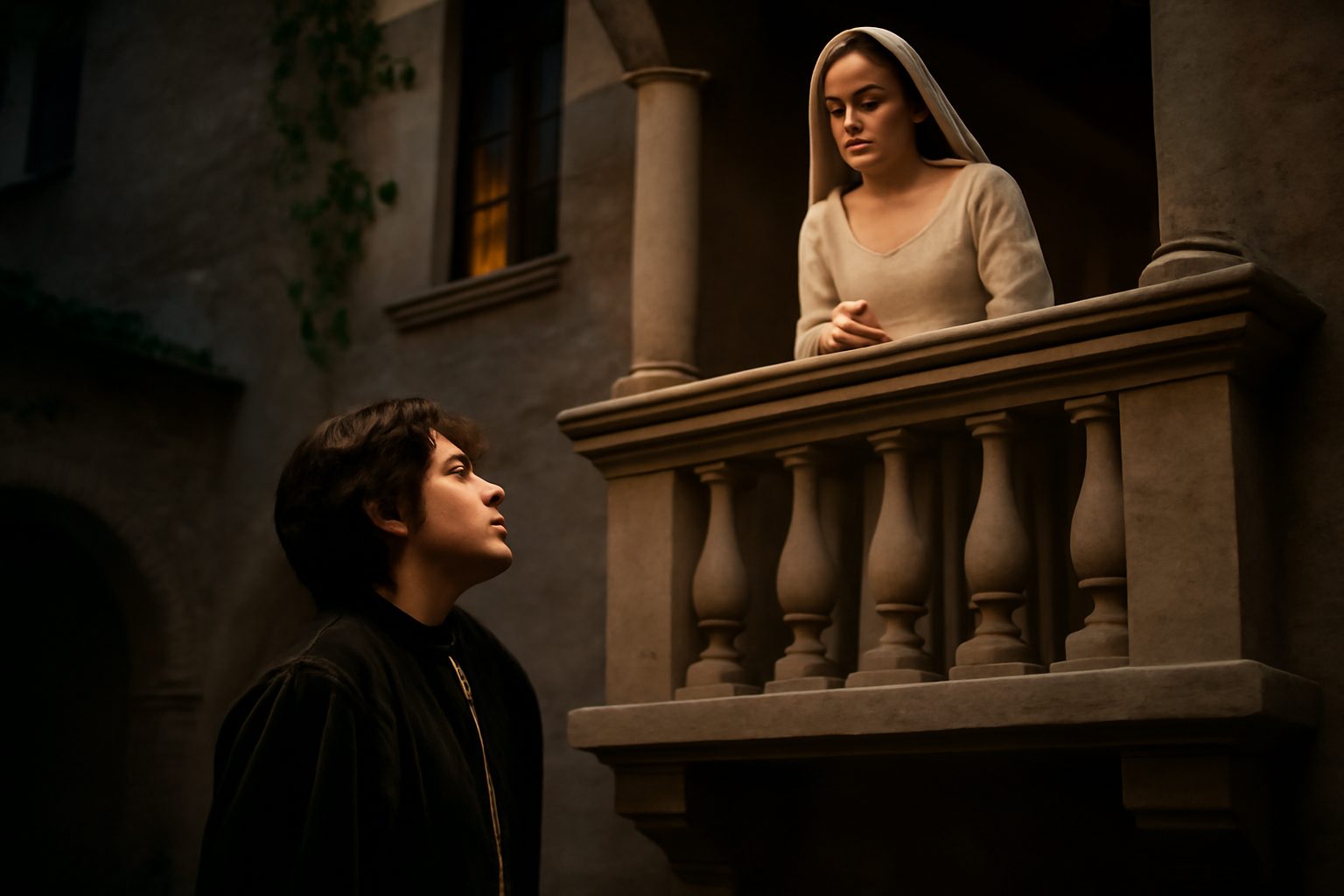
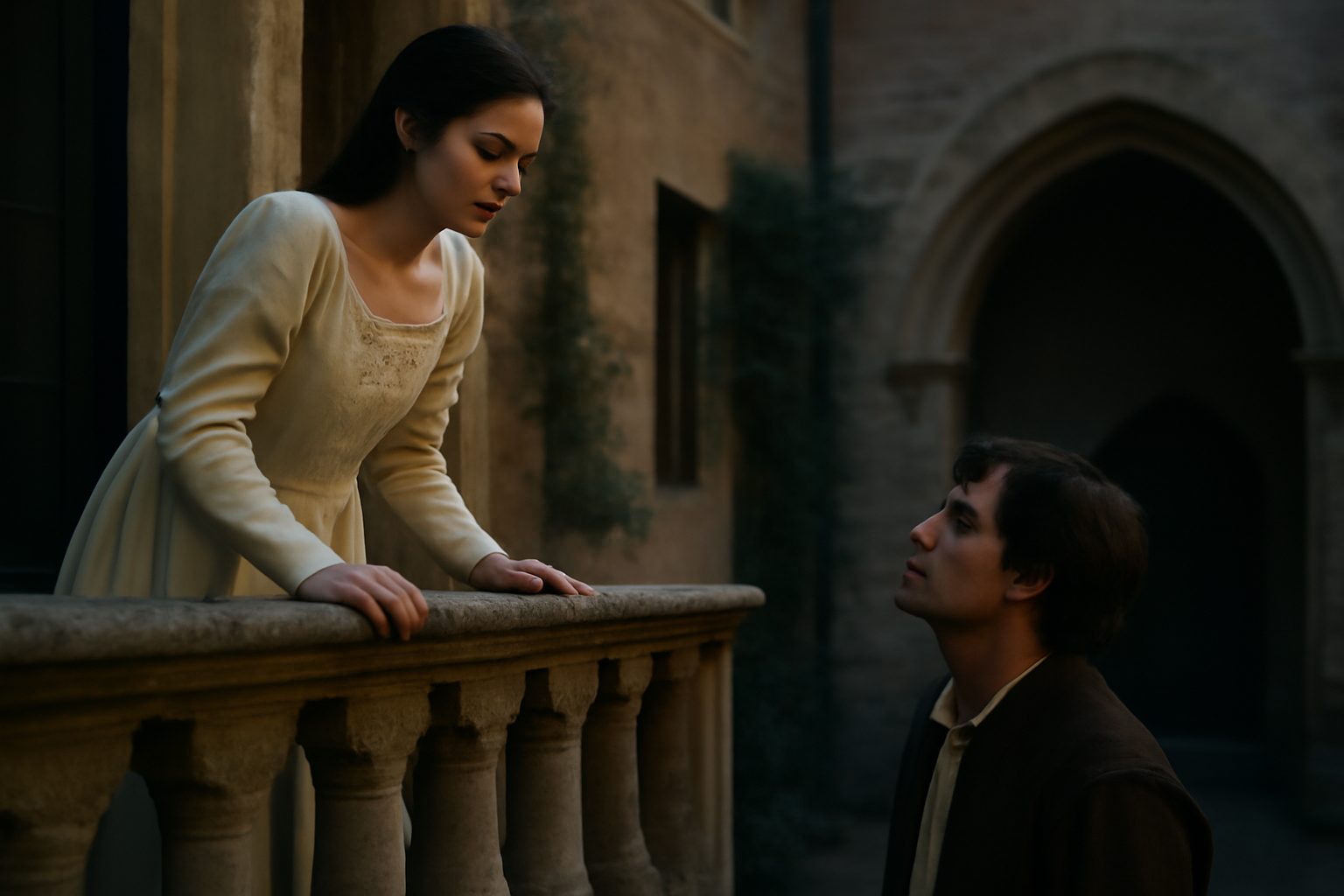
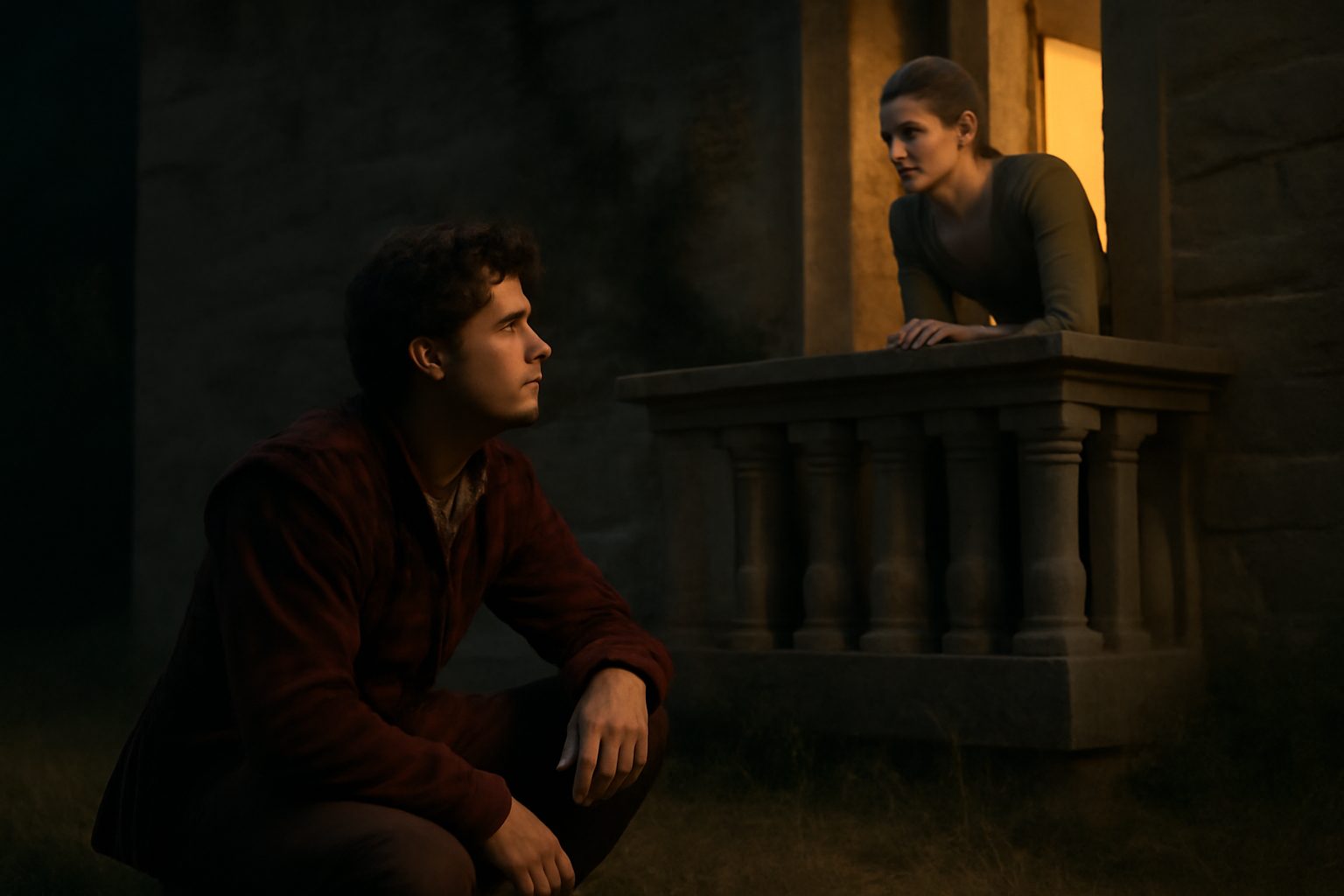
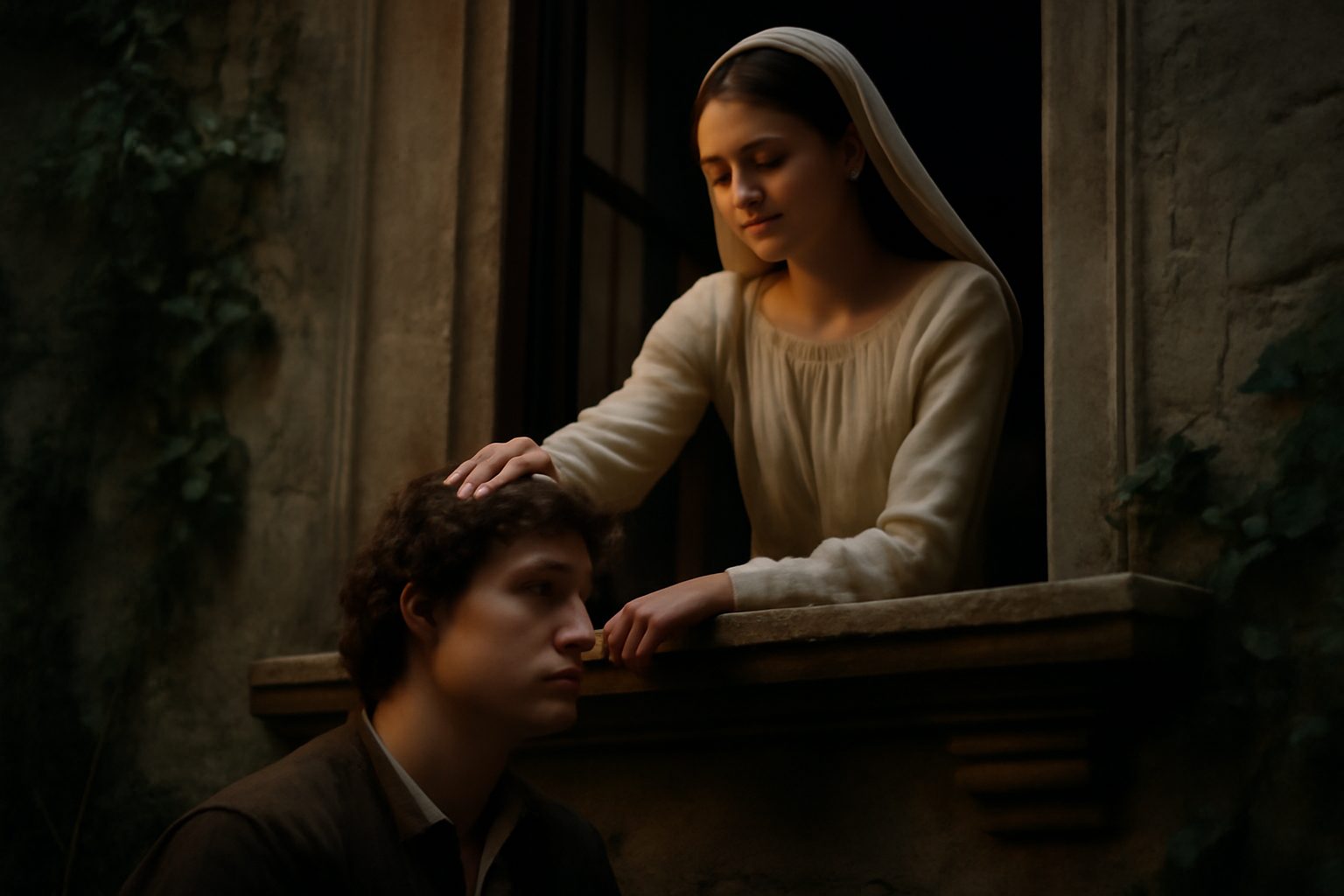
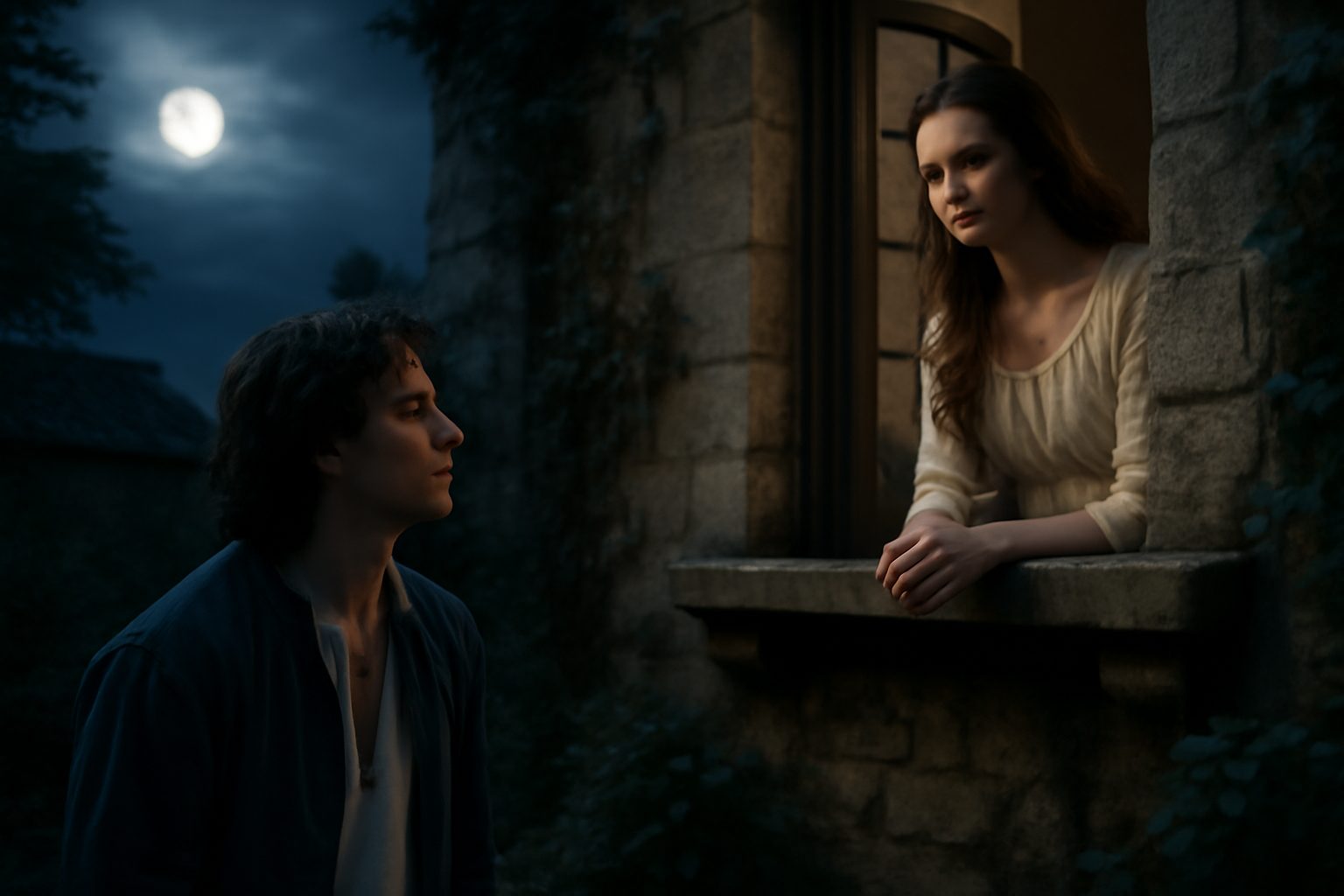
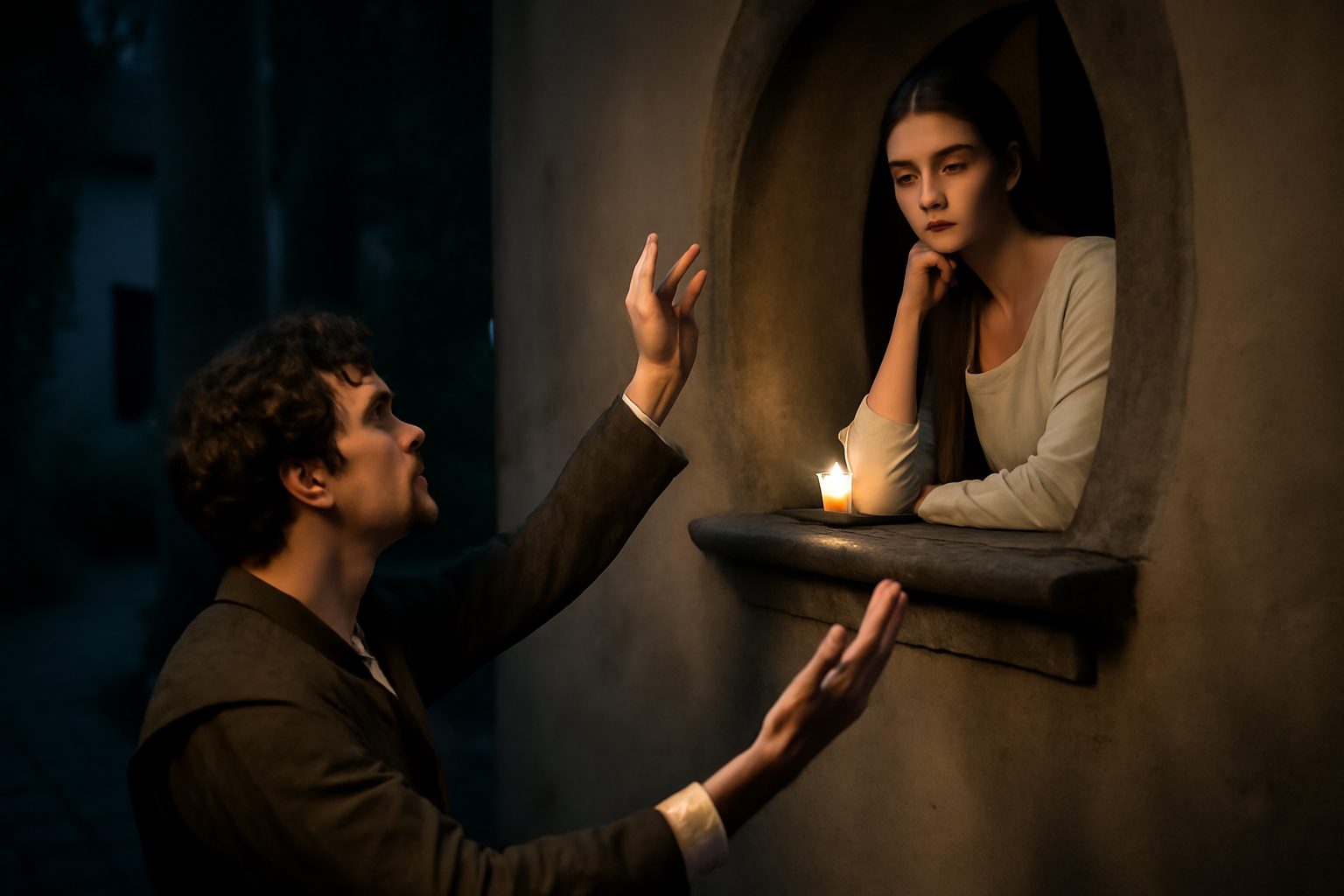
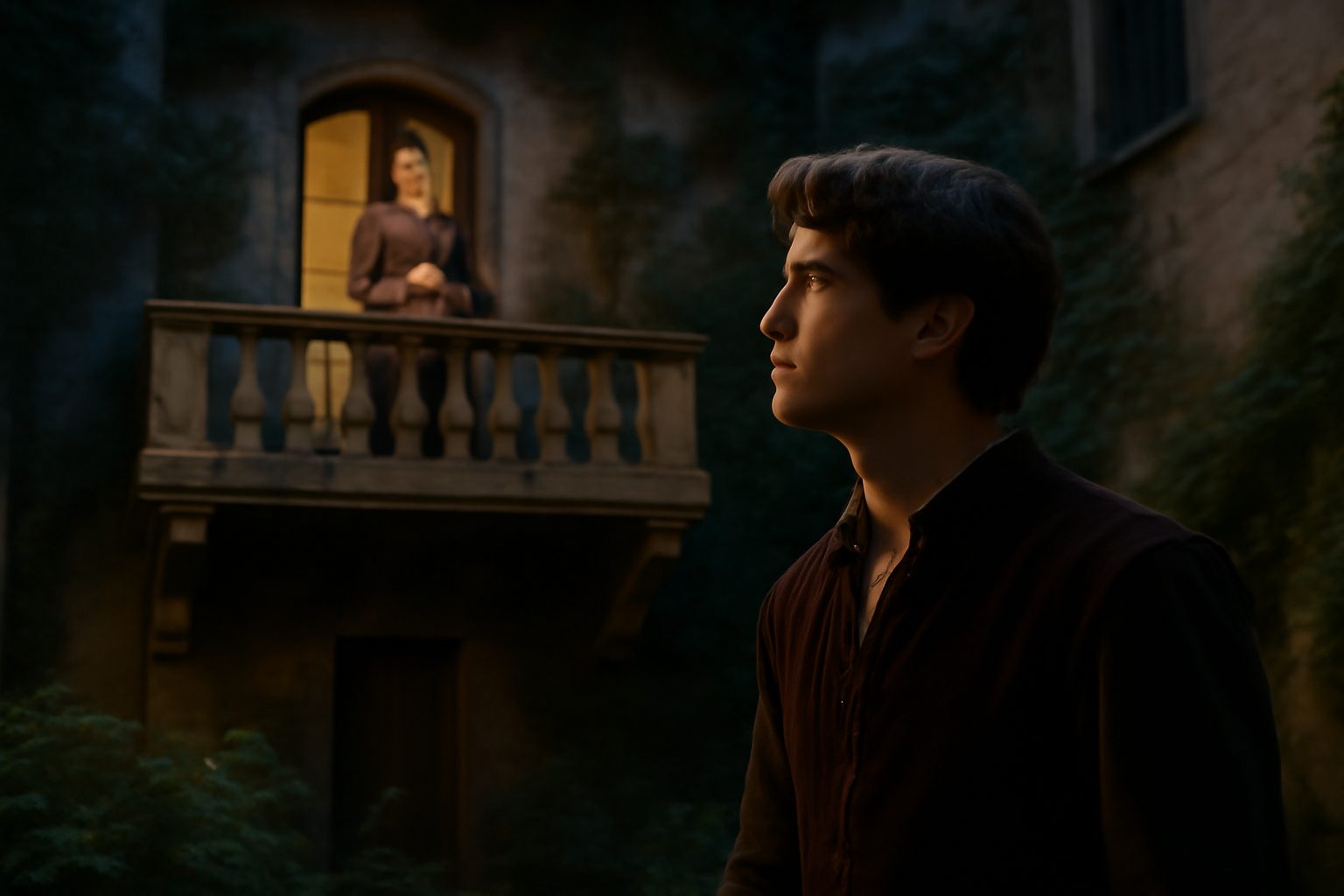
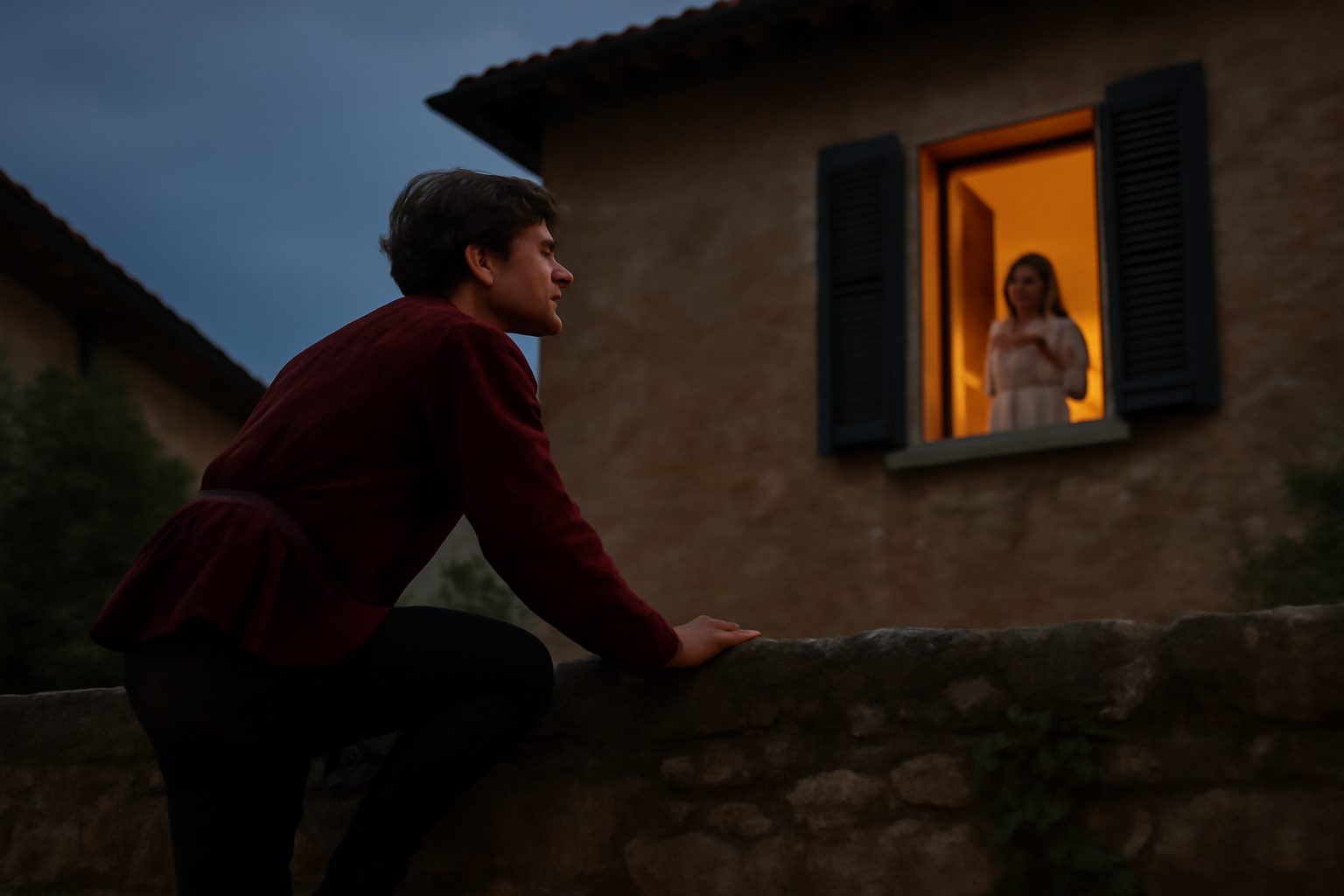
In Act 2, Scene 1 of Romeo and Juliet, Romeo has just left the Capulet feast, still enchanted by Juliet, and hides near her balcony. Mercutio, unaware of Romeo's newfound love, mocks him by calling out playful and exaggerated invocations to summon him. This line is part of Mercutio's teasing speech, where he whimsically asks Romeo to appear as something as fleeting and intangible as a sigh.
Mercutio: "Appear thou in the likeness of a sigh:"
In modern day english, we would say:
Show yourself looking like a sigh.
Frequently Asked Questions
What does Mercutio ask to appear in the form of a sigh?
Mercutio is asking Romeo to appear in the form of a sigh, showing his playful and imaginative way of speaking.
Connections to other verses:
Connections to "Appear thou in the likeness of a sigh"
In Act 2, Scene 1 of Romeo and Juliet, the line "Appear thou in the likeness of a sigh" is part of Mercutio's playful conjuration of Romeo. This invocation reflects the scene's recurring themes of love, longing, and the supernatural, connecting it to several other verses.
Conjuration and Invocation
Mercutio's call for Romeo to appear as a sigh is echoed in his other attempts to summon him, such as "The ape is dead, and I must conjure him" and "I conjure only but to raise up him". These lines highlight Mercutio's teasing nature and his use of magical language to mock Romeo's lovesick state.
Love and Longing
The sigh mentioned in the verse symbolizes Romeo's deep yearning, which ties into "Can I go forward when my heart is here?", where Romeo expresses his inability to leave Juliet. Additionally, Mercutio's reference to "Cry but 'Ay me!' pronounce but 'love' and 'dove'" further emphasizes the exaggerated, poetic expressions of love that Mercutio satirizes.
Supernatural and Mythological References
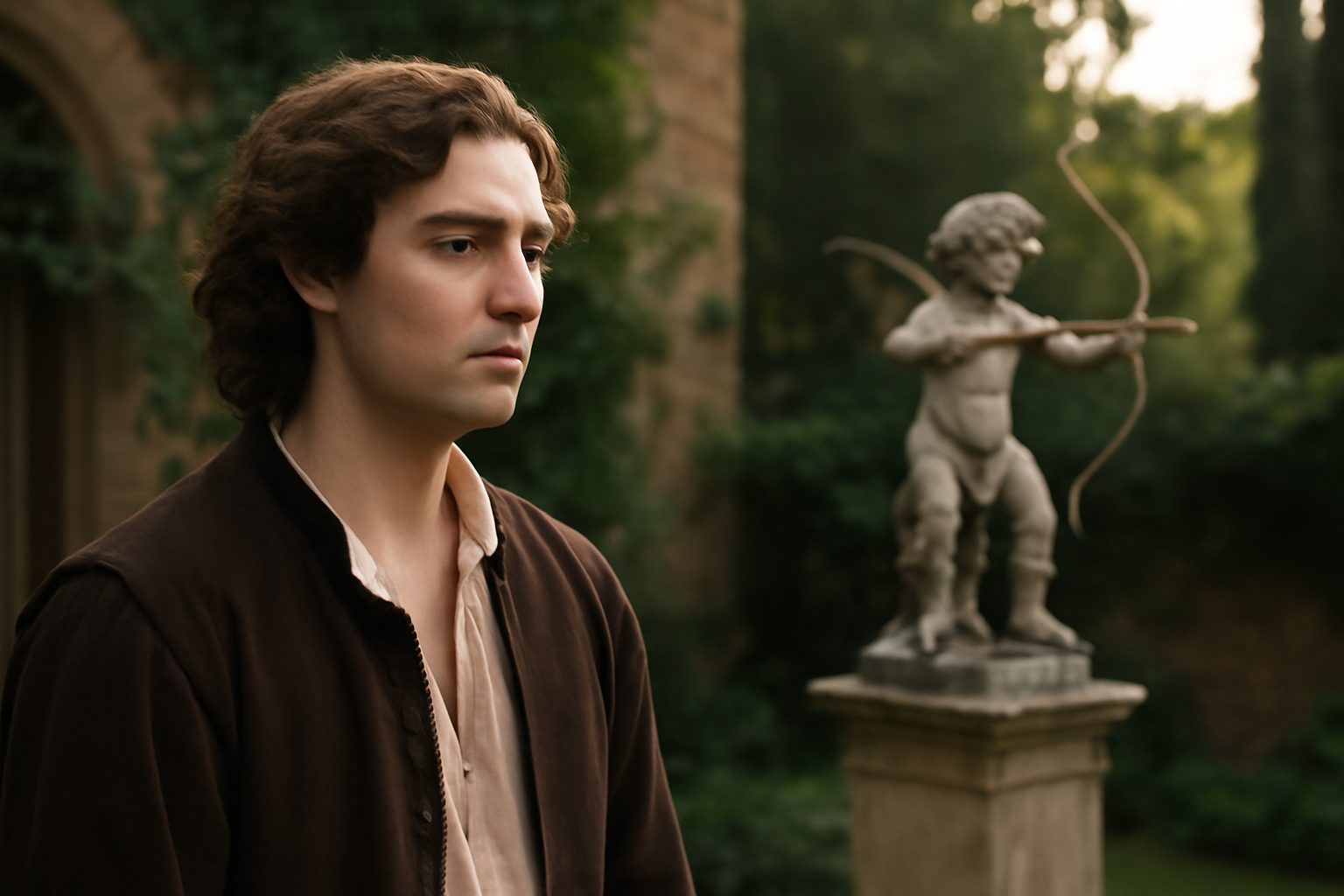
Mercutio's invocation includes mythological elements, such as calling on "my gossip Venus" and referencing "Young Adam Cupid", linking the sigh to love deities. This connects to "That in thy likeness thou appear to us!", where Benvolio joins in the conjuration, reinforcing the playful, otherworldly tone.
Contrast with Reality
While Mercutio imagines Romeo as a sigh or spirit, Benvolio pragmatically notes "He ran this way, and leap'd this orchard wall", grounding the scene in reality. This contrast highlights the difference between Mercutio's fanciful wit and the actual situation, underscoring the theme of appearance versus reality.