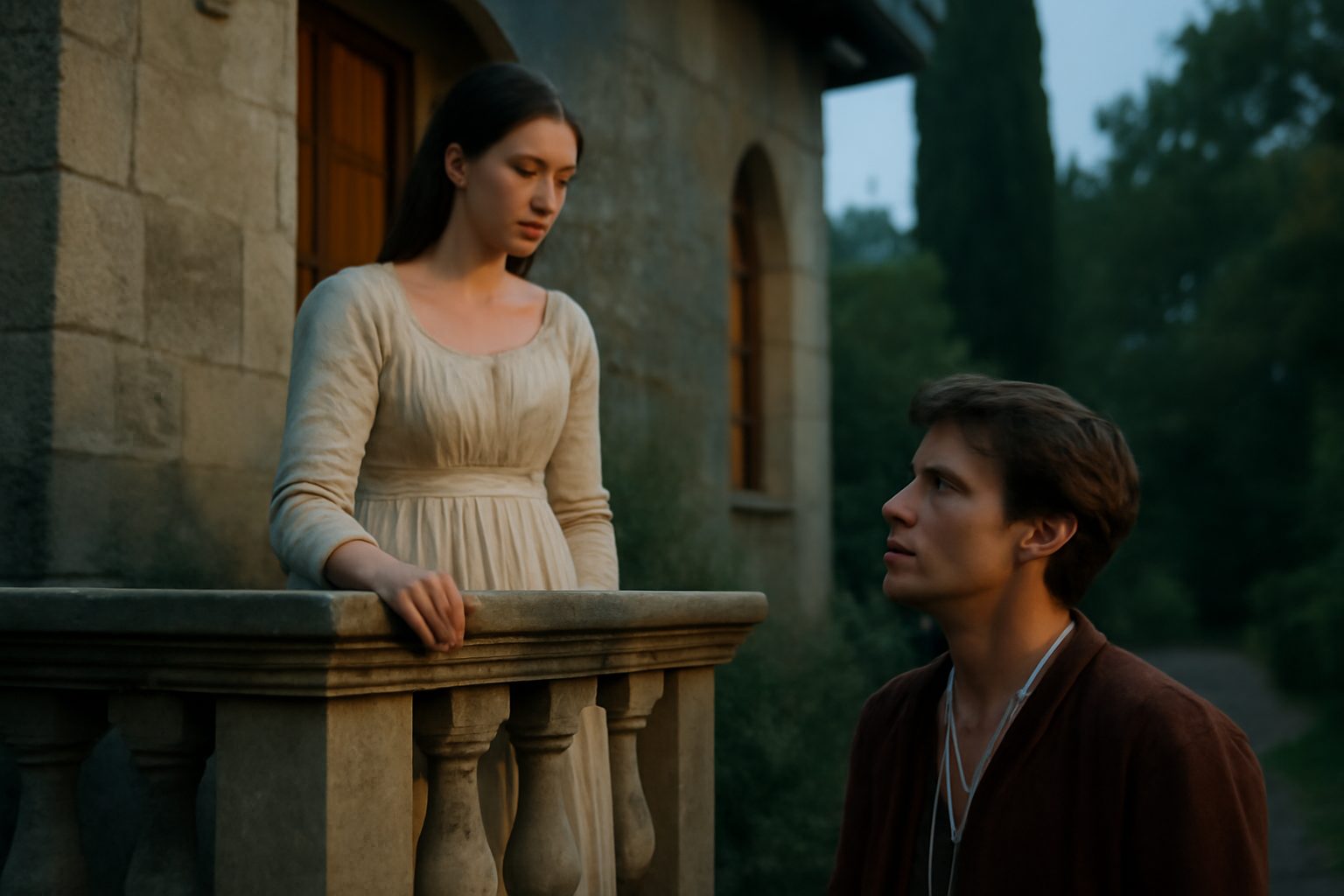
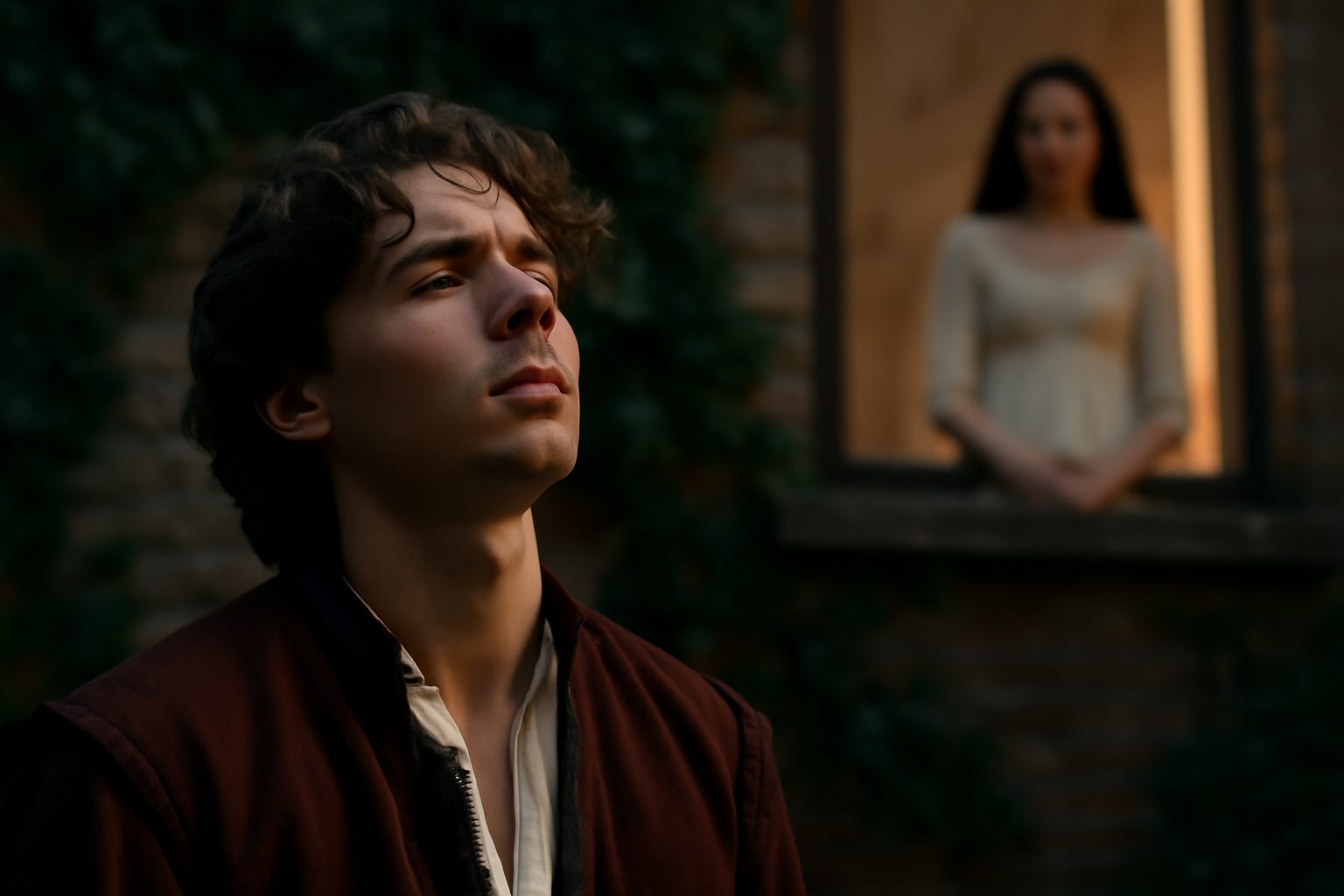
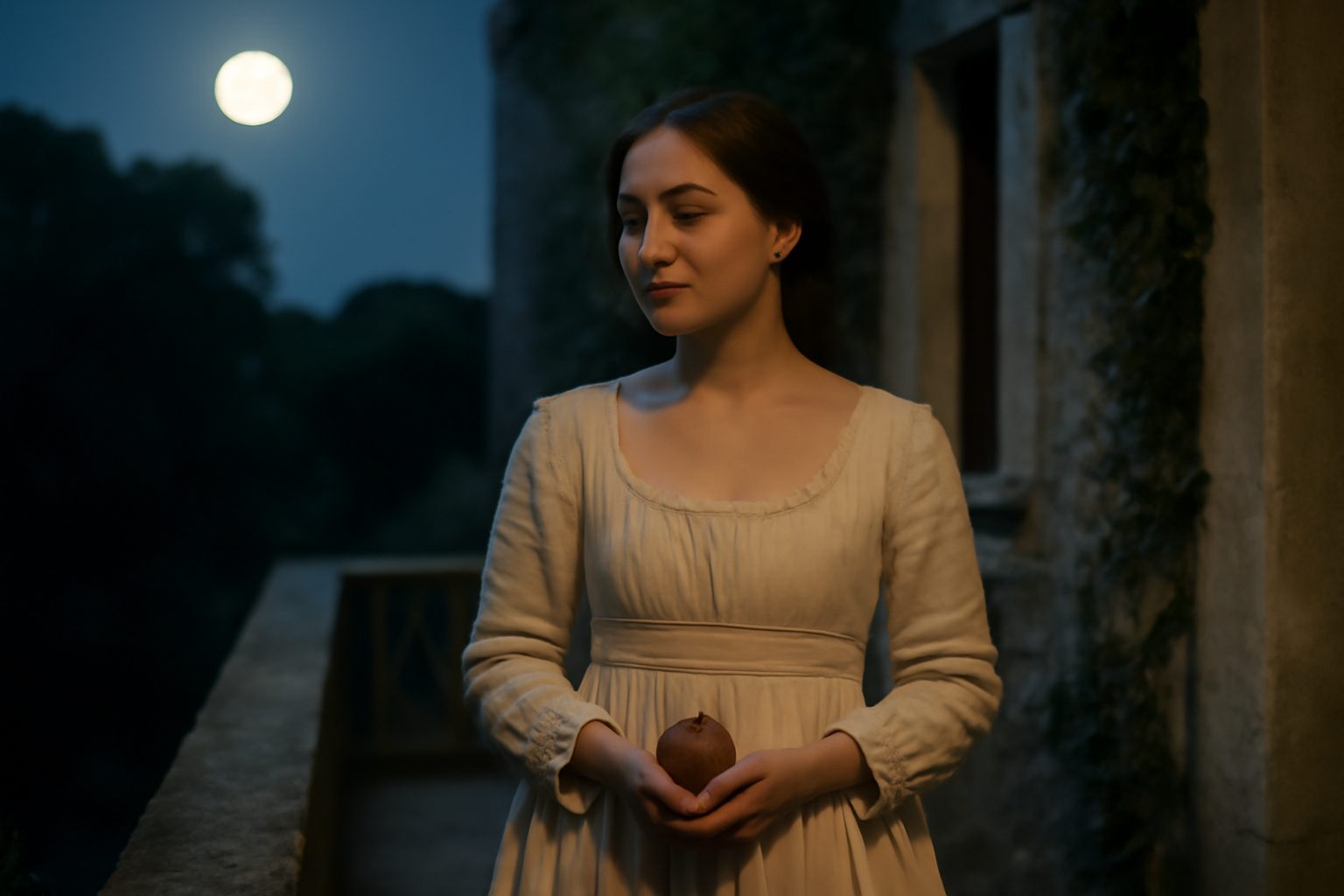
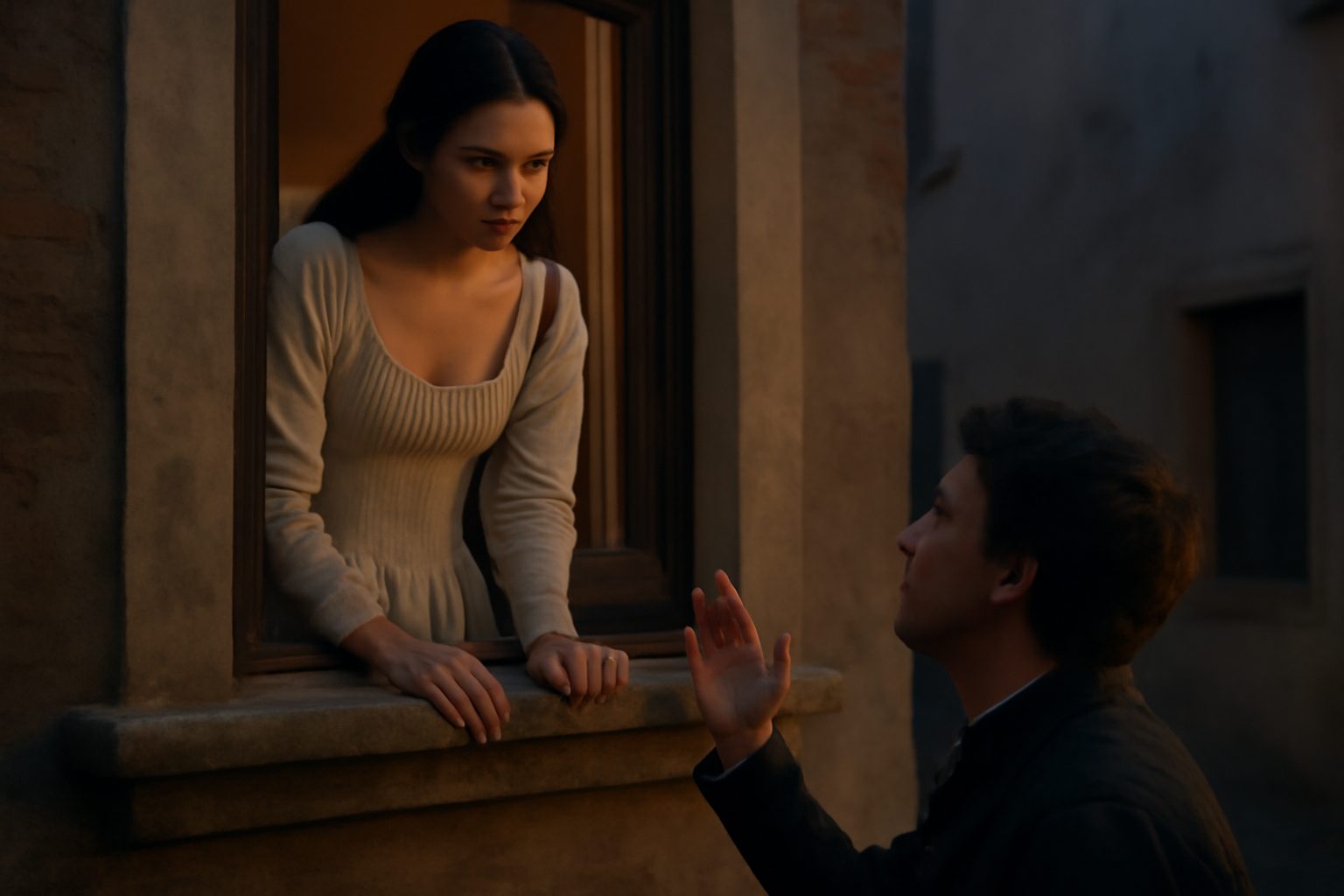
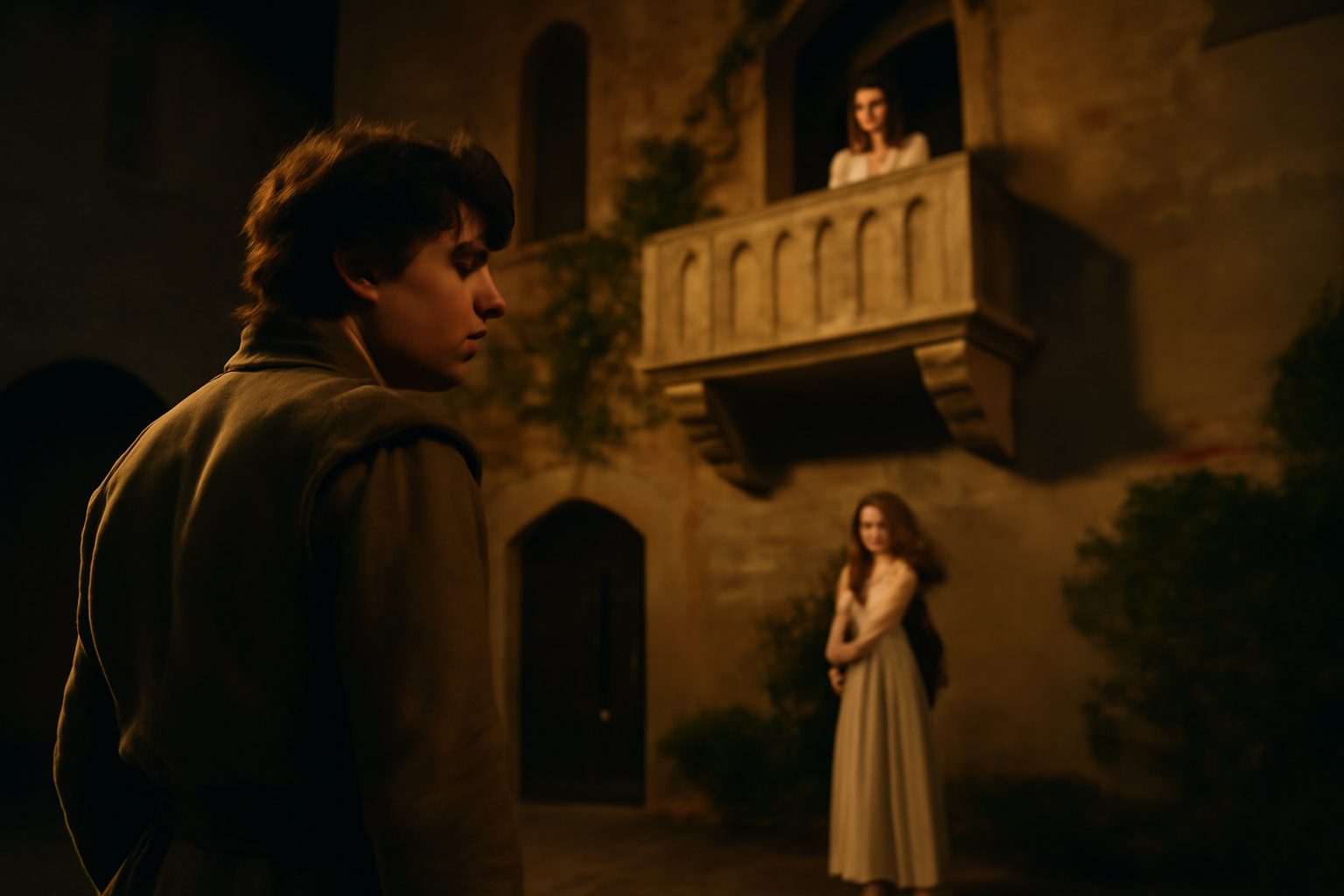
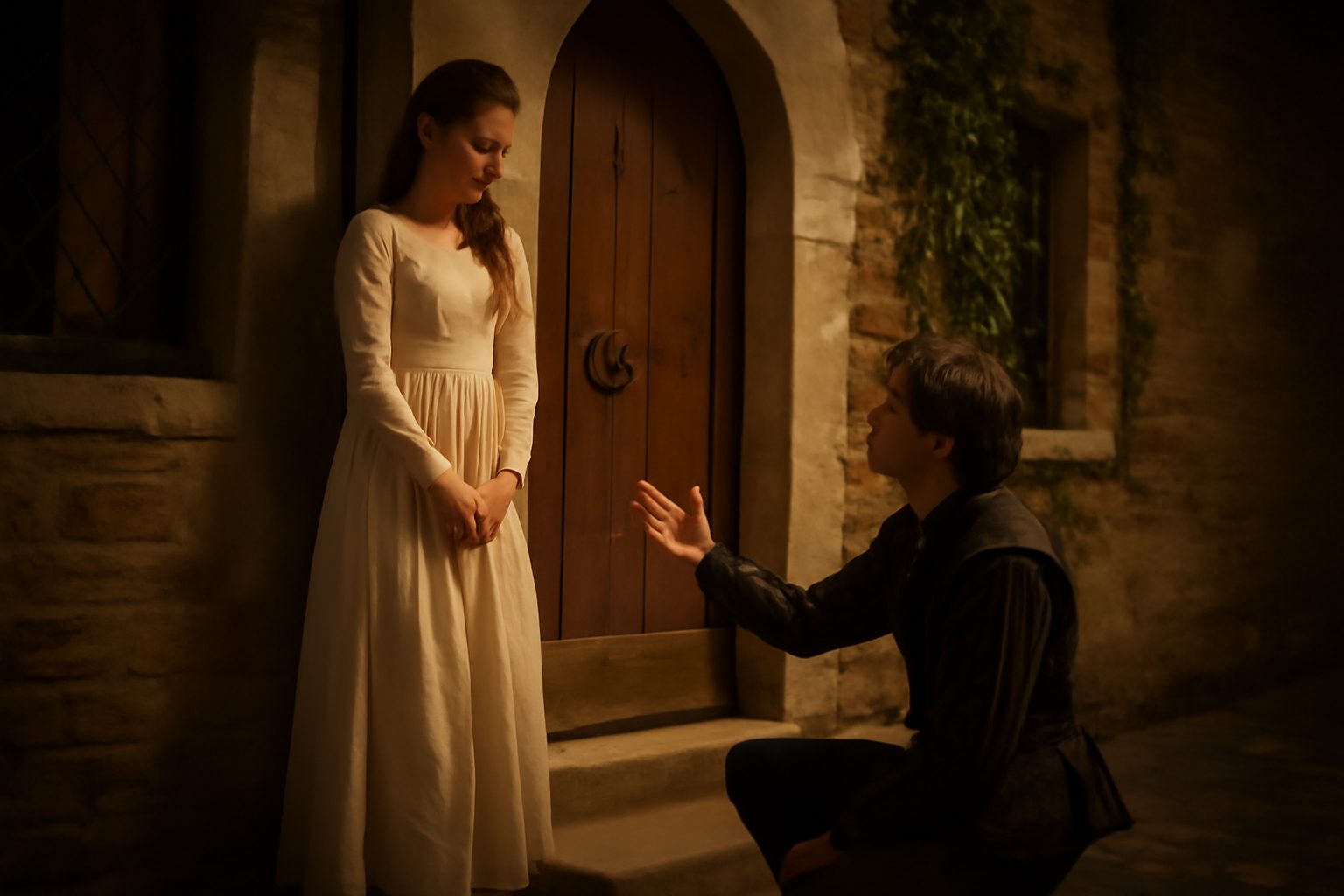
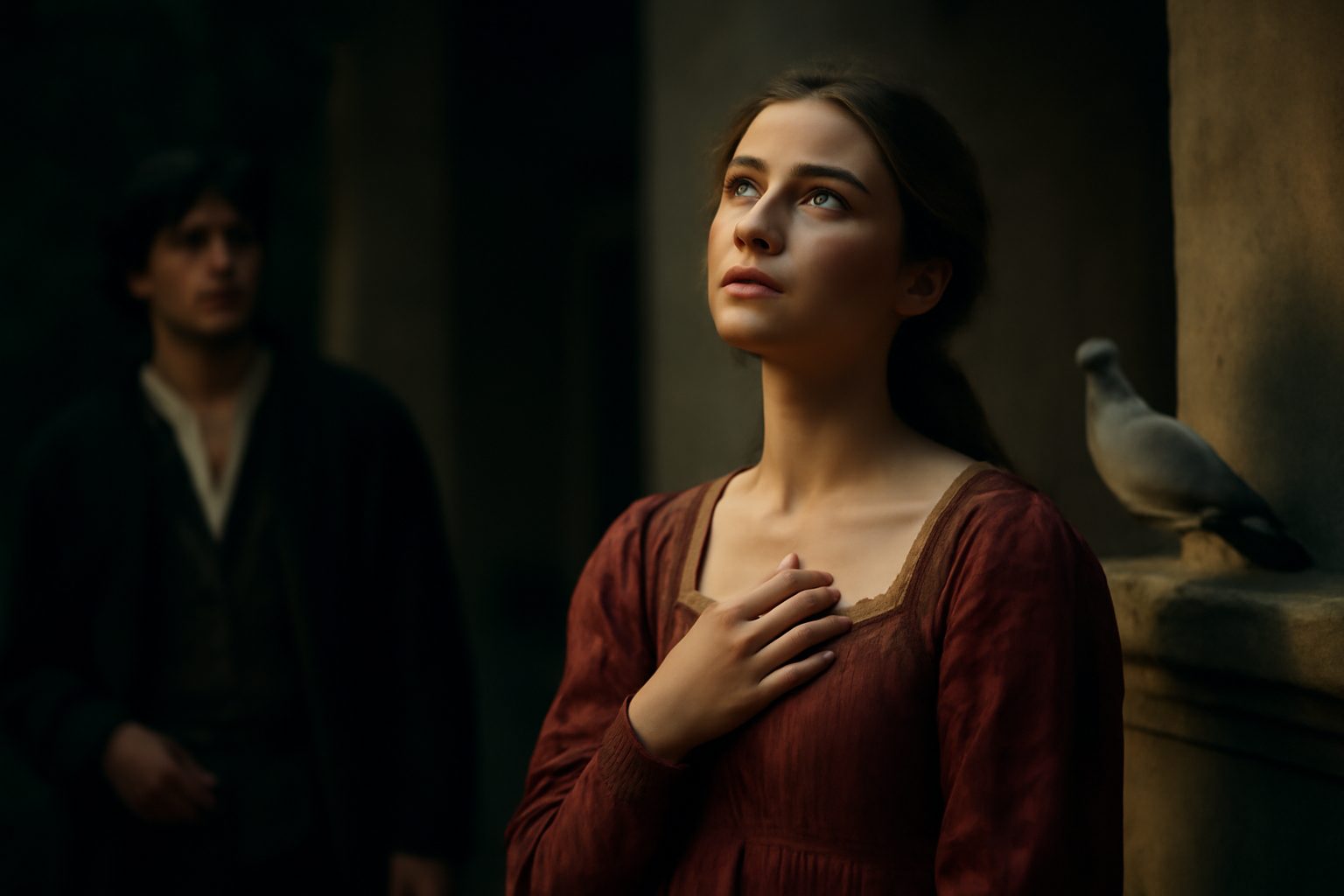
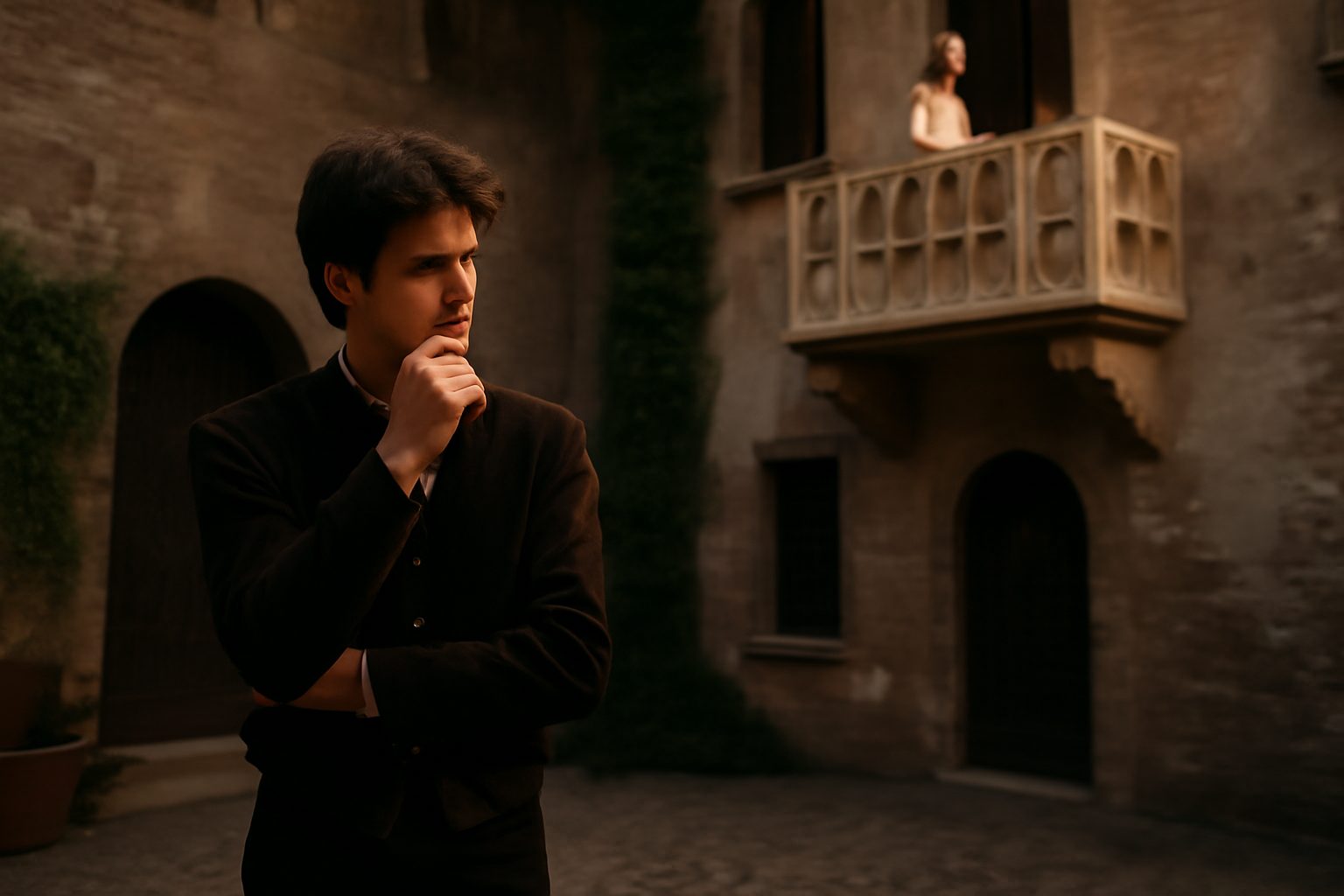
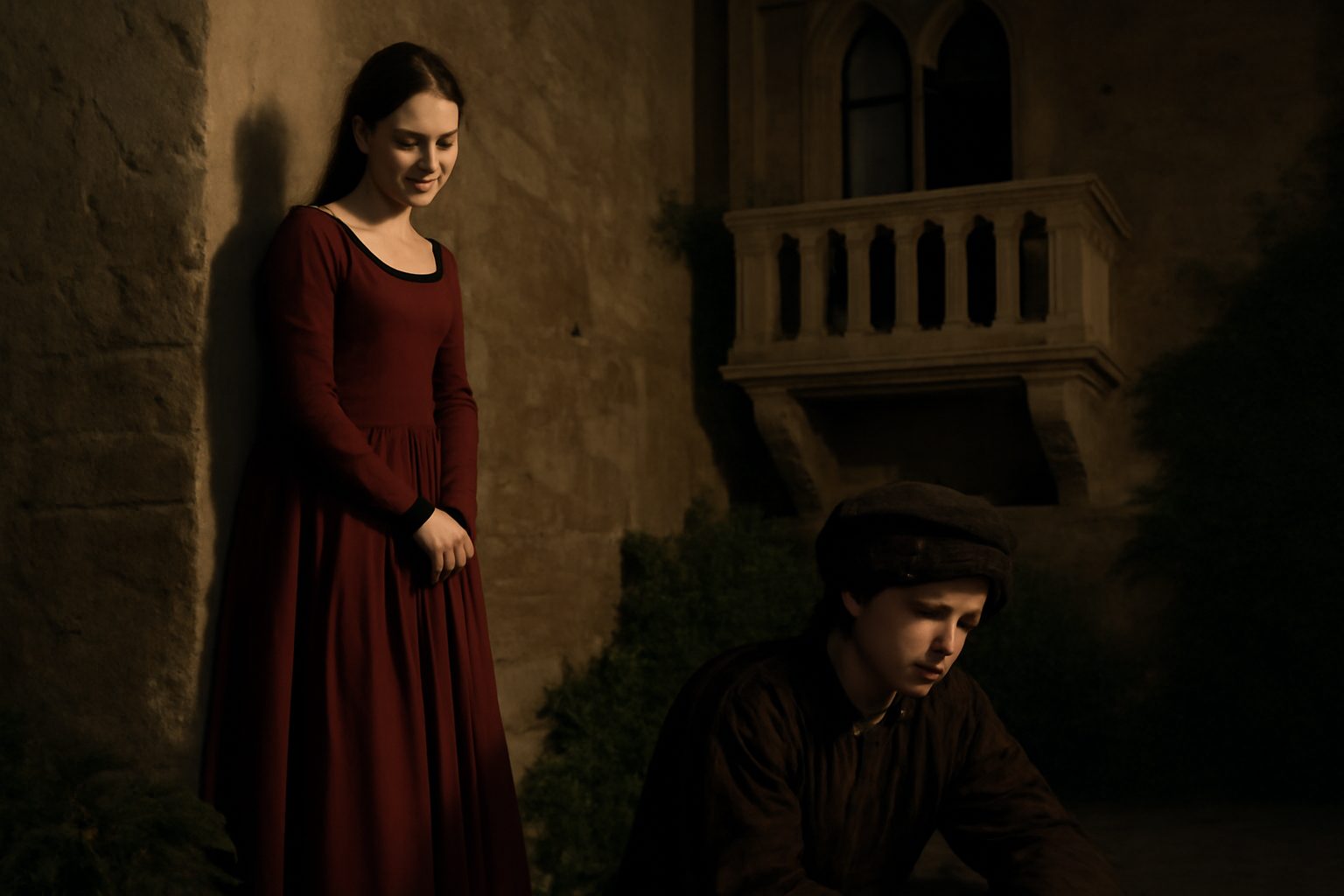
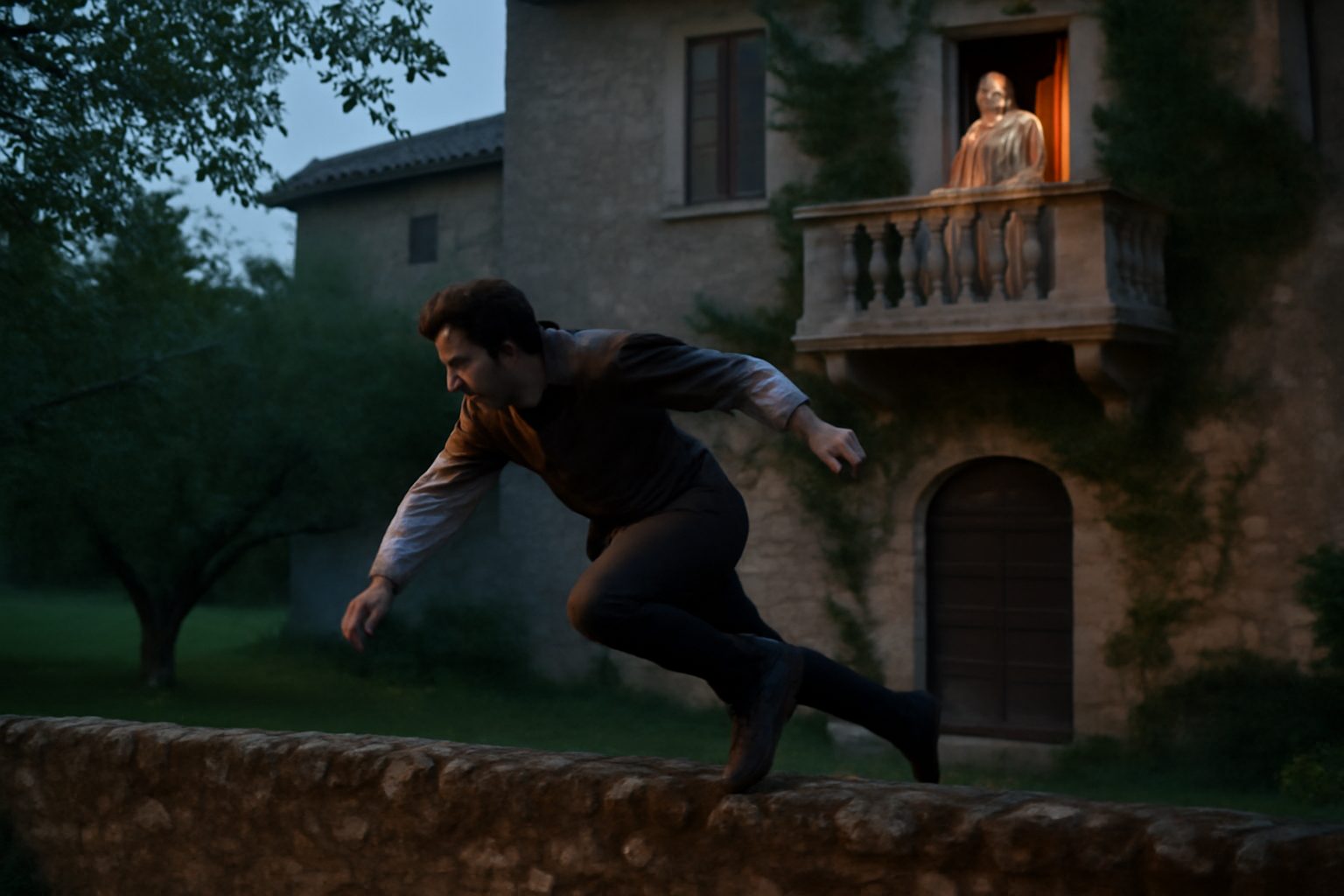
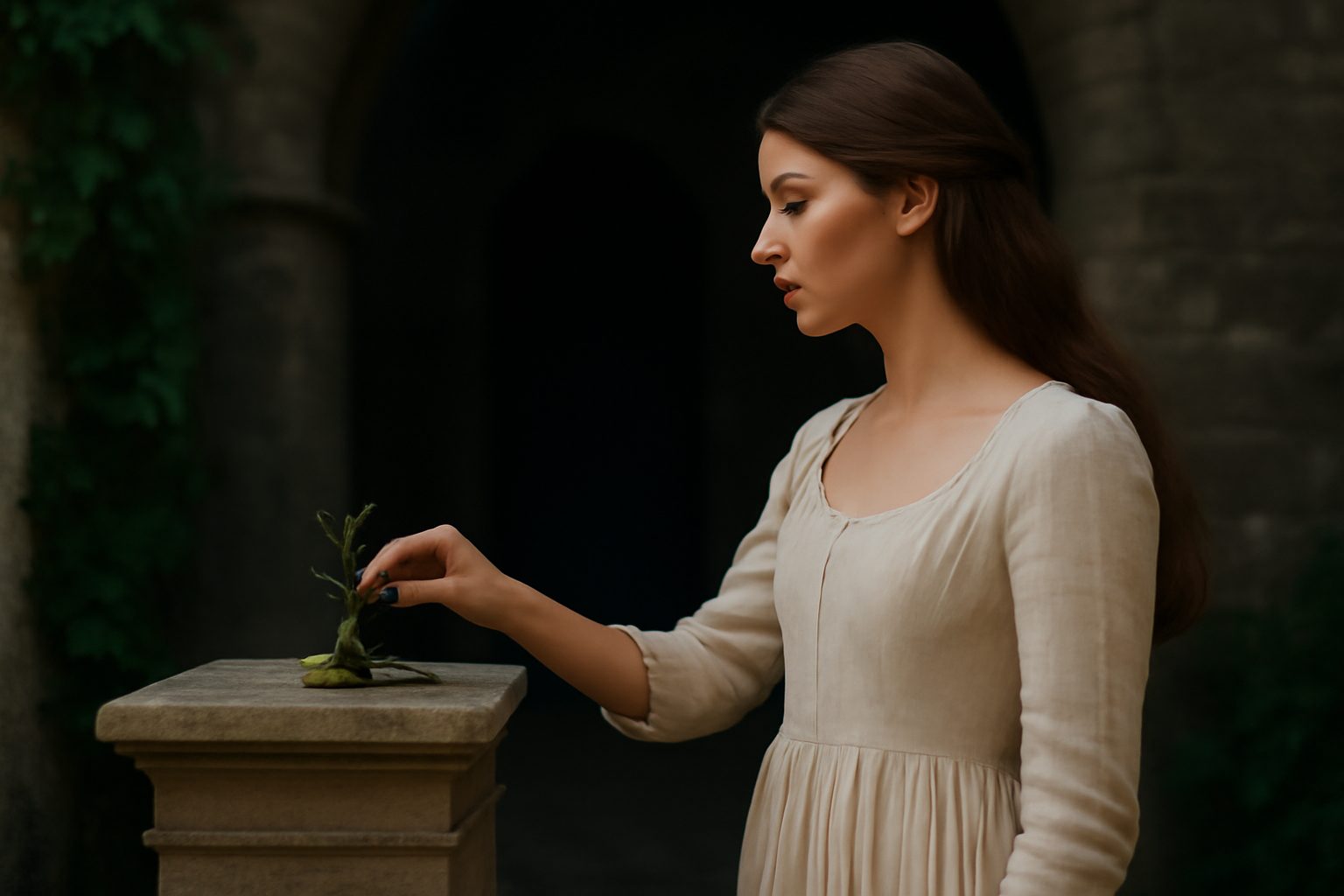
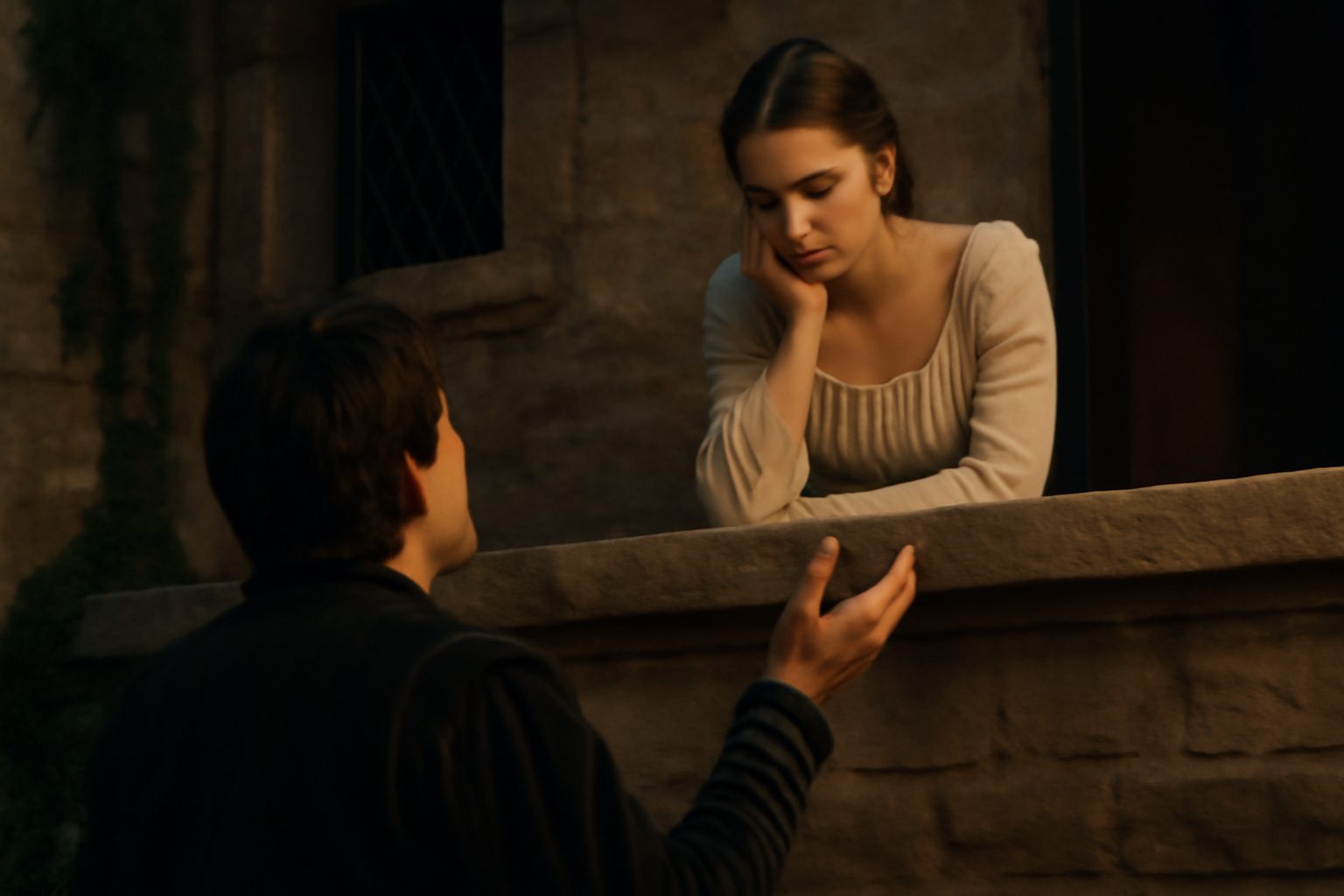
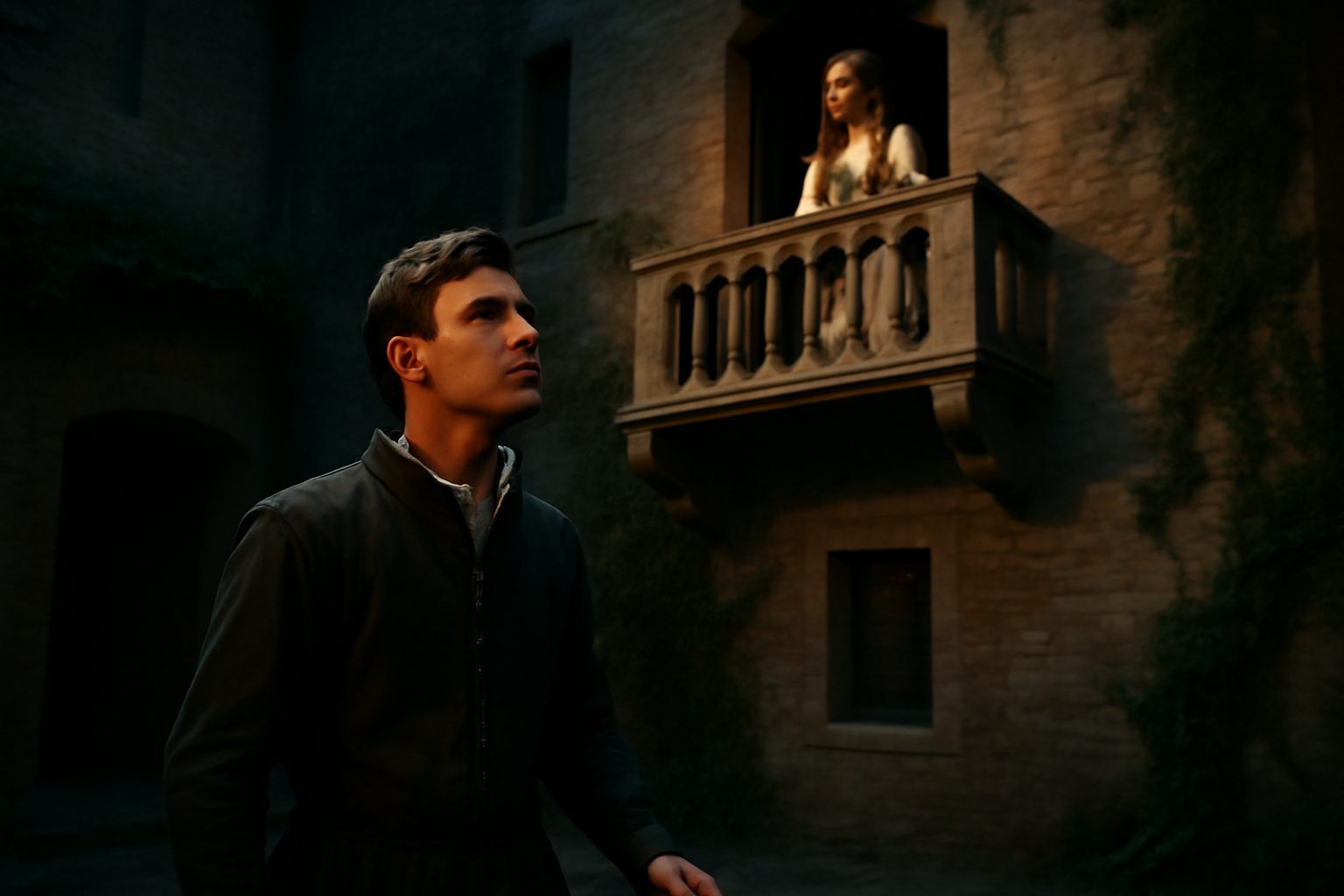
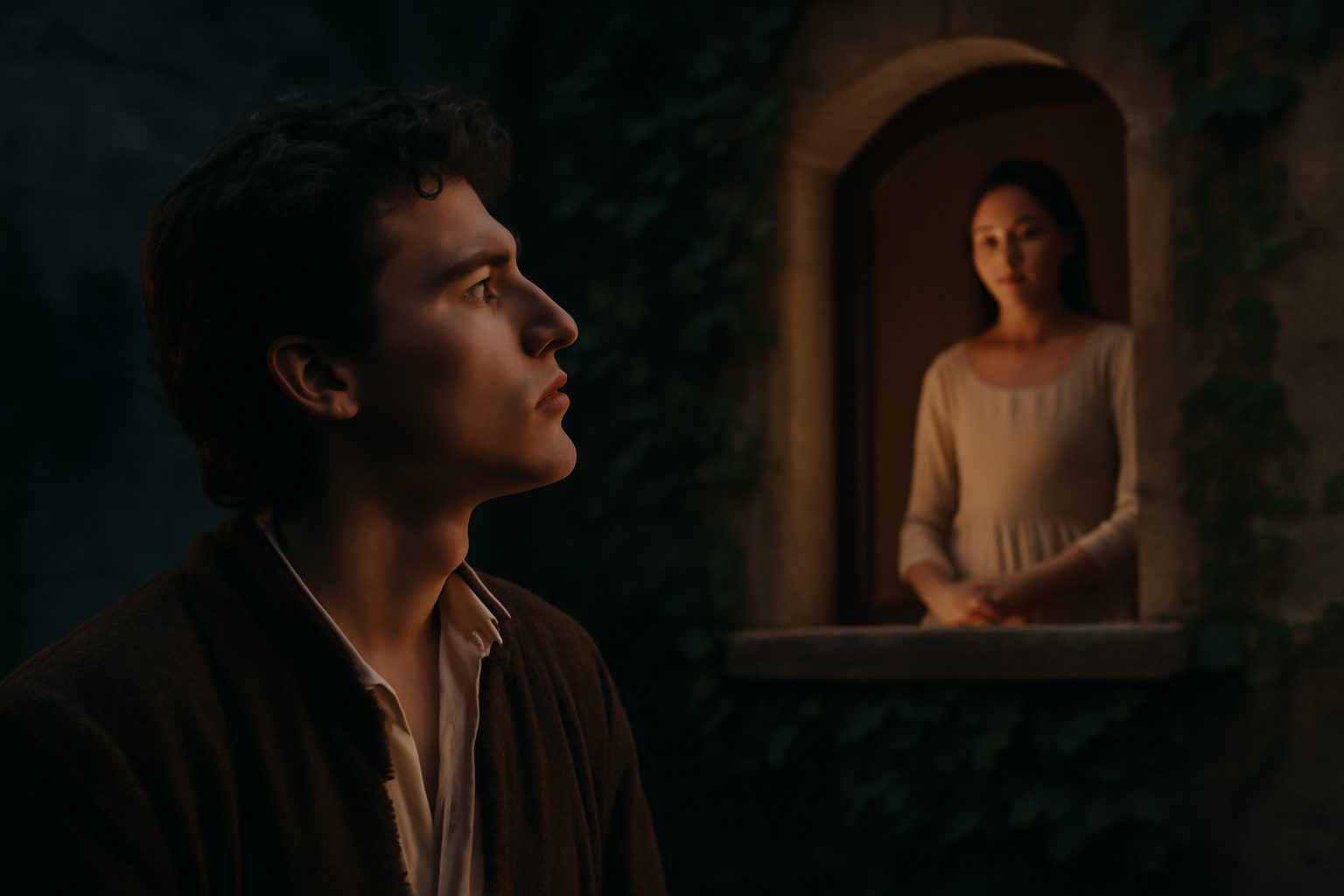
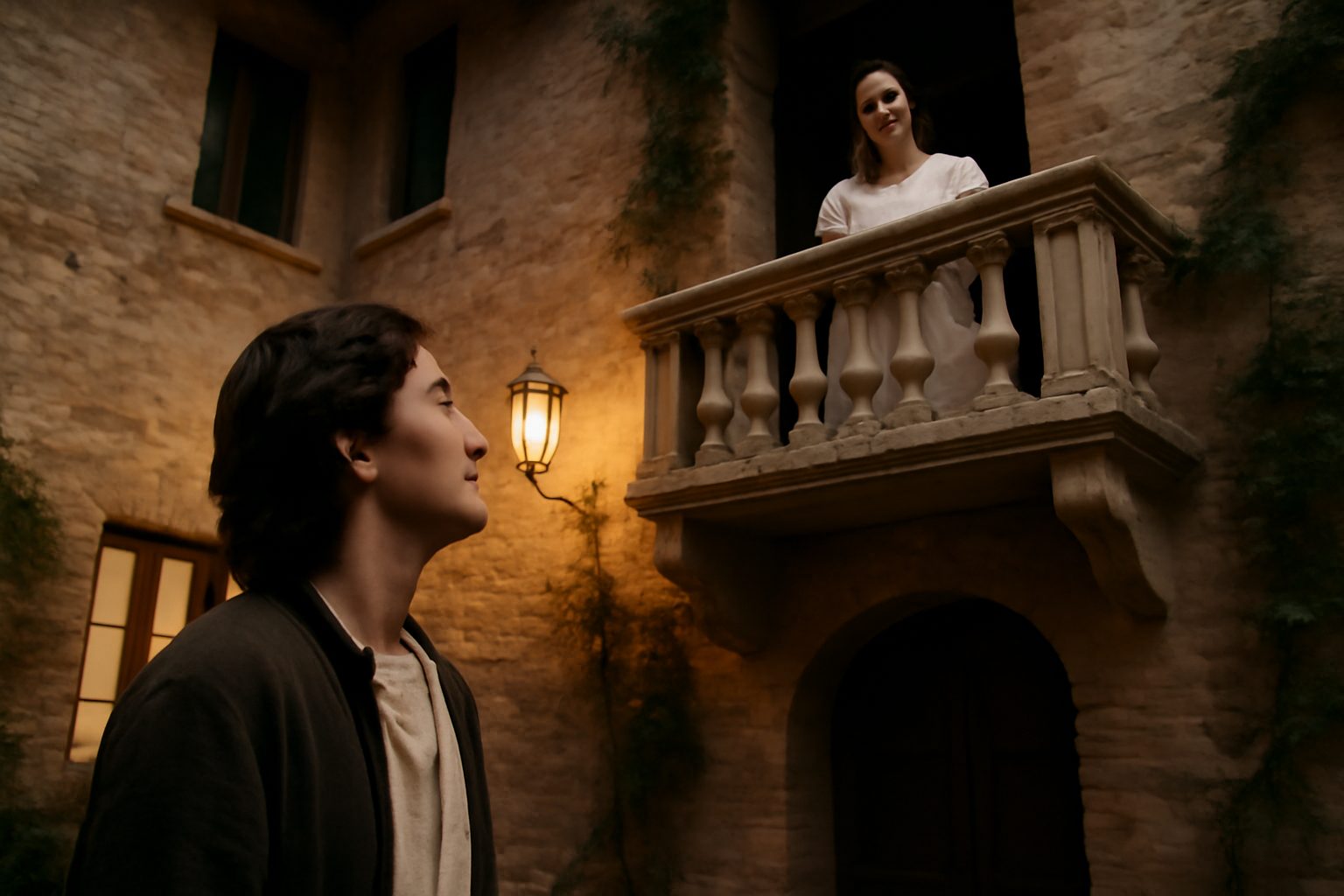
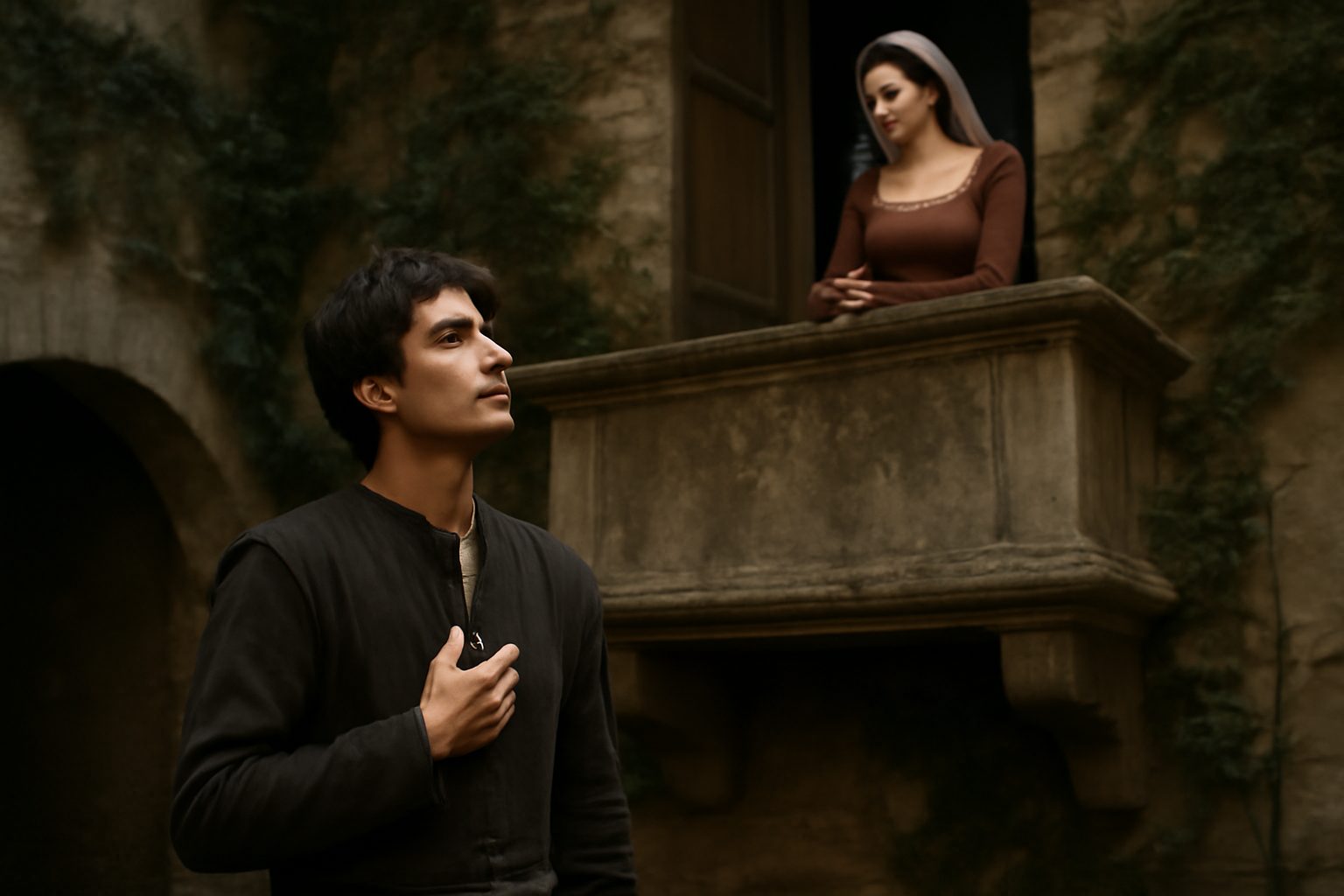
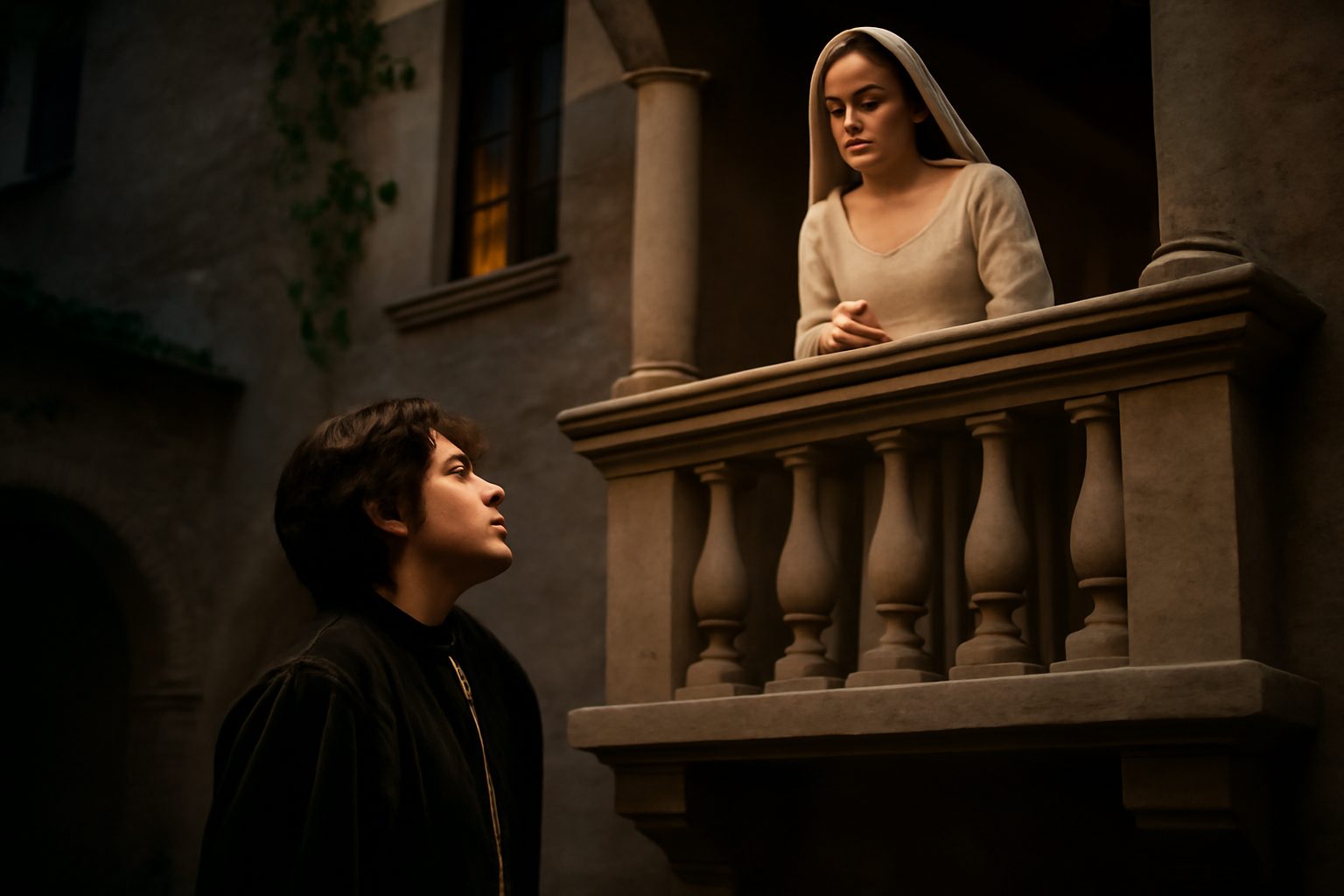
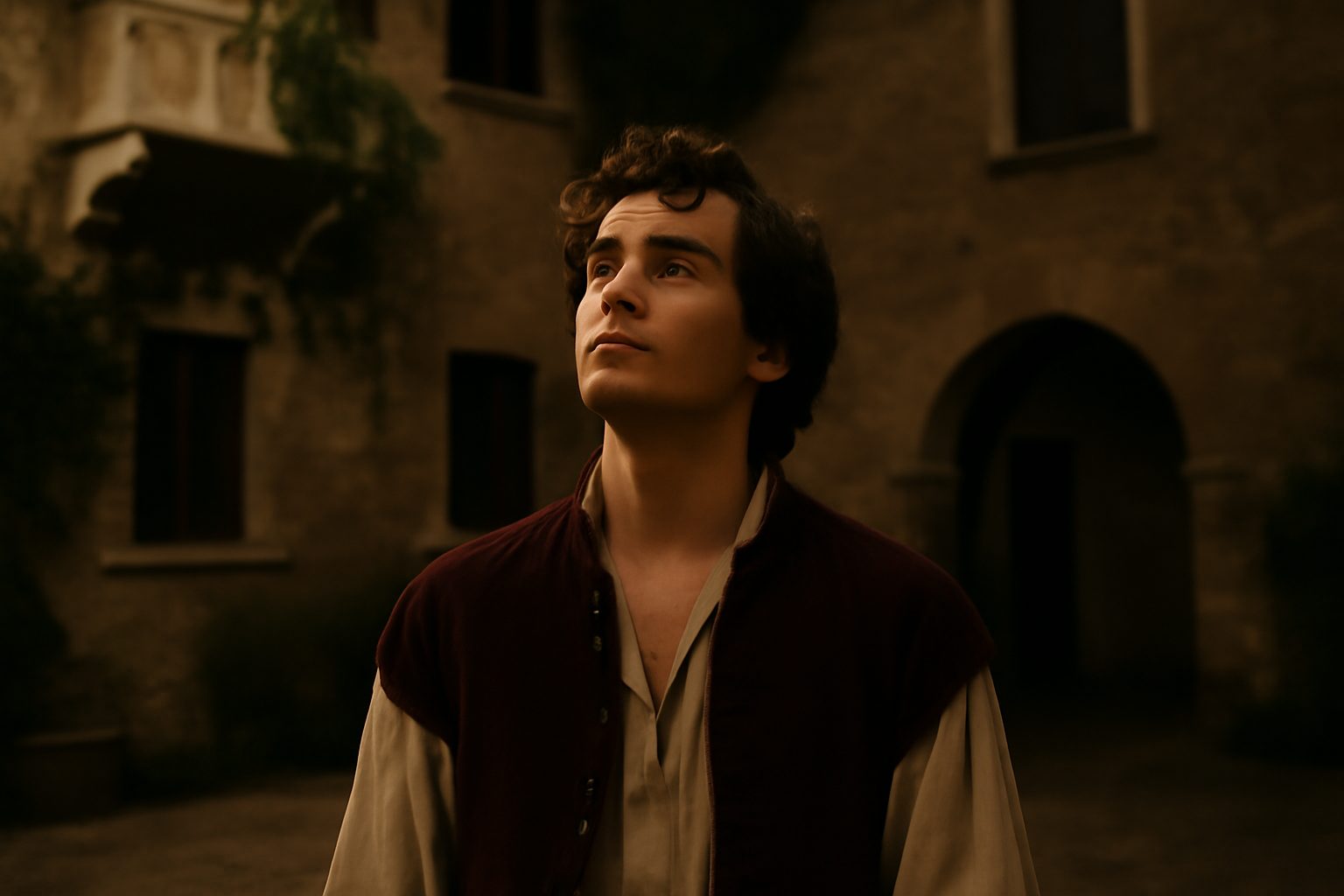
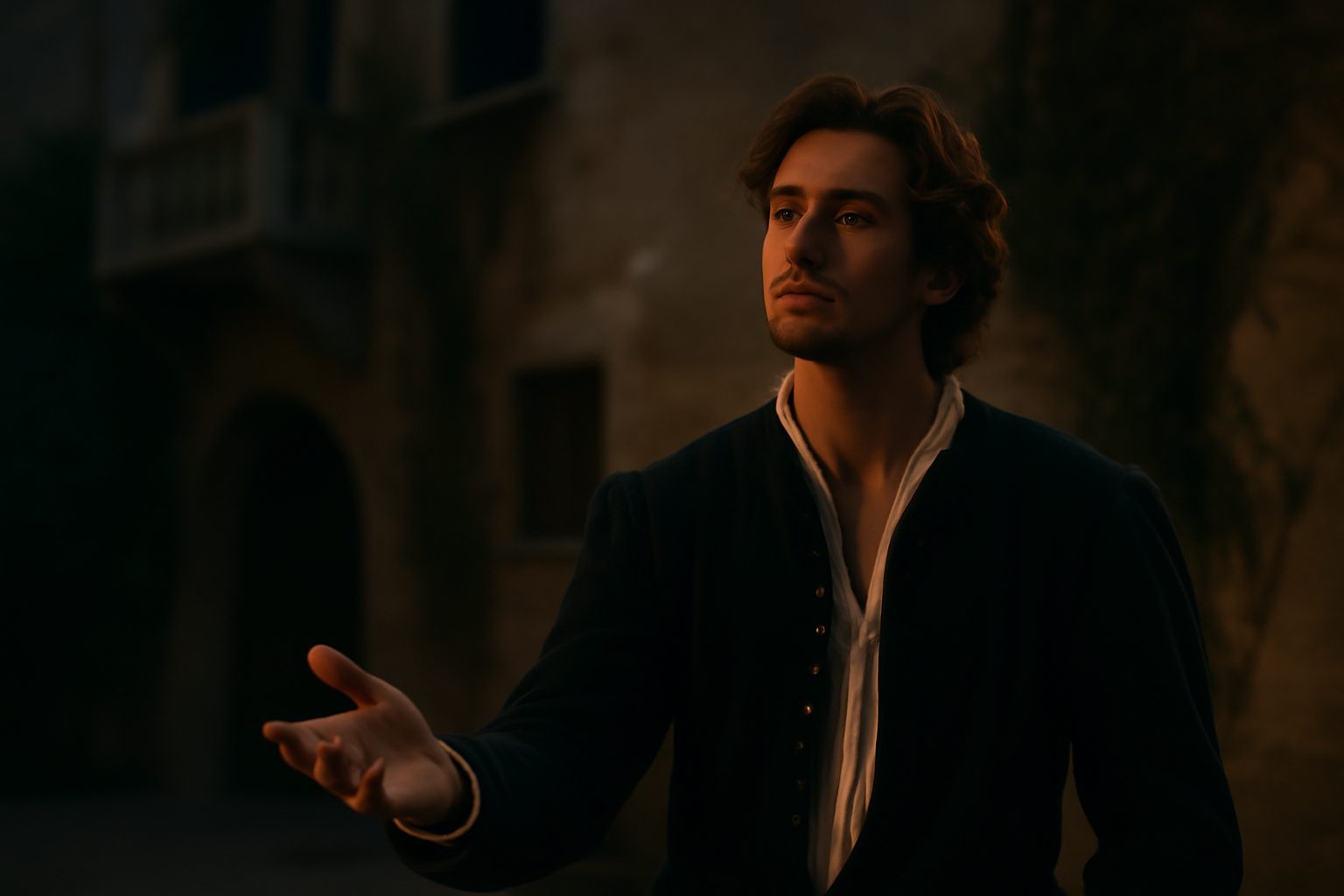
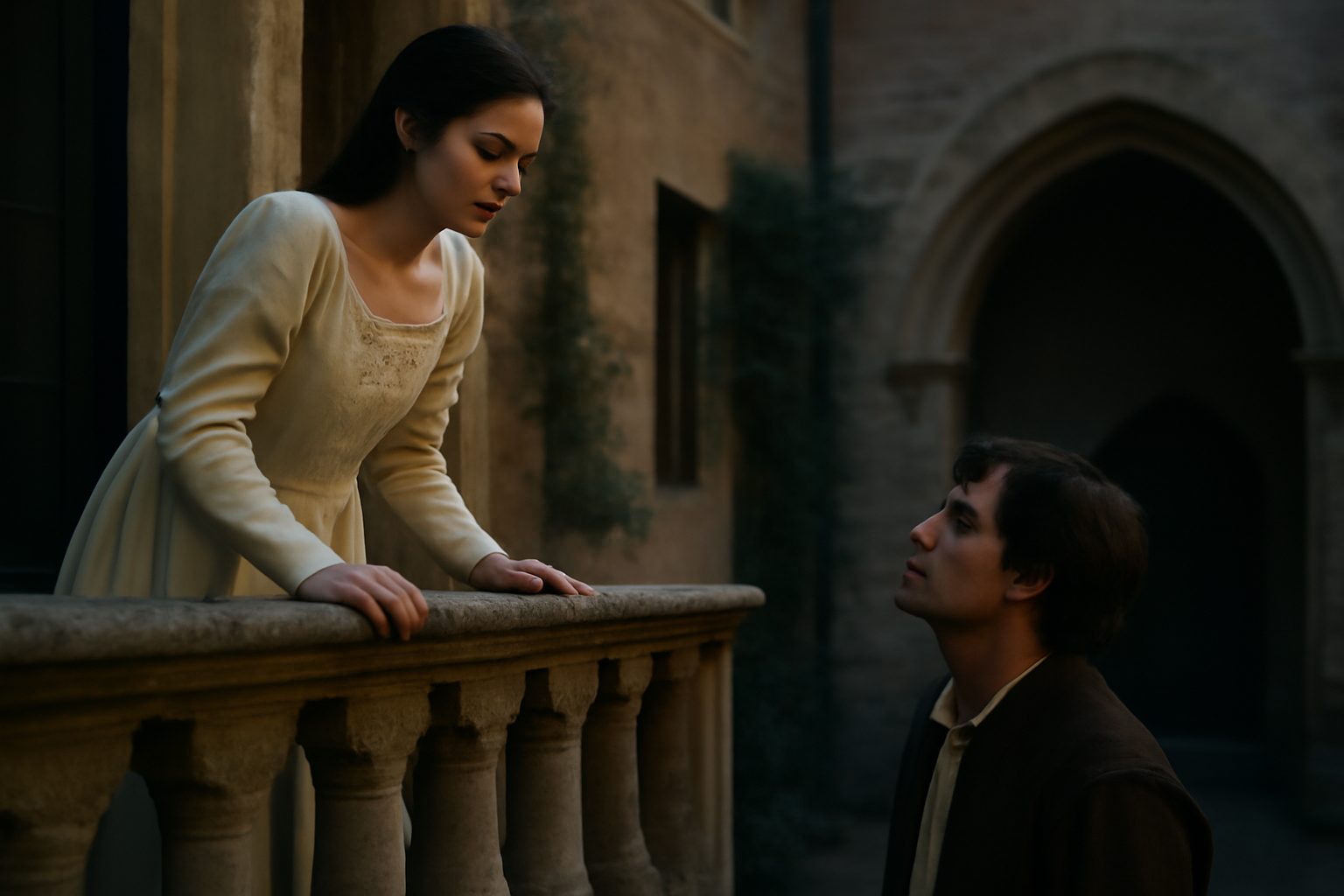
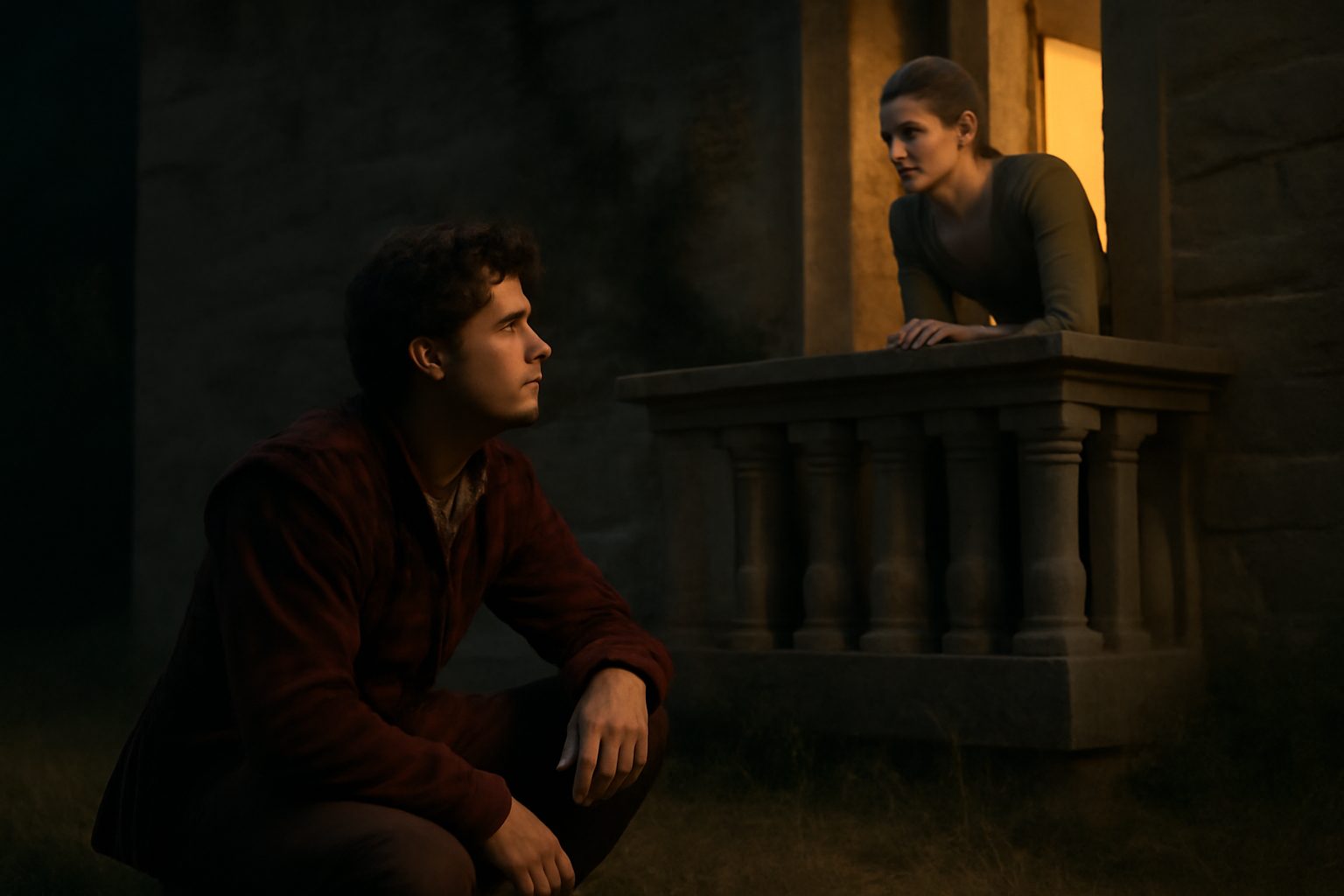
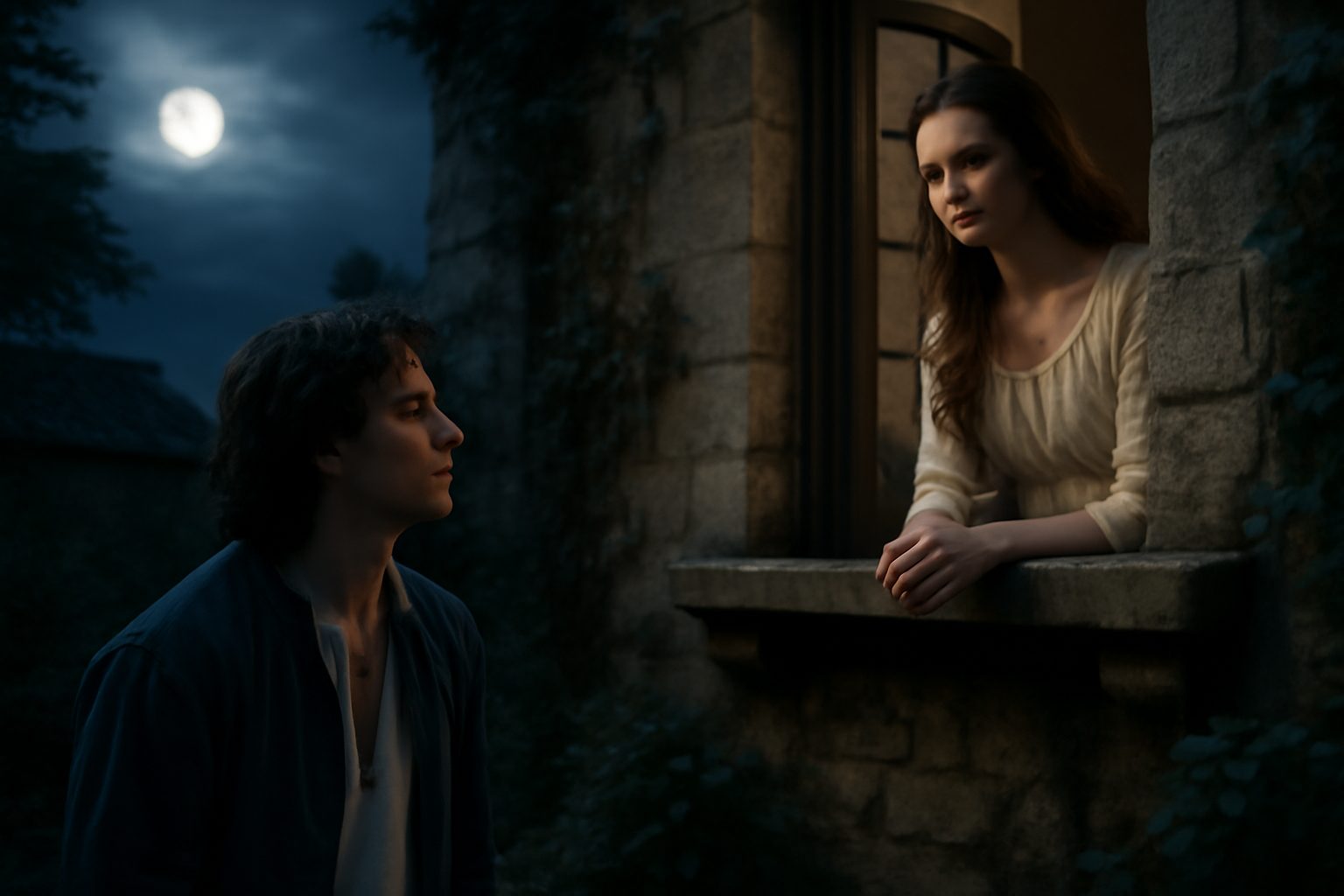
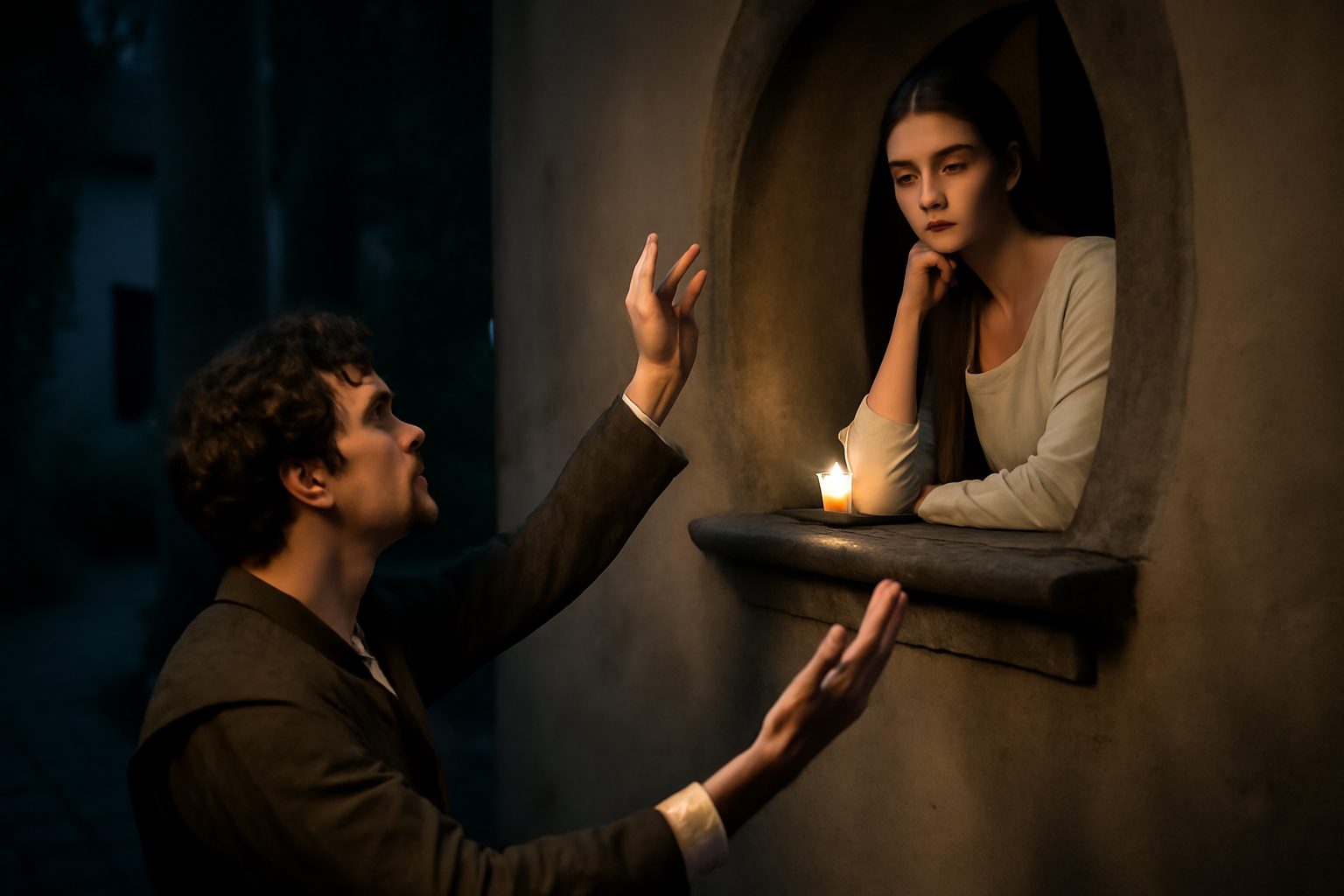
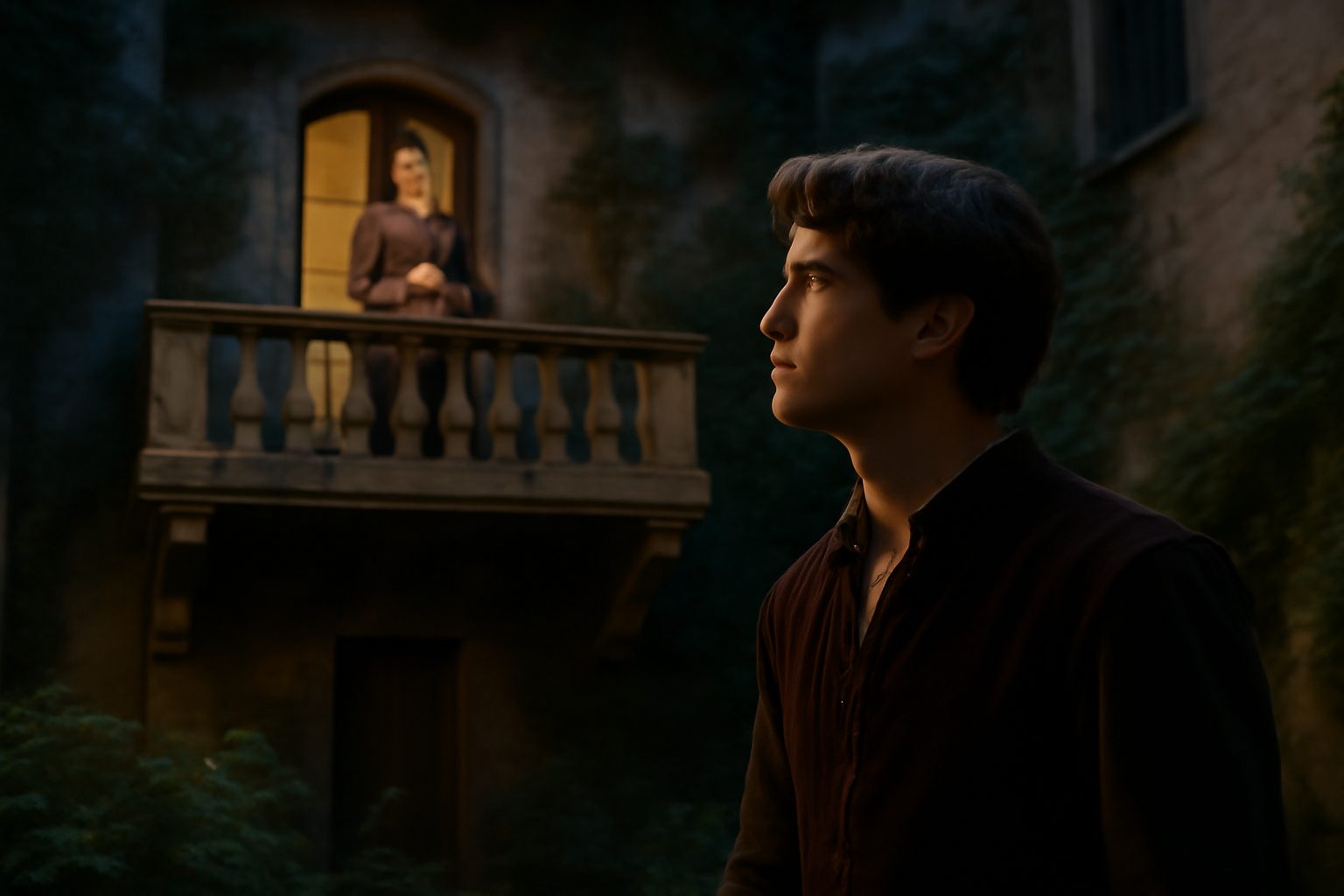
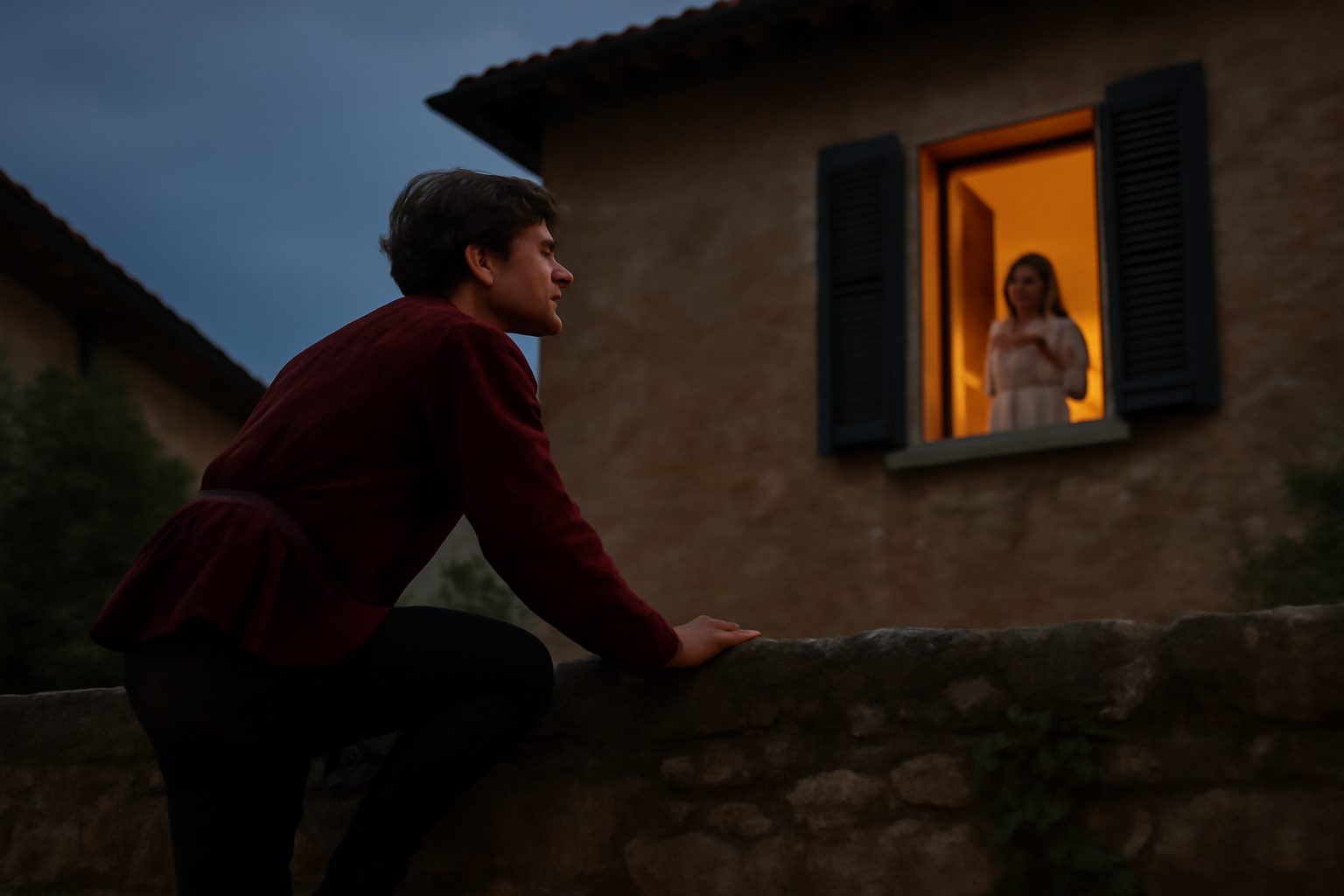
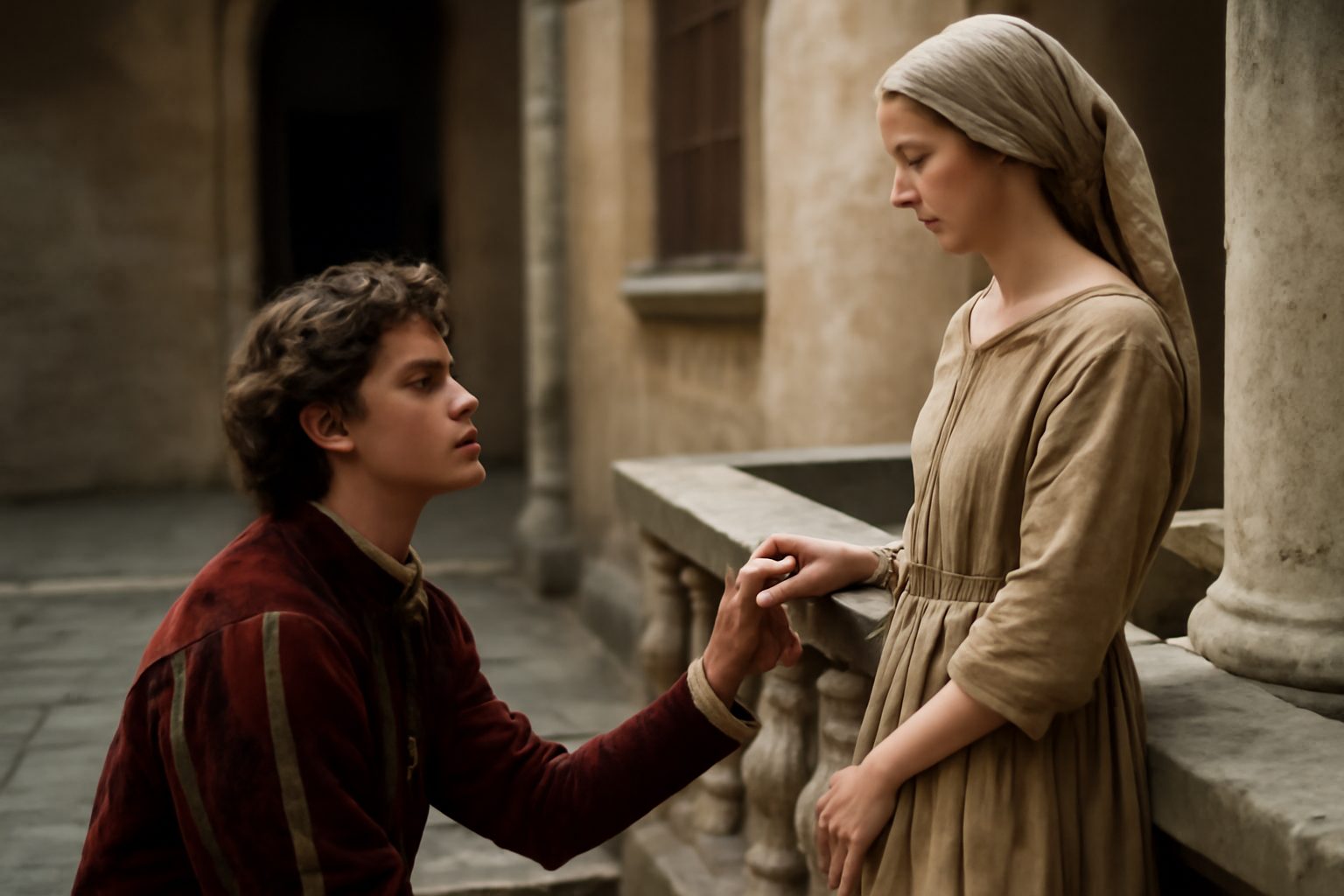
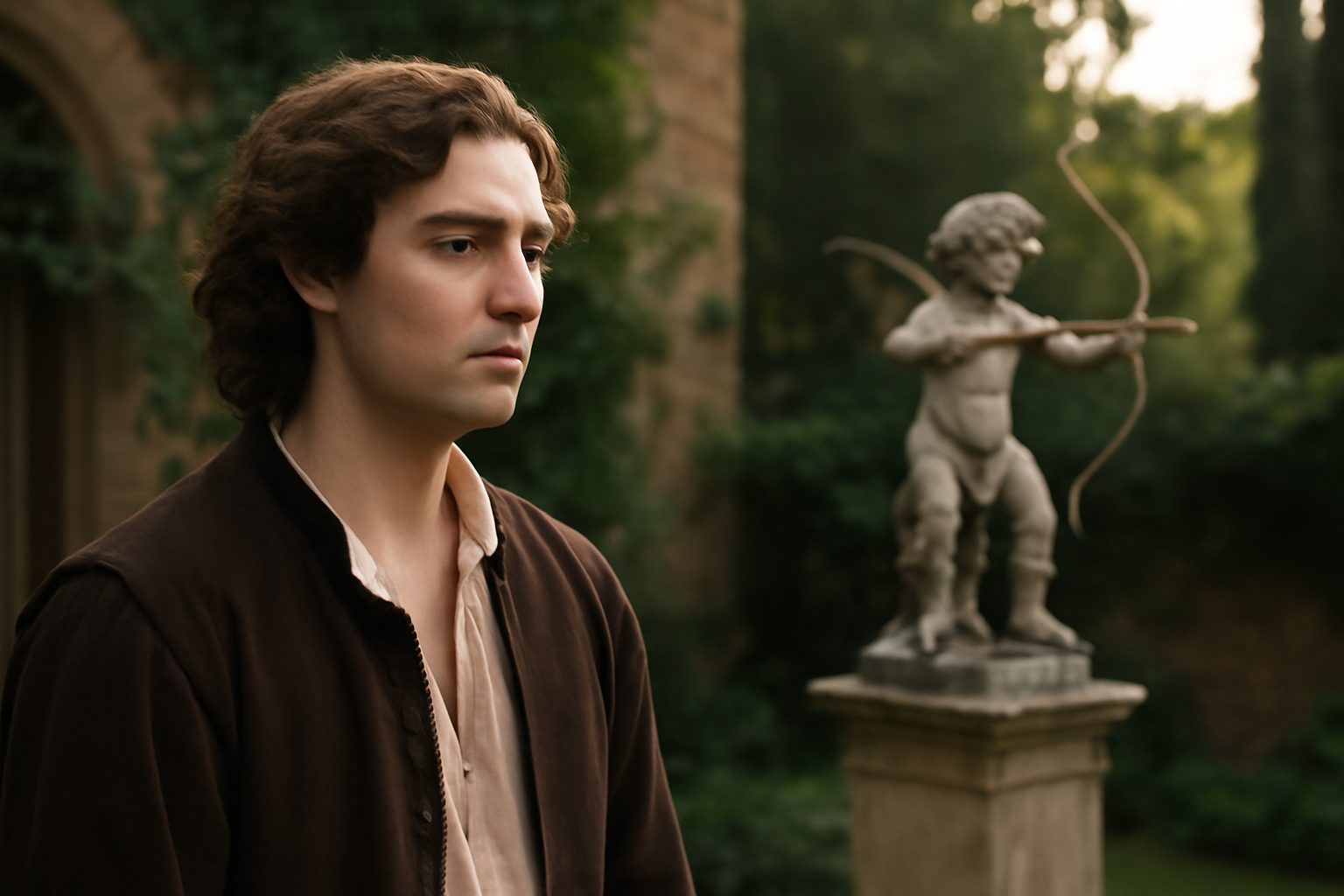
In Act 2, Scene 1 of Romeo and Juliet, Mercutio mocks Romeo's lovesick behavior, calling out to him with playful and bawdy taunts. This line refers to Rosaline, the woman Romeo had been pining for before meeting Juliet, suggesting Mercutio believes Romeo's love is fleeting or exaggerated. The scene takes place outside Capulet's orchard, where Romeo has just slipped away from his friends to pursue Juliet.
Mercutio: "Till she had laid it and conjured it down;"
In modern day english, we would say:
Until she had placed it there and begged it to come down.
Frequently Asked Questions
What is Mercutio saying Romeo did to the moon in this line?
He is saying that Romeo made the moon seem less important by comparing Rosaline to it.
Connections to other verses:
Connections to "Till she had laid it and conjured it down"
The verse "Till she had laid it and conjured it down" is part of Mercutio's bawdy and imaginative speech, where he mocks Romeo's lovesick state by using the metaphor of conjuration. This line refers to a woman laying something down and using conjuration to subdue it, which ties into the theme of love as a form of magic or spellbinding force.
Related Conjuration Themes
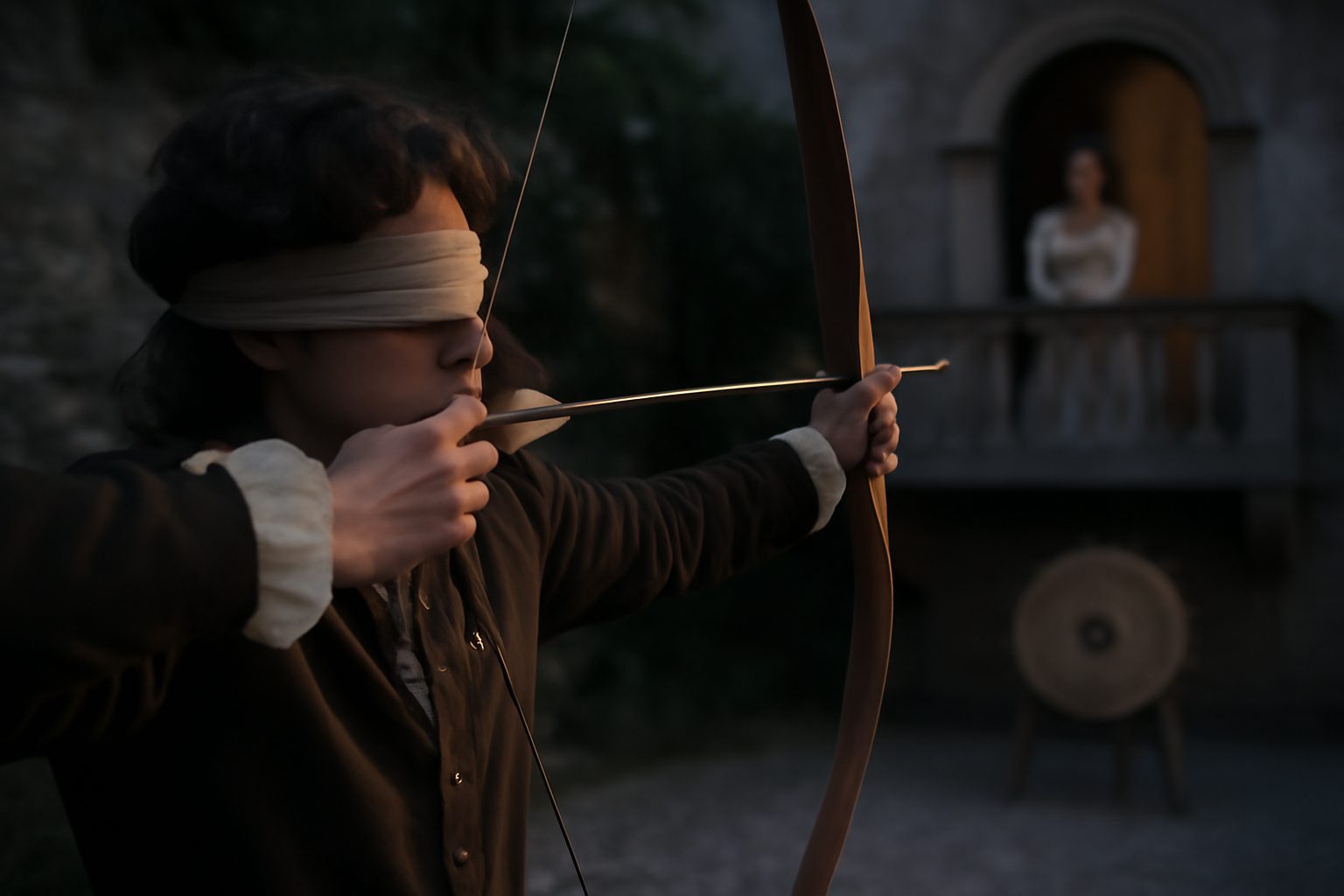
Mercutio's speech is rich with references to conjuration. Earlier, he declares, "The ape is dead, and I must conjure him," indicating his intent to "raise" Romeo through incantation. This is followed by his humorous invocation: "I conjure thee by Rosaline's bright eyes," blending romantic imagery with magical language. Later, he claims, "I conjure only but to raise up him," reinforcing his playful attempt to summon Romeo through conjuration.
Context of the "Strange Nature"
The line in question is part of a larger idea where Mercutio describes love as "Of some strange nature, letting it there stand," suggesting love's peculiar and uncontrollable qualities. The act of conjuring it down implies an attempt to control or pacify this strange force, which aligns with Mercutio's mocking tone toward Romeo's passionate behavior.
Blind Love and Its Consequences
Mercutio's speech also touches on the theme of blind love, as seen in "Blind is his love and best befits the dark," which critiques Romeo's irrational infatuation. This connects to the conjuration motif, as both highlight love's overpowering and somewhat foolish nature. The idea is further emphasized in "If love be blind, love cannot hit the mark," underscoring the futility Mercutio perceives in Romeo's pursuits.
Fruit and Sexual Innuendo
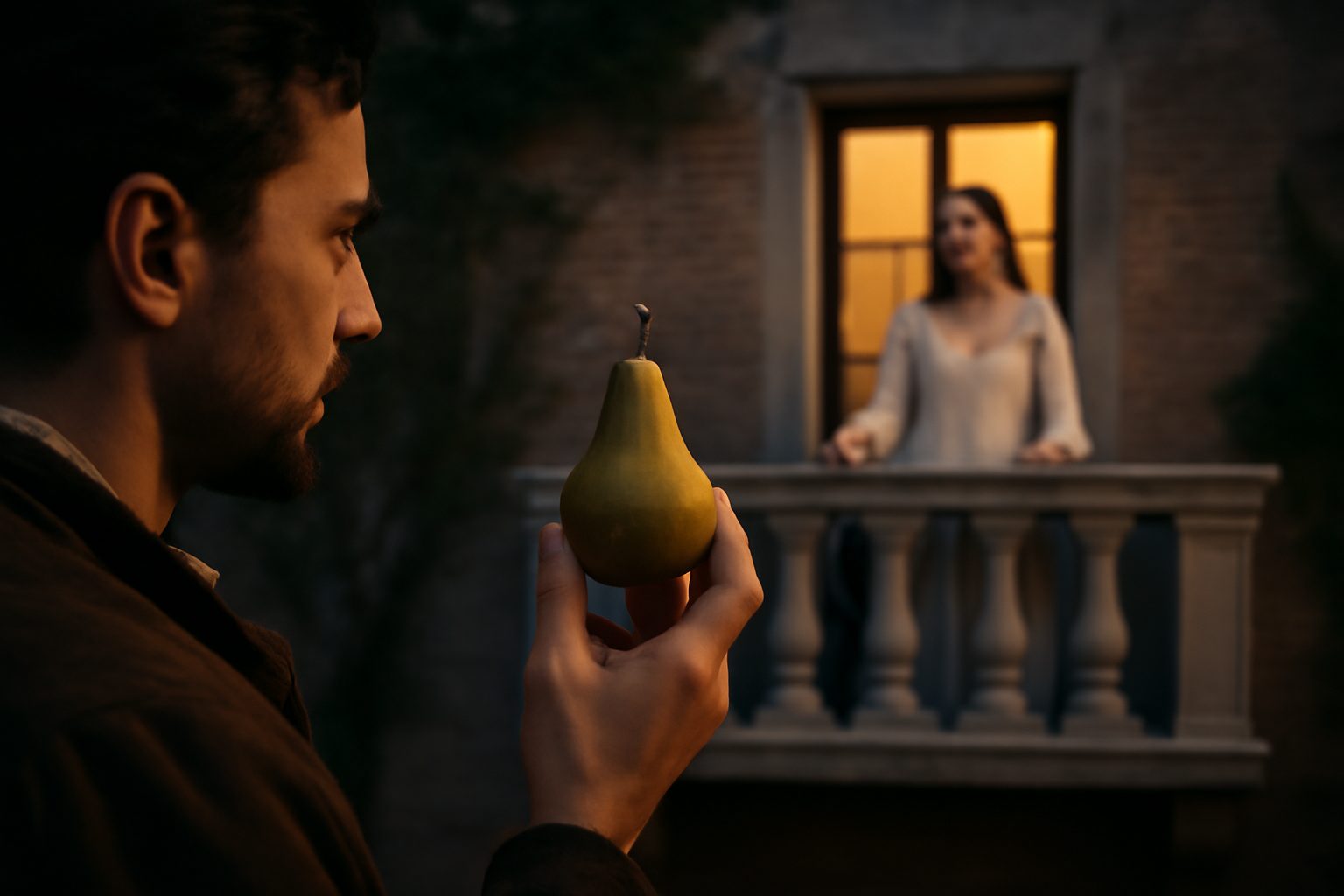
Mercutio's conjuration references are intertwined with sexual innuendo, particularly through fruit metaphors. For instance, "And wish his mistress were that kind of fruit" and "As maids call medlars, when they laugh alone" use fruit to imply sexual connotations. The act of laying something down and conjuring it down can be interpreted as part of this bawdy wordplay, relating to sexual conquest or submission.
Conclusion of the Scene
As the scene concludes, Mercutio and Benvolio decide to leave, with Benvolio noting, "To seek him here that means not to be found," acknowledging the fruitlessness of their search for Romeo. This resignation contrasts with the earlier energetic conjurations, highlighting the shift from mockery to acceptance of Romeo's hidden, loves state.