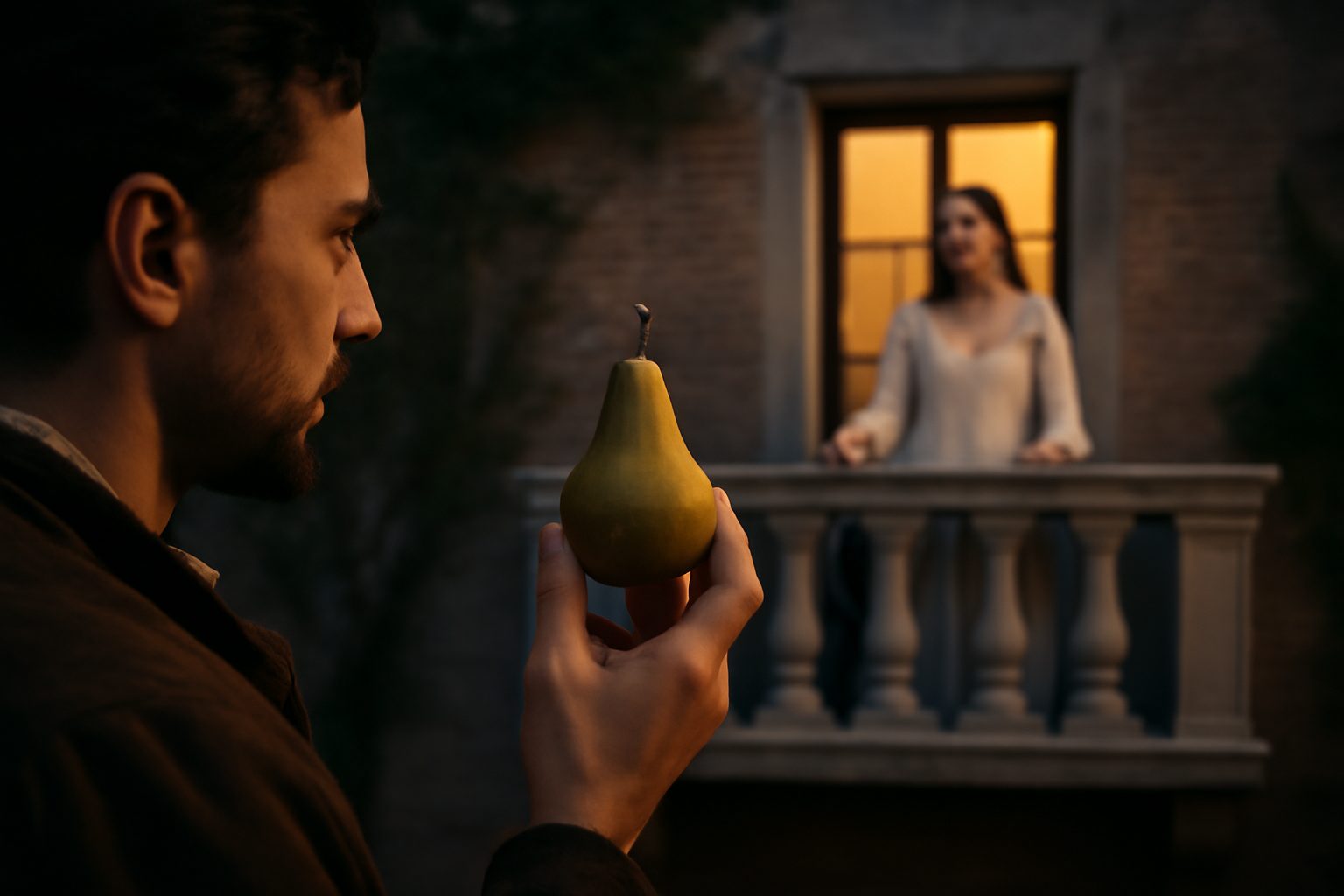
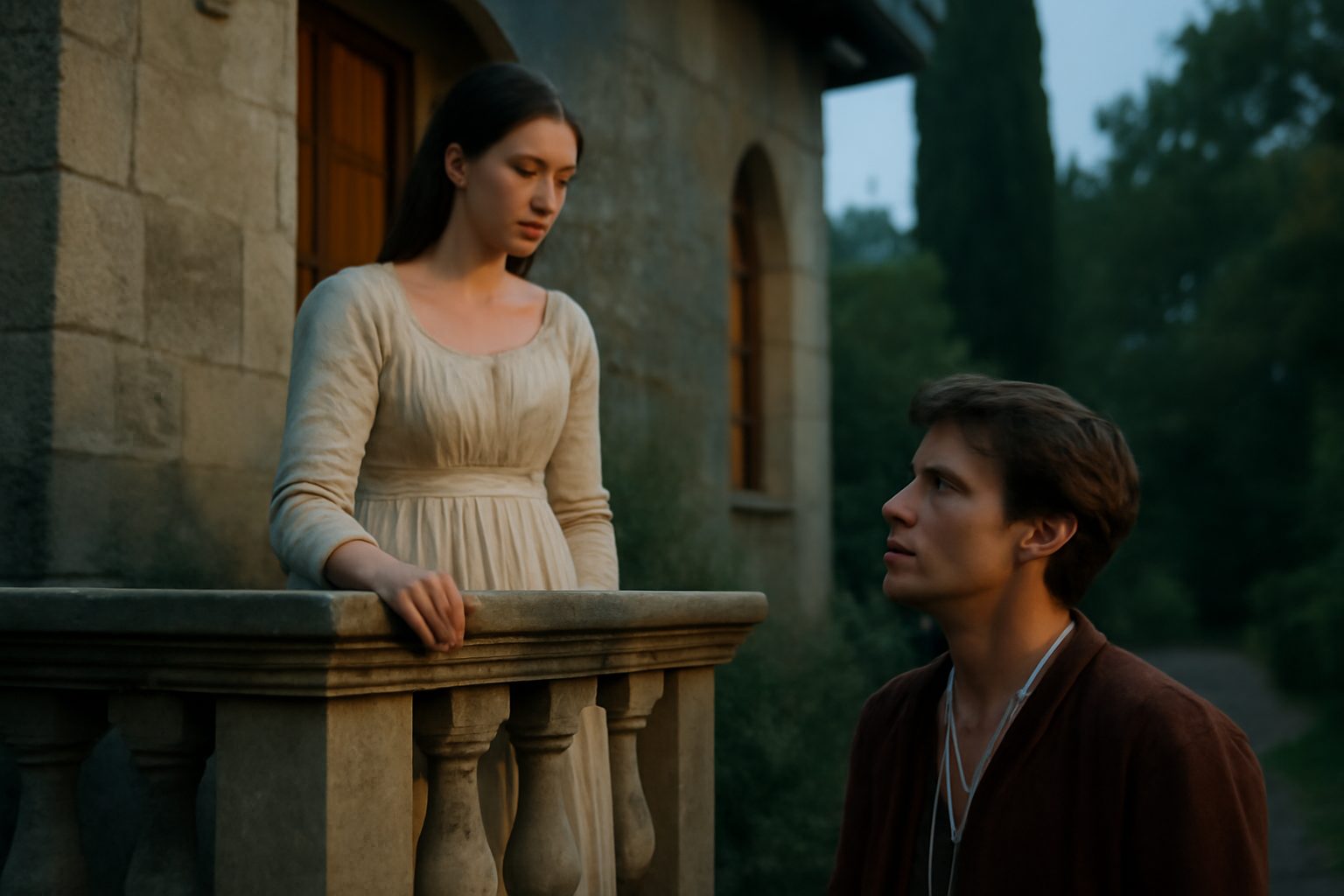
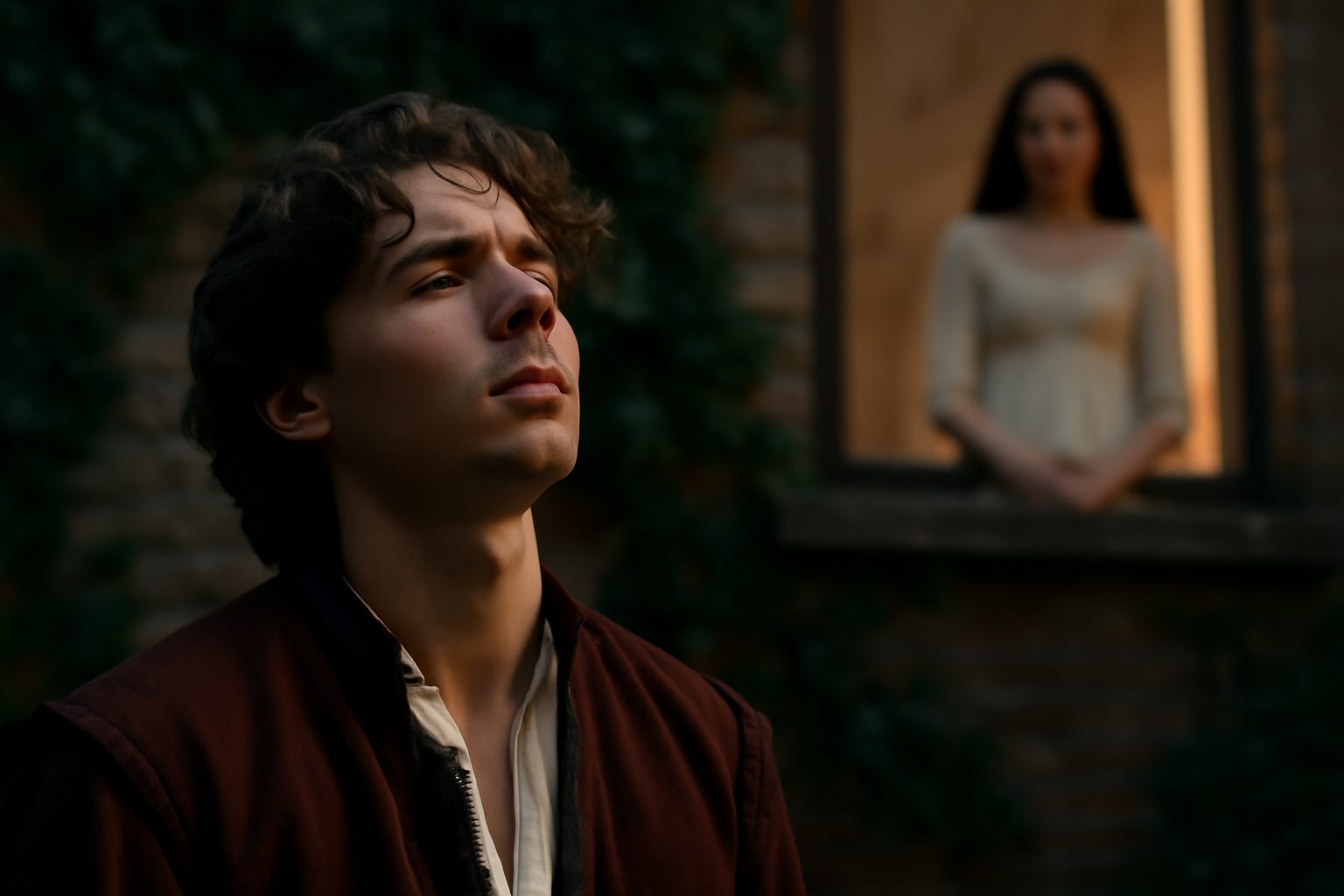
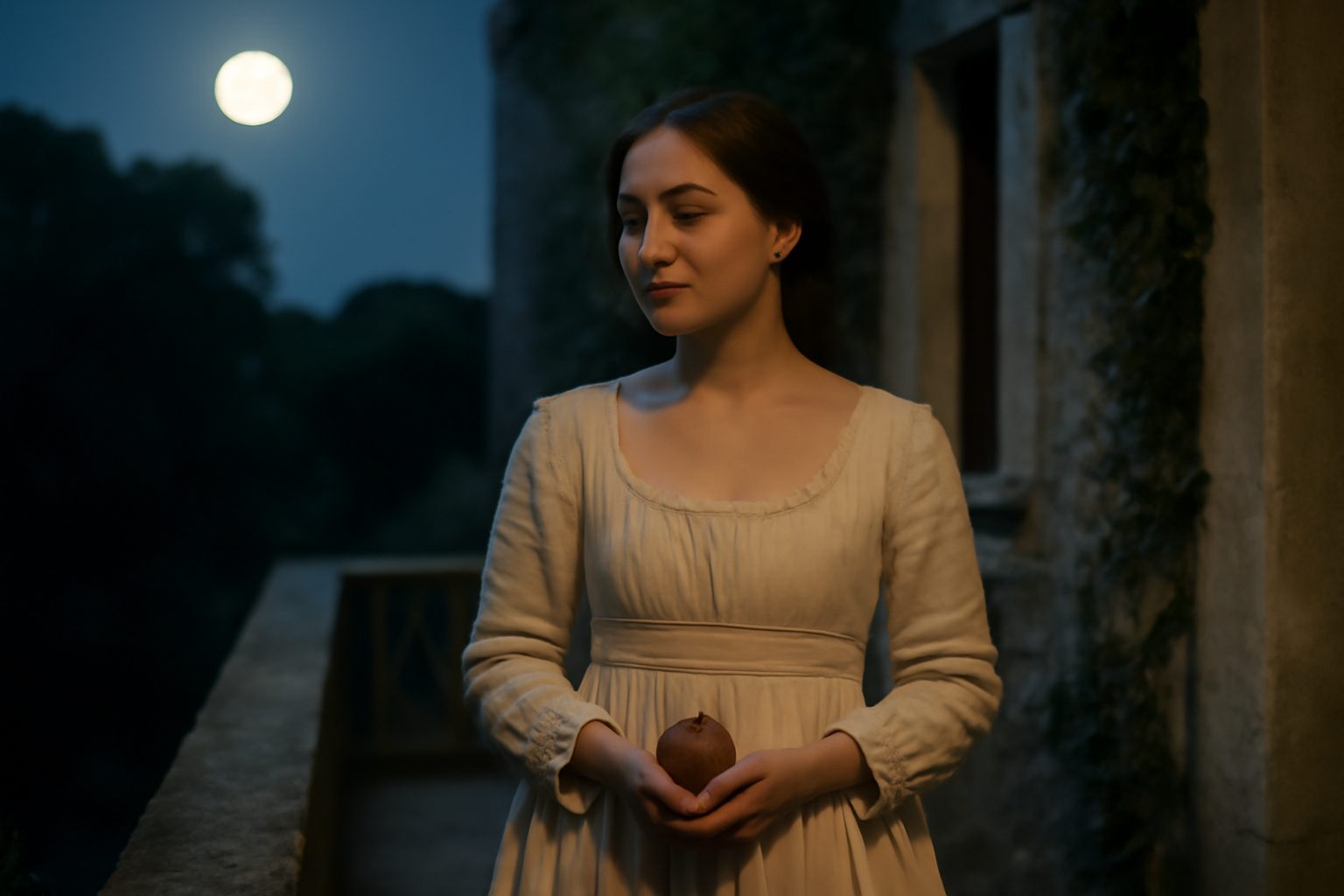
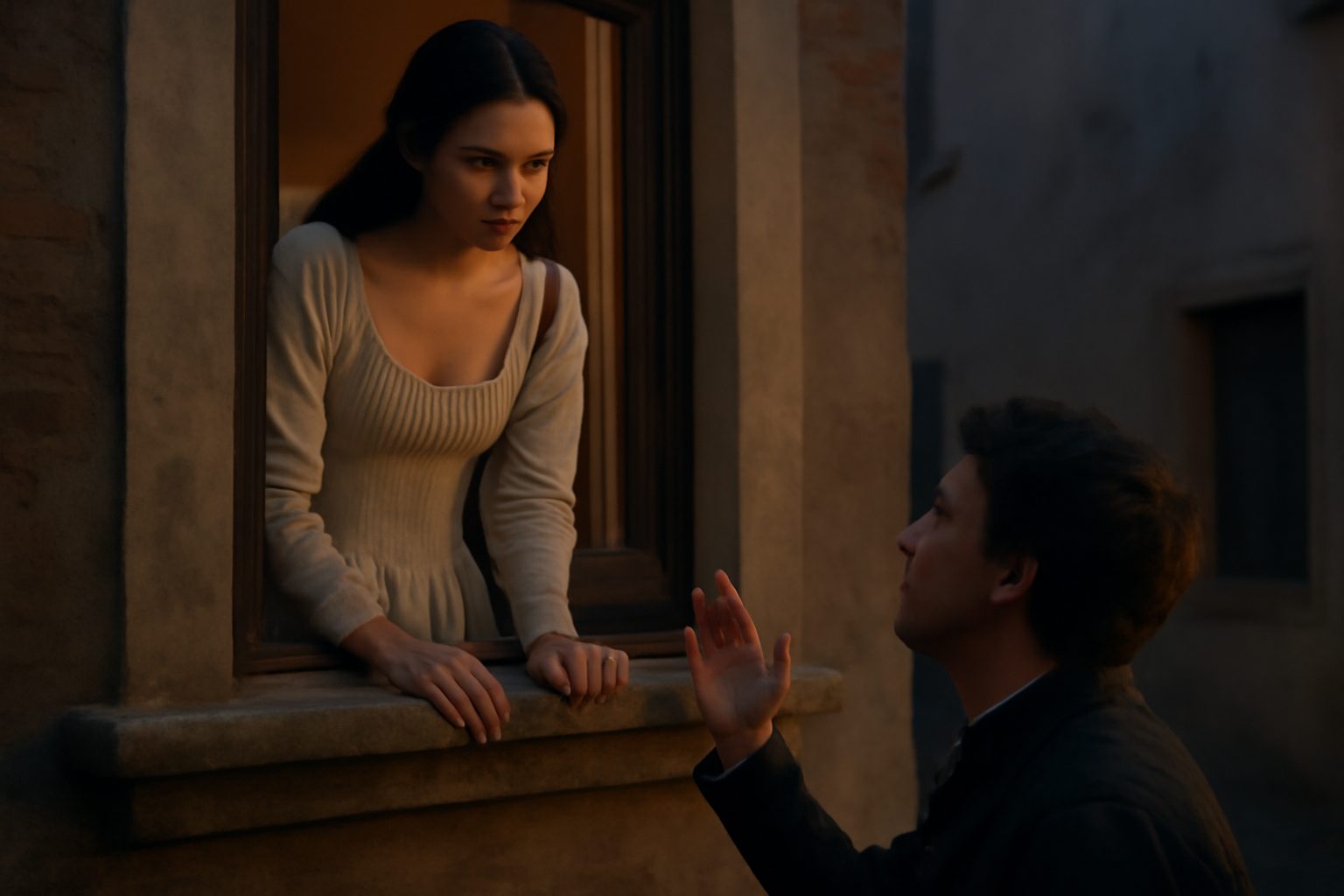
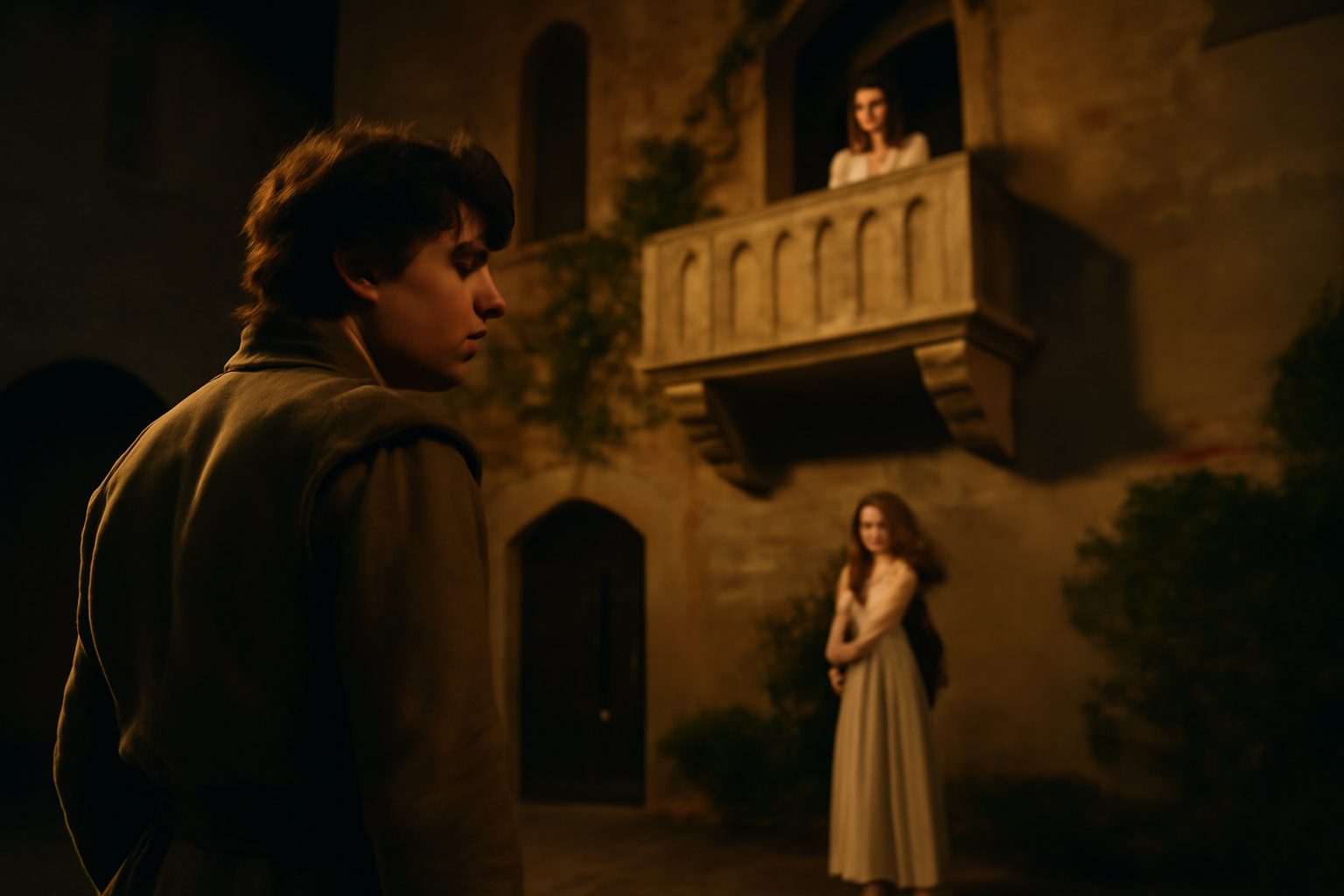
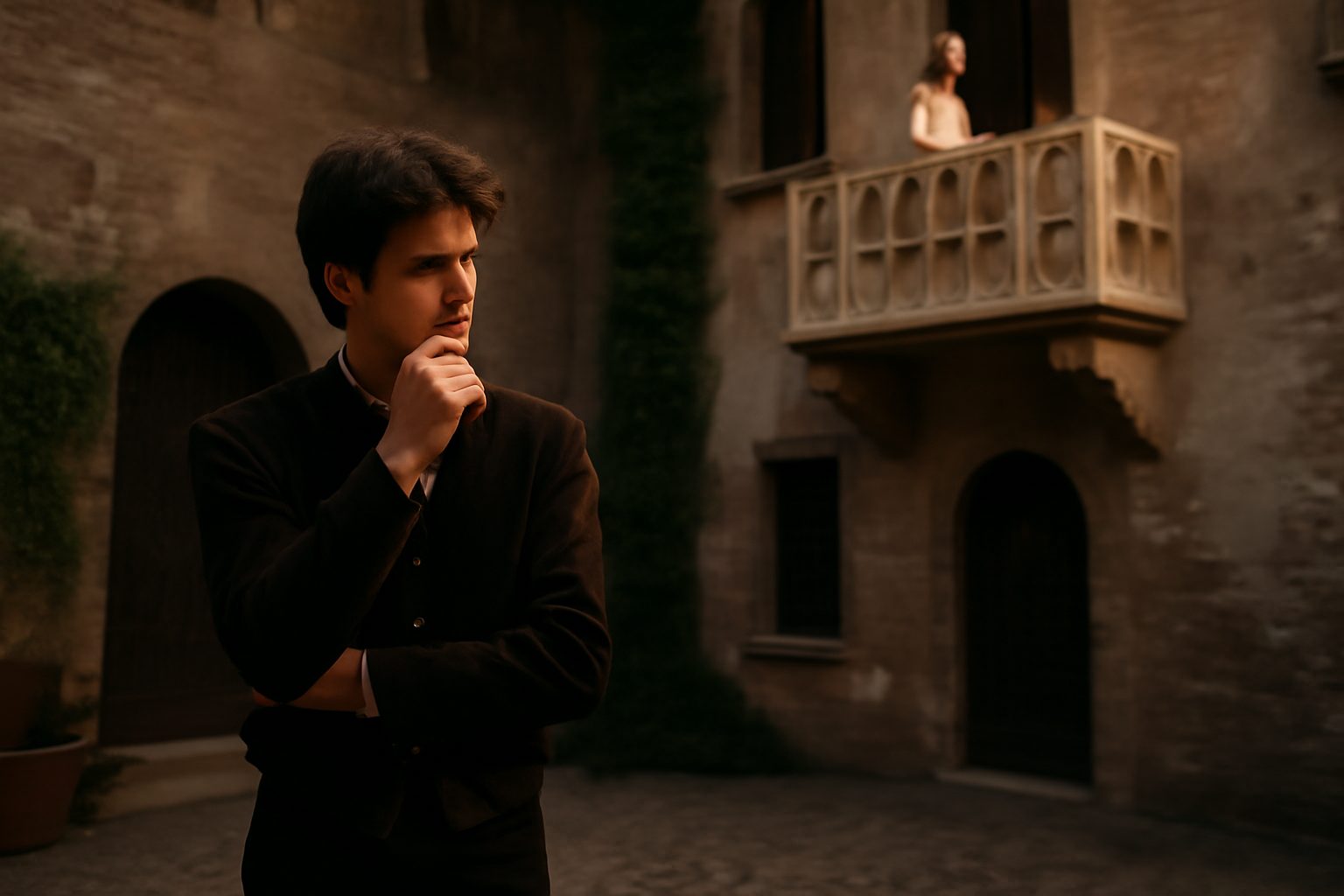
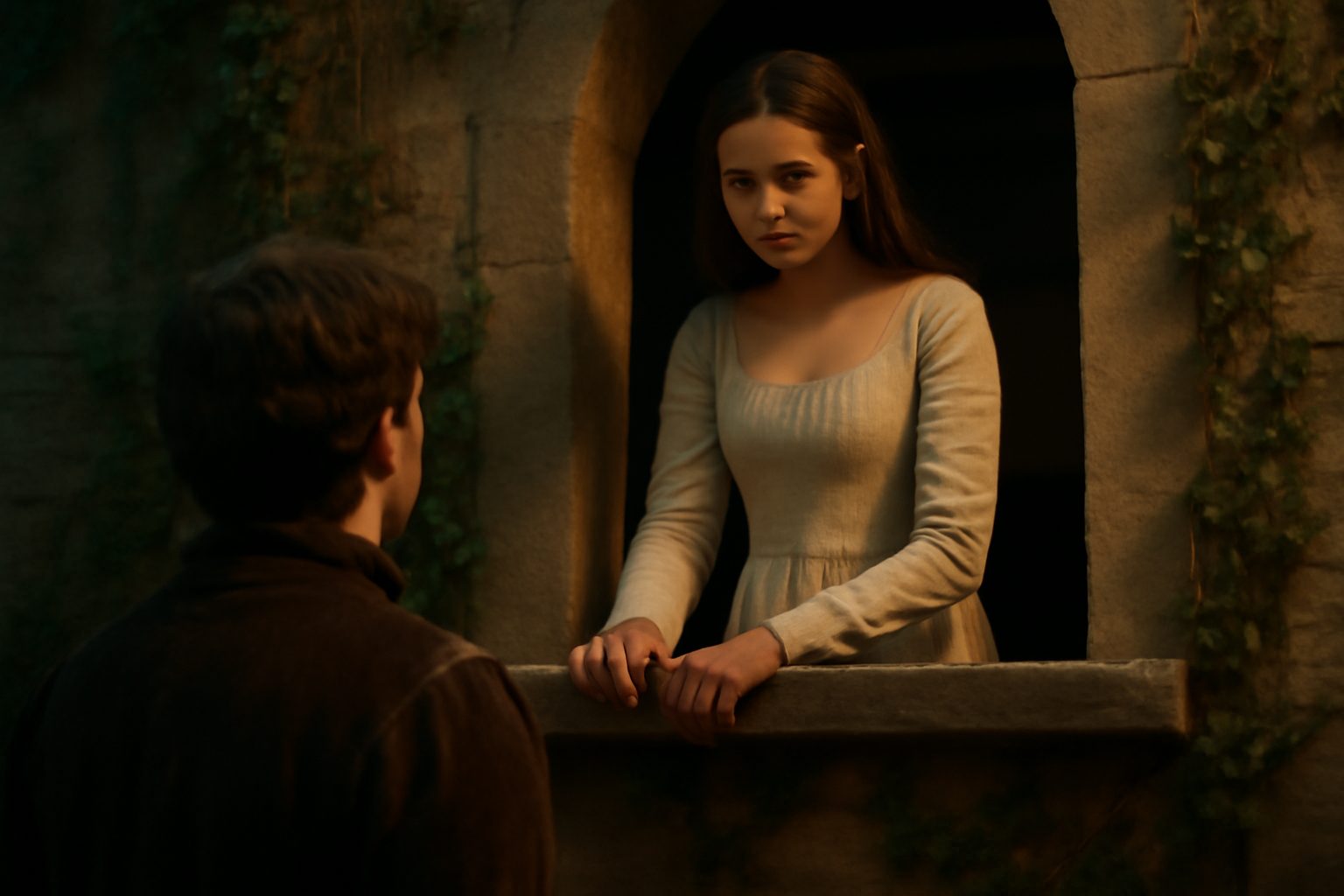
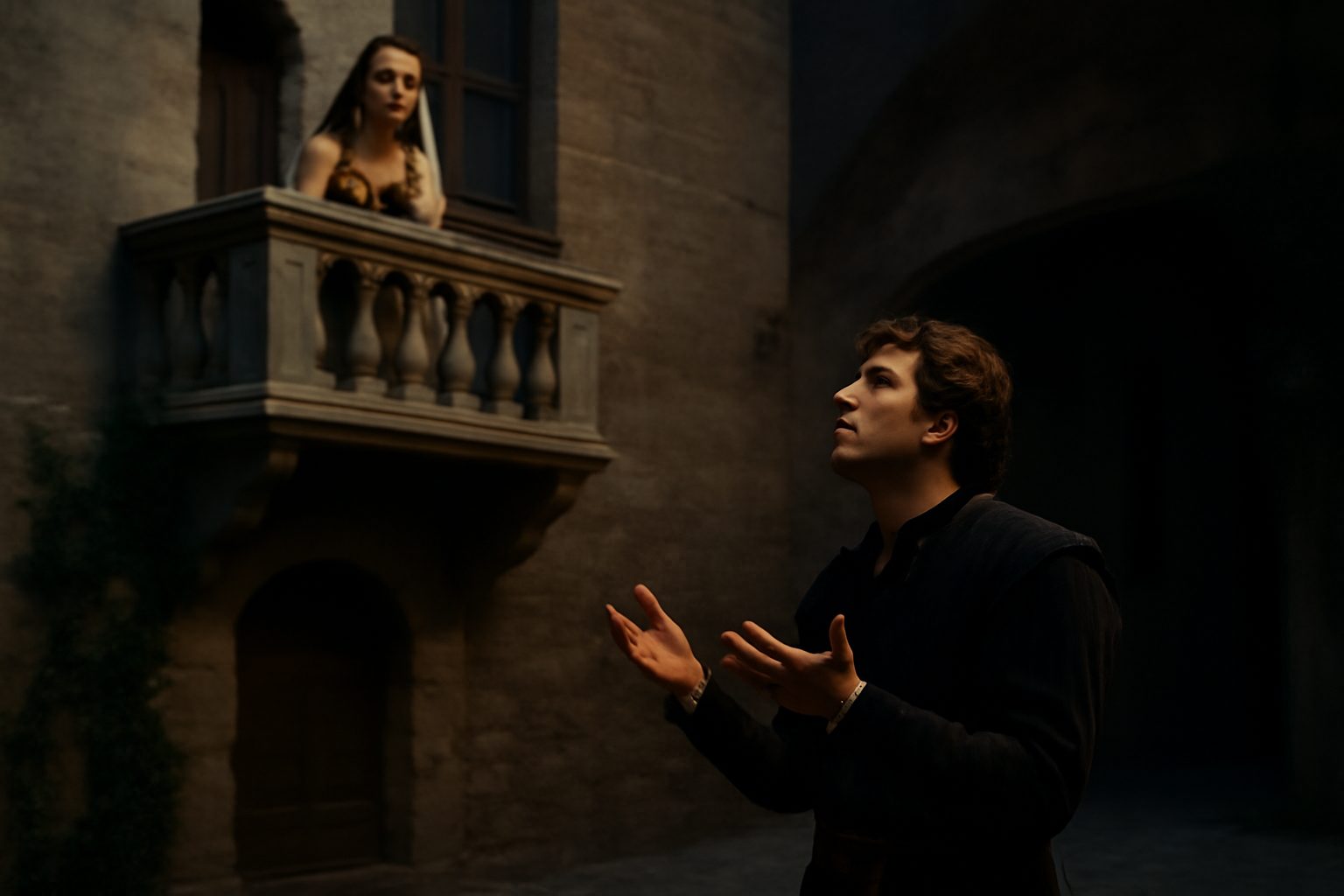
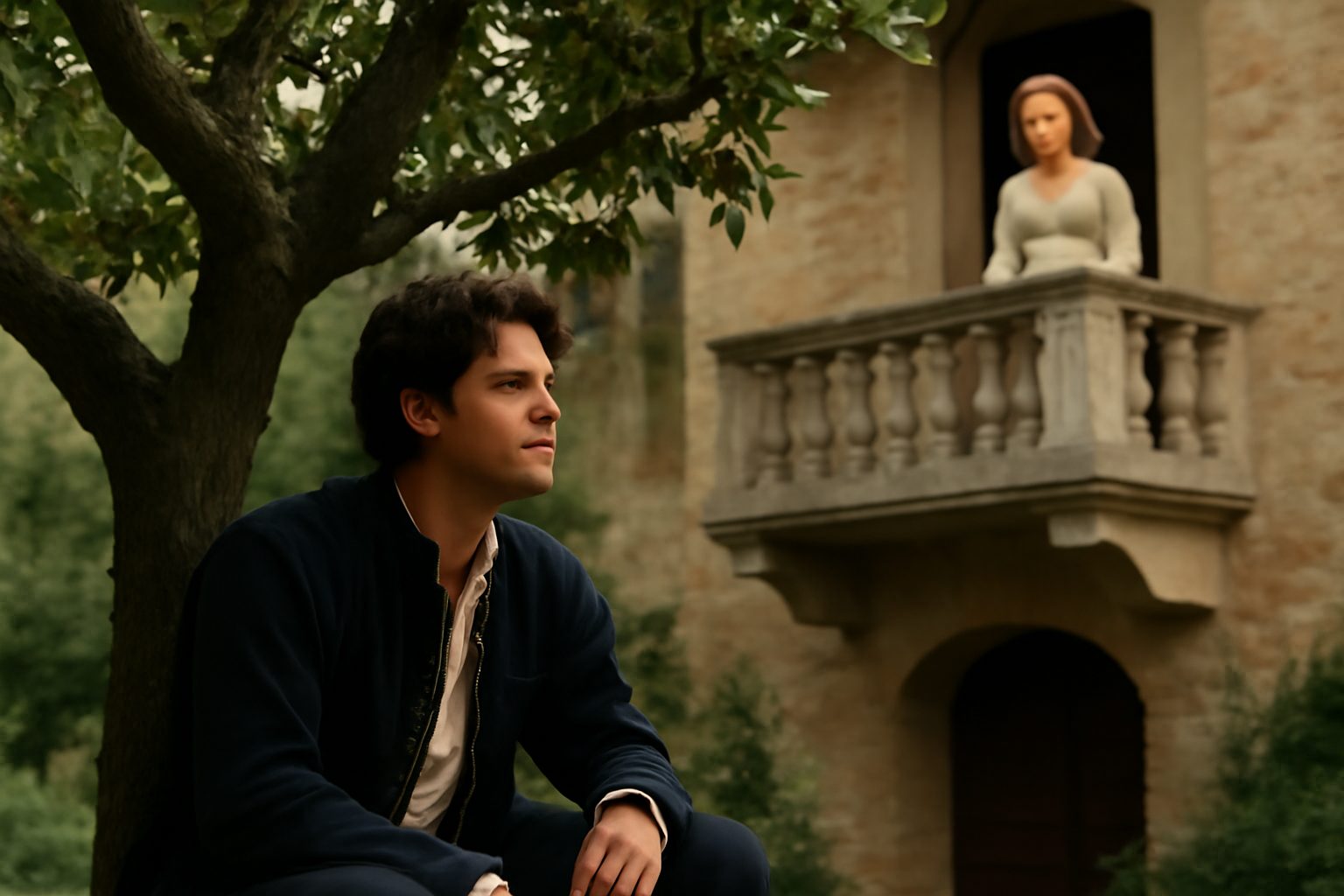
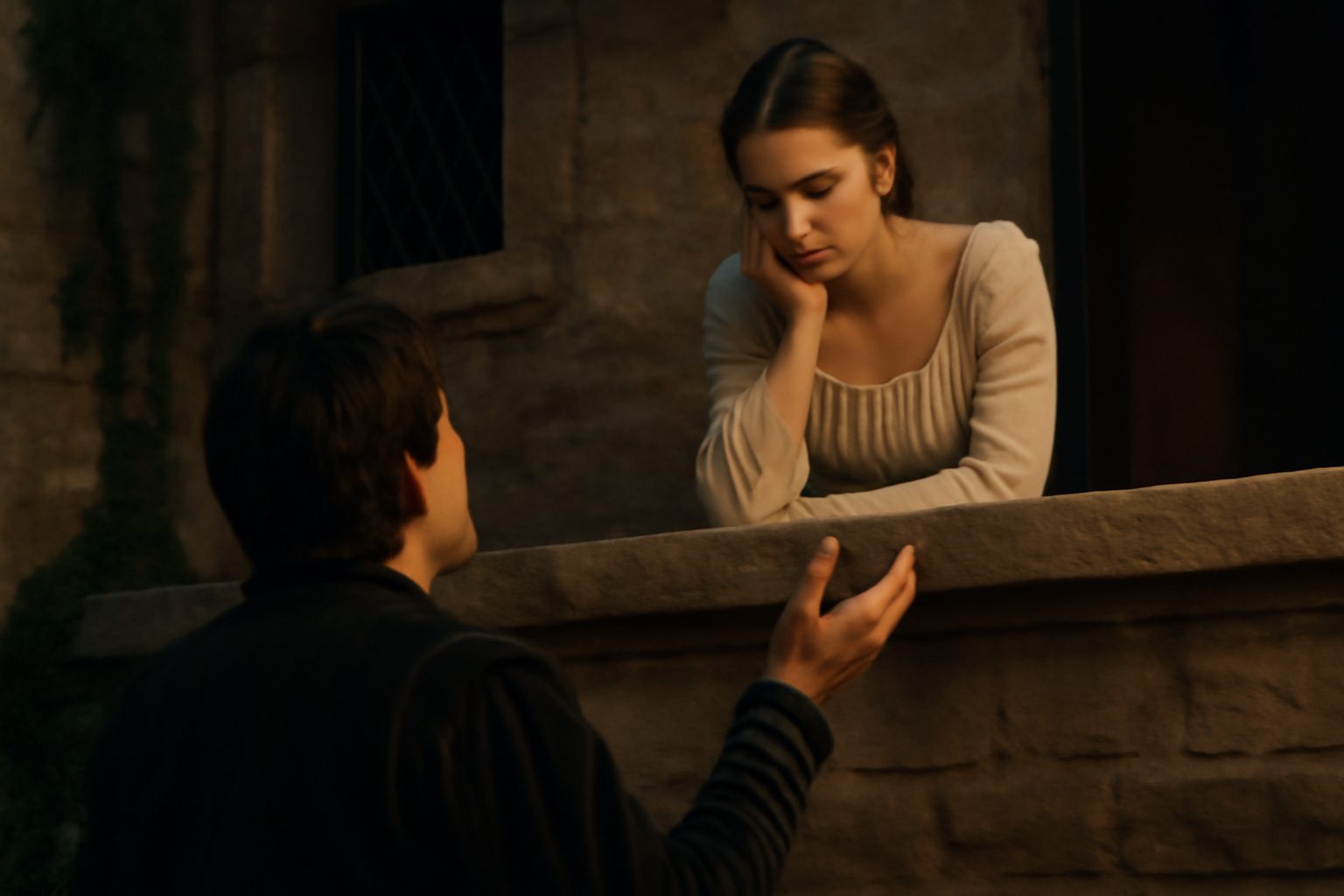
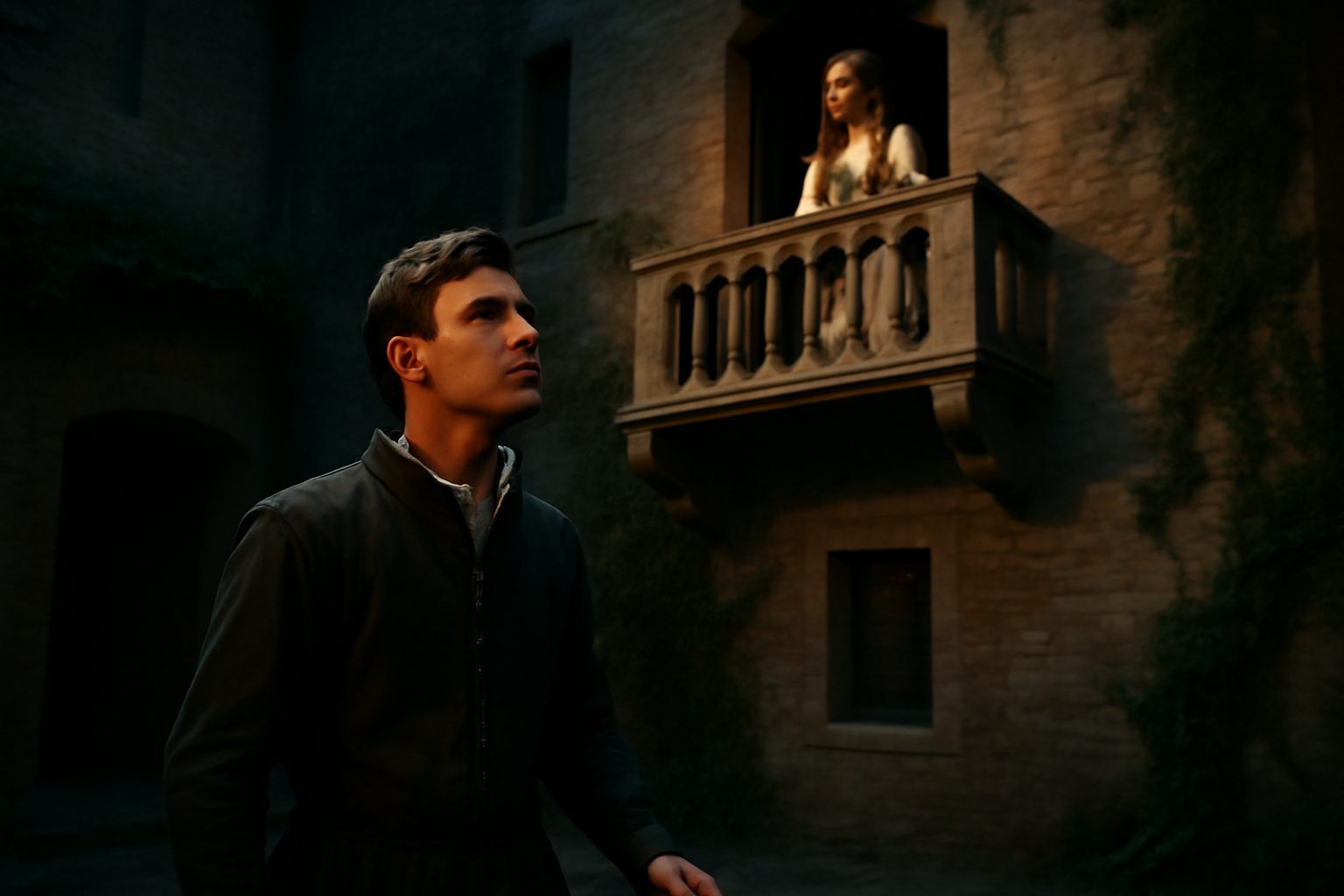
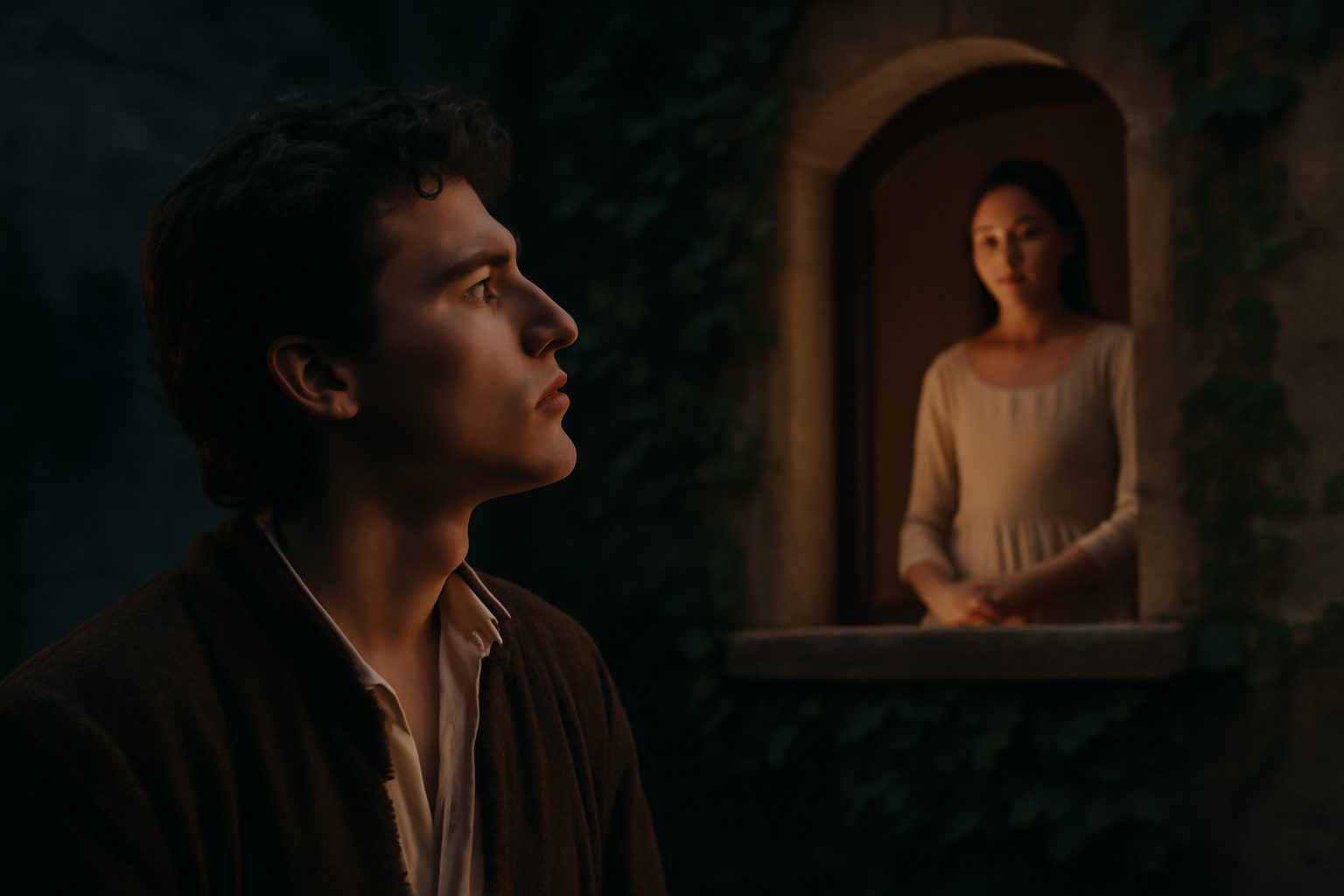
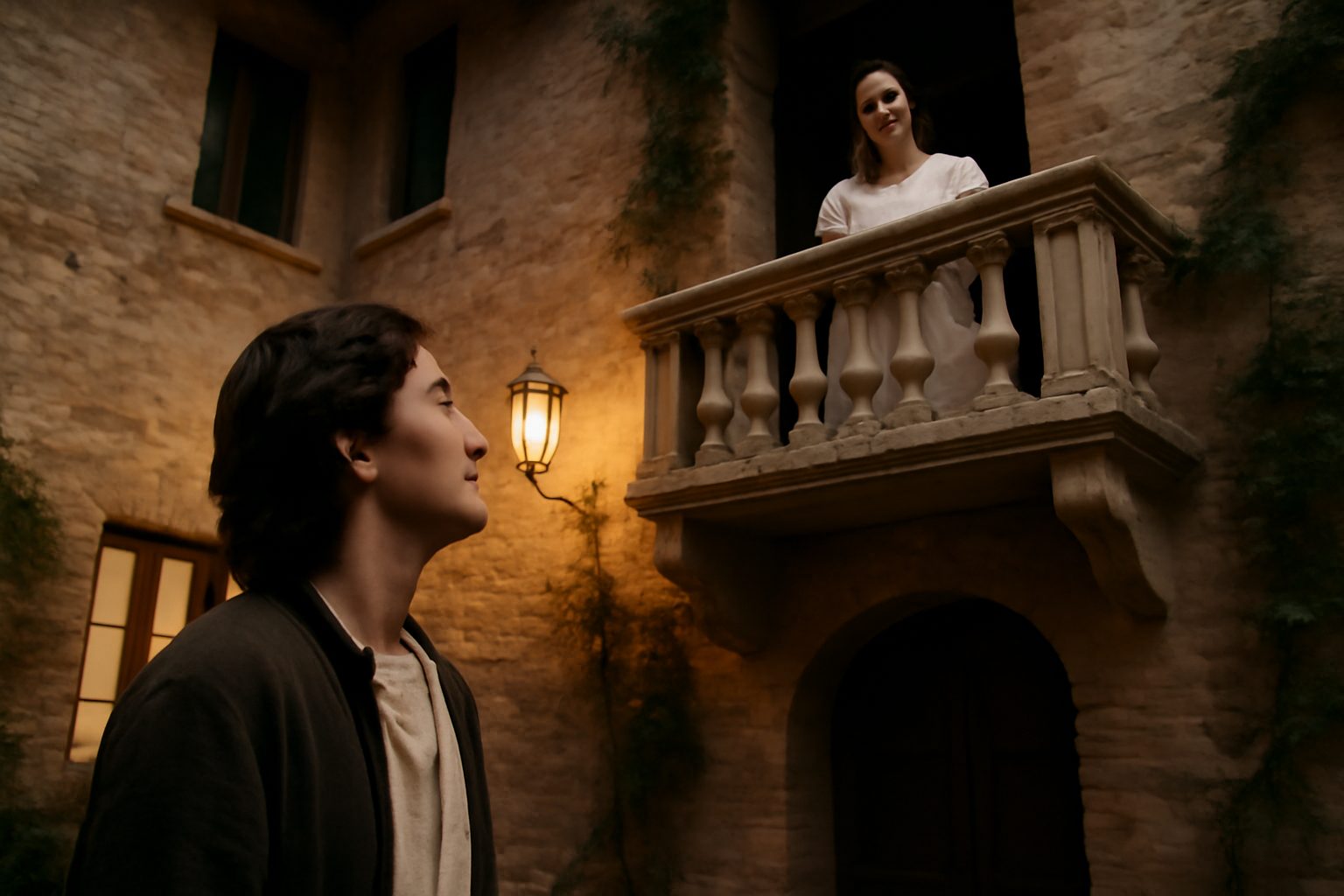
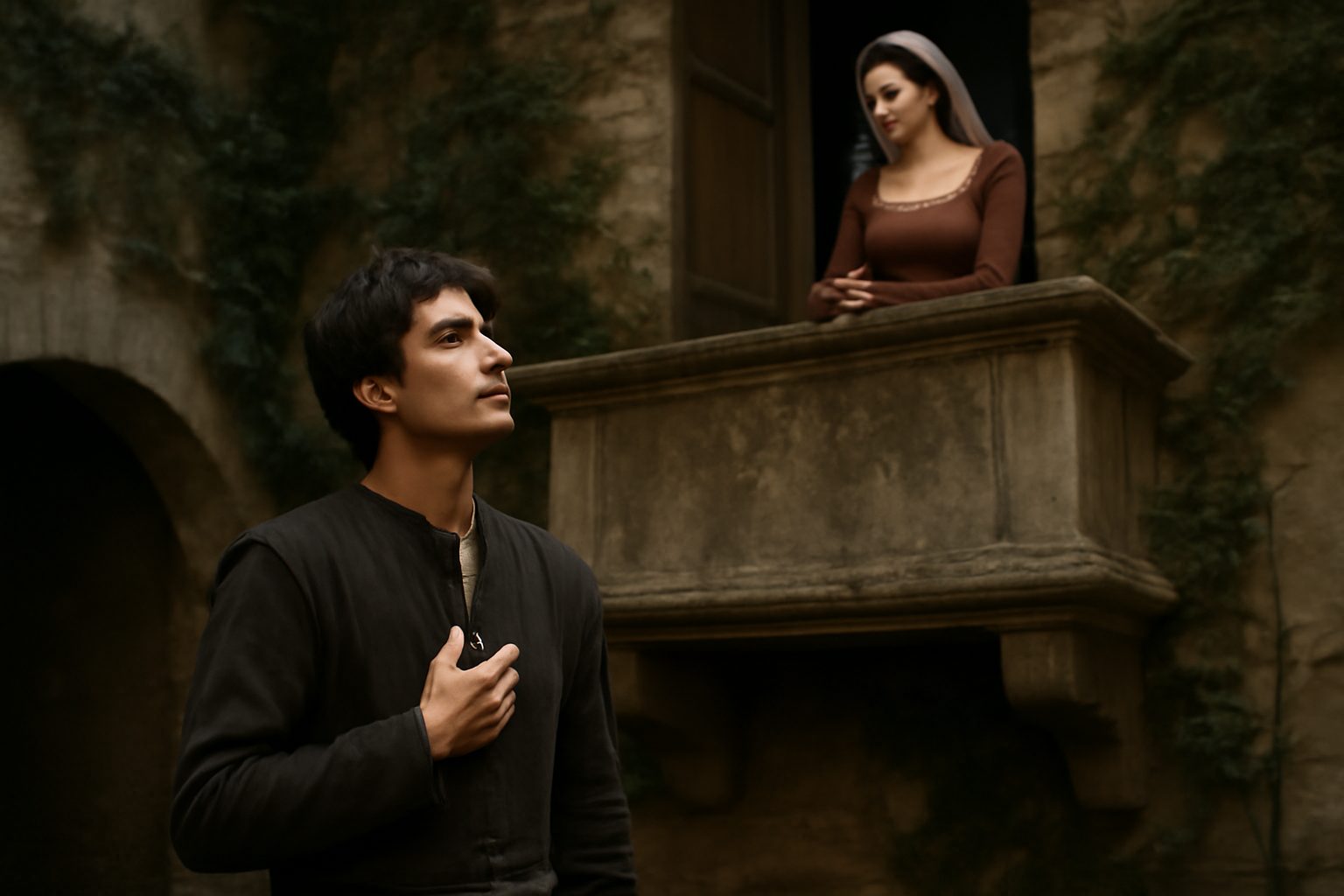
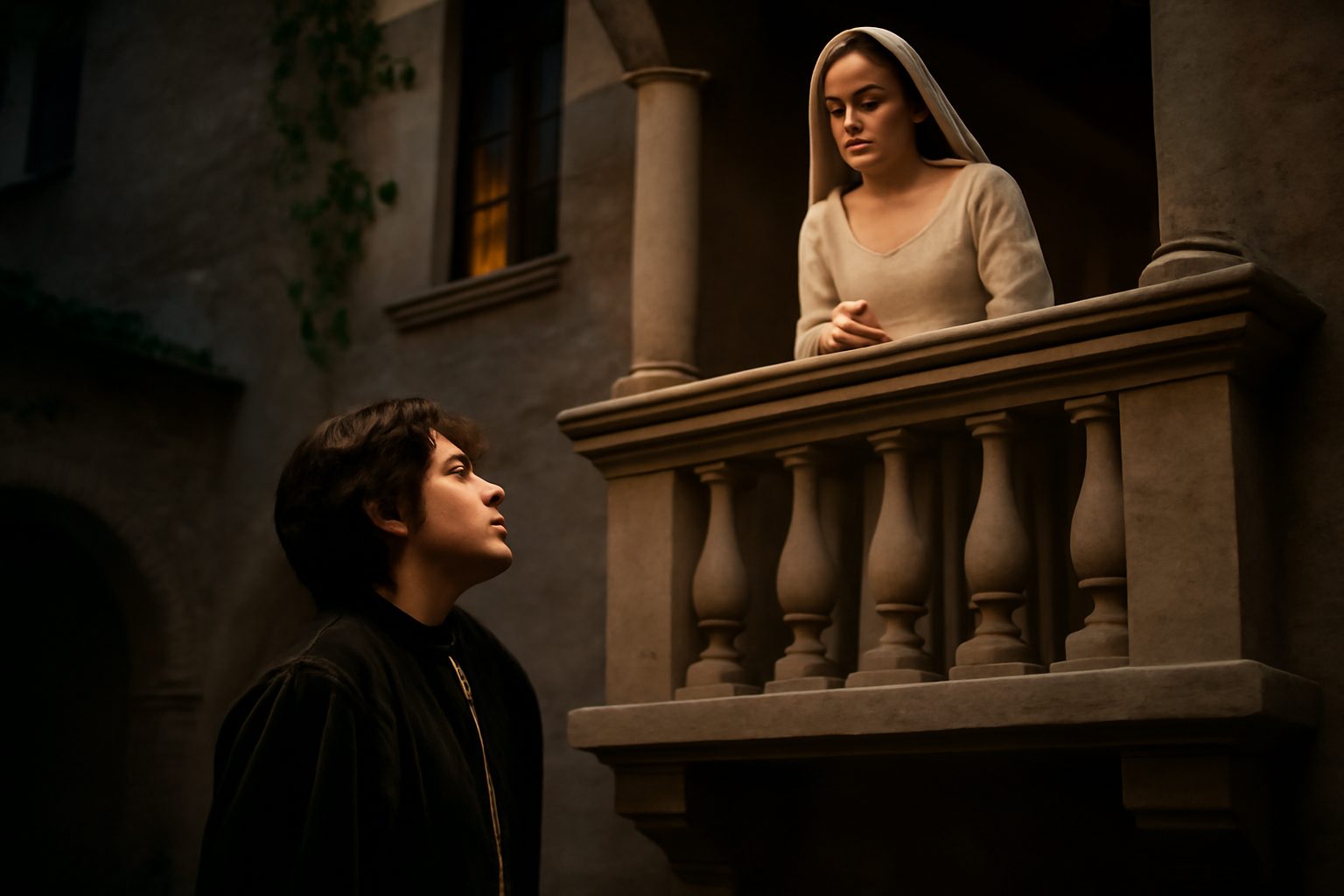
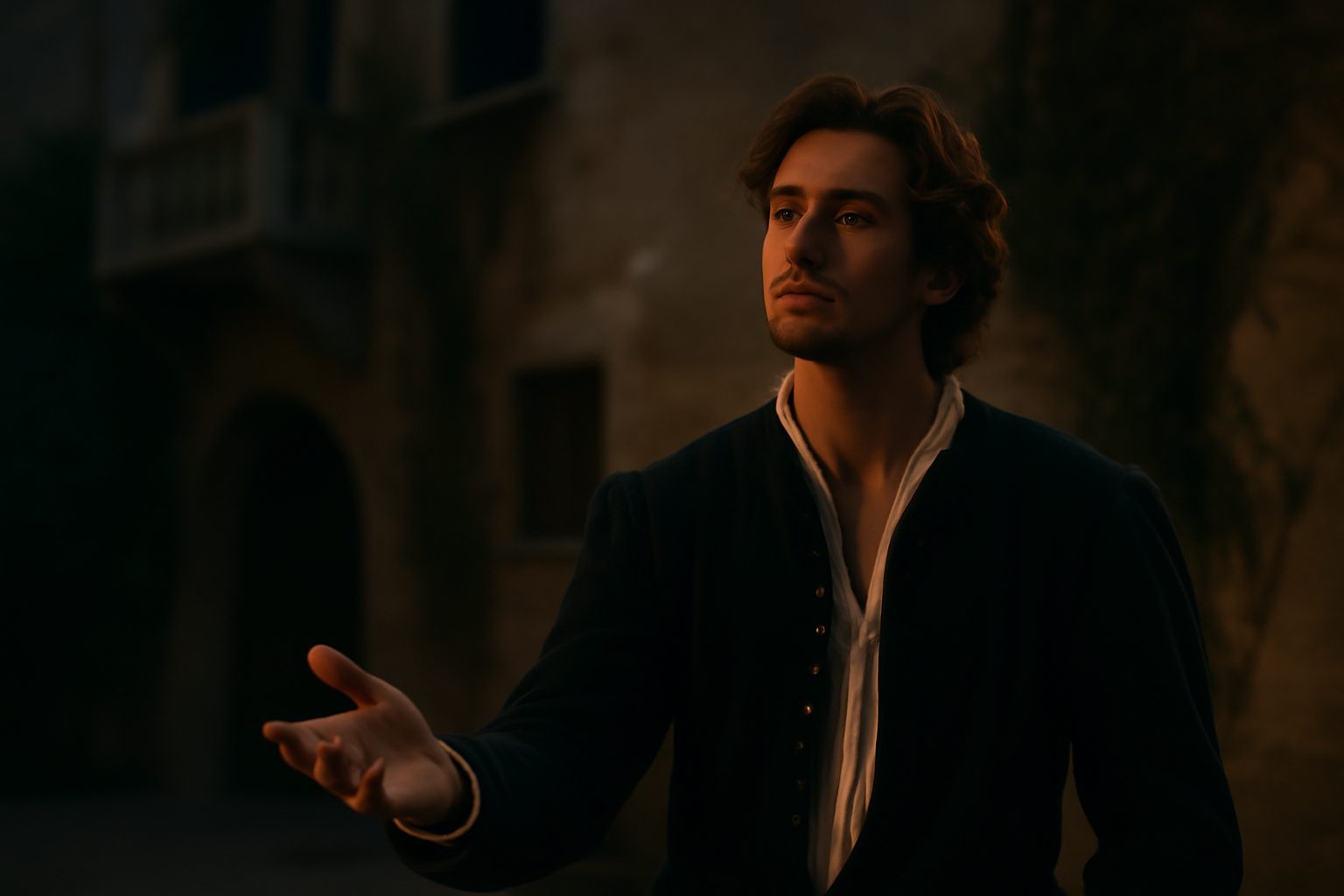
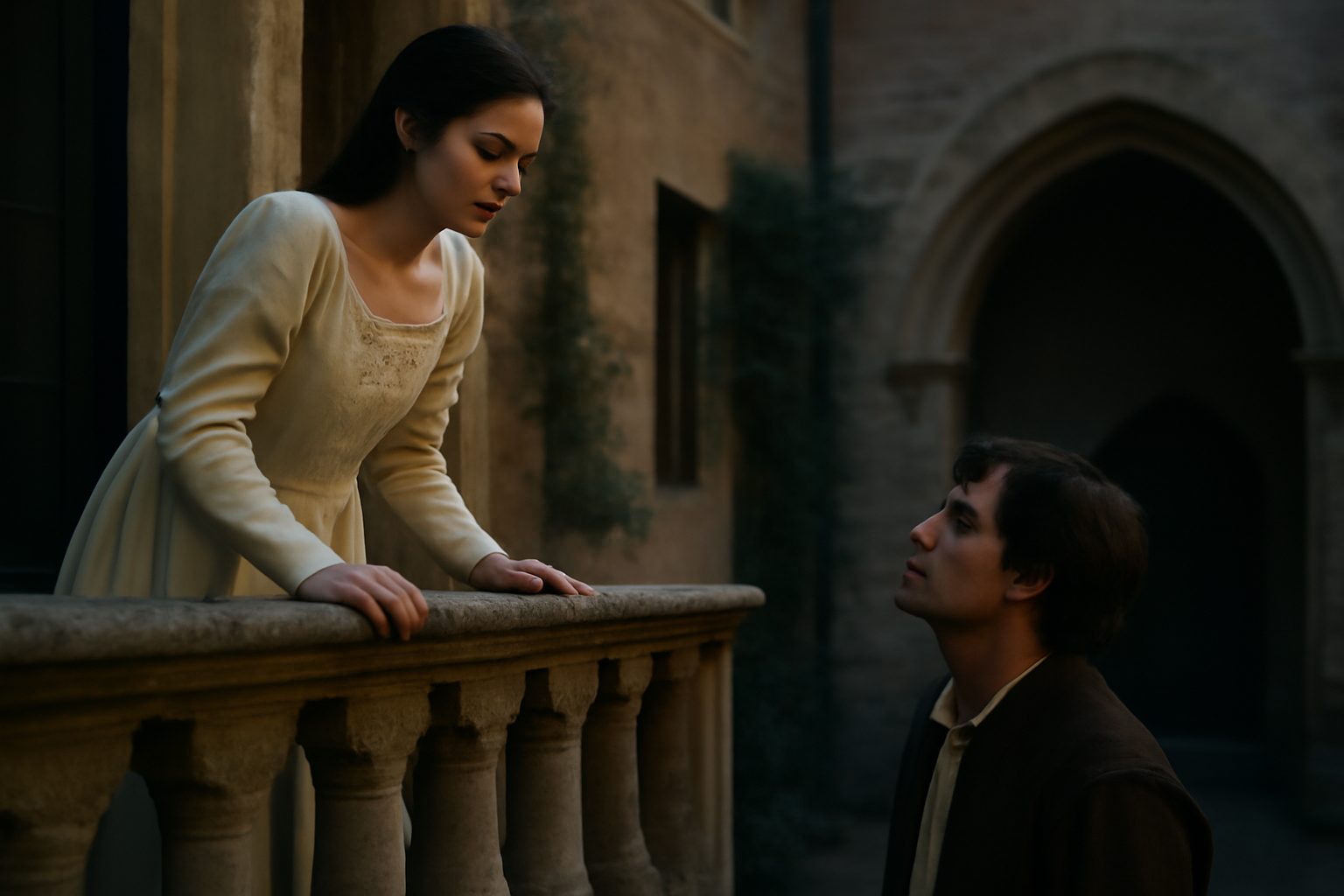
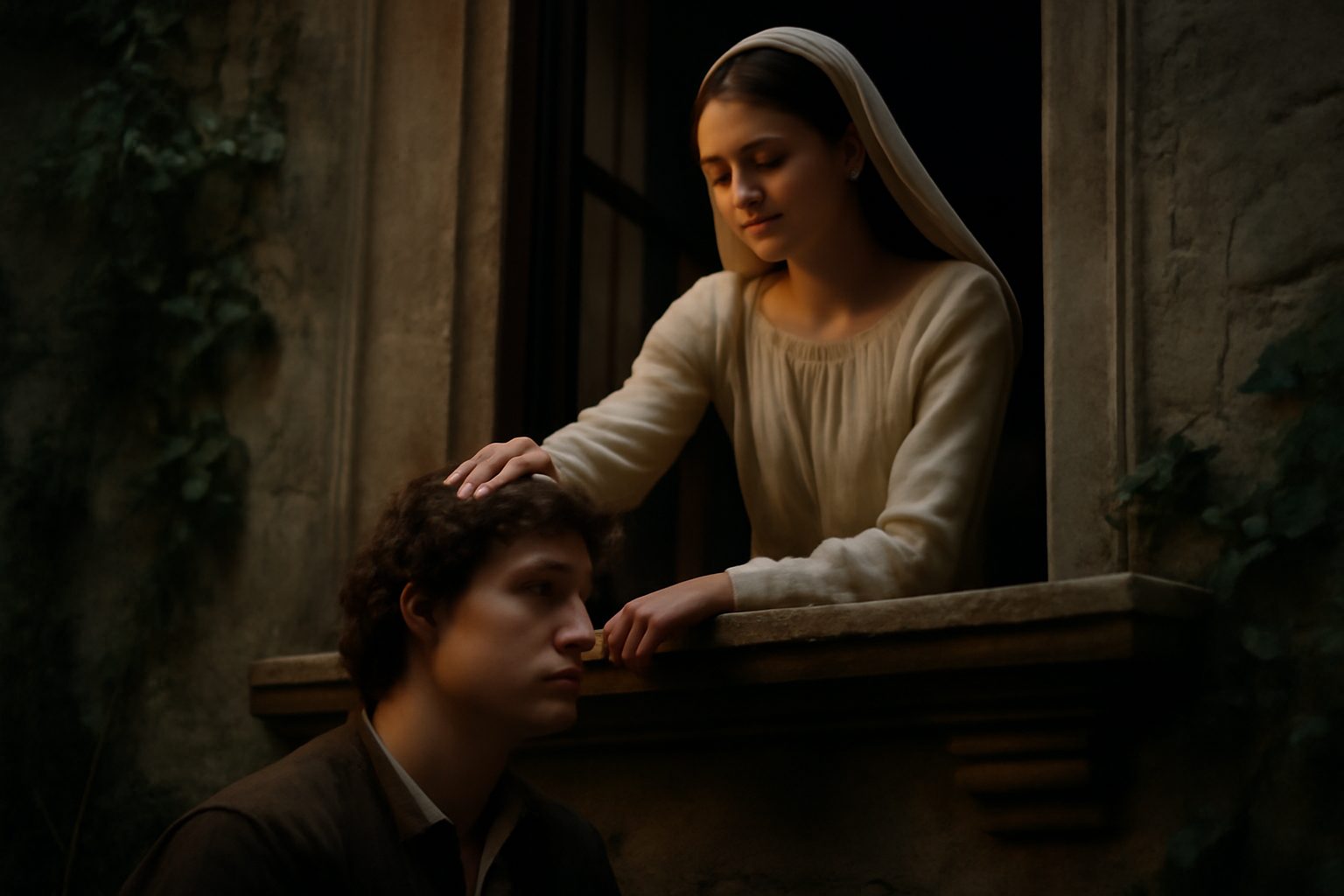
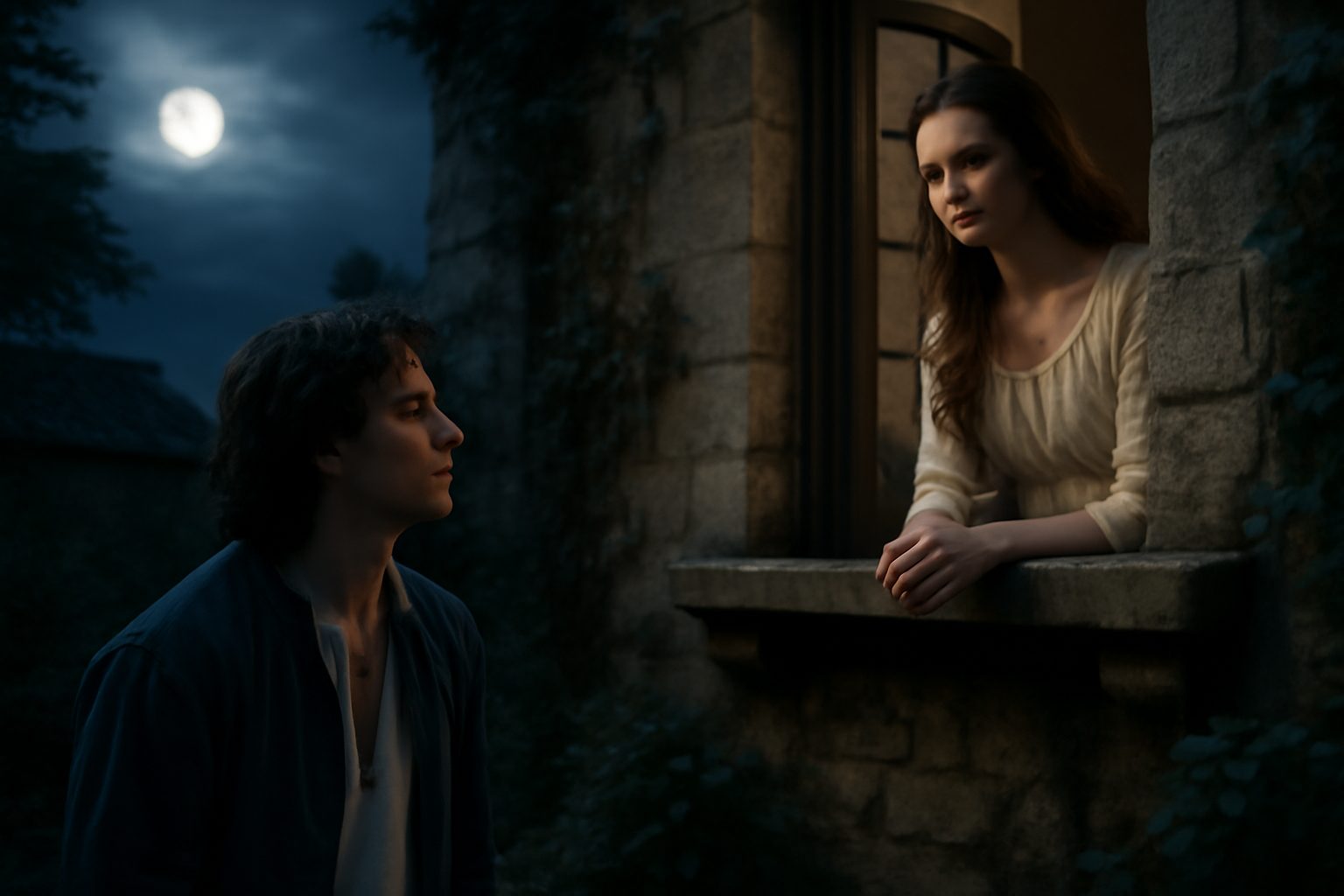
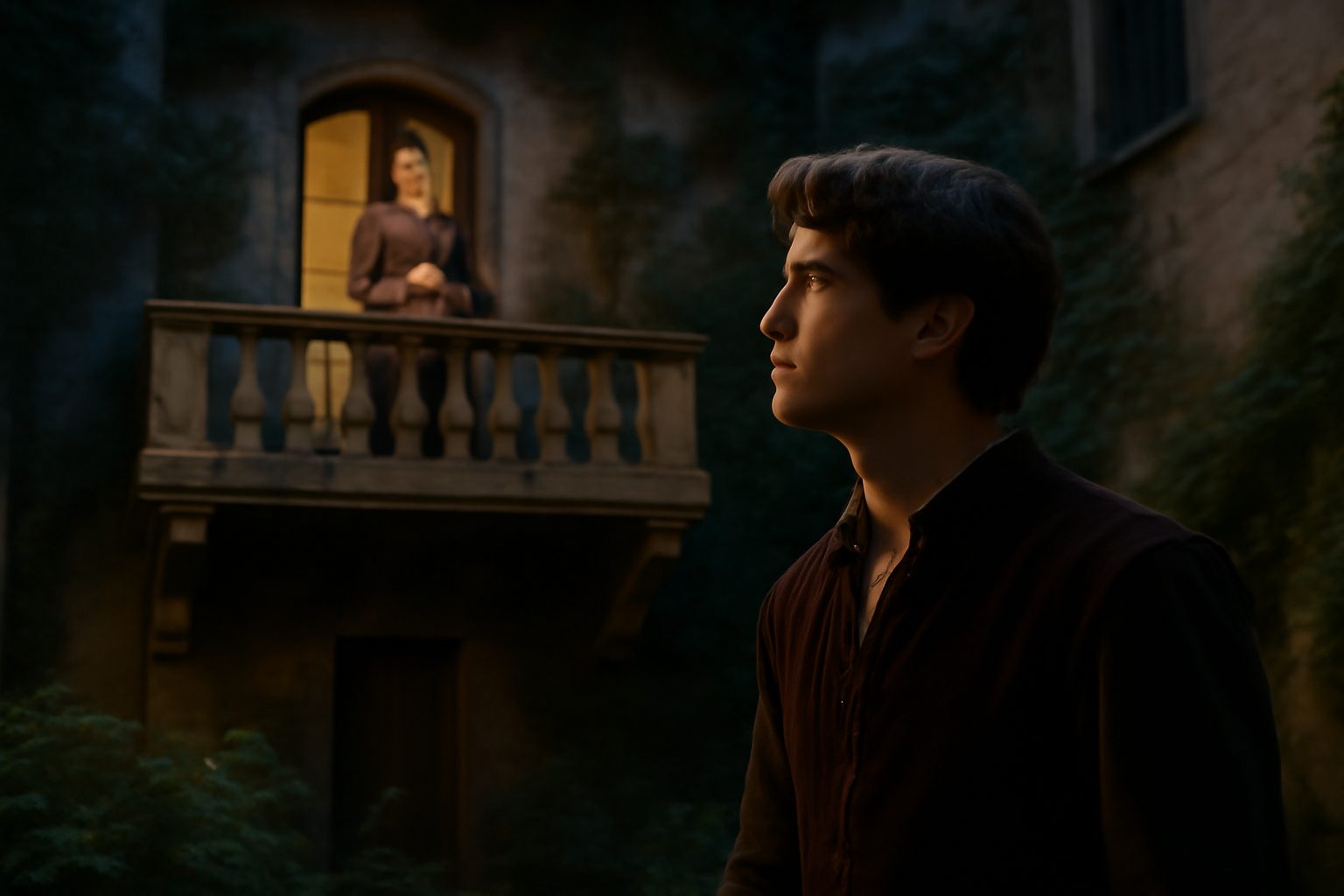
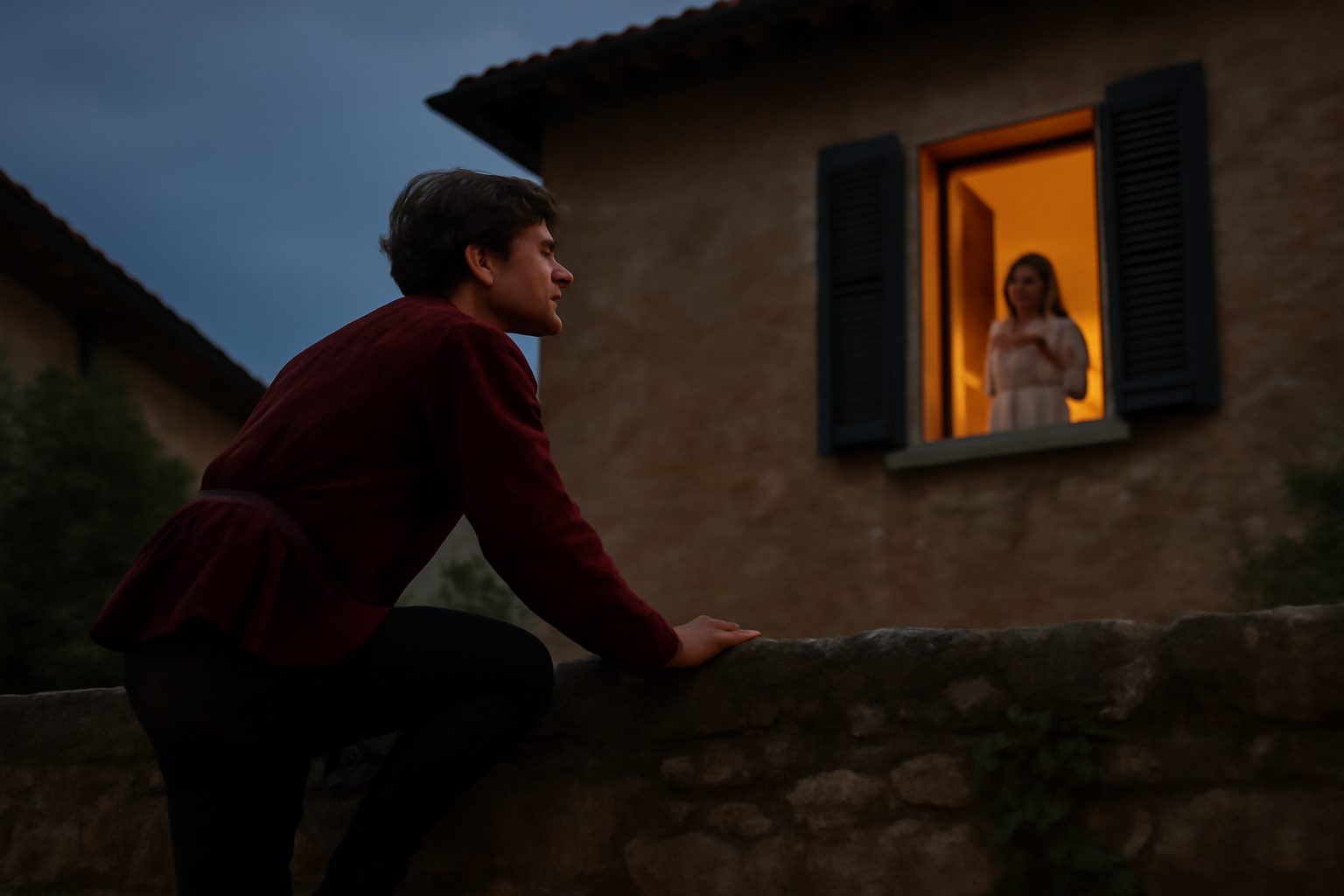
In Act 2, Scene 1 of Romeo and Juliet, Mercutio mocks Romeo's lovesick state by teasing him with playful innuendo. As Romeo lingers near Juliet's window, Mercutio jests about his unrequited passion, comparing Rosaline to fruit in a bawdy metaphor. The line reflects Mercutio's wit and his tendency to puncture Romeo's romantic idealism with crude humor.
Mercutio: "And wish his mistress were that kind of fruit"
In modern day english, we would say:
He wishes his lover were like that fruit.
Frequently Asked Questions
What is Mercutio joking about when he mentions a kind of fruit?
Mercutio is making a playful joke about Romeo's love interest, comparing her to a fruit to tease Romeo about his romantic feelings.
Connections to other verses:
Connections to "And wish his mistress were that kind of fruit"
The line "And wish his mistress were that kind of fruit" is part of Mercutio's bawdy wordplay, connecting to several other verses in the scene through themes of love, desire, and sexual innuendo.
Connection to Medlar Tree Imagery
This verse directly follows "Now will he sit under a medlar tree", establishing the context of Romeo sitting beneath this particular tree. The medlar fruit was known for its sexual connotations in Elizabethan England, as it was eaten when overripe or "bletted," which Mercutio humorously suggests resembles a woman's sexual availability.
Connection to Maids and Medlars
The thought continues in "As maids call medlars, when they laugh alone", which completes the sexual joke. Mercutio implies that maids (unmarried women) jokingly refer to medlars in private, acknowledging the fruit's risqué symbolism while maintaining public propriety.
Connection to Romeo's Desire
This leads to "Romeo, that she were, O, that she were", where Mercutio mockingly wishes that Romeo's mistress were like the medlar fruit - readily available and sexually experienced. This continues the pattern of Mercutio projecting his own earthy sexuality onto Romeo's more romantic pursuits.
Connection to Popering Pear Reference
The sexual innuendo culminates in "An open et caetera, thou a poperin pear!" where Mercutio makes an even more explicit comparison. The "popering pear" was phallic in shape, continuing the pattern of fruit-based sexual metaphors that begins with the medlar reference.
Connection to Blind Love Theme
This bawdy wordplay contrasts with the more philosophical treatment of love in "Blind is his love and best befits the dark" and "If love be blind, love cannot hit the mark". Where Benvolio and Mercutio discuss love's blindness metaphorically, the fruit metaphors represent Mercutio's physical, sensual interpretation of love.
Connection to Conjuring Themes
The entire sequence relates to Mercutio's earlier attempts to "raise a spirit in his mistress' circle" through conjuration. The fruit metaphors serve as Mercutio's alternative method of "conjuring" - using sexual imagery rather than magical invocations to provoke a response from Romeo.