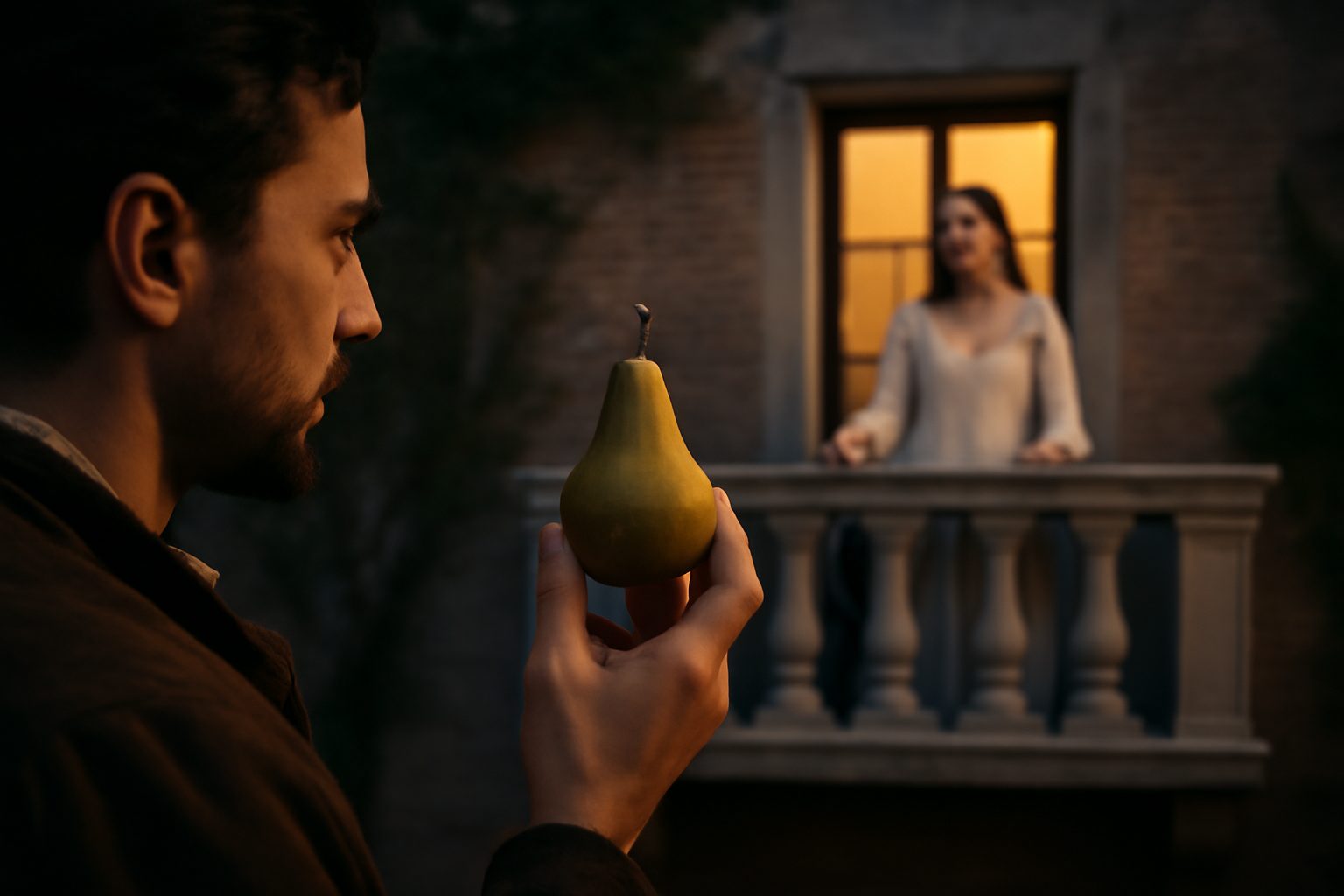
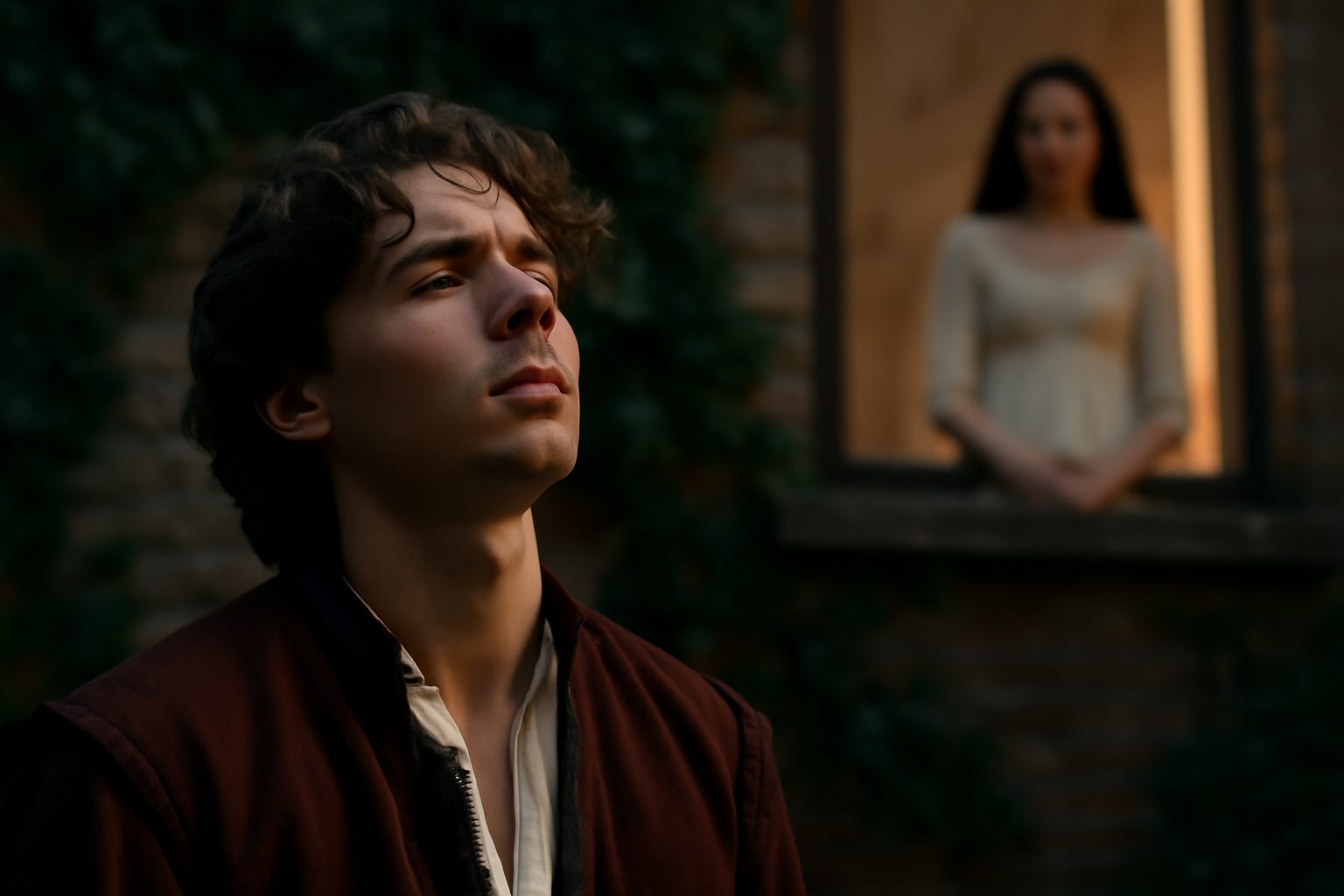
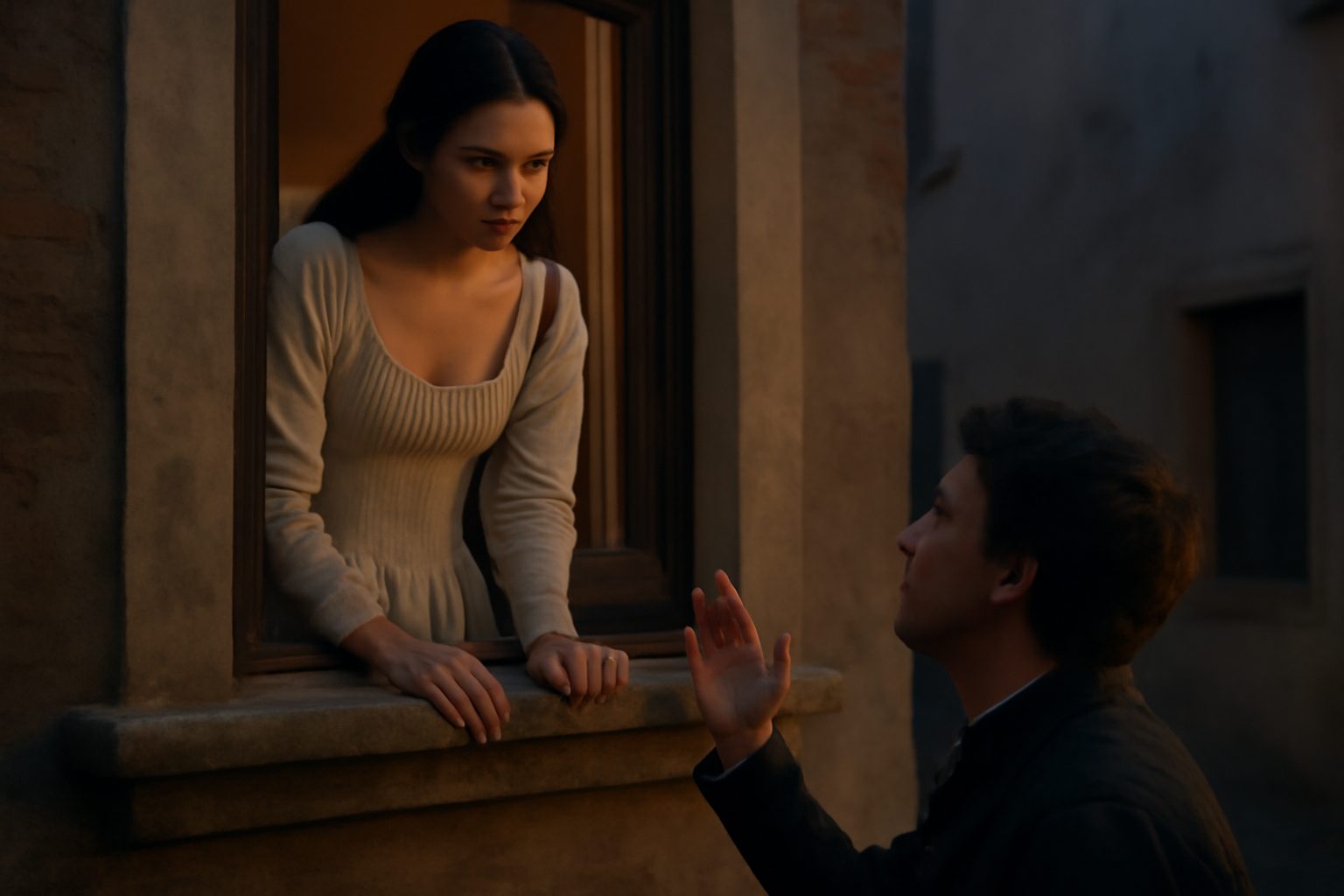
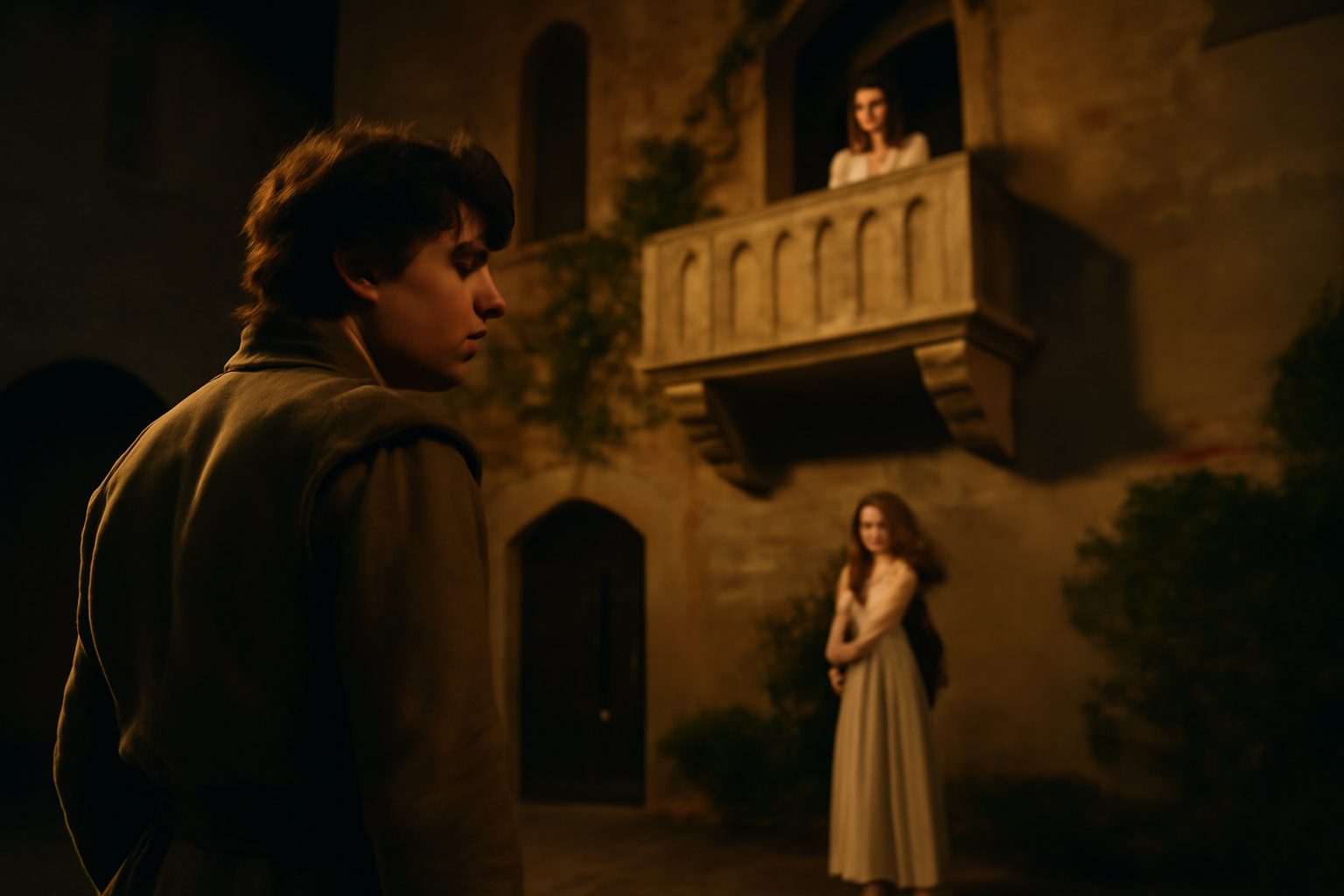
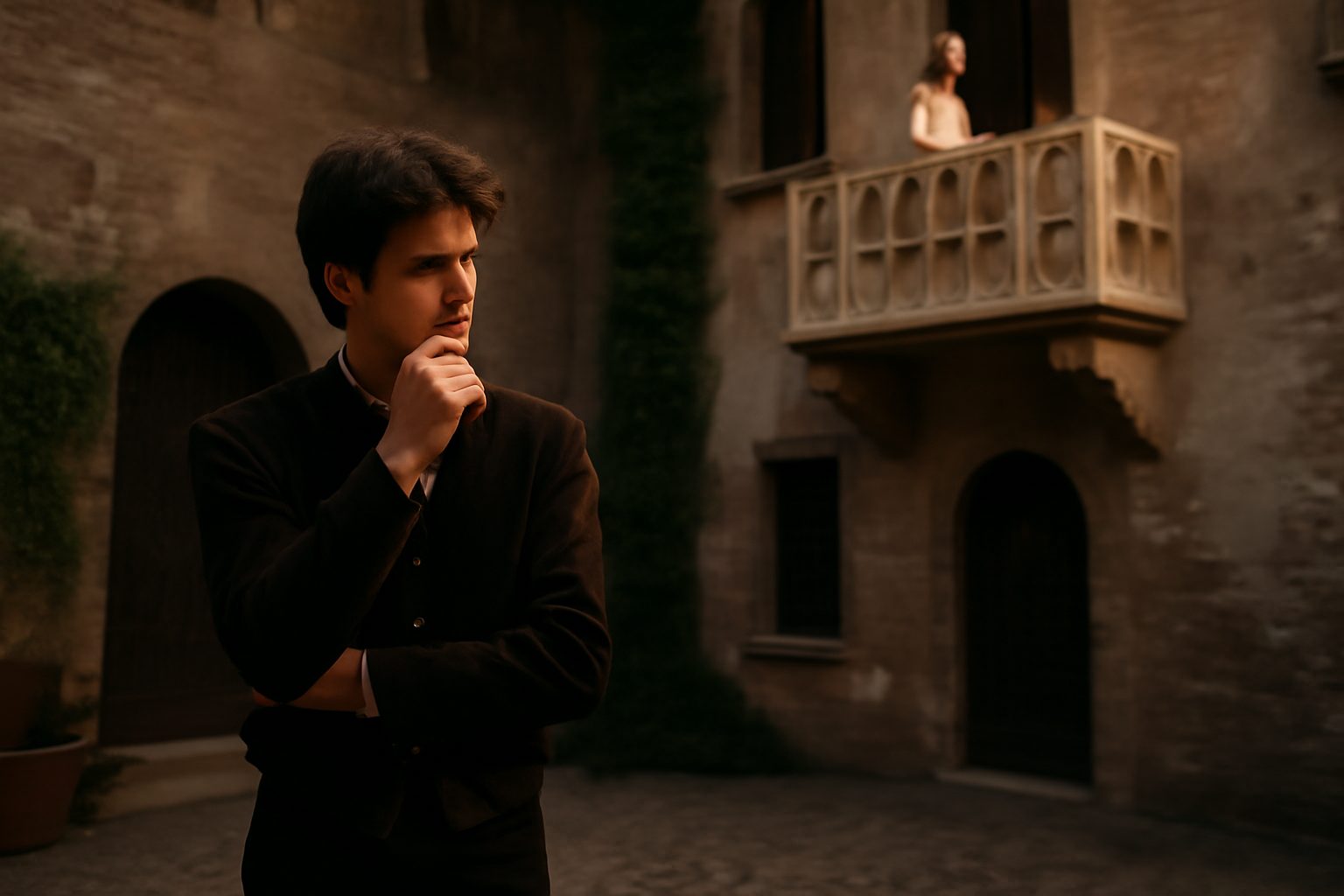
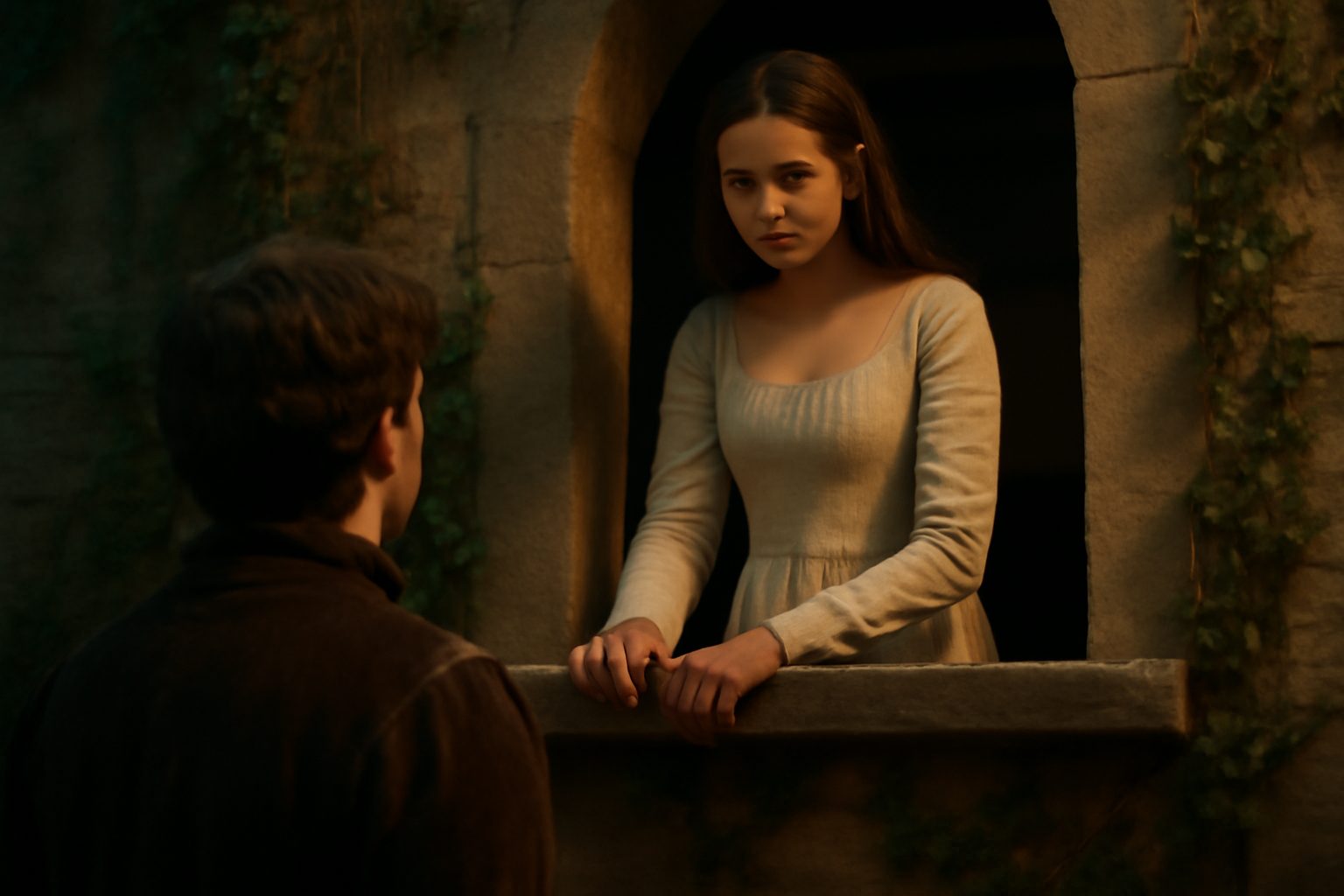
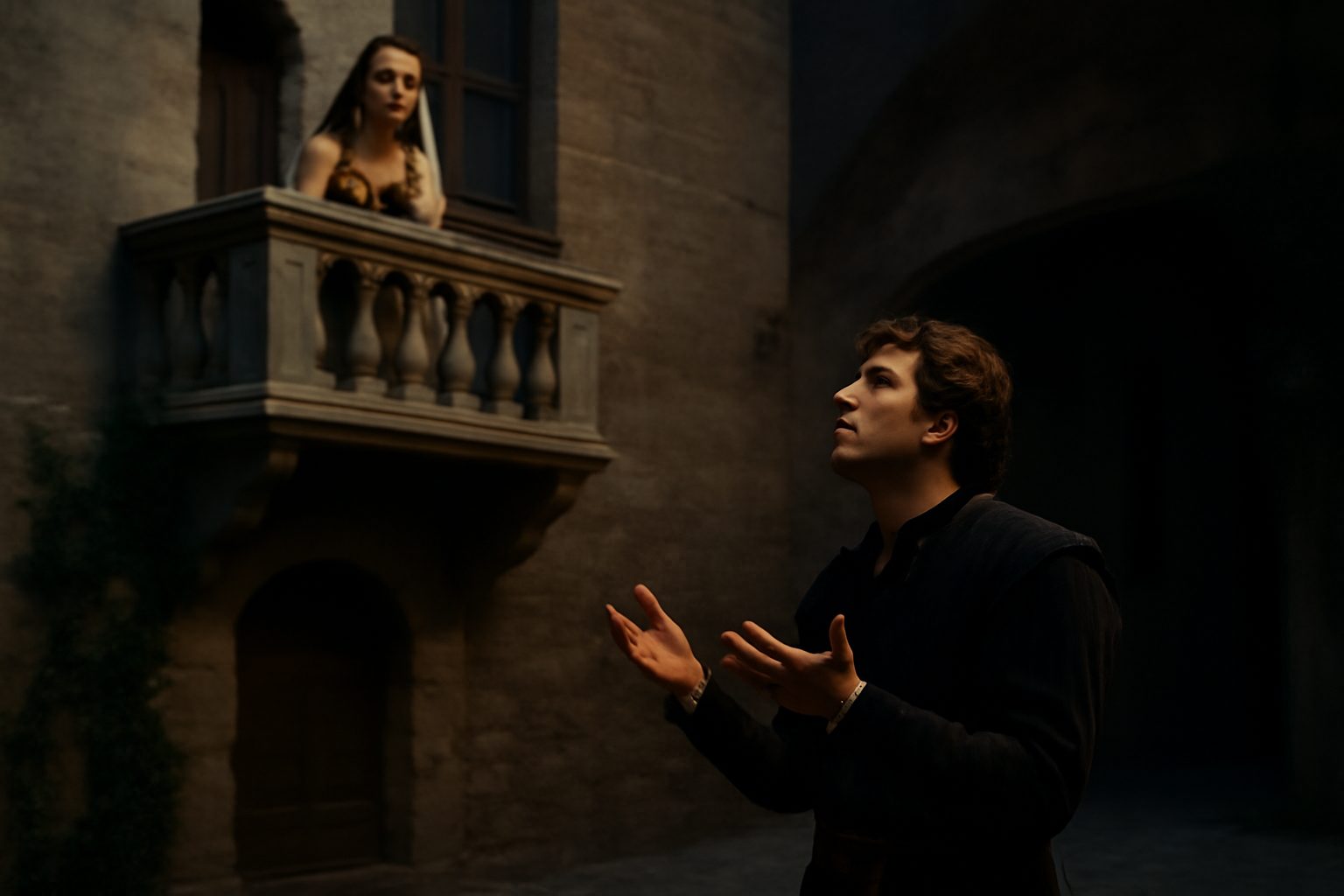
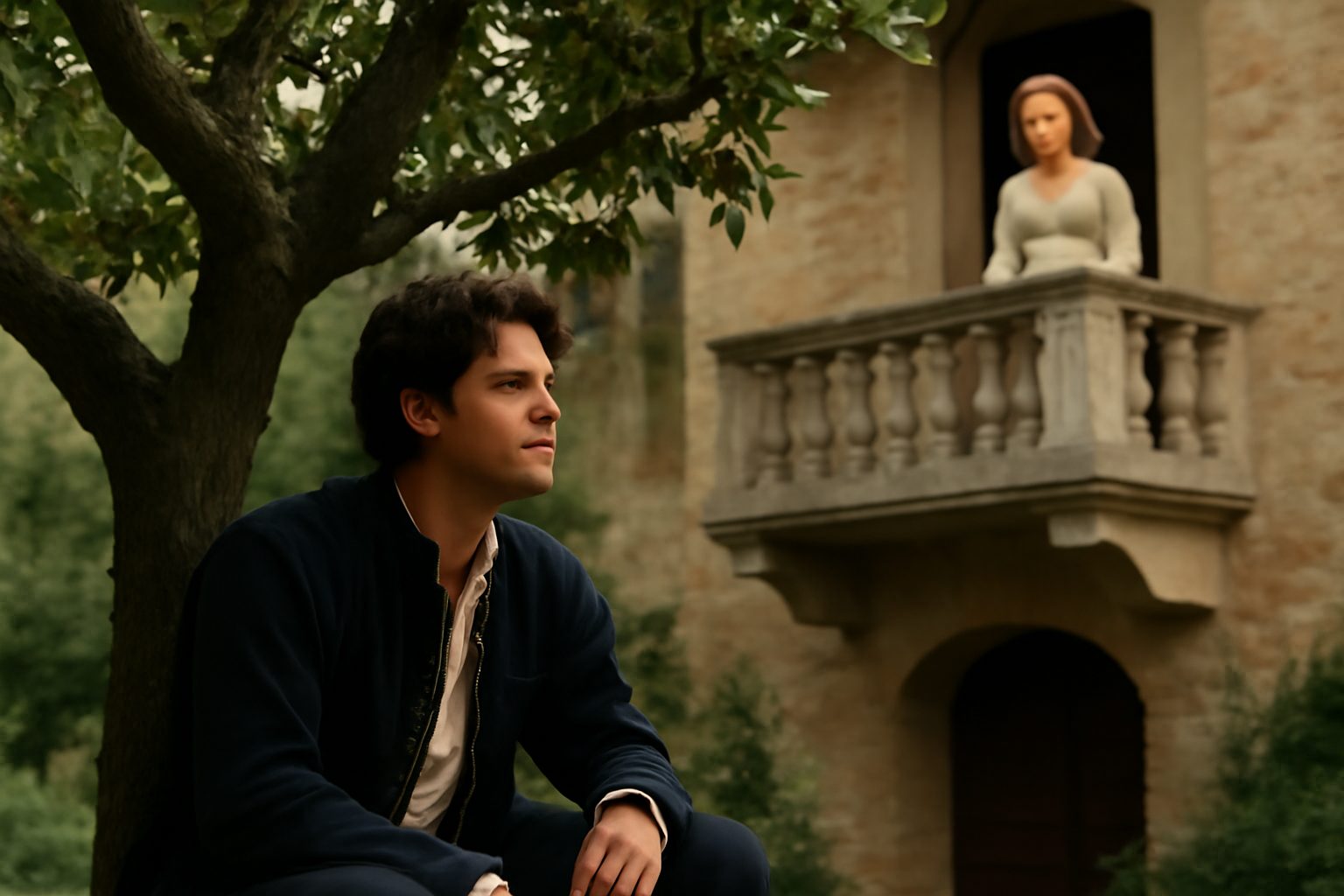
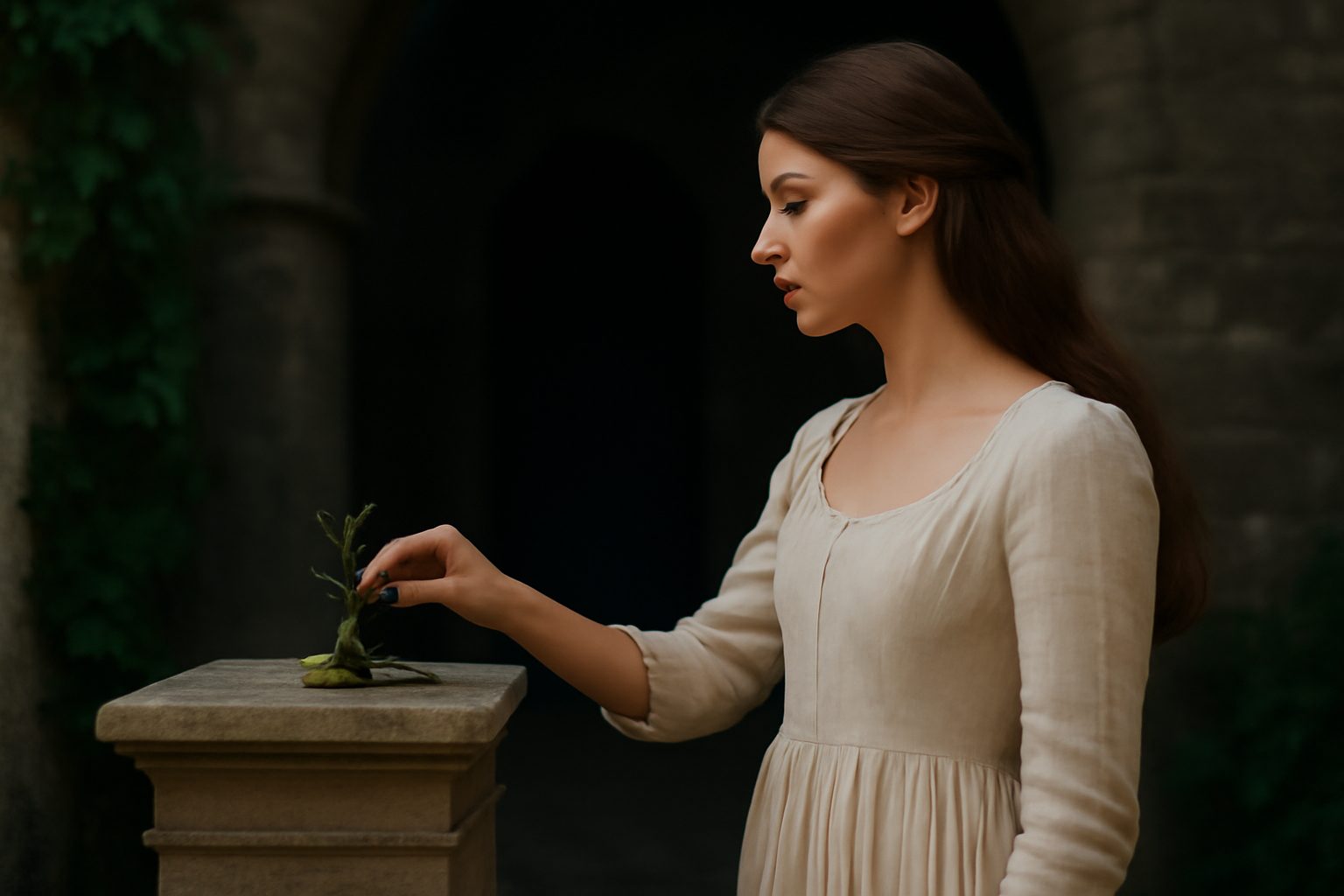
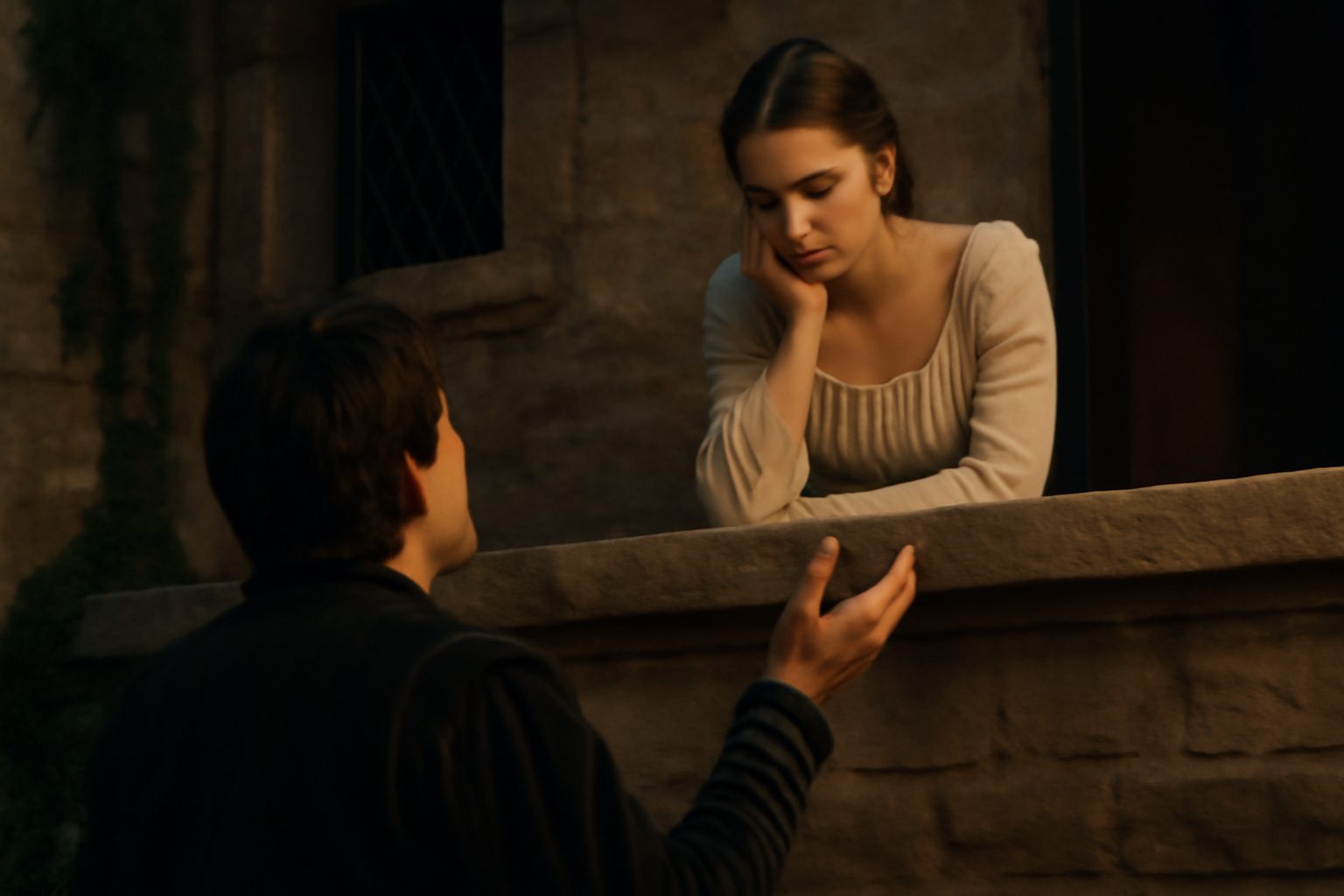
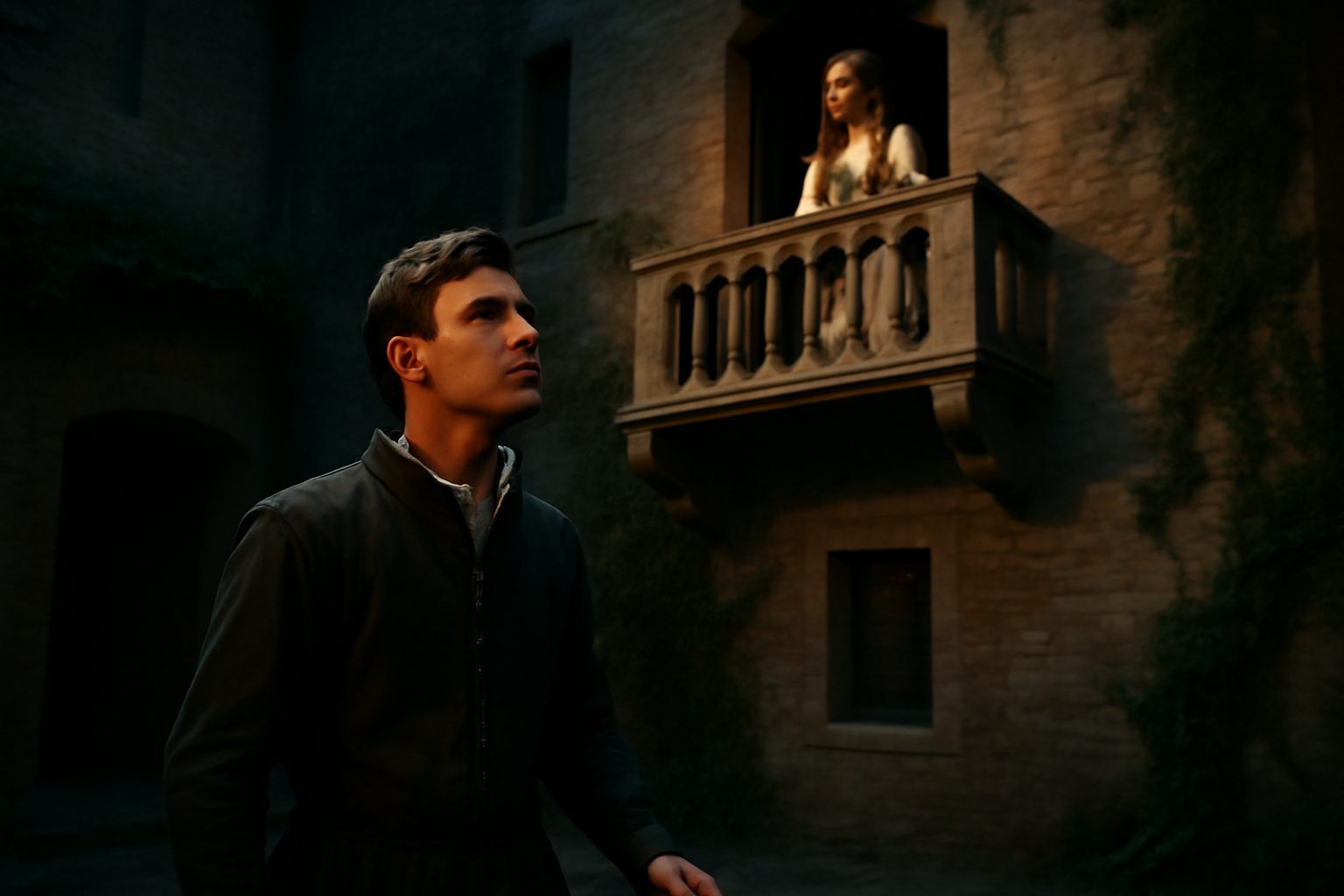
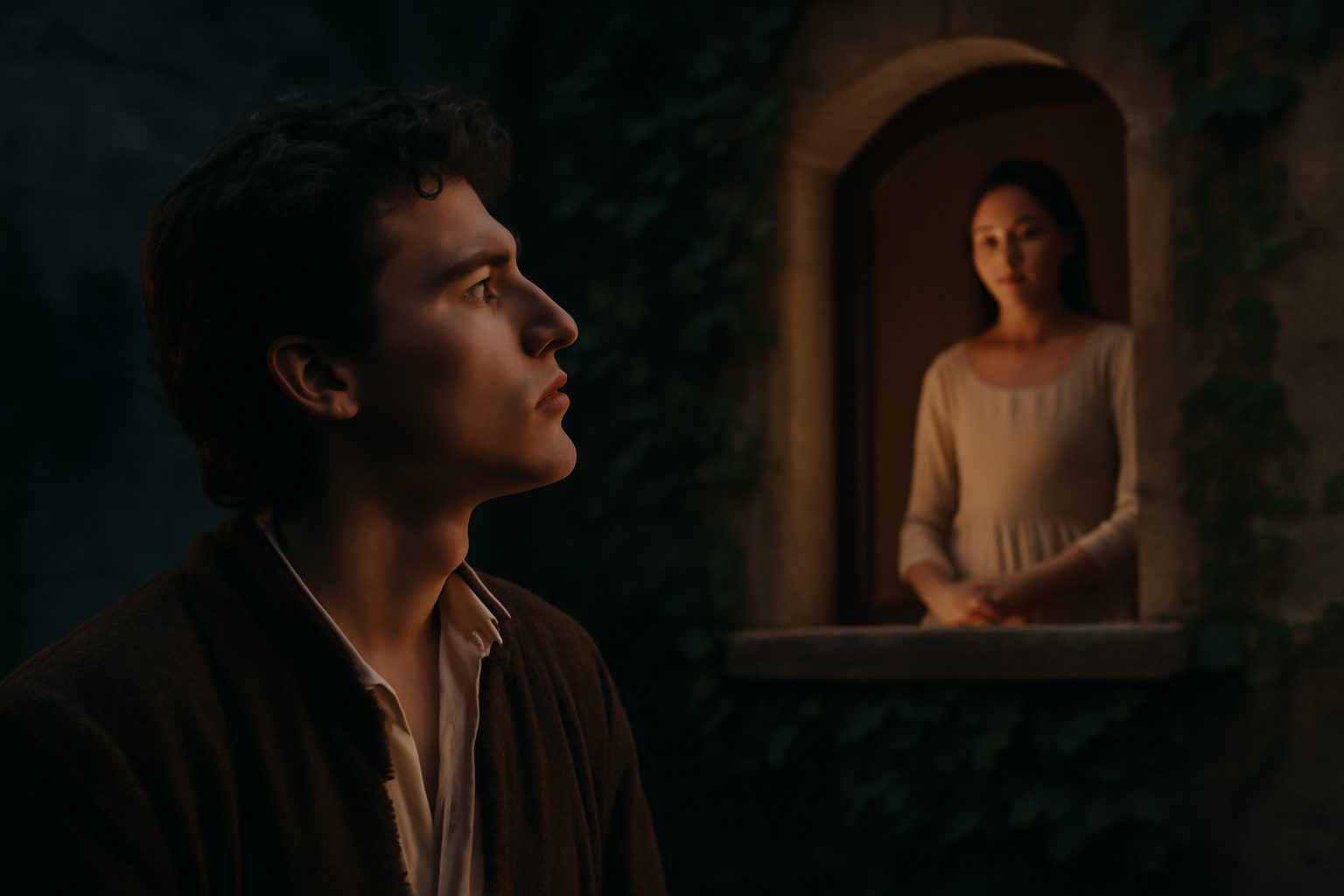
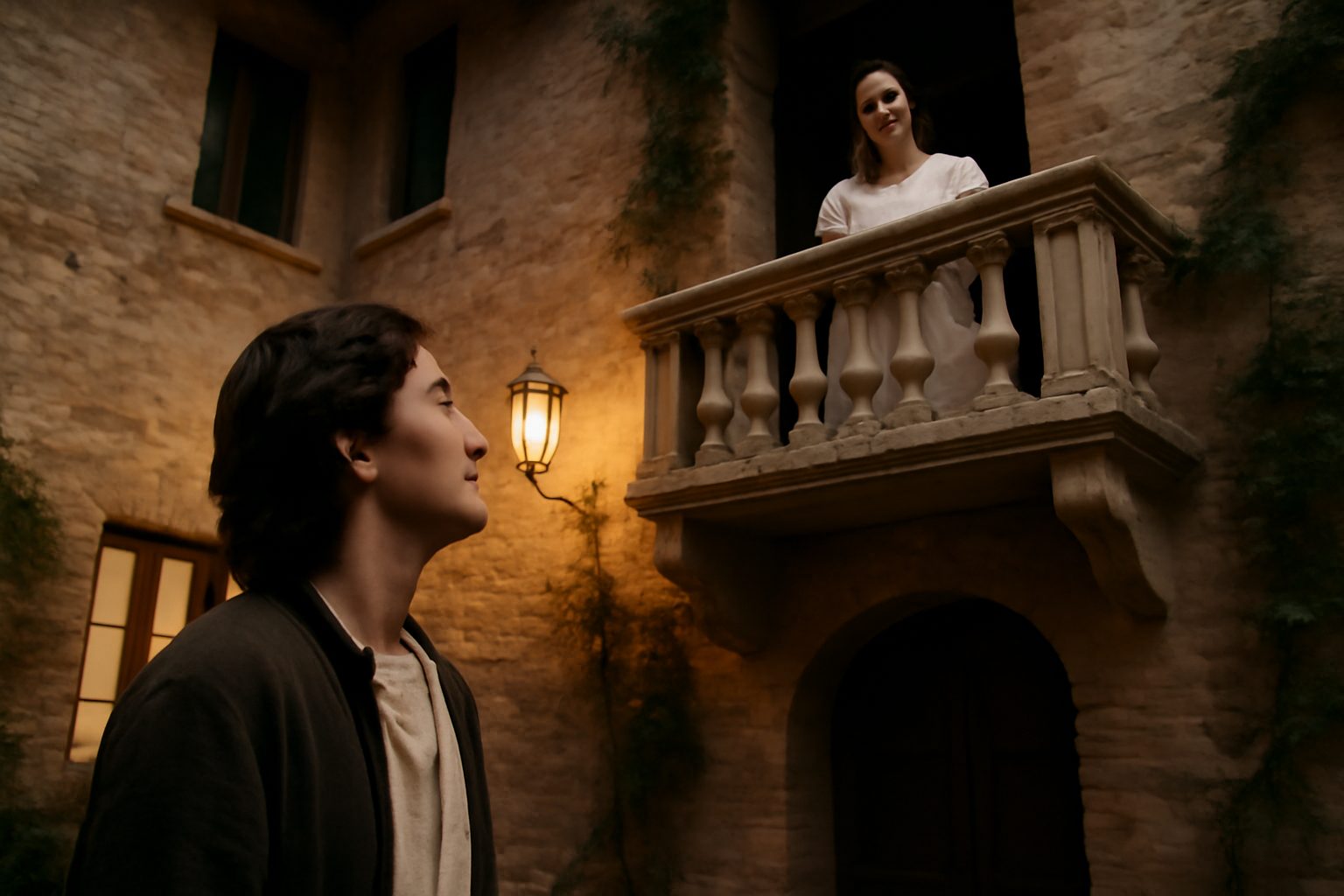
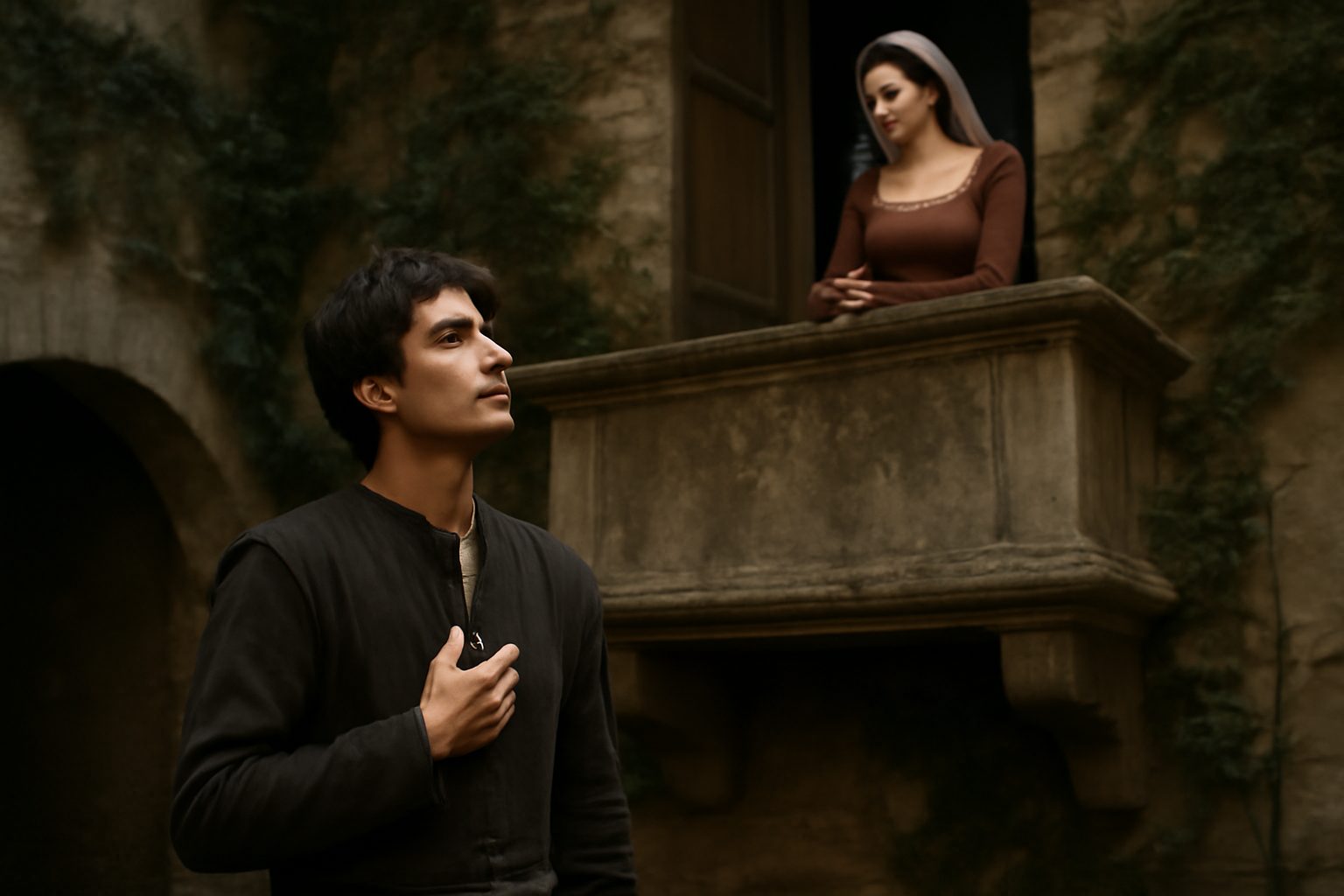
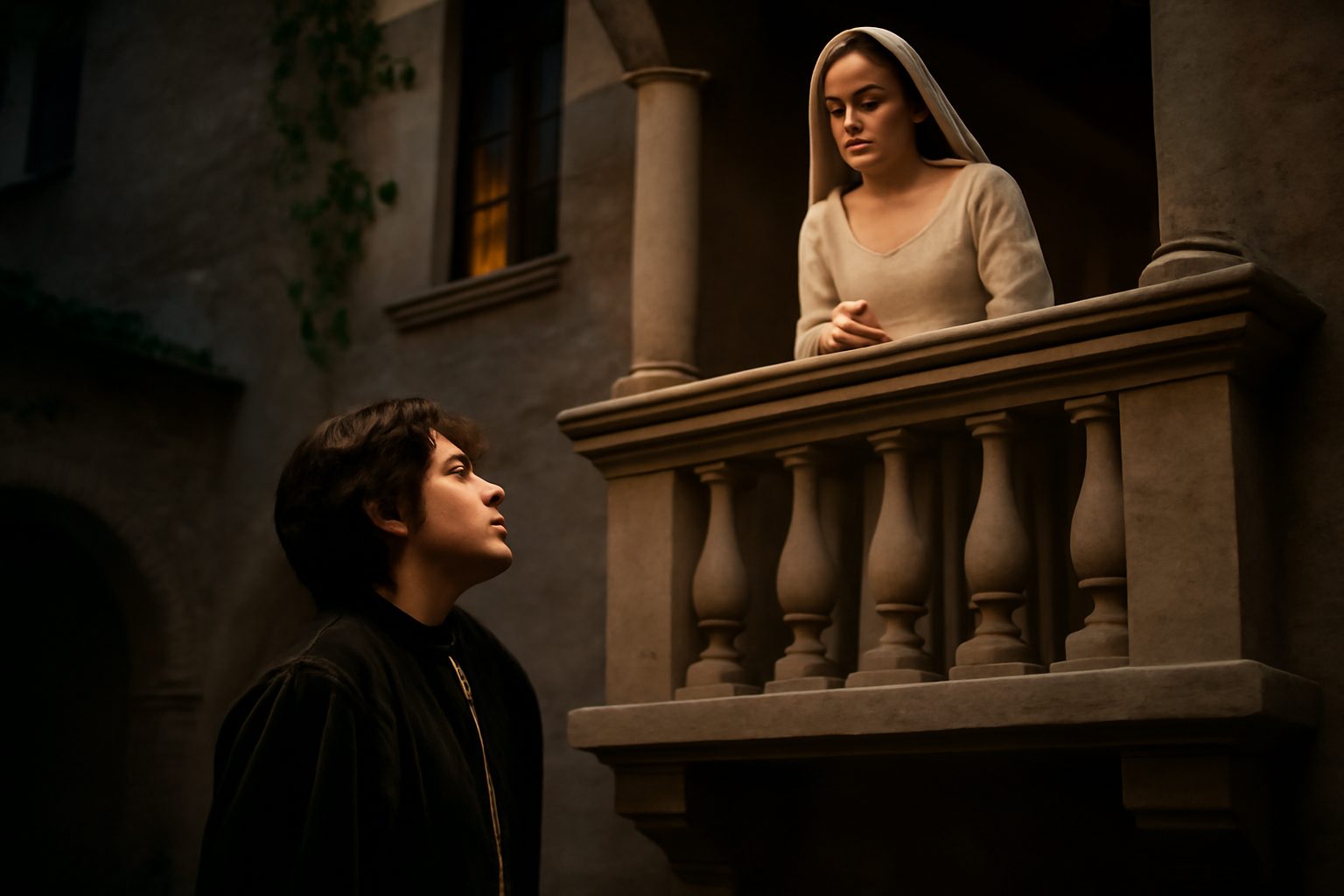
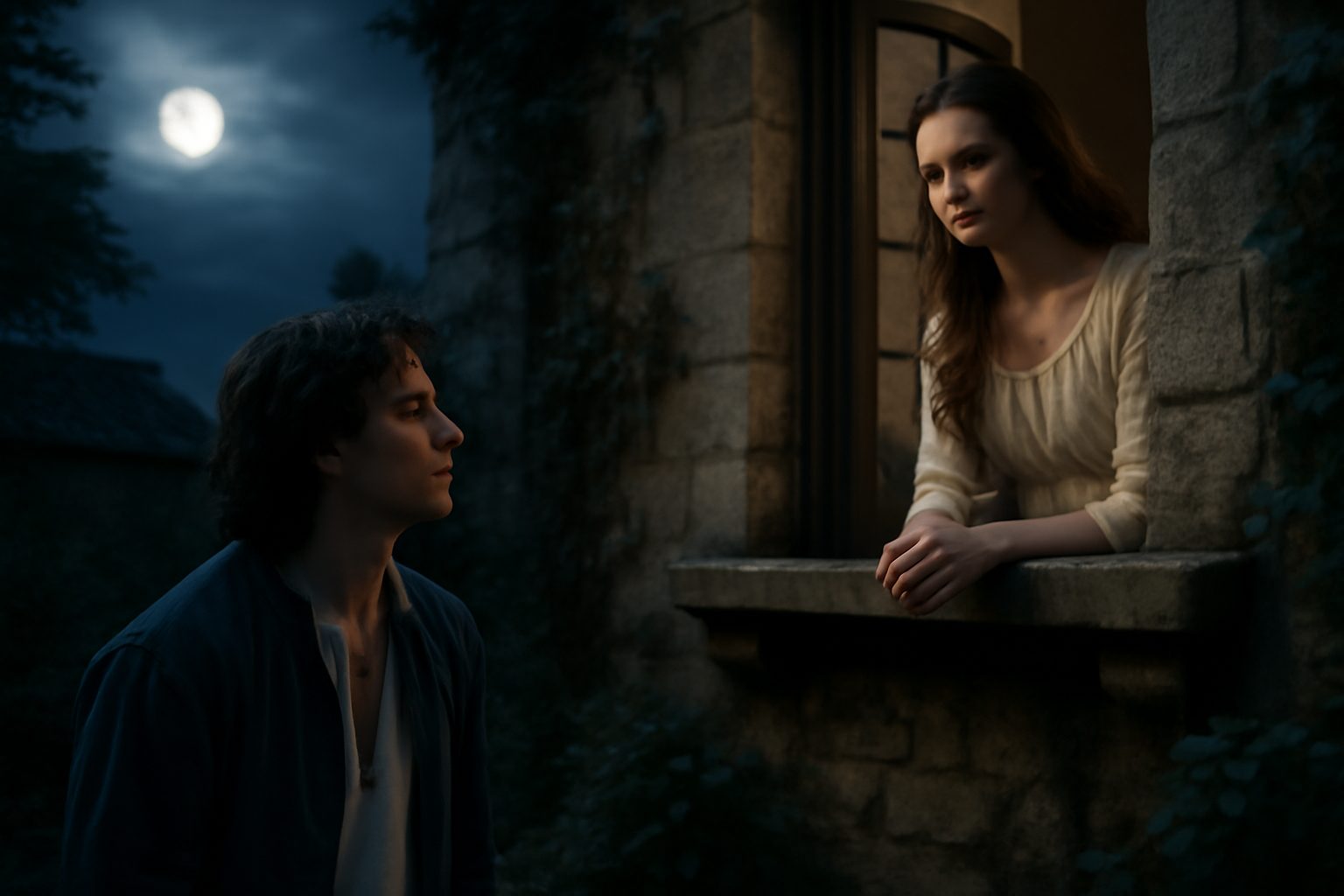
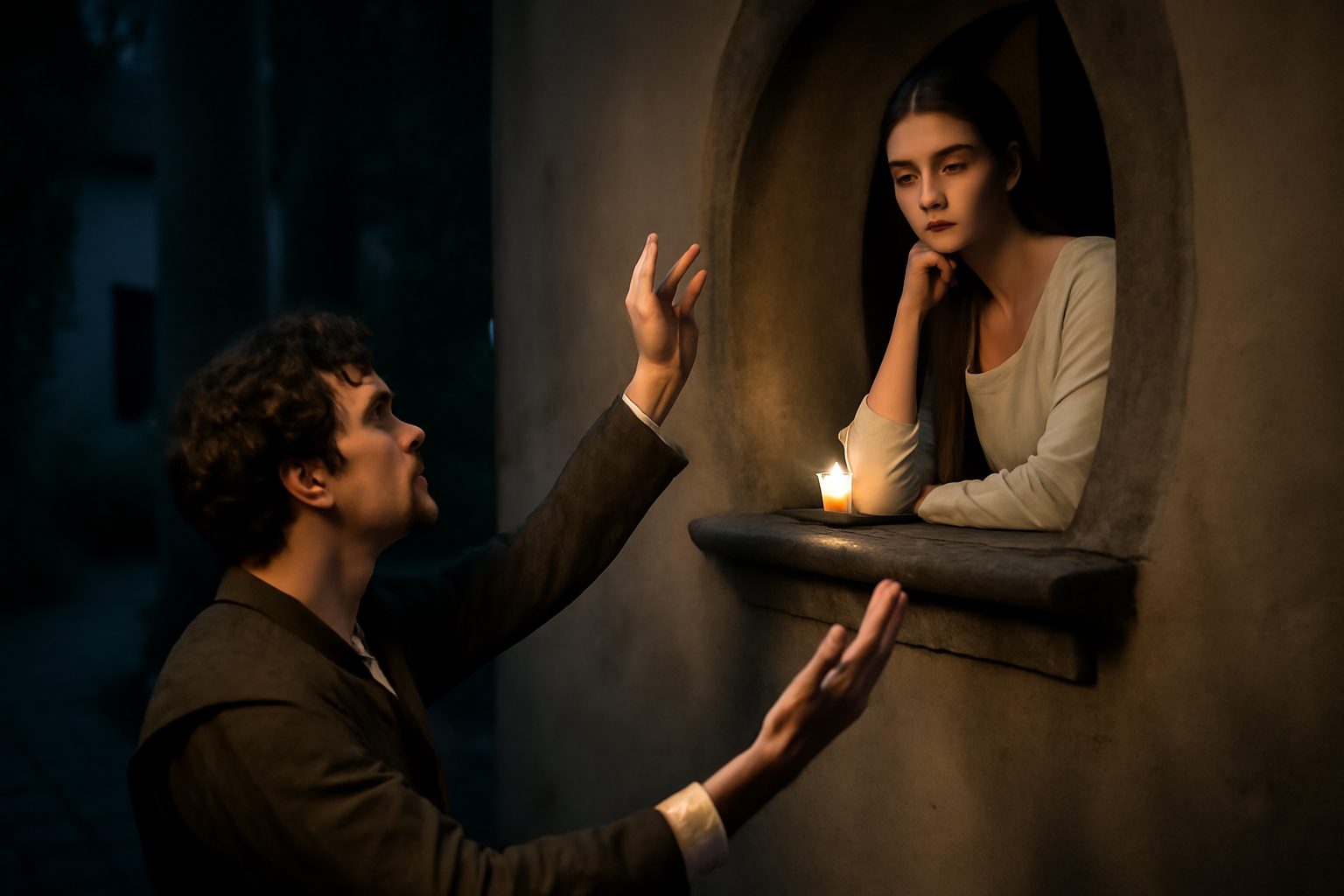
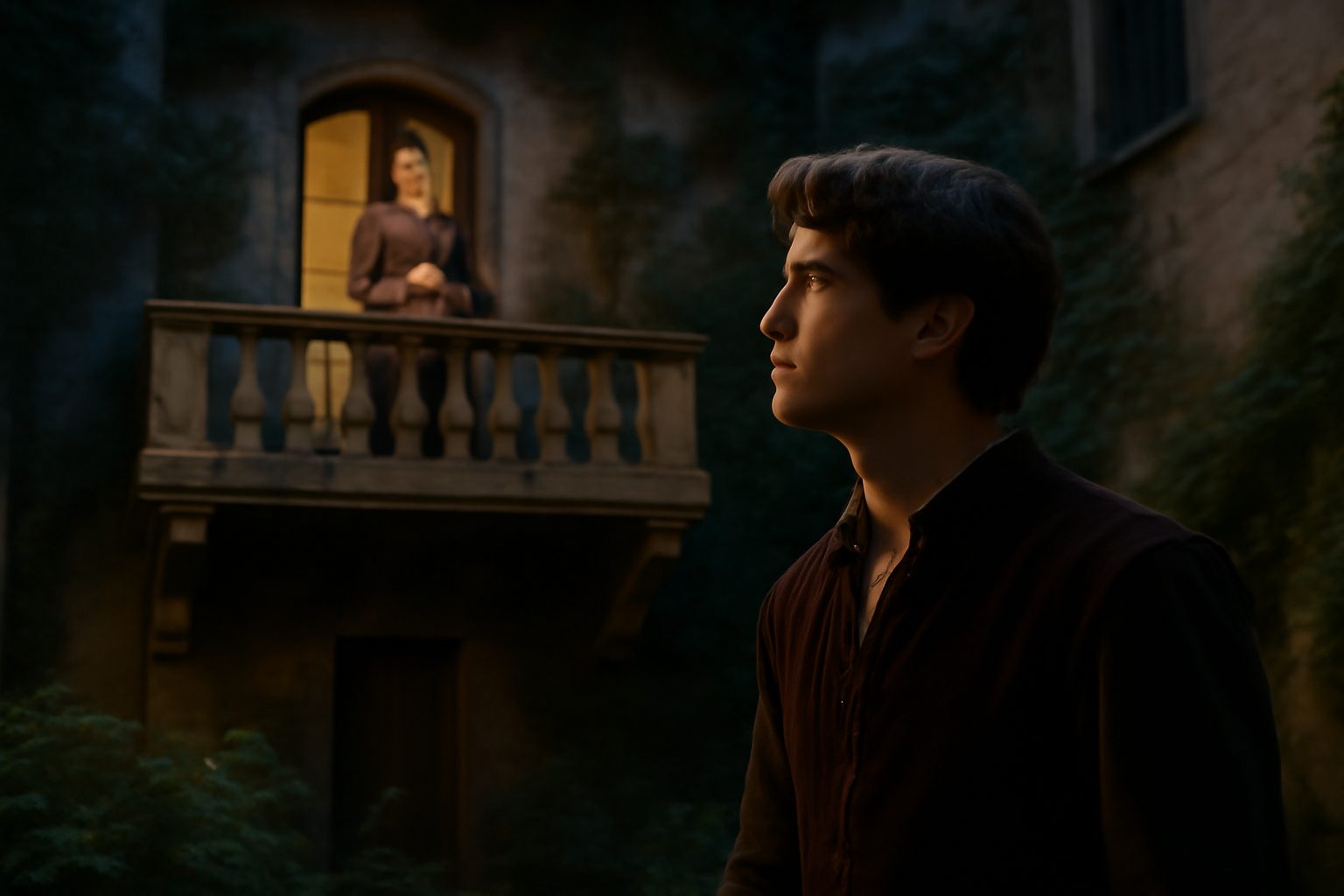
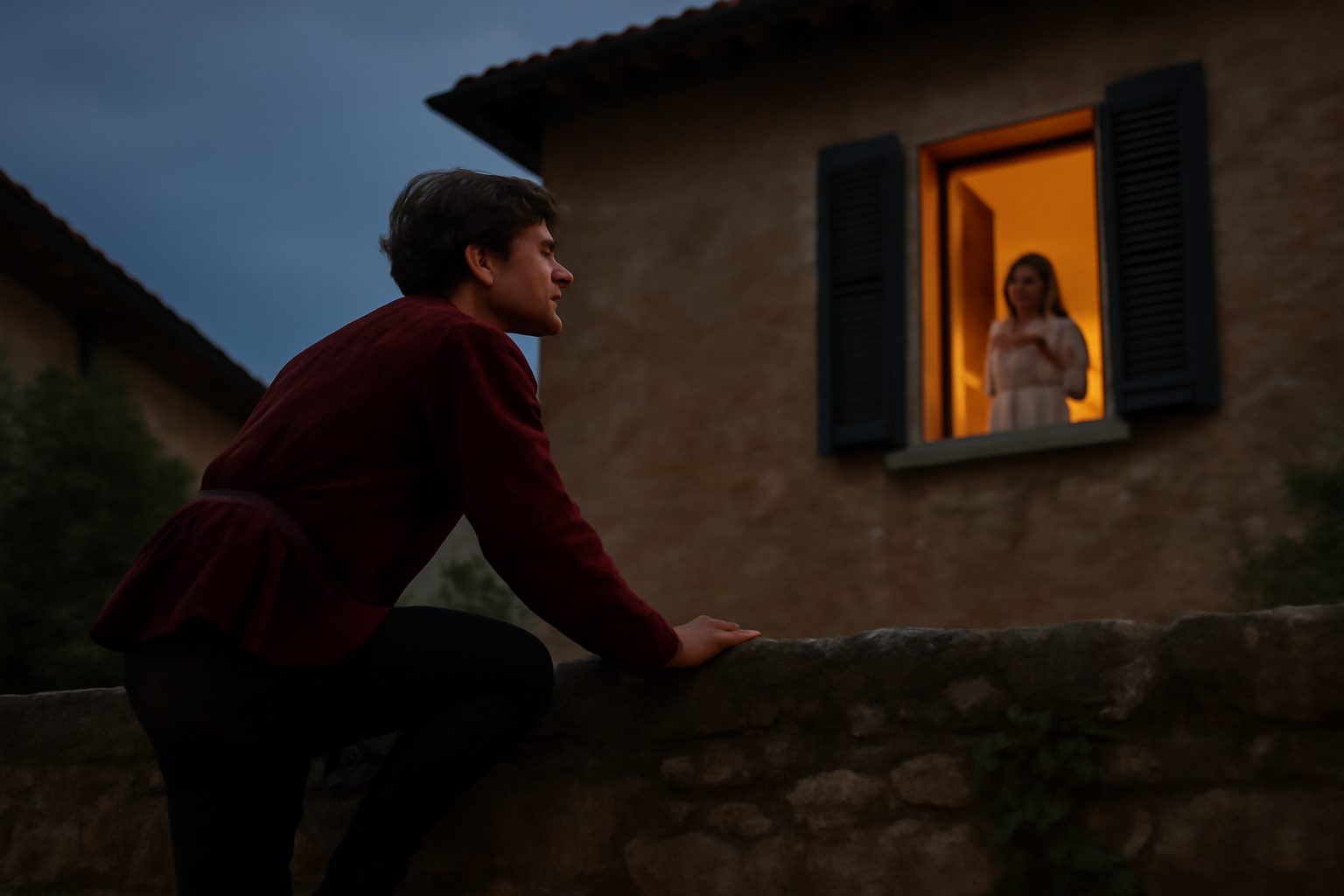
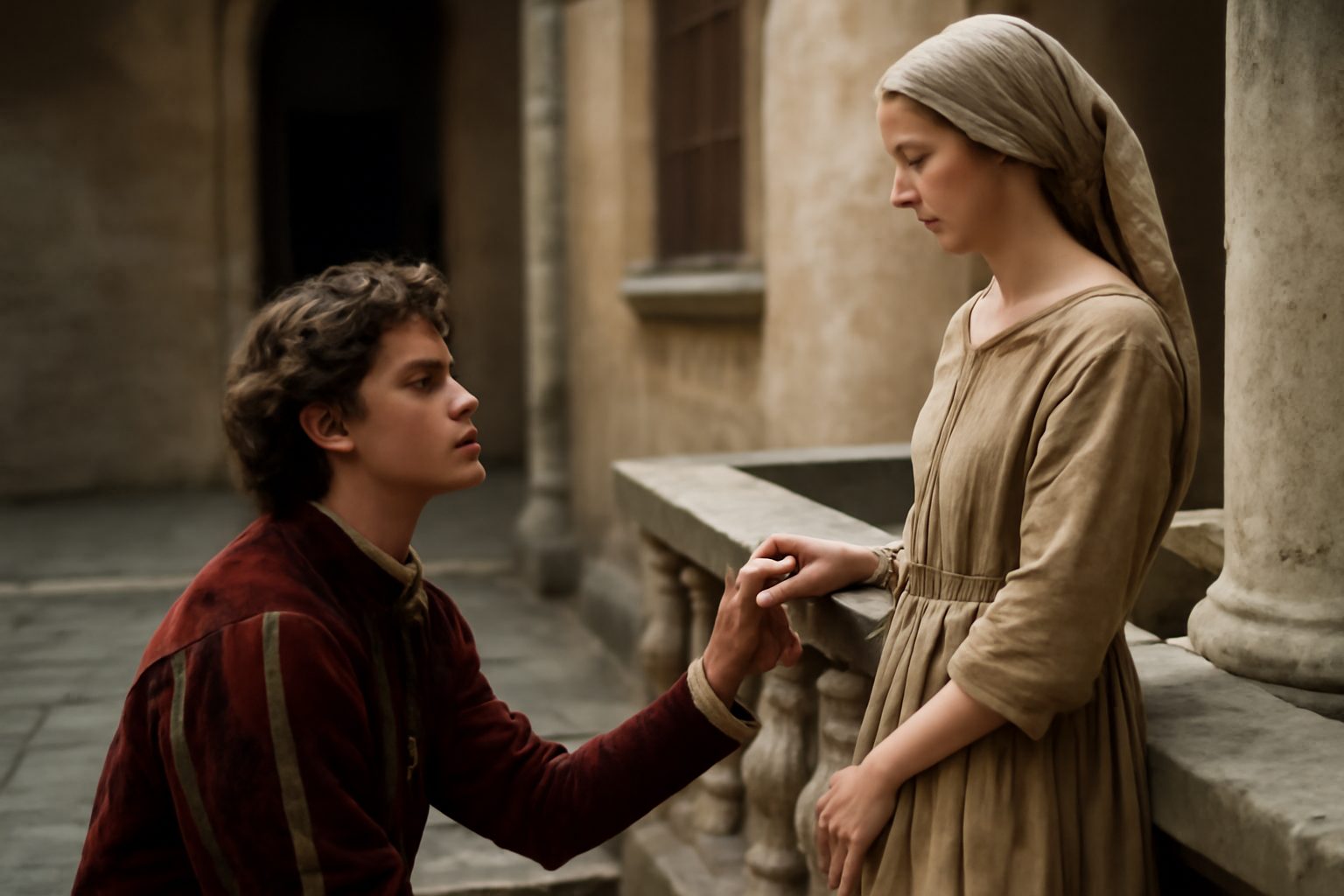
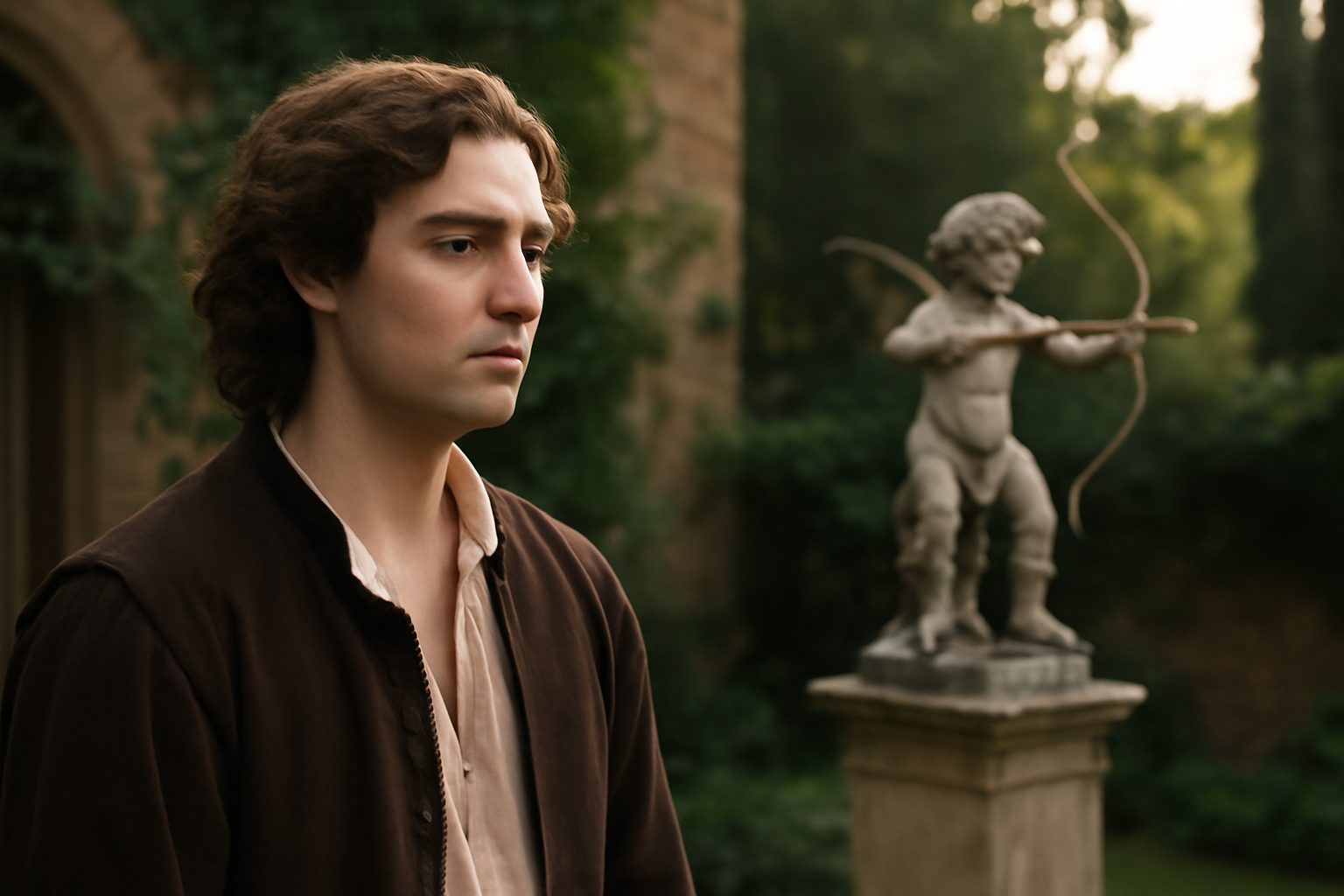
In Act 2, Scene 1 of Romeo and Juliet, Mercutio mocks Romeo's lovestruck behavior, teasing him for hiding and pining after Rosaline. The line refers to a playful, bawdy joke about maidens and medlars, a fruit considered suggestive in Elizabethan slang. Mercutio's wit here underscores the contrast between Romeo's earnest longing and his friends' irreverent humor.
Mercutio: "As maids call medlars, when they laugh alone."
In modern day english, we would say:
This line refers to how young women jokingly call medlars (a type of fruit) "open-arses" when they're laughing by themselves, because the fruit looks like a certain body part when overripe.
Frequently Asked Questions
What is Mercutio comparing to maids laughing alone in this line?
Mercutio is comparing medlars, a type of fruit, to maids laughing alone.
Connections to other verses:
Connections to "As maids call medlars, when they laugh alone"
The verse "As maids call medlars, when they laugh alone" is part of Mercutio's bawdy and imaginative speech, where he mocks Romeo's lovesick state. This line employs a sexual innuendo, as "medlars" were fruits often associated with female genitalia in Elizabethan slang, and "laugh alone" suggests private, intimate amusement. This connects thematically and tonally to several other verses in the scene where Mercutio uses similar humor and imagery.
Connection to Fruit and Sexual Innuendo
The medlar reference is directly linked to "Now will he sit under a medlar tree", which continues the fruit metaphor, implying Romeo's amorous intentions. It also relates to "And wish his mistress were that kind of fruit", reinforcing the sexual connotation of the medlar as an object of desire. Additionally, "An open et caetera, thou a poperin pear!" extends the fruit imagery with another bawdy pun, comparing Romeo to a pear shape with suggestive implications.
Connection to Mocking and Conjuring
Mercutio's teasing tone in this verse aligns with his efforts to "conjure" Romeo, as seen in "The ape is dead, and I must conjure him" and "I conjure only but to raise up him". The playful, almost magical invocation in these lines complements the intimate, laughter-filled imagery of maids and medlars.
Connection to Themes of Love and Desire
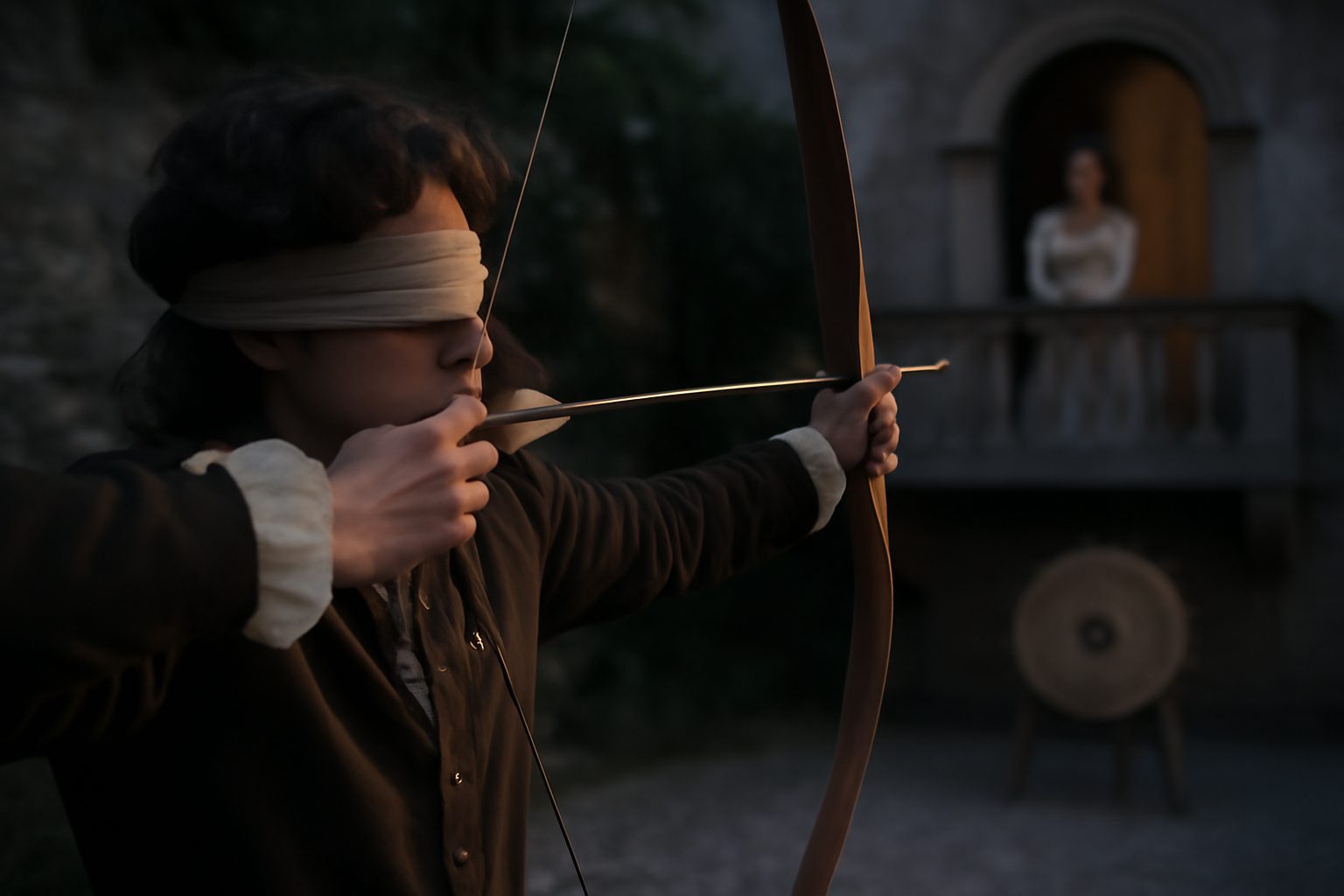
The verse also ties into the scene's exploration of blind love and desire, echoed in "Blind is his love and best befits the dark" and "If love be blind, love cannot hit the mark". Mercutio's crass humor contrasts with Romeo's idealized passion, highlighting different perspectives on love.
Connection to Rosaline and Mistress References
Mercutio's references to Rosaline, such as in "I conjure thee by Rosaline's bright eyes", and the general focus on Romeo's mistress in lines like "To raise a spirit in his mistress' circle", contextualize the medlar quip as part of Mercutio's jest about Romeo's unrequited or obsessive love.