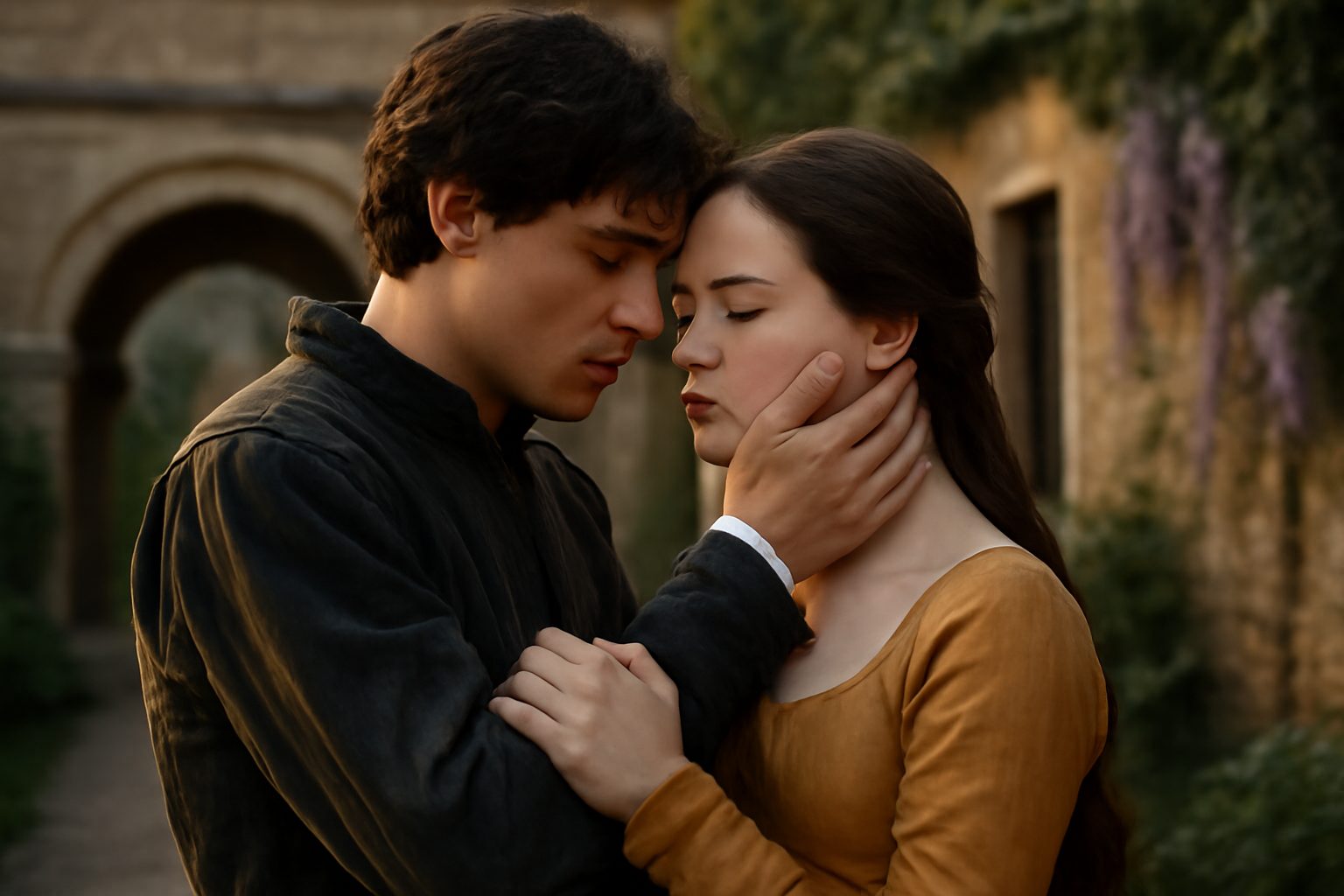
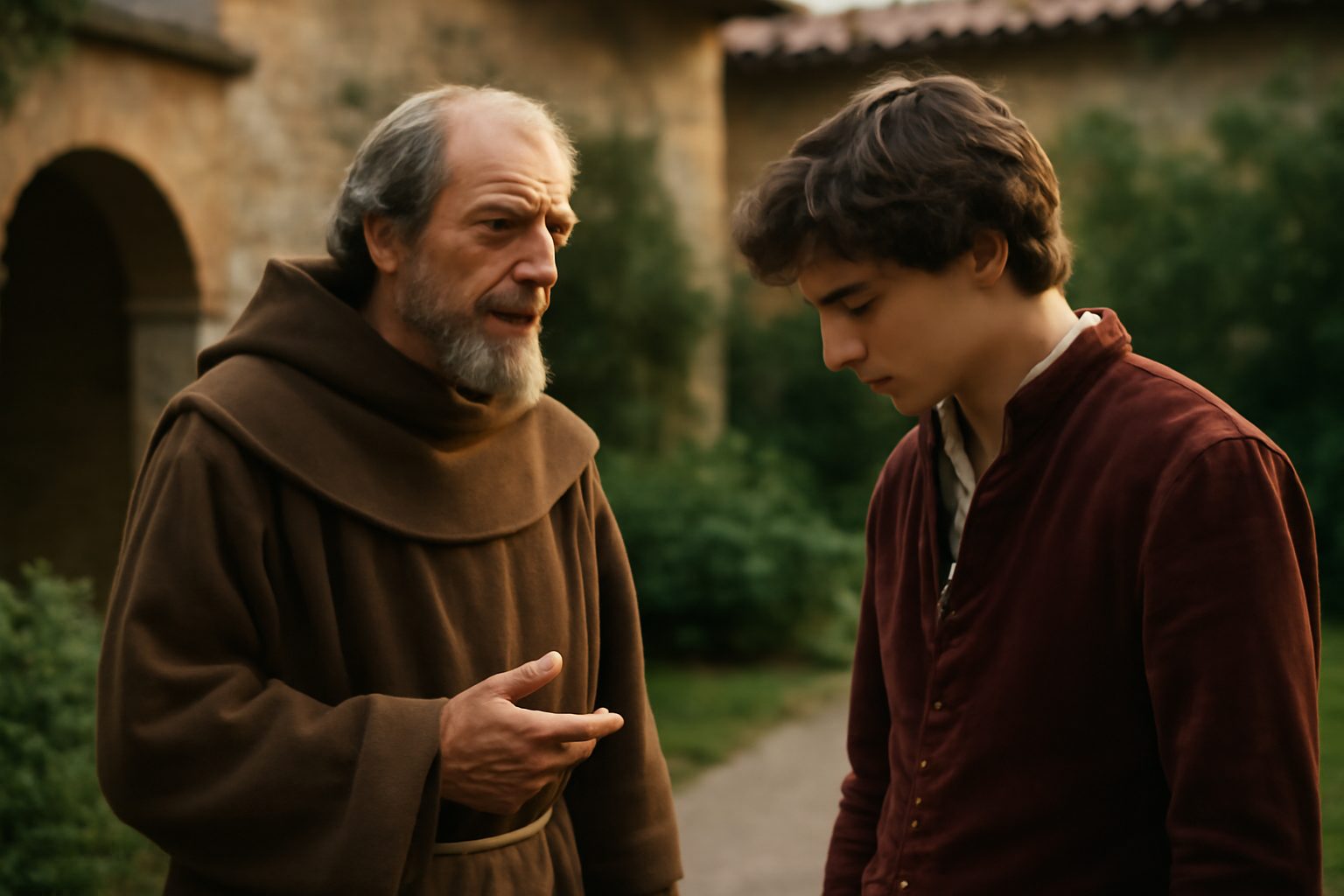
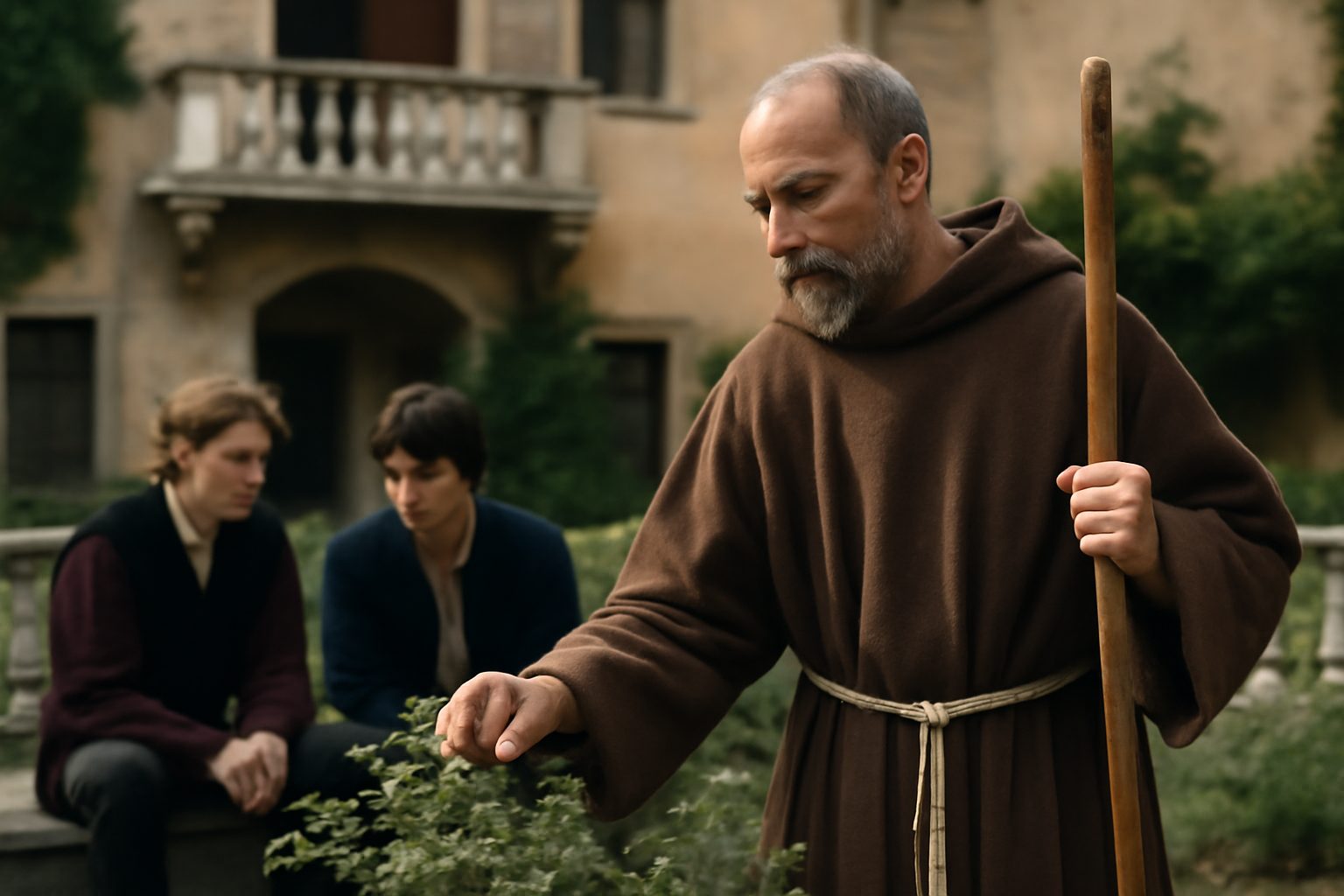
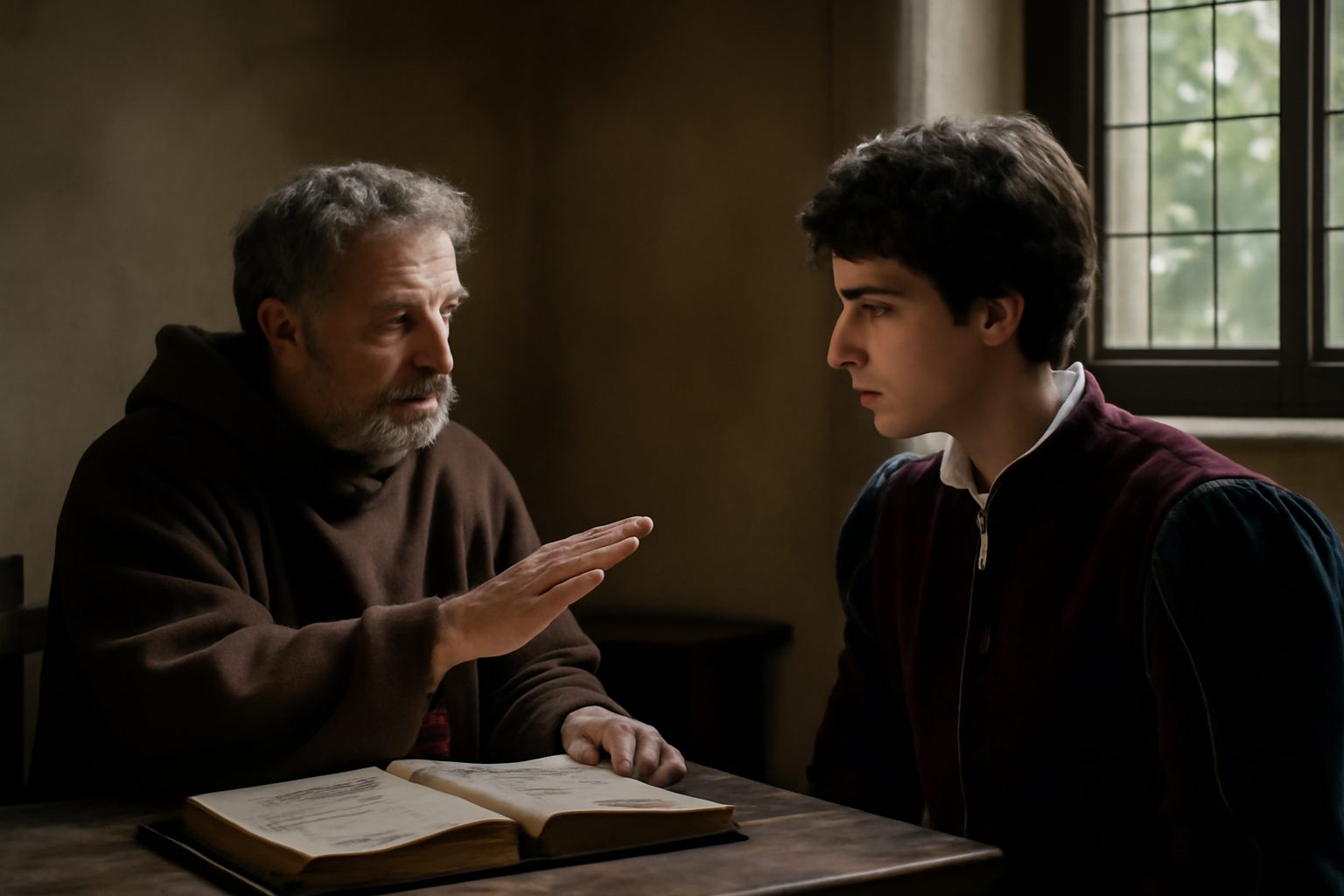
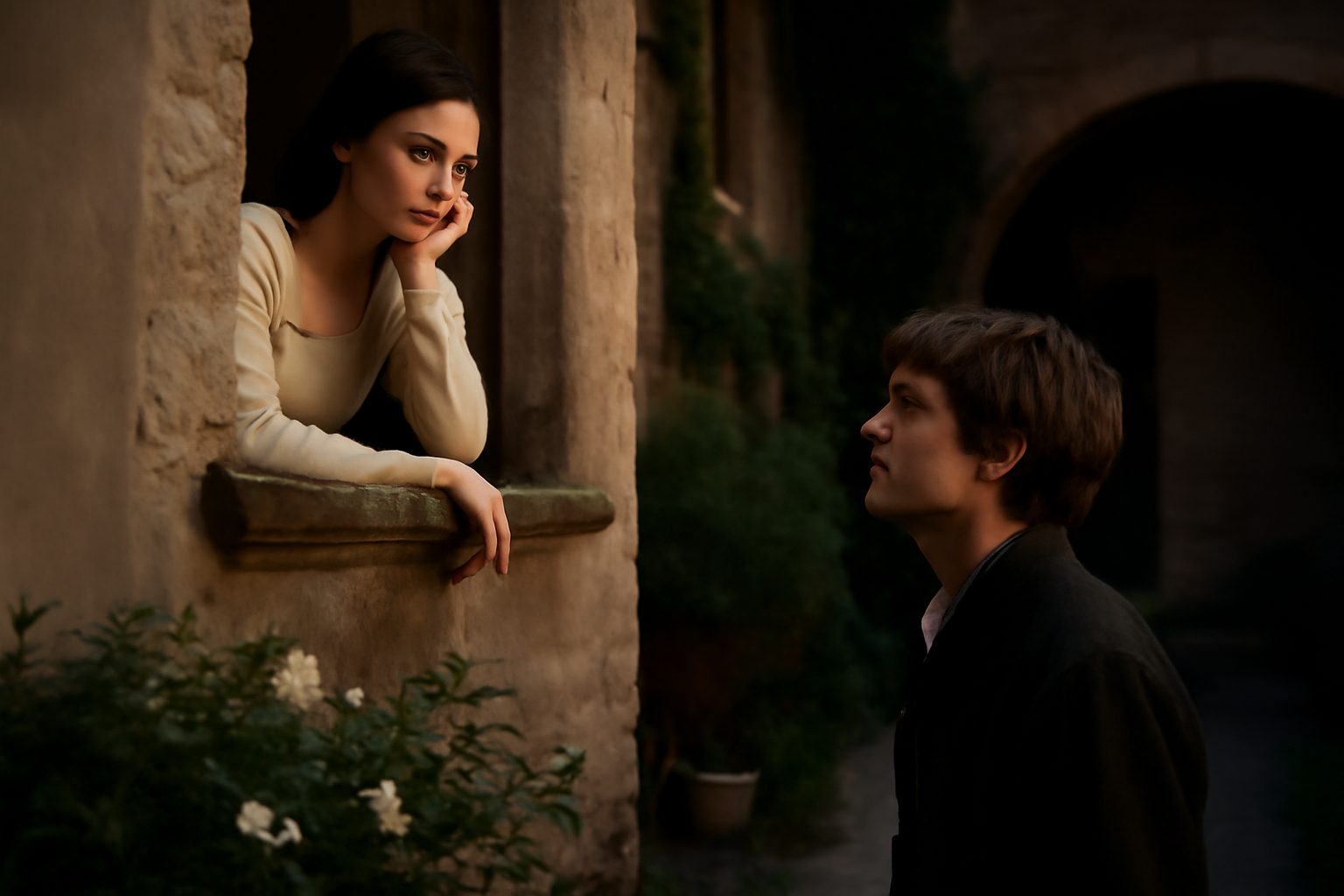
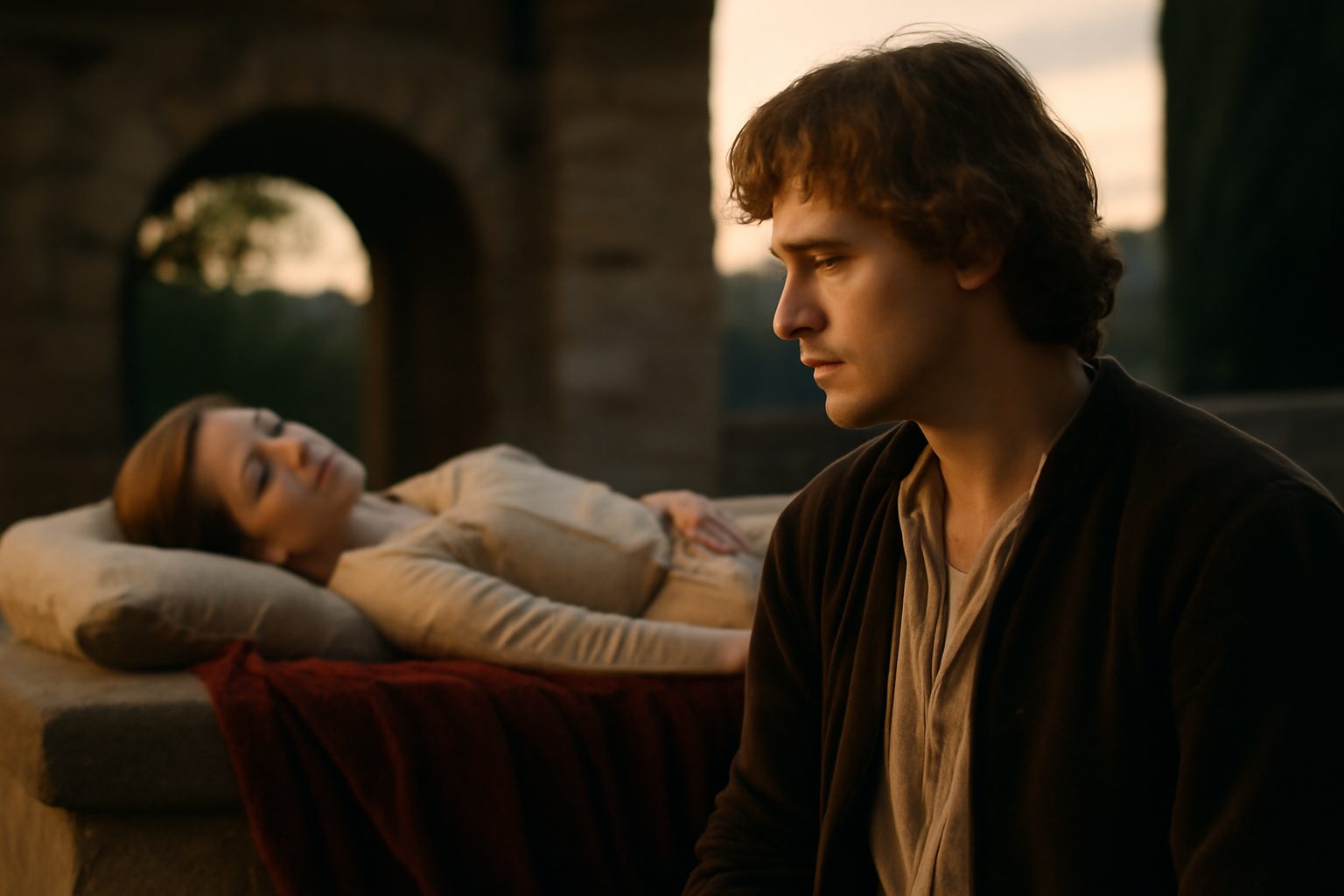
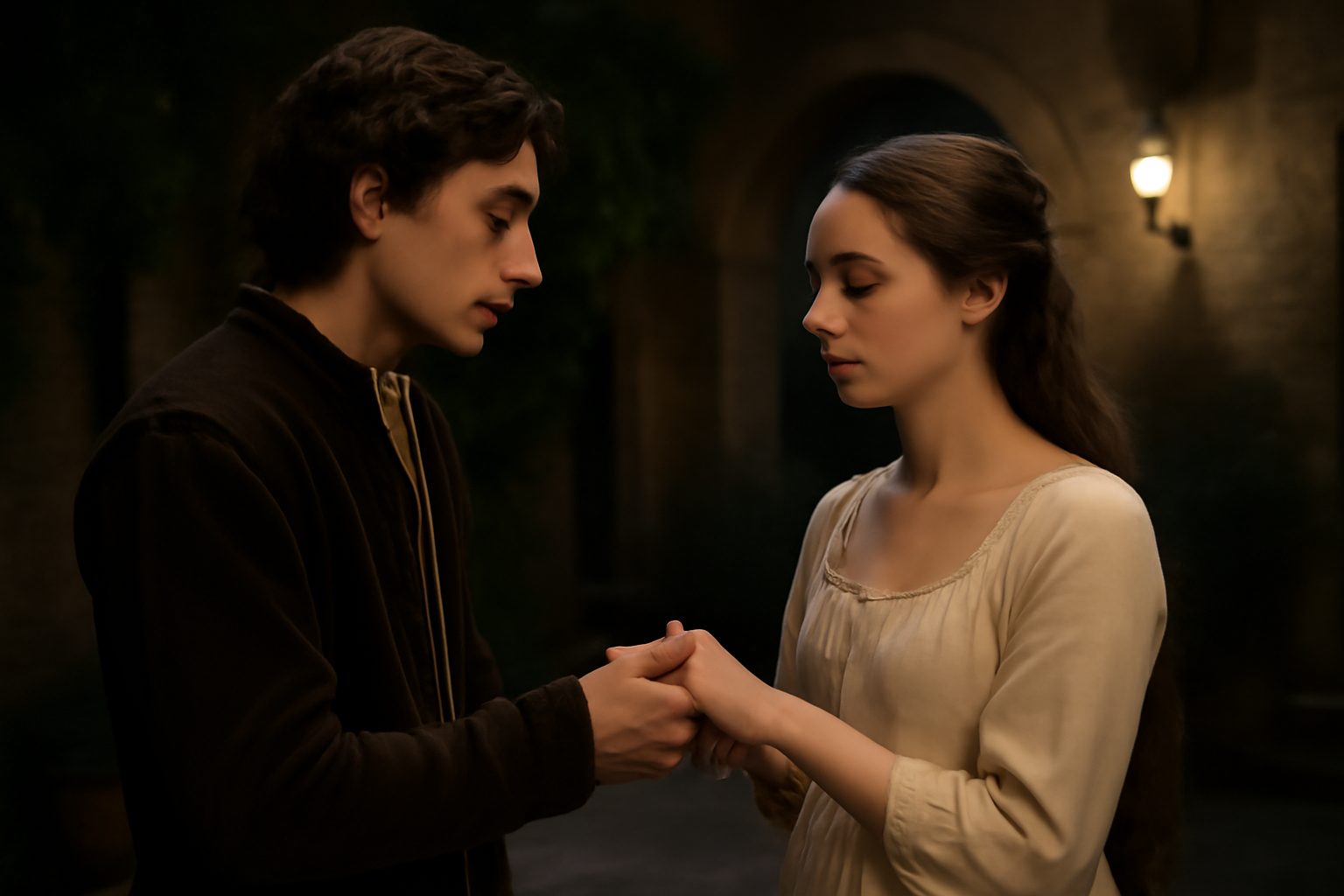
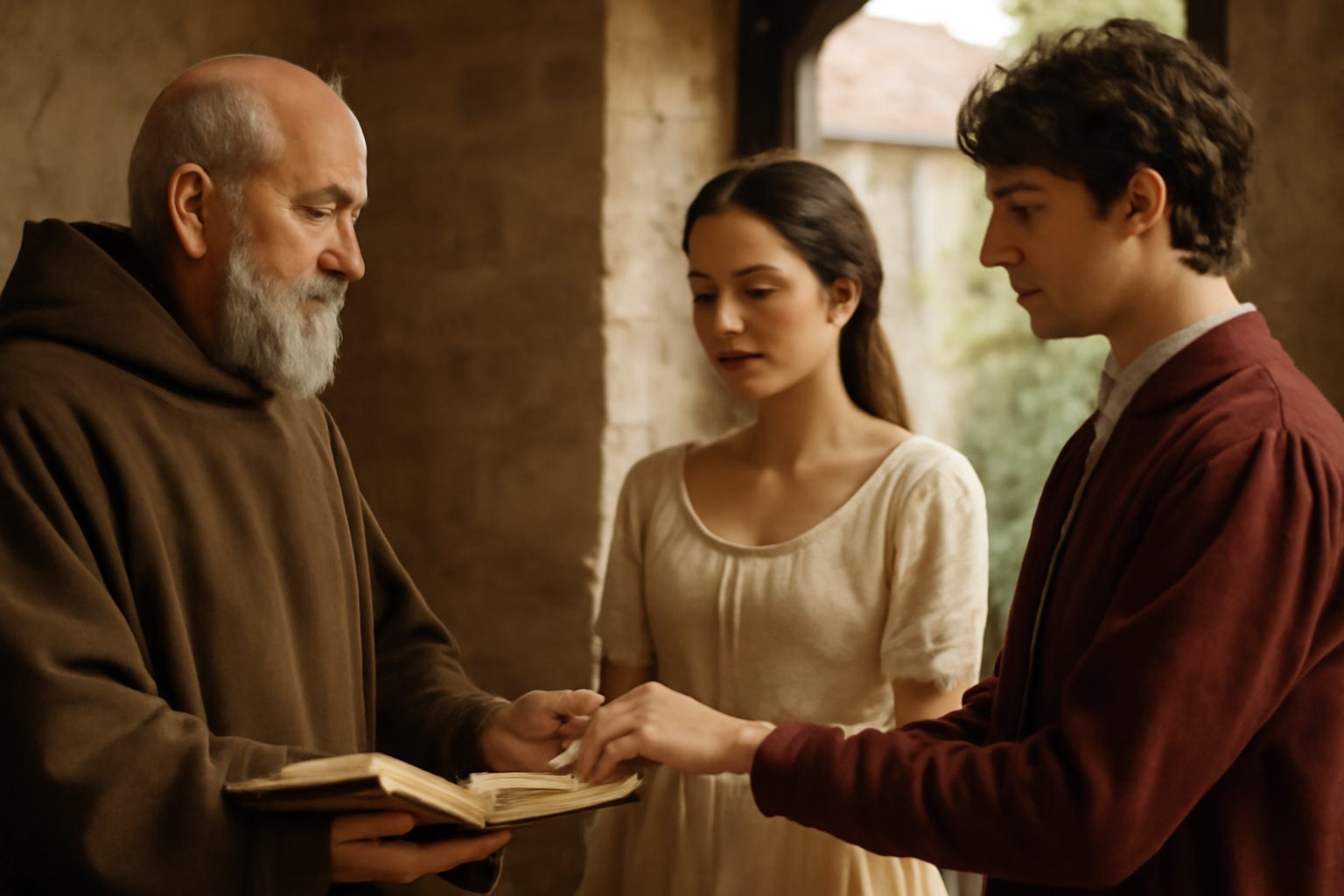
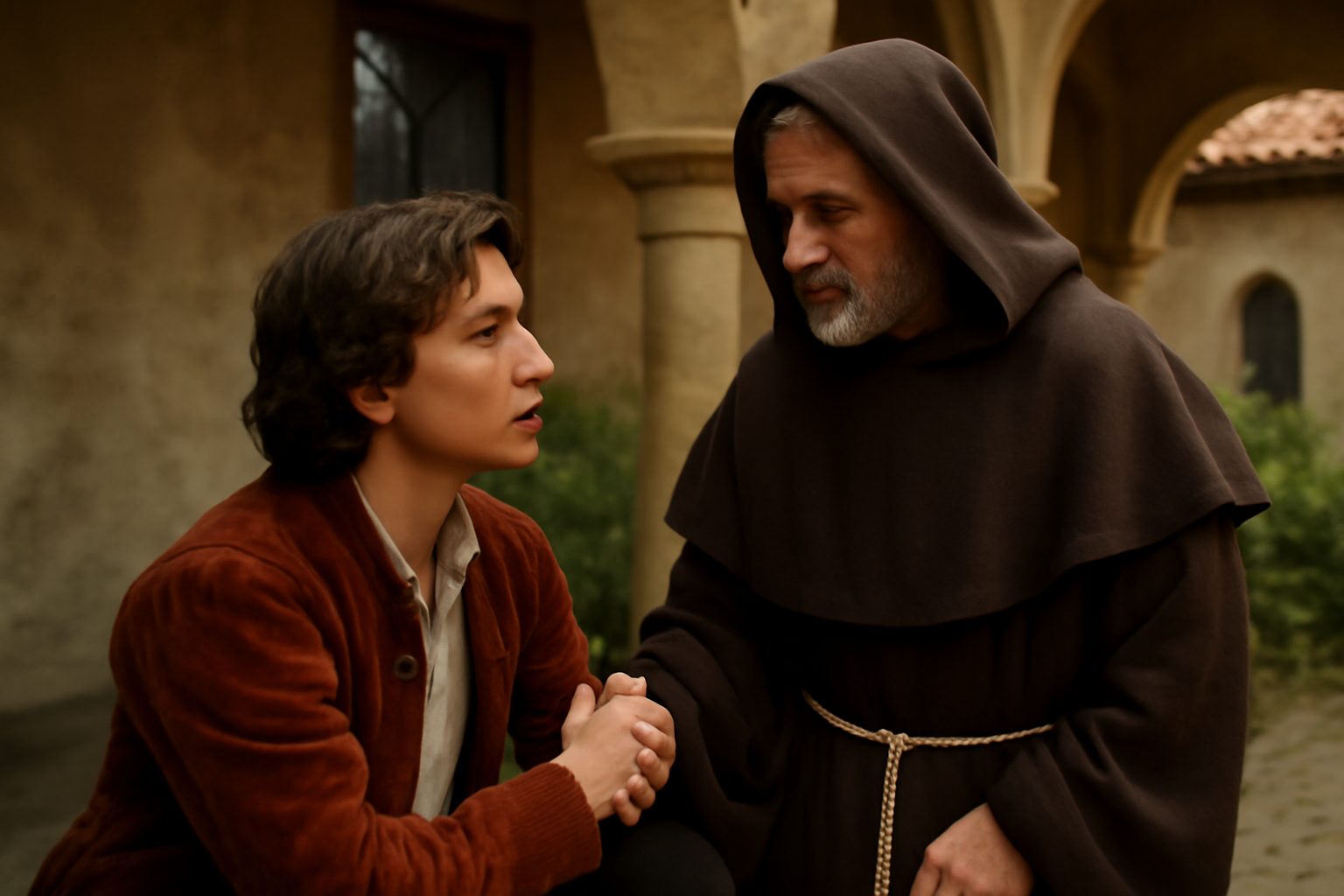
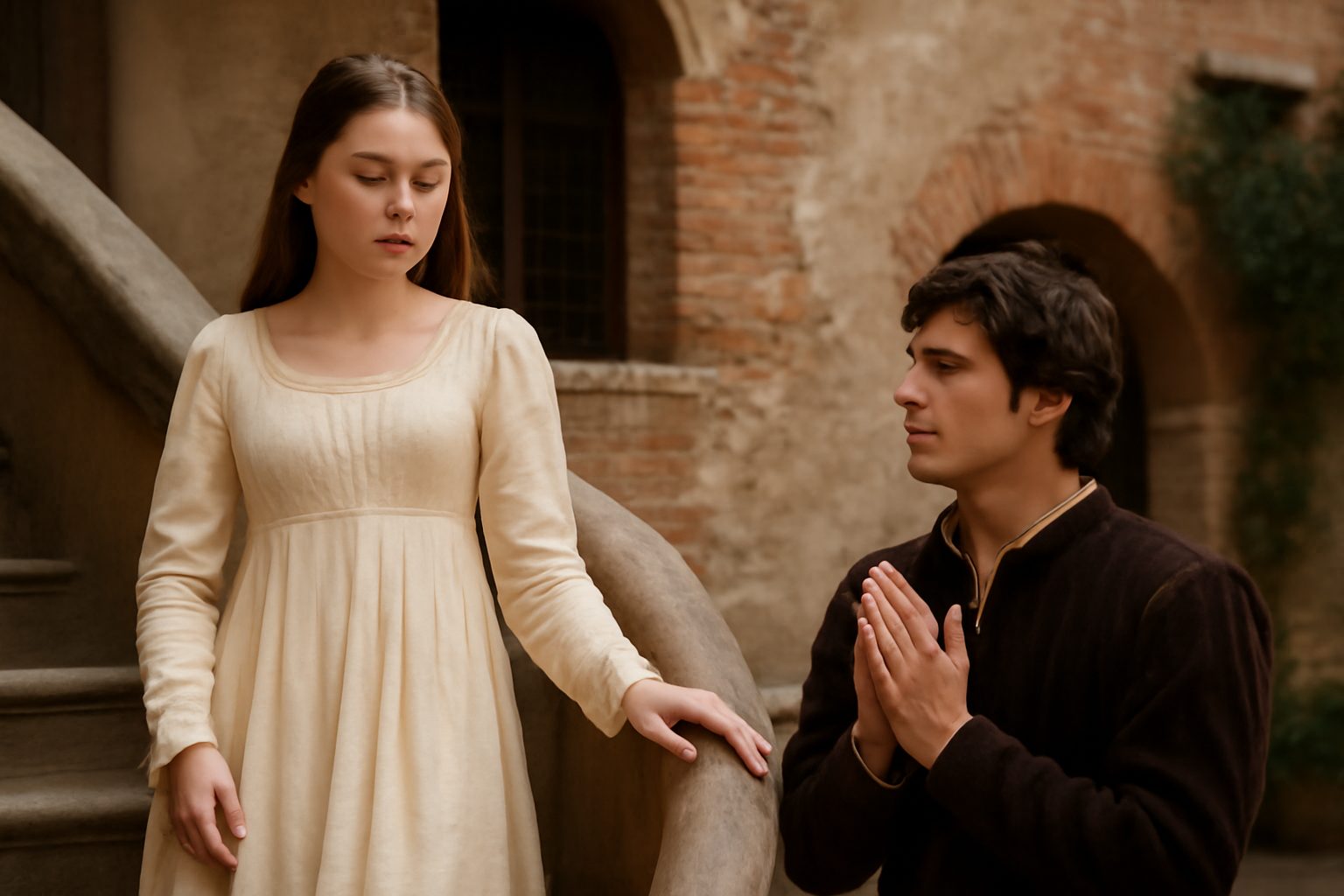
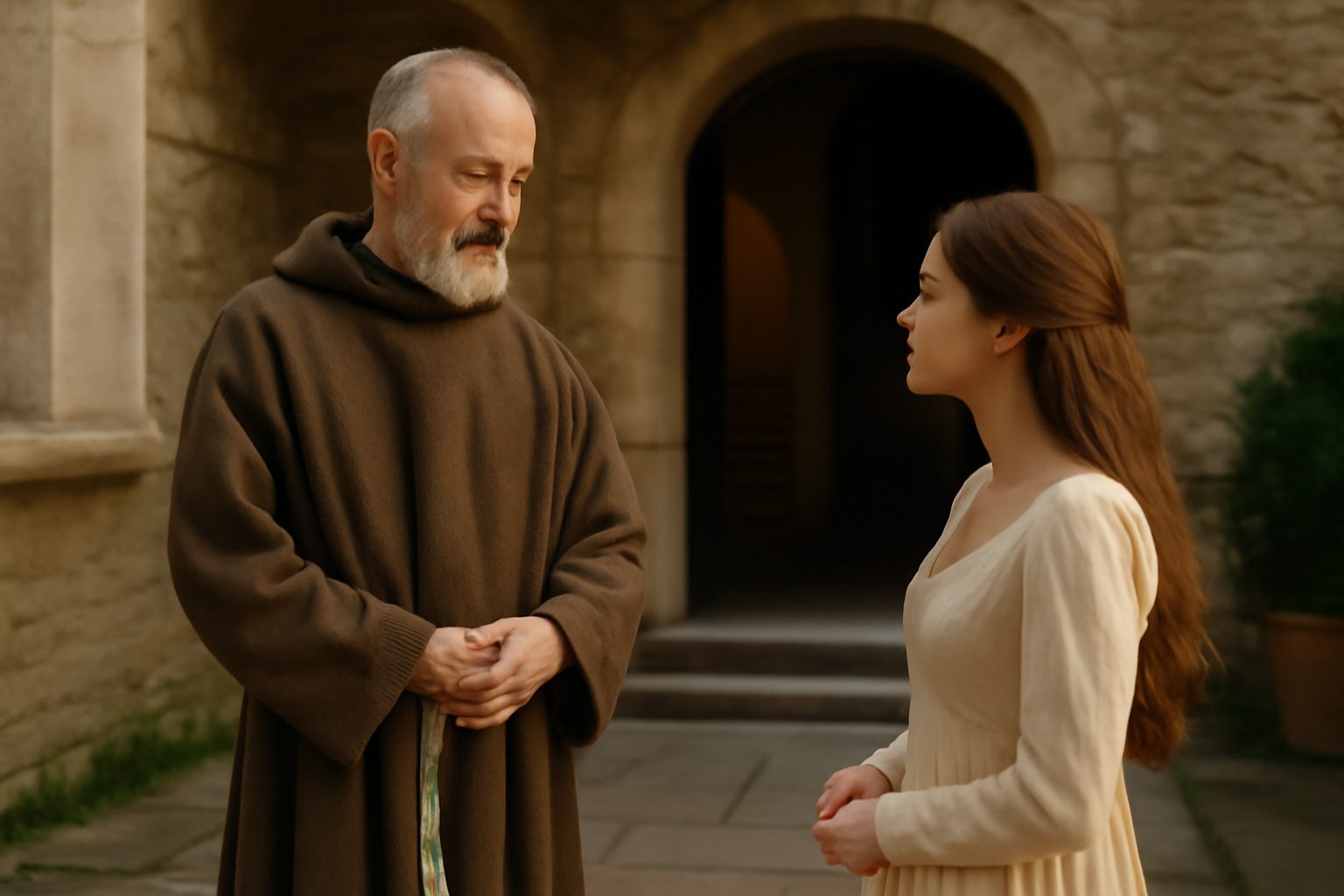
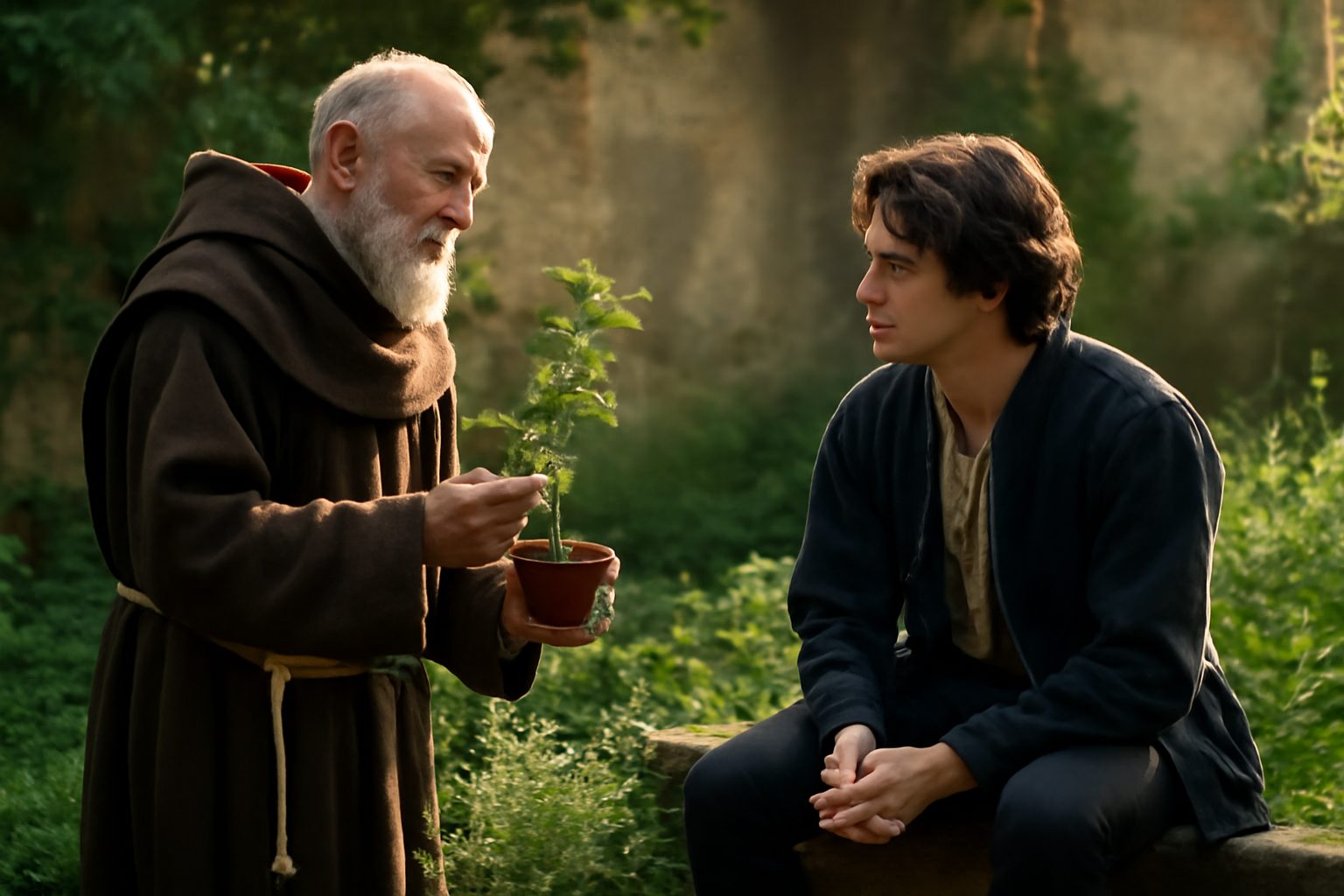
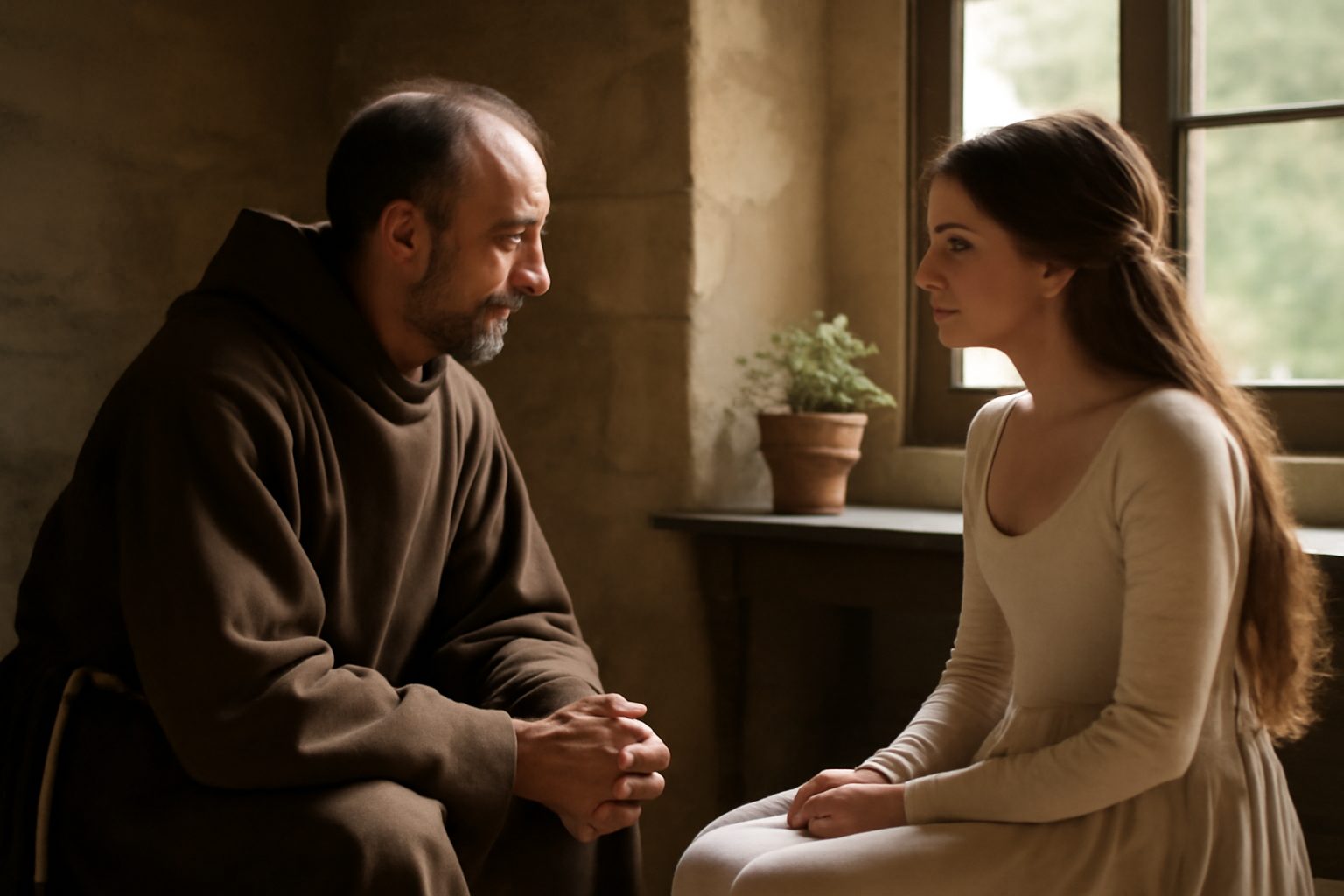
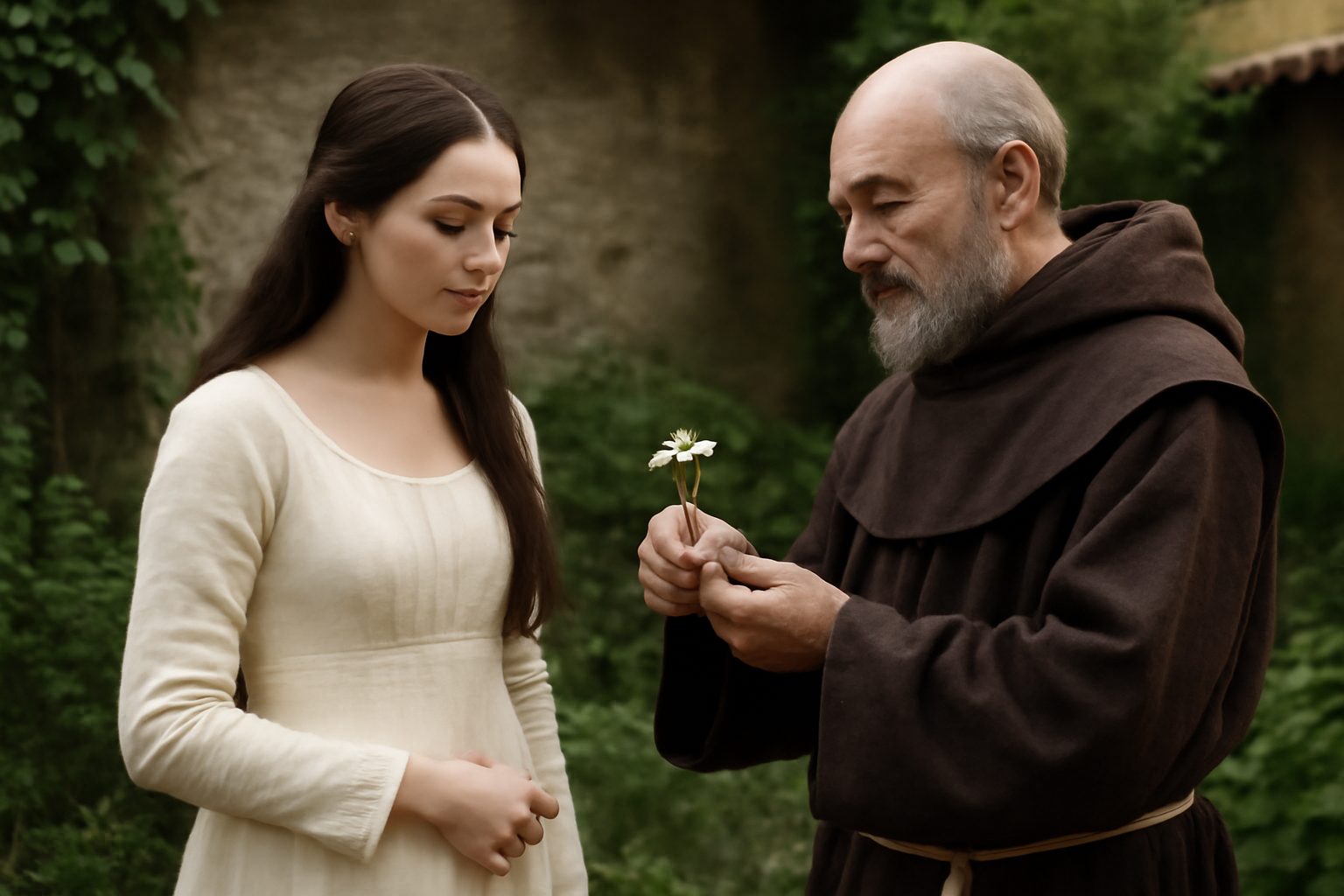
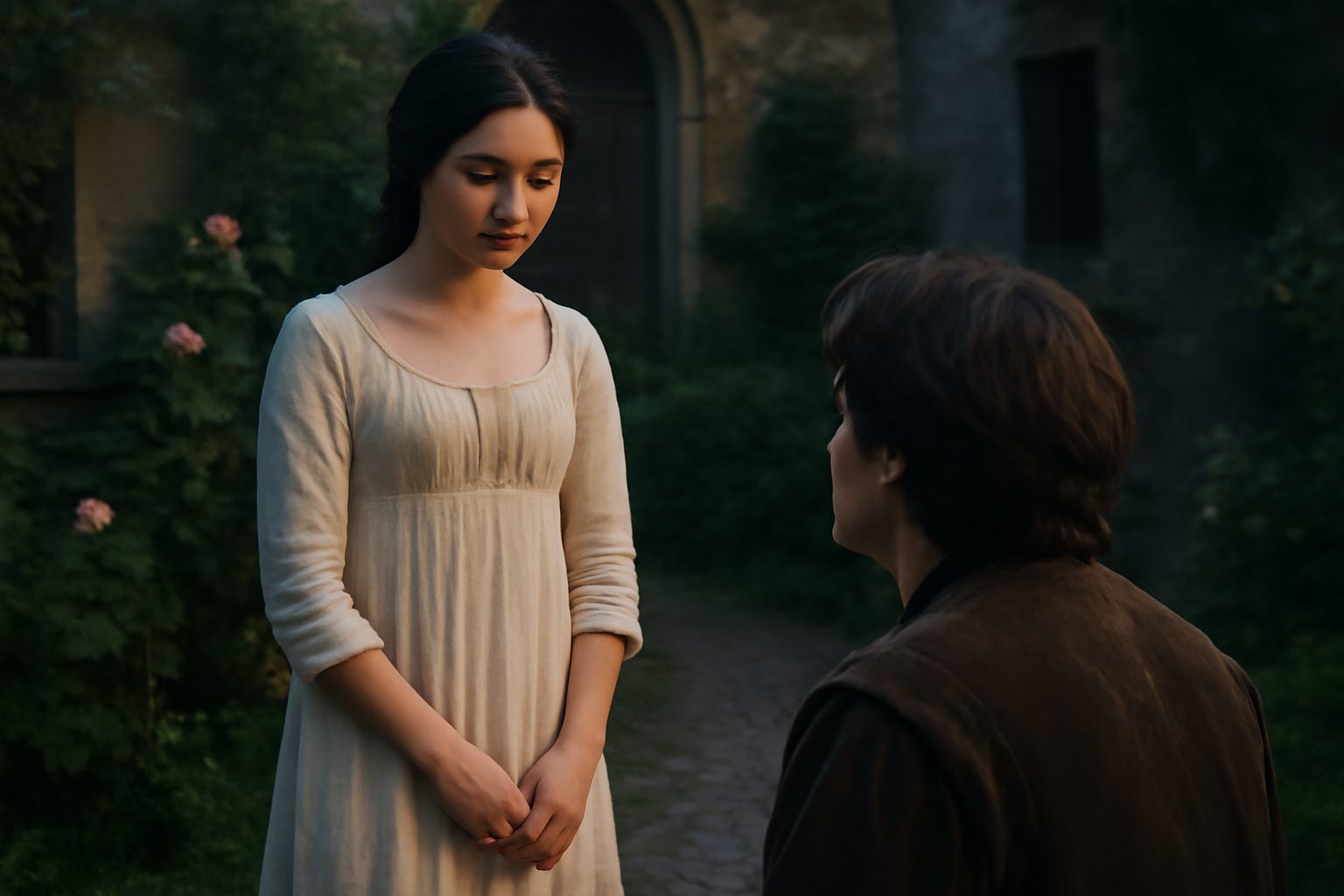
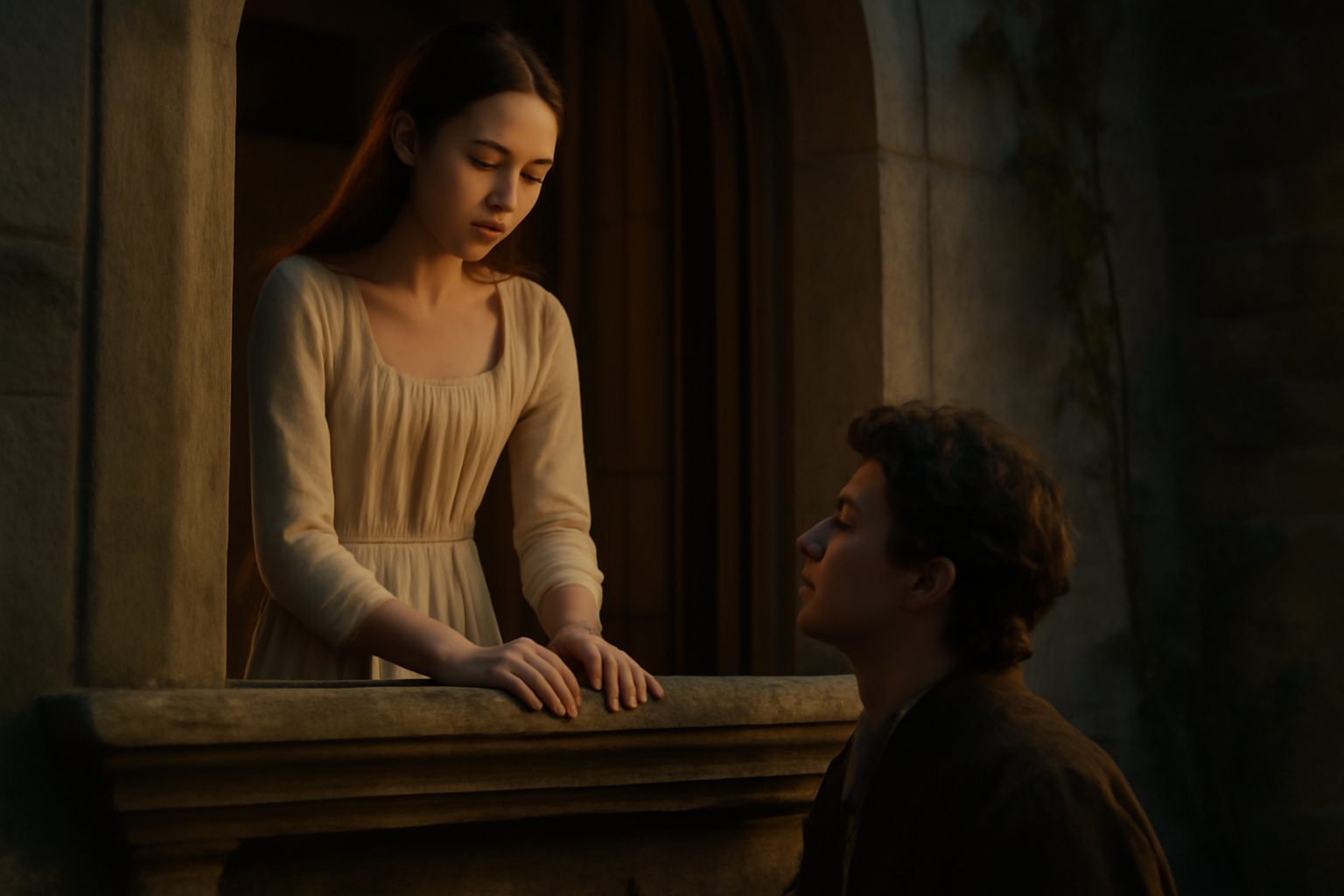
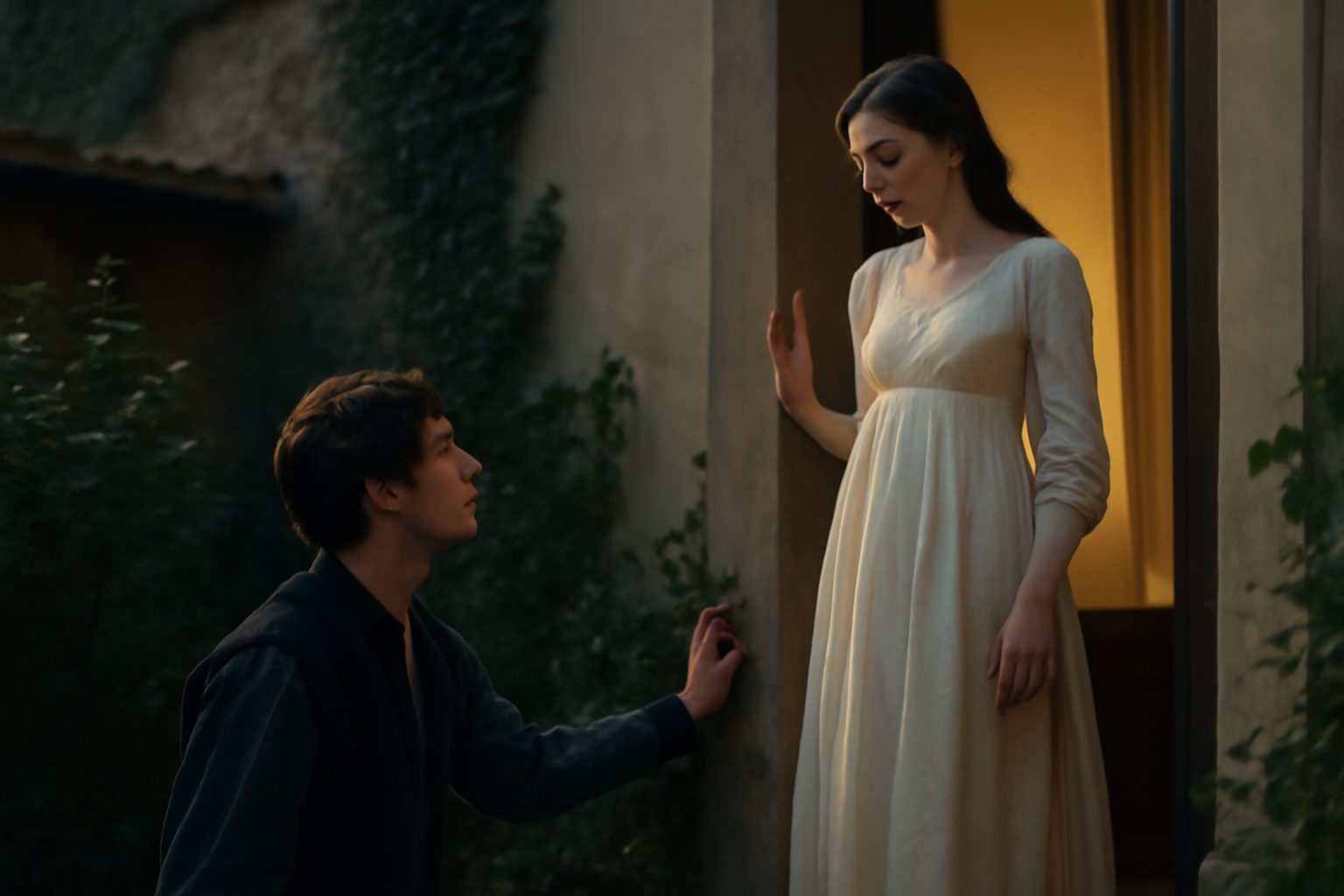
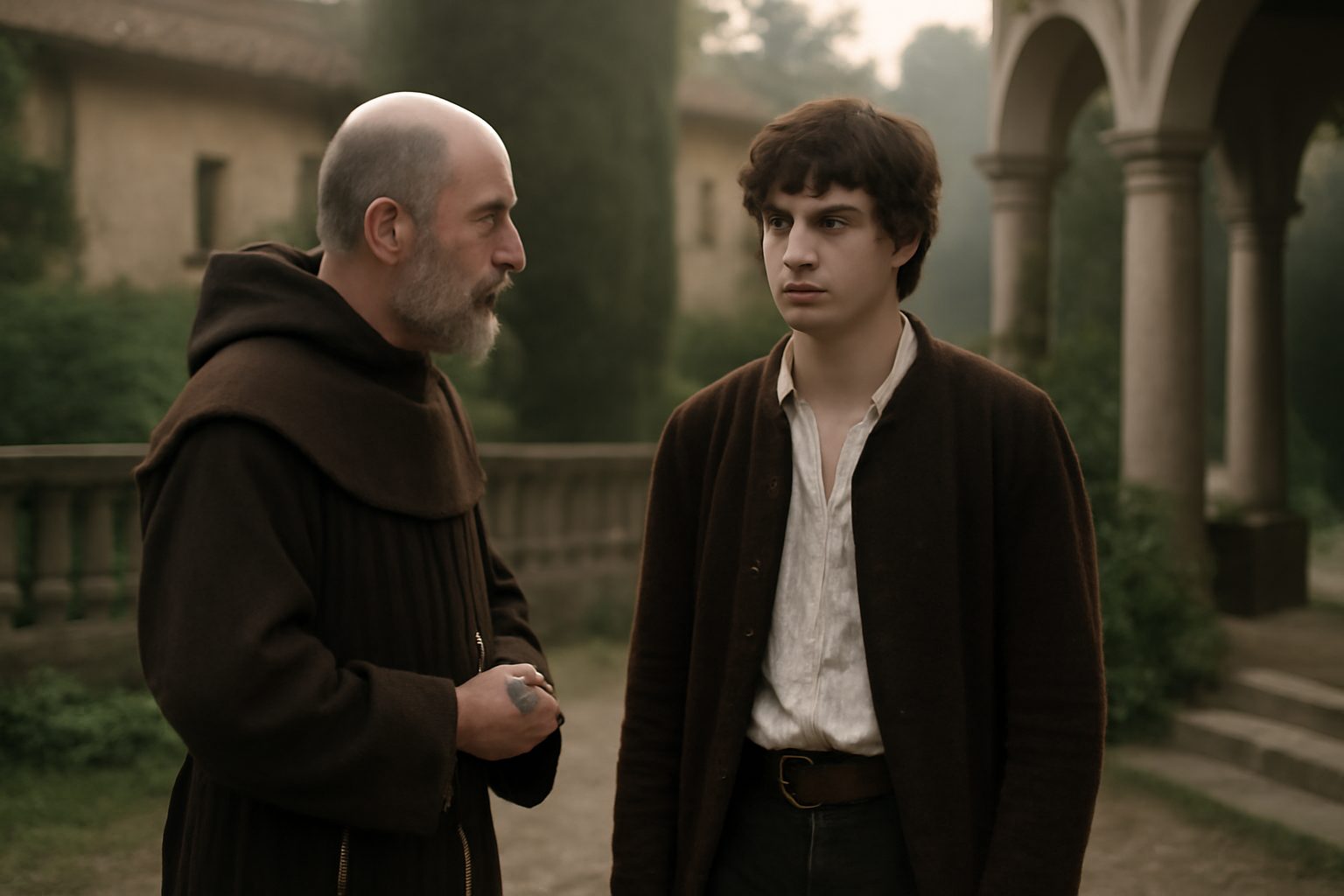
In Act 2, Scene 3 of Romeo and Juliet, Romeo visits Friar Laurence to share news of his newfound love for Juliet, having swiftly moved on from Rosaline. The friar, skeptical of Romeo's sudden change of heart, chides him for his impulsiveness. This line reflects the friar's criticism, accusing Romeo of abandoning his past affections as if they were meant to be discarded and forgotten.
Romeo: "And bad'st me bury love."
In modern day english, we would say:
You told me to give up on love and forget about it.
Frequently Asked Questions
What does Romeo mean when he says he was told to bury love?
Romeo means that someone advised him to give up on love or forget about it, as if putting it in a grave.
Connections to other verses:
Connections to "And bad'st me bury love"
In Act 2, Scene 3 of Romeo and Juliet, the line And bad'st me bury love is spoken by Romeo to Friar Laurence, referencing the Friar's past advice to abandon his infatuation with Rosaline. This line connects thematically and contextually to several other verses in the scene.
Past Counsel and Reproach
Romeo's statement directly recalls Friar Laurence's earlier admonishments, such as when the Friar chided him for loving Rosaline: Thou chid'st me oft for loving Rosaline. This establishes a pattern of the Friar guiding Romeo away from what he perceives as shallow affection.
Transformation and New Love
The idea of "burying love" for Rosaline contrasts with Romeo's new devotion to Juliet. The Friar notes this drastic change in Holy Saint Francis, what a change is here! and questions whether Romeo's past woes were all for Rosaline in Thou and these woes were all for Rosaline.
Friar's Disapproval of Fickle Affection
Friar Laurence criticizes the sudden shift in Romeo's affections, suggesting that young men's love is insincere: So soon forsaken? young men's love then lies / Not truly in their hearts, but in their eyes. This ties back to his instruction to "bury" a love that was merely superficial.
Seeking Validation for New Love
Despite the Friar's skepticism, Romeo insists that his current love is genuine and pleads for support: I pray thee, chide not; she whom I love now / Doth grace for grace and love for love allow. This shows Romeo seeking to replace the "buried" love with one he believes is true and reciprocal.
Resolution and Forward Movement
The Friar ultimately agrees to assist Romeo, not to dwell on the buried past but to unite the lovers in marriage: In one respect I'll thy assistant be. This decision highlights a shift from admonishment to action, using the new love to potentially resolve family conflicts.