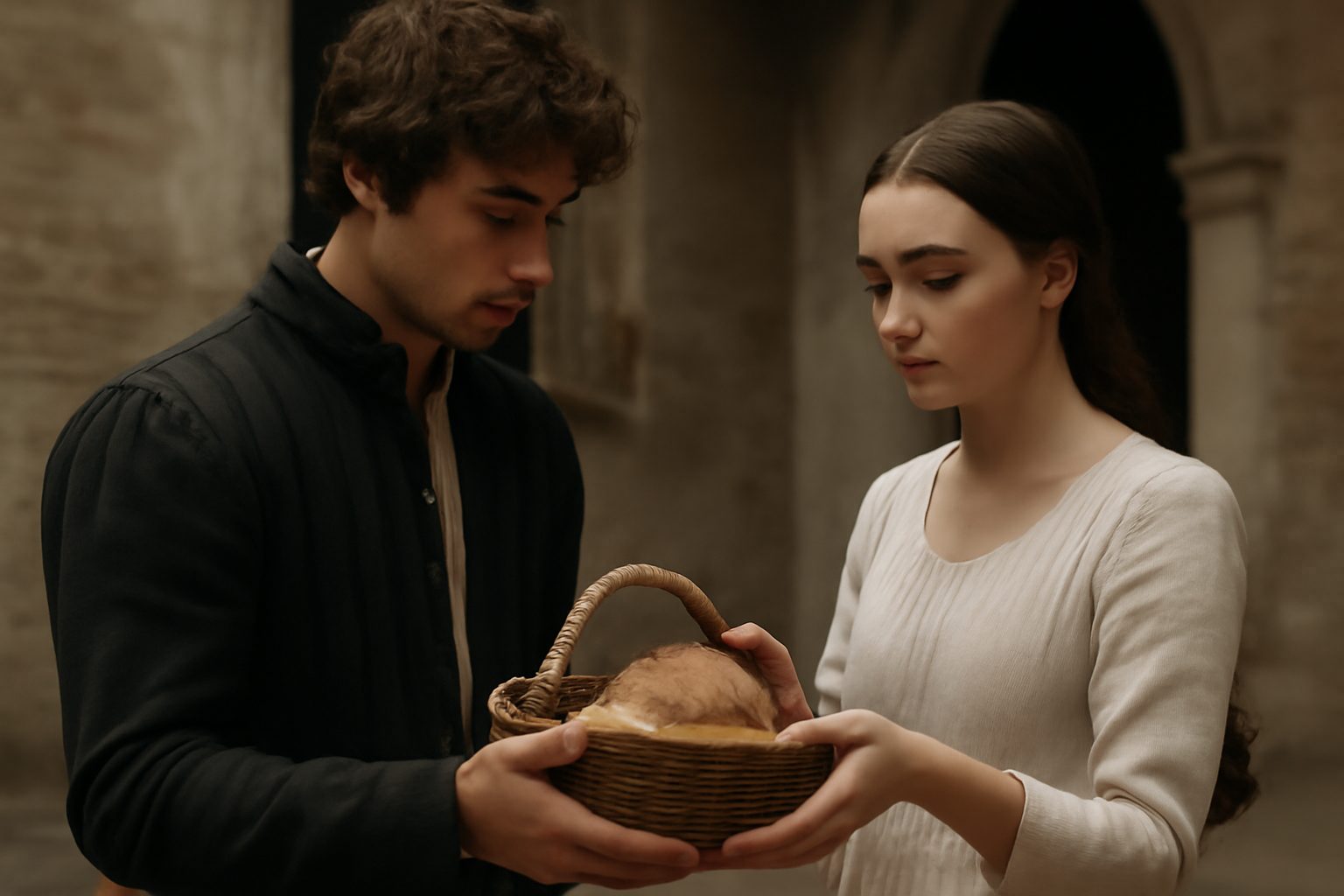
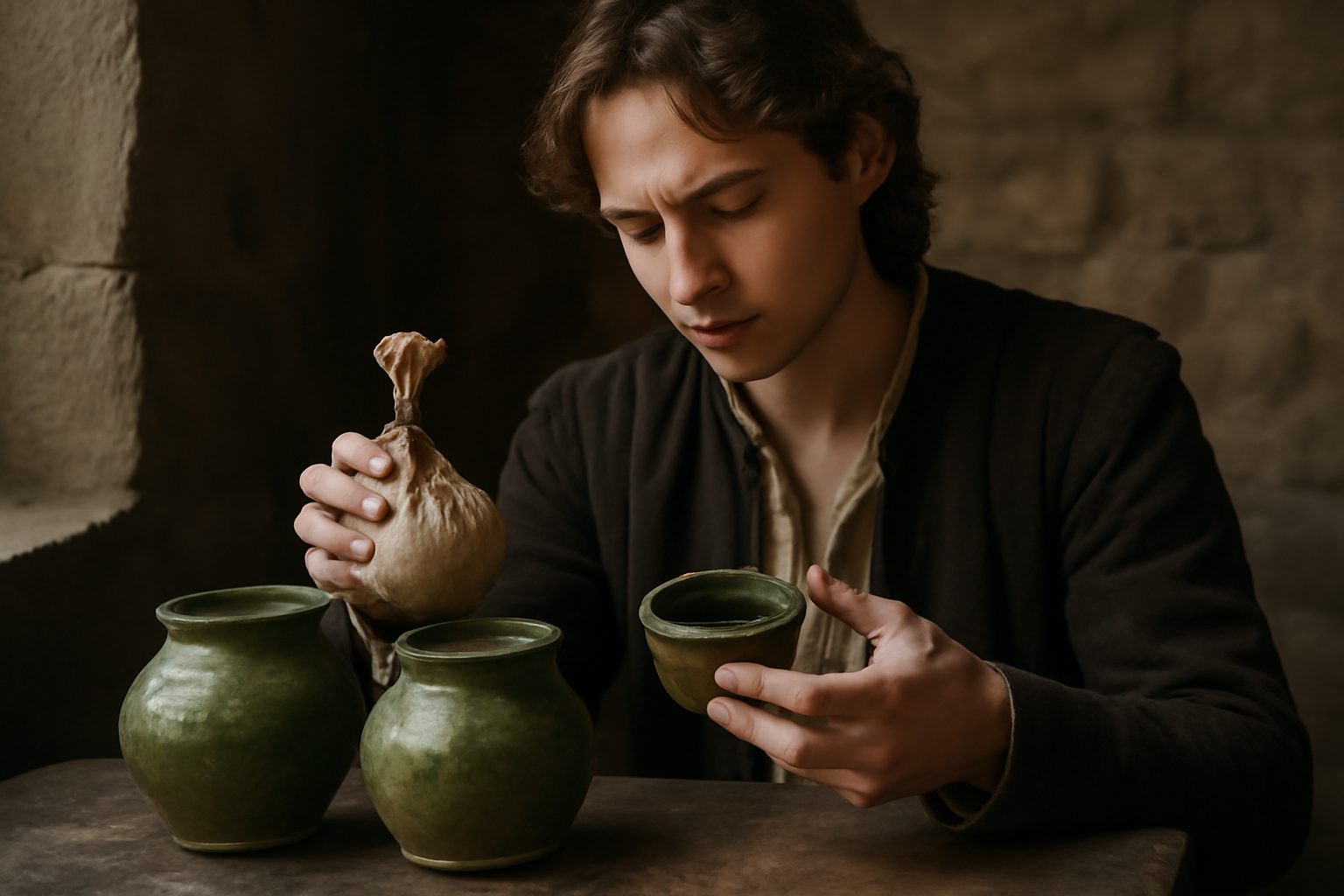
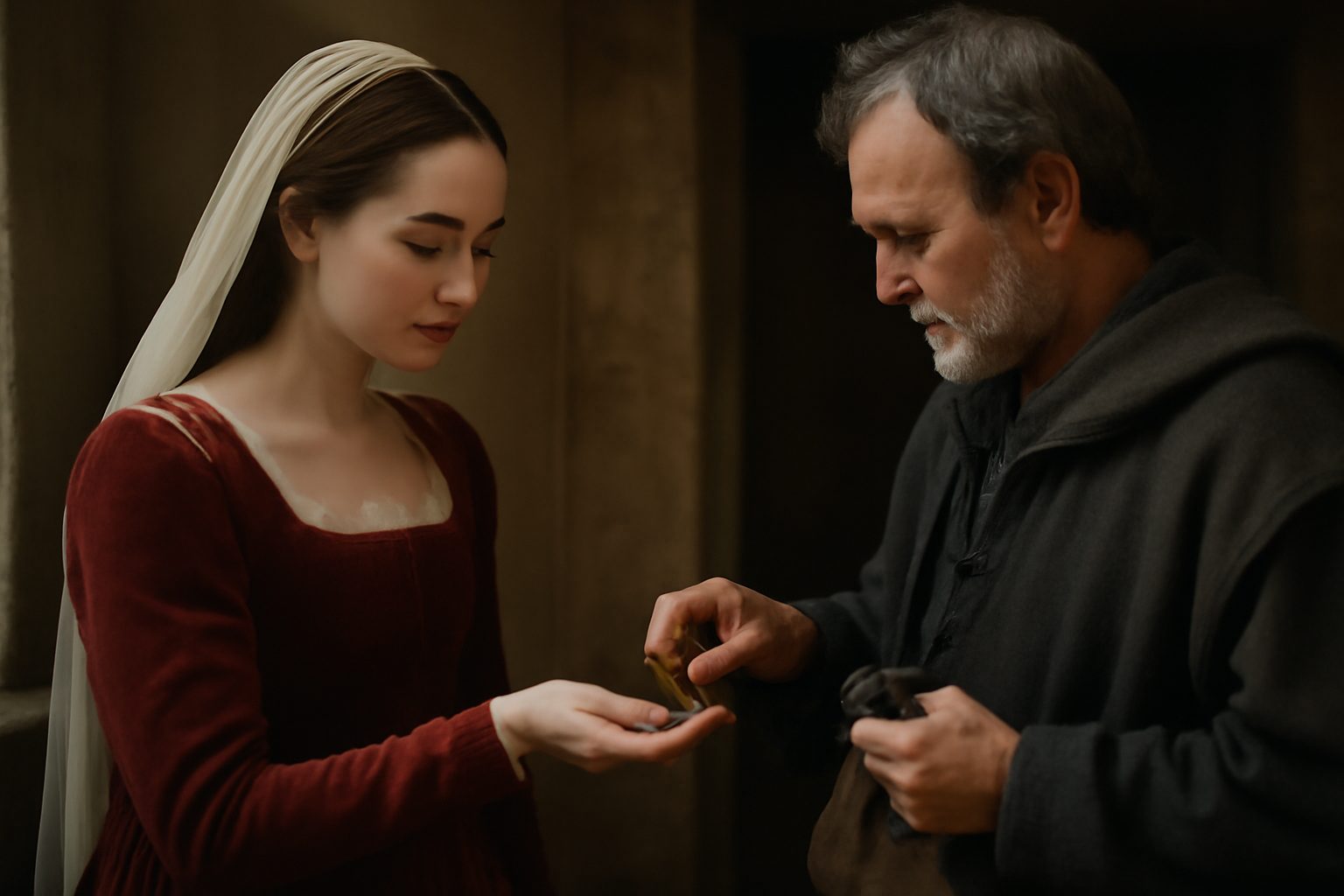
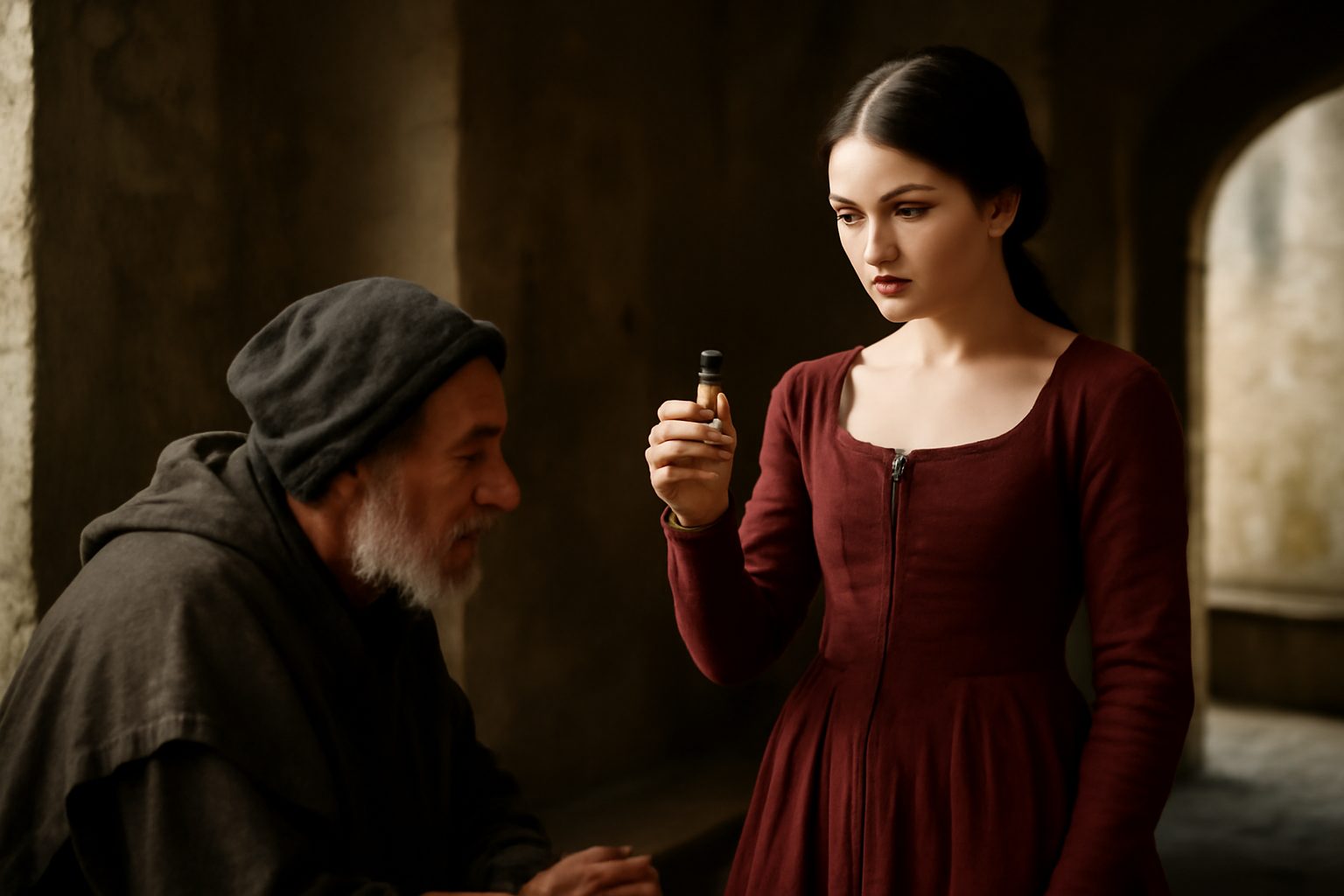
In Act 5, Scene 1 of Romeo and Juliet, Romeo speaks this line while in exile in Mantua, desperate for news from Verona. He is addressing an impoverished apothecary, pressuring him to sell poison despite the man's reluctance, as Romeo has resolved to join Juliet in death. The moment underscores Romeo's reckless despair and the bleak turn of events leading to the play's tragic conclusion.
Romeo: "And this same needy man must sell it me."
In modern day english, we would say:
This poor man has no choice but to sell it to me.
Frequently Asked Questions
What does Romeo want to buy from the needy man in Act 5, Scene 1?
Romeo wants to buy poison from the needy man.
Connections to other verses:
Connections to "And this same needy man must sell it me."
This line from Romeo & Juliet Act 5 Scene 1 – And this same needy man must sell it me. is central to Romeo's interaction with the apothecary and reflects themes of poverty, desperation, and fate.
Poverty and Desperation
The phrase "needy man" directly connects to the apothecary's impoverished state, as described in Sharp misery had worn him to the bones: and Art thou so bare and full of wretchedness,. Romeo acknowledges the apothecary's need, which he exploits to acquire the poison.
Foreshadowing and Fate
Romeo's assertion that the apothecary "must sell it me" echoes his earlier realization in O, this same thought did but forerun my need;, highlighting how his desperation aligns with fate. This inevitability is reinforced by Here lives a caitiff wretch would sell it him., where Romeo recalls the apothecary's willingness to break the law due to poverty.
Moral and Economic Commentary
The transaction underscores the play's critique of wealth and morality. Romeo states, I pay thy poverty, and not thy will., acknowledging that the apothecary's consent is driven by need rather than choice. This is further emphasized in My poverty, but not my will, consents., where the apothecary himself admits his compromised morals.
Symbolism of Poison and Death
The line is part of Romeo's quest for poison, as introduced in An if a man did need a poison now,. The deadly nature of the transaction is highlighted in Whose sale is present death in Mantua,, creating a direct link between the apothecary's poverty and the instrument of Romeo's demise.