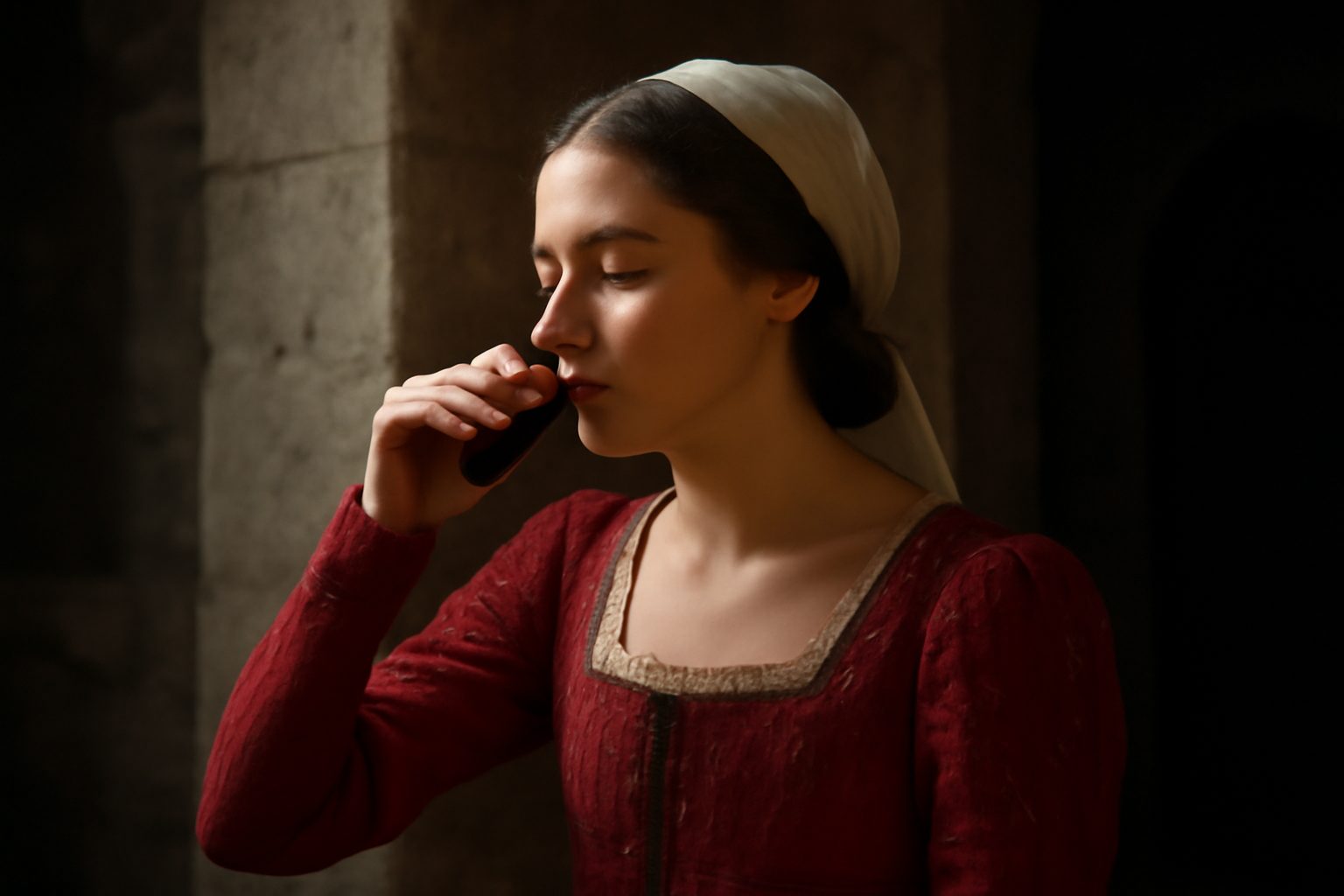
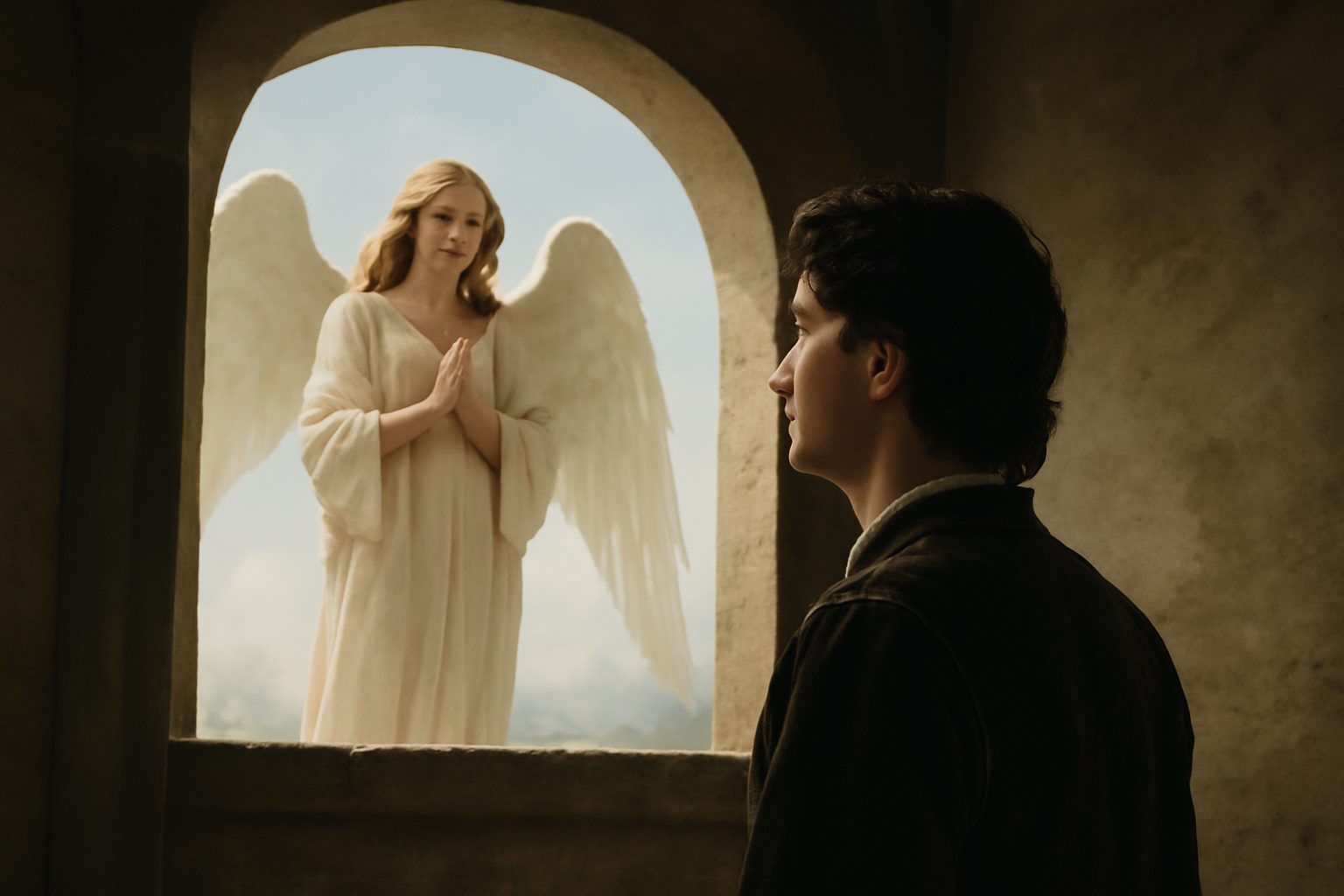
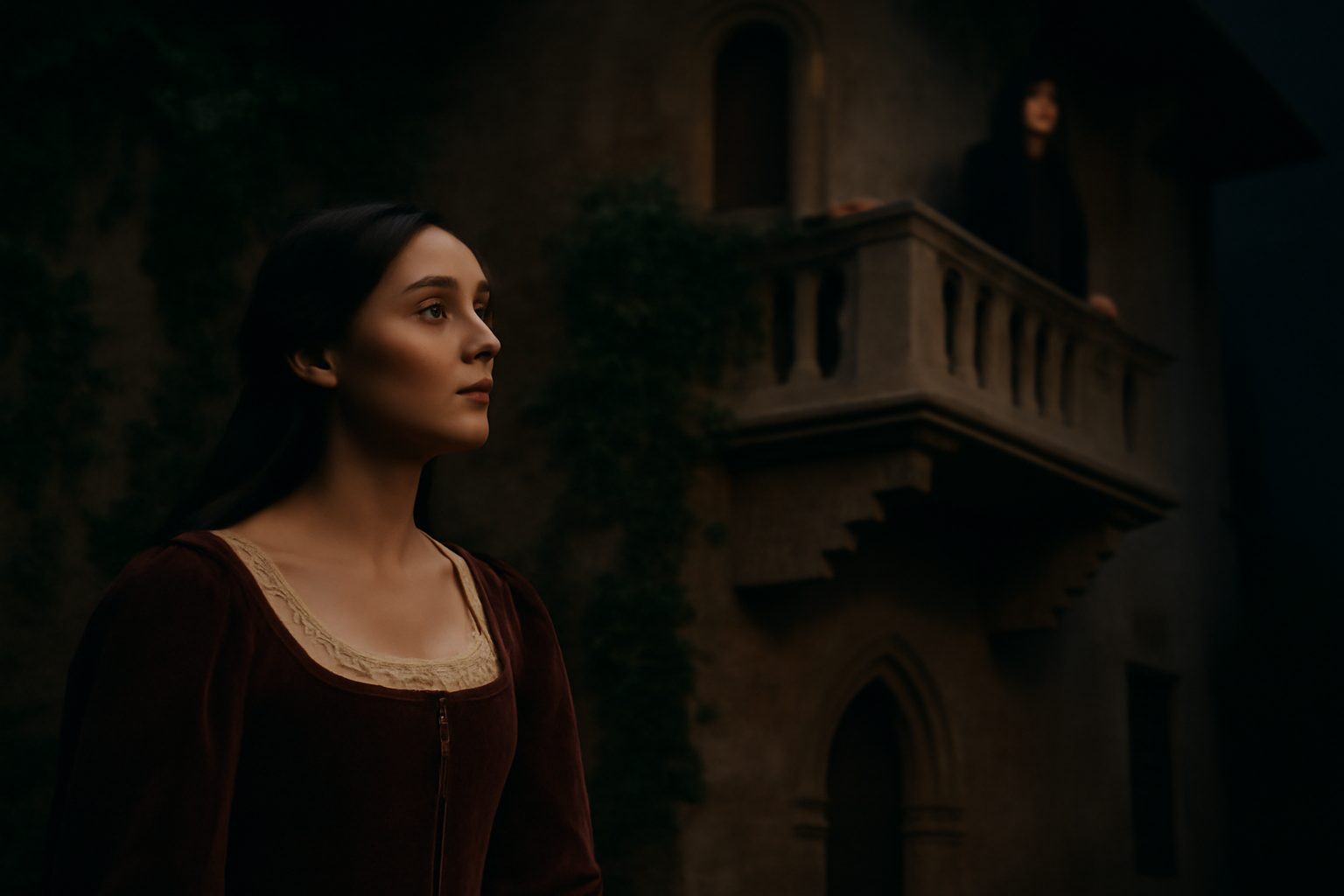
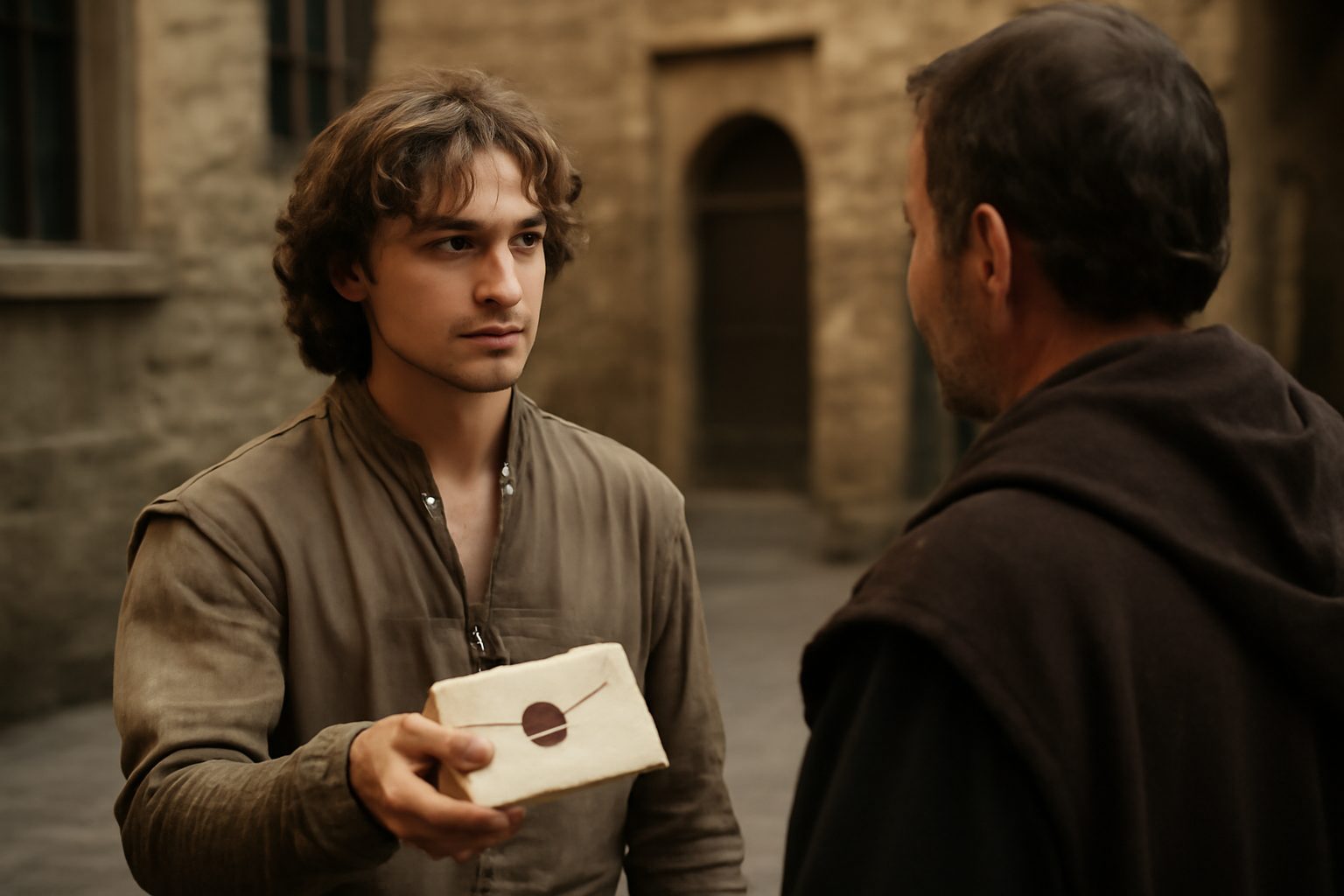
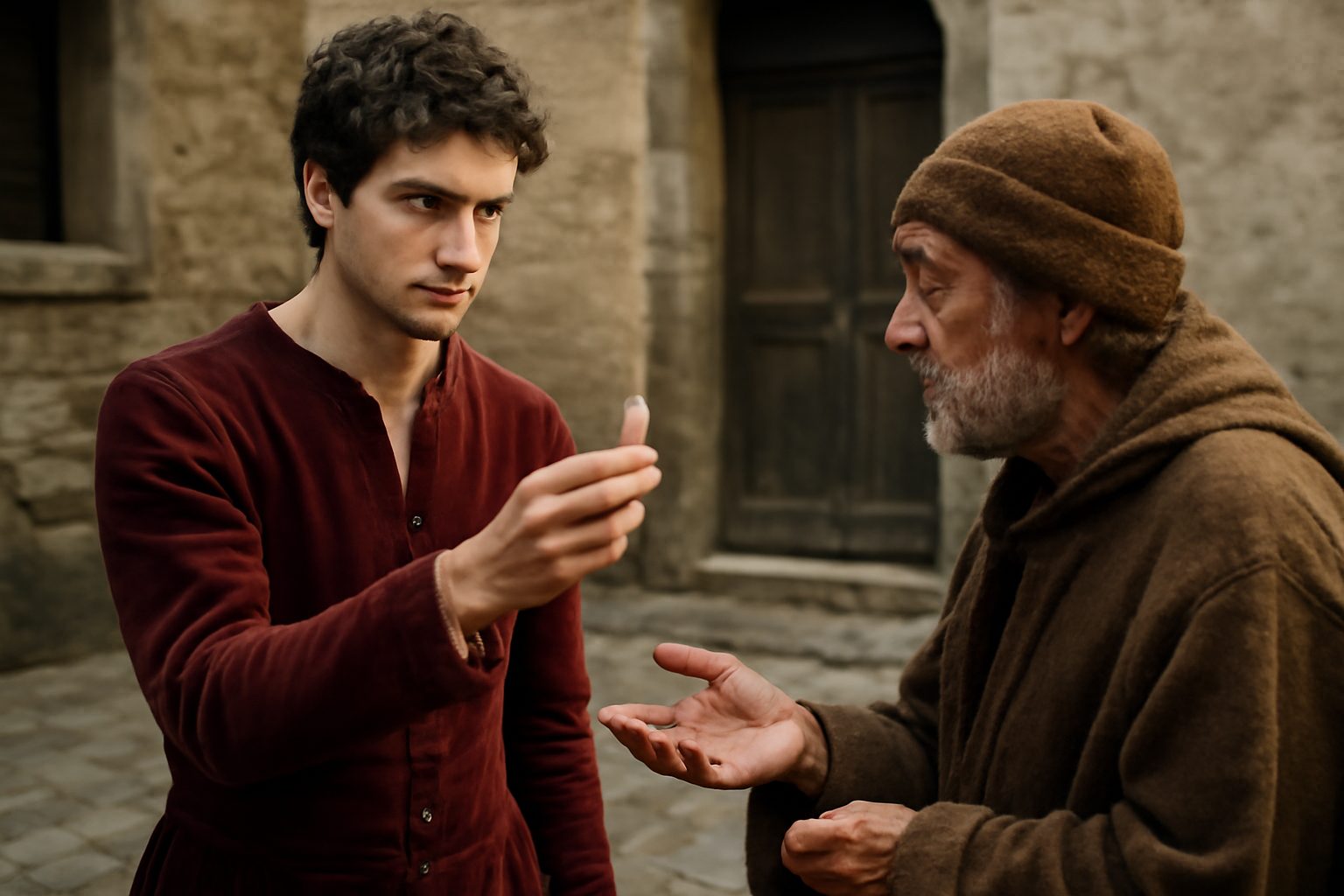
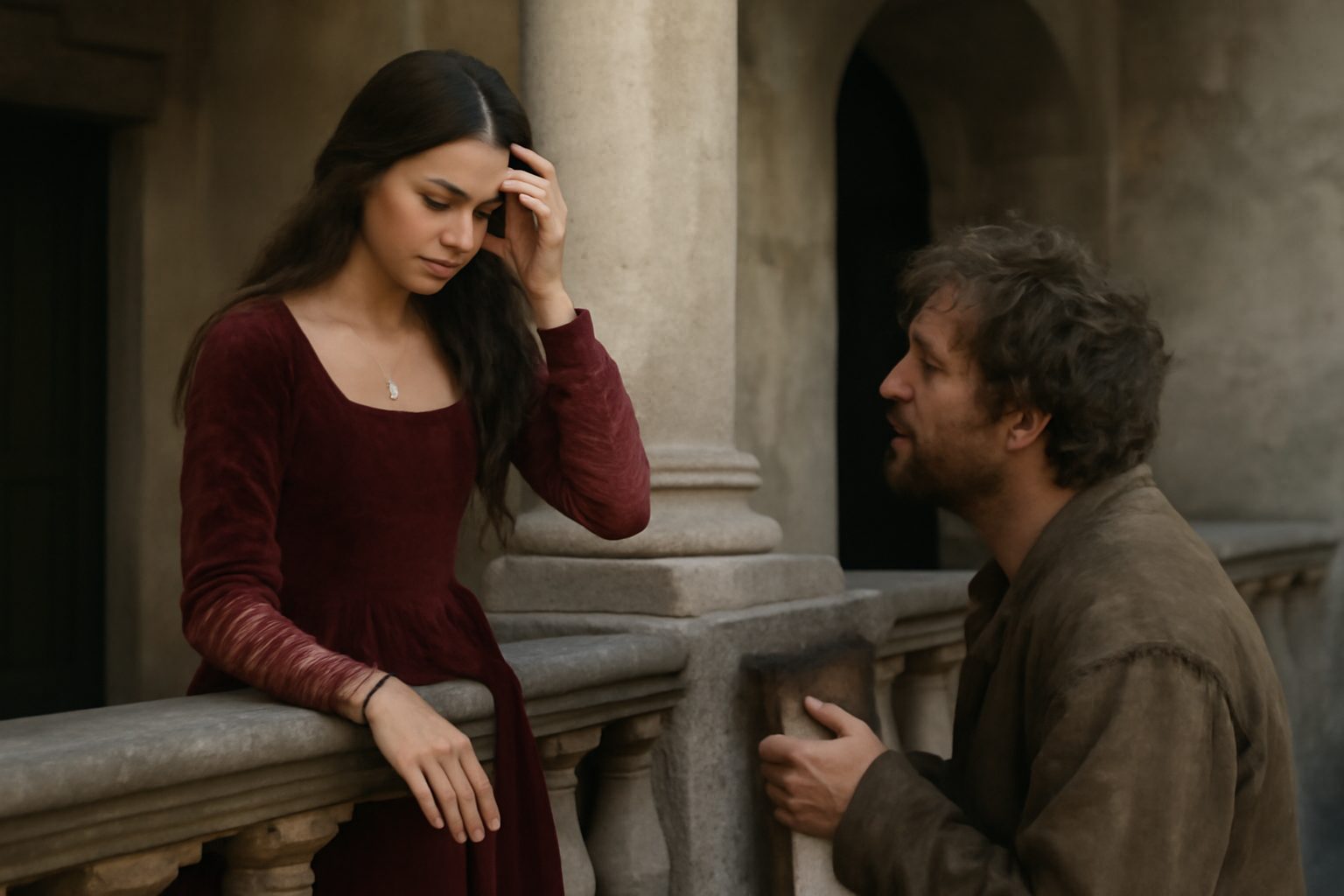
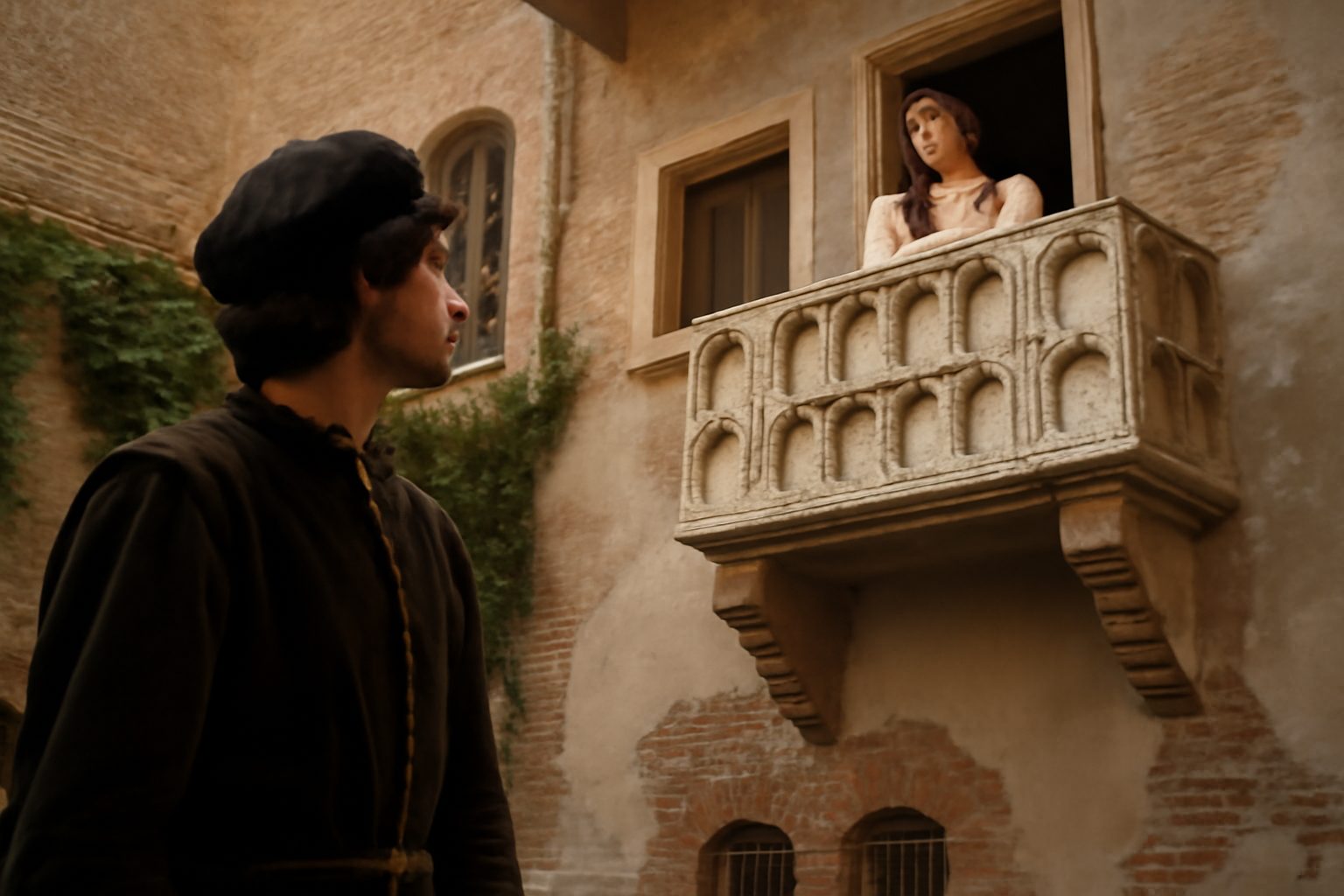
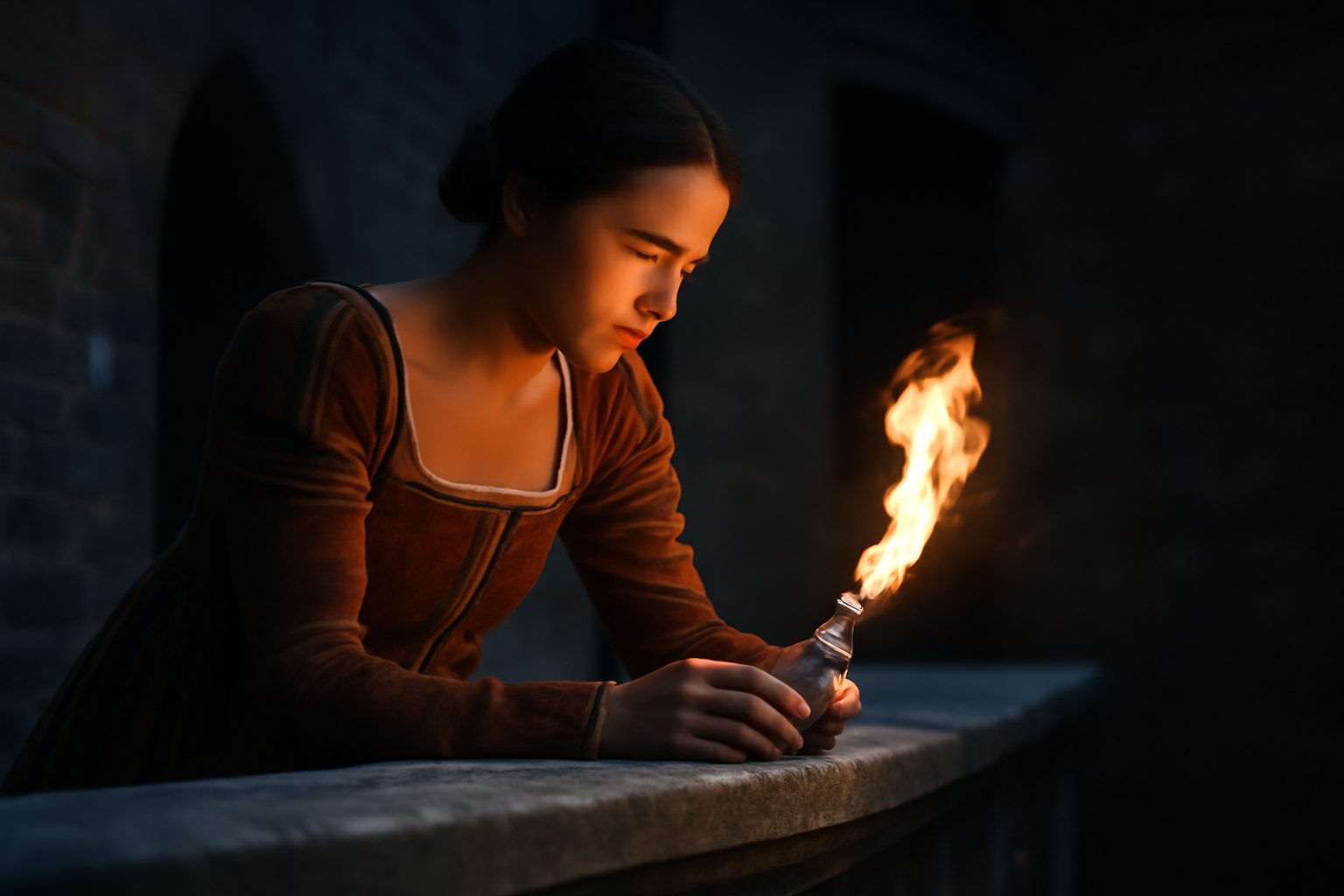
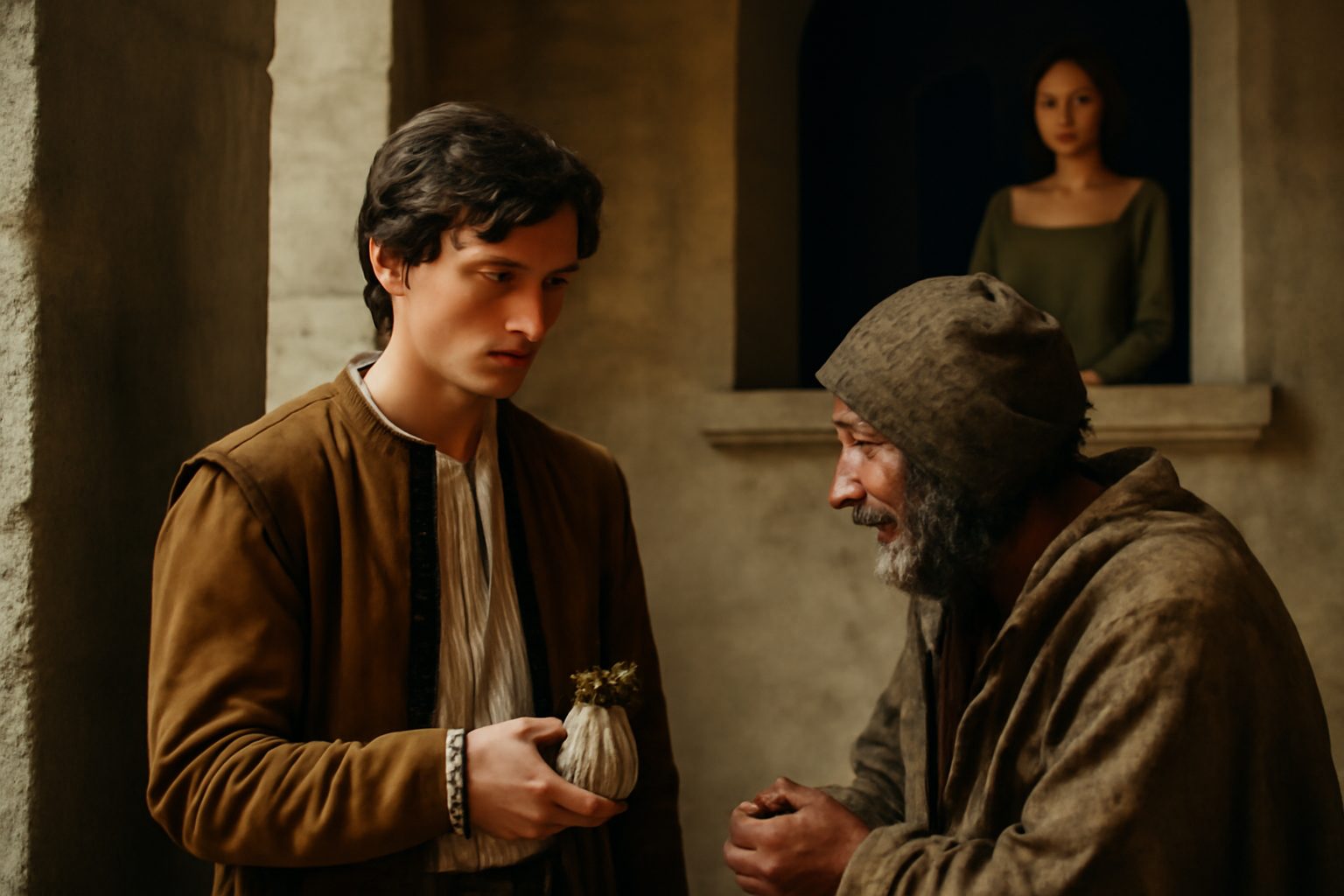
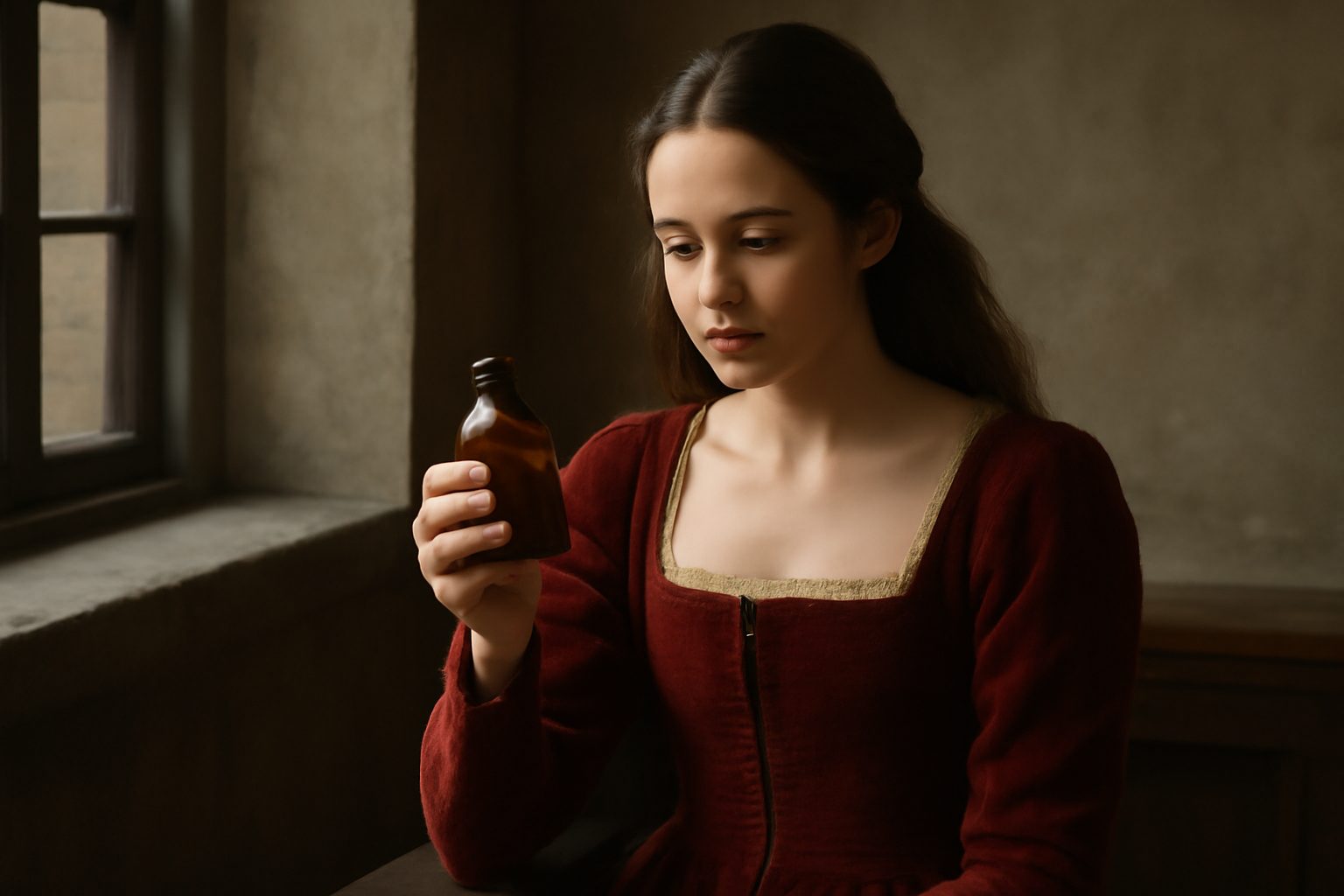
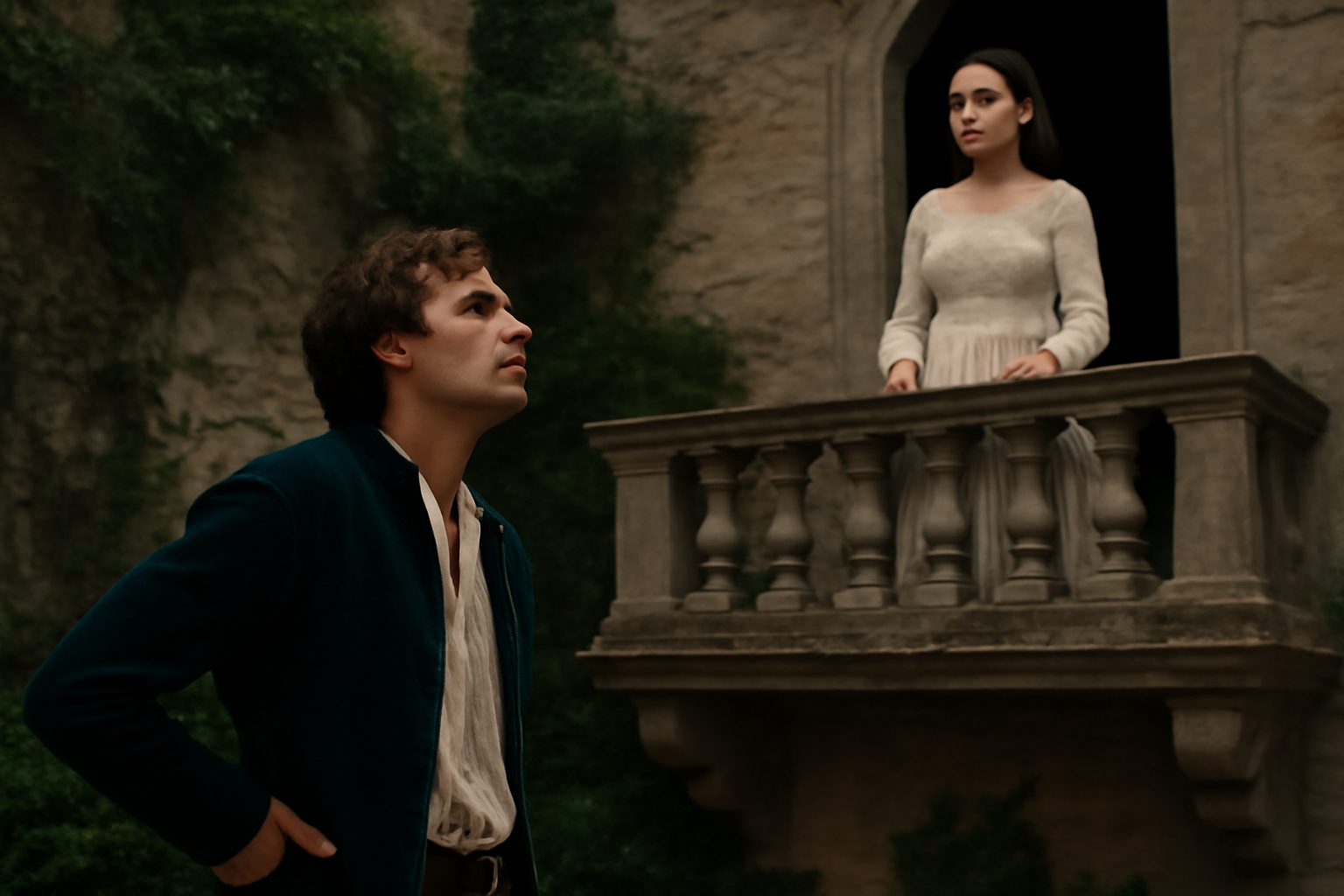
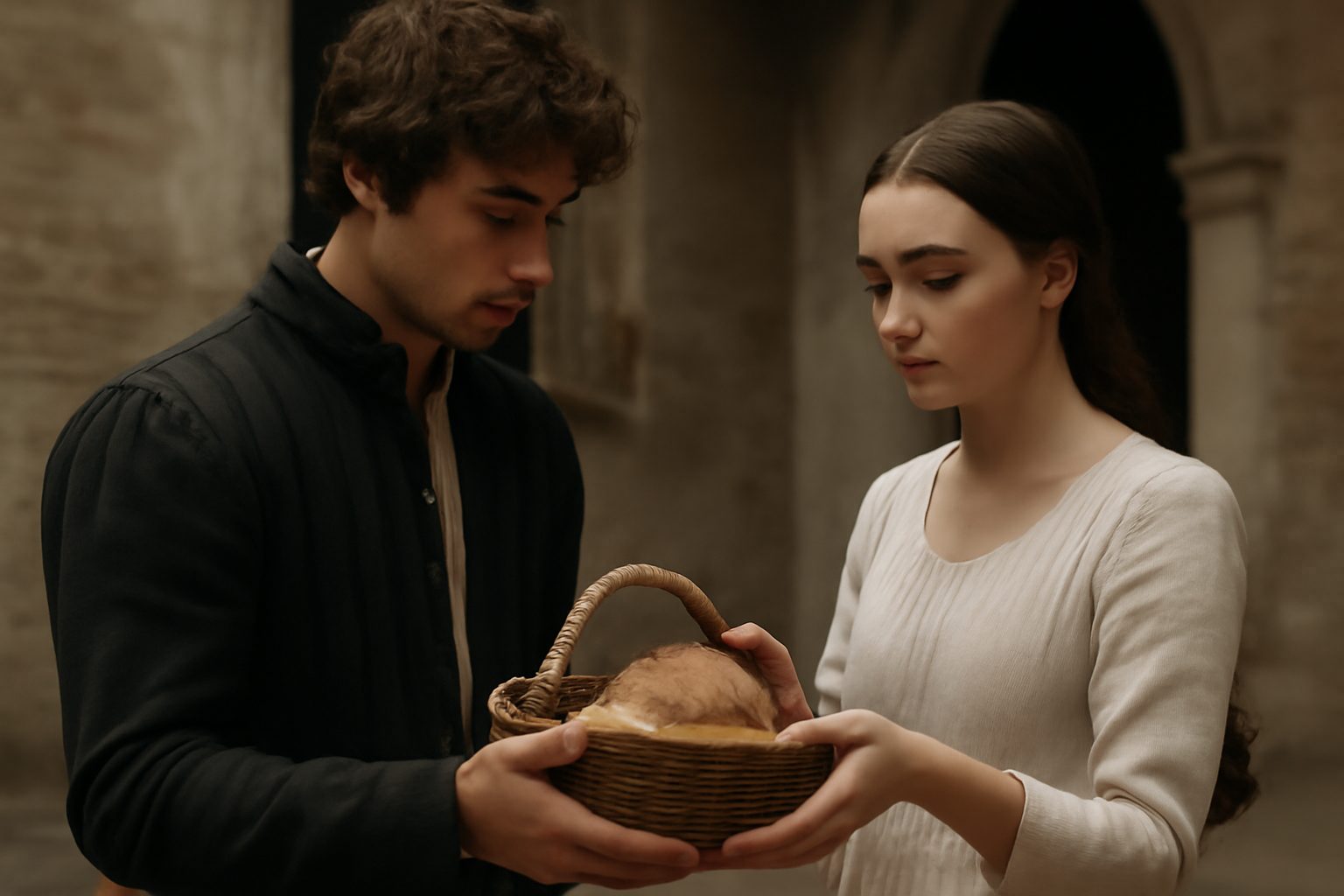
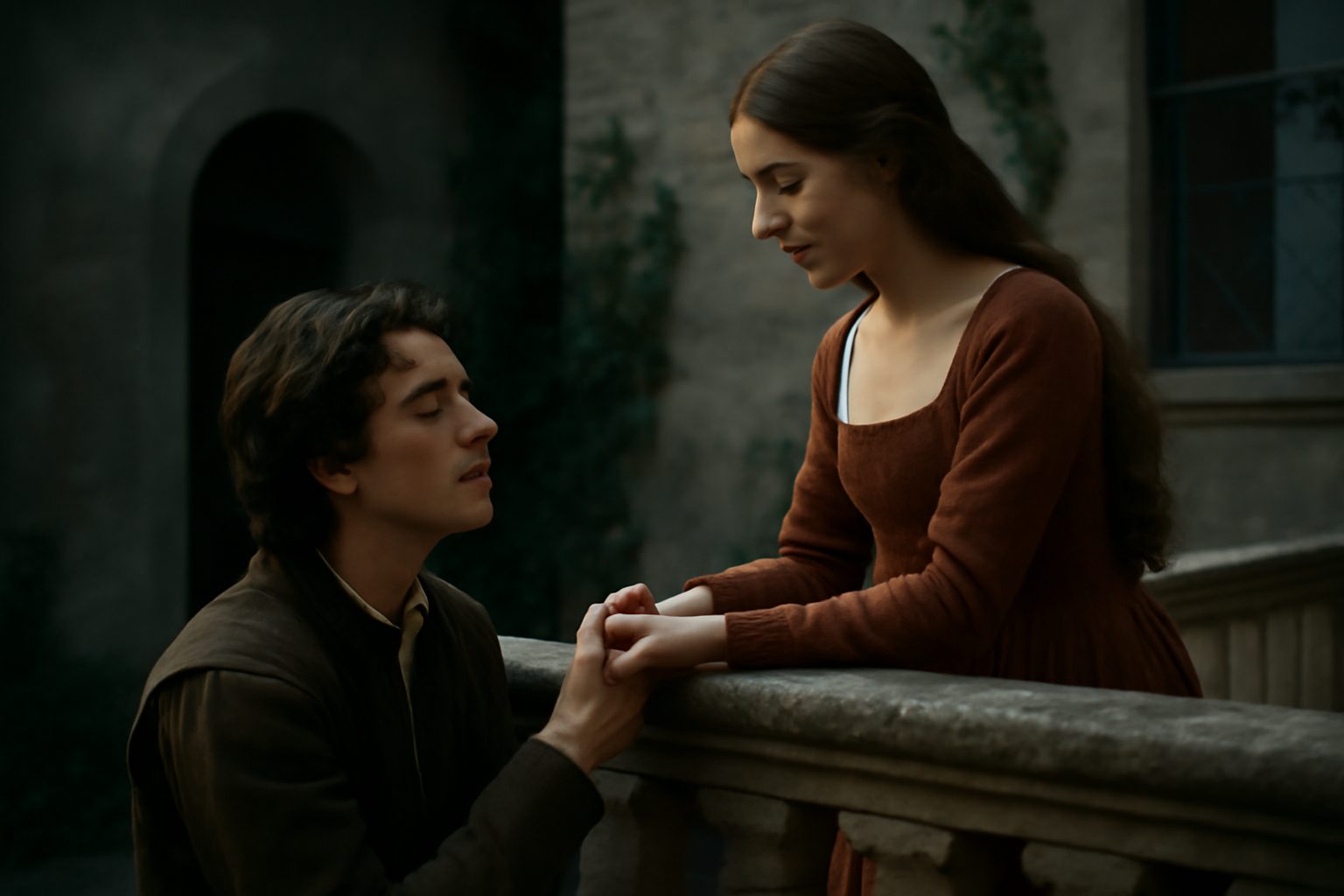
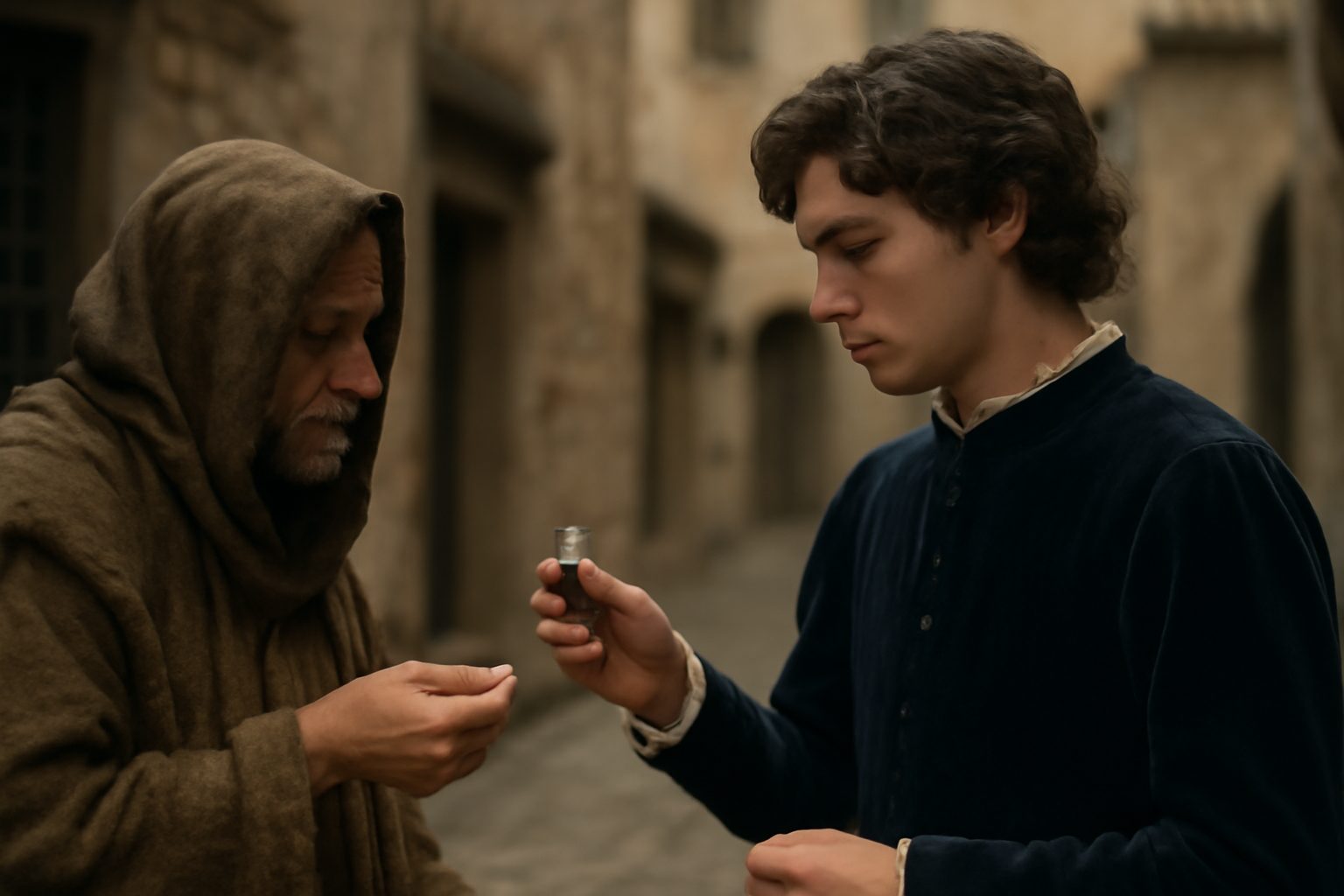
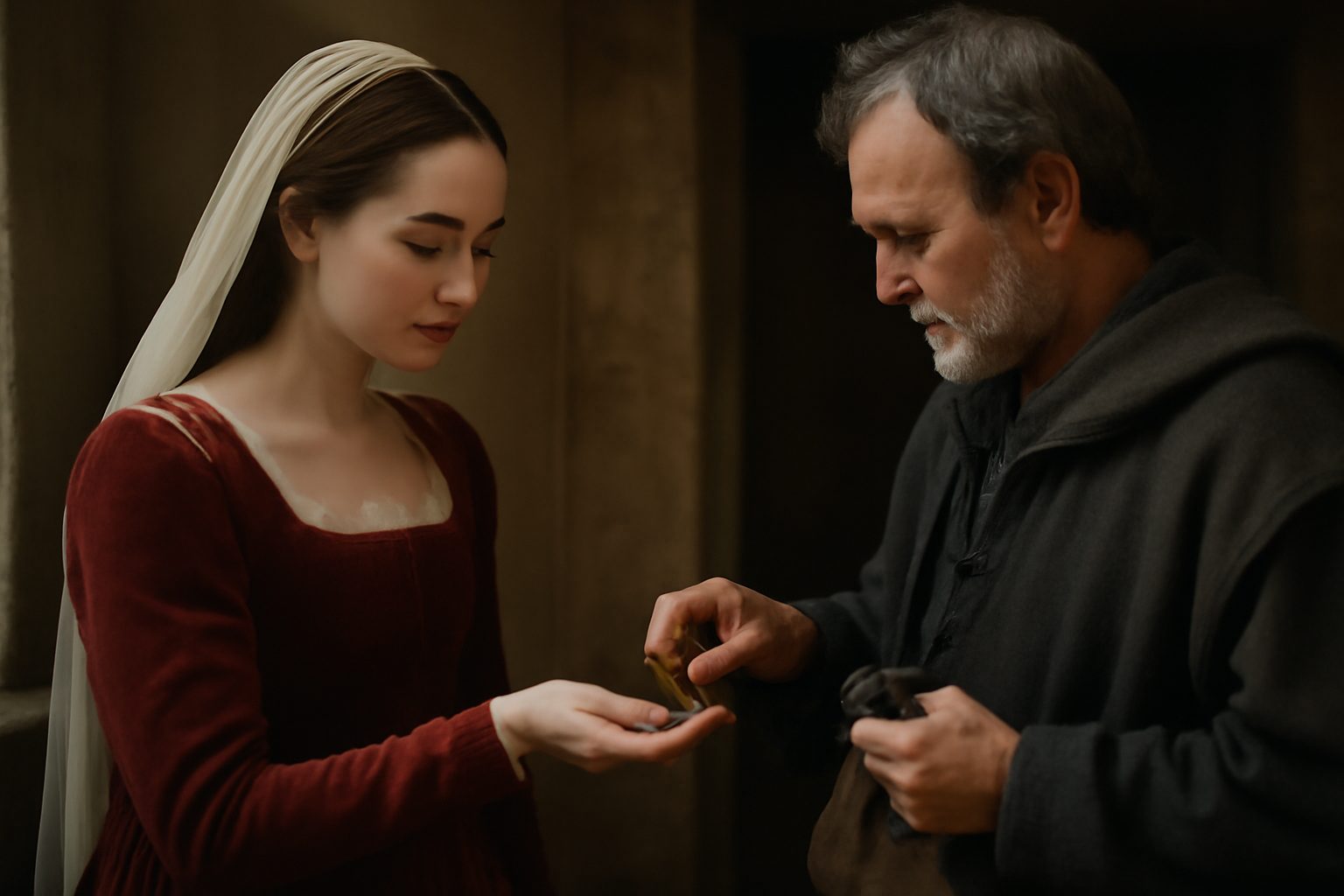
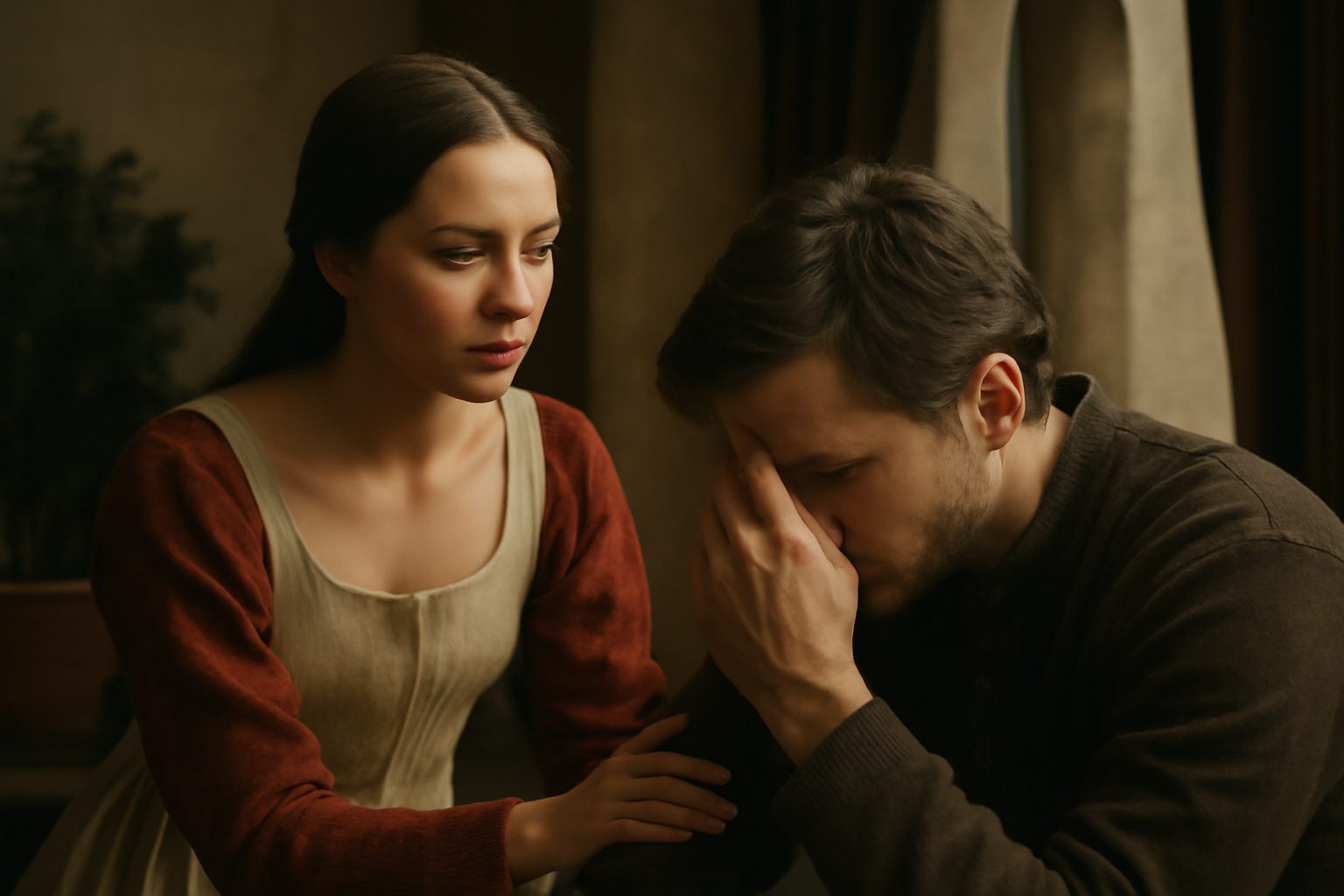
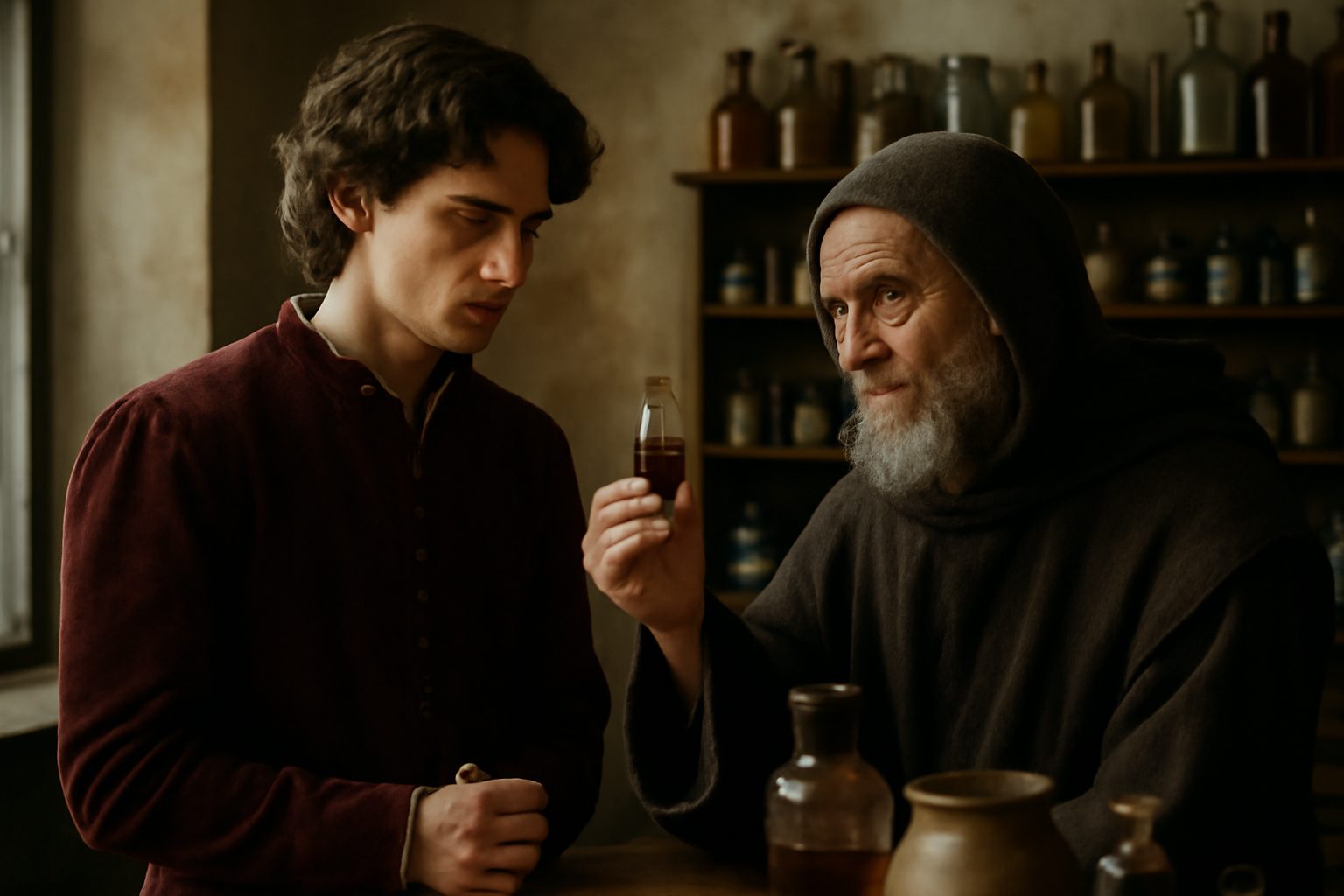
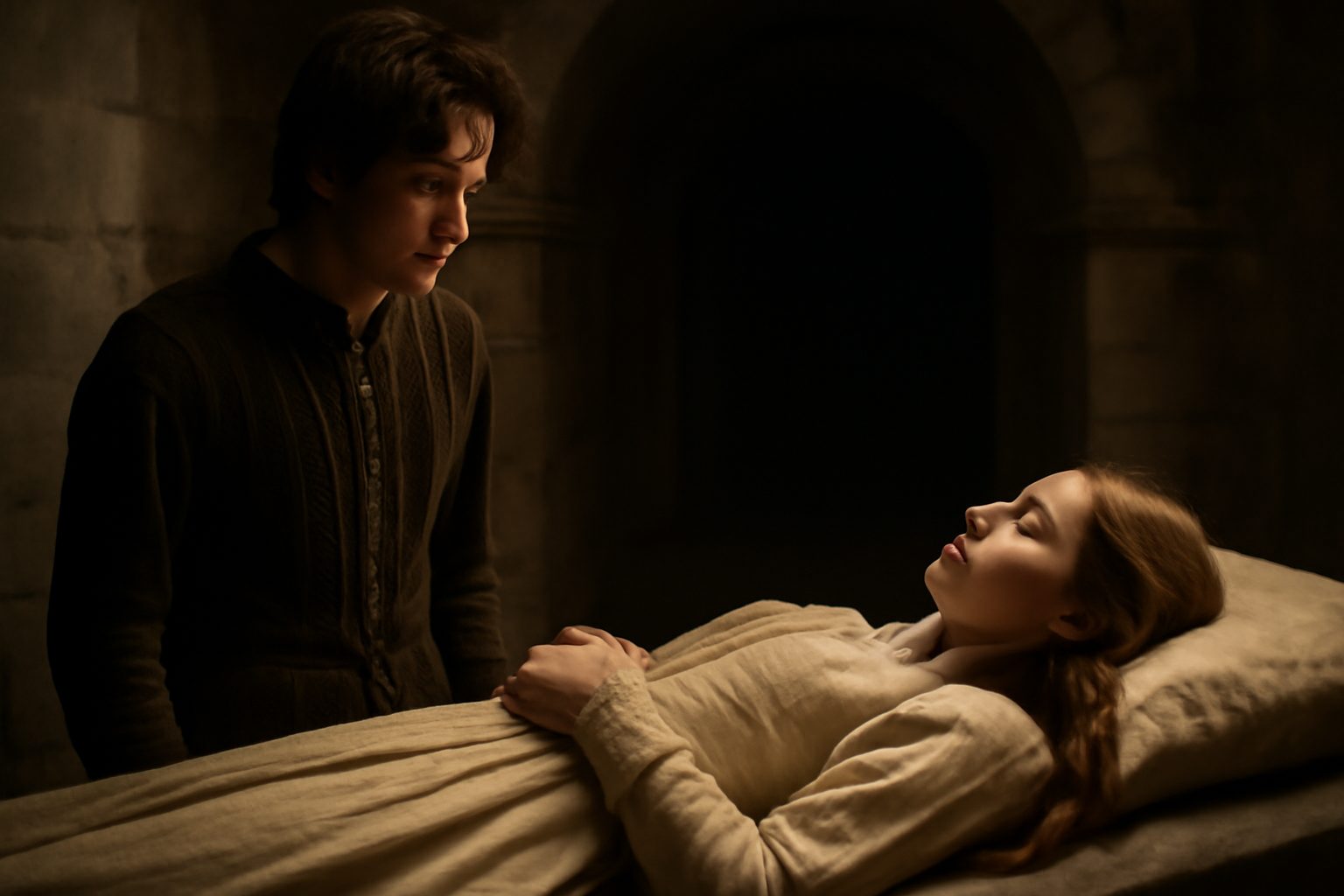
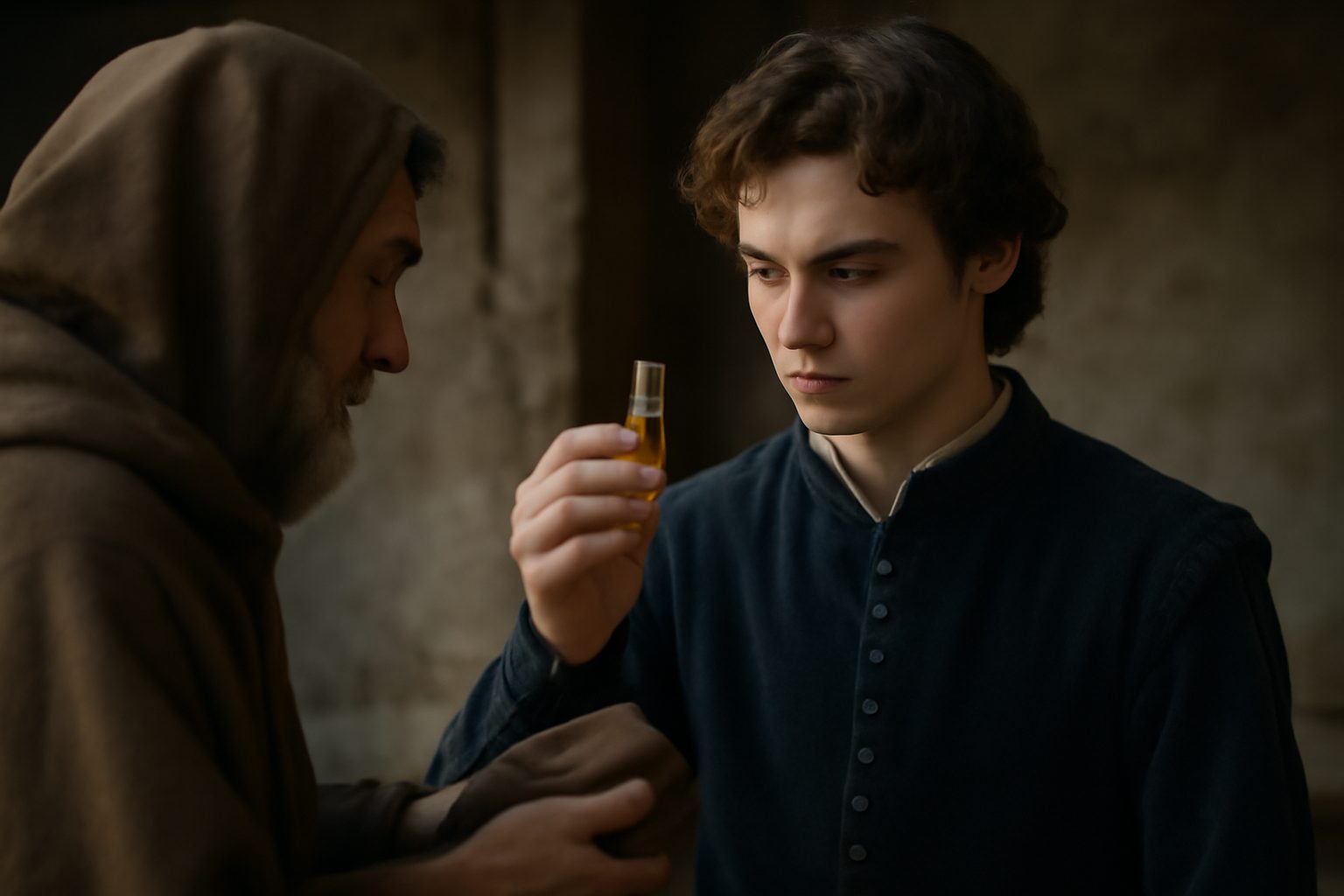
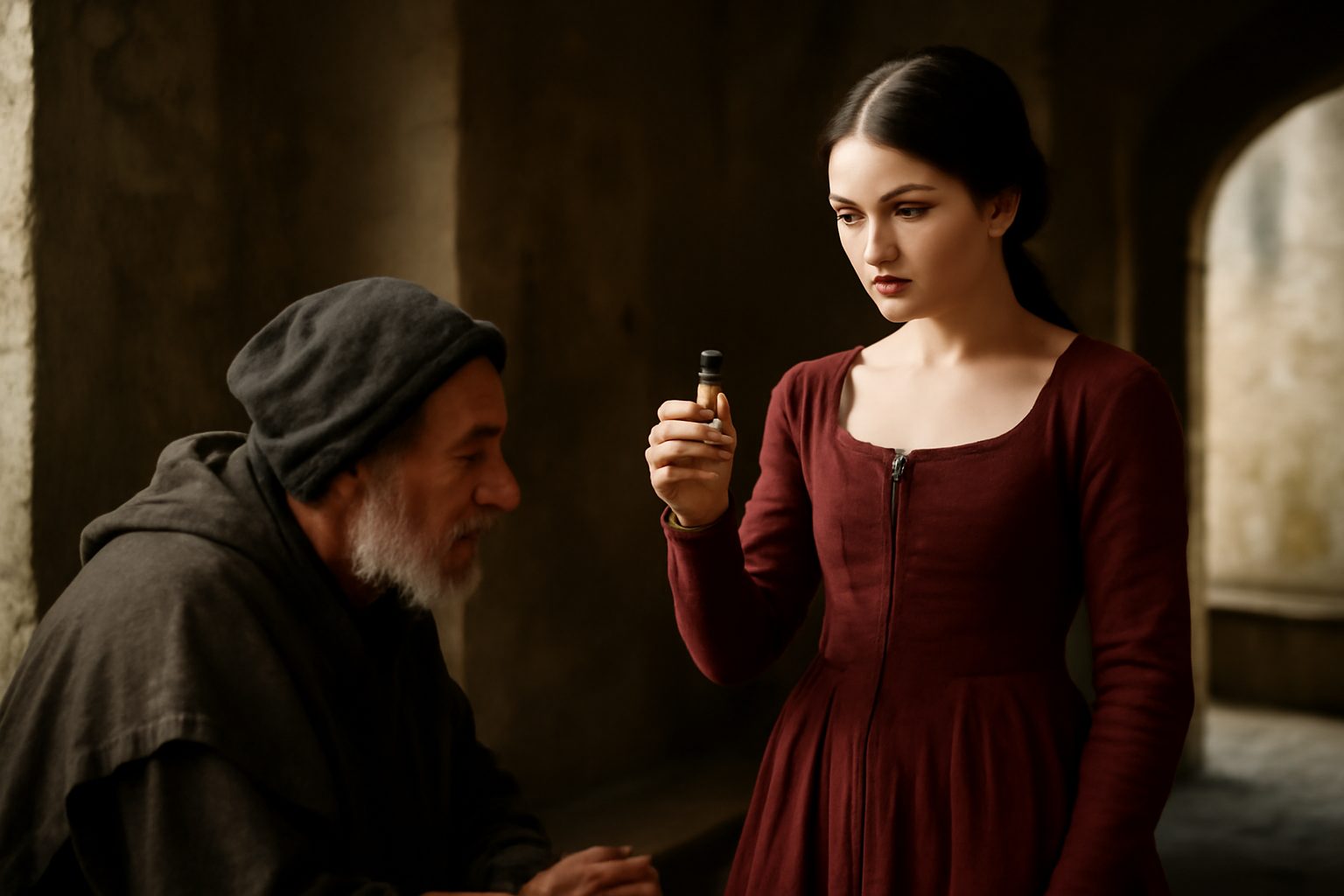
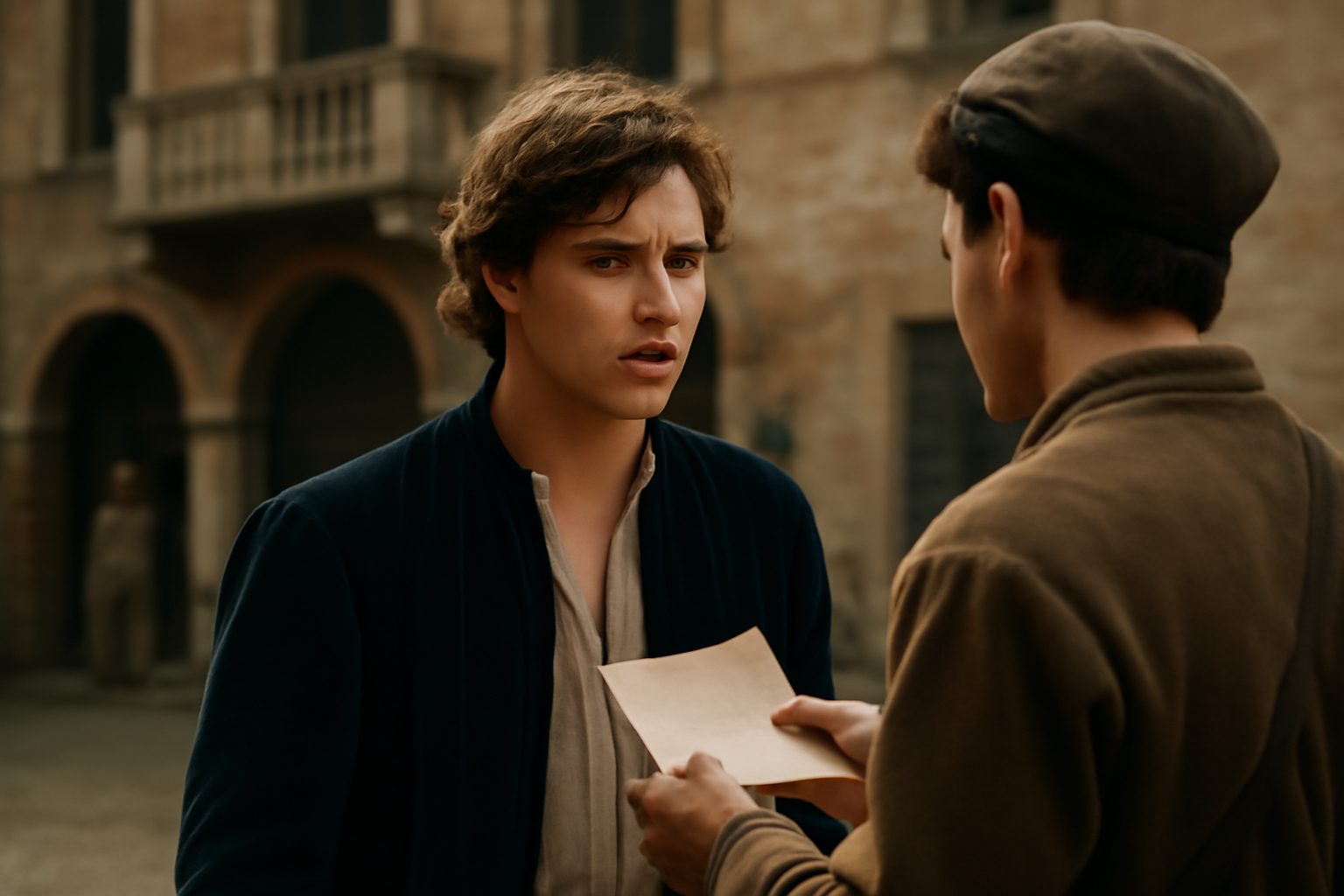
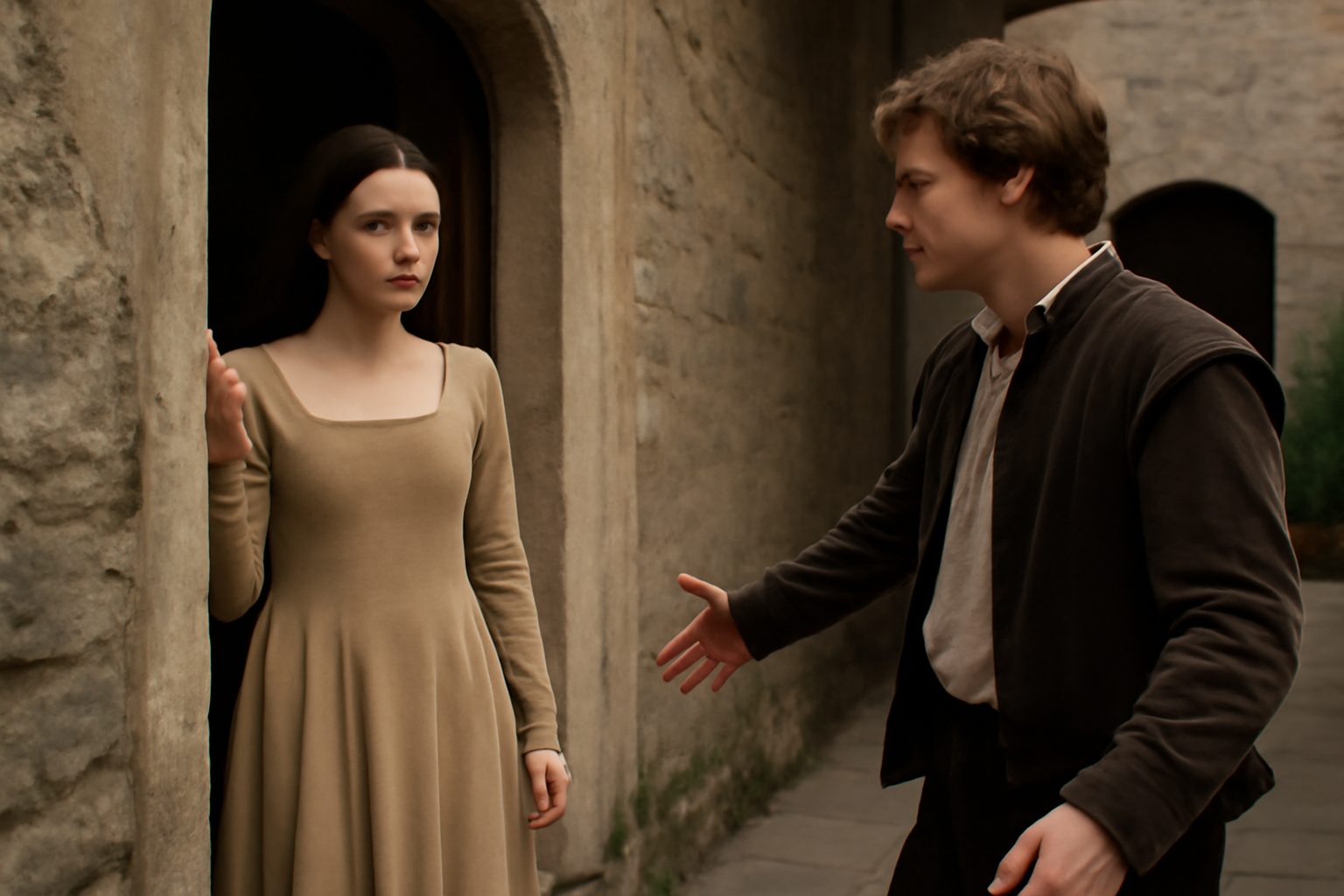
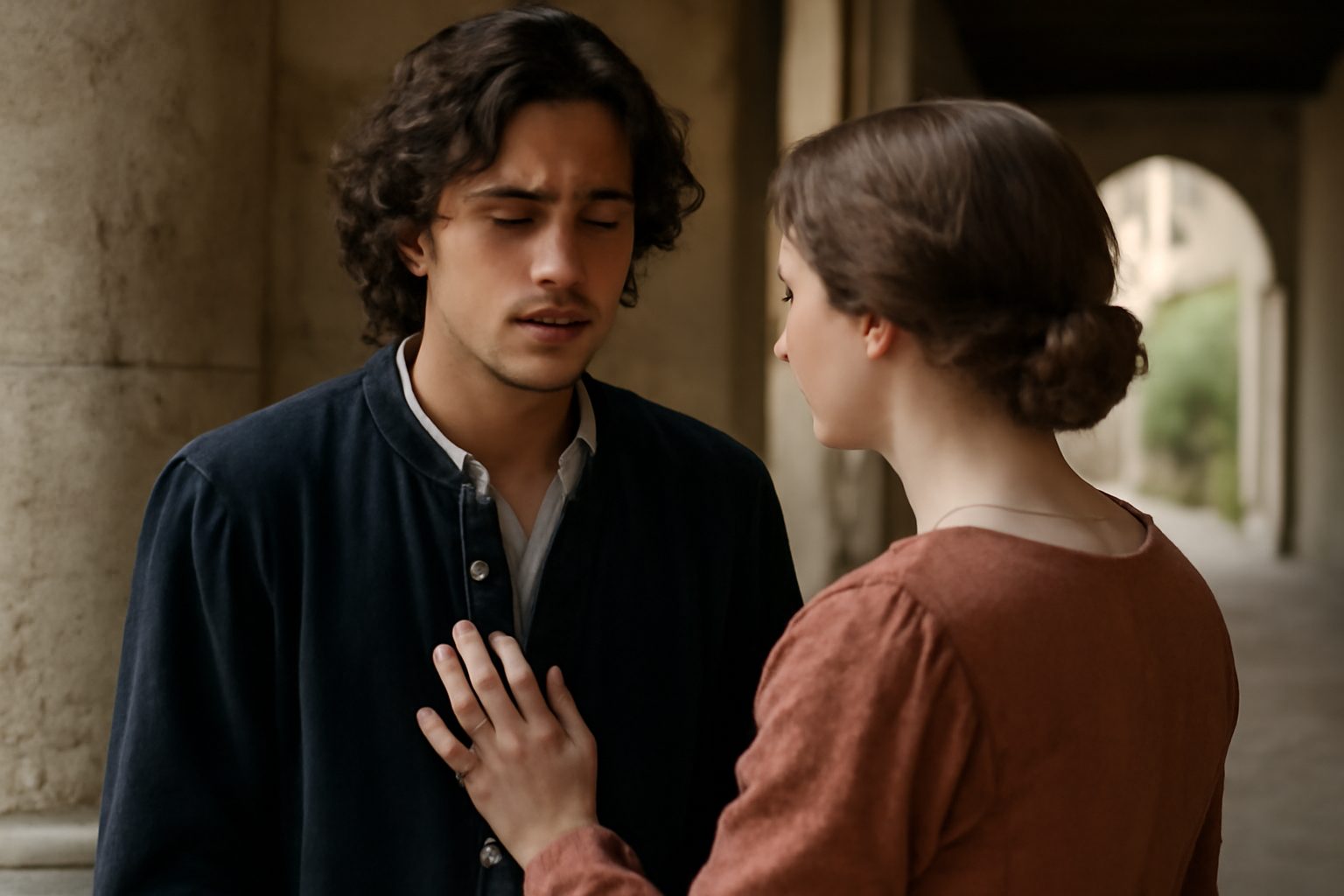
In Act 5, Scene 1 of Romeo and Juliet, Romeo, exiled in Mantua, awaits news from Verona. His servant Balthasar arrives with tragic misinformation—Juliet’s supposed death—prompting Romeo to seek poison from a poor apothecary. The line about the beggar’s shop being shut reflects the apothecary’s initial reluctance to sell, as it is a holiday and he fears the law.
Romeo: "Being holiday, the beggar's shop is shut."
In modern day english, we would say:
Since it’s a holiday, the apothecary’s shop is closed.
Frequently Asked Questions
What does Romeo mean when he says the beggar's shop is shut?
Romeo means that because it is a holiday, the apothecary (referred to as the beggar's shop) is closed and not selling anything.
Connections to other verses:
Connections to "Being holiday, the beggar's shop is shut."
This verse, found at /romeo-and-juliet/five/5-1/act-5-scene-1-59/, highlights the apothecary's poverty and the irony of a holiday preventing Romeo from obtaining poison. It connects thematically and contextually to several other verses in the scene.
Poverty and Desperation
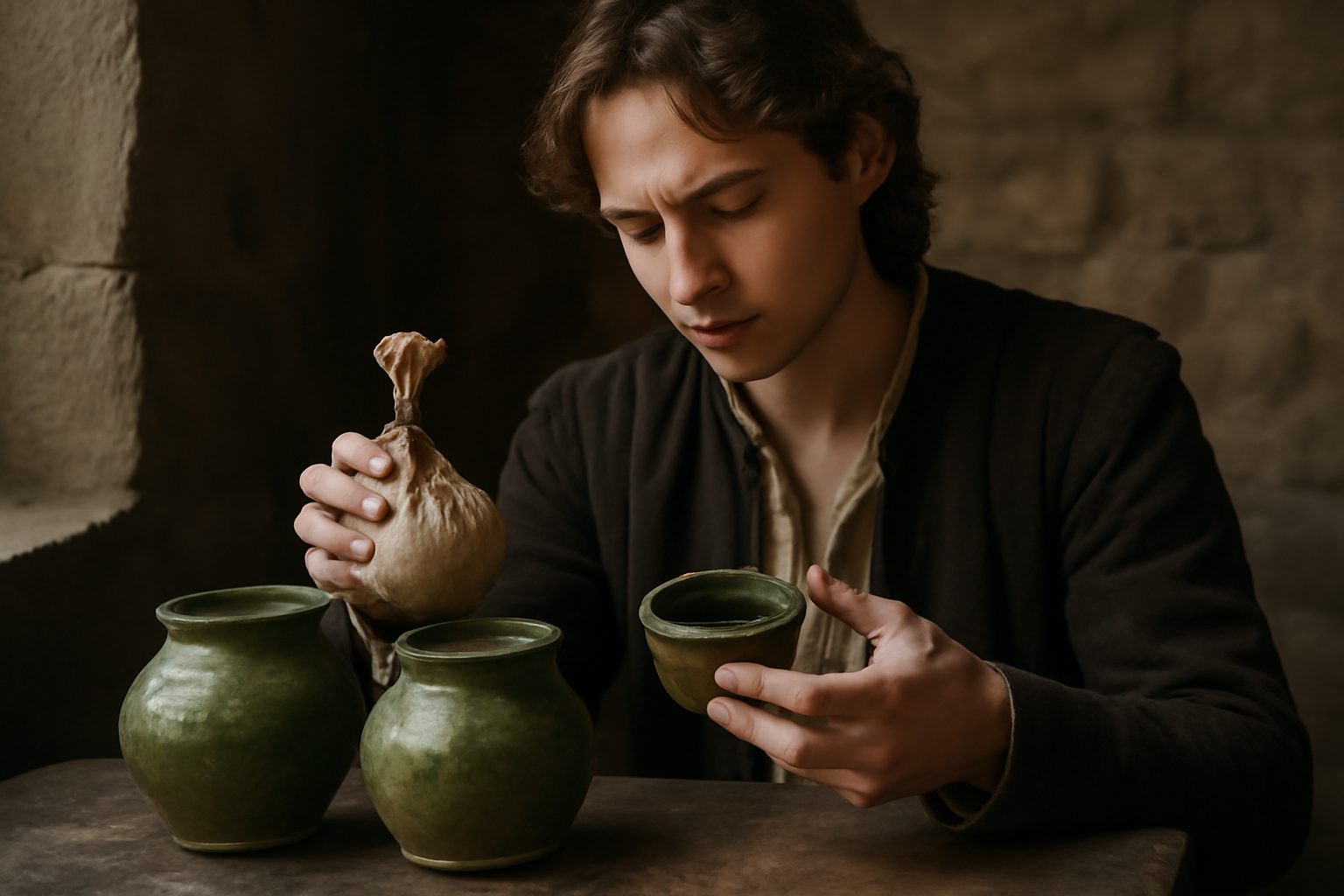
The apothecary's impoverished state is emphasized in "Art thou so bare and full of wretchedness", where Romeo observes the man's dire condition. This is further detailed in "Culling of simples; meagre were his looks" and "Sharp misery had worn him to the bones", painting a vivid picture of his suffering. The shop's contents, described in "A beggarly account of empty boxes" and "Green earthen pots, bladders and musty seeds", reinforce the theme of destitution.
Acquisition of Poison
Romeo's need for poison is introduced in "An if a man did need a poison now", and his determination is clear in "And this same needy man must sell it me". The potency of the poison is described in "A dram of poison, such soon-speeding gear" and its effects in "As will disperse itself through all the veins".
Legal and Moral Conflict
The apothecary's hesitation due to Mantua's law is noted in "Such mortal drugs I have; but Mantua's law" and "Whose sale is present death in Mantua". Romeo's persuasion, highlighting the man's poverty, is evident in "The world affords no law to make thee rich" and "Then be not poor, but break it, and take this".
Romeo's Resolve and Irony
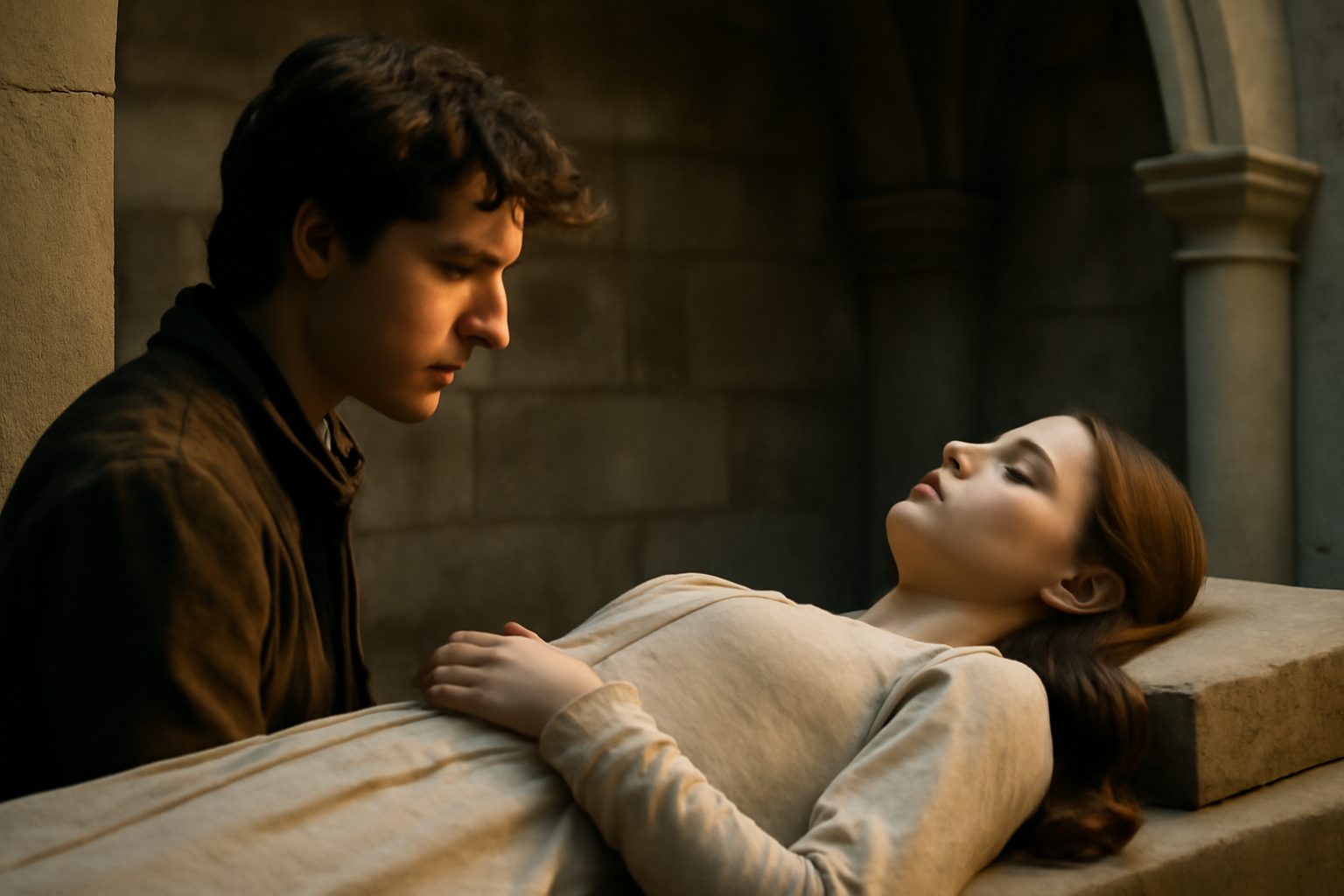
Romeo's desperation is foreshadowed in "Is it even so? then I defy you, stars!", and his plan is solidified in "Well, Juliet, I will lie with thee to-night". The irony of the holiday closing the shop contrasts with the urgency of his mission, emphasized in "Let's see for means: O mischief, thou art swift".