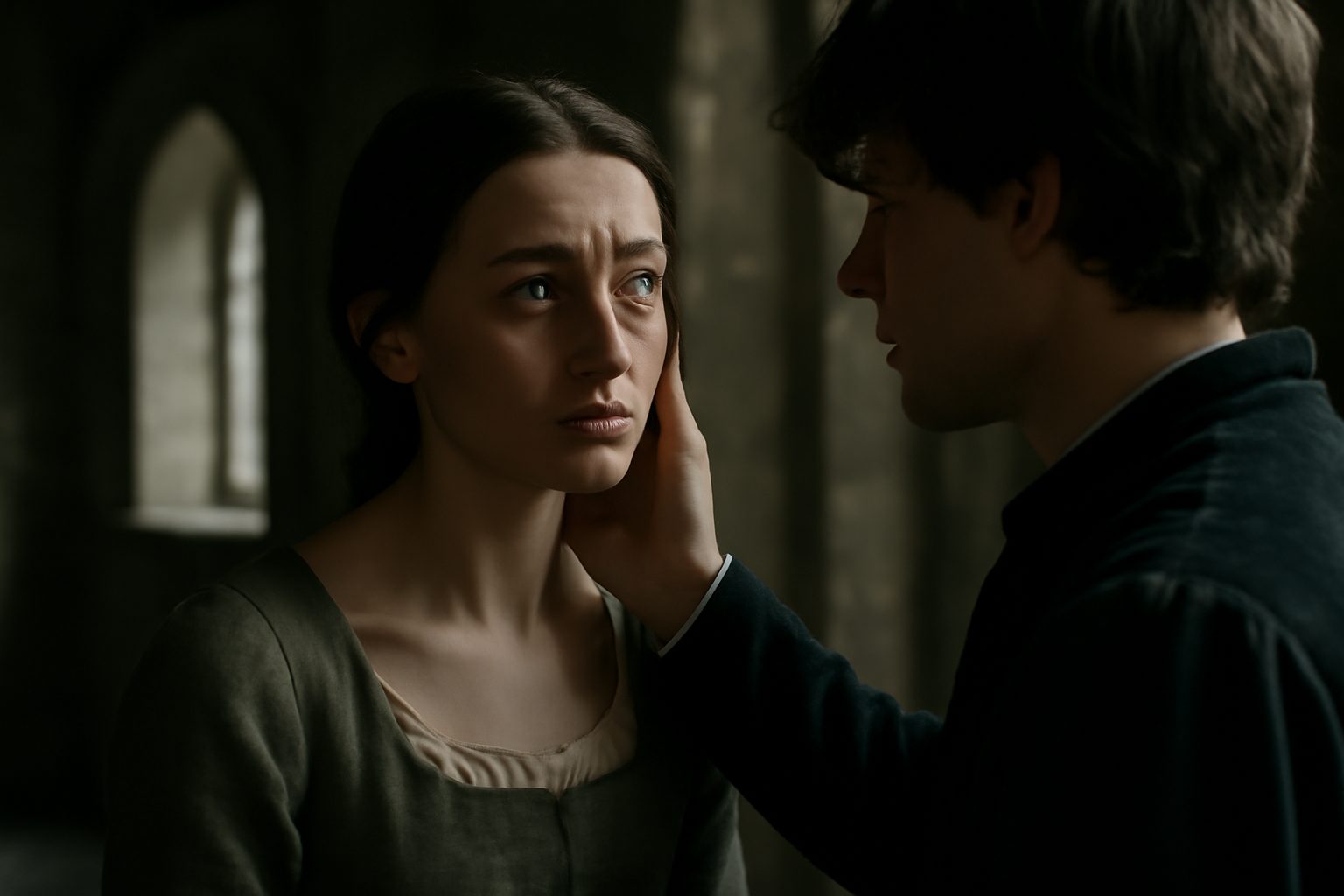
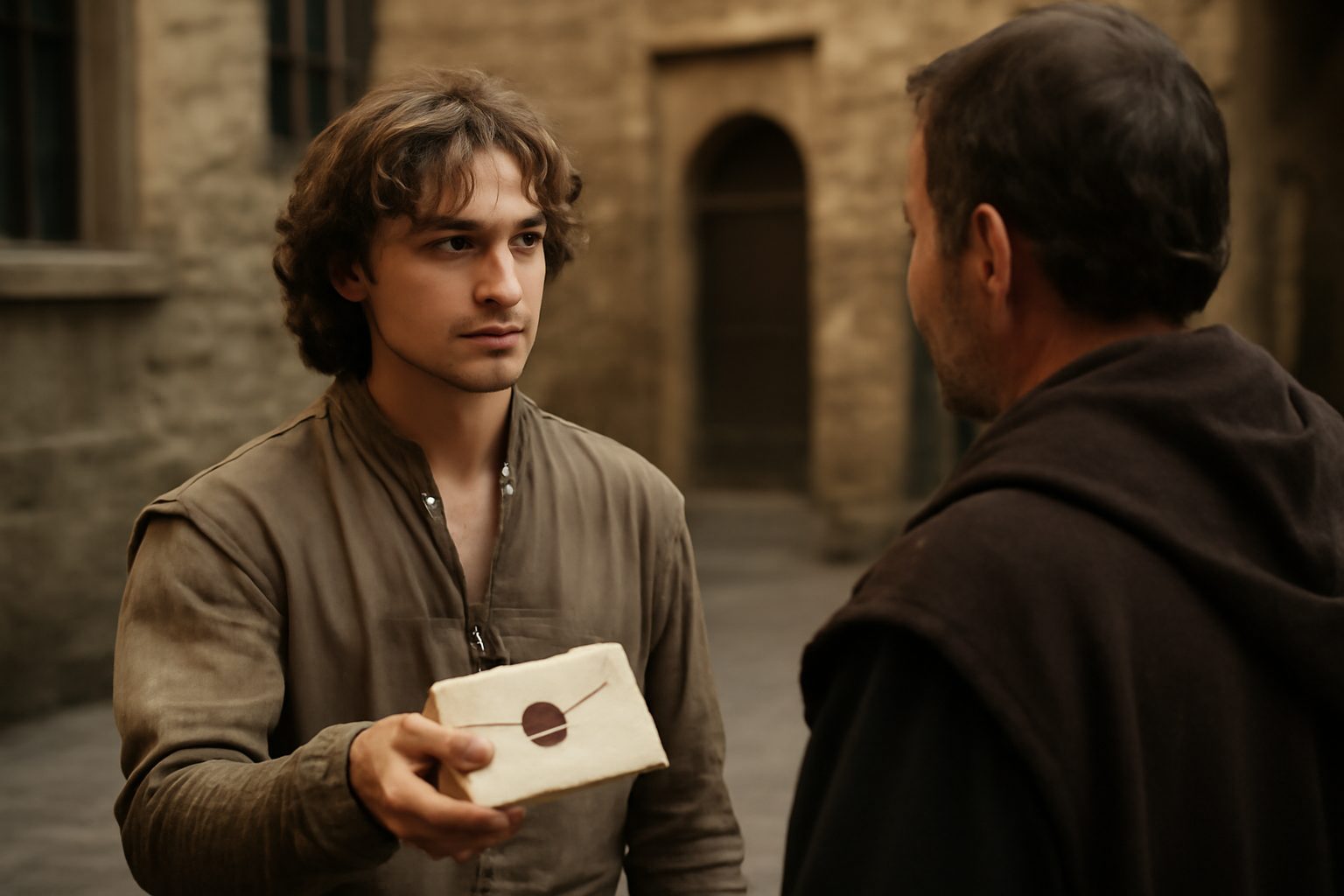
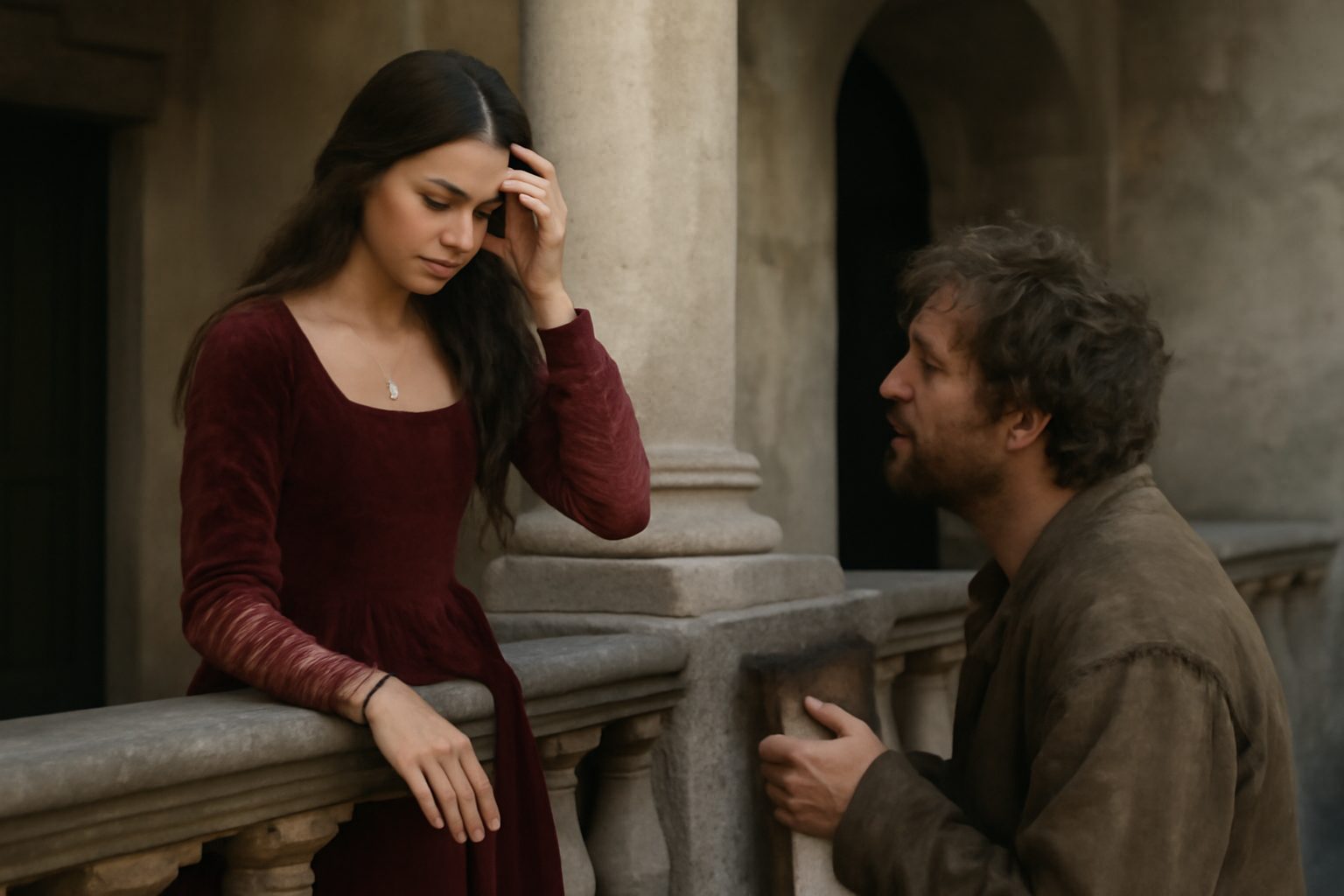
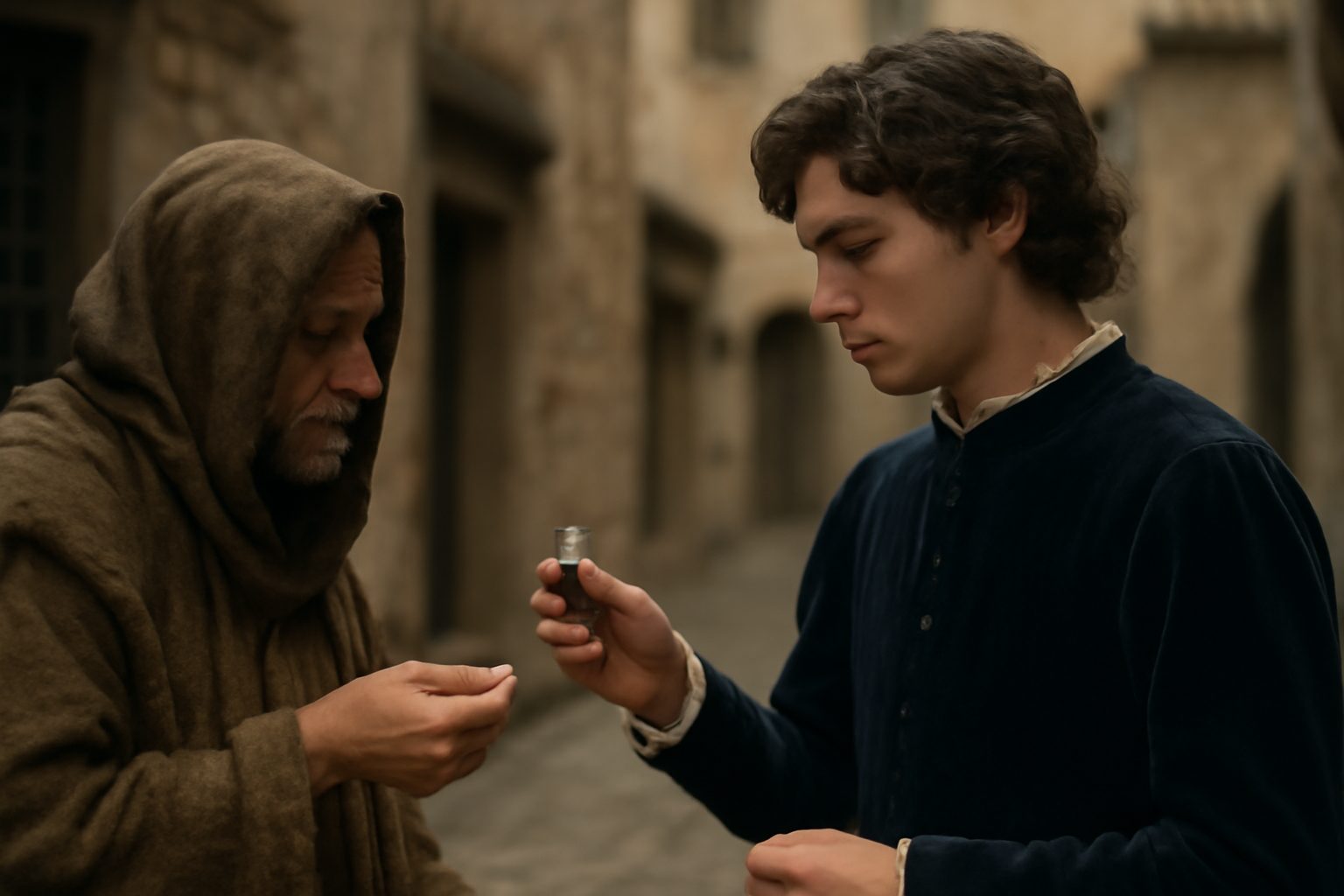
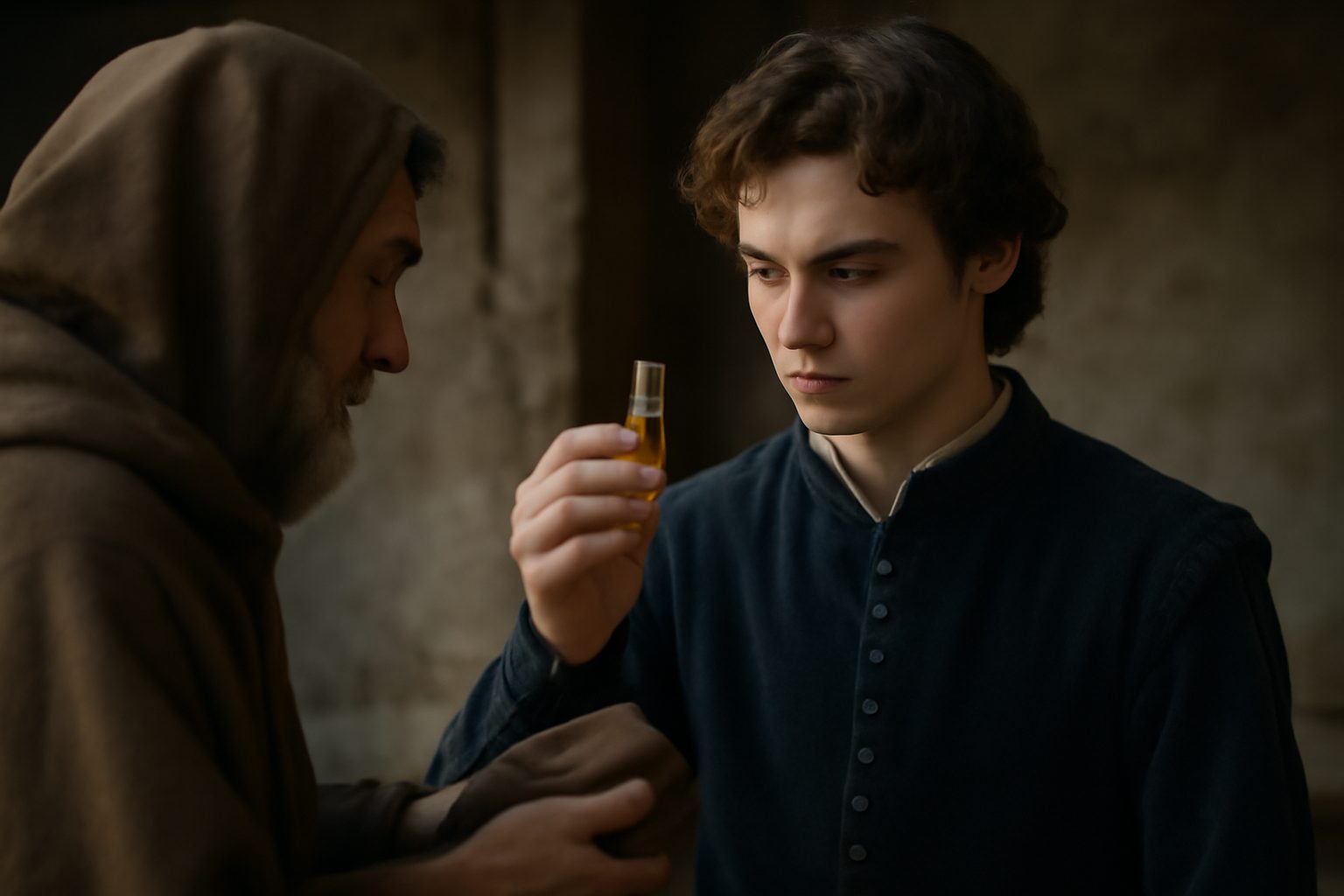
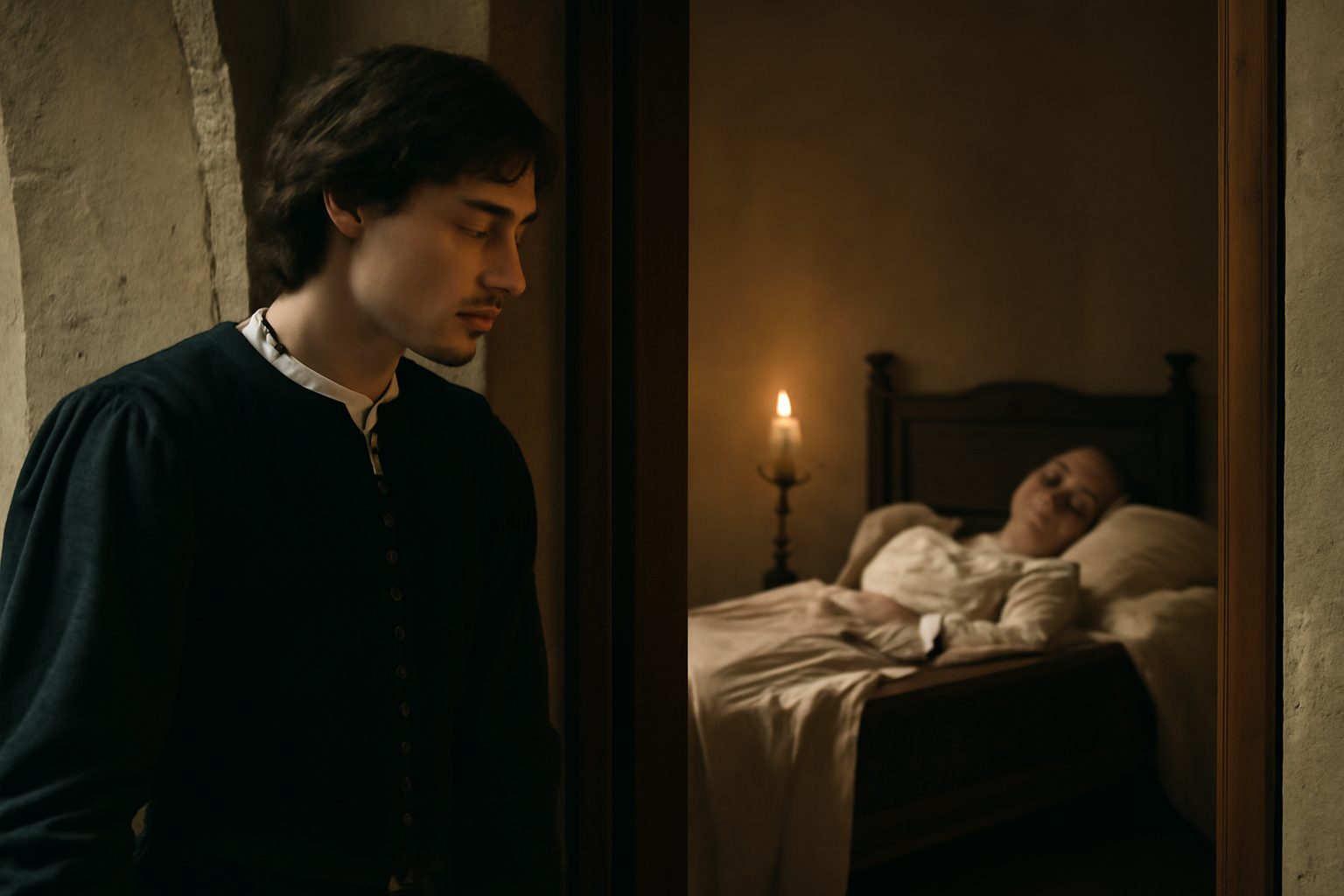
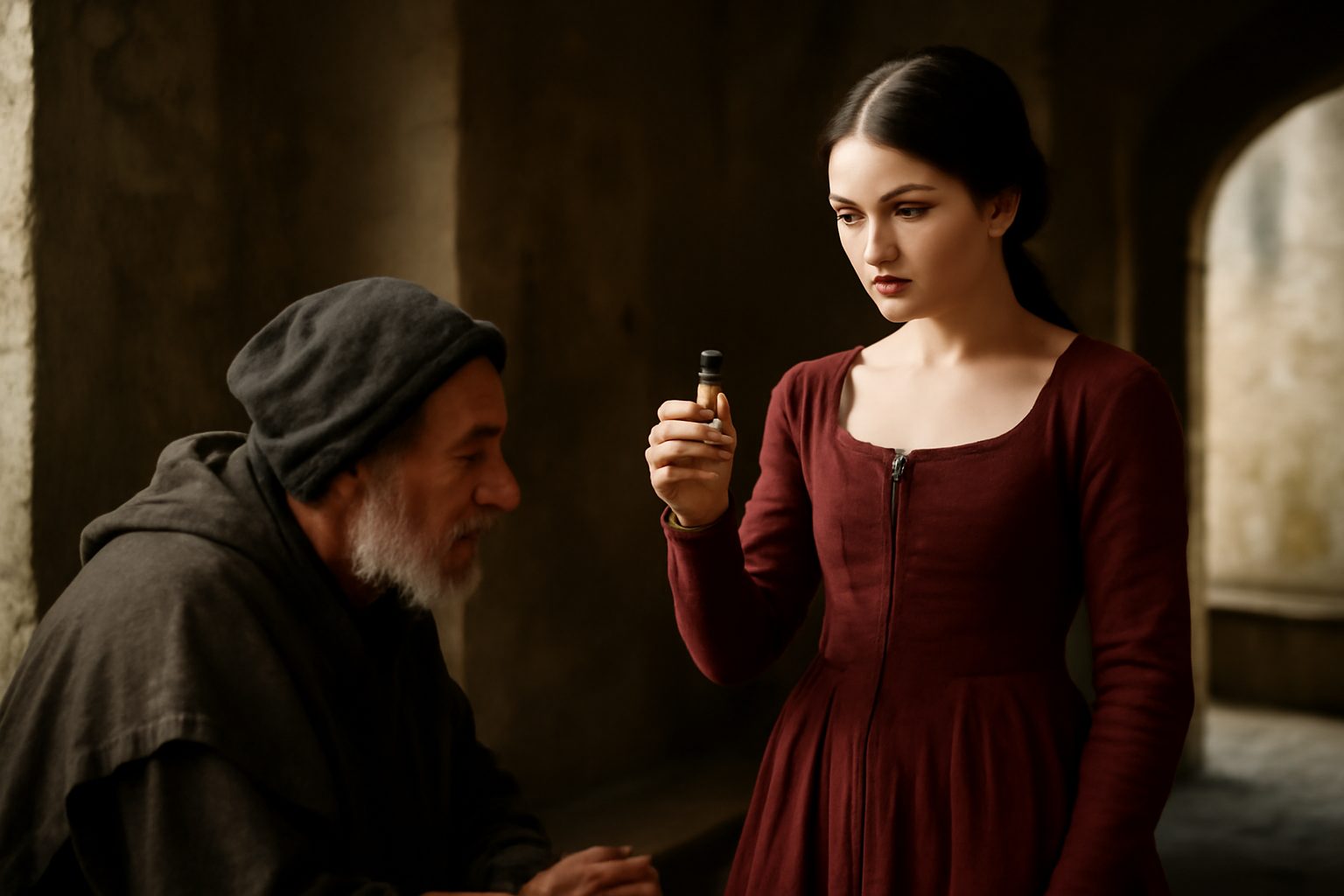
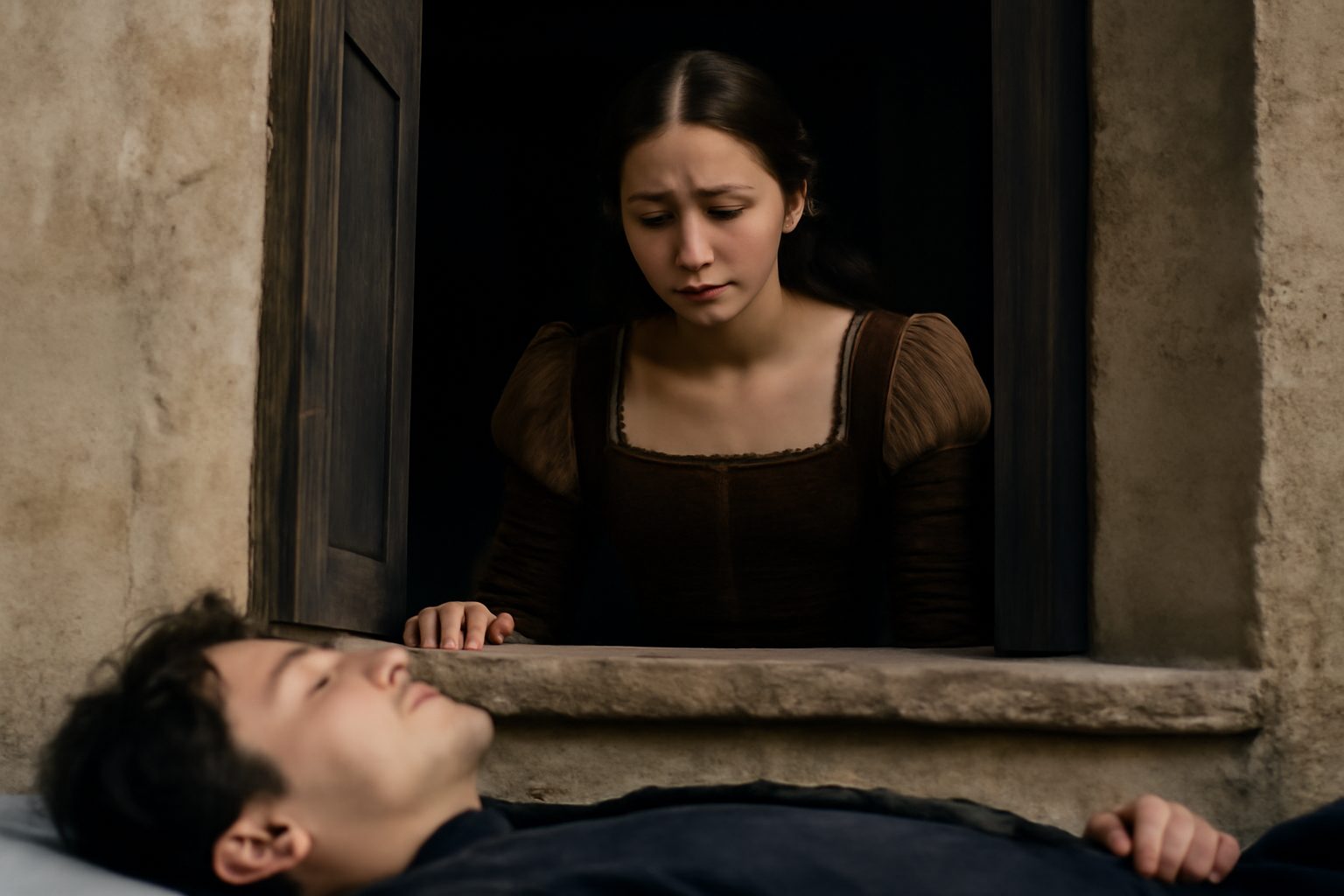
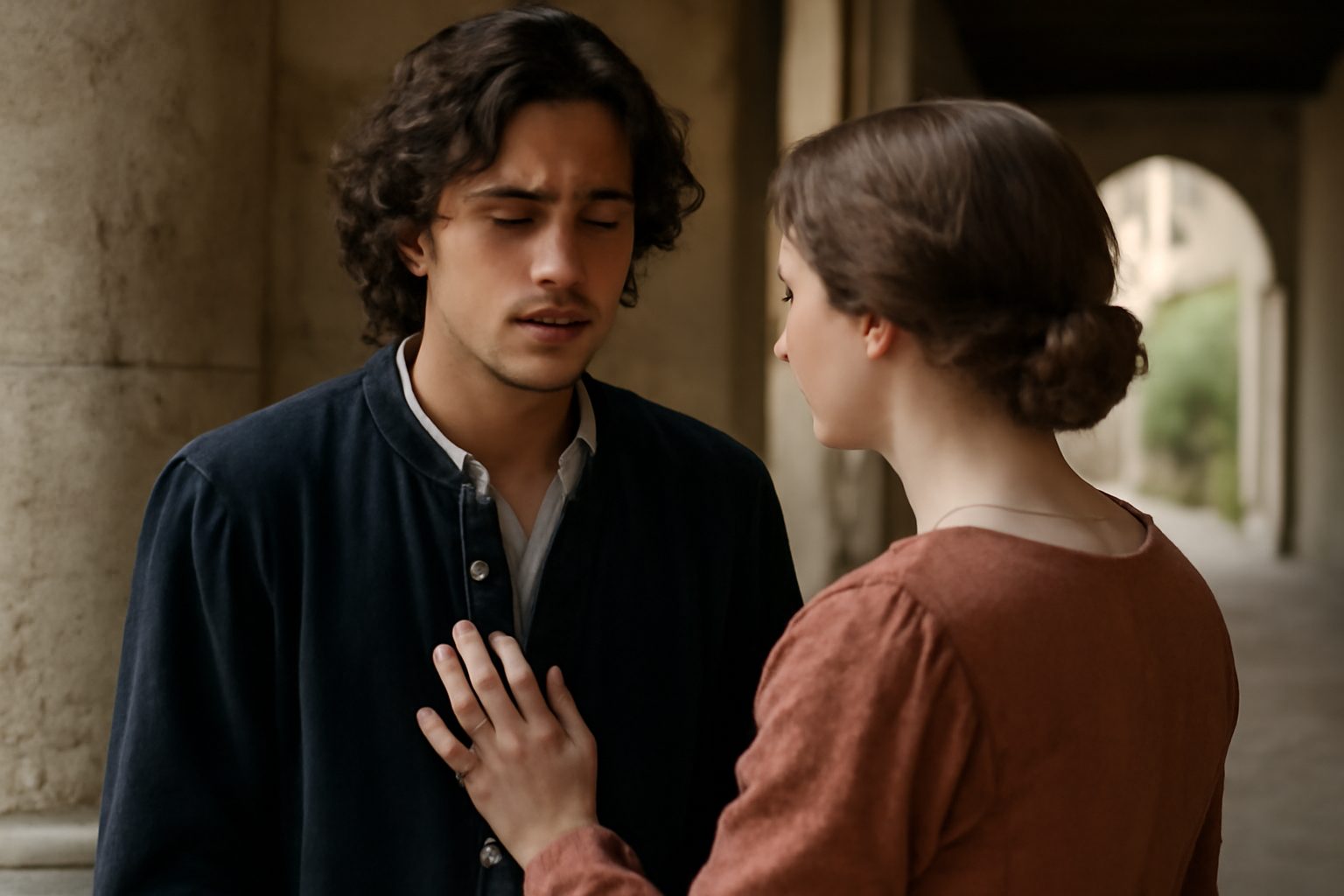
In Act 5, Scene 1 of Romeo and Juliet, Romeo is in exile when he receives news of Juliet's supposed death. Overwhelmed by grief, he speaks these words to an apothecary, urging him to sell poison despite the risks. The line reflects Romeo's desperation as he seeks a means to join Juliet in death, no matter the cost.
Romeo: "Then be not poor, but break it, and take this."
In modern day english, we would say:
If you don’t want to be poor, then take this and break your vow.
Frequently Asked Questions
What is Romeo offering to someone in this line?
Romeo is offering money or something valuable to help the person not be poor.
Connections to other verses:
Connections to "Then be not poor, but break it, and take this."
The verse "Then be not poor, but break it, and take this." is spoken by Romeo to the apothecary, urging him to break the law and sell poison in exchange for gold. This line is deeply connected to themes of poverty, desperation, and moral compromise that permeate the scene.
Poverty and Desperation
Romeo's recognition of the apothecary's poverty is established earlier when he says, "Come hither, man. I see that thou art poor:", setting the stage for this transaction. The apothecary's destitution is further emphasized in "Art thou so bare and full of wretchedness," and "Need and oppression starveth in thine eyes," illustrating why he might be tempted to break the law. Romeo's offer, "Hold, there is forty ducats: let me have", directly precedes this plea, making the monetary temptation explicit.
Moral and Legal Conflict
The apothecary's internal conflict is captured in his response, "My poverty, but not my will, consents.", showing his reluctant agreement. Romeo acknowledges this dynamic in "I pay thy poverty, and not thy will.", reinforcing that the transaction is driven by need rather than desire. The dangerous nature of the poison is noted in "Whose sale is present death in Mantua," and "Is death to any he that utters them.", highlighting the stakes of breaking the law.
Broader Themes of Wealth and Corruption
Romeo's reflection on gold as a corrupting force appears in "There is thy gold, worse poison to men's souls," which contrasts the physical poison with the moral poison of wealth. This ties back to his earlier realization about the apothecary's situation in "Noting this penury, to myself I said", where he first considers exploiting the man's poverty for his own ends.
Desperation and Fate
Romeo's desperate state, which leads him to seek the poison, is foreshadowed when he defies fate in "Is it even so? then I defy you, stars!" His resolve to join Juliet in death is clear in "Well, Juliet, I will lie with thee to-night.", making the acquisition of the poison a critical step in his tragic plan.