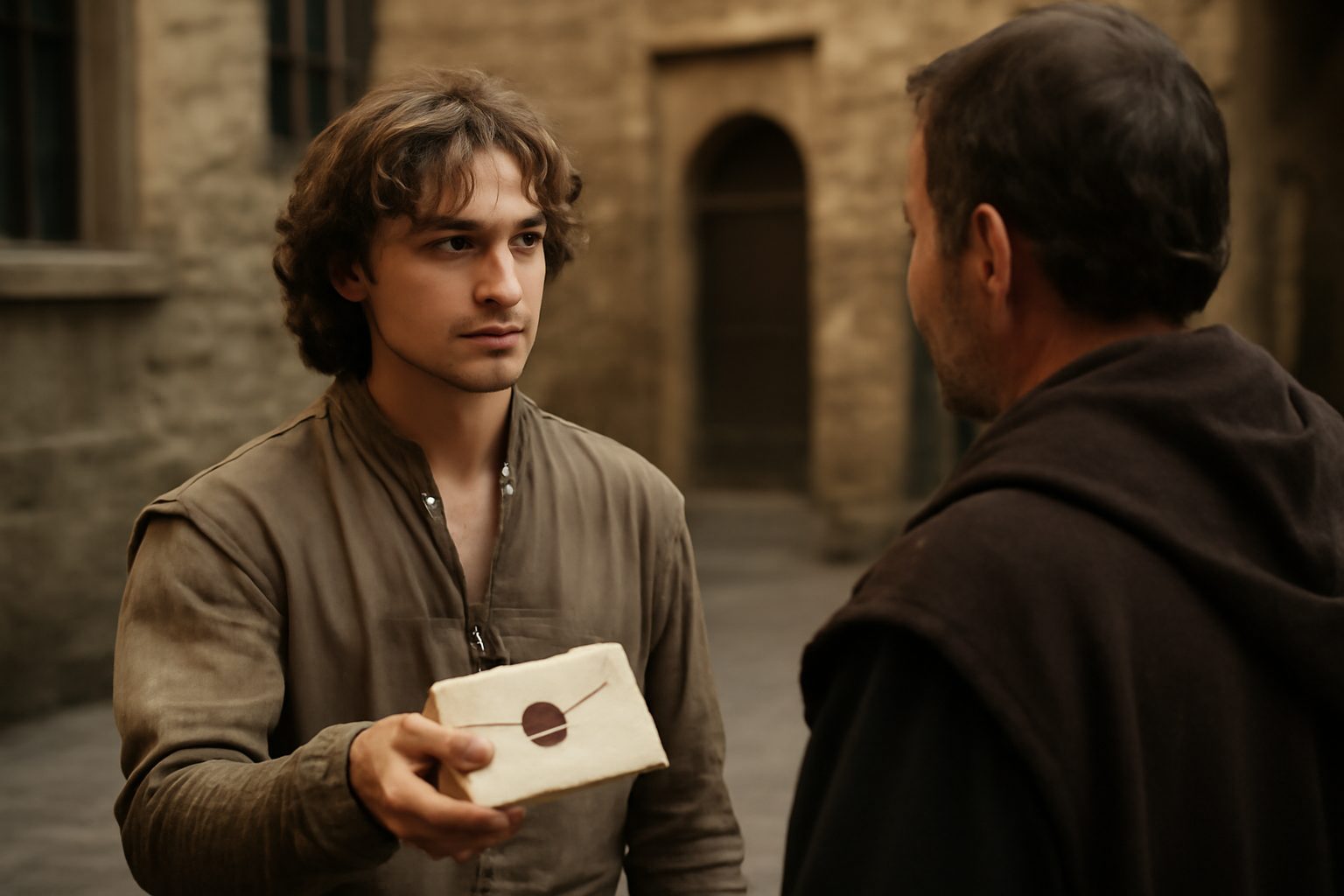
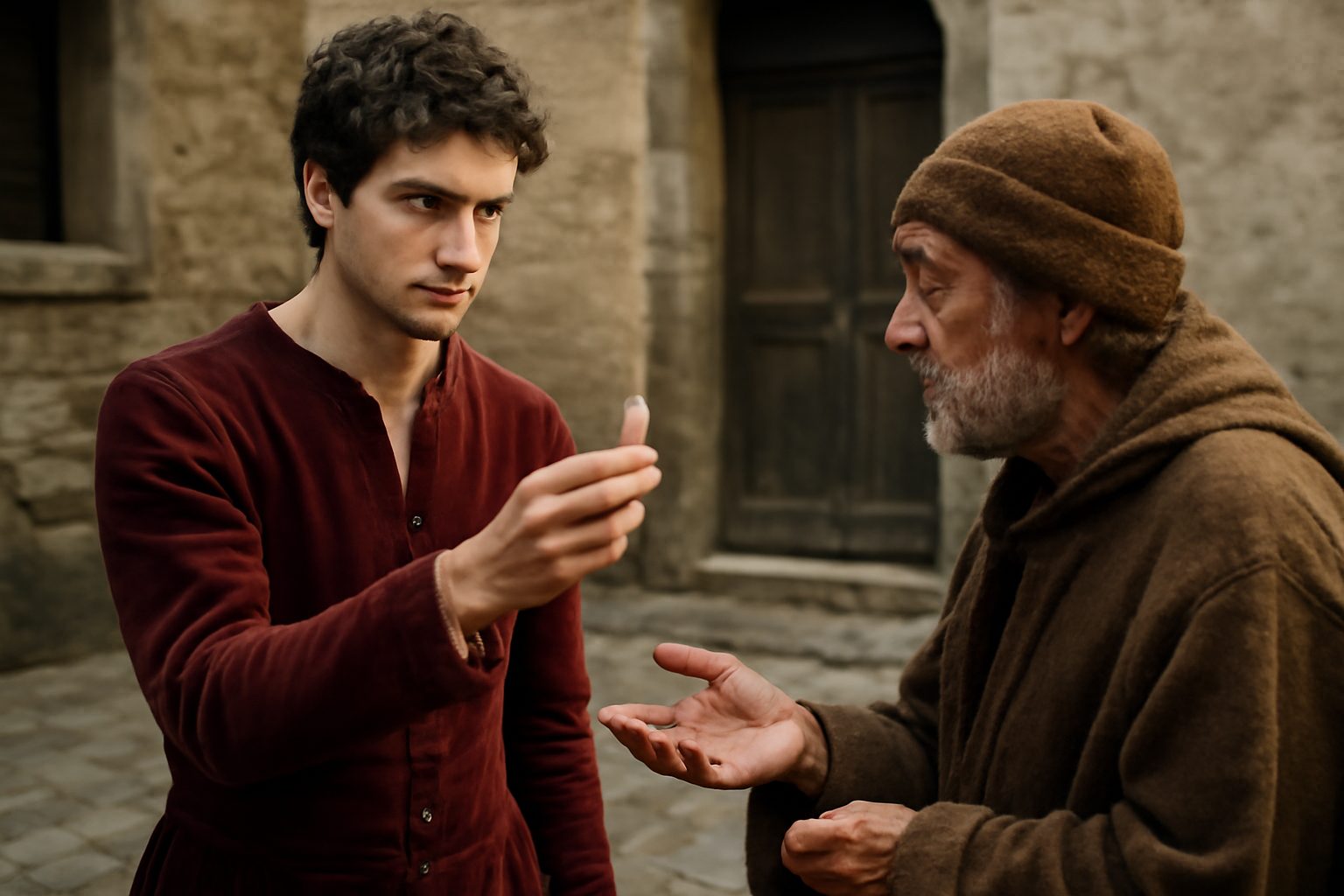
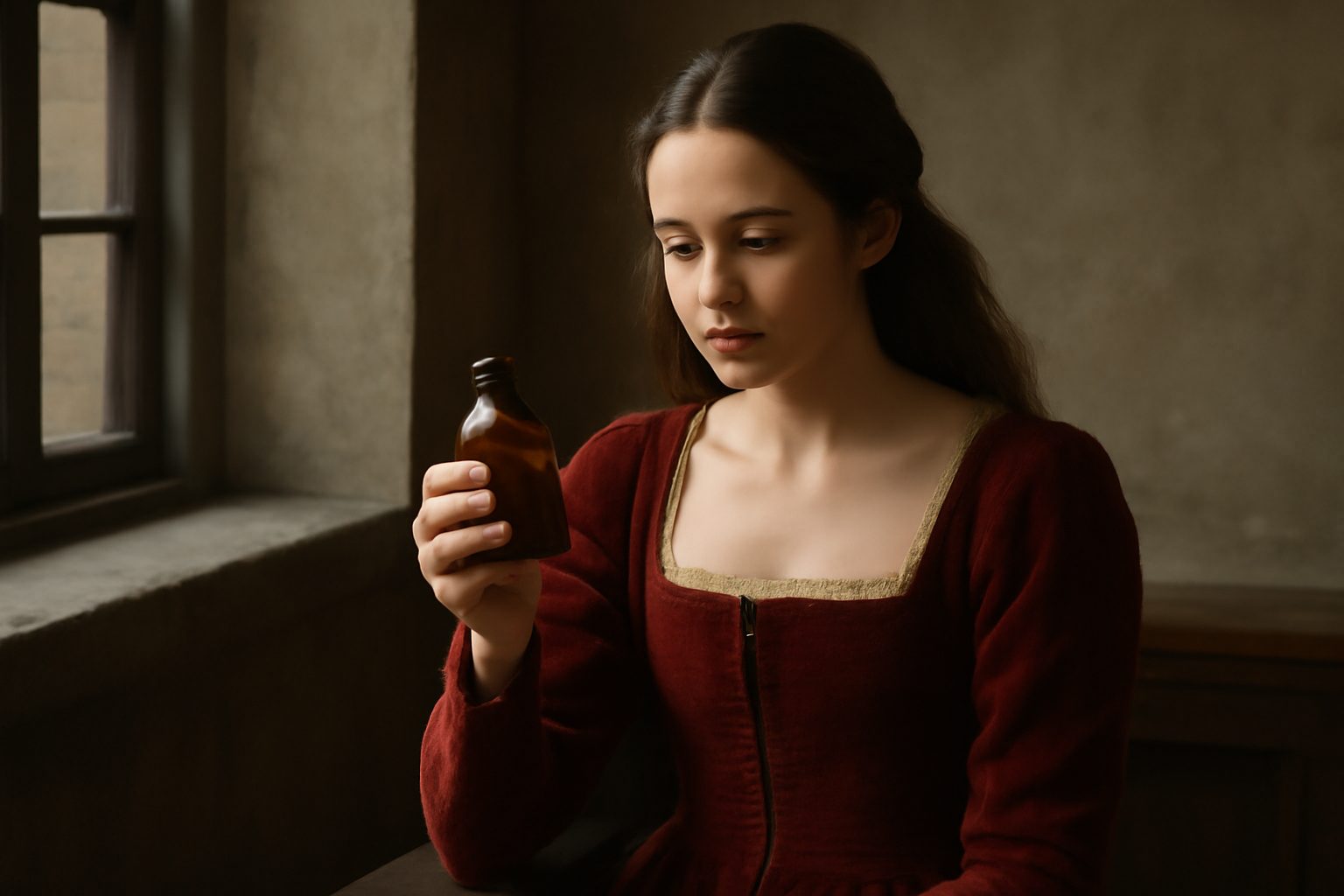
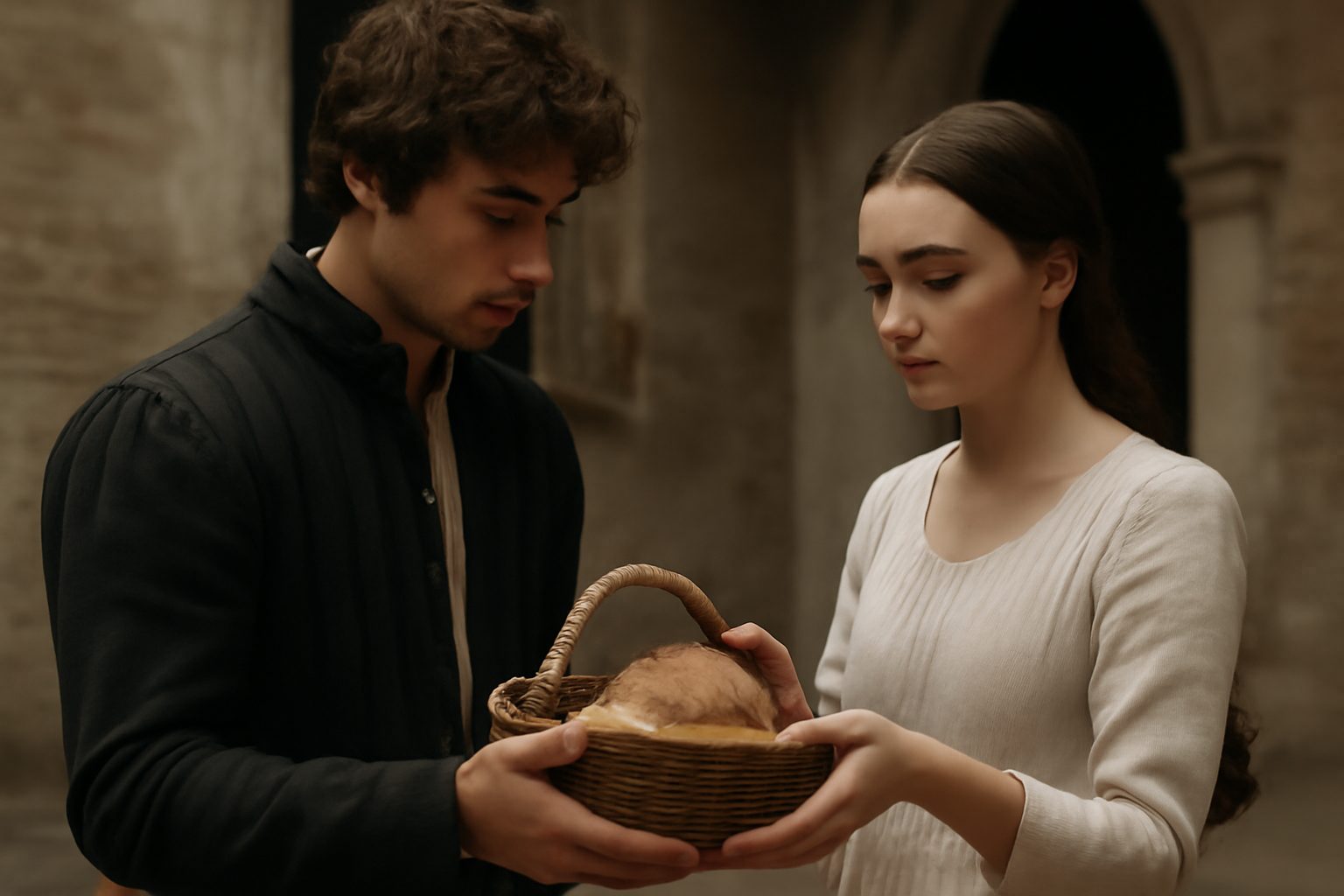
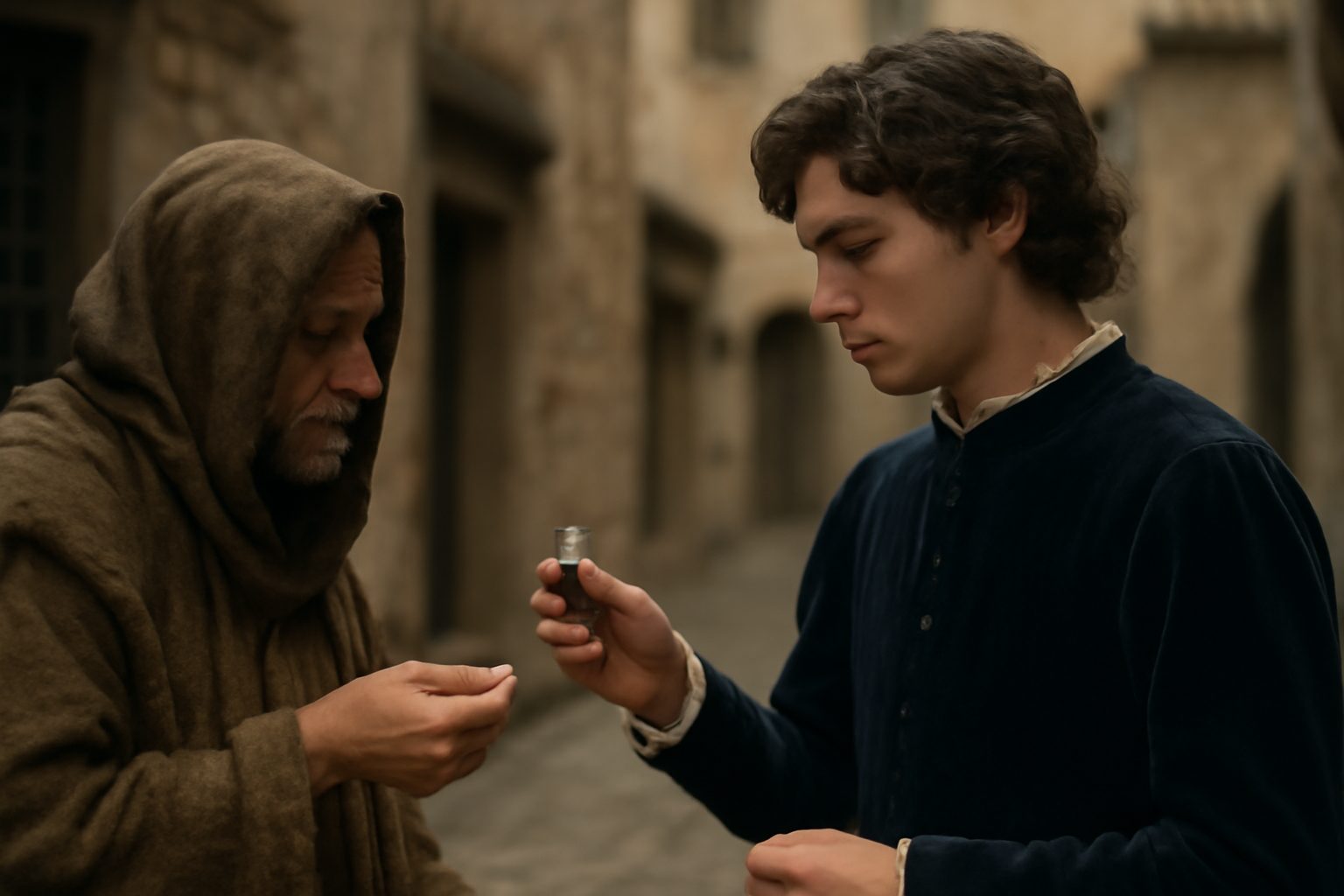
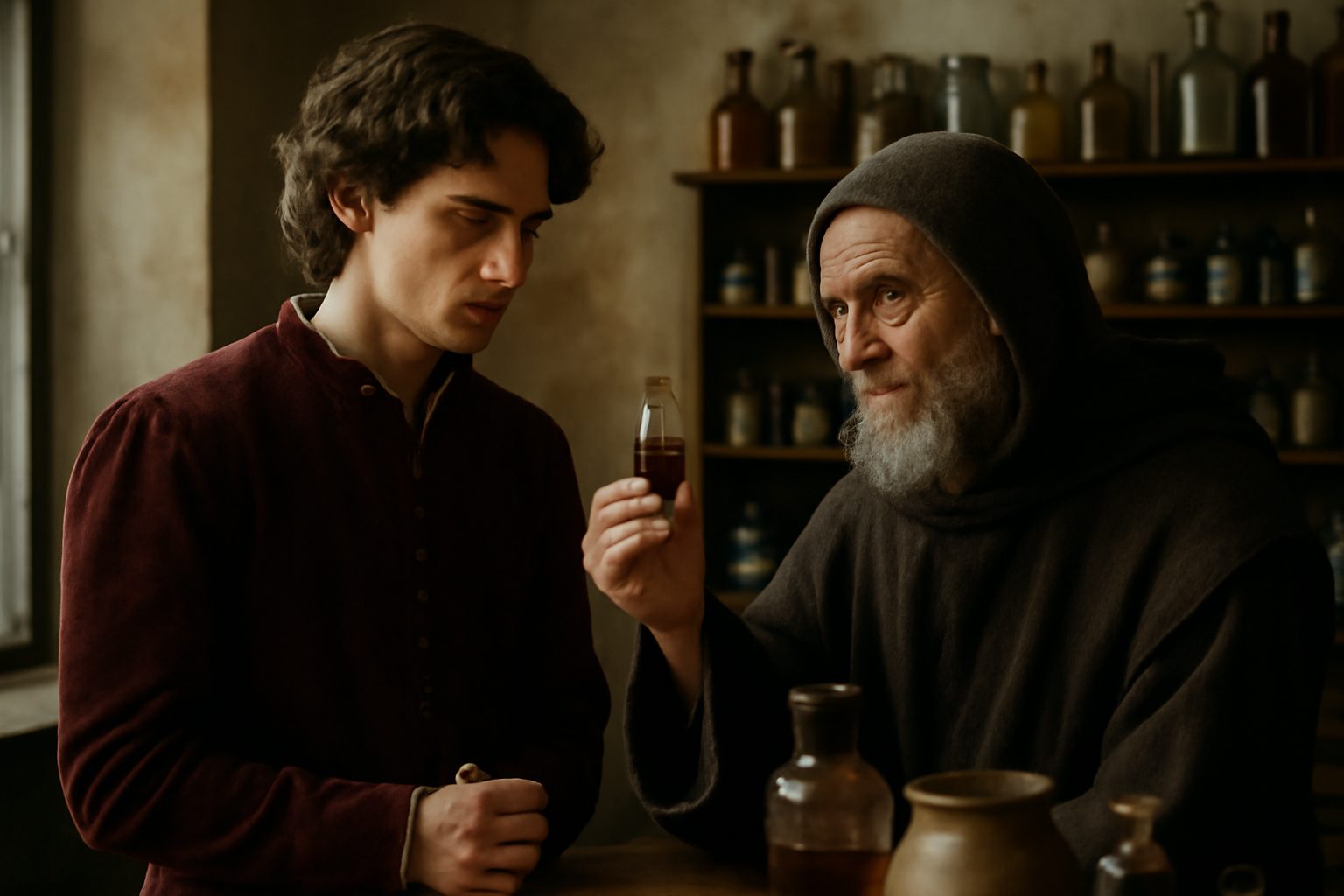
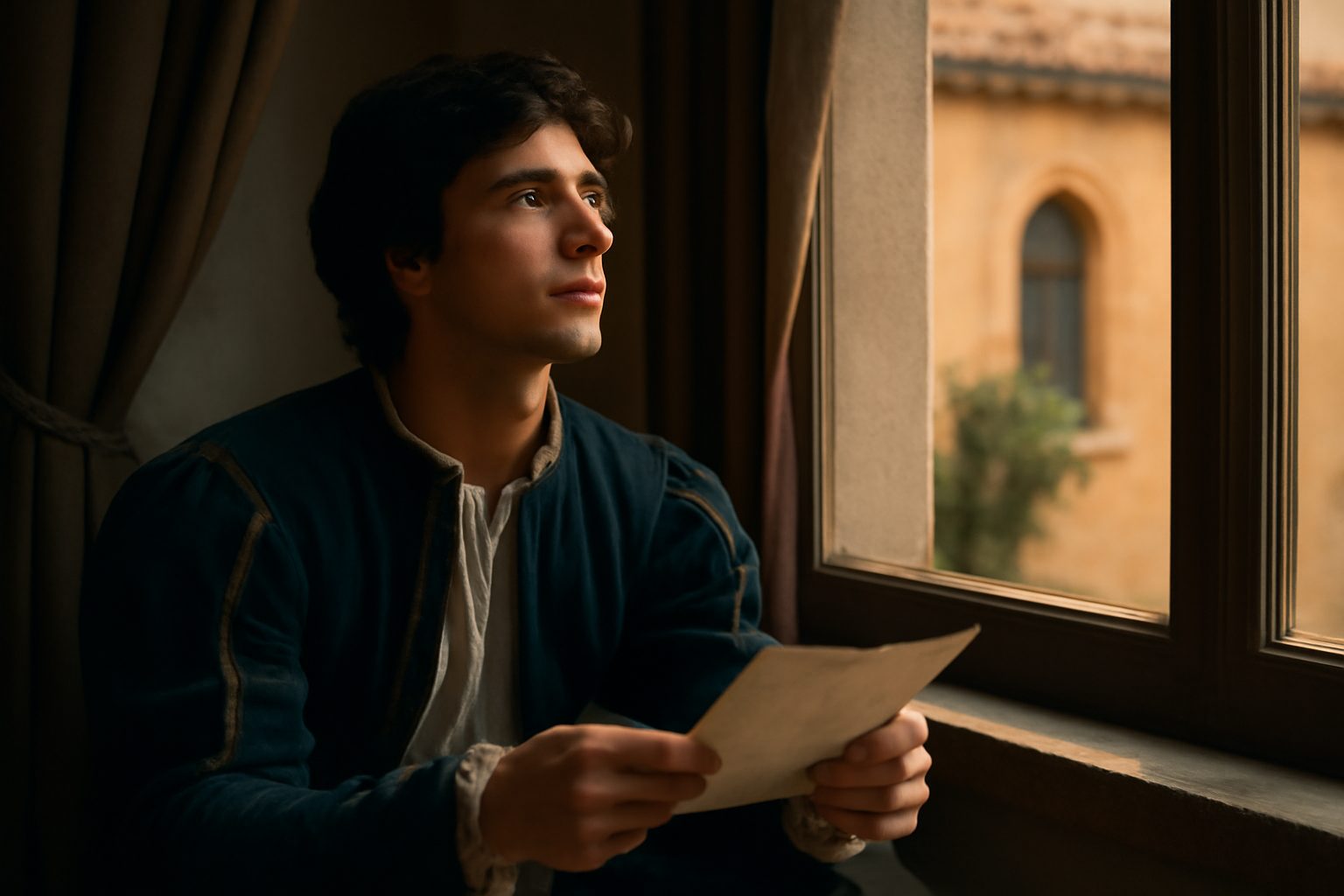
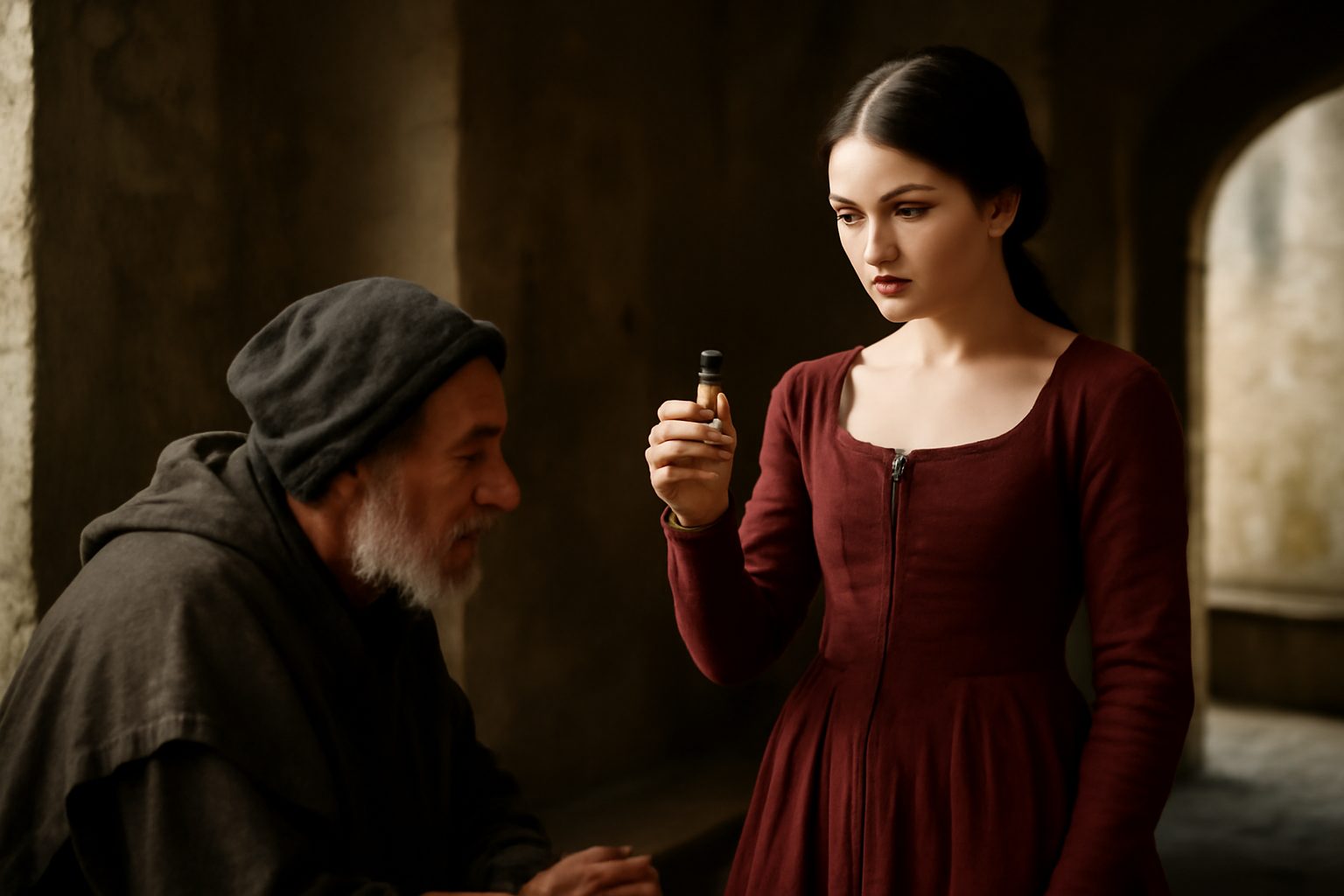
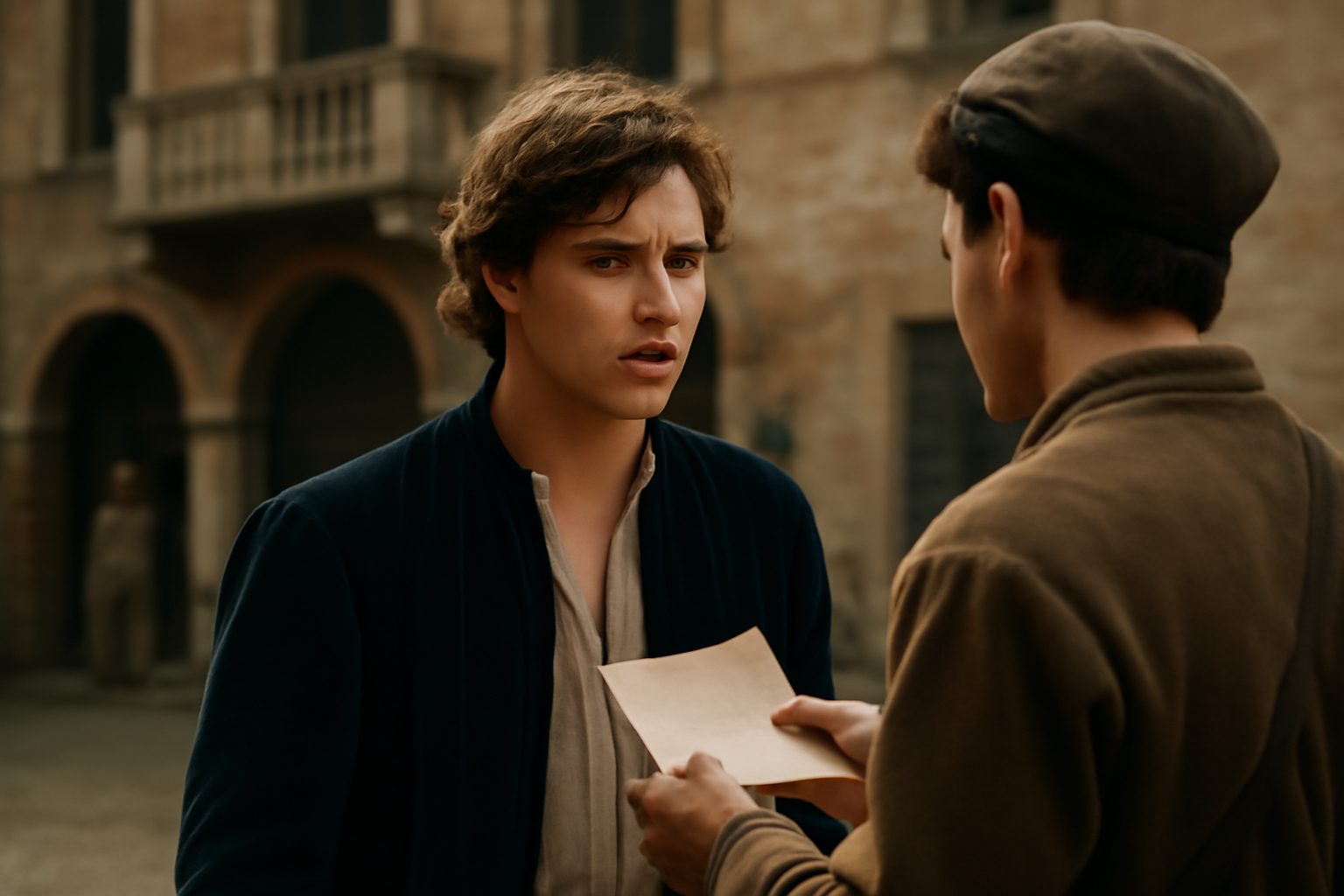
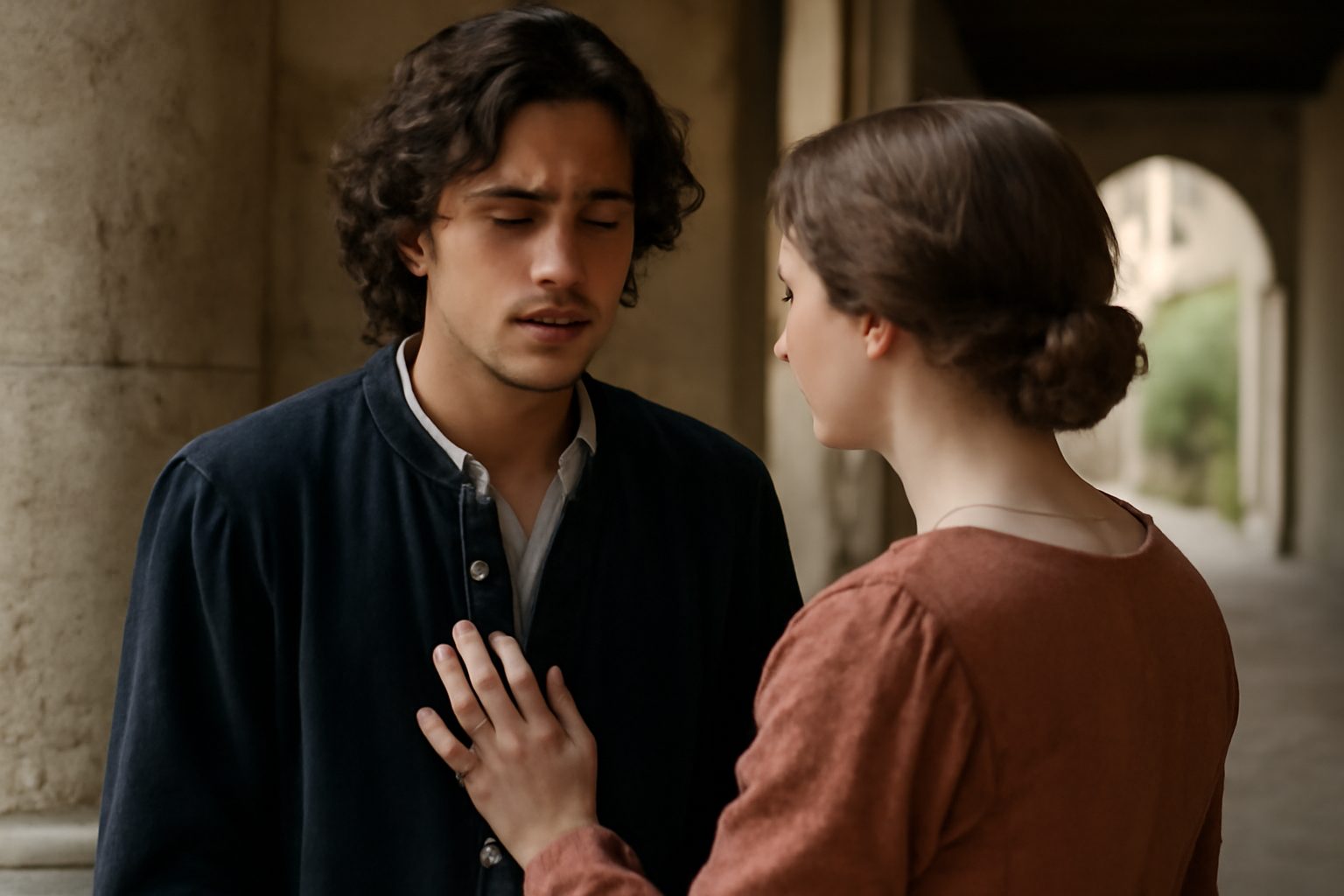
In Act 5, Scene 1 of Romeo and Juliet, Romeo, exiled in Mantua, encounters Balthasar, who brings news of Juliet's supposed death. Overwhelmed by grief, Romeo seeks a way to join her in death and approaches a poor apothecary, whose poverty makes him more likely to sell illegal poison. This moment highlights Romeo's desperation and the harsh realities faced by those in need.
Romeo: "Come hither, man. I see that thou art poor:"
In modern day english, we would say:
Come here, man. I can see you're poor.
Frequently Asked Questions
What does Romeo notice about the man he is speaking to?
Romeo notices that the man is poor.
Connections to other verses:
Connections to "Come hither, man. I see that thou art poor:"
This line, spoken by Romeo to the apothecary, establishes a theme of poverty and desperation that resonates throughout the scene. It connects directly to Art thou so bare and full of wretchedness, where Romeo further observes the apothecary's destitution, and And fear'st to die? famine is in thy cheeks, emphasizing the physical toll of poverty.
Poverty and Moral Compromise
Romeo's recognition of the apothecary's need leads to the transactional nature of their interaction, as seen in Hold, there is forty ducats: let me have, where he offers payment. This echoes The world affords no law to make thee rich and The world is not thy friend nor the world's law, highlighting how poverty forces the apothecary to break the law, selling poison despite the risk.
Desperation and Poison
The apothecary's poverty makes him susceptible to Romeo's request for poison, referenced in An if a man did need a poison now and Here lives a caitiff wretch would sell it him. Romeo's earlier line, I do remember an apothecary, foreshadows this encounter, noting the man's neediness, which Romeo exploits.
Contrast with Wealth
Romeo contrasts the apothecary's poverty with the destructive power of gold in There is thy gold, worse poison to men's souls, suggesting that wealth, like poison, corrupts. This idea is reinforced when the apothecary consents to the sale in My poverty, but not my will, consents, and Romeo acknowledges this in I pay thy poverty, and not thy will.
Symbolic and Thematic Links
The apothecary's shop, described in And in his needy shop a tortoise hung and A beggarly account of empty boxes, mirrors his impoverishment. Romeo's own desperation, following the news of Juliet's death in Is it even so? then I defy you, stars!, parallels the apothecary's plight, as both are driven to extreme actions by their circumstances.