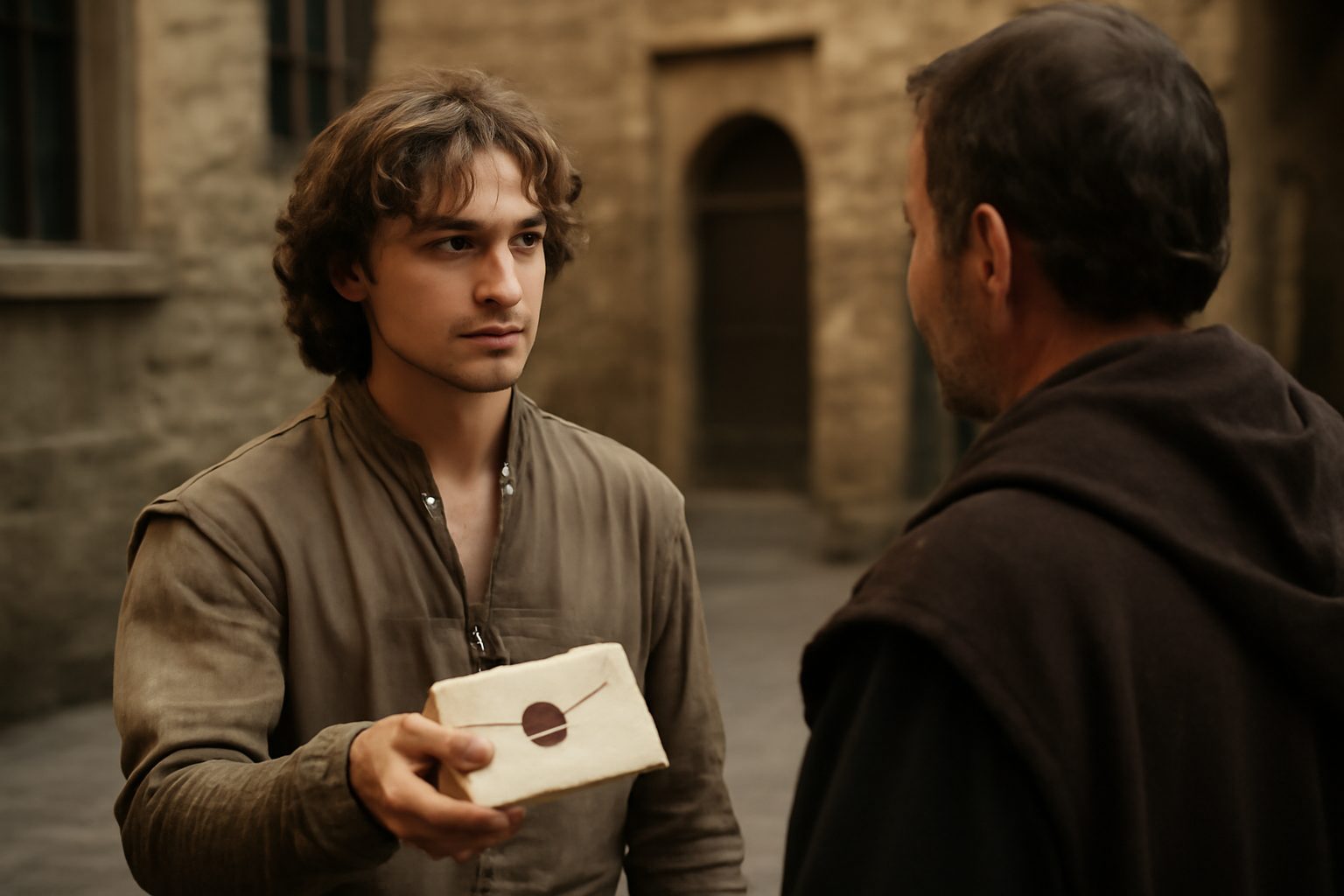
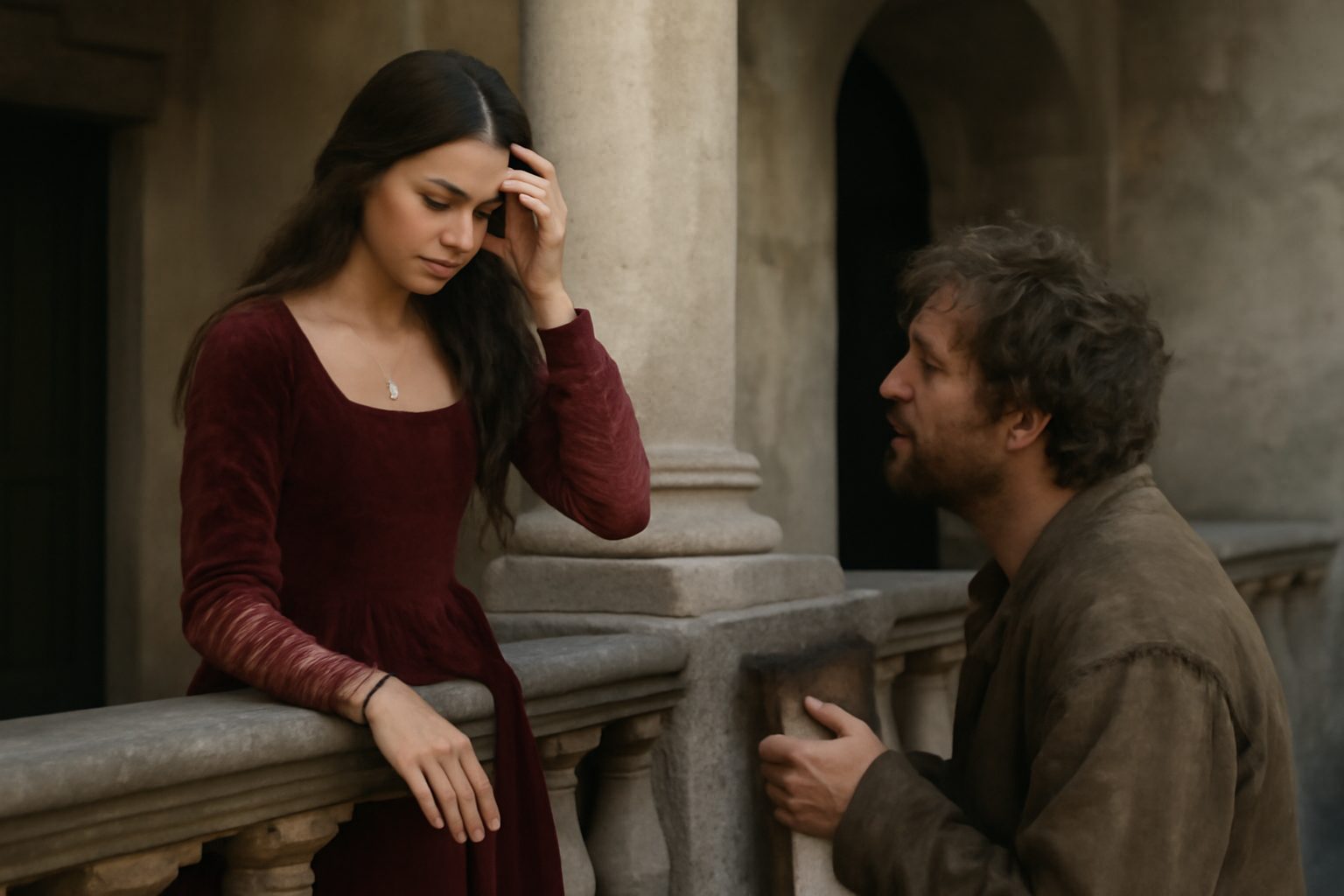
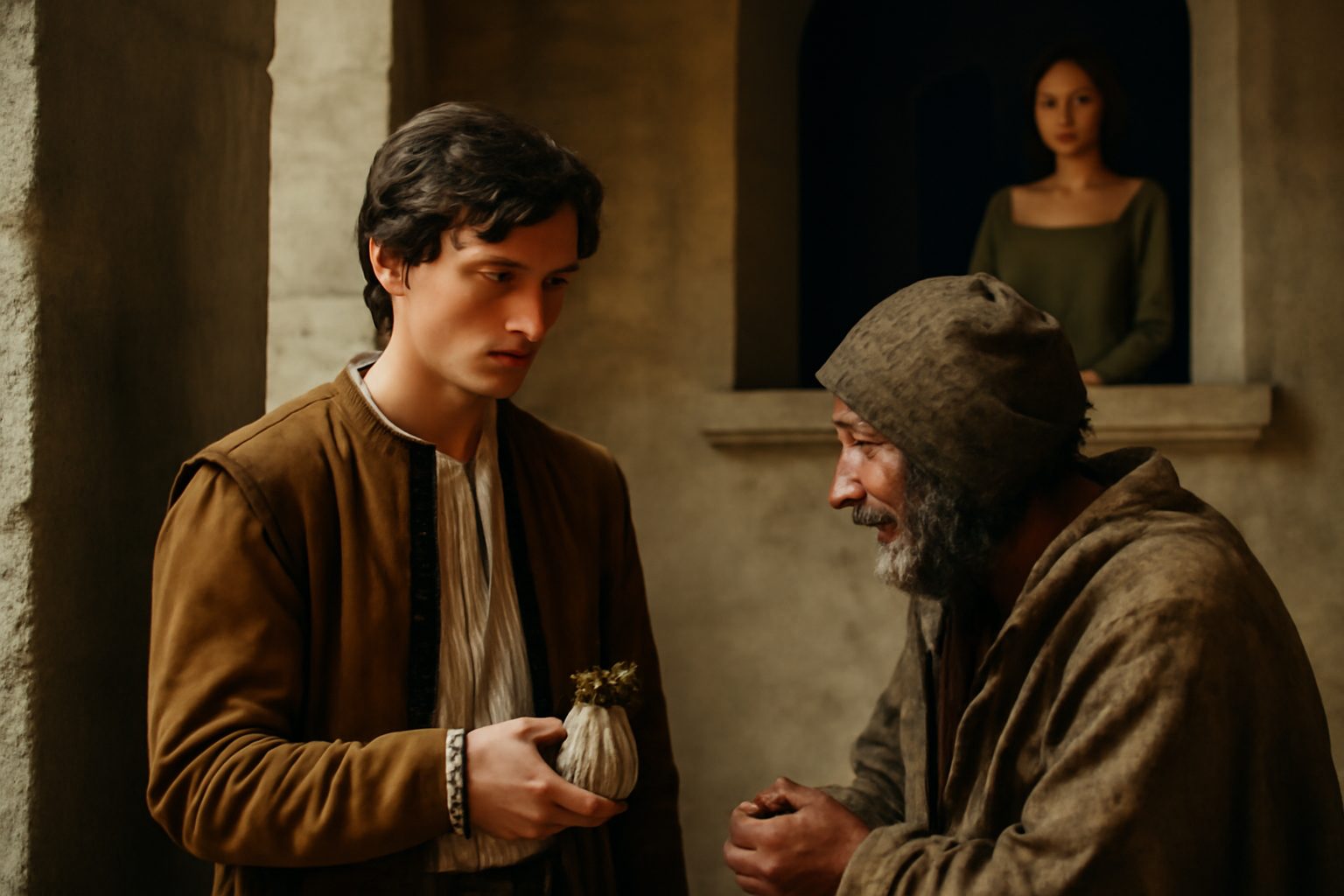
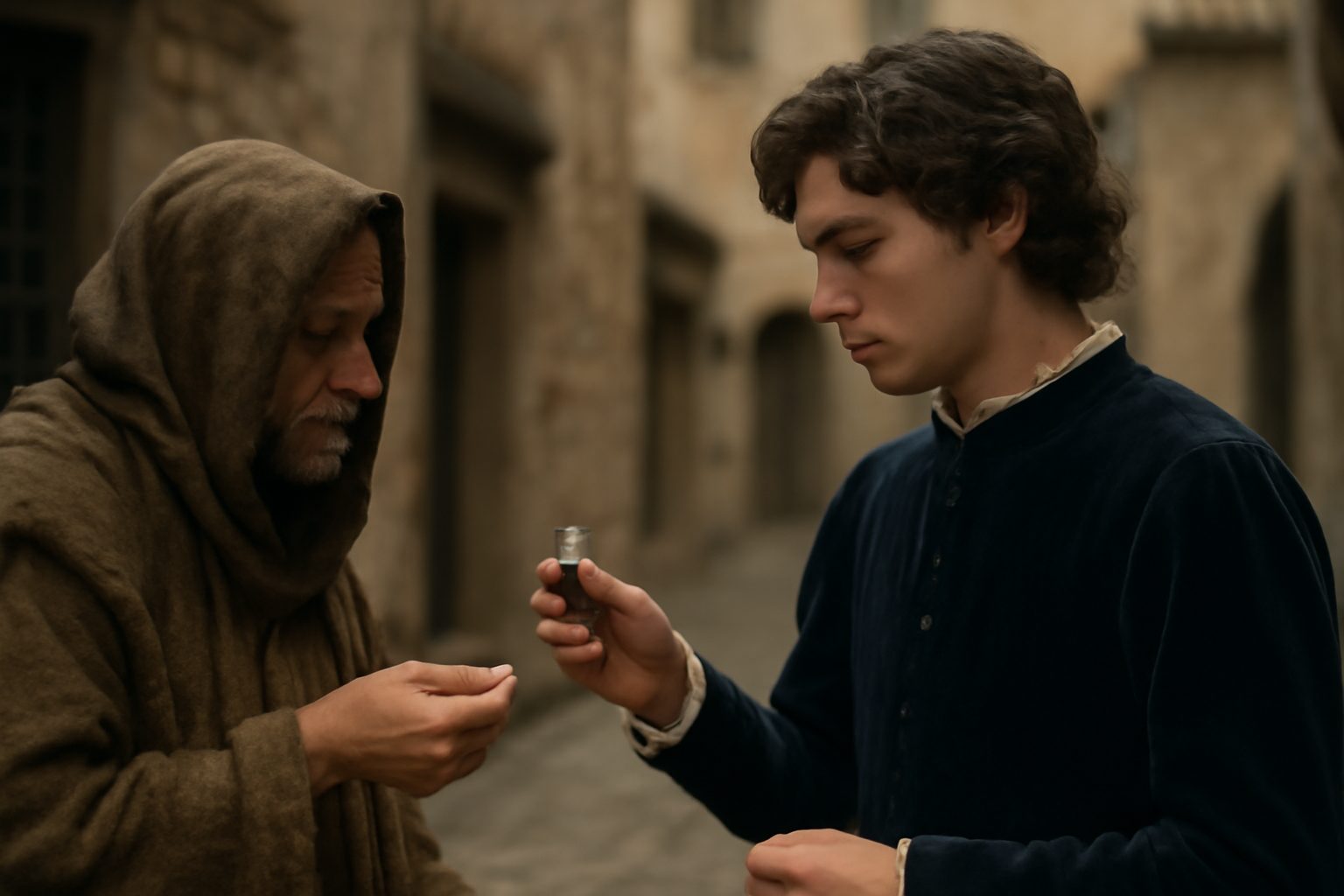
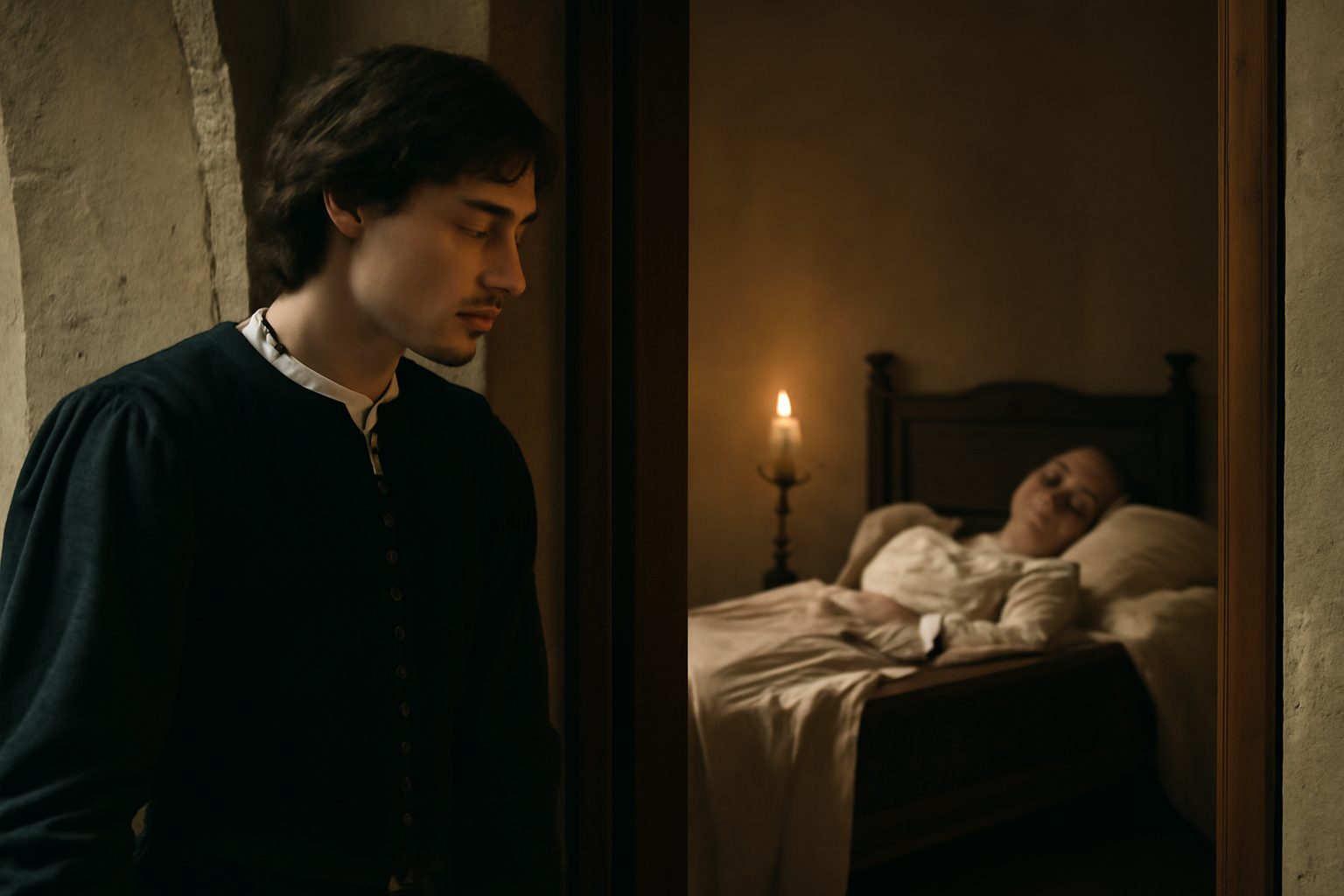
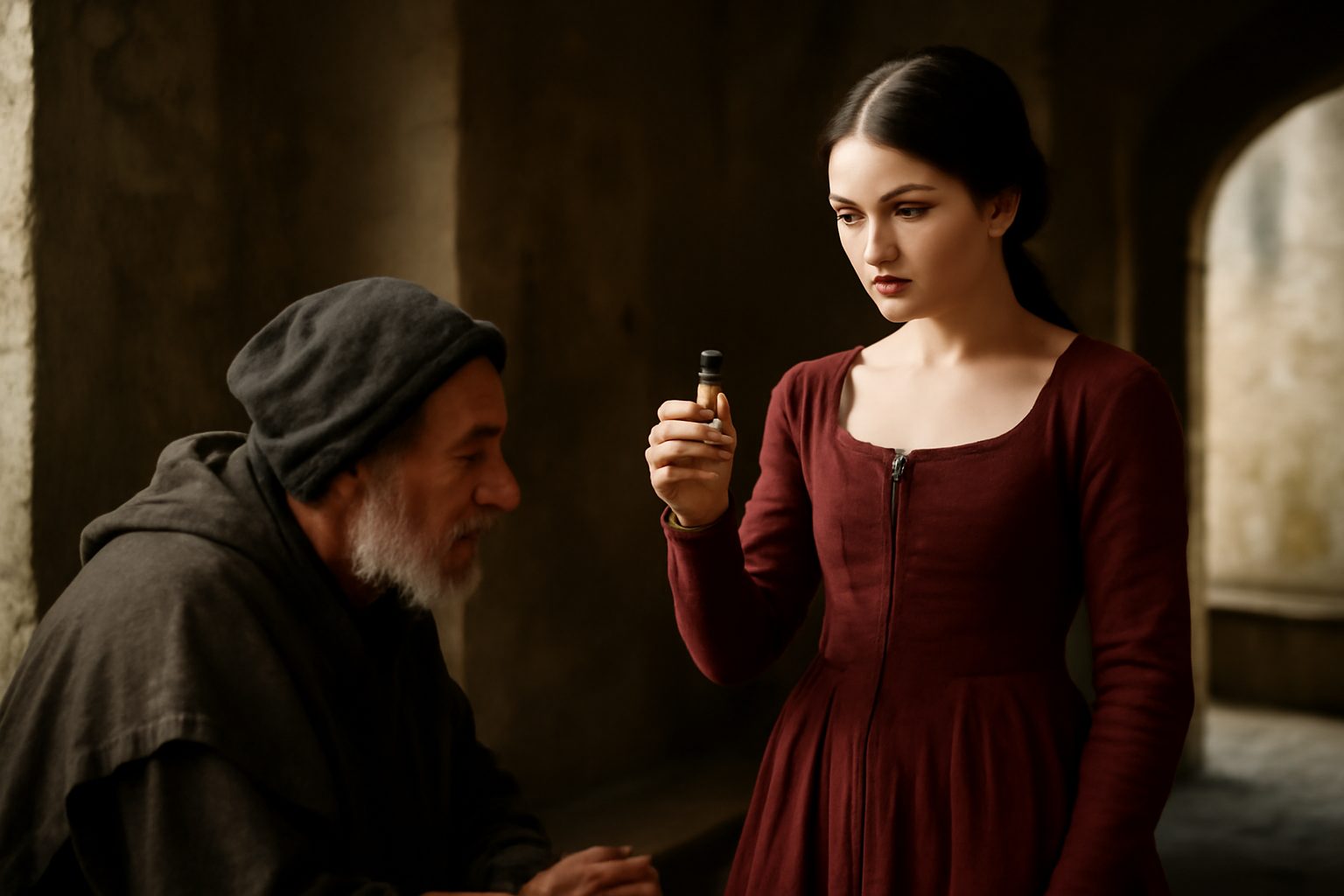
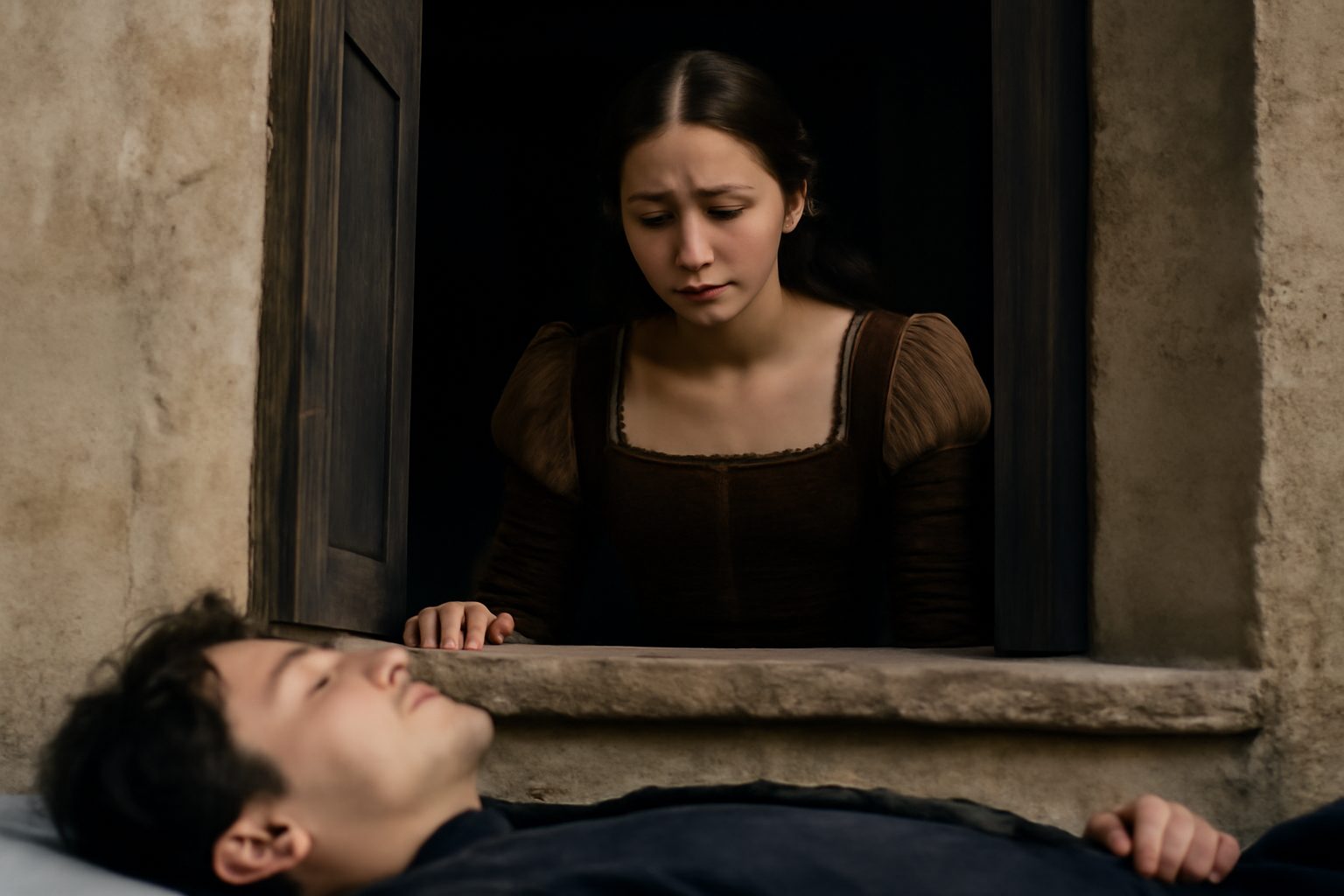
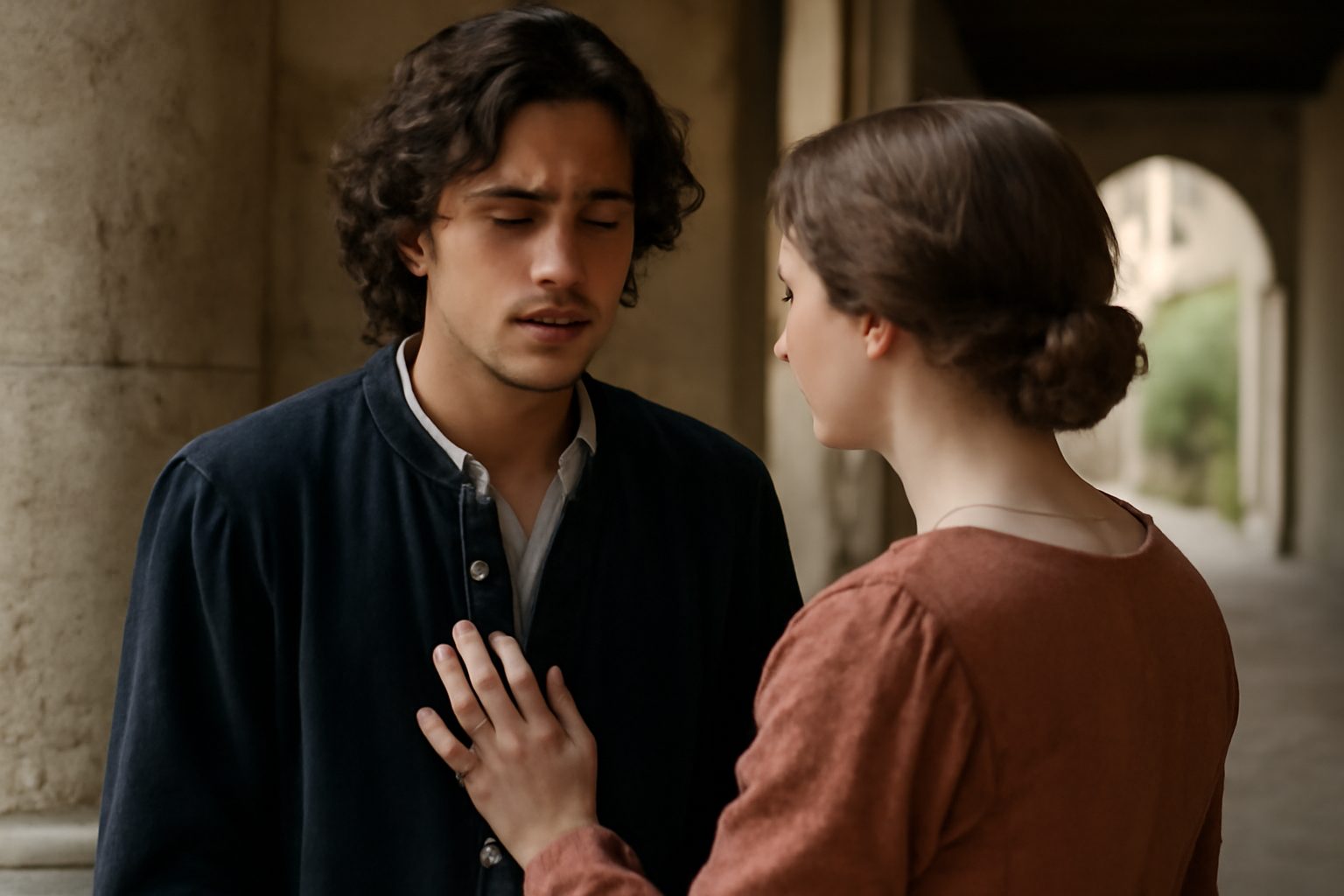
In Act 5, Scene 1 of Romeo and Juliet, Romeo, exiled in Mantua, learns of Juliet's supposed death and despairs. When a poor apothecary hesitates to sell him poison, Romeo argues that the man's poverty leaves him no choice but to break the law, as the world offers no justice to lift him from destitution. This moment underscores the play's themes of desperation and the harsh realities faced by those on society's margins.
Romeo: "The world affords no law to make thee rich;"
In modern day english, we would say:
There is no rule in this world that guarantees you wealth.
Frequently Asked Questions
What does Romeo mean when he says the world has no law to make someone rich?
Romeo means that there is no rule or system in the world that guarantees wealth or riches to anyone.
Connections to other verses:
Connections to "The world affords no law to make thee rich"
The verse "The world affords no law to make thee rich" is spoken by Romeo to the apothecary, highlighting the harsh reality that societal structures do not ensure prosperity for all. This theme of poverty and desperation is echoed throughout the scene.
Related Themes of Poverty and Desperation
Romeo observes the apothecary's dire state in "Art thou so bare and full of wretchedness", emphasizing his physical and financial misery. This is reinforced by "Contempt and beggary hangs upon thy back", painting a vivid picture of the apothecary's shame and destitution.
In "The world is not thy friend nor the world's law", Romeo directly precedes the target verse, arguing that neither society nor its laws offer support to the impoverished, setting up the resigned acknowledgment in the quoted line.
Moral and Legal Conflicts
The apothecary’s willingness to break the law due to poverty is captured in "My poverty, but not my will, consents", showing how economic hardship forces unethical choices. Romeo acknowledges this dynamic in "I pay thy poverty, and not thy will", recognizing that he is exploiting the apothecary's need rather than his morals.
The dangerous potency of the poison, described in "Of twenty men, it would dispatch you straight", contrasts with the apothecary's powerlessness, underscoring how those with nothing are driven to deadly trades.
Wealth as a Corrupting Force
Romeo’s reflection on gold as "worse poison to men's souls" ties back to the idea that wealth and law fail to uplift the poor, instead perpetuating a cycle of moral decay and desperation.