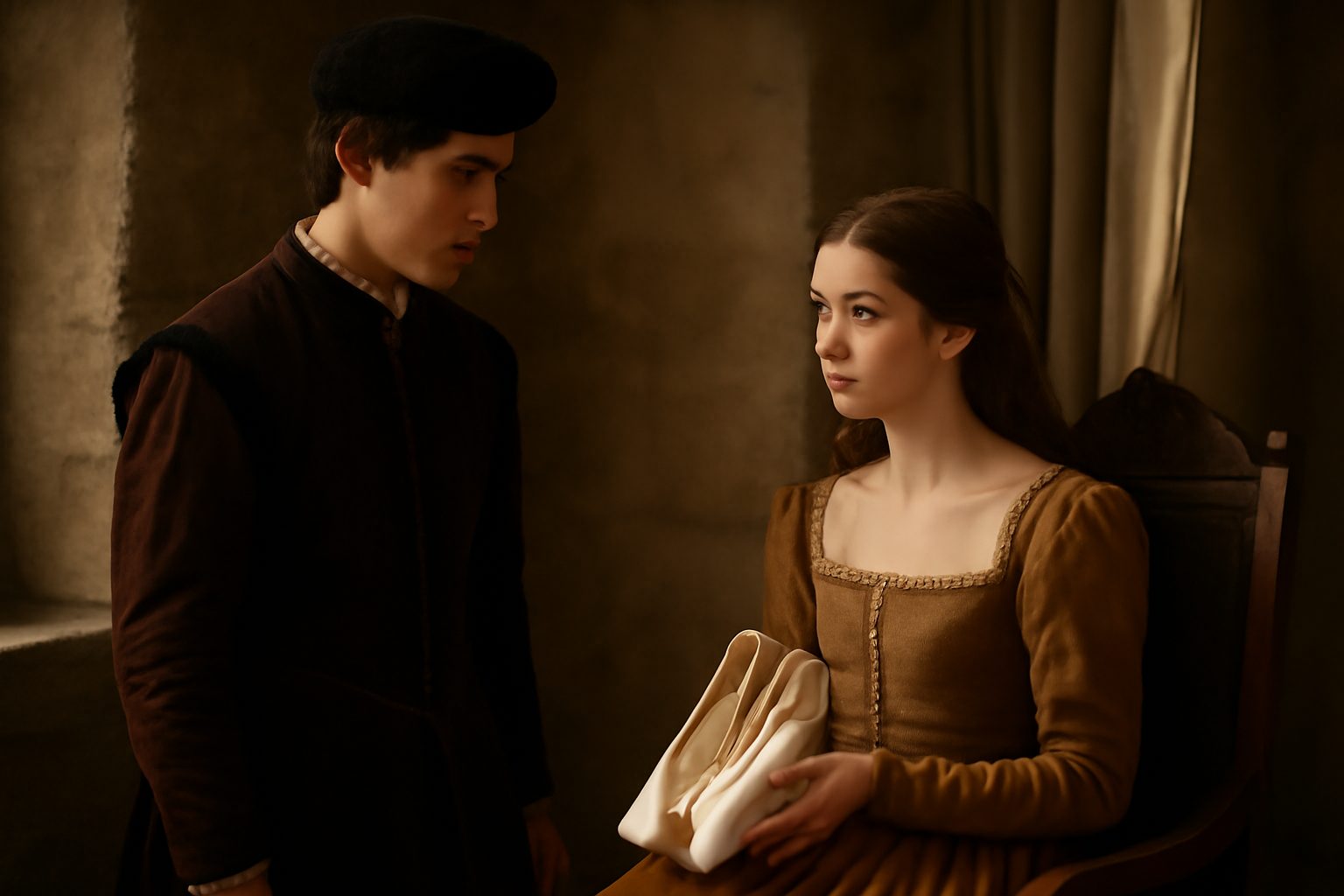
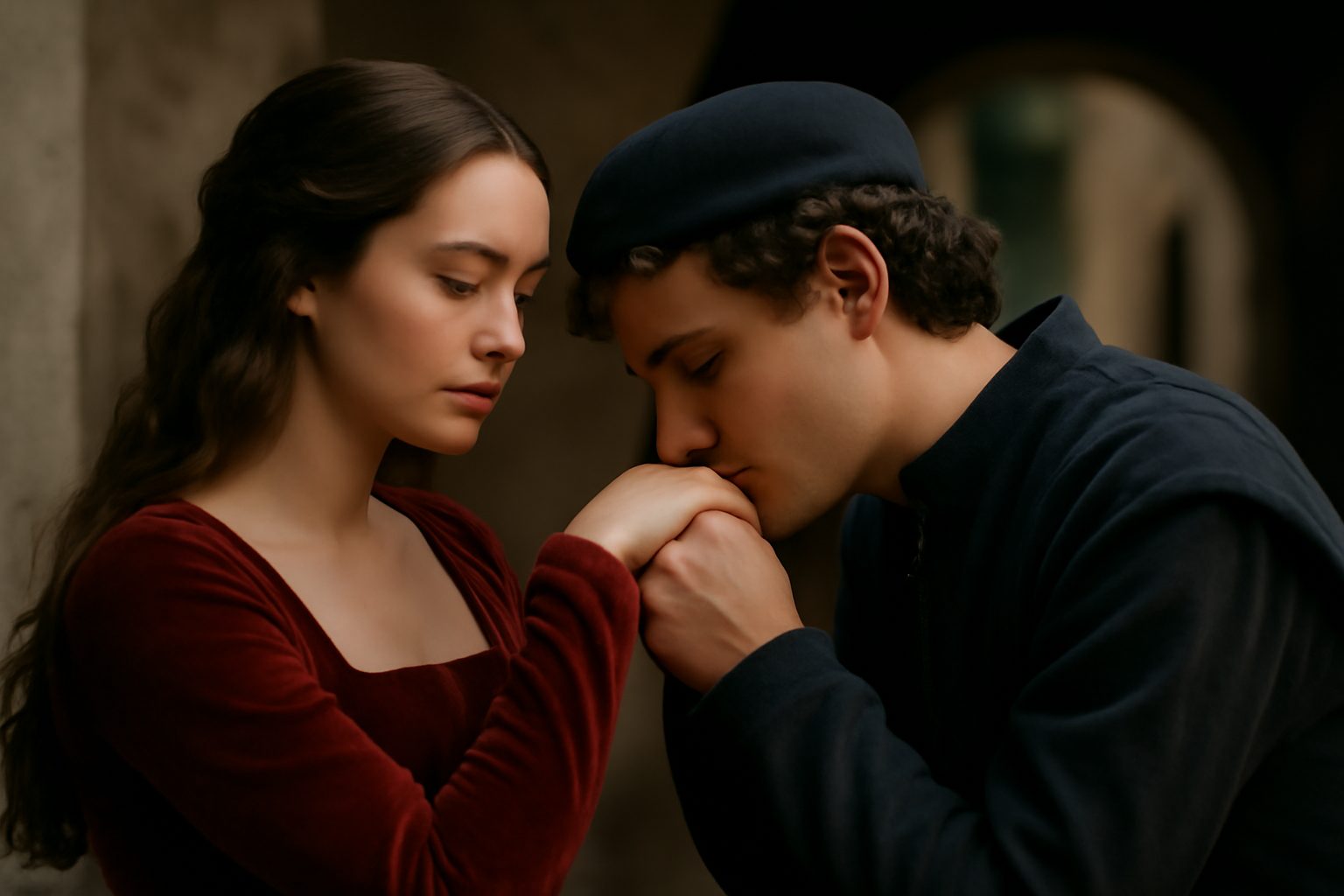
In Act 1, Scene 4 of Romeo and Juliet, Mercutio and Romeo are on their way to the Capulet's masquerade when Mercutio questions Romeo's reluctance to join the festivities. This line is spoken in a playful, teasing tone as Mercutio prods Romeo about his melancholy mood and love-struck behavior. The exchange highlights the contrast between Mercutio's lively wit and Romeo's brooding romanticism.
Mercutio: "Why, may one ask?"
In modern day english, we would say:
Can someone explain why we’re doing this?
Frequently Asked Questions
What is Mercutio asking in this line from Act 1 Scene 4?
Mercutio is playfully questioning why someone would need permission to ask a question.
Connections to other verses:
Connections to "Why, may one ask?" in Act 1, Scene 4
The line Why, may one ask? is spoken by Mercutio in response to Romeo's mention of a dream. It serves as a prompt for Romeo to elaborate, leading into Mercutio's famous Queen Mab speech. This question directly ties to the theme of dreams and foreshadowing explored throughout the scene.
Link to Romeo's Dream and Foreshadowing
Romeo initially reveals I dream'd a dream to-night, which sparks Mercutio's inquiry. Romeo's hesitance and the dream's ominous nature connect to his later foreboding lines, such as I fear, too early: for my mind misgives and the reference to Some consequence yet hanging in the stars, highlighting the theme of fate.
Mercutio's Queen Mab Speech
Mercutio's question leads into his whimsical yet cynical speech about Queen Mab, beginning with O, then, I see Queen Mab hath been with you. This speech elaborates on the nature of dreams, describing how Mab influences various people, like Sometime she driveth o'er a soldier's neck, and dreams of cutting foreign throats. It underscores the idea that dreams are the children of an idle brain, contrasting with Romeo's serious tone.
Contrast with Romeo's Emotional State
Romeo's melancholic disposition, expressed in lines like I have a soul of lead and Under love's heavy burden do I sink, contrasts with Mercutio's lively and mocking response. Mercutio's question challenges Romeo's introspection, pushing him toward the revelry of the masque despite his reservations.
Connection to Masque and Revelry
The conversation about dreams occurs as the group prepares for the Capulet's party. Benvolio's practical remark, Supper is done, and we shall come too late, and the collective decision to measure them a measure, and be gone frame the dream discussion within the context of the night's events, blending foreshadowing with immediate action.