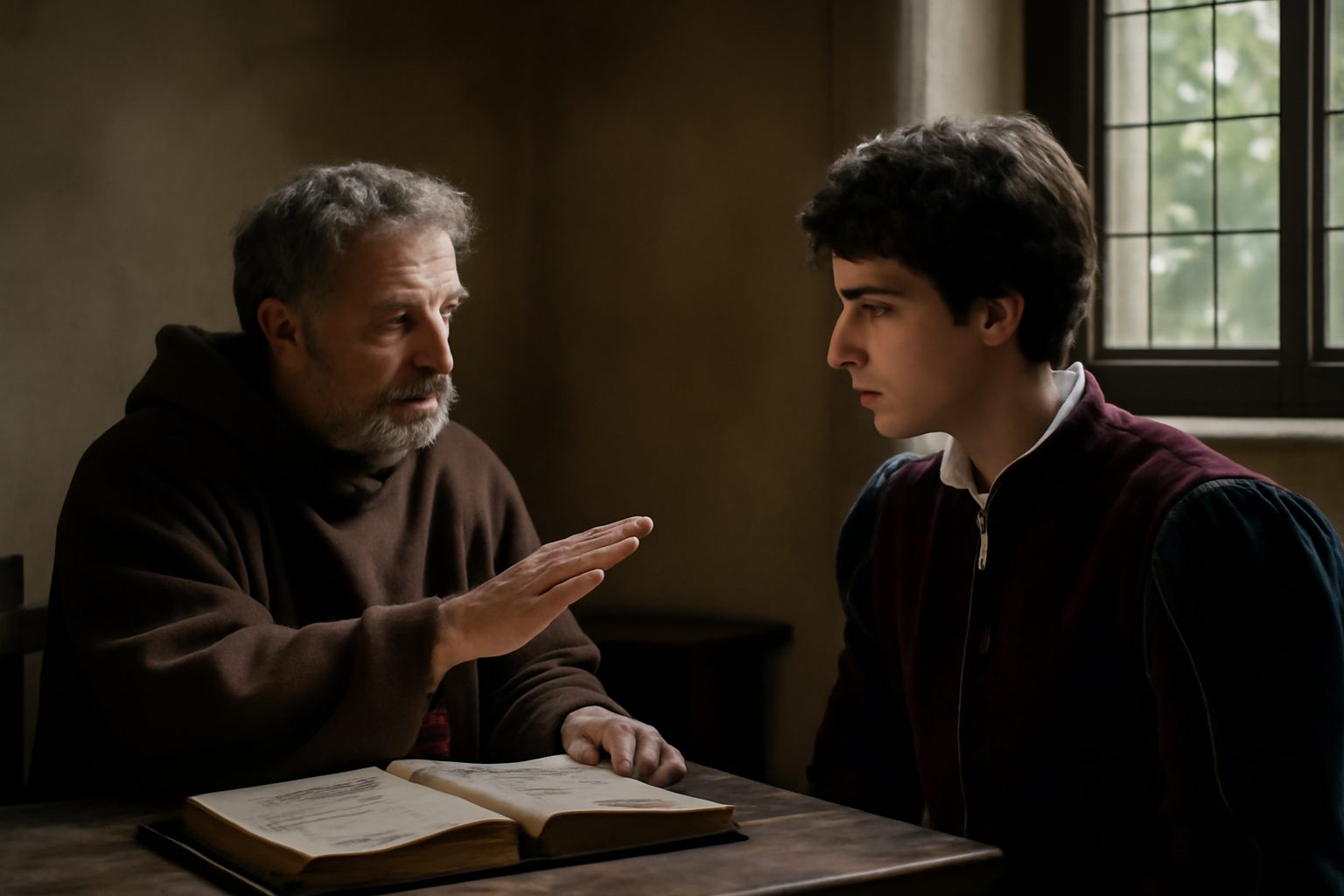
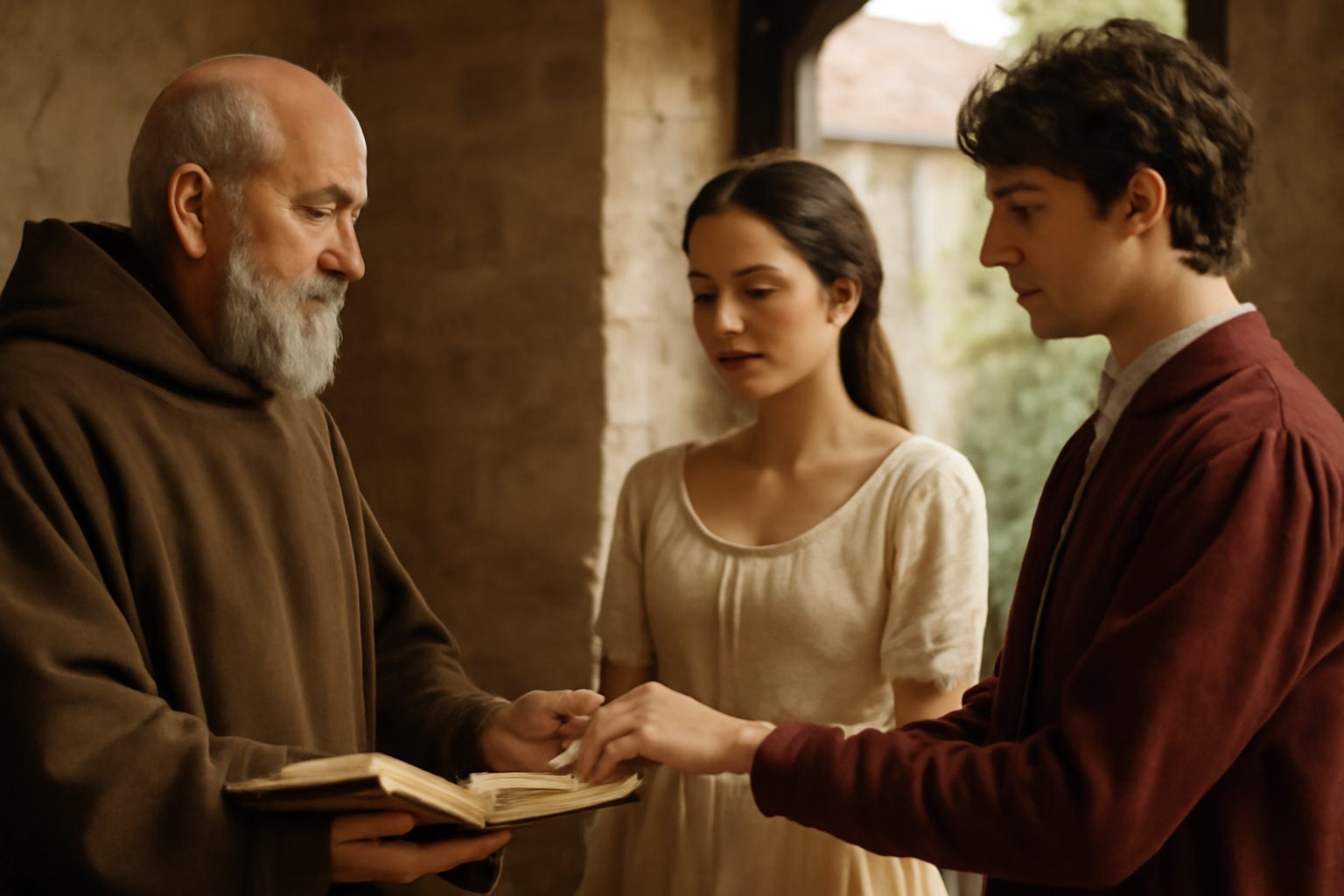
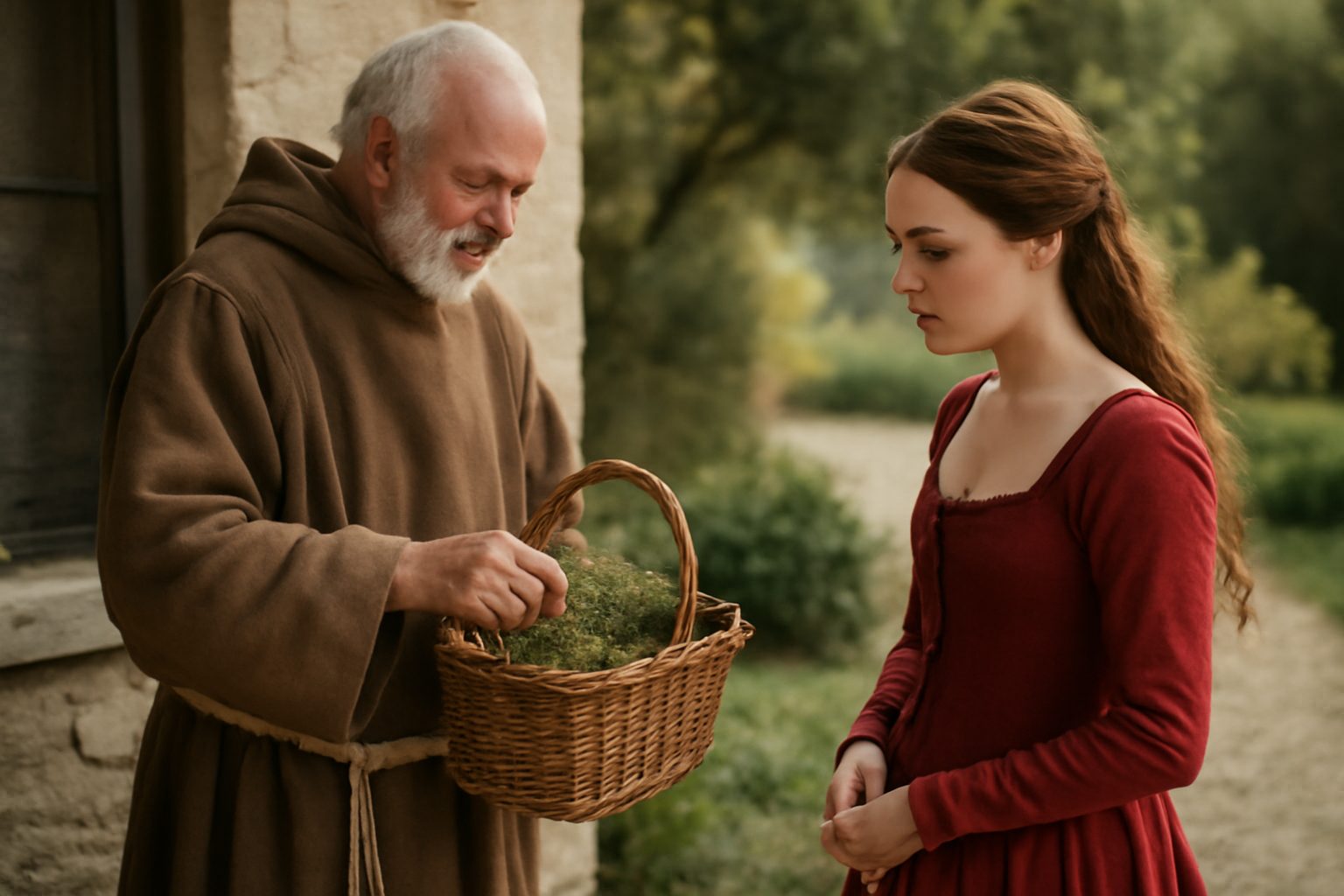
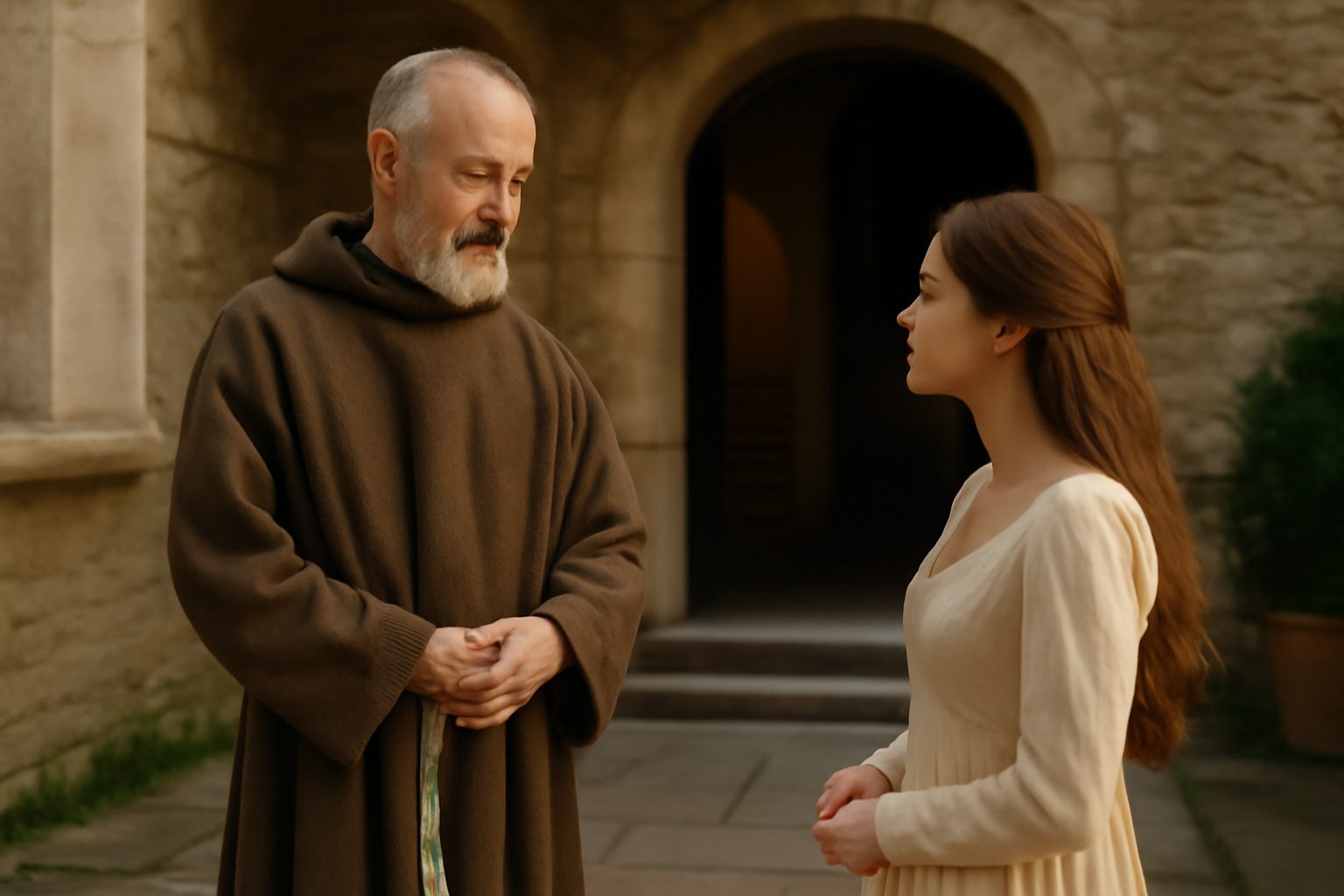
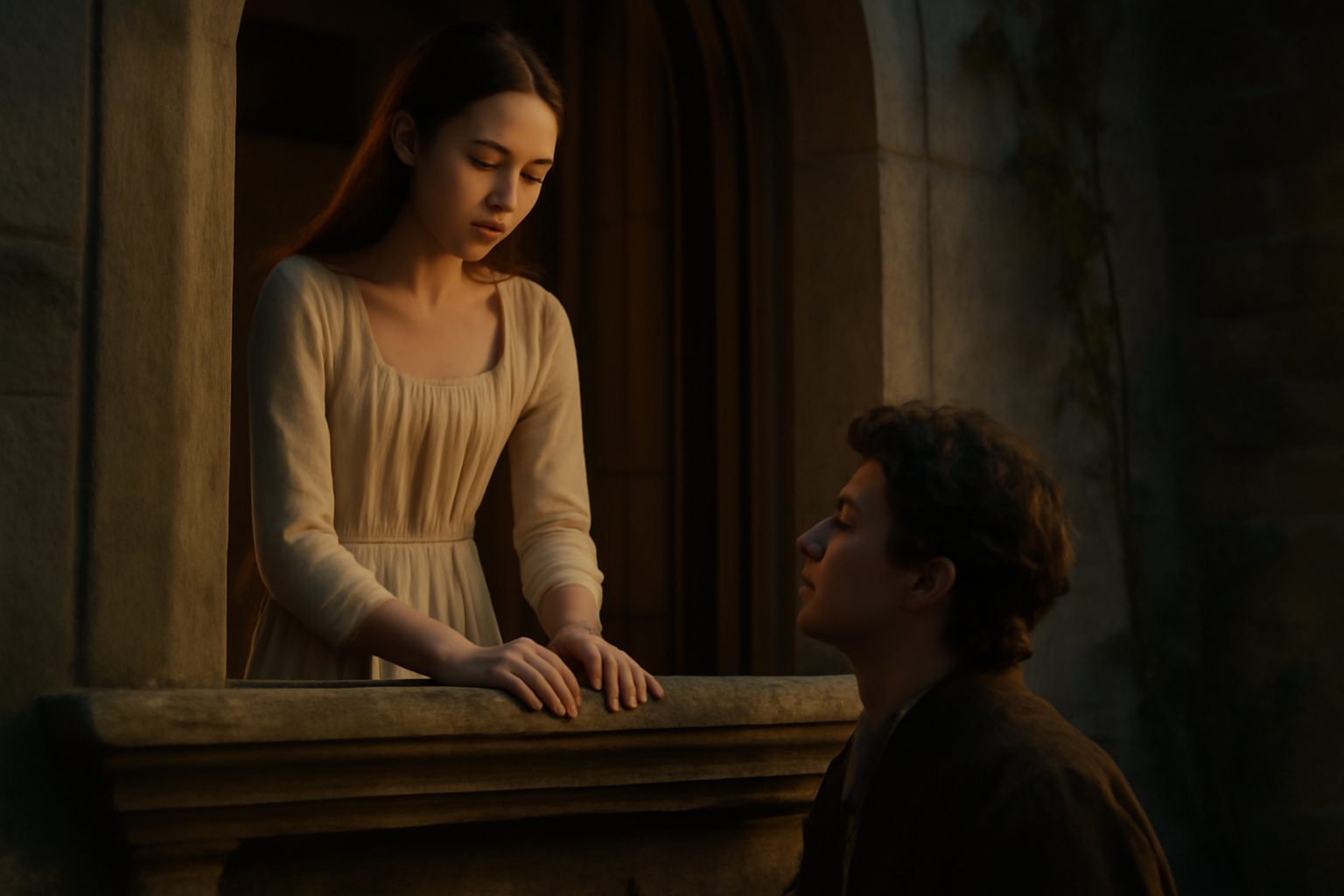
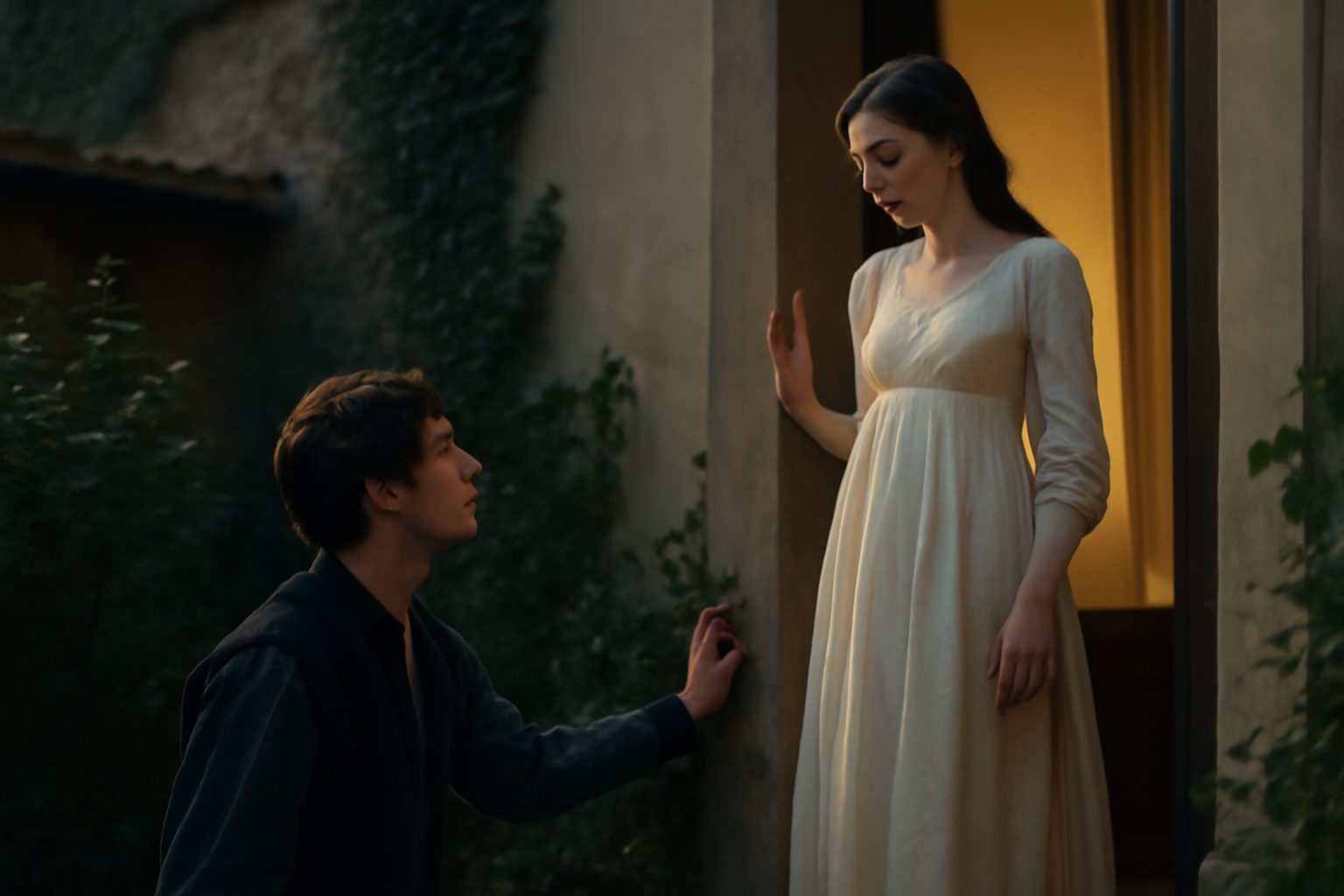
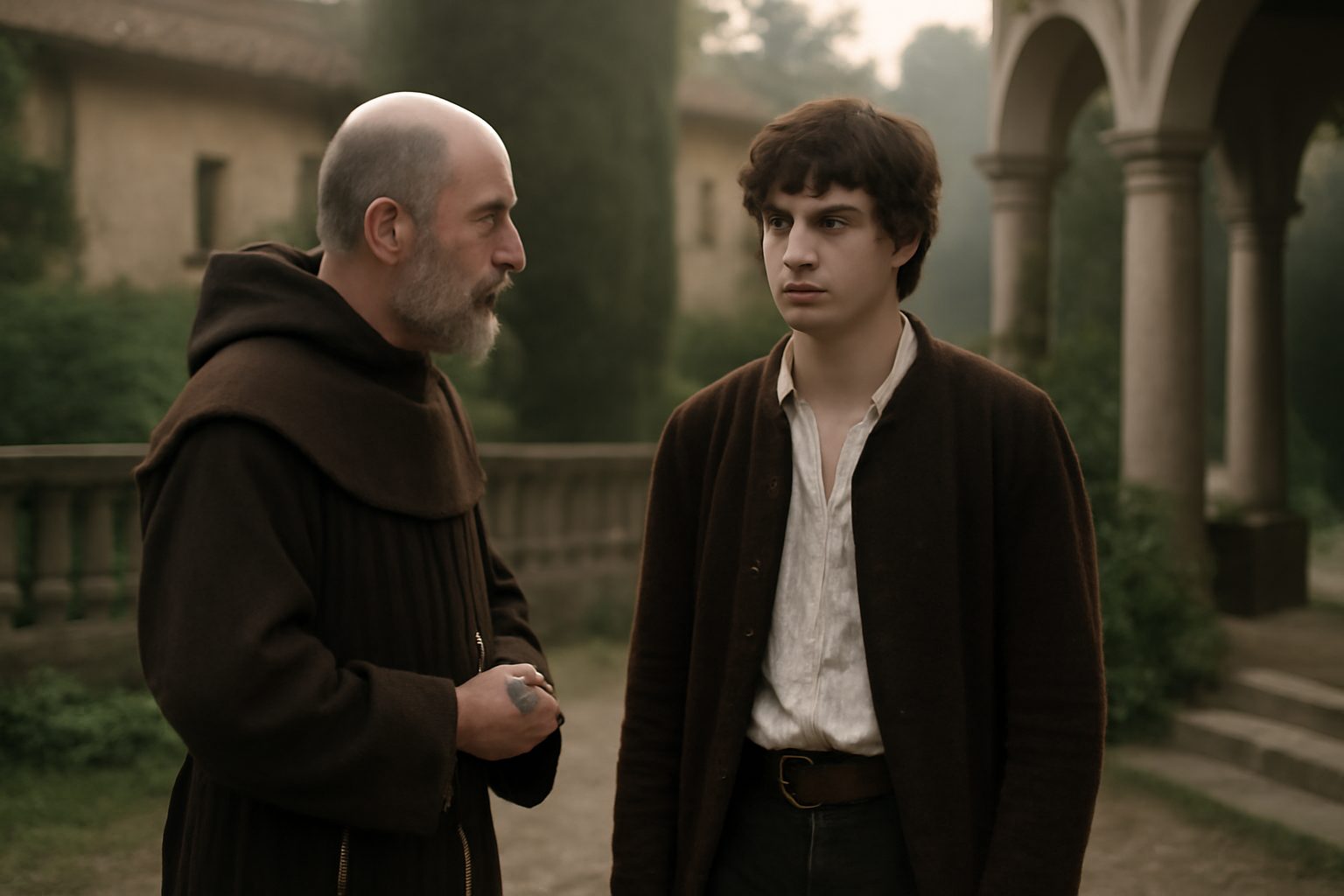
In Act 2, Scene 3 of Romeo and Juliet, Friar Laurence notices Romeo's sudden change in demeanor after he abandons his infatuation with Rosaline. The line refers to the tears Romeo once shed for Rosaline, now dried as he shifts his affections to Juliet. The friar's observation highlights Romeo's impulsive nature and sets the stage for his warning about the dangers of fleeting passions.
Friar Laurence: "Hath wash'd thy sallow cheeks for Rosaline!"
In modern day english, we would say:
You’ve been crying and looking pale over Rosaline.
Frequently Asked Questions
What does Friar Laurence notice about Romeo's appearance?
Friar Laurence notices that Romeo's pale cheeks have been washed, likely from crying over Rosaline.
Connections to other verses:
Connections to "Hath wash'd thy sallow cheeks for Rosaline!"
Friar Laurence's Observations on Romeo's Change
The line Hath wash'd thy sallow cheeks for Rosaline! is part of Friar Laurence's reaction to Romeo's sudden shift in affection. This connects to his earlier exclamation, Holy Saint Francis, what a change is here!, where he first notices Romeo's altered demeanor. The Friar then questions whether Romeo has been with Rosaline, asking God pardon sin! wast thou with Rosaline?, to which Romeo denies, saying With Rosaline, my ghostly father? no;.
Romeo's Past Suffering for Rosaline
The reference to Romeo's "sallow cheeks" washed for Rosaline highlights his previous melancholy state. This ties to Friar Laurence's remark about the wasted tears, Jesu Maria, what a deal of brine and How much salt water thrown away in waste, emphasizing the futility of Romeo's past sorrows. The Friar also notes the lingering evidence of this grief in Lo, here upon thy cheek the stain doth sit and Of an old tear that is not wash'd off yet.
Contrast Between Old and New Love
Friar Laurence contrasts Romeo's former love for Rosaline with his new passion for Juliet, stating Thou and these woes were all for Rosaline and questioning Is Rosaline, whom thou didst love so dear. He criticizes the fickleness of young love in So soon forsaken? young men's love then lies and Not truly in their hearts, but in their eyes. Romeo defends his new love, insisting I pray thee, chide not; she whom I love now and that Doth grace for grace and love for love allow.
Friar's Admonition and Guidance
The Friar chides Romeo for his previous doting on Rosaline, reminding him Thou chid'st me oft for loving Rosaline and accusing him of Thy love did read by rote and could not spell. He distinguishes between doting and true love in For doting, not for loving, pupil mine. Despite his reproach, the Friar agrees to marry Romeo and Juliet to turn To turn your households' rancour to pure love.