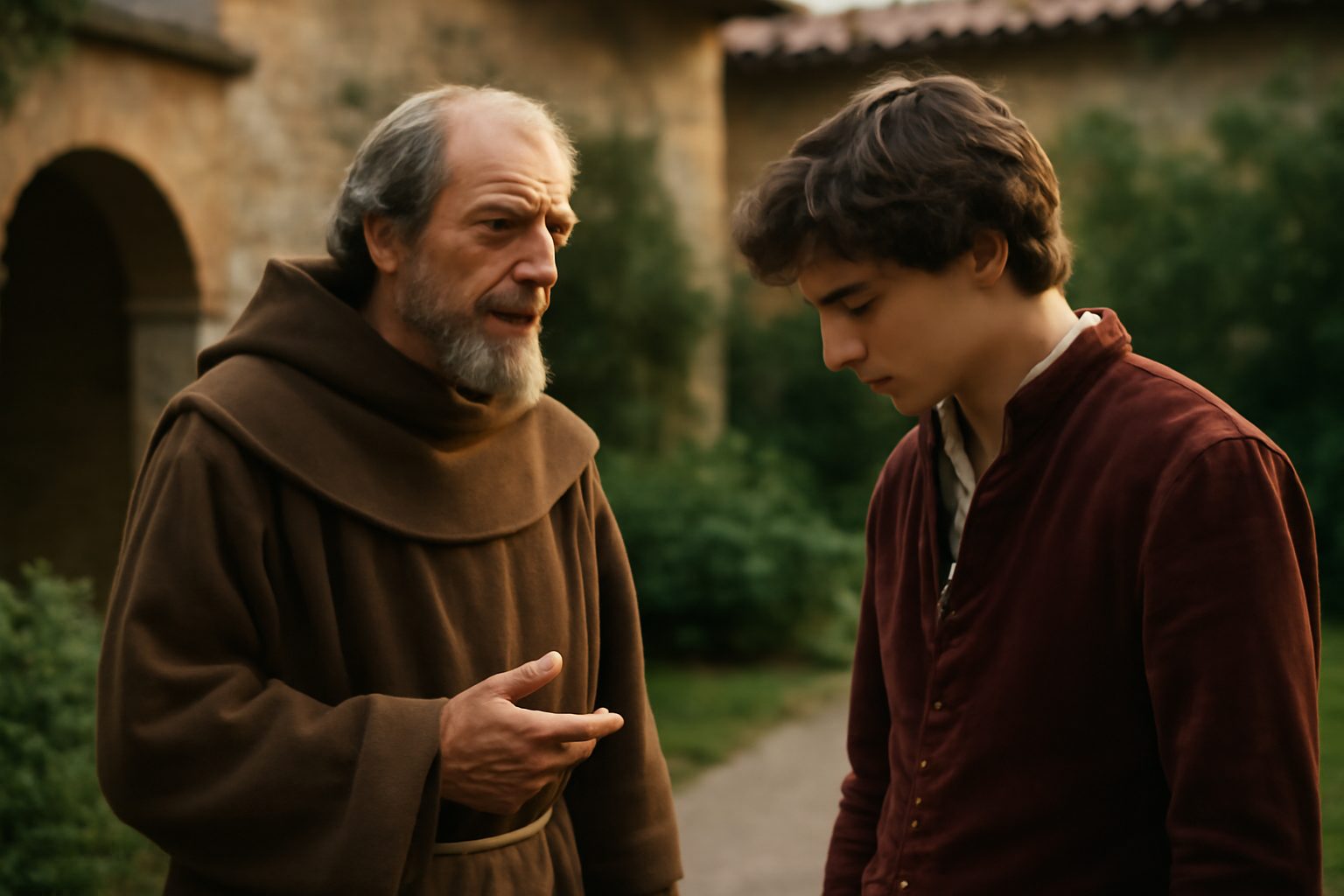
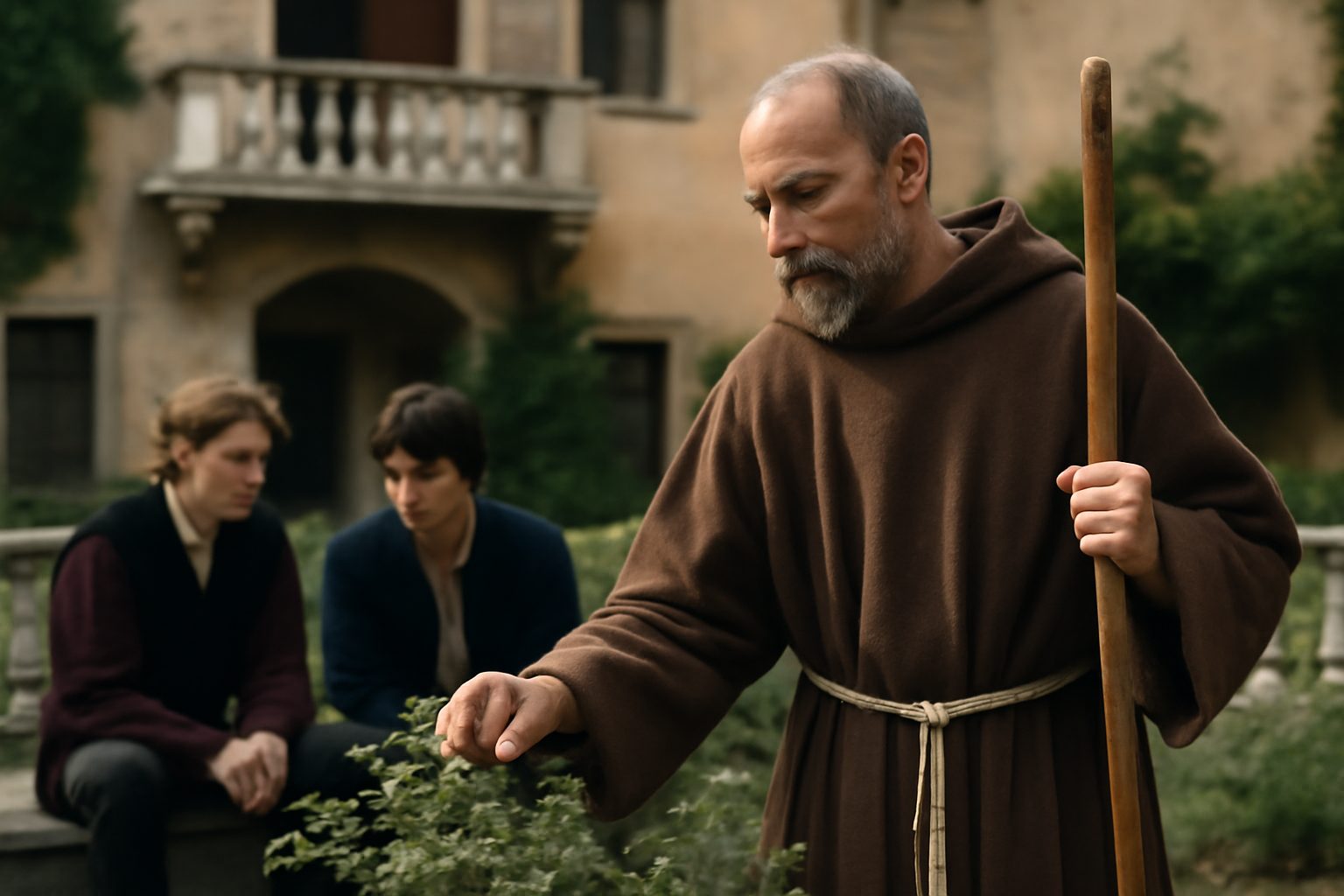
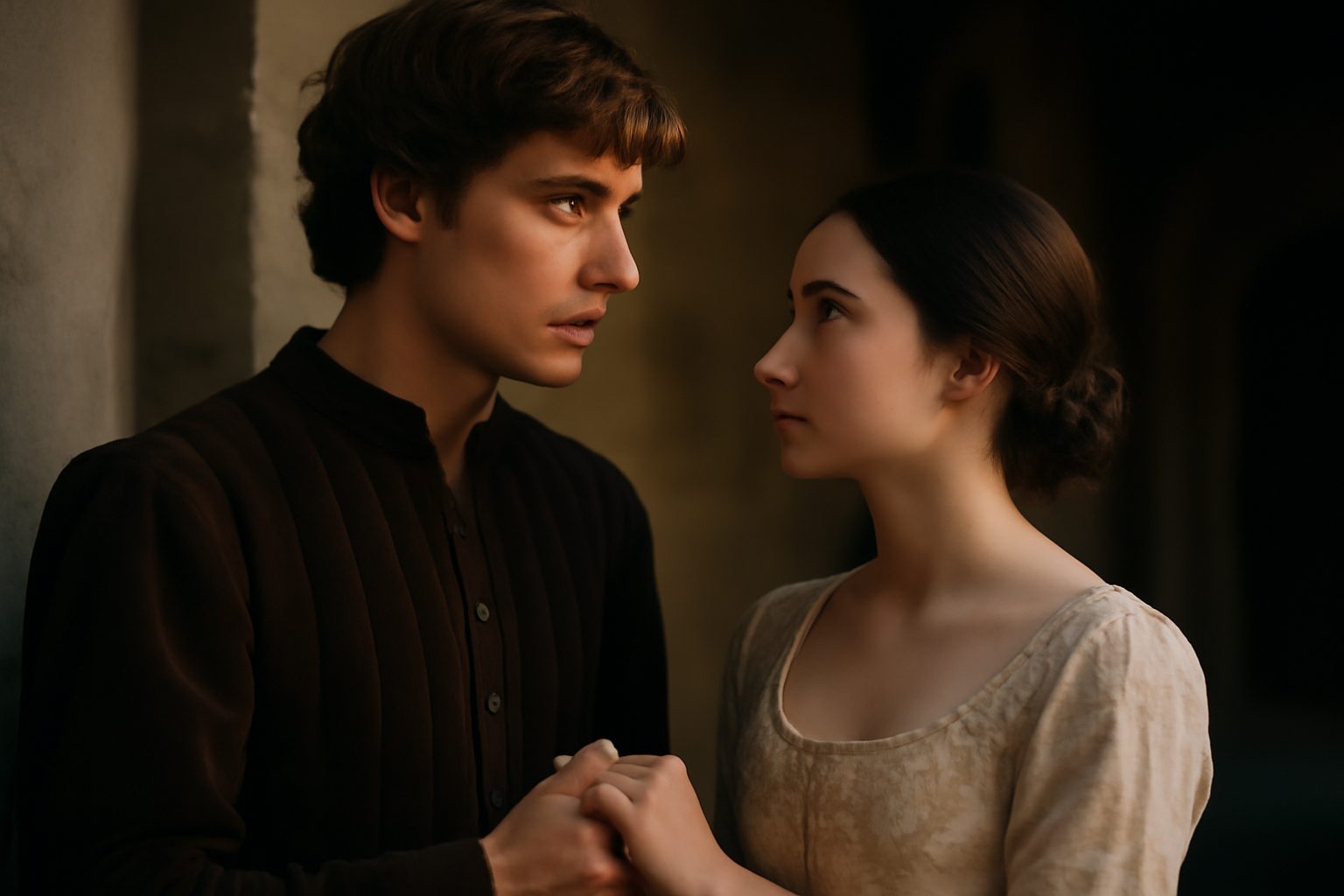
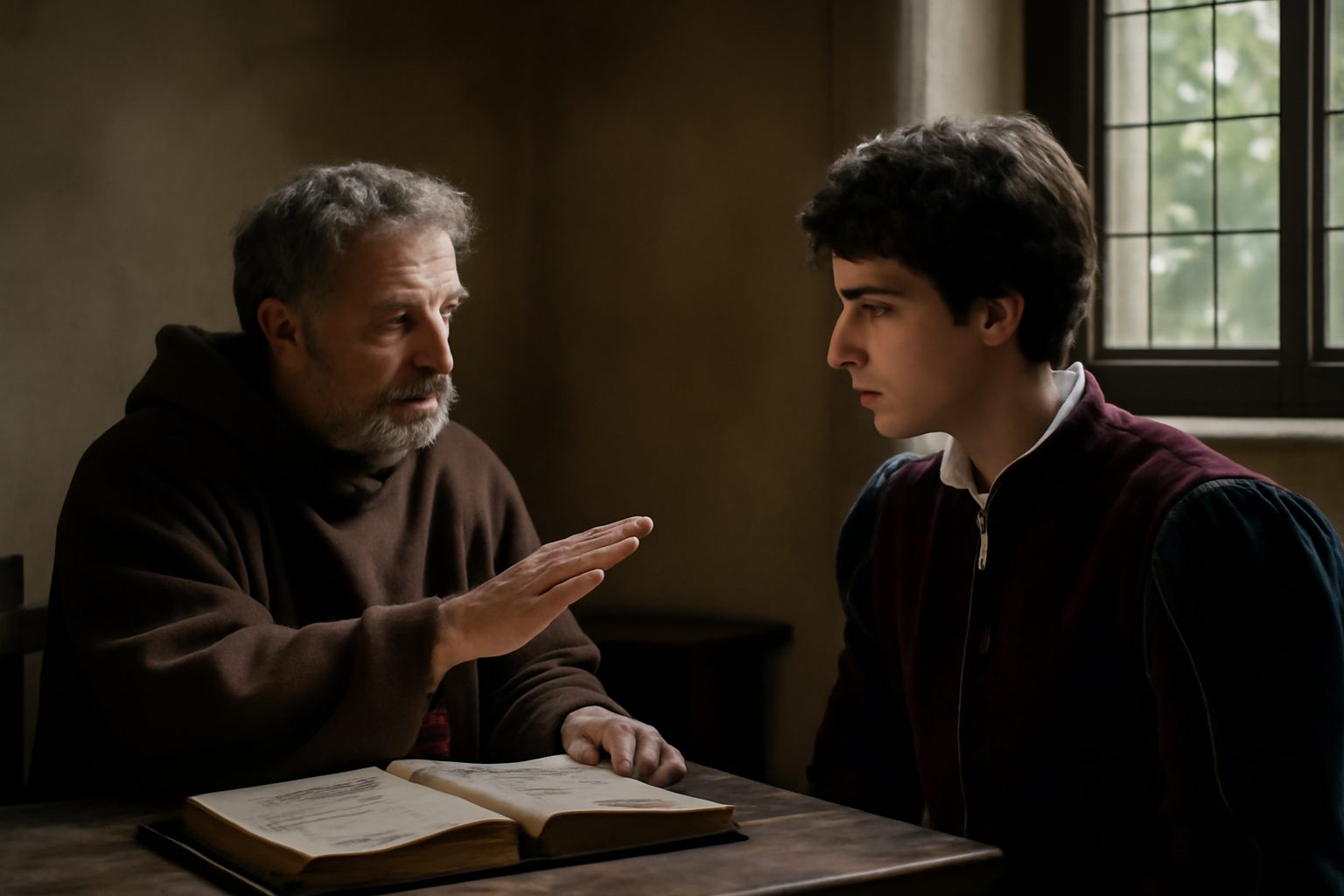
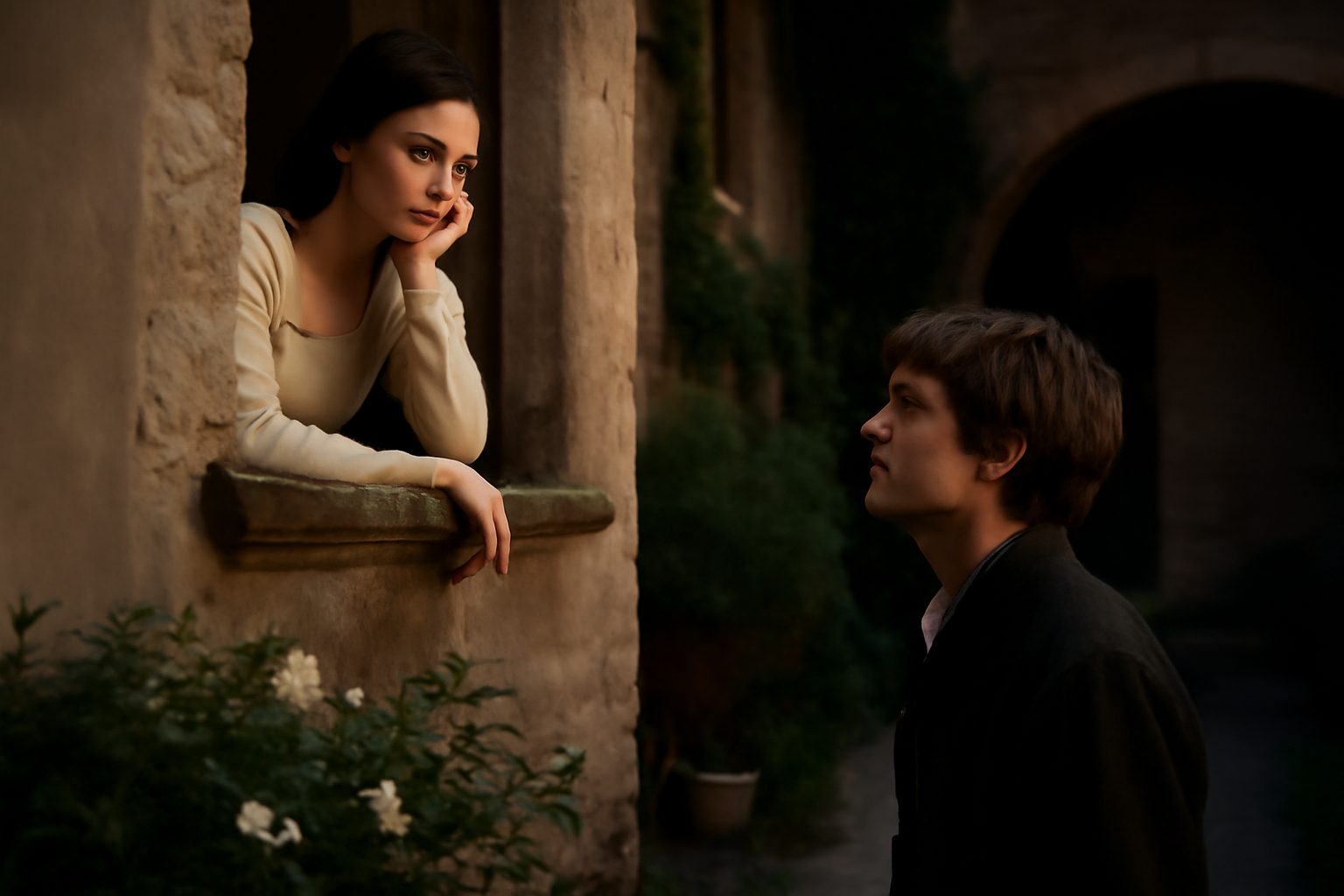
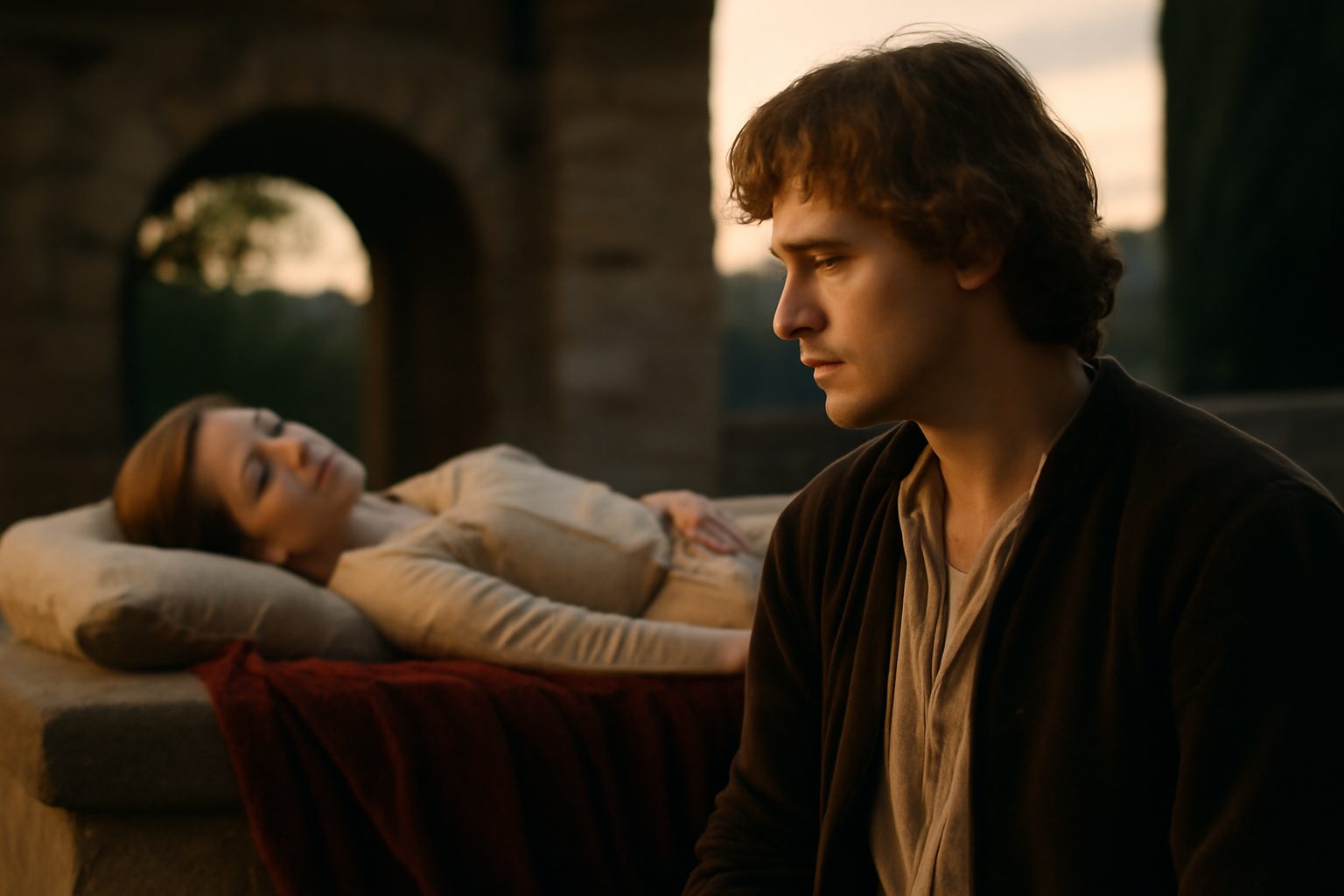
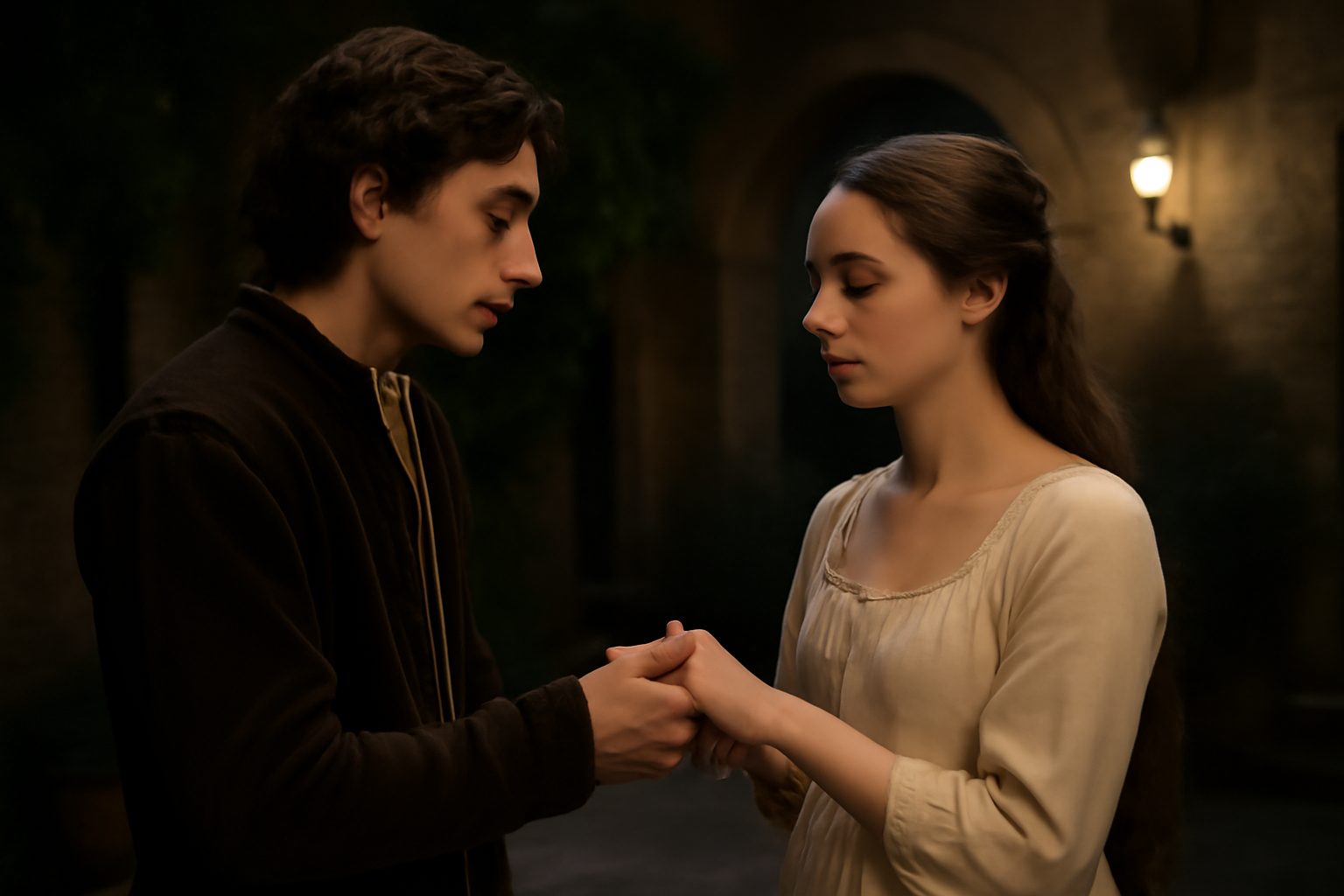
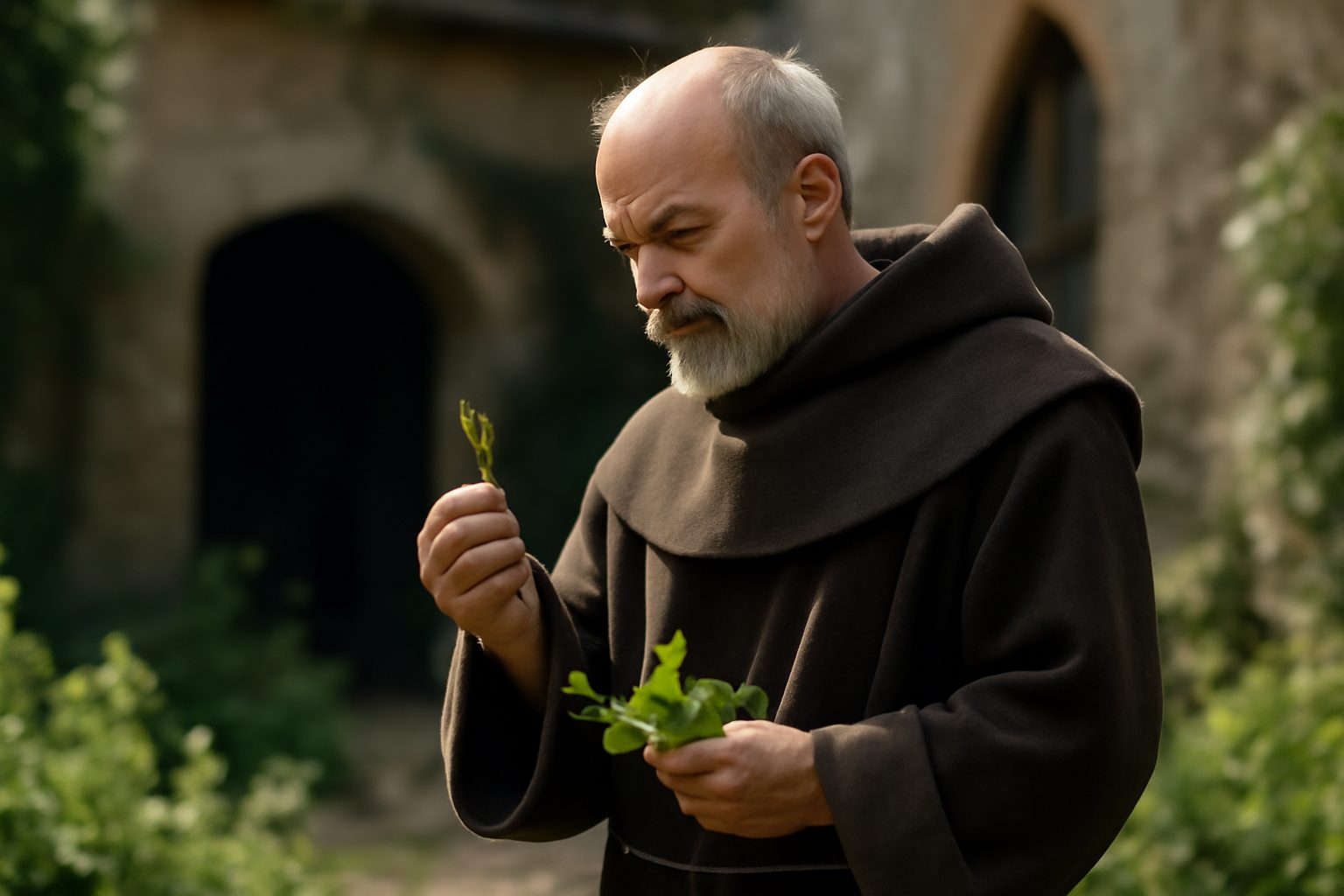
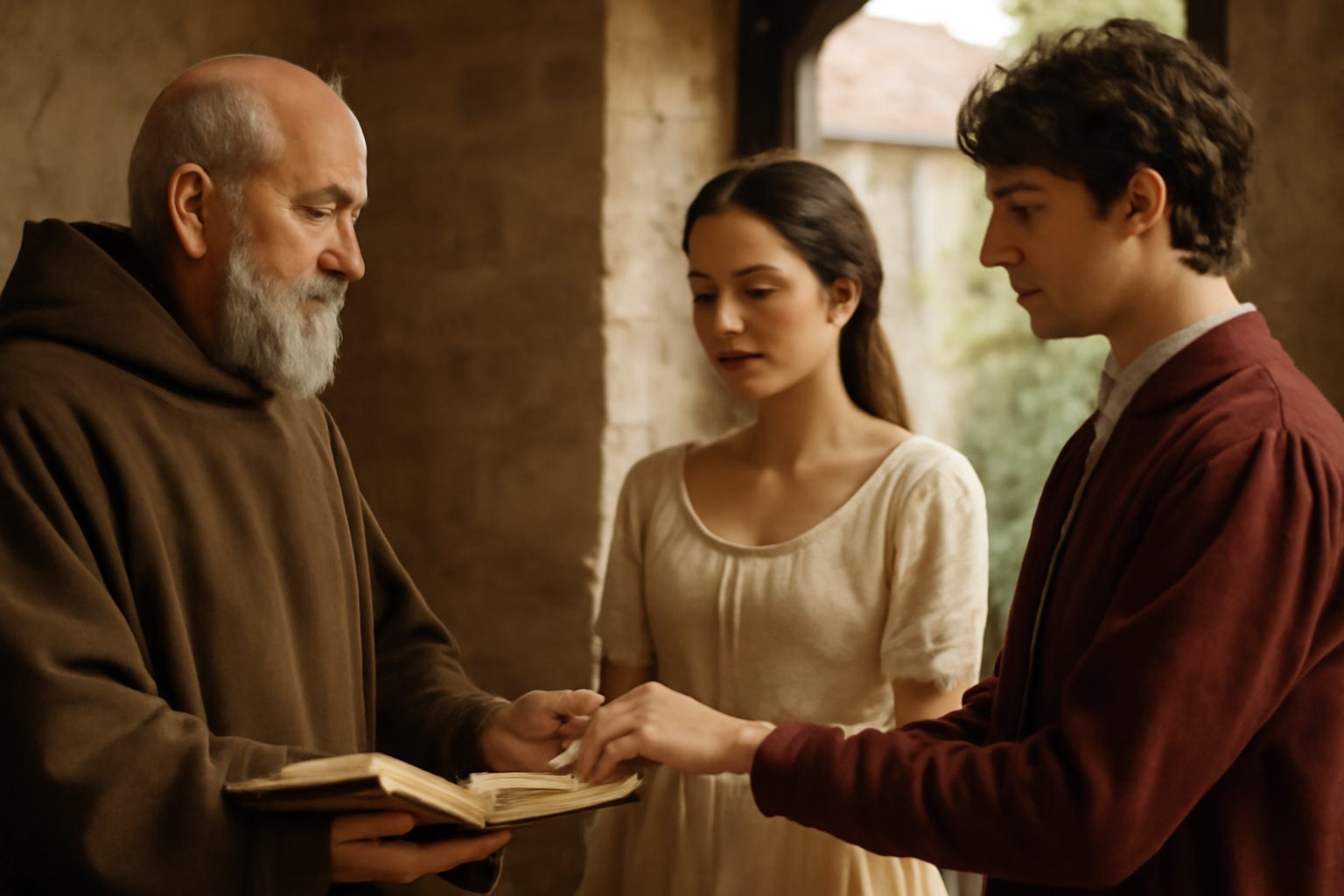
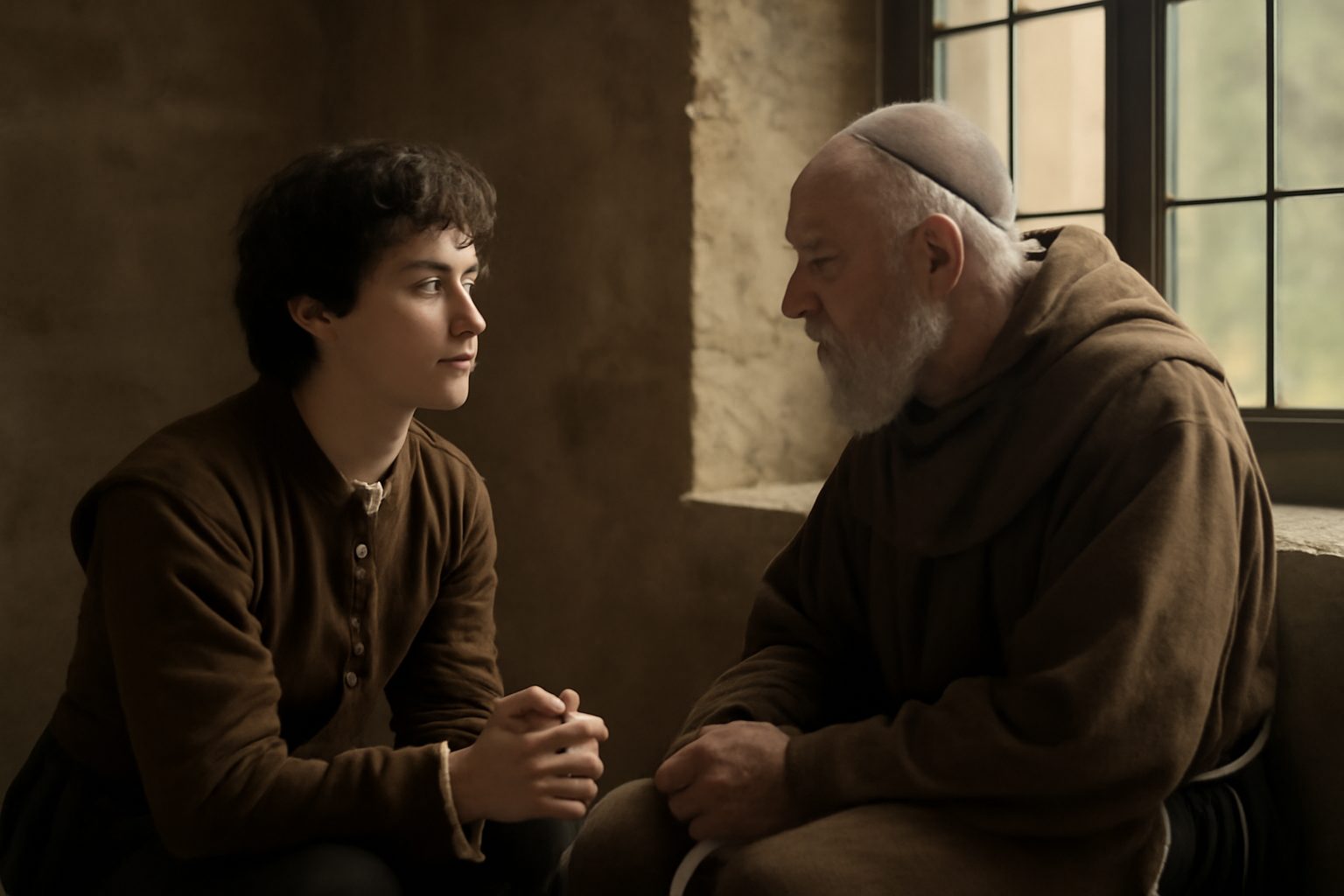
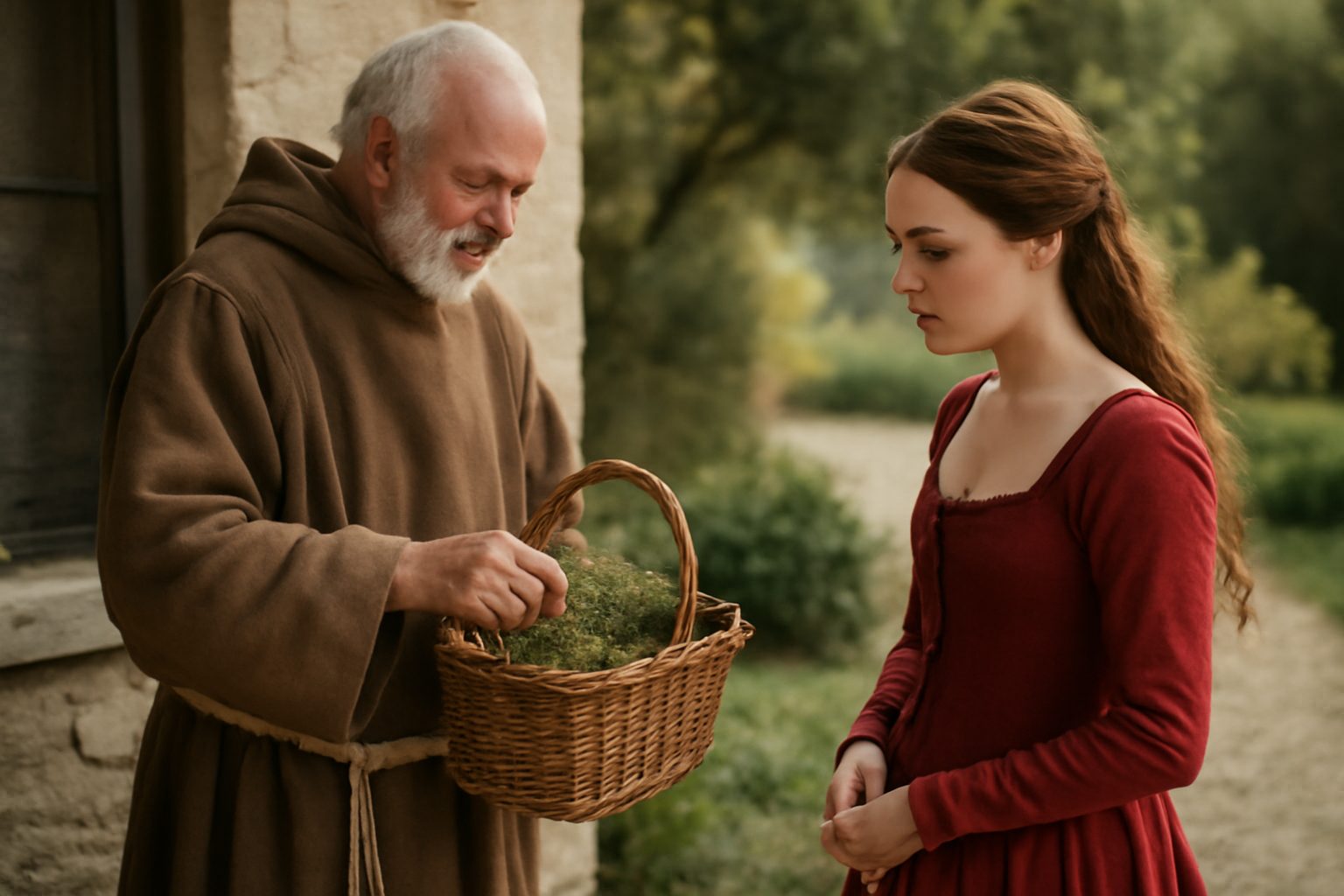
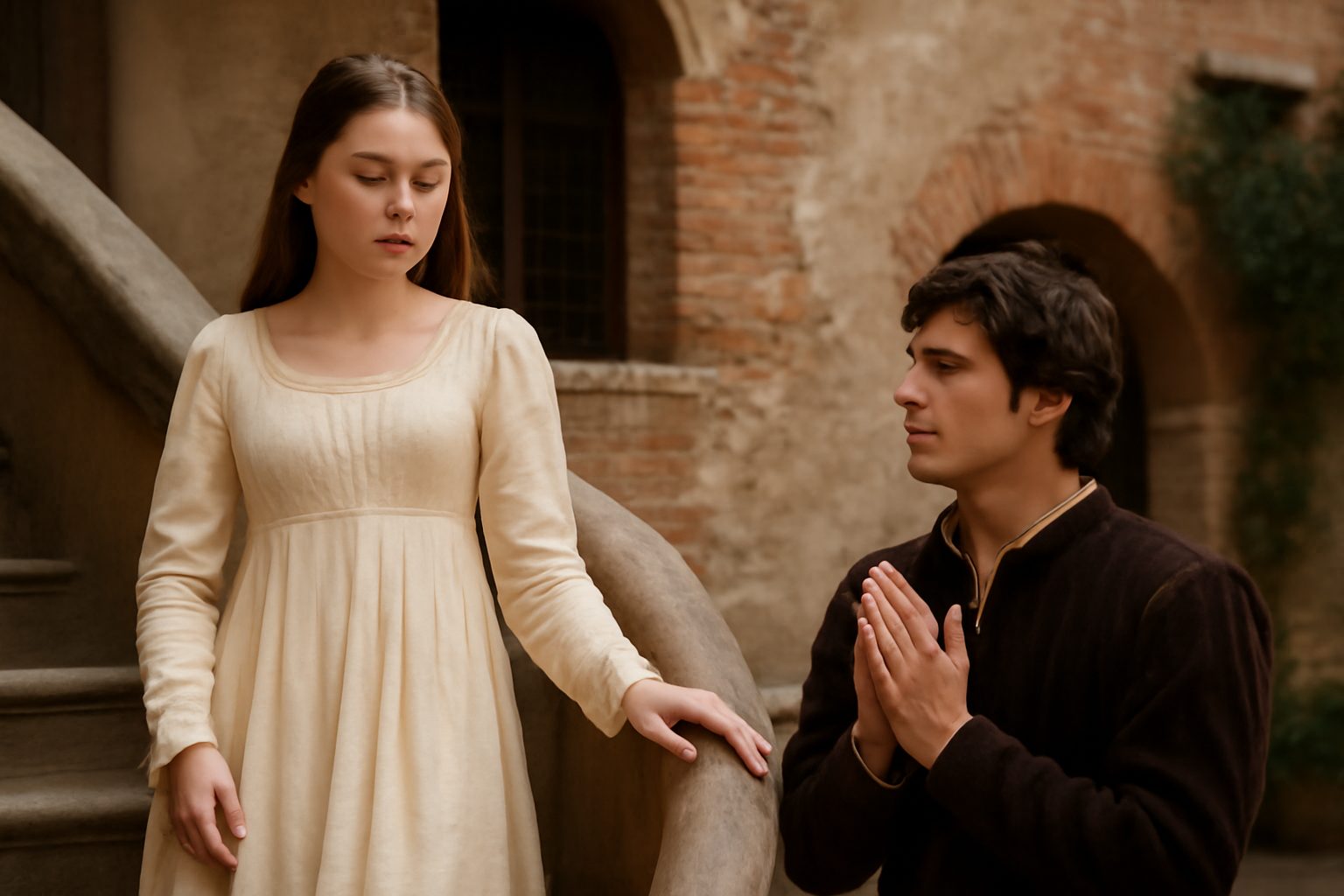
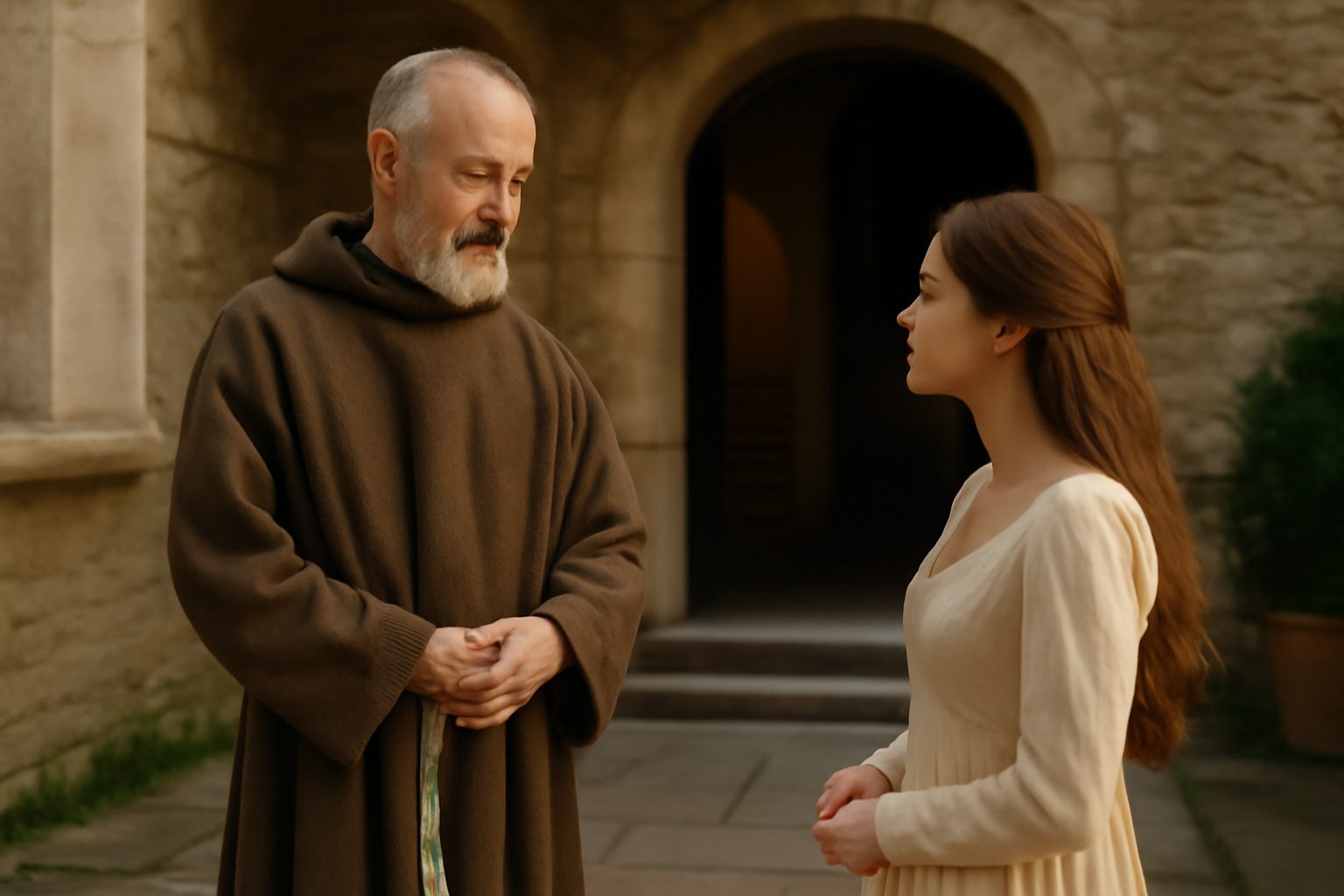
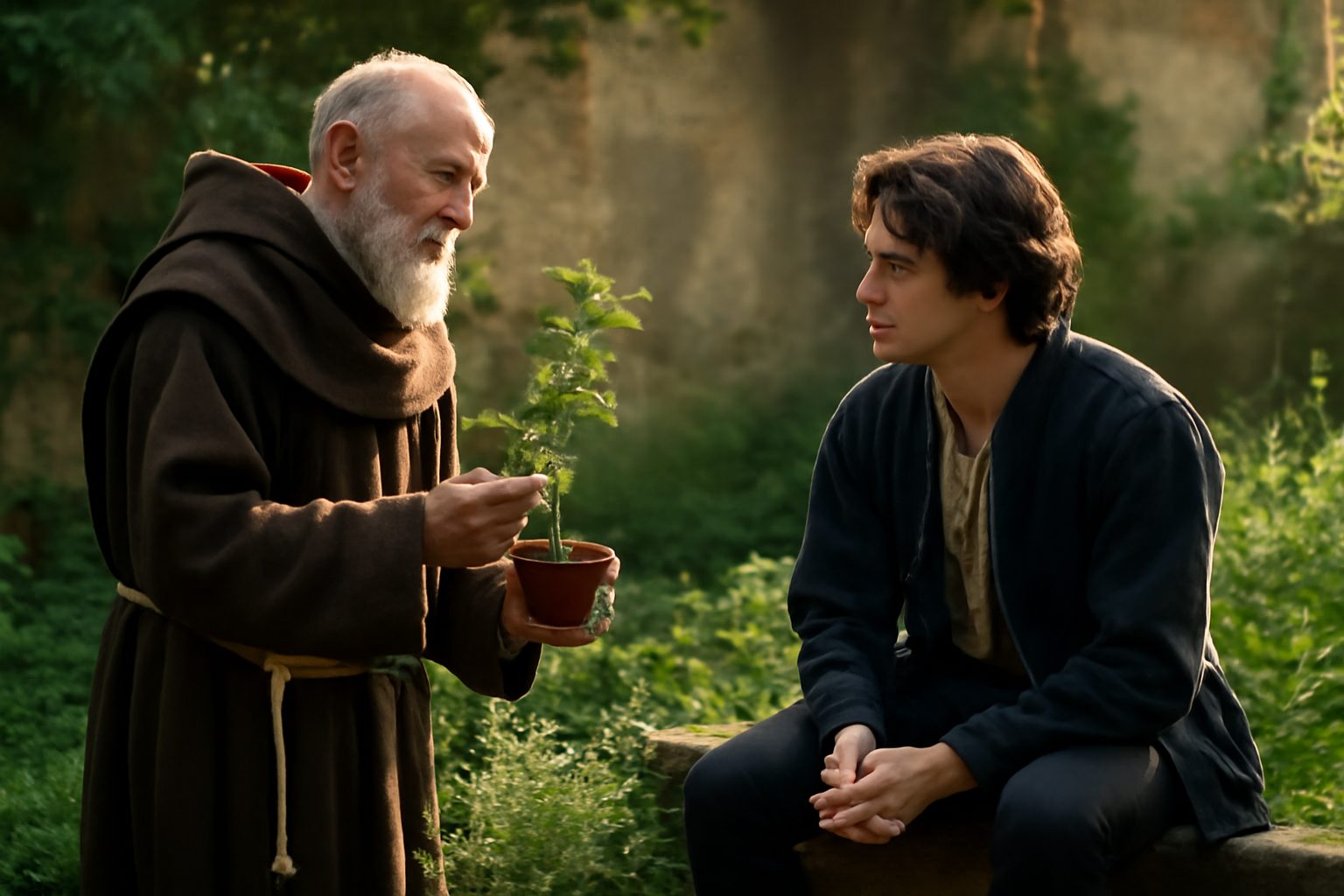
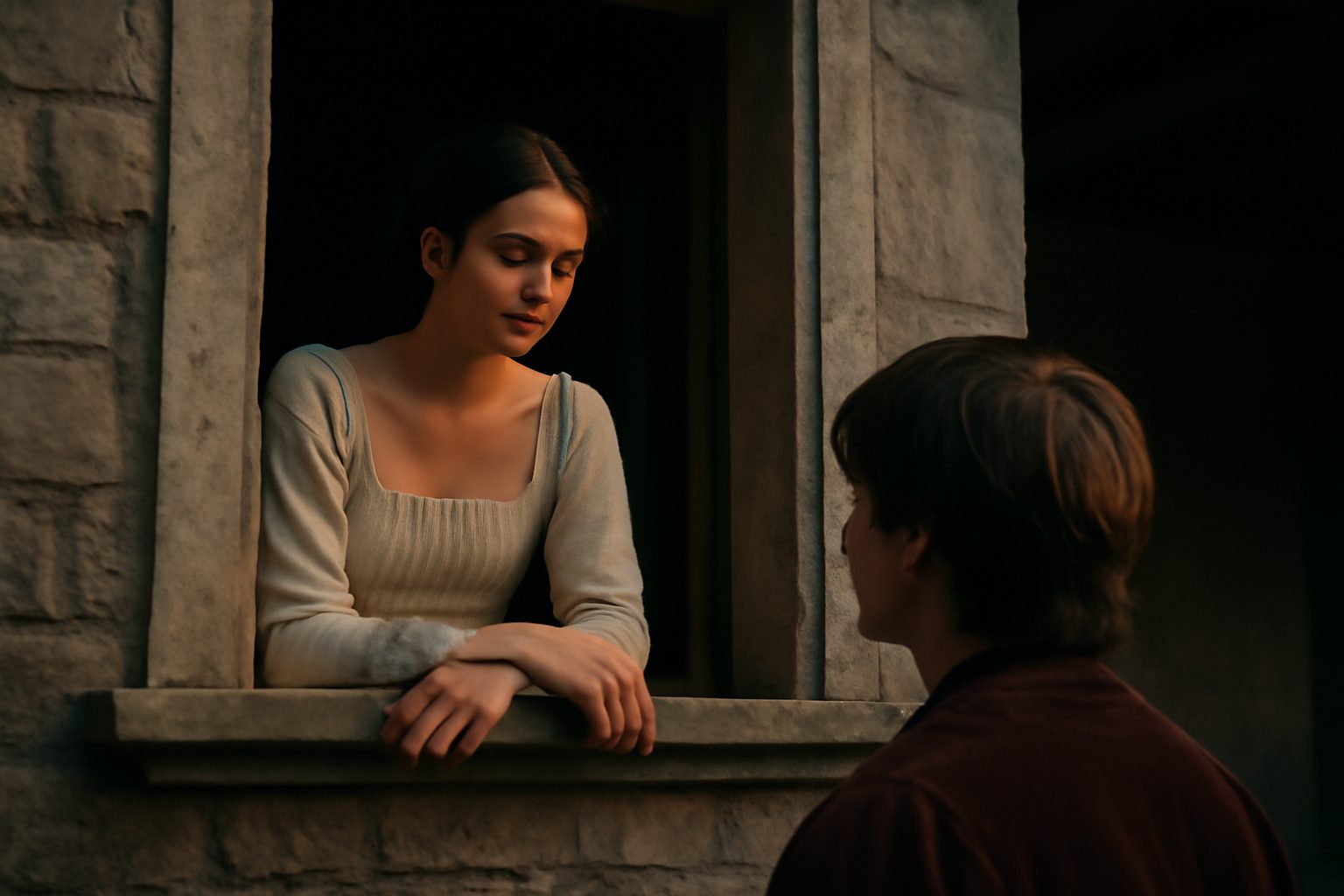
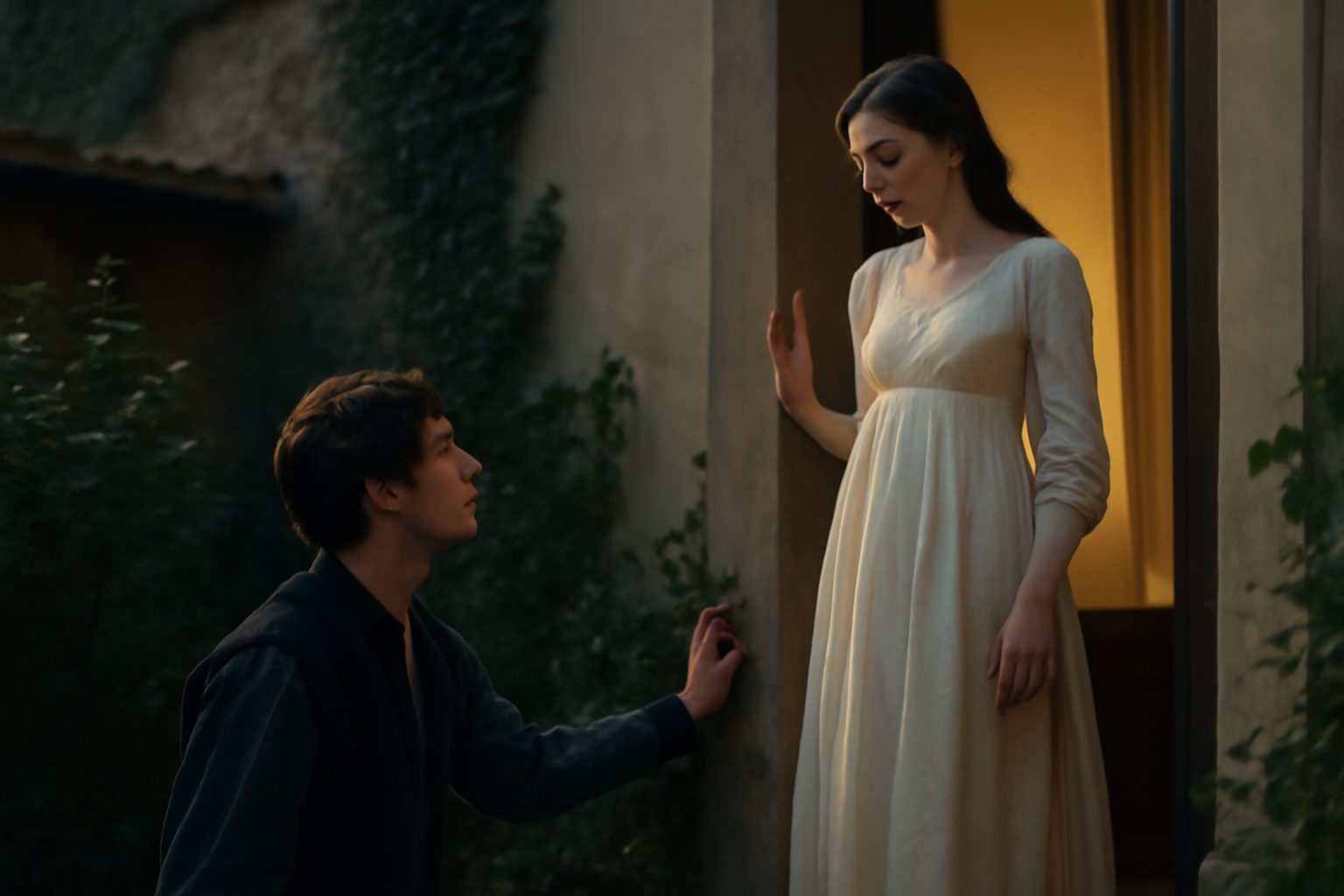
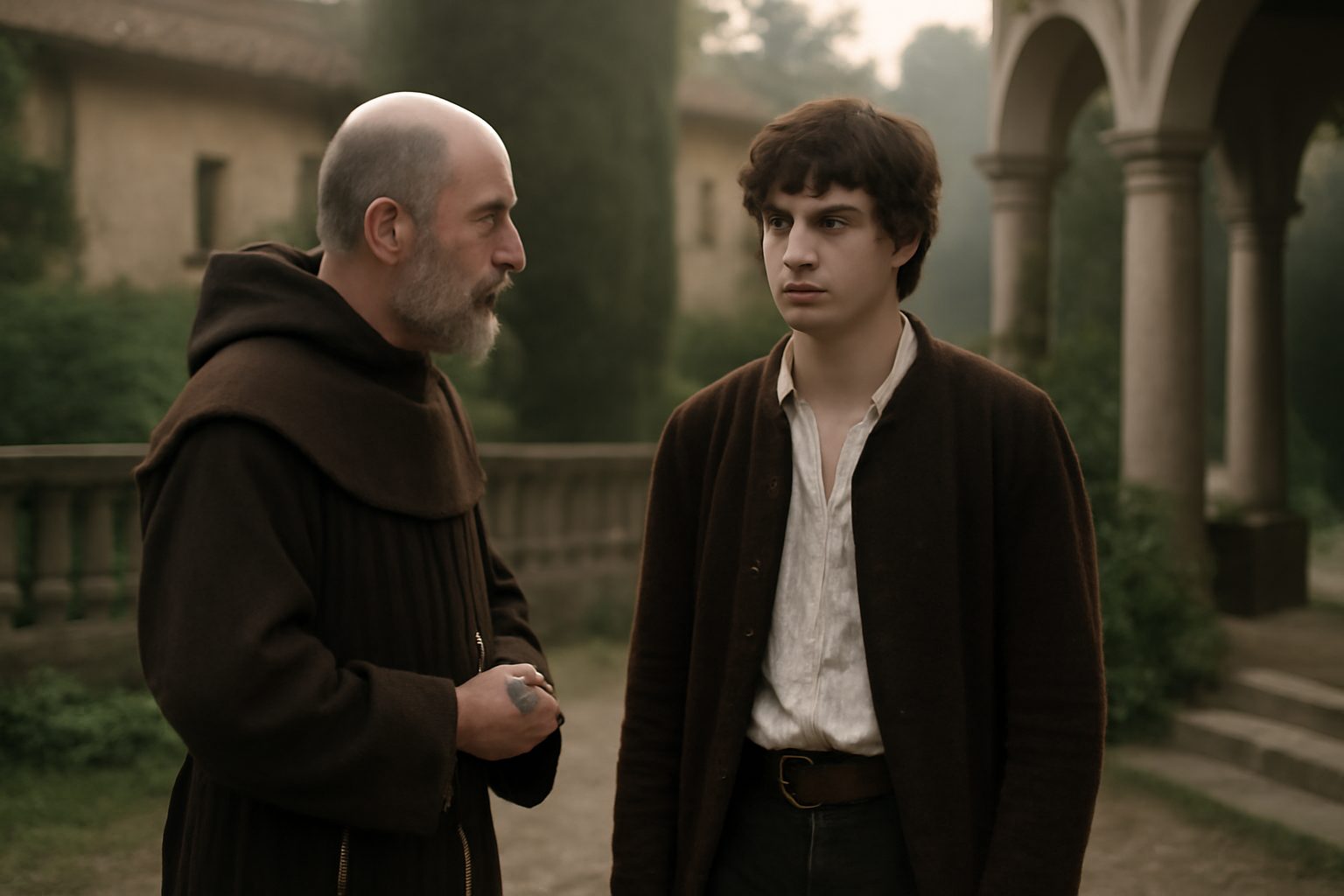
In Act 2, Scene 3 of Romeo and Juliet, Friar Laurence speaks these words after Romeo confesses his newfound love for Juliet, the daughter of his family's sworn enemy. The friar, hopeful that their union might reconcile the feuding Montagues and Capulets, agrees to marry the young couple in secret. This line captures his cautious optimism that love could heal the long-standing hatred between the two households.
Friar Laurence: "To turn your households' rancour to pure love."
In modern day english, we would say:
To change the bitter hatred between your families into genuine love.
Frequently Asked Questions
What does Friar Laurence hope to achieve by marrying Romeo and Juliet?
Friar Laurence hopes that their marriage will end the feud between their families and turn their hatred into love.
Connections to other verses:
Connections to "To turn your households' rancour to pure love"
This line, spoken by Friar Laurence, expresses his hope that Romeo and Juliet's union might reconcile the feuding Montague and Capulet families. It connects thematically and narratively to several other verses in the scene.
Connection to Love and Reconciliation
The idea of love as a healing force is echoed in Doth grace for grace and love for love allow, where mutual affection is presented as a balanced, reciprocal exchange. Similarly, For this alliance may so happy prove directly anticipates the positive outcome the Friar envisions—transforming hatred into harmony.
Contrast with Earlier Woes
Friar Laurence's optimism contrasts with his earlier skepticism about Romeo's fickle affections, as seen in For doting, not for loving, pupil mine and Thy love did read by rote and could not spell, where he criticizes Romeo's superficial love for Rosaline. The shift to pure love for Juliet represents a maturation in Romeo's emotions.
Symbolism of Duality and Transformation
The theme of turning "rancour to pure love" mirrors the Friar's meditation on duality in nature, such as in Poison hath residence and medicine power, highlighting how something harmful can become beneficial. This idea is reinforced in Virtue itself turns vice, being misapplied, underscoring the transformative potential of actions and intentions.
Narrative Momentum Toward Union
The Friar's decision to marry the couple—In one respect I'll thy assistant be—directly supports his goal of ending the feud. Romeo’s declaration in Then plainly know my heart's dear love is set confirms his commitment, making the Friar's hope for reconciliation plausible.
Foreshadowing and Irony
While the line expresses hope, it ironically foreshadows the tragedy to come, as hinted in Full soon the canker death eats up that plant, suggesting that love, like a delicate flower, may be destroyed by surrounding hatred. The Friar's warning, Wisely and slow; they stumble that run fast, further underscores the precariousness of their rushed plans.