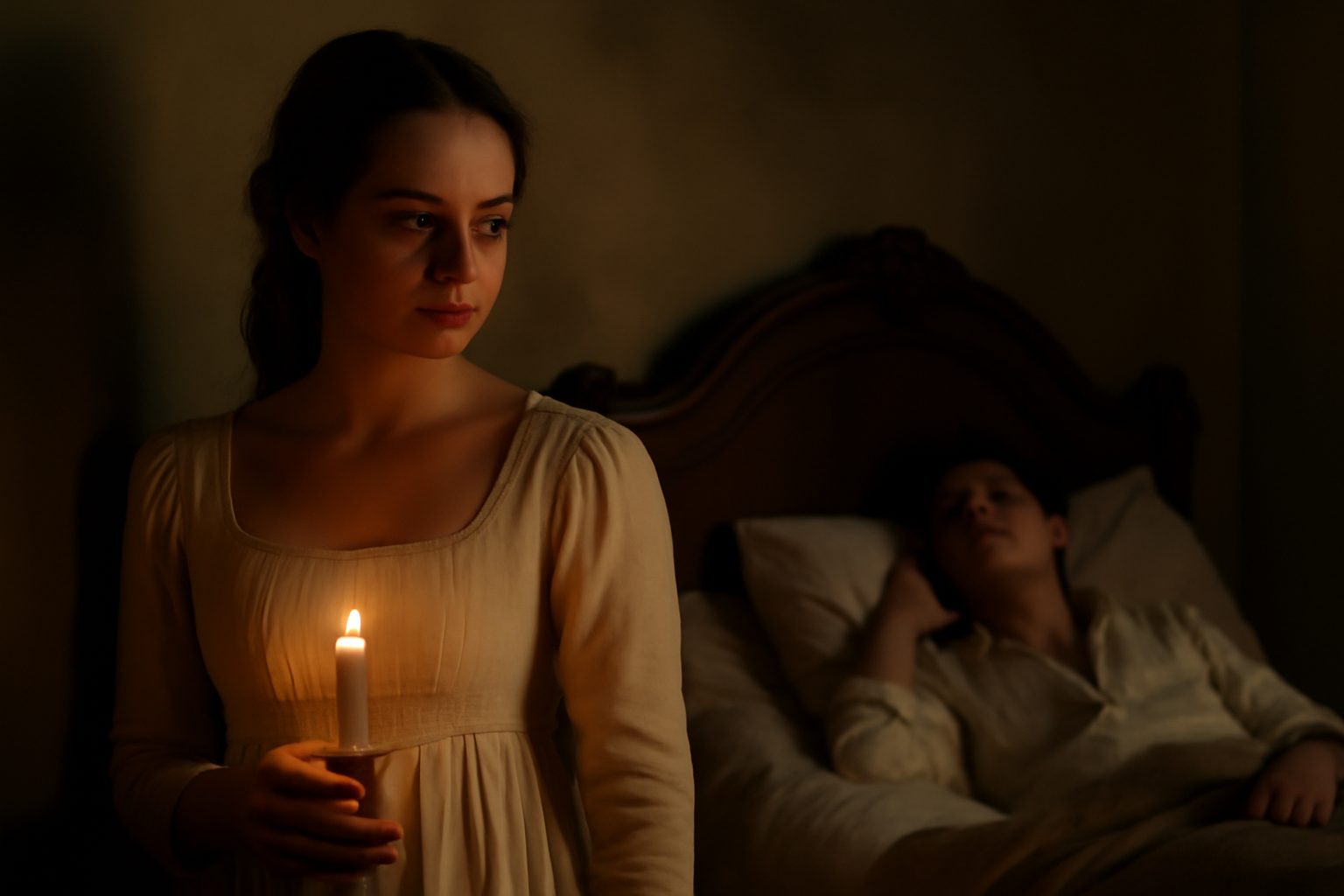
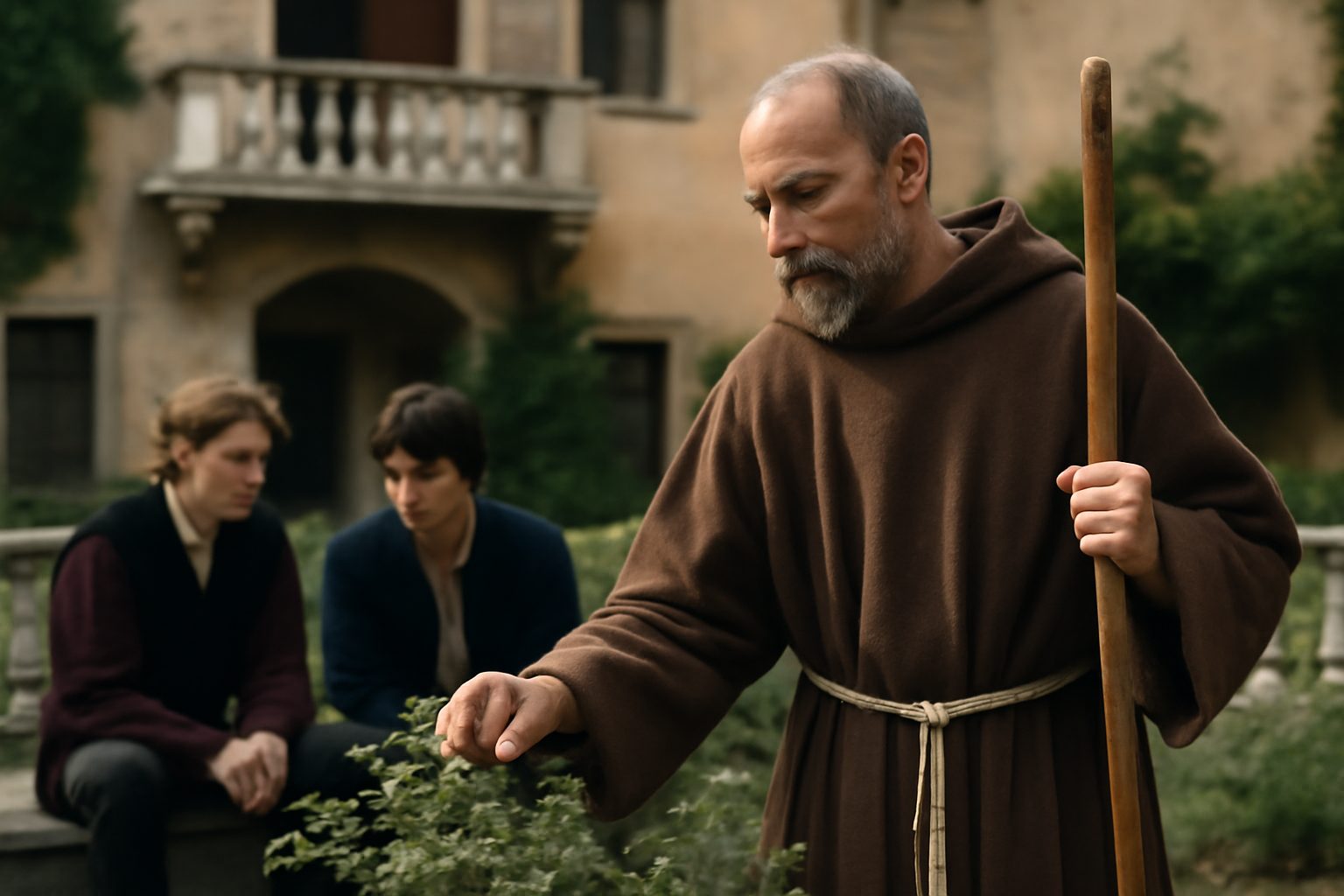
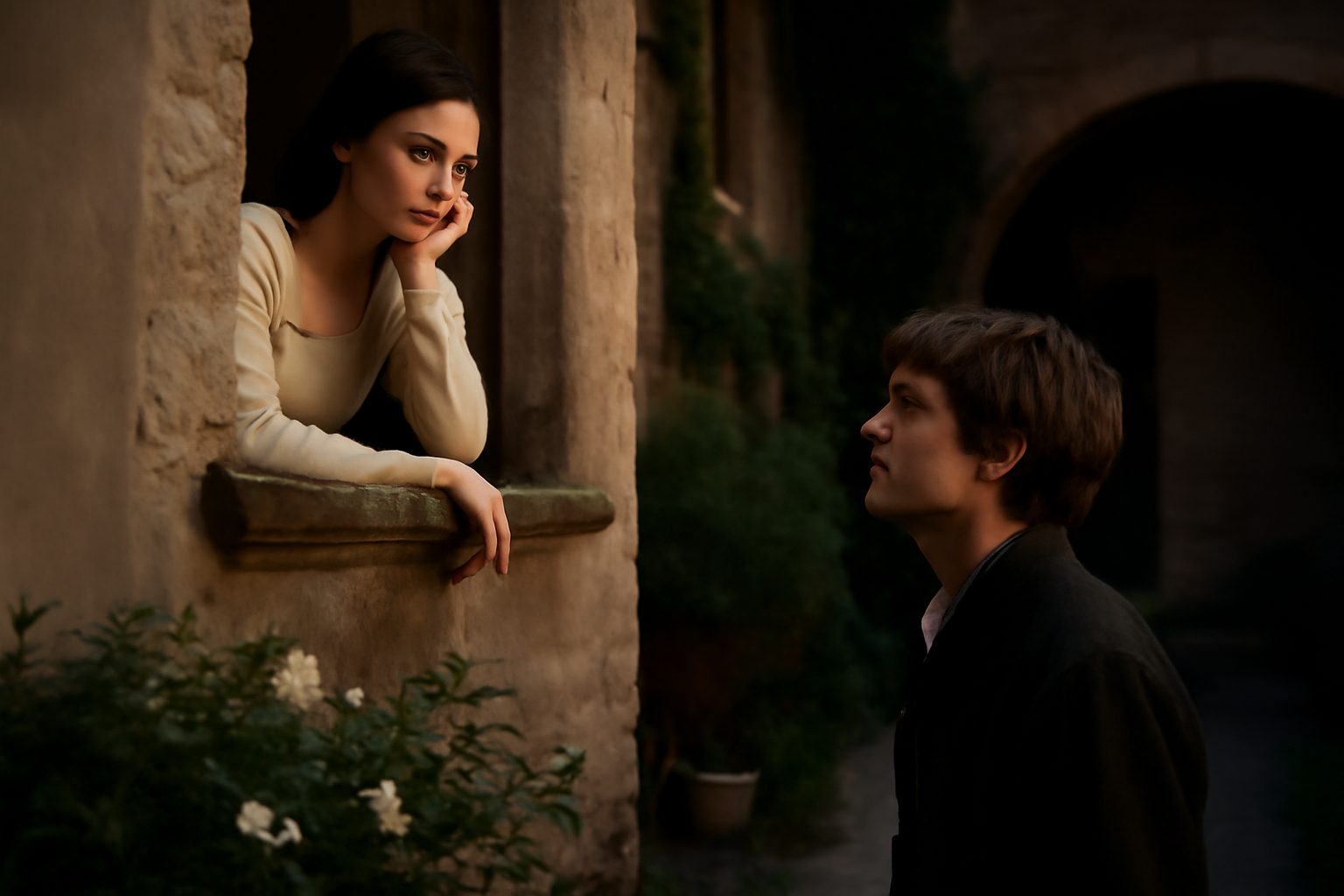
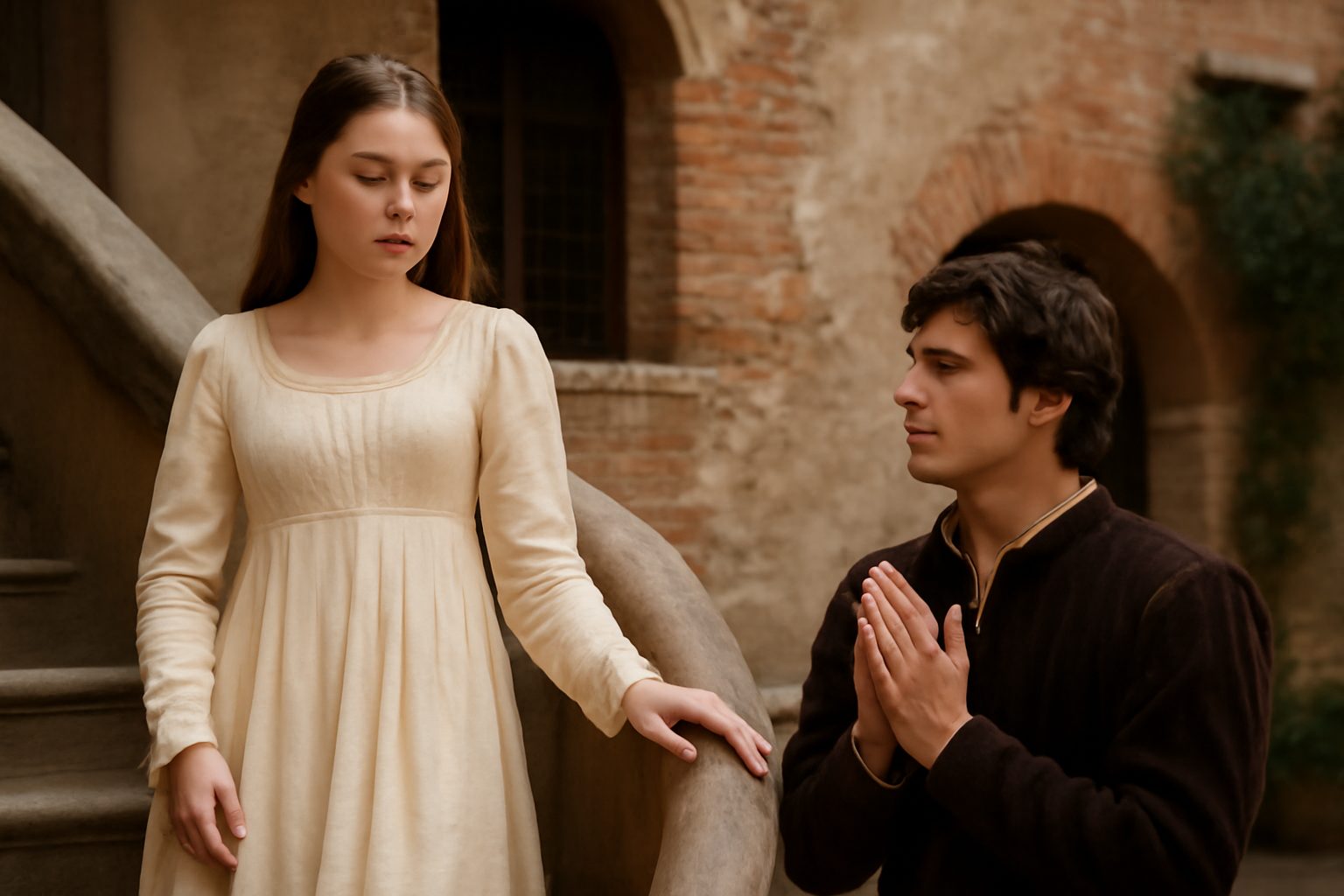
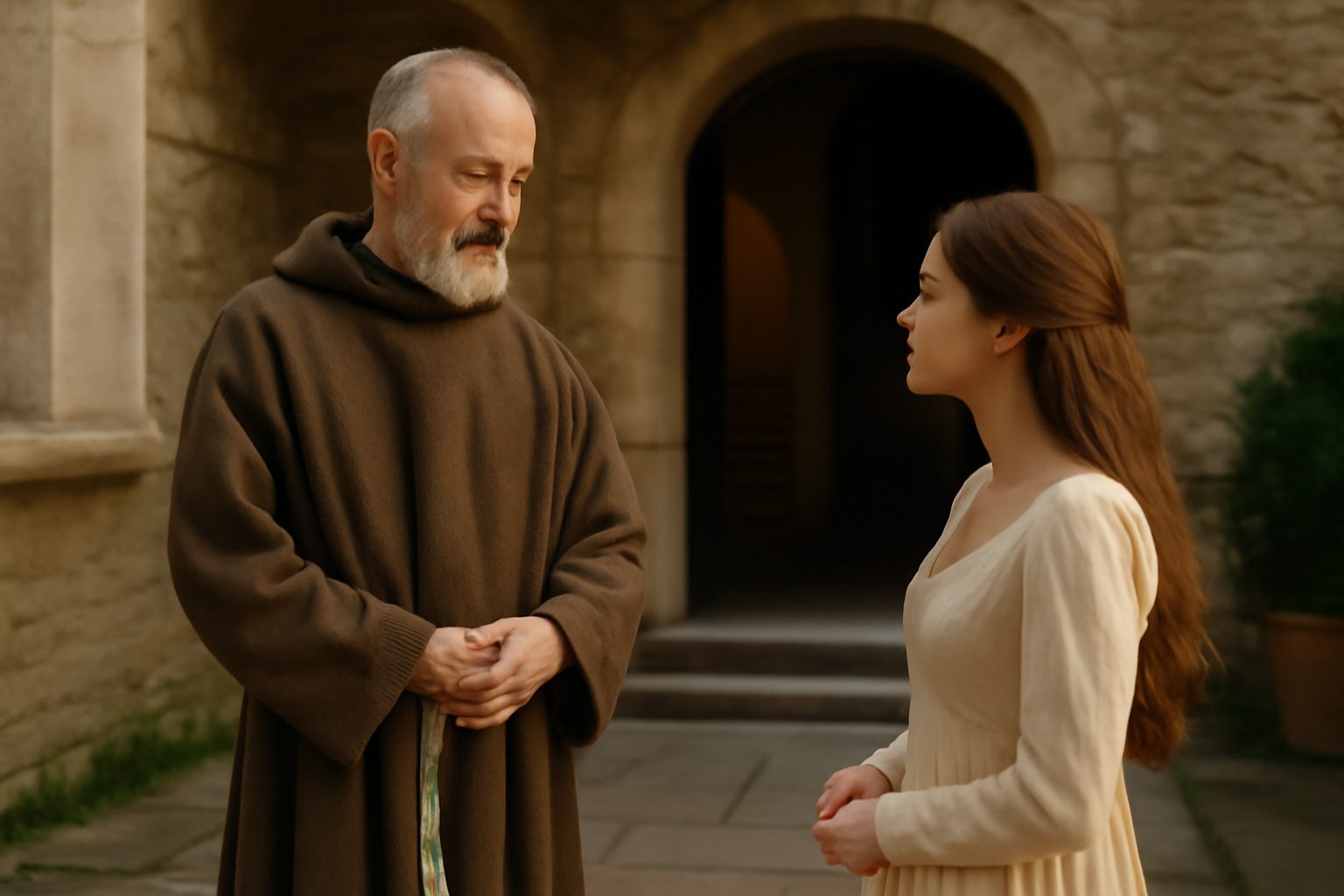
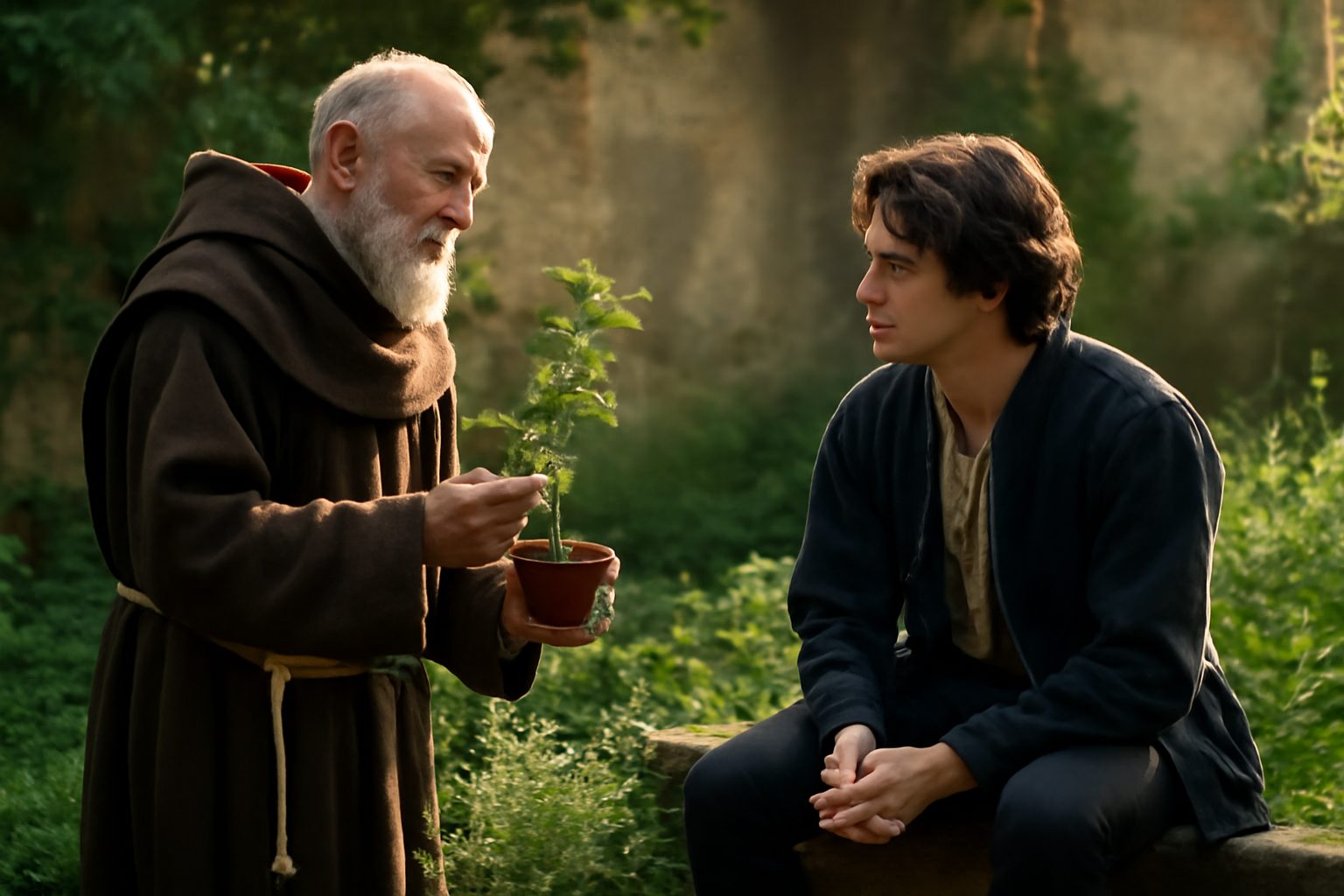
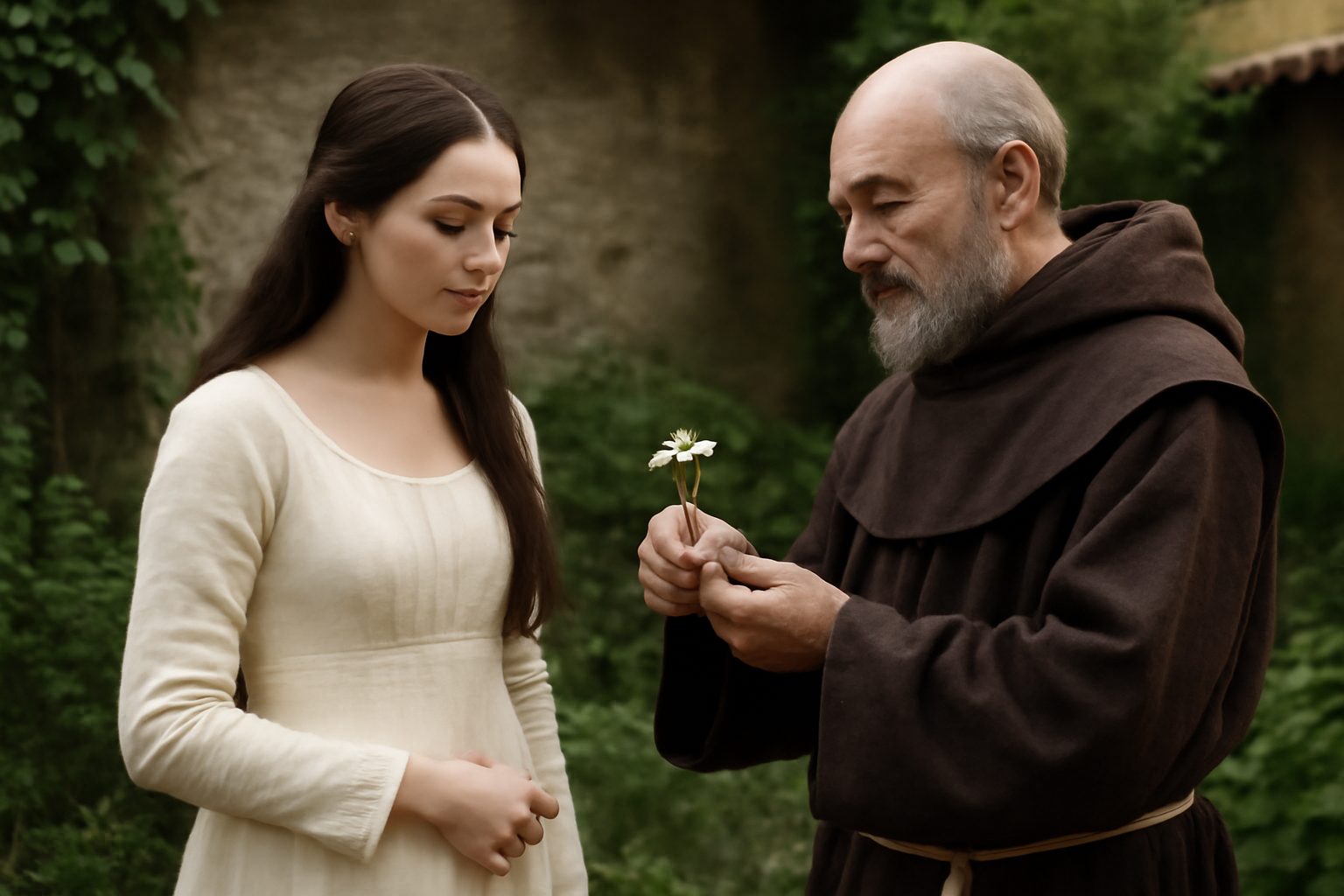
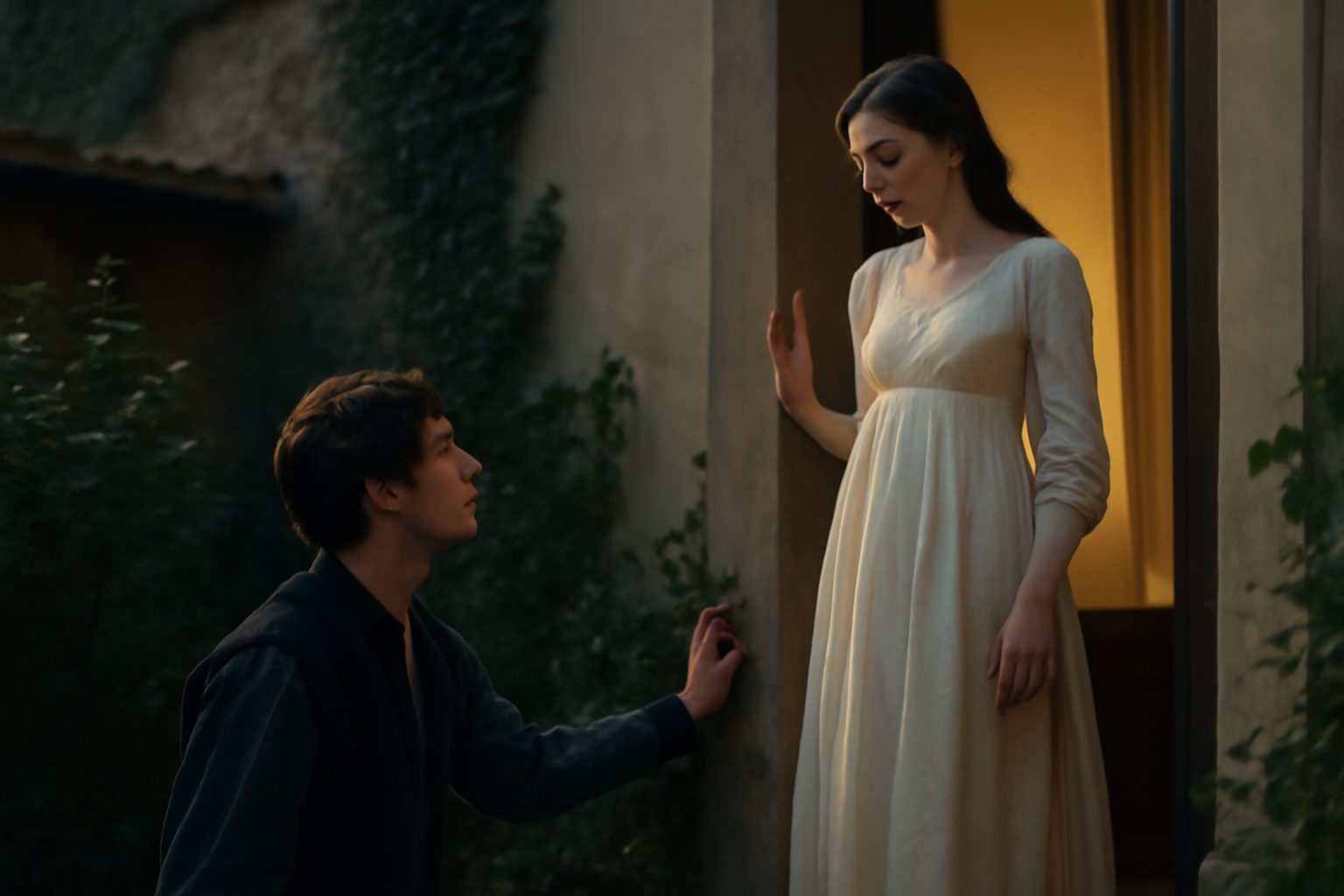
In Act 2, Scene 3 of Romeo and Juliet, Friar Laurence is gathering herbs at dawn when Romeo arrives, still lovesick over Juliet. The line refers to the lingering sighs of night not yet dispelled by the morning sun, reflecting Romeo's unresolved passion. It captures the friar's observation of Romeo's emotional turmoil as day breaks.
Friar Laurence: "The sun not yet thy sighs from heaven clears,"
In modern day english, we would say:
The sun hasn’t yet cleared the morning mist with its rays like your sighs would.
Frequently Asked Questions
What does Friar Laurence mean when he says the sun has not yet cleared Romeo's sighs from heaven?
He means that it is still early in the morning, and Romeo's sad sighs (from being up all night) are still lingering in the air like clouds.
Connections to other verses:
Connections to "The sun not yet thy sighs from heaven clears"
The verse "The sun not yet thy sighs from heaven clears" is spoken by Friar Laurence as he observes Romeo's emotional state. It connects thematically and contextually to several other verses in Act 2, Scene 3.
Connection to Romeo's Emotional Turmoil
Friar Laurence's remark about Romeo's sighs not yet cleared by the sun ties directly to his earlier observation in "Thou art up-roused by some distemperature", where he notes Romeo's restless, troubled state. This idea is reinforced by "Thy old groans ring yet in my ancient ears", highlighting the persistence of Romeo's past sorrows, which the new day has not dispelled.
Contrast with Morning Imagery
The mention of the sun failing to clear Romeo's sighs contrasts with the scene's opening imagery of dawn, such as "Chequering the eastern clouds with streaks of light" and "The day to cheer and night's dank dew to dry". These verses emphasize the sun's power to renew and cleanse, which stands in stark opposition to Romeo's unresolved emotional distress.
Link to Past and Present Love
Friar Laurence's comment on Romeo's sighs also relates to his astonishment at Romeo's swift change of affection, as seen in "So soon forsaken? young men's love then lies" and "Thou and these woes were all for Rosaline". The sighs represent lingering attachment to Rosaline, contrasting with his new love for Juliet, underscoring the theme of fickle youth versus genuine emotion.
Association with Tears and Sorrow
The idea of sighs not being cleared parallels references to wasted tears, such as "How much salt water thrown away in waste" and "Of an old tear that is not wash'd off yet". These connections emphasize the futility and lingering nature of Romeo's past sorrows, which the new day has not erased.
Friar's Role as Healer
Finally, Friar Laurence's role in addressing Romeo's emotional state is echoed in "Within thy help and holy physic lies", where Romeo seeks the Friar's guidance to turn his woes into remedy, tying the unresolved sighs to the broader need for spiritual and emotional healing.