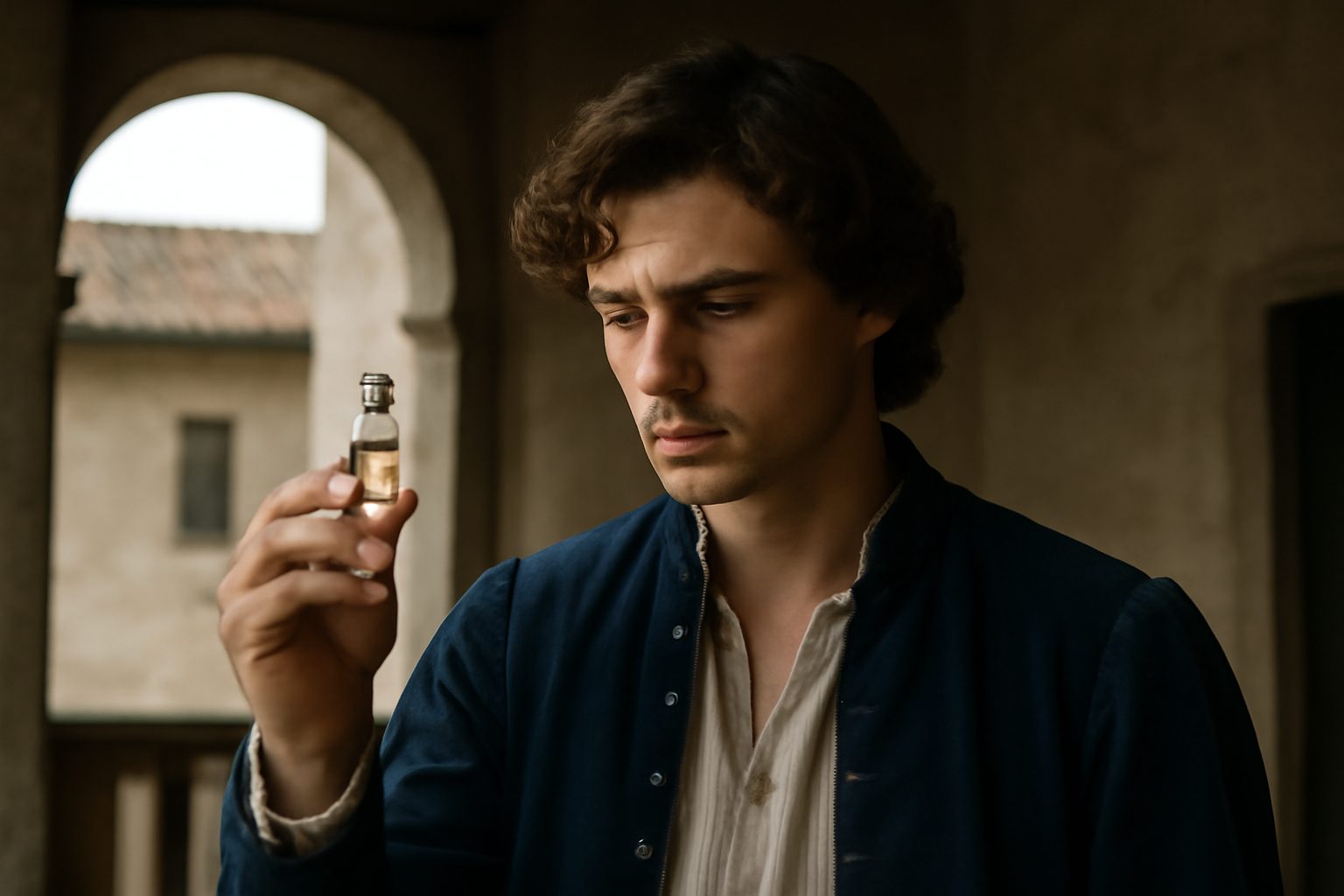
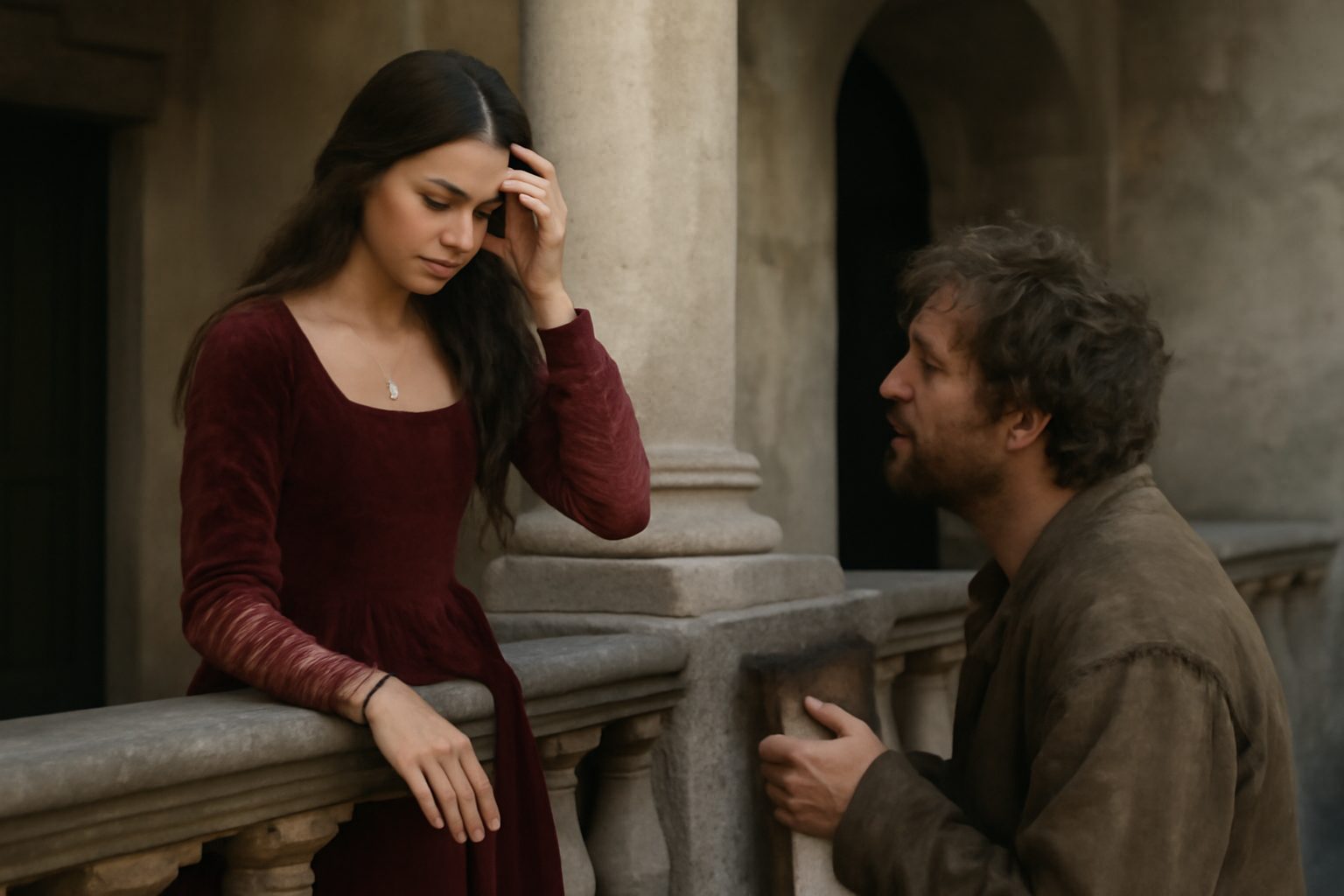
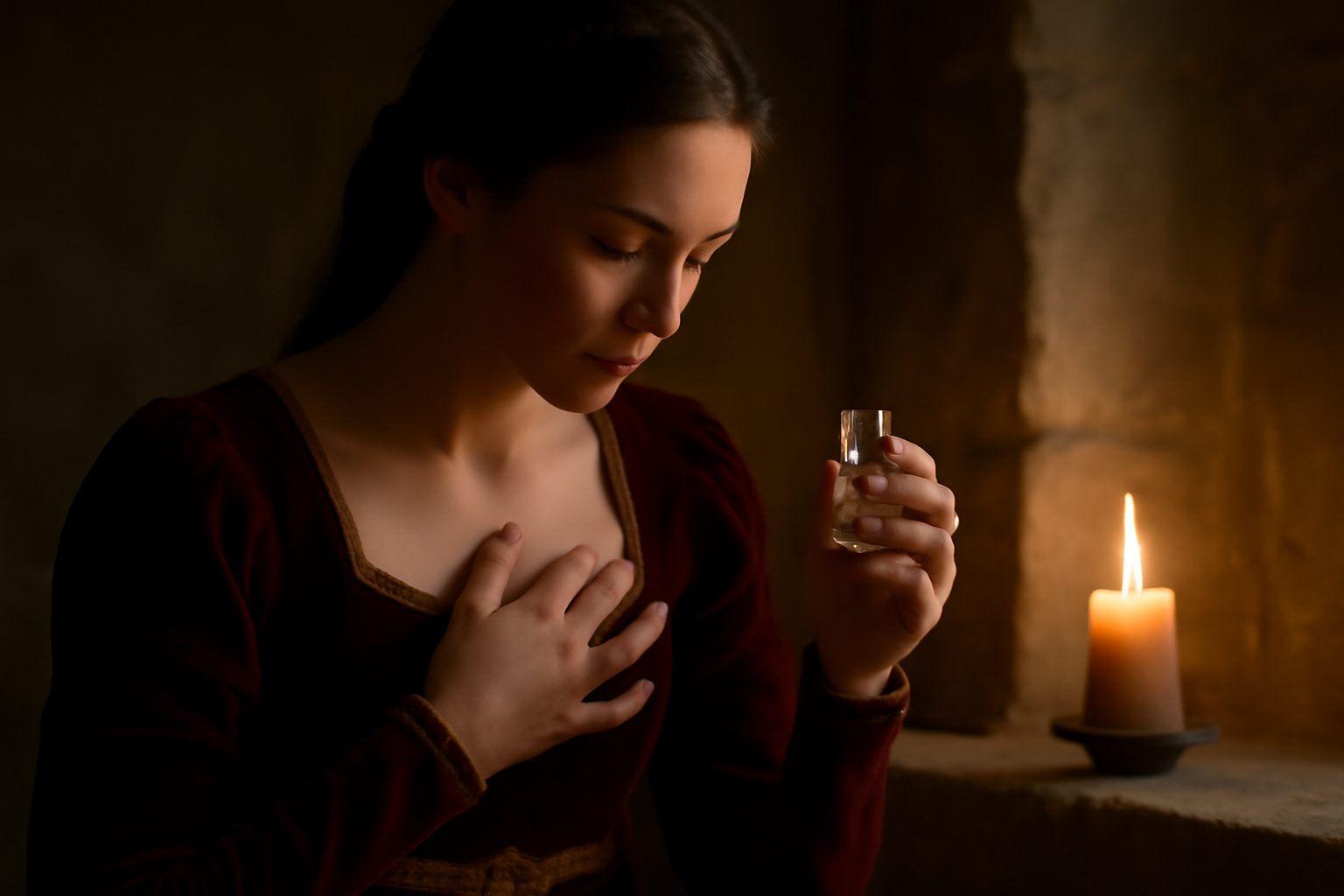
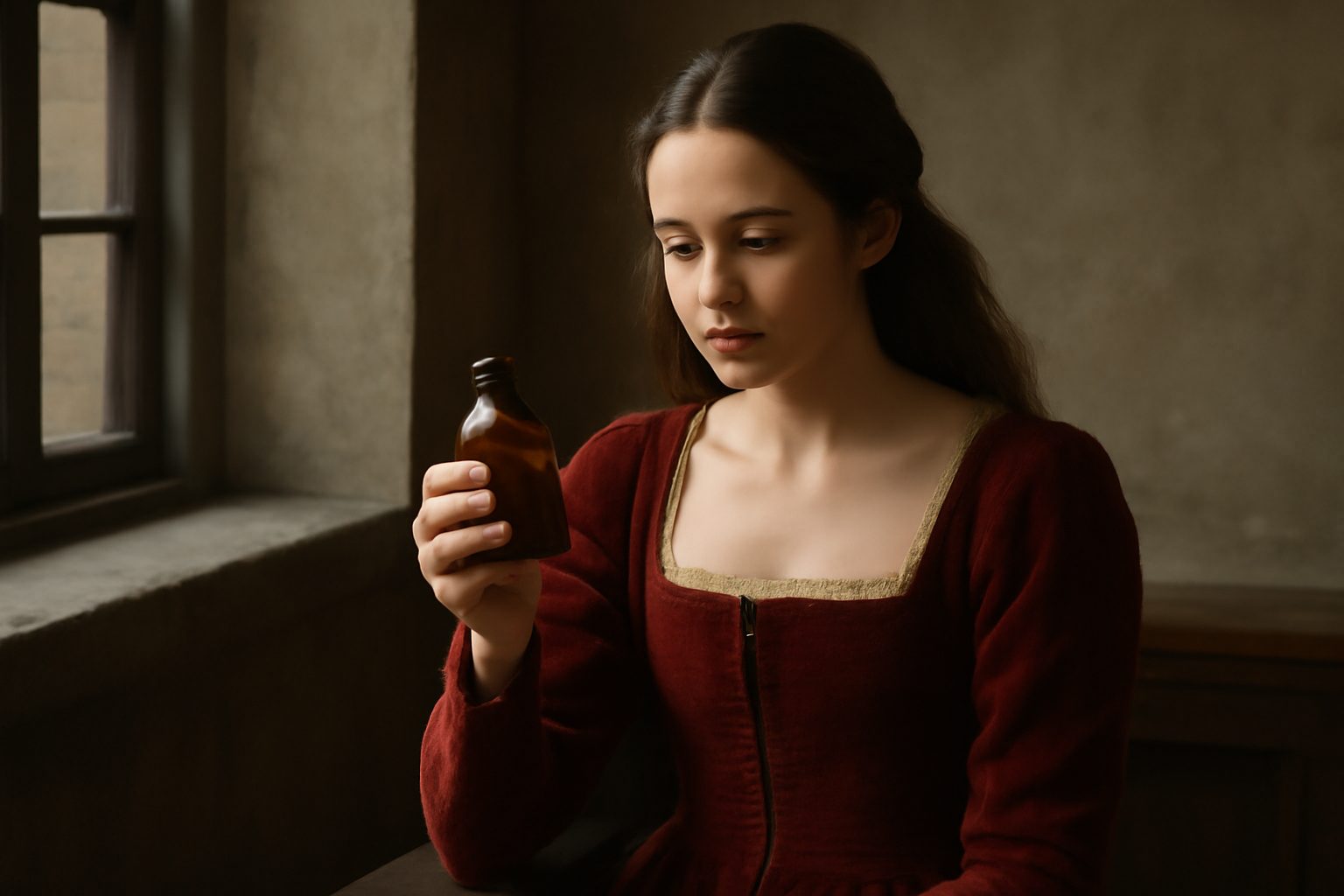
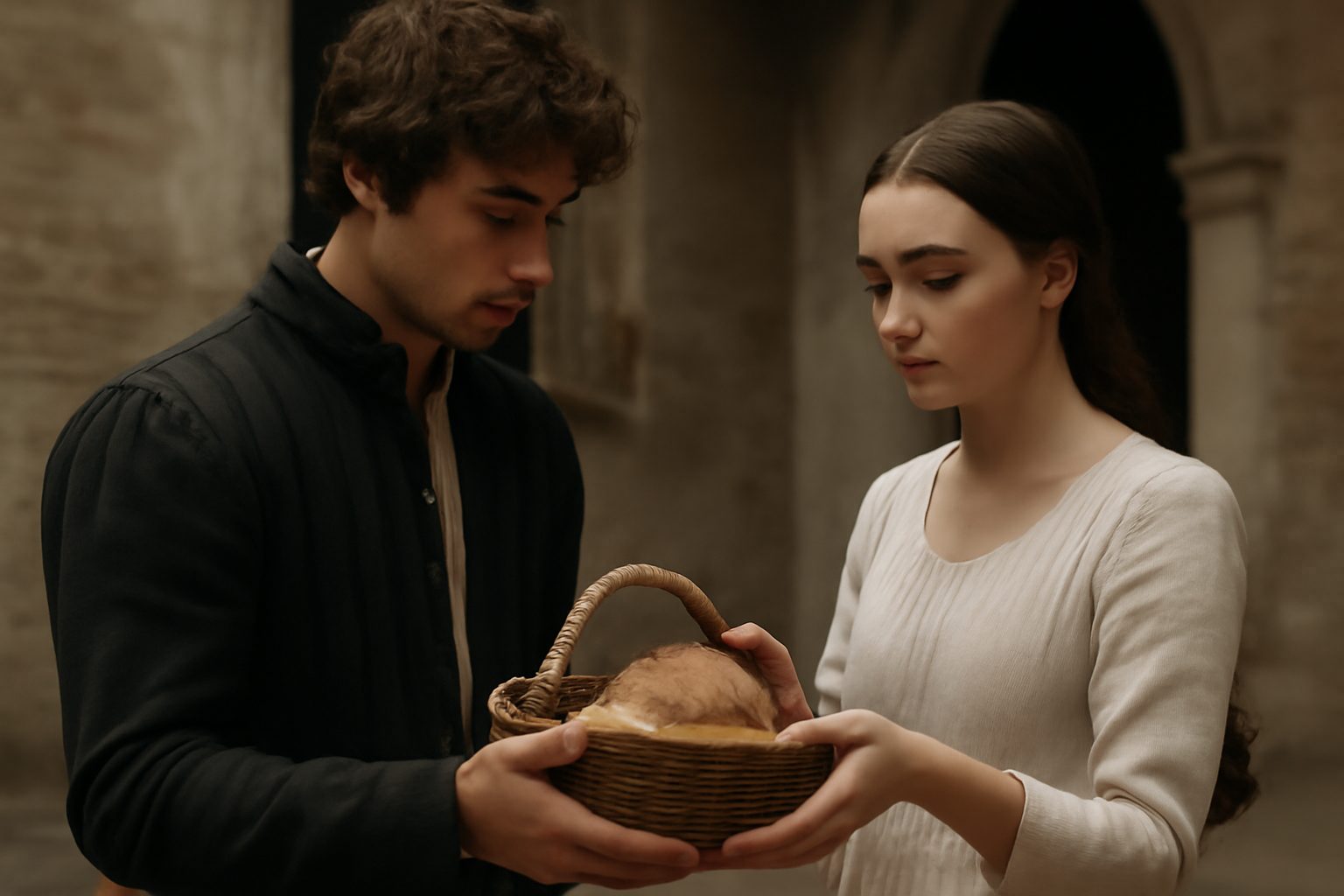
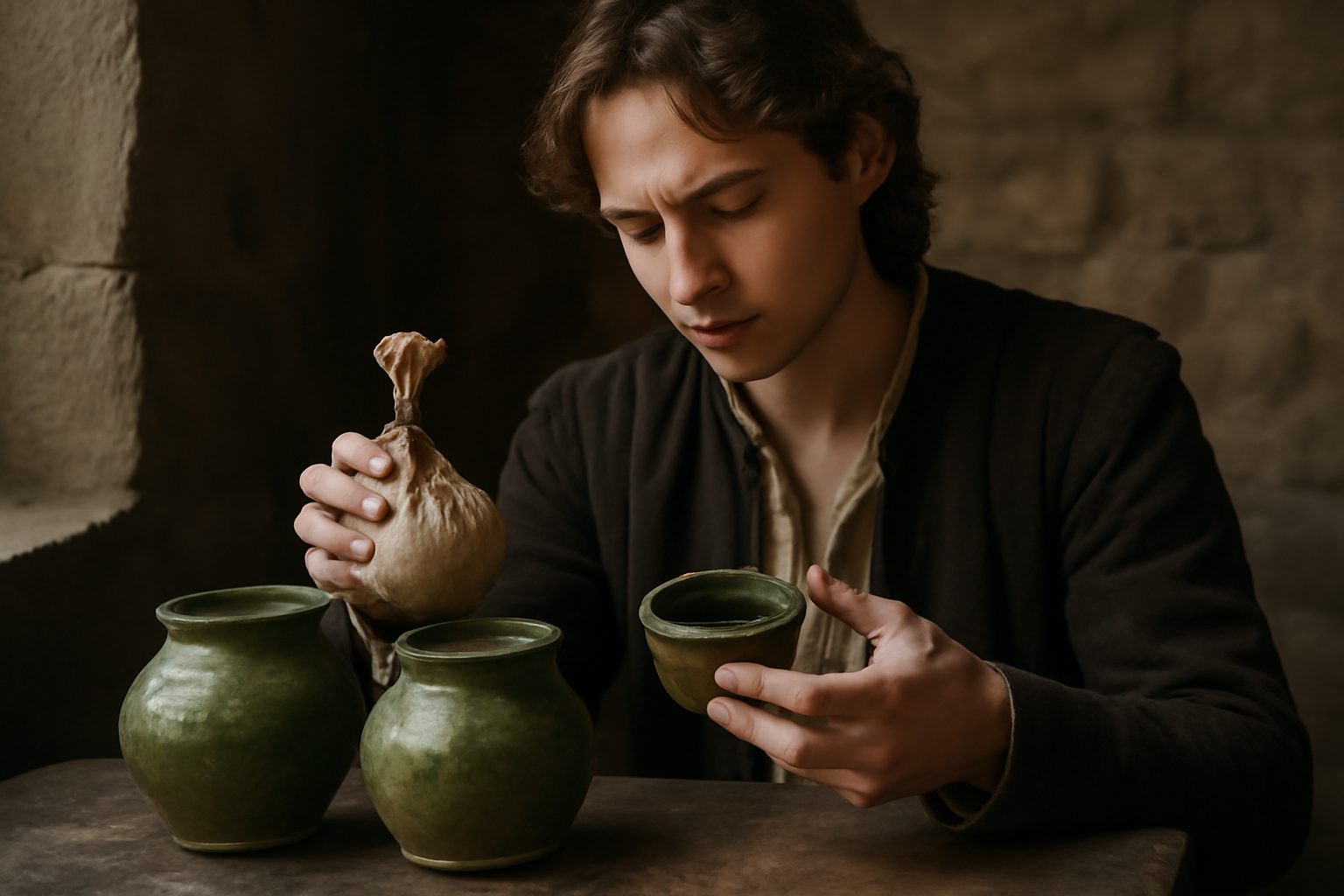
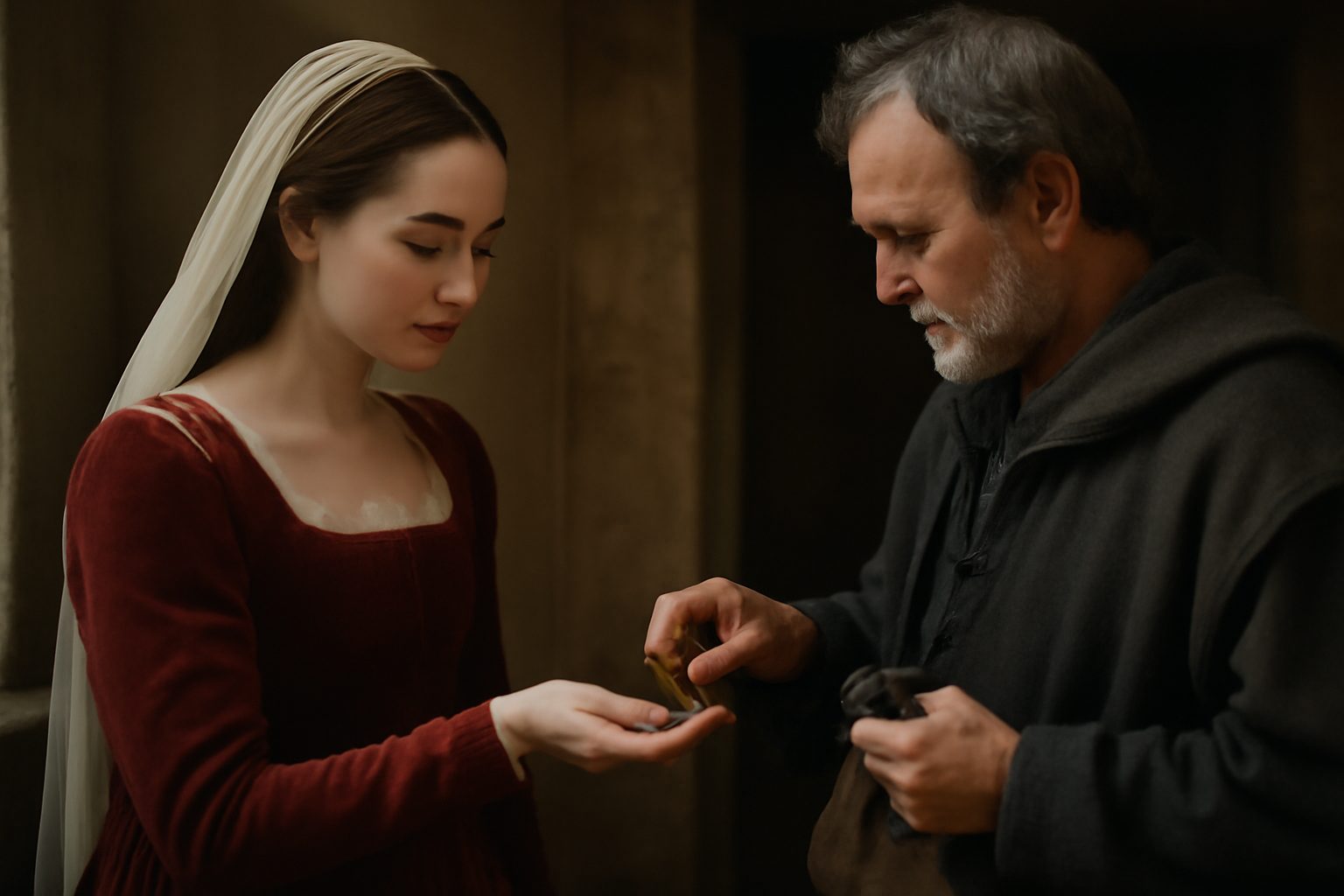
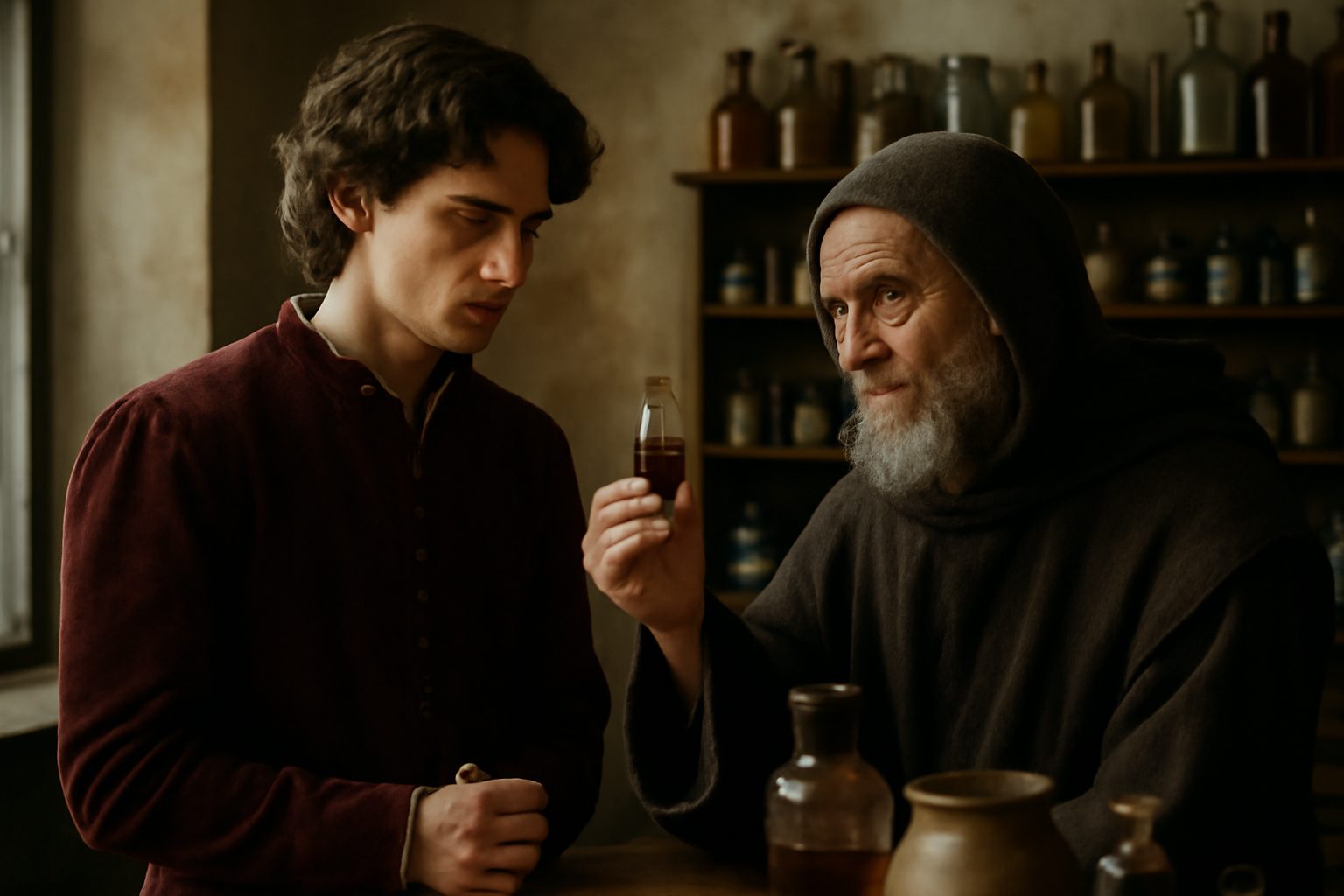
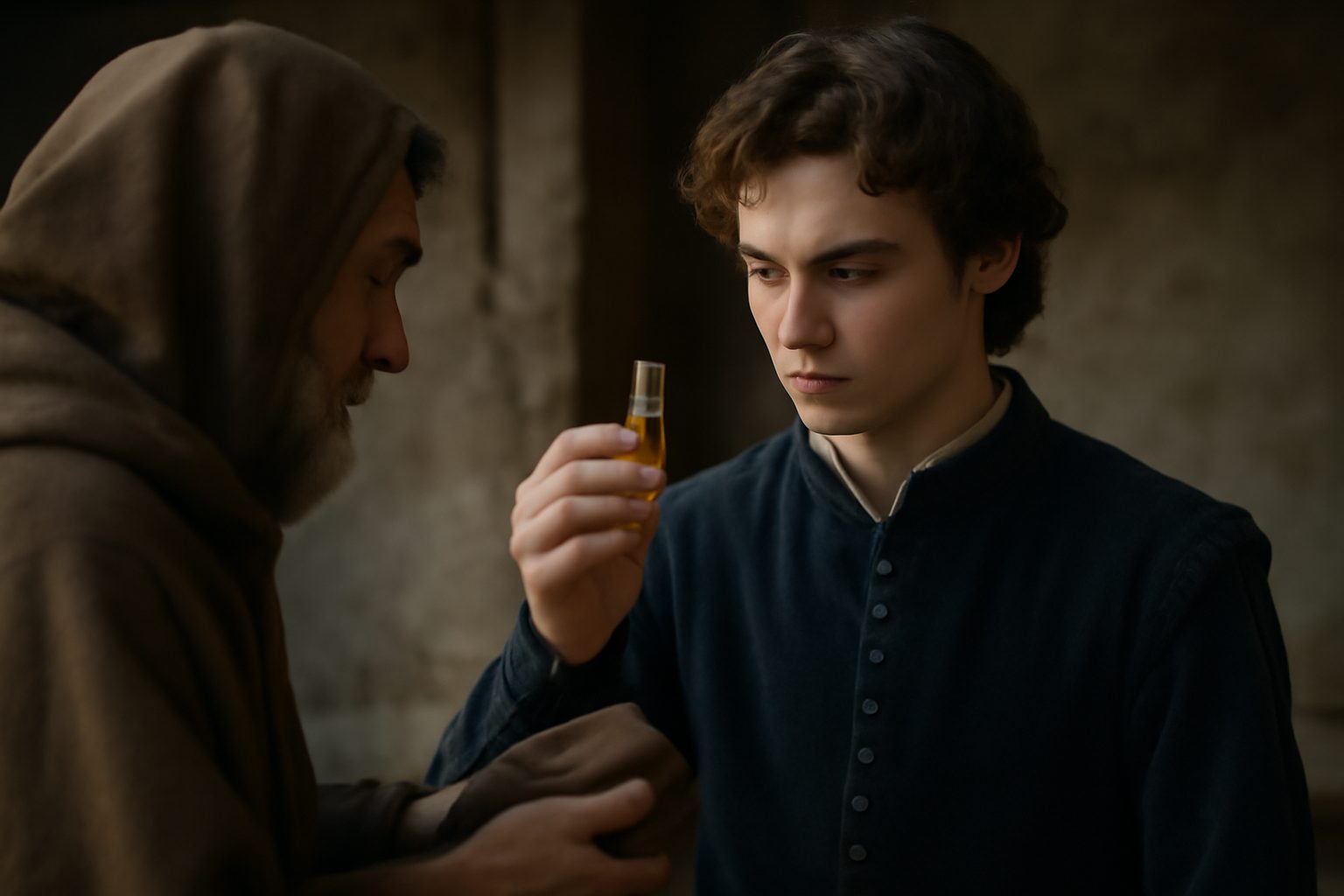
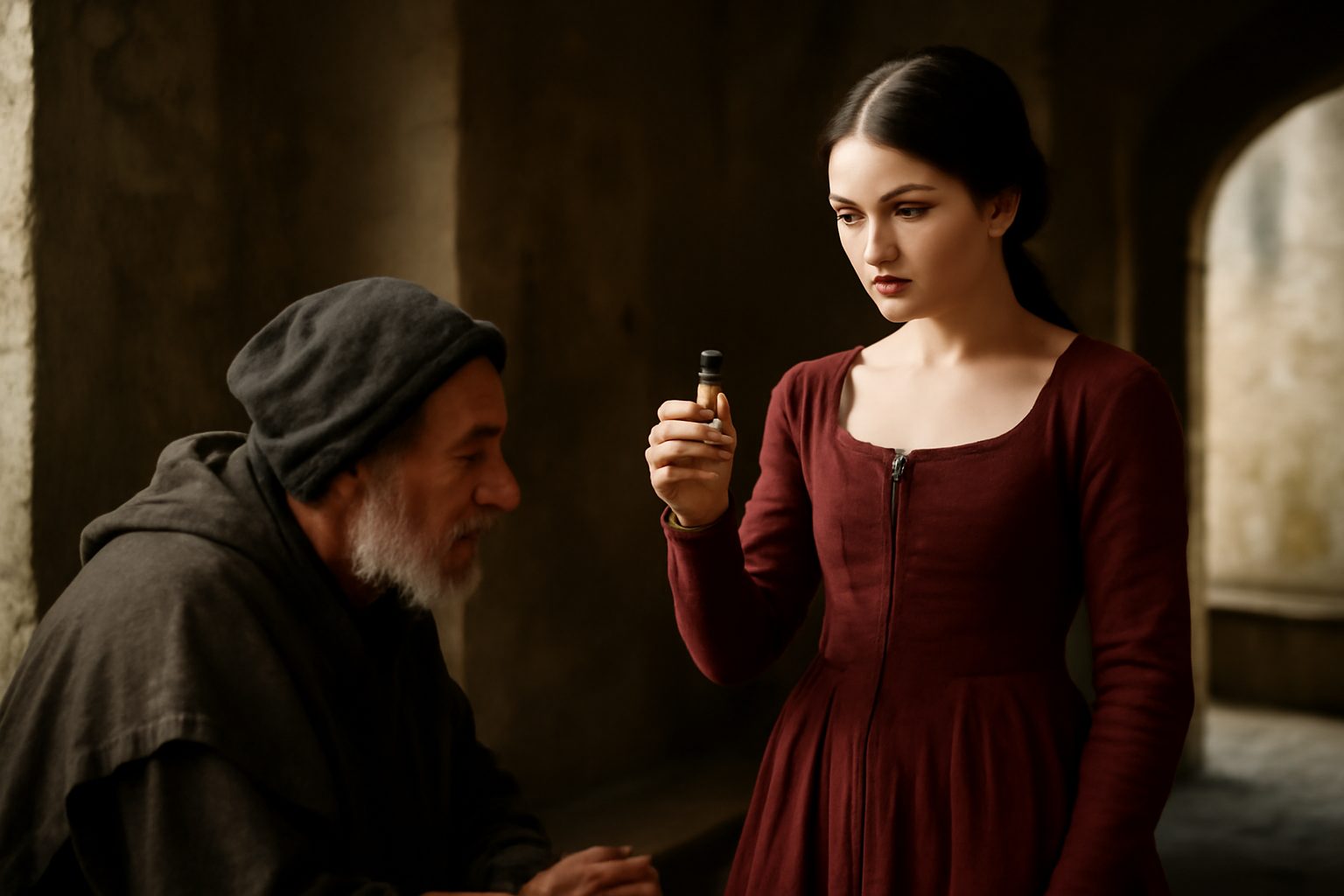
In Act 5, Scene 1 of Romeo and Juliet, Romeo, exiled in Mantua, receives news of Juliet's supposed death. Desperate and heartbroken, he seeks poison from an impoverished apothecary, dismissing the man's reluctance by insisting that his gold is more lethal than the weak remedies the apothecary legally sells. This line reflects Romeo's reckless determination to join Juliet in death, no matter the cost.
Romeo: "Than these poor compounds that thou mayst not sell."
In modern day english, we would say:
Those weak mixtures you aren’t allowed to sell.
Frequently Asked Questions
What is Romeo referring to when he talks about poor compounds that cannot be sold?
Romeo is referring to the poison he wants to buy, calling it a poor quality mixture that the apothecary is hesitant to sell.
Connections to other verses:
Connections to "Than these poor compounds that thou mayst not..."
This verse, found at /romeo-and-juliet/five/5-1/act-5-scene-1-86/, is spoken by Romeo as he reflects on the poison he has just purchased from the apothecary. It connects thematically and contextually to several other verses in the same scene.
Connection to Poverty and Desperation
The phrase "poor compounds" echoes the depiction of the apothecary's impoverished state earlier in the scene. In /romeo-and-juliet/five/5-1/act-5-scene-1-44/, Romeo notes, "Sharp misery had worn him to the bones," highlighting the apothecary's desperation, which makes him willing to sell the poison despite the law. This is reinforced in /romeo-and-juliet/five/5-1/act-5-scene-1-79/, where the apothecary admits, "My poverty, but not my will, consents," directly tying the "poor compounds" to the moral compromise born of need.
Connection to the Poison's Potency
Romeo's dismissive reference to the compounds as "poor" contrasts with his earlier description of the poison's deadly efficacy. In /romeo-and-juliet/five/5-1/act-5-scene-1-65/, he says it will "disperse itself through all the veins," and in /romeo-and-juliet/five/5-1/act-5-scene-1-83/, he claims it is potent enough to "dispatch twenty men." This juxtaposition underscores Romeo's conflicted view of the poison as both a humble substance and a powerful tool for his desperate ends.
Connection to Moral and Legal Transgression
The phrase "that thou mayst not" alludes to the illegal nature of the apothecary's trade in such substances, as emphasized in /romeo-and-juliet/five/5-1/act-5-scene-1-54/: "Whose sale is present death in Mantua." This legal peril is why the apothecary is initially reluctant, and Romeo's acknowledgment of the prohibition highlights the shared transgression between buyer and seller.
Connection to Gold as a Corrupting Force
Romeo's reflection on the "poor compounds" follows his payment to the apothecary, referenced in /romeo-and-juliet/five/5-1/act-5-scene-1-84/: "There is thy gold, worse poison to men's souls." Here, gold is portrayed as more morally corrosive than the physical poison, deepening the irony of Romeo's disdain for the "poor compounds" he has acquired through wealth.
Connection to Romeo's Resolve
This verse also ties to Romeo's determination to join Juliet in death, as declared in /romeo-and-juliet/five/5-1/act-5-scene-1-37/: "Well, Juliet, I will lie with thee to-night." The "poor compounds" are the means to this end, making them symbolically significant despite their humble appearance.