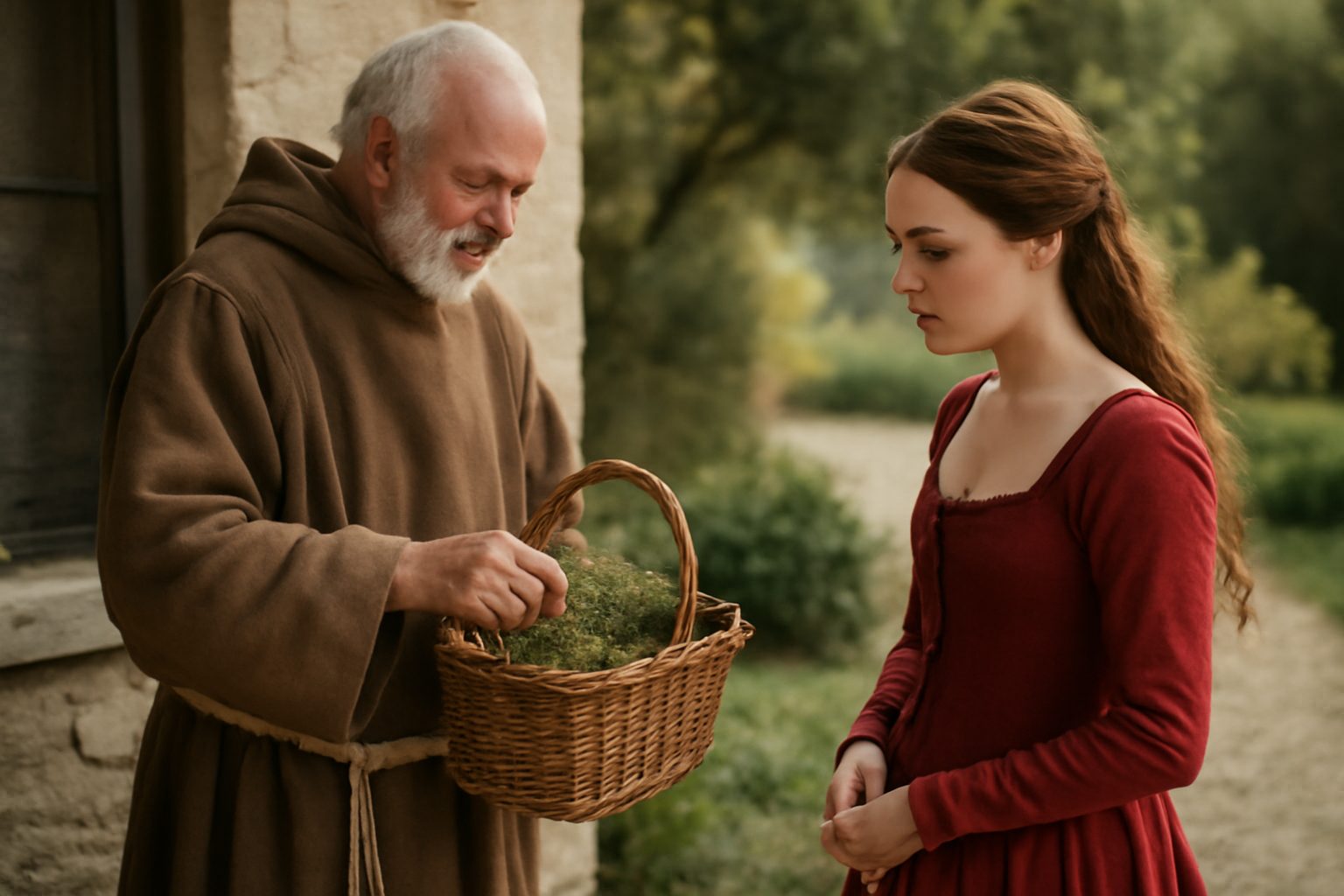
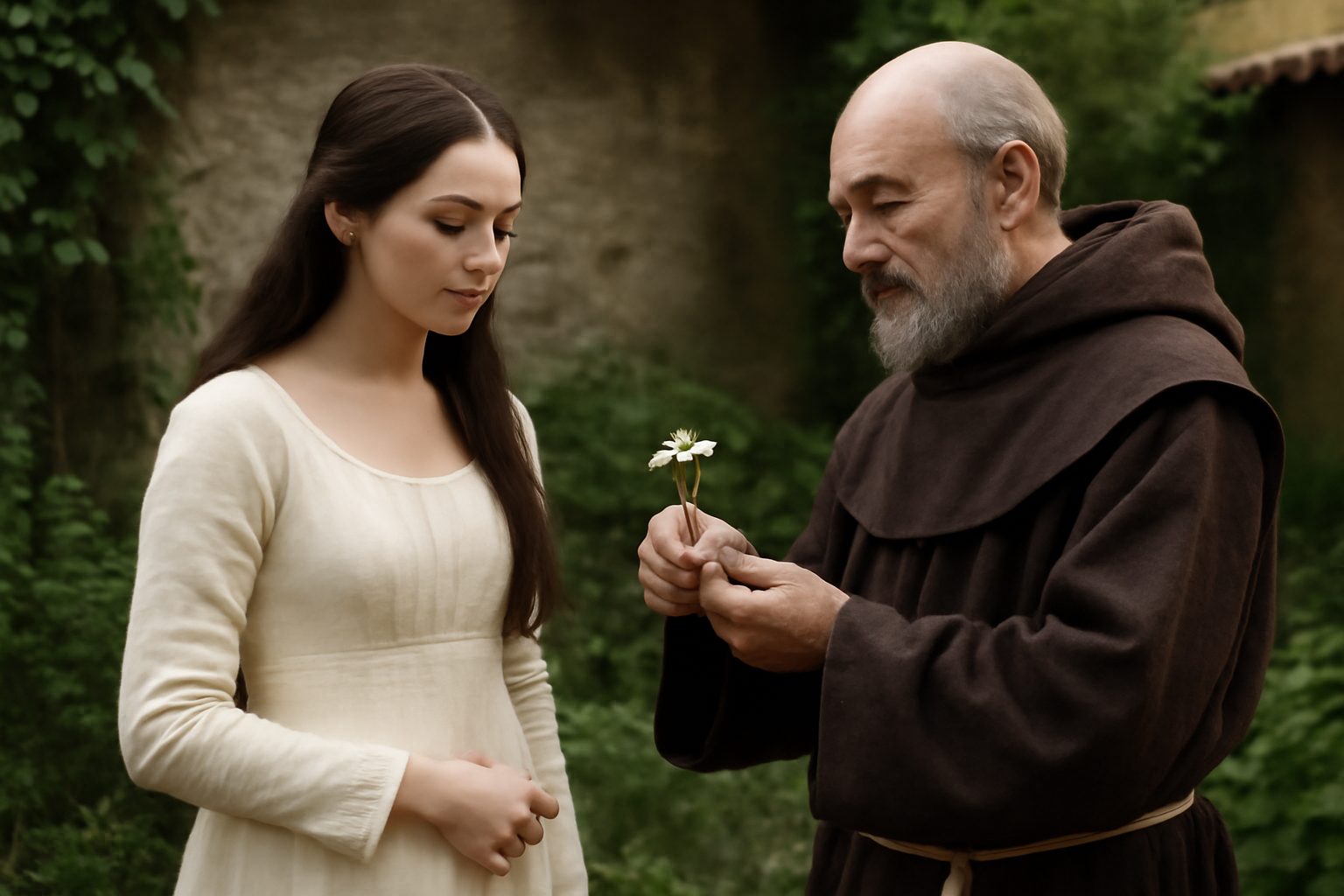
In Act 2, Scene 3 of Romeo and Juliet, Friar Laurence reflects on Romeo's sudden shift in affection from Rosaline to Juliet. As he gathers herbs in his garden, he muses on the fickle nature of young love, comparing it to unseasoned food that lacks depth or lasting flavor. This line captures his skepticism about Romeo's impulsive passion, suggesting it may be more infatuation than true love.
Friar Laurence: "To season love, that of it doth not taste!"
In modern day english, we would say:
You’re trying to preserve love, but you’re not even experiencing it.
Frequently Asked Questions
What does Friar Laurence mean when he says that love needs to be seasoned?
Friar Laurence is suggesting that love should develop slowly and thoughtfully, like adding seasoning to food to improve its taste, rather than rushing into it without thinking.
Connections to other verses:
Connections to "To season love, that of it doth not taste!"
The line "To season love, that of it doth not taste!" from Romeo & Juliet Act 2 Scene 3 reflects Friar Laurence's observation on Romeo's fickle affections, suggesting his love for Juliet is seasoned or spiced up without truly savoring its essence. This connects thematically and contextually with several other verses in the same scene.
Contrast with Earlier Lovesickness
Friar Laurence directly contrasts this new, seemingly superficial love with Romeo's previous despair over Rosaline. In "Hath wash'd thy sallow cheeks for Rosaline!", he recalls Romeo's genuine sorrow, implying that his current passion lacks the same depth. Similarly, "How much salt water thrown away in waste" underscores the wasted tears for Rosaline, framing the new love as hastily adopted.
Friar's Philosophical Musings on Duality
The idea of love being "seasoned" ties into the Friar's broader reflections on duality and misuse. In "Virtue itself turns vice, being misapplied", he explores how good things can be corrupted, paralleling the notion that love can be superficially enhanced rather than authentically experienced. This is reinforced by "Nor aught so good but strain'd from that fair use", emphasizing distortion of true purpose.
Romeo's Defense and the Friar's Skepticism
Romeo's insistence on the sincerity of his new love in "I pray thee, chide not; she whom I love now" is met with the Friar's doubt, echoing the "seasoning" critique. The Friar's retort in "Thy love did read by rote and could not spell" directly challenges Romeo's ability to genuinely comprehend love, aligning with the idea that he merely "tastes" it superficially.
Connection to Urgency and Rashness
The hastiness implied in "seasoning" love connects to Romeo's impulsive nature, highlighted in "O, let us hence; I stand on sudden haste". The Friar's warning in "Wisely and slow; they stumble that run fast" serves as a thematic bookend, cautioning against the very rashness that defines Romeo's approach to love.