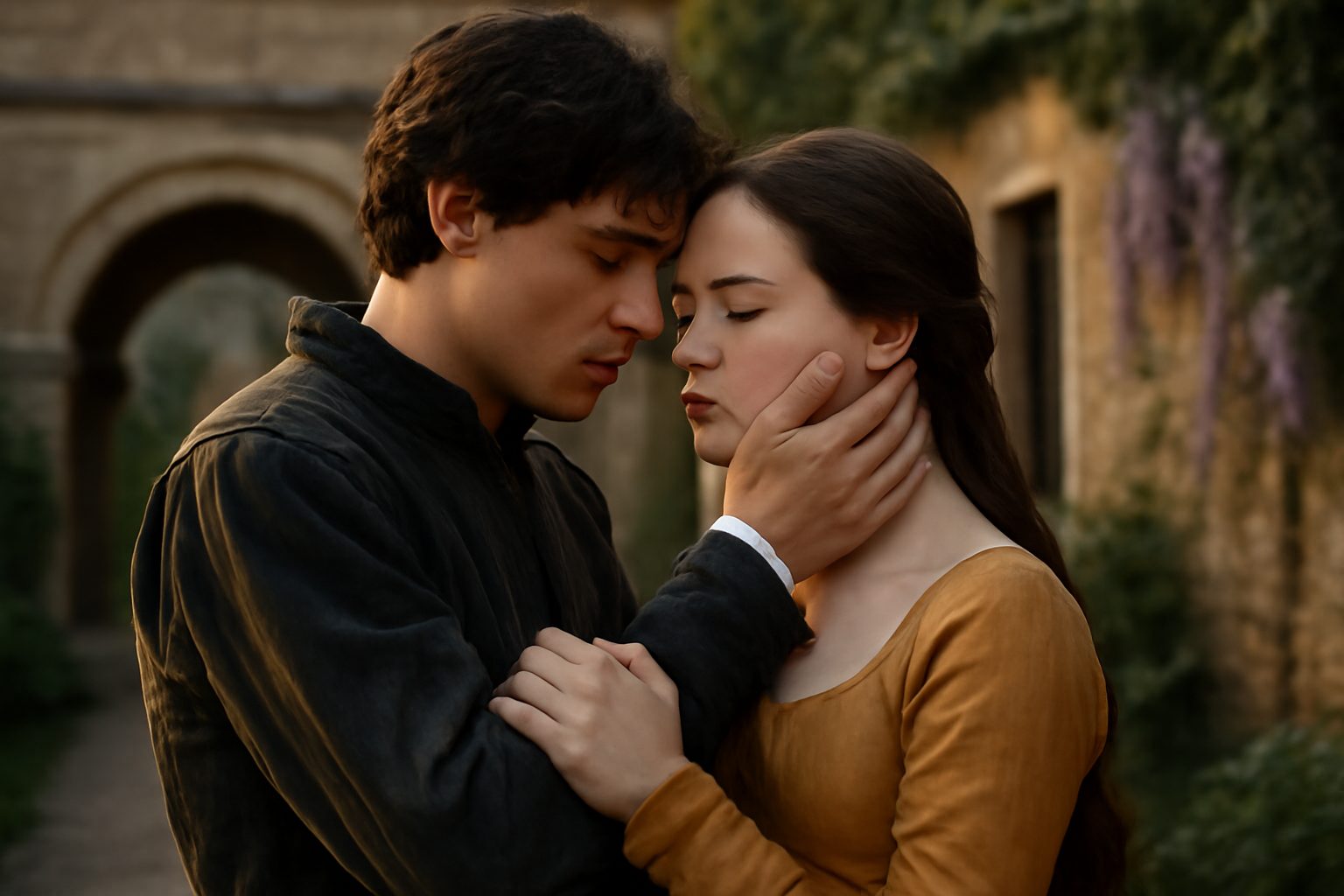
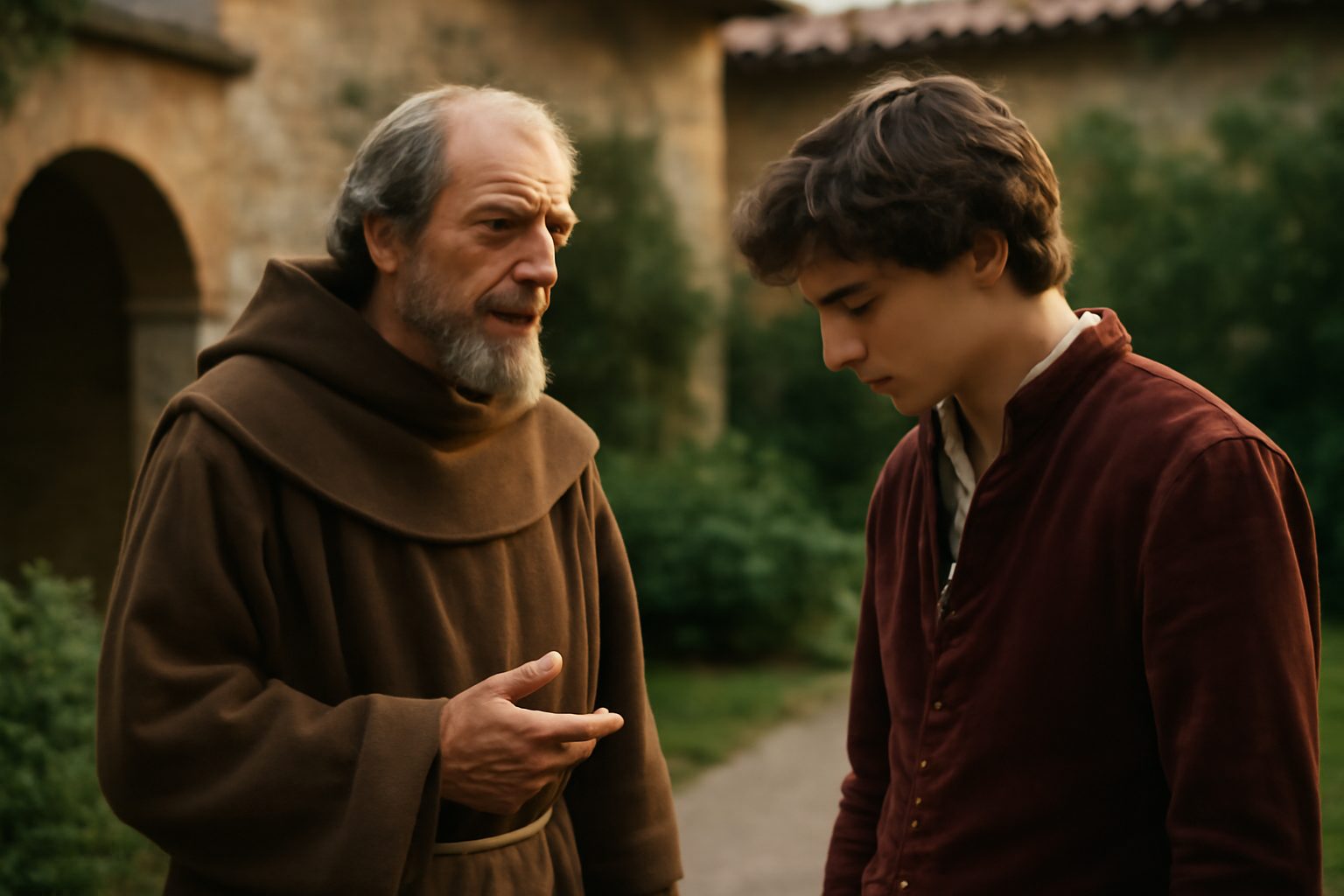
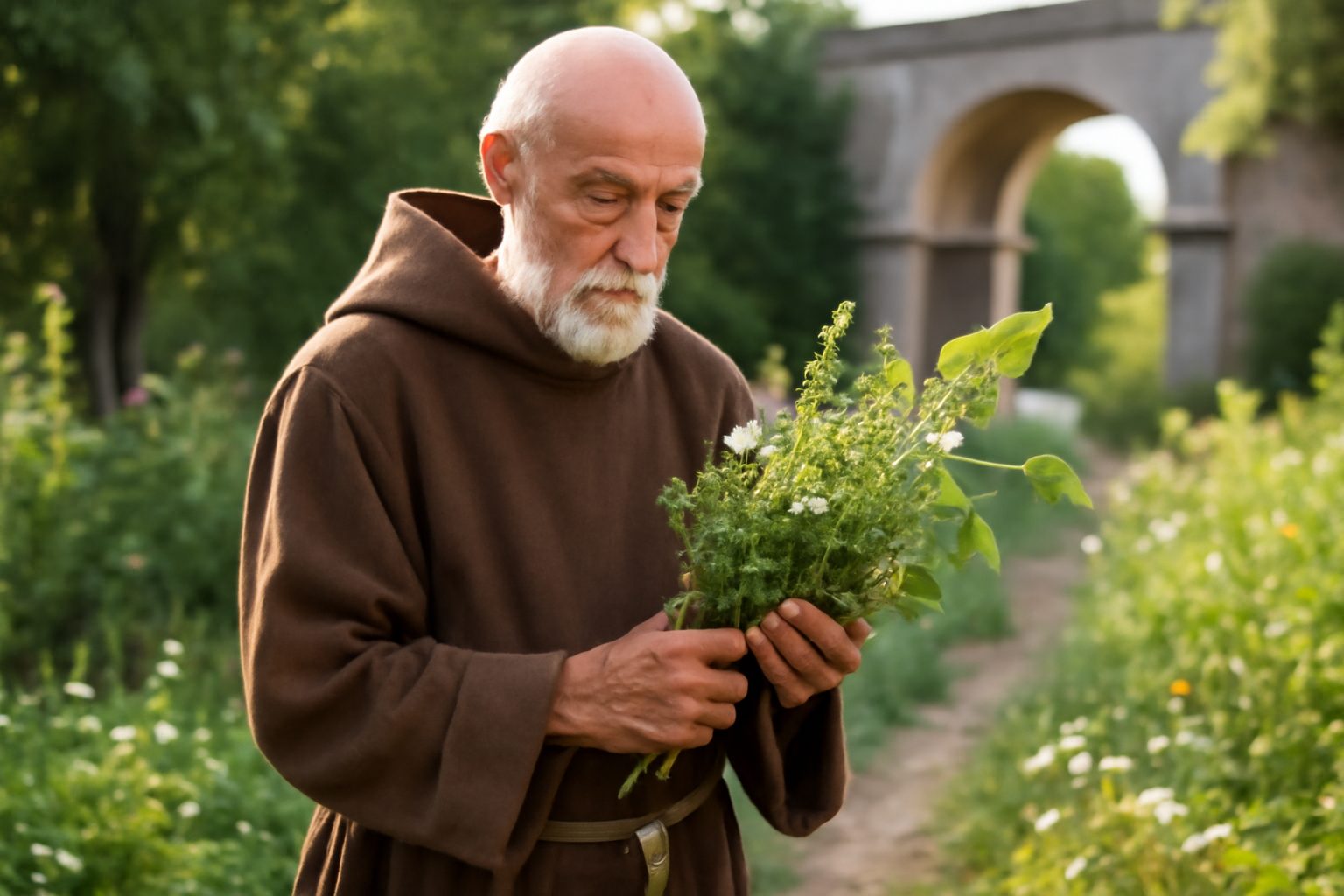
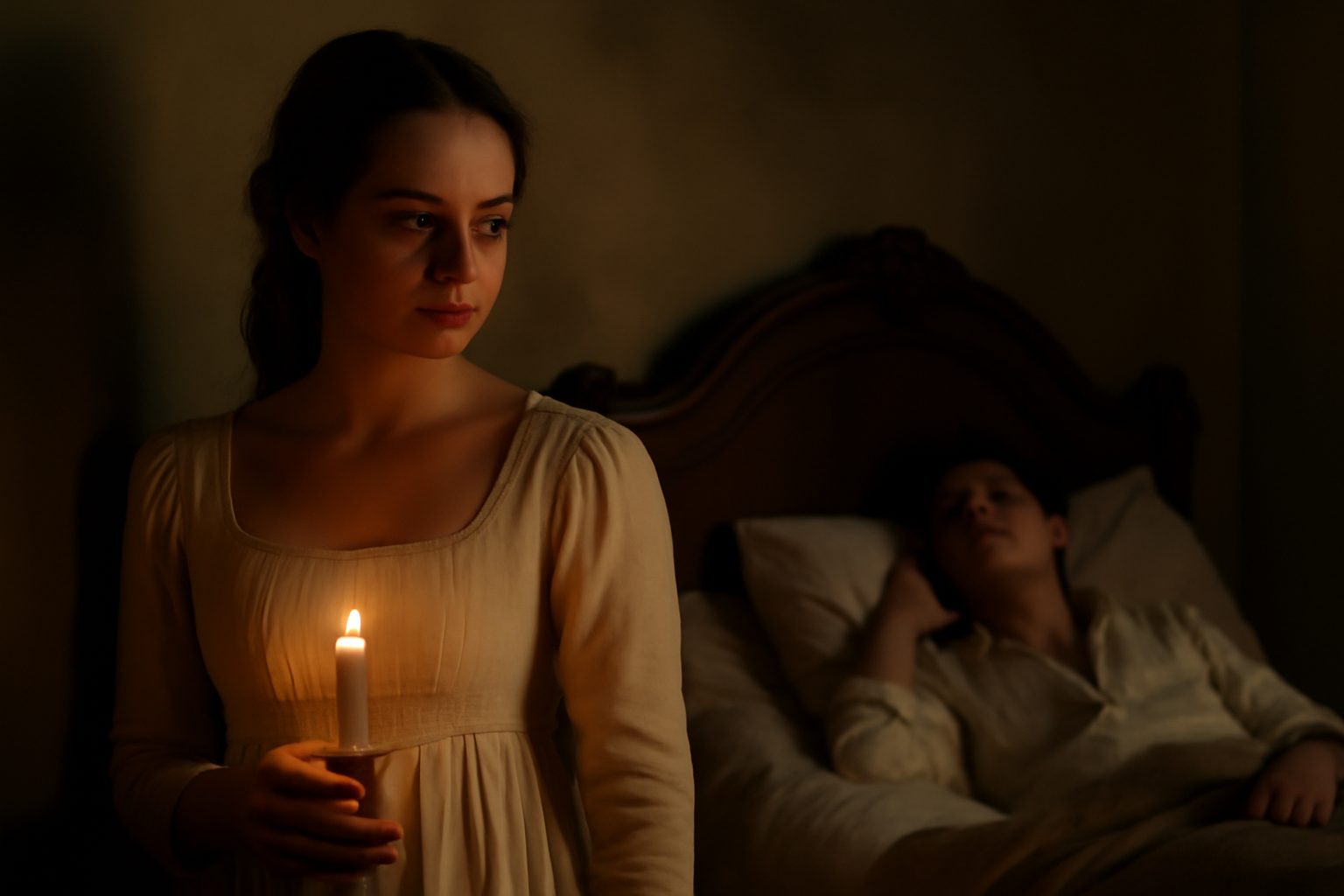
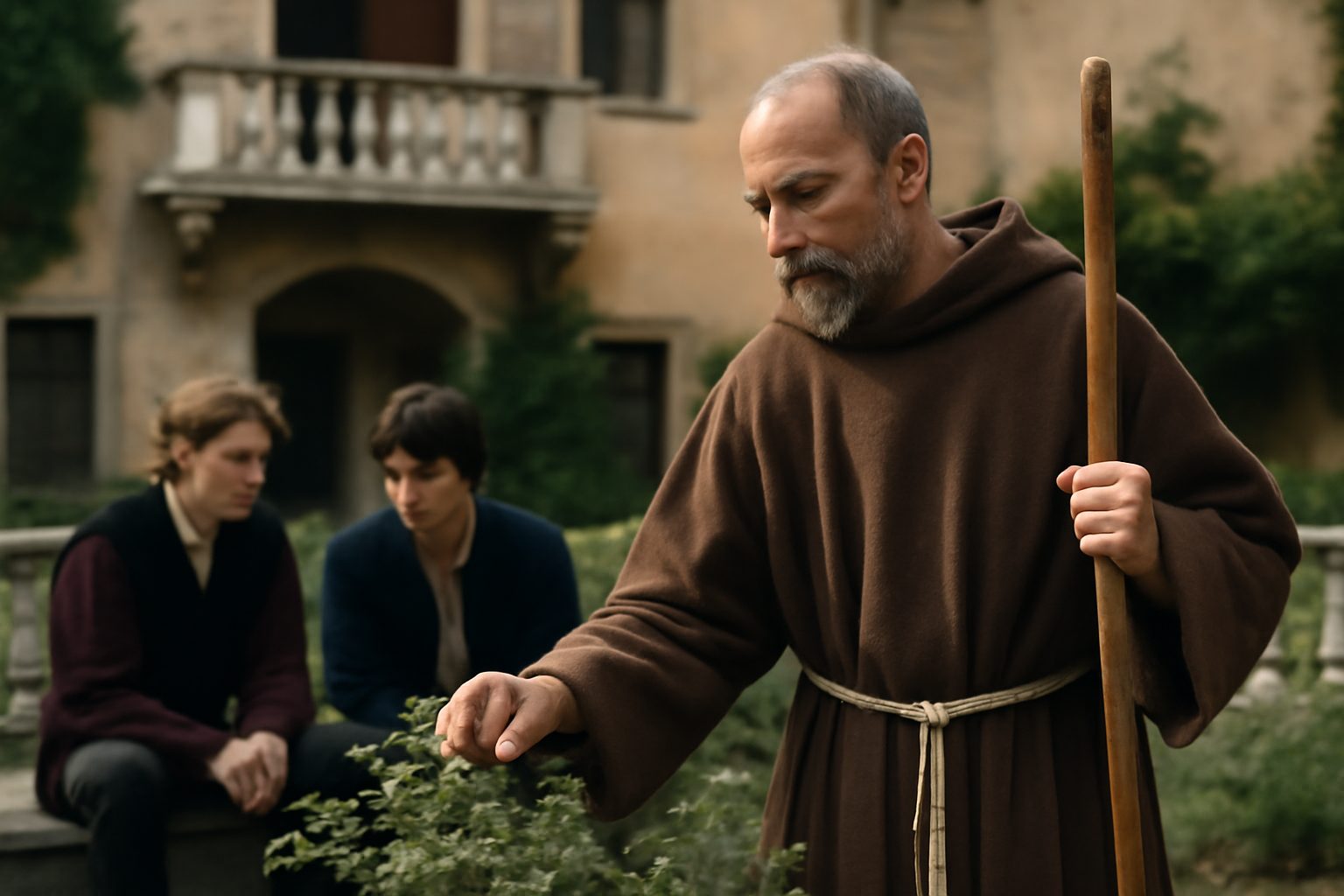
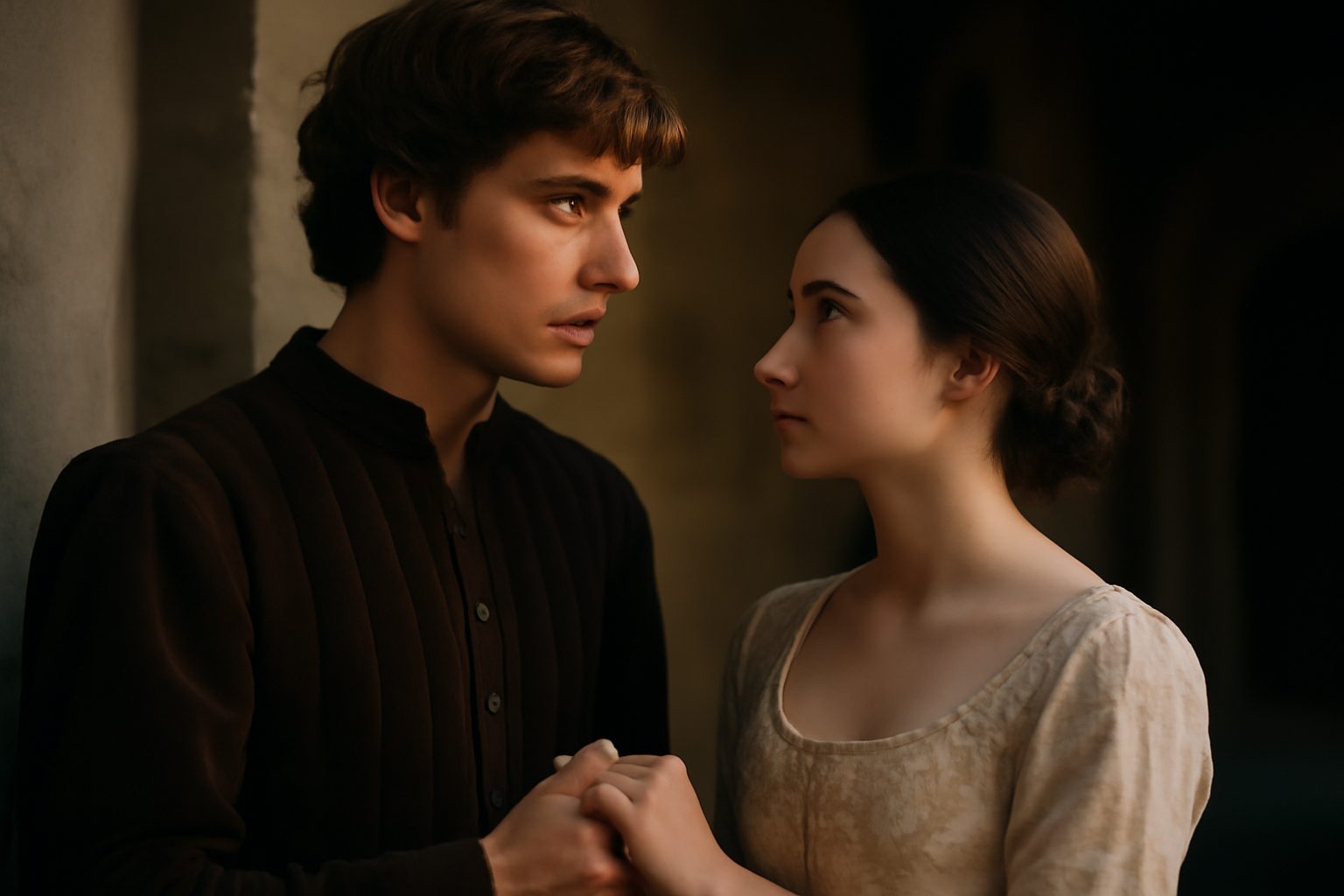
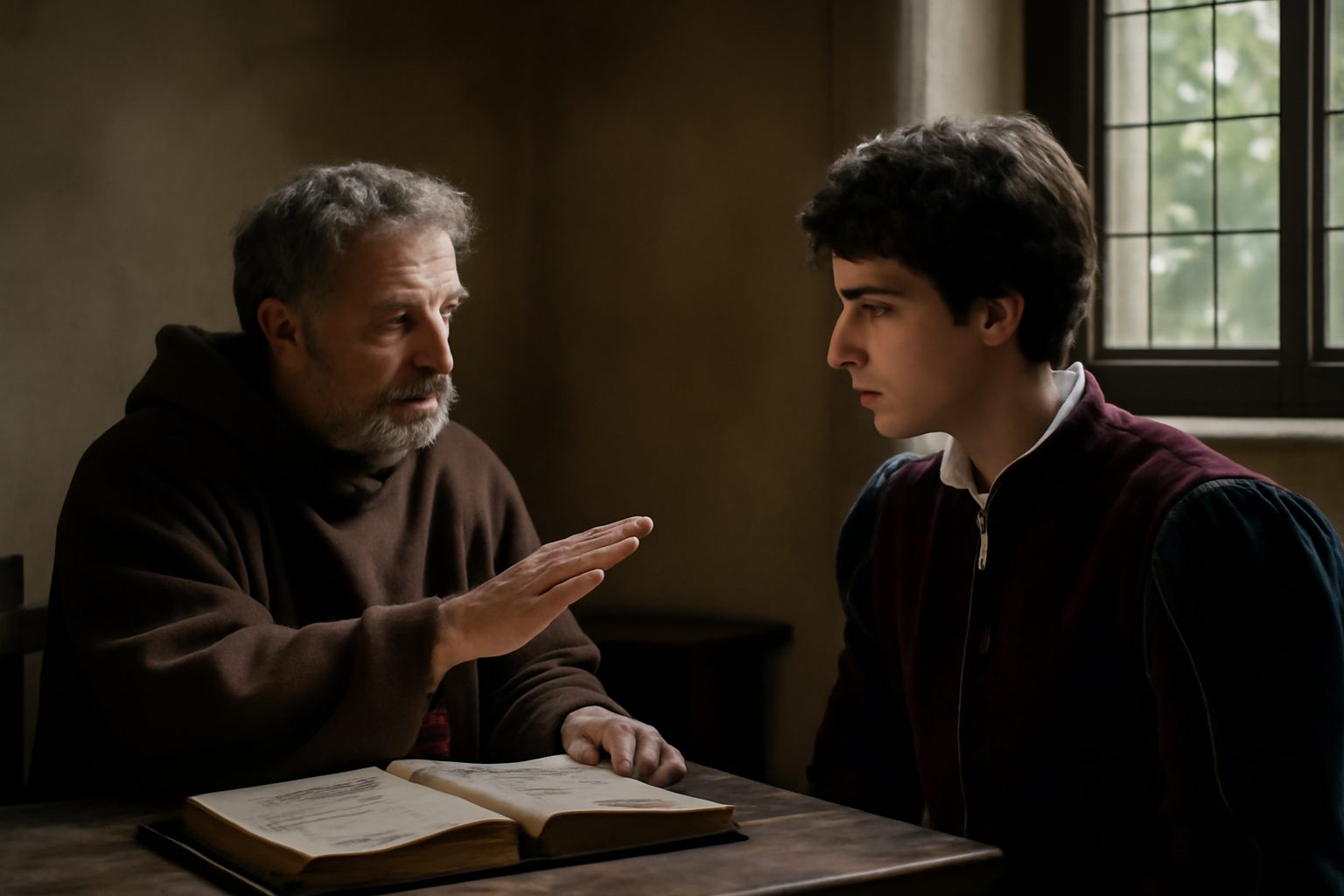
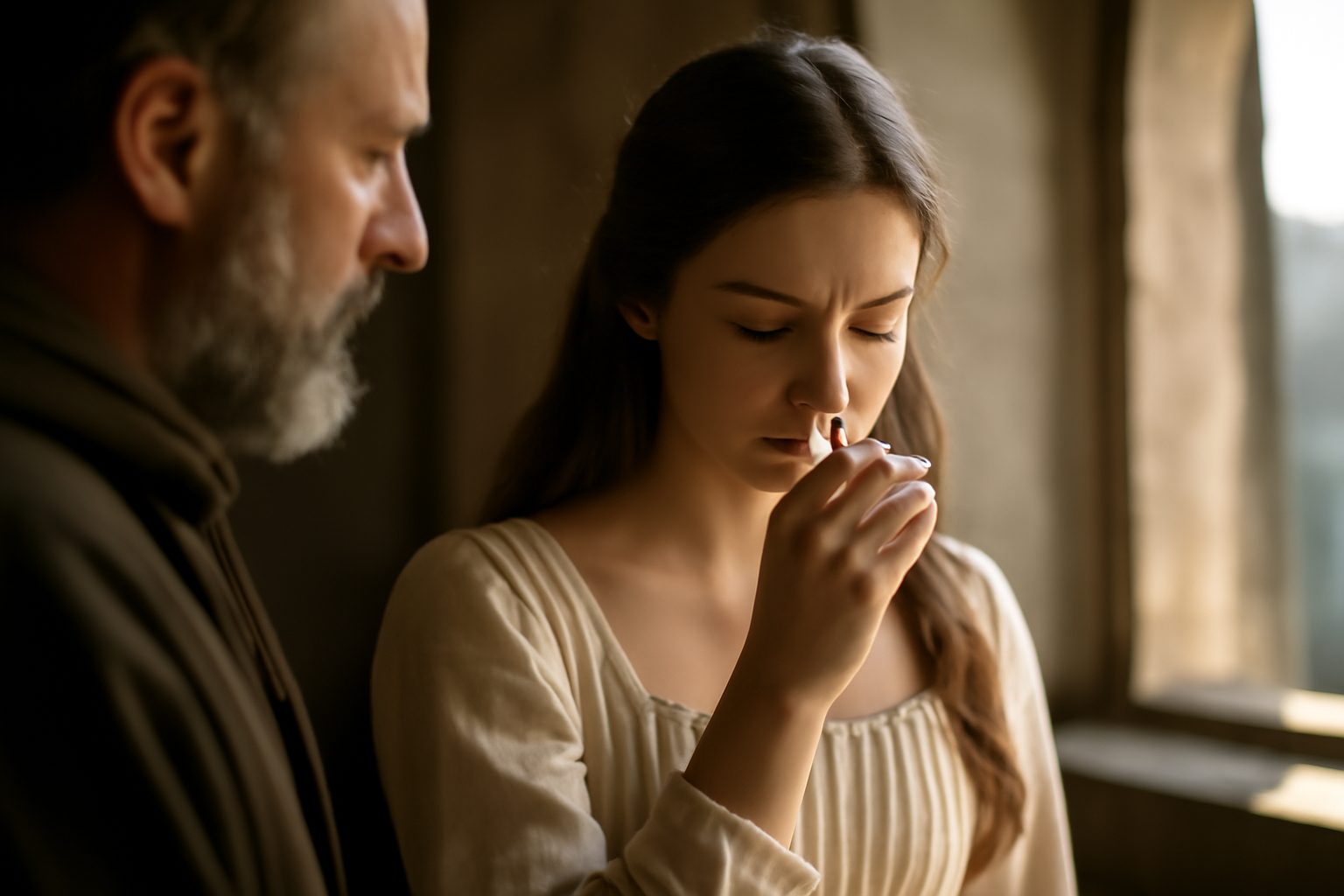
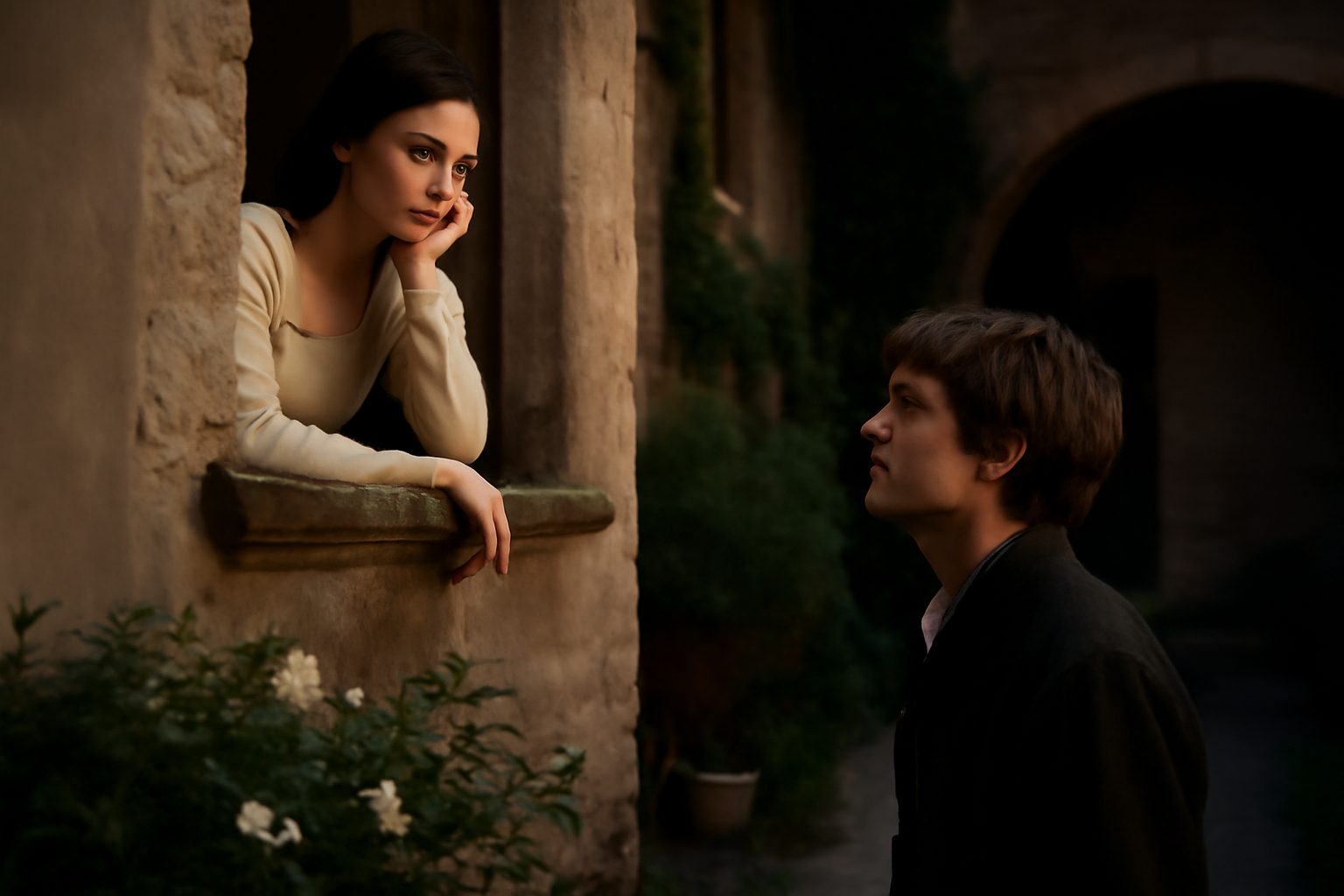
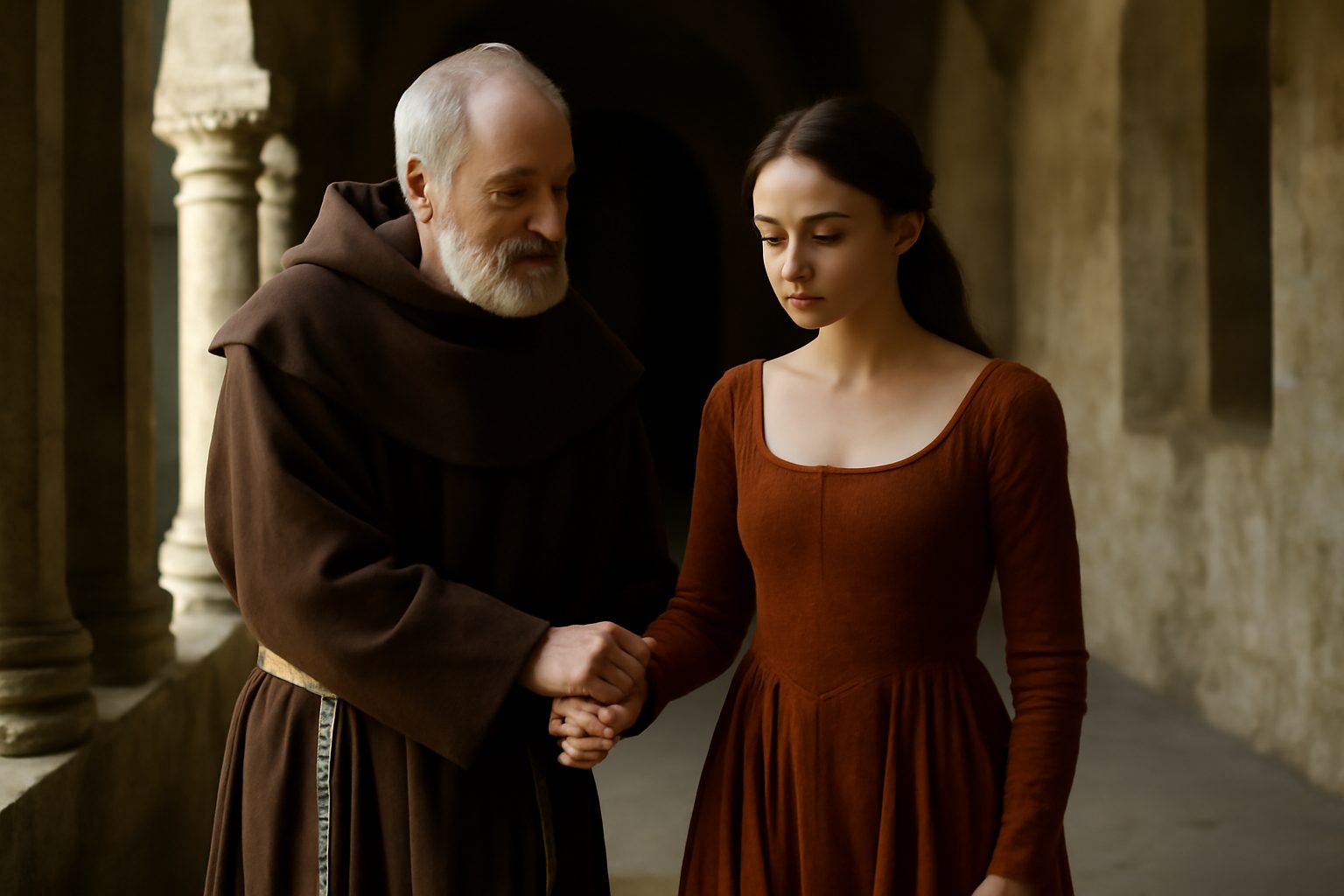
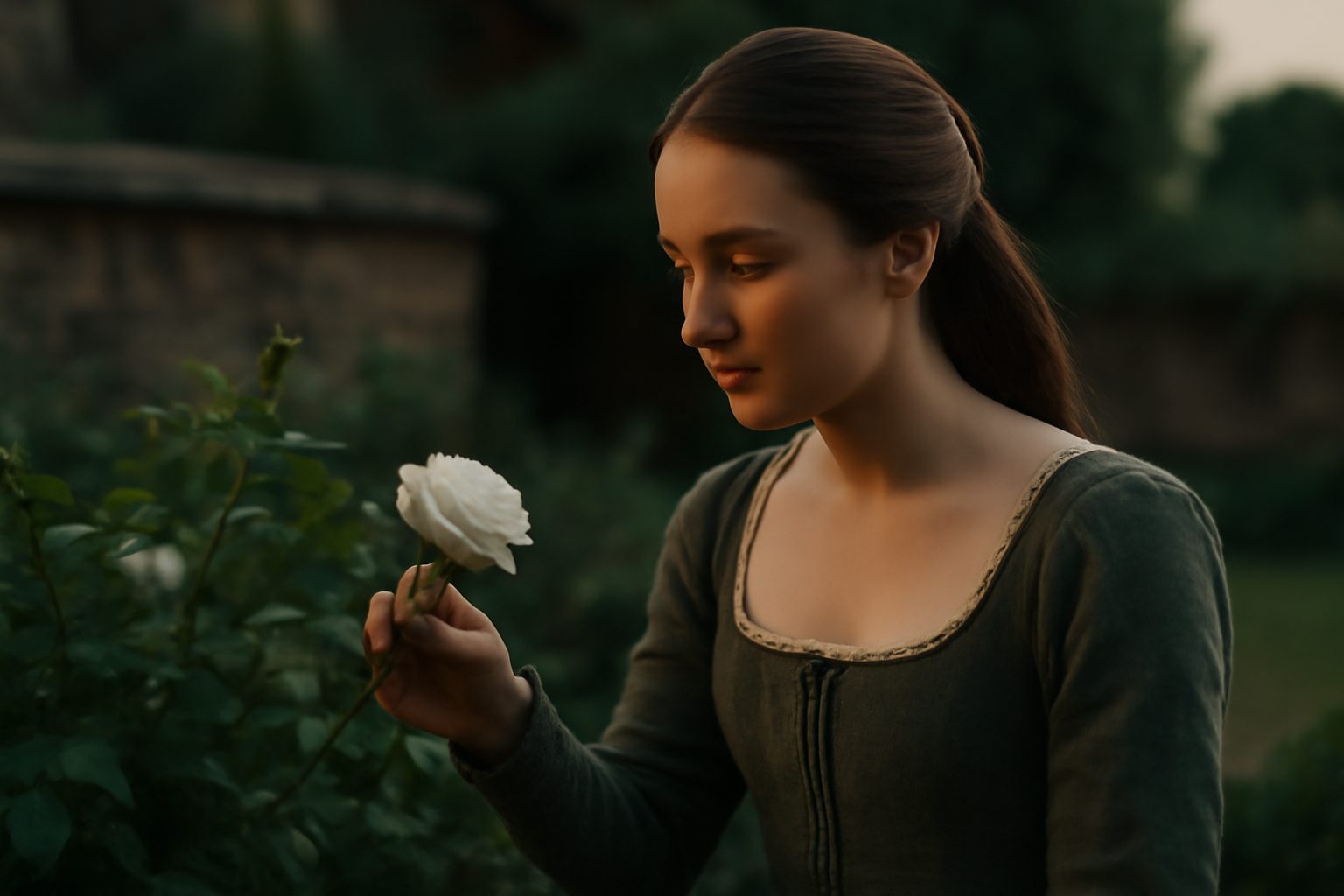
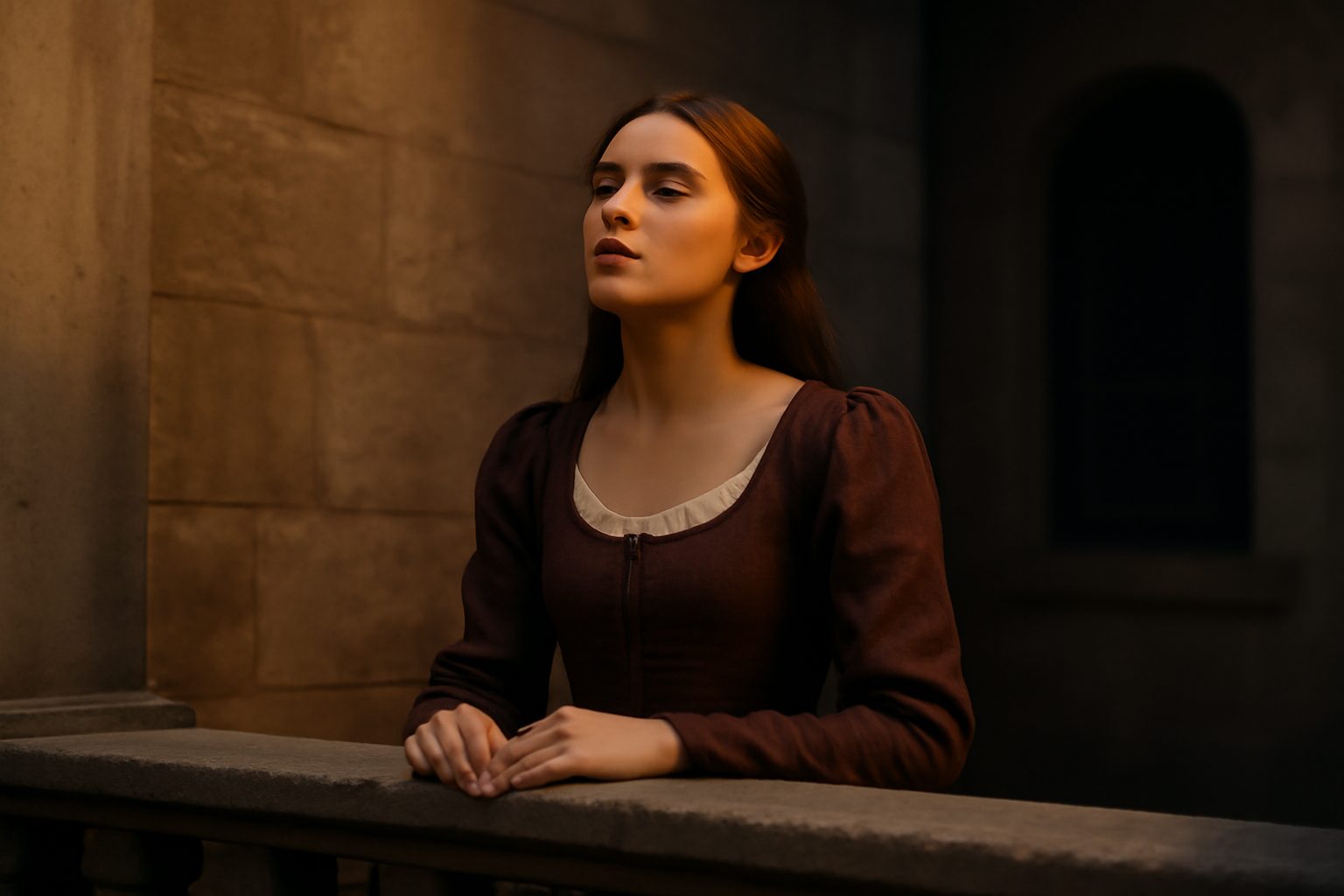
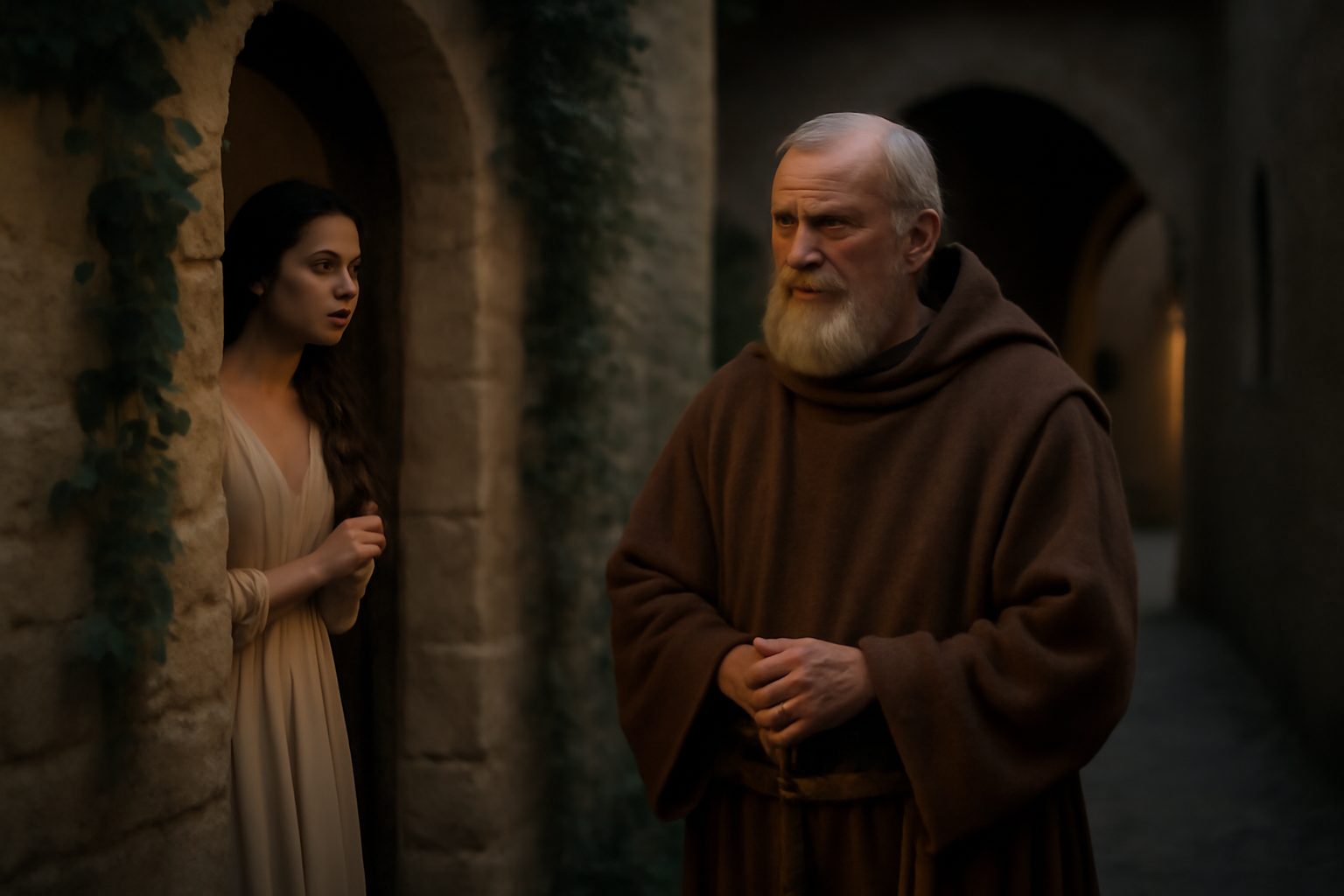
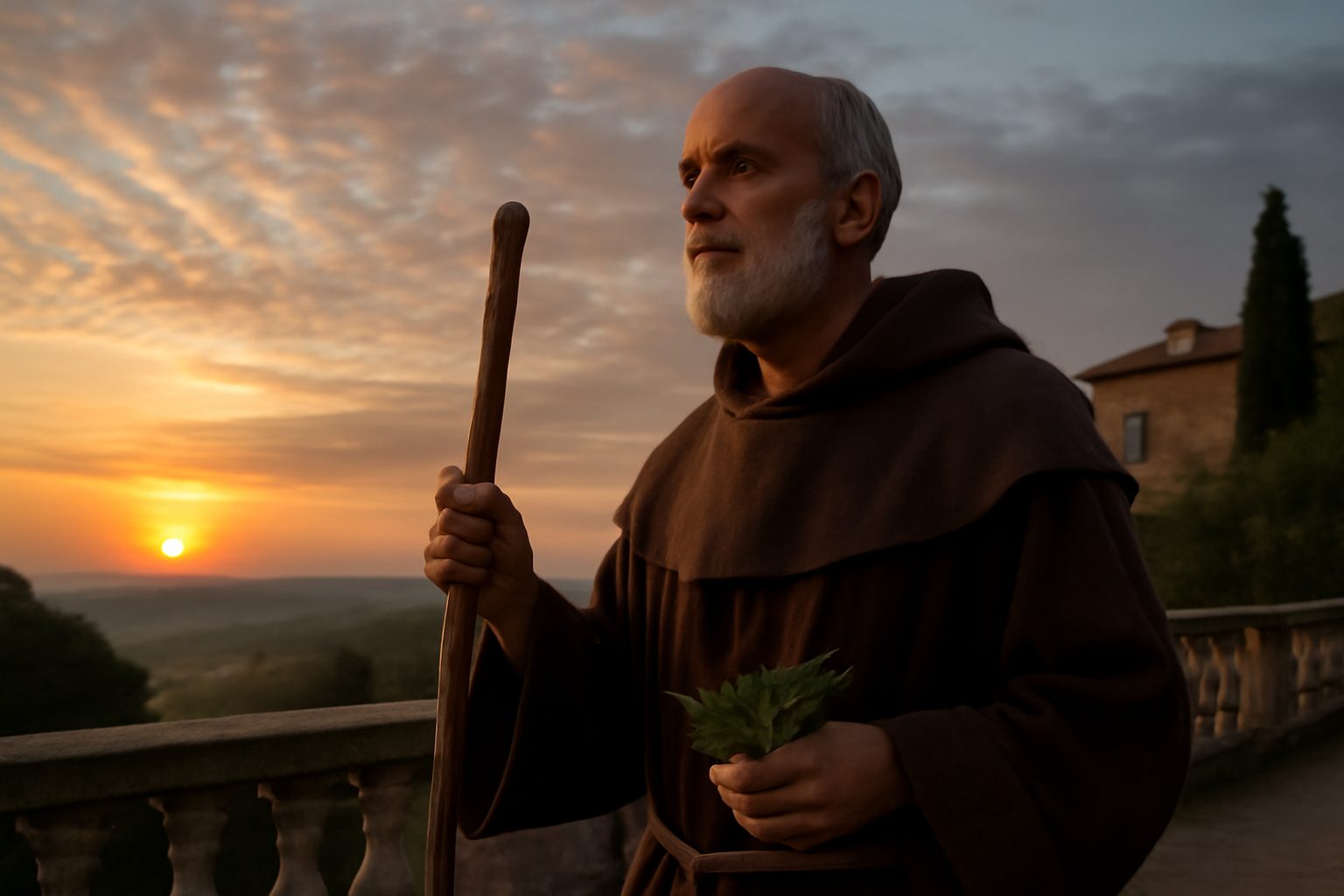
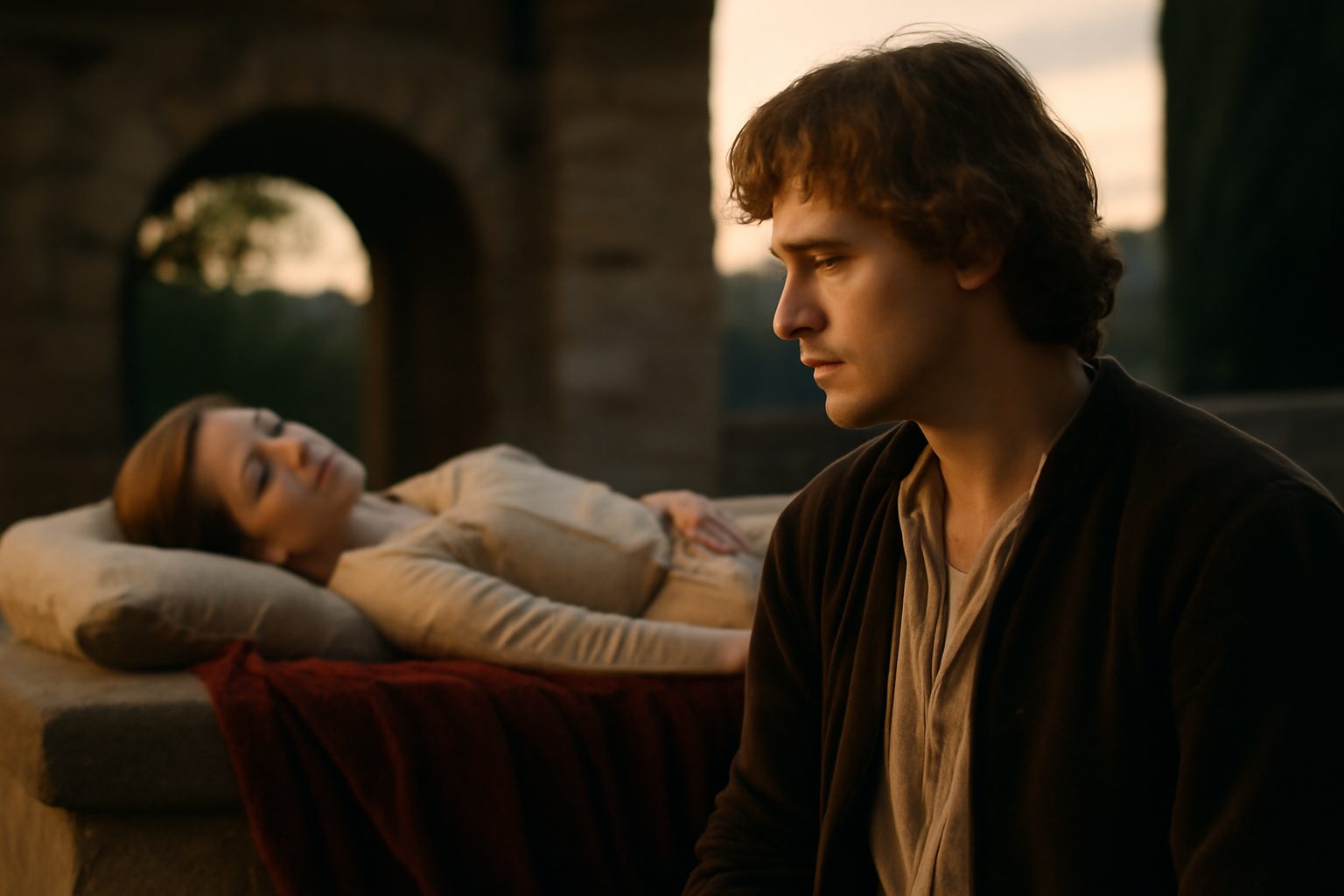
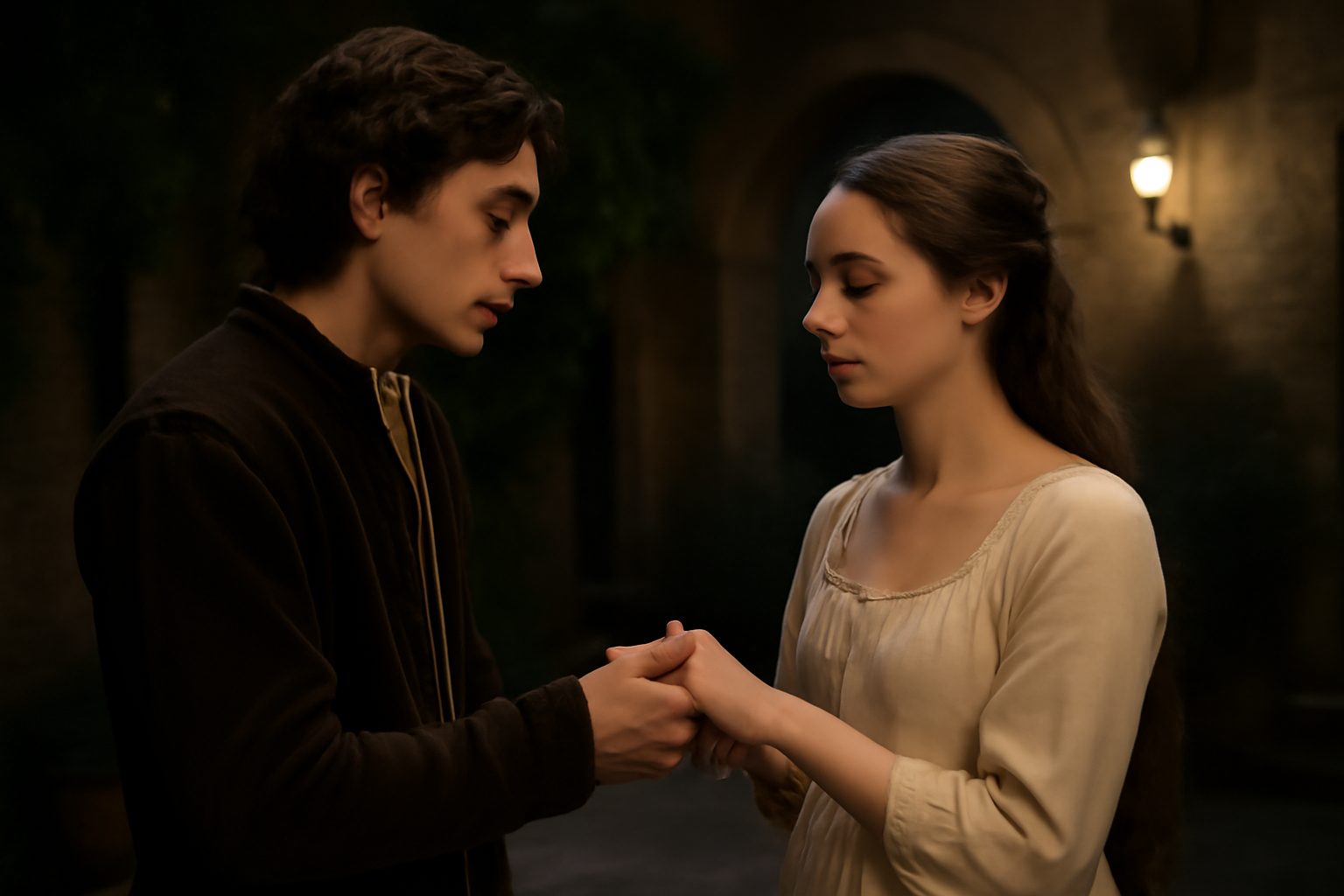
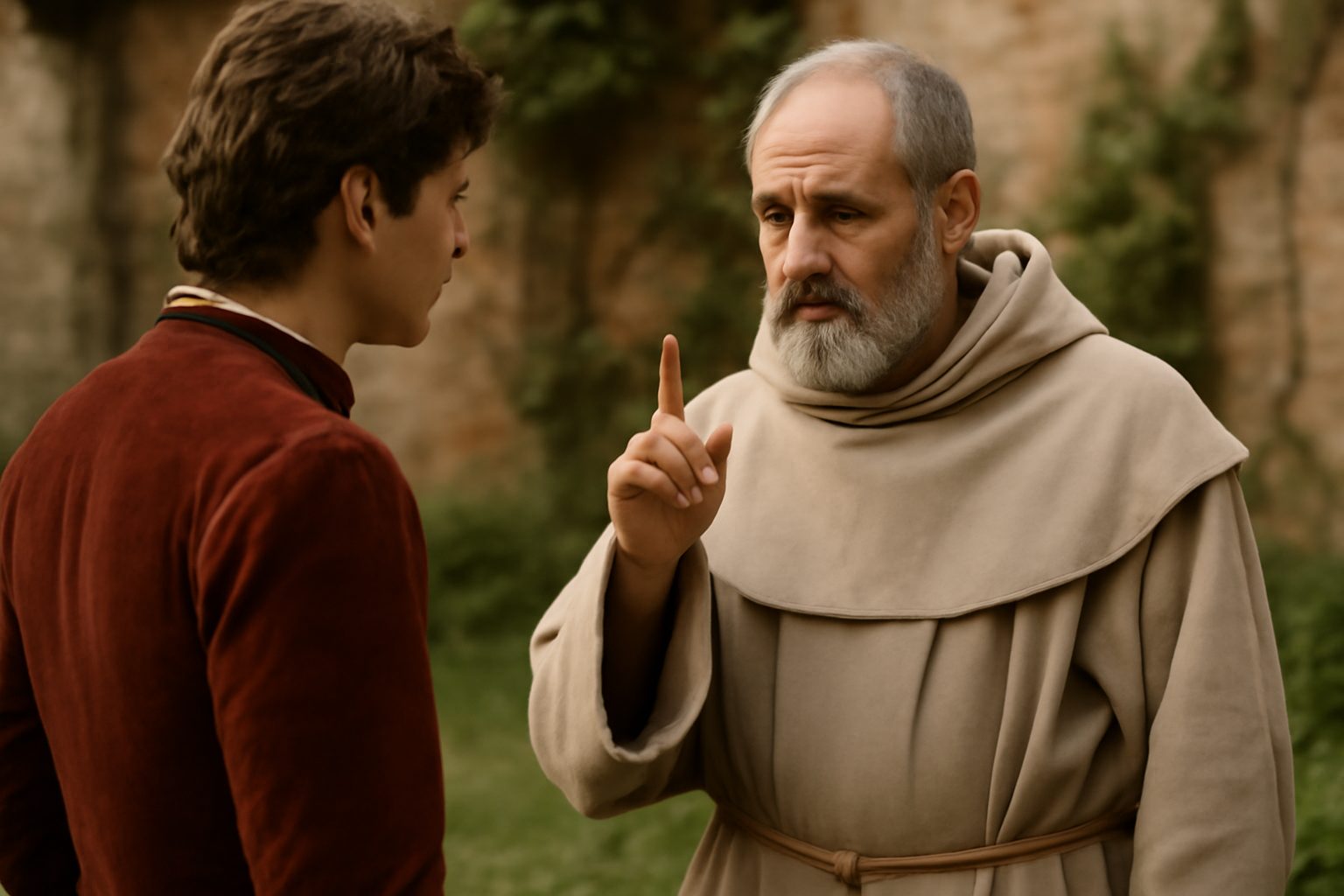
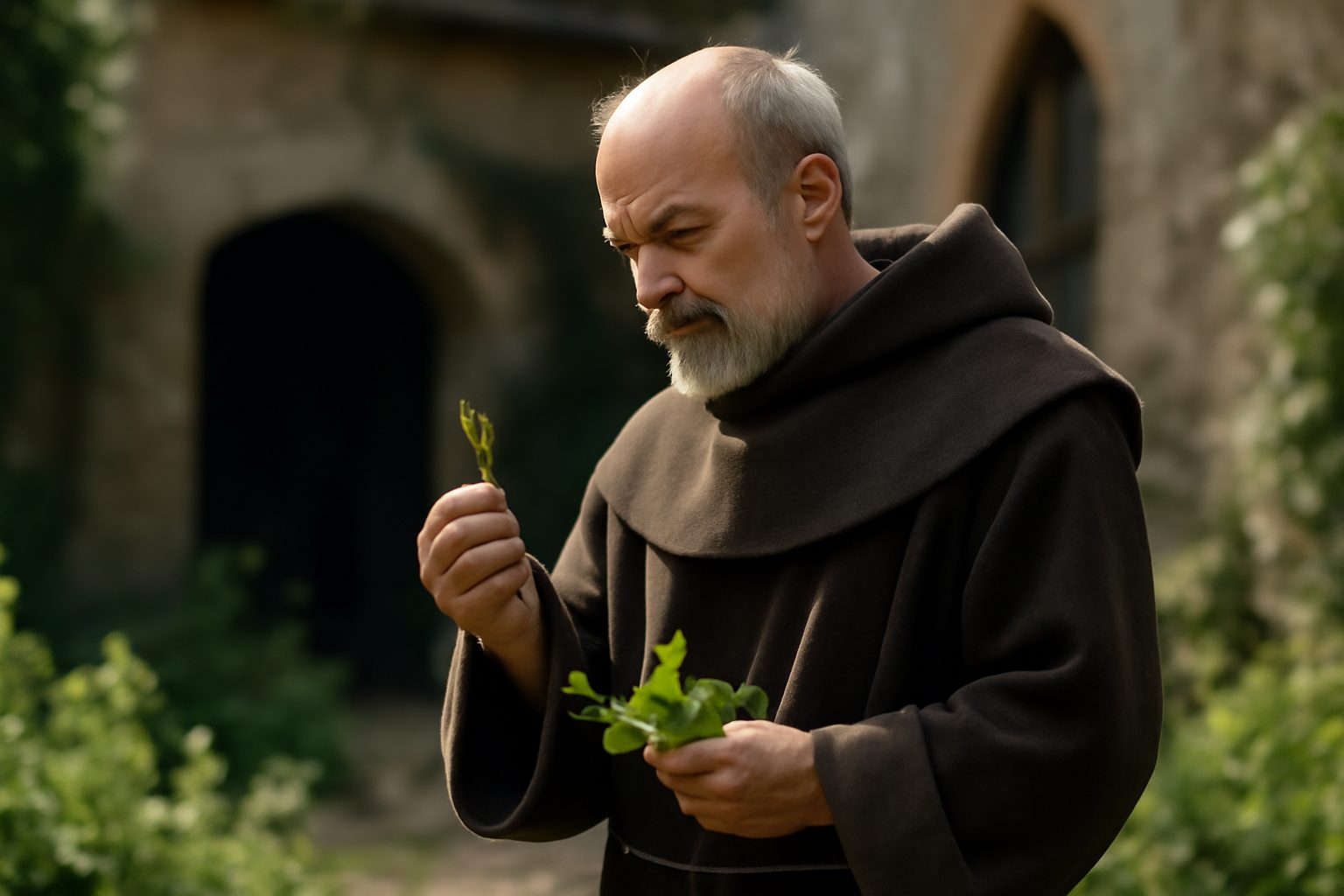
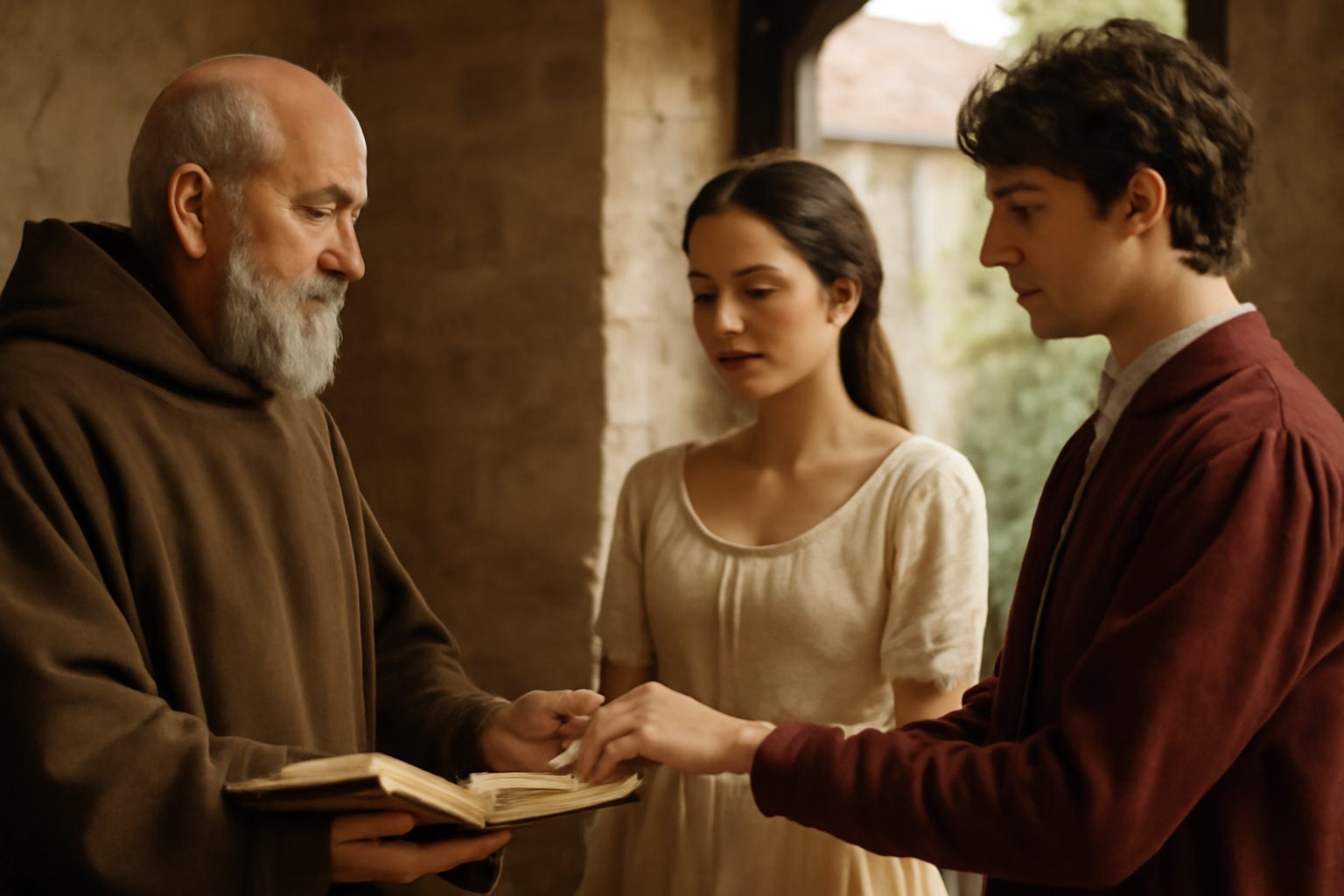
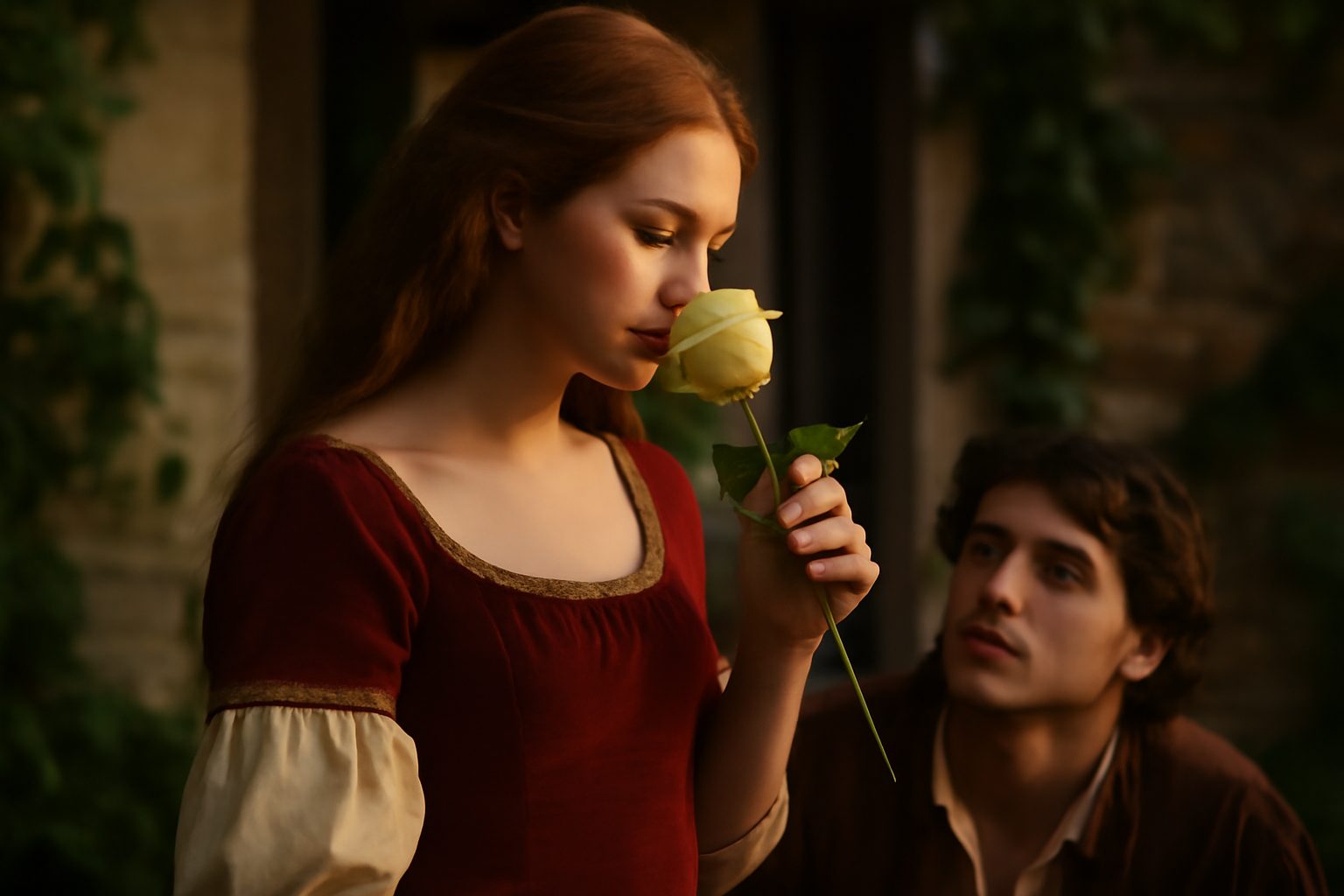
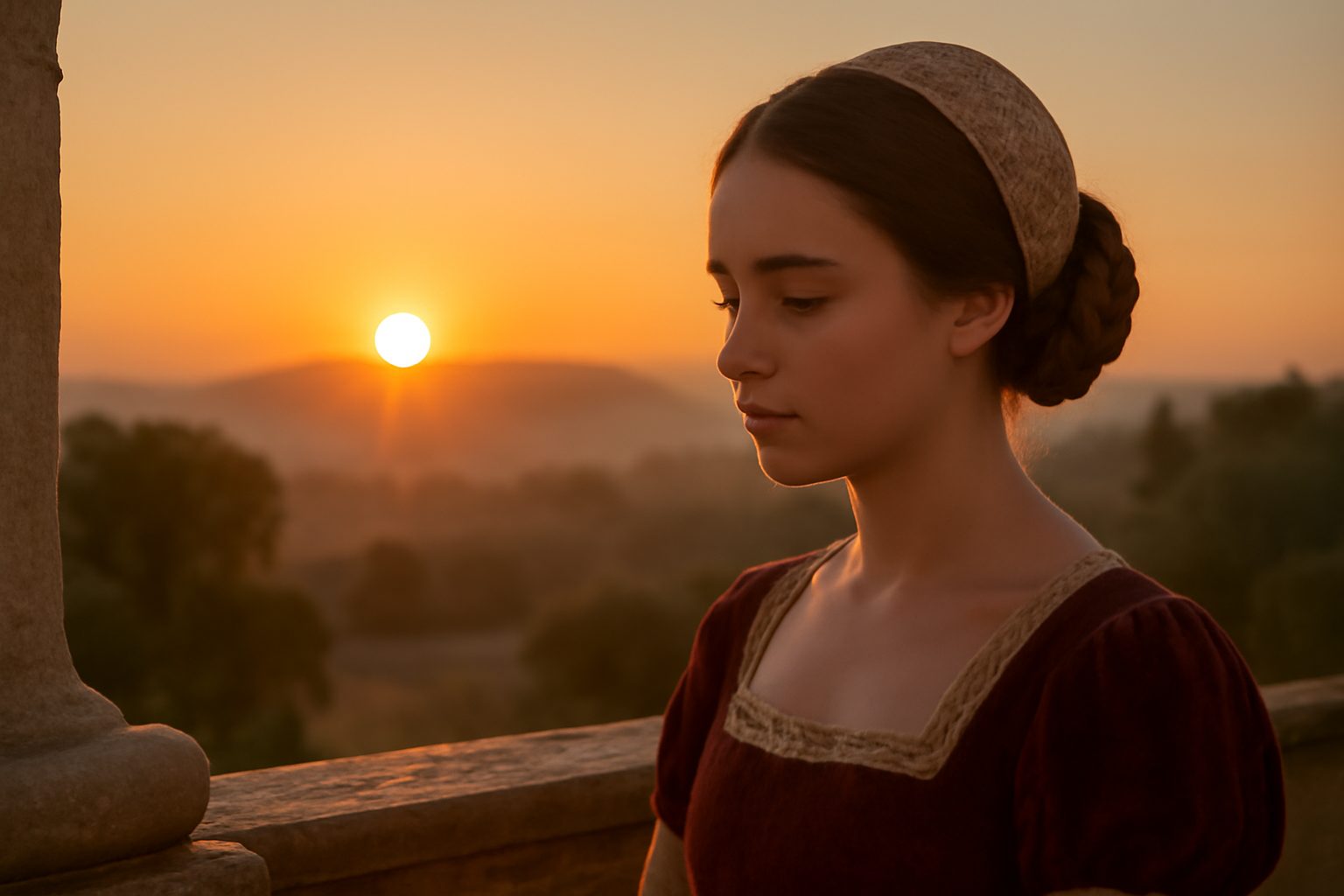
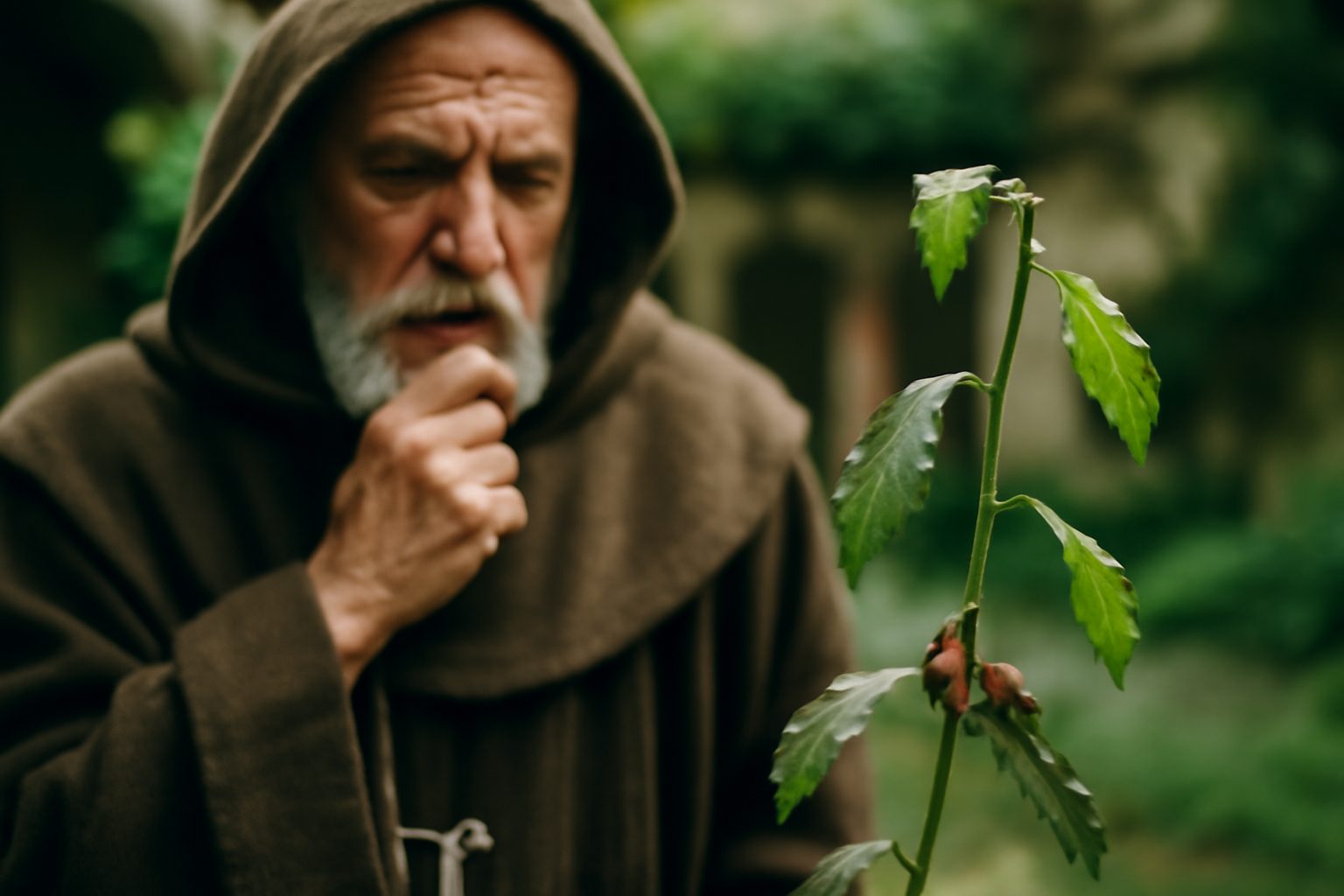
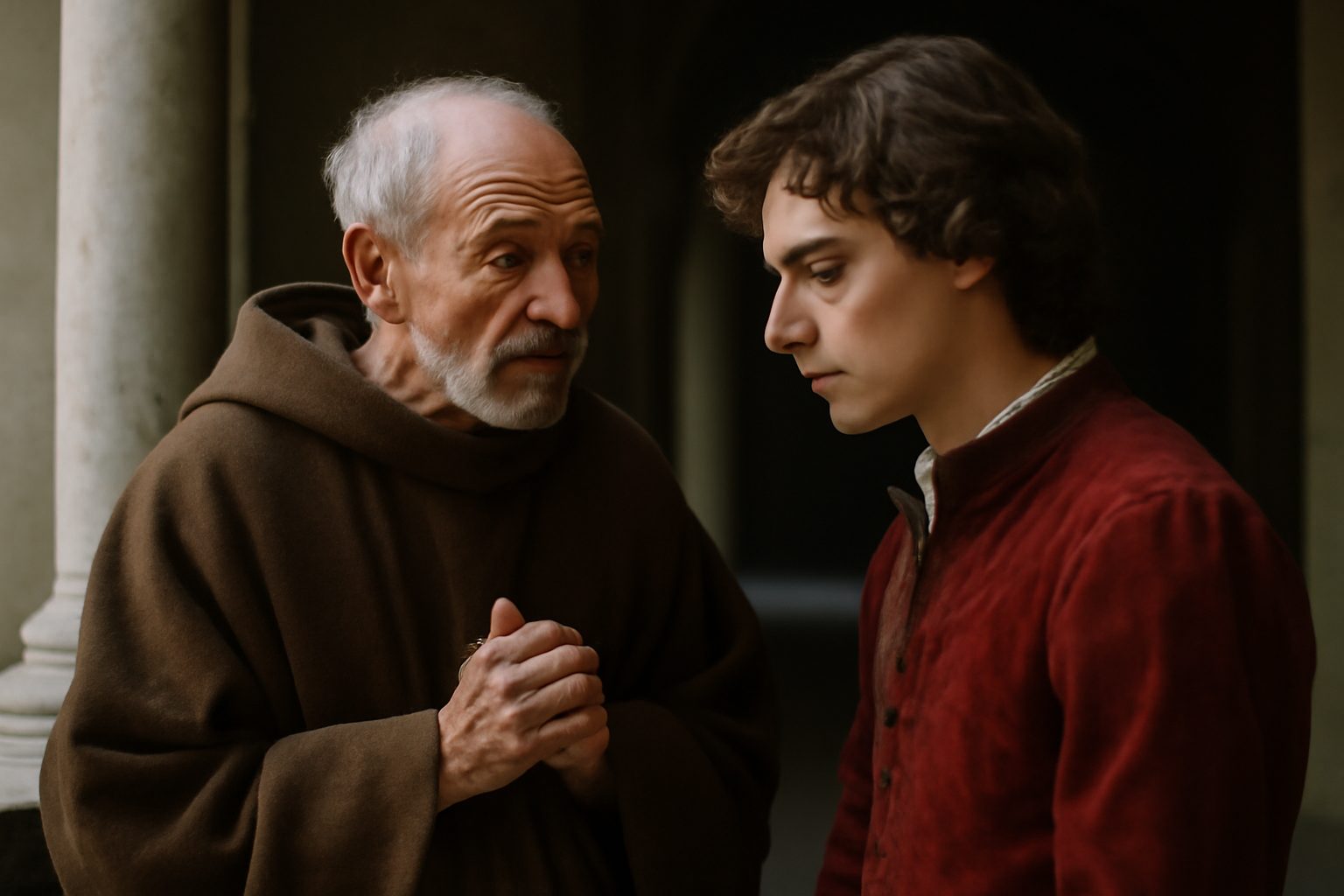
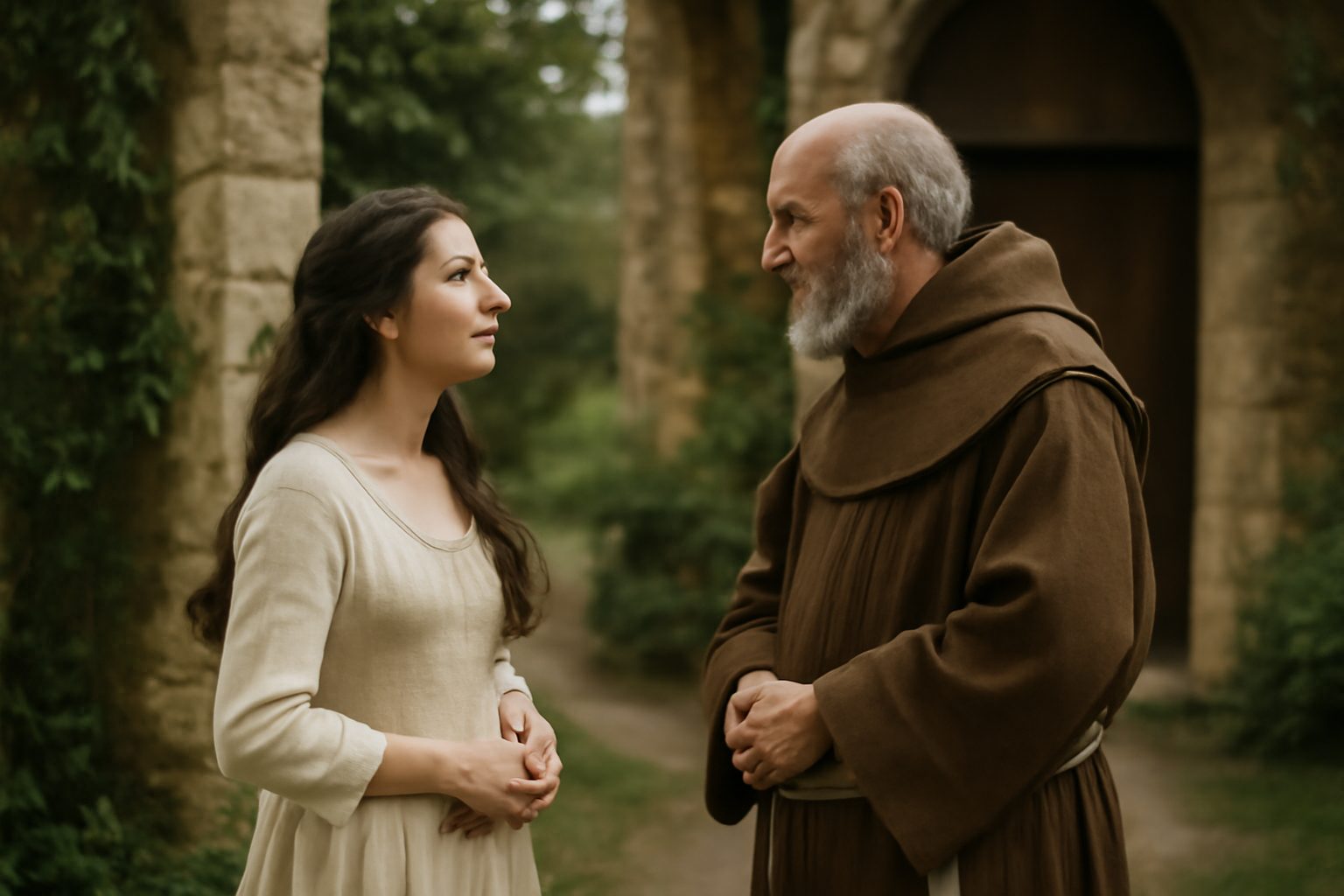
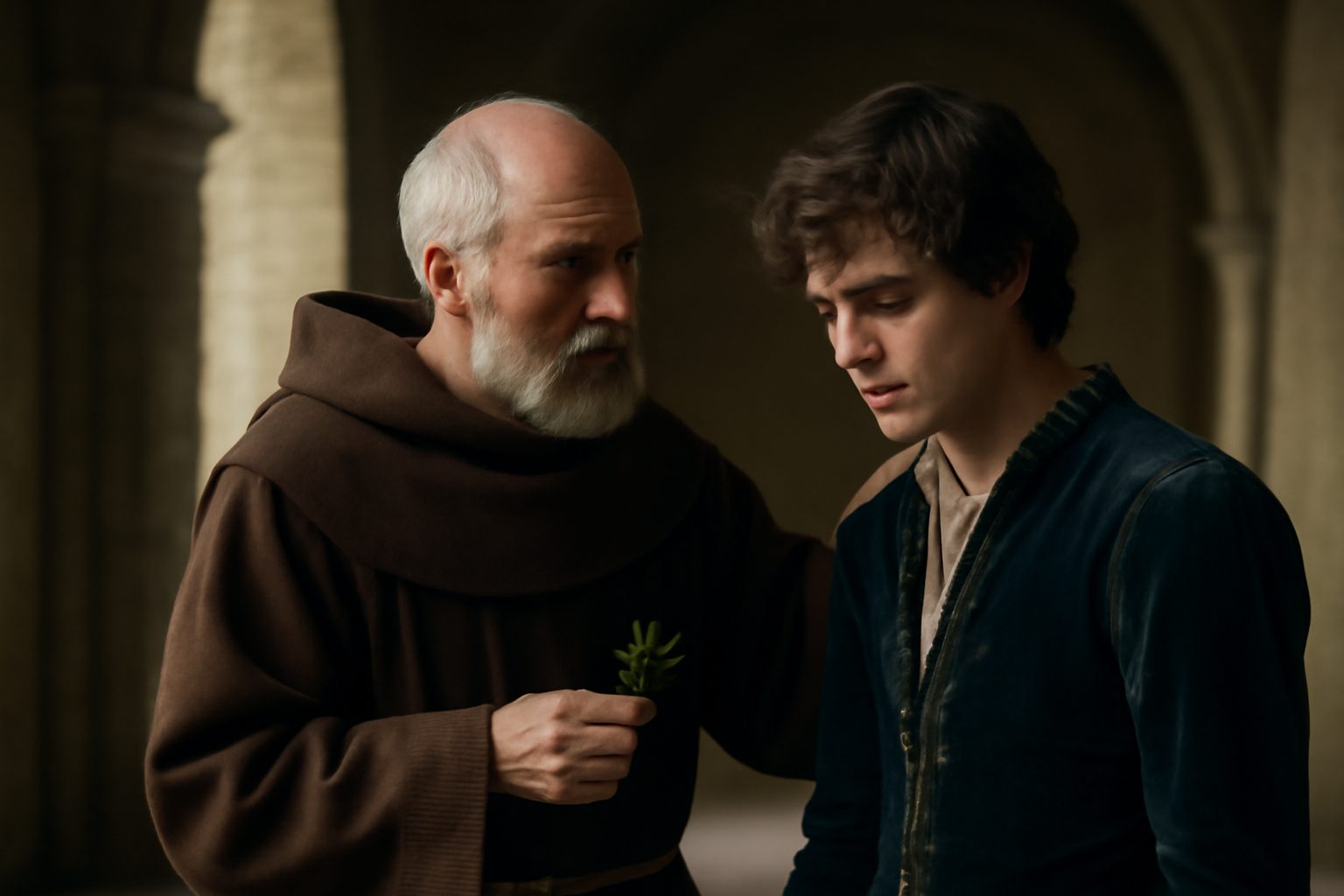
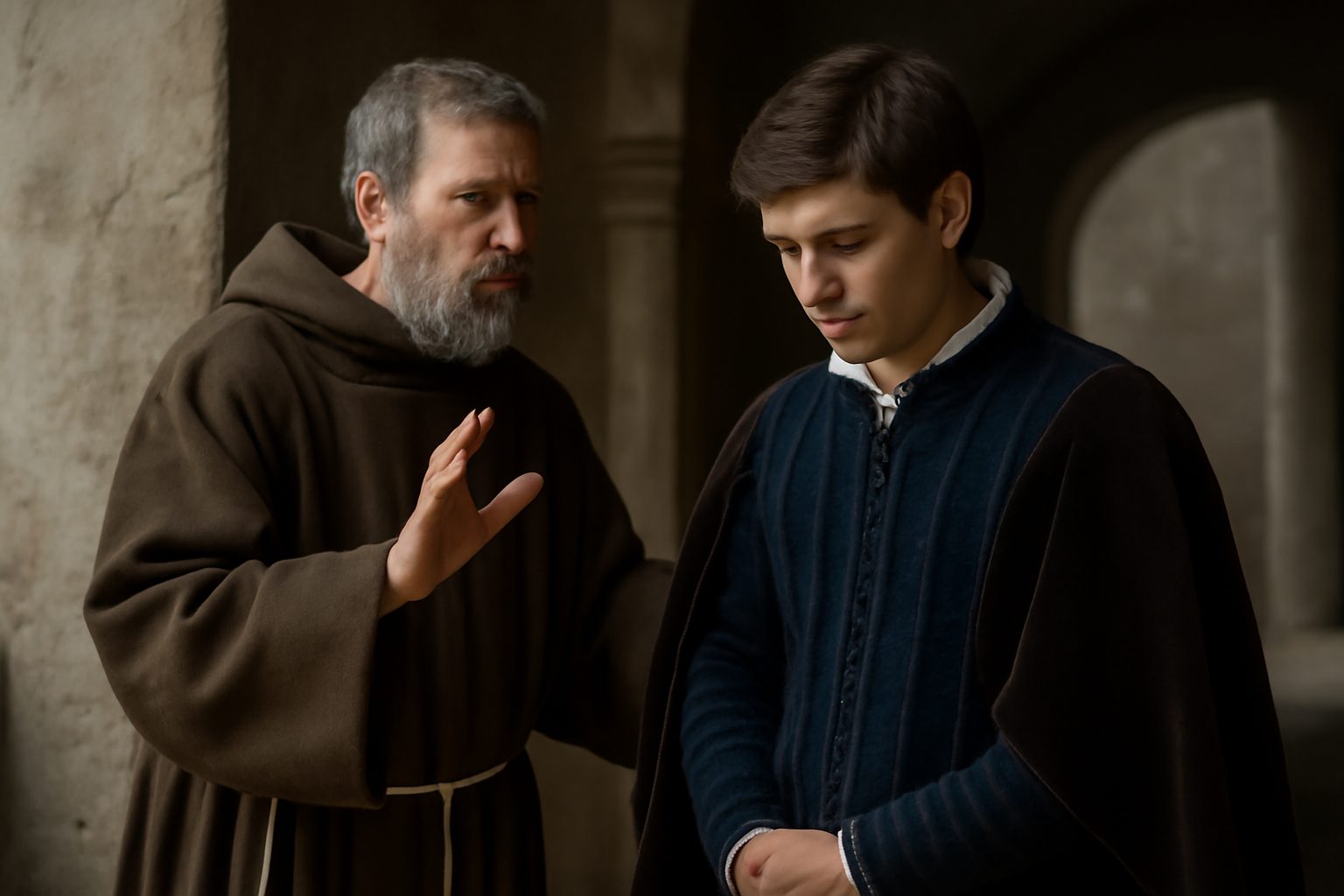
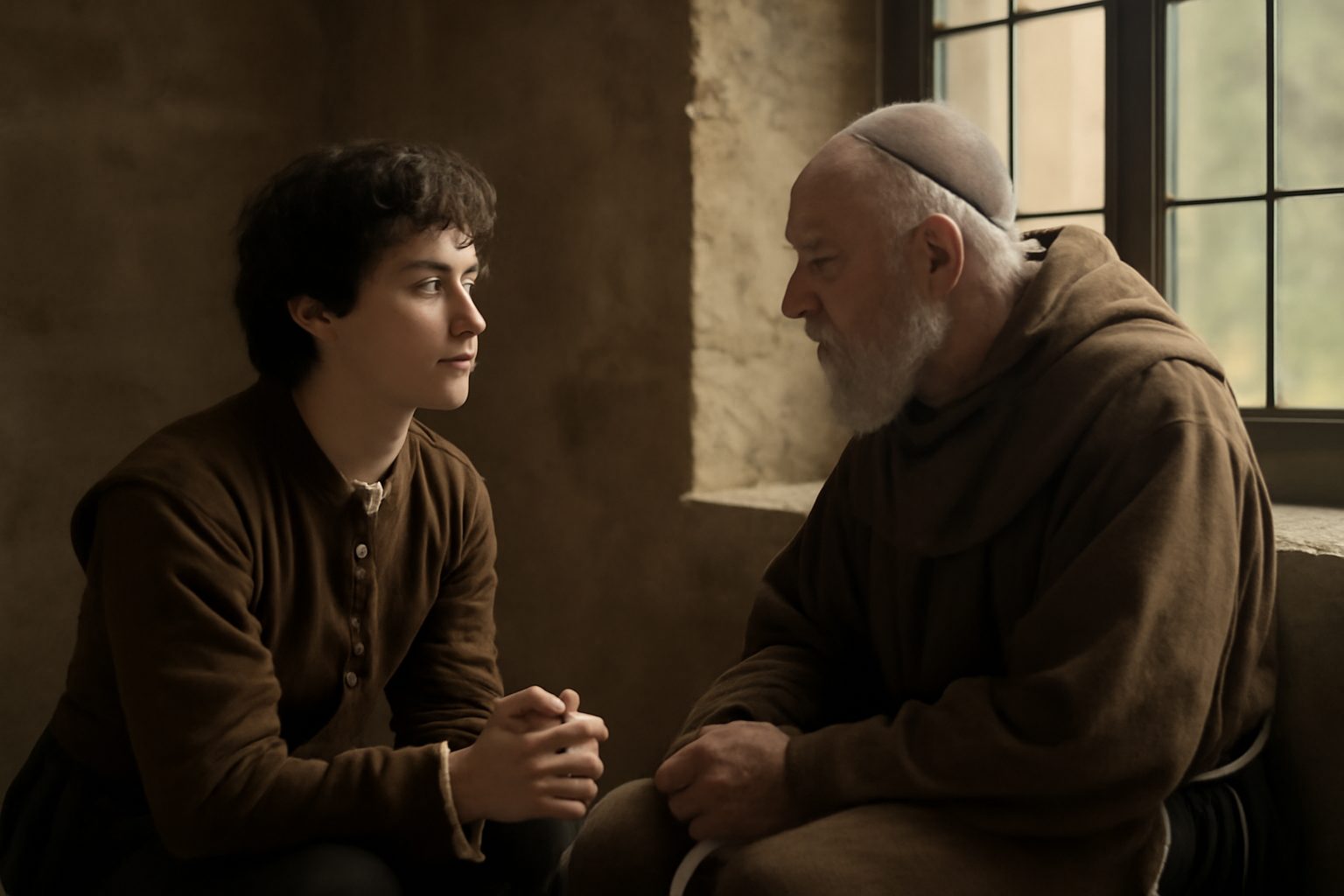
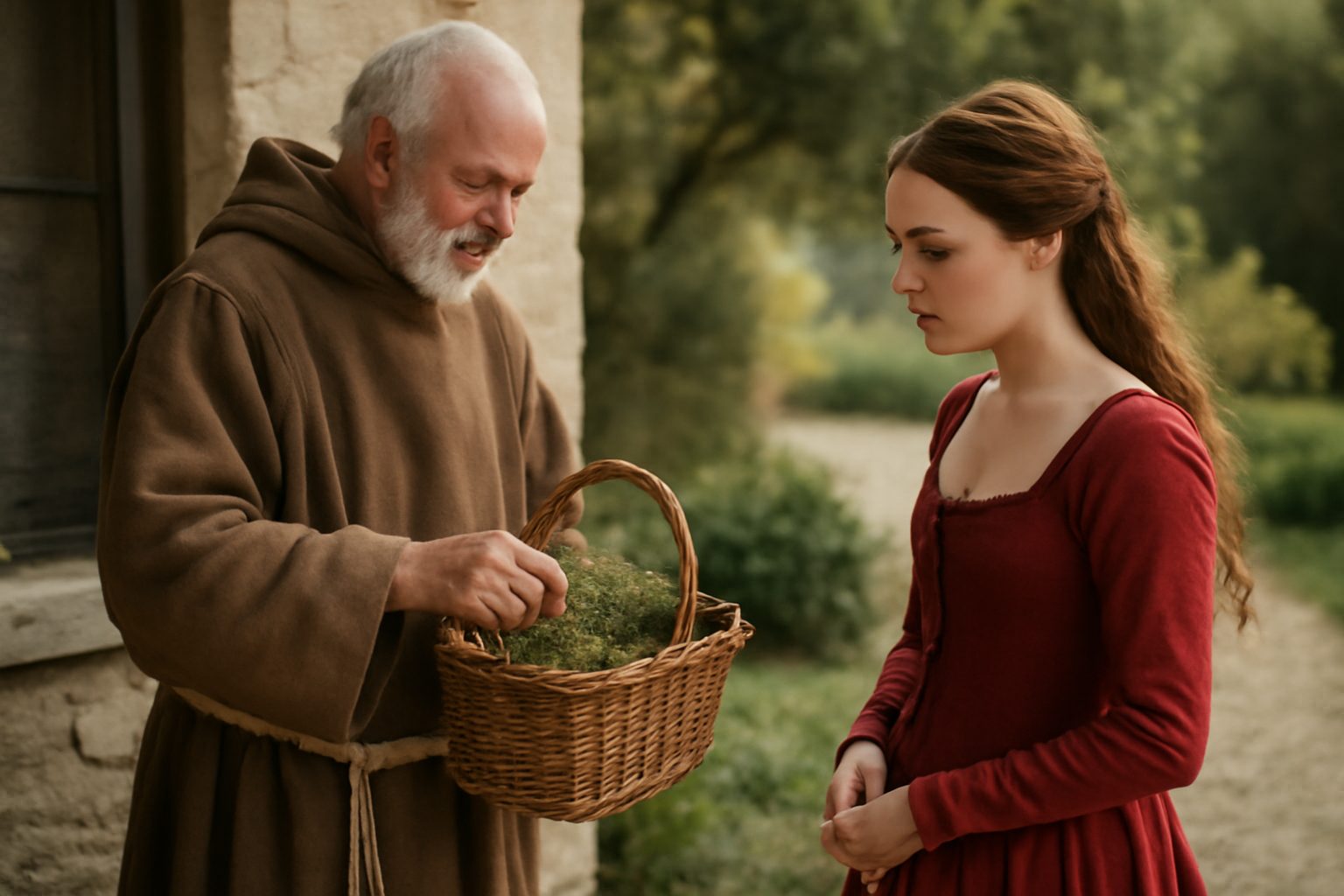
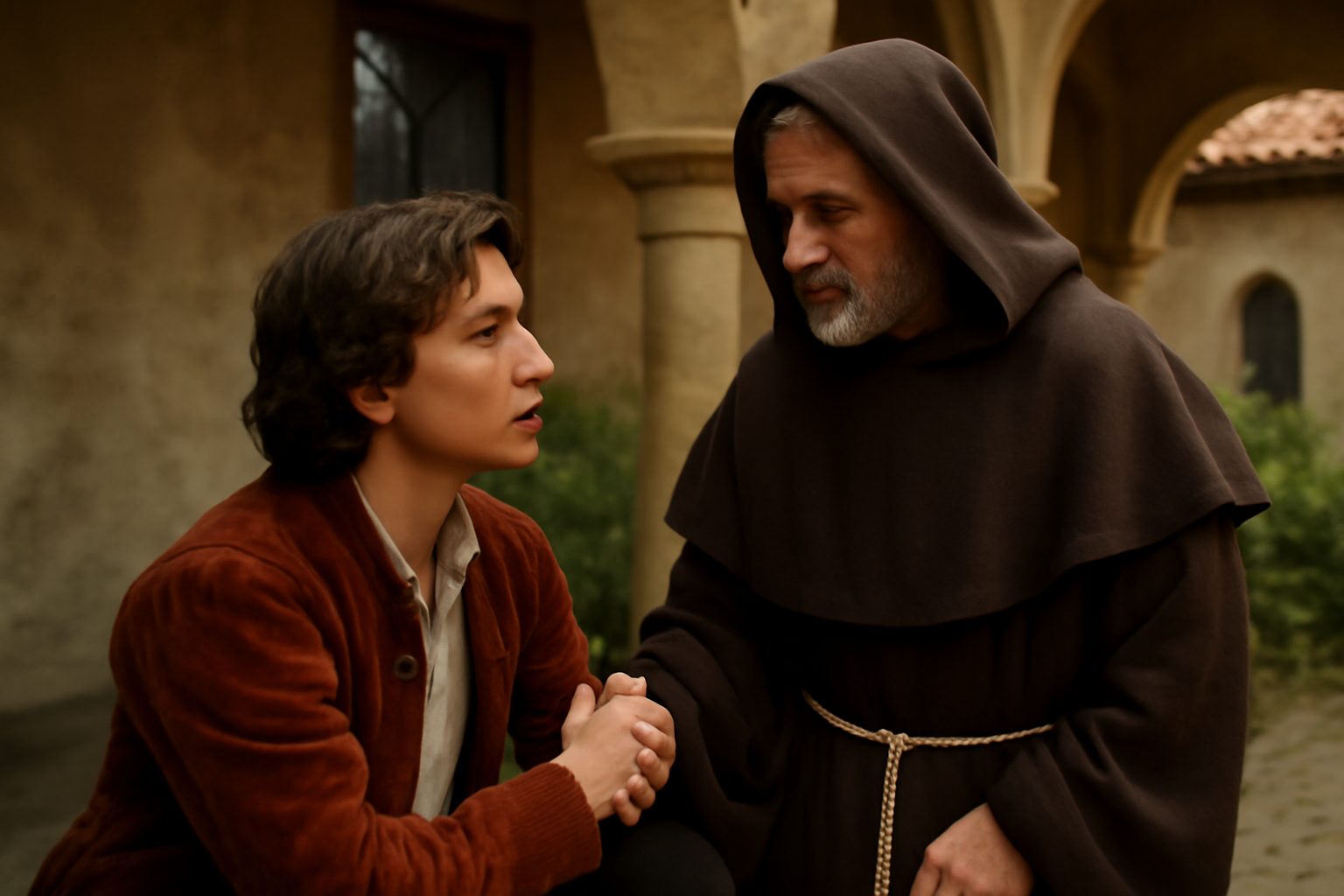
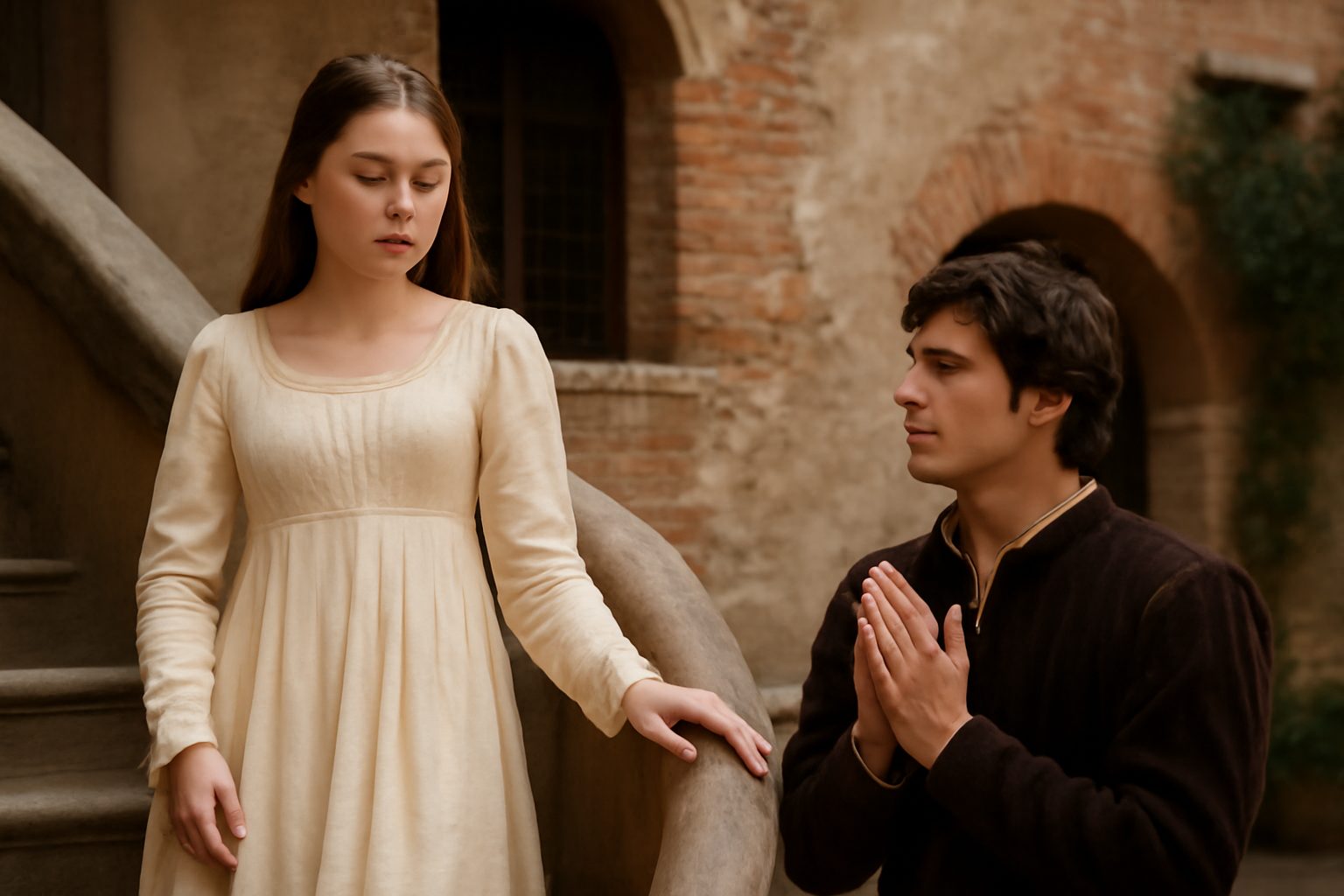
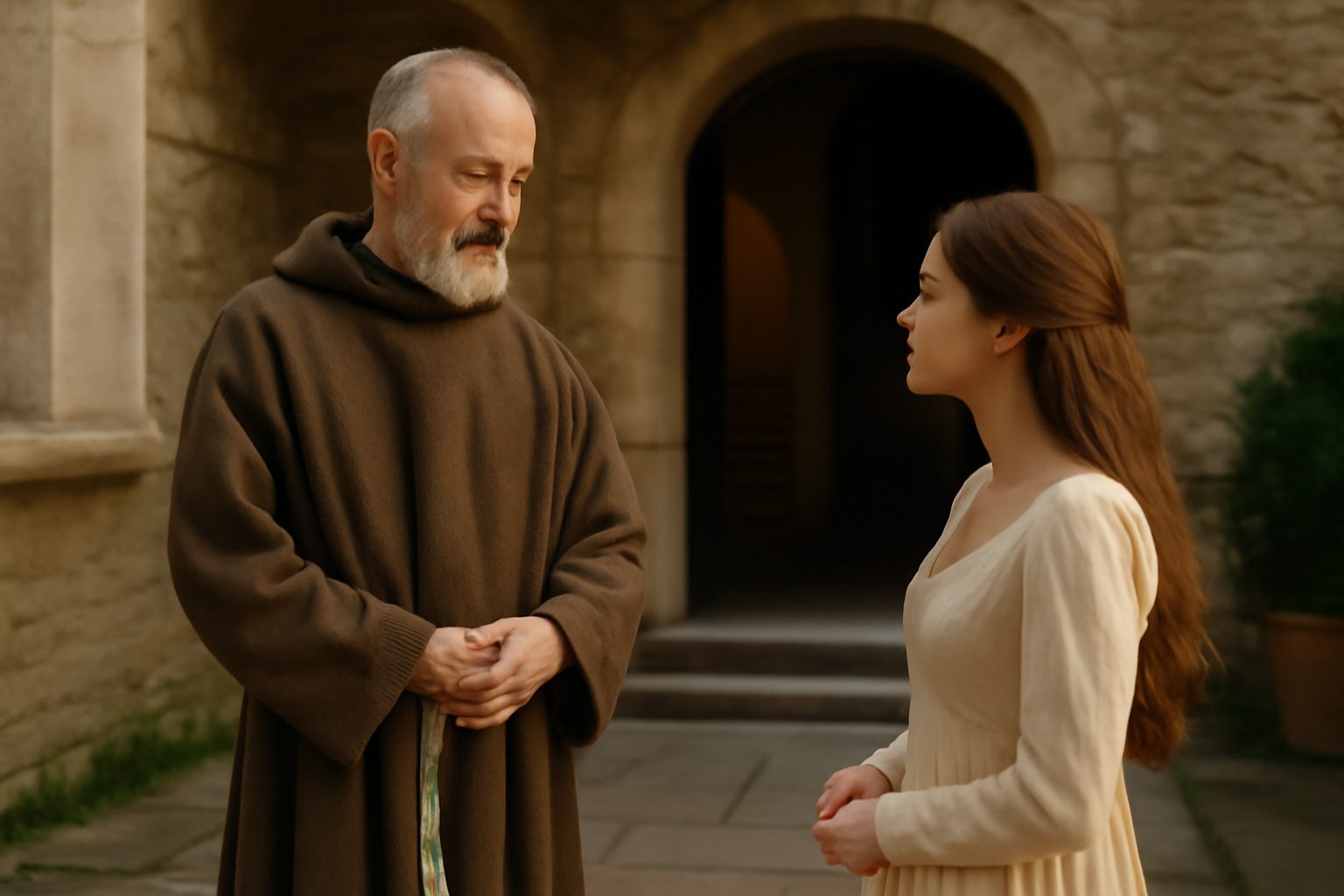
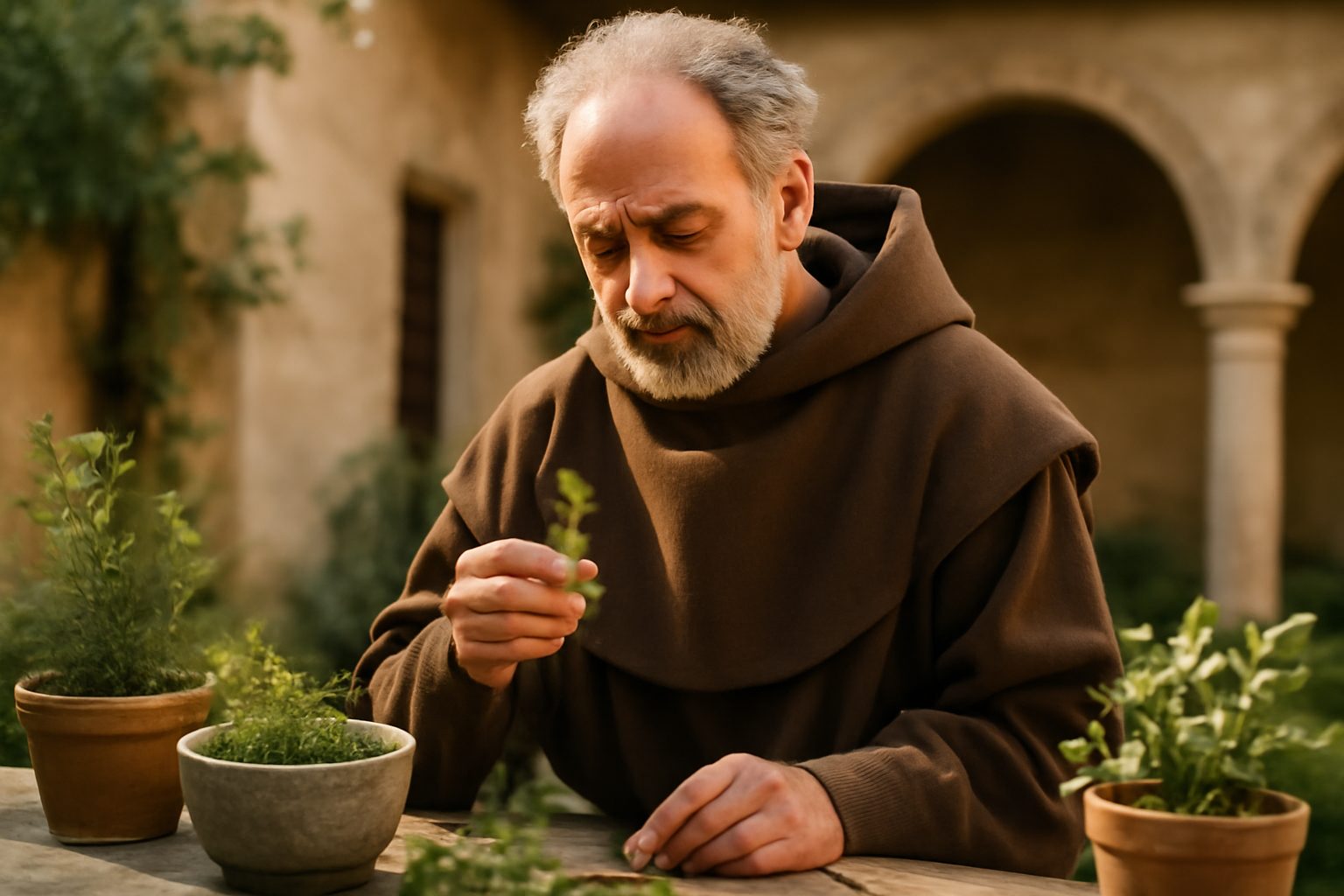
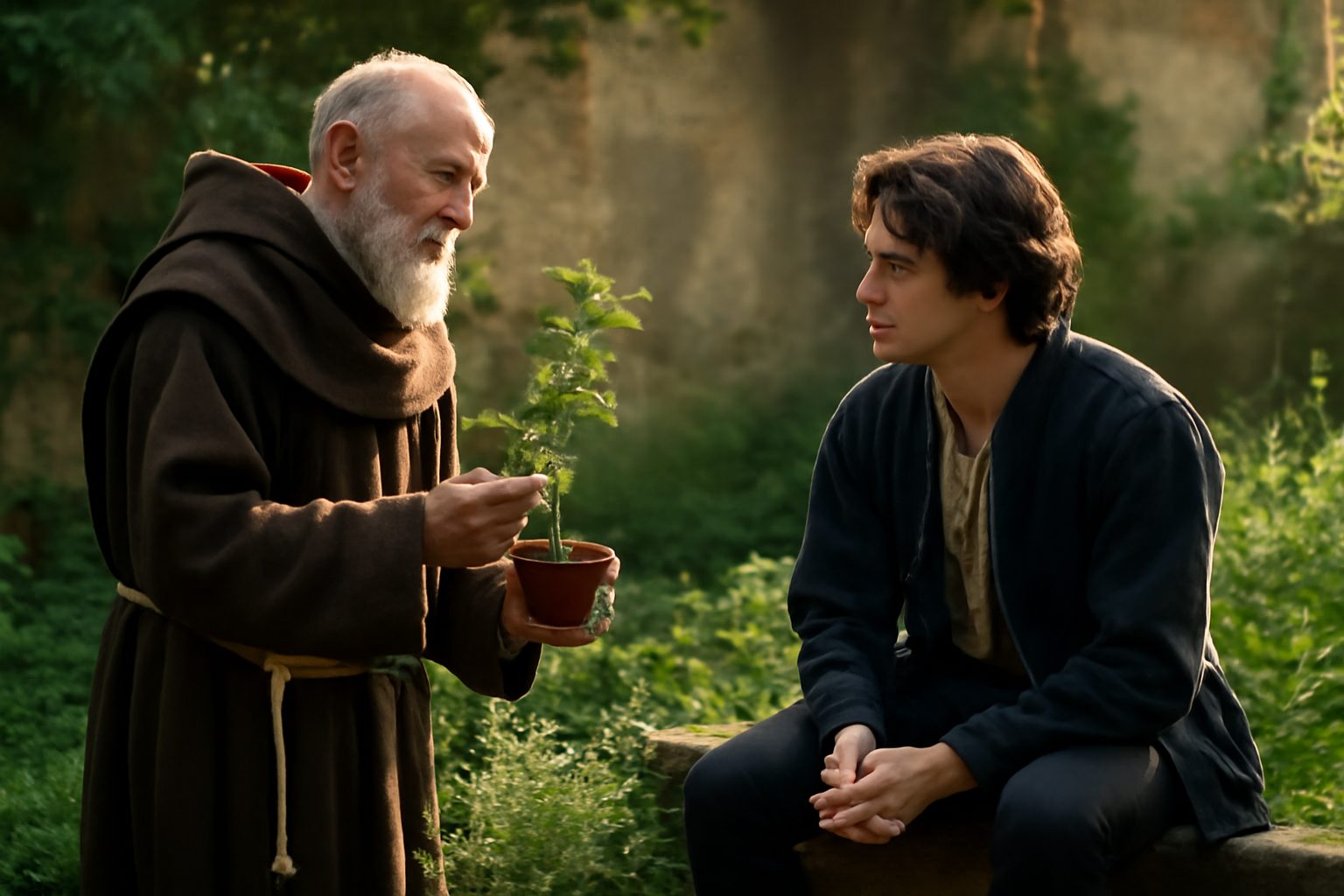
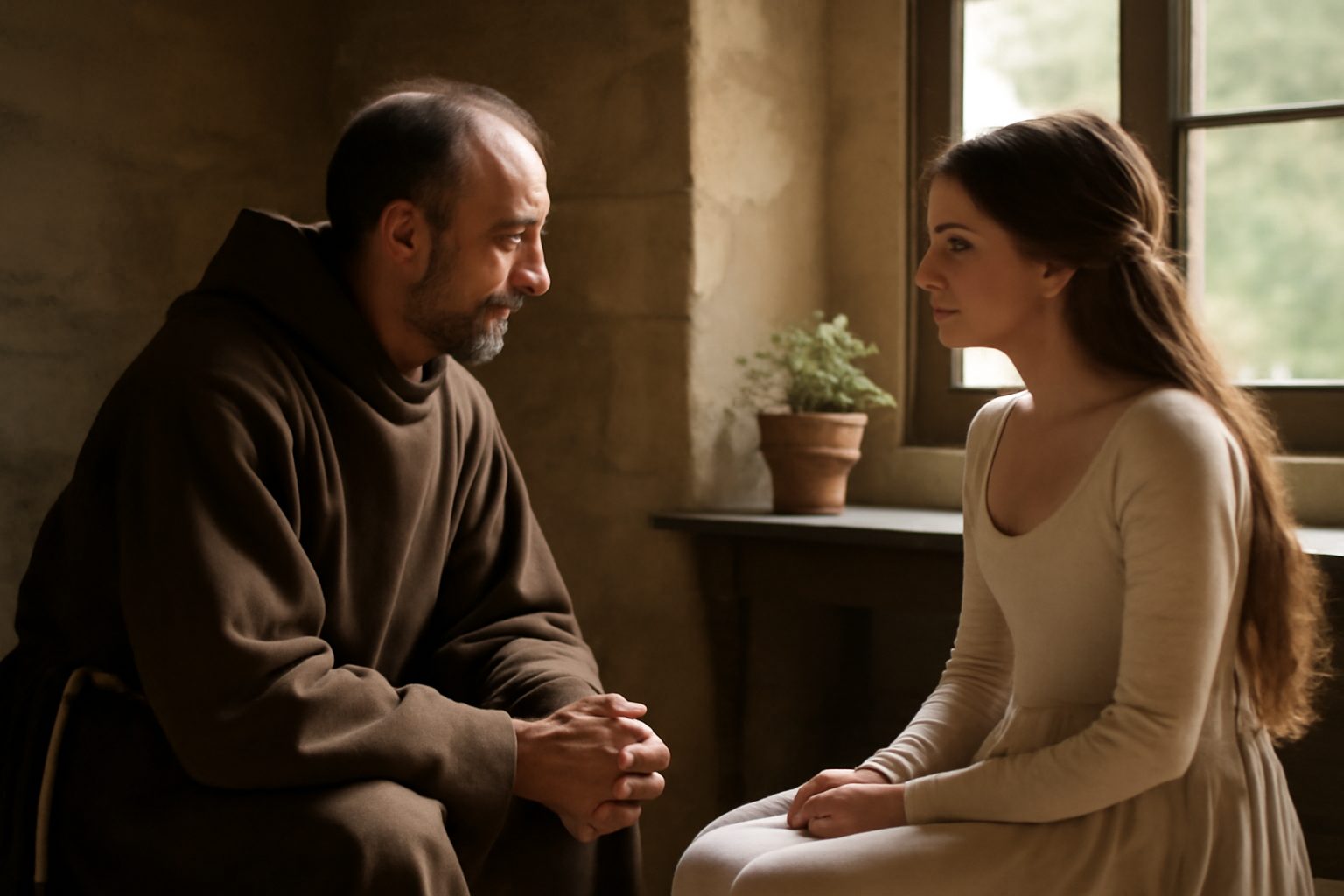
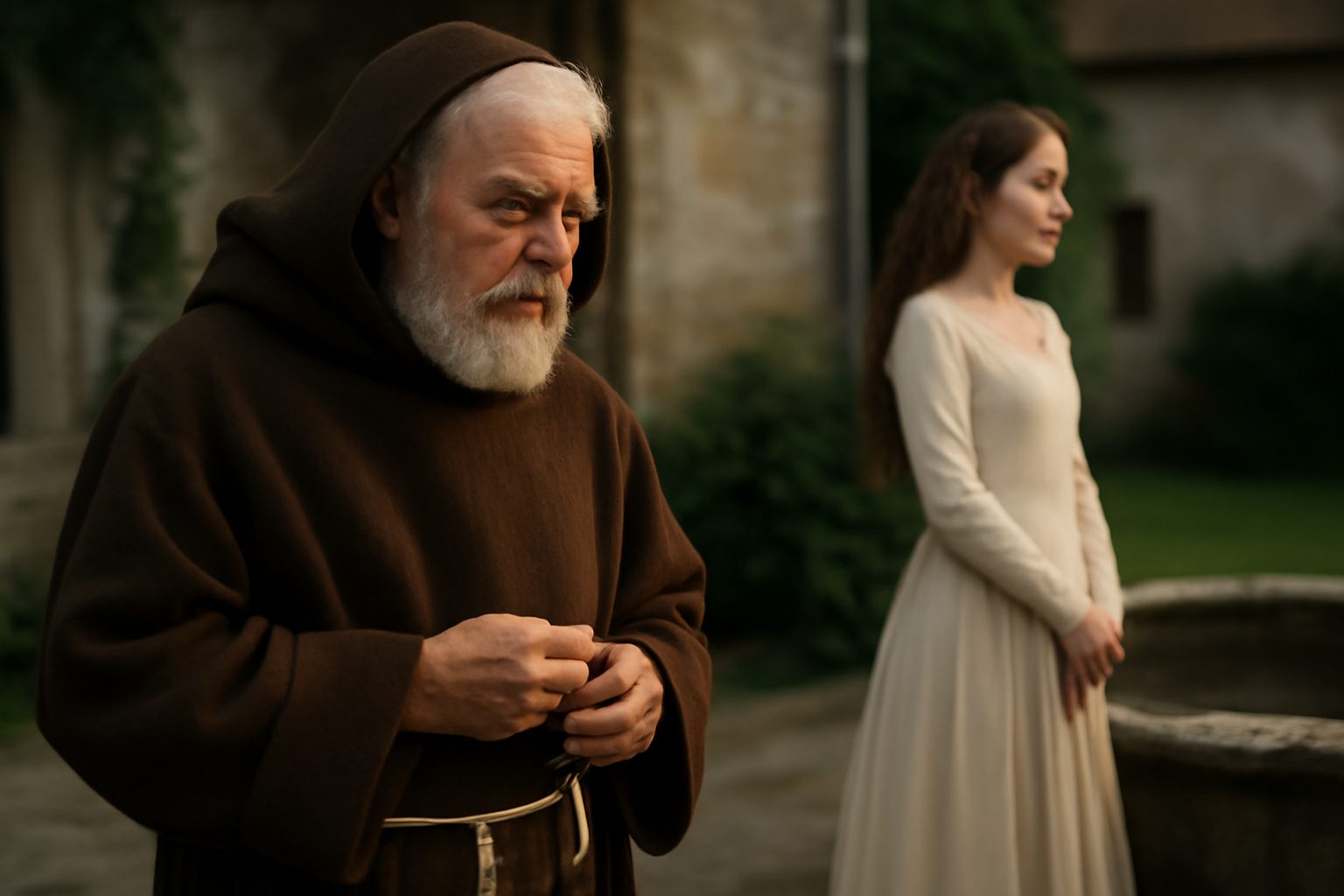
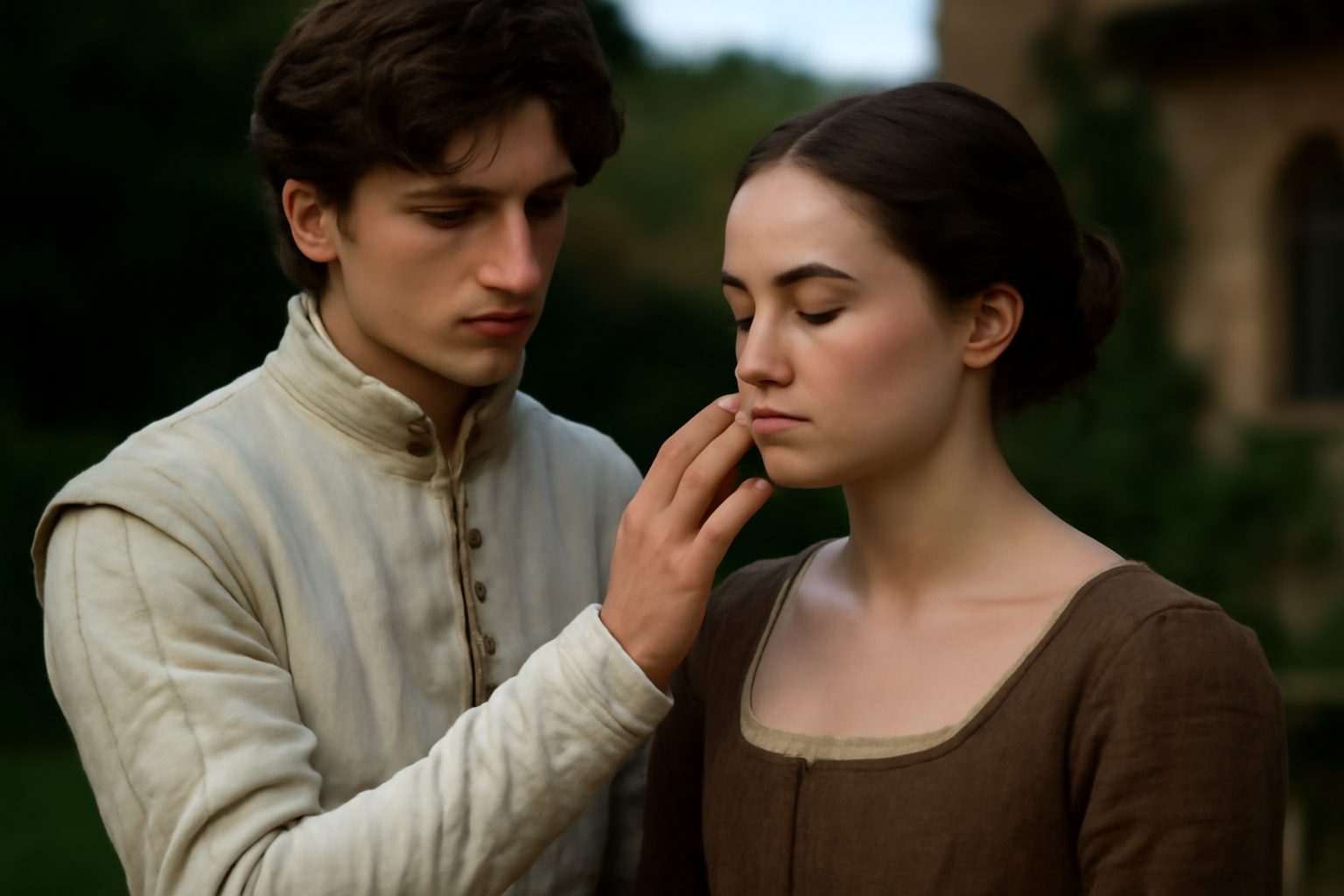
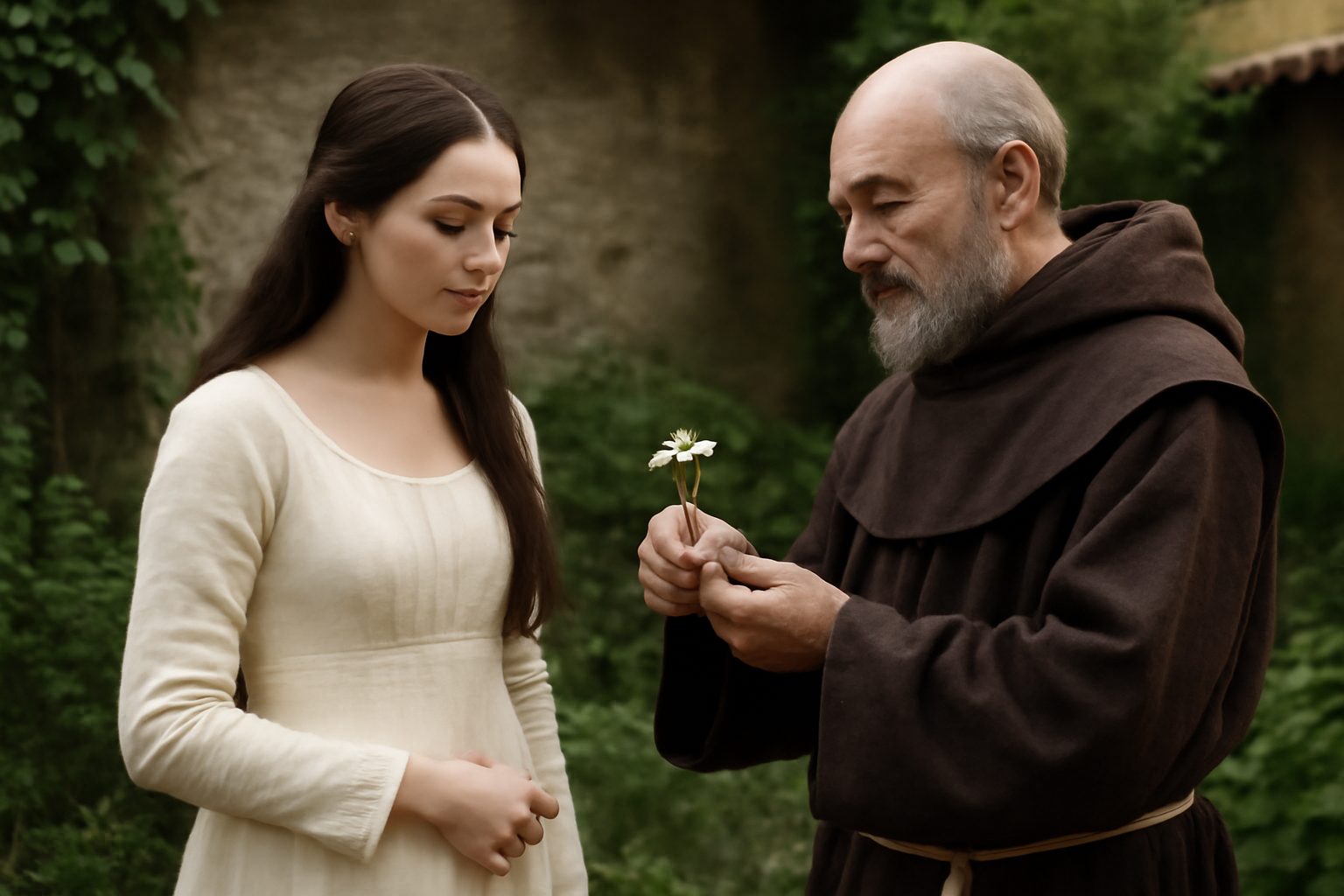
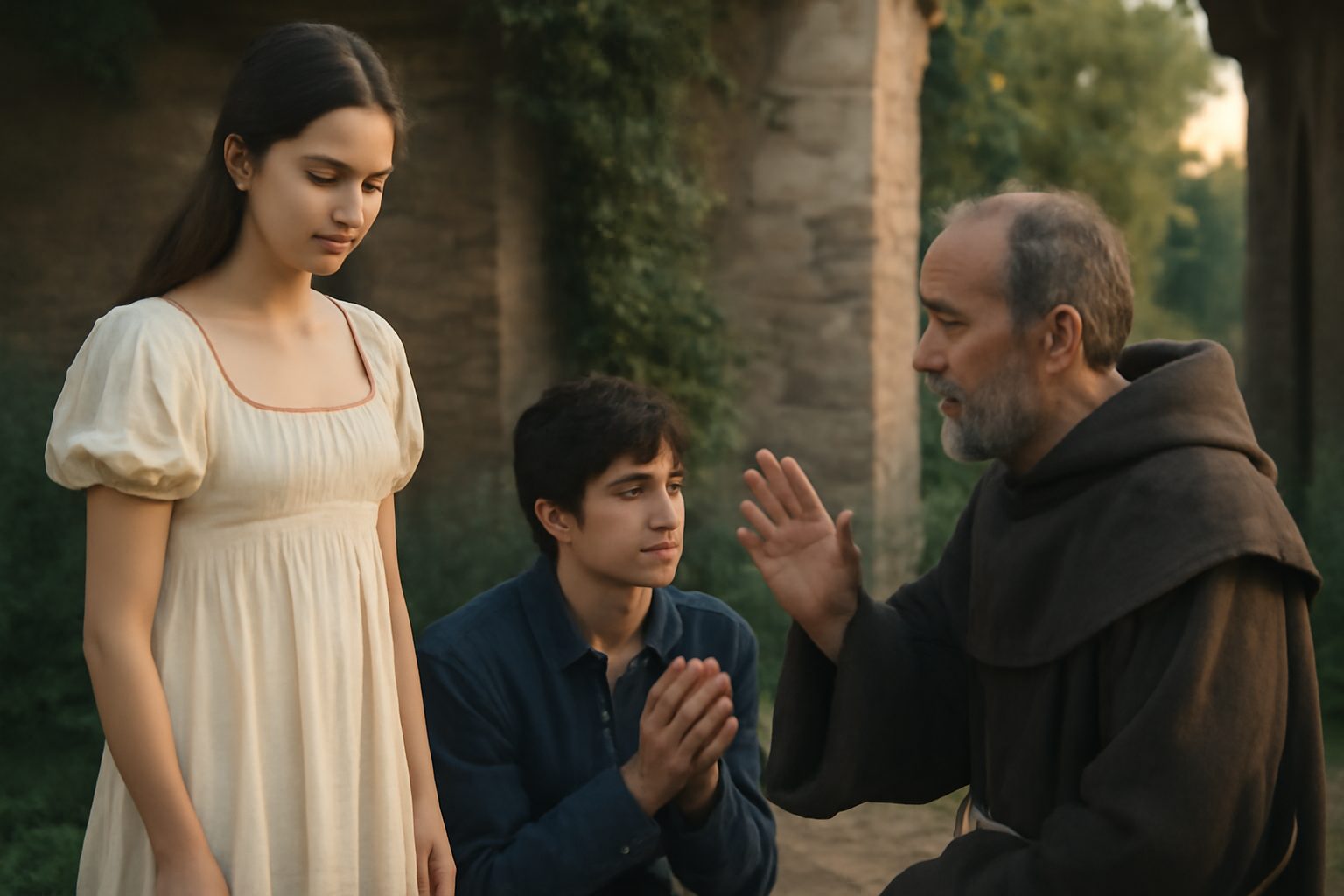
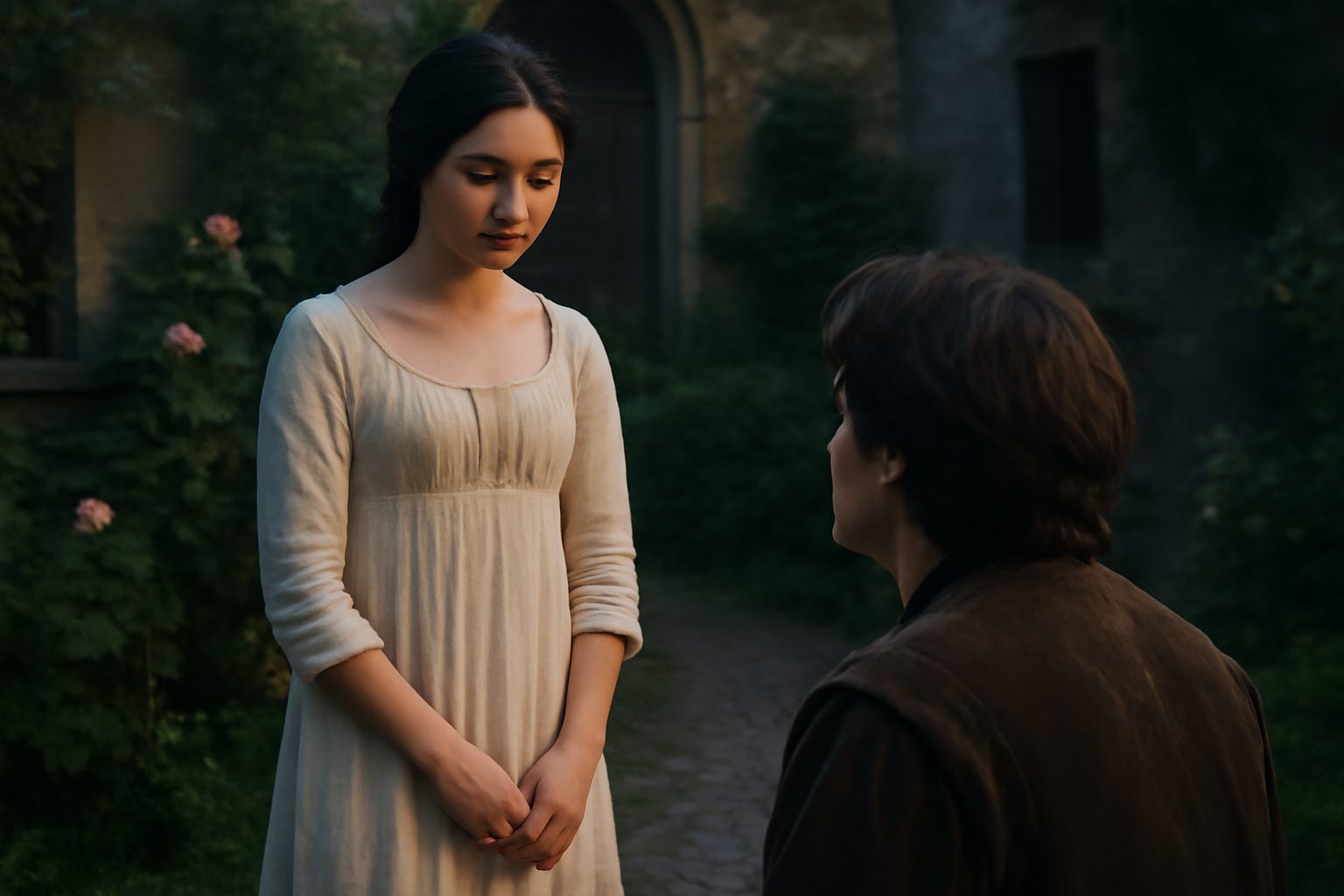
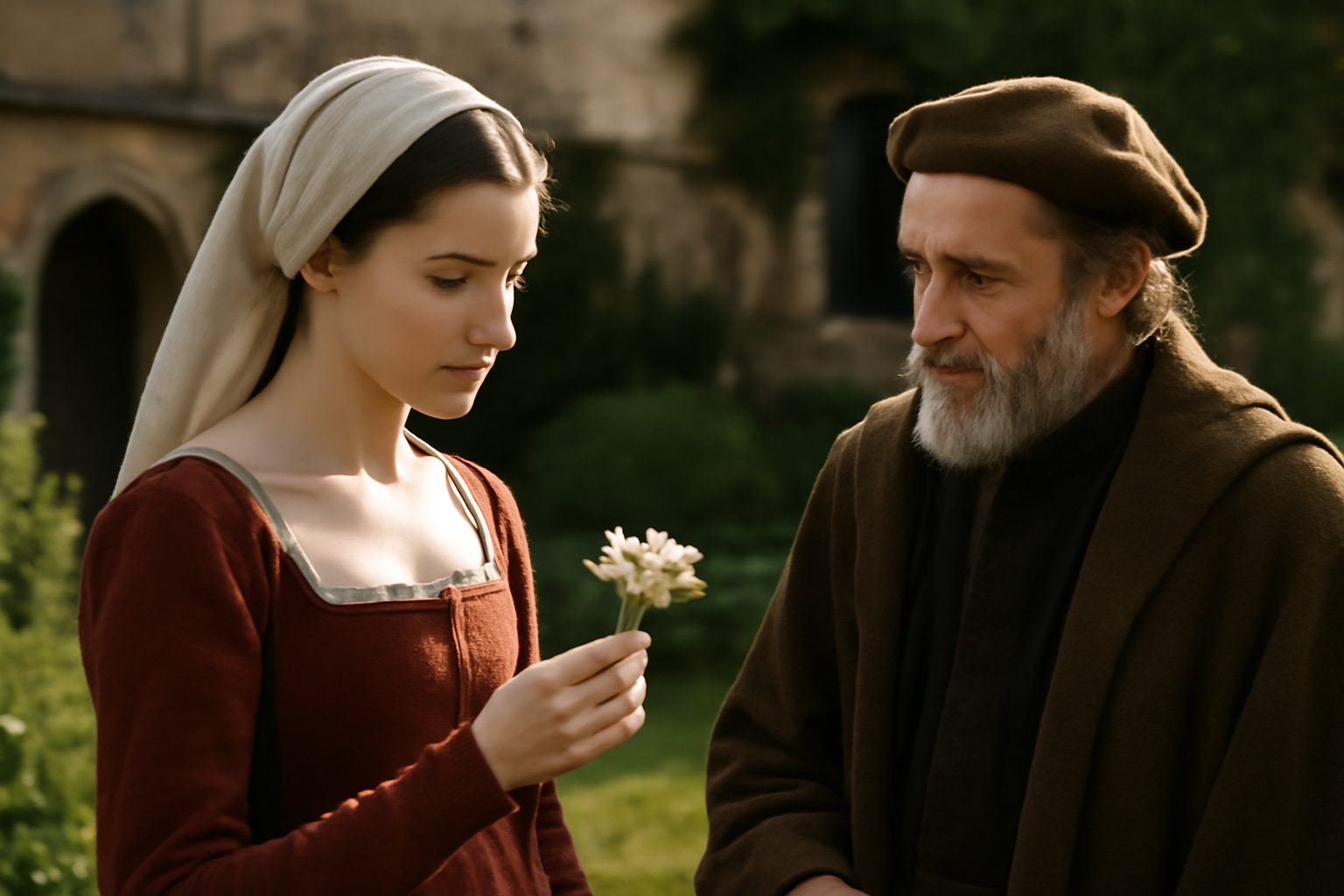
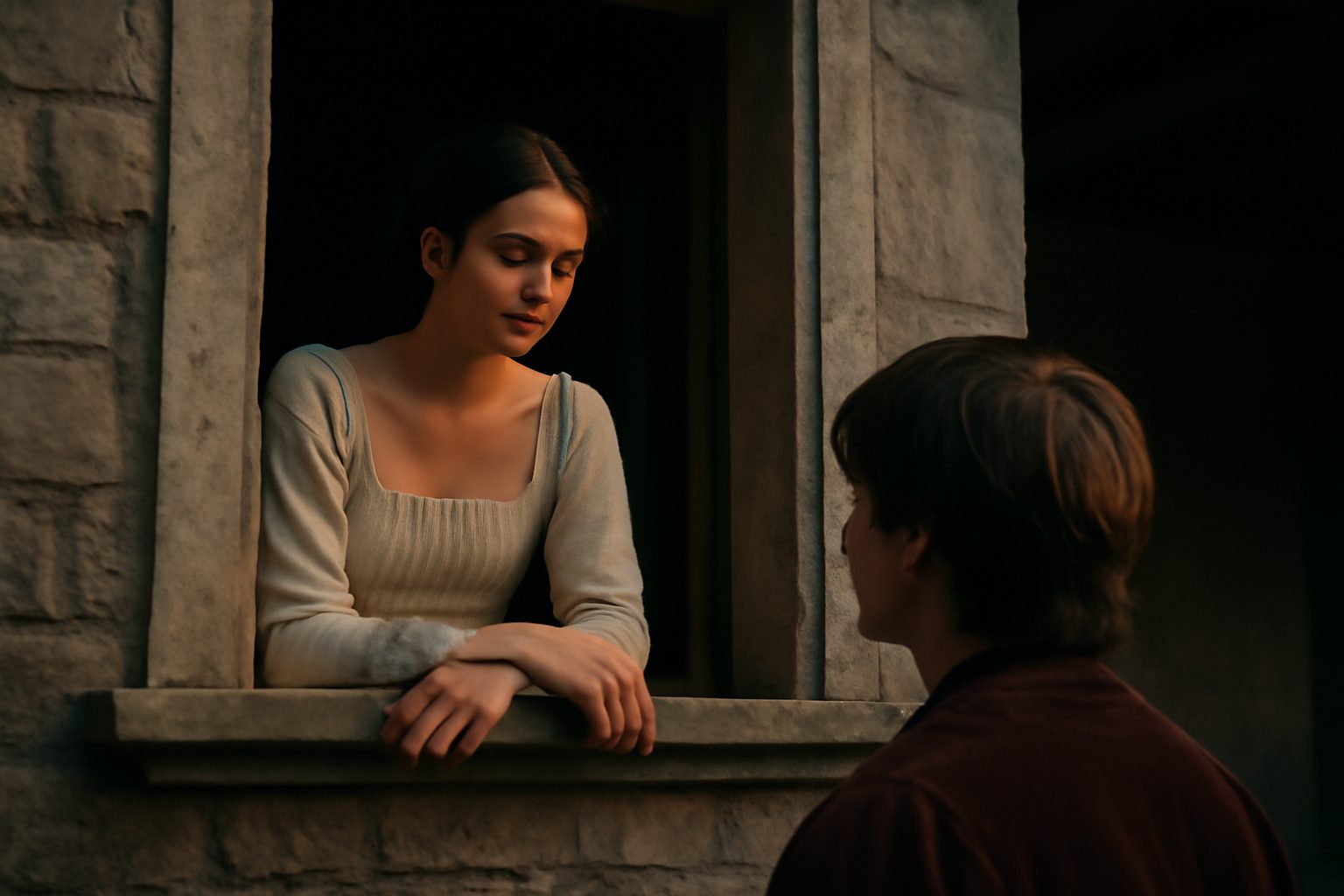
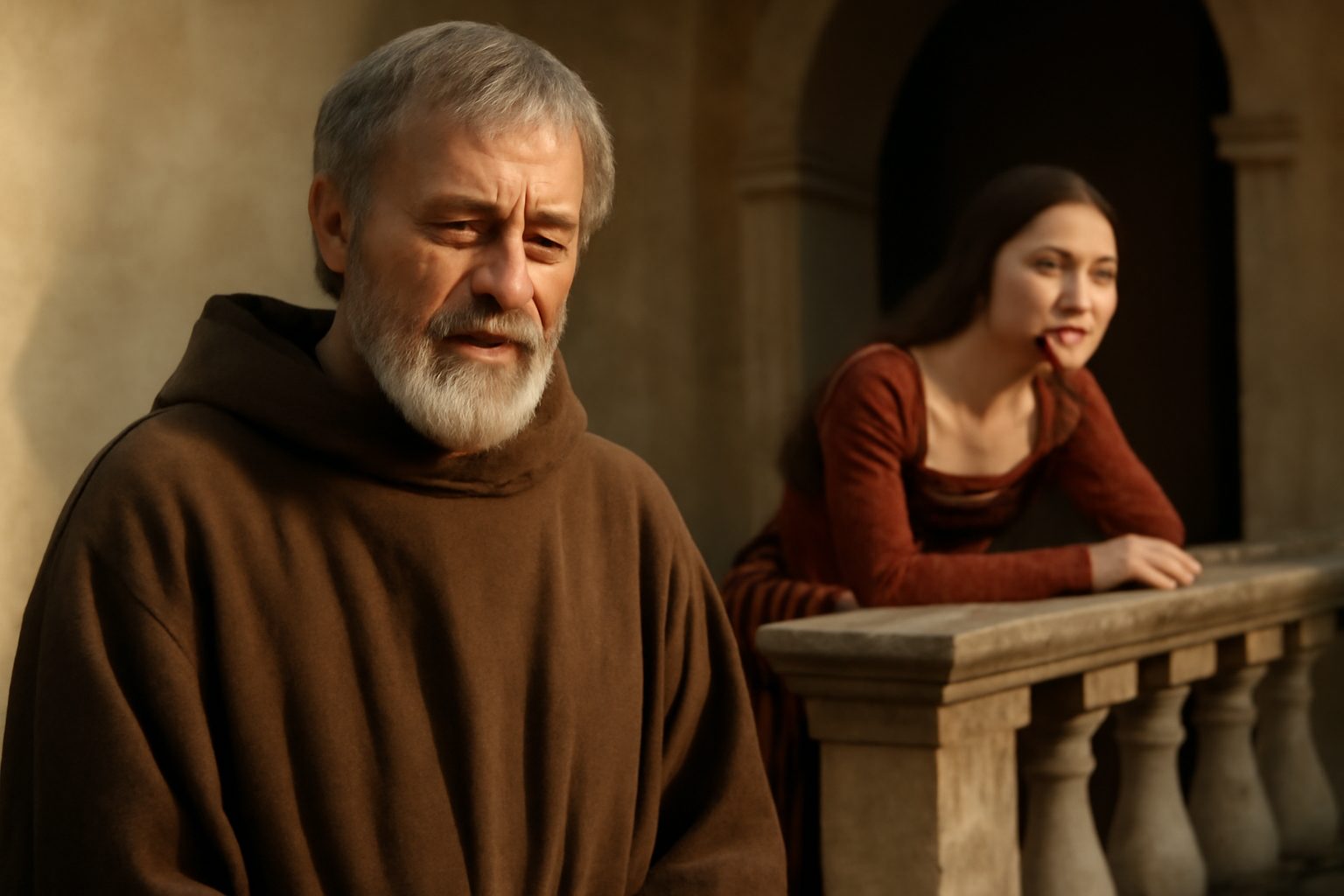
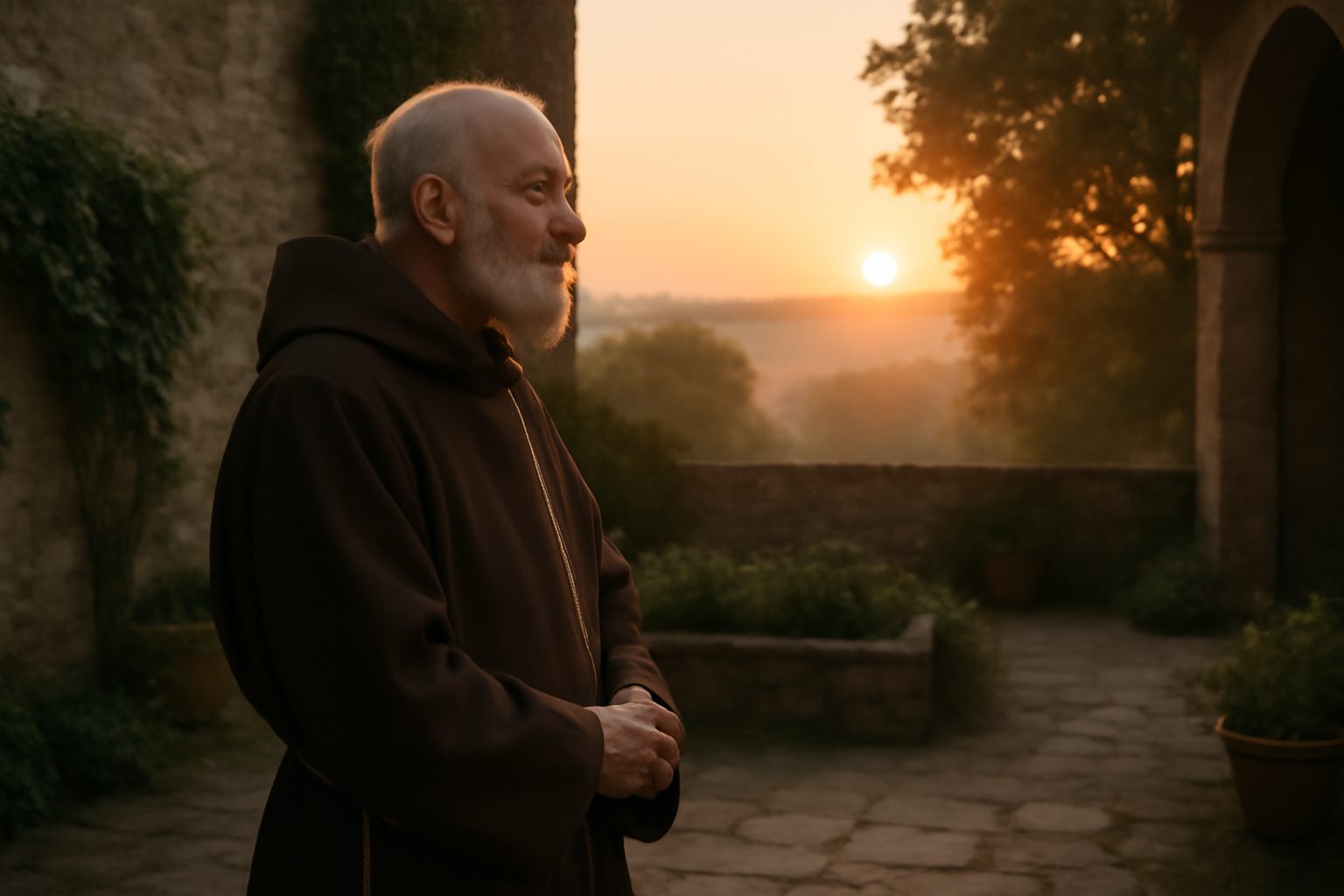
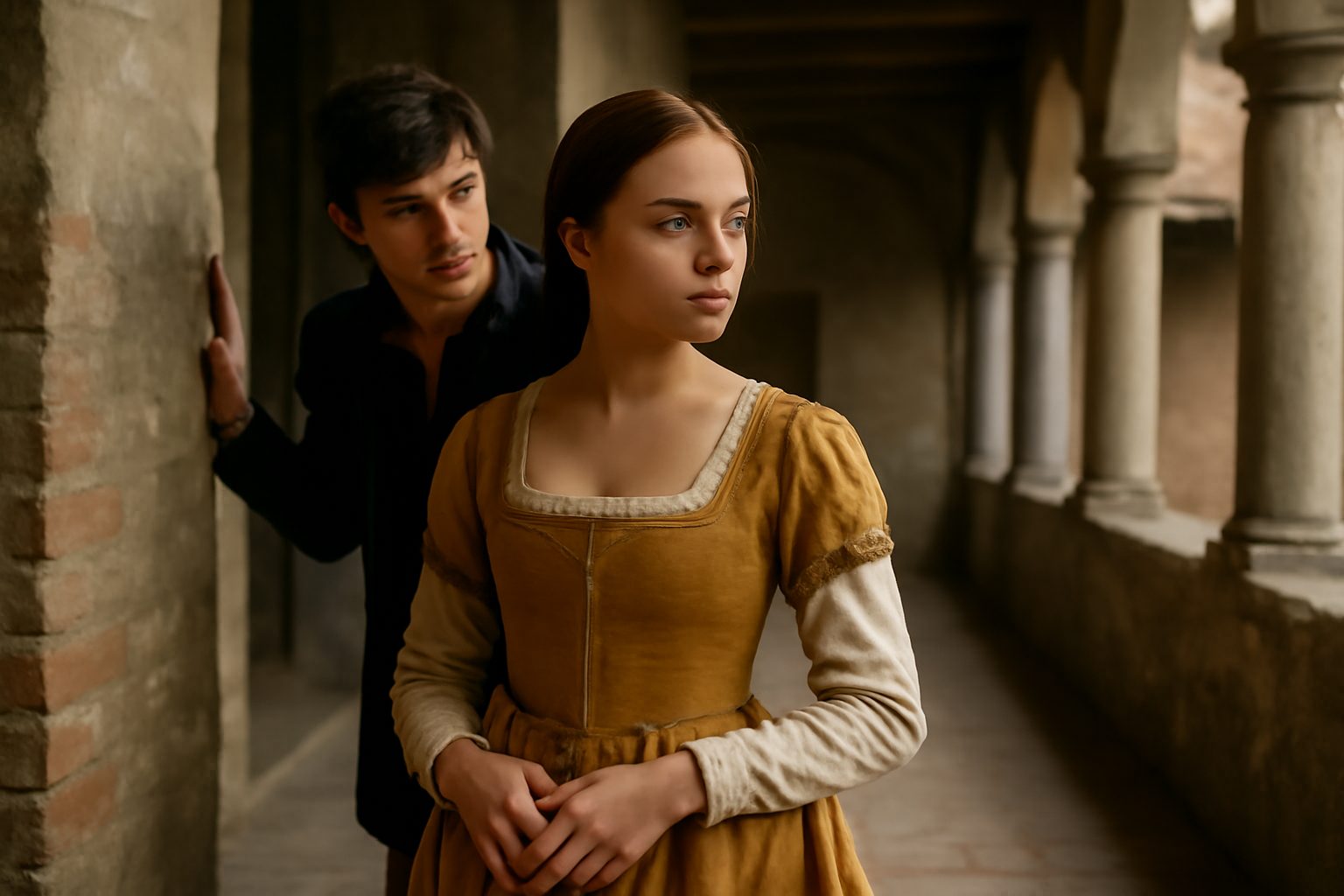
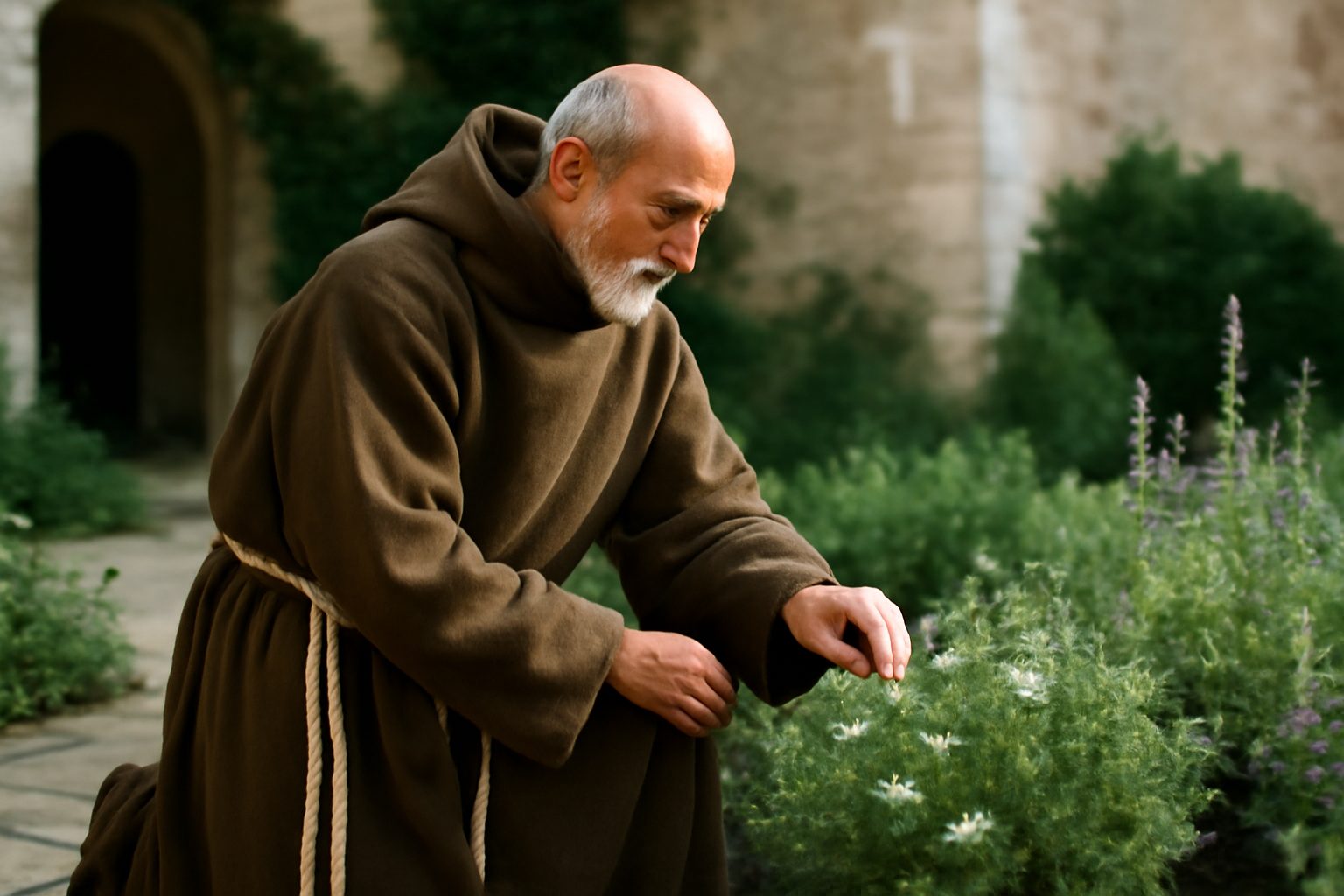
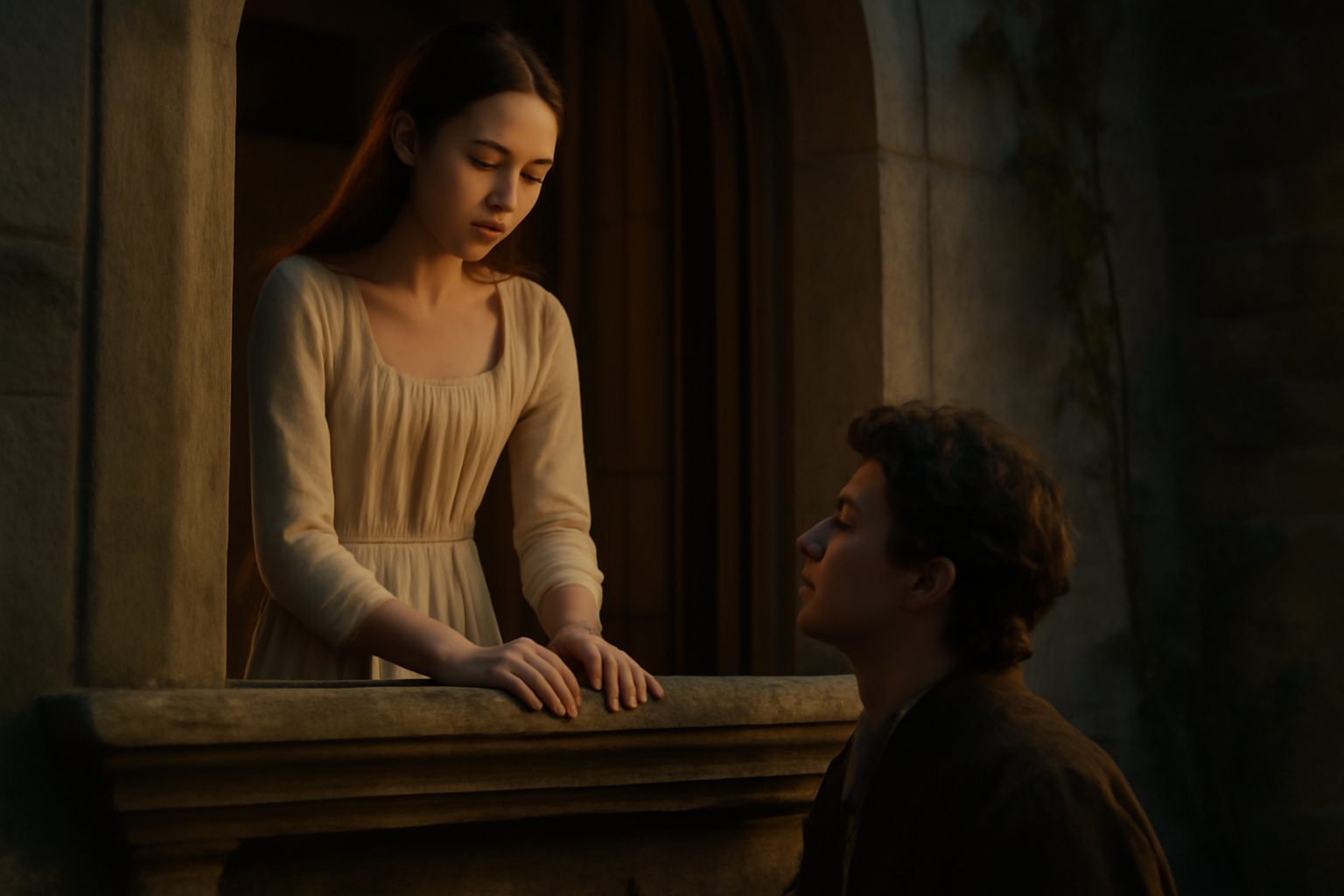
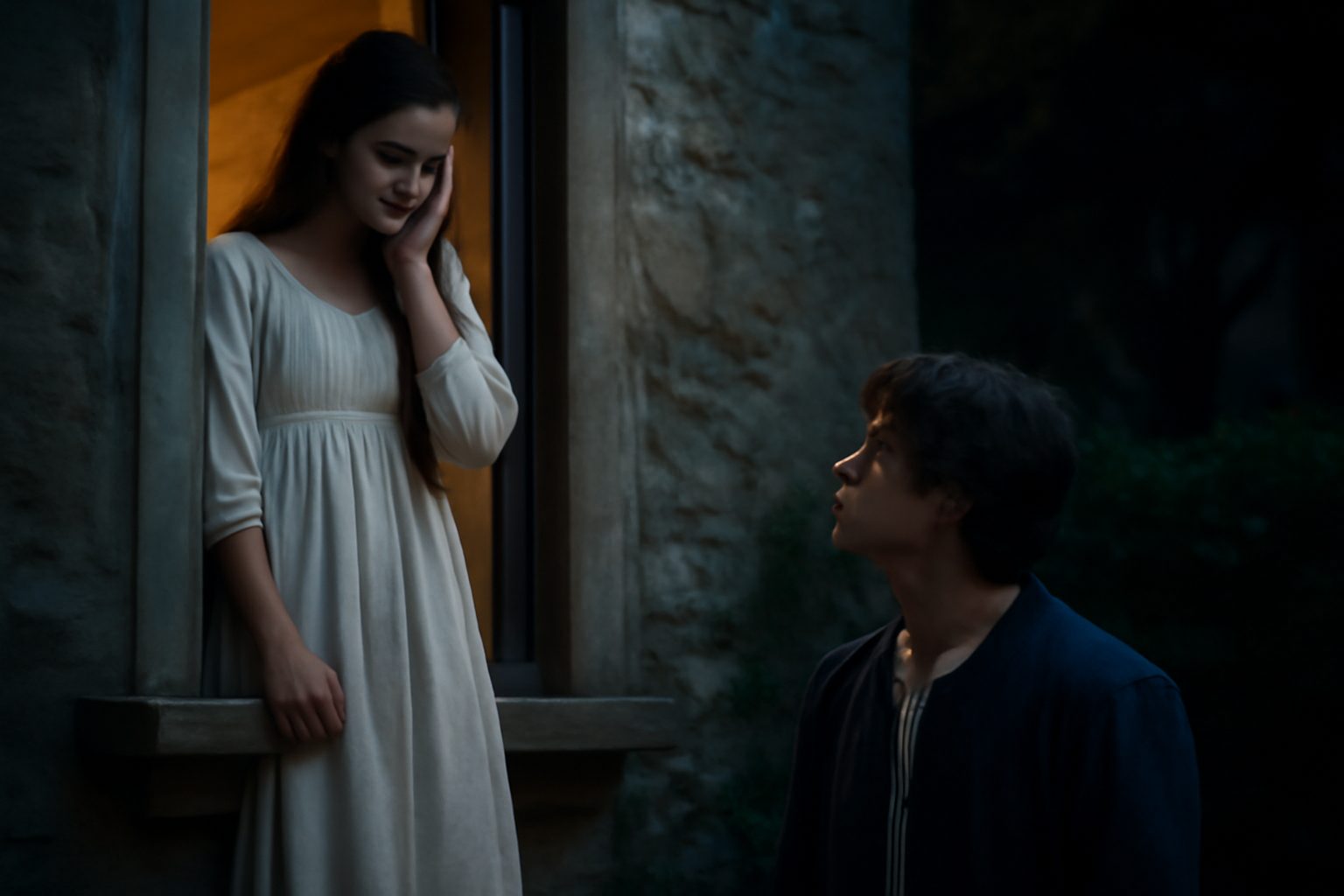
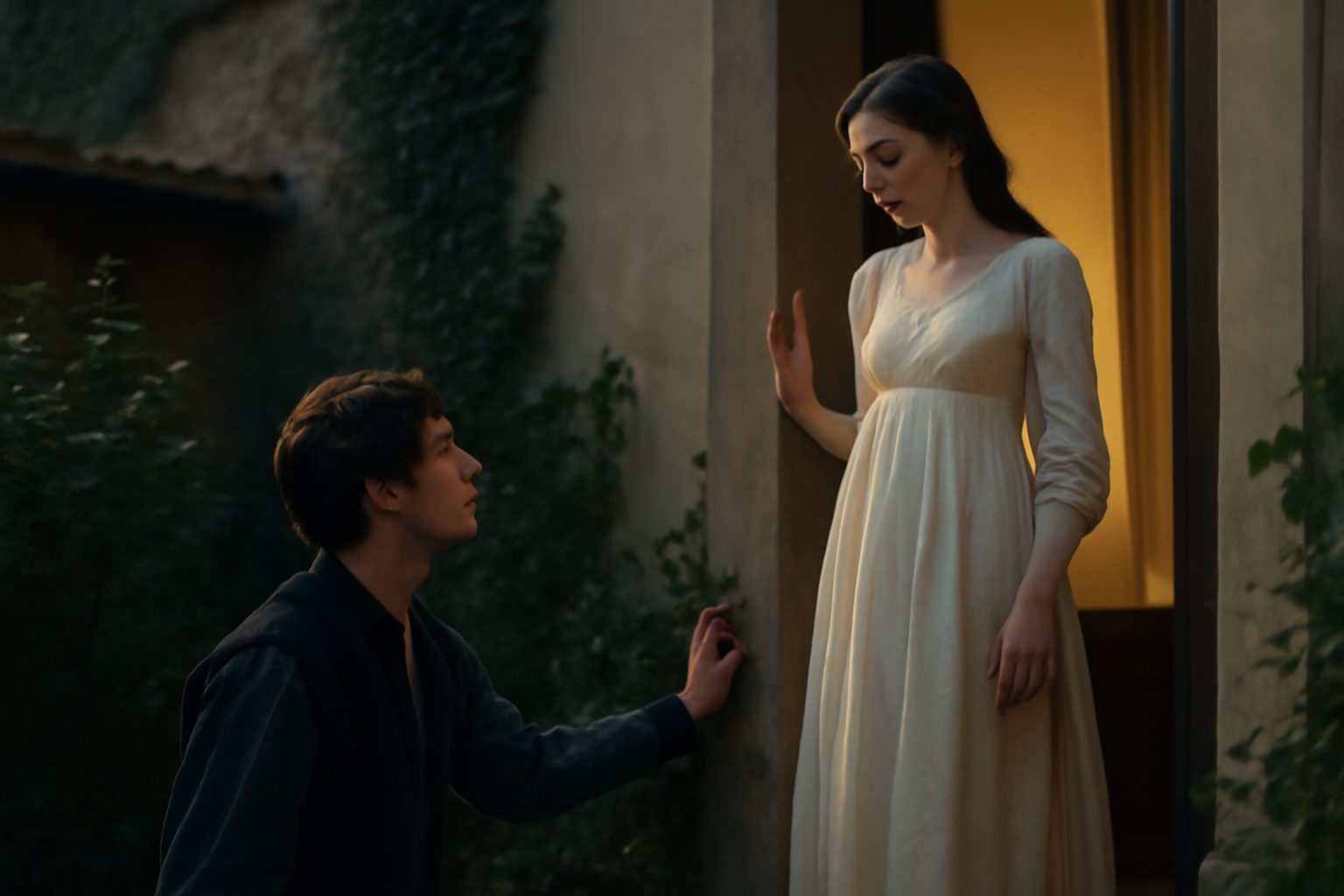
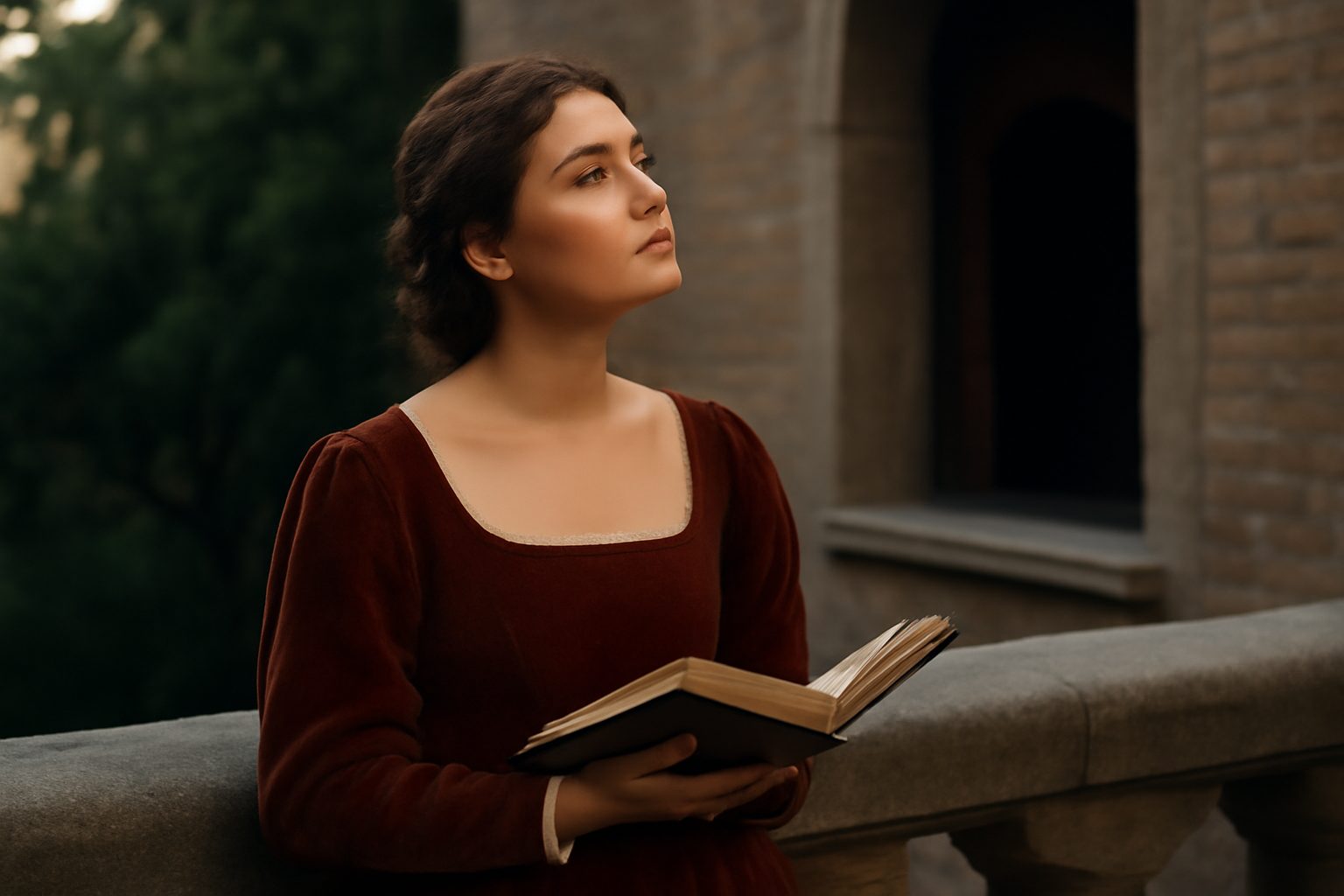
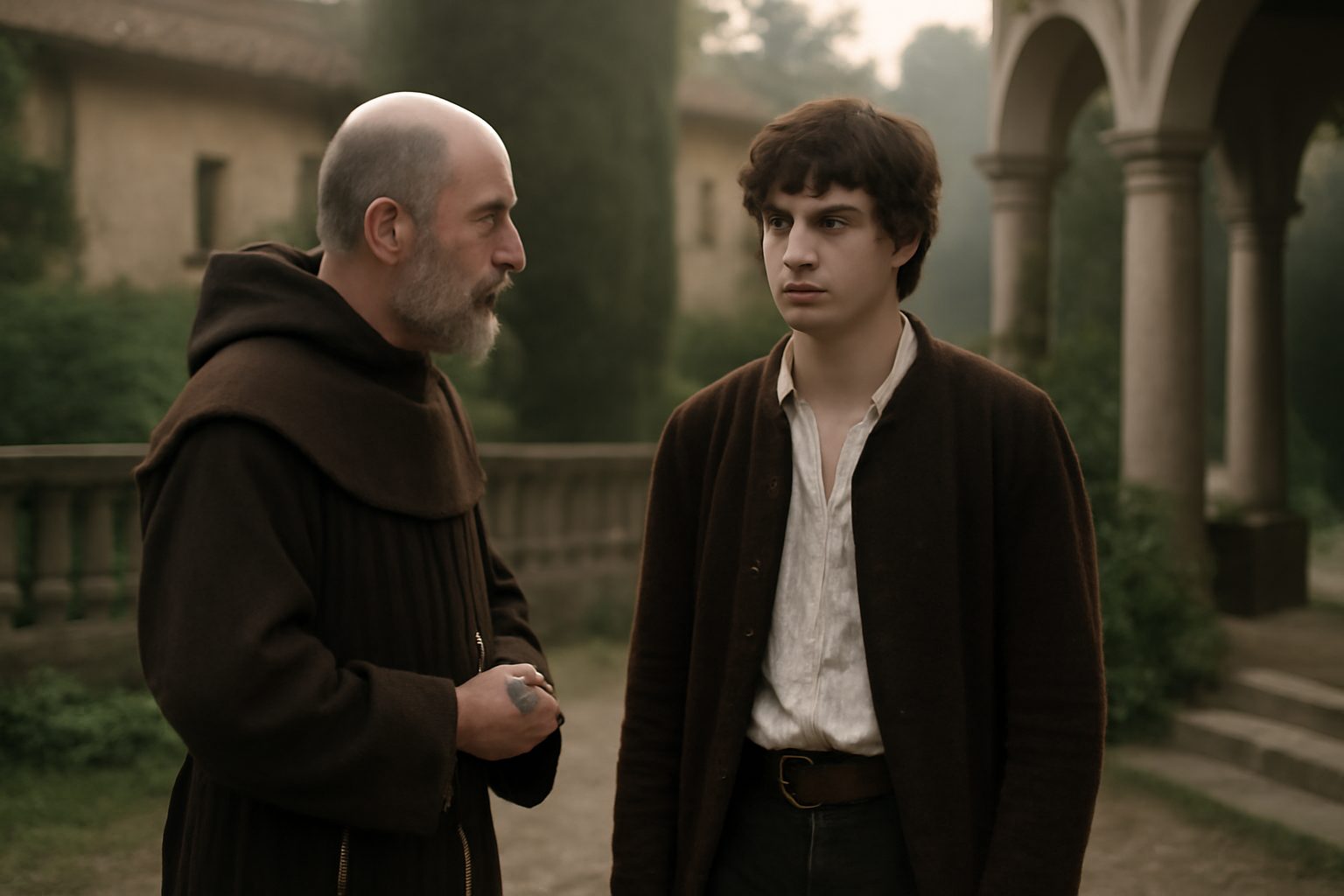
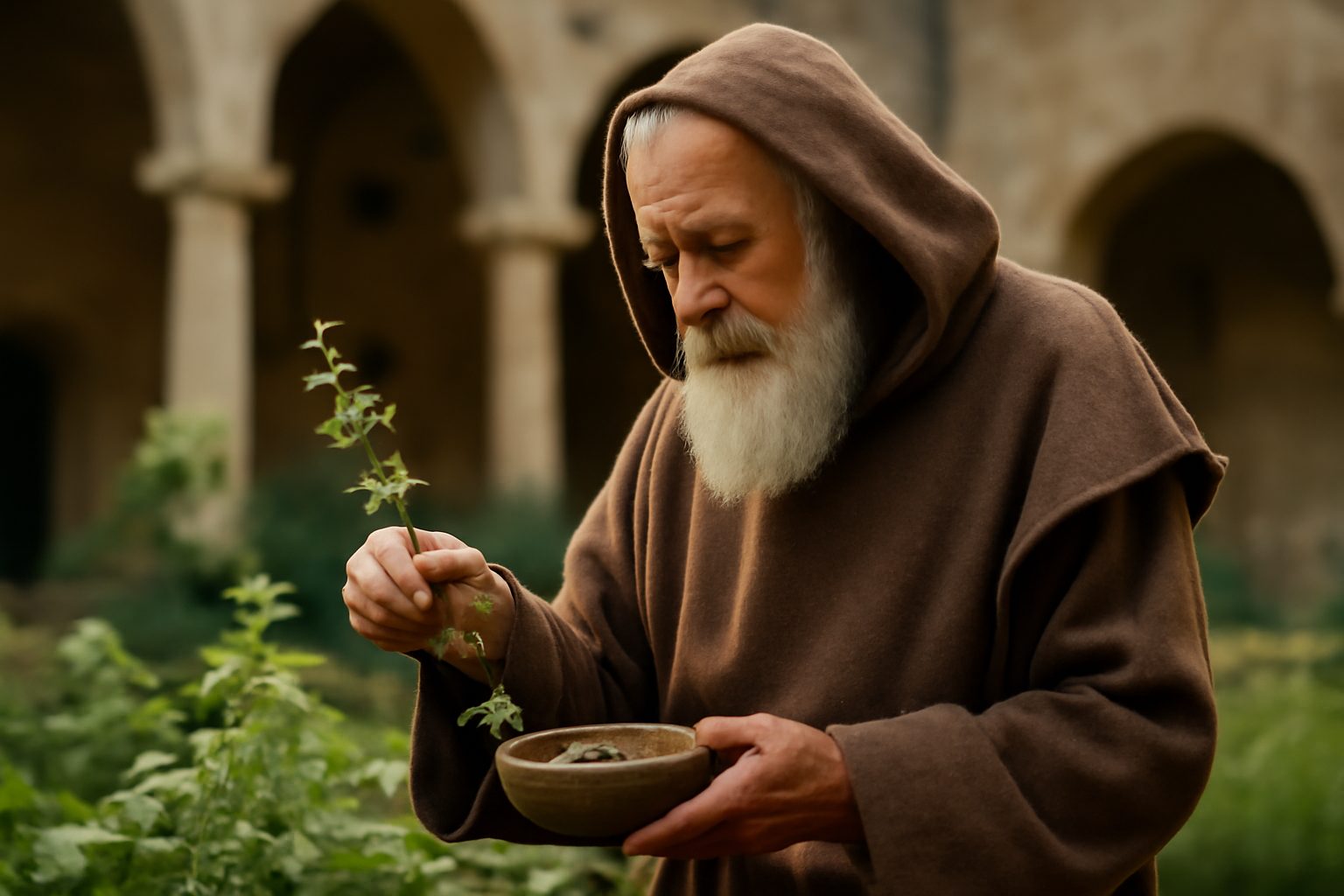
In Act 2, Scene 3 of Romeo and Juliet, Friar Lawrence speaks these words at dawn as he gathers herbs in his garden. The line marks the transition from night to day, symbolizing hope and new beginnings, just as Romeo has secretly married Juliet and seeks the Friar's help. The contrast between the smiling morn and frowning night reflects the play's recurring themes of light and darkness, love and conflict.
Friar Laurence: "The grey-eyed morn smiles on the frowning night,"
In modern day english, we would say:
The morning with its gray eyes is dawning, replacing the dark, gloomy night.
Frequently Asked Questions
What does Friar Laurence compare the morning to in this line?
He compares the morning to a person smiling at the night.
How does Friar Laurence describe the night in this line?
He describes the night as frowning.
What color does Friar Laurence say the morning's eyes are?
He says the morning's eyes are grey.
Connections to other verses:
Connections to "The grey-eyed morn smiles on the frowning night"
The verse "The grey-eyed morn smiles on the frowning night" introduces the dawn as a gentle, personified force that dispels the darkness. This imagery of light overcoming darkness is echoed in Chequering the eastern clouds with streaks of light, which continues the description of the sunrise, painting the sky with light and reinforcing the transition from night to day.
Contrast and Natural Imagery
Friar Laurence's observation of the morning connects thematically with his later reflections on duality in nature, such as in Poison hath residence and medicine power, where he discusses how the same substance can be both harmful and healing. This mirrors the contrast between the "smiling" morn and "frowning" night, emphasizing the coexistence of opposites.
Transition and Renewal
The idea of transition in this verse aligns with The day to cheer and night's dank dew to dry, which highlights the day's role in bringing warmth and drying the remnants of the night, further developing the motif of renewal that permeates the scene, especially as Romeo seeks a new beginning with Juliet.
Emotional and Physical States
Friar Laurence's focus on natural cycles parallels his concern for Romeo's emotional state, as seen in Thou art up-roused by some distemperature, where he questions Romeo's agitated condition, subtly linking the external natural order with internal human turmoil.
Foreshadowing and Fate
The imagery of light and dark in this verse also foreshadows the play's broader themes of love and conflict, echoed in lines like To turn your households' rancour to pure love, where Friar Laurence hopes to transform the feud through Romeo and Juliet's union, much as the morn transforms the night.