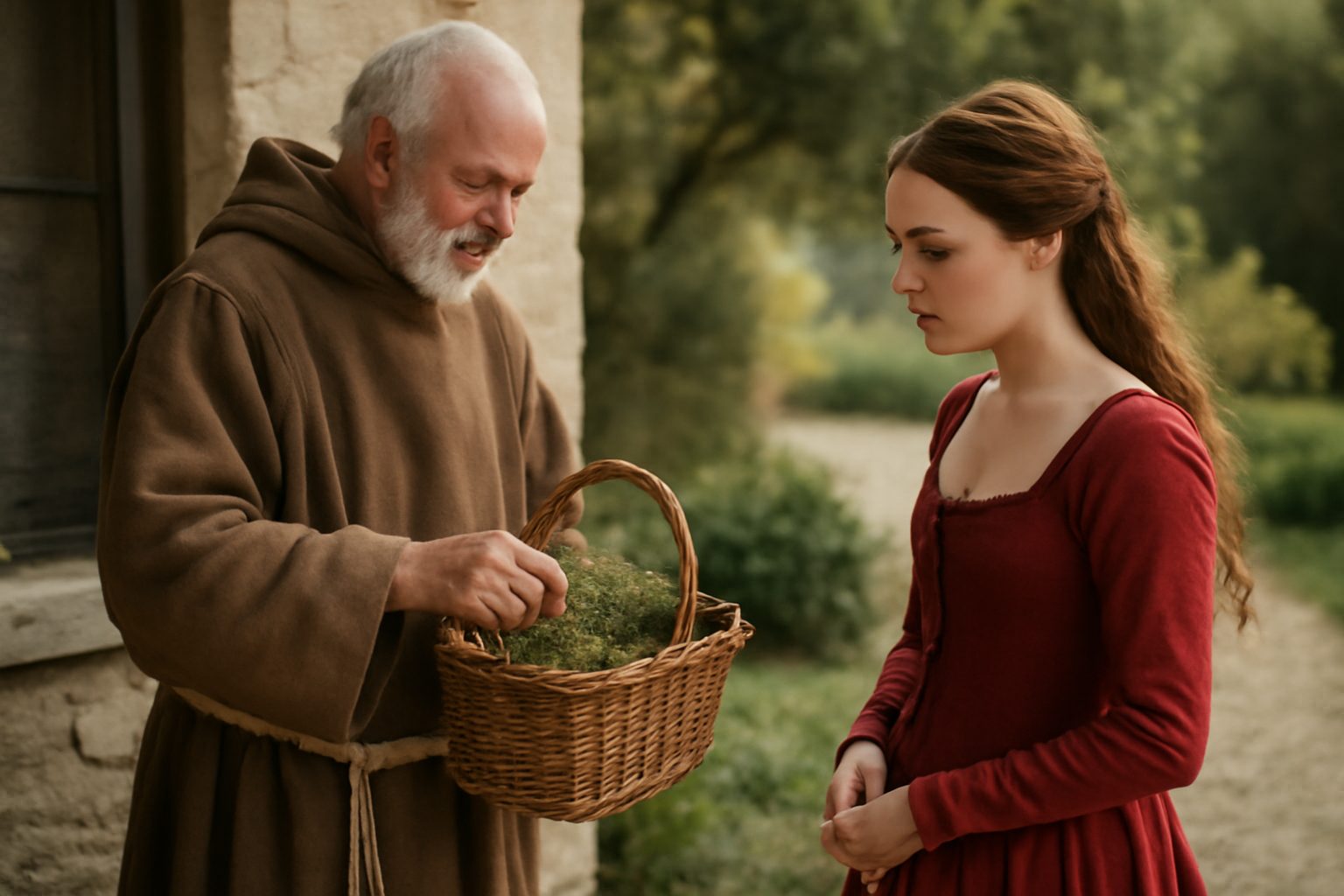
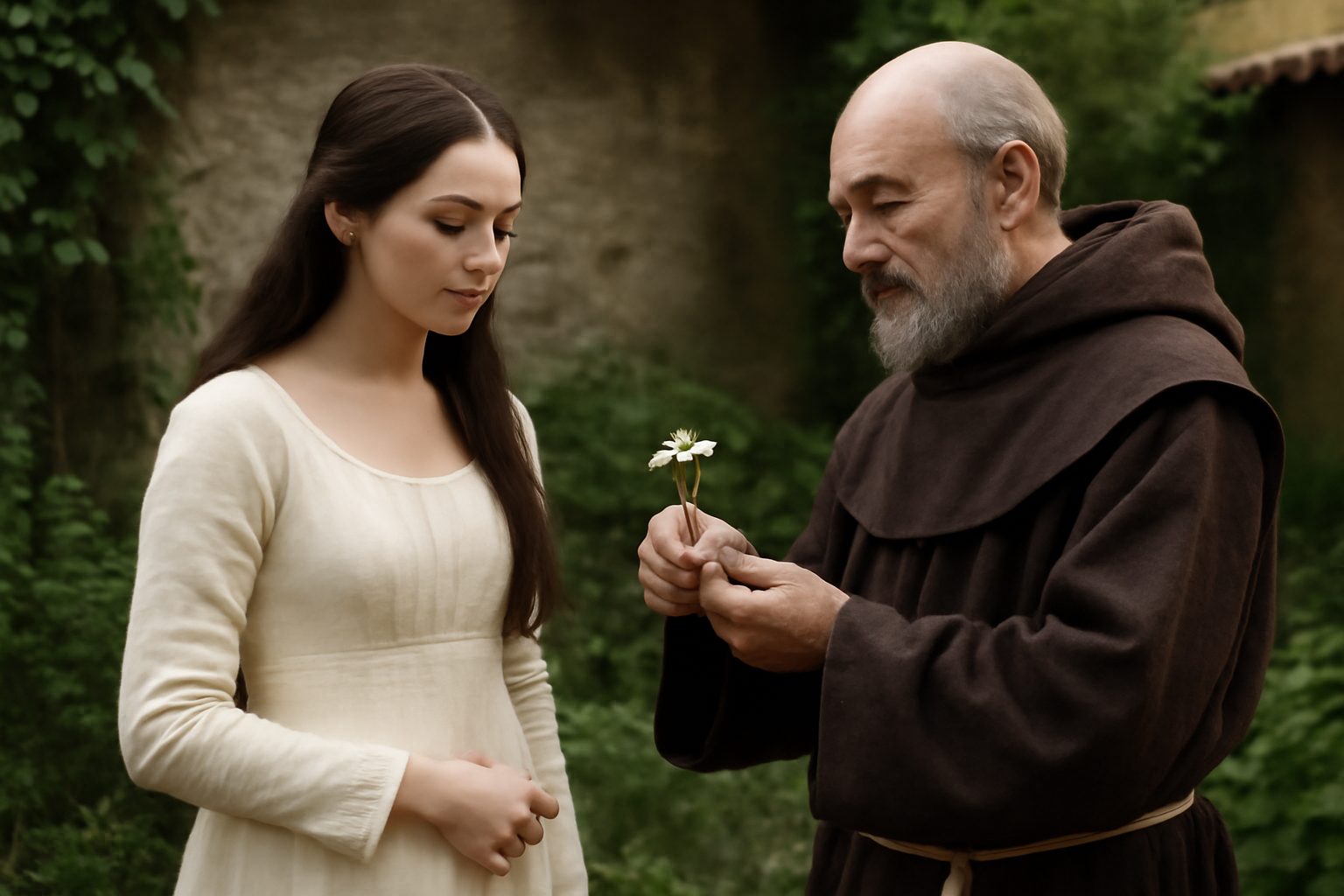
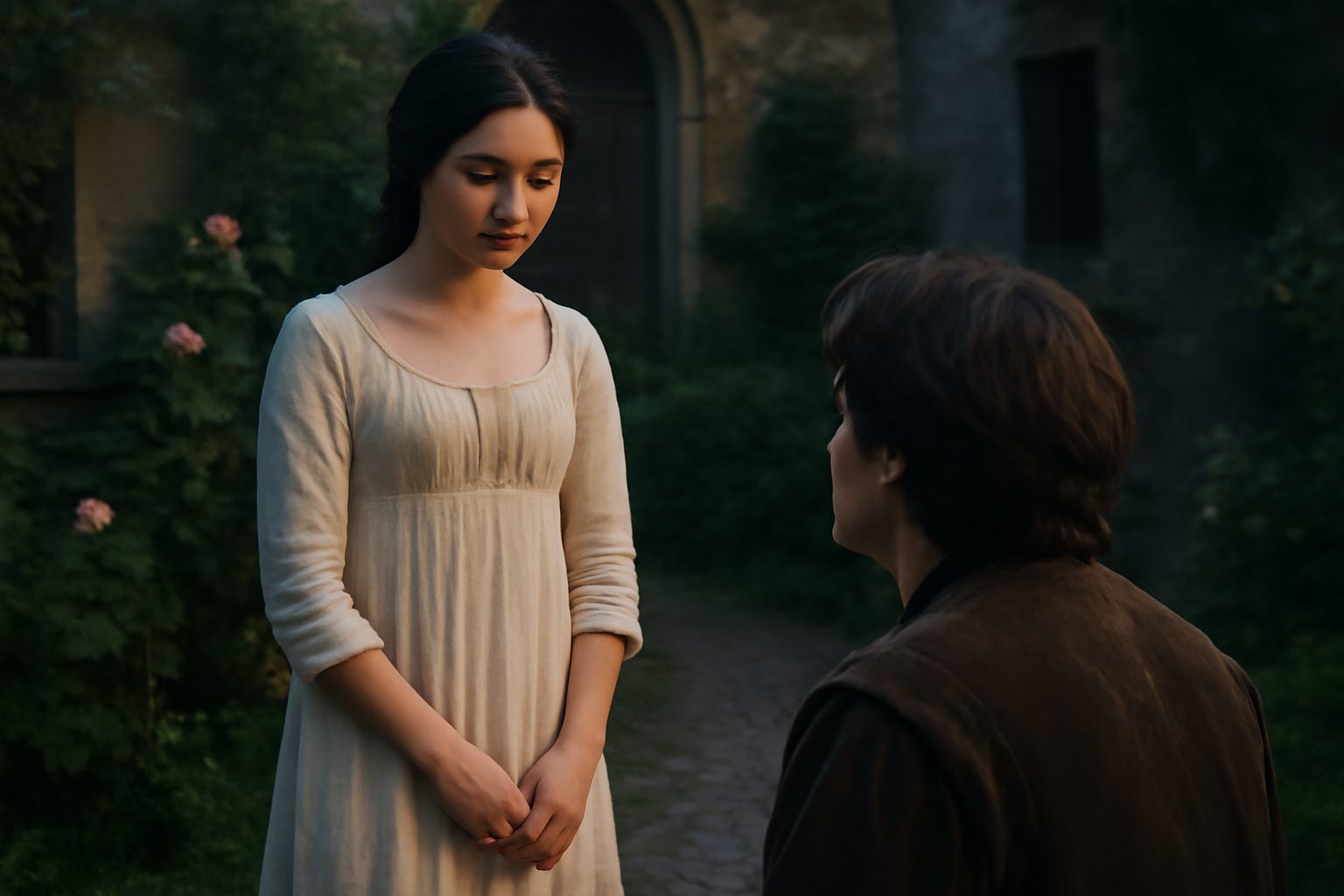
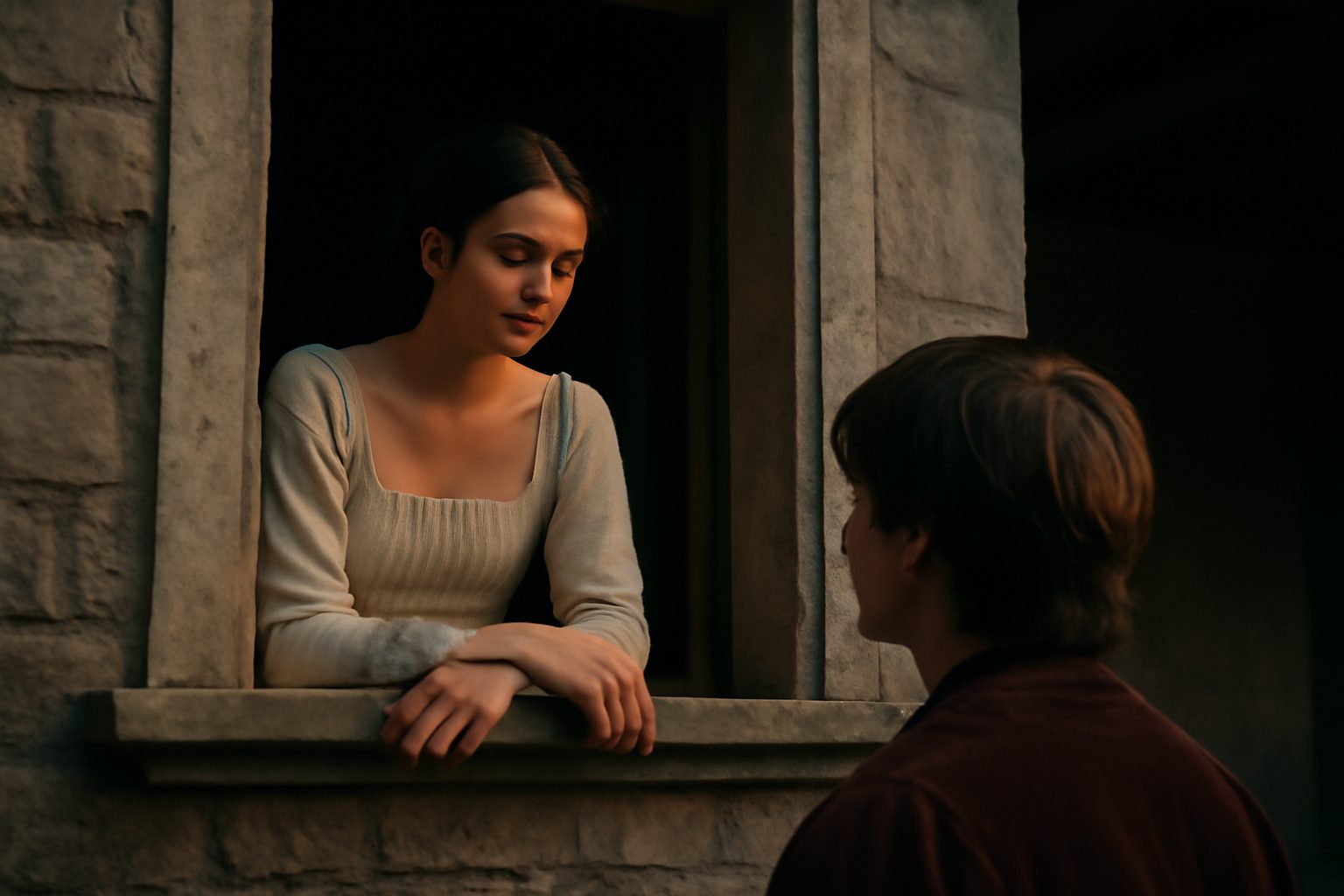
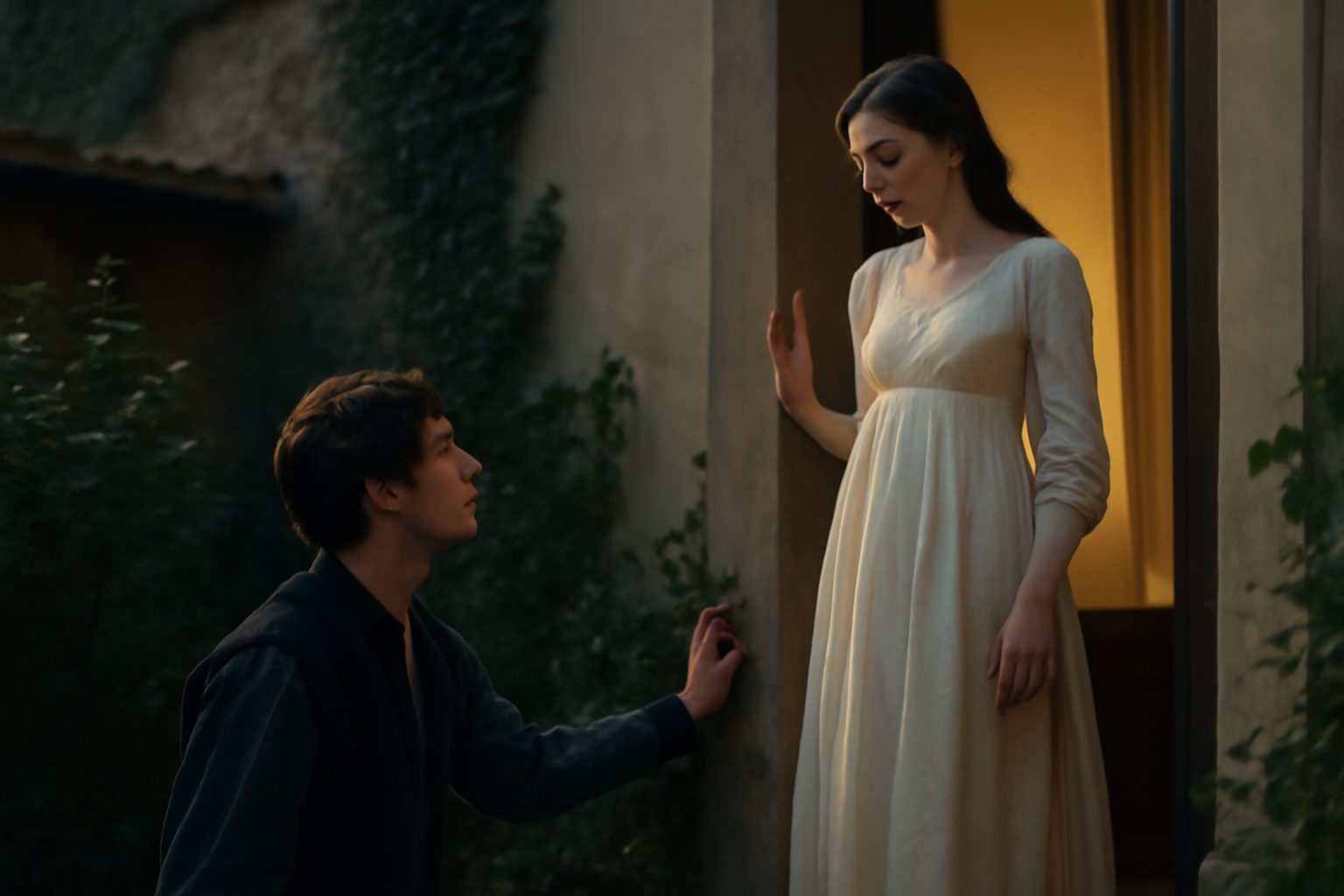
In Act 2, Scene 3 of Romeo and Juliet, Romeo speaks these words to Friar Laurence after abandoning his infatuation with Rosaline and declaring his newfound love for Juliet. The friar, surprised by Romeo's sudden change of heart, lightly scolds him for his fickleness, prompting Romeo to defend the sincerity of his feelings. This moment captures Romeo's earnest passion as he seeks the friar's approval and assistance in marrying Juliet.
Romeo: "I pray thee, chide not; she whom I love now"
In modern day english, we would say:
Please don’t scold me; the one I love now is different.
Frequently Asked Questions
Who is Romeo talking to in this line?
Romeo is talking to Friar Laurence.
What does Romeo ask the person not to do?
Romeo asks Friar Laurence not to scold him.
Who is Romeo referring to when he says 'she whom I love now'?
Romeo is referring to Juliet, his new love.
Connections to other verses:
Connections to "I pray thee, chide not; she whom I love now"
This line, spoken by Romeo to Friar Laurence, serves as a plea for understanding and acceptance of his new love for Juliet. It directly responds to the Friar's earlier chiding and skepticism about Romeo's sudden shift in affection.
Response to Reproach
Romeo's request not to be scolded follows Friar Laurence's expression of astonishment at Romeo's changed demeanor in "Holy Saint Francis, what a change is here!" and his pointed question in "God pardon sin! wast thou with Rosaline?", highlighting the Friar's disbelief at Romeo's rapid emotional transition.
Contrast with Past Love
The phrase "she whom I love now" explicitly contrasts with his previous infatuation with Rosaline, referenced in "Thou and these woes were all for Rosaline" and "I have forgot that name, and that name's woe", emphasizing Romeo's attempt to distance himself from his past sorrows.
Affirmation of New Commitment
This verse aligns with Romeo's declaration of his current love's mutuality in "As mine on hers, so hers is set on mine" and his earnest request for marriage in "That thou consent to marry us to-day", showcasing his resolve and sincerity toward Juliet.
Friar's Evolving Perspective
Friar Laurence's initial admonishment, such as in "For doting, not for loving, pupil mine", gradually shifts as he considers the potential for this new love to mend familial strife, hinted in "To turn your households' rancour to pure love", which contextualizes Romeo's plea within the Friar's broader moral and pragmatic considerations.