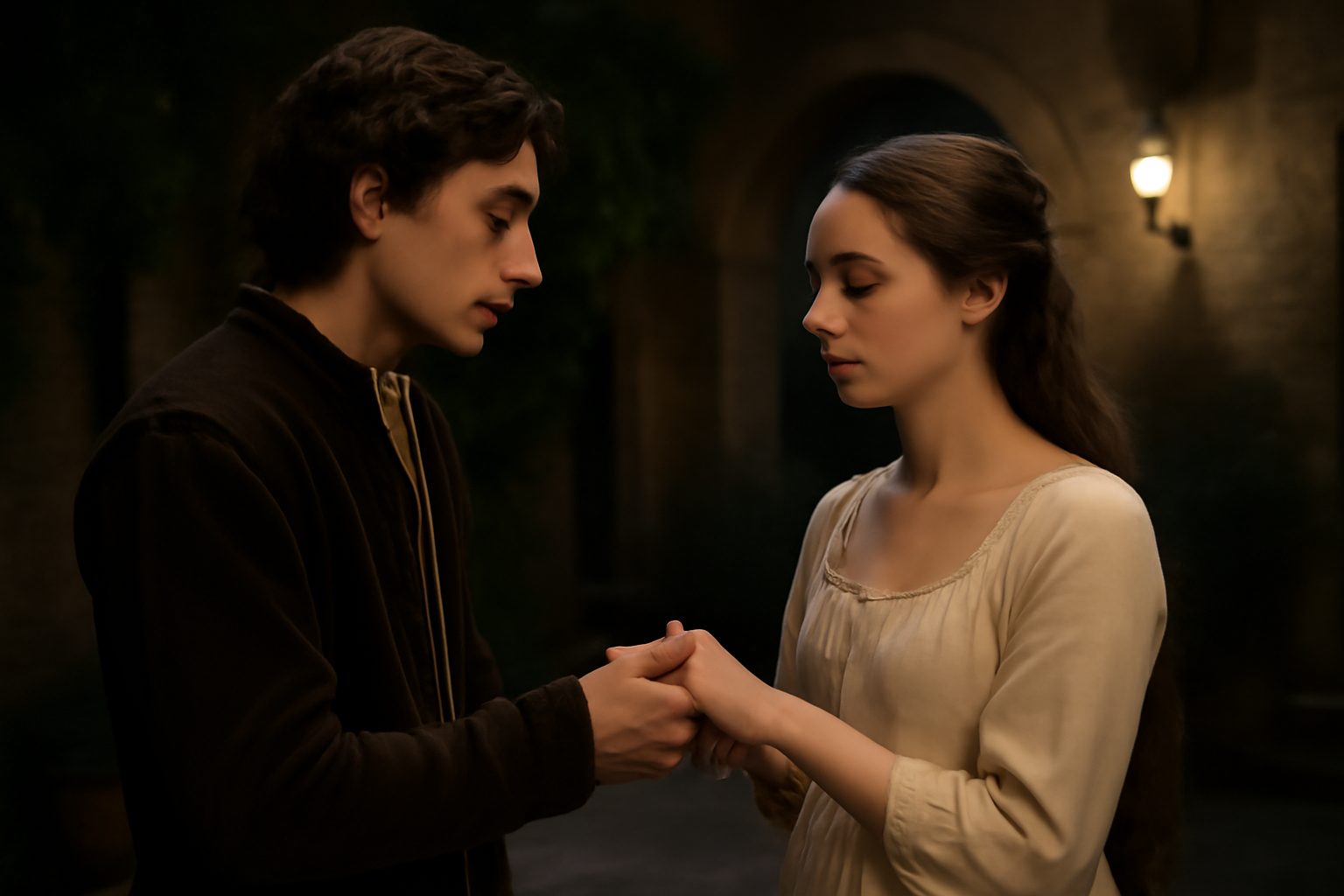
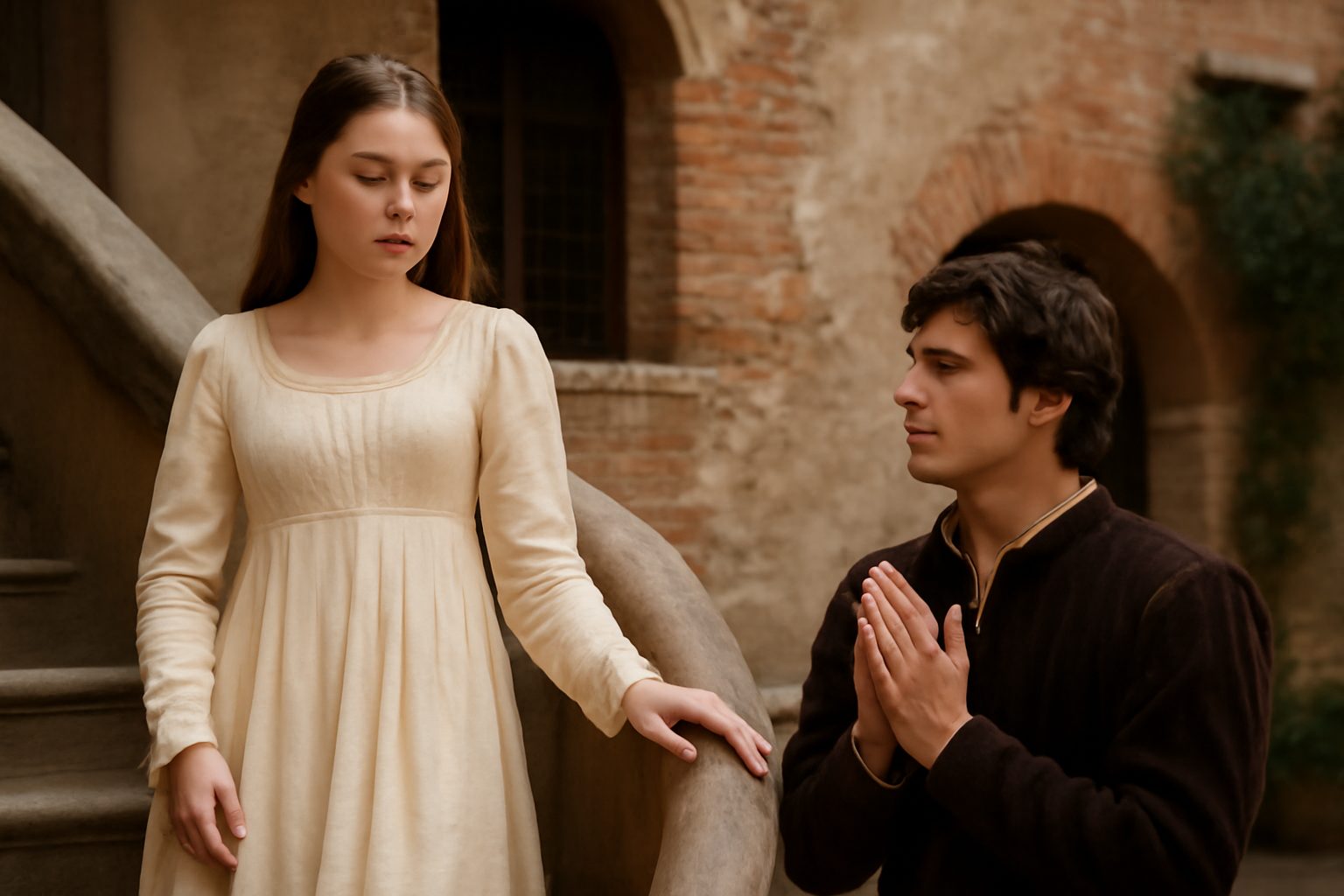
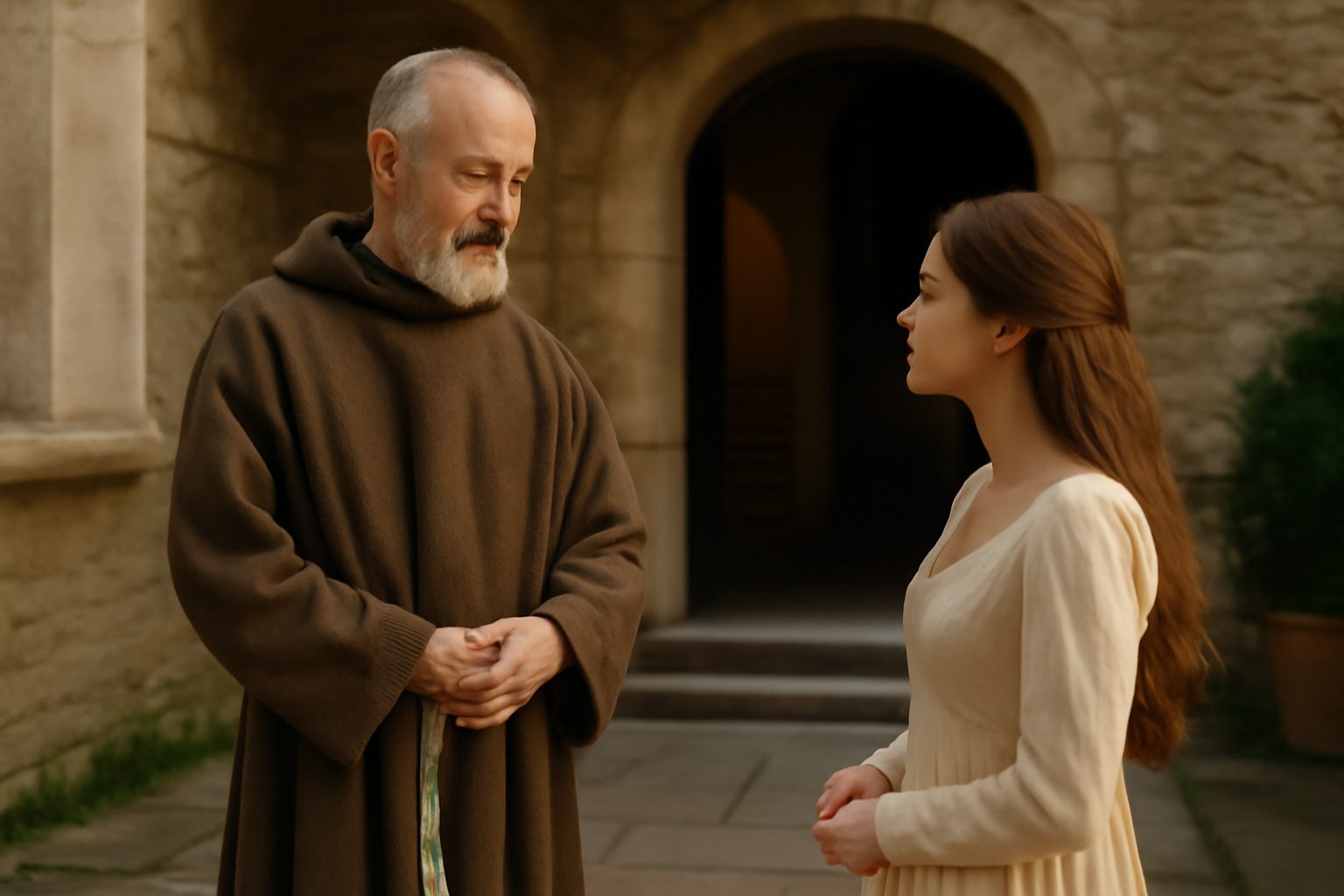
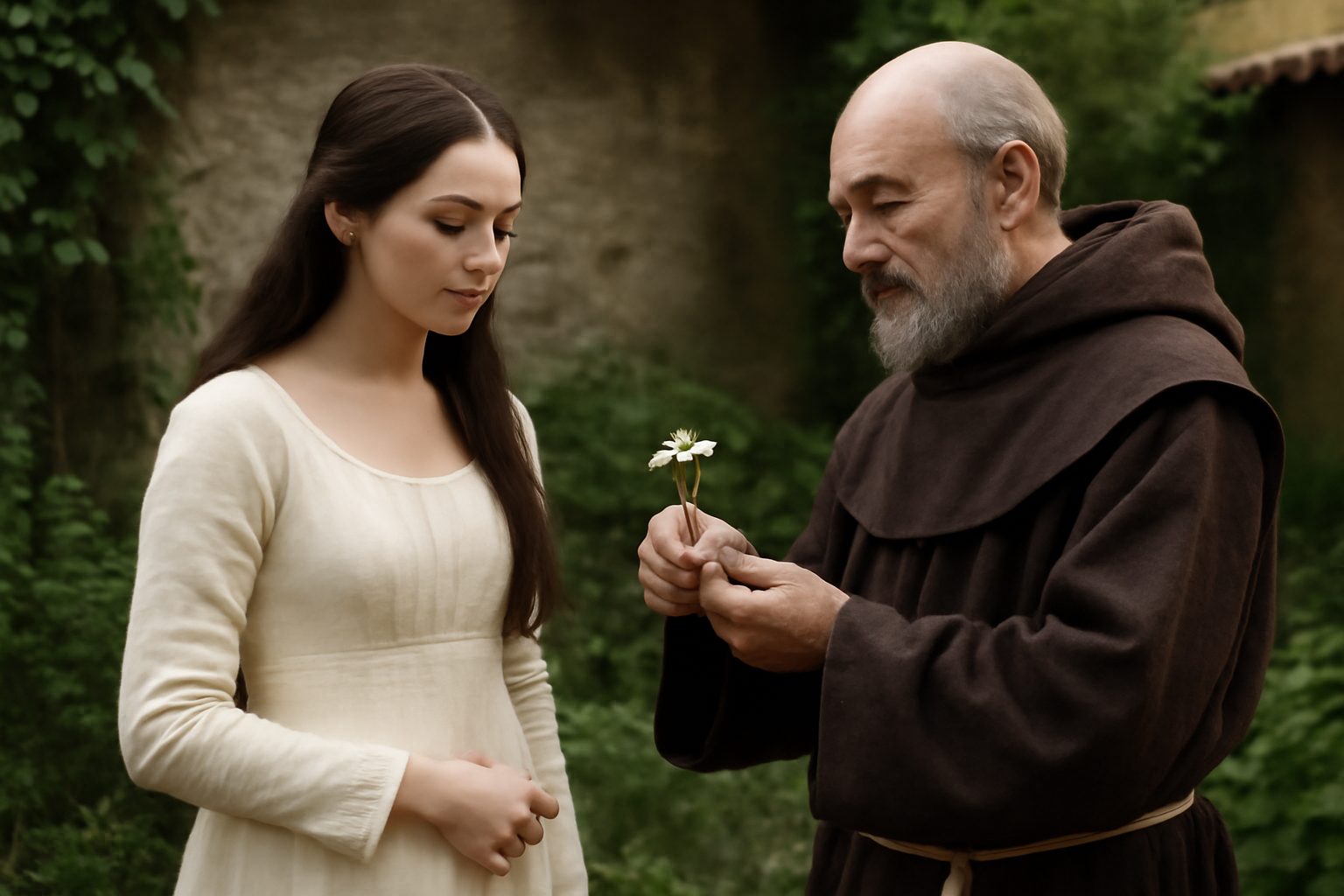
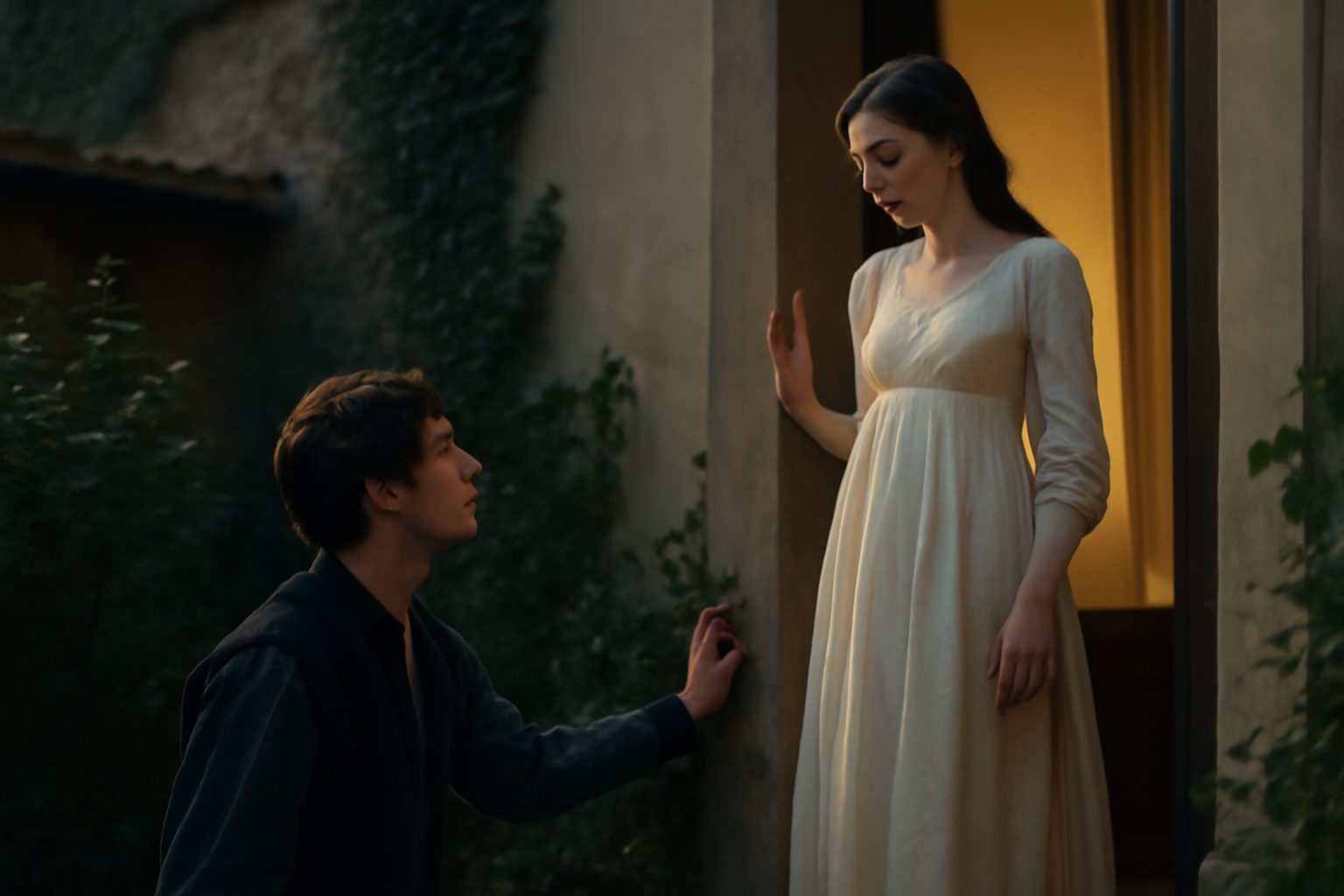
In Act 2, Scene 3 of Romeo and Juliet, Romeo visits Friar Laurence to share his newfound love for Juliet, having abruptly abandoned his infatuation with Rosaline. This line reveals Romeo's earnest declaration of his unwavering devotion, marking a pivotal moment as he seeks the Friar's help to marry Juliet. The scene underscores Romeo's impulsive passion and sets the stage for the secret union that drives the play's tragic events.
Romeo: "Then plainly know my heart's dear love is set"
In modern day english, we would say:
Simply know that the person I truly love is the one I have chosen.
Frequently Asked Questions
What is Romeo saying about his feelings in this line?
Romeo is saying that he has given his heart to someone he loves deeply.
Connections to other verses:
Connections to "Then plainly know my heart's dear love is set"
This verse is Romeo's direct confession to Friar Laurence about his new love for Juliet. It connects thematically and contextually to several other lines in the scene.
Direct Responses and Clarifications
Friar Laurence's initial suspicion and confusion about Romeo's change of heart are evident in God pardon sin! wast thou with Rosaline? and Is Rosaline, whom thou didst love so dear, highlighting the abrupt shift in Romeo's affections. Romeo's reply, I have forgot that name, and that name's woe, reinforces his declaration by dismissing his past love entirely.
Expressions of Mutual Love
The reciprocity of Romeo and Juliet's feelings is echoed in As mine on hers, so hers is set on mine, which directly parallels the mutual commitment stated in the original verse. Their swift exchange of vows is further described in We met, we woo'd and made exchange of vow, providing context for how their love was established.
Friar Laurence's Counsel and Action
Friar Laurence's practical response to Romeo's plea includes his agreement to marry them, as seen in In one respect I'll thy assistant be and his specific inquiry about the timing in By holy marriage: when and where and how. His warning about haste is encapsulated in Wisely and slow; they stumble that run fast, offering a counterpoint to Romeo's impulsive devotion.
Thematic Contrasts: Old Love vs. New
Friar Laurence's criticism of Romeo's previous infatuation with Rosaline is evident in For doting, not for loving, pupil mine and Thy love did read by rote and could not spell, drawing a distinction between shallow affection and the sincere love Romeo now claims for Juliet.
Broader Implications
The potential for their union to resolve family strife is noted in To turn your households' rancour to pure love, while the Friar's hope for a positive outcome is expressed in For this alliance may so happy prove, framing Romeo's declaration within the larger context of the play's conflicts.