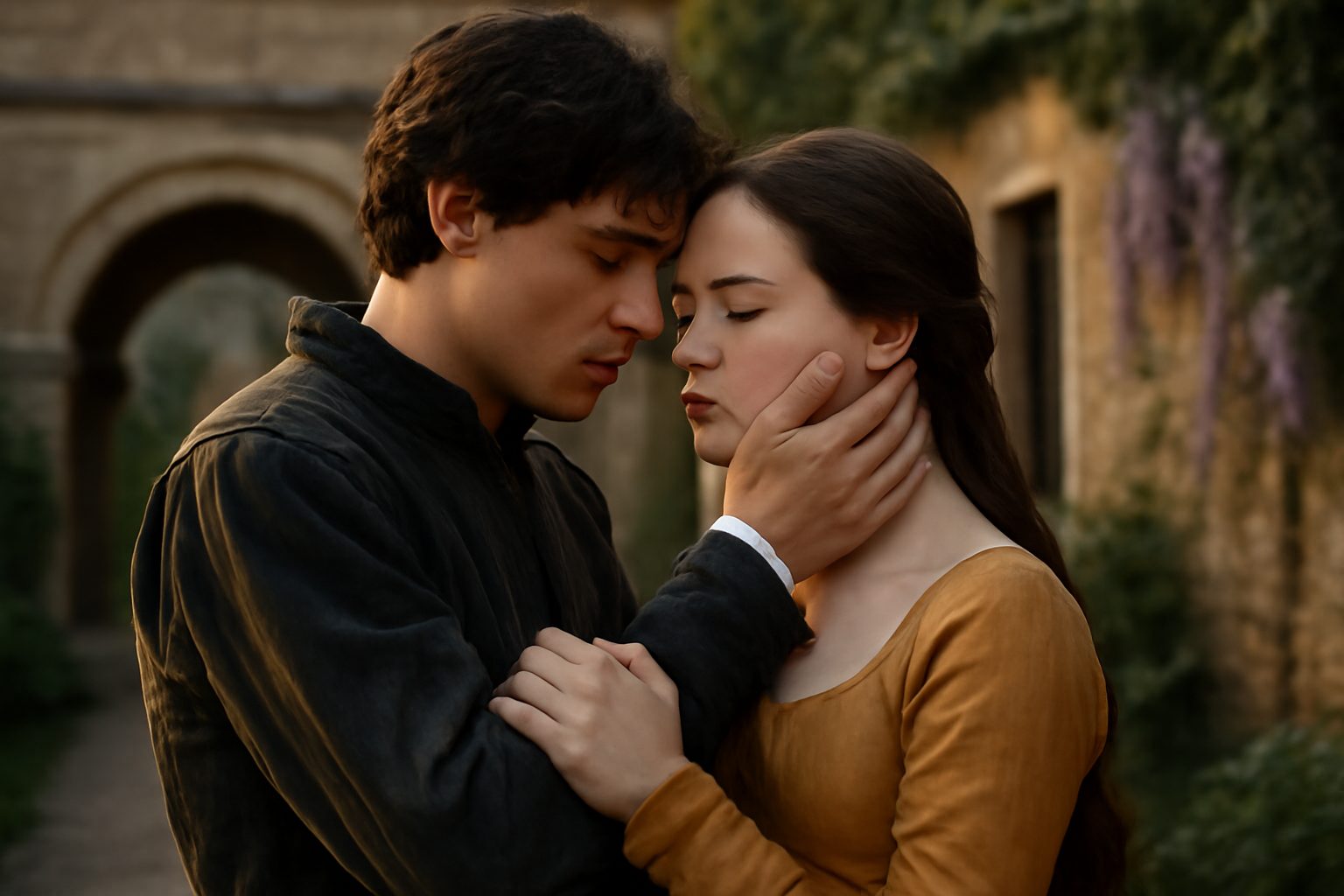
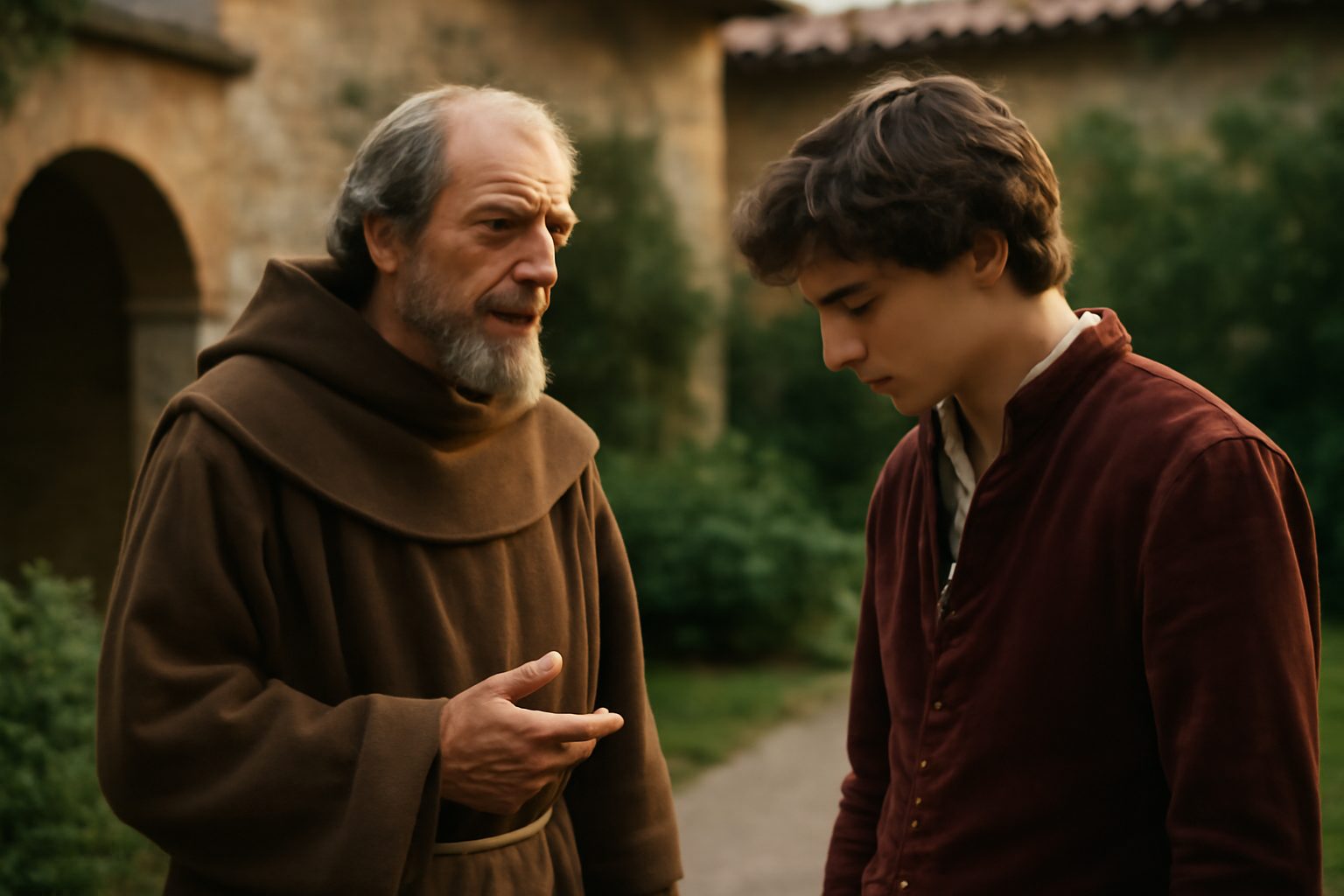
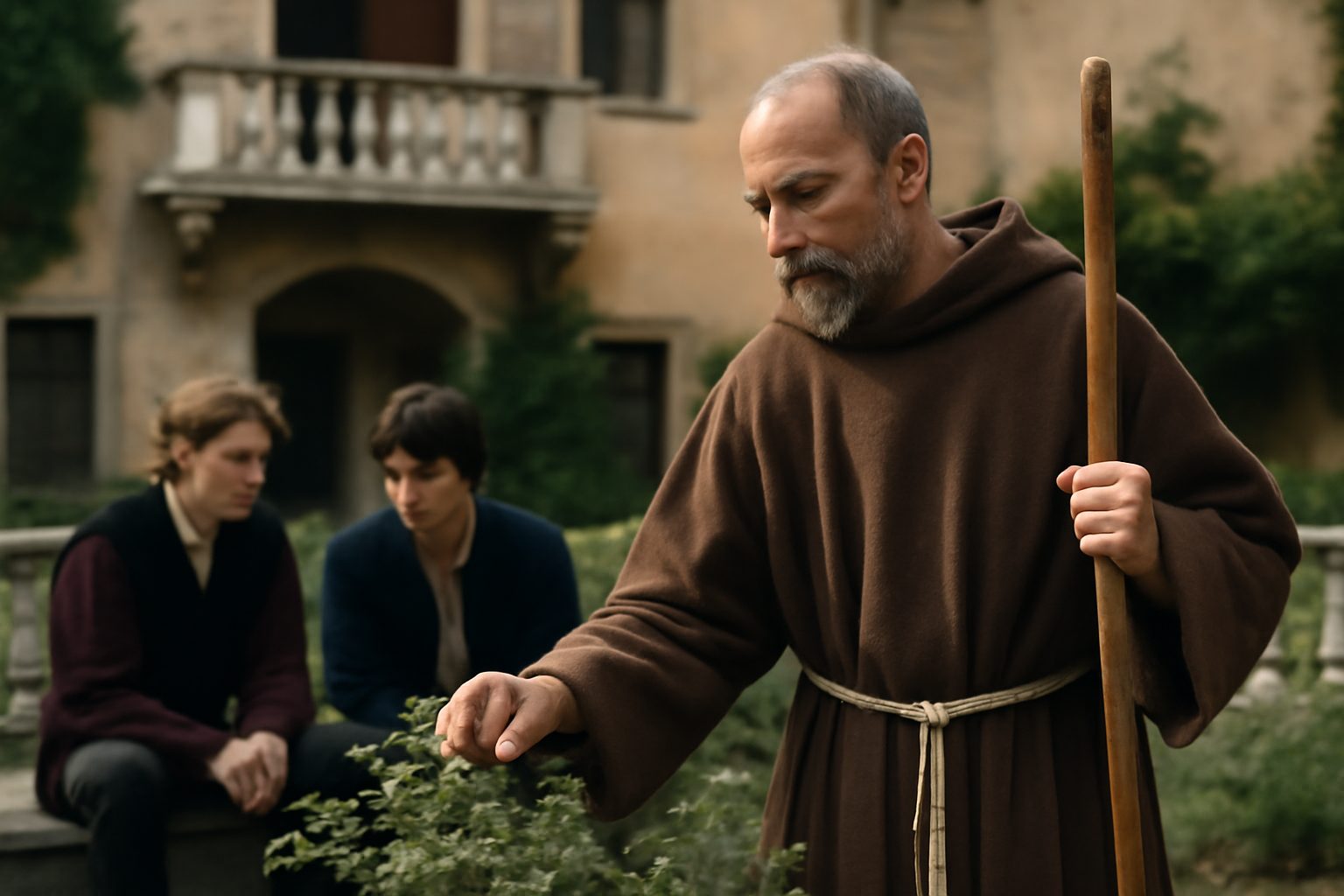
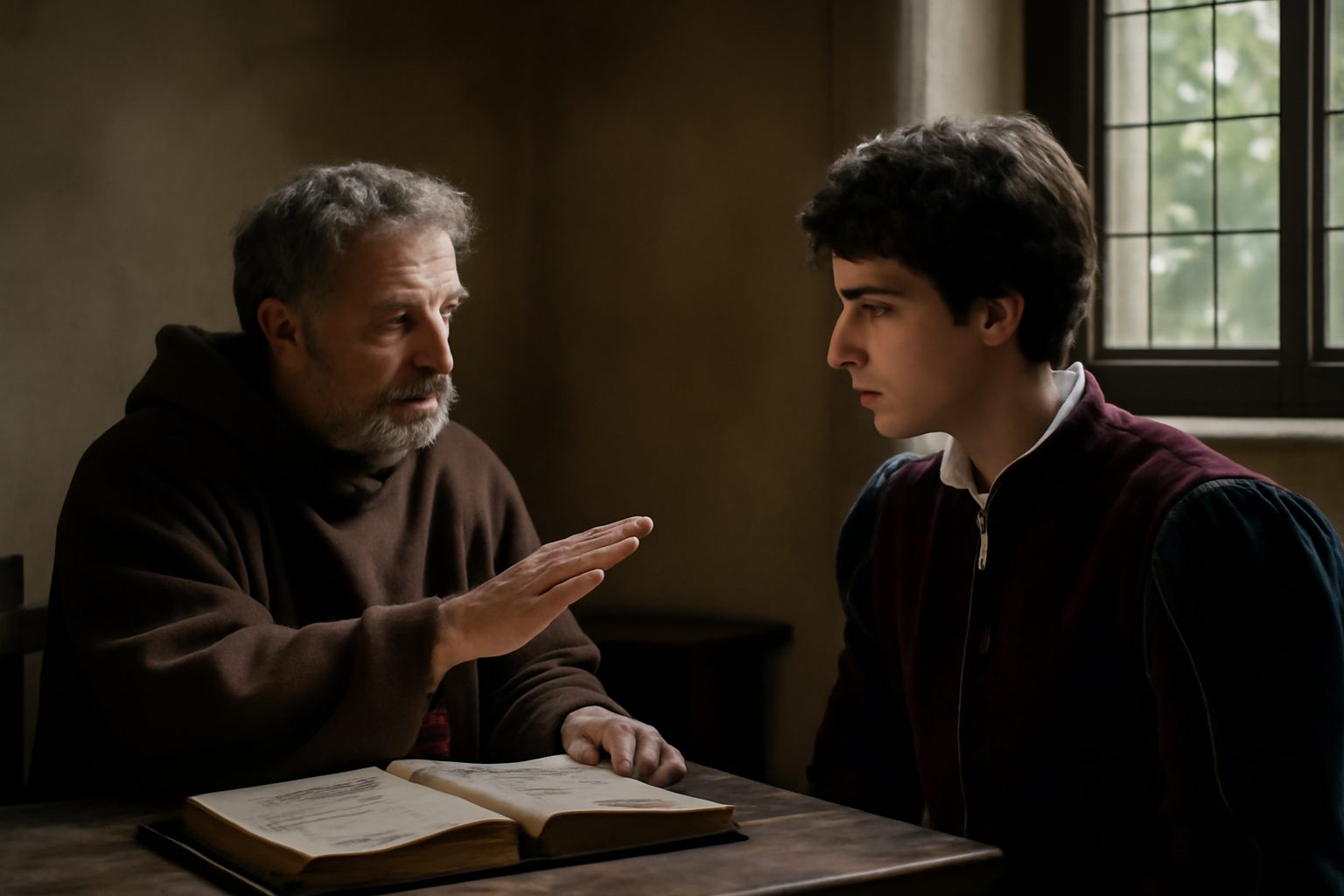
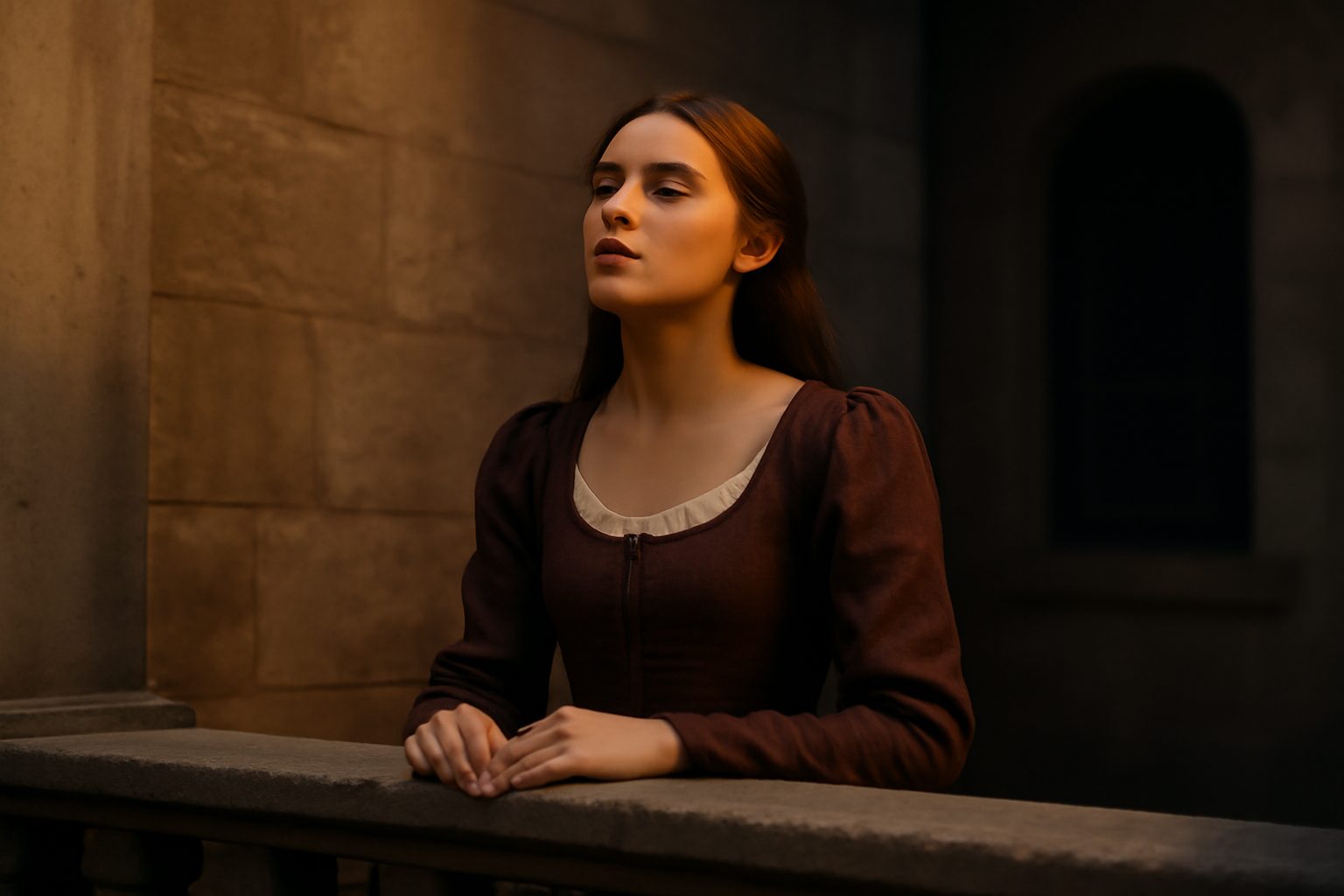
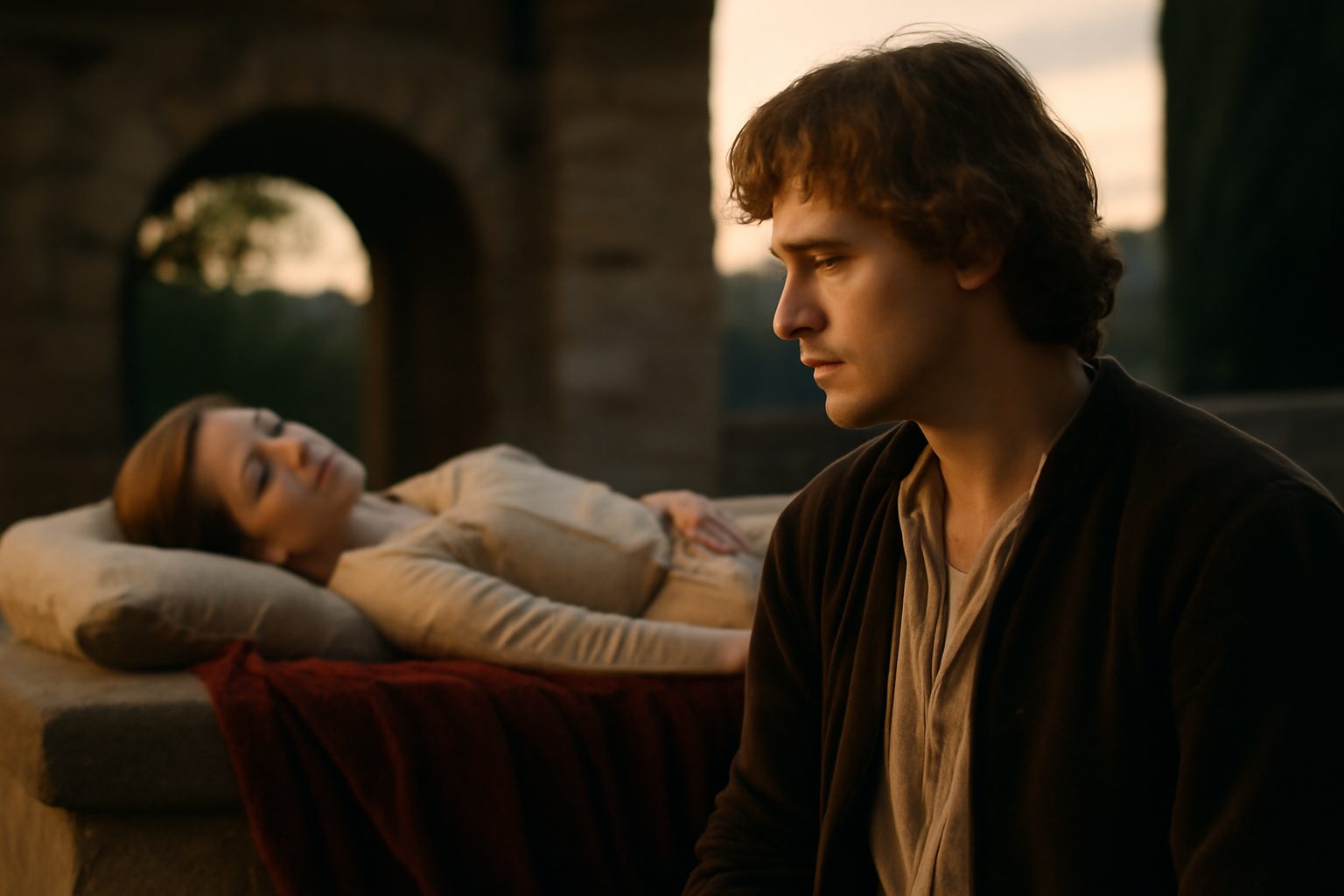
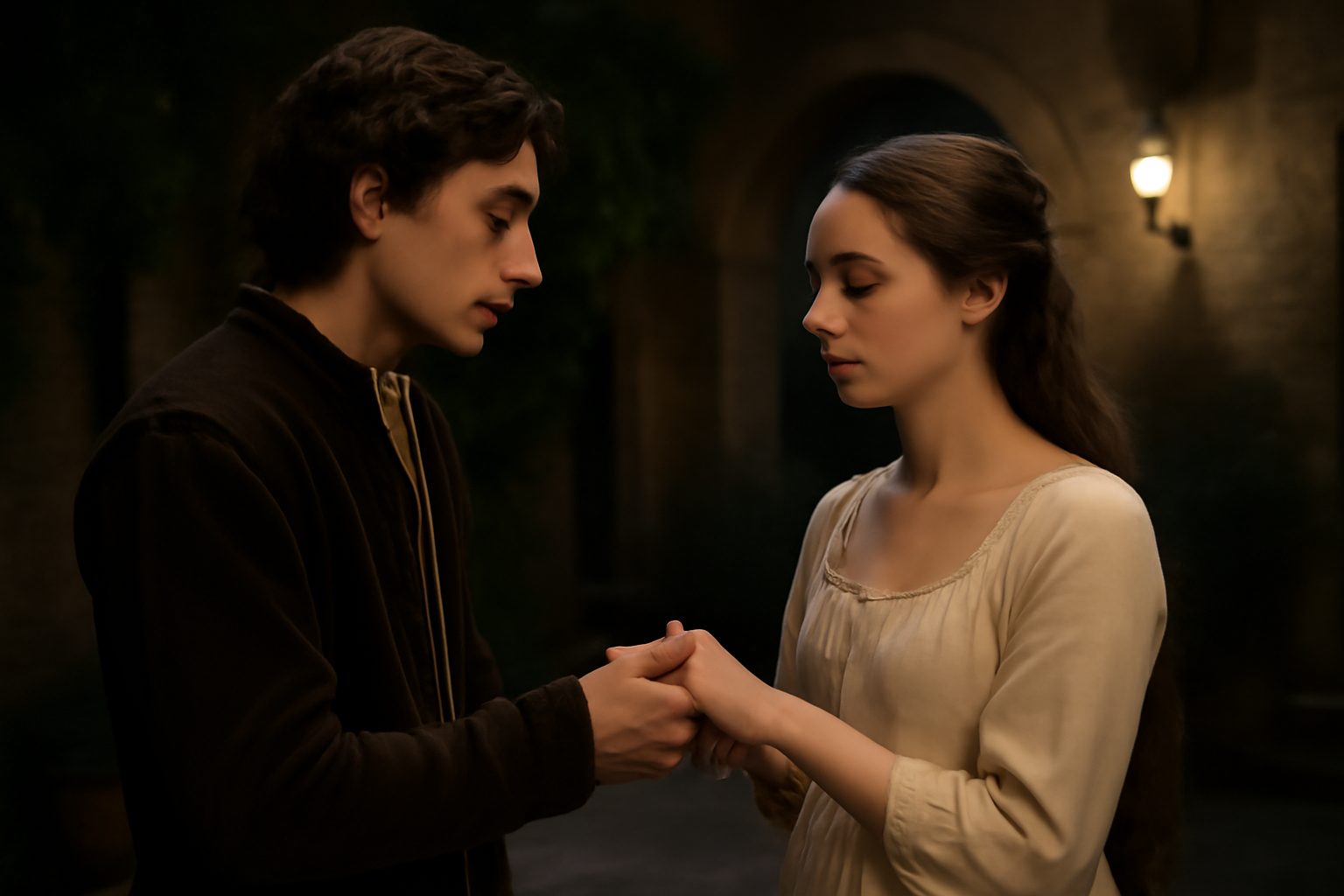
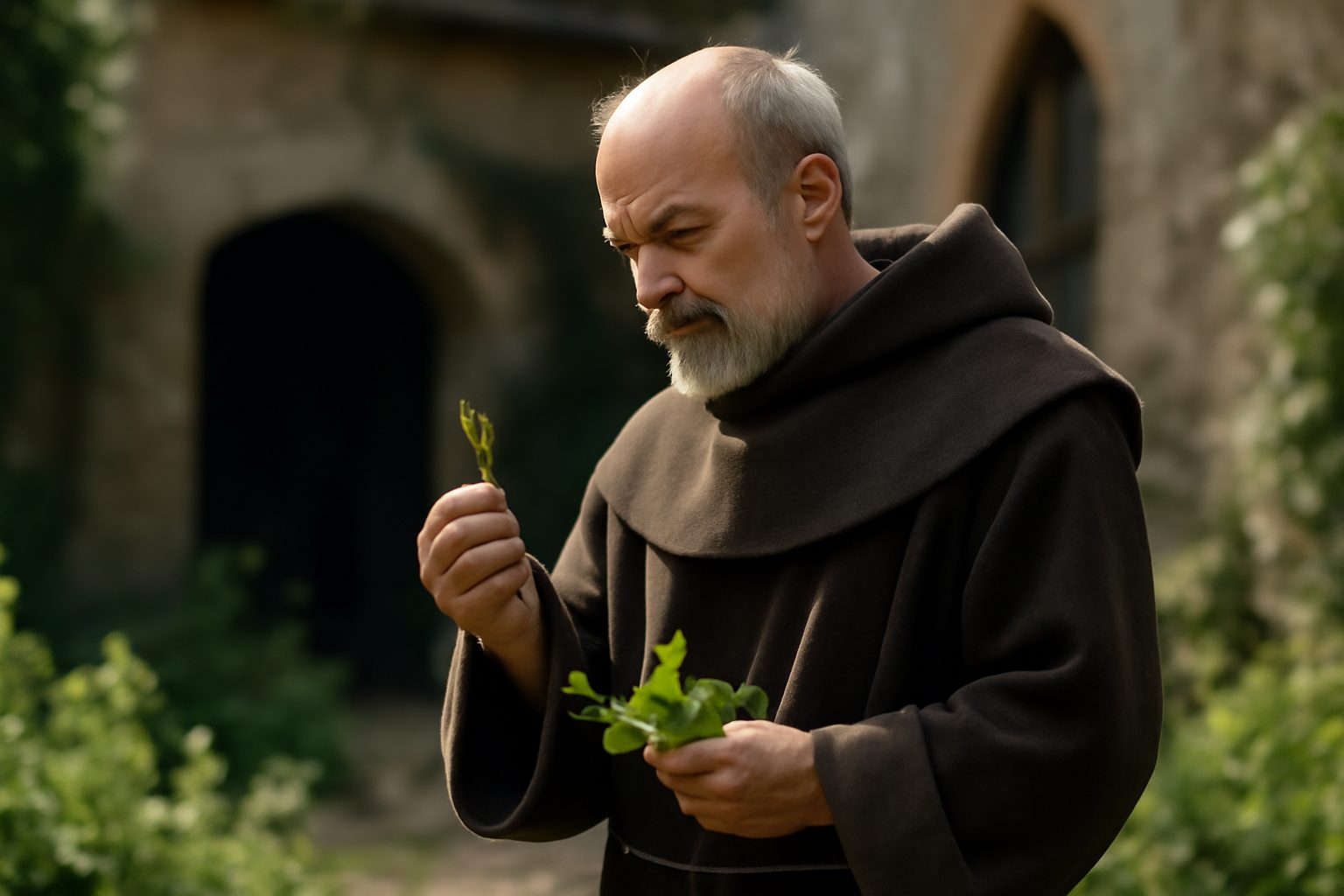
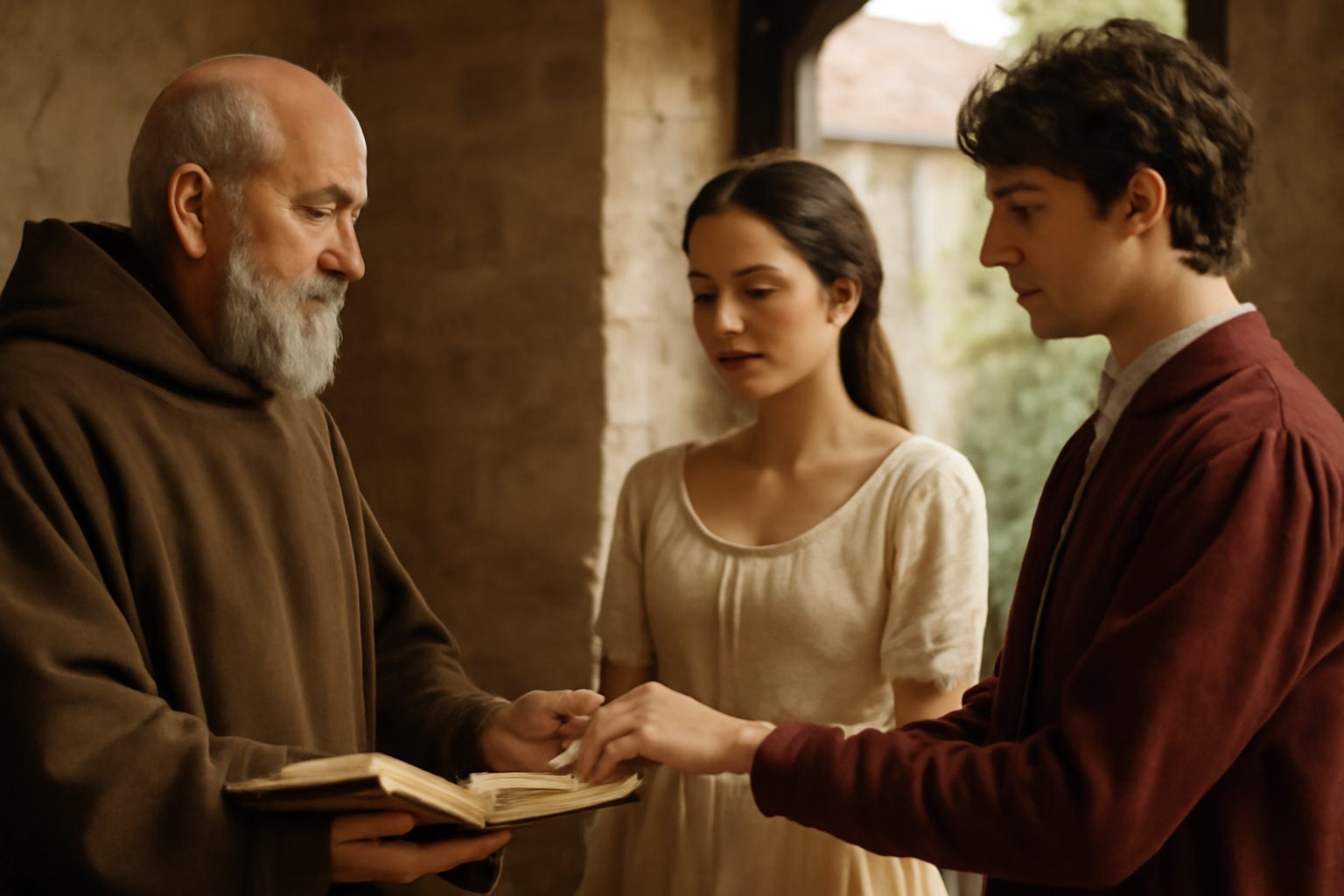
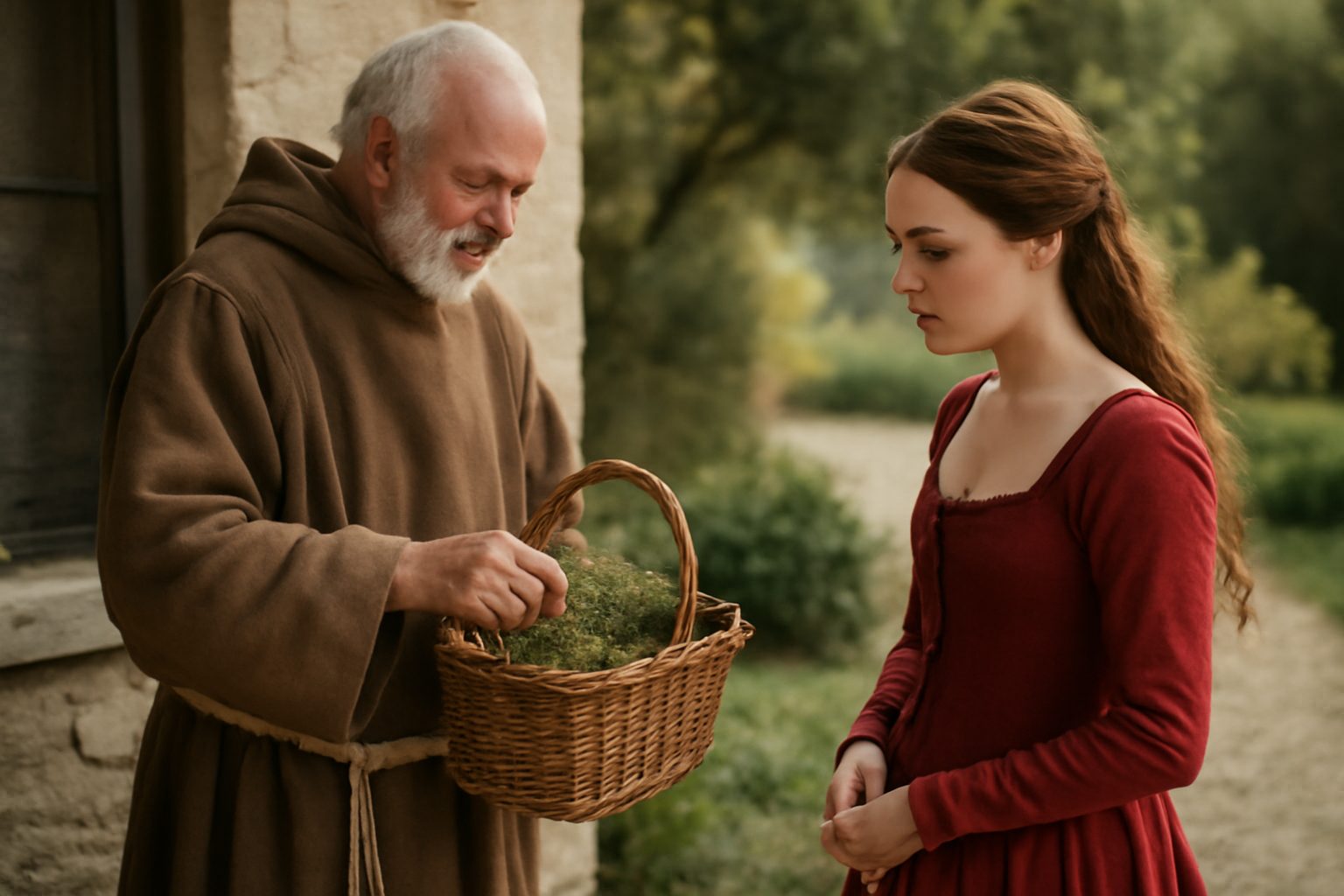
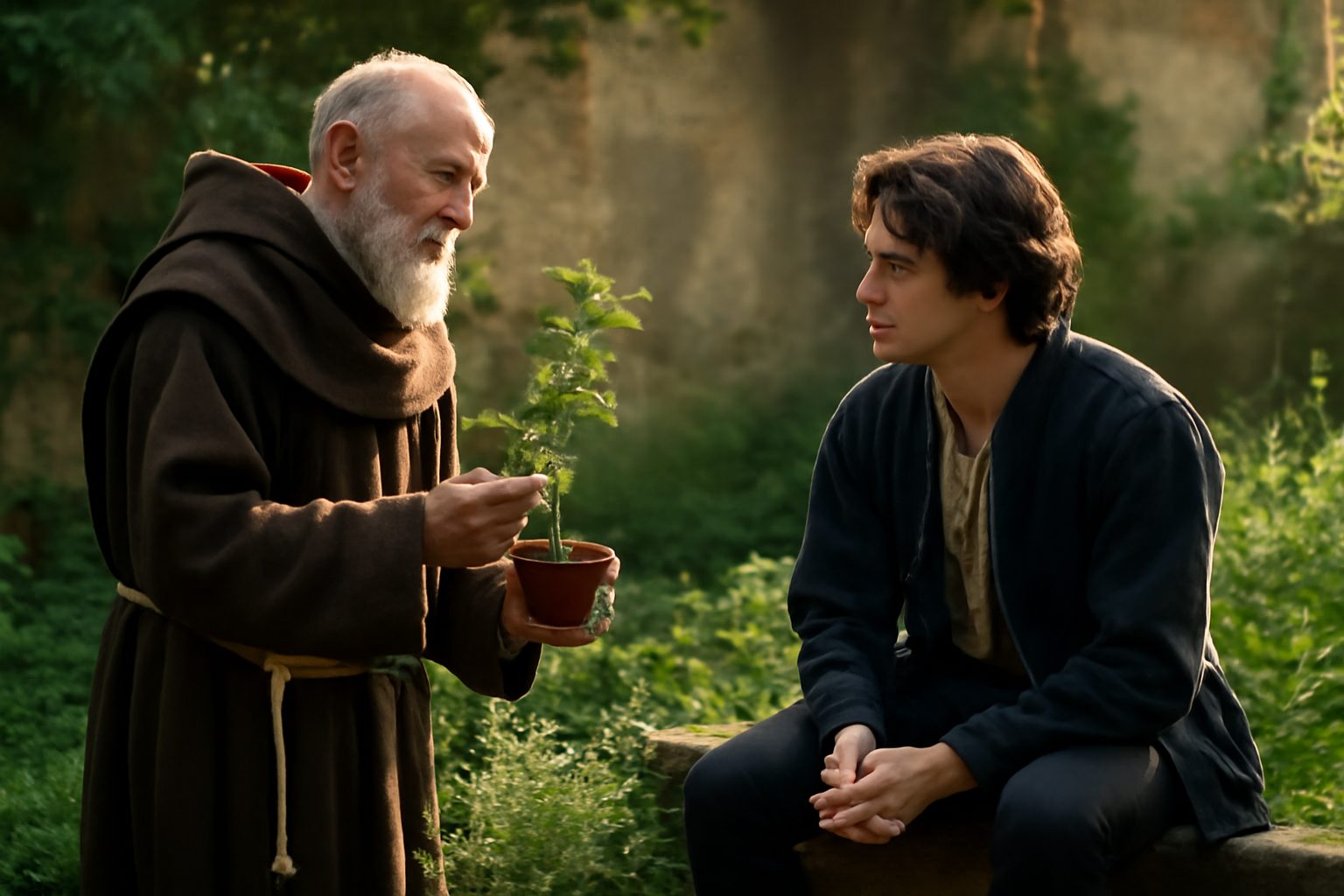
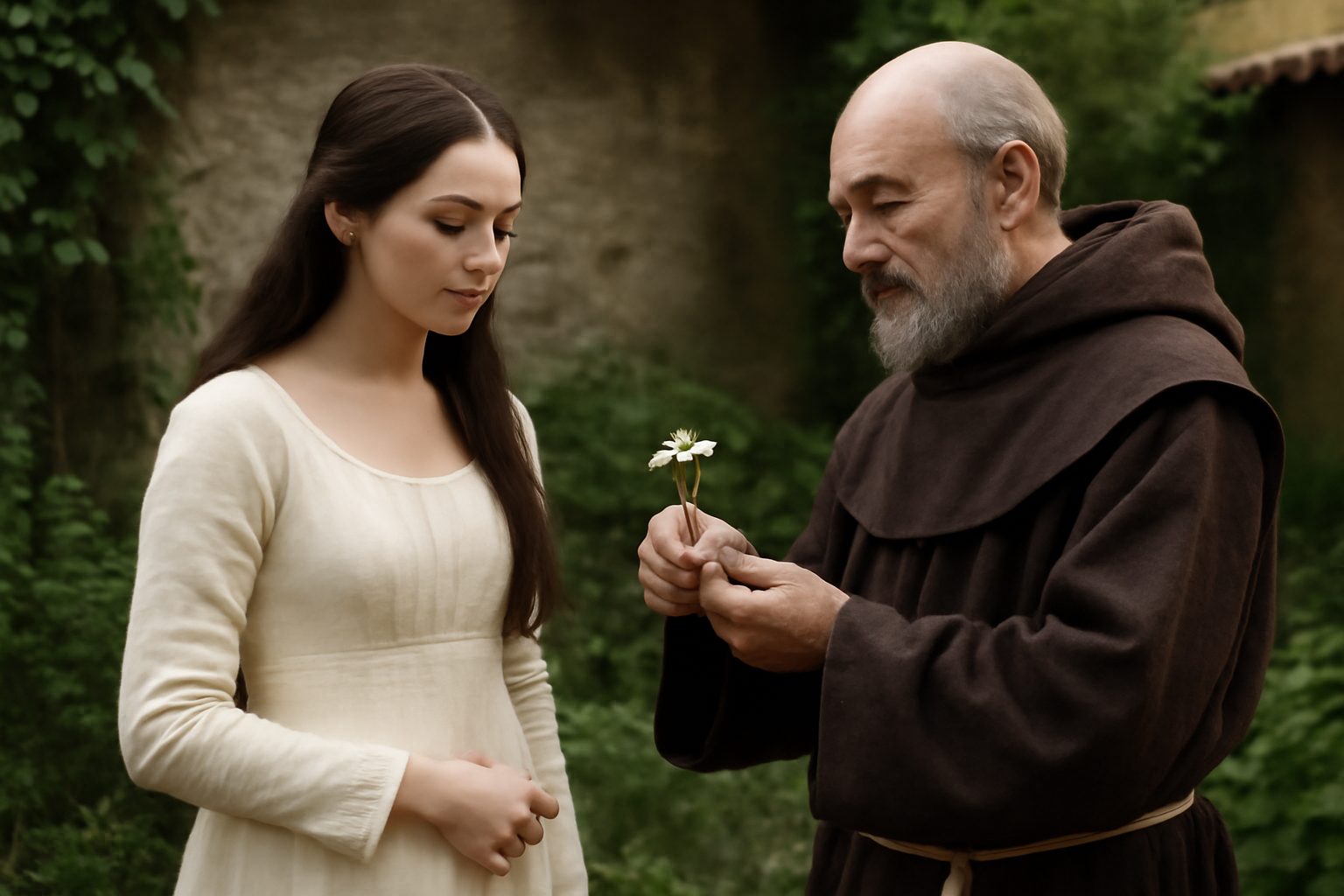
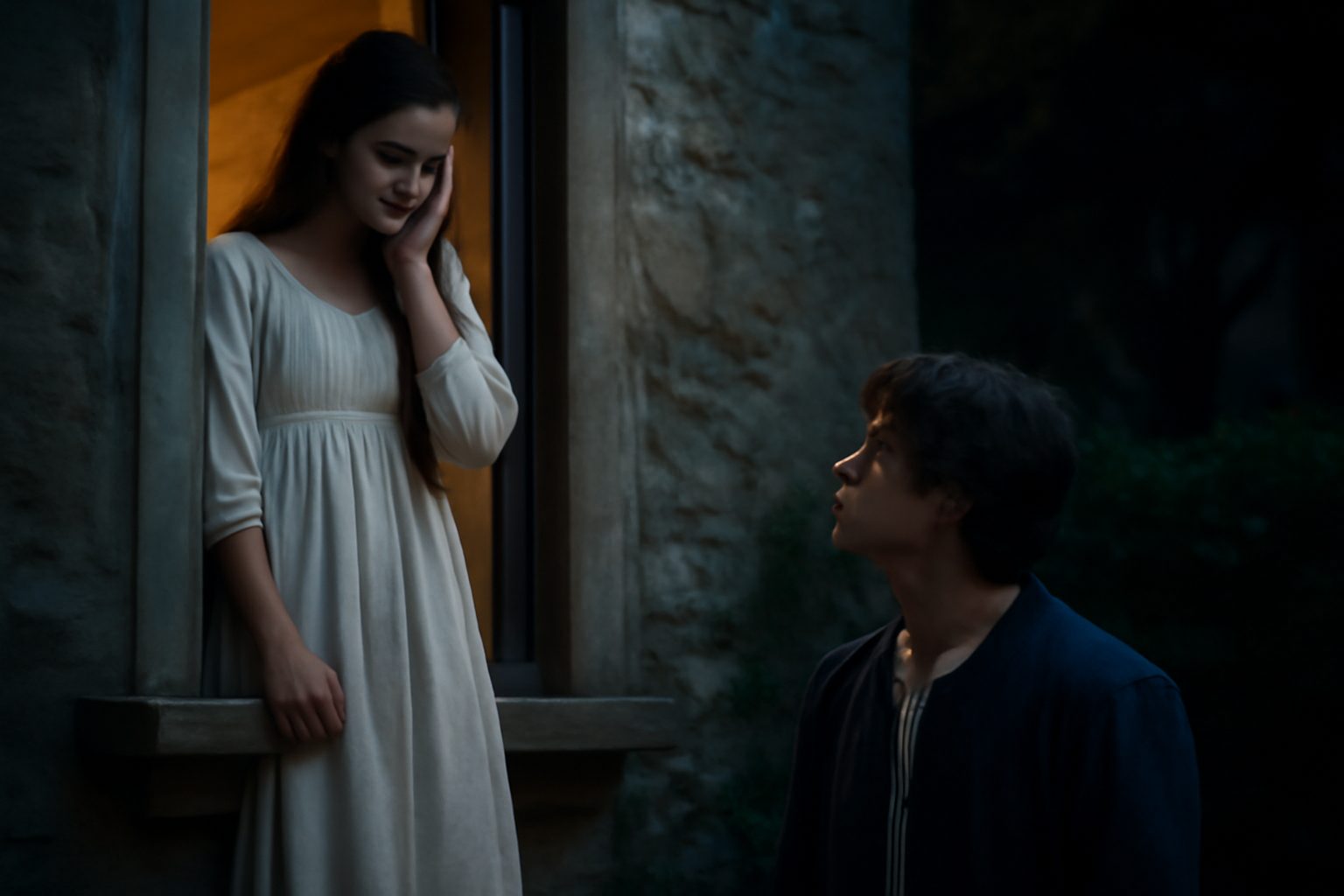
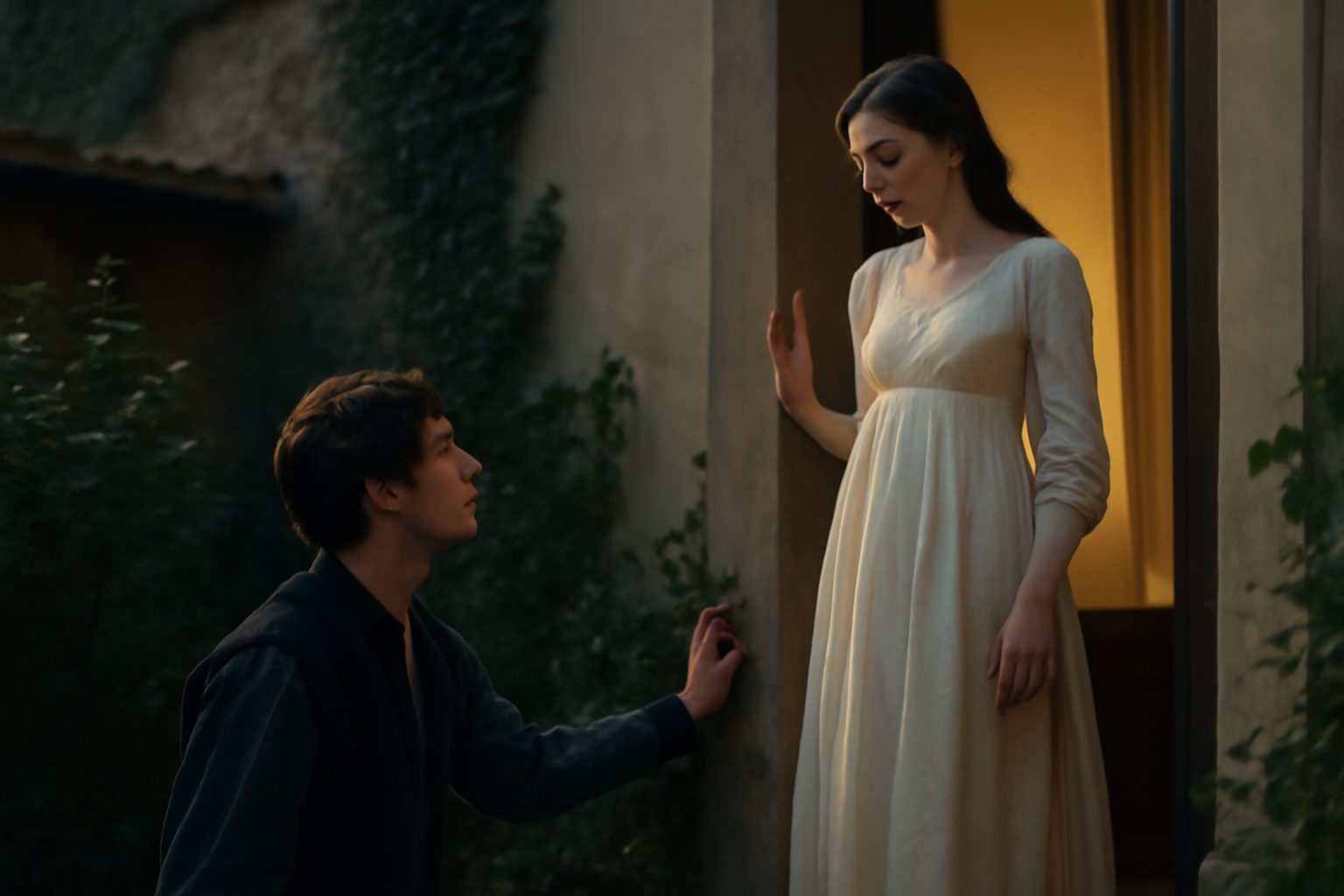
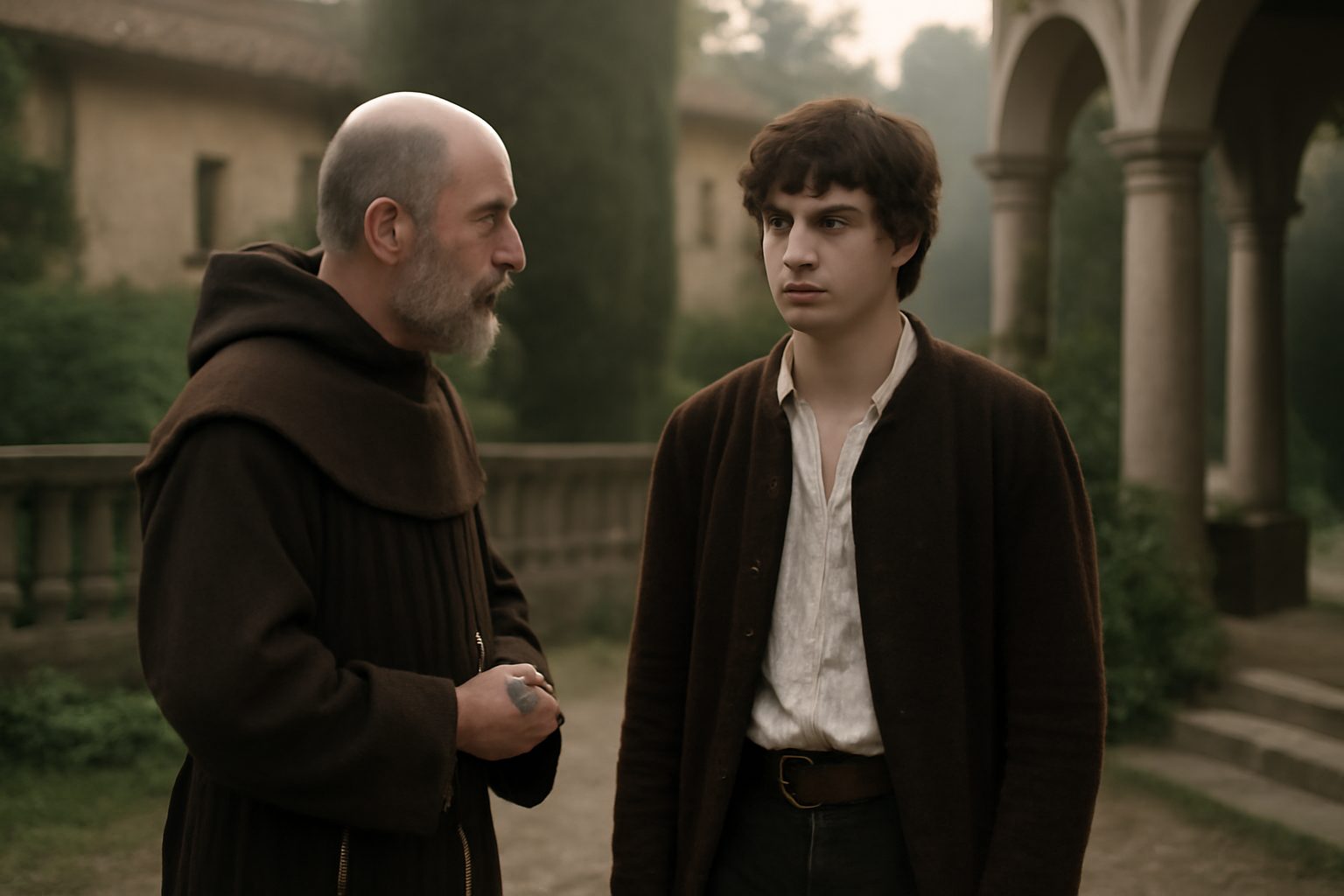
In Act 2, Scene 3 of Romeo and Juliet, Friar Laurence is gathering herbs at dawn when Romeo arrives, still giddy after his secret meeting with Juliet. The friar notices Romeo's flushed cheeks and playful demeanor, teasing him about the visible signs of his newfound love. This moment captures the contrast between Romeo's youthful passion and the friar's wiser, more cautious perspective.
Friar Laurence: "Lo, here upon thy cheek the stain doth sit"
In modern day english, we would say:
Look, the stain is still on your cheek.
Frequently Asked Questions
What is Friar Laurence referring to when he mentions a stain on the cheek?
He is referring to the tears on Romeo's cheek, showing that Romeo has been crying.
Connections to other verses:
Connections to "Lo, here upon thy cheek the stain doth sit"
The verse "Lo, here upon thy cheek the stain doth sit" is spoken by Friar Laurence as he observes the physical traces of Romeo's past sorrows. This line directly connects to "Of an old tear that is not wash'd off yet", which immediately follows and elaborates on the idea of lingering emotional pain visible on Romeo's face.
Links to Romeo's Past Love for Rosaline
Friar Laurence's remark about the "stain" on Romeo's cheek is a pointed reference to his previous affections for Rosaline. This connects to earlier lines where the Friar questions Romeo's sudden change of heart, such as "God pardon sin! wast thou with Rosaline?" and "Is Rosaline, whom thou didst love so dear". The theme of Romeo's emotional transition is further emphasized in "I have forgot that name, and that name's woe", where Romeo claims to have moved on from Rosaline.
Contrast with New Love for Juliet
The physical evidence of past grief highlighted in this verse stands in stark contrast to Romeo's current state of joy and devotion to Juliet. This is echoed in "Then plainly know my heart's dear love is set" and "As mine on hers, so hers is set on mine", where Romeo declares his new, mutual love. The Friar's skepticism about this rapid shift is evident in "So soon forsaken? young men's love then lies", questioning the sincerity and depth of Romeo's emotions.
Friar Laurence's Observations and Advice
Friar Laurence's role as a wise observer is central to this scene. His comment about the "stain" is part of a larger pattern of his admonitions, such as "For doting, not for loving, pupil mine", where he distinguishes between infatuation and true love. The Friar's guidance culminates in "Wisely and slow; they stumble that run fast", advising caution amidst Romeo's impetuousness.
Thematic Connections: Transience and Transformation
The idea of a "stain" as a remnant of past sorrow ties into the scene's broader themes of change and duality. This is reflected in the Friar's soliloquy about herbs and their dual nature, particularly "Poison hath residence and medicine power" and "Virtue itself turns vice, being misapplied". Just as substances can be both beneficial and harmful, Romeo's emotions have transformed from despair to joy, yet traces of the past remain.