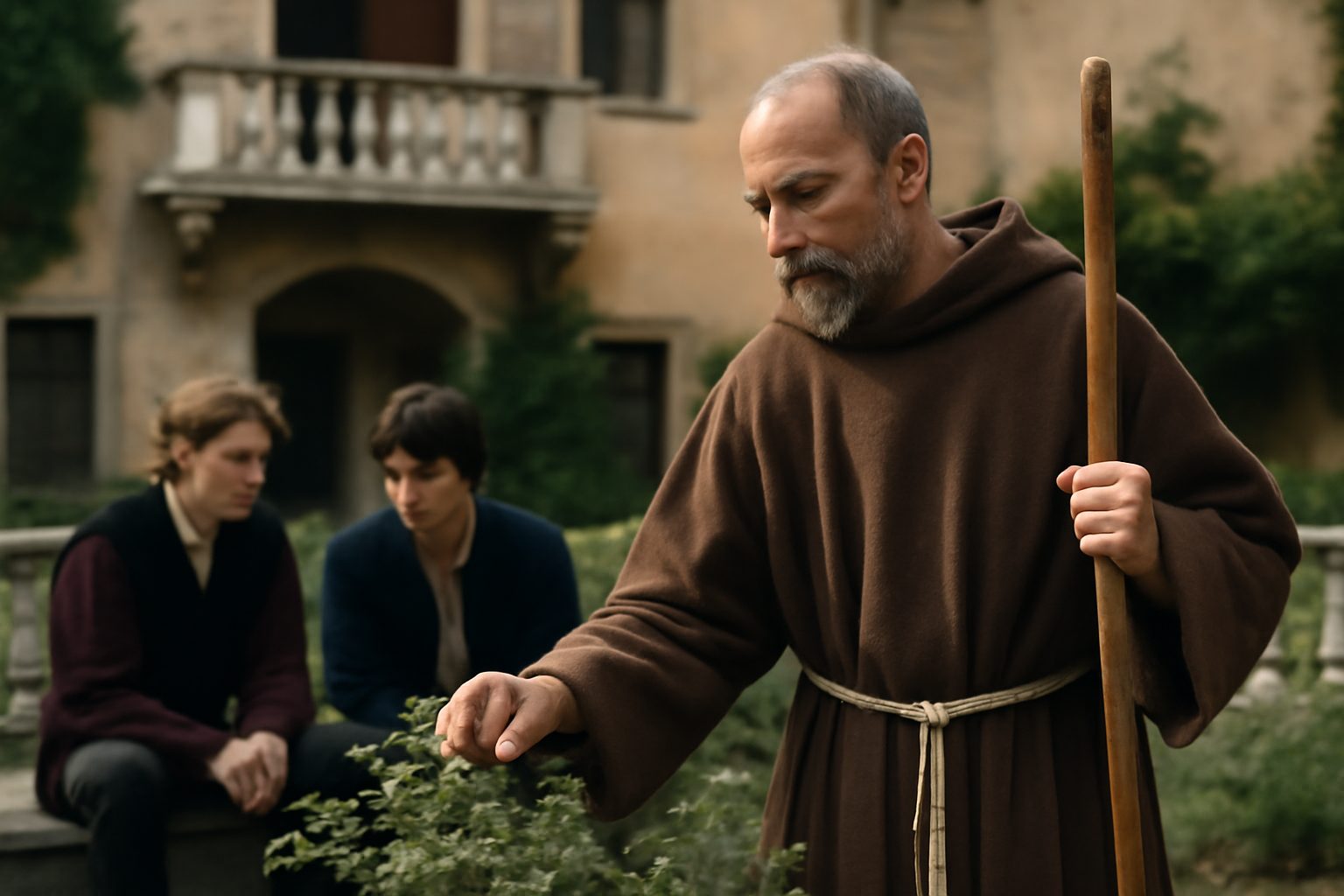
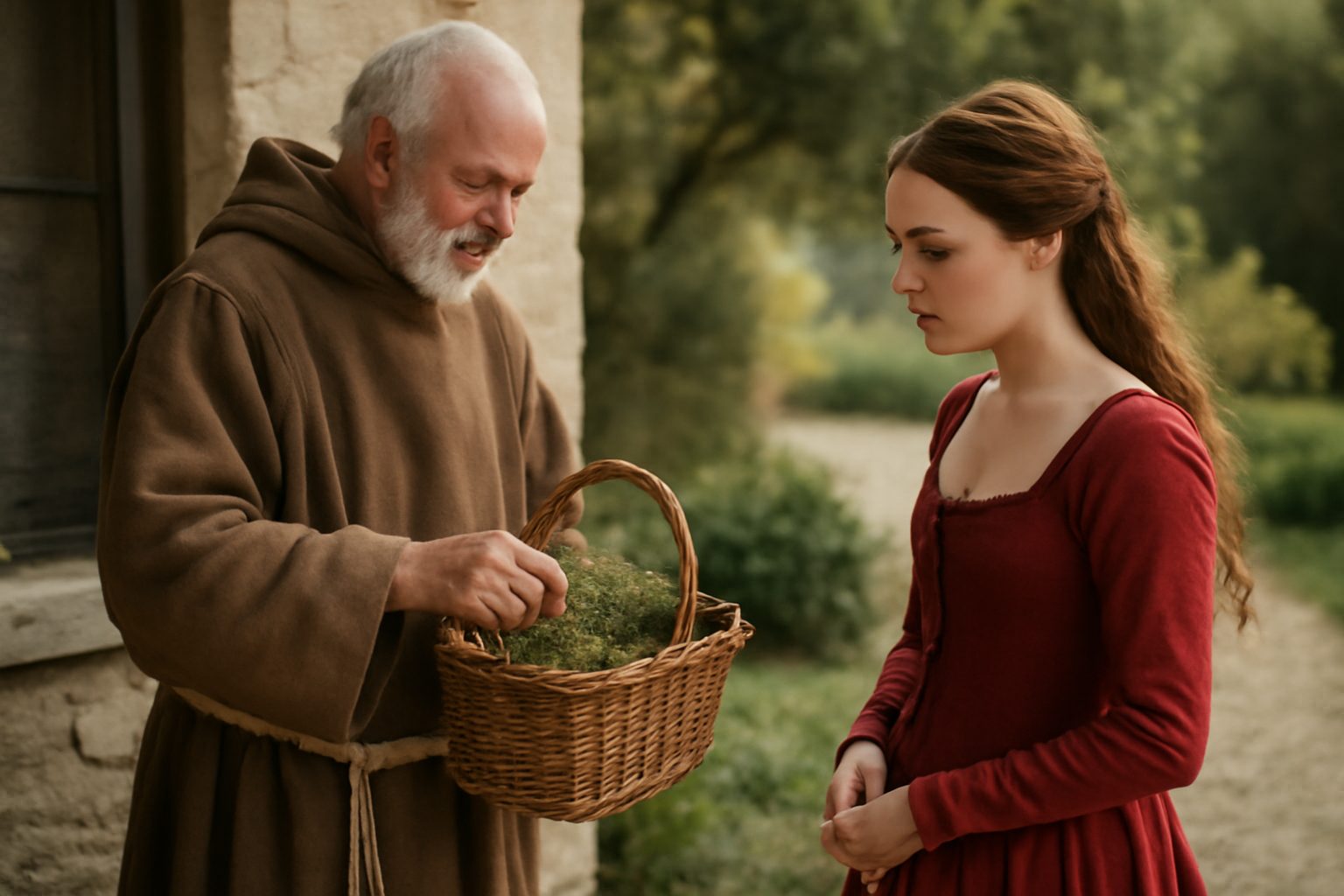
In Act 2, Scene 3 of Romeo and Juliet, Friar Laurence is gathering herbs at dawn when Romeo arrives to share news of his newfound love for Juliet. The line refers to the Friar's observation about how nature balances opposites—some plants heal while others harm—reflecting his cautious view of Romeo's sudden shift from Rosaline to Juliet. This moment foreshadows the Friar's role as both a healer and an unwitting contributor to the tragic events that follow.
Friar Laurence: "To lay one in, another out to have."
In modern day english, we would say:
To take one person in and send another out.
Frequently Asked Questions
What is Friar Laurence saying about plants in this line?
He is saying that some plants can be used to heal while others can be harmful.
Connections to other verses:
Connections to "To lay one in, another out to have"
The verse "To lay one in, another out to have" reflects the theme of replacement and transition, particularly in the context of Romeo's shifting affections. This idea of substituting one love for another is echoed in "I have forgot that name, and that name's woe", where Romeo explicitly states he has moved on from Rosaline. Similarly, "As mine on hers, so hers is set on mine" emphasizes the mutual and reciprocal nature of his new love with Juliet, reinforcing the idea of one love replacing another.
Contrast with Friar Laurence's Warnings
Friar Laurence's skepticism about Romeo's rapid change of heart is evident in "So soon forsaken? young men's love then lies", which questions the sincerity of such quick transitions. This connects to the broader theme of fickleness versus true love, further highlighted in "Thy love did read by rote and could not spell", suggesting Romeo's previous love was superficial and unlearned.
Symbolic and Thematic Links
The notion of laying one in and another out also ties into the scene's exploration of dualities, such as in "Poison hath residence and medicine power", where substances can have opposing effects based on use. This mirrors how love can be both healing and destructive, a theme reiterated in "To turn your households' rancour to pure love", where love is envisioned as a transformative force replacing hatred.
Narrative Progression
Romeo's plea for Friar Laurence's assistance in solidifying his new love is captured in "That thou consent to marry us to-day", directly advancing the plot from old love to new. This urgency contrasts with Friar Laurence's cautious advice in "Wisely and slow; they stumble that run fast", underscoring the tension between rash replacement and thoughtful transition.