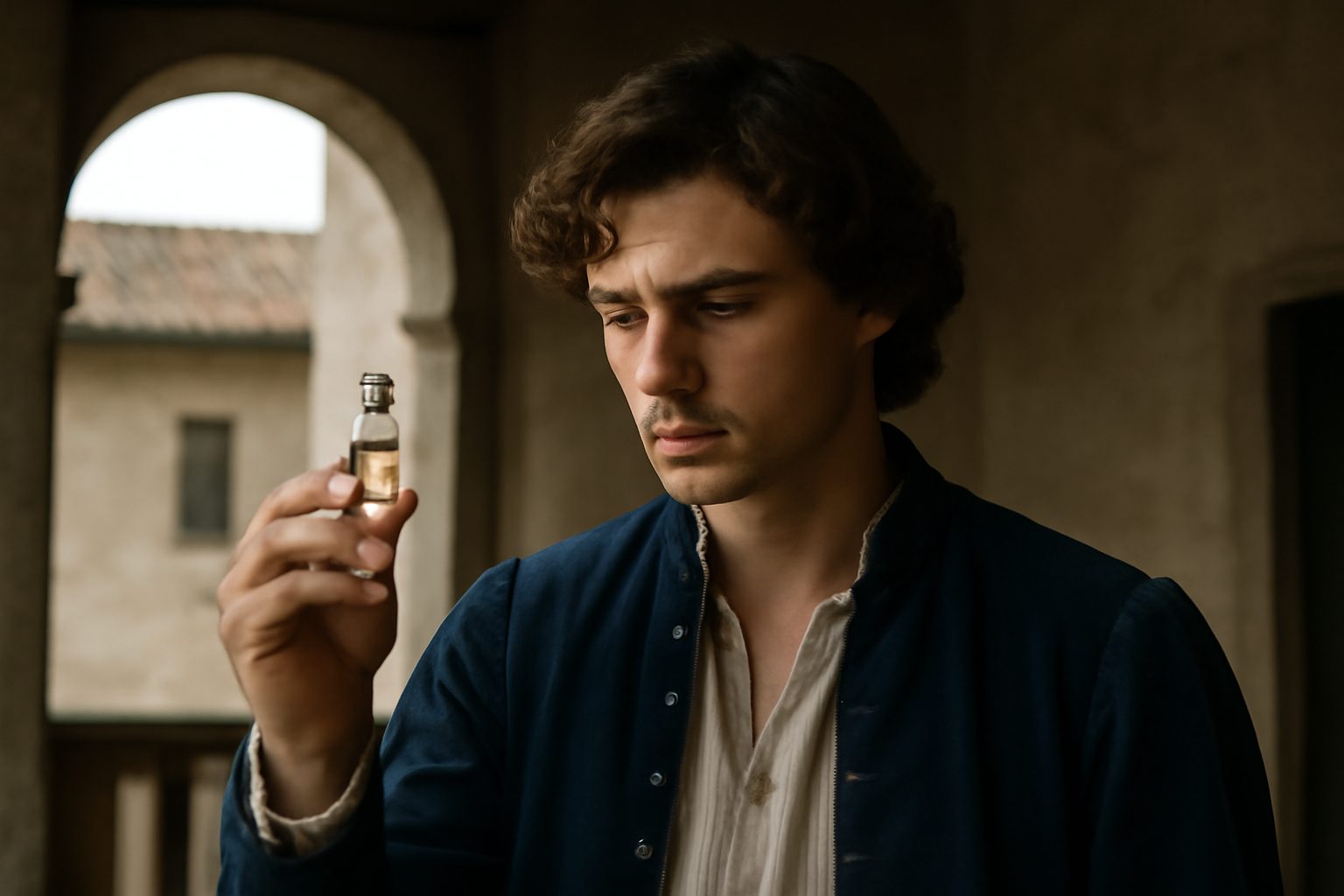
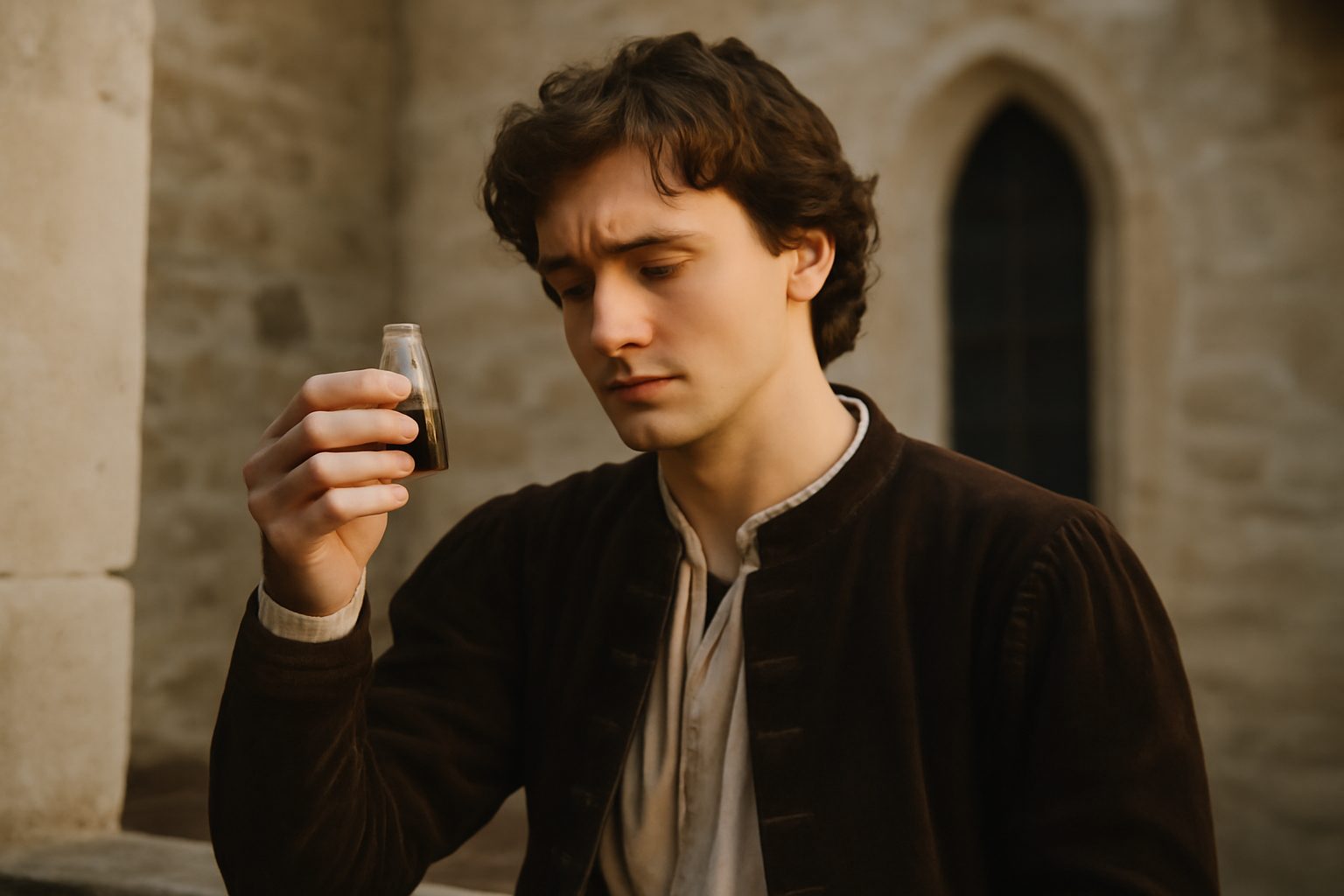
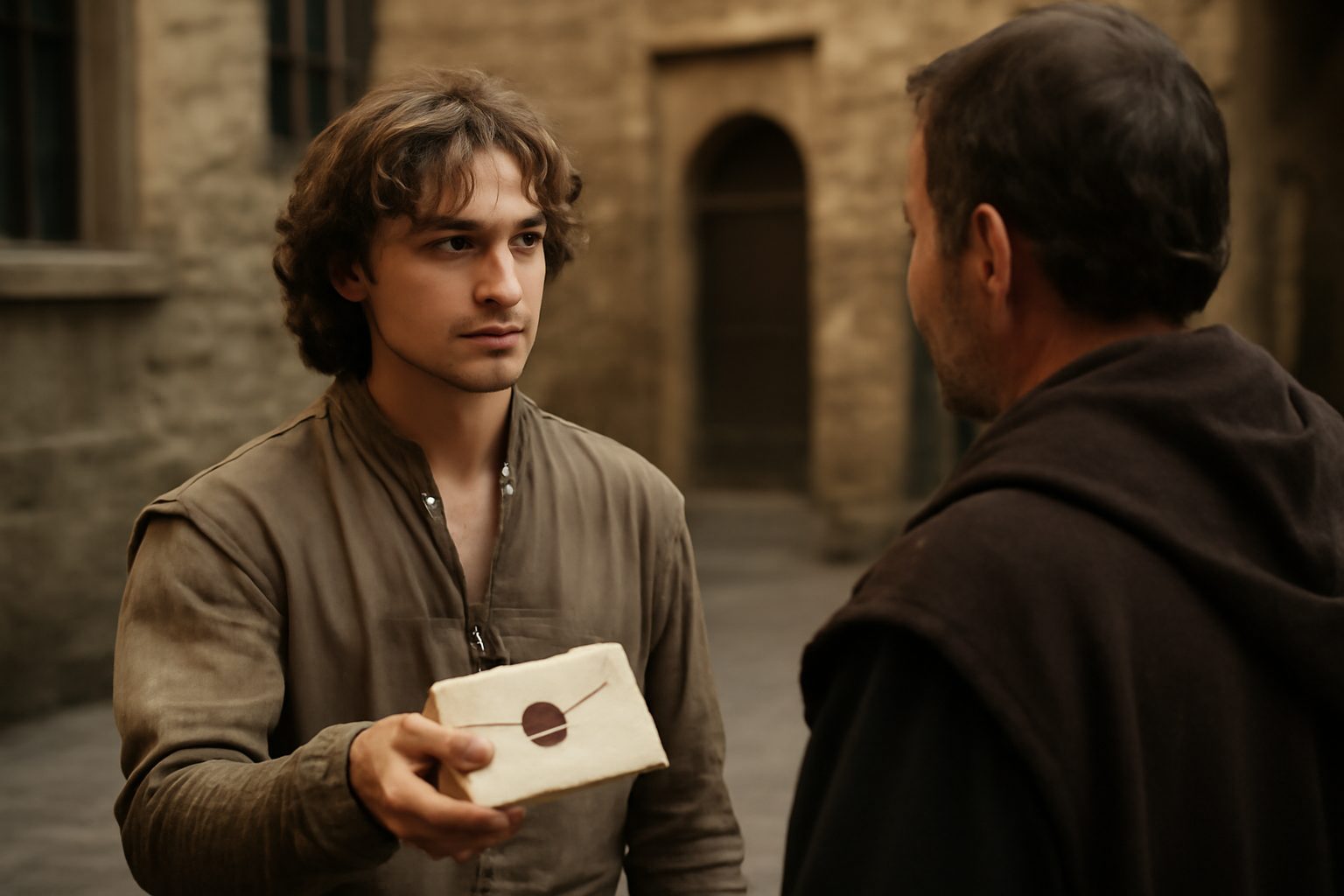
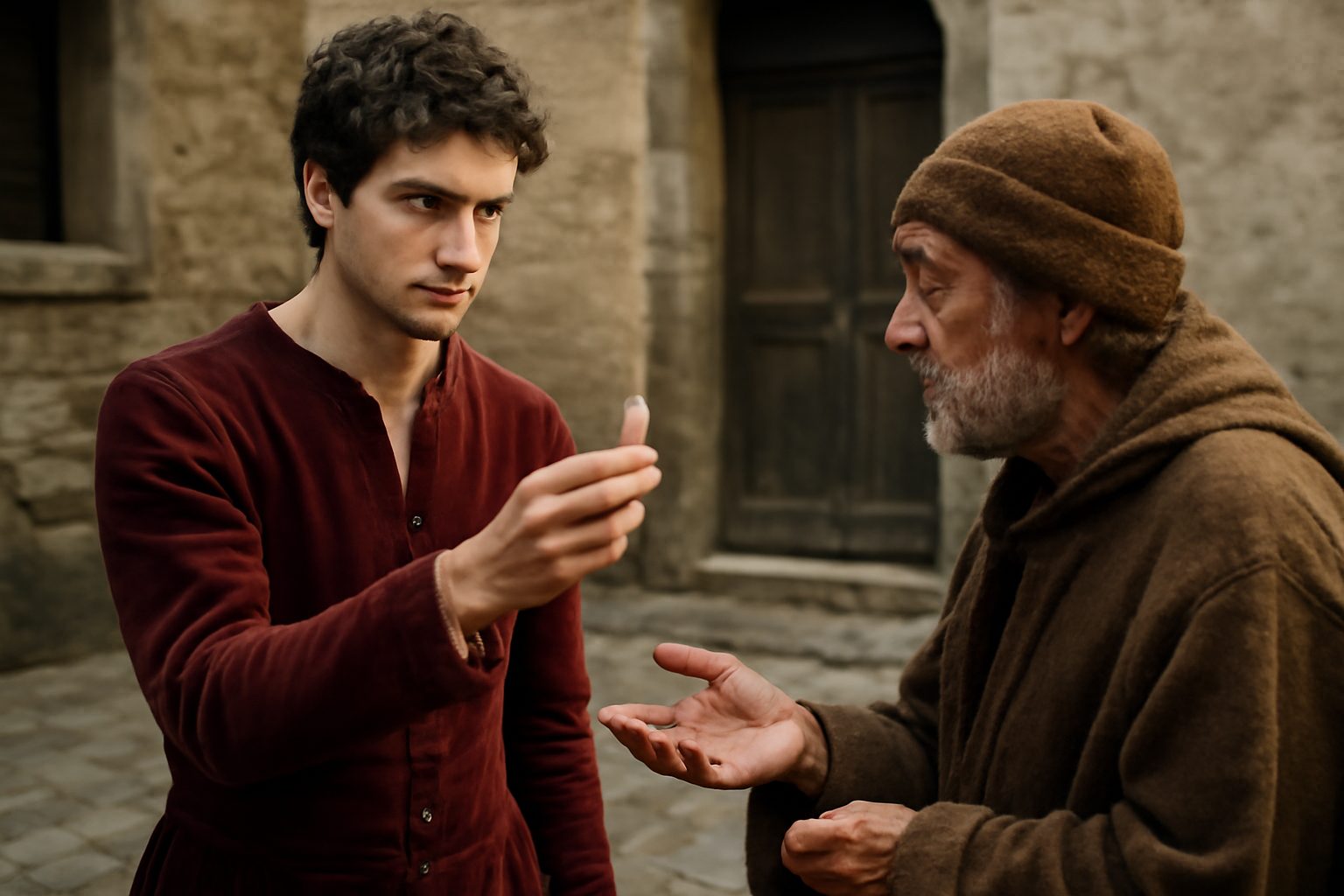
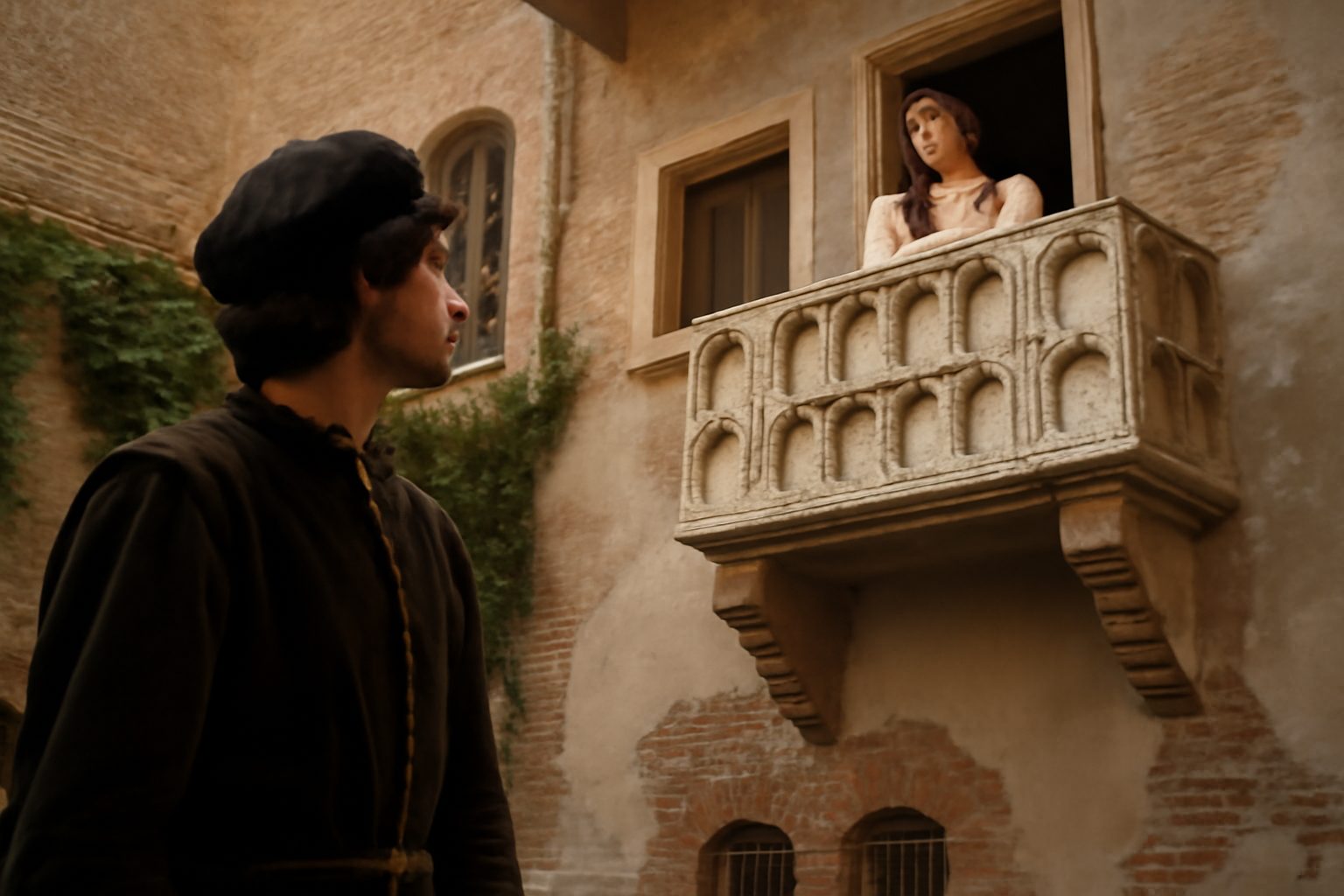
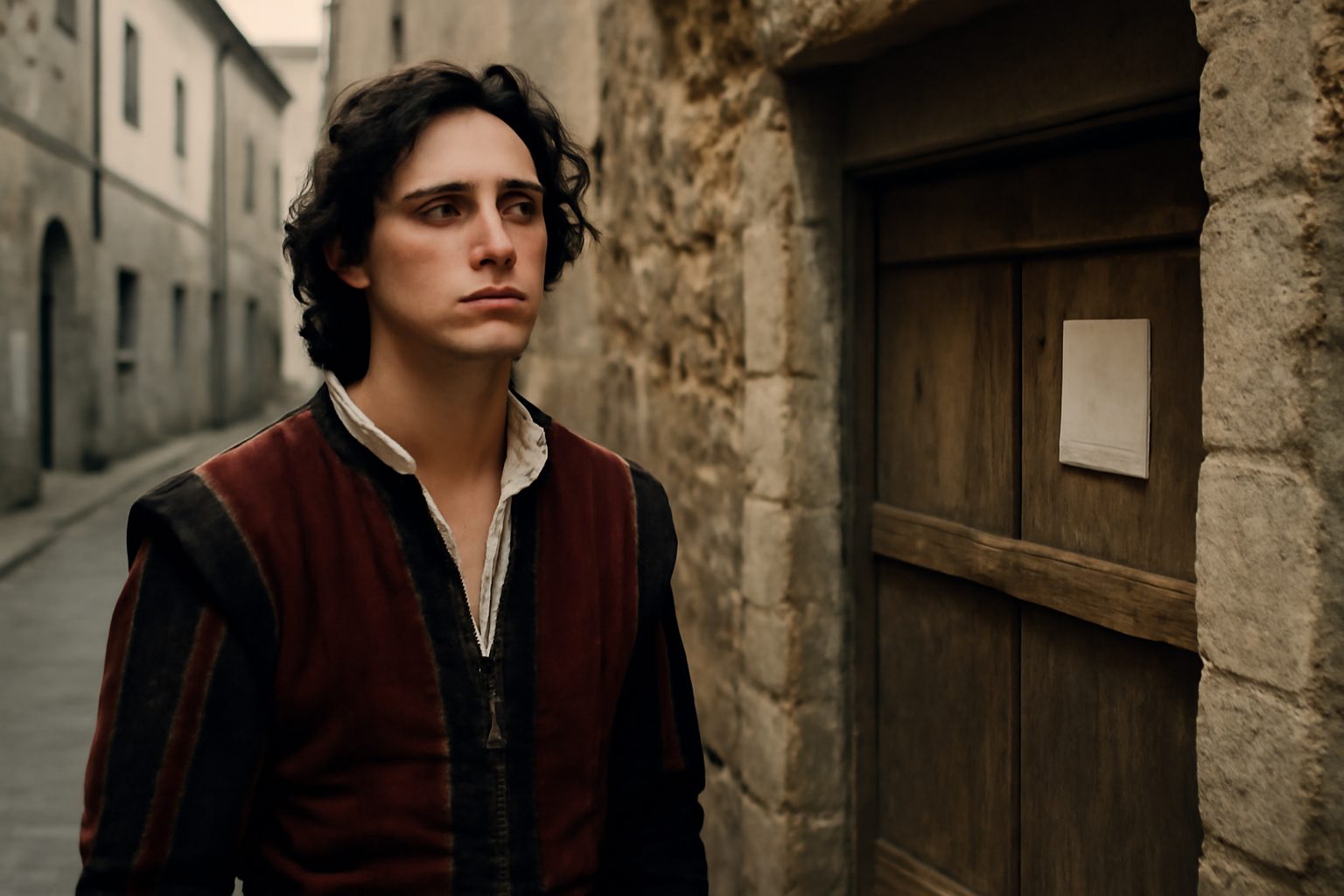
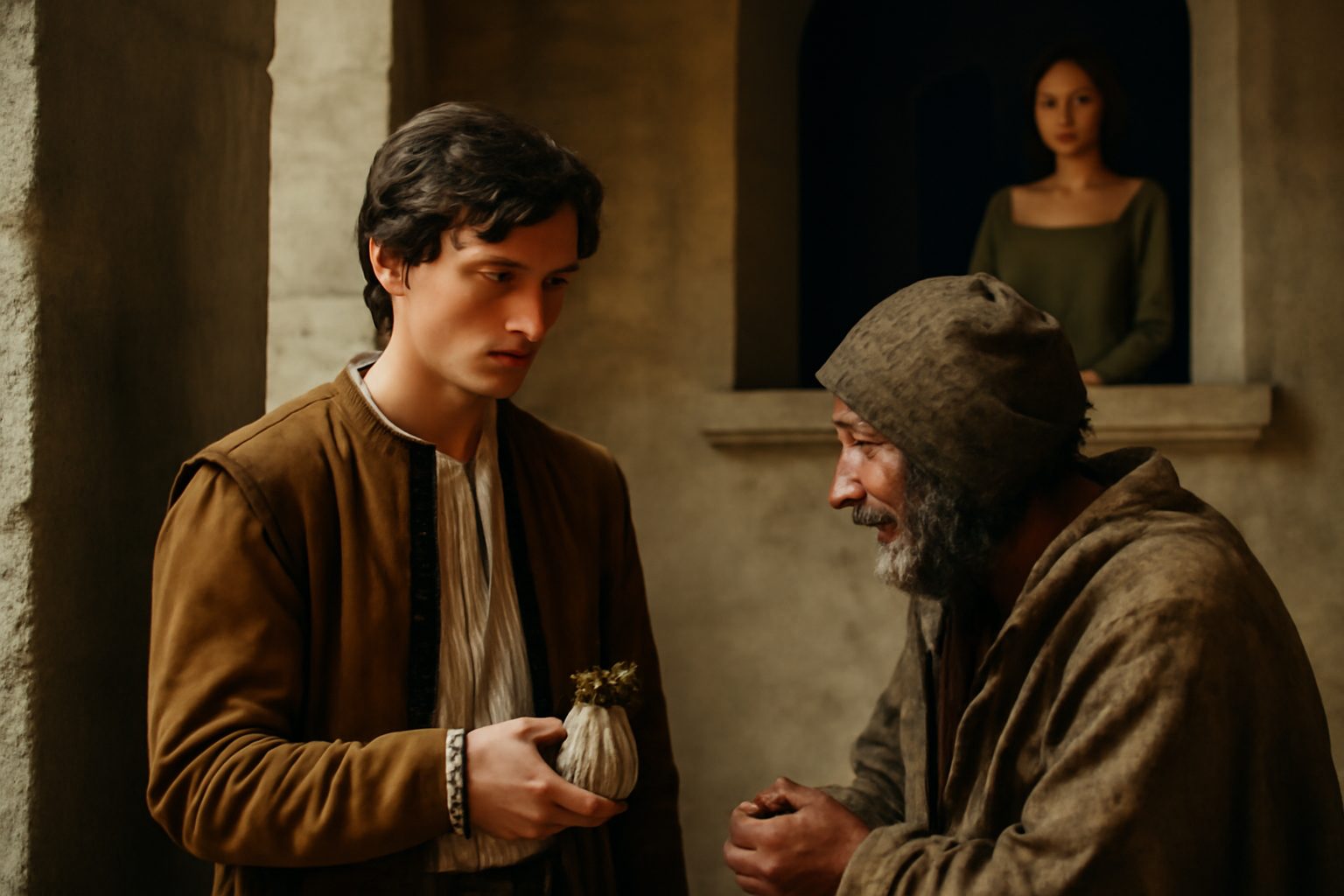
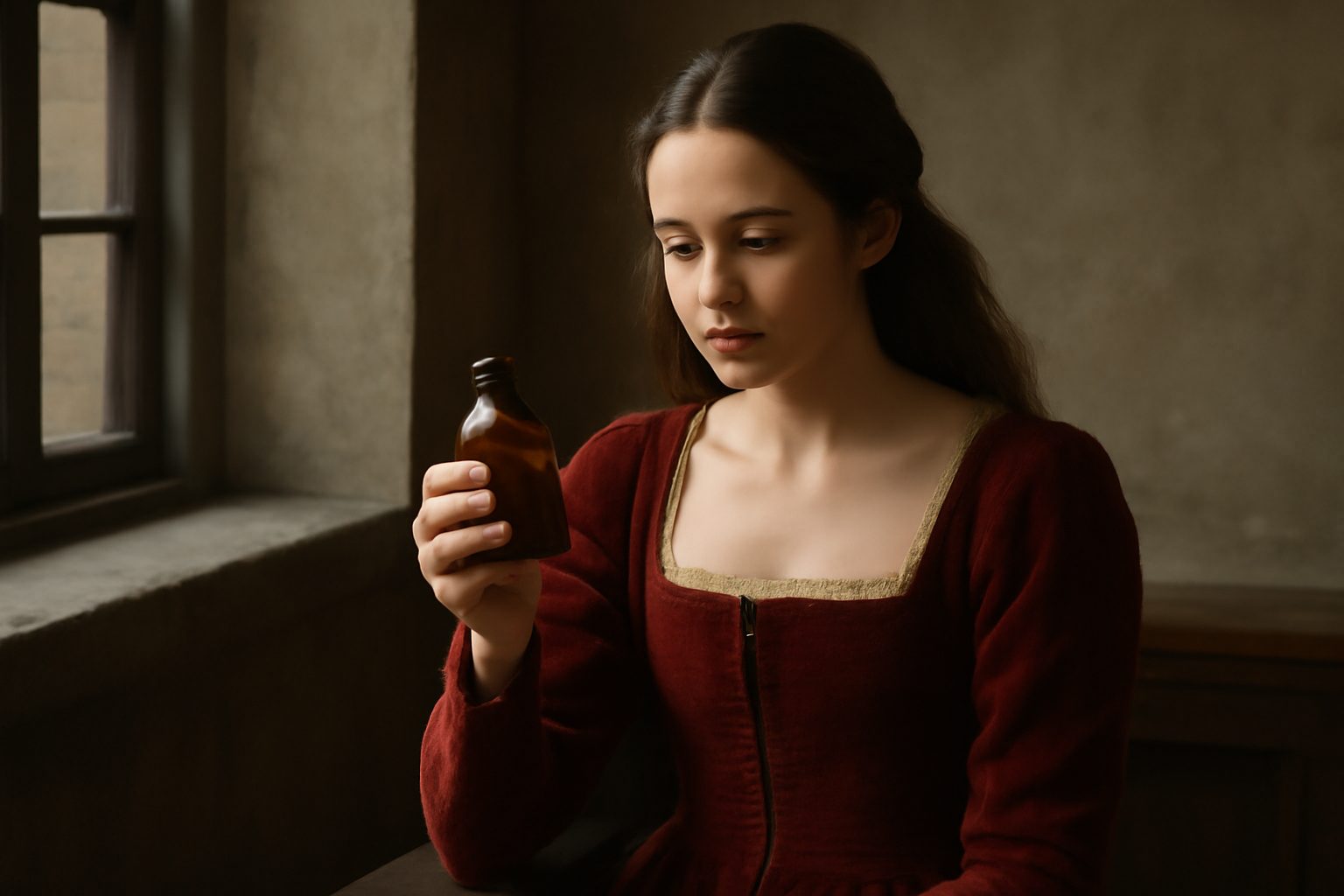
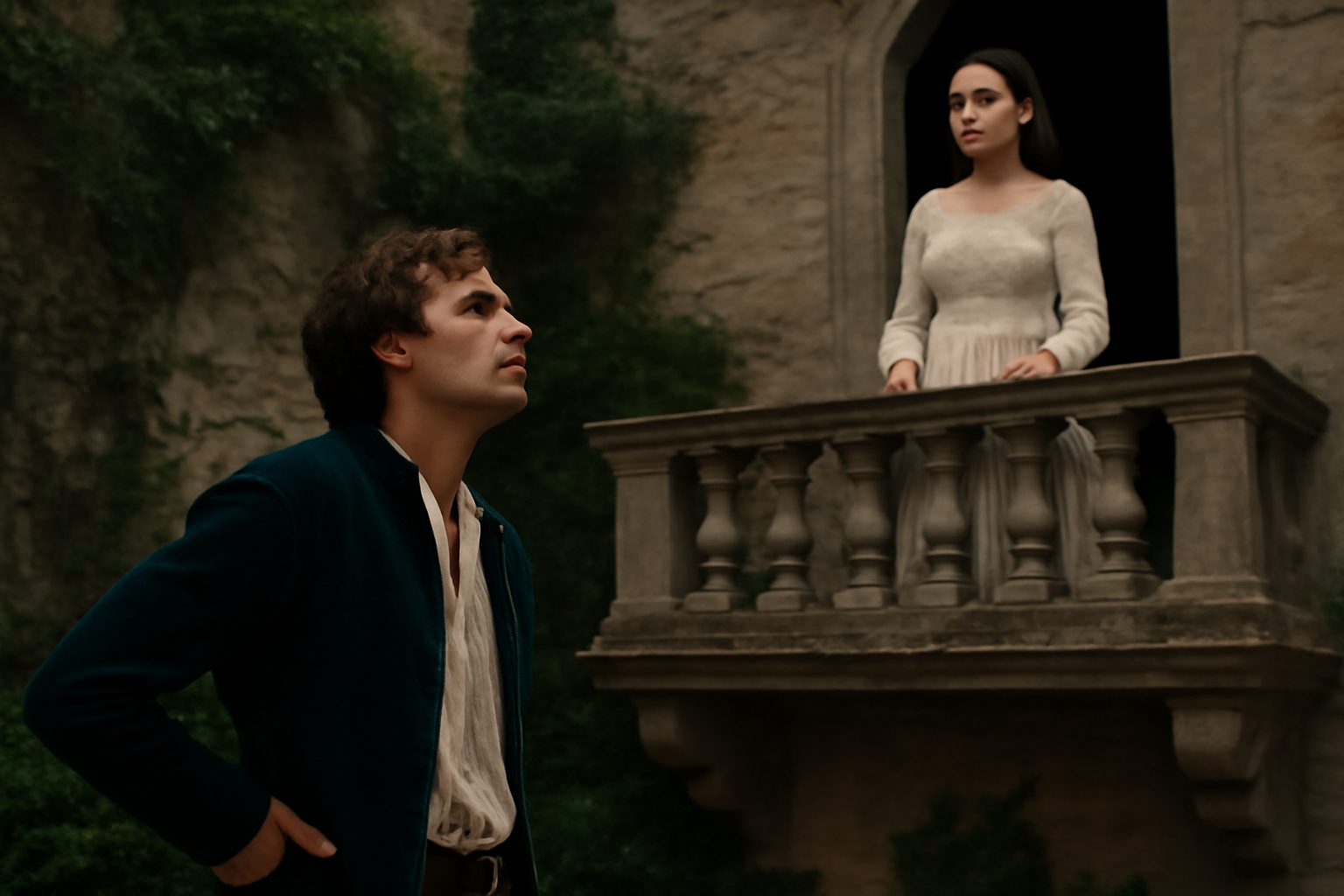
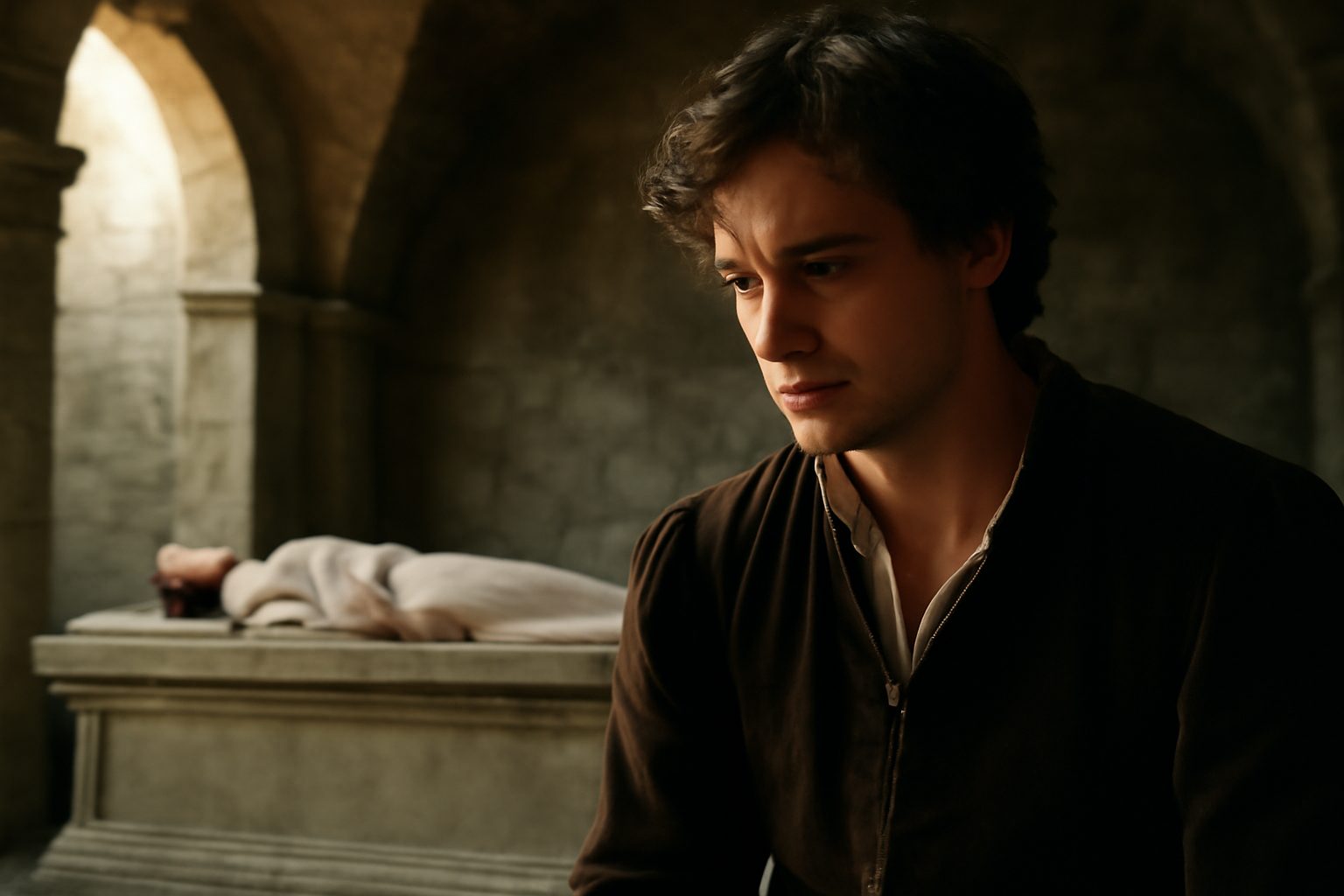
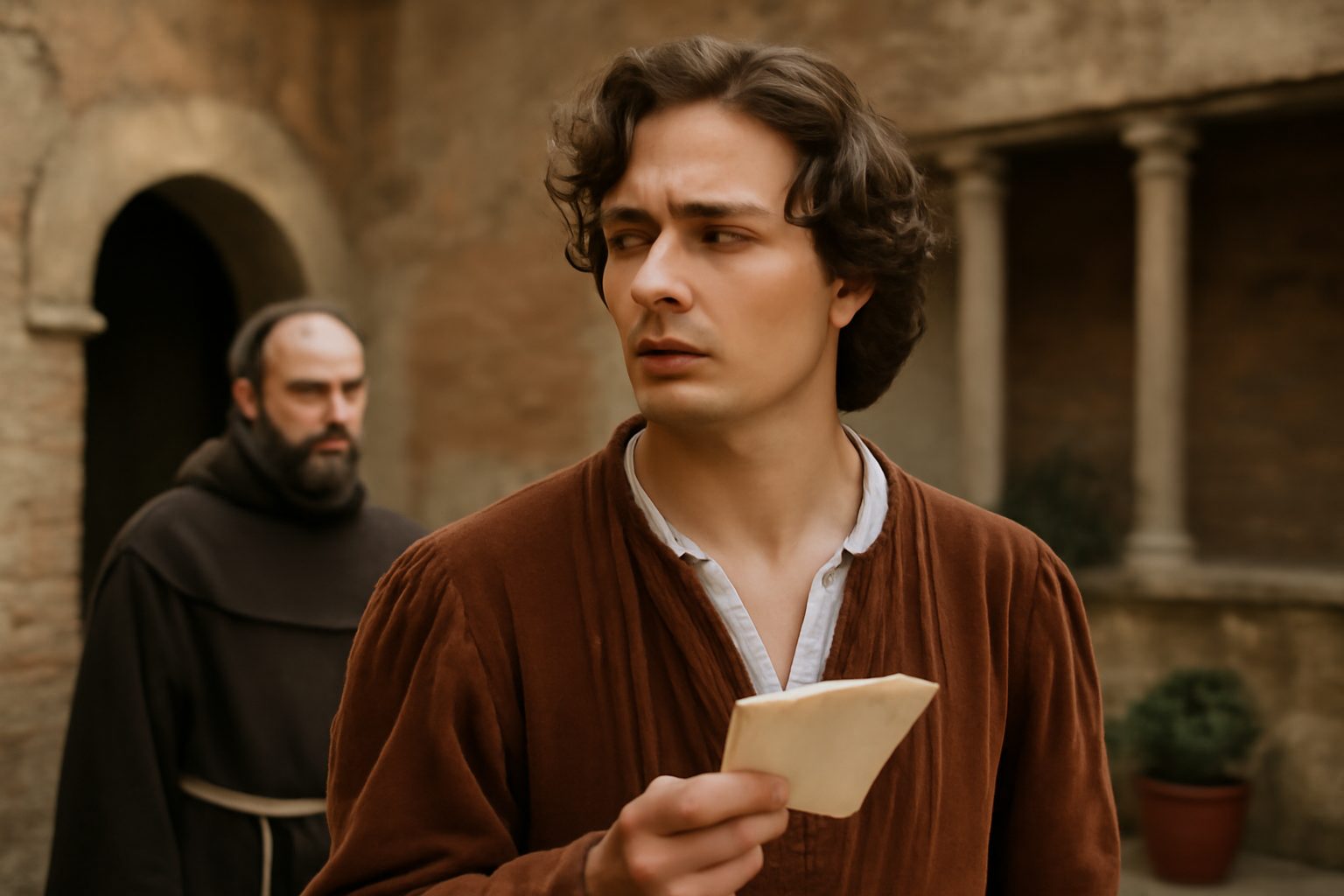
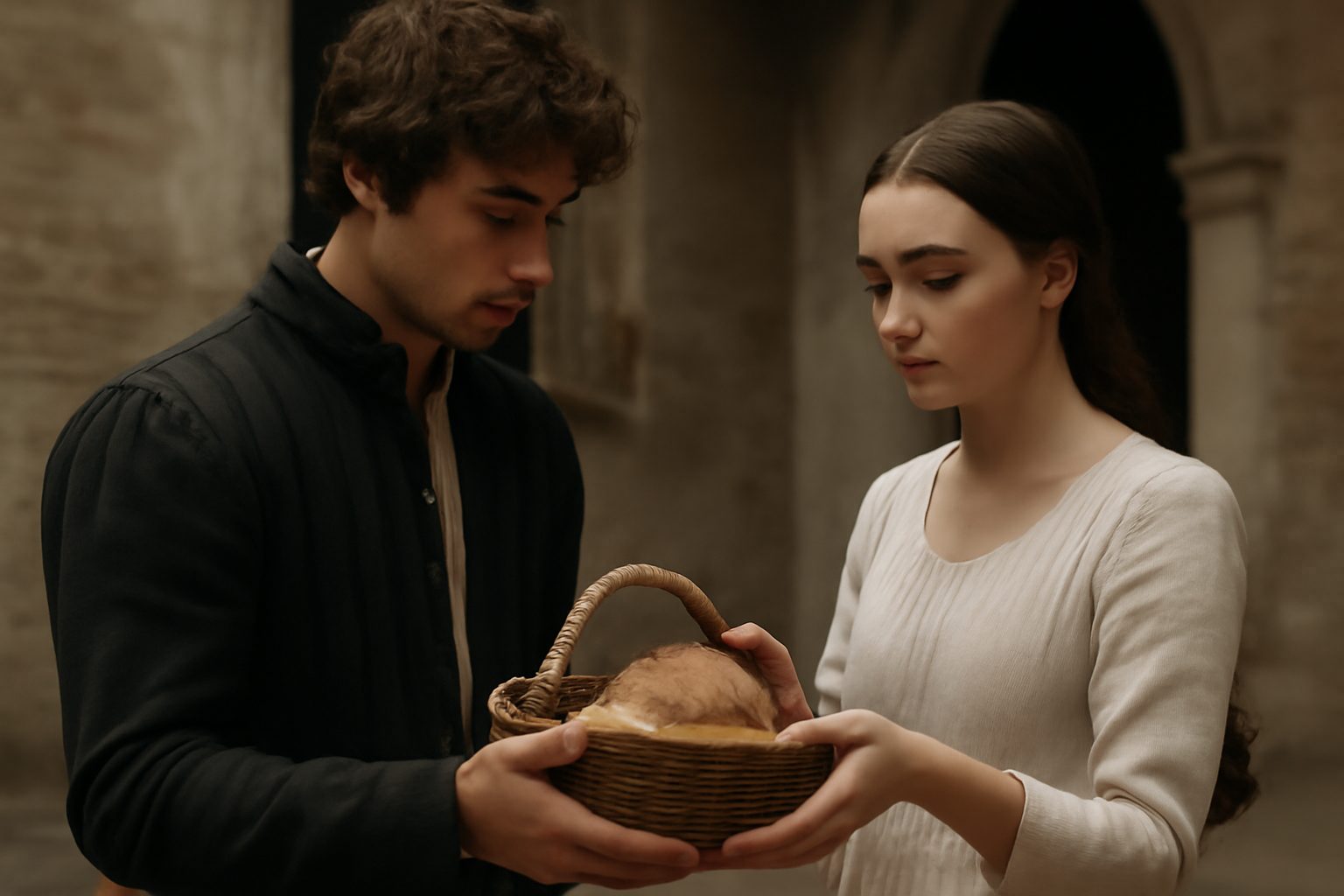
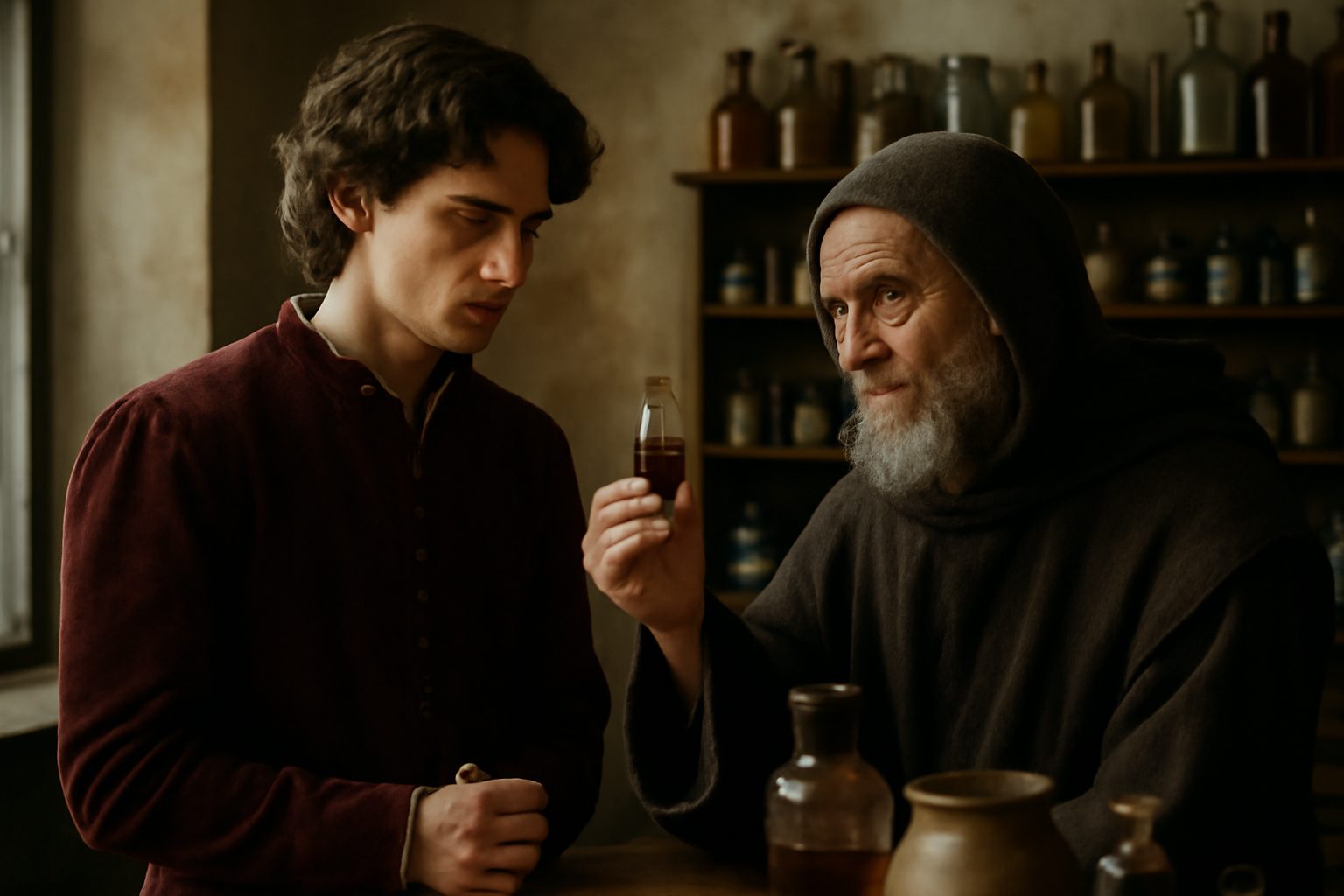
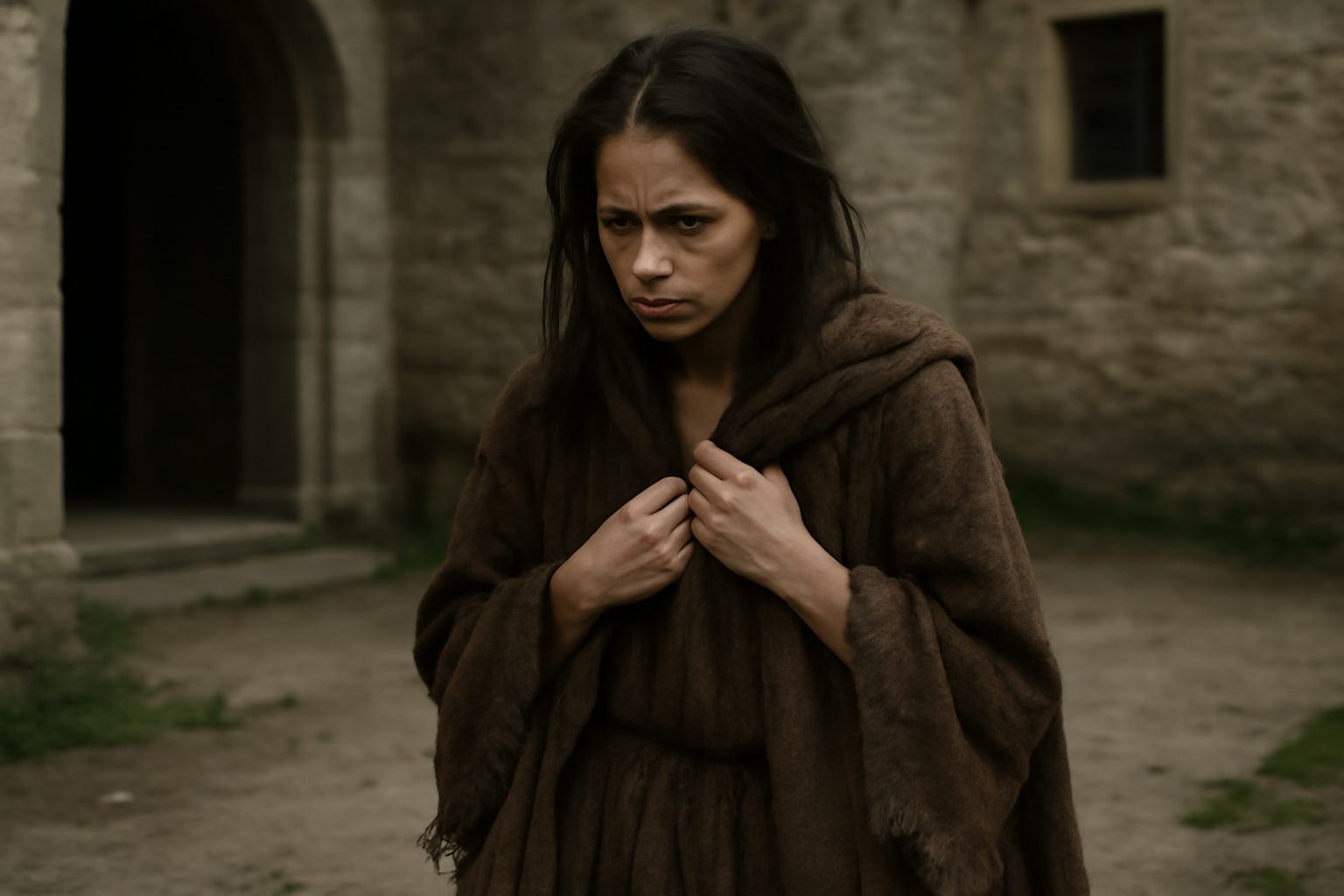
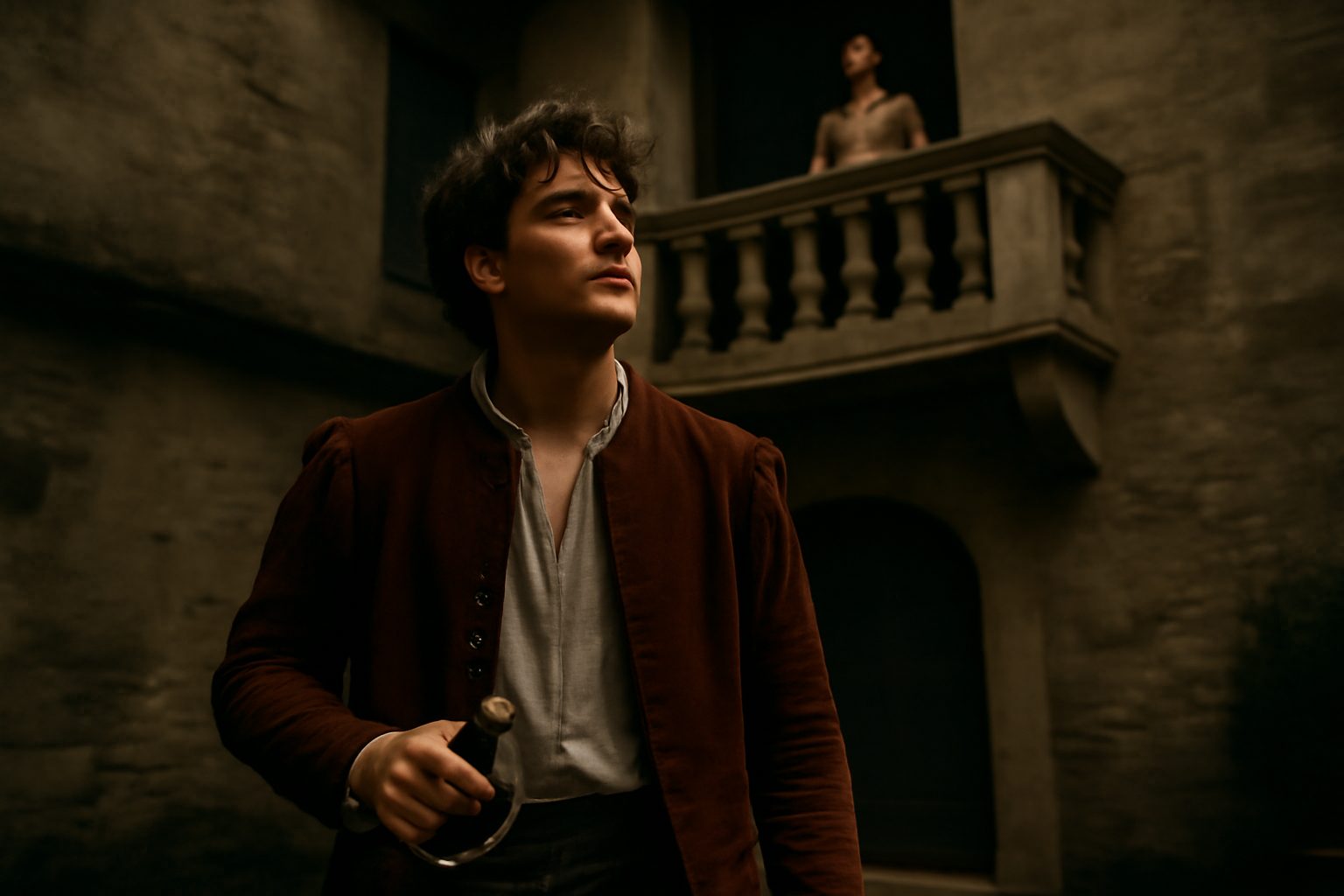
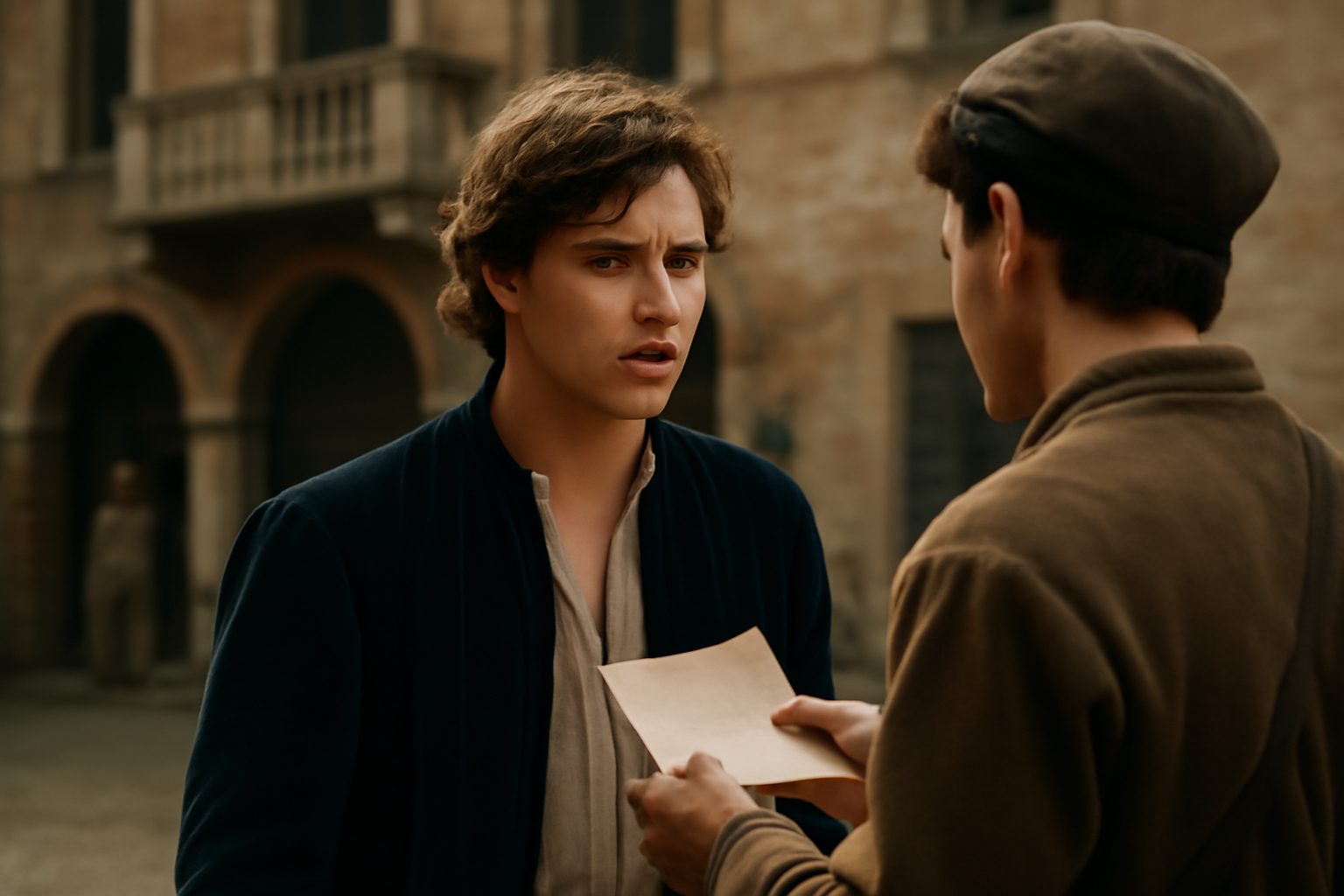
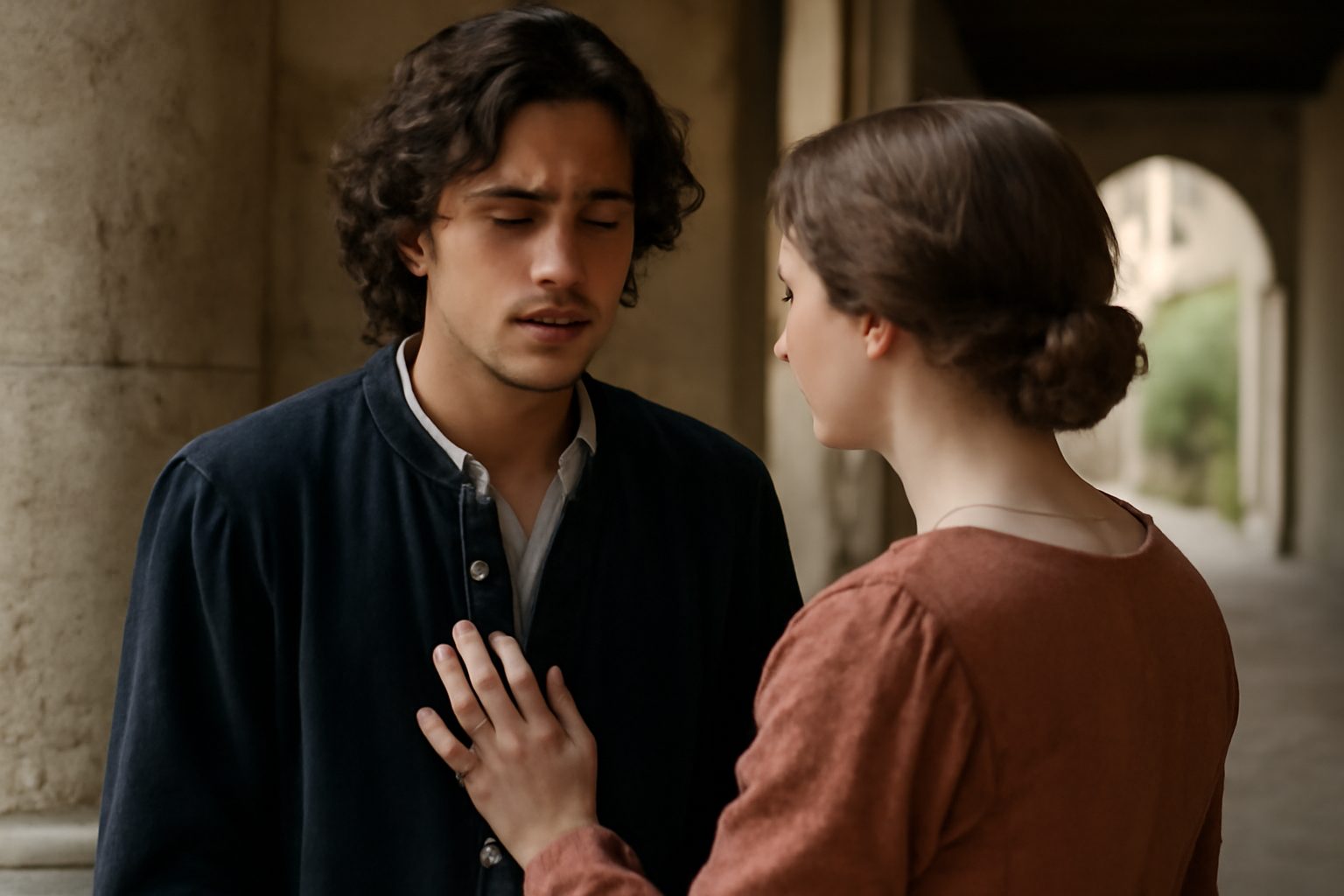
In Act 5, Scene 1 of Romeo and Juliet, Romeo, exiled in Mantua, has just learned of Juliet's supposed death. Desperate and grief-stricken, he resolves to return to Verona and join her in death, leading him to seek out a poverty-stricken apothecary. His urgent call for the apothecary marks the beginning of his reckless plan to obtain poison.
Romeo: "What, ho! apothecary!"
In modern day english, we would say:
Hey there, pharmacist!
Frequently Asked Questions
Who is Romeo calling out to in this line?
Romeo is calling out to an apothecary, who is like a pharmacist or medicine seller.
Connections to other verses:
Connections to "What, ho! apothecary!" in Romeo & Juliet Act 5, Scene 1
Romeo's exclamation, "What, ho! apothecary!", marks a pivotal moment in the scene, directly initiating his interaction with the apothecary. This call is immediately answered by the apothecary's cautious response in "Who calls so loud?", setting the stage for their fateful exchange.
Context and Motivation
Romeo's decision to seek out the apothecary stems from his desperation upon learning of Juliet's supposed death. Earlier in the scene, he recalls the apothecary's existence in "I do remember an apothecary,--", noting his impoverished state and location in "And hereabouts he dwells,--which late I noted". This memory is triggered by his need for poison, as he contemplates in "An if a man did need a poison now,", recognizing that the apothecary's poverty makes him likely to comply despite the law.
Description of the Apothecary and His Shop
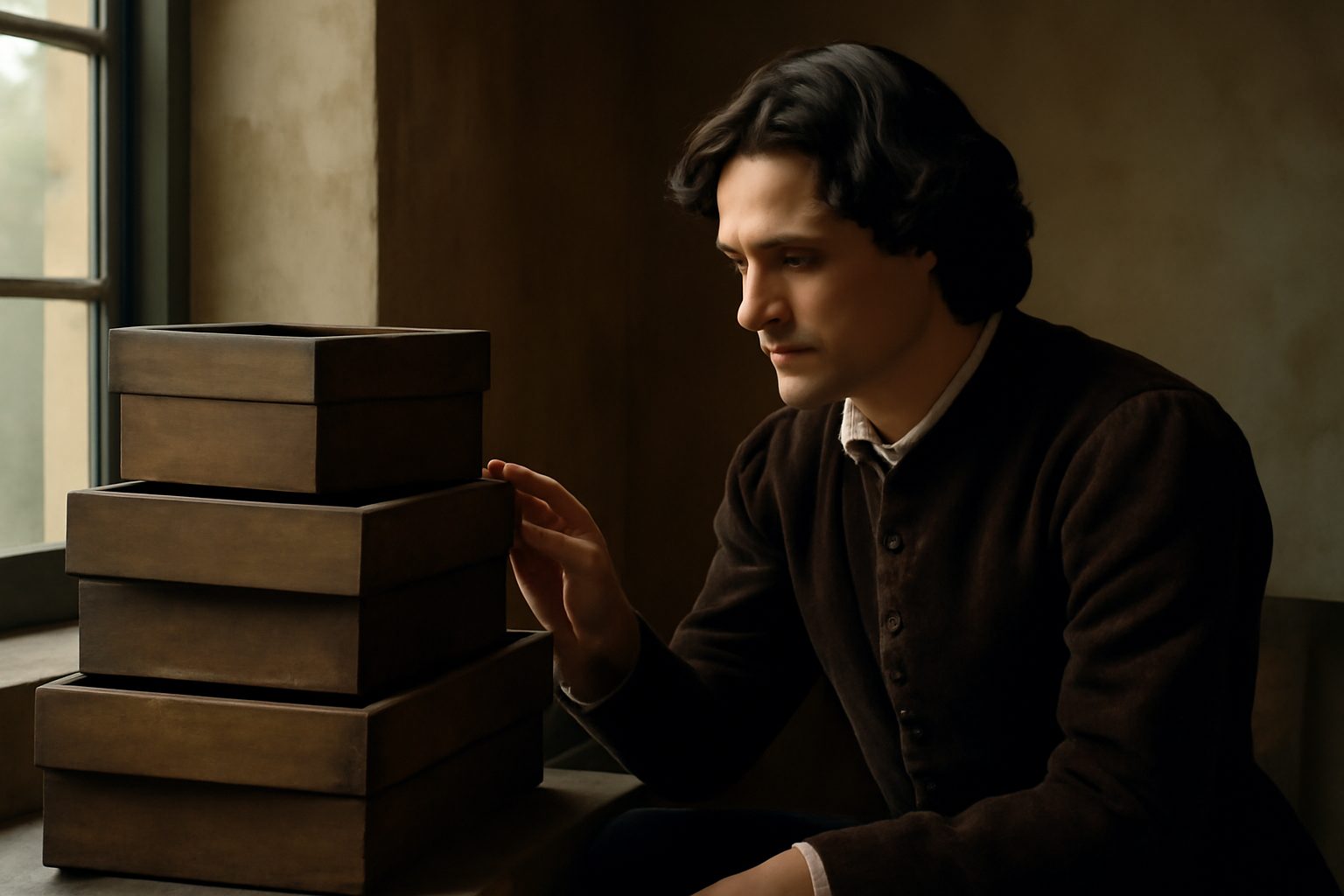
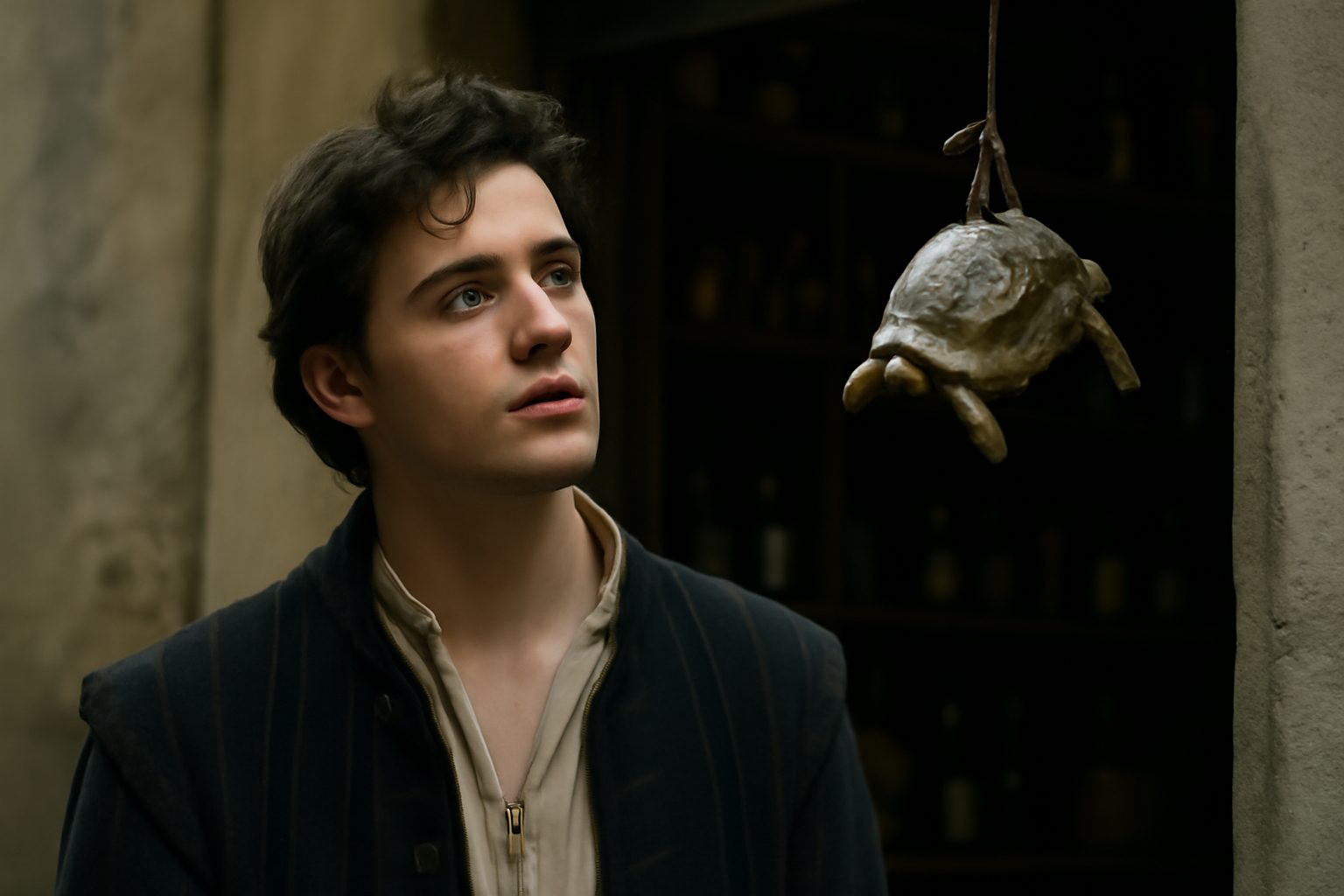
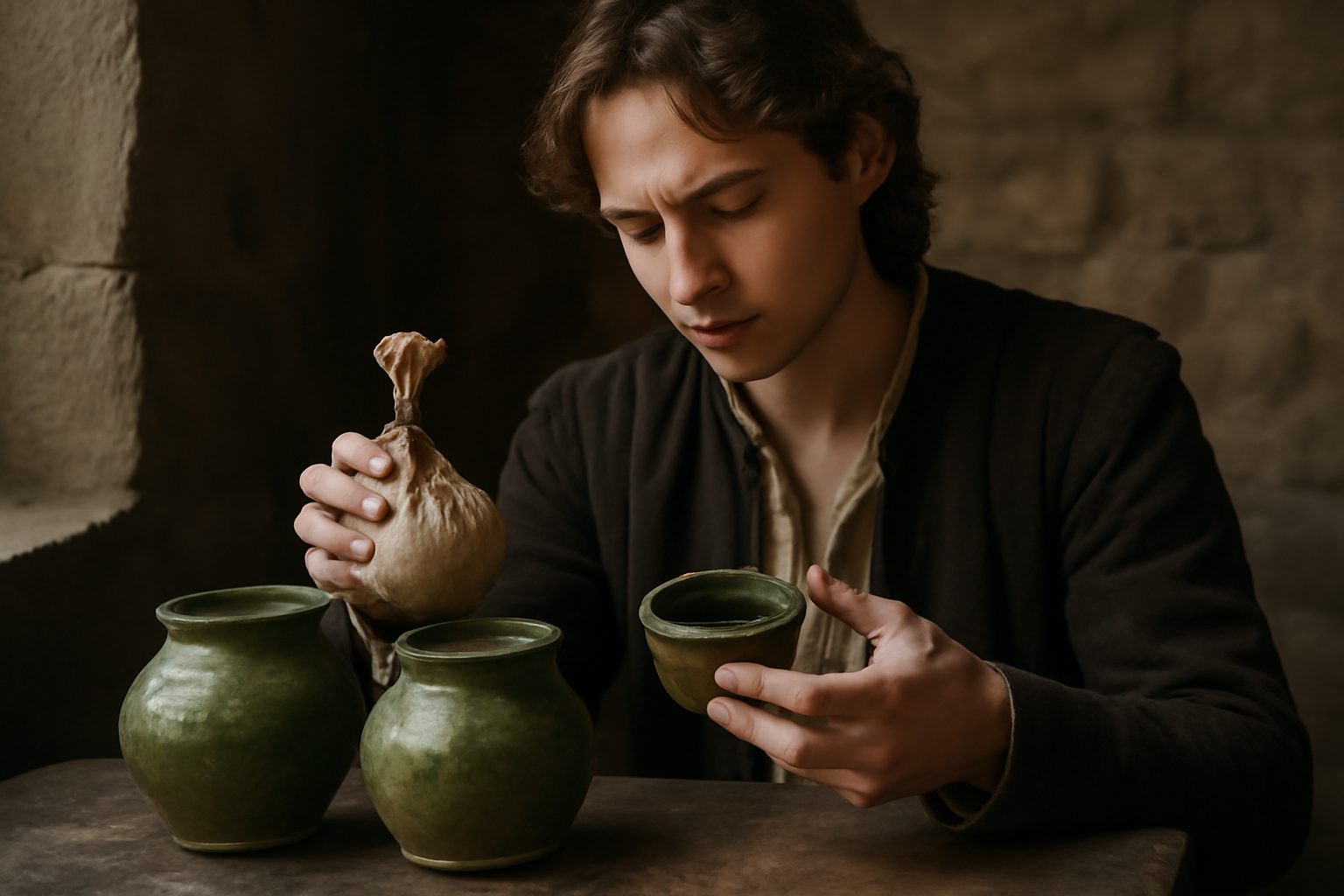
Romeo's call is preceded by his vivid description of the apothecary's shop, which he recalls as meager and sparse. He notes "And in his needy shop a tortoise hung," alongside "An alligator stuff'd, and other skins" and "Of ill-shaped fishes; and about his shelves". The shop contains "A beggarly account of empty boxes," "Green earthen pots, bladders and musty seeds," and "Remnants of packthread and old cakes of roses," all "thinly scatter'd, to make up a show." The apothecary himself is depicted as "In tatter'd weeds, with overwhelming brows," engaged in "Culling of simples; meagre were his looks," with "Sharp misery had worn him to the bones."
The Transaction
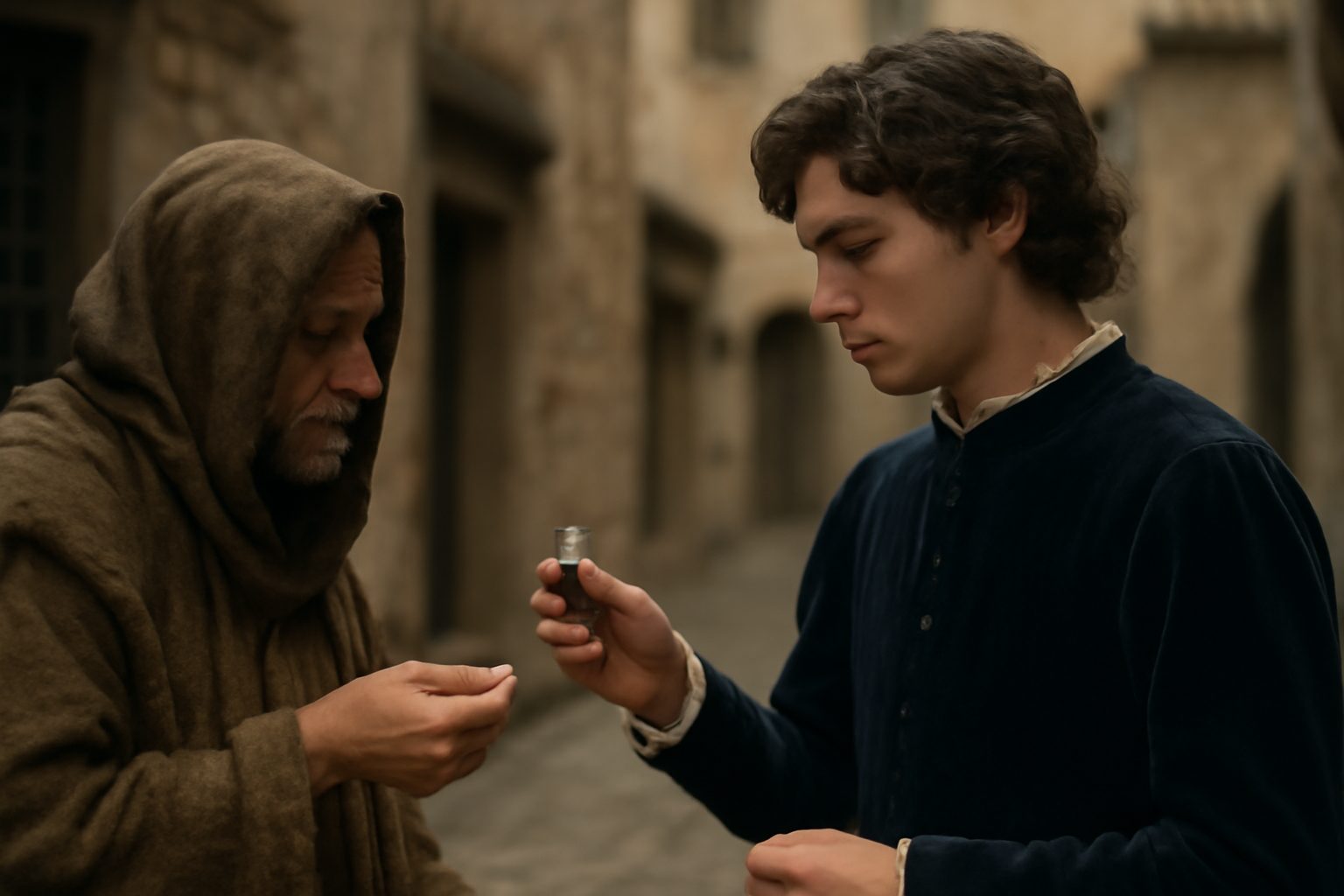
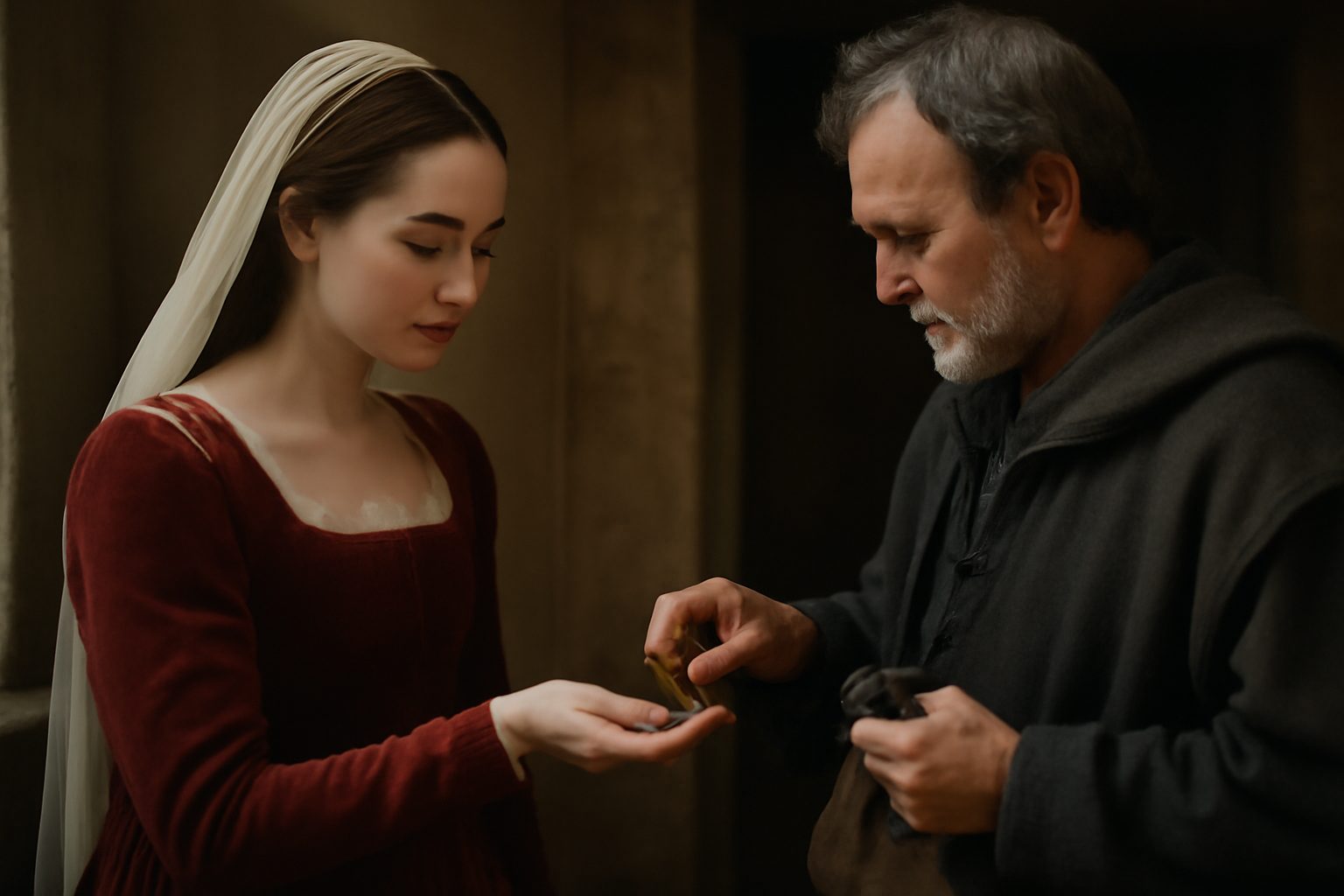
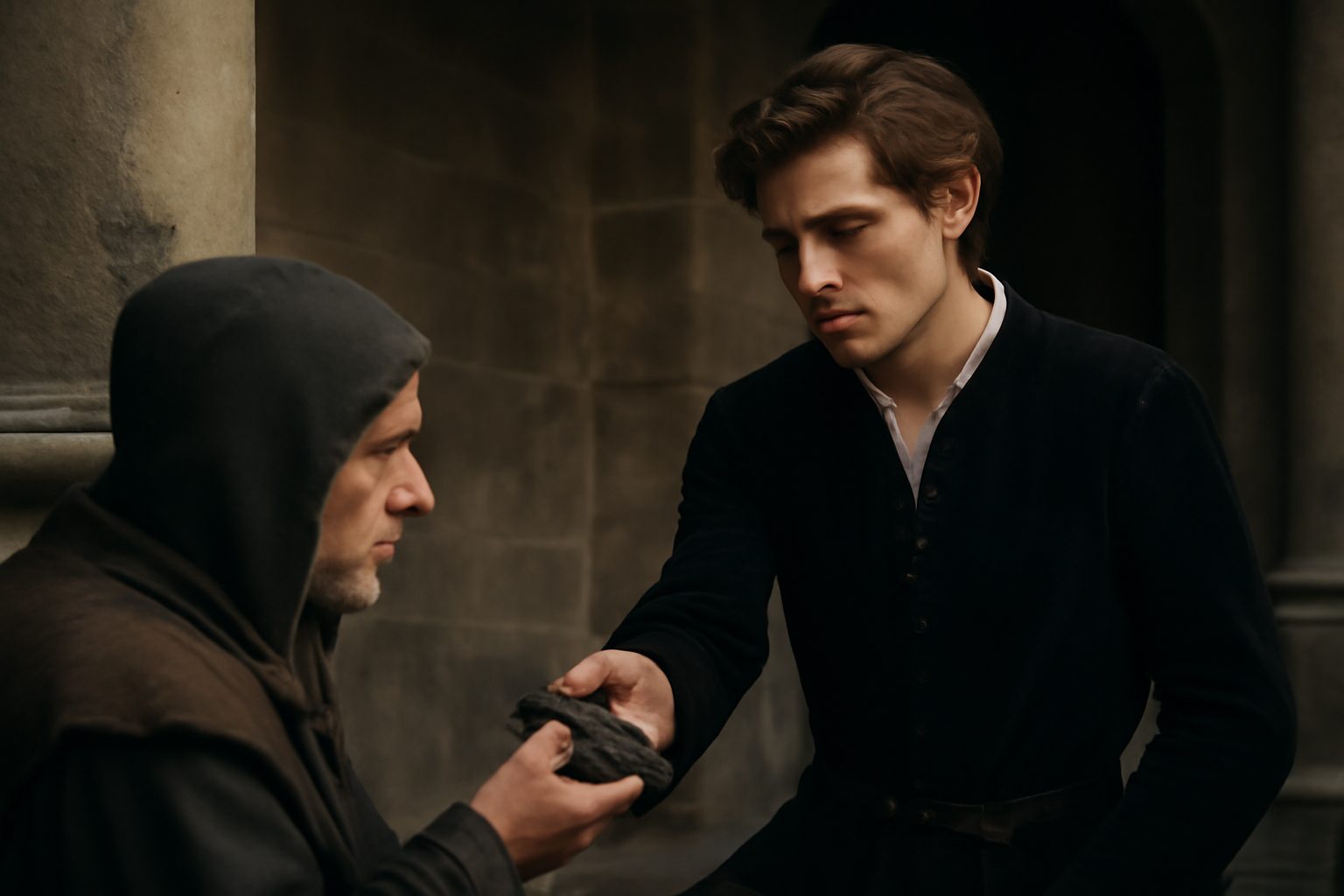
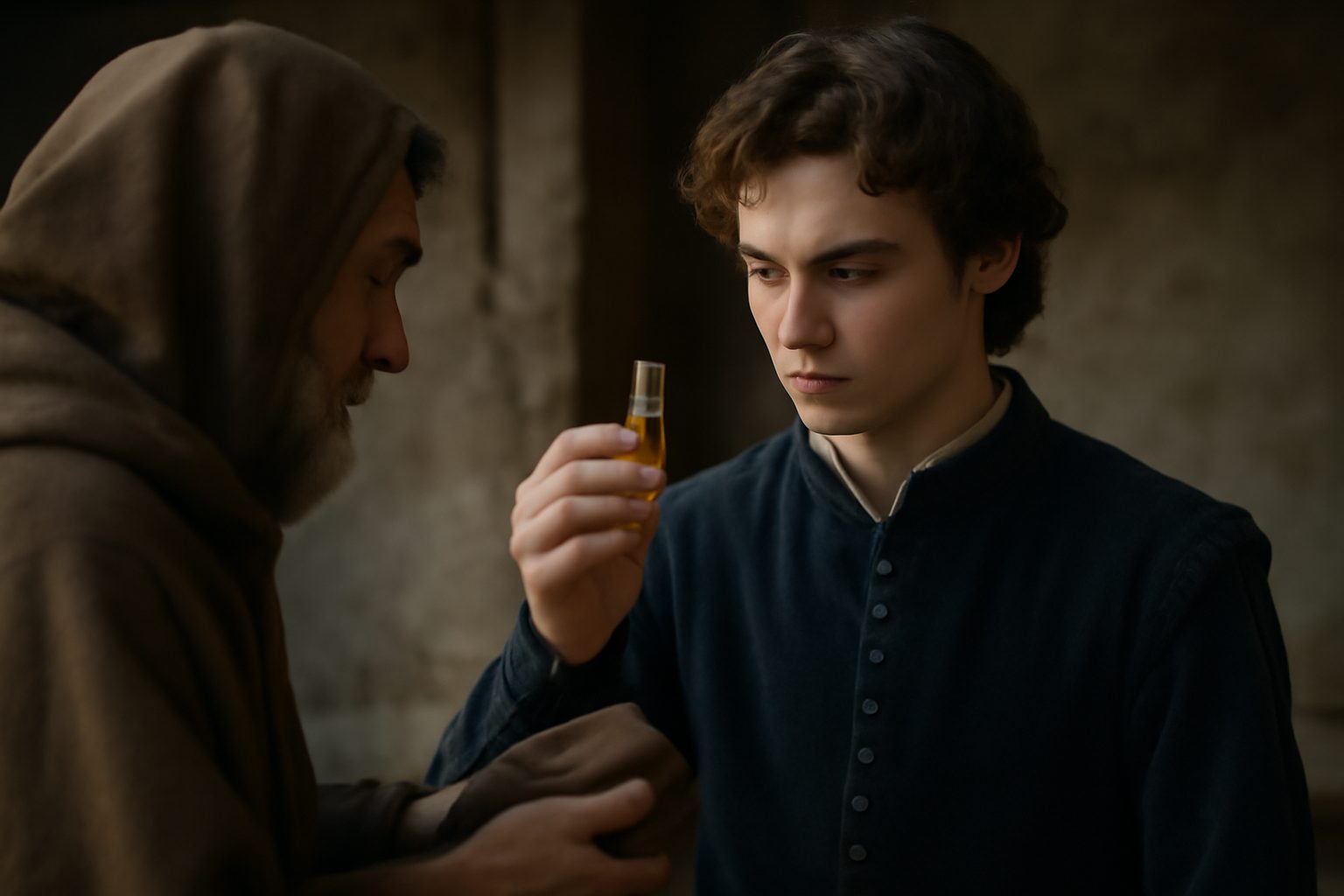
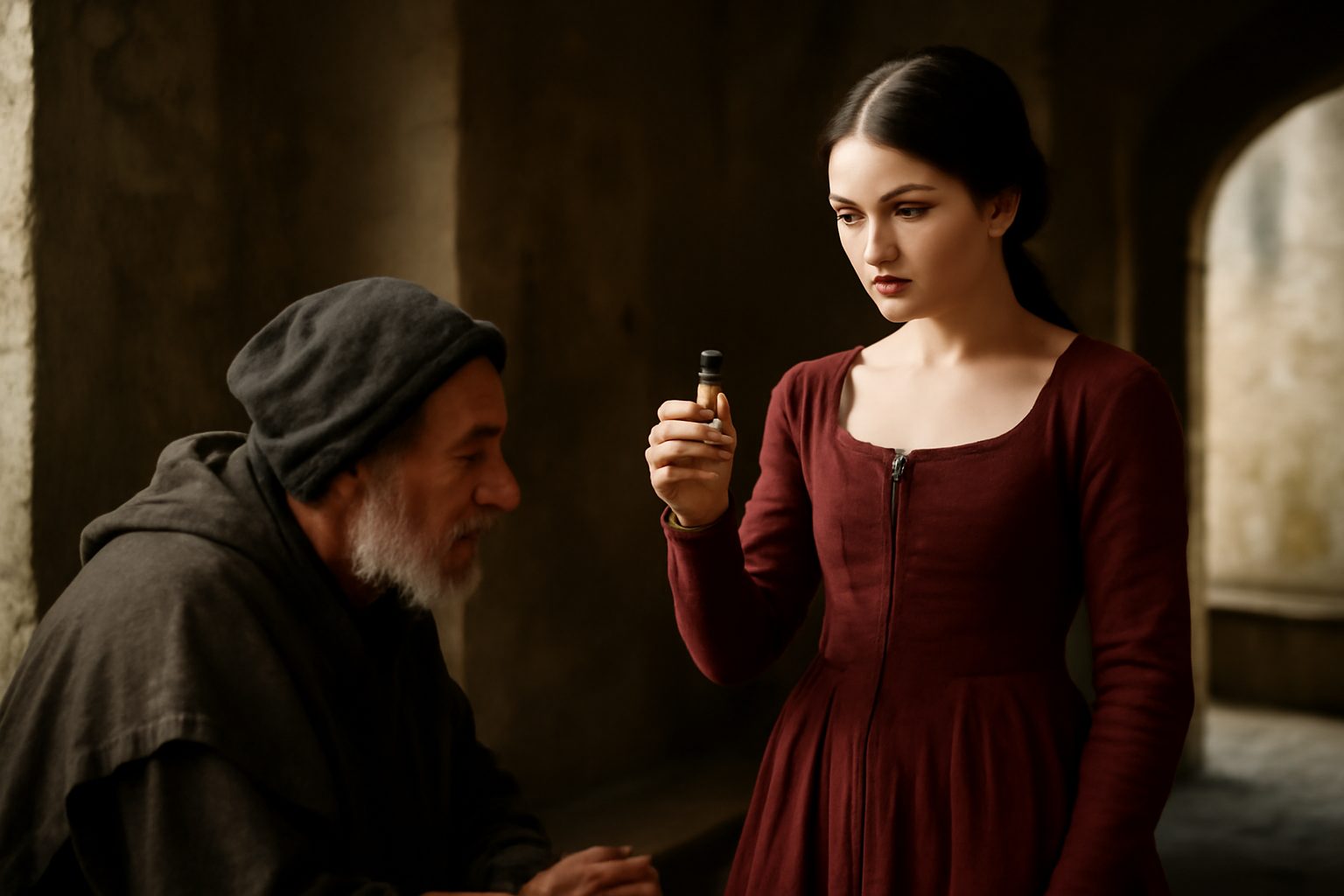
Upon the apothecary's appearance, Romeo immediately addresses his poverty, saying "Come hither, man. I see that thou art poor:" and offering money in "Hold, there is forty ducats: let me have" a "dram of poison, such soon-speeding gear". The apothecary hesitates, citing "Such mortal drugs I have; but Mantua's law" where "Is death to any he that utters them." Romeo persuades him by highlighting his desperate state: "Art thou so bare and full of wretchedness," with "famine is in thy cheeks," and "Need and oppression starveth in thine eyes;" while "Contempt and beggary hangs upon thy back." He argues that "The world is not thy friend nor the world's law;" and "The world affords no law to make thee rich;" then urges, "Then be not poor, but break it, and take this." The apothecary reluctantly agrees, stating "My poverty, but not my will, consents," to which Romeo replies "I pay thy poverty, and not thy will."
Nature of the Poison
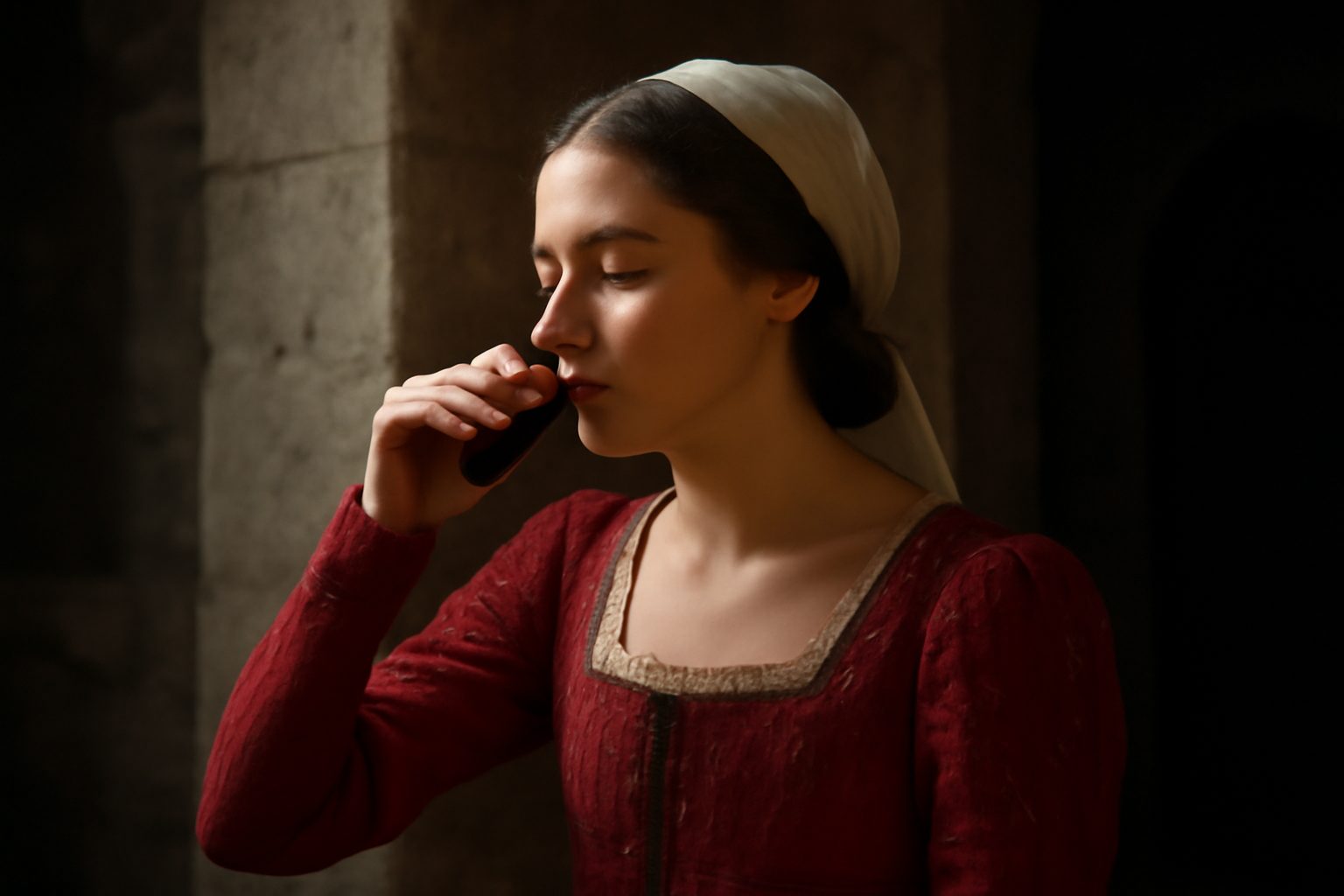
The poison is described as powerful and fast-acting: "As will disperse itself through all the veins", "That the life-weary taker may fall dead", and "And that the trunk may be discharged of breath" "As violently as hasty powder fired" "Doth hurry from the fatal cannon's womb." Romeo is instructed to "Put this in any liquid thing you will," and "And drink it off; and, if you had the strength" "Of twenty men, it would dispatch you straight."
Romeo's Reflection and Departure
After obtaining the poison, Romeo reflects on its nature, calling it "cordial and not poison" since it will reunite him with Juliet. He condemns gold as "worse poison to men's souls," "Doing more murders in this loathsome world"