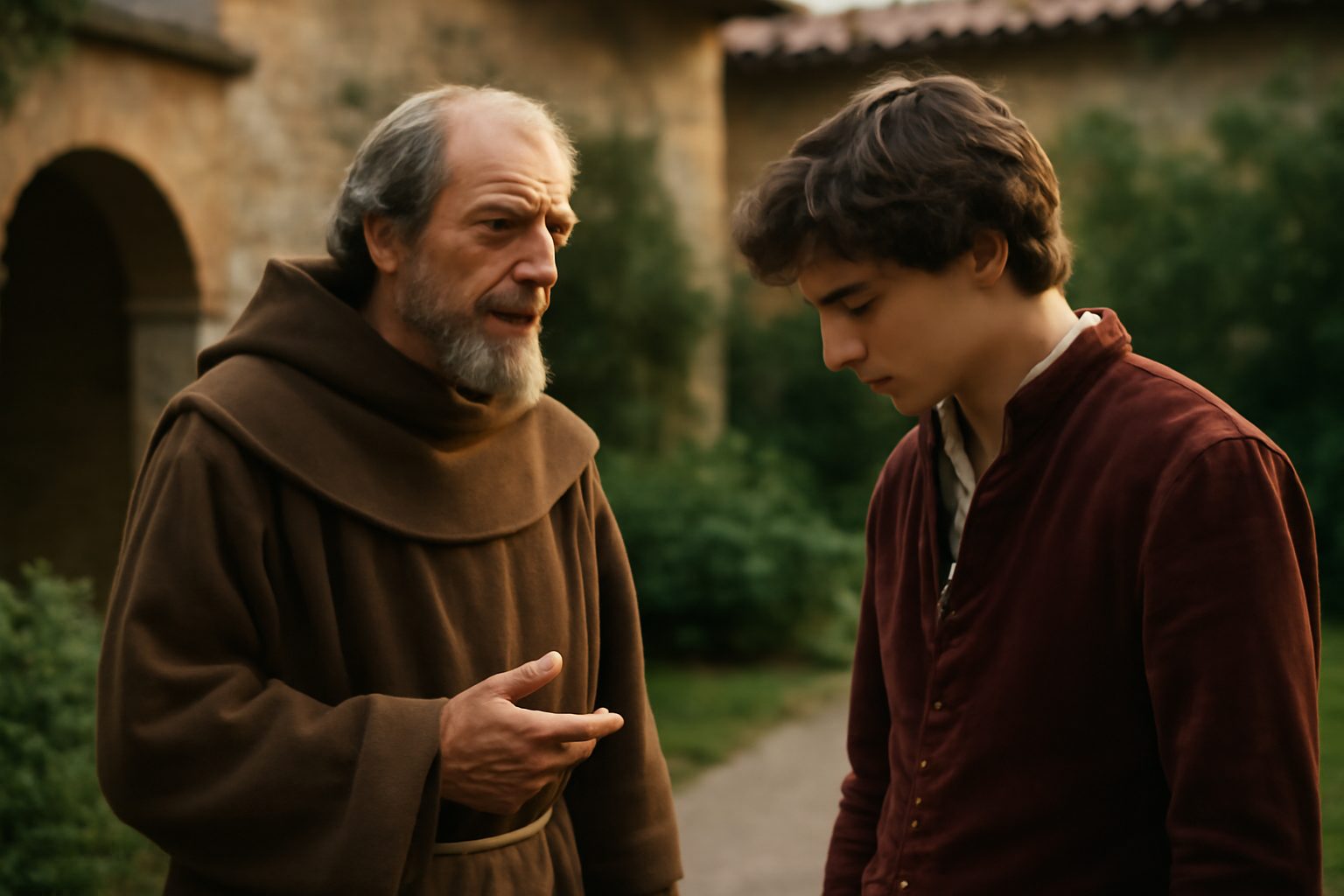
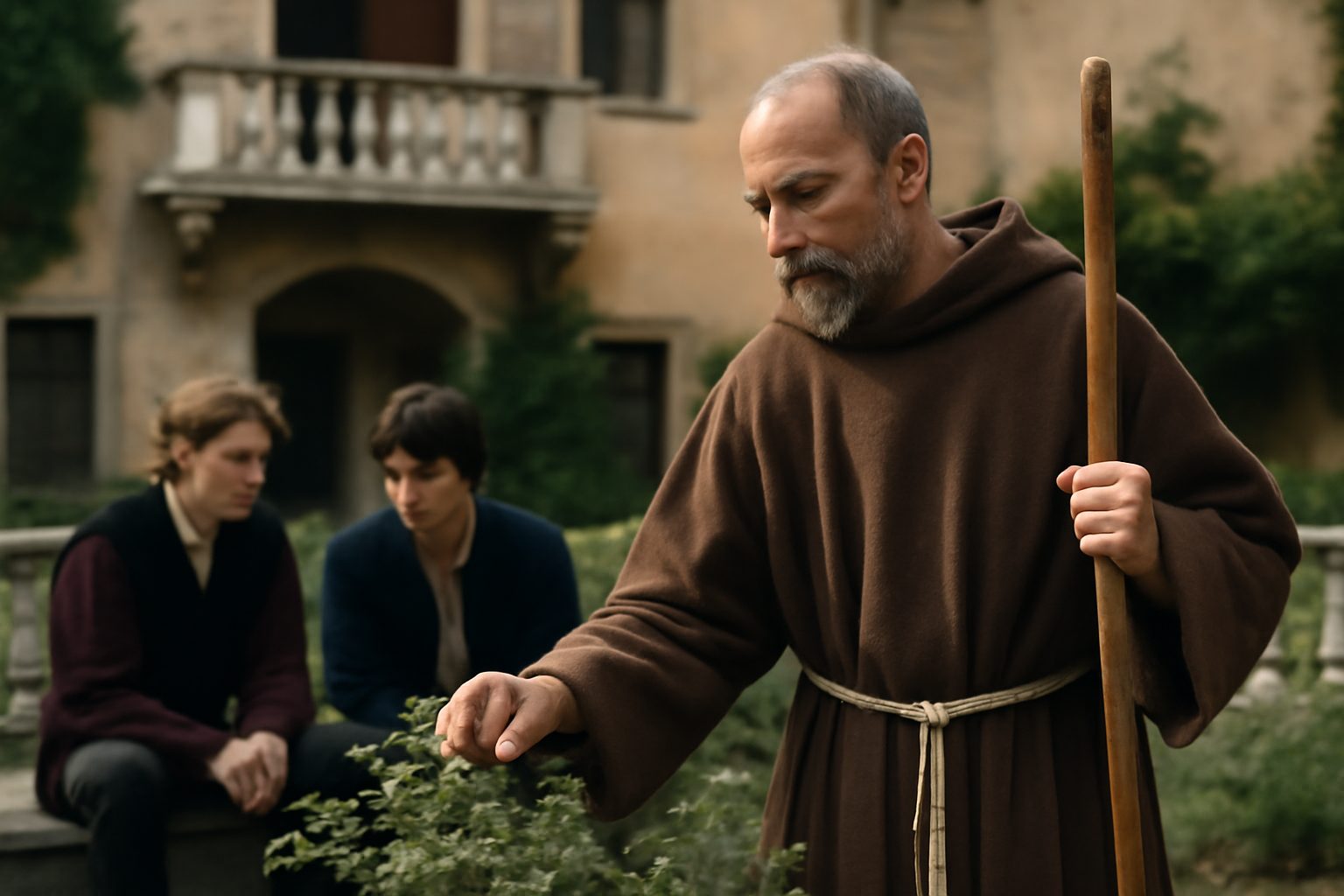
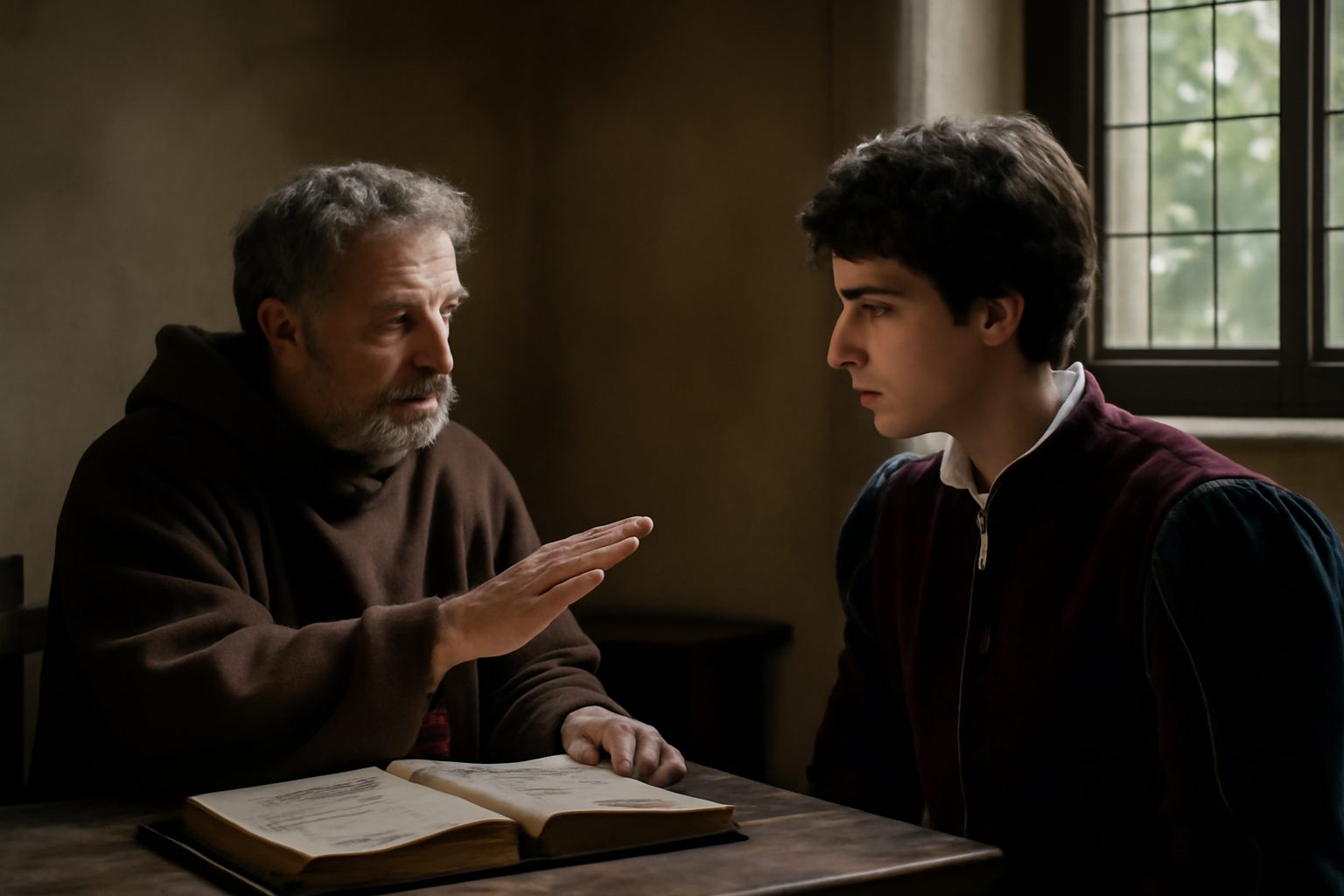
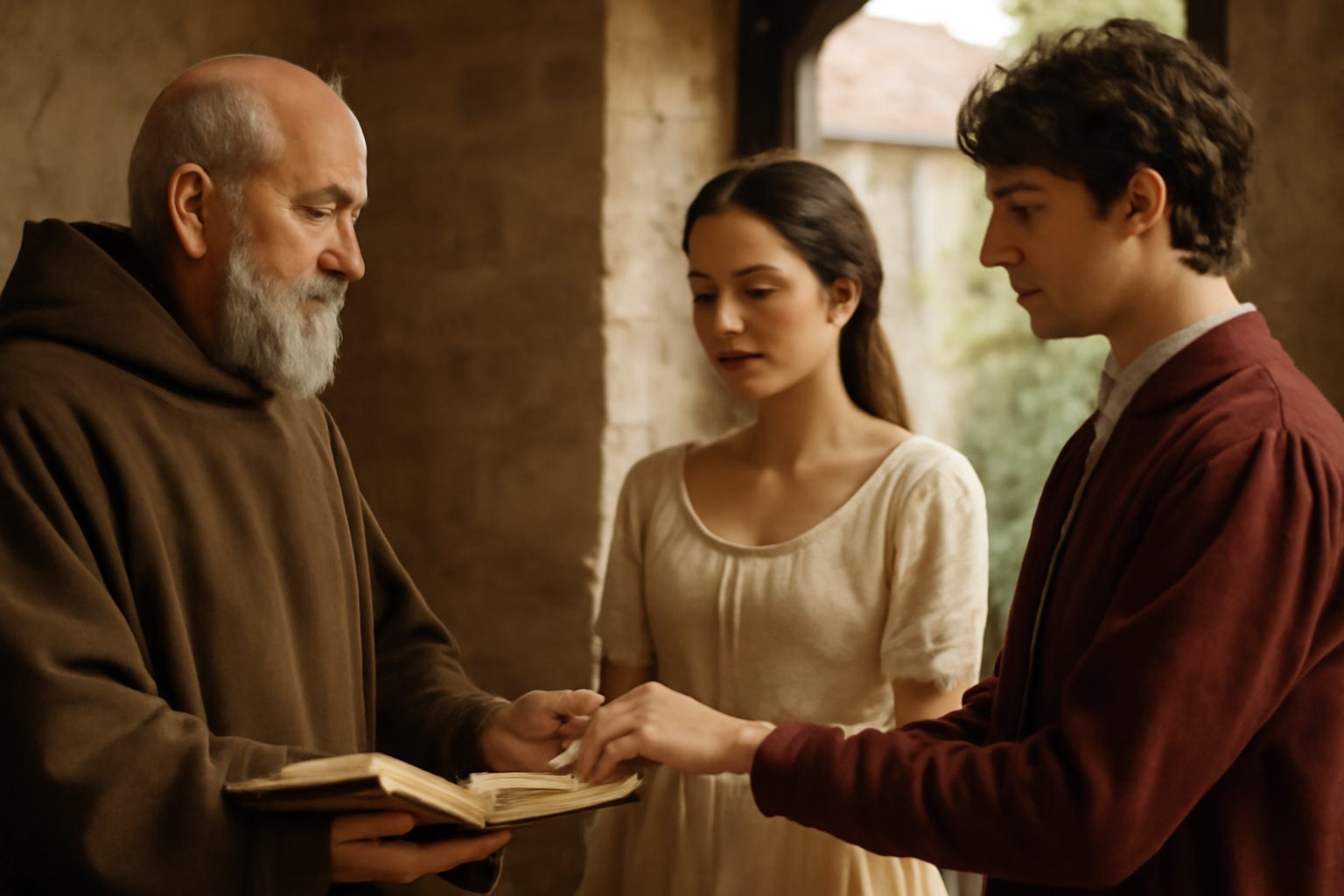
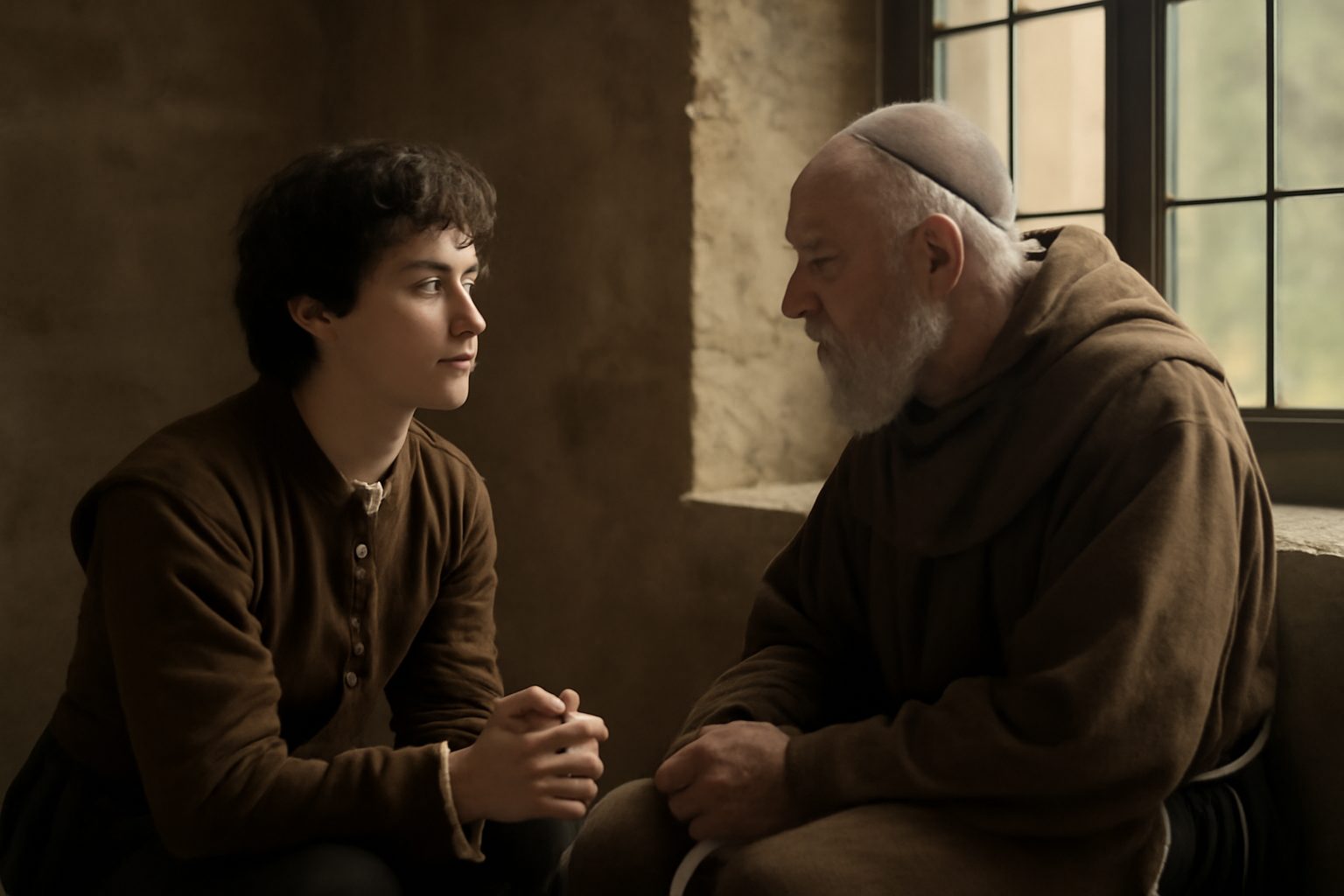
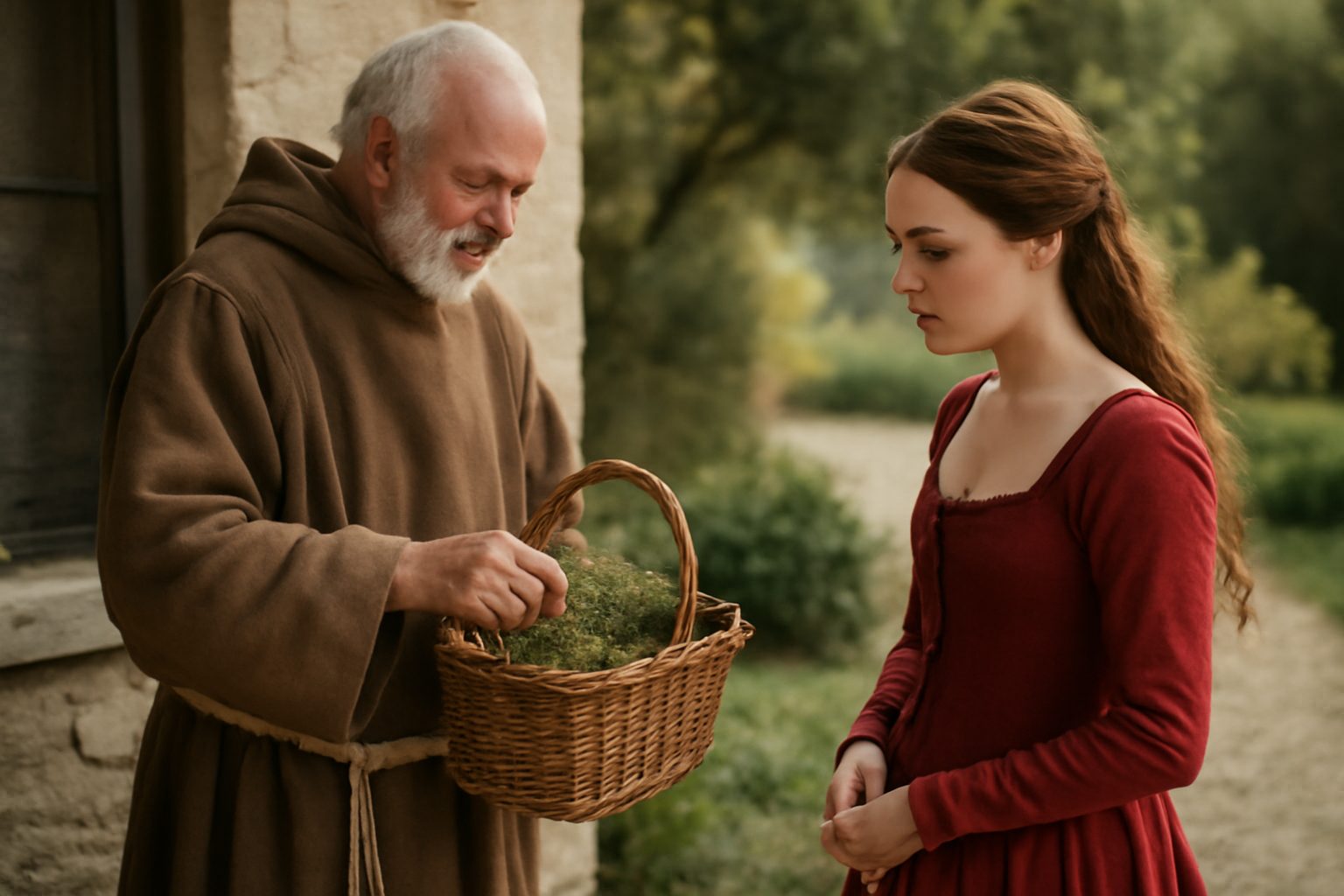
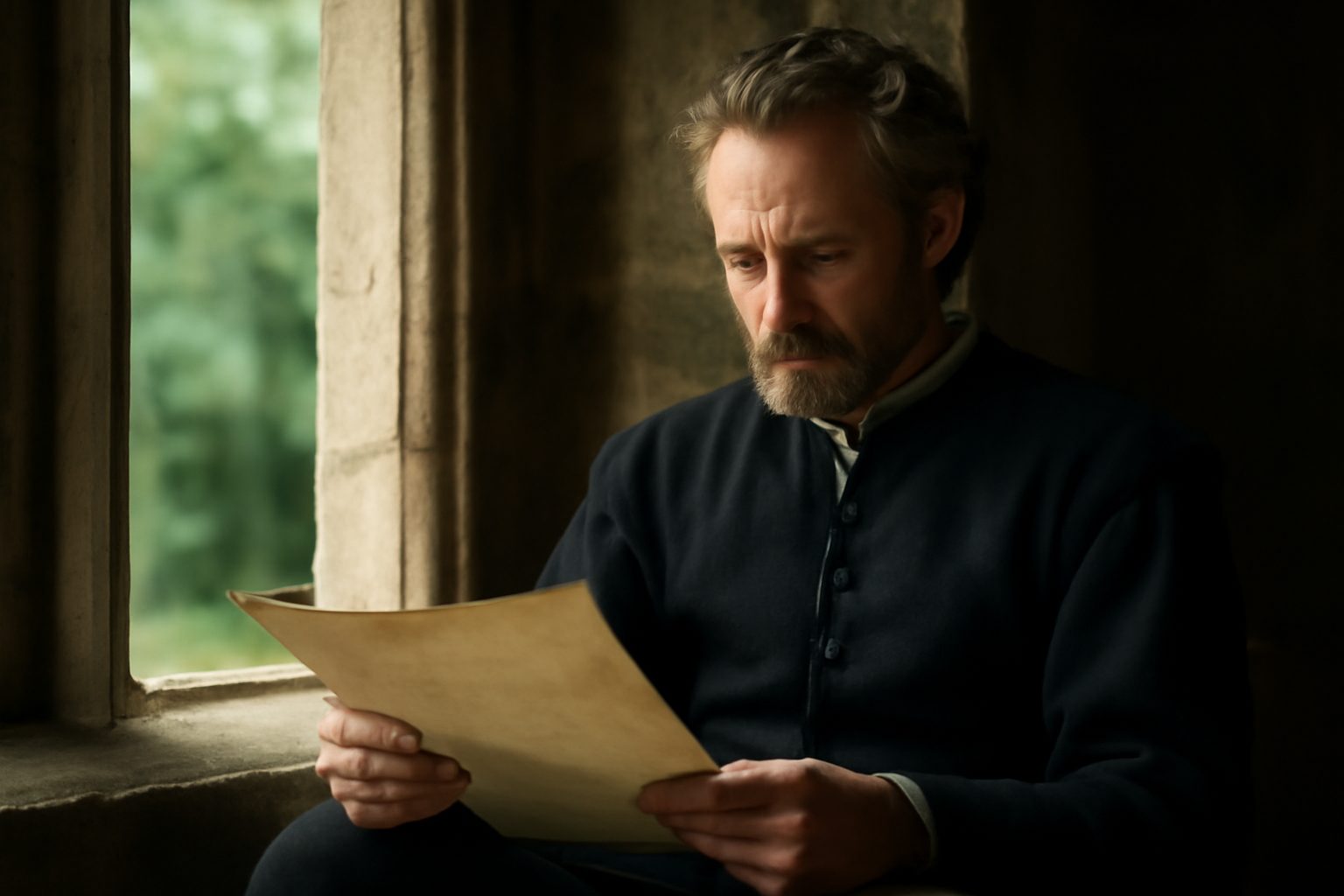
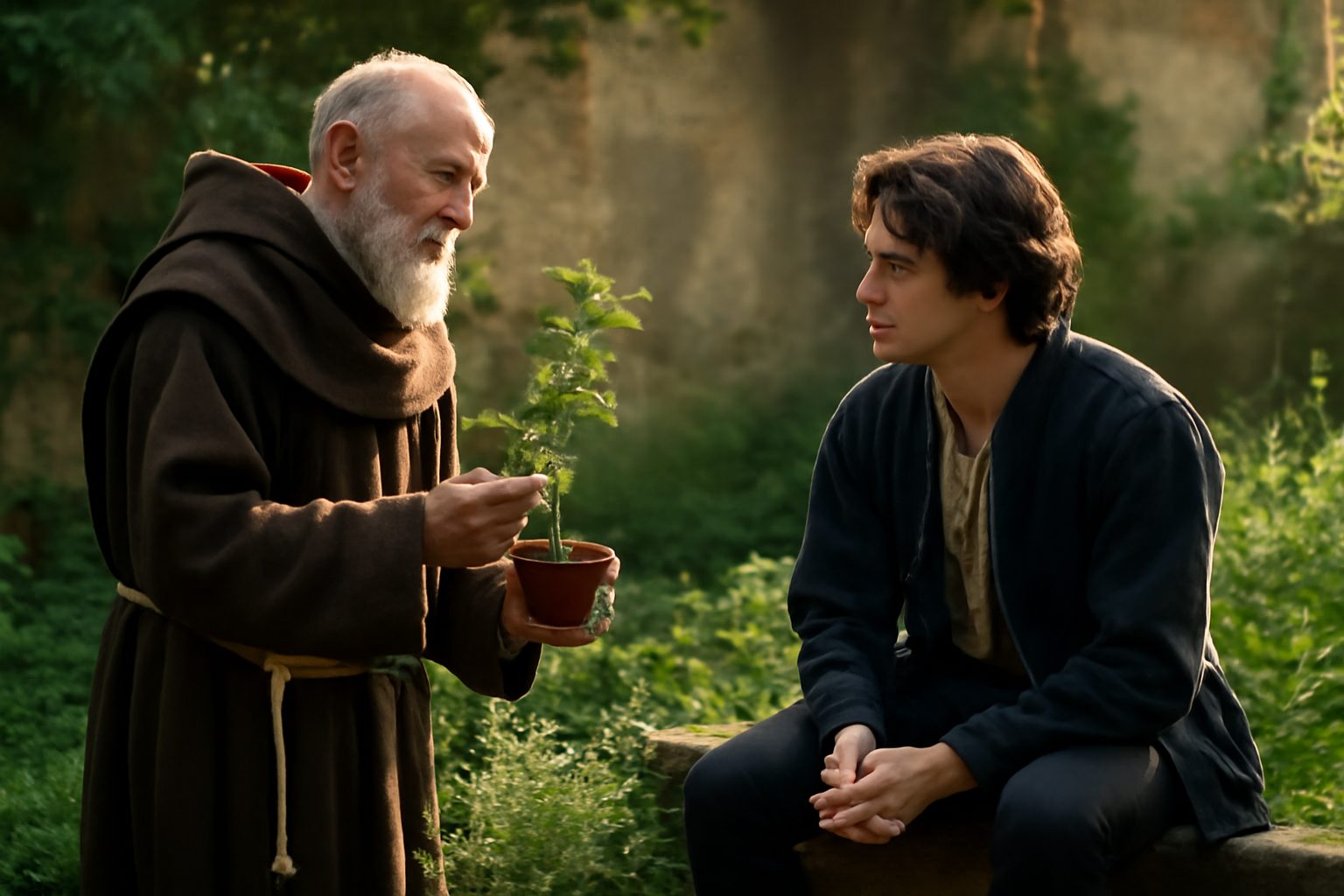
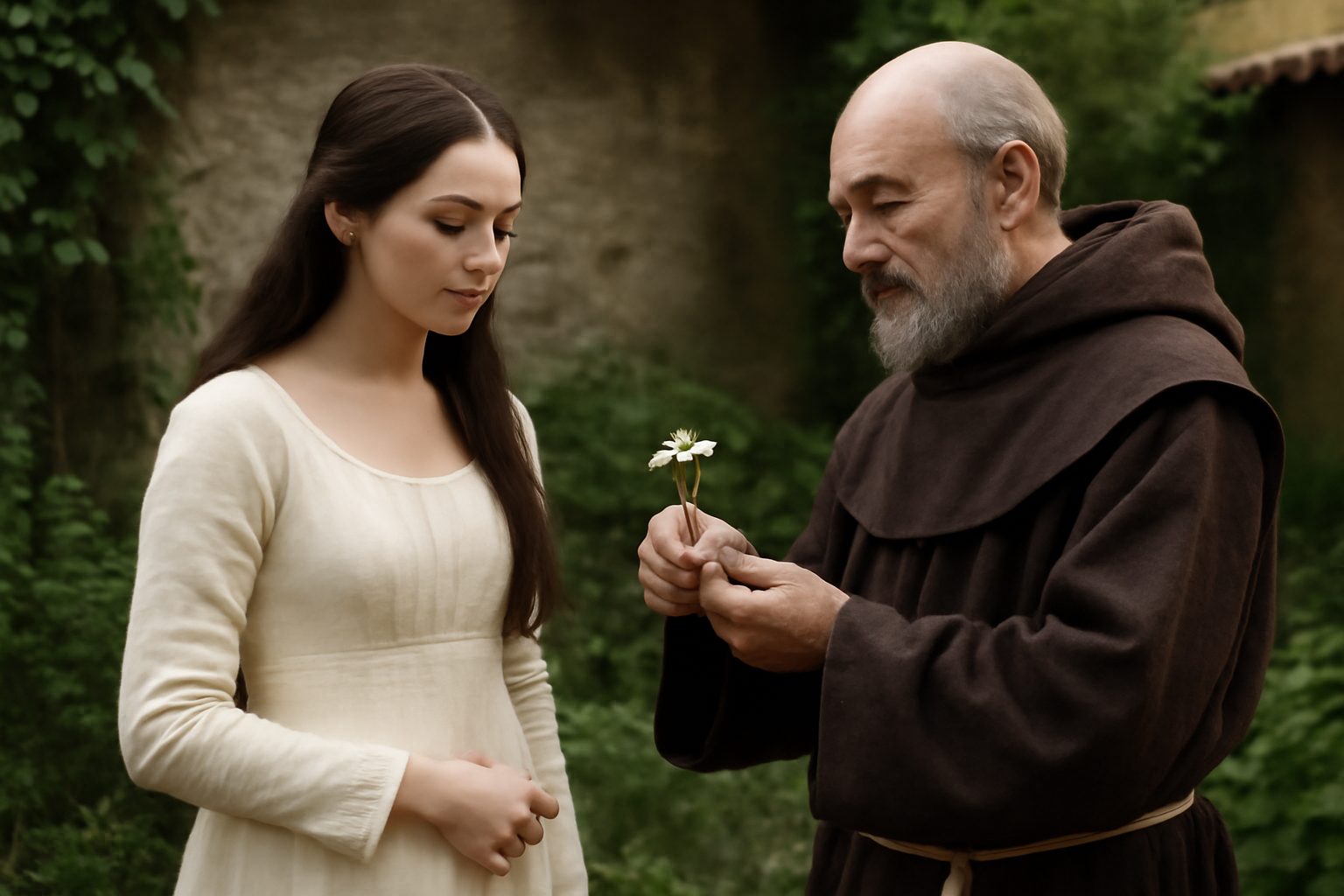
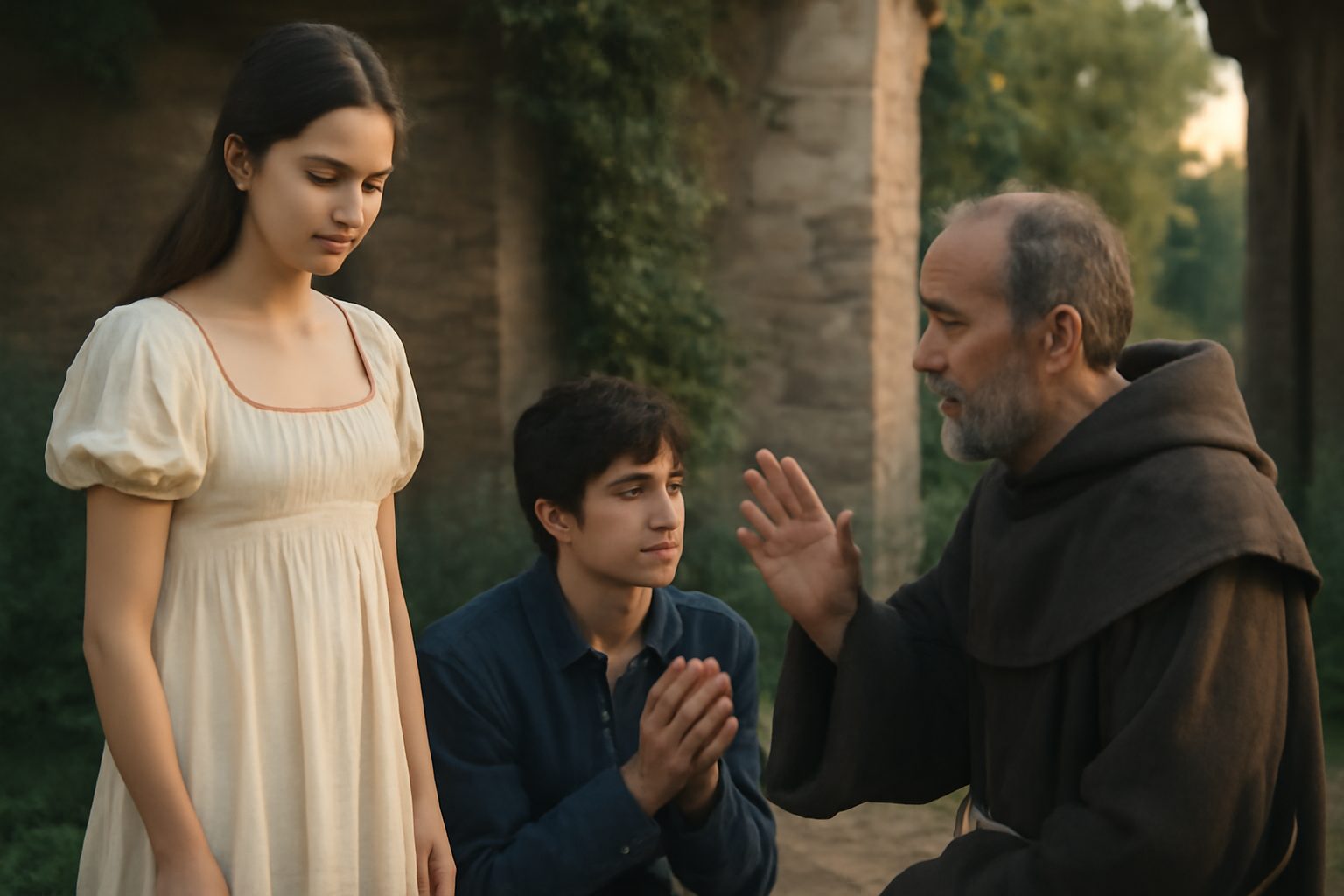
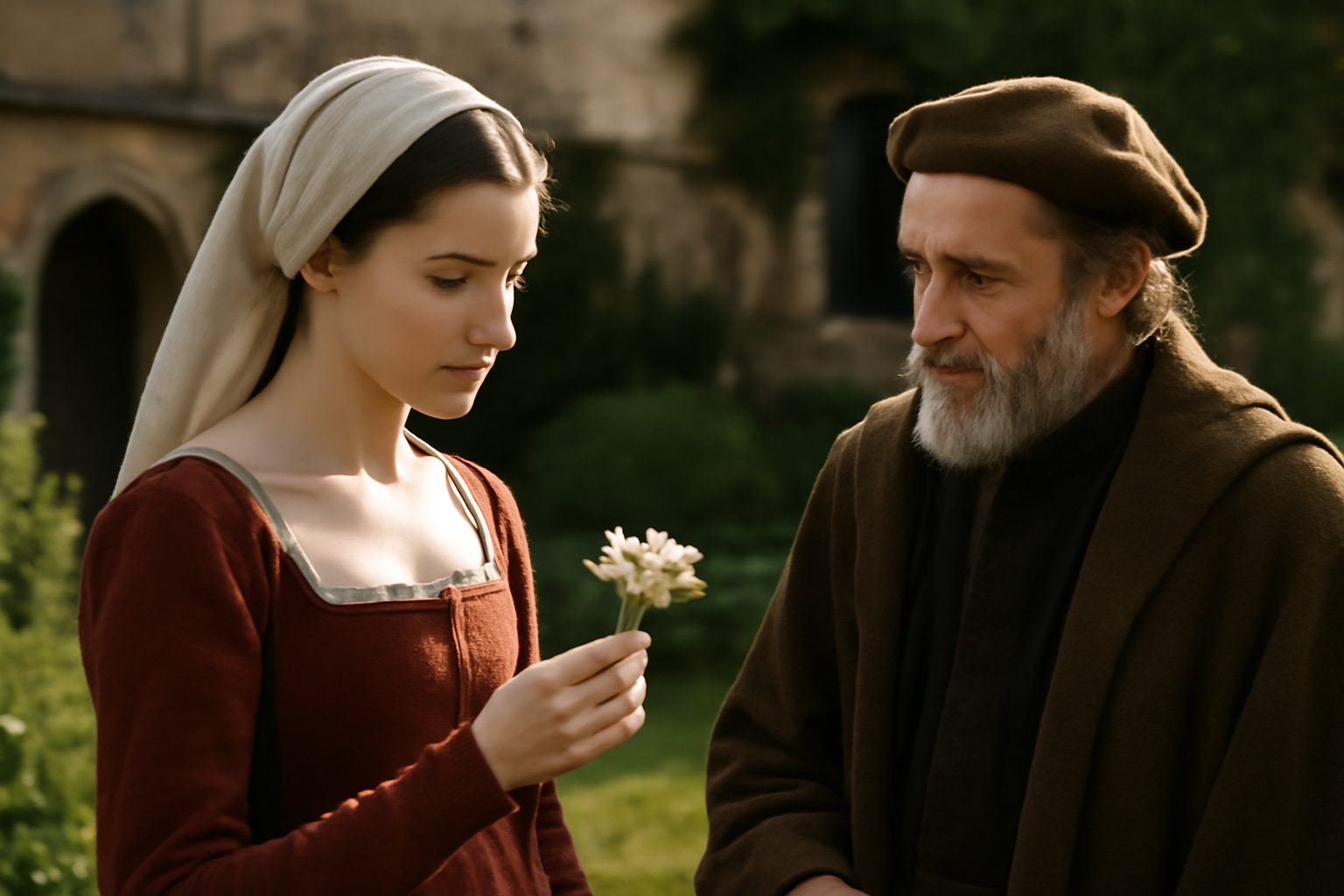
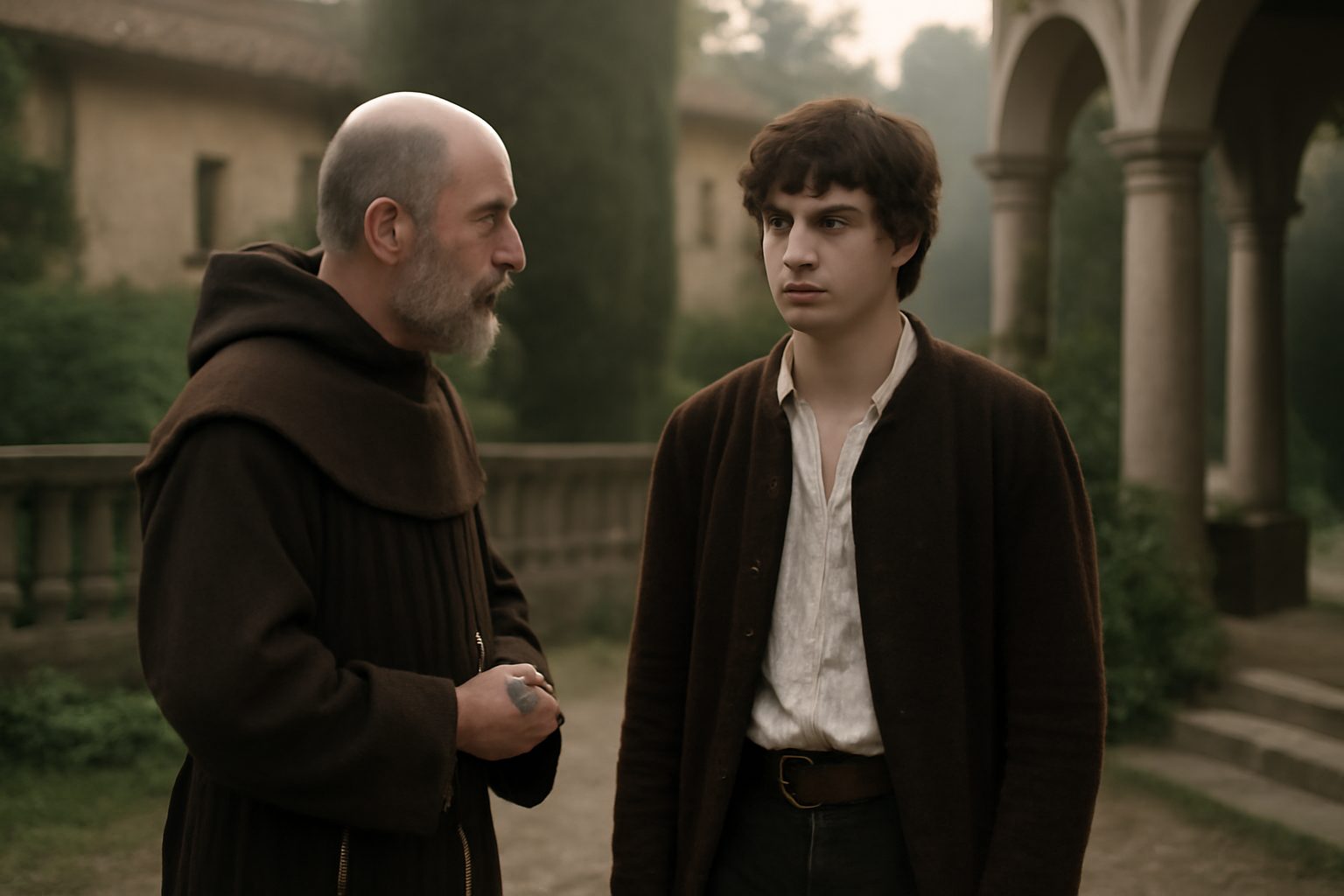
In Act 2, Scene 3 of Romeo and Juliet, Friar Laurence is gathering herbs at dawn when Romeo arrives, having stayed up all night after meeting Juliet. The Friar, surprised to see him awake so early, remarks on Romeo’s unusual eagerness to leave his bed, hinting at his restless infatuation. This line reflects the Friar’s suspicion that Romeo’s sudden change in behavior is tied to love.
Friar Laurence: "So soon to bid good morrow to thy bed:"
In modern day english, we would say:
You’re waking up so early after going to bed so late.
Frequently Asked Questions
What is Friar Laurence surprised about in this line?
He is surprised that Romeo is waking up so early in the morning.
Connections to other verses:
Connections to "So soon to bid good morrow to thy bed"
The line "So soon to bid good morrow to thy bed" is spoken by Friar Laurence upon seeing Romeo early in the morning, suggesting Romeo has been awake all night. This connects thematically and contextually to several other verses in the scene.
Connection to Romeo's Restless Night
Friar Laurence's observation directly relates to "Our Romeo hath not been in bed to-night", confirming Romeo's sleeplessness. This sleeplessness is further explored in "And where care lodges, sleep will never lie", which philosophically links emotional turmoil to insomnia, mirroring Romeo's state.
Connection to the Theme of Youth and Distemper
The Friar's suspicion that Romeo's early rising indicates disturbance is echoed in "Thou art up-roused by some distemperature" and "Young son, it argues a distemper'd head", both emphasizing the imbalance and impulsiveness of youth that Friar Laurence perceives in Romeo.
Connection to Past and Present Love
Romeo's change from pining for Rosaline to loving Juliet is hinted at in the Friar's surprise at his early appearance, which contrasts with past behavior. This shift is explicitly addressed in "So soon forsaken? young men's love then lies", questioning the sincerity of Romeo's affections, and "I have forgot that name, and that name's woe", where Romeo declares his move past Rosaline.
Connection to Urgency and Hastiness
The phrase also ties into the scene's broader themes of haste, as seen in Romeo's plea, "That thou consent to marry us to-day", and the Friar's warning, "Wisely and slow; they stumble that run fast", creating a contrast between Romeo's impulsiveness and the Friar's caution.