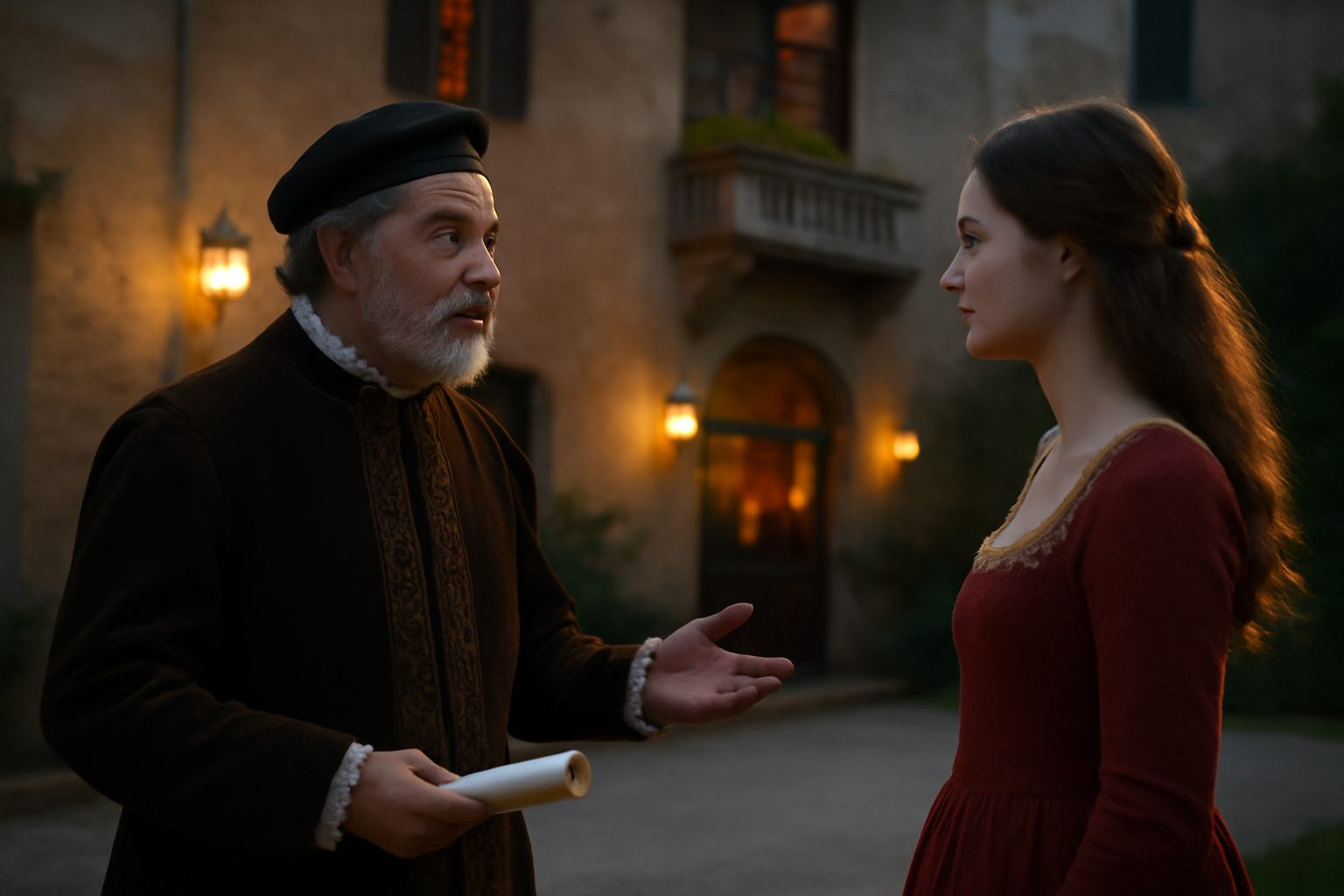
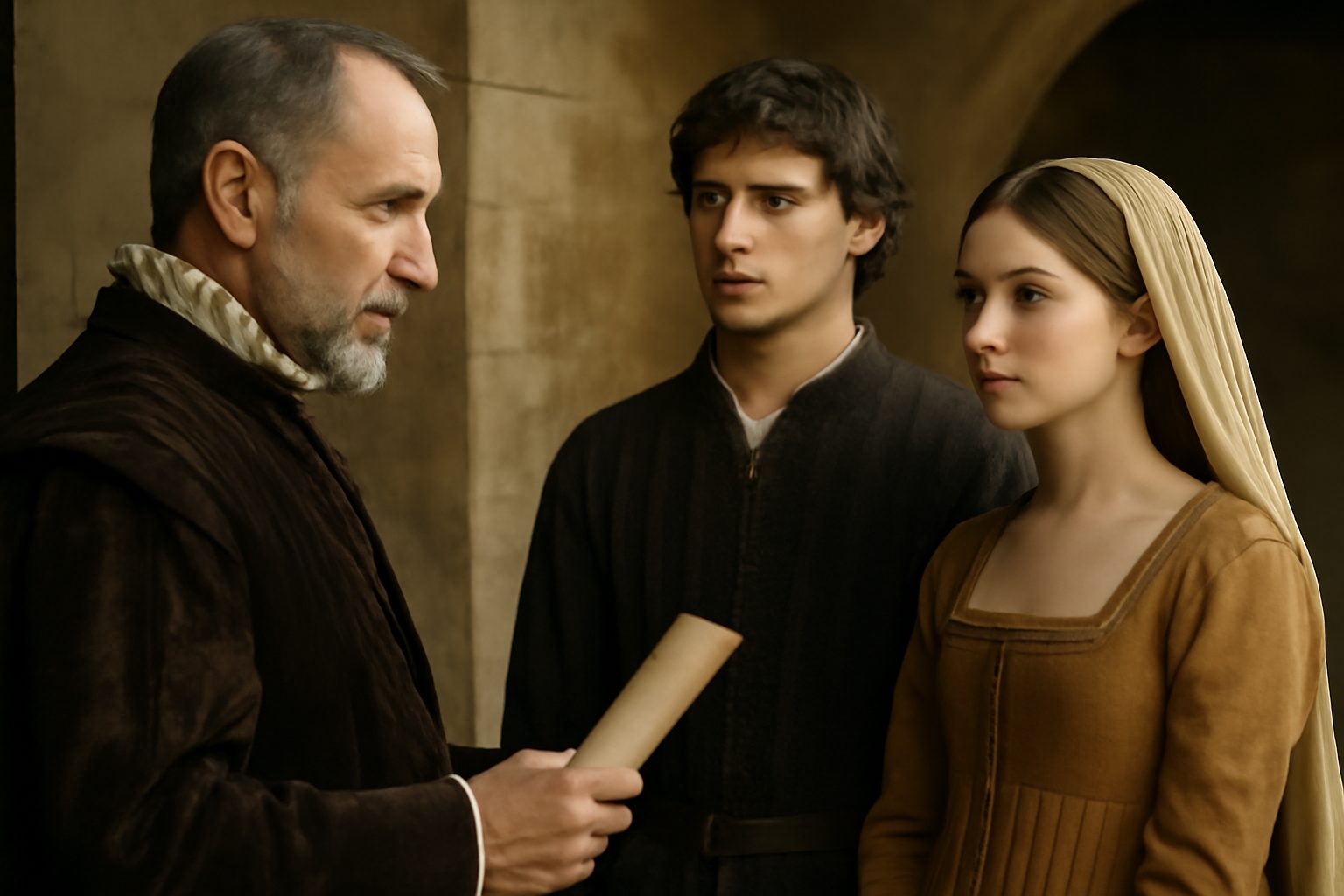
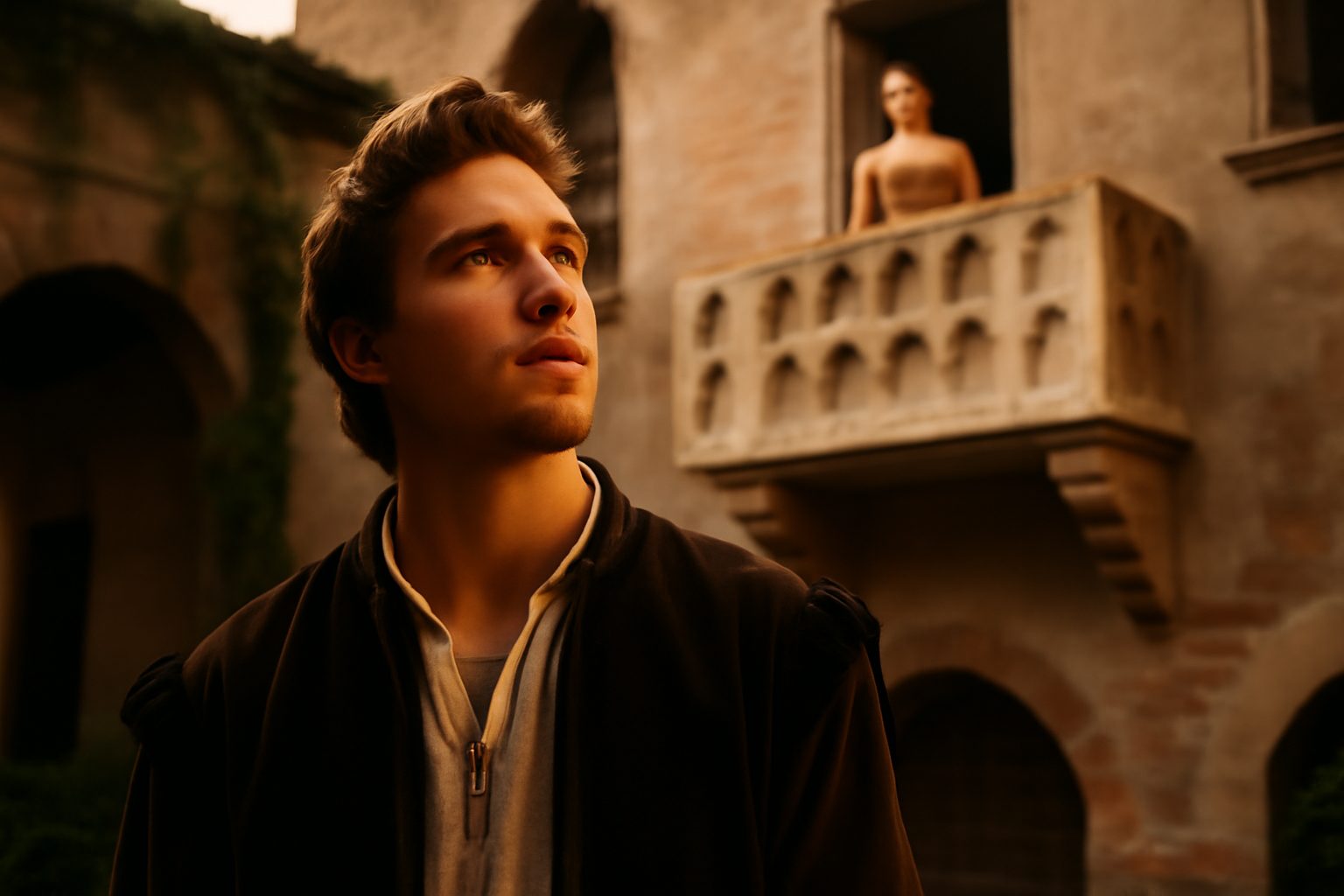
In Act 1, Scene 2 of Romeo and Juliet, Paris presses Lord Capulet for an answer regarding his proposal to marry Juliet. Capulet, though initially hesitant, invites Paris to a feast to woo her, showing his cautious support. This line is spoken by a servant who, after being tasked with delivering invitations, seeks clarification from Romeo and Benvolio about the guest list.
Benvolio: "For what, I pray thee?"
In modern day english, we would say:
Why are you asking me that?
Frequently Asked Questions
Who is speaking in this line from Romeo and Juliet?
Benvolio
What is Benvolio asking in this line?
He is asking for an explanation or reason for something
In which act and scene does this line appear?
Act 1, Scene 2
Connections to other verses:
Connections to "For what, I pray thee?"
The verse "For what, I pray thee?" is spoken by Romeo in response to Benvolio's suggestion that he attend the Capulet feast to compare Rosaline with other beauties. This line reflects Romeo's initial resistance and skepticism, setting up several thematic and narrative connections within the scene.
Connection to Benvolio's Persuasion
Benvolio's earlier advice in "Compare her face with some that I shall show" directly prompts Romeo's questioning. Benvolio argues that exposing Romeo to other women will diminish his fixation on Rosaline, a idea further emphasized in "And I will make thee think thy swan a crow", where he promises that Rosaline will pale in comparison to others. Romeo's doubtful "For what?" challenges this logic, highlighting his emotional turmoil.
Link to the Feast Invitation
The conversation occurs in the context of Capulet's feast, described in "This night I hold an old accustom'd feast". The guest list includes many young women, as noted in "Among fresh female buds shall you this night", which Benvolio references as the setting for his plan. Romeo's question subtly questions the value of attending, contrasting with the eager anticipation others have for the event.
Reflection of Romeo's State of Mind
Romeo's despondency is clear in lines like "Ay, mine own fortune in my misery", where he wallows in self-pity. His skeptical "For what?" aligns with this mood, showing he doubts any remedy for his lovesickness. This contrasts with Benvolio's optimistic view that "One pain is lessen'd by another's anguish" from this verse, suggesting replacement as a cure.
Foreshadowing and Irony
Unbeknownst to Romeo, his attendance at the feast will indeed change his affection, as he meets Juliet. This creates dramatic irony against his doubtful question. The idea of new love supplanting old is echoed in "Take thou some new infection to thy eye", where Benvolio humorously suggests replacing one infatuation with another. Romeo's resistance makes his eventual shift more impactful.