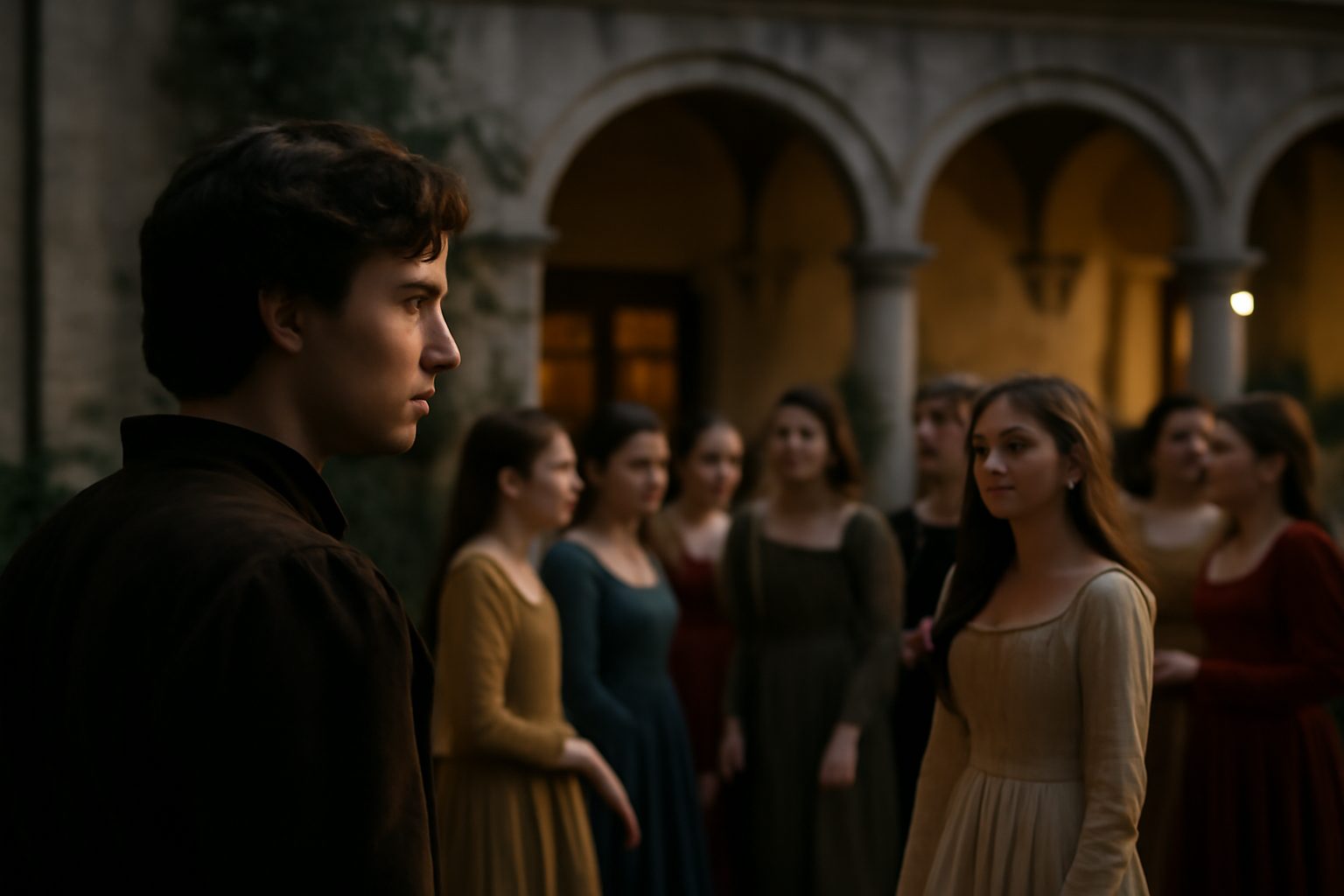
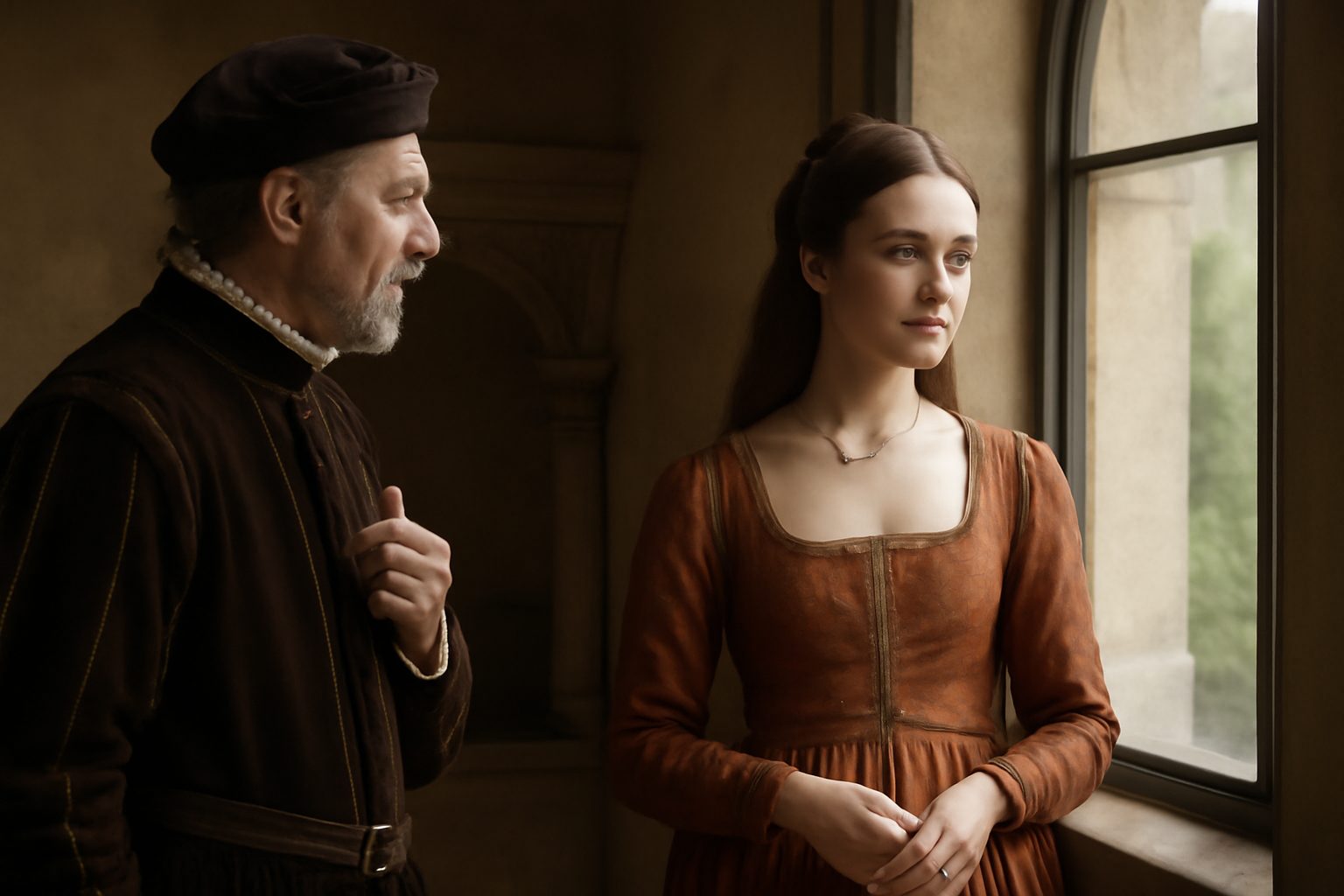
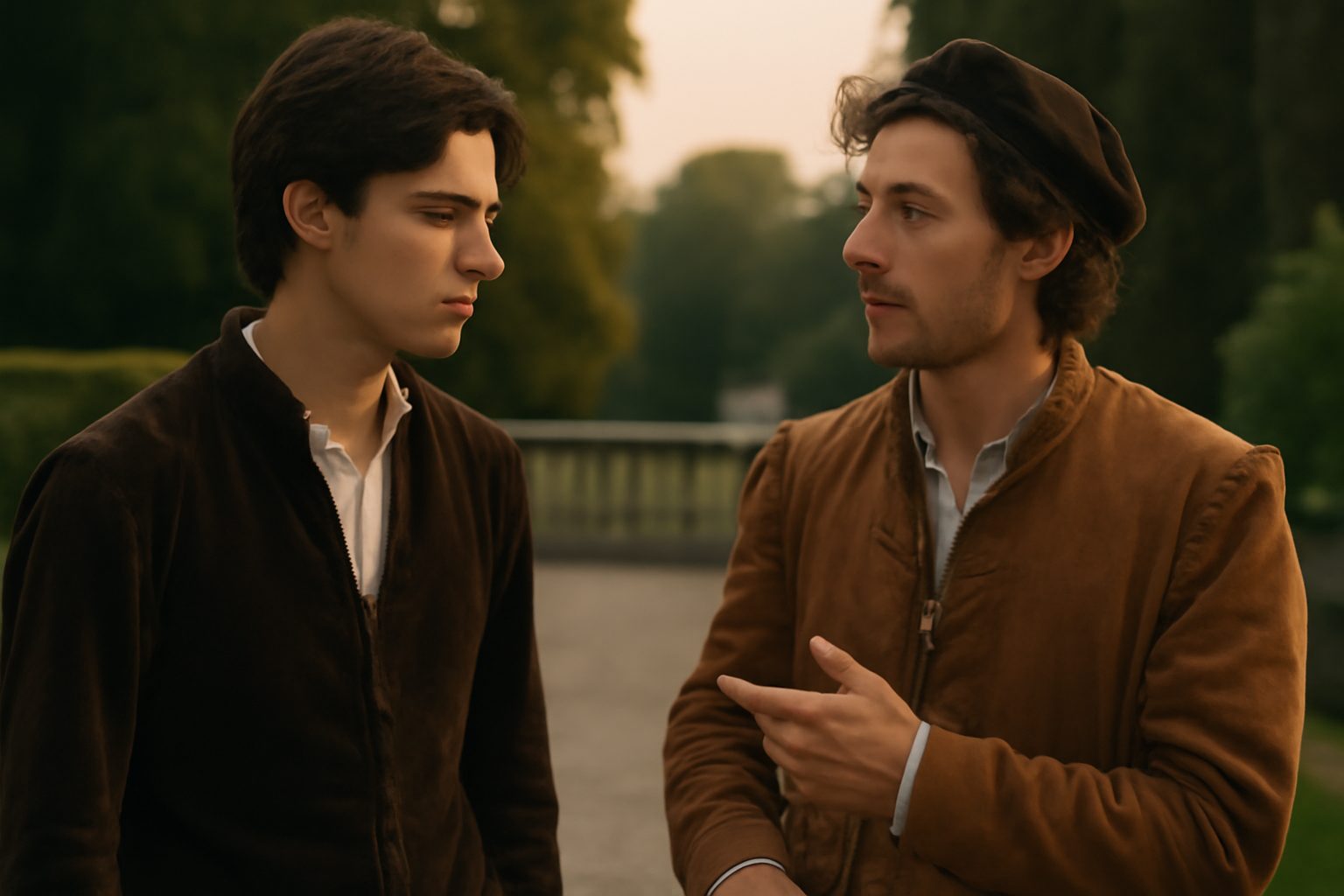
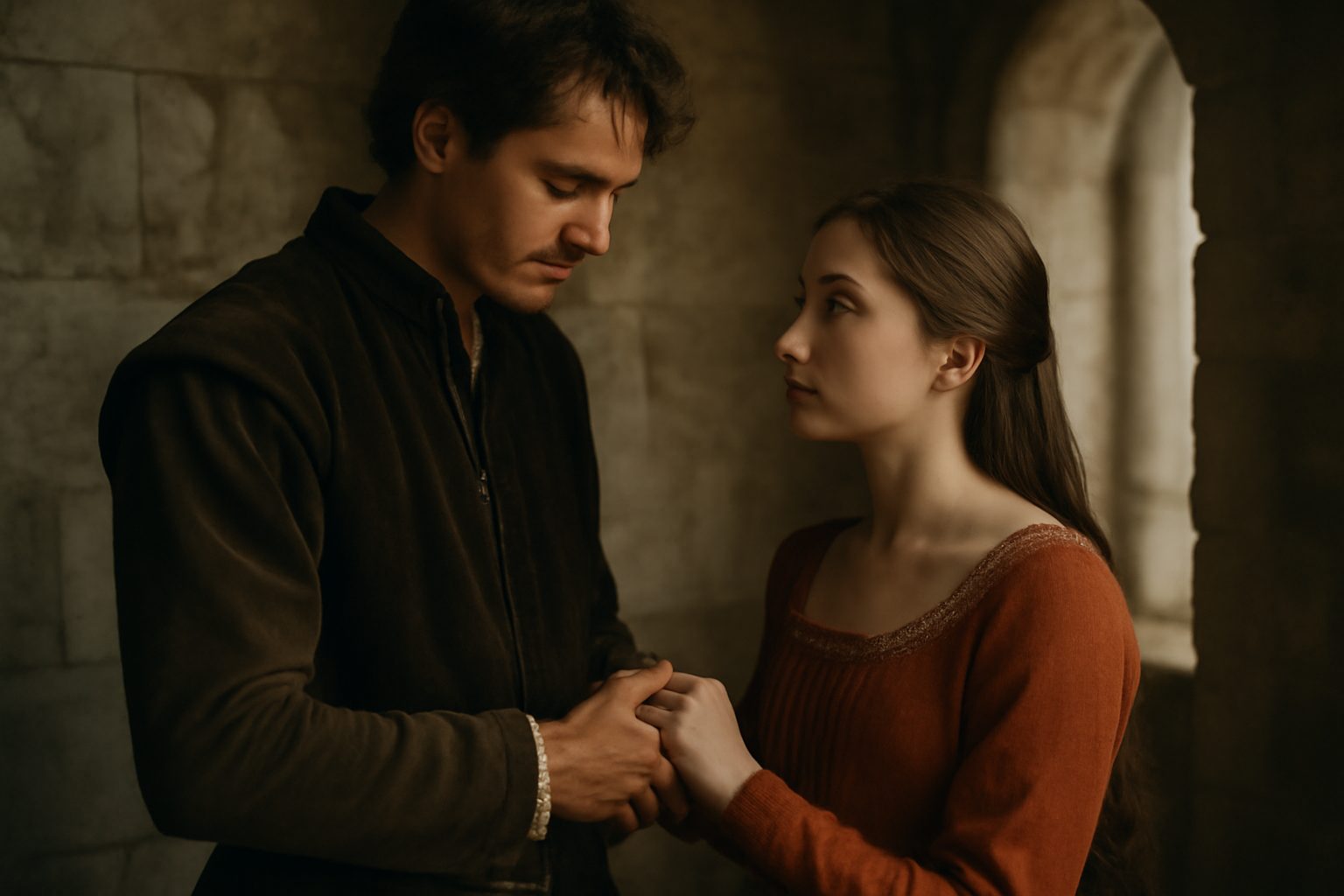
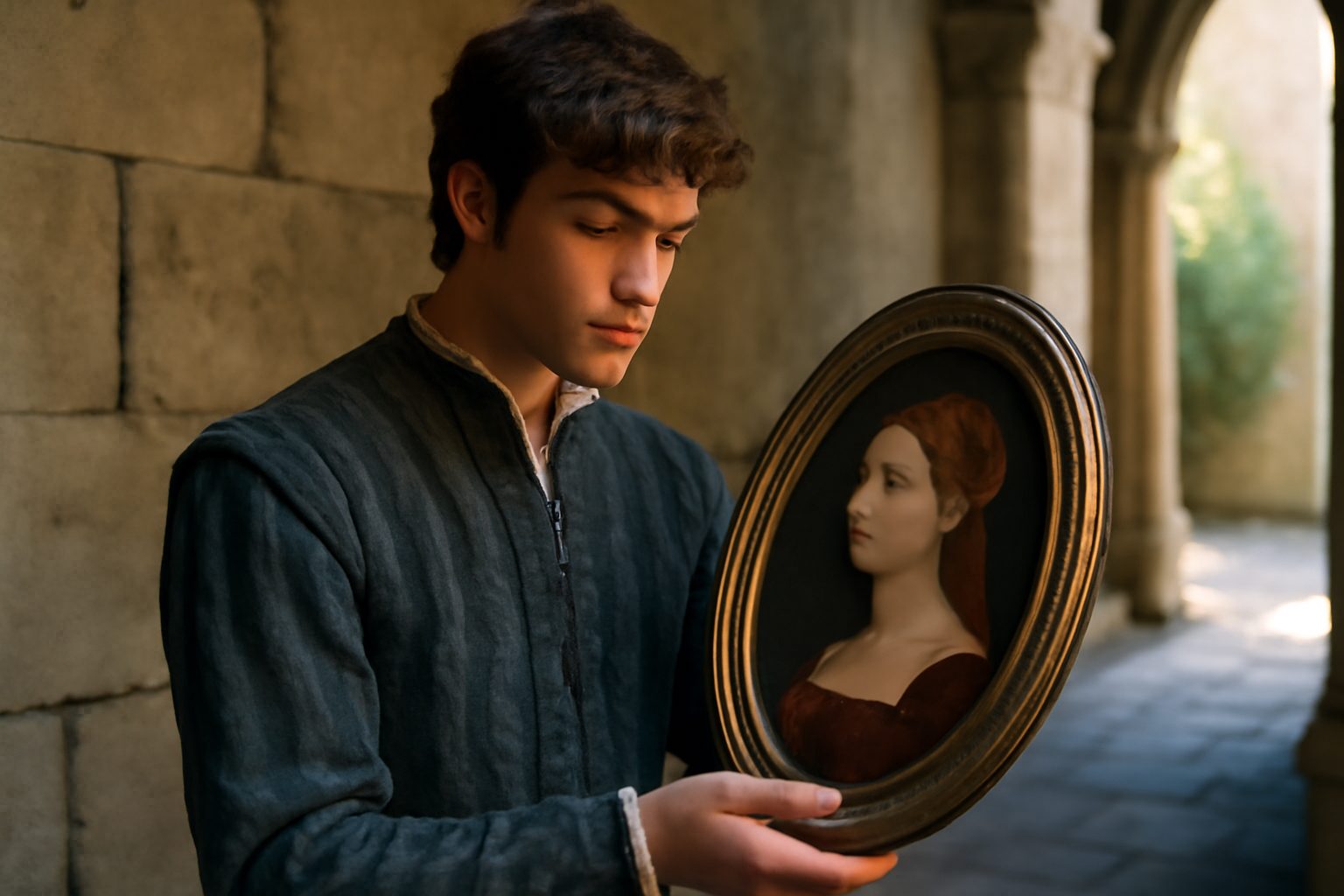
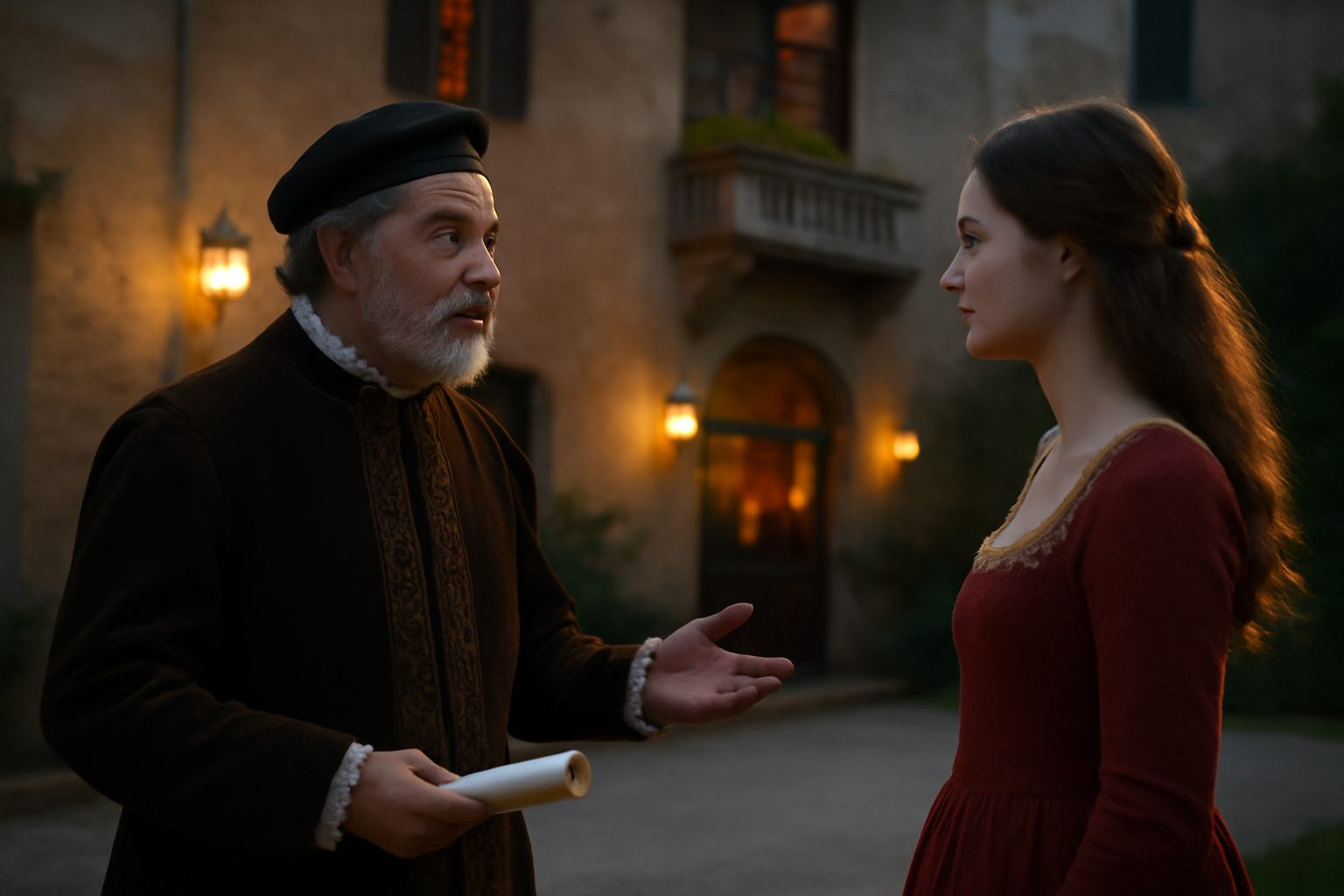
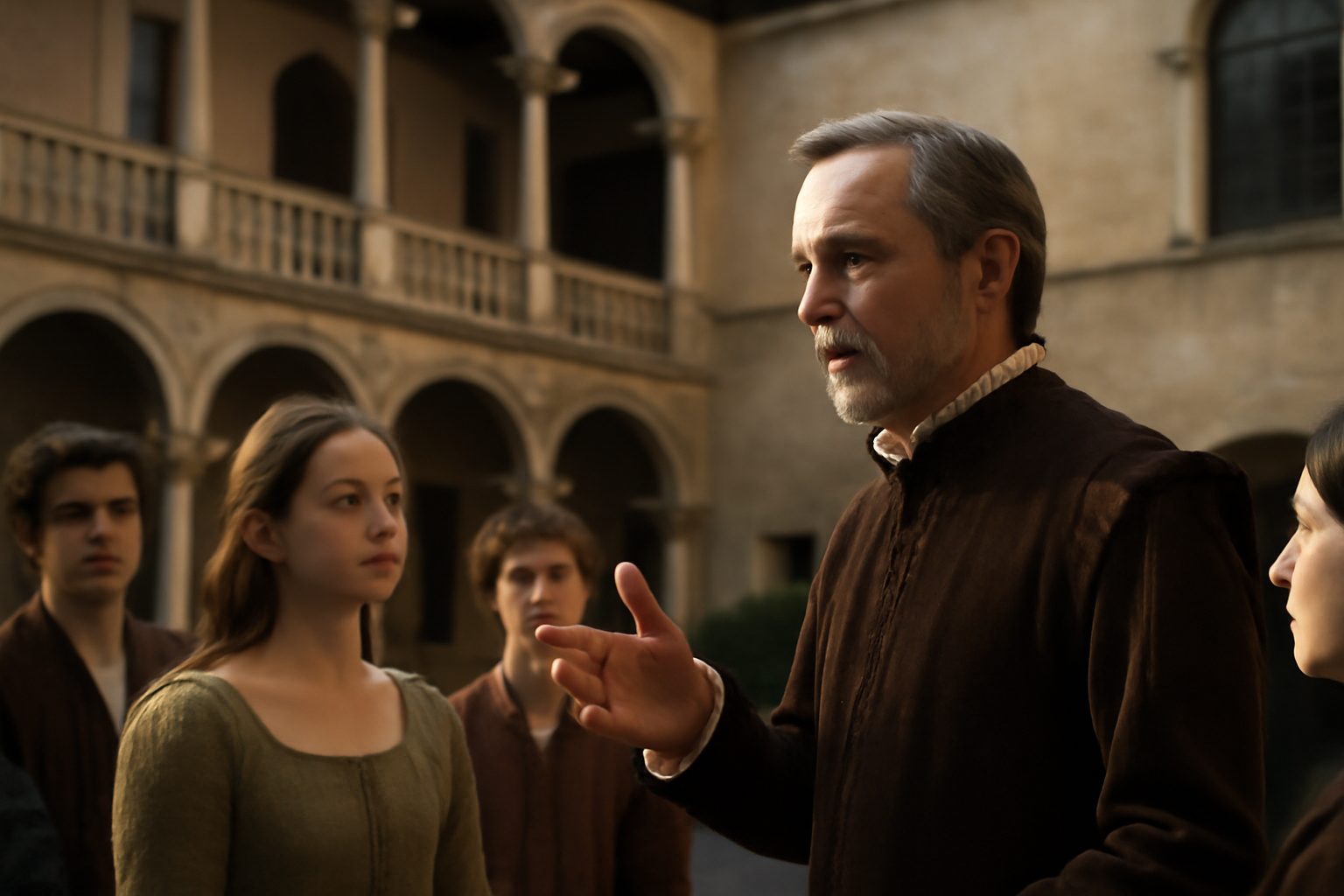
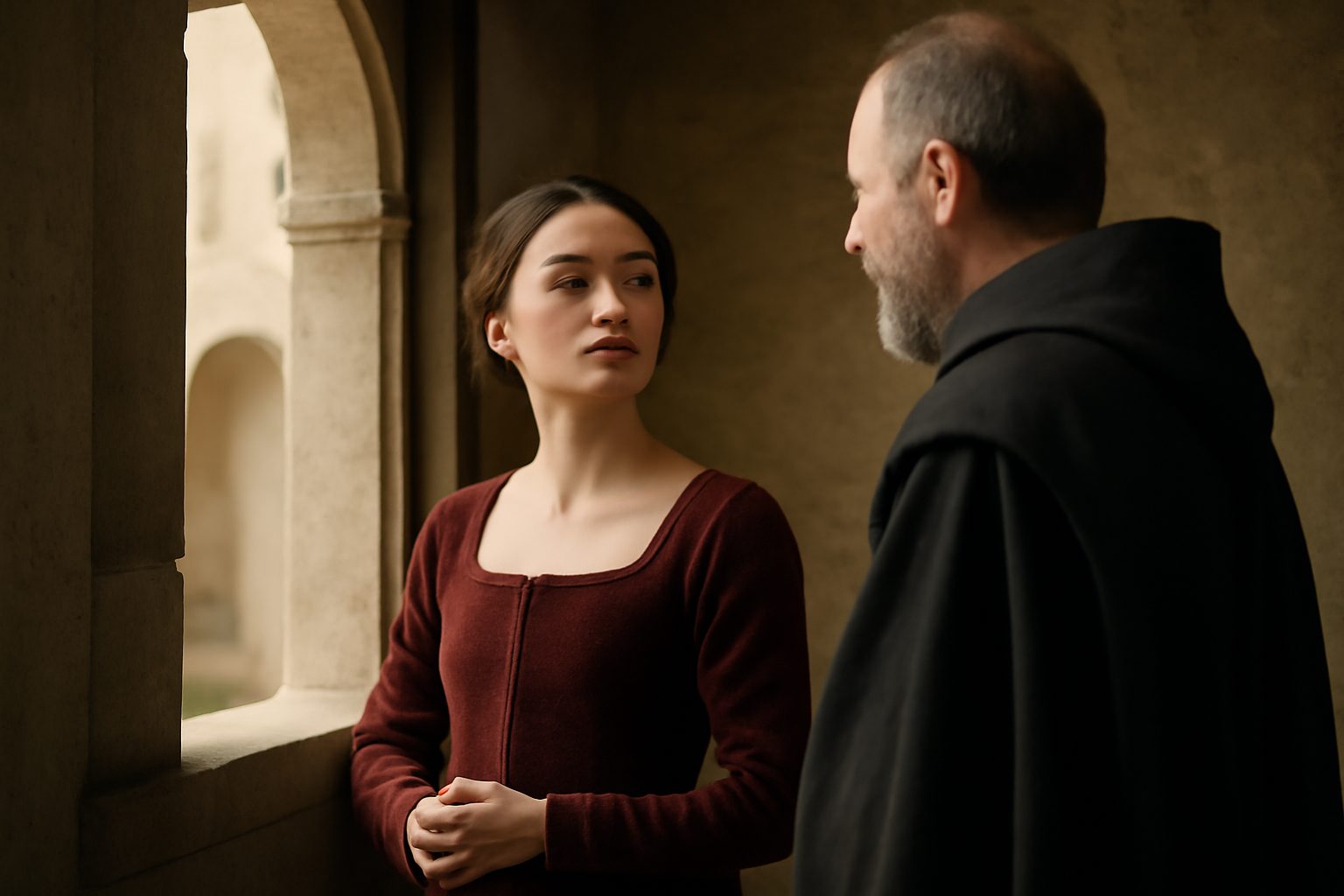
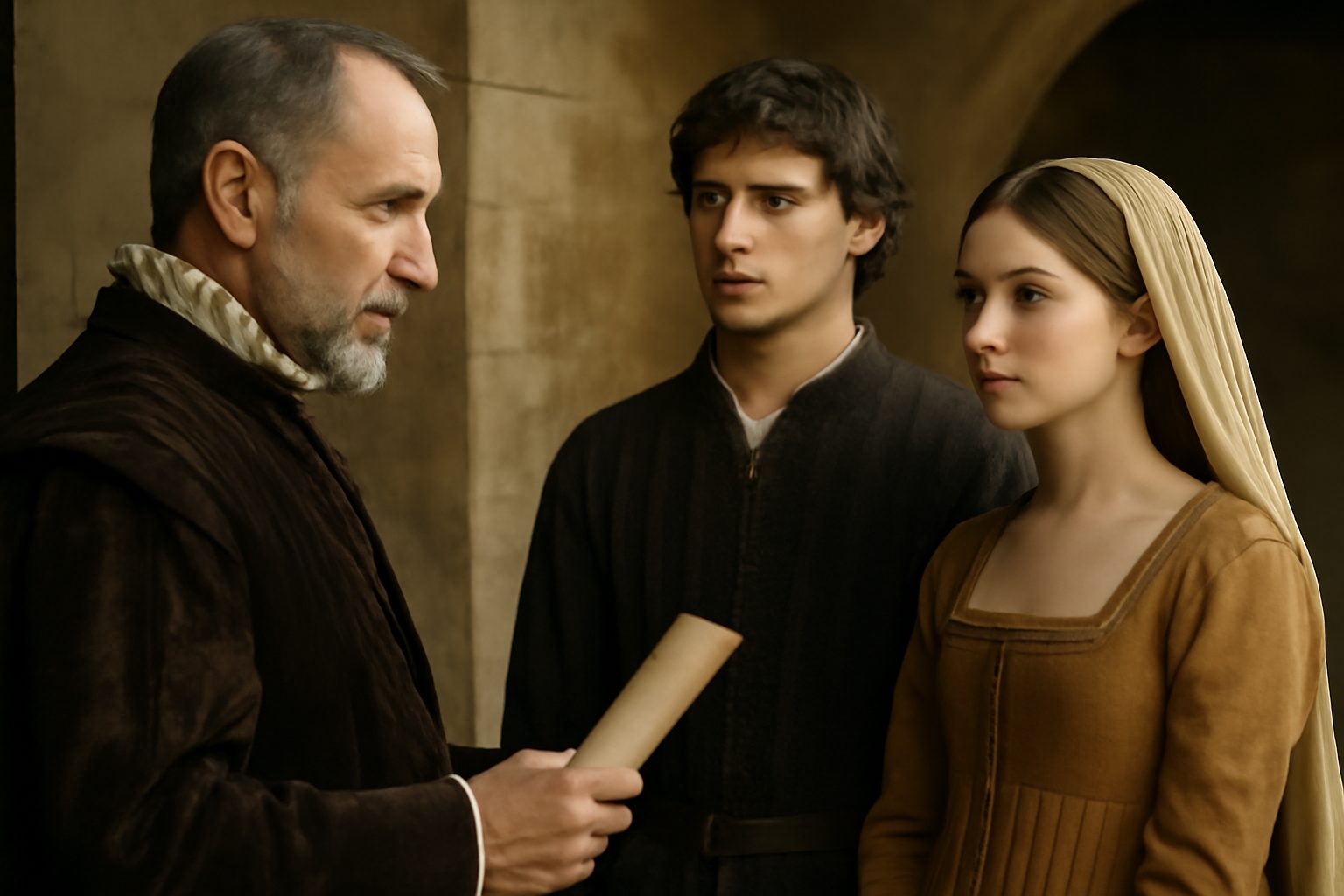
In Act 1, Scene 2 of Romeo and Juliet, Paris speaks to Capulet about marrying Juliet, arguing that younger heirs can ease the burdens of the older generation. This line reflects his belief that the troubles and outdated ways of the elders will fade with time, making room for new beginnings. The conversation highlights the tension between generations and the societal expectations surrounding marriage and legacy.
Benvolio: "And the rank poison of the old will die."
In modern day english, we would say:
The bitter resentment of the older generation will fade away.
Frequently Asked Questions
What does Benvolio mean when he says the old poison will die?
Benvolio means that the long-standing feud between the Montague and Capulet families will eventually come to an end.
Connections to other verses:
Connections to "And the rank poison of the old will die"
The verse And the rank poison of the old will die reflects Benvolio's advice to Romeo about overcoming his lovesickness for Rosaline by finding new affection. This idea of renewal and replacing old sorrows connects thematically and structurally to several other verses in the scene.
Connection to Themes of Healing and Renewal
Benvolio's metaphor of poison dying aligns with his earlier advice in Tut, man, one fire burns out another's burning, where he suggests that new passions can extinguish old ones. Similarly, One pain is lessen'd by another's anguish and Turn giddy, and be holp by backward turning emphasize using new experiences to heal emotional wounds. The direct call to action in Take thou some new infection to thy eye reinforces this strategy of replacement, culminating in the "poison" dying as Romeo moves on.
Connection to the Feast and New Opportunities
The idea of the "old" dying also ties into the scene's focus on the Capulet feast as a setting for new beginnings. Capulet's invitation in This night I hold an old accustom'd feast introduces the event where Romeo will meet Juliet, symbolically allowing the "poison" of his old love to die. The promise of Among fresh female buds shall you this night hints at the new romantic possibilities that will replace Romeo's fixation, while With all the admired beauties of Verona underscores the abundance of alternatives available to him.
Contrast with Permanence and Youth
The notion of the "old" dying contrasts with verses that highlight youth and impermanence, such as Capulet's concern that And too soon marr'd are those so early made, which warns against rushing into marriage. However, Benvolio's advice embraces change, urging Romeo to let go of the past. This is further supported by Your lady's love against some other maid, where Benvolio suggests comparing Rosaline to others, reinforcing the idea that old attachments can be outshone and thus "die."