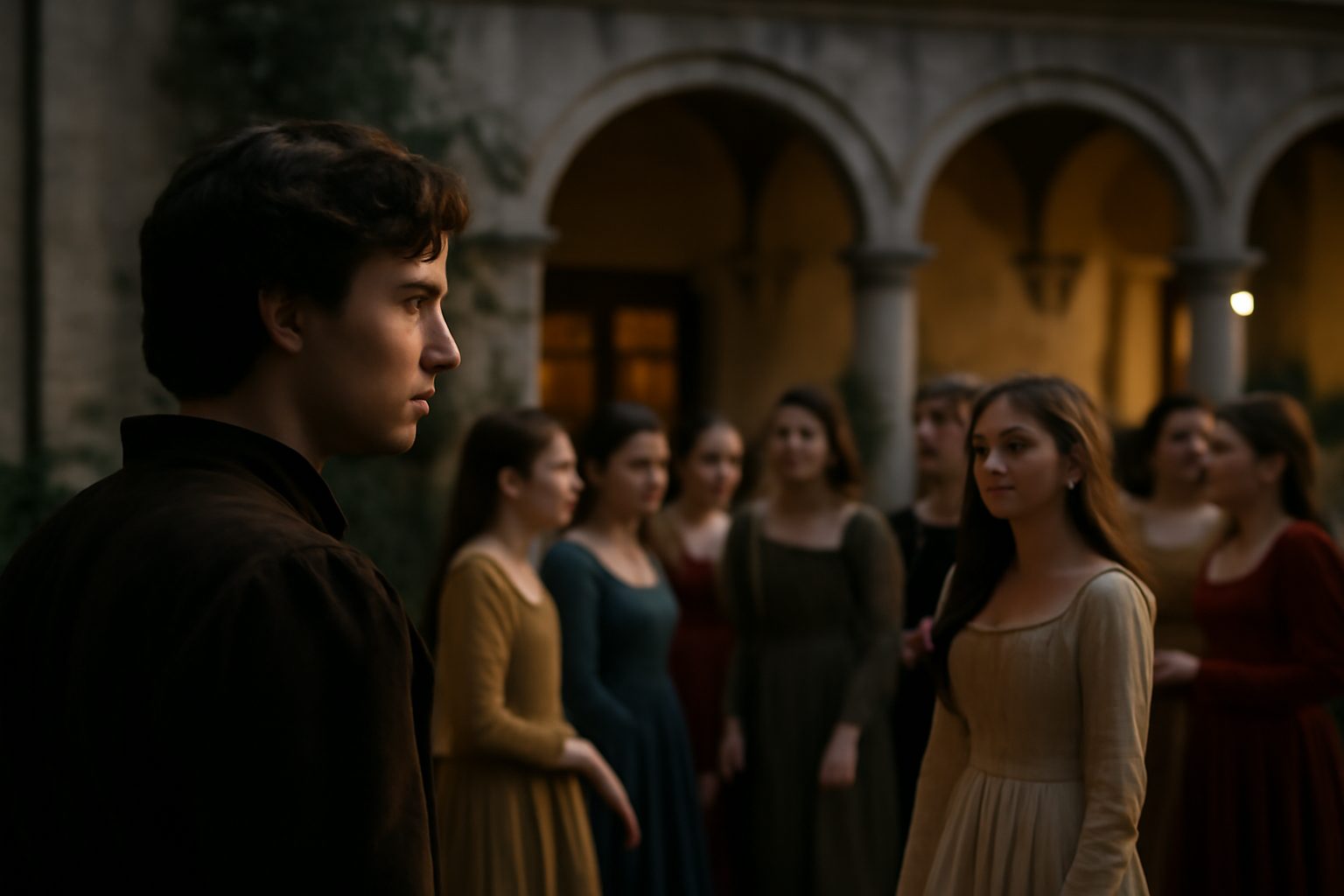
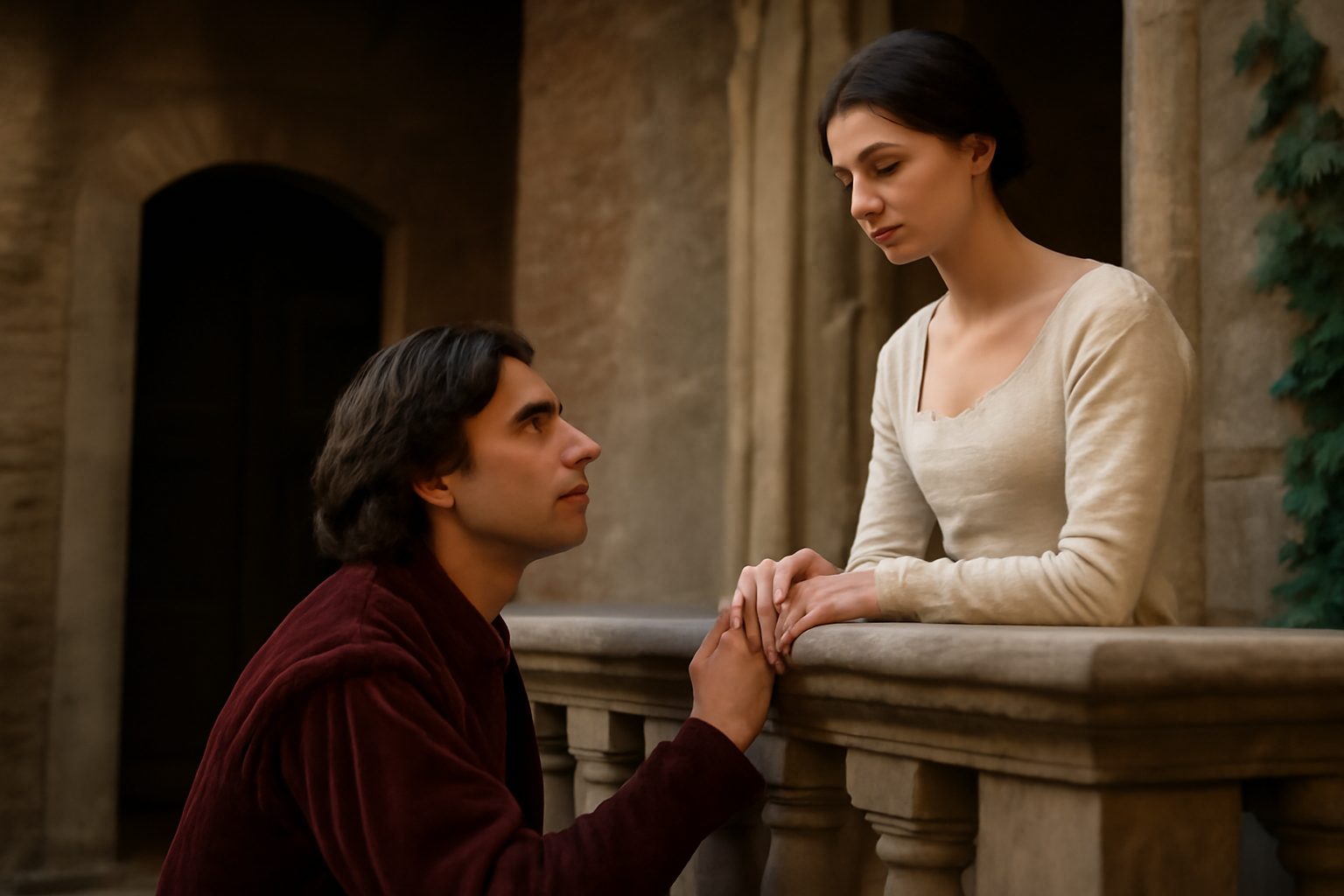
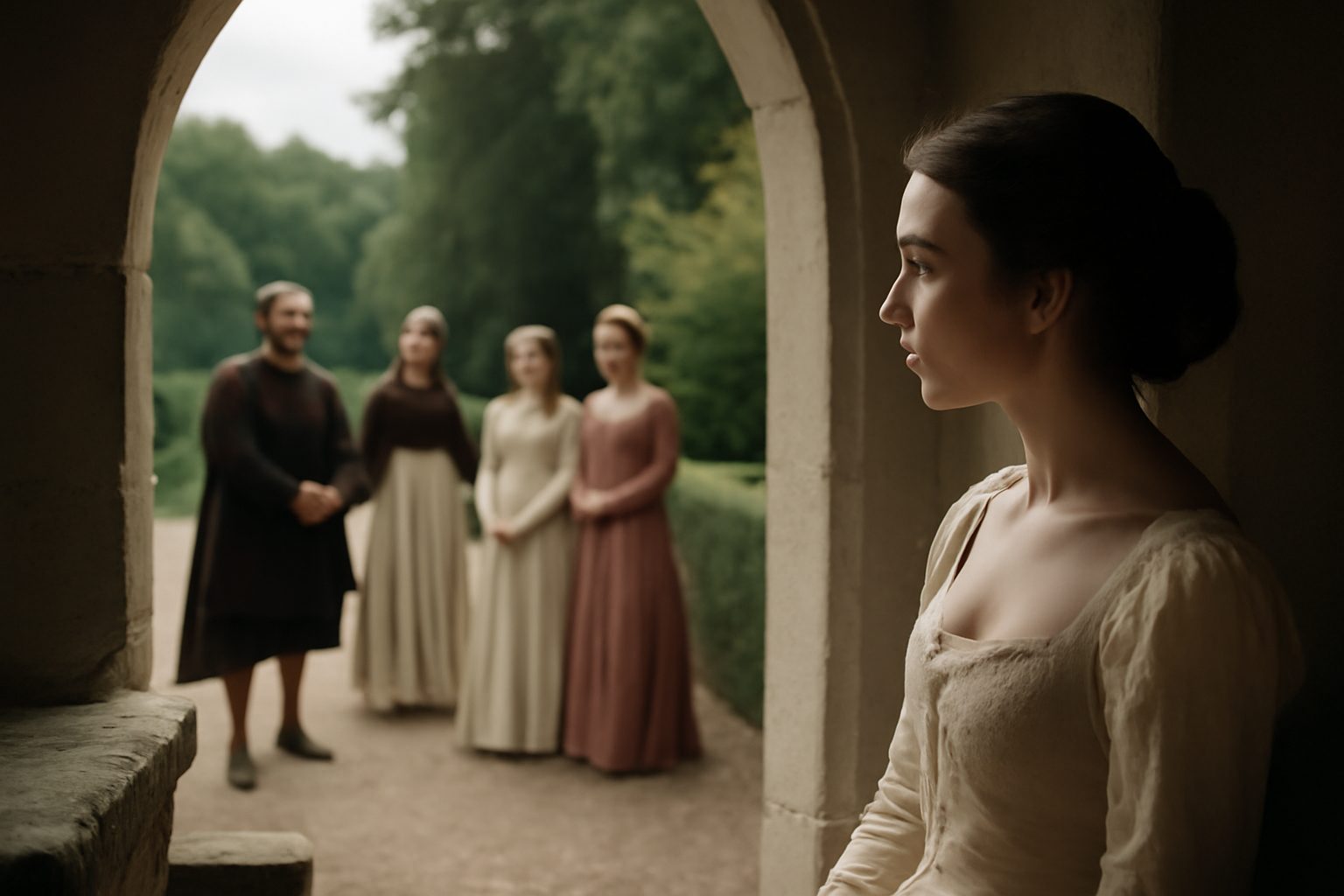
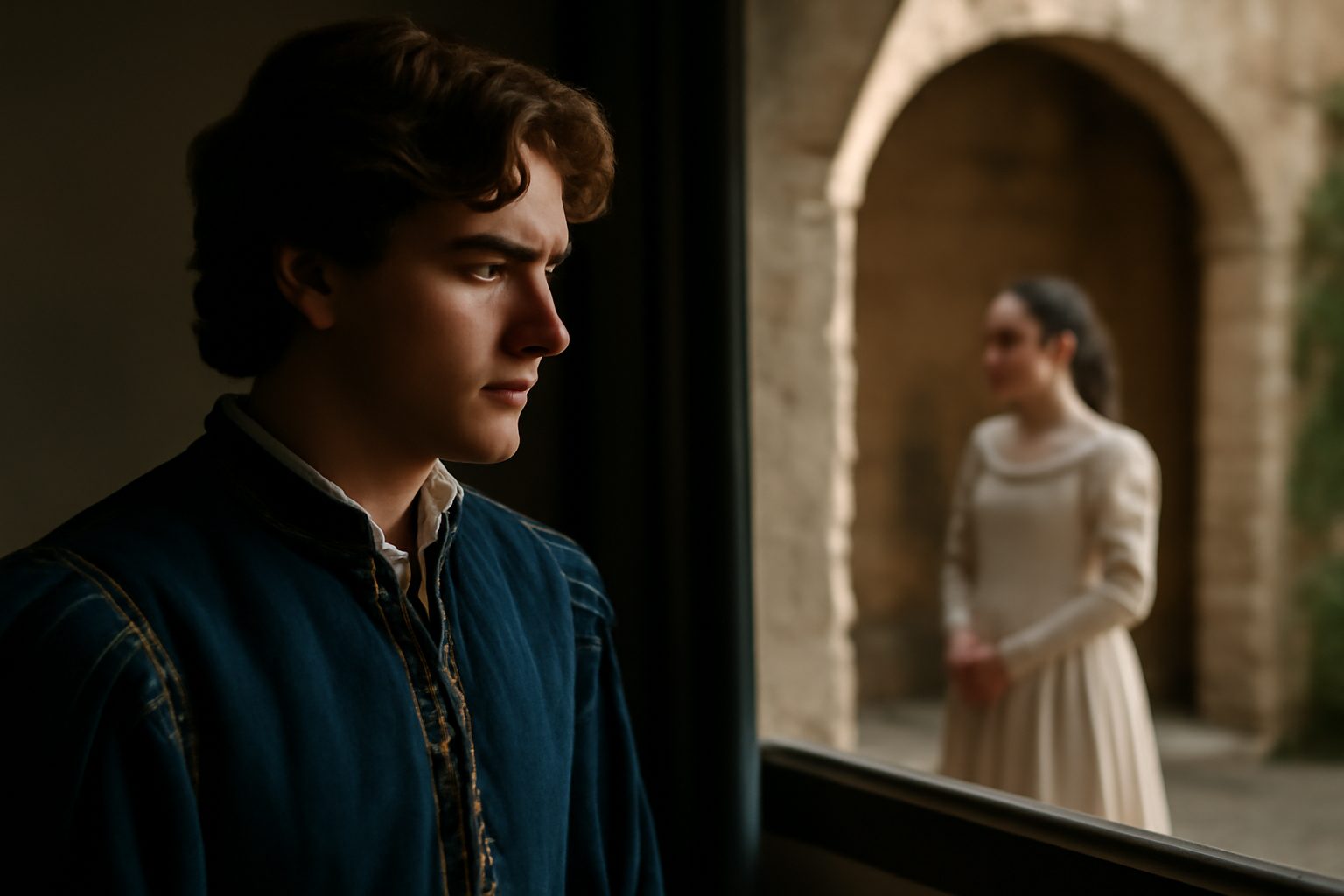
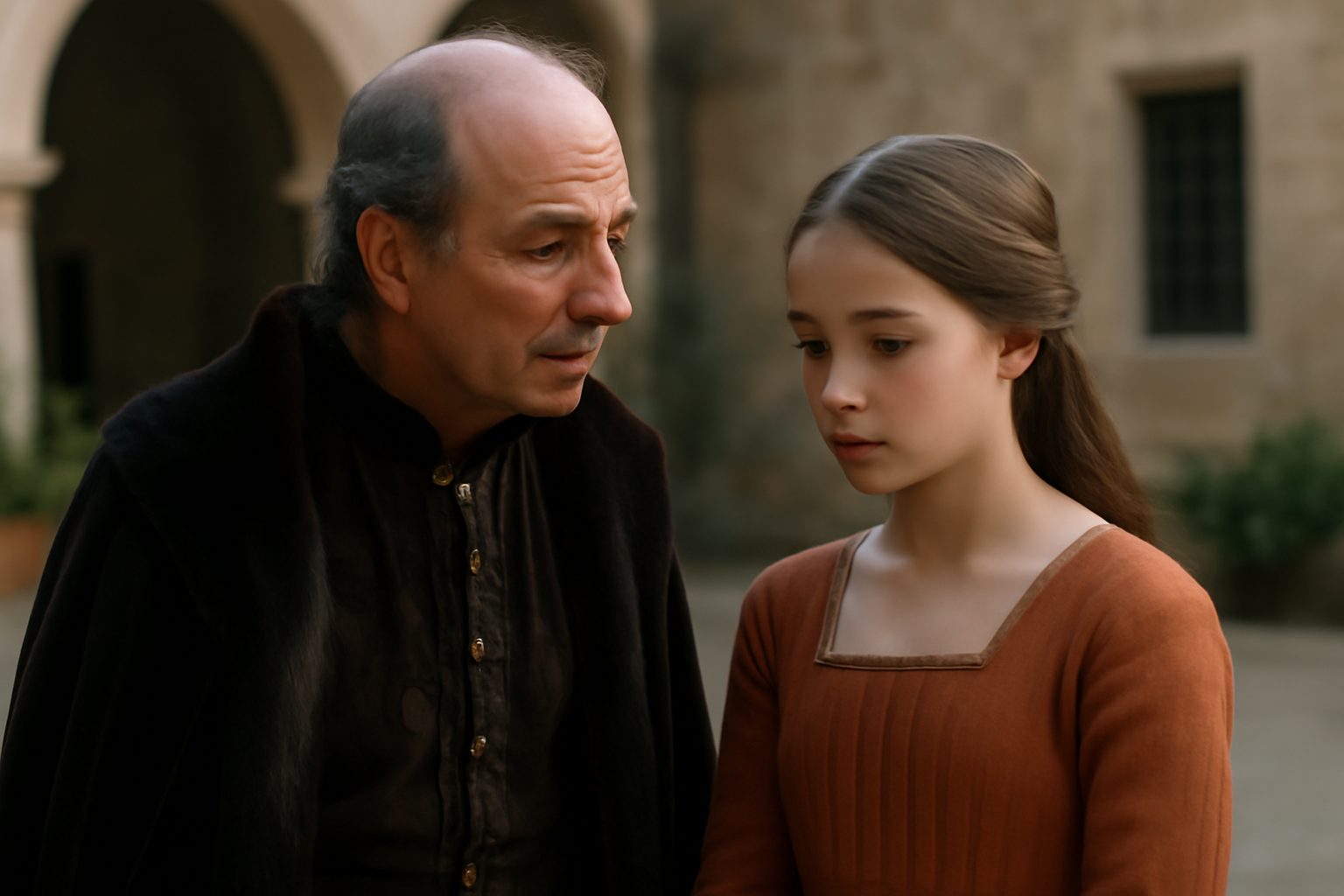
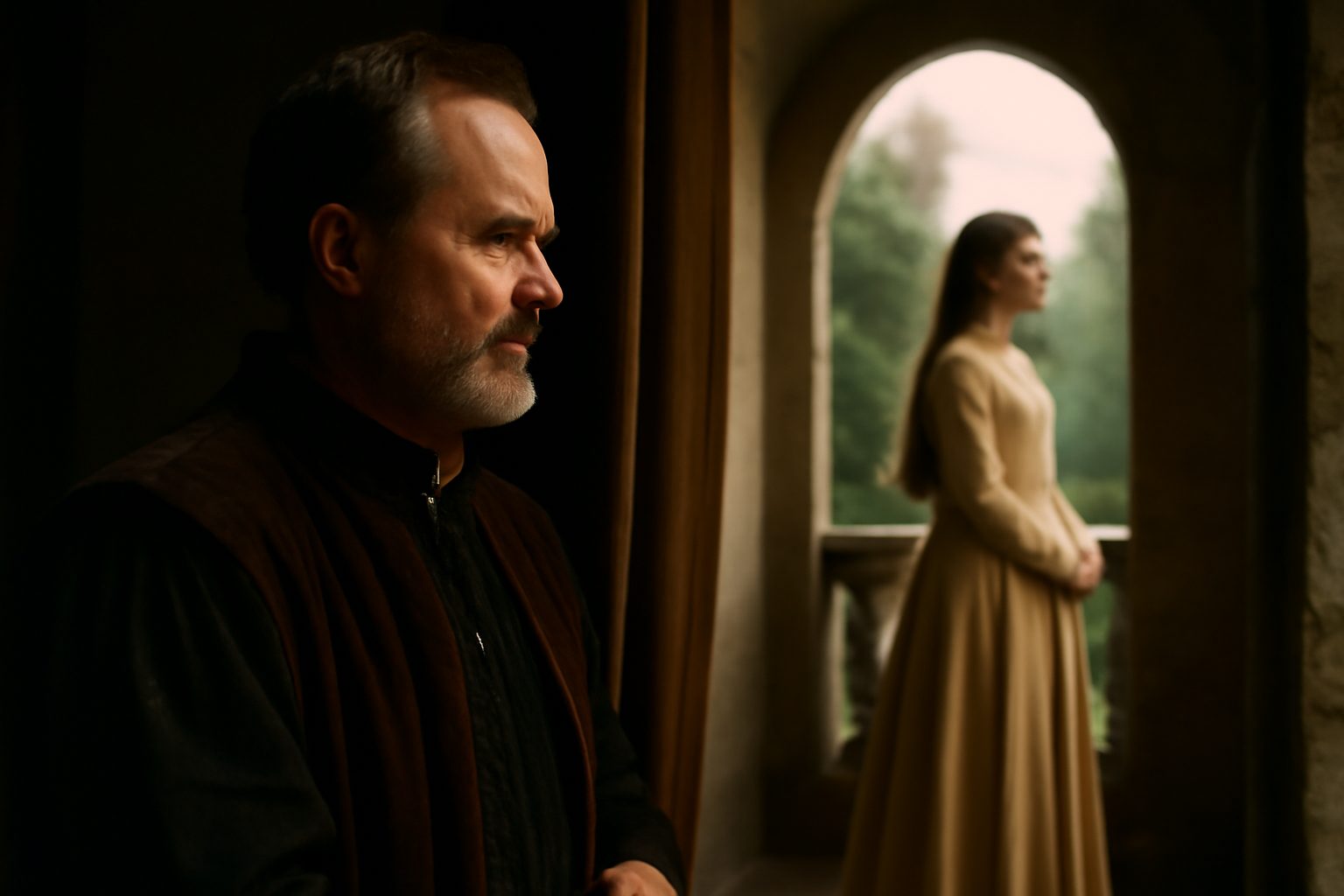
In Act 1, Scene 2 of Romeo and Juliet, Paris, a nobleman, presses Capulet for permission to marry his young daughter Juliet. Capulet, though hesitant, invites Paris to a feast where he can compare Juliet to other young women, suggesting he reconsider his choice. This line reflects Capulet’s cautious yet indulgent attitude toward his daughter’s future.
Benvolio: "Compare her face with some that I shall show,"
In modern day english, we would say:
Look at her face next to others I’ll point out to you.
Frequently Asked Questions
What does Benvolio suggest Romeo should do in this line?
Benvolio suggests that Romeo should compare the beauty of the girl he loves to other girls he will show him.
Connections to other verses:
Connections to "Compare her face with some that I shall show"
This verse, spoken by Benvolio, is part of his attempt to cure Romeo's lovesickness by encouraging him to compare Rosaline with other beautiful women at the Capulet feast. It connects thematically and structurally with several other lines in the scene.
Links to Persuasion and Comparison
Benvolio's advice directly relates to his earlier statement: "And I will make thee think thy swan a crow", where he promises to make Rosaline seem ordinary by comparison. The idea of objective evaluation is reinforced in "Go thither; and, with unattainted eye", urging Romeo to look without bias.
Feast and Opportunity Context
The verse ties directly to Capulet's invitation: "This night I hold an old accustom'd feast" and "With all the admired beauties of Verona", which establishes the setting where the comparison will occur. Benvolio’s promise to show Romeo other women echoes Capulet’s description of the guests as "Earth-treading stars that make dark heaven light".
Contrast with Romeo's Current View
Romeo’s stubborn devotion to Rosaline is evident in his response: "One fairer than my love! the all-seeing sun", where he claims no one could be fairer. Benvolio’s challenge also contrasts with Romeo’s later admission "Ne'er saw her match since first the world begun", showing his resistance to the idea.
Thematic Connections to Love and Choice
The notion of comparing loves parallels Paris’s suit for Juliet, where Capulet insists "An she agree, within her scope of choice", emphasizing the importance of personal evaluation in matters of the heart.