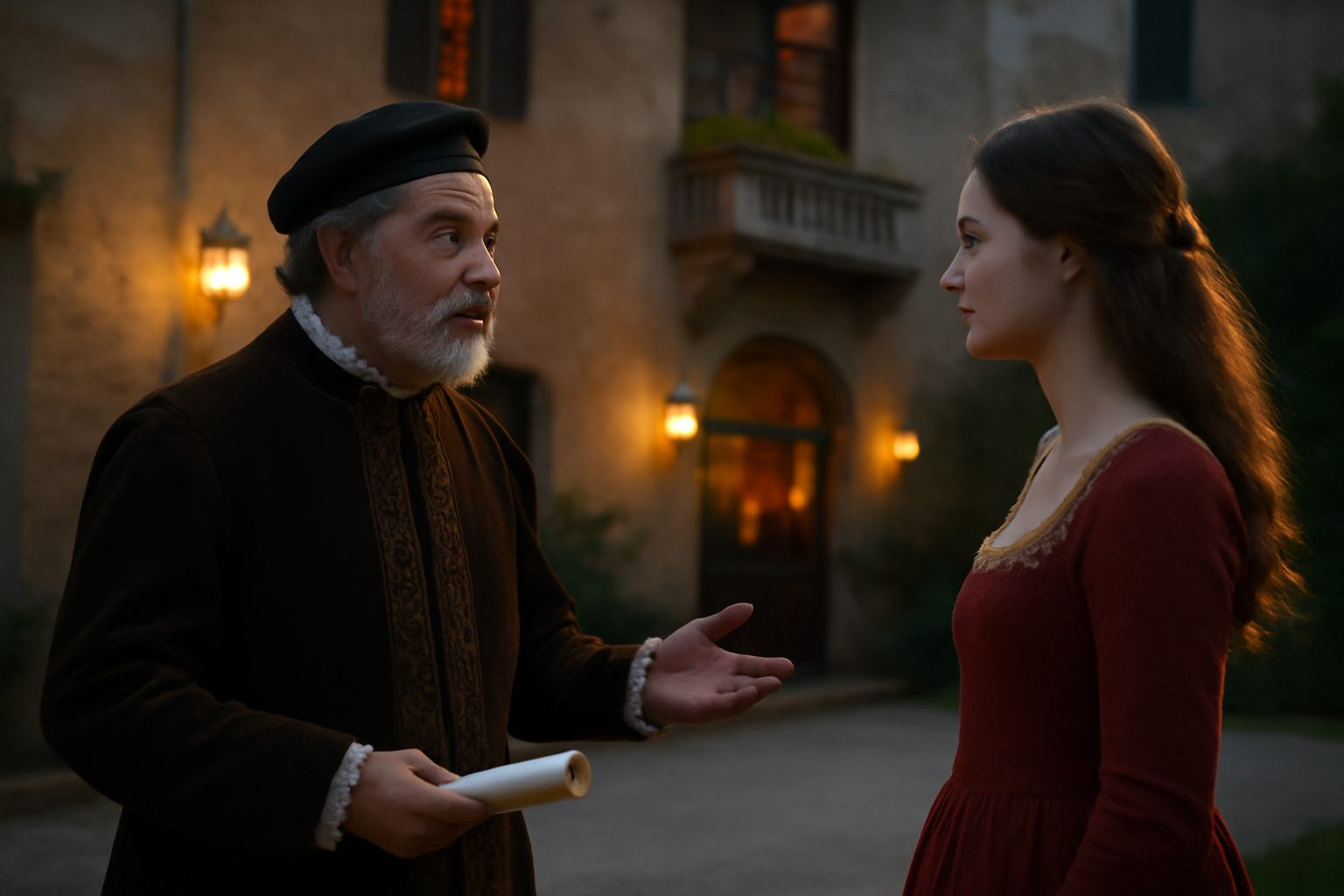
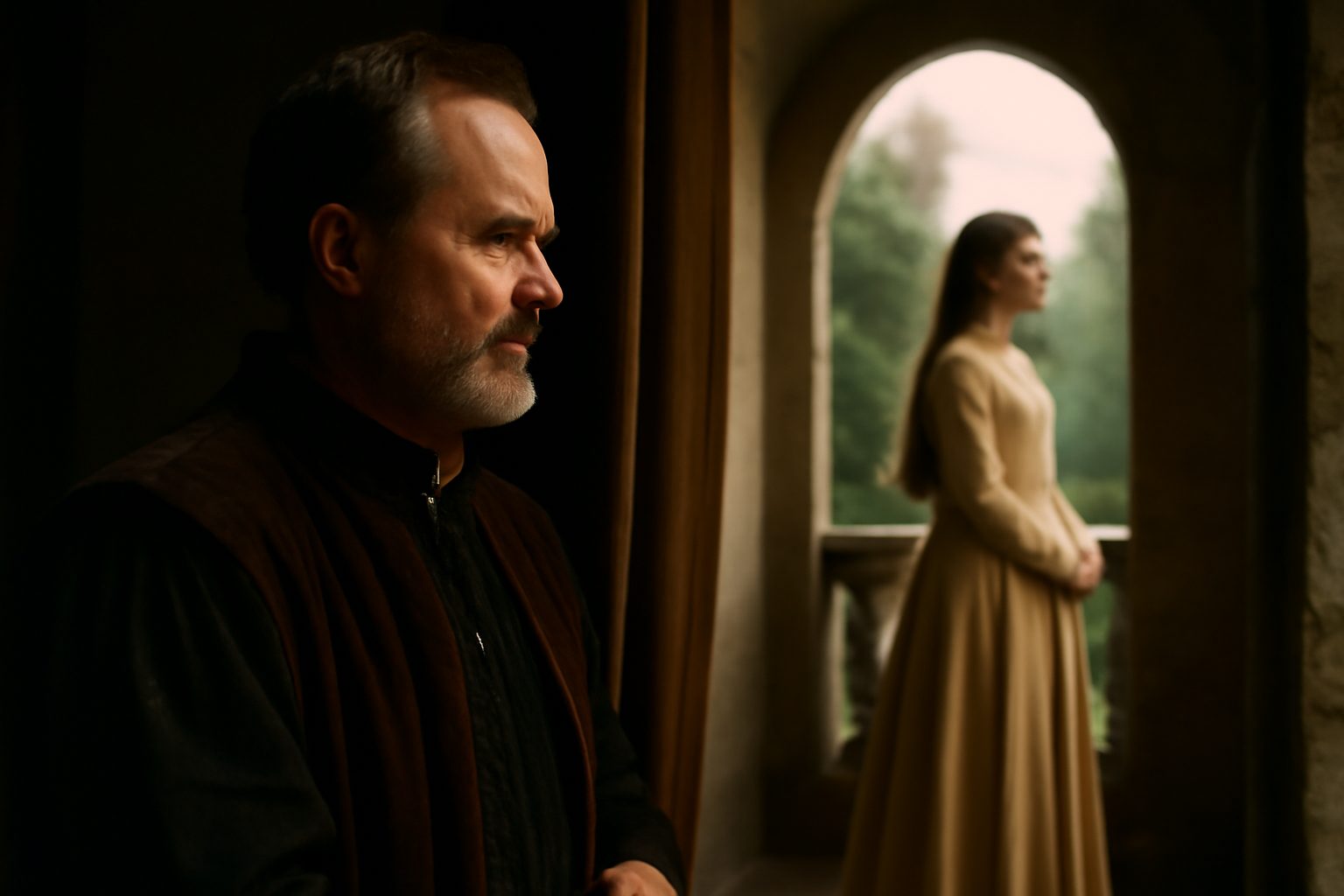
In Act 1, Scene 2 of Romeo and Juliet, Benvolio urges Romeo to move on from his unrequited love for Rosaline by distracting himself with new sights and experiences. This line reflects Benvolio's advice that one sorrow can be eased by replacing it with another, suggesting a shift in focus rather than true healing. The moment captures Romeo's melancholy and the well-meaning but shallow comfort offered by his friends.
Benvolio: "One desperate grief cures with another's languish:"
In modern day english, we would say:
One deep sorrow can be eased by another’s suffering.
Frequently Asked Questions
What does Benvolio mean when he says that one sadness can be cured by another sadness?
Benvolio is suggesting that sometimes getting distracted by a new problem can make you forget about an old one, even if both are sad.
Connections to other verses:
Connections to "One desperate grief cures with another's languish"
The verse "One desperate grief cures with another's languish" introduces the theme of emotional substitution, where one sorrow is alleviated by experiencing another. This idea is echoed and expanded in several other lines within the same scene.
Parallel Concepts of Emotional Relief
Directly preceding this line, "One pain is lessen'd by another's anguish" reinforces the same concept, suggesting that pain can be mitigated through shared or transferred suffering. Similarly, "Tut, man, one fire burns out another's burning" uses the metaphor of fire to convey how one intense emotion can extinguish another, aligning with the idea of desperate grief being cured by a new focus.
Metaphorical Extensions
The notion of seeking new experiences to overcome current distress is further illustrated in "Take thou some new infection to thy eye", which advises Romeo to find a new love to cure his heartache. This ties back to the original verse by suggesting that a new "languish" (or infatuation) can heal his existing grief.
Contrasting Perspectives
While these lines promote the idea of emotional substitution, other verses in the scene, such as "Ne'er saw her match since first the world begun", emphasize Romeo's unwavering fixation on Rosaline, highlighting the tension between his current despair and the proposed remedy. Additionally, "Tut, you saw her fair, none else being by" challenges Romeo's perception, implying that his grief is based on an idealized view that could be altered by comparison, as suggested in the original verse.
Narrative Foreshadowing
The theme of substituting one emotion for another foreshadows Romeo's rapid shift from despair over Rosaline to love for Juliet, which begins at the feast mentioned in "This night I hold an old accustom'd feast". This event serves as the catalyst for the emotional cure proposed in the verse, linking the philosophical idea to the plot's development.