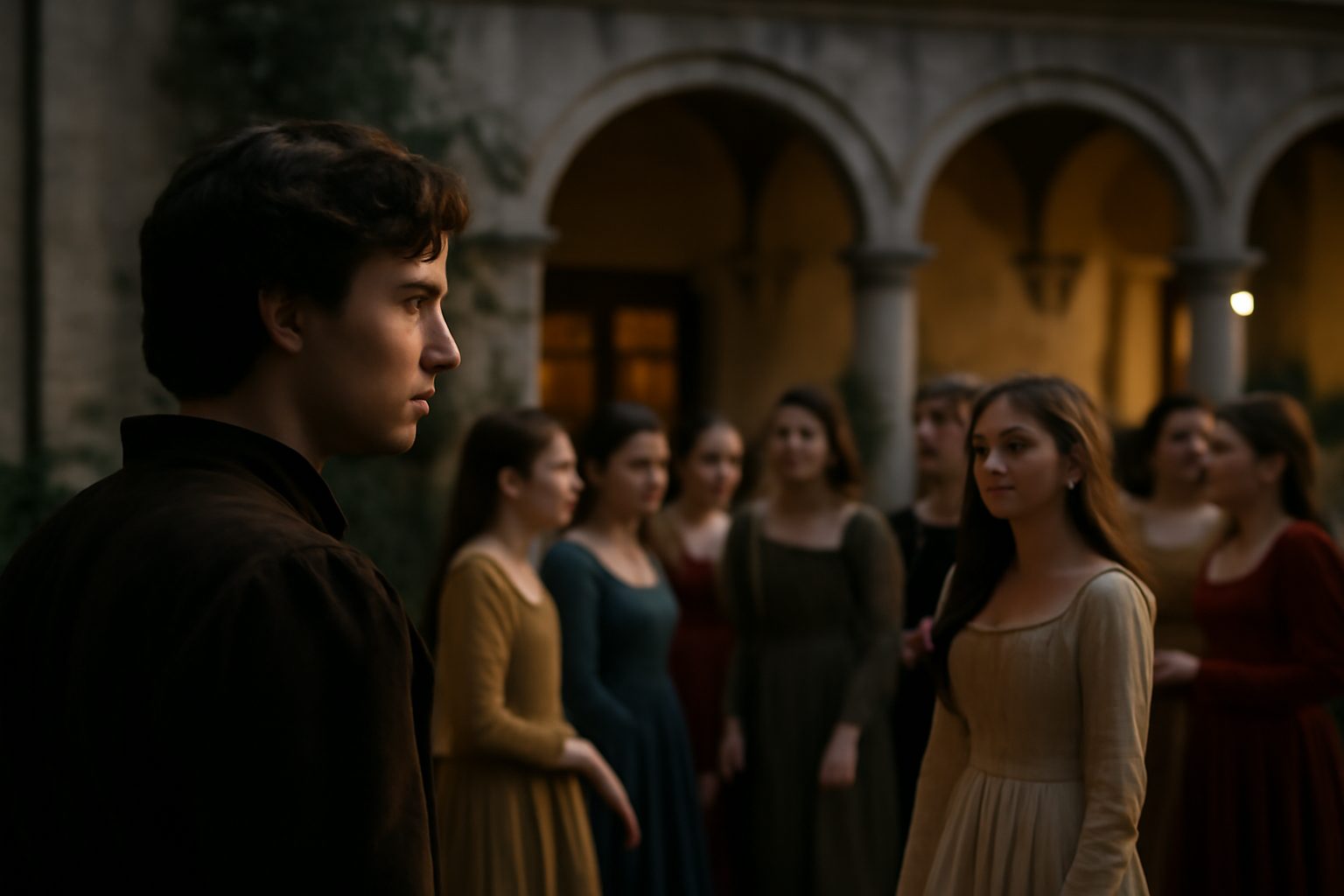
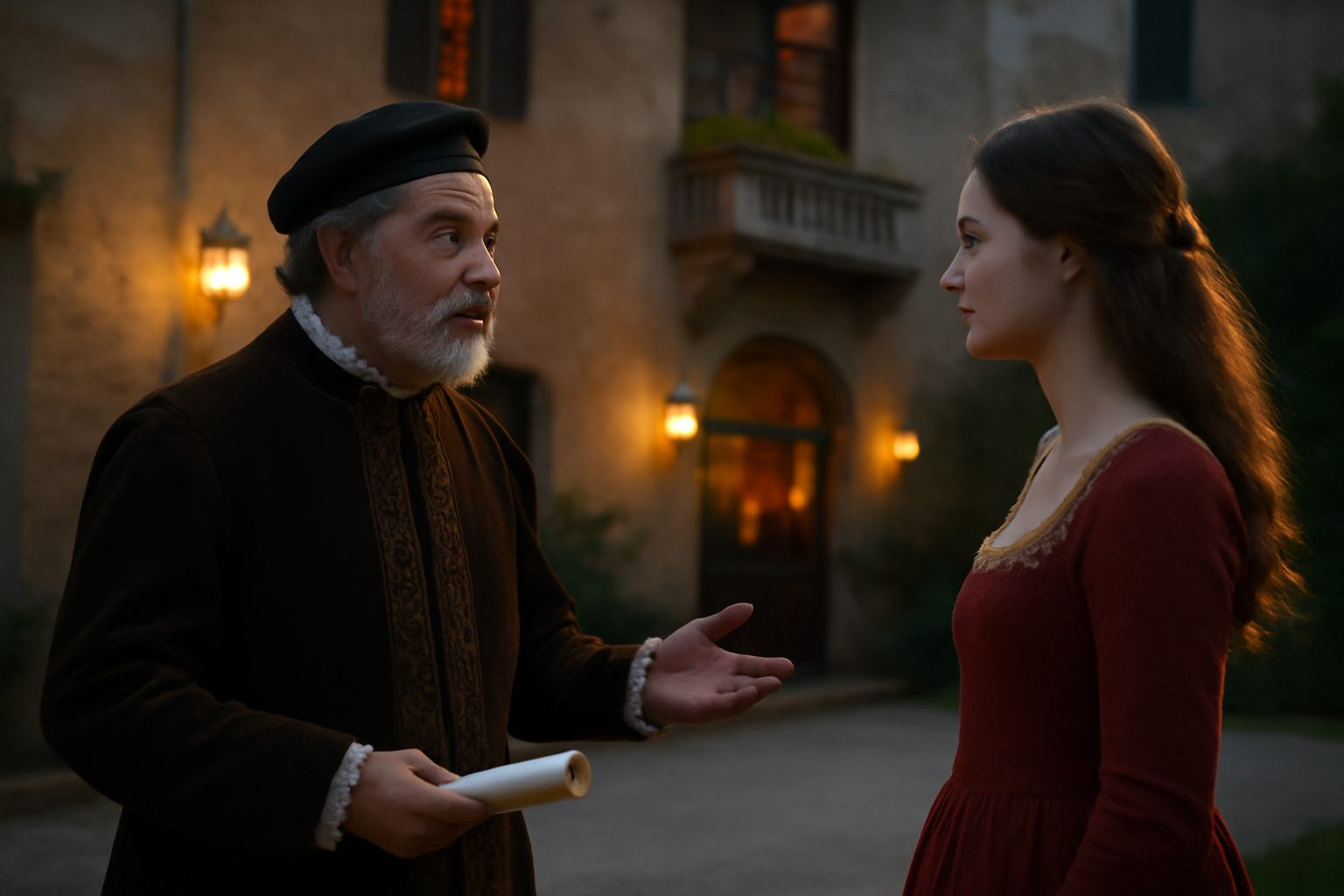
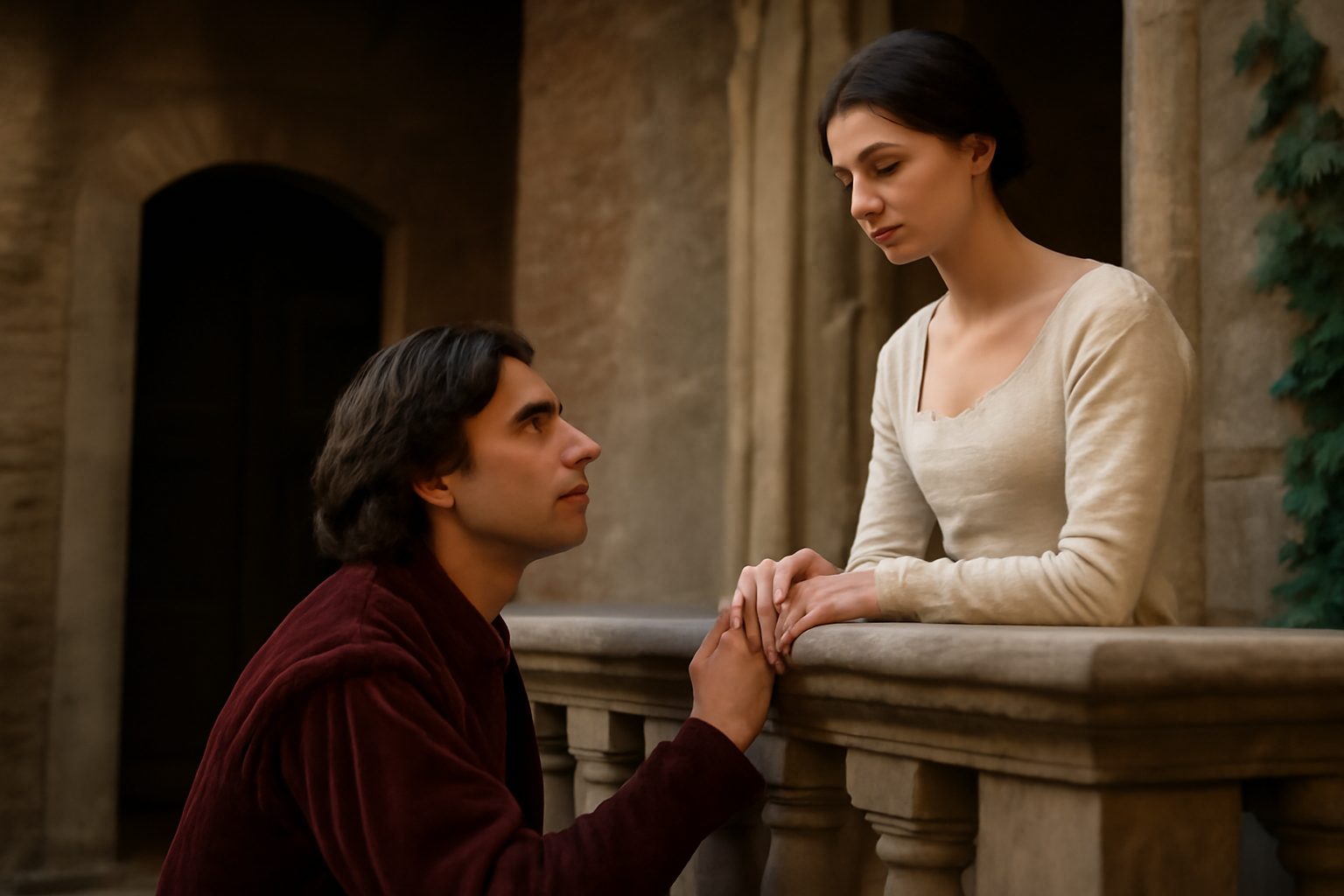
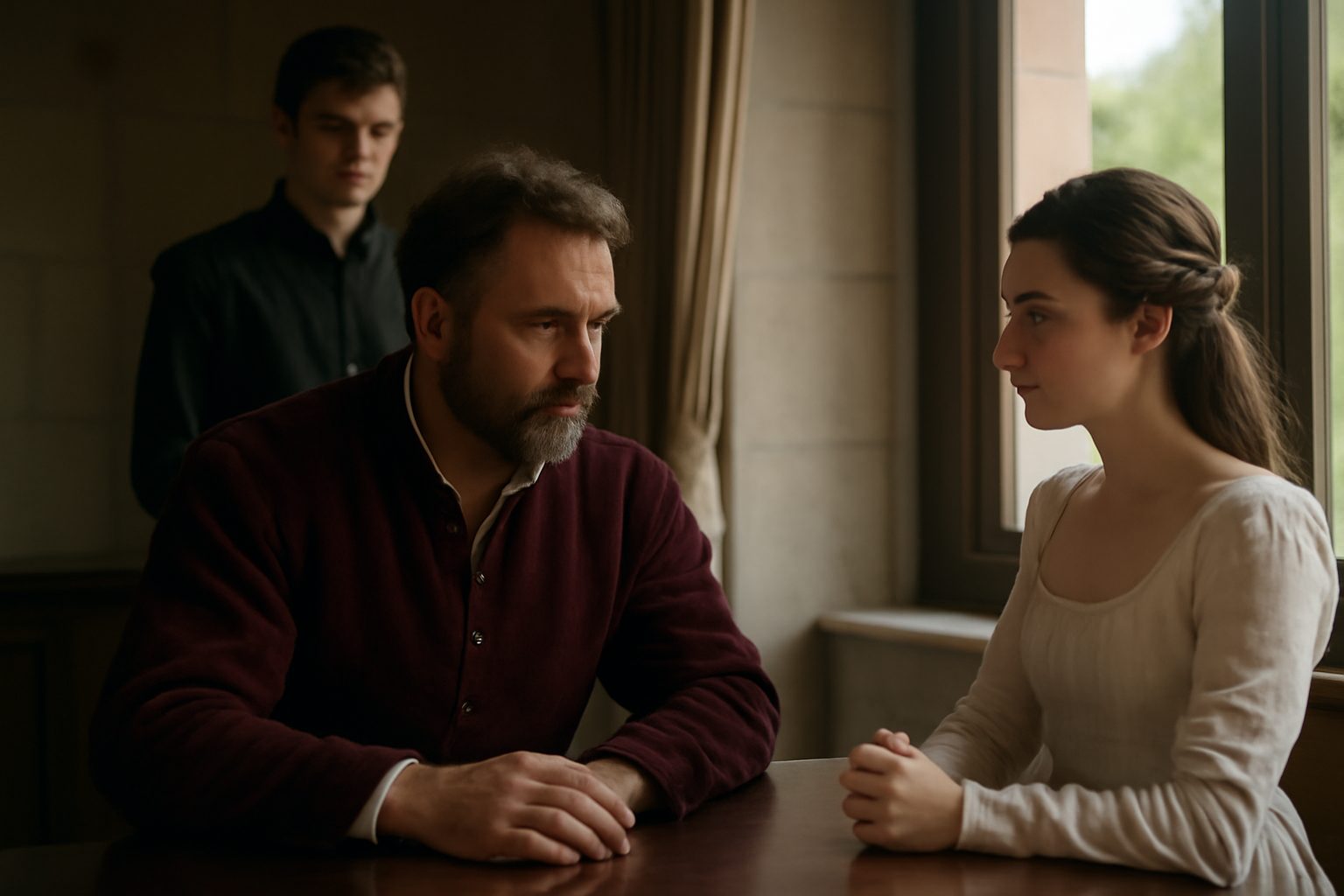
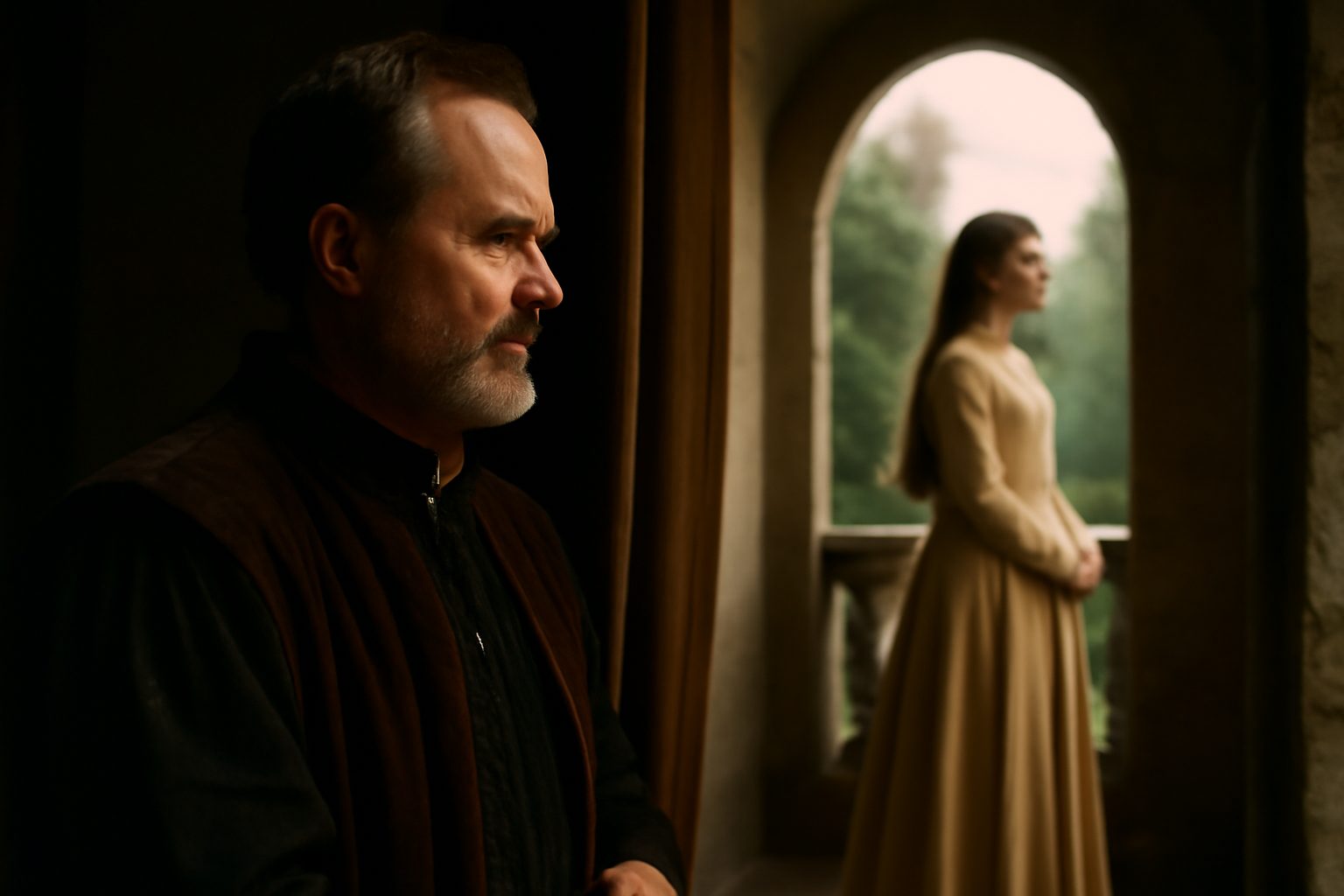
In Act 1, Scene 2 of Romeo and Juliet, Paris discusses with Capulet his desire to marry Juliet. Capulet, while open to the match, suggests that Juliet is too young and urges Paris to wait, emphasizing that his approval is just one of many considerations. The line reflects Capulet's cautious stance, implying that while Paris may be one of many suitors, he holds no special favor yet.
Capulet: "May stand in number, though in reckoning none,"
In modern day english, we would say:
They may be counted in a list, but they don’t really matter.
Frequently Asked Questions
What does Capulet mean when he says that someone may be counted in number but not in value?
Capulet is saying that while a person might be physically present or included in a group (counted in number), they may not be important or significant (not in value or reckoning).
Connections to other verses:
Connections to "May stand in number, though in reckoning none"
The verse May stand in number, though in reckoning none is spoken by Capulet as he invites guests to his feast. It suggests that while someone may be counted among a group, they might not be truly significant or noteworthy. This idea connects thematically and contextually to several other verses in the scene.
Invitation and Assembly
Capulet's description of guests who are present but unimportant relates to his broader instructions about the feast. In This night I hold an old accustom'd feast, he sets the scene for the gathering, while Whereto I have invited many a guest emphasizes the inclusivity yet potential insignificance of some attendees. The notion of assembly is further addressed in assembly: whither should they come?, questioning the purpose and value of their presence.
Beauty and Comparison
The idea of being physically counted but not truly valued echoes in verses discussing beauty and judgment. For instance, Compare her face with some that I shall show invites a critical evaluation where some may "stand in number" but not in merit. Similarly, And like her most whose merit most shall be highlights the distinction between mere presence and true worth, reinforcing Capulet's original point.
Social Hierarchy and Perception
Capulet’s differentiation between quantity and quality of guests reflects the social dynamics within Verona. In Of honourable reckoning are you both, the term "reckoning" is used positively to denote esteem, contrasting with its use in "reckoning none." Additionally, With all the admired beauties of Verona lists those who are noteworthy, indirectly pointing out others who may be present but go unrecognized.
Narrative Foreshadowing
The concept of being included yet unimportant subtly foreshadows events involving characters like Romeo, who enters the feast uninvited but becomes central. This connects to Sups the fair Rosaline whom thou so lovest, where Romeo’s initial love is soon overshadowed. The idea also parallels Take thou some new infection to thy eye, suggesting a shift in attention from one insignificant affection to a meaningful one.