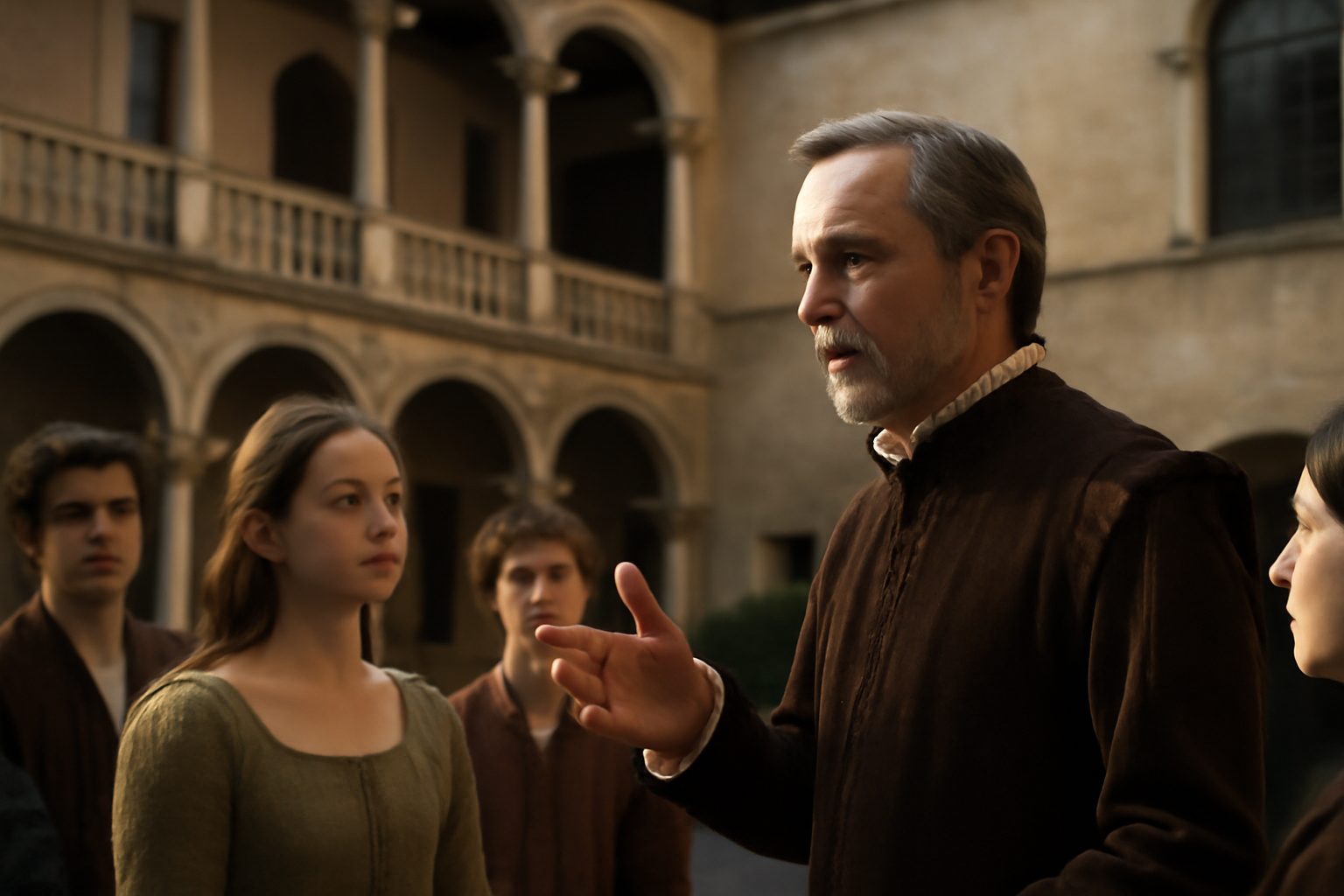
In Act 1, Scene 2 of Romeo and Juliet, Paris speaks with Lord Capulet about marrying Juliet. When Capulet mentions the long-standing feud between their family and the Montagues, Paris responds with regret over the conflict. This line reflects the weariness surrounding the feud, even among those not directly involved in the hostility.
Paris: "And pity 'tis you lived at odds so long."
In modern day english, we would say:
It’s a shame you’ve been fighting for so long.
Frequently Asked Questions
What does Paris mean when he says it's a shame they have been fighting for so long?
Paris is expressing sadness that the Montagues and Capulets have been enemies for such a long time.
Connections to other verses:
Connections to "And pity 'tis you lived at odds so long"
The verse And pity 'tis you lived at odds so long reflects on the longstanding feud between the Montagues and Capulets, expressing regret over the conflict. This sentiment is echoed in other parts of the scene that discuss peace, age, and the consequences of the feud.
Connection to Peace and Age
Capulet's acknowledgment of the feud's futility is supported by For men so old as we to keep the peace, which emphasizes the responsibility of the older generation to end the strife. Similarly, In penalty alike; and 'tis not hard, I think suggests that maintaining peace should be straightforward, reinforcing the pity expressed in the original verse.
Connection to Family and Future
The pity for the long-standing conflict ties into concerns about the future, as seen in The earth hath swallow'd all my hopes but she, where Capulet reveals Juliet as his sole remaining hope. The desire to move past the feud is also implied in his invitation to the feast, detailed in This night I hold an old accustom'd feast, which serves as a social gathering aiming to foster harmony.
Connection to Youth and New Beginnings
The verse’s regret over the feud contrasts with the scene’s focus on youth and new opportunities, such as Paris's courtship of Juliet. But woo her, gentle Paris, get her heart highlights a potential positive outcome amidst the conflict, while And the rank poison of the old will die metaphorically suggests the end of old hatreds, aligning with the pity for the long-standing odds.