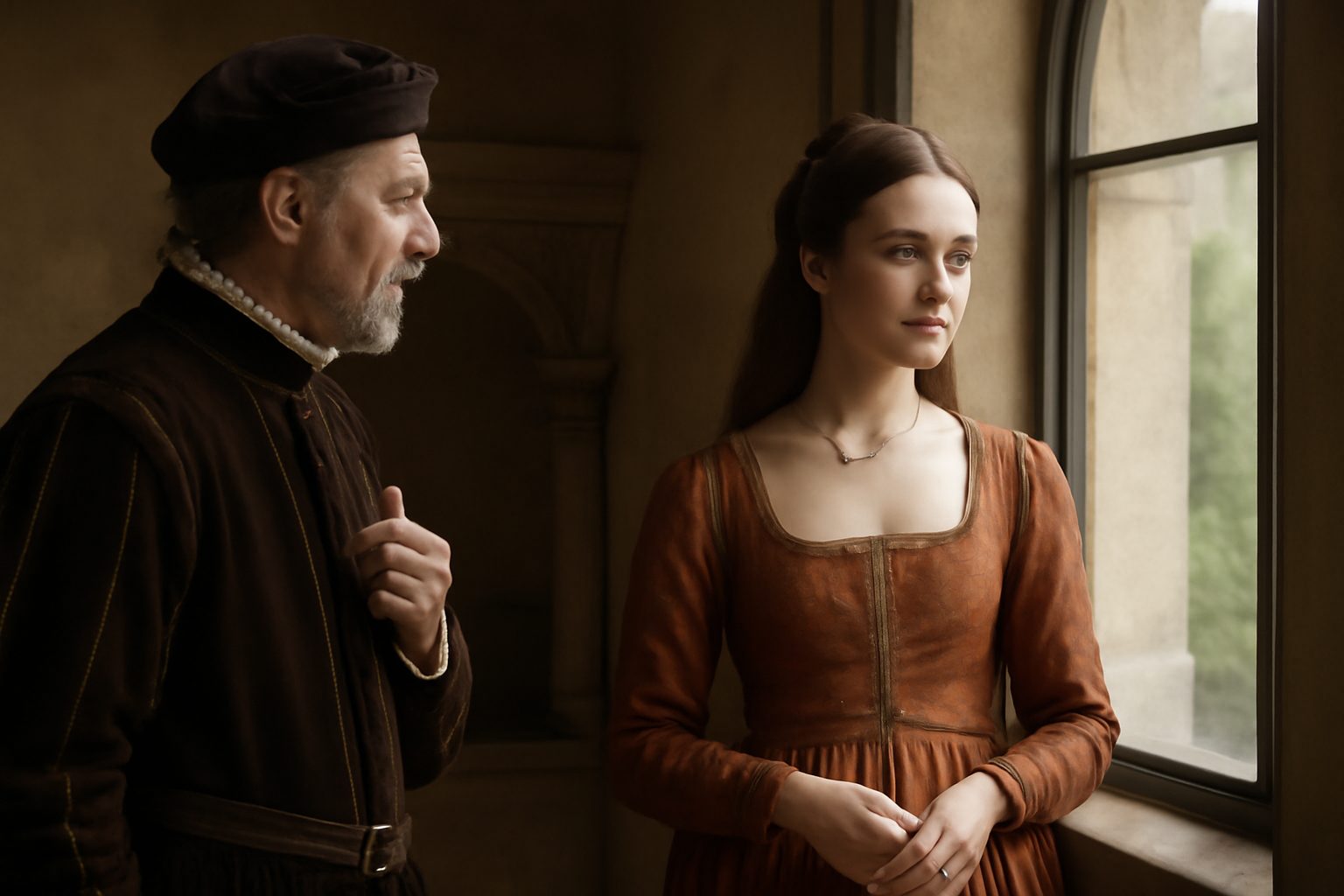
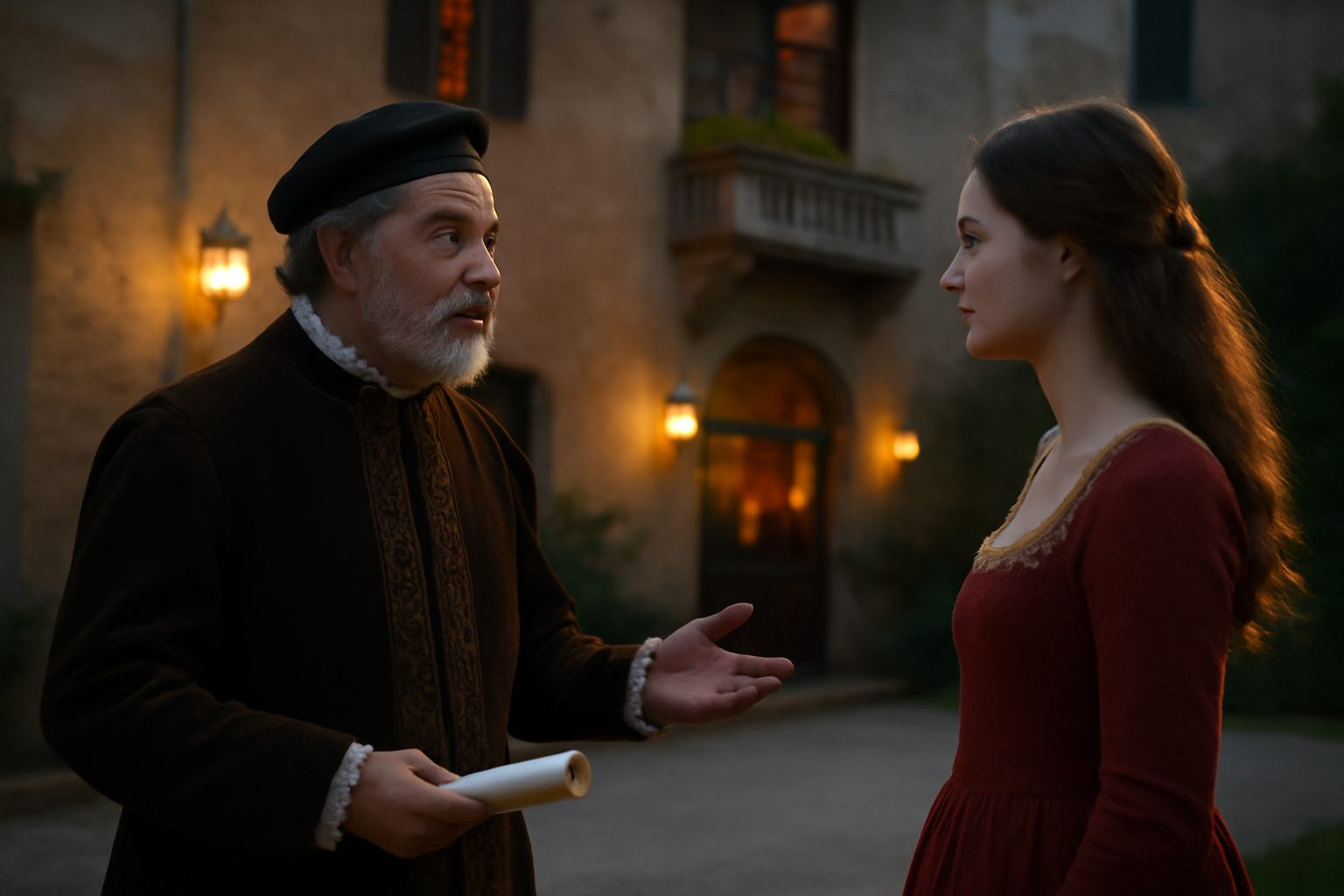
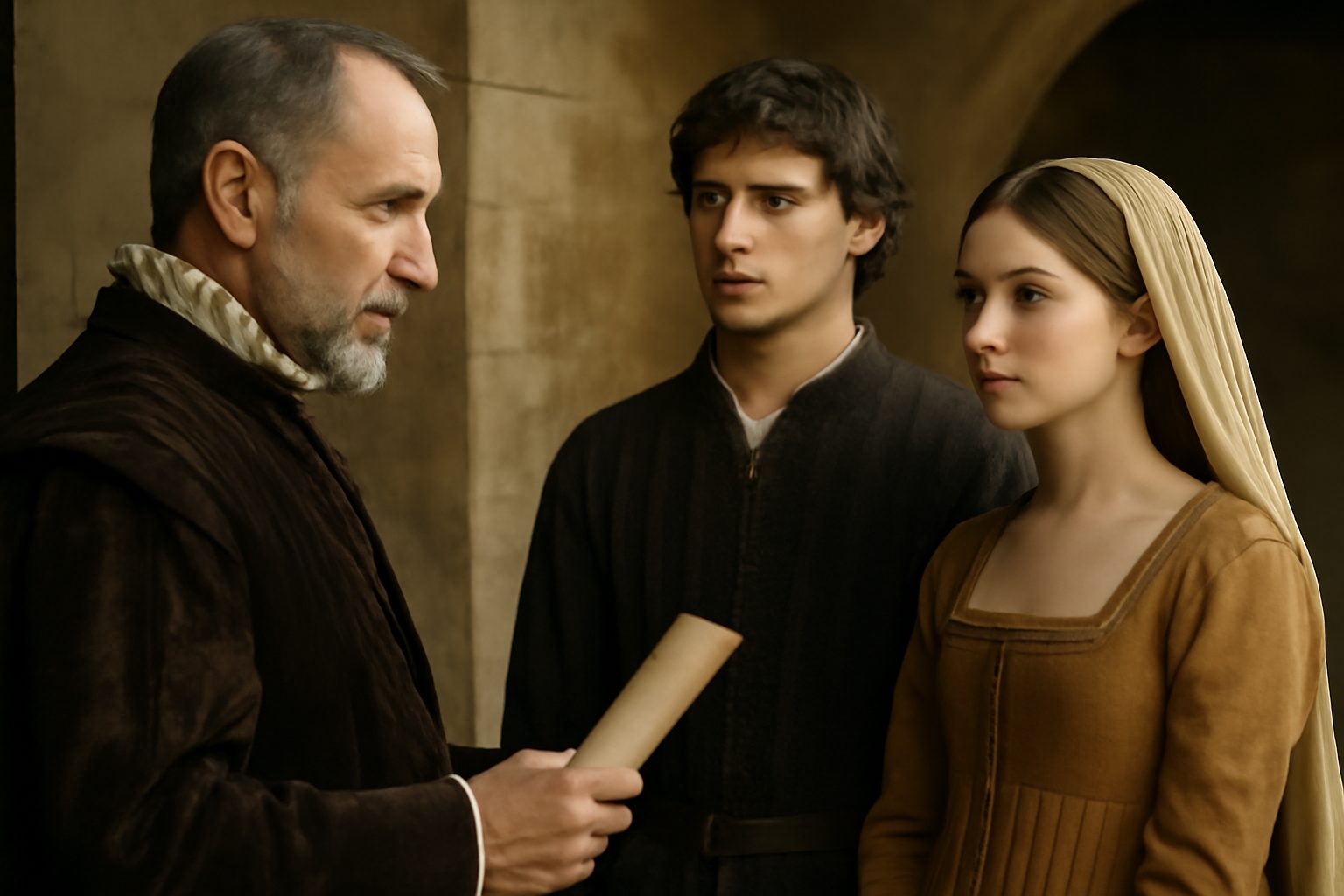
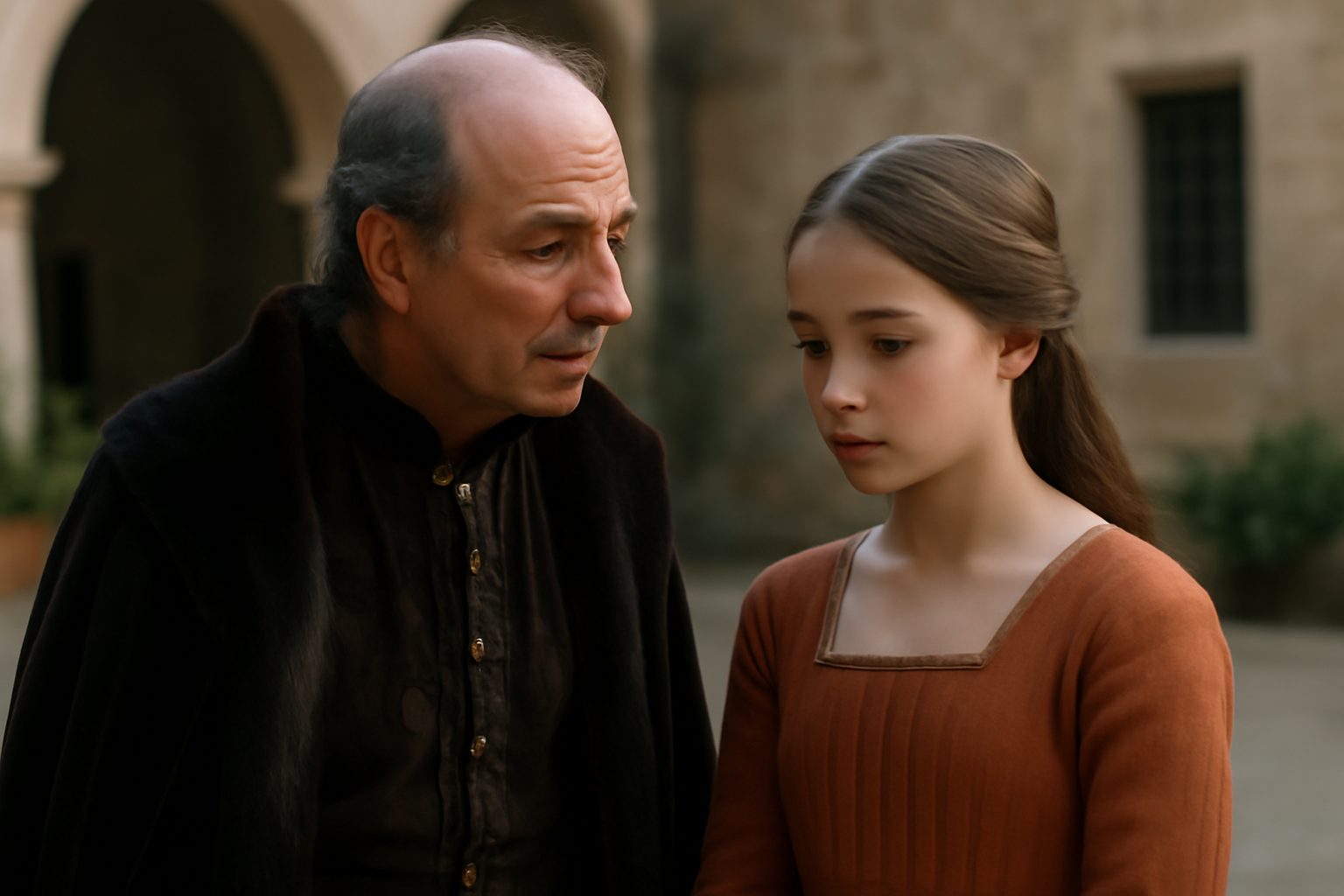
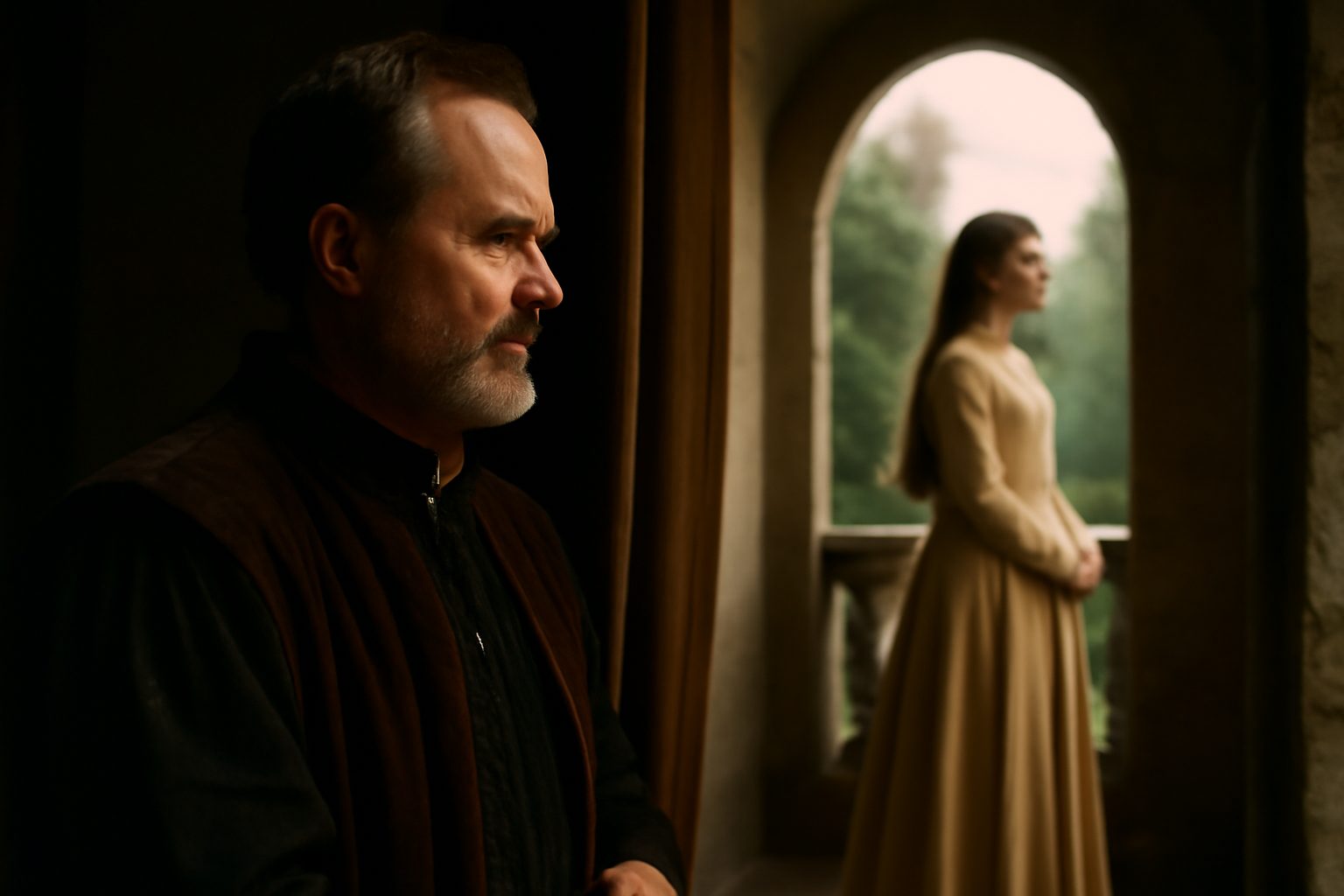
In Act 1, Scene 2 of Romeo and Juliet, Paris speaks to Lord Capulet about marrying Juliet. He acknowledges that while he desires the union, Juliet's agreement is equally important. This line reflects the tension between parental authority and a young woman's autonomy in matters of marriage during the time.
Capulet: "My will to her consent is but a part;"
In modern day english, we would say:
My willingness to marry her is only part of the decision—she must also agree.
Frequently Asked Questions
What does Capulet mean when he says his will is only part of his daughter's marriage decision?
He means that while he has a say in who his daughter marries, her own agreement and consent are also important for the marriage to happen.
Connections to other verses:
Connections to "My will to her consent is but a part"
This line, spoken by Capulet to Paris, establishes his belief that Juliet's consent is essential to any marriage arrangement. It reflects a surprisingly progressive attitude for the time, emphasizing Juliet's agency.
Related Verses on Juliet's Consent and Choice
- An she agree, within her scope of choice directly follows, reinforcing that Juliet's agreement is key and she has freedom in her selection.
- But woo her, gentle Paris, get her heart shows Capulet encouraging Paris to win Juliet's affection, not just his approval.
- Lies my consent and fair according voice completes the thought, indicating Capulet's support is conditional on Juliet's willingness.
Verses on Juliet's Youth and Readiness for Marriage
- My child is yet a stranger in the world highlights Capulet's view of Juliet's youth and inexperience.
- She hath not seen the change of fourteen years specifies her age, underscoring her tenderness.
- Ere we may think her ripe to be a bride expresses Capulet's desire to wait for her maturity.
- Contrast with Younger than she are happy mothers made, where Paris argues that others marry younger, showing societal pressure.
Capulet's Protective and Loving Attitude
- The earth hath swallow'd all my hopes but she reveals Juliet's importance as his only surviving child.
- She is the hopeful lady of my earth further emphasizes her value and his hopes for her future.
Connections to the Feast and Social Context
- This night I hold an old accustom'd feast introduces the event where Romeo and Juliet will meet.
- Such as I love; and you, among the store shows Capulet's inclusive invitation, setting the stage for fateful encounters.