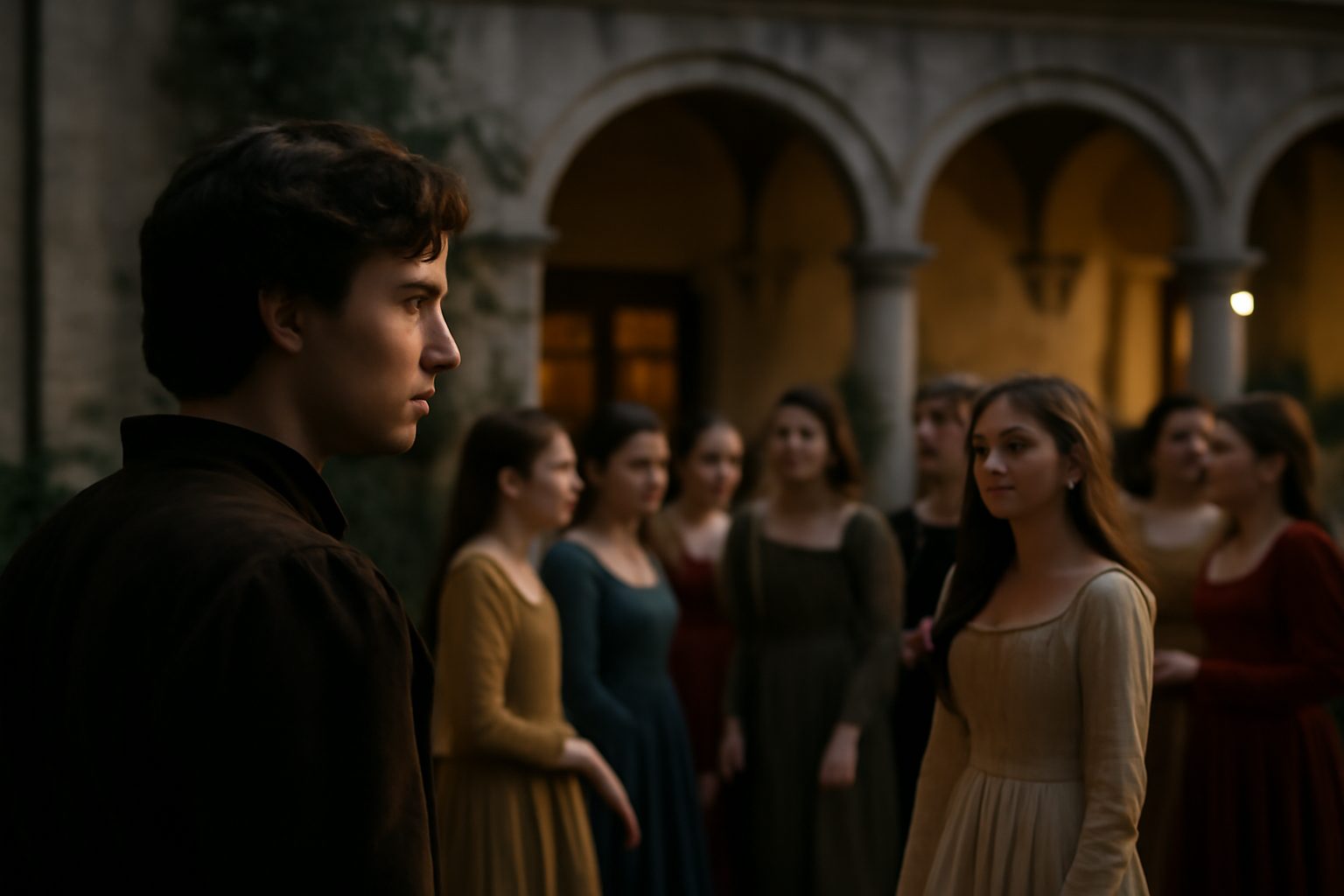
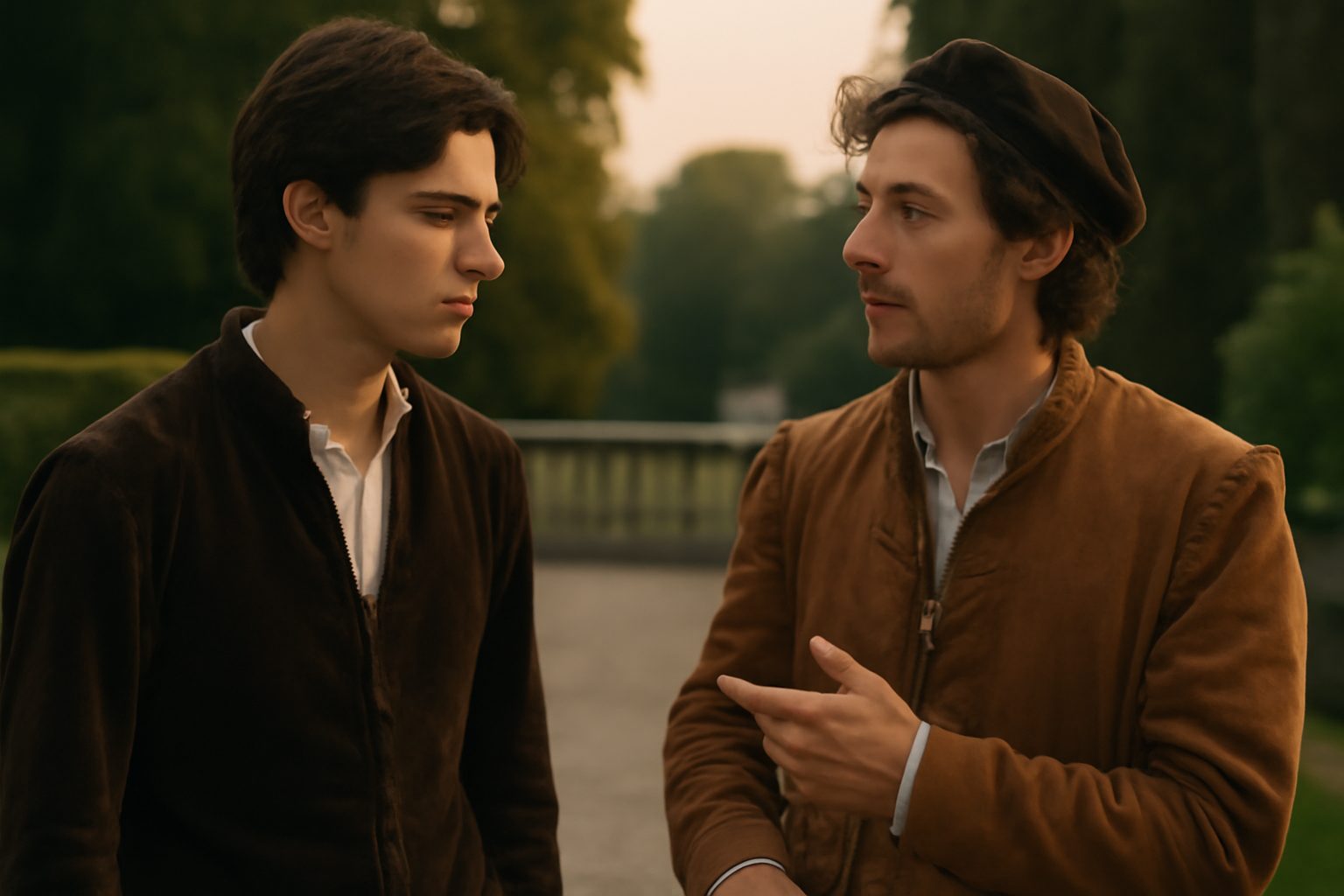
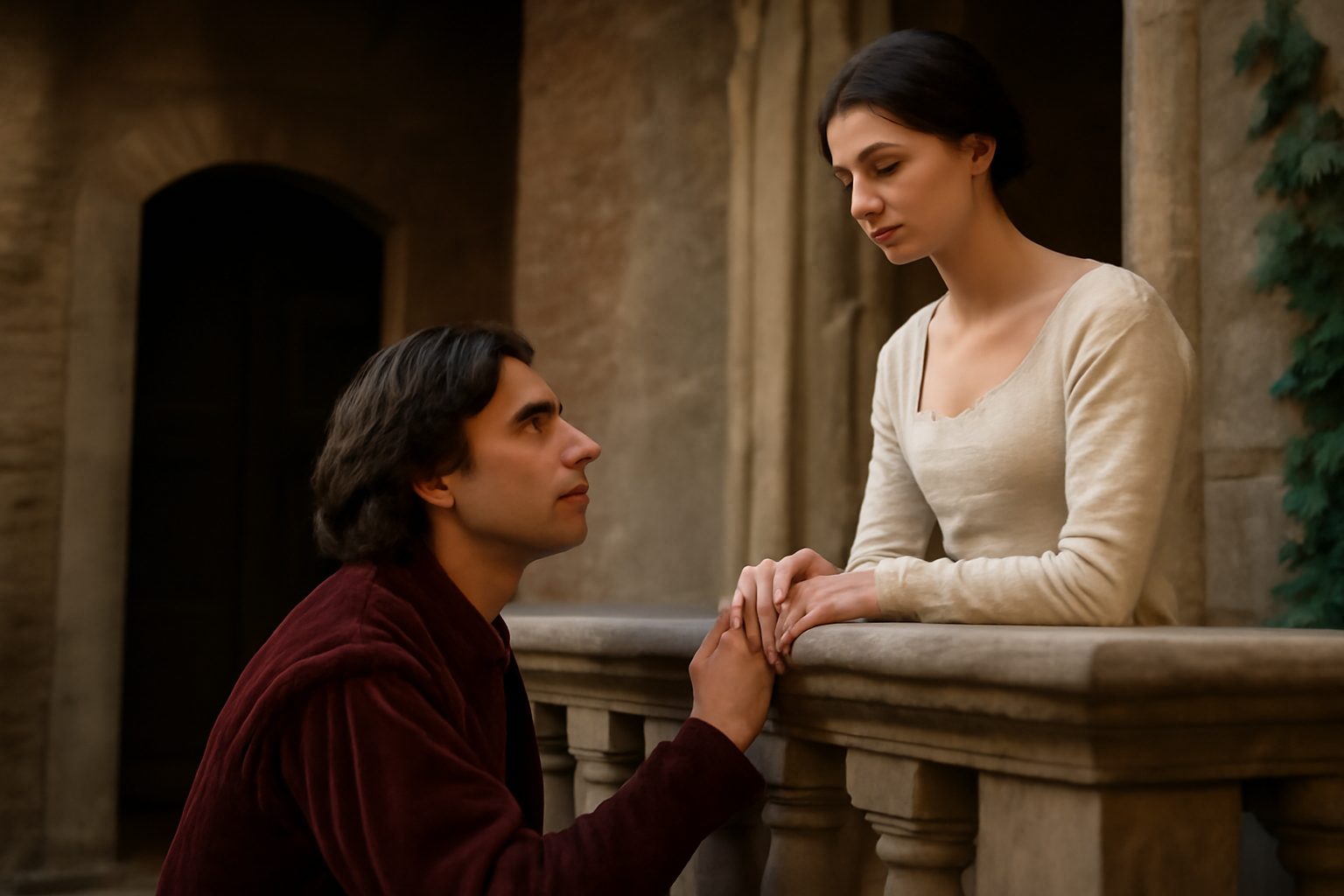
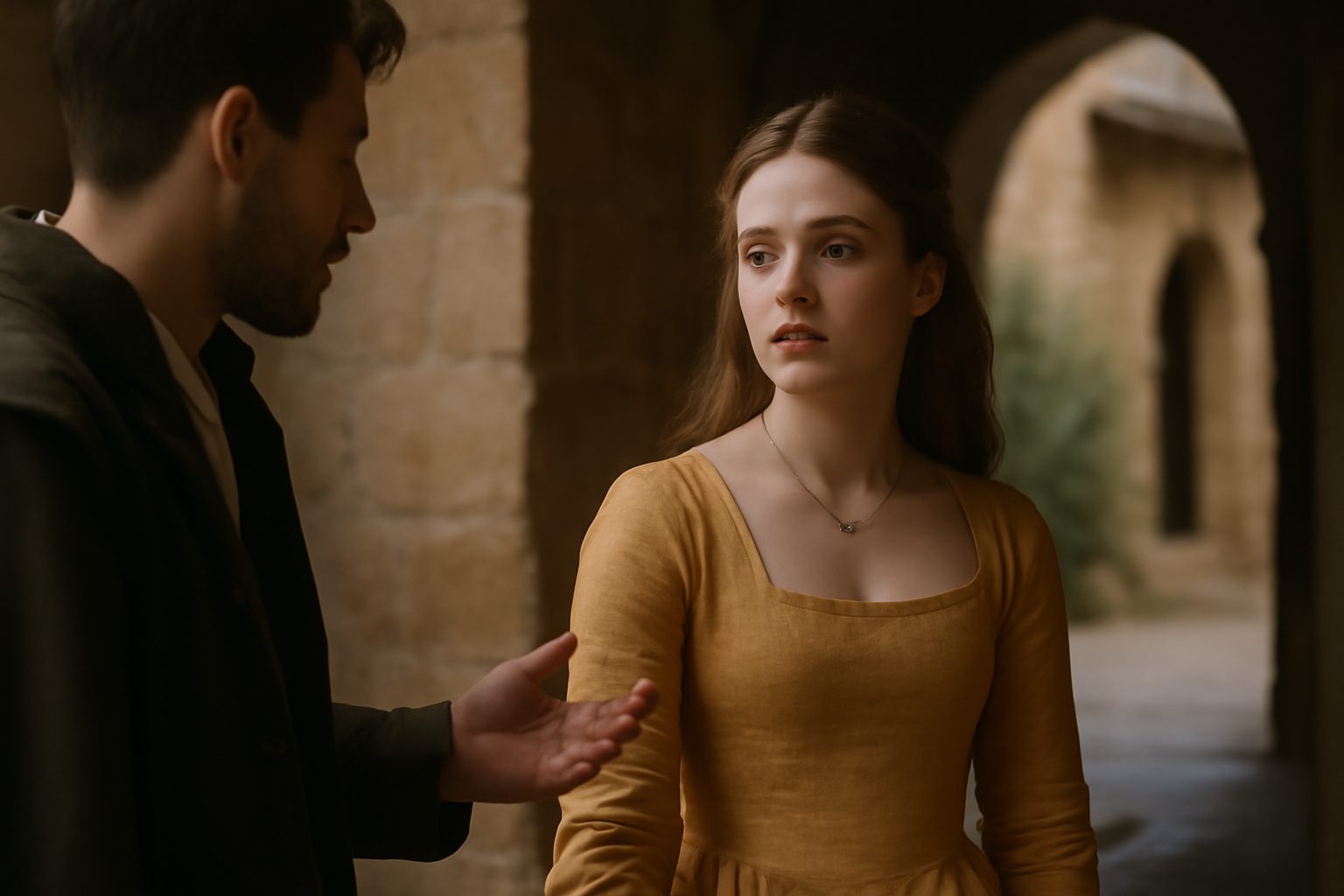
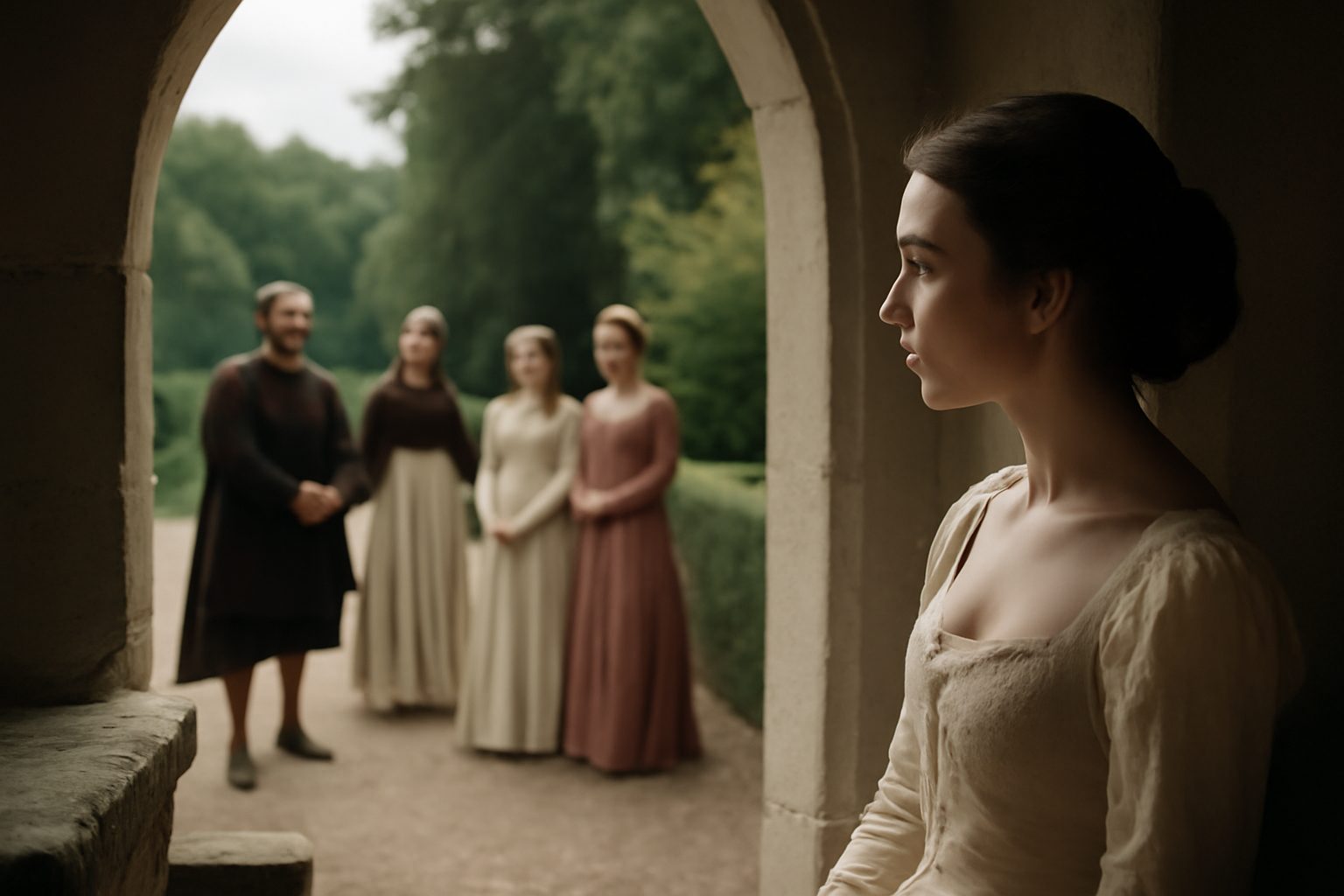
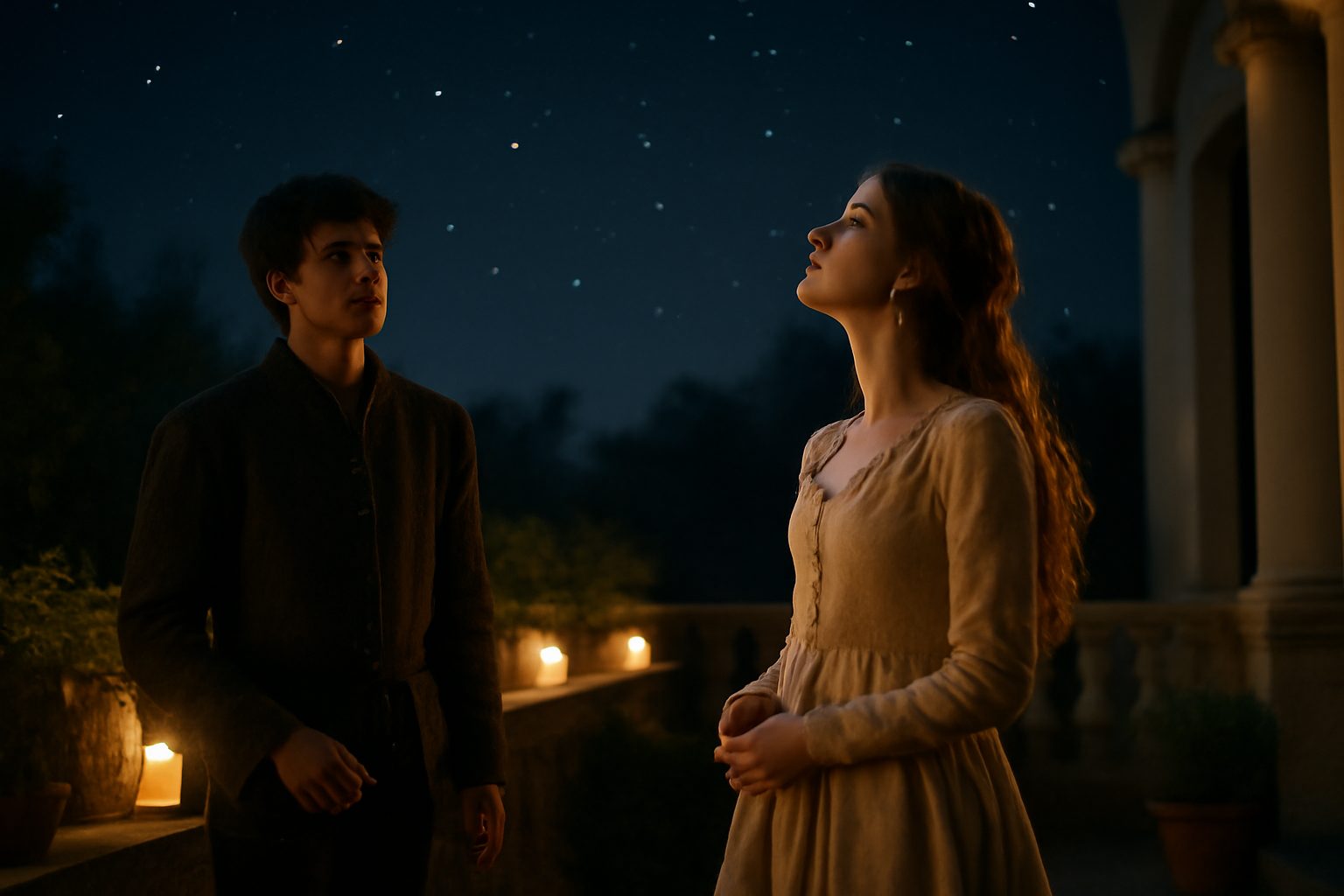
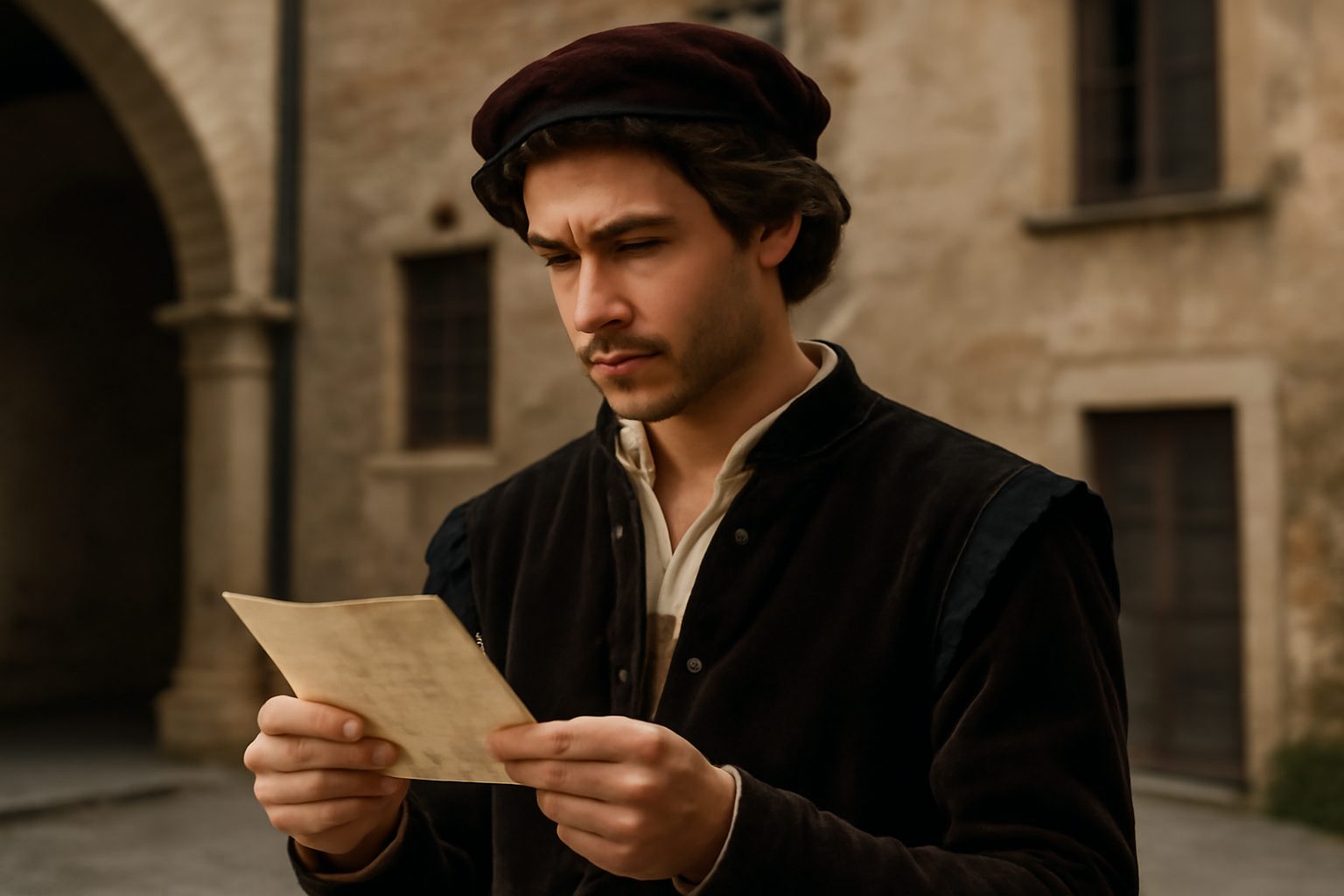
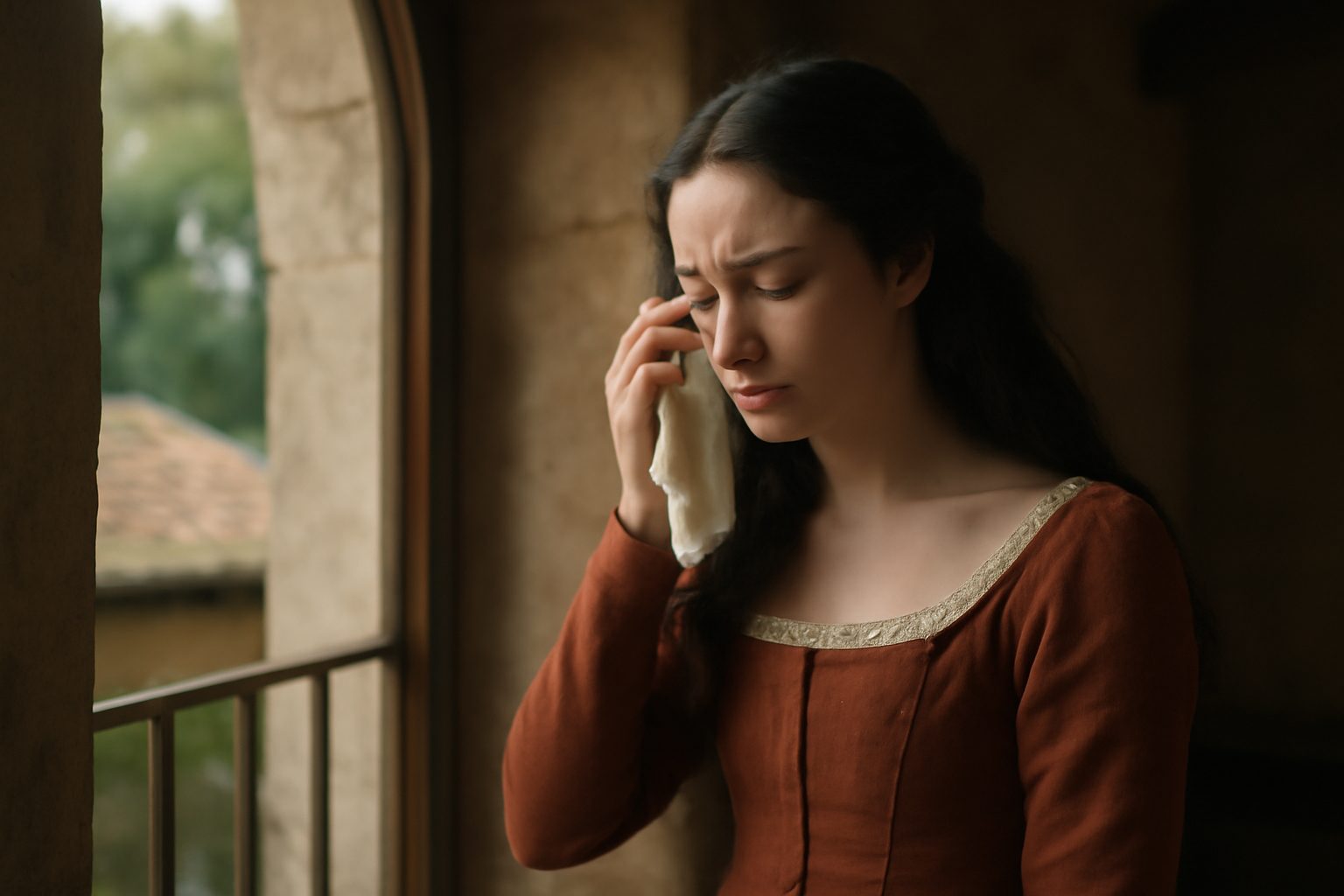
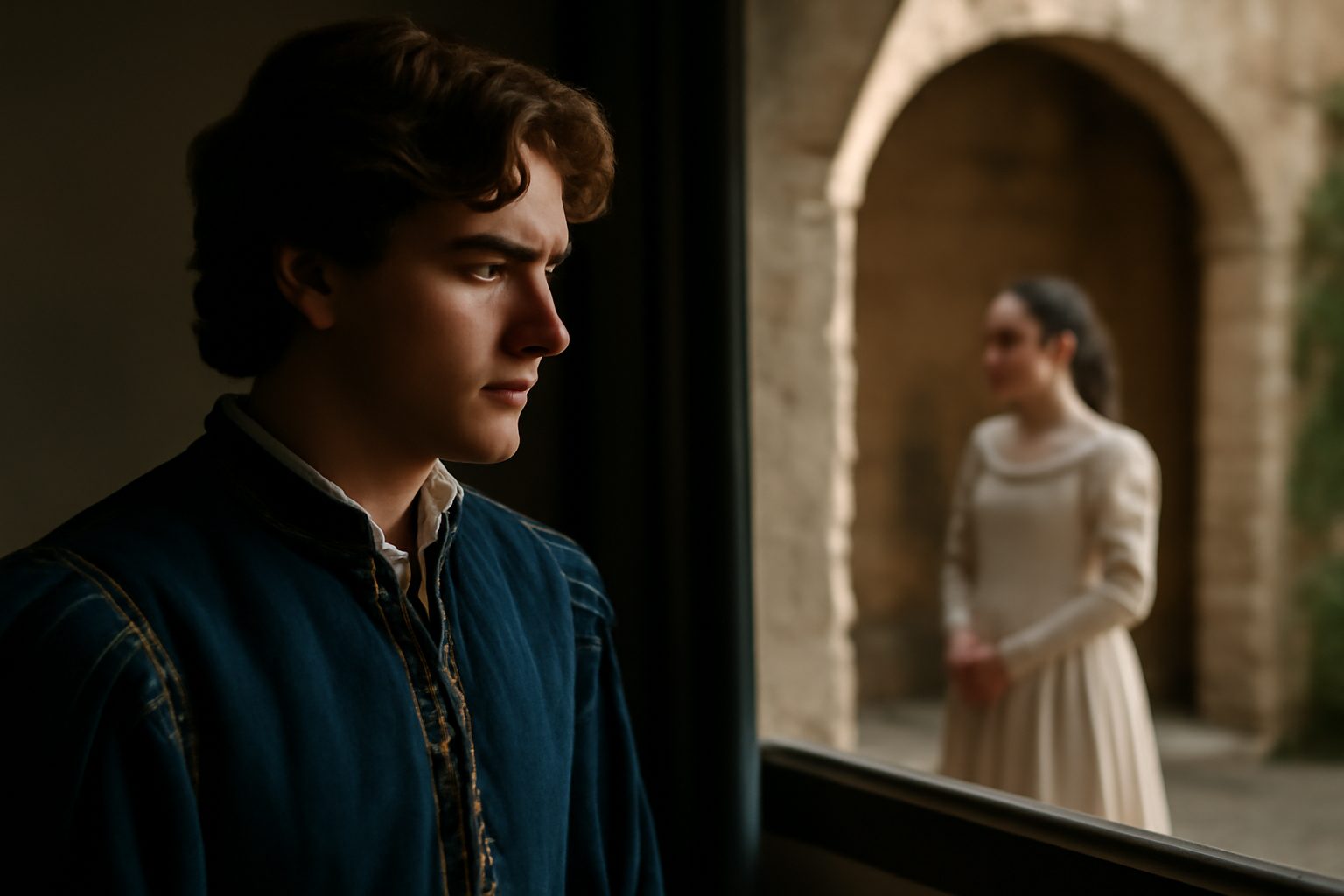
In Act 1, Scene 2 of Romeo and Juliet, Benvolio encourages Romeo to attend the Capulet feast to help him move on from Rosaline. Romeo reluctantly agrees, dismissing the idea that he will find anyone there worth his attention. This line captures his skeptical attitude as he resigns himself to going along with Benvolio's plan.
Romeo: "I'll go along, no such sight to be shown,"
In modern day english, we would say:
I’ll go with you, not because I expect to see anything special.
Frequently Asked Questions
What does Romeo agree to do in this line?
Romeo agrees to go along with Benvolio to the Capulet party.
Why does Romeo say he will go to the event?
He says there is nothing better for him to see or do, so he might as well go.
Connections to other verses:
Connections to "I'll go along, no such sight to be shown"
This line, spoken by Romeo, reflects his initial reluctance to attend the Capulet feast, believing no one could surpass Rosaline's beauty. It connects thematically and narratively to several other verses in the scene.
Reluctance and Persuasion
Romeo's hesitation echoes his earlier despair over Rosaline, as seen in One desperate grief cures with another's languish, where Benvolio suggests replacing one love with another. Benvolio's persuasive efforts continue in Go thither; and, with unattainted eye, urging Romeo to compare Rosaline objectively to other women. The idea of finding a new love is reinforced in Take thou some new infection to thy eye, advocating for emotional renewal.
Feast Invitations and Social Context
The feast itself is introduced by Capulet in This night I hold an old accustom'd feast, setting the stage for the event Romeo reluctantly agrees to attend. The guest list includes many admired beauties, as noted in With all the admired beauties of Verona, contrasting with Romeo's skepticism. The servant's task of delivering invitations in Through fair Verona; find those persons out directly leads to Romeo's involvement.
Beauty and Comparison
Benvolio's challenge to Romeo's fixation on Rosaline is evident in Compare her face with some that I shall show, promising that other women will outshine her. This idea is further emphasized in And I will make thee think thy swan a crow, suggesting Rosaline will seem ordinary by comparison. Romeo's eventual agreement to "go along" hints at his openness to this possibility, despite his initial resistance.
Foreshadowing and Irony
Romeo's claim that "no such sight to be shown" is ironically disproven when he meets Juliet, as foreshadowed by Capulet's description of young women at the feast in Among fresh female buds shall you this night. The transformative power of new love is hinted at in And the rank poison of the old will die, suggesting Romeo's current sorrow will fade.