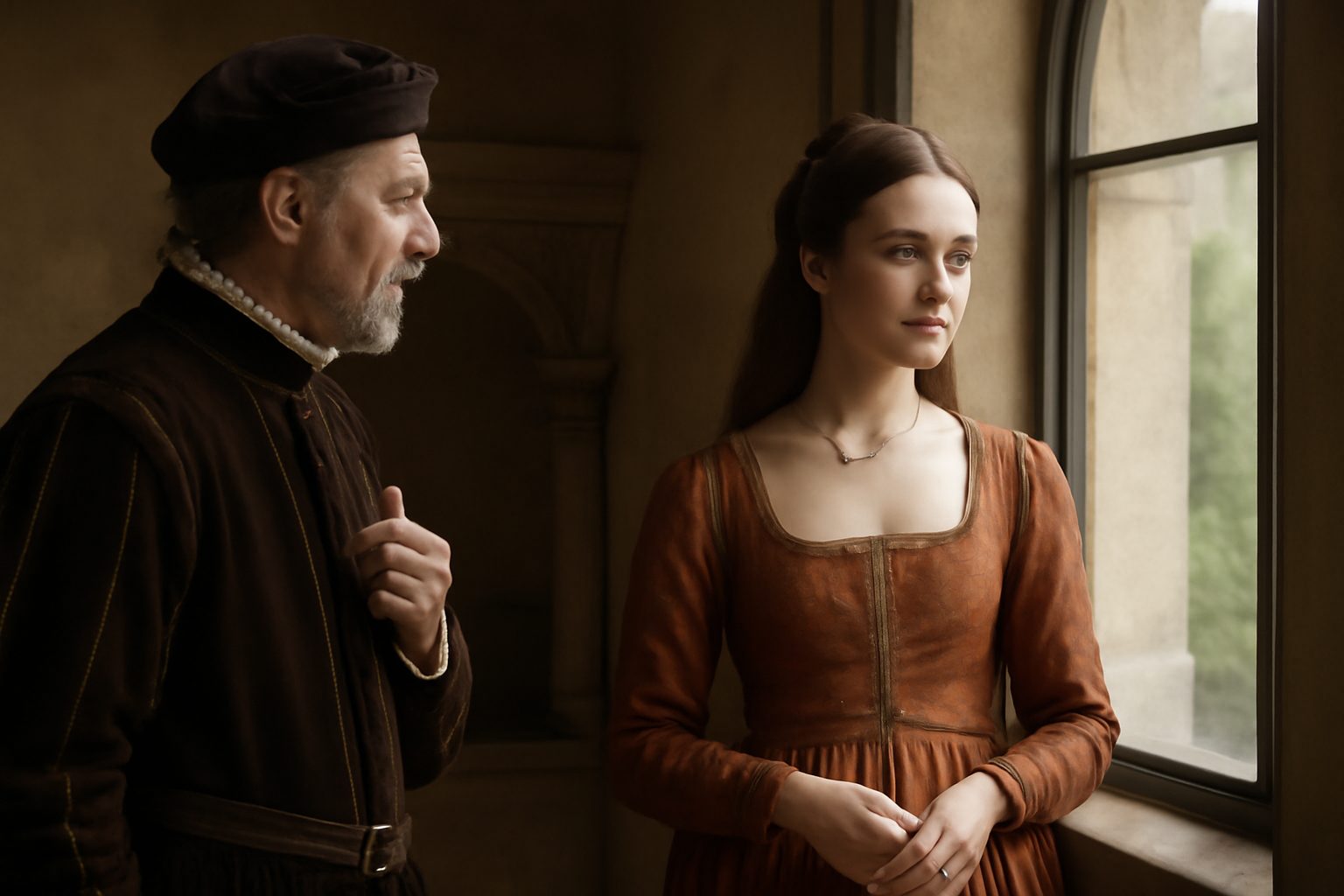
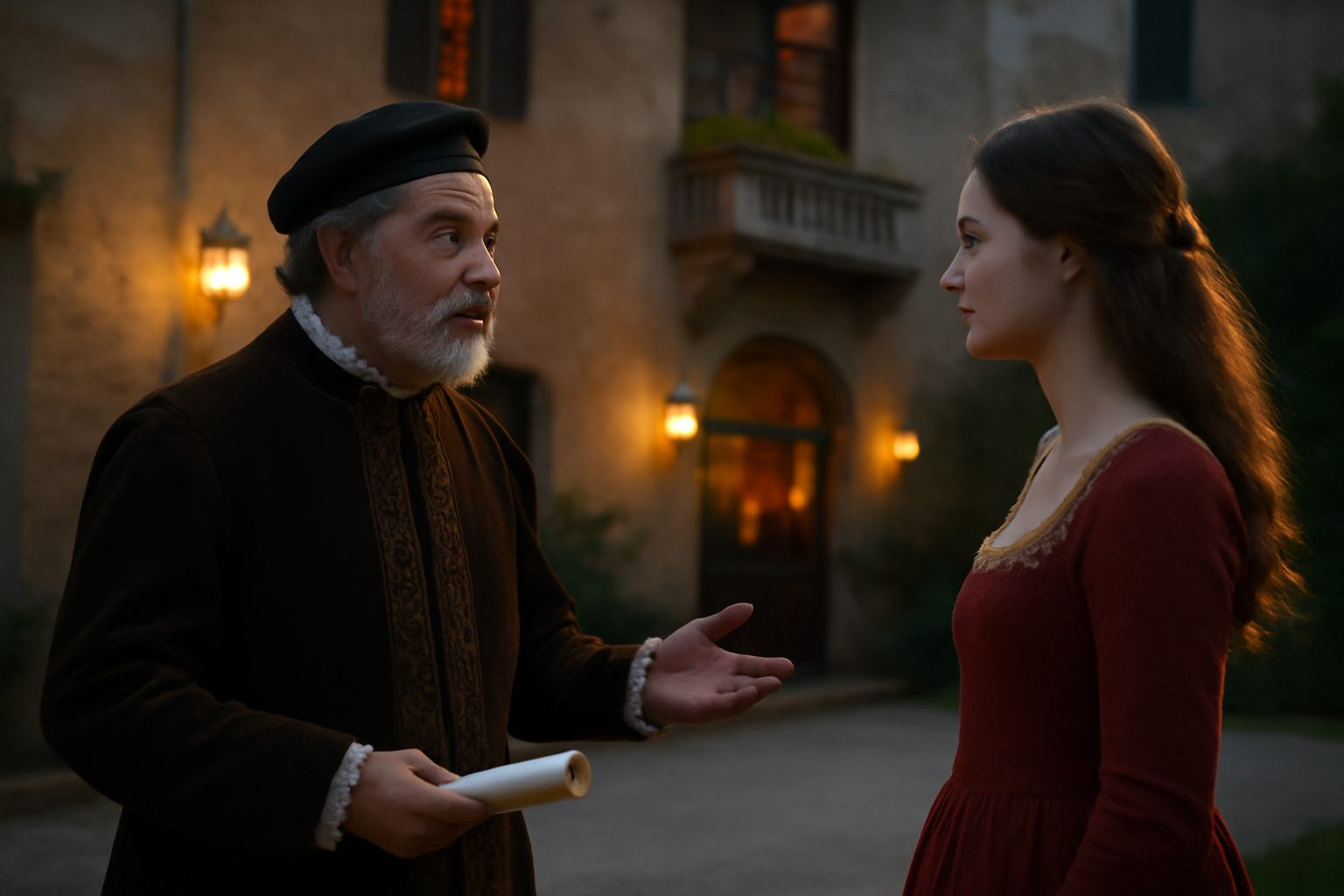
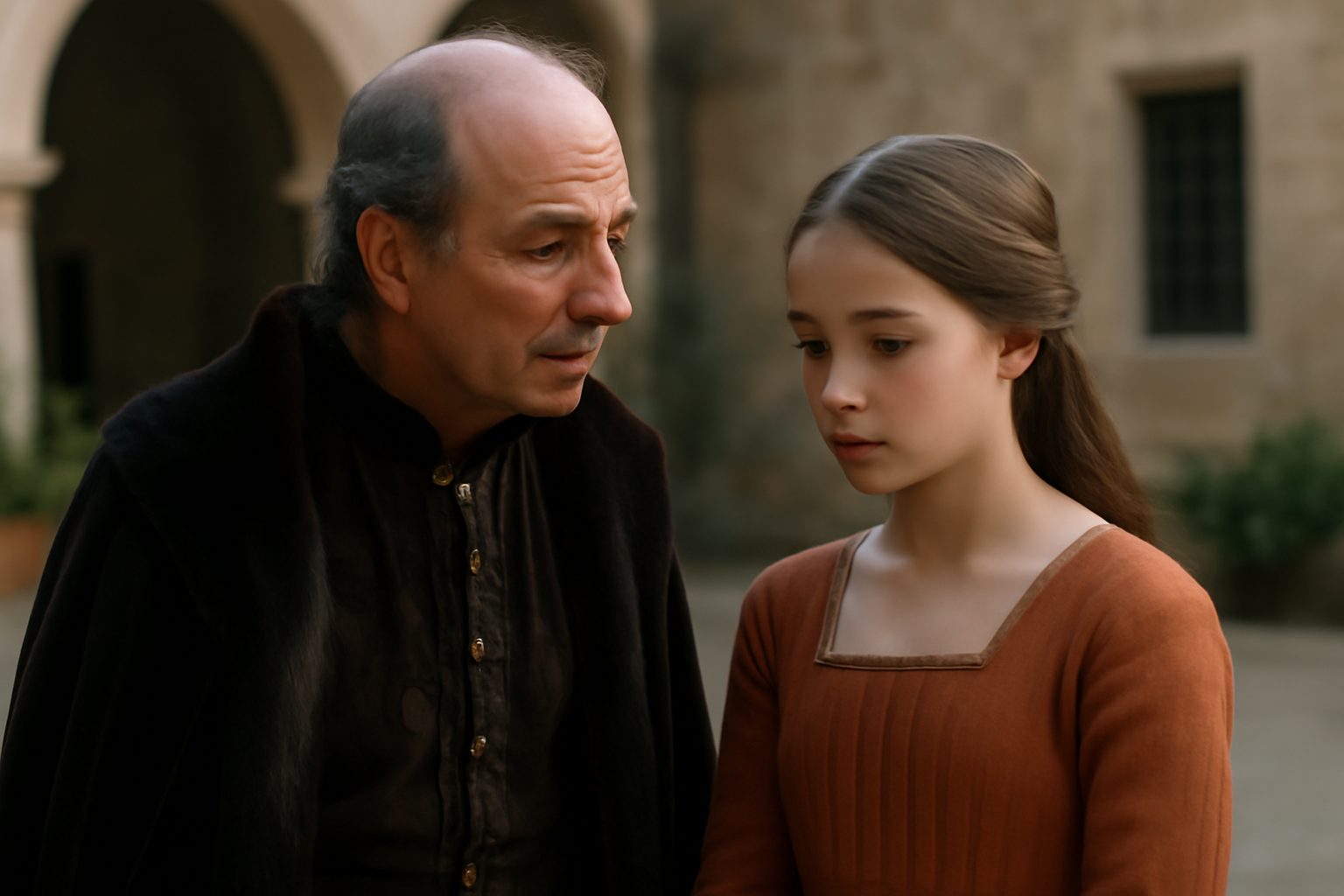
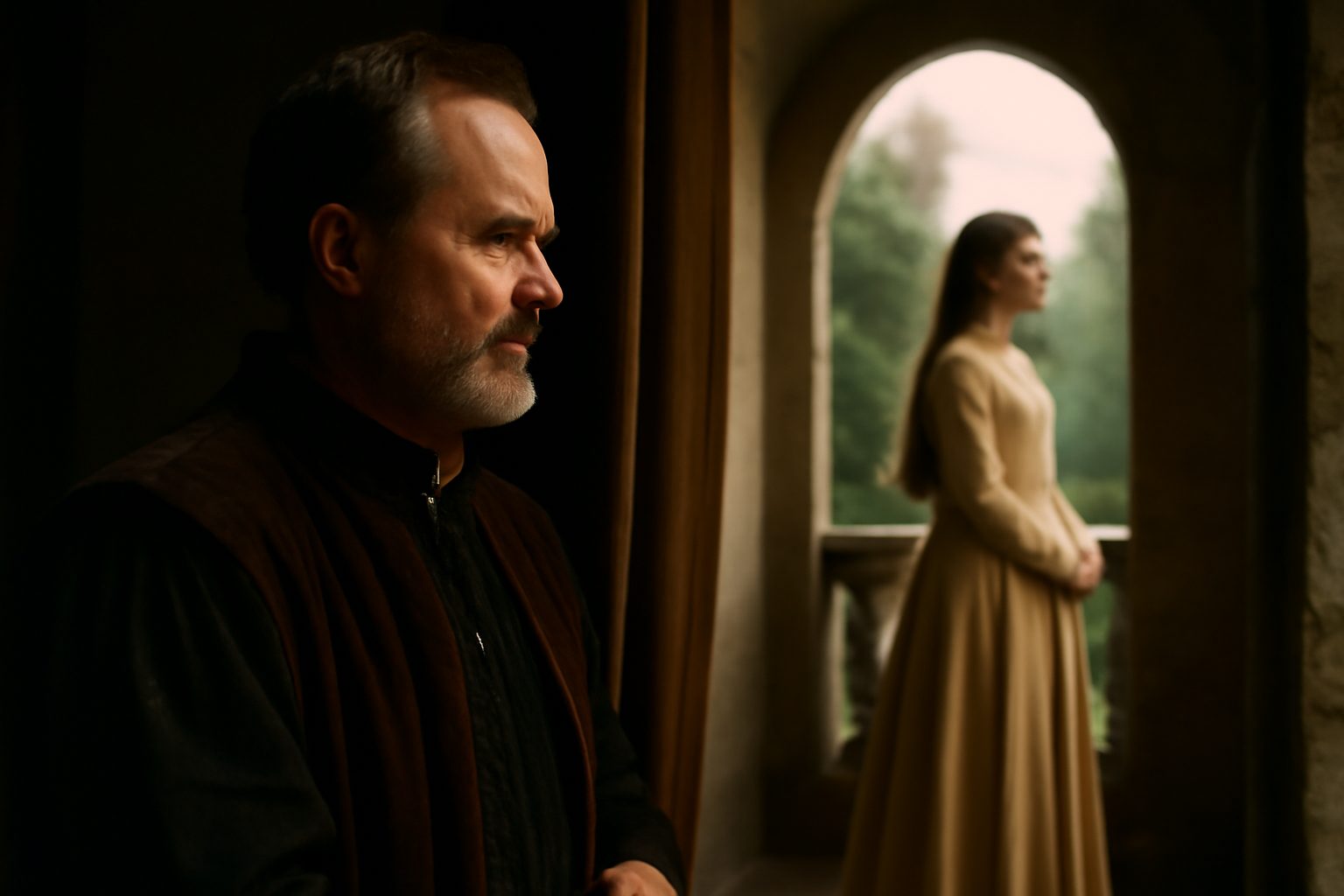
In Act 1, Scene 2 of Romeo and Juliet, Paris presses Capulet for an answer regarding his proposal to marry Juliet. Capulet, hesitant to rush his daughter into marriage, repeats his earlier advice for Paris to wait, emphasizing his stance by acknowledging he is simply restating his previous words. This moment highlights Capulet's cautious, though not entirely dismissive, attitude toward the match.
Capulet: "But saying o'er what I have said before:"
In modern day english, we would say:
I’m just repeating what I already said before.
Frequently Asked Questions
What does Capulet mean when he says he is repeating what he said before?
Capulet means that he is saying the same thing again, emphasizing that his message or opinion has not changed.
Connections to other verses:
Connections to "But saying o'er what I have said before:"
This verse, spoken by Capulet, serves as a pivot in his conversation with Paris, emphasizing repetition and reinforcing his earlier stance on Juliet's readiness for marriage.
Direct Context and Parental Concern
Capulet's repetition links directly to his prior expressions of caution about Juliet's youth. In My child is yet a stranger in the world, he underscores her inexperience, and in Ere we may think her ripe to be a bride, he reiterates the need for patience. The phrase "saying o'er what I have said before" encapsulates his persistent reluctance, echoed in And too soon marr'd are those so early made, where he warns against premature marriage.
Contrast with Paris's Persistence
Paris's unwavering suit, as seen in But now, my lord, what say you to my suit?, prompts Capulet's repetitive response. This dynamic highlights the tension between Paris's eagerness and Capulet's protective hesitation, further emphasized in But woo her, gentle Paris, get her heart, where Capulet shifts focus to Juliet's consent, softening his stance without fully yielding.
Narrative Foreshadowing
Capulet's eventual invitation to the feast in This night I hold an old accustom'd feast contrasts with his repetitive caution, hinting at future events where social gatherings override his reservations. The guest list, including With all the admired beauties of Verona, sets the stage for Romeo's encounter with Juliet, undermining Capulet's earlier warnings.
Thematic Repetition
The idea of repetition extends to other characters, such as Romeo's lament in One desperate grief cures with another's languish, reflecting a cyclical pattern of emotion that mirrors Capulet's rhetorical circling. This reinforces the play's themes of fate and recurring conflict.