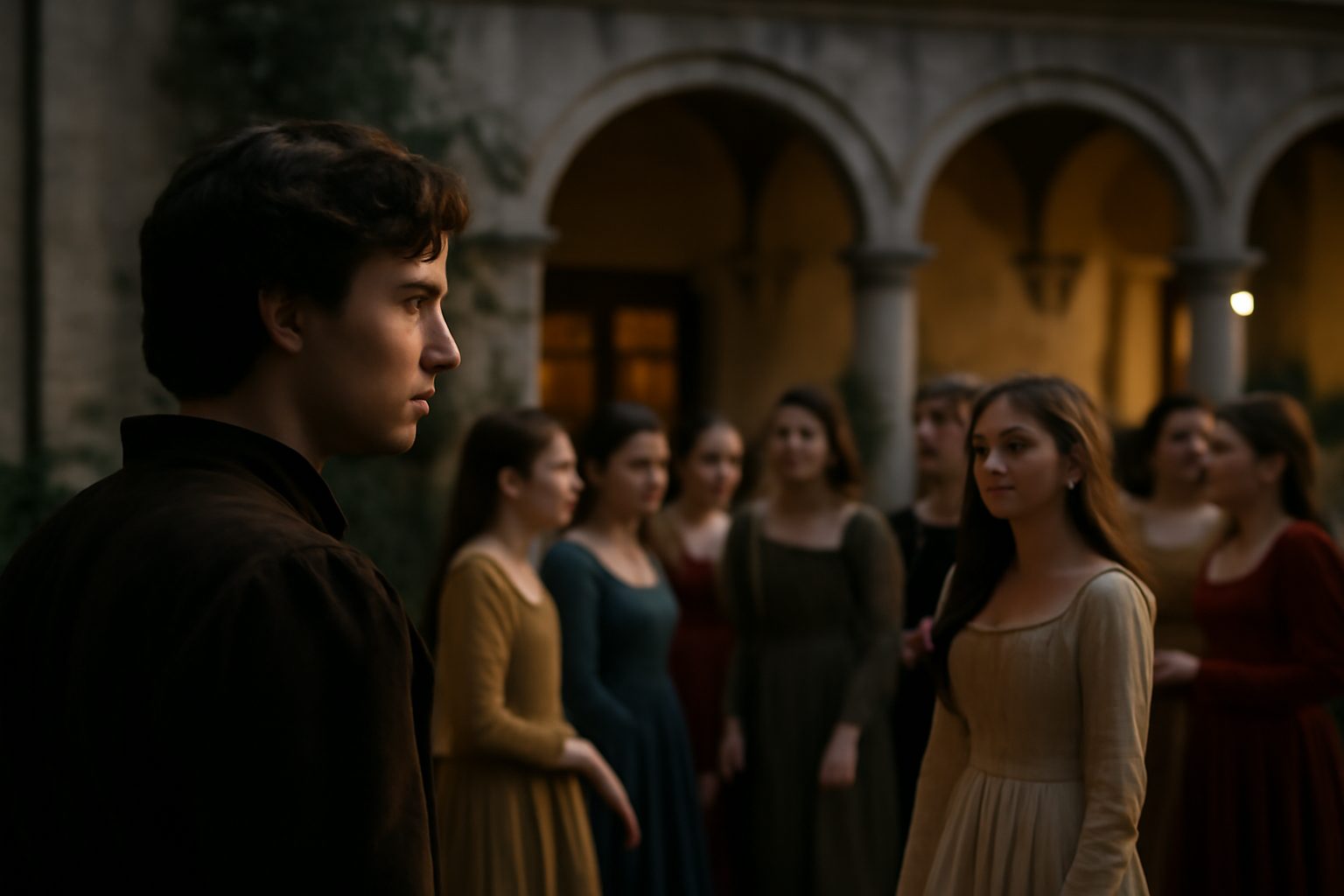
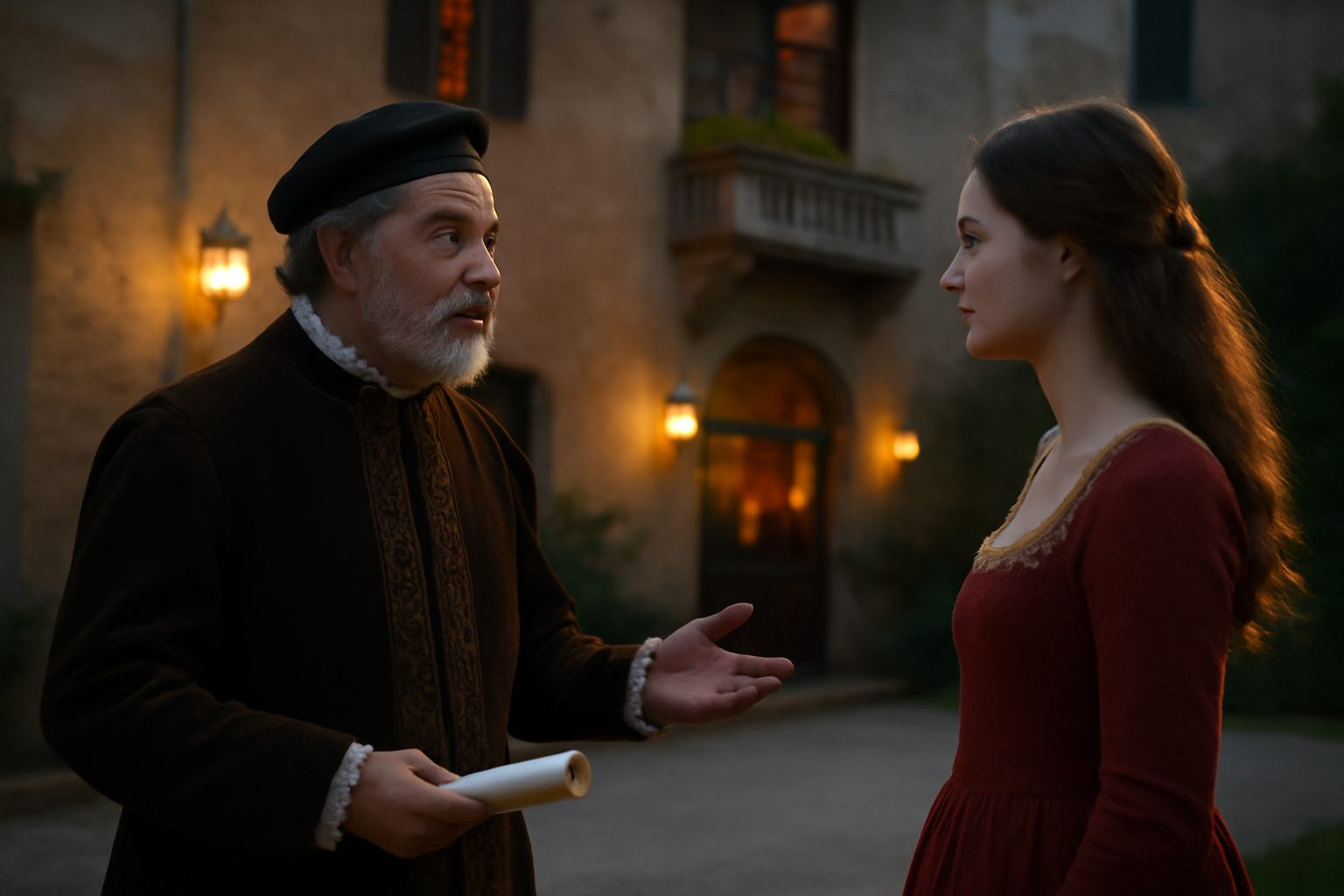
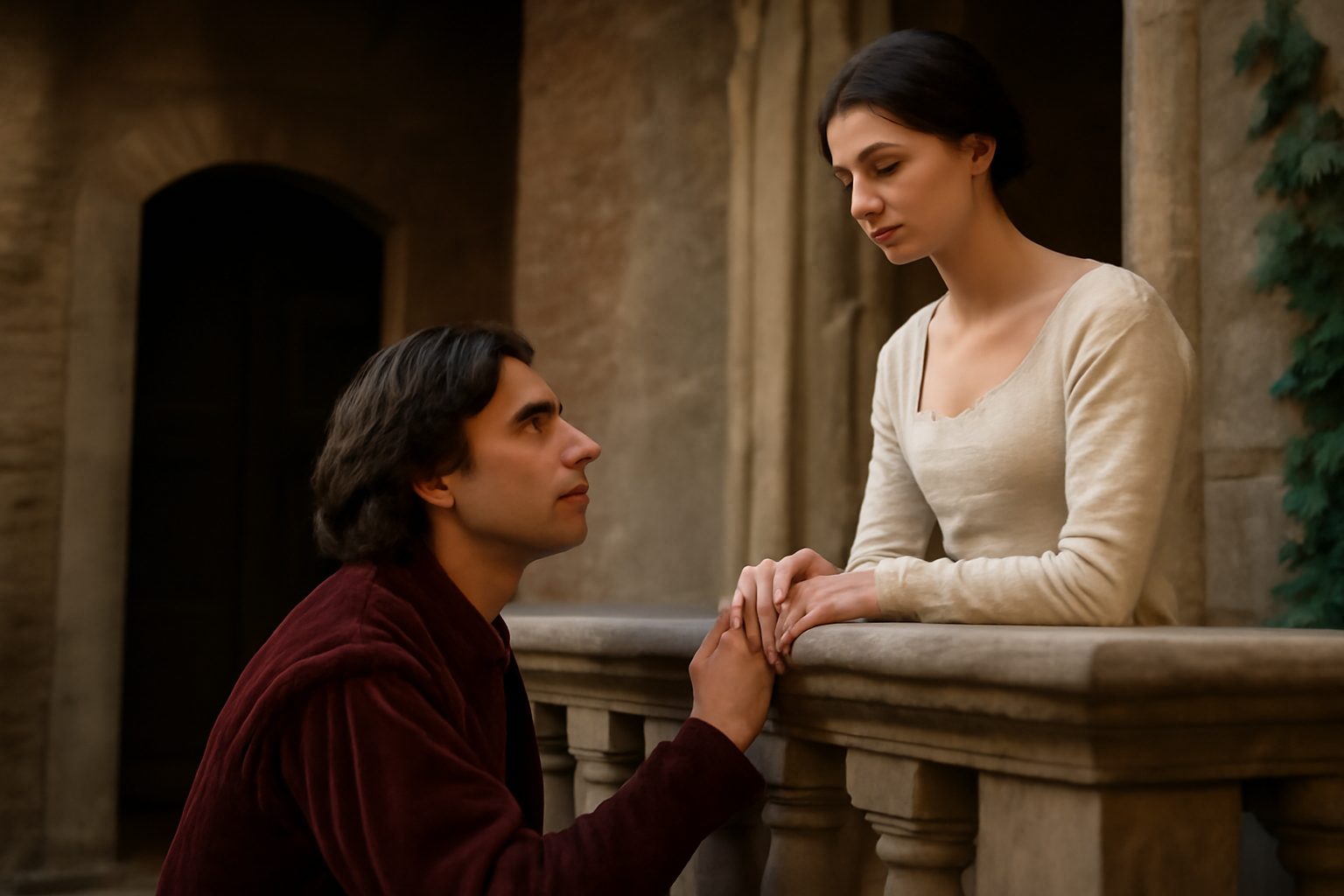
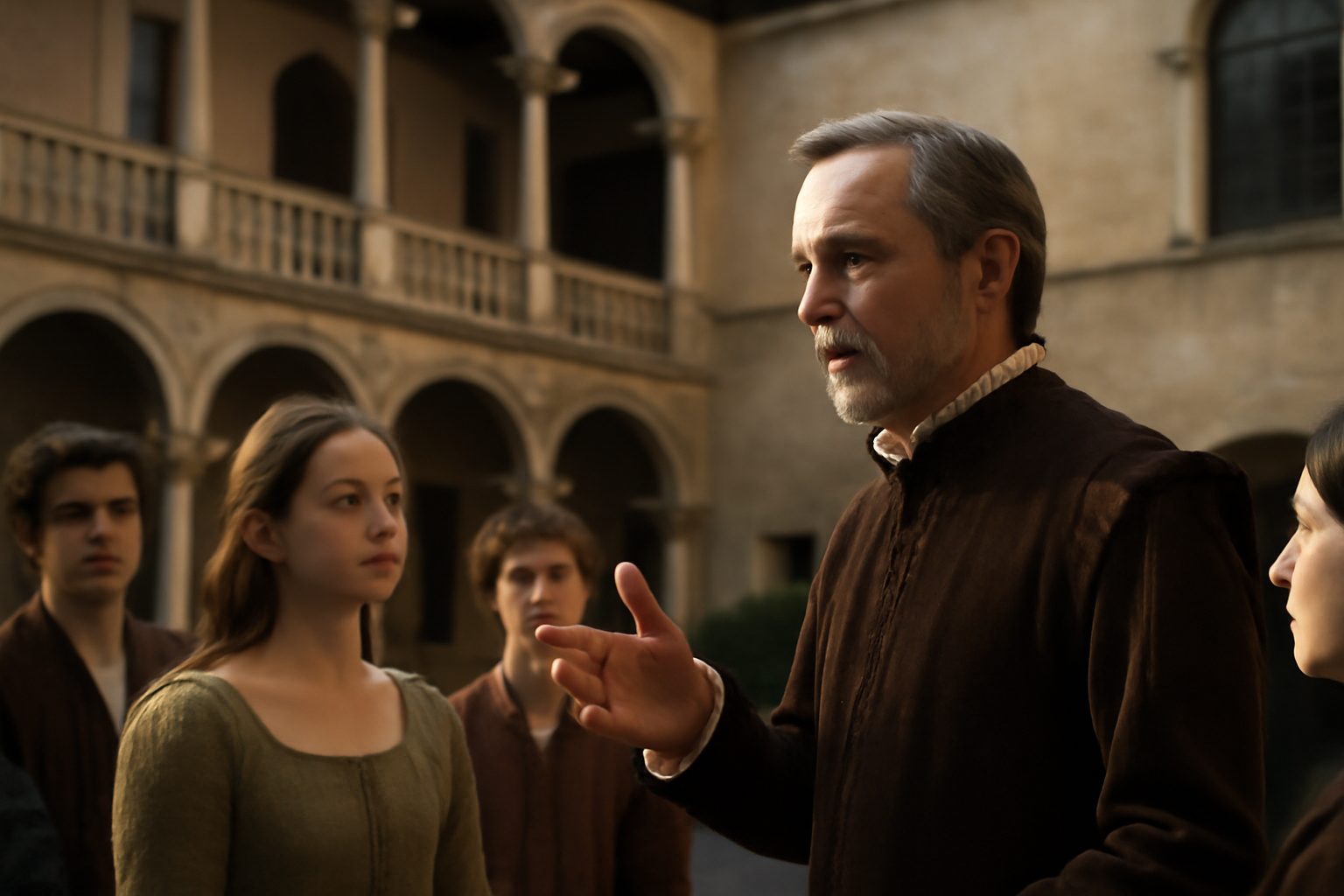
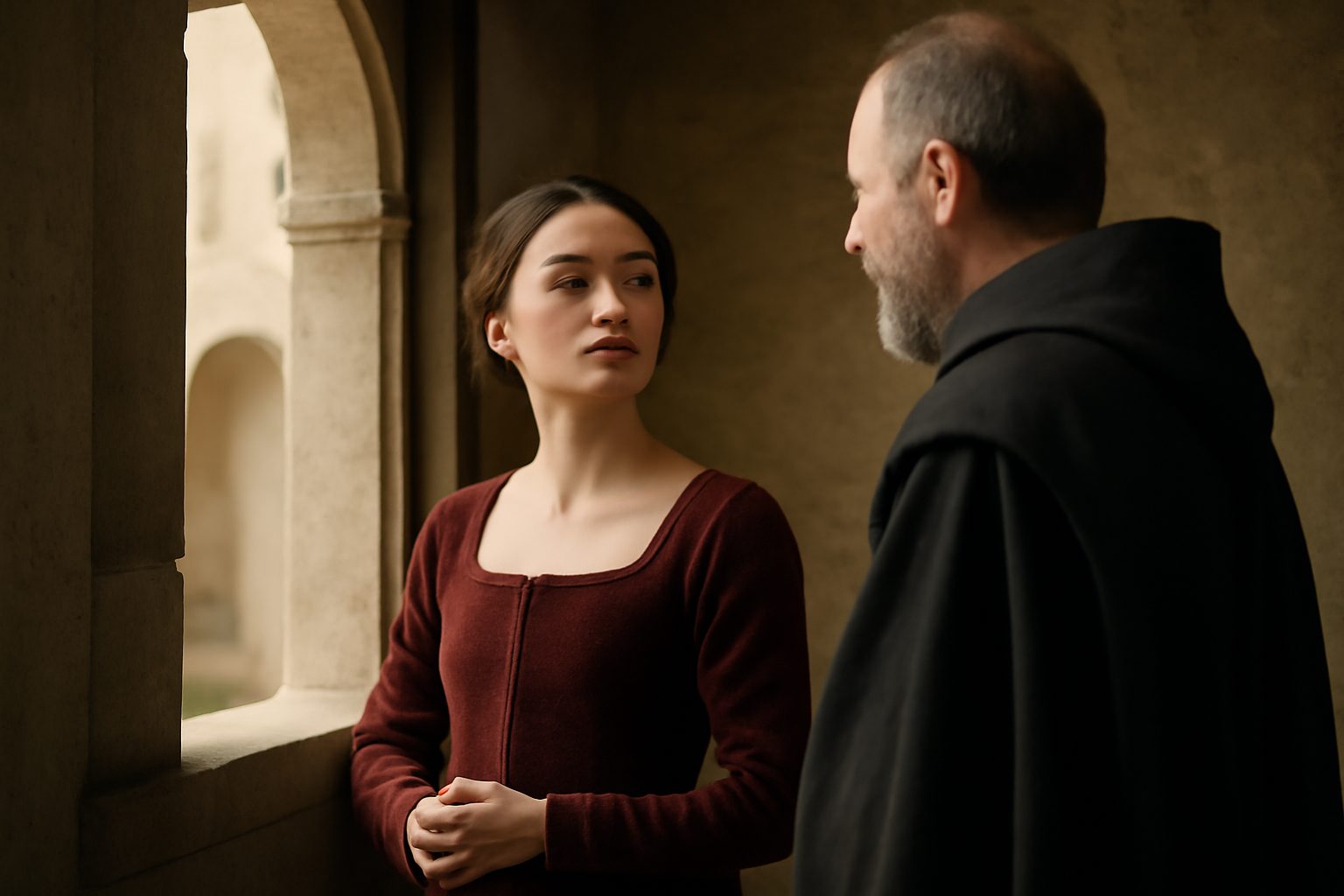
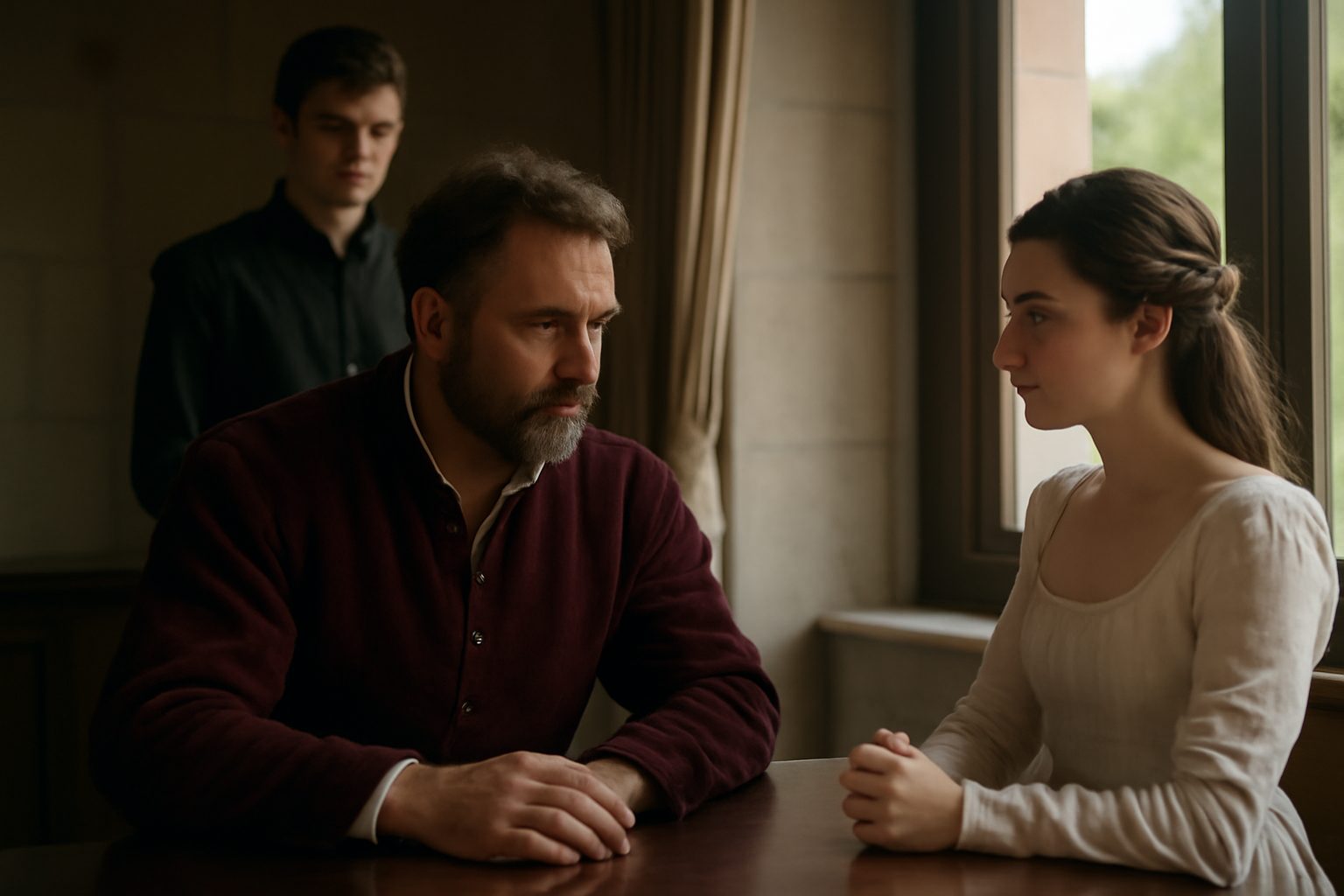
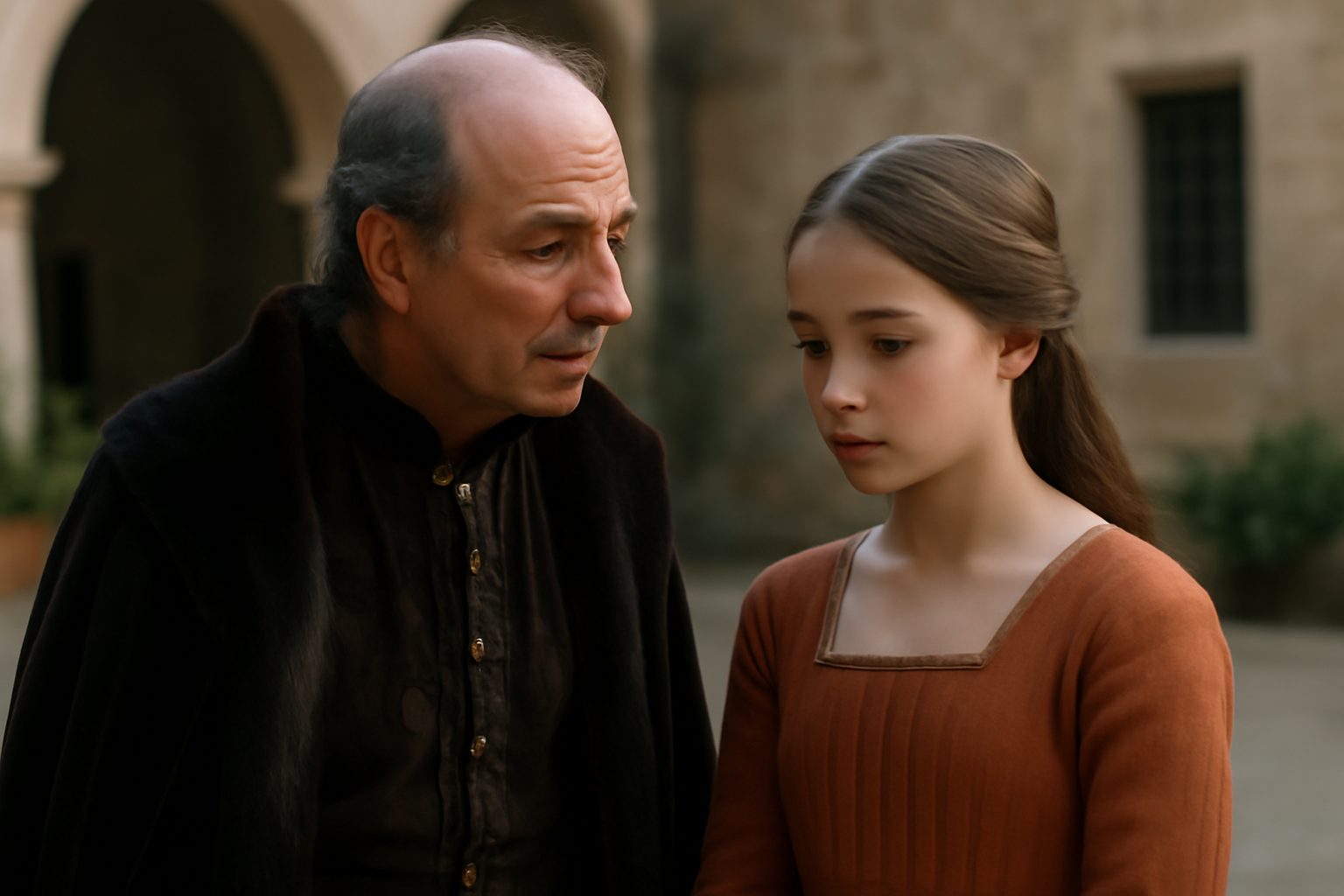
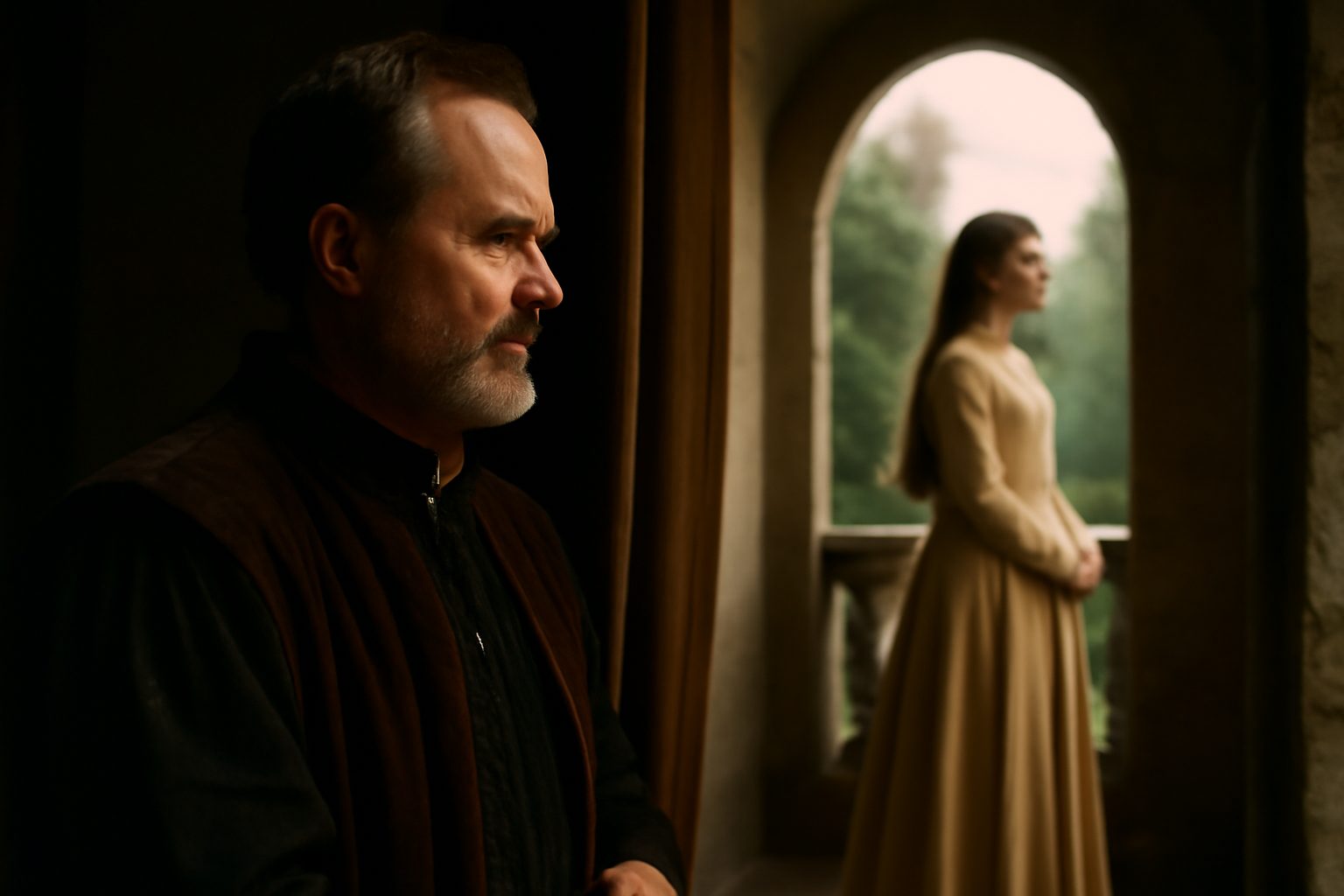
In Act 1, Scene 2 of Romeo and Juliet, Capulet and Paris discuss Juliet's potential marriage, with Capulet hesitant to rush things. A servant enters, tasked with delivering invitations to Capulet's feast but unable to read the guest list. Frustrated, the servant hands the list to Romeo and Benvolio, asking for help in identifying the names.
Servant: "Find them out whose names are written here! It is"
In modern day english, we would say:
Find the people listed here and invite them to the party.
Frequently Asked Questions
What task does the servant have in Act 1 Scene 2 of Romeo and Juliet?
The servant is told to find the people whose names are written on a list.
Connections to other verses:
Connections to "Find them out whose names are written here! It is"
This verse, spoken by Capulet's servant, initiates a crucial plot device: the invitation list for the Capulet feast. It connects thematically and narratively to several other verses in the scene.
Direct Task and Execution
The servant's instruction to "Through fair Verona; find those persons out" directly follows and elaborates on his command, specifying the action required. Later, he confirms his purpose: "sent to find those persons whose names are here", reinforcing the task's importance.
Literacy and Social Class
The servant's inability to read the list highlights his lower status, leading him to seek help. He asks Romeo, "God gi' god-den. I pray, sir, can you read?", and later "pray, can you read any thing you see?", emphasizing his dependence on others for this task. Romeo's response, "Stay, fellow; I can read.", resolves the servant's dilemma and advances the plot.
Feast and Invitations
The list is for Capulet's feast, described in "This night I hold an old accustom'd feast" and "At this same ancient feast of Capulet's". The gathering includes many guests, as noted in "Whereto I have invited many a guest", and the servant's mission ensures their attendance.
Comic Relief and Characterization
The servant's struggle with literacy provides humor, as he jokes about his predicament: "writ, and can never find what names the writing" and references trades in "written, that the shoemaker should meddle with his" and "yard, and the tailor with his last, the fisher...", underscoring his wit despite his limitations.
Plot Advancement
By reading the list, Romeo learns of the feast and decides to attend, leading to his meeting with Juliet. This moment is pivotal, as hinted in "Sups the fair Rosaline whom thou so lovest", though his affections will soon shift. The servant's task thus sets the stage for the central romance.